Another look around Wahoo, Neb., yields treasure beyond reinforced concrete

Story by Ronald Ahrens and photos by La Rose Tillotson

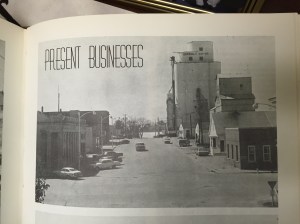
The bend on Route 92 as it entered Wahoo, Nebraska, from the east was always welcome. Here, the road dipped down and crossed Sand Creek at the edge of town, then turned into leafy neighborhoods. It was the first shade for us after more than 30 miles under the sun on the flat prairie.

Wahoo was a frequent waypoint when our family visited relatives in David City farther west.

A site of interest in Wahoo was the Saunders County Courthouse, where a torpedo was displayed near the curb. Even when I was eight and nine years old, the torpedo seemed incongruous, being so far from the sea. But we Nebraskans were starved for variety, and leftover munitions from a distant war were deemed tasty morsels.

Tillotson Wahoo 01

Never did it occur to me that the Wahoo grain elevator had been built by my grandfather’s company. We knew he built elevators but assumed they were in far off places like Iowa.

Kristen Cart has already visited Wahoo and written one post.

But there’s new reason to think about the town after Aunt La Rose Tillotson drove there on a recent tour of the countryside. She forwards the pictures you see here.

As a young woman, Aunt La Rose lived in Wahoo for a short time. While going about her daily business, she never gave much thought to the elevator that stands along North Chestnut Street between Fifth and Sixth.

This isn’t a surprise, as a form of amnesia touched many family members after the family business faded out. Grandfather Reginald died in 1960.

Tillotson Wahoo 02

Here are some particulars of the Wahoo elevator:

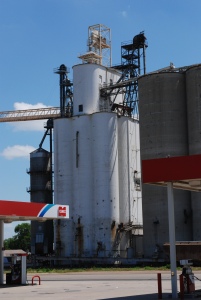
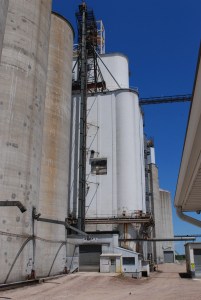
Tillotson Construction Company used the same plan as from Imo, Okla., which had also been built in 1950. That meant a 150,000-bushel elevator rose from a 54- by 51-foot slab over a pit nearly 16 feet deep. The drawform walls were 120 feet high, and the cupola topped out after another 26.5 feet.

From atop of the Wahoo elevator, you could probably see all the way to Swedeburg, looking south, and Malmo, looking northwest. (Prague–home of Czech Heritage Days–was just a bit northwest of there.) It’s doubtful, though, you could see as far as Valparaiso, in southwestern Saunders County. Ulysses, way to hell and gone in Butler County, was out of the question.

Some other noteworthy aspects of the Wahoo’s single-leg elevator were its use of 3,056 tons of reinforced concrete and its gross weight, when loaded with as much as 4,500 tons of grain, of 8,216 tons.

I don’t see anything else in the specifications that distinguish the Wahoo elevator all that much from Imo, or for that matter, David City, which was built the next year because whatever Wahoo did had to be done in David City, too.

But no other place was like Wahoo. Wikipedia says the name comes from an Indian word for the shrub Euonymus atropurpureus, which yields arrow wood. But who believes it? I think they’re covering up for the day in 1870 when two large casks of beer fell off the delivery wagon.

Remember these four things about Wahoo:

  1. Wahoo Sam Crawford came from Wahoo, played outfield from 1899 to 1917 for the Reds and Tigers, and still holds the Major League record for most triples (309). He was elected to the Hall of Fame in 1957.
  2. A wahoo (Acanthocybium solandri)  is a sport fish in the tropical oceans, but as far as I can tell it isn’t the official fish of Wahoo. Lake Wanahoo is barren of wahoos.
  3. Wahoo was a long-running gag on Letterman.
  4. Pulitzer Prize-winning composer Howard Hanson (b. 1896), three-time Academy Award-winner Darryl F. Zanuck (b. 1902), and Nobel Prize-winning geneticist George Beadle (b. 1903) came from Wahoo.

How many towns of Wahoo’s size–about 4,500 souls today–have produced a Hall of Famer as well as Pulitizer Prize, Academy Award, and Nobel Prize winners?

Beyond all that, Wahoo has a Tillotson elevator.

A tour of Odebolt, Iowa, reveals much about its historic Mayer-Osborn elevator

The Mayer-Osborn elevator in Odebolt, Iowa was one of the few they built that was never painted white.

The Mayer-Osborn elevator in Odebolt, Iowa was one of the few they built that was never painted white.

Story and photos by Kristen Cart

Recently, I took a detour quite out of the way of the Interstate system to visit the town of Odebolt, where my grandfather, William Osborn, built an elevator. I introduced the western Iowa site in a previous post.

Tim pointed out the bin diagram for the elevator.

Tim pointed out the bin diagram for the elevator.

Tim Gunderson made a great tour guide for the site and the town. The part-time elevator worker and full-time farmer wanted to know the age of the Mayer-Osborn elevator as much as I did. It was an old stepped-headhouse, slip-formed, concrete elevator in the style of earlier Mayer-Osborn efforts in McCook, Neb., and Roggen, Colo., and it stood at the center of a sprawling grain operation.

During our inspection of the elevator, we saw tantalizing details that indicated mid-1950s architecture. The mechanical workings (never altered during renovation) recalled intact examples of my grandfather’s previous work. The reliance on mechanical controls was a clue to the early design.

The big wheel controls grain distribution to the bins. It is a simple, elegant solution to a mechanical problem.

The big wheel was a simple, elegant (mechanically speaking), way to distribute grain to the bins.

Most of the standard clues to an elevator’s age were absent or misleading. The manhole-covers inside the elevator bore no date (usually they do), but perhaps Mayer-Osborn ordered a quantity of manhole-covers, embossed with only their name, toward the end of their operations in the mid-1950s.

The "blue leg" is an original, painted in Mayer-Osborn's standard color

The “blue leg” is original, painted in Mayer-Osborn’s standard trim color

The elevator showed no signs of exterior paint. This was a deviation from the norm, and a sign of more modern construction. I began to suspect the elevator was built after Mayer-Osborn ceased operations, using left-over parts. But answers would come from elsewhere, in town, where we looked for a witness to the elevator’s beginnings.

Our next stop was the library, where we perused daily papers from 1955. As I thumbed through a number of pages, I realized I didn’t know which year to search, much less what day. It would not be an effective use of time–I could only stay a couple of hours before heading to the next elevator on my route.

Tim was looking up friends who might know more. We crossed the street to the bank, where Renae Babcock referred us to an insurance office nearby. There we met Dick Duffy, and he told us a story.

Dick Duffy was in high school when the elevator went up–he thought it was in 1954 or 1955. On dark evenings while spending time with a friend (who graduated in 1955), he watched construction activity at the brightly lit elevator site. Flood lights illuminated every corner of the scene. He recalled that the concrete pour went day and night, and as he shared some personal reminiscences, he said, “You won’t write that, will you?”

Dick Duffy shares memories of 1954

Dick Duffy shared memories of 1954.

One detail he did mention, which tightened the time range further, was a tragedy that happened during the fall of the year the elevator was built. It was 1954 when a young boy was run over by a car and killed in town. Dick thought the child’s name was Kevin Bower. The event was traumatic–it fixed the time of the year’s events forever in the minds of residents.

“Was that the year that boy Kevin died?”

“Yes, I believe it was.”

We have pegged the construction date for the Odebolt elevator to the spring and summer of 1954. At the same time, the Mayer-Osborn elevator at Blencoe, Iowa, was built under supervision of my dad’s brother, Dick. The concrete there was improperly mixed and two days of work were wasted. Shortly afterward, Mayer-Osborn ceased operations, and Grandpa Bill Osborn left Denver behind and returned to Nebraska to his family.

Heartfelt thanks go to the residents of Odebolt–those mentioned and unmentioned here–for their kindness and helpfulness. I don’t think I have ever experienced a friendlier reception while pursuing historical elevators.

The town deserves a good historical expose that goes beyond the scope of the blog. It is a town with a fascinating history, great civic pride, and a strong sense of identity from its days as a ranch property to today. I hope to learn all about it and to come back again.IMG_2256


Vandals strike Tillotson’s Vinton Street elevator, leaving the owners with an expensive cleanup

644369_10152681898735294_1745767005_nSometime overnight on Wednesday, May 4, vandals struck the Vinton Street elevator, painting “Dump Trump” graffiti on the south annex’s upper run. The message caused a sensation Thursday morning.

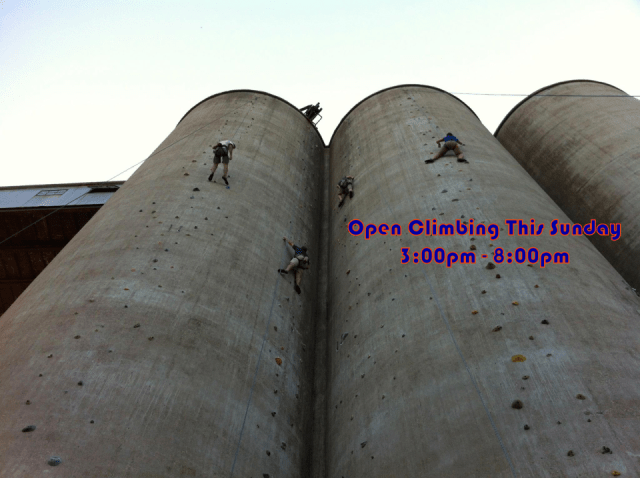
Tillotson Construction Company completed the original 382,880-bushel elevator in 1950. Extensive annexes were later added. We don’t know when operations ceased, but for the last eight years the elevator on five acres of land has been co-owned by Ron Safarik and Richard Brock, who attempted to make a climbing facility comparable to those established at old elevators in Bloomington, Ill., and Oklahoma City.

In 2012, the Vinton Street elevator received national attention after the annexes served as the canvas for a public art project; a nonprofit organization commissioned artists to create themed banners that were draped over the silos.

Reached by phone, Safarik said he and Brock have tried to secure the property, but intruders found a way to pry through and gain access to the top. “I would presume they used the internal ladders that still exist,” he said.

548020_10152123317010294_1936170426_n

Photos courtesy of SILO Extreme Outdoor Adventures. 

Safarik and Brock will now be stuck with the cleanup bill. Since SILO Extreme Outdoor Adventures, the partners’ venture, closed in 2013, the elevator has been a burden, he said.

It has been listed for sale since 2014. A post on SILO’s Facebook page says, “The Silos and the 5 acres of industrial land are for sale through Ben Pearson at World Group Commercial Real Estate. Any climbing related buyer will receive the holds, bolts, and supporting gear for starting up a climbing club or business.”

Safarik said the asking price remains $150,000.

Although he said he hadn’t known much of the elevator’s history, he did pass along a story heard from an elderly man named Otto, who lived on Vinton Street and “had intricate knowledge” of events.

According to Otto, the only death that occurred at the elevator happened on a freezing night in an unspecified year. The victim, an elevator employee, locked himself out of the scale house. As he tried to pry back into it, he jammed his arm and couldn’t pull free. Found dead in the morning, he was surrounded by cigarette butts. With his free hand, he had managed to smoke his remaining cigarettes before he froze.


A reader recalls elevator construction and the recent explosion in Hinton, Iowa

By Michael Pelelo

I was born in 1954, the same year the Tillotson headhouse was slipped in Hinton, Iowa. I can see it from my late parents’ farm south of Merrill, Iowa, where I grew up. I knew several local farmers who worked that slip in ’54.

DSC_0444

The Hinton elevator in July 2015. Photos by Kristen Cart.

Within the last month or so, there was an explosion in that workhouse and it looks like the tank walls were breached, so it will probably have to come down. I spent many days in the 70s and 80s working in that complex and remember the old layout quite well.

In the 70s, as a young man, I became a millwright and worked for an outfit out of Oyens, Iowa, that built jump-form silos. Later I worked for D&B Construction out of Sioux City and helped slip workhouses in Oyens and Maurice, Iowa, and the set of tanks to the south of the Tillotson workhouse in Hinton.

I have probably been in every elevator in northwest Iowa at one point or another, and I worked as a millwright out of the sheet metal local, too. A lot of the guys who worked for Dad Sherrill and D&B Construction got their start at Younglove Construction out of Sioux City, which is still slipping elevators today after over a hundred years.

I am now retired and just this afternoon went to look at a pair of very large tanks that are being jump-formed in Sloan, Iowa, by Hoffman Construction. That outfit goes back a long way slipping and jump-forming elevators.

Way back when I was doing that type of work, old guys would come around every day and gawk at what was going on. Now, I am one of the old guys gawking!

* * *

DSC_0455My days in construction are ones I remember fondly, even though the work was hard and dangerous and the hours were long.

One of the companies I worked for was involved in a three-fatality accident at the Ritter, Iowa, Co-op in 1976. We were building 24-foot and 30-foot jump-form silos all up and down the Floyd Valley. I was working on the 24-foot forms in Sheldon, Iowa, south of Ritter at the time.

The March 17 explosion at Hinton was in the main workhouse, which is the Tillotson structure built in 1954.

Back in the ’70s and ’80s, I was very involved with work on several structures in that complex with two different construction companies. Much has been added since I last worked around there. From pictures in the media, it appears that at least one or more of the tanks in the Tillotson structure have ruptured, as I can see grain spilling out in some photos.

Tillotson Construction kicks off the 1950s with ubiquitous designs

Albert City, Iowa, ca. 1954

Albert City, Iowa, circa 1954.

Story by Kristen Cart

In the last post we studied the oddball Tillotson elevators that sprouted during the 1940s, the most creative period of elevator design. It was a time of multiple plans and innovations, and as the 1950s dawned, unworkable plans were dropped and popular designs emerged.

A surprising number of elevator ideas survived however, some with new names, as the Tillotson brand retained its distinctive features. Advances in engineering dominated the 1950s as elevator styles settled into lines that typified their makers.

DSC_0732-1

Dallas Center, Iowa. Photo by Kristen Cart.

You can generally spot a Tillotson elevator by its rounded headhouse. Other subtle details are also telling trademarks. These style points became so common because a large portion of Tillotson’s building in the 1950s followed established designs, tweaked here and there for individual customers, without deviating greatly from the most popular plans.

We will examine the first of these enduring plans, which crossed over from the late 1940s, in this post.

Flagler by Gary Rich

Photo by Gary Rich.

Dike Plan:

This design was rolled out in 1947 with the elevator at Satanta, Kan., which had a 250,000-bushel capacity. No corresponding Dike, Iowa elevator is mentioned in our records, but presumably it was built (although I speculate whether the original Dike proposal sat on a desk without ever being approved, while Satanta’s updated elevator proceeded, thus the naming convention).

DSC_0638

Photo by Kristen Cart.

The basic Dike elevator, with 252,000-bushel capacity, was built at Randall, Iowa (1949); West Bend, Iowa (1949); Pocahontas, Iowa (1949); Bushland, Tex. (1950); Pond Creek, Okla. (1950); Seibert, Colo. (1950); and Flagler, Colo. (1950). They all look like the typical Tillotson elevator, but with a larger-than-usual rounded headhouse.

The Satanta, Kan. (1947), and Gruver, Tex. (1947) elevators were built with a revised Dike plan, which was renamed the Satanta plan. They could be filled to a capacity of 250,000 or 265,000 bushels, respectively–the two elevators differed by five feet of draw-form height. Springfield, Colo. (1948); and Kildare, Okla. (1950); were also built with 250,000-bushel capacity using the Satanta (variously named Dike) plan.

The Pocahontas, Iowa, elevator, built using the Dike plan, got its own plan designation also. Into the mid-’50s, several elevators were built using the Pocahontas plan specifications: Albert City, Iowa (1954); Goldfield, Iowa (1954); Rockwell City, Iowa (1954); Thornton, Iowa (1955); and Dallas Center, Iowa (1955). Each could hold 252,000 bushels of grain.

Pocahontas, Iowa

Pocahontas, Iowa. Photo by Kristen Cart.

Because we are missing a page of the specifications for elevators built in 1954-1955, we do not know whether other elevators followed this plan, though I suspect some did.

The Tillotson Construction Company of Omaha continued to build for at least four years after our records ended. But reconstructing those records is a project for another time. In the next post, we will look at the Churdan and Jackson plans that originated in the late 1940s.


Tillotson’s orphan designs of the 1940s gave way to popular elevator plans

DSC_2297

This Mayer-Osborn oddity in Cordell, Okla. was only built once for a customer with specialized needs

Story and photos by Kristen Cart

In the last post, we checked out two of Tillotson Construction Company’s earliest designs and their derivatives. In the 1940s, many elevator plans departed substantially from Tillotson’s first efforts, and they had plan names of their own. Some of those elevators were one-of-a-kind.

I will examine the orphan designs and a few that were used more than once, but failed to catch on, in the next two posts.

Orphan designs were unique storage plans, made to meet unusual customer needs. Non-standard-sized elevators were built to mimic Tillotson’s more basic offerings. Annexes were custom built. If an elevator and annex were built together, certain features were unique.

Here are the orphans of the 1940s.

Peterson Plan:

Peterson 01Peterson, Iowa (1944) was “storage, mainly,” with no driveway, a “x spout to leg,” and 12 1/2-foot-diameter tanks. It had a conveyor belt and a wooden, hand-operated man-lift. Its capacity was only 37,550 bushels. This was one of the smallest elevators Tillotson ever built, though a few were even smaller.

Farnsworth Plan:

Farnsworth, Tex. (1945) was the largest elevator Tillotson built to date, with a 350,000 bushel capacity. It had 19 bins with six 20-foot-diameter tanks, and a tunnel with a conveyor belt. A semi-truck driveway was built with a machine room directly overhead. Projects of this size were uncommon.

Peterson 02Farnsworth, Tex. will require a site visit, because we don’t know if a Tillotson elevator still stands. Three large elevators exist in Farnsworth, but none is typical of Tillotson’s style–two have hexagonal bins (the design made a big media splash in 1949), and the other could be a Tillotson, but looks more like a Chalmers and Borton elevator.

Dalhart Plan:

Dalhart, Tex. (1947) was a bit of an oddball, having an attached driveway rather than a center driveway. It had no basement and no distributor floor, but sported the “standard cupola.” It had four 20-foot-diameter tanks and could hold 150,000 bushels of grain. A 98,000-bushel annex was built alongside it at nearly the same time, which could explain the oddities: direct cross-spouts from the elevator provided gravity flow to the annex pit.

A second elevator was built in Dalhart, Tex., in 1949, which also gave is name to a plan: this “Dalhart Plan” described a large elevator with 310,000-bushel capacity.

Eva Plan:

Eva, Okla. (1947) was a very small elevator with only a 13,500 bushel capacity. The description says “cupola in D.F. [draw-form] wall.” The driveway was attached. It had two 14-foot bins, a “rope drive” and motor room.

Moscow Plan:

Moscow, Kan. (1948) is featured in an earlier post on this blog. It was a smallish elevator of 100,000 bushel capacity, four 14 feet-diameter tanks, and a 13 x 17 foot driveway with six bins directly overhead. It incorporated a dust bin.

DSC_0288

Minneapolis, Kan., mill building, elevator, and annex

Mill Building:

Minneapolis, Kan. (1948) is a site that fooled me on first examination. No manhole covers were evident on any structures except for the mill building. I didn’t expect an elevator with a rectilinear headhouse to be a Tillotson creation, so when we featured the mill building in our post (follow link), I added specifications which describe the elevator beside it! We will publish the mill building specifications in a later post.

Greenwood 01

Greenwood, Neb. ca. 1951 with attached Tillotson annex

Hordville Plan:

Hordville, Neb. (1949) was a 70,000 bushel capacity elevator with four twelve-foot-diameter tanks, a driveway, and eight bins directly above the driveway. Its rounded headhouse, by 1949, was already standard on Tillotson elevators.

Hordville’s outward appearance is a miniature version of Tillotson elevators of the same vintage–a style that continued into the early 1950s. Greenwood, Neb. (1951), which was built using the Churdan plan, circa 1949, is a larger-scaled example of the type.

Pierson Plan:

Pierson, Iowa (1949, storage) had a 80,200 bushel capacity, four 15 1/4 foot-diameter tanks, a dump pit, one way scale, a spout floor below the bin roof, and cross spouts. It was designated “storage,” a structure more like an annex than a self-contained elevator.

Clare Plan:

Clare, Iowa (1949) was built to hold 88,800 bushels of grain with four 15 1/4 foot-diameter tanks. It had a spout floor below the bin roof and an attached drive.

The artists of the Tillotson Construction Company–architects and engineers, those creative, ingenious men–were prolific producers during the 1940s when elevator technology bloomed. The flower of their achievements can be seen scattered across the prairies, either finding useful work, or passing into idleness, while curious onlookers snap their pictures and move on.

After the 1940s, almost all of the first Tillotson designs were dropped or modified as technology advanced. Only two designs (Churdan and Jackson) of the late 1940s carried into the 50s, and they were rapidly replaced after that, as will be seen in the next post.

Tillotson’s design plans consolidated the trends in elevator form and function

Photo by Gary Rich

Photo by Gary Rich

Story by Kristen Cart

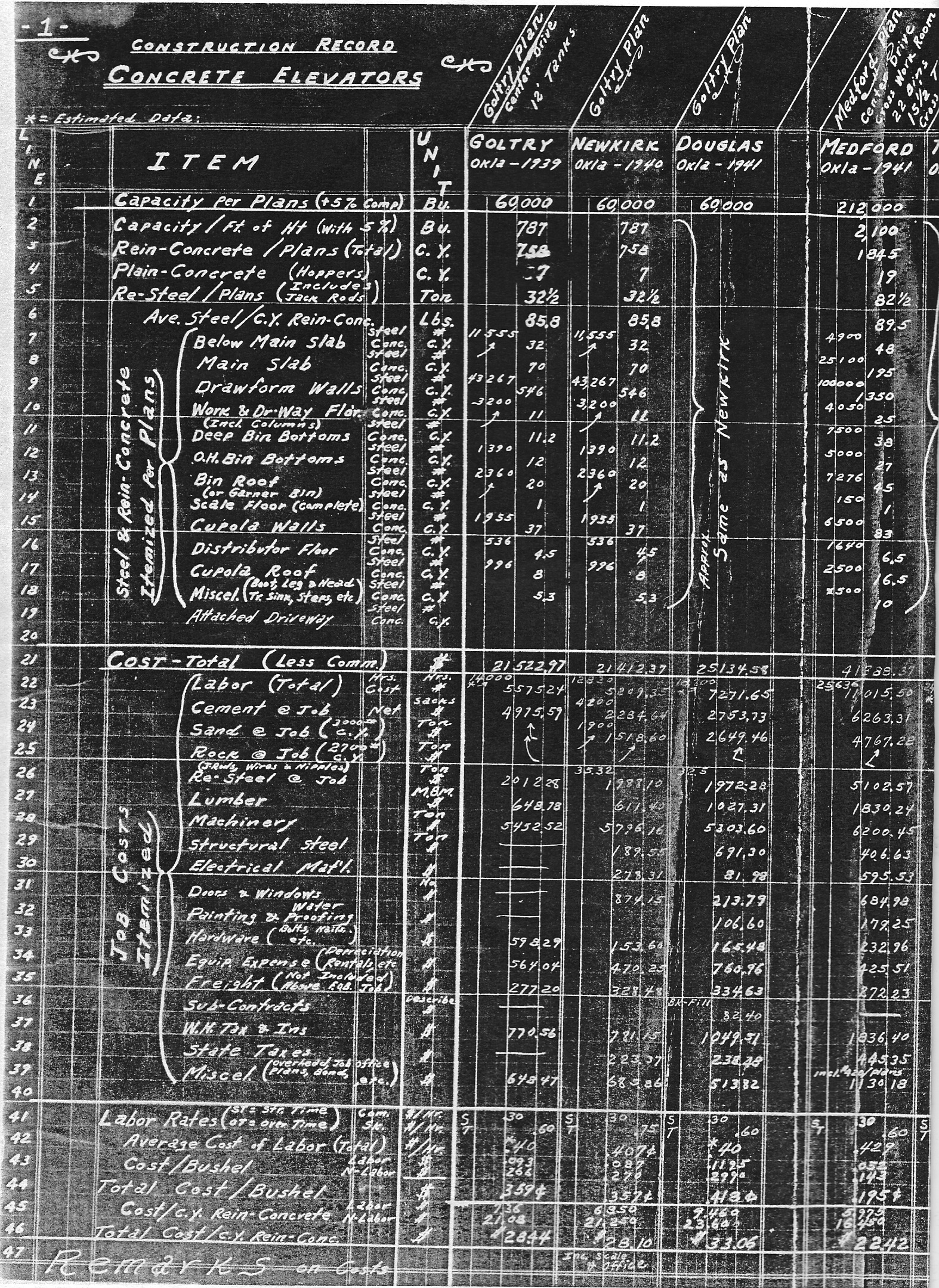
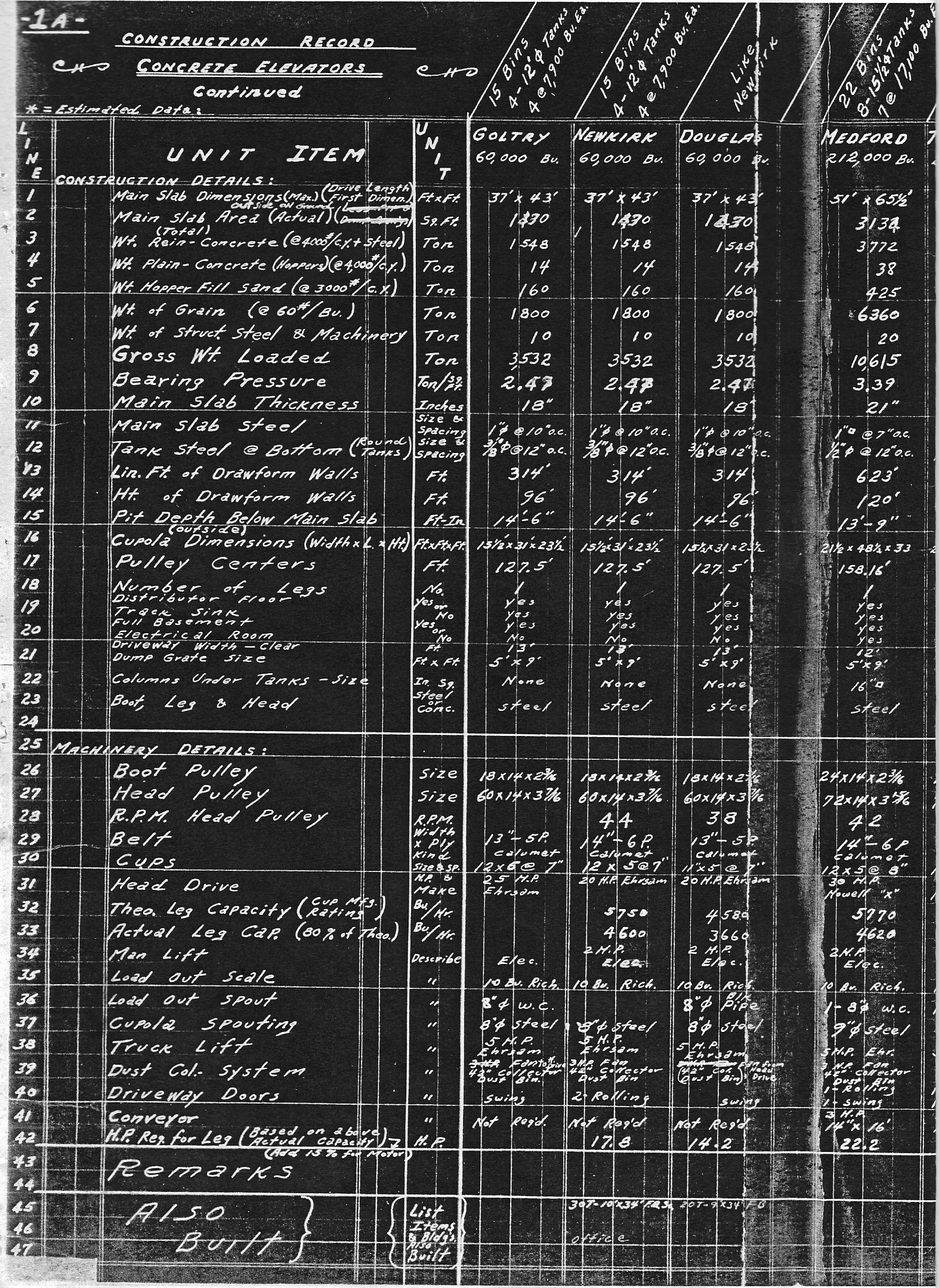
The concrete elevator construction records of the Tillotson Construction Company display data in columns, each column headed with the location of the project, and the date it was built. Specifications follow. Above the header is the name of the plan used to build the elevator. A short description accompanies the plan name.

For instance, in 1955, the Boyden, Iowa, elevator was built using the Palmer, Iowa, plan of 1950, with eight bins, each being 18 feet in diameter and 117 feet high. The driveway measured 13×17 feet.

You might discover, on review, how many of each elevator type were built based upon the plan names. This exercise will show us how the elevator plans evolved, and which were successful over the years of the elevator boom. Over the next few posts, I will attempt to spot trends over the span of our records, starting at the beginning. The elevators will be referenced by their locations.

Richland,_Nebraska_Front_from_Tilden_1

Richland, Neb.: Front Street, looking east from about Tilden Street, taken on 21 October 2013, by Ammodramus via Wikipedia Commons

Goltry plan:

Goltry, the first elevator of its type, was built with a center drive and four 12-foot-diameter tanks. The Goltry plan specified an elevator in the 60,000-bushel class, the smallest Tillotson built:

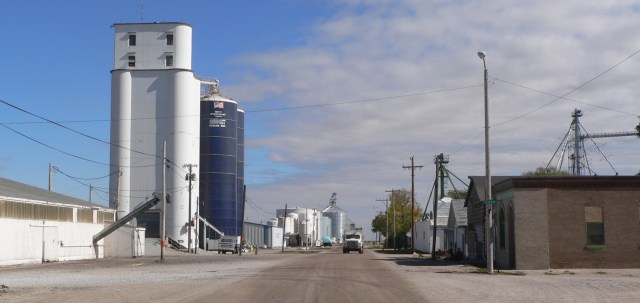
Goltry, Okla. (1939); Newkirk, Okla. (1940); Douglas, Okla. (1941); Wellsburg, Iowa (revised plan, 1946); Polk, Neb. (1948–“Wellsburg plan” was another heading used for this elevator, just to make it confusing); and Richland, Neb. (1948).

From the photographs we were able to find, this elevator type was a small, four-square design with a rectilinear headhouse. Several of the type were still standing in recent photographs.

Medford Plan:

Medford 01Medford, the first elevator of its type, was built with a center drive, a cross work room, and 22 tanks of 15 1/2 feet in diameter. These old elevators had rectilinear headhouses, a feature that was later abandoned in favor of a rounded design. The plan represented a big jump in size from Goltry, having a 212,000-bushel capacity. Later, a revised Medford plan had a capacity of 140,000 bushels, and an expanded plan pushed the capacity to 240,000 bushels:

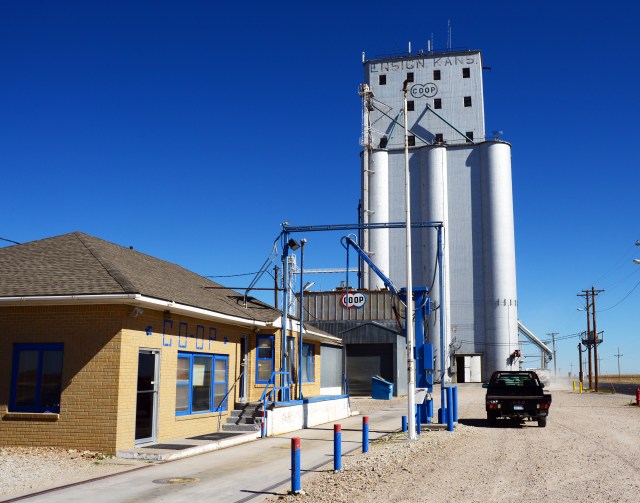
Medford, Okla. (1941); Thomas, Okla. (1941); Burlington, Okla. (revised plan, 1945); Cherokee, Okla. (revised plan, “like Burlington,” 1945); Lamont, Okla. (revised plan, 1945); Blackwell, Okla. (revised plan “like Lamont,” 1945); Booker, Tex. (revised plan, 1945); Follett, Tex (revised plan, 1945); Elkhart, Kan. (revised plan, 1946); Kingfisher, Okla. (expanded plan, later designated the Kingfisher plan, 1946); Thomas, Okla. (expanded plan, “similar to Kingfisher,” 1946); Ensign, Kan. (expanded plan, “similar to Kingfisher,” 1946); Manchester, Okla. (revised plan, later designated the Manchester plan, 1948); Montezuma, Kan. (1948)

The two daughters of the Medford plan, Manchester and Kingfisher, follow:

Manchester Plan:

Medford 02Manchester, Okla. (1948); Rolla, Kan. (“like Manchester,” 1948)

Kingfisher Plan:

Hooker, Okla. (1949)

More analysis is needed to determine exactly when the transition to a rounded headhouse occurred–but we think it did occur sometime after the Manchester plan was first designated as such, unless some of these elevators were modified at a later date.

What is clear from photos of Goltry and Medford plan elevators is that the rounded headhouse design was not used in Tillotson’s earliest elevators, and was likely adopted sometime in 1948–both plans made the transition in that year. Other details are bound to emerge as we study the other elevator plan types as they entered the Tillotson Company’s repertoire.


The DeBruce Grain elevator disaster in Wichita reexamined

This photo appeared with Mr. Gustafson's cautions in 1939.

Grain dust has caused fires since elevators were first built.

Story by Kristen Cart

The dangers of storing grain have been well known for decades; however, history tends to repeat itself in spite of previous accidents and loss of life. When an operation falls into shoddy practices, and when safety measures are deemed too troublesome and expensive, the operation may continue for a time without incident.  Eventually, the inevitable happens, and the investigators come in to discover why. The answers seem obvious in retrospect.

The explosion and fire at the gigantic DeBruce Grain facility near Wichita on June 8, 1998, was a perfect example of complacency and its consequences.

The elevator was built in 1954 by Chalmers and Borton of Hutchinson, Kan., for the Garvey Grain Company. It was a terminal elevator with arrays of tangential 30-foot-diameter bins, three abreast, with star shaped bins in the interstices. The bins were built 120 feet high and arranged symmetrically on either side of a 197-foot-tall, 21-story headhouse.

DSC_0488

A typical Chalmers and Borton plaque, installed at their American Falls, Idaho, elevator, dated 1944

In 1955 the elevator was extended on either end, roughly doubling its capacity to nearly 21 million bushels. In total, 246 circular bins and an additional 164 interstice bins (for a total of 310) were available to store grain, in a structure that extended over half a mile. In its heyday it was the largest elevator in the world.

A key factor in the explosion of the facility was the arrangement of the runs atop the bins and the tunnels beneath. These communicated with all of the bins. A run extended in both directions from the headhouse, each containing a conveyor for distributing grain to the bins from the top using a tripper. Under each bank of bins on either side of the headhouse were two tunnels, each with a conveyor supplying the four headhouse legs. The pairs of tunnels on either side of the headhouse each had a connector tunnel between them.

All of the structure was interconnected in such a way that a fire or explosion could propagate throughout the elevator. And in fact, after the accident, that is what investigators found had happened.

For an explosion to begin, five factors must exist: fuel, oxidizer, containment, dispersion, and ignition. All of these factors are momentarily present in the controlled environment of a piston or turbine engine. In a grain elevator, the fuel is grain dust, the oxidizer is the oxygen in the air, the containment is the elevator structure, the dispersion is the suspension of dust in the air (stirred by operation of elevator components), and the ignition is the accidental trigger (a worn component, an electrical spark, or negligent smoking, for instance).

All these factors must be controlled to keep a grain elevator operation safe.

The DeBruce Grain elevator fire started with a seized bearing on an operating conveyor in one of the tunnels. The roller with the failed bearing stopped turning while the belt continued to run over it, causing excessive wear and heat. Dust grains in contact with the roller ignited. The fire touched off an explosive mix of suspended grain dust and air stirred up by conveyor operation. Very quickly, the entire elevator was involved in the disaster.

The concussion of the first explosion suspended more grain dust, causing a chain reaction. In a series of explosions, the fire propagated through that tunnel and through the crossover to the other tunnel on that side of the headhouse, running from end to end, then to the headhouse from below, and up and back into the run on top of the bins on that side, where it flamed out in an area that had been cleaned of dust. Only that run failed to explode. From the headhouse, the explosions propagated into the run, bins, and tunnels on the opposite side, until all of the explosive fuel was consumed.

The initial and follow-on blasts caused massive destruction. The headhouse sustained multiple explosions as the concussion reflected back in that direction at multiple points of entry. It was pulverized. Workers were trapped in the headhouse on floors above the worst of the destruction. On one side of the elevator, most of the bins blew their tops, utterly destroying the run above. The tunnels filled with grain that spilled from the bottoms of the wrecked bins, greatly complicating rescue and recovery efforts.

Seven employees and contractors died on the site–four in or near the tunnel adjacent to the ignition point, one in and one near the headhouse, and another blown clear of the elevator. Another ten were injured. Three of the hurt were trapped in the headhouse and another made his way out onto a bin roof. Some were outside of the elevator when they were injured by the blast.

A fascinating account of the rescue is included in the accident report. Eventually, a construction crane deposited rescuers and retrieved survivors. A helicopter from Fort Riley also plucked survivors from the top of the structure.

This was a textbook case of negligence, according to investigators. The dust was allowed to build up well beyond safe levels, and installed dust control systems were allowed to fill up and clog and become inoperable. Limited cleaning was done by employees by hand. The faulty bearing had ignited before, just days before the explosion, but it was not repaired.

The accident prompted interested parties to initiate an investigation, which was later sponsored by OSHA. The report is published on the OSHA site. The Grain Elevator Explosion Investigation Team (GEEIT) report is the source for the details presented here.

For those interested in learning more about the accident, an excellent article detailing the aftermath can be found at grainnet.com.

Our Grandfathers’ Grain Elevators mourns the passing of contributor Neil A. Lieb

Neil A. Lieb, left, and Blaine Bell .

Neil A. Lieb, left, and Blaine Bell .

We have learned with regret of the recent passing of our contributor Neil A. Lieb. His son Neil, Jr. sent an email on Sunday, Oct. 25, and it includes these details.

At about 10 a.m., Saturday morning, my father Neil Lieb passed away.

He recently battled a case of pneumonia and although it appeared he was able to recover, it probably weakened his body beyond repair. While we won’t know exactly what caused his death, the doctors we spoke with said he may have been suffering over the last few days from a leaking heart valve which manifested itself as severe back pain. 

unnamed-1As you may know, he battled many illnesses later in life including COPD, high blood pressure, high cholesterol, and diabetes to name a few. He was a such strong fighter it seemed like he would live to 100 and beyond…but alas it was not in the cards.

After losing his wife and the love of his life just over three years ago, he was never quite the same. I’m sure he is happy now that he is reunited with his bride of 59 years. 

The story of how Neil met his wife Jolene while on the job for Tillotson Construction Company is documented in this blog.
Neil first contacted us in July 2014:

My name is Neil A. (Anderson) Lieb. I graduated from Pocahontas High School in May of 1949. I worked on the original concrete elevator from June until its completion. I also worked on the one built in Clare the same summer. I continued to work for Tillotson Construction Company until August of 1951.

Neil Lieb later in life While employed by Tillotson I helped build similar structures in Bushland and Cannon, Texas; Alto and West Bend, Iowa: and Marshall, Missouri. I am currently working on my autobiography and would like to have some data on these structures (capacity, specifications, etc.). 

The message led to several enjoyable hours of phone conversations with Neil and his supplying dozens of photos from Tillotson jobs. He said that he didn’t take the photos and didn’t know who did, but as far as we were concerned, it was no matter because we had a new wealth of documentary details.

We salute Neil Lieb for his great contribution to our blog and extend our condolences to his family.