Query on leasing leads to explanation of farm credit system

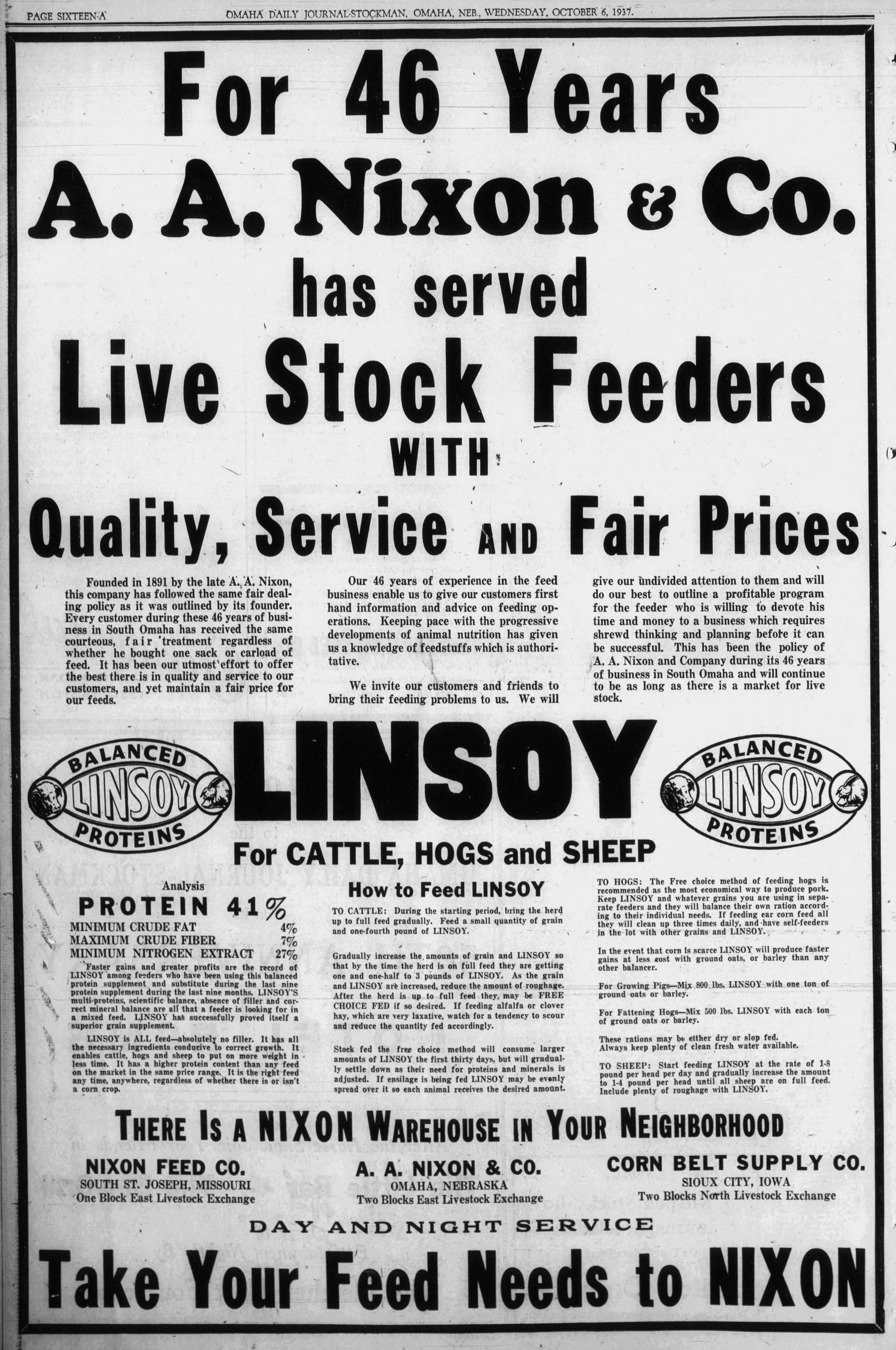
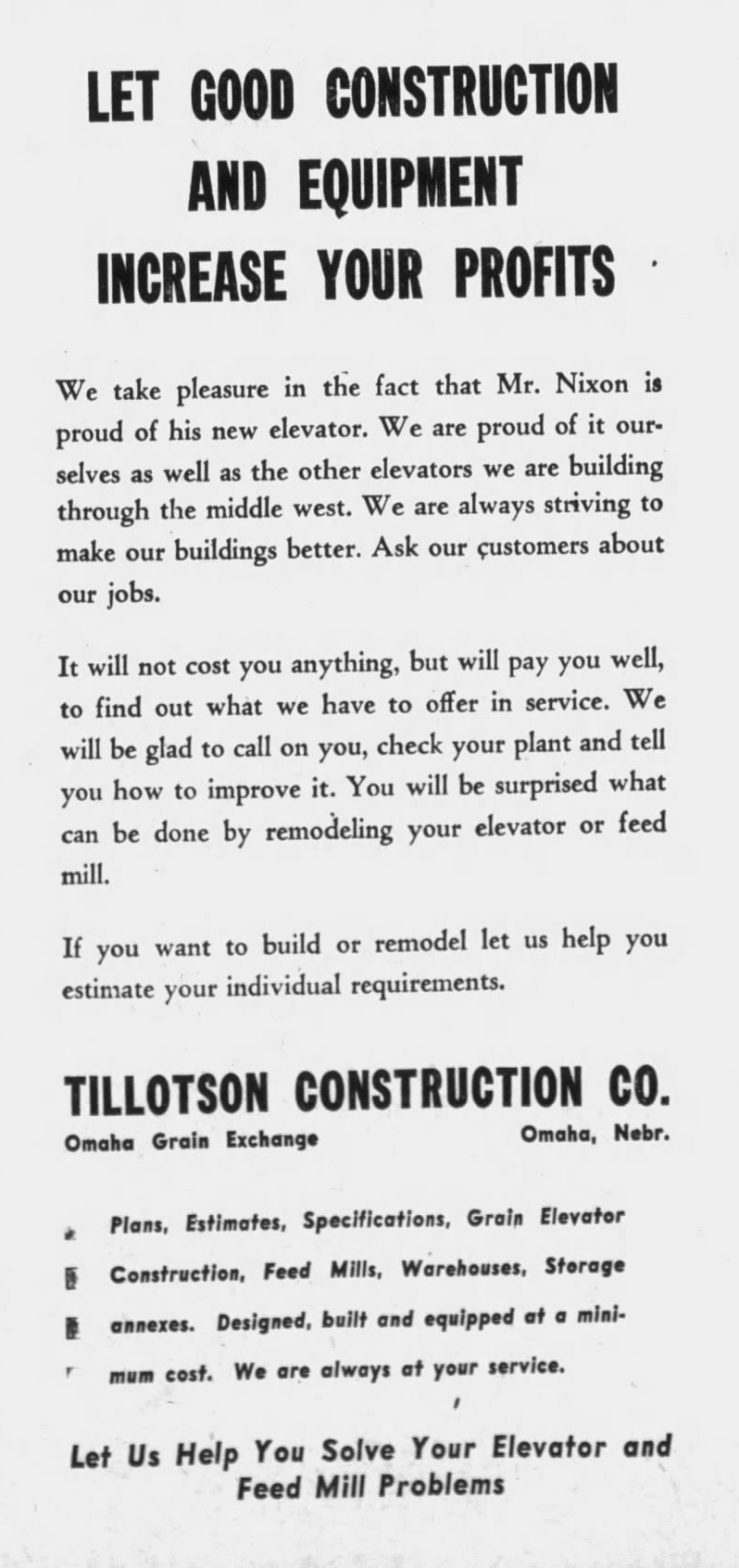
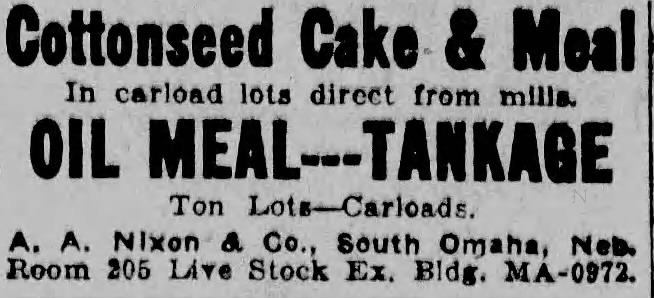
Tillotson Construction Co. was one of several organizations that welcomed Nixon Truck Grain Market at 27th and O Streets in a Dec. 1, 1938 Omaha Daily Journal-Stockman ad. “Let good construction and equipment increase your profits,” the Tillotson ad line advised.

Just 30 days later, another paper, The Daily Record, carried the brief notice of a leasing agreement between A.A. Nixon & Co. and Tillotson for machinery and equipment. Value of the lease was $1,808.24.

With questions on why a prosperous company like Nixon would lease, we tabbed Brad Perry, who’s a good friend of Our Grandfathers’ Grain Elevators, to explain. Brad has had a career in finance, which he described in an email:

With the Farm Credit meltdown of the mid 1980’s, the 12 District Banks for cooperatives merged with the central Bank for Cooperatives, headquartered in Denver. Then it was renamed CoBank.

More history: There were 12 Farm Credit Districts, roughly similar to the Federal Reserve Districts. Each District had a Federal Land Bank with local Land Bank Associations, a Federal Intermediate Credit Bank with Production Credit Associations, and a Bank for Coops (BC). The central bank handled the large loans that exceeded the District Banks for Coops’ lending limits.

All this changed after the farm crisis of the late 1980’s. There are now a total of six District Banks, including CoBank.  

I was at the Omaha BC from 1975 to 1987. In 1980, OBC started a consulting company to work with coops in our District, which was Iowa, Nebraska, South Dakota, and Wyoming. At the depth of the farm crisis, I took the consulting company private. I’m still trying to fully retire, but have a couple clients I can’t say no to!
Q. Was it customary to lease machinery and equipment from the builder of an elevator?

A. I’m betting that the elevator’s owner didn’t have adequate funds to pay for everything, so the equipment was leased to him/her. That was not unusual. Why the equipment? It could be pulled out and re-sold.

Q. It looks like individual grain merchants like Nixon monopolized the market in grain distribution.

A. You’re about right on the grain merchants and monopolizing the grain business. The primary one was Cargill, along with the flour millers. Pillsbury, Washburn (Gold Medal), and so on. On the Northern Plains, there was also Peavey. Most of them were in cahoots with the railroads. There really wasn’t any government action that broke them up, but their predatory pricing. That gave rise to farmer-organized cooperatives and locally owned grain companies. The federal government did come in to the grain business in the early 1930s–the Great Depression. They created the Federal Grain Company to buy surplus stocks, i.e. wheat. Some of those elevators still stand and are still in use.
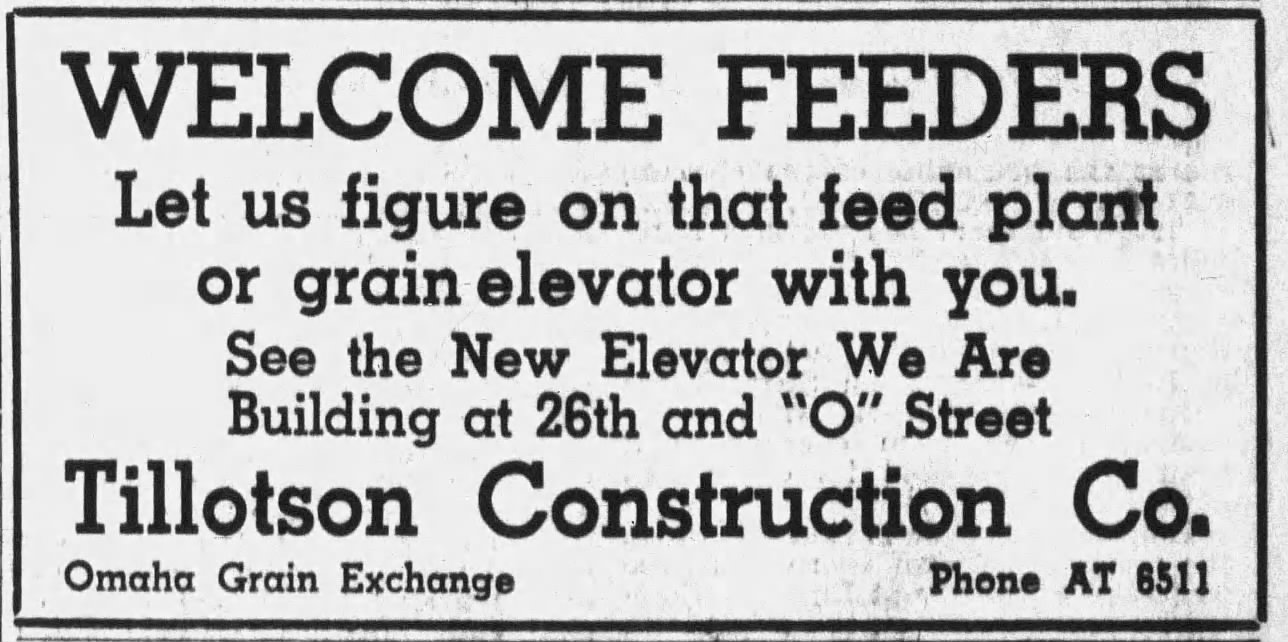
Q. It also looks like we’ll be on the road in a few weeks, and that could lead through southwestern Kansas, where Tillotson built elevators in a string of small towns.

A. On your Kansas trip, southern Kansas has some of the oldest concrete elevators in the country. All were built for wheat. As you know, there are mammoth elevators in Salina, Hutchinson, Topeka, and Wichita–particularly Haysville just South of Wichita. On or within 25 miles of U.S. 81/I-35 are four of the five largest elevators in the world. These are in Salina, Hutchinson, Haysville, and Enid, Okla. All were paid for by Commodity Credit Corporation storage payments.

Q. Besides the bountiful grain production, why are they concentrated there?

A. It was not unusual for wheat to be stored as long as 10 years. All wheat into the “terminals” came in 40-foot boxcars from area elevators. You’ll notice larger elevators the farther west you get. Notice Dodge City. It was too far away from the terminals, so they built more storage locally. You’ll see the same in Garden City, Ulysses, and other southwest Kansas towns.

How some wooden elevators in Nebraska were repurposed to produce cattle feed

Story and photos by Brad Perry

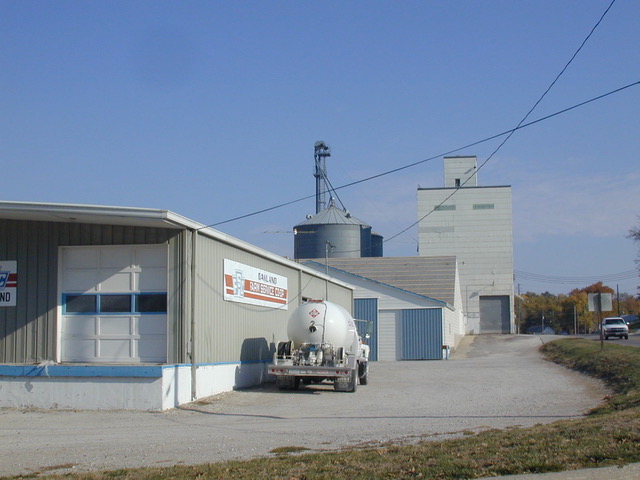
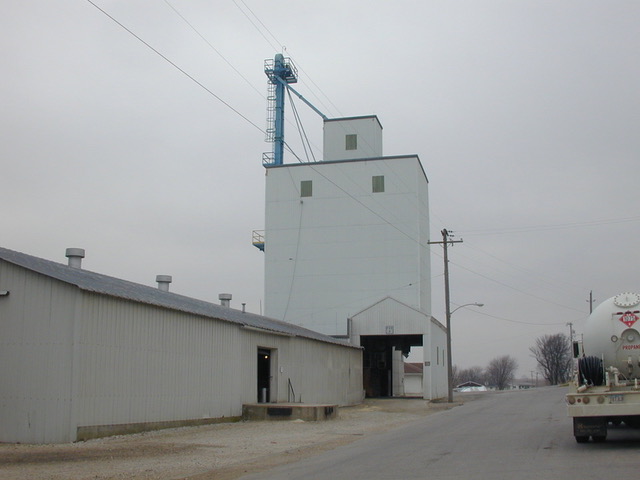
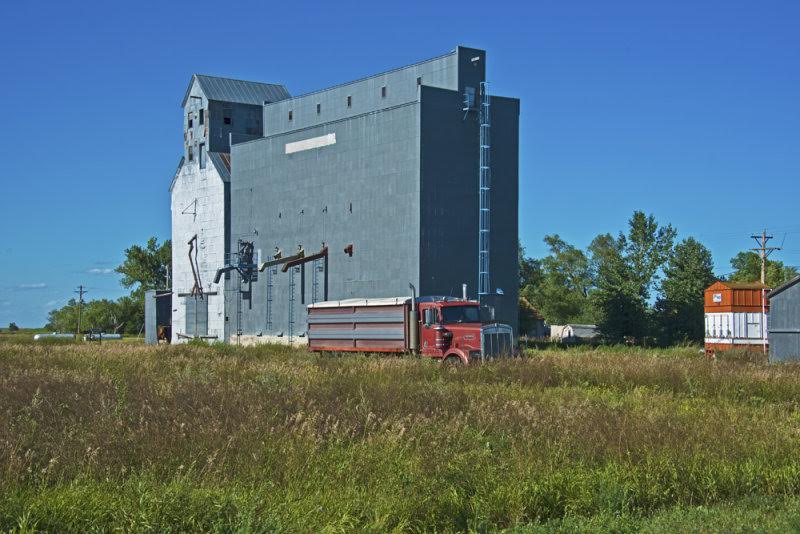
In Nebraska, many of the 12,000- to 18,000-bushel wood elevators got turned into feed mills, mainly for cattle feed. Most of these elevators had a roller mill in the basement and made a decent feed mill due to their small bins. An example from Walthill, Nebr. is seen in the photo above.

In Iowa, this was less common due to more hogs than cattle. Swine feeds tended to be more complex with more ingredients than cattle feed.

Feed mills were still being built of wood in Iowa up until the 1960s.

Quad States Construction, out of Des Moines, Iowa, got started building wood feed mills and then became a major builder of concrete elevators and annex tanks.

A reader’s contribution presents two of the largest–and last–wooden elevators on the prairie

Story and photos by Brad Perry

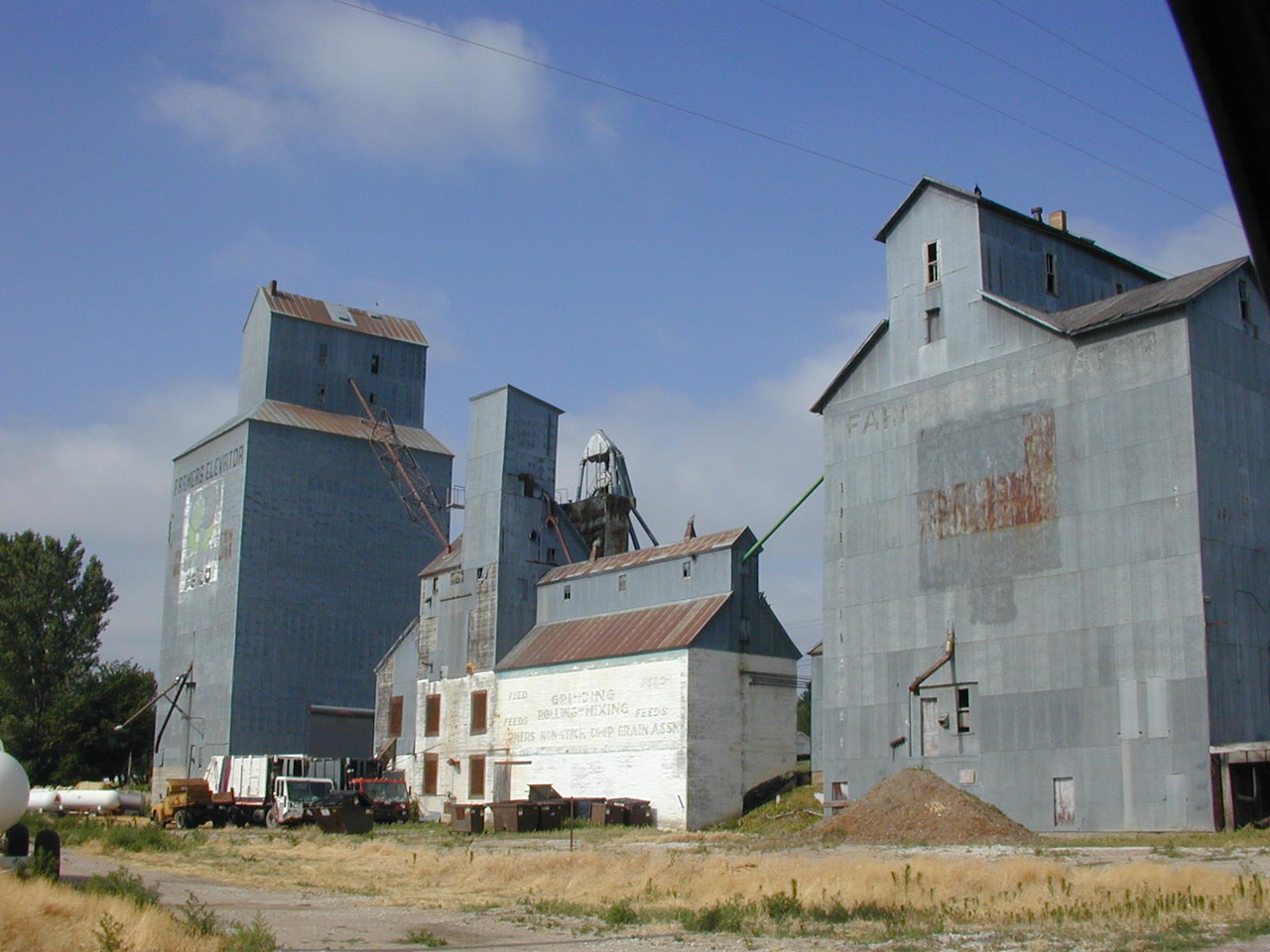
When I started with the Omaha Bank for Cooperatives in 1975, my accounts were the co-ops north of Interstate 80. One was Tekamah, Nebr., where Farmers Elevator was in grain and feed. I was told this was the last wood elevator built in Nebraska. 

It was huge for a wood house — 100,000-bushel capacity. I was also told they went with wood due to poor soil conditions. You can still see it on Google Earth. It’s the big one on the left.

Editor’s note: The poor soil conditions may have led to a heavy concrete elevator settling.

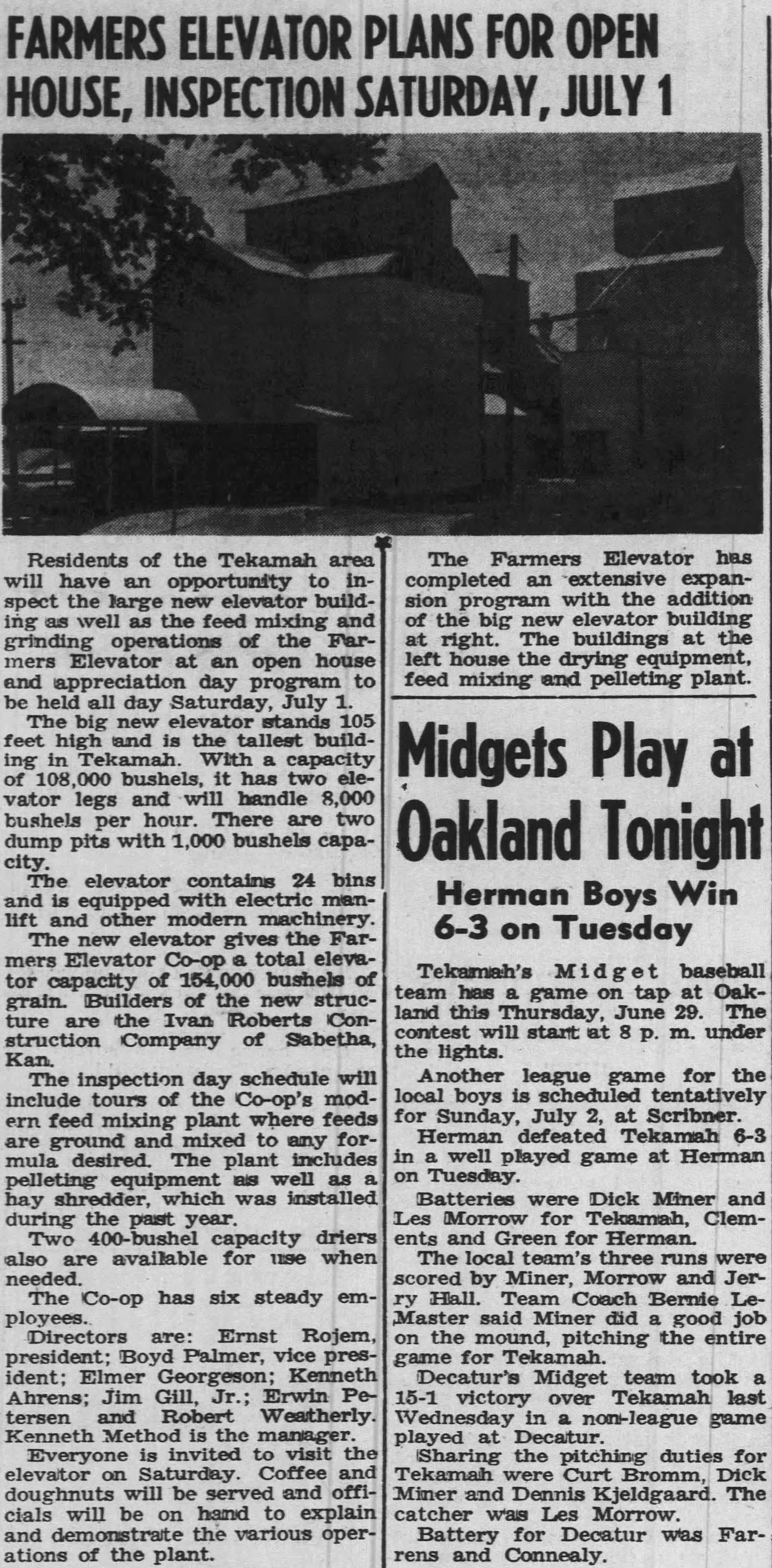
This June 29, 1961 article from the Burt County Plaindealer describes the new twin-leg elevator that would soon open with all the modern fittings found in a concrete elevator.

The very last wood house we financed at OBC was for the co-op at Sisseton, S.D. It’s still in use and holds 60,000 bushels. 

I can remember it cost $6 per bushel ($360,000) when a 250,000-bushel concrete house was $500,000. 

Minnesota and North Dakota stayed with wood longer than anywhere else because of their cold weather. They built as much as 250,000-bushel wood houses. Wood is a much better insulator than concrete and does not have condensation issues.

Uniqeness in an early Cargill elevator in northeastern South Dakota

Early Cargill 02

Brad Perry shares another photo of an early Cargill elevator, this one at Athol, S.D.

Athol and yesterday’s Ashton are twin towns in Spink County, a ways south of Aberdeen. Together they must have about 180 people.

We hope those people appreciate the uniqueness of their elevators.

An early Cargill country elevator complex at Ashton, S.D.

Early Cargill 01

Brad Perry shares another photo of an early Cargill elevator, this one at Ashton, S.D. As the Dakota Territory surrendered its prairie to agriculture in the 1880s, grain traders like Cargill expanded north and west. The initial heavy harvests from the rich earth raised demand for storage.


The trading partnership of Bagley & Cargill in South Dakota

Bagley

Our friend, Brad Perry, saw the recent posts about Cargill history and was prompted to send some of his photos.

“The Bagley name still shows up in South Dakota along U.S. 12,” Perry notes. This elevator turns up in an online source that says the location is Andover, just east of Aberdeen.

“George C[olt]. Bagley was a member of a grain-trading family in eastern Wisconsin,” Wayne G. Broehl, Jr. writes in his massive history of Cargill. 

In the early 1880s, Wisconsin farmers were moving out of wheat and into livestock, so Bagley betook himself to South Dakota and partnered with Sylvester Cargill, one of the five Cargill brothers.

Broehl continues:

Most of the Bagley & Cargill operations were in that part of the Dakota territory that later became the northeastern section of South Dakota. Similar to Jim Cargill’s larger-capacity operations in the Red River Valley, the Bagley & Cargill’s 13 structures at the firms 10 locations were more substantial (although only one was classified as an elevator.) This elevator, at Aberdeen, had a capacity of 25,000 bushels; the Andover warehouse had the same; the Groton operation had an 18,000-bushel capacity and the Bath warehouse, 15,000.

An extensive biography of Bagley says the company concentrated on towns along the Chicago, Milwaukee, St. Paul and Pacific Railroad.

The partnership lasted “only a short time.” Bagley’s wife, Cornelia, would later recall, “Ves Cargill [Sylvester] was a partner but George could not put up with his suspicion of all deals and bought him out.”


One of Cargill’s early concrete elevators found in southern Minnestota

Elmore

Our friend, Brad Perry, saw the recent posts about Cargill history and was prompted to send some of his photos.

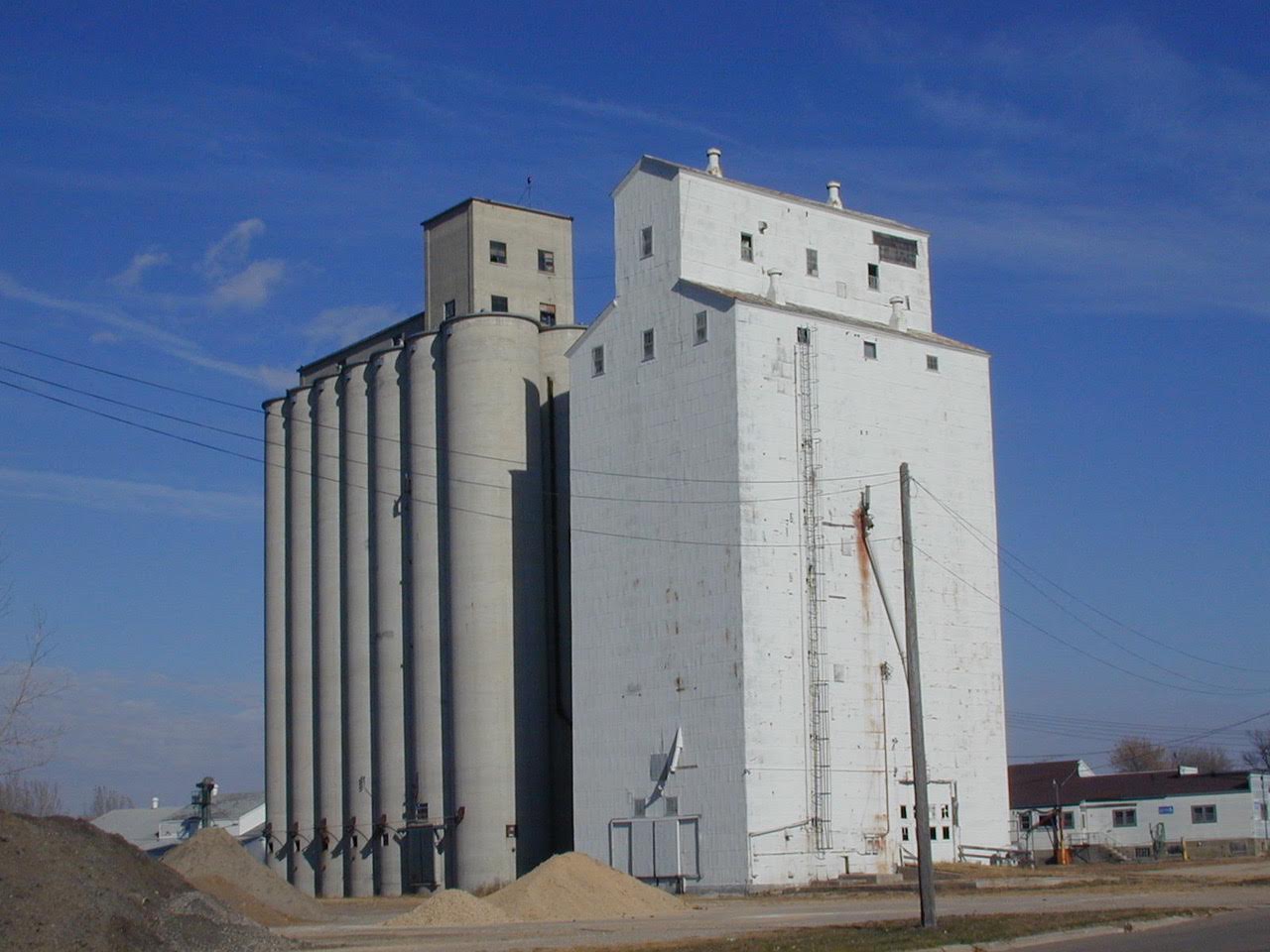
Here he shows us one of Cargill’s early concrete elevators. It’s located in Elmore, Minn., a tiny town in Faribault County, in the south-central part of the state right on the Iowa line.

As railroads pushed west in the 1870s, Will Cargill expanded his grain storage along the lines through northern Iowa and southern Minnesota.

And as the era of reinforced-concrete elevators unfolded, Cargill’s successors continued building.

We don’t know a thing about this elevator’s dimensions or who might have built it, but how impressive is the wooden elevator on the right? It stands almost shoulder to shoulder with the more modern concrete one. 

The Atlanta, Kan., elevator suggests our grandfathers’ signature designs


AtlantaKansas

Photo by Brad Perry

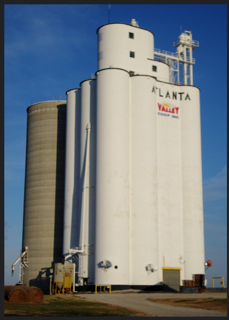
Editor’s note: Contributor Brad Perry sent this photo of Valley Coop’s elevator in Atlanta, Kan. The rounded, stepped headhouse suggests Tillotson and Mayer-Osborn design influences. A call to the elevator put us in touch with Katherine Grow, who runs it with her husband Darren.

“I think it’s a Johnson house. I remember when they built it. All the men in the community helped when they started pouring. Markle was the head of the crew that did it. I think it was ’58 or ’59 when it was constructed. In fact, it’s better designed than a lot of places. We added an outside leg. We used to load out on the rail but don’t any more. We’ve done maintenance and made safety updates. We’ve had it painted once. We were told it is the kind of concrete that has to be kept painted. It’s easy to work with, the way it’s put together with the inside leg. We’ve been pleased with it. I was a teenager or preteen when they built it. Once started, they kept pouring. With the lights at night, it reminded you of when you see a riverboat all lit up going down the river. It was cool. When we built this other bin and they could do it in sections, it was kind of different. They just pour so much and go round and round with a little cart, and come night, why, they’d quit and go home.”

As we sensed during our visit, the Tillotson elevator in Hinton, Iowa, was part of big doings

Hinton by Brad

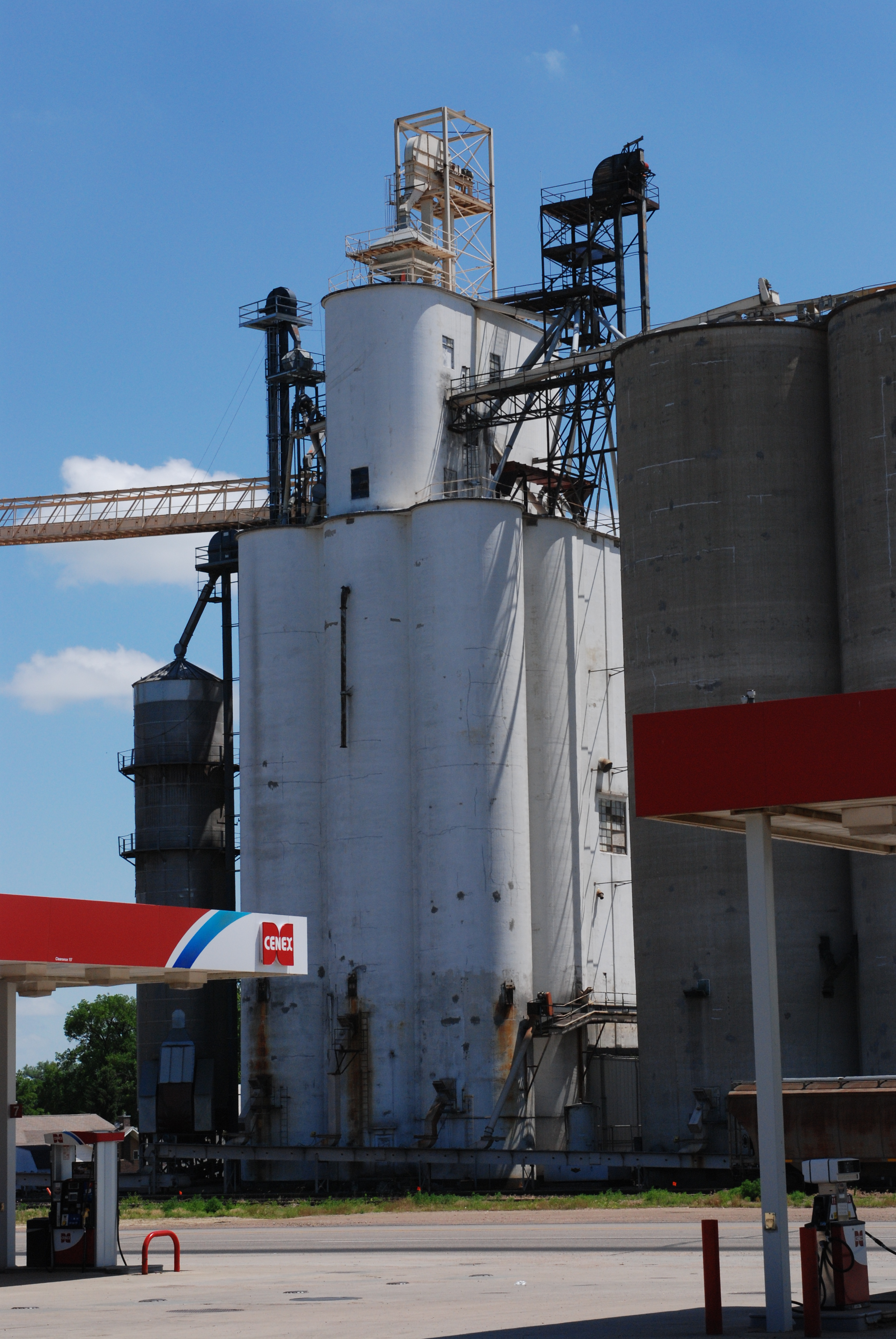
After our recent post on Tillotson Construction Company’s elevator at Hinton, Iowa, reader Brad Perry sent in one of his own photos of the location, which you see above. We believe the concrete elevator was built in 1954.

Brad also alerted us to some news.

On July 1, the Farmers Cooperative Company, of Hinton, merged its operation that includes the Tillotson elevator with Central Valley Ag, which he calls “a very large” co-op from York, Neb.

Indeed, chief executive Carl Dickinson welcomed FCC in a statement on CVA’s website.

Photo by Kristen Cart

Photo by Kristen Cart

“As we get to know FCC better, my excitement builds around what we can accomplish together,” Dickinson said. “I would like to thank all of the FCC member-owners for their votes (sic) we are thrilled that you have chosen Central Valley Ag for your future.”

Adding Hinton gives CVA some unique advantages. As Brad Perry explains: “Hinton can load 110-car shuttles on three different railroads—UP, CN, and BNSF. It may be the most strategic grain location in the Midwest.”

See CVA’s website for a superb aerial view of Hinton.

As Kristen wrote in her post, “The entire complex has become a far greater enterprise than our grandfathers, builders of the original structures, ever envisioned.”

With its stepped headhouse, could the elevator in Odebolt, Iowa, be from Mayer-Osborn’s lineage?

Story by Ronald Ahrens with photos by Brad Perry

Blen NorthRecords of the Tillotson Construction Company show no information on the grain elevator at Blencoe, Iowa. A previous post presents recent photos from Blencoe as well as delving into mysteries surrounding the Tillotson elevator and the one by Mayer-Osborn Company.

Now Brad Perry volunteers his own photos from Blencoe, which is just off Interstate 29 less than an hour’s drive north of Council Bluffs. Here we see the Tillotson, with the curved headhouse, and the Mayer-Osborn, with the stepped headhouse.

Supplying more photos, Brad raises an interesting question: could the elevator at Odebolt, Iowa, which is 63 miles to the northeast, be part of the Mayer-Osborn lineage? It also has a stepped headhouse. He notes that they had to have been built at the same time. It stood near the elevator of the Cracker Jack Company, which had operations in Odebolt.

Ode top

Brad supplies the link to a black-and-white image in the University of Iowa’s digital library.

Lacking Mayer-Osborn records, we can’t say without further probing or perhaps a site visit.

But we’re happy to pursue yet another thread in the story of our grandfathers’ grain elevators.

crackerjoffice