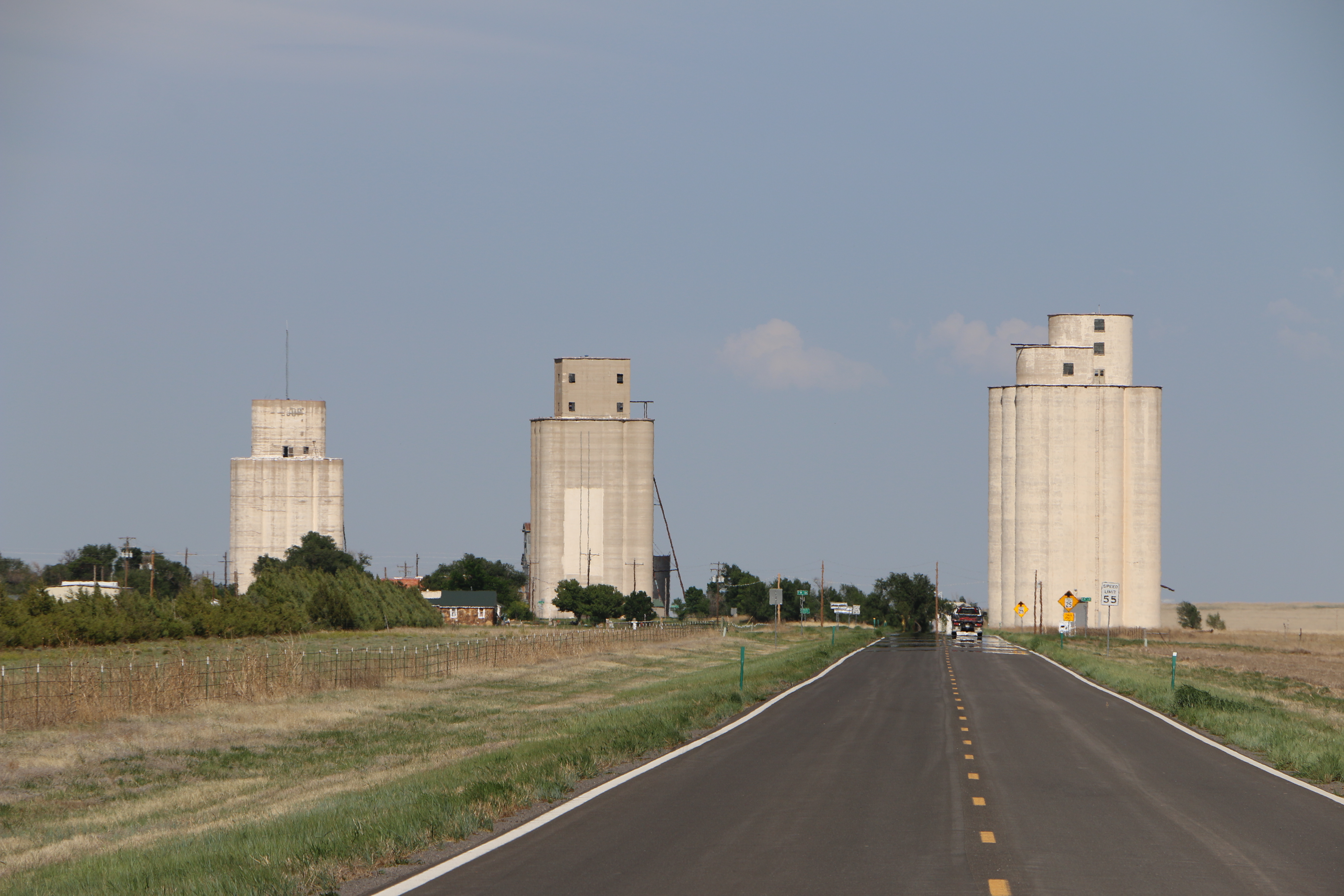
The Comanche National Grassland rolled on and on as we drove eastward on U.S. 160 in the southeast corner of Colorado. It seemed as if the scene would never change, but then a group elevators enigmatically appeared on the horizon. We hadn’t seen a cultivated field other than alfalfa for hundreds of miles on our drive from Utah’s canyon country. Where did all the agricultural bounty, as suggested by the elevators, come from?
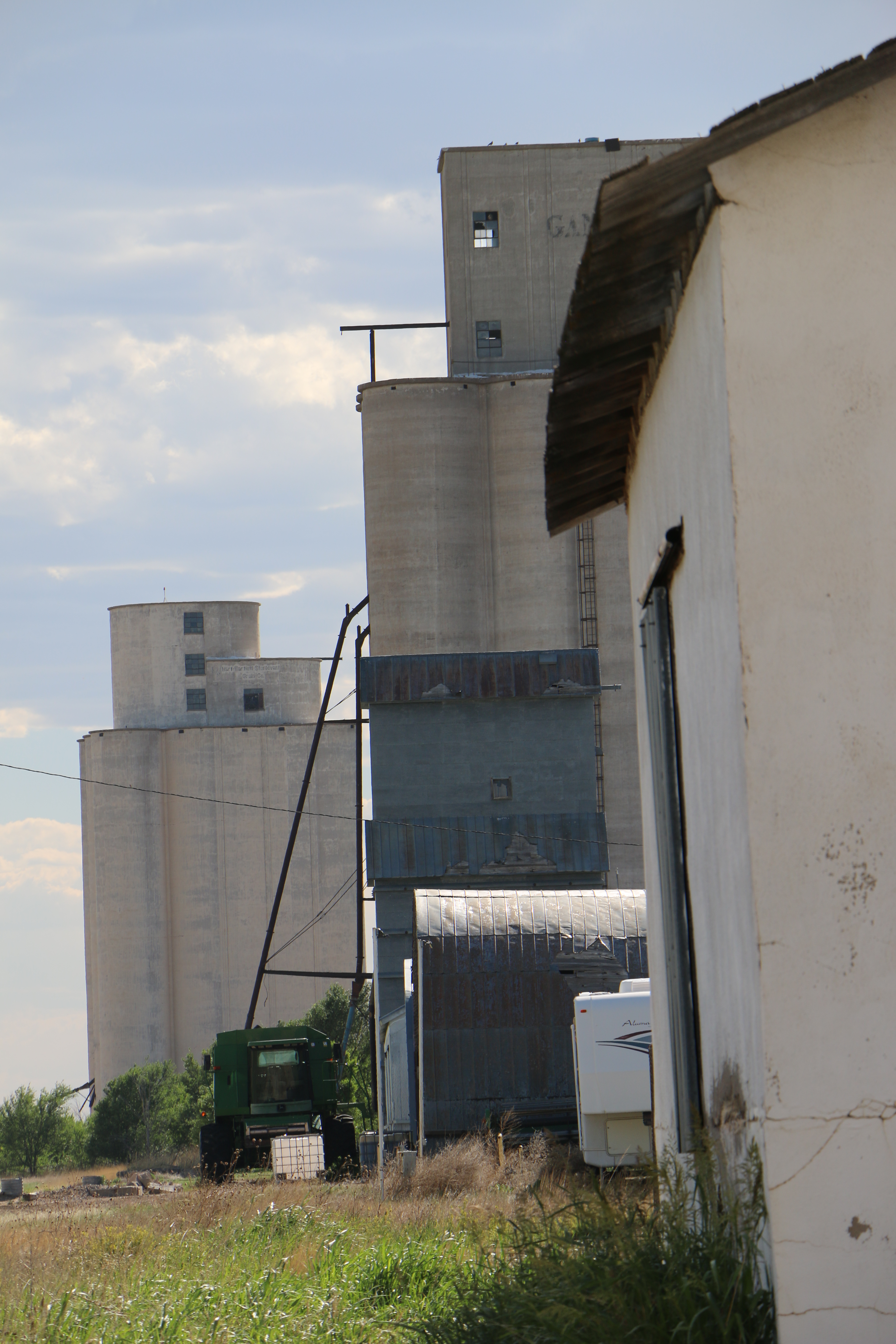
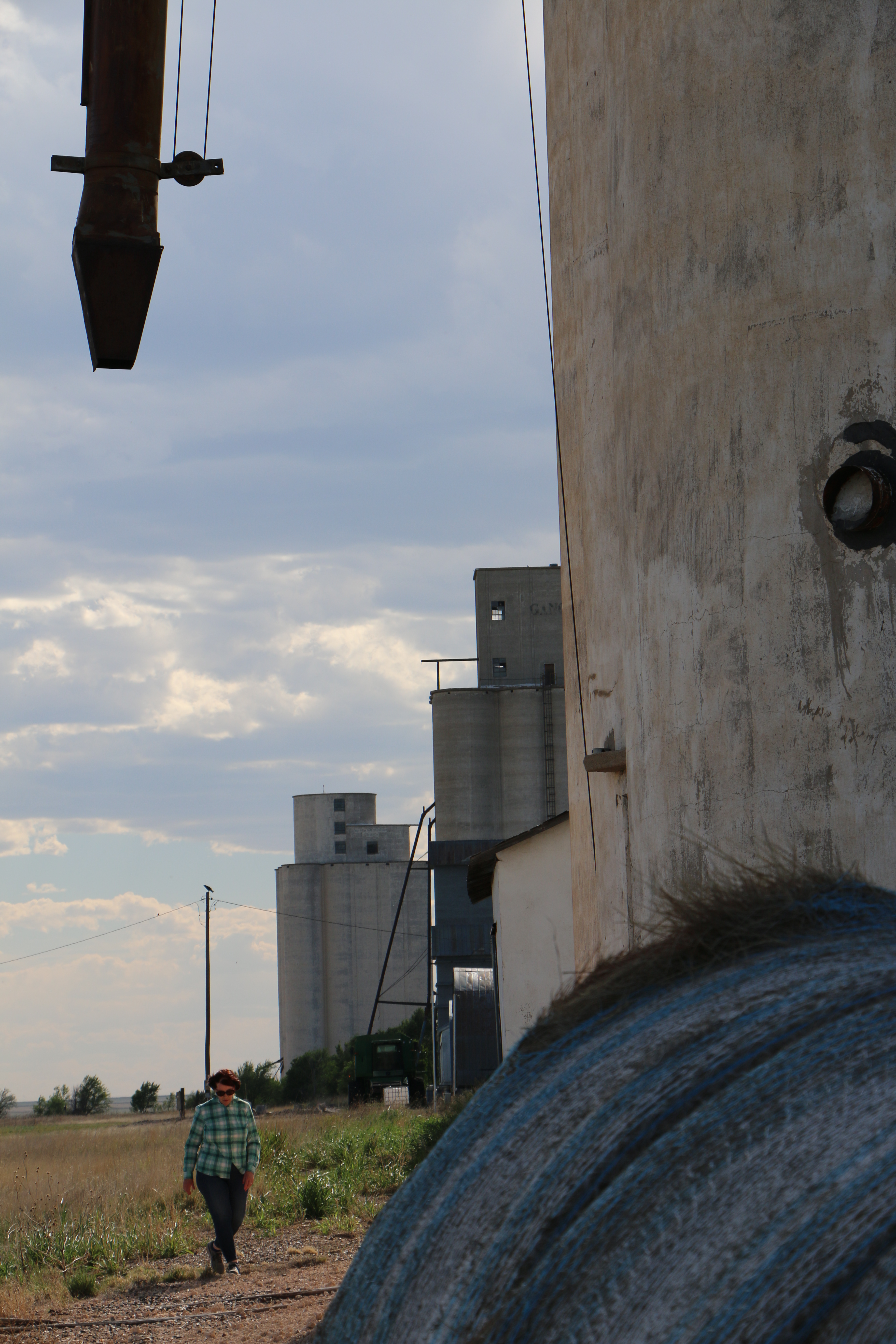
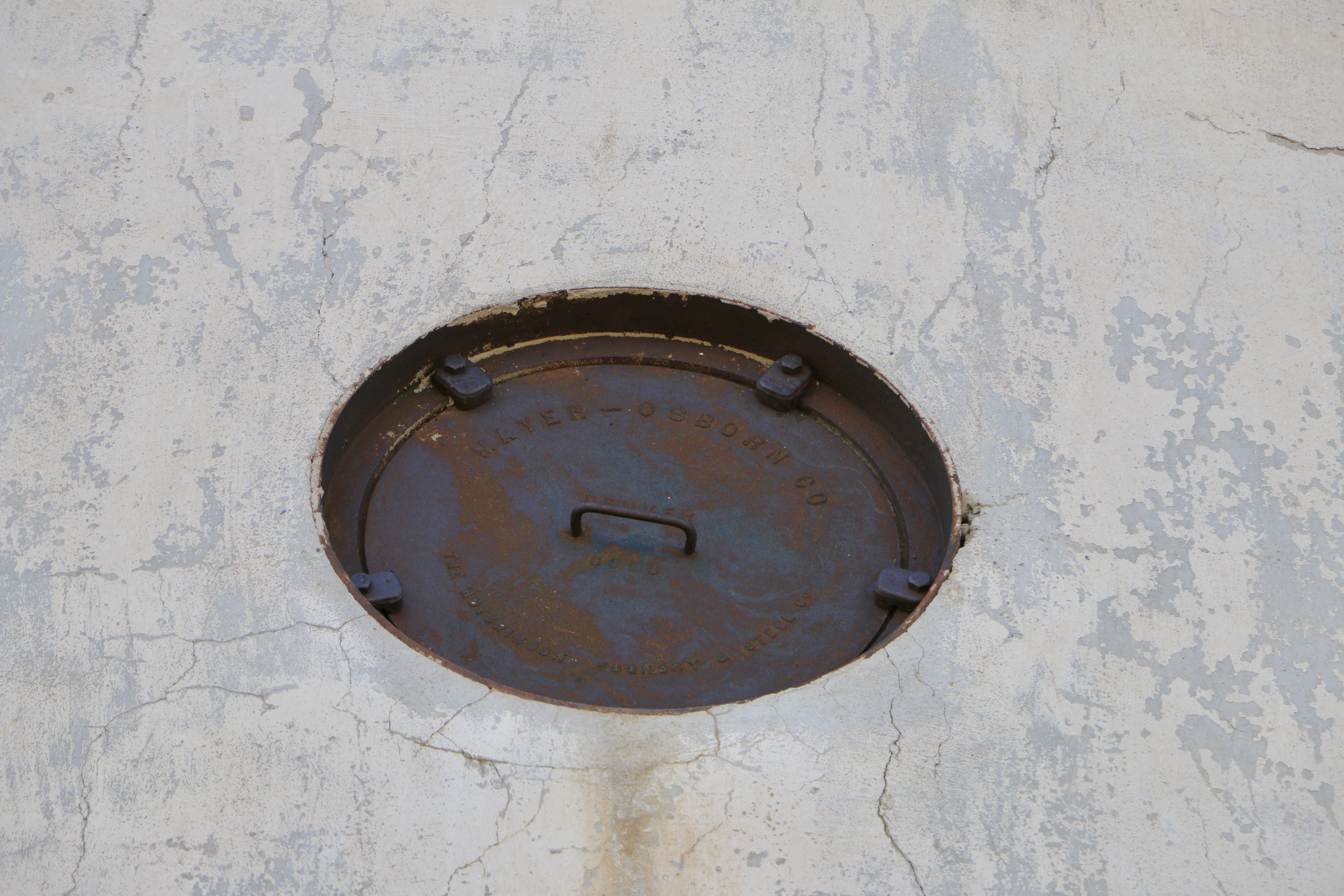
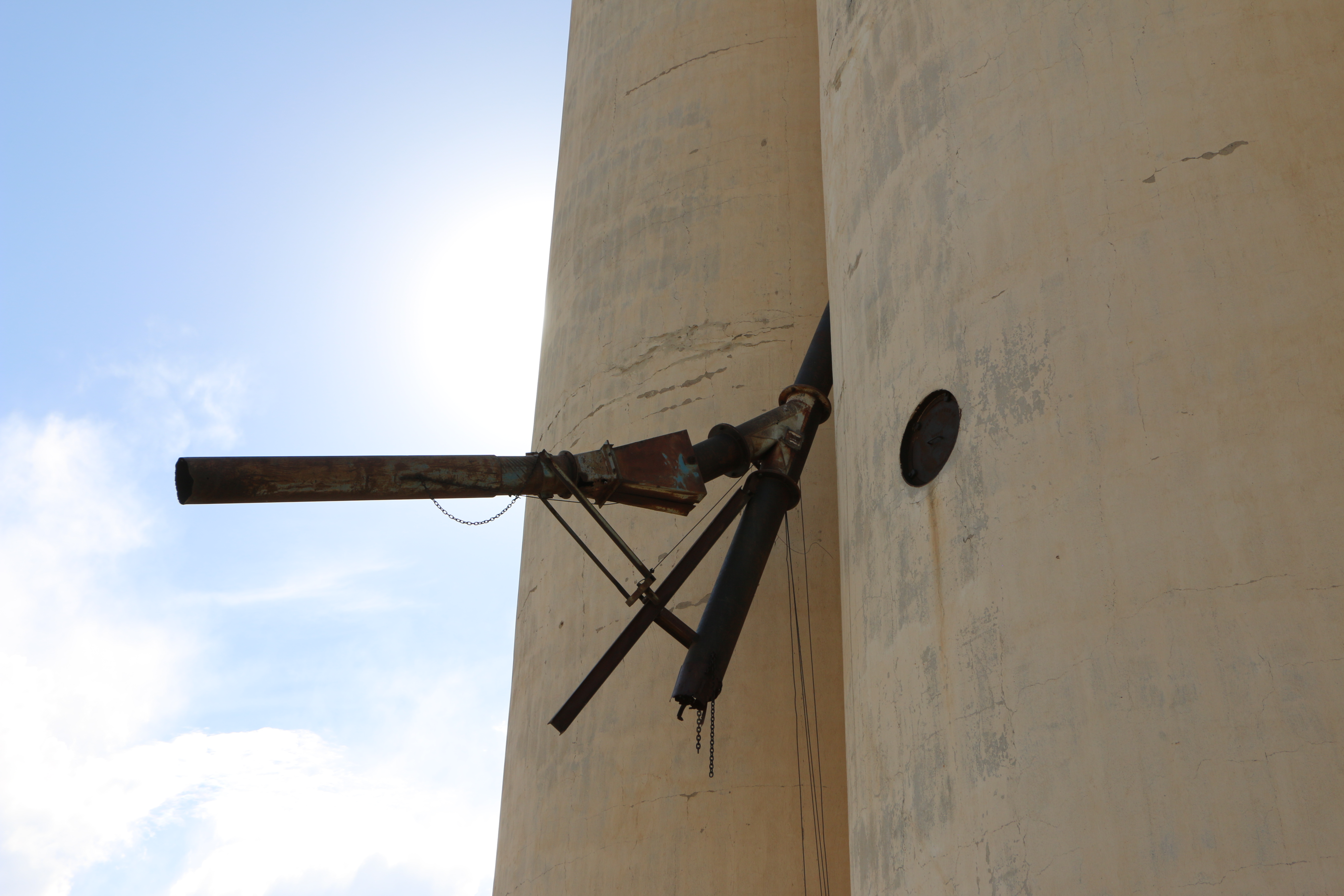
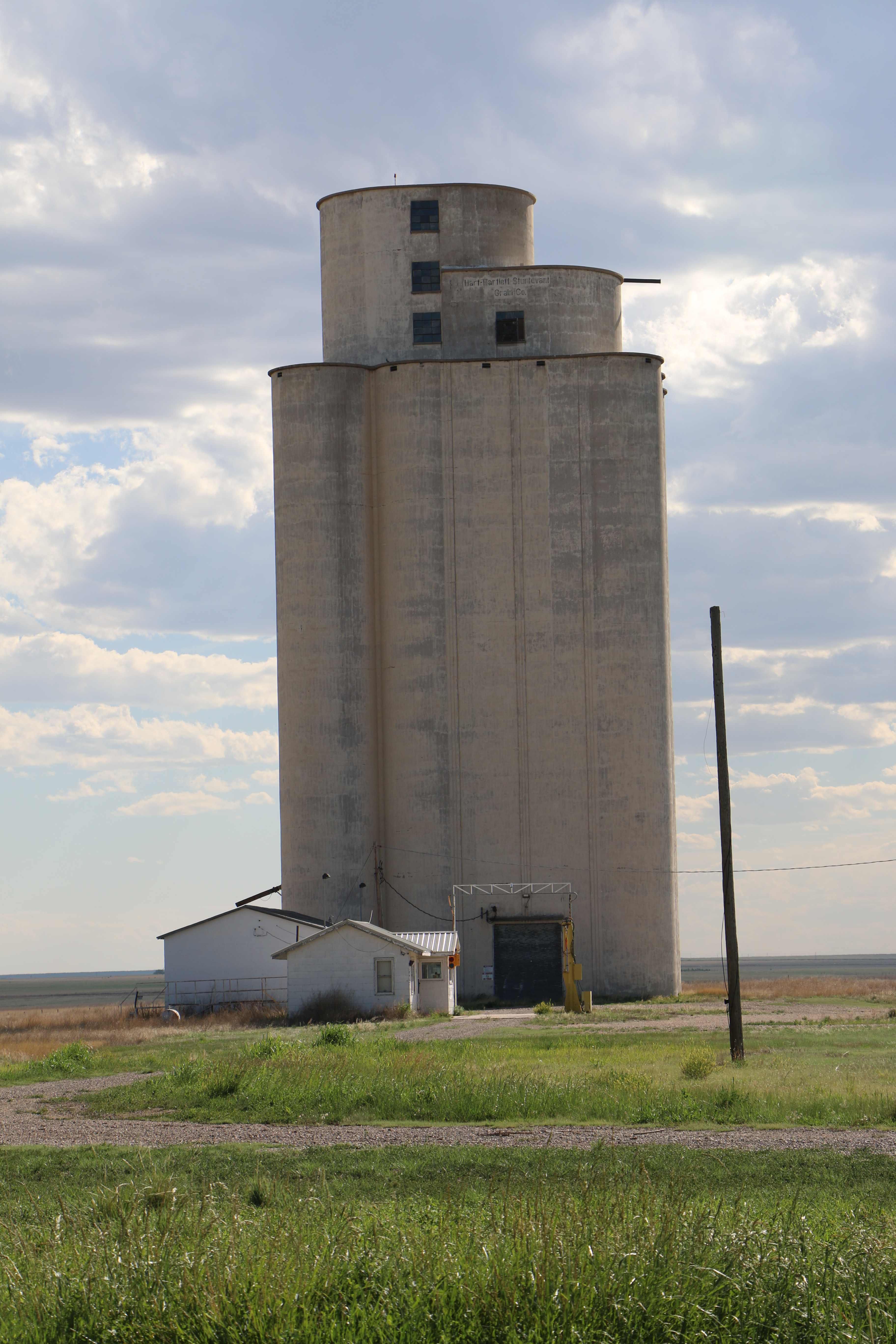
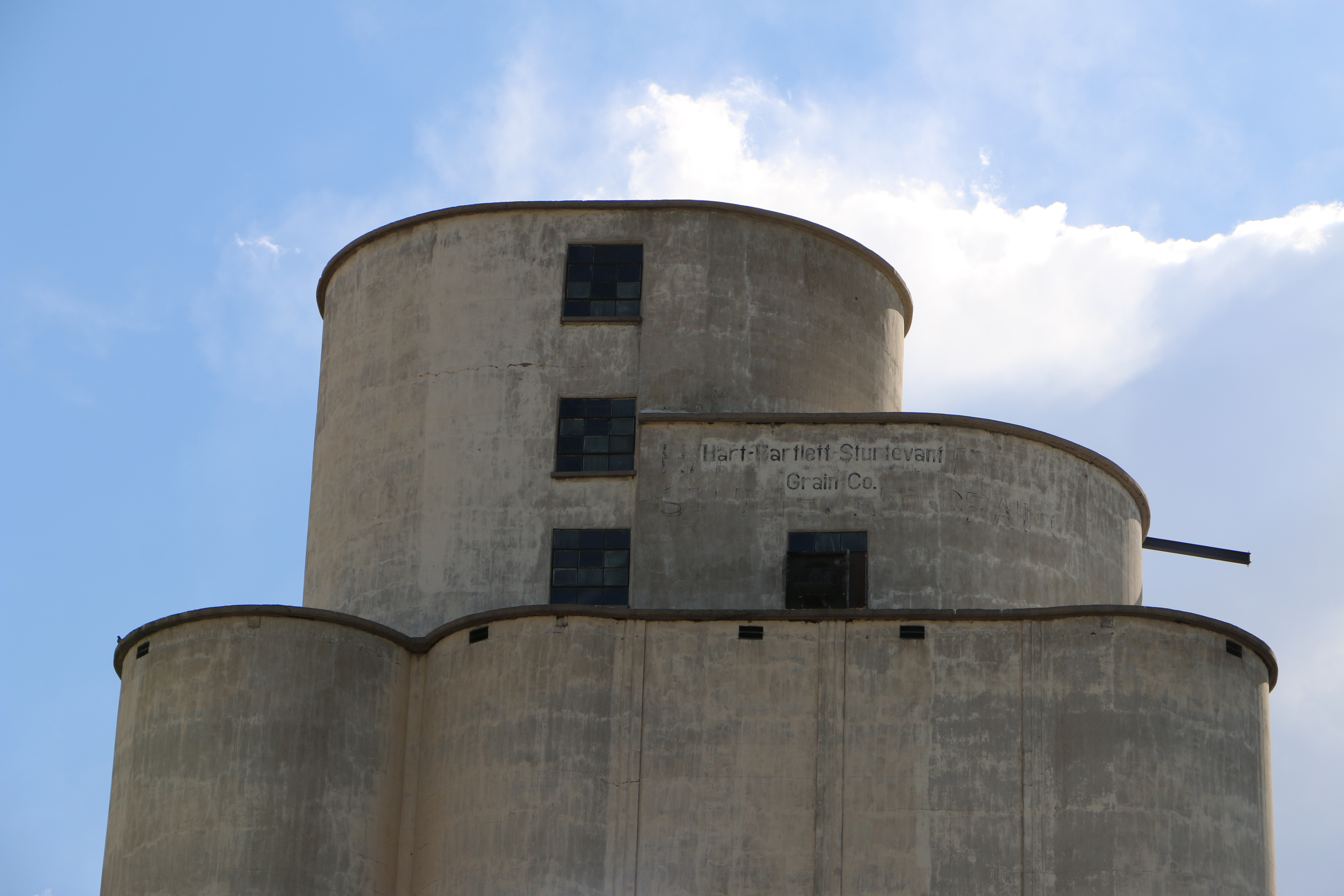
We soon arrived at the Pritchett complex of Panhandle Milling. Not a soul was around, so I helped myself to some pictures. Most intriguing was the suave elevator with the stepped cupola. There were two manhole covers, but they were high up and I couldn’t read the embossed inscriptions. On subsequent review, they reveal the builder’s identity and more: Mayer-Osborn Co., Denver, Colo., The Hutchinson Foundry and Steel Co.
I was on the hunt for Tillotson elevators, so this was an unexpected find and it’s a big one, the first Mayer-Osborn elevator we’ve chanced upon in a while. We’ve never gotten our hands on Mayer-Osborn records and don’t know how many they built. Pulling one out of the weeds, so to speak, is a big deal.
The stepped cupola is a signature Mayer-Osborn feature, a great support in our argument that the architectural significance of grain elevators isn’t fully appreciated. Hello, Smithsonian!
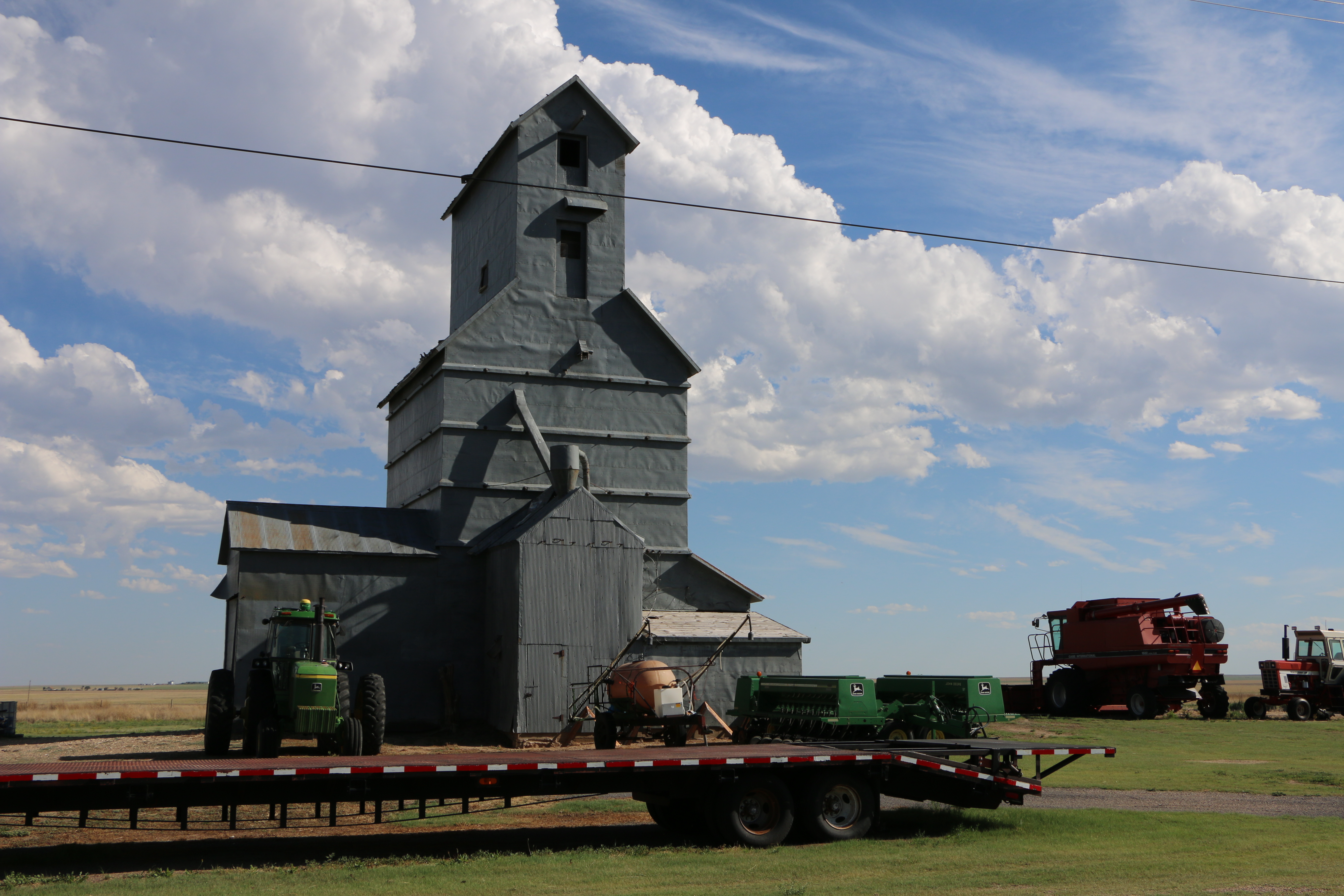
The other concrete elevators at Pritchett revealed nothing significant to our cause. I did linger a few moments at the old wooden elevator, which is fresh-looking and could still be in use.
The Mayer-Osborn elevator may have been part of the story on November 25, 1951 when the Pueblo Chieftain reported “Baca County Farmers Near New Crop Production High.”
Jess Suhler, manager of Hart-Bartlett-Sturtevant Grain Co., told the Chieftain that about fifteen carloads had shipped from Pritchett. An agent at the Santa Fe station in nearby Springfield said the grain was going to Denver and then to west coast feed mills. The paper further reported:
“Shipments do not nearly total the crop production, however. Much of the grain is being held locally for feeding and for later sale. The 1951 maize crop promises to be a record one.”
Taking a closer look at the towering elevator, I saw Hart-Bartlett-Sturtevant Grain Co. in fading letters on lower part of the headhouse. In a 1950 suit against the I.R.S., the company declared its headquarters to be in Kansas City, Mo., and it owned and operated 54 grain elevators in seven states. It was renamed Bartlett Co. in 1954.
There’s undoubtedly more to learn about Mayer-Osborn’s elevator in Pritchett, but it’ll have to be saved for a future post. Meanwhile, we’re still reveling in our good luck.

 Our Grandfathers' Grain Elevators
Pritchett has the western most elevators in my 3 volume book, “Breadbasket Rails.”