By Ronald Ahrens
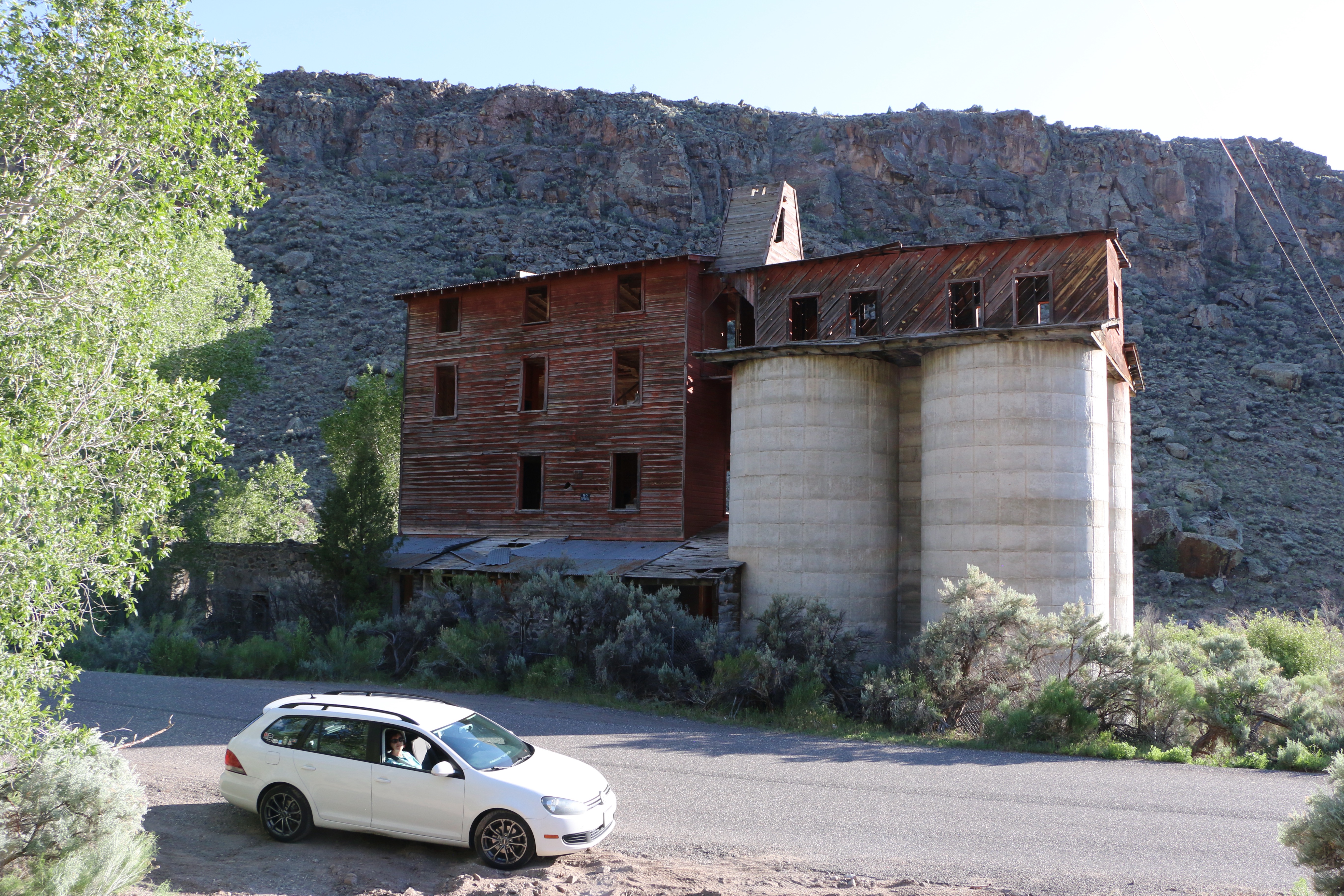
John’s Valley Road, the narrow paved byway from Bryce Canyon City, Utah to the tiny hamlet of Antinomy, follows the east fork of the Sevier River through remote country that hardly promised an elevator discovery, yet we found a mill house and grain storage tanks in an obscure place called Black Canyon.
The wooden structure that adjoined stubby concrete tanks appeared after we passed a series of irrigated alfalfa fields on the plateau. Four tanks rose about twenty-five feet from the canyon floor. They were creased at regular intervals and seemed to indicate a type of construction other than the familiar slip-forming of our prairie and Great Plains elevators. The outer surfaces of the tanks were pleated, so to speak, and I had the impression they were made of precast concrete and joined together by mortar. The place was fenced, though, so it wasn’t possible to get up close. My guess is that, because the tanks aren’t so tall, a lower load-bearing rating meant this manner of construction produced a result sufficient in strength. Additionally, it’s hard to imagine a continuous-pour operation in such an out-of-the-way place.
In the central space between them, the four tanks supported a generously proportioned superstructure, which I’d otherwise call a run, and a ramshackle cupola.
I stepped out of the car for pictures but found it unnerving to have the absolute stillness broken by intermittent blasts from a medium-bore rifle. It seemed a safe bet the target wasn’t a grain-elevator blogger, though. Anyway, it’s illegal to shoot across a road, isn’t it? So I went ahead with the photos. It was around five o’clock, and the ruins were harshly backlit.
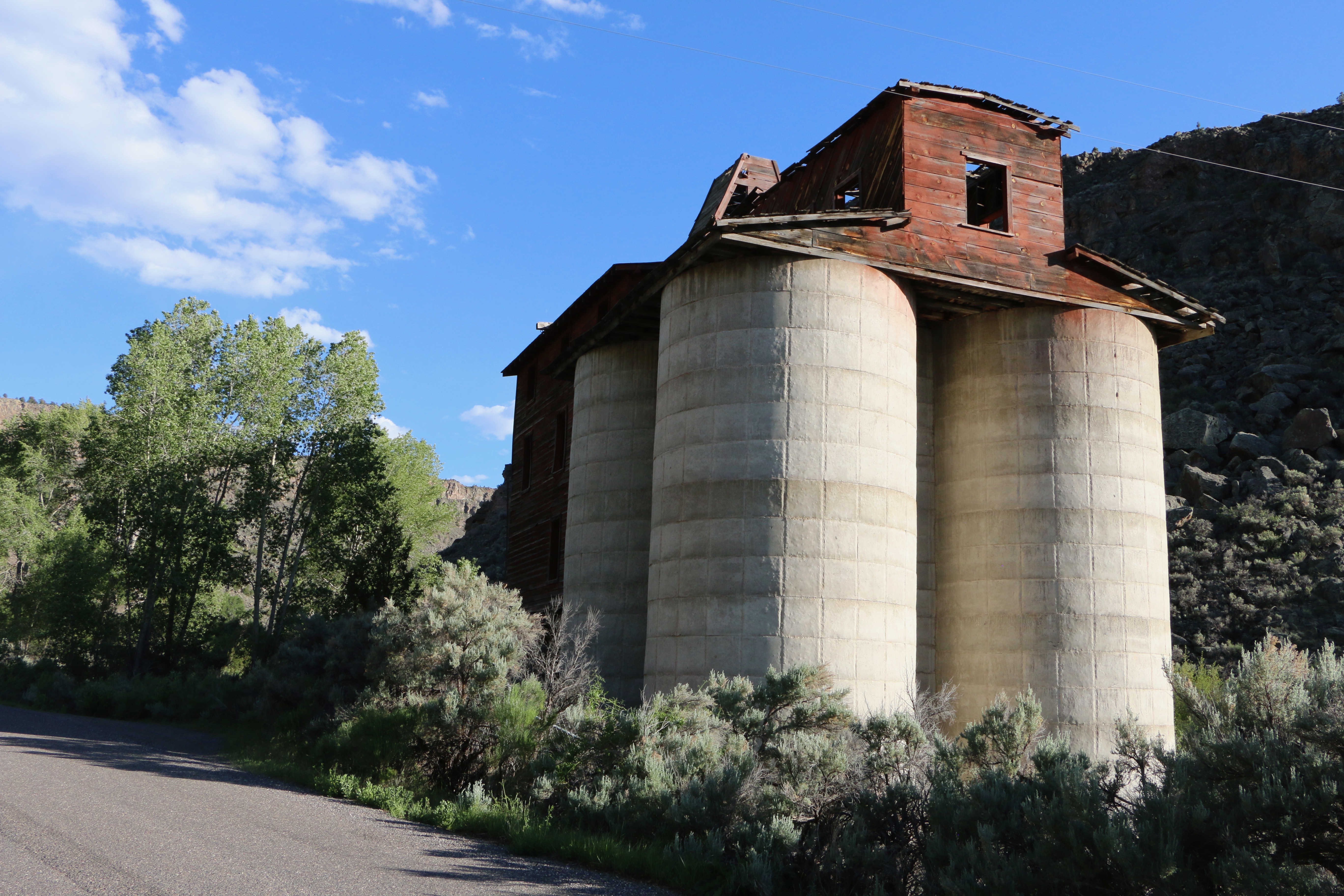
Returning afterwards to the car, I drove away hoping to find details about this attractive hybrid building, part grain-storage facility and part mill.
In no more than ten miles, my wife and I came to the tiny Garfield County hamlet called Antimony, pronounced AN-ti-MO-NEE, which takes its name from a “metalloid element” that’s useful as an alloy and in the making of semiconductors.
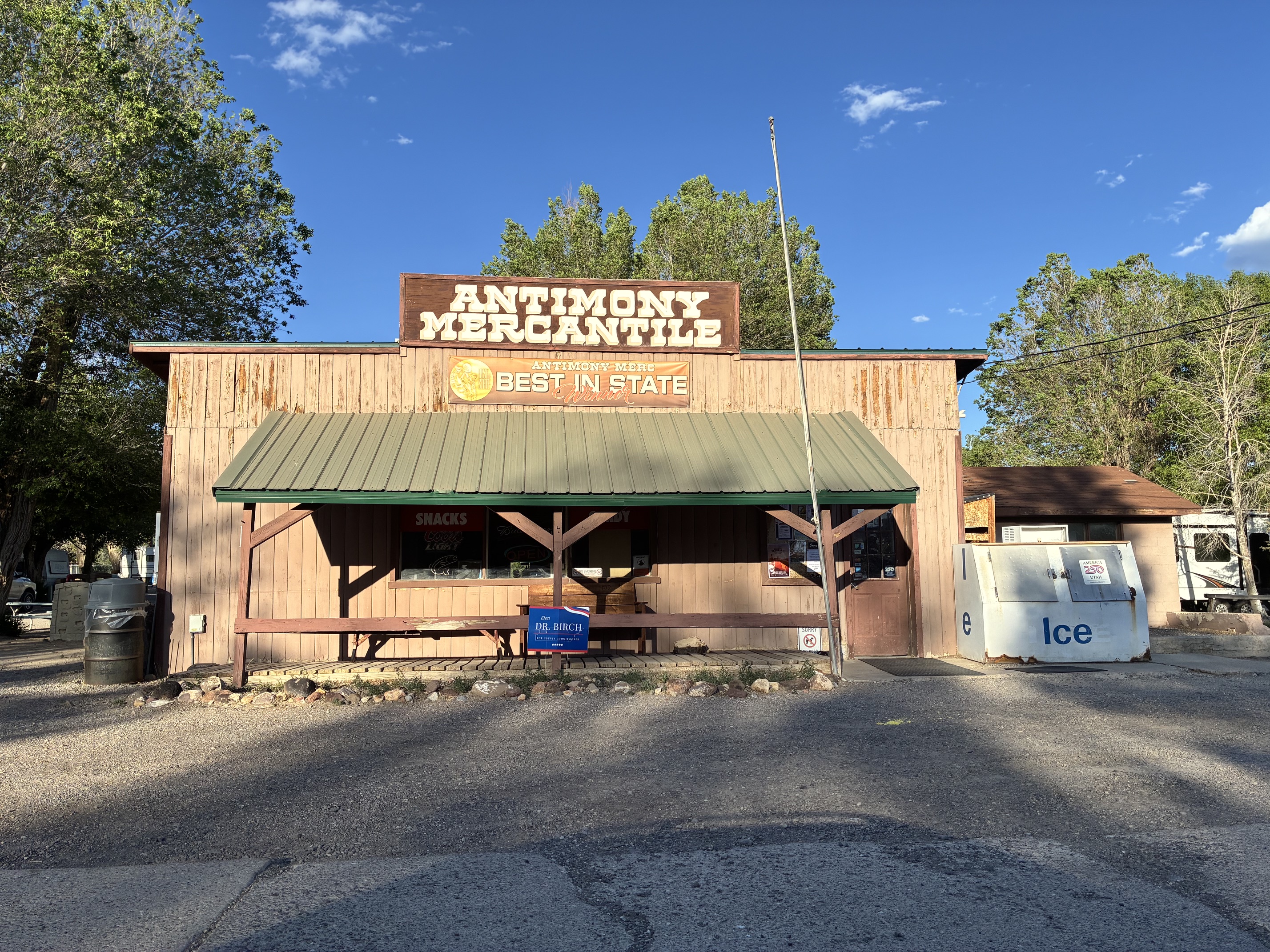

The name Antimony definitely doesn’t suggest a grain trading capital. The town is said to be so remote that it was the last in Utah to get electricity.
Nothing was moving except for a sturdy-looking man doing landscaping chores at Antimony Community Center.
“Oh, that’s Red Mill,” he said when I described the subject of my investigation. There used to be dryland wheat farming where the alfalfa is now, he said. The wheat growers gave it up after the Drought of … he couldn’t remember but reckoned the flour mill was last used sixty years ago.
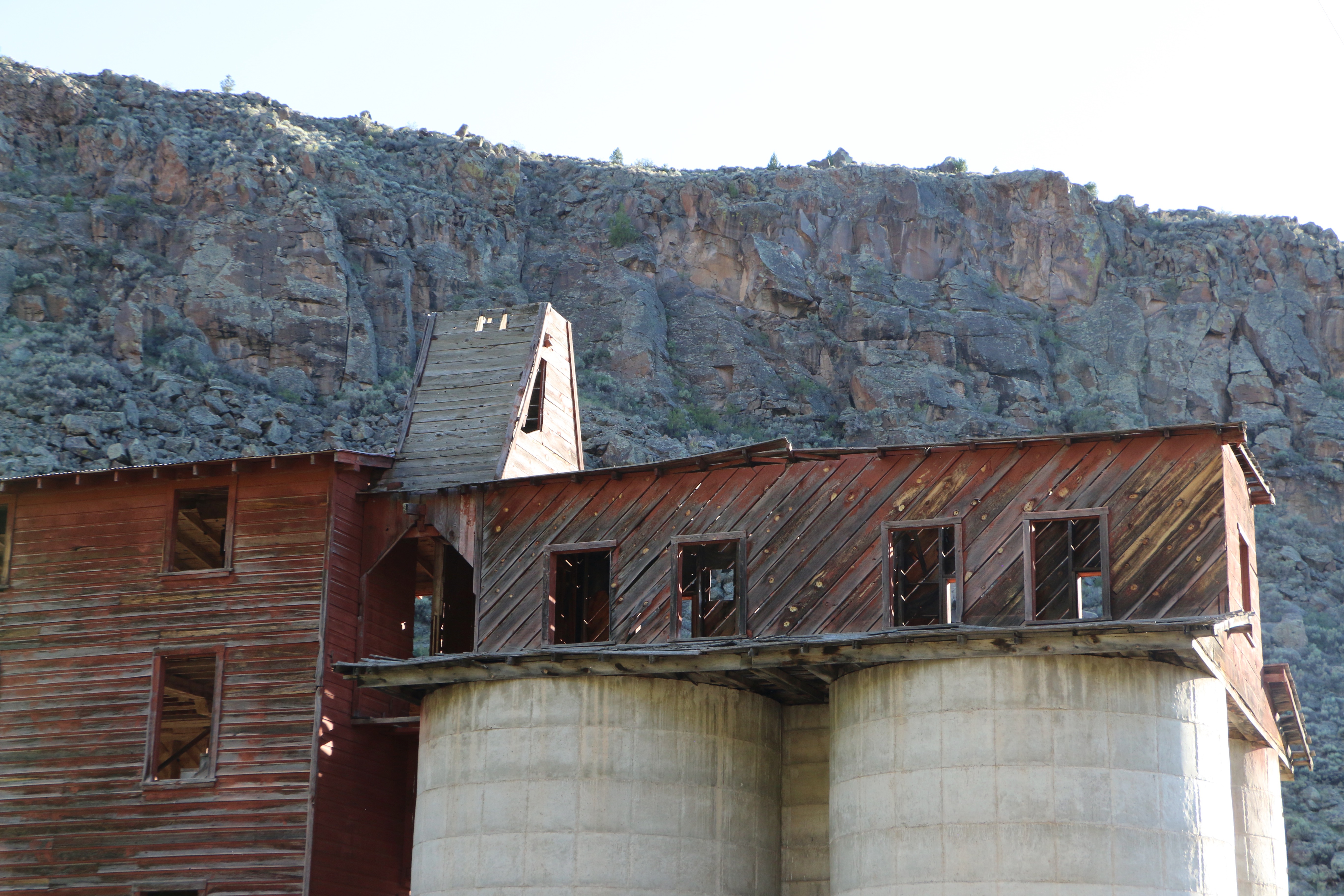
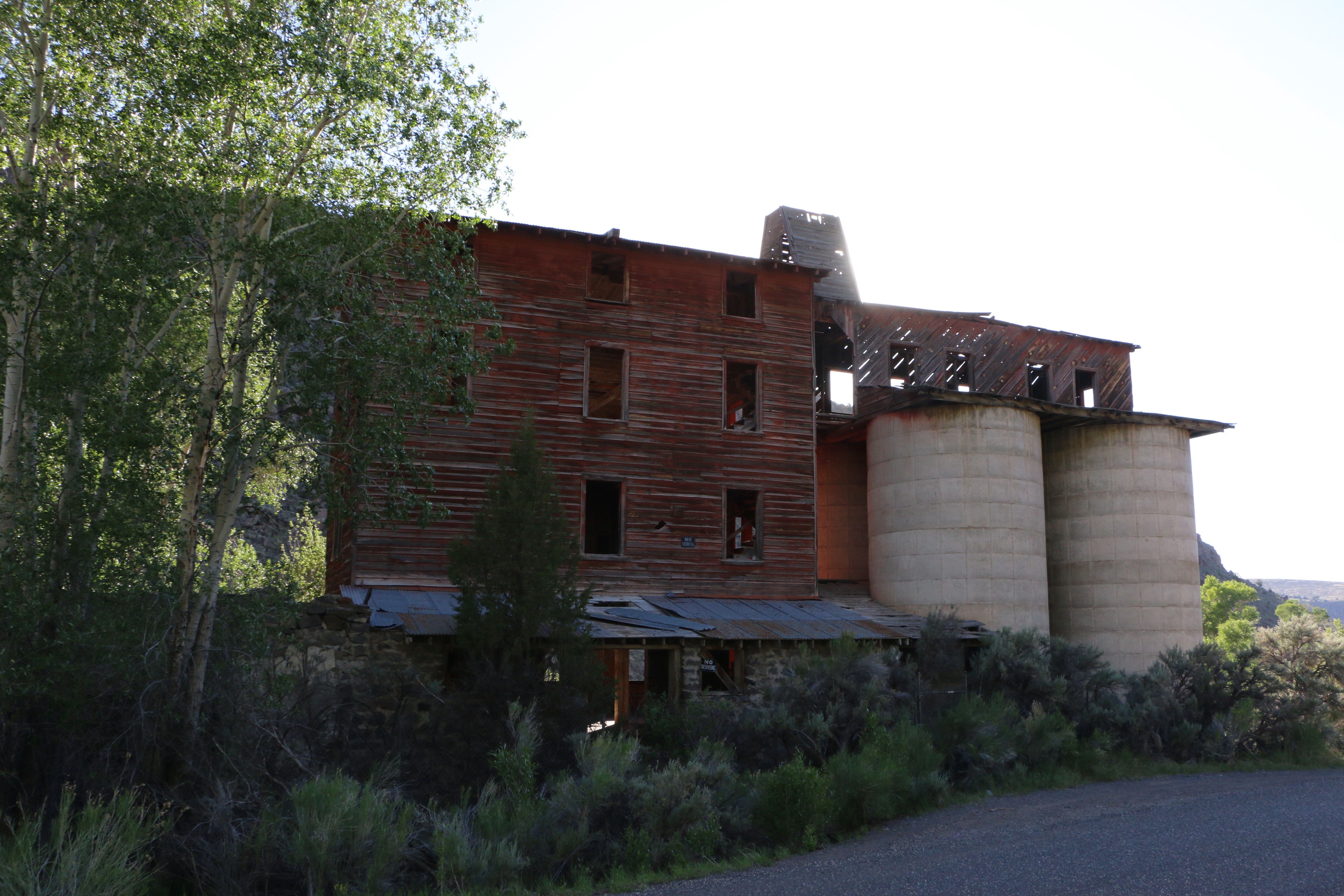
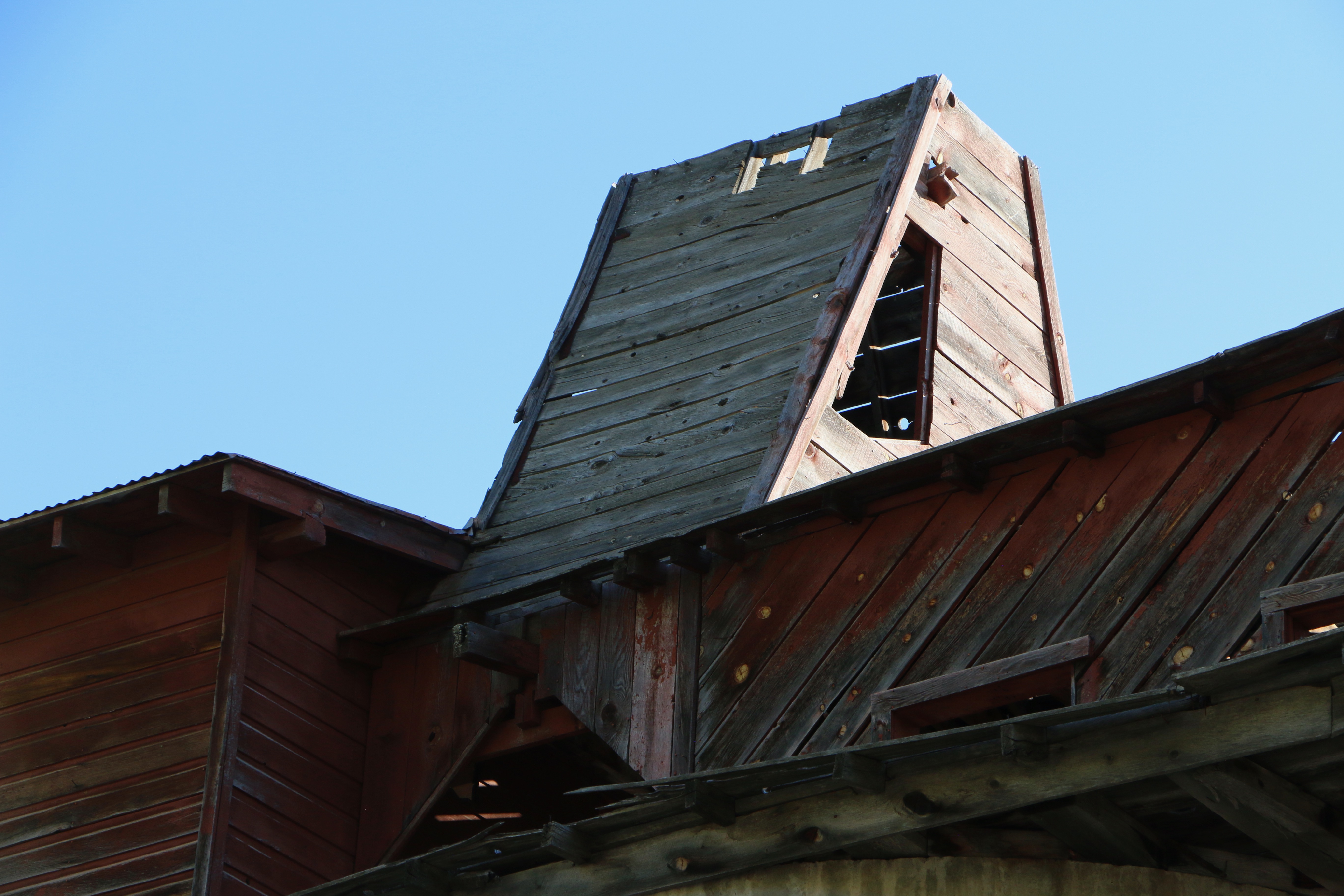
Red Mill, more properly called Osiris Mill and Creamery, was built William F. Holt, a major figure in western development projects. When he died in 1951, The New York Times declared, “WILLIAM HOLT, 87, BUILDER OF TOWNS; Developer of Resources of the Imperial Valley Dies–Work Formed Basis of Novel.” Or as the Garfield County News summarized: California’s Imperial Valley benefited from Holt’s touch.
Holt first came to Garfield County from his home in Hollywood, California in 1923. The County News lauded him:
“He was the real father of the Imperial Valley, starting work there in about 1900, at a time when there was neither water nor people in that entire country, its only inhabitants being horned toads and Gila monsters, and the turkey buzzards and crows all carried canteens.”
The News reported initial development had started at Widstoe, namely, a power plant, a creamery, and Holt “expected to have a flour mill running in the near future.” He was president of Garfield Land Company, which operated out of a Los Angeles P.O. box. In 1926, Holt received permission from the Utah State Engineer’s Office to divert water from the east fork of the Sevier and fill a 3,000-acre-foot impoundment. The water would be used to irrigate 1,600 surface acres. Holt liked to go on about how California was becoming overcrowded and needed to import food — “everything that is suitable to be raised in this part of the country,” according to the News. He pushed for a new road between Widstoe, where his own fields were, and from Escalante so that farm produce could more easily reach the Union Pacific line at Cedar City, arriving the next night in L.A.
Osiris Mill served as a granary and creamery at the now-defunct town of Osiris, named for the Egyptian deity who lorded over the underworld while also representing fertility and agriculture. Some ruins on the other side of John’s Canyon road indicate the remains of that town. Widstoe is also characterized today as a ghost town; I think it was up on the plateau where the irrigated fields were. Widstoe and Osiris were separate places, and it seems safe to assume the flour mill and creamery referred to in the newspaper were the same relic we visited.
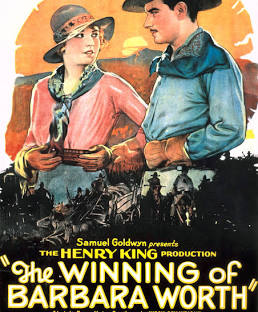
Henry Bell Wright, the first American novelist to make $1 million, modeled a character on Holt in The Winning of Barbara Worth. Wright’s novel became a silent movie starring Ronald Colman, Vilma Bánky, and Gary Cooper. This Western flickered before the public in 1926, the same year the Utah Engineer’s Office awarded irrigation rights.
While time itself seems to stand still in this part of Garfield County, a full century has elapsed since the movie’s release.
The Osiris Mill and Creamery was well-crafted, which makes today’s overgrown site especially regrettable.
Despite the gunfire, our discovery of Osiris seemed heaven-sent. Even though it’s not one of Our Grandfathers’ Grain Elevators, we’re pleased to shine the spotlight once again on this remote wonderment.
 Our Grandfathers' Grain Elevators
Might want to post such finds and you family’s history grain elevators on the fb groups, “Grain Elevators of North America” and “Rustic & Vintage Grain Elevators”