Concrete problems plagued consecutive elevator projects at Blencoe, Iowa

DSC_0578Story and photos by Kristen Cart

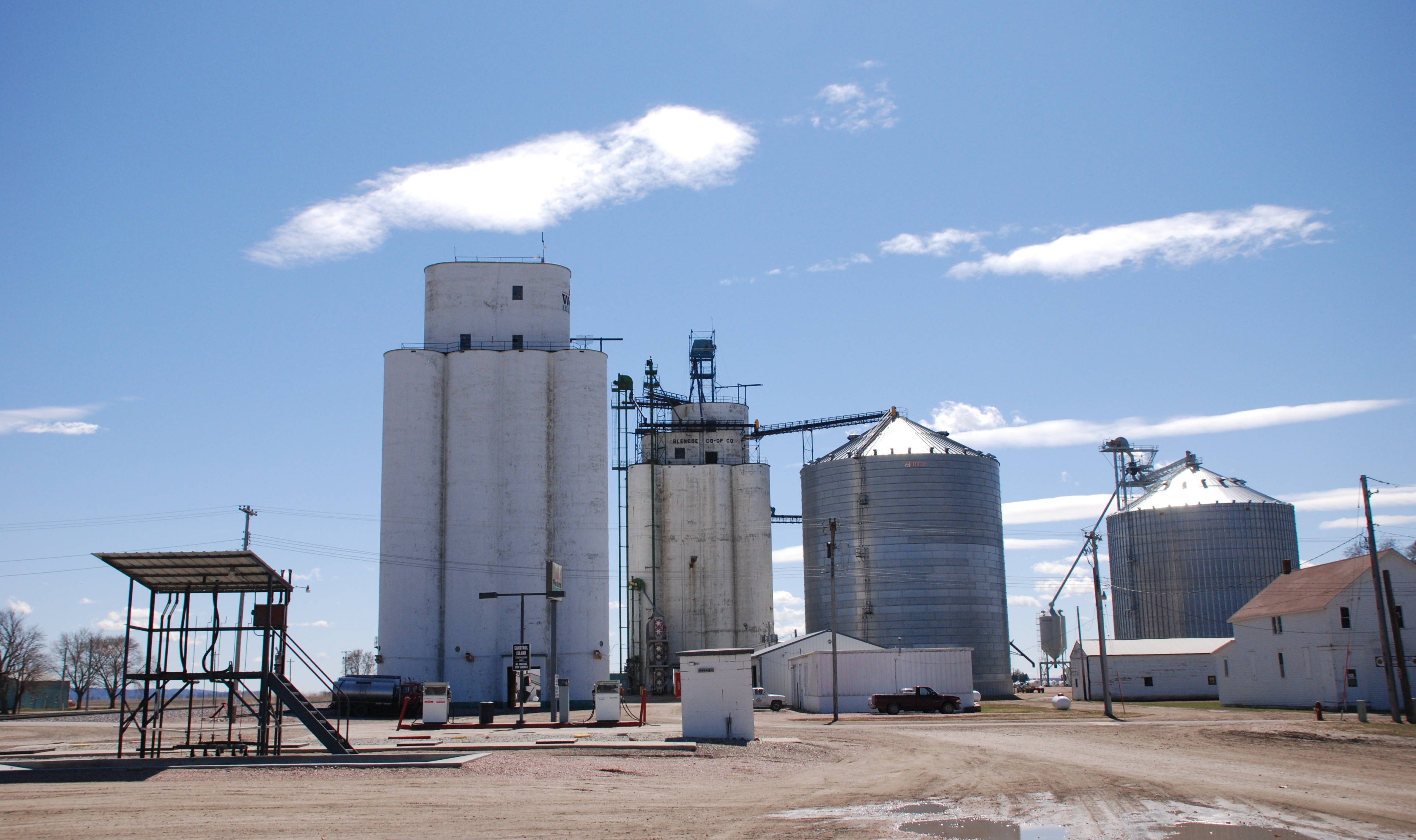
In the summer of 1954, Mayer-Osborn Construction built an elevator with a stepped headhouse in the northwestern Iowa town of Blencoe. As my dad, Jerry Osborn, explained, after the crew poured the first ten feet of concrete in the slip-form process, the concrete sides below the forms showed signs of crumbling. An investigation revealed that the concrete mixture had not been set correctly. It took as many hours to remove the concrete and start over as it did to pour it. Dad worked on the project and saw the fallout first hand.
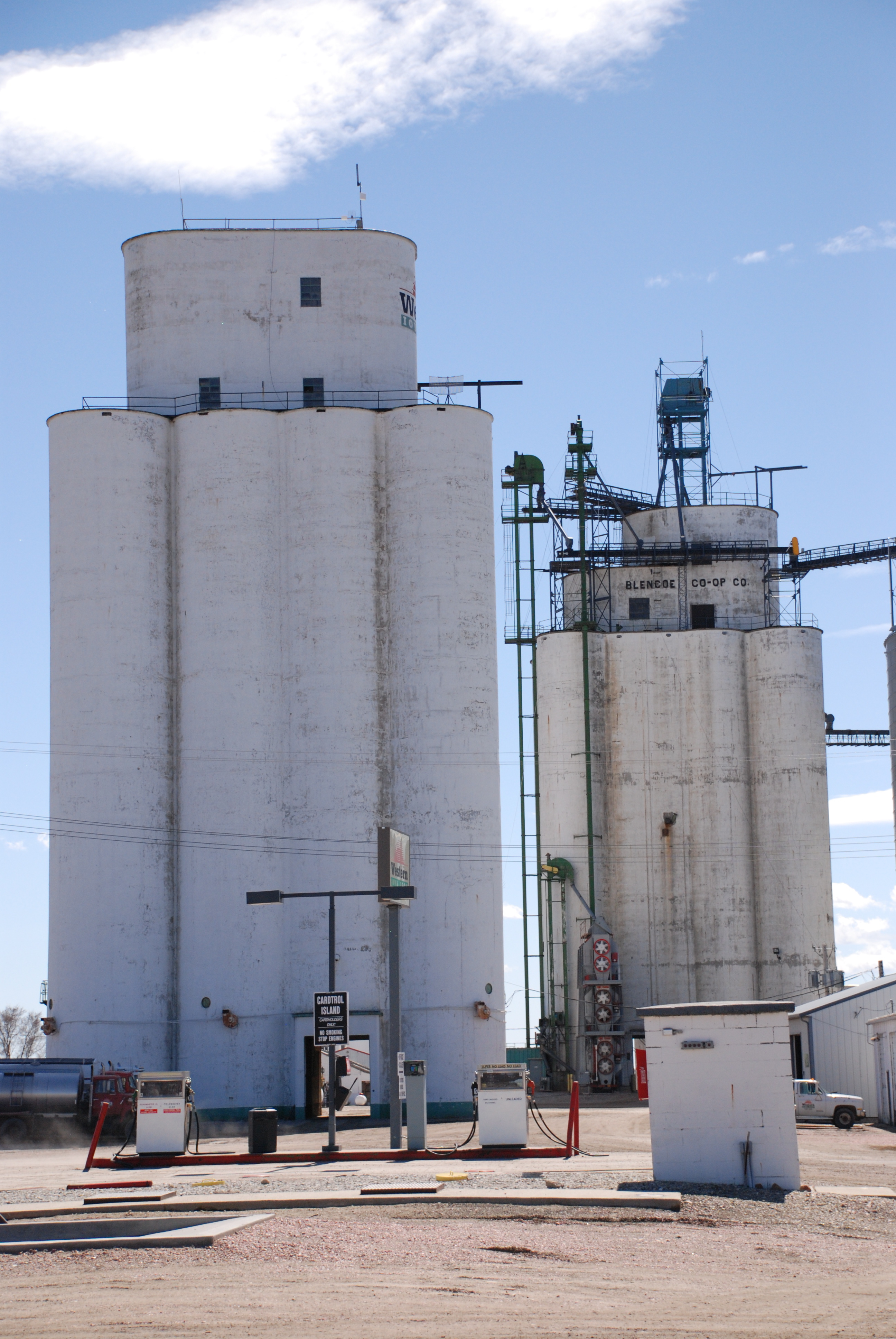
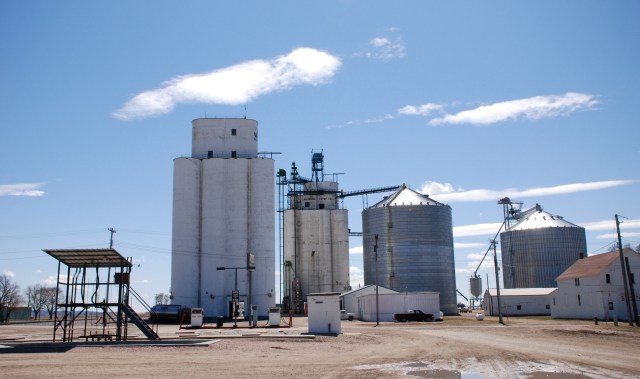
The larger Tillotson elevator stands to the left. The Mayer-Osborn elevator obstructs the view of its large annex which extends behind it.

The larger Tillotson elevator stands to the left. The Mayer-Osborn elevator on the right serves a large annex which extends behind it. Photo by Kristen Cart

Builders were required to do a destructive test on the concrete mix at various stages of curing, to ensure the proper strength for each part of the elevator structure. Engineers tested various mix ratios to decide upon the best one. Naturally, this process was used at Blencoe, but when the mix was finally set and the pour began, it was done incorrectly. I can imagine the blue language wafting from the site as the concrete was taken down. Someone on the site had his ears pinned back pretty fiercely. But the construction continued, and a handsome elevator still stands there today, nearly 60 years later.

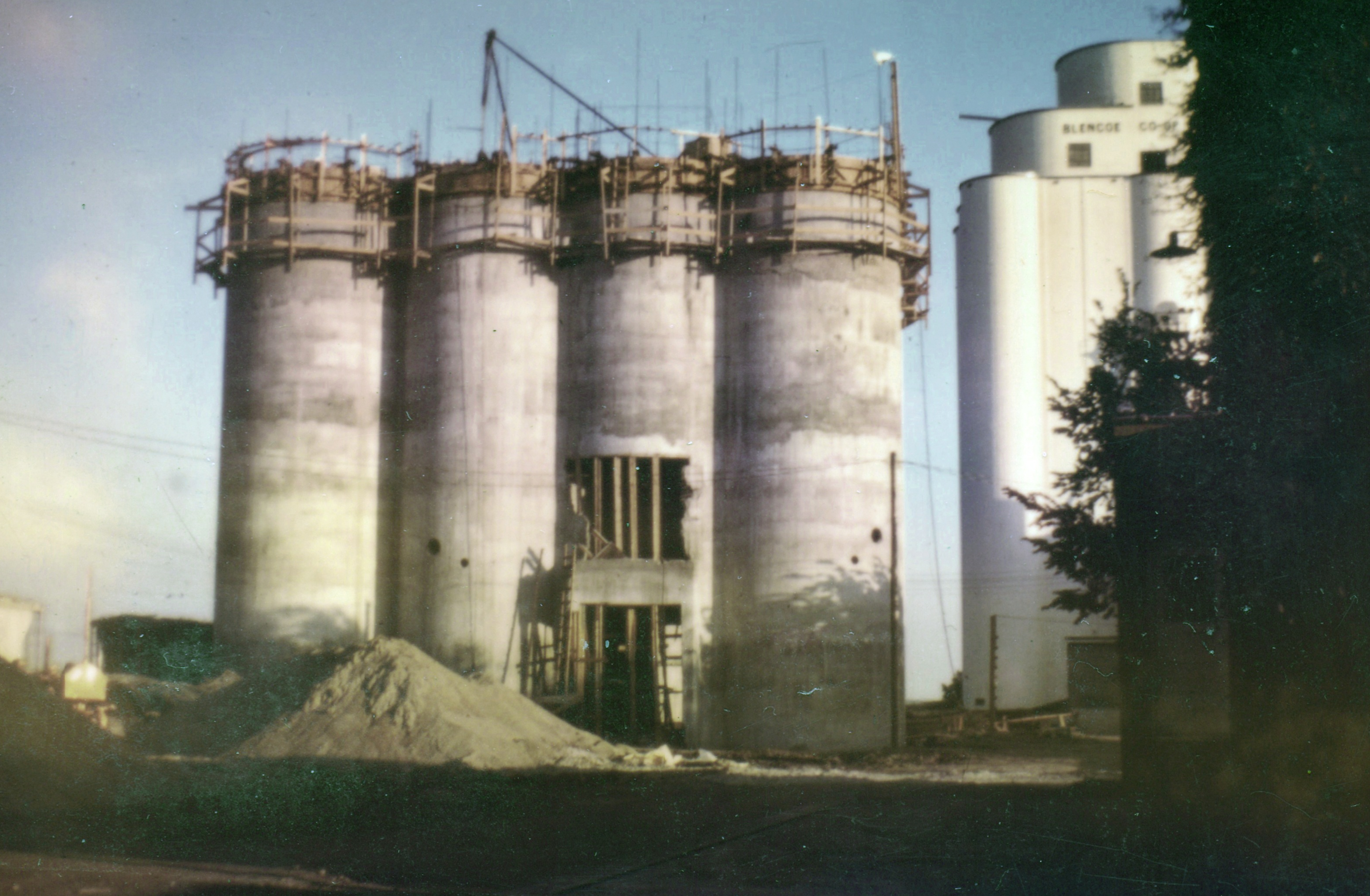
Not until this year, when Tim Tillotson located the Tillotson company records and photographs, did we discover that Tillotson Construction of Omaha faced a similar problem as they built their elevator nearby about a year later. This time, the error was not caught as early, and the consequences became immediately apparent.

Tim Tillotson said he thought the blowout happened in about 1955. Whether Tillotson Construction did the repairs and completed the project, or whether another contractor was brought in, is not known to me, but I hope to revisit the site later this year and learn more. The image below is a rare one. It is amazing that photographic evidence survived, serving as a cautionary note, lest any builder were to become overconfident.
Blencoe_blowout-1 copy

This company photo shows the blowout. On the right the completed Mayer-Osborn elevator may be seen.

Errors were a constant threat in this business. In the best cases, they manifested themselves in embarrassing delays, in the worst, they incurred expensive lawsuits or physical harm.

Tillotson Construction and Mayer-Osborn both recovered from their respective forays into bad concrete and lived to build again, leaving handsome and serviceable elevators at Blencoe and elsewhere. The lessons they learned were priceless.

List of Tillotson Construction supervisors includes 2 unfortunate incidents

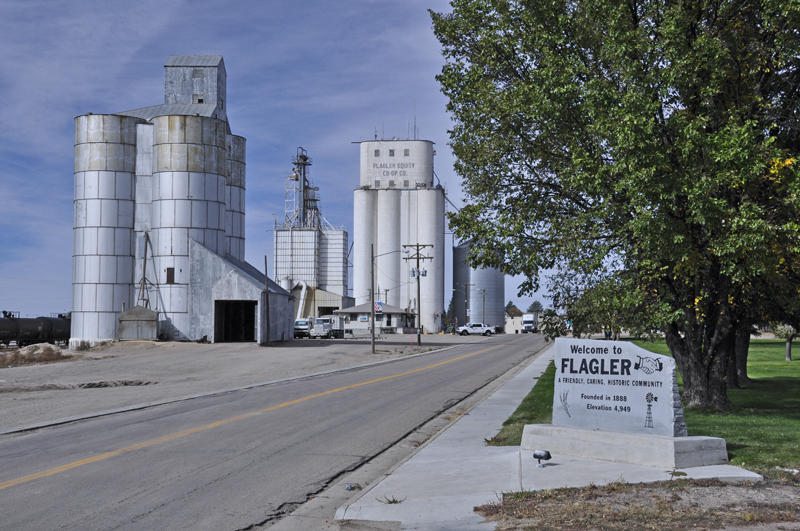
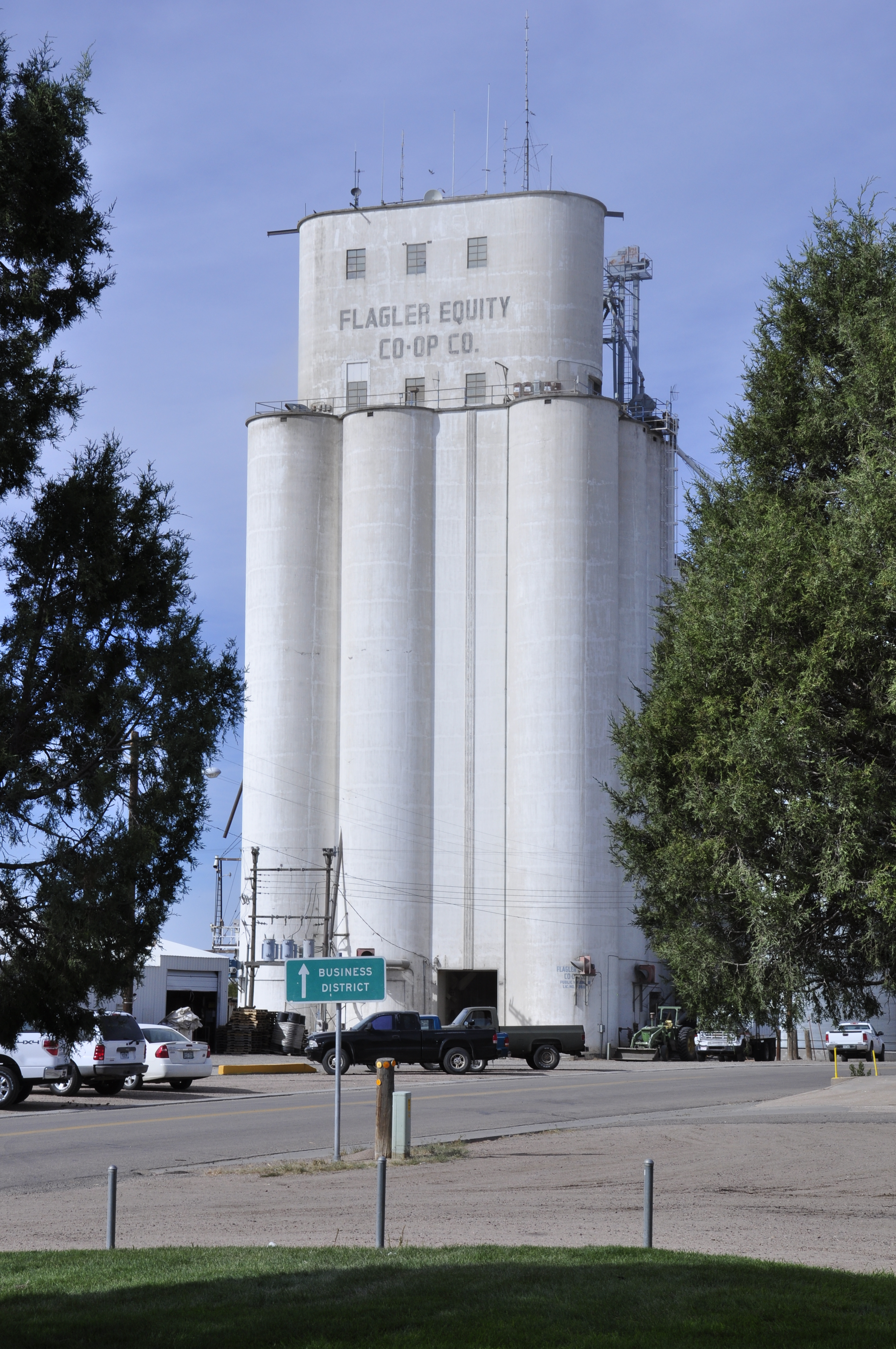
Flagler by Gary Rich

Flagler, Colo. in 2011. Photo by Gary Rich

By Ronald Ahrens

My uncles Tim and Charles Tillotson have put their heads together and come up with a list of supervisors who directed operations on Tillotson Construction Company jobs. What follows are Uncle Tim’s notes, and we’ve done the best that we can in regard to spelling.

Glen Morrison

Francis Dawson (ranch in New Mexico connected to ours)

Doyle Elliott

Glen Casey

Jerry Grimes

Wallly Farmer (also did the house, Kelby Road)

Bill Russell (had seven [surviving] sons; some ran jobs for us; one [the eighth] was electrocuted dropping a steel measuring tape down one morning to verify height on a deck “story pole”; wind blew tape, which touched bare spot on high-tension power lines)

Jim Sheets (’bout half Native American)

Everett Glen (Chas & I concur Everett was the super on Flagler, Colo., in 1953; I had told you before that Mother found him dead in his car in the parking at the house where he was working on finish trim, cabinet work, et cetera; this unfortunate incident had to be fall or winter of ’53 after the job in the summer.)

Painting an elevator meant ‘swing time’ on a flying scaffold in the wind

Scan

By Ronald Ahrens

This photo from the Tillotson Construction Company archives shows two painters on a flying scaffold at an undetermined elevator.

The following passage is by my Uncle Merle Ahrens, who recalls spending the summer of 1955 with my Uncle Mike Tillotson, painting elevators in Nebraska:

When Michael and I started work, all the concrete pouring was complete and we were given the task of painting the outside of the whole elevator. We painted it using a lime-base whitewash.

We had to crawl over the edge of the top of the tank onto a flying scaffold. The scaffold was held up by a pair of rope block-and-tackles connected to a pair of wood beams that were extended about two feet over the edge of the tank. The wood beams extended about ten feet inboard and were weighed down with sandbags to keep the scaffold from falling. The scaffold was made up of a pair of two-by-twelve boards with a metal frame at each end and two-by-four railings around it. The rope block and tackles were attached to the scaffold on the ground. We had to pull the scaffold up to the top every time for each ten-foot width we painted.

There was an old man on the ground who mixed the paint and pulled it up to us in a five gallon bucket. He had a harder job than we had. All we had to do was brush on the paint and pull the rope to release the half hitch that held up the scaffold and let gravity work to lower it. The “flying” part of flying scaffold was when the wind was blowing. You would fly halfway around the tank.

Merle at home

Merle Ahrens in 2011 at his home in Titusville, Florida.

Every night we would take off our Levi’s and stand them in a corner. There was so much paint on them! Yet one pair lasted all summer.

After a couple of months we finished painting the elevator in Lincoln and went to David City to paint another grain elevator. This time we used a new latex paint. It was very slow-drying and the wind kicked up a lot of dust. The elevator ended up white with grey stripes.

We kept hearing of accidents at other sites. One man [Larry Ryan]was said to have fallen from a plank used to walk between the tops of two tanks. He was wearing new boots and slipped.

Another was killed when roofers removed the sandbags holding the beam for the flying scaffold so they could hot-tar the roof.

A couple more were hurt while riding on a bucket and the clamps holding the cable slipped. The clamps were installed wrong.

I do know for a fact that one worker at Lincoln was hit in the face when a five-gallon bucket with concrete in it fell while he was using a rope and pulley to lift it overhead.

Visit original post:

Painting a concrete grain elevator in Lincoln, Nebraska

Uncle Tim Tillotson recalled the challenge of painting while the scaffold flew back and forth in the wind. “When you’d come back you’d get a few licks in with the brush,” he said.

Mike Tillotson remembers Flagler (1953), Albert City (1954), and Lincoln (1955)

By Mike Tillotson

I don’t have access to a computer nor know how to use one. I barely get a radio signal, and my tin-can barb-wire phone is not always clear here in the hills either.

As for the elevators I was thirteen on my first summer with my brothers. I just graduated from Grade School. Our Father helped his Father build Wood Elevators, and often was told to put out that cigarette.

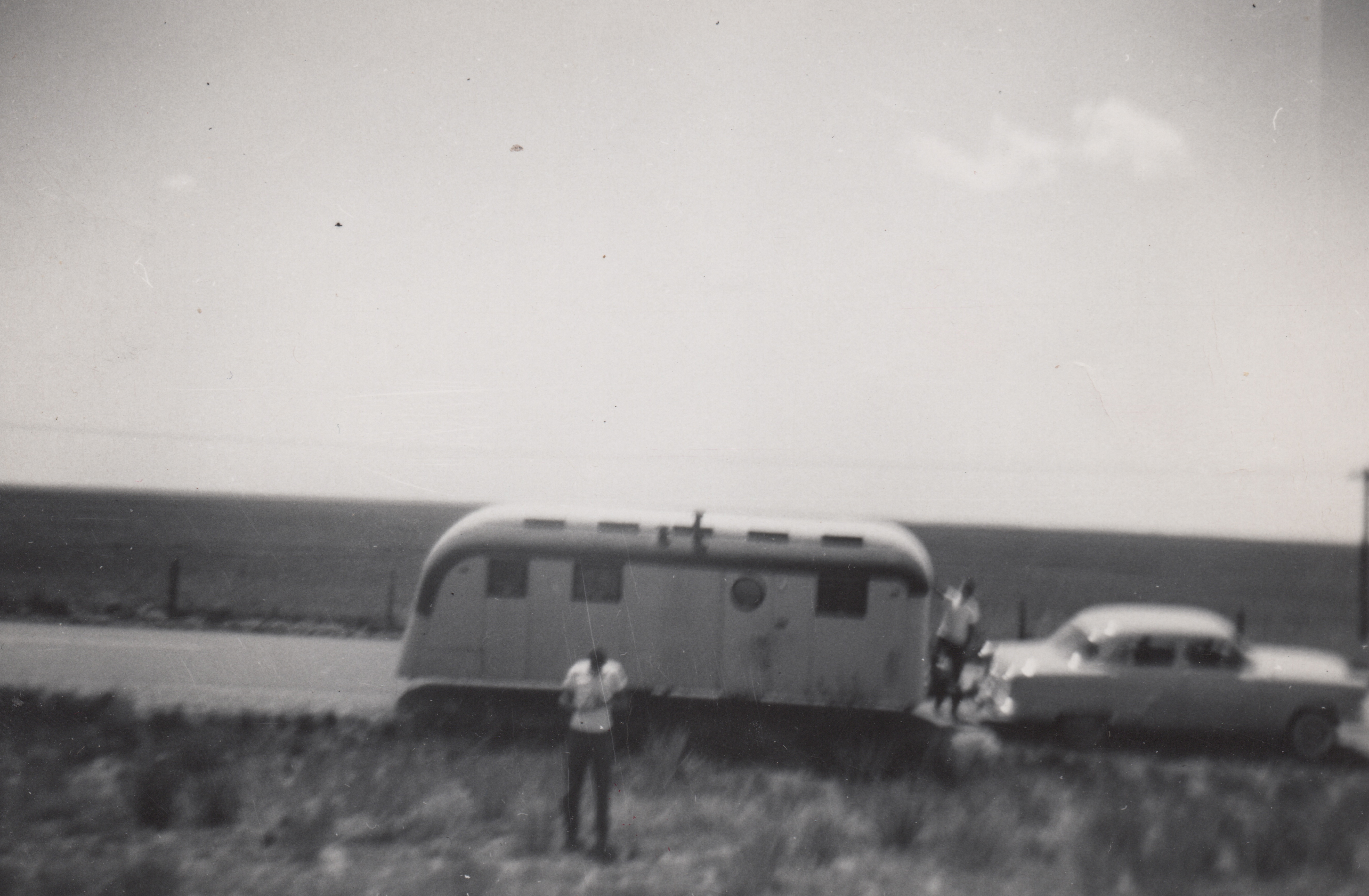
Mike stands at the center of the frame while Tim captures Charles just after he has taken a rest break on the way to Flagler.

Mike stands center-frame while Tim Tillotson captures Charles after a rest break en route to Flagler with the ’53 Ford and mystery trailer.

We headed for Flagler, Colorado; seventy five miles East of Denver. Charles was driving a 53 Ford 4-door our Father bought for him. Two-tone tan that Charles had nosed, and added fender skirts, and a continental kit. We were pulling a sixteen foot trailer that we lived in for the summer.

We were paid $1.00/Hr.–60 Hrs./Week with time and one half over 40 hours. I was the time keeper, and drove a tractor with a front-end loader. I filled up the three-bag concrete mixer with sand. Someone else put the cement and limestone in the hopper. We mixed our own concrete because we were in the middle of no-where.

I remember the Super catching me putting pennies on the rail track, and helping me with the time-sheet so I could go to Denver with my brothers for the week-end.

Tillotson Home

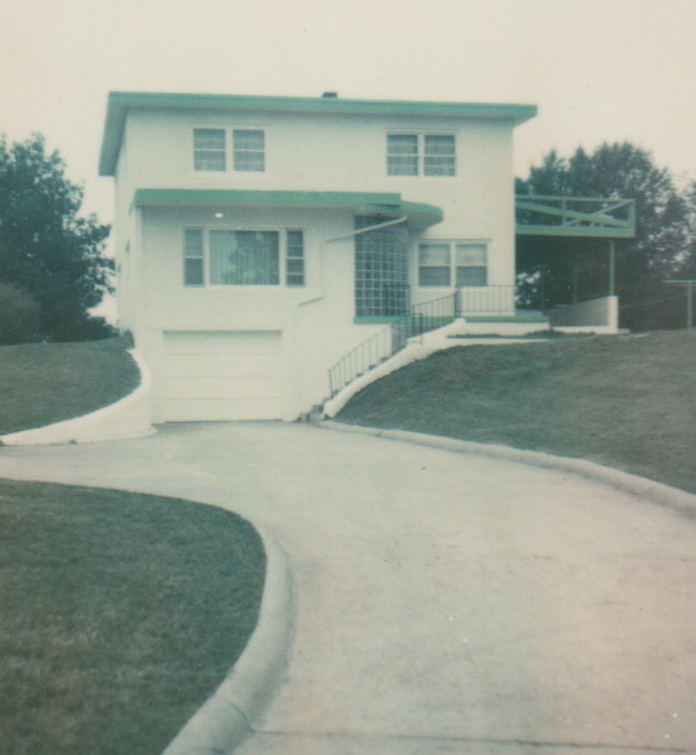
The Tillotson home in the Ponca Hills north of Omaha. Mike still lives there. 

I remember Charles had a girl-friend, and when we came back to Omaha in September; she came in to visit him. When Charles went to meet her at the place she was staying; Sharon went with him. When Charles and Sharon met her she said she forgot something in her room, and went back to get it. After waiting about one half hour Charles sent the door man to the room. He returned and said the room was empty, and the window was open.

You have to remember this was 1953 when we were at the age of innocence, and life was pure and simple.

The following summer (1954) we went to Albert City, Iowa, 75 miles North of Council Bluffs. We rented rooms in a private home. We worked with a 20 something guy that ran the winch pulley bucket to the top of the elevator as it progressed, and brought building materials down. We also rode the bucket up and down to get on deck. The elevator bens were 125 feet to the top with a Head-House of 75 on top of that.

The winch guy went to work on another elevator the Company had going in a town about 30 miles away. This was an addition to an existing elevator–an add-on.

At noon one day he went to the top with new boots on. There were four or five planks at the top from old to new grain bens.

No hand rails or anything. They were not required at the time. I doubt OSHA even existed. He either fell or jumped going from old to new.

Some said he might have tripped with the new boots.

Charles and I bought a nice 40 Ford sedan for $75.00 off a used car lot. He didn’t want to use the 53 any more than necessary. Coming back to Omaha one week end we were zipping down a country road with corn as high-as-a-sky and started through an intersection with no stop signs.

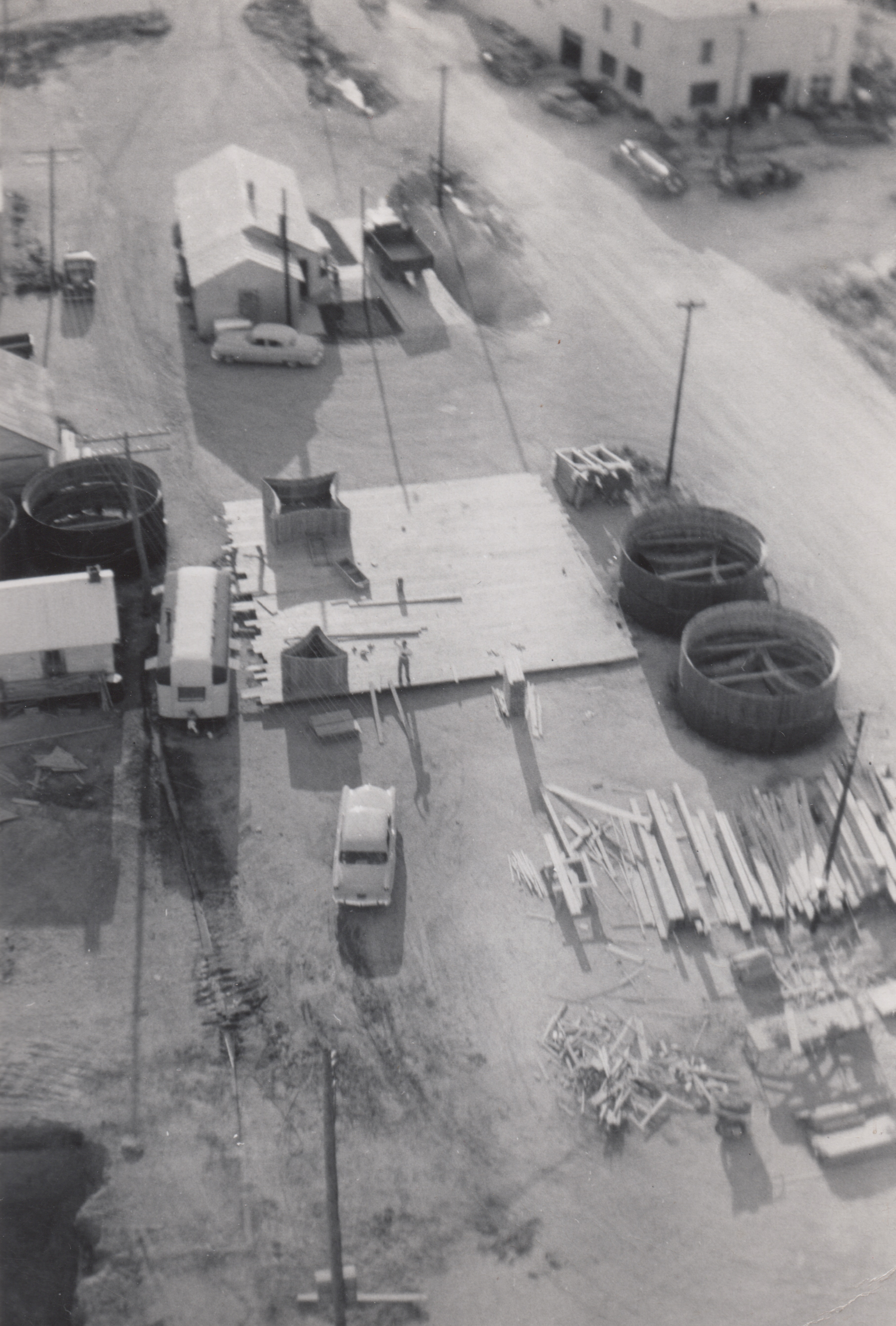
It could be Mike waving at the photographer in this photo from atop the Flagler annex. The Ford and 16-foot trailer are also evident.

It could be Mike waving at the photographer, who is perched atop the Flagler elevator, built in 1950. The foundation for the new annex is seen at lower left.

We got broad-sided by some farmer who put us in a ditch; up side down. Later in the day when we crossed the Mormon Bridge in North Omaha; one of us reached through the front of the car to pay the Toll. The windshield was gone.

The next summer (1955) I worked in Lincoln, Nebr. by myself. My sister Mary’s future brother-in-law Merle worked on the job also.

The Elevators at that time required about 12-15 men per shift. Two shifts per day–twenty four hour continuous pour. Usually about 18-20 days to get to the top of the tanks. The jacks that raised the forms were all manually operated. Today with the advanced electrical operated jacks the number of men required is probably half.

That is the story of my teenage years in MAYBERRY.

Taking it from the top at Tillotson Construction’s annex in Flagler, Colorado

Scan

This photo from the Tillotson Construction Company archives shows the staging deck, on which all formwork was built to ensure it was dead level. The square section was probably the form for a conveyor or bucket shaft, or for a man lift. The triangular section, called a groin form, was made for the void where two rows of bin forms were placed together. The excavation hole for the new annex is seen, lower left, at the foot of the 252,000-bushel elevator the company built in 1950, modeling it after their one in Pond Creek, Okla. 

By Ronald Ahrens

In 1953, my grandfather Reginald Tillotson decided to send his three sons, Charles, 18, Tim, 16, and Mike, 13, to work on an annex to the Flagler, Colo., elevator Tillotson Construction Company had built three years earlier.

My grandmother Margaret didn’t like the idea.”You can’t send those kids out there,” she protested.

“It’s about time they grew up,” Reginald said.

Indeed, my uncles were sent, leaving Omaha in a new Ford and pulling the travel trailer that would be their home for the next few weeks.

“I don’t remember that he even came out,” Uncle Tim said recently of Reginald.

From left, Tim and Chuck Tillotson and La Rose Tillotson Hunt in 2012.

From left, Tim and Chuck Tillotson and La Rose Tillotson Hunt in 2012.

While Charles and Tim labored on the formwork that rose toward the sky, Mike stayed in the trailer, which doubled as their bunkhouse and the job office. His task was that of timekeeper.

“I don’t recall him bein’ out there when we was jackin’ and pourin’,  jackin’ and pourin,'” Tim said, although he did recall him reading hot rod magazines.

Once the pouring started, it couldn’t stop. A cold joint between concrete that had already set and a new pour wasn’t at all desirable, for it would leak.

“You had to treat that damn good when you started over,” Tim said.

Work went on in twelve-hour shifts. As the concrete was dumped out of a Georgia buggy–a V-shaped tub riding on large wheels behind a U-shaped handle–someone with a spud hoe would follow the pour and work the concrete, releasing the air from around the rebar. “The only way you shut down was an emergency,” Tim said. Lightning, for example, was an emergency because it was attracted to the rebar being used to bolster the concrete.

_DSC0033_9425The crew was made up of some trusted old hands and an assortment of locals. “You never knew who you were workin’ next to,” Tim said.

He remembers the local sheriff asking himself why he should put up anyone in the jail when they could work and earn their keep. One of the convicts toiling alongside Tim had a funny thought. “You think you can hang onto that hoist handle hard enough if I push you off?” he said.

Any number of mishaps could occur. “You ought to see one of them Georgia buggies go off the top,” Tim said. “Or the cotter pin come off the wheel and the wheel go off.”

At ground level the pour was made in six-inch increments, but the speed increased as the elevator rose.

To keep the screw jacks on the same plane and maintain plumb, the crew used a water-level system on the deck. A clear hose was fed by water from a 55-gallon drum. Tim said the hose had a level “that you marked before you ever pulled off the ground. And believe it or not, you’d get one hundred and some feet up, and you’d be plumb!”

An old wooden elevator comes down at Halsey, Oregon, and shares its secrets

dsc_0317

Halsey, Ore., in early 2012.

Story and photos by Kristen Cart

Elevators such as this one in Halsey, Ore., have elicited interest from photographers and curious travellers for as long as they have existed, especially since they are on the verge of extinction. Technology passed them by back in the early 1940s when most of the new construction in the United States went to slip-formed concrete.

dsc_0924

The remnants of the Halsey elevator, Feb. 2013, in a downpour.

Canada held out, building wooden elevators well into the 1970s, with a minority of them still in service today, and many more long since demolished, abandoned, or burned.

The end has come for the Halsey elevator. After hearing of its demise in an online forum, I recently passed near the town on I-5 and stopped to see the hulking remnant. It was a sorrowful sight, topless and dreary.

But beside it was a more interesting find.

In an empty lot next to the elevator, piled randomly, was the elevator’s leg. It brought to mind a story–a cautionary tale, really–which illustrated why concrete was so attractive to engineers looking for a better alternative.

dsc_0933

The leg from the Halsey, Ore. elevator, piled on the ground.

While exploring elevators in Alberta, Canada, I took a trip to a small town called Milo.

It was a snowy day, and as I gazed up at the lone wooden elevator, a gentleman pulled up in his truck and asked if I needed directions. He introduced himself as Ian Thomson. He was a long-time resident and farmer, and once we got on the topic of elevators, he told me that Milo once had nine wooden elevators lined up along the rail line. The sole survivor, silver-sided and huge, was built in the 1970s. It was still active, and its nearest neighbor had come down a year or two before.

DSC_0598

The lone wooden elevator in Milo, Alberta, Canada.

Ian told a tale of the demise of one of the old wooden houses.

One of Milo’s elevators was decommissioned in winter, years ago. When the leg was torn out, a salvage company tried to remove the conveyor belt to reuse the rubber. Water remained in the pit, and the lower portion of the leg could not be retrieved because it was frozen solid. So they cut the belt off at the top of the ice and hauled off what they could. The owners told Ian that as soon as the pit thawed out, he could have the rest.

It was an early spring day, and a thunderstorm rolled by. A farmer could always use rubber–Ian was thinking of mud flaps for his truck, so when he went to check the elevator that day, he was disappointed to find the leg remnants still frozen solid in the pit. So he left without them. But as he exited the elevator, he noticed a thin tendril of smoke rising from the headhouse.

DSC_0610

Ian Thomson displays his railroad collection.

With gut wrenching dread, he called the owners, but he knew it was already too late. A fire company fought the blaze, but by then the elevator was fully involved, and it burned completely down.

A nagging worry stayed with Ian. While he knew he had done nothing to cause the fire, he was seen leaving the elevator, and he thought his neighbors might wonder about it. But the real culprit was lightning. He needn’t have worried.

Ian Thomson was an honorable member of the community and an esteemed historian, with a proud military heritage. He was, and still is, a true gentleman farmer.

DSC_0593

Alberta wheat country.

The fire danger inherent in wooden elevators spurred engineers to try concrete building methods. Concrete elevators came with their own hazards, but also great advantages, and they remain the premier choice for durable, large scale grain storage.

But we still miss the proud old wooden denizens of the plains.

‘Walking the plank’ on the new Pocahontas, Iowa, elevator in 1954

pocahontasgrainelevator

By Charles J. Tillotson

Safety and the preservation of life have become much more important in today’s world of construction. However, during the 1940s and 1950s, the urgent need to build grain storage coupled with the fact that most elevators were built in very rural areas meant that safety was secondary to getting the job done.

A case in point was a personal experience I had while working in Pocahontas, Iowa.

As with most small towns, the labor pool was rather limited to itinerant farmhands and workmen passing through town. Scaffolding and access walkways were pieced together in a very haphazard way–the means to an end.

One day I was working “up top” of the newly built grain tanks and needed to cross over from the new tanks to the deck of the existing elevator. The distance between the two structures was probably eight feet. To span the gap, two 2×12 planks were placed down between the two structures.

As I began my “walk the planks,” I stubbed my toe on the butt end of one of them. Accordingly, I stumbled forward–but was fortunate enough to regain my footing and continued on across to the other structure.

I realized then how easy it would be to make a misstep and end up at the bottom of the chasm.

Map of Iowa highlighting Pocahontas County

Map of Iowa highlighting Pocahontas County (Photo credit: Wikipedia)

While working in Pocahontas I met a young man, a few years older than I, who had been passing through town on his way back to his home in Hinton, Iowa. His name was Marv, and he had signed on as a carpenter. It was refreshing to me when I met Marv, as he seemed to be a person who was not only a good worker but an intelligent one as well.

When the summer came to an end I had to return to school, and so I said my good-byes to Marv and all the crew on the job. Later that year I learned that Marvin Richards had fallen to his death on the Hinton job (Tillotson-built) while attempting to cross over between two structures.

Hearing the news of his death, I assumed he was the same person I had encountered.

That same summer, Larry Ryan, the hoist operator working for Tillotson Construction Company on the Pocahontas job, had a similar mishap. During Larry’s break from the hoist, he decided to go up through the existing elevator terminal and cross over to the new construction to deliver a piece of angle iron needed by someone up top.

Again, somehow he lost his balance on the planking, and he, too, fell to his death.

It was eerie to think about how, more than once, I had come so close to doing the same thing and just how dangerous an act this was. On the other hand, the concept was fairly simple and straightforward: two 2×12 planks, side by side, laid down between two structures and spanning a distance of only six or eight feet. Not much to it – but only if you don’t slip, stumble, or in some way lose your balance!

At minimum, there should have been a safety railing on one or both sides of the planking.

But, back then, there just wasn’t enough attention given to safety and the value of human life.

Of course, I learned a valuable lesson in precaution and safety from these incidents, which I carried with me throughout my construction career.

J. H. Tillotson’s project at Lodgepole, Neb., was the end of the line for Supt. Bill Morris

DSC_0380

The Lodgepole, Neb. elevator viewed through a rainy windshield on a blustery day.

Story and photo by Kristen Cart

It was the heyday of elevator construction, and J. H. Tillotson, Contractor, of Denver, was riding the crest of the building wave, when a new elevator was begun along Highway 30 (the Lincoln Highway), in the sand hill country of western Nebraska. Lodgepole was a sleepy town along the rail line that connected Sidney to the west, with Chappell and Big Springs to the east.

My grandfather, William Osborn, had been building for several years, and he accompanied Joe Tillotson to Denver when Joe made his break with the family business, Tillotson Construction of Omaha, and set out on his own. The new company had several projects under its belt, and several others ongoing in 1947, when Lodgepole’s elevator was started.

Bill Morris, an employee poached from the parent company, was superintendent for the job.

The dangers of the business were well known. But for the J. H. Tillotson company, fate was especially cruel, though the disasters that befell the builders were of a more mundane sort. In about March of 1947, Bill Morris was changing a tire on the side of Highway 30 near Lodgepole when a car struck him, and he was killed.

Of course the construction project went forth, and my grandfather played a role, since he had the experience to step in where Bill Morris left off.

It was not long afterward that Joe Tillotson met his maker in a car accident–only a matter of a few weeks. In those days safety in vehicles was an afterthought, and the Grim Reaper was guaranteed a regular harvest.

Joe’s death opened doors for my grandfather, since there were elevators to build and contracts to fulfill. By September of 1948, Bill Osborn had joined with Eugene Mayer, Joe’s brother-in-law, and together they formed the partnership of Mayer-Osborn Construction Company. My dad said Grandpa had to put up some money to opt into the business, and then he continued as before, building elevators as fast as they would go up.

The McCook, Neb., elevator marked their first joint effort.

Elevator work included a quick and painful education in the use of a chain fall

Image

Story by Charles J. Tillotson

Grain elevator construction brought with it the need for hoists that placed and set mechanical equipment for the grain-moving distribution systems. Most of headhouse mechanicals had to be placed via the use of manual chain hoists, in those days called chain falls.

ScanThese hoists consisted of a series of pulley wheels and chains that used leverage for moving heavy equipment up and down in precise increments. The hoist system was often used in conjunction with an overhead track so equipment could be adjusted horizontally as well.

The headhouse mechanicals were first lifted more than 100 feet to the top of the grain tanks using the main construction hoist. Once the equipment reached the top deck, a dolly cart moved each piece to the place of use. Most big pieces were mounted on preset anchor bolts. In order to hoist the equipment over the bolts and into horizontal position, the chain fall was rigged.

My lesson in using the manual chain hoist came one day in 1947 when I was working with an experienced workman named Fred on the Vinton Street job in Omaha. As a twelve- or thirteen-year old carpenter’s apprentice and hod carrier, I had never even been near a chain fall system, but this day I was assigned to help set a grain dryer.

After the rigging was finished, Fred had me guiding the dryer for alignment with the anchor bolts while he yanked the leverage end of the chain fall.

Scan 4While he operated the vertical location, I nudged the dryer ever so slightly back and forth as it swung above the anchor bolts. To accomplish this feat, I pushed on the chains with my hands placed right above the pulley wheel. When the dryer reached its spot, I hollered to Fred to lower it over the bolts.

Concentrating so much on the dryer’s placement, I neglected to release at the key moment. Consequently, my hand followed the chain into the sheave as Fred lowered the dryer, and my fingers slipped between the chain and wheel.

I yanked my hand back–but not before the tips of my index and middle fingers were crushed, skin and fingernails pulled off, leaving me with bloody stumps. As I was about to collapse from shock, Fred grabbed me, guided me to the man lift, and lowered me to the ground. My destination was the Super’s office, which was previously built for the grain company.

The Super, a rough dude from the old school, took one look at my bleeding fingers and told me to sit down on a chair next to his reference table, which was covered with plans and paperwork. He asked for a minute to get some first aid treatment and then told me to turn my head and look out the office window. I heard him pouring something into a little bowl on the table. He took my hand, saying he would dip my fingers and it might hurt a little.

Scan 2Well, after he scraped me off of the ceiling, controlled my sobbing, and began resuscitation, I was hurting more than ever. My fingertips felt like they had been burned off! As an antiseptic he had used Merthiolate, administered in those days to treat abrasions and cuts.

Next he wrapped my fingers in gauze and tape. “Keep the bandages on for a few days, and you’ll be as good as new,” he said. It turned out more like six months before my skin and nails miraculously healed to their original appearance.

Of course, through this experience, I gained a valuable lesson in the use of chain falls. Even though such systems today have better safety shields and braking devices, I still shudder when I see a chain fall system being used.

I have related this experience to many people over the years and learned I was fortunate to survive the ordeal–not only the accident, but also the first aid.

Merthiolate, the marketing name coined by Eli Lilly and Company for the antiseptic Thimerosal, is compounded of fifty percent mercury and the caustic chemicals alcohol and benzalkonium chloride.

Because of Thimerosal’s toxicity, Merthiolate was essentially banned from general usage as a topical treatment by the 1990s.

Looking back to those days of such primitive medicine, I often reflect on why we lived through such treatments. I guess one of the main reasons is, we didn’t have crowded doctor’s offices and hospitals, which today bring along their own set of detrimental toxic bacteria and contamination to contend with.

Hanging by a thread on the ‘wrecking-out’ scaffold, a young workman faces mortality

By Charles J. Tillotson

Editor’s note: Uncle Chuck here recalls one of the more harrowing experiences of his young life, when he was building grain elevators for Tillotson Construction Company. It occurred on what is called a wrecking scaffold–or to be more precise, during the scramble off one heading into the void.

From left, Tim Tillotson, Chuck Tillotson, and La Rose Tillotson Hunt, posing in June 2012 in Victorville, California.

From left, Tim Tillotson, Chuck Tillotson, and La Rose Tillotson Hunt, posing in June 2012 in Victorville, California.

When the slip-form process reached the intended height of construction, all wood form-work and other equipment and devices were removed from the structure via an external hoist.

The final portion of the demolition process, the removal of the wood forms, involved the most difficult and dangerous part of the operation, that being the “wrecking out” of the wood forms and decking material that is, by design, trapped inside each of the grain tanks.

All of this wooden material must be removed, and it must be done from the inside.

This is accomplished by utilizing a temporary platform, or wrecking-out scaffold, suspended within each tank.

Elevator design preconceived the need for a ‘wrecking-out’ platform

In preparation for the building of a temporary platform, cutout sleeves and manhole forms are strategically placed to allow cable and scaffold planking to be inserted into the tanks after the concrete roof deck has been poured. The cutouts, usually four round holes per tank, are each large enough in diameter for insertion of a cable with a preconstructed loop end.

Via the manhole, planks are slid through to a workman who is suspended on a rope with a bosun’s chair, allowing him to have a hands-free position.

He takes the planking being passed down to him and extends the two major beam planks through the hanging cable loops.

After the beam planks are in place, scaffold planking is installed perpendicular to the beams in such a way as to create a solid plank platform.

The final scaffold then becomes a square platform suspended in a round tank.

The void on each side of the scaffold is used for lowering or throwing the wood material into the tank’s dark abyss. After all the overhead wrecking has been accomplished, another team gains access to the tank’s bottom via a manhole in the side of the tank at or near ground level.

The noon whistle as harbinger of doom

This description of building the wrecking-out scaffold sets the stage on another personal experience with the perils of constructing grain elevators.

It took place when I was assigned duty on the wrecking-out scaffold. The morning of labor with two other workmen had passed without incident, and when the town’s noon whistle blew, we three stopped for lunch.

The beginning of Tillotson Construction's job in Flagler, Colo.

The beginning of Tillotson Construction’s job in Flagler, Colo.

Typically, rather than have the wrecking crew go through the process of crawling or being lifted back up through the manholes and then go in reverse to gain access to the platform again, the workmen just brought their lunches down to the platform and ate them there.

As we sat on the planking in this semi-dark and dank grain tank, eating our lunches and telling war stories, I heard a plunking noise that sounded like someone had dropped a rock onto the scaffold. It seemed to come from the corner behind me. I didn’t pay much attention and soon rejoined the important conversation taking place.

About five minutes later, I noticed another similar sound and asked the other two workmen if they had heard it, too. Neither of them had. They went back to talking. But within minutes another “rock” hit the scaffold and simultaneously one corner tilted down.

A precarious situation soon becomes a mortal threat

We suddenly realized the nut fasteners of the cable clamps–which were U-shaped and bolted around the main cable drop and the end of the cable loop–had somehow unwound. (Two cable clamps were used per loop, each clamp having two fastener nuts turned sufficiently tight to form a bond on the loop.)

So only one nut remained on the cable clamp to hold the loop and that corner of the scaffold.

To save ourselves from this sinking ship, we quickly helped one another by doing a foot-up maneuver, with the first man out through the manhole above. Once he crawled to safety on the deck, he reached down for the next one and yanked him through.

I had been sitting the furthest away from the manhole, so I was the last man out.

Again, as with my previously described narrow escape (see the link below), God was watching after me.

Just as I punched through to safety on the roof, I heard the cable loop fail and the scaffolding crash into the tank’s deep dark recesses.

Why worker safety was a secondary consideration

In those days, there were many similar incidents that occurred during the construction process.

Contributing to the lack of safety precautions was the use of unskilled labor. Most of it came from the surrounding farm community, and these men had no background in construction.

Lives were lost, and assumptions were made that this would occur, as the ultimate goal was building grain storage as quickly as possible. Safeguarding life and limb took a secondary position to that effort.