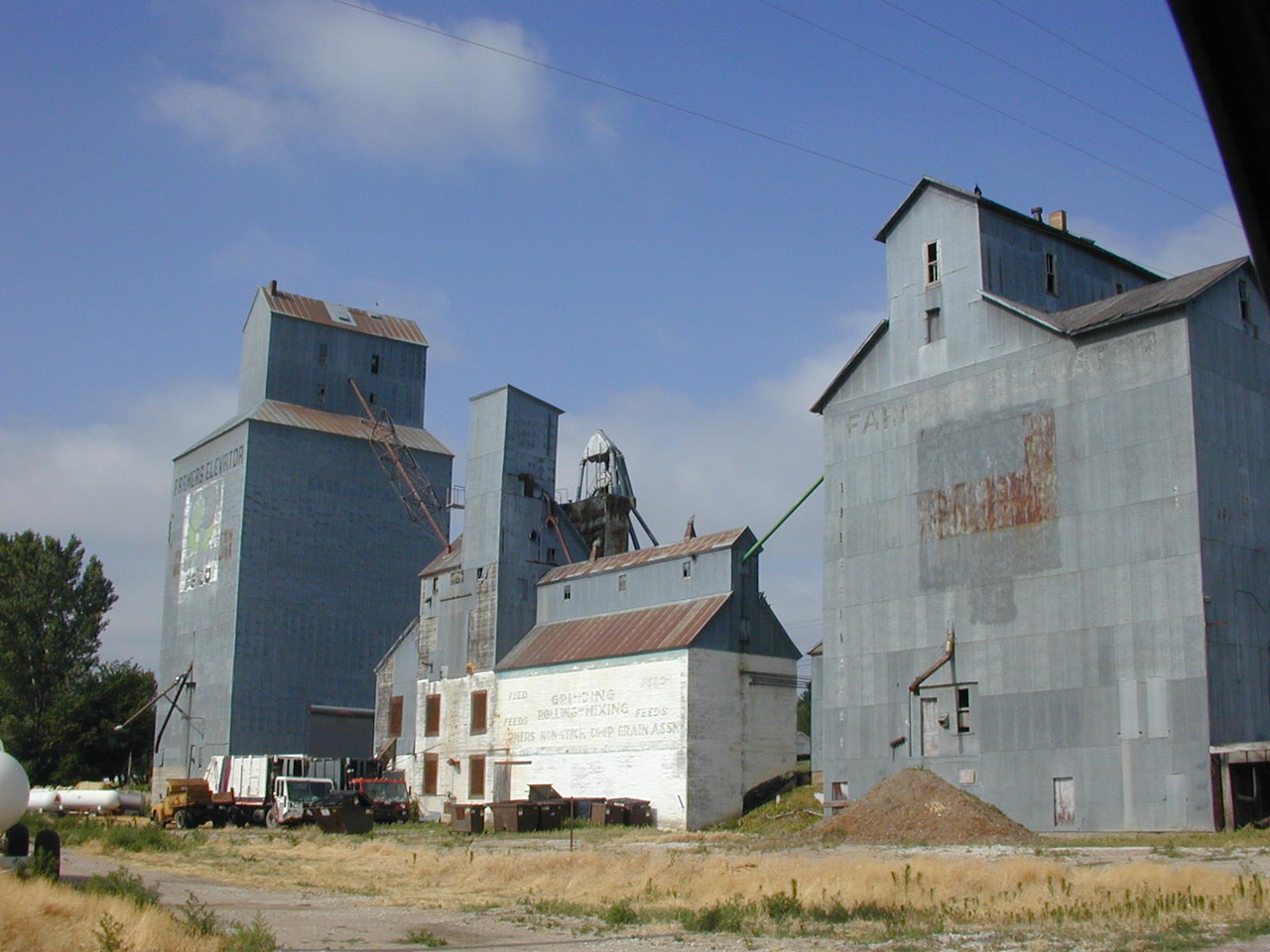
When I started with the Omaha Bank for Cooperatives in 1975, my accounts were the co-ops north of Interstate 80. One was Tekamah, Nebr., where Farmers Elevator was in grain and feed. I was told this was the last wood elevator built in Nebraska.
It was huge for a wood house — 100,000-bushel capacity. I was also told they went with wood due to poor soil conditions. You can still see it on Google Earth. It’s the big one on the left.
Editor’s note: The poor soil conditions may have led to a heavy concrete elevator settling.
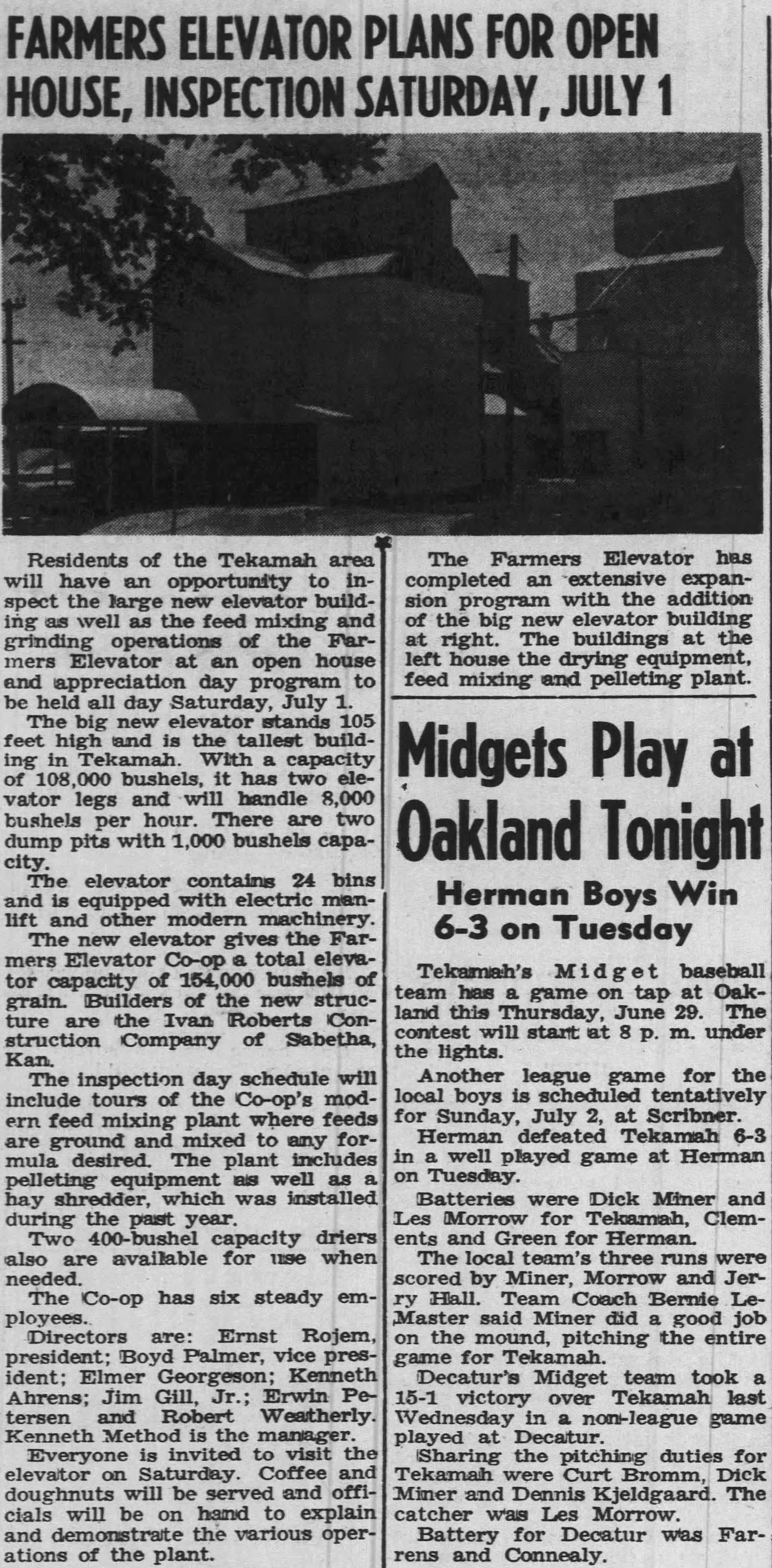
This June 29, 1961 article from the Burt County Plaindealer describes the new twin-leg elevator that would soon open with all the modern fittings found in a concrete elevator.
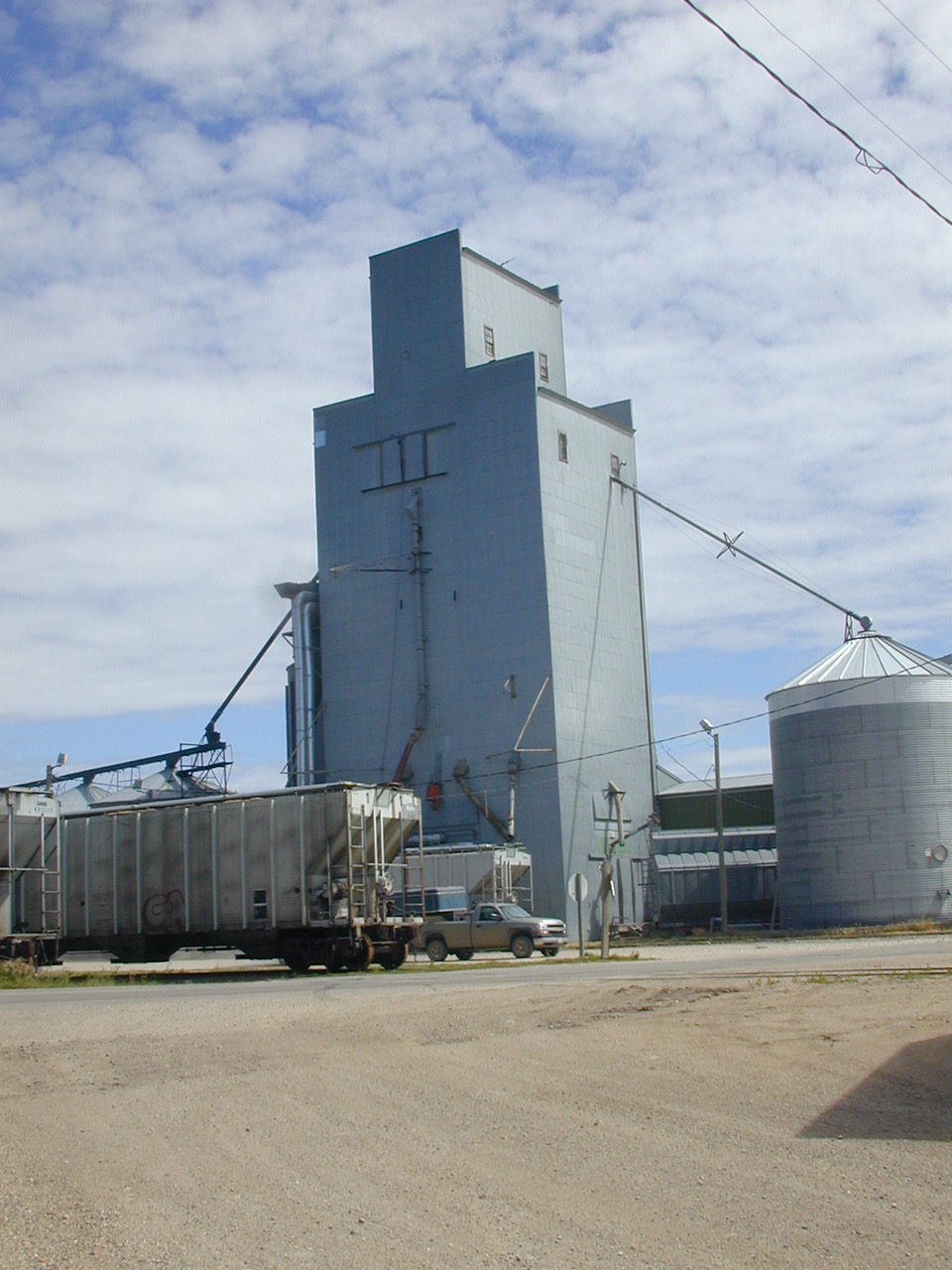
The very last wood house we financed at OBC was for the co-op at Sisseton, S.D. It’s still in use and holds 60,000 bushels.
I can remember it cost $6 per bushel ($360,000) when a 250,000-bushel concrete house was $500,000.
Minnesota and North Dakota stayed with wood longer than anywhere else because of their cold weather. They built as much as 250,000-bushel wood houses. Wood is a much better insulator than concrete and does not have condensation issues.
As we research an earlier generation of elevator construction, we can find wooden elevators, but not the ones we hope to find. It is almost impossible to match a builder to a specific elevator this late in the game, especially among the few surviving examples. But we are trying.
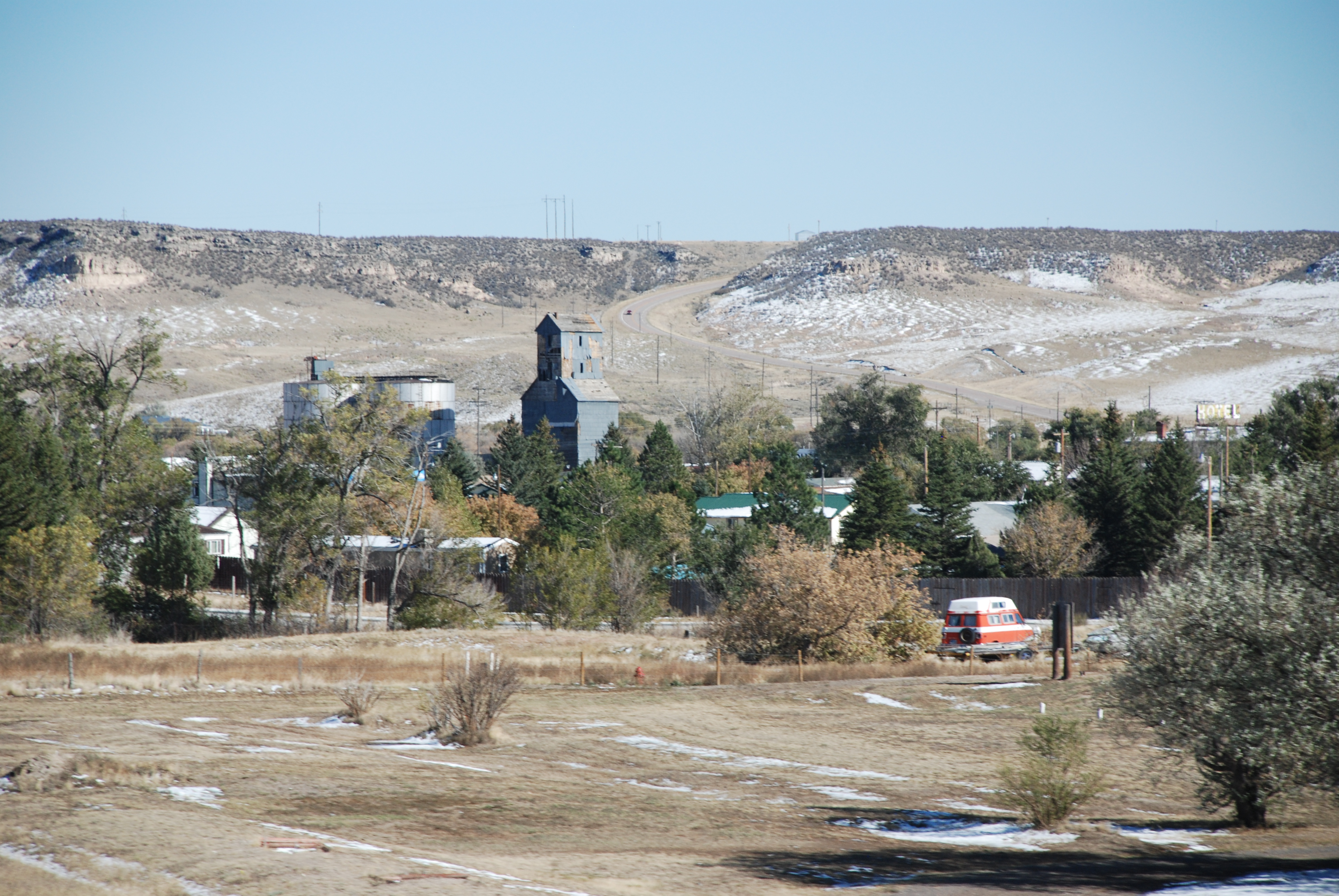
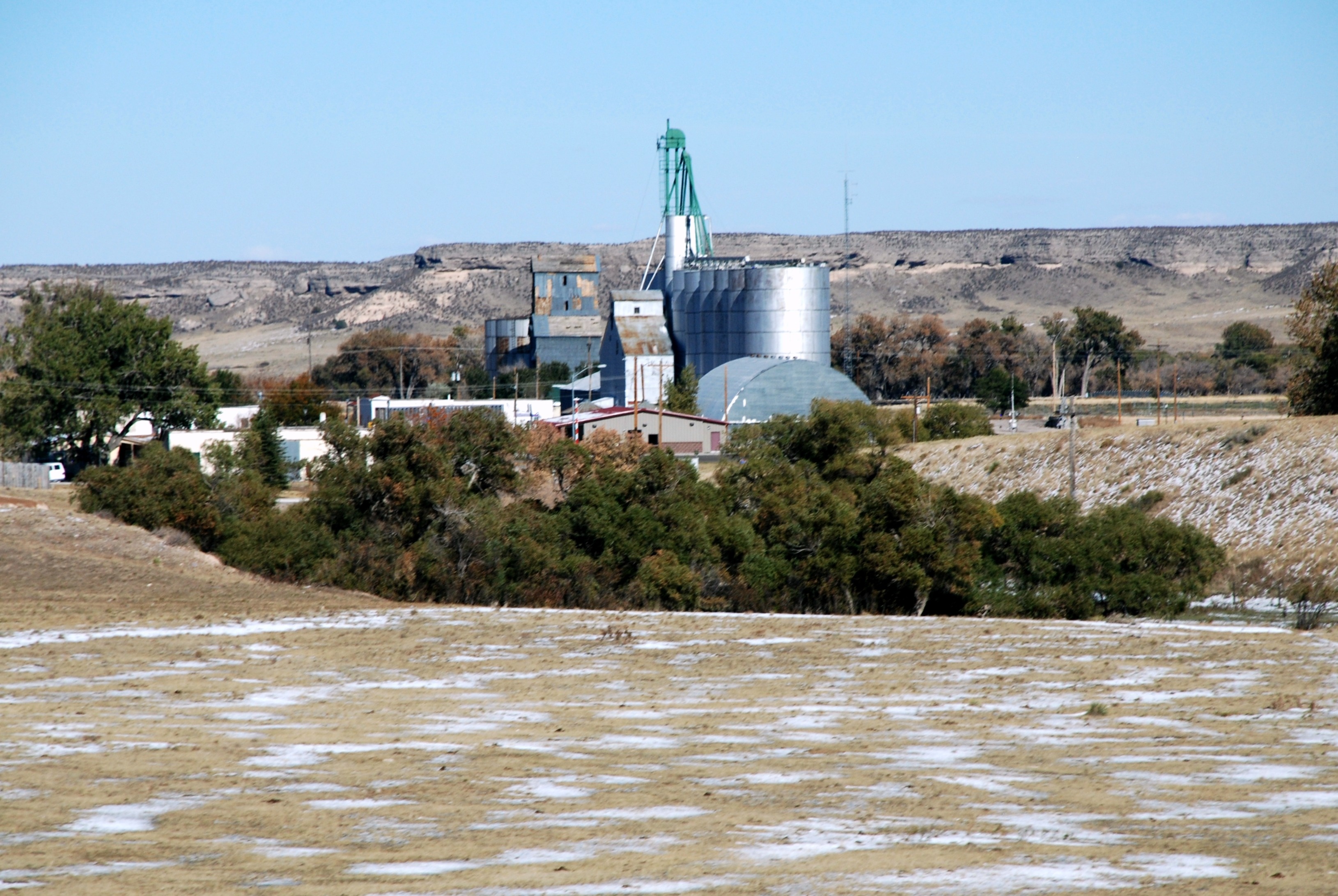
The difficulty is easy to illustrate. A case in point is the old elevator in Chugwater, Wyoming. I noticed it in the early 2000s on one of our many hunting trips while bypassing the town on I-25. I planned for a future photo shoot there, catching a cell phone image on the fly a couple of times to note its location. Once, I pulled over on the side of the road to get a couple of for-the-record shots. But when I finally decided to give it a proper visit, the elevator was nowhere to be found.
Chugwater, Wyo, 2016. The elevator on the left has disappeared.
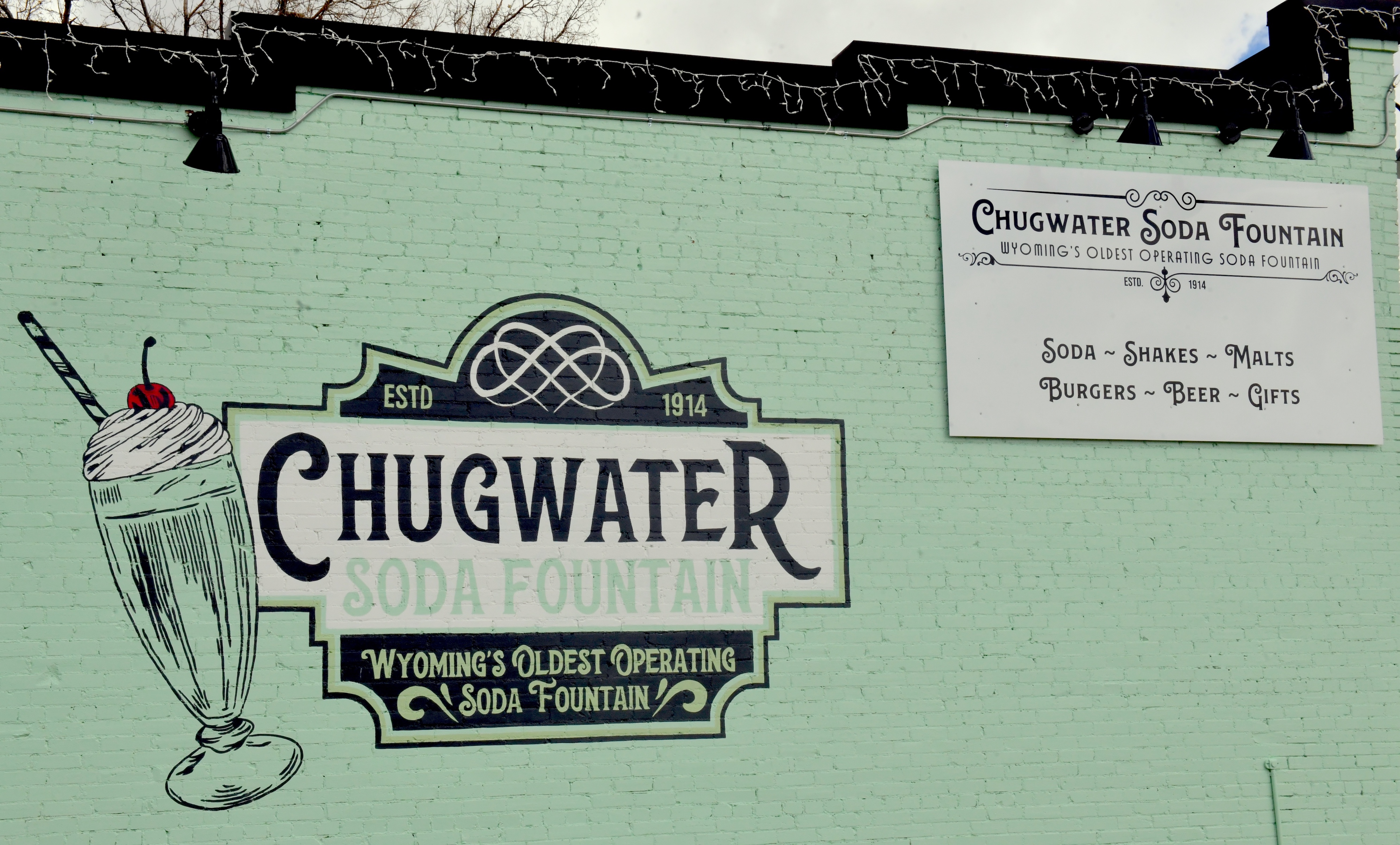
Chugwater is known for some rather fine barbecue sauce, and it also has a historic soda fountain with the best root-beer floats ever made (just don’t stop on a Tuesday or Wednesday, when they are closed). When I asked a local business proprietor how long the elevator had been gone, she didn’t know–although she grew up in the town, she didn’t notice its absence. It was just there, and then it wasn’t.
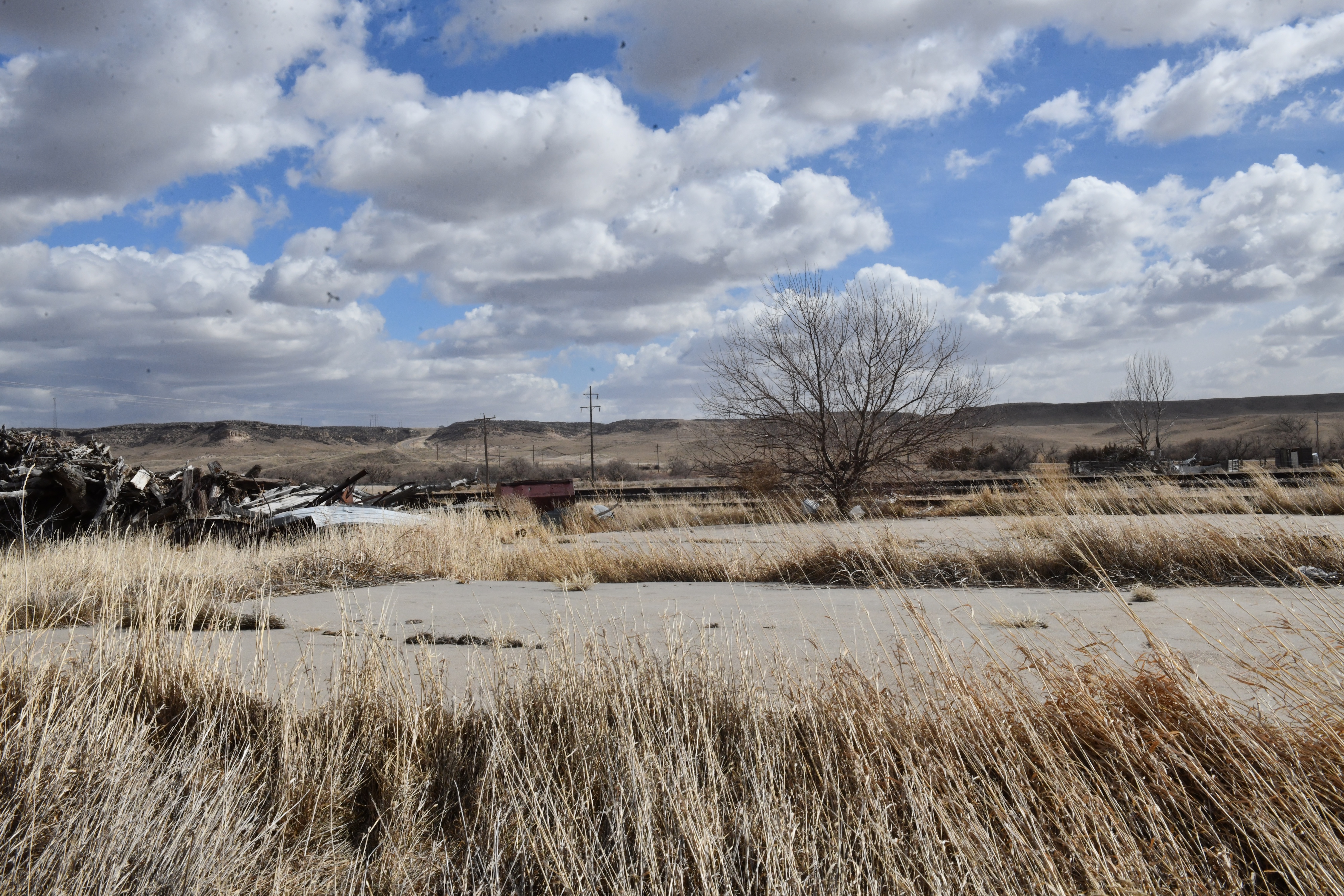
I drove to the old elevator location, and found hardly any debris. Some concrete pads still existed in the field next to the railroad tracks, but you couldn’t tell what had once stood there. I took a couple of documentary shots. Those telltale concrete pads only remained because digging up the large quantity of concrete that supported the structure would be too expensive. And who really cared?
I guess I care, and I am scrambling to catch the last moments of the few elevators I can photograph while they exist.
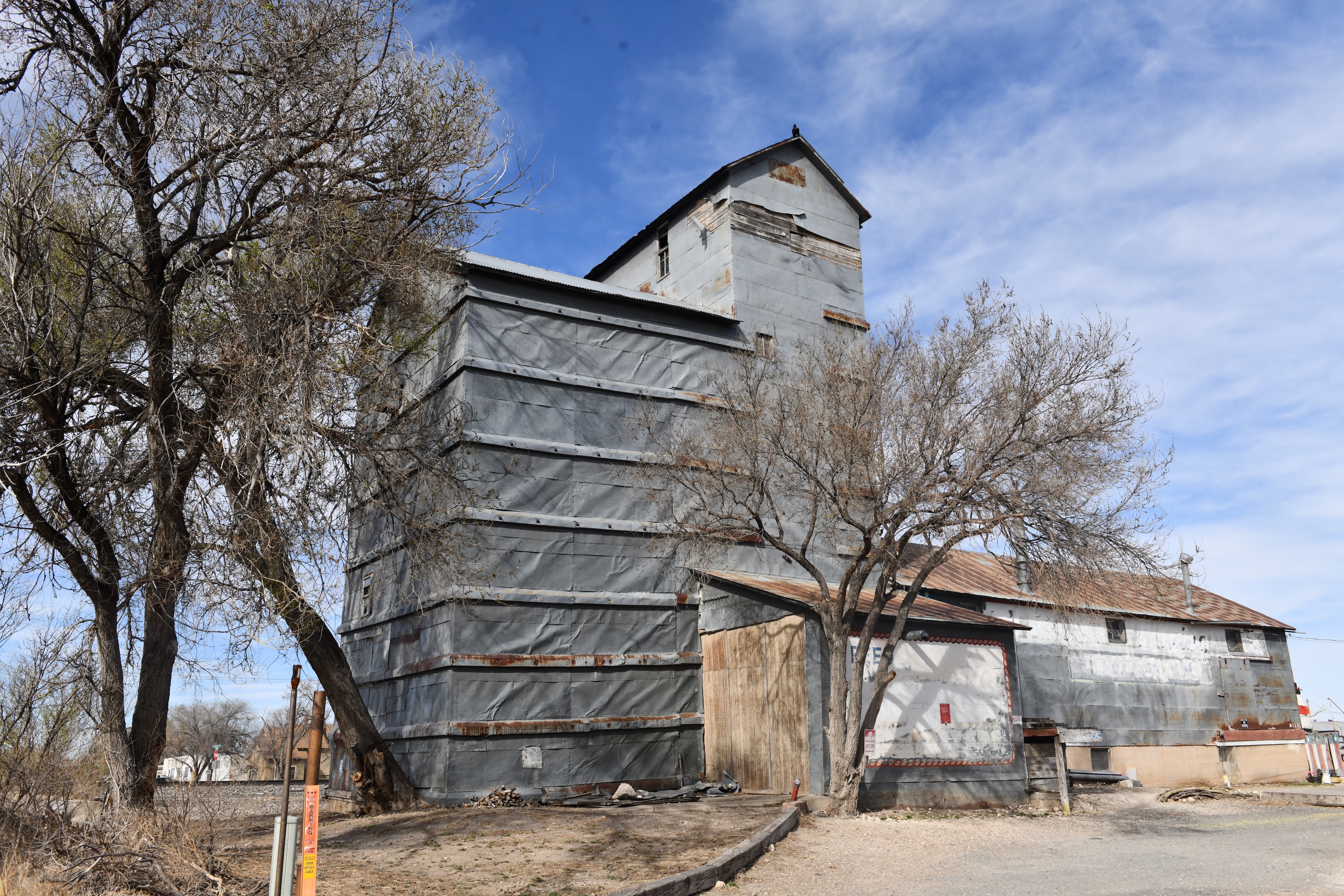
Another example is the elevator in Clayton, New Mexico. It presently serves as a coffee bean roasting facility for an adjacent coffee house, but not for much longer. The proprietor explained that the elevator was beginning to lean because the prior owner had removed some structural support beams for personal use. The elevator is showing the strain. The metal siding is beginning to buckle, and even the resident ravens seem worried.
A raven holds court atop the Clayton, NM elevator, March 2026
I took pictures–lots of them.
We will keep trying to find any surviving Van Ness Construction-built elevators, and we will document their history. In the meantime, I will catch snatches of hundred-year-old stories while memorializing wooden elevators for as long as I can.
Considering the prevalence of robot vacuum cleaners and lawn mowers, it was only a matter of time until the predictions of autonomous farming machines came true.
Say hello to the John Deere robo-tractor. Had you known about Deere’s $33-million R&D center that opened in Urbandale, Iowa, in 2018? It helps lead to this.
The design staff must have had a great time working on it, although unlike automotive designers who create a concept vehicle, there’s only one color to play with.
The attachable cab calls to mind an insect that can fit its own head to the abdomen and thorax.
Maybe our readers will get a laugh from the 2-minite 43-second video. The music is inspiring in a “Chariots of Fire” sort of way.
Our Grandfathers’ Grain Elevators marked its 10th anniversary four months ago, but in the crush of the holiday season and early 2022 resort activities in Palm Springs, which is one location of our split headquarters, we forgot to mention it until now.
Thank you to all followers of our blog.
In these 10 years, our 455 posts have attracted 72,271 visitors and 158,294 page views. Just today, we’ve had looks from China, Portugal, Lithuania, Canada, and the Netherlands in addition to the United States.
Also in these 10 years, it can be said that we–Kristen Osborn Cart and Ronald Ahrens–have become excellent friends. You see us pictured above in May of 2021, when Kristen was able to parachute into Palm Springs and accompany me to the track, where I did an assignment for Robb Report. Then we went to the south shore of the Salton Sea and took pictures of burrowing owls.
Through our posts, we’ve made friends with readers, too.
Our favorite moments in this pursuit are personal visits to our grandfather’s elevators, but we also have been lucky in getting our hands on construction records. Not long after we got going on this project, Uncles Tim and Chuck Tillotson put their heads together and came up with valuable documents.
We also love it when comments come in or readers extend their personal stories, photos, and art–all of which have been important to our effort.
On this anniversary, we would like to share a bit more from our personal perspectives.
10-Year Journey, by Kristen Cart
The blog started very much by chance. I wanted to find the elevators my grandfather, Bill Osborn, built. My dad, Jerry Osborn, knew the locations for the projects and the names of grandpa’s boss, Reginald Tillotson, and his superintendents, so I began to scour the internet to find them. That is how I found Ronald Ahrens. In 2009, he had written a post on his personal blog about his grandfather, Reginald Tillotson, and his airplane, which was pressed into service for elevator stuff. I wrote a comment on the blog. So began a very productive relationship.
Early on, we partnered with a photographer and elevator enthusiast named Gary Rich. He was a retired Union Pacific man, and he has since passed away. He traveled around many of the places where our grandfathers plied their trade, and he accumulated a formidable collection of elevator images. He gave us views of elevators that are now demolished—some of which we never had a chance to see. I had occasion to do an elevator tour and photo shoot with him. He would look at my images and tease me about removing the rock in my shoe—almost all of my pictures tilted to one side or the other. He was a very good photographer and critic.
Gary is not the only contributor who has passed on to greener pastures. Many of the men who did the work in the 1940s and 1950s were older than our World War Two veterans, and most of them are gone. The interviews and photos in this blog gave voice to some of these men and women.
Kristen waits for birds near the south shore of the Salton Sea (Sonny Bono Salton Sea National Wildlife Refuge) in April 2021.
I look through our past posts and see a few that were started and not quite finished—I confess to being the guilty party. Usually some scrap of information was misplaced or missing. If I never got back to it, mea culpa. Palmer, Iowa, was one such post—I still have hopes of finishing it.
I don’t get around to a lot of the places as much anymore. I’m not the stalwart road-tripper I once was. But I will never forget how Ronald taught me about taking strong photos with context, and about interviews that bring people to life in print.
The blog has been a great ride. Here’s to another ten years.
Figuring out the Hidden Meanings, by Ronald Ahrens
When Kristen tracked me down in 2011, I had just moved to Southern California after 25 years in Michigan, and the last thing on my mind was grain elevators. During my youth in Omaha, Neb., everybody in the family knew that our maternal grandfather, Reginald O. Tillotson, had built grain elevators. But we knew nothing beyond that.
Kristen got the ball rolling. Genealogy was her established interest, and she had come up with some news clips that served as kindling for the great conflagration that’s followed.
Inside the main house at Booker, Texas, April 2018.
It’s hard for me to get to many elevator sites–the nearest one of “ours” is in Tempe, Ariz.–and besides that I keep busy as a freelance writer. But as mentioned, we came into the possession of more records, and by hook and crook, we’ve also managed to visit elevators in Texas, Oklahoma, Colorado, Nebraska, and Iowa.
My other big challenge has been learning how an elevator works. It certainly can be said that my inventory of lingo has increased. What other buildings come with such a rich lexicon? Boot, manlift, main house, cupola/headhouse, and load-out spout are a few examples.
In my career, I’ve written for 80 magazines and 24 newspapers, including some you’ve heard of. (For example, my byline and in some cases my own photos have appeared in The Wall Street Journal, The New York Times, New York Post, and USA Today.) But I can say with satisfaction that Our Grandfathers’ Grain Elevators is equally significant, and part of the pleasure is in doing it our way.
“Louise Bereuter: Grain Elevators,” a new exhibit of paintings by the Lincoln, Neb. artist, opens Saturday, Nov. 21 at Bone Creek Museum of Agrarian Art in David City, Neb.
The exhibit will continue until Feb. 28, 2021.
Top: Louise Bereuter, “Malmo Elevator,” oil and canvas on board. Above: Louise Bereuter, “Neligh Elevator,” oil on canvas board. All images courtesy of the artist and Bone Creek Museum of Agrarian Art.
Bereuter explains the paintings were done when she and her husband lived near Cedar Bluffs, Neb.
“It was easy finding inspiration for landscapes, many of which were areas seen while roaming the rural back roads of Nebraska as well as views surrounding our Nebraska home along the Platte River,” she said in a promotional statement released by the museum.
During studies at the Boston School of the Museum of Fine Arts some 60 years ago, Bereuter met the great Edward Hopper, whose work gave her inspiration.
We see the connection in her loving depictions, which are delivered in a spare, precise style. Light and shadow are handled with special mastery.
Louise Bereuter, “Tekamah Elevator,” oil and canvas on board.
Louise Bereuter, “North Bend Elevator,” oil and canvas on board.
“This is the accomplishment for which Bereuter and all realist artists strive, to turn the ordinary into the extraordinary,” the museum’s promotional flyer says.
Admission is free during museum hours. The museum is closed on Monday and Tuesday. Appointments and tours are available.
“We do have some COVID-19 safety regulations in place in our museum, which we have listed on our website and in the newsletter,” collections manager Gabrielle Comte writes in an email. “Sometimes it is good to inform people ahead of time so they can plan ahead. You would be surprised how shocked people have been to learn of our mask requirement here.”
We thank the artist and the museum for providing the images that appear with this post.
Bone Creek Museum of Agrarian Art is at 575 E Street, David City, Neb. Telephone: (402) 367-4488.
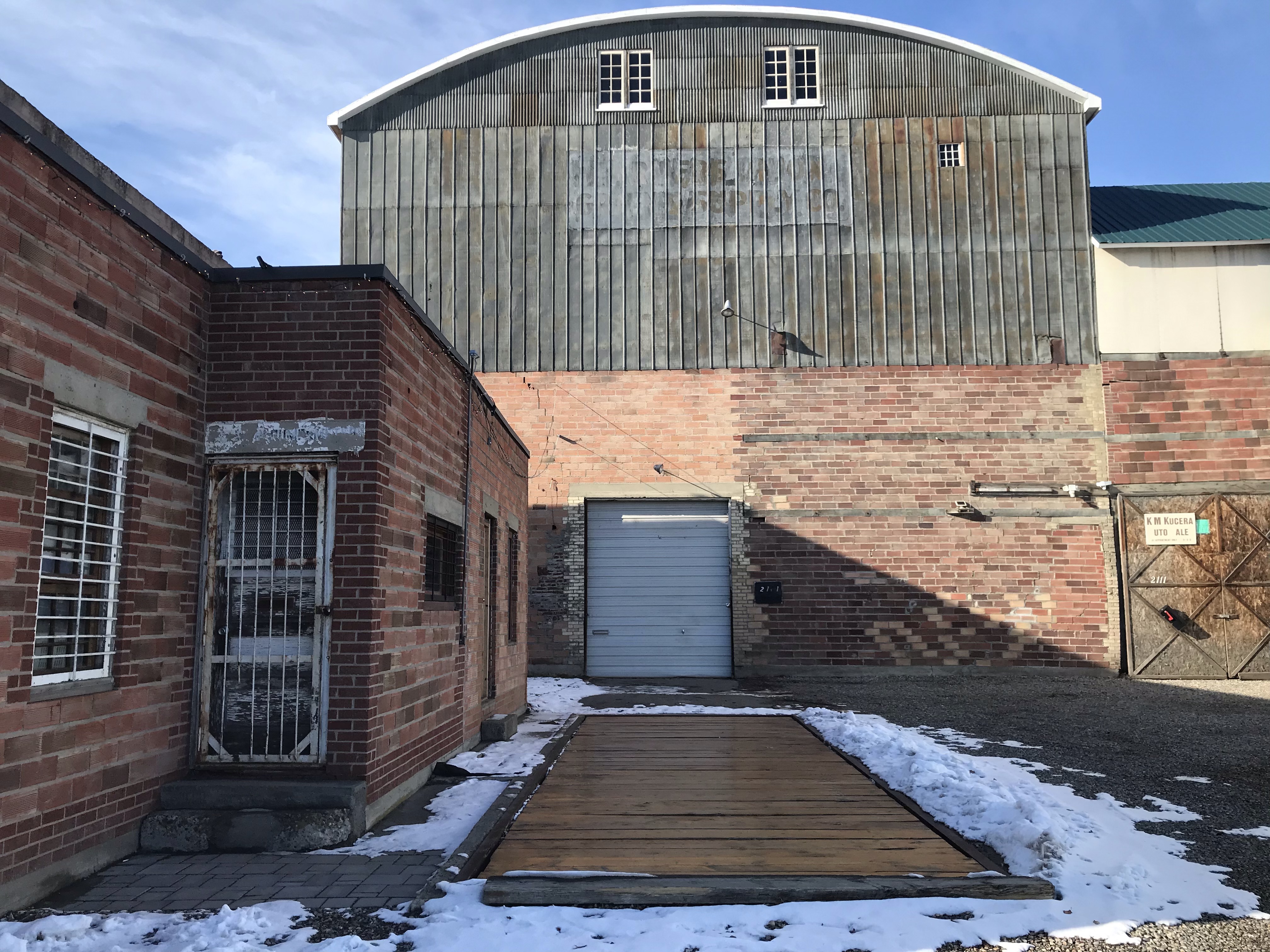
A wooden scale lies beside the old brick scale house.
Story and photos by Kristen Cart
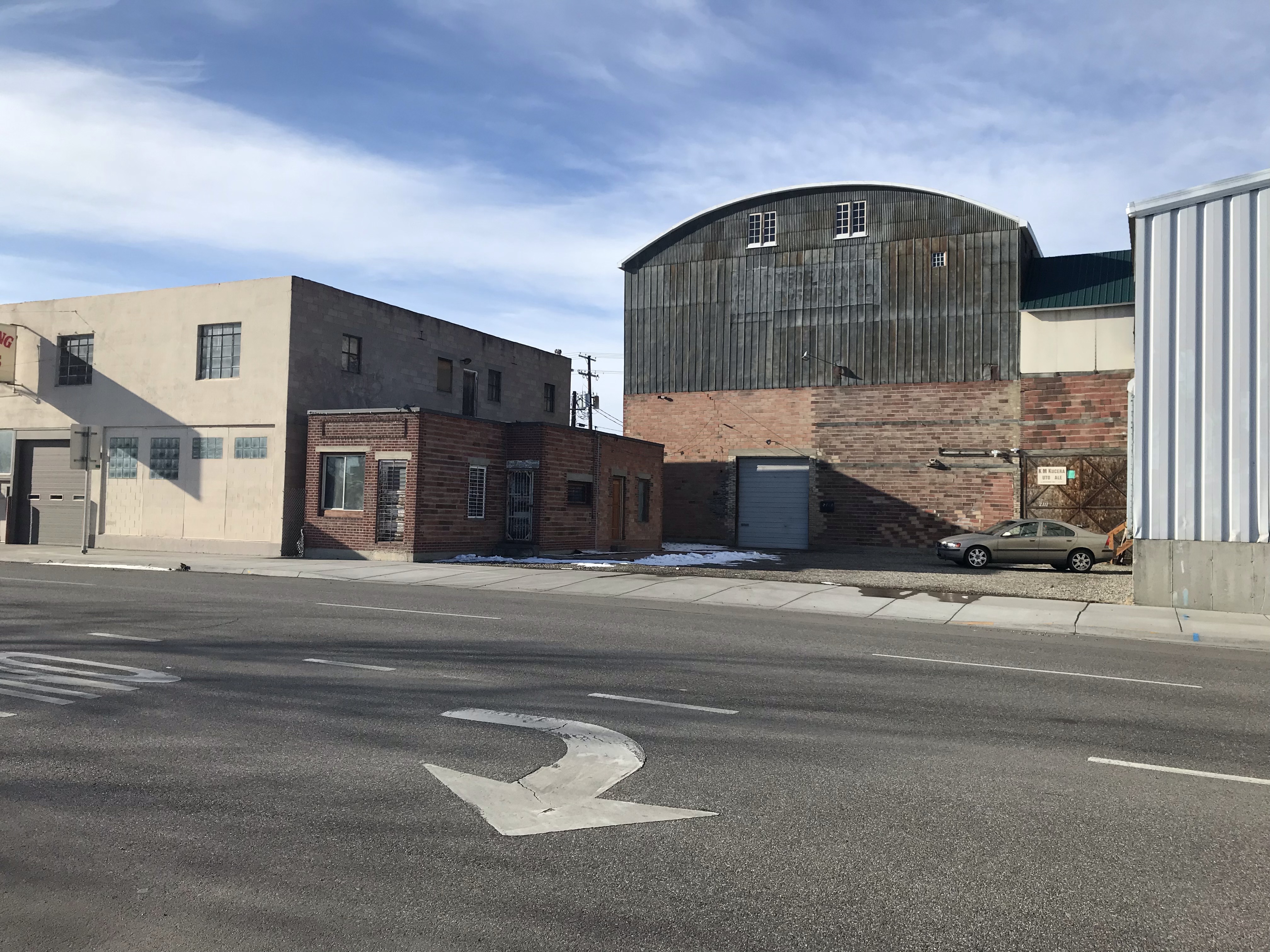
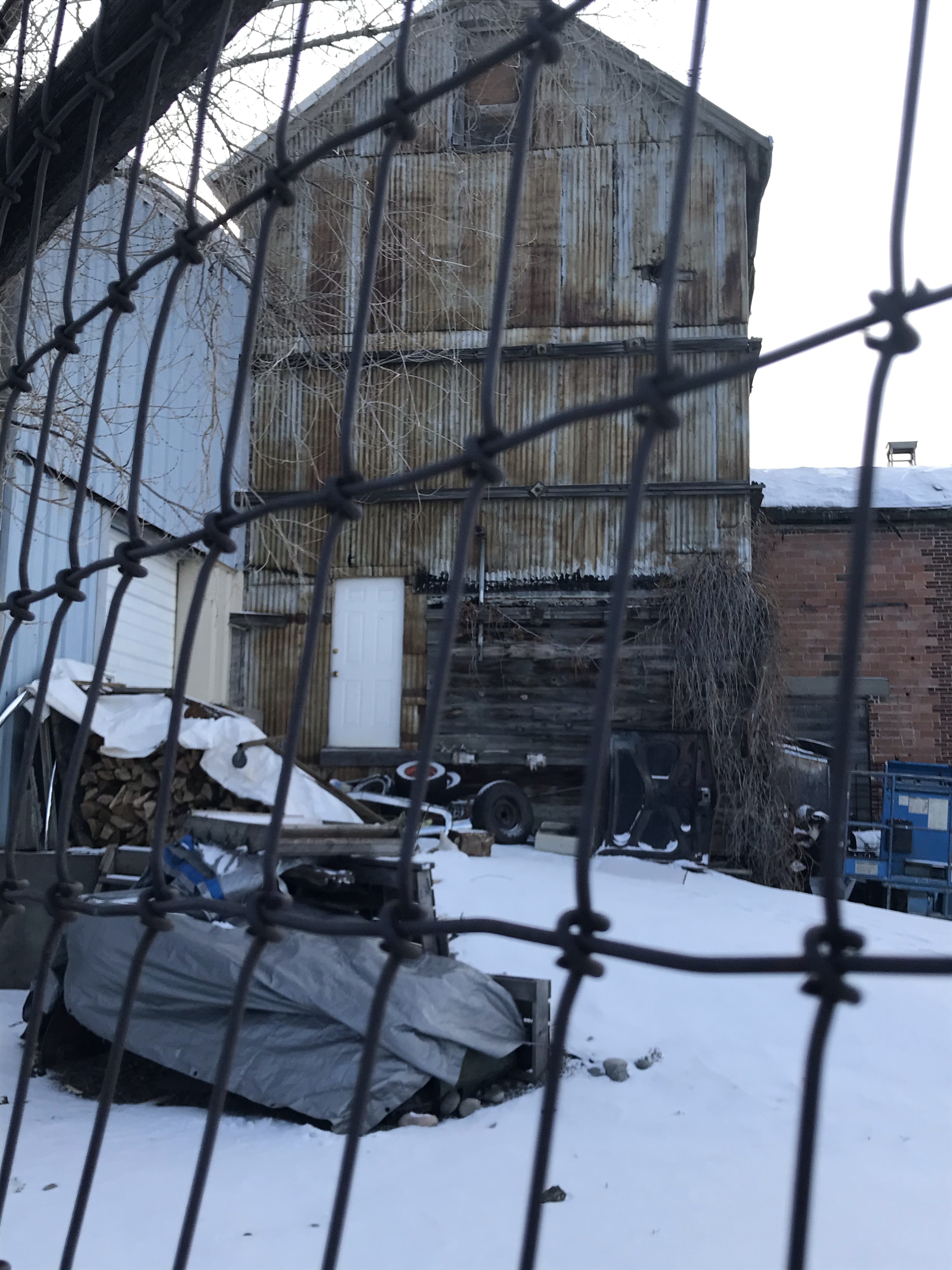
This old mill in Billings, Montana was too good to pass up. A trip around all sides revealed its current occupation as a tire company or body shop–old cars and an old wood elevator inhabit the yard beside it, but a large quantity of tires are piled adjacent to the road on the other side. But the area pictured above shows that it once handled grain.
The door to the scale house admits no one.
I have never seen a wooden scale before. The scale house next to it is shut up tight with iron bars–it could have been a jail, perhaps, in a later life. The mill itself shows signs of repeated brick repair. The story of these buildings invites a more thorough investigation.
The mill is in a historic part of Billings and sits across the street from the railroad lined with coal cars. If you could imagine it opening up to a brick-paved street illuminated with gas lights, this structure would fit right in. But it is a bit odd in its present setting.
The modern look undoubtedly bears no resemblance to the original view.
The mill appears to be well maintained and will, with care and good luck, grace this historic street for another hundred years.
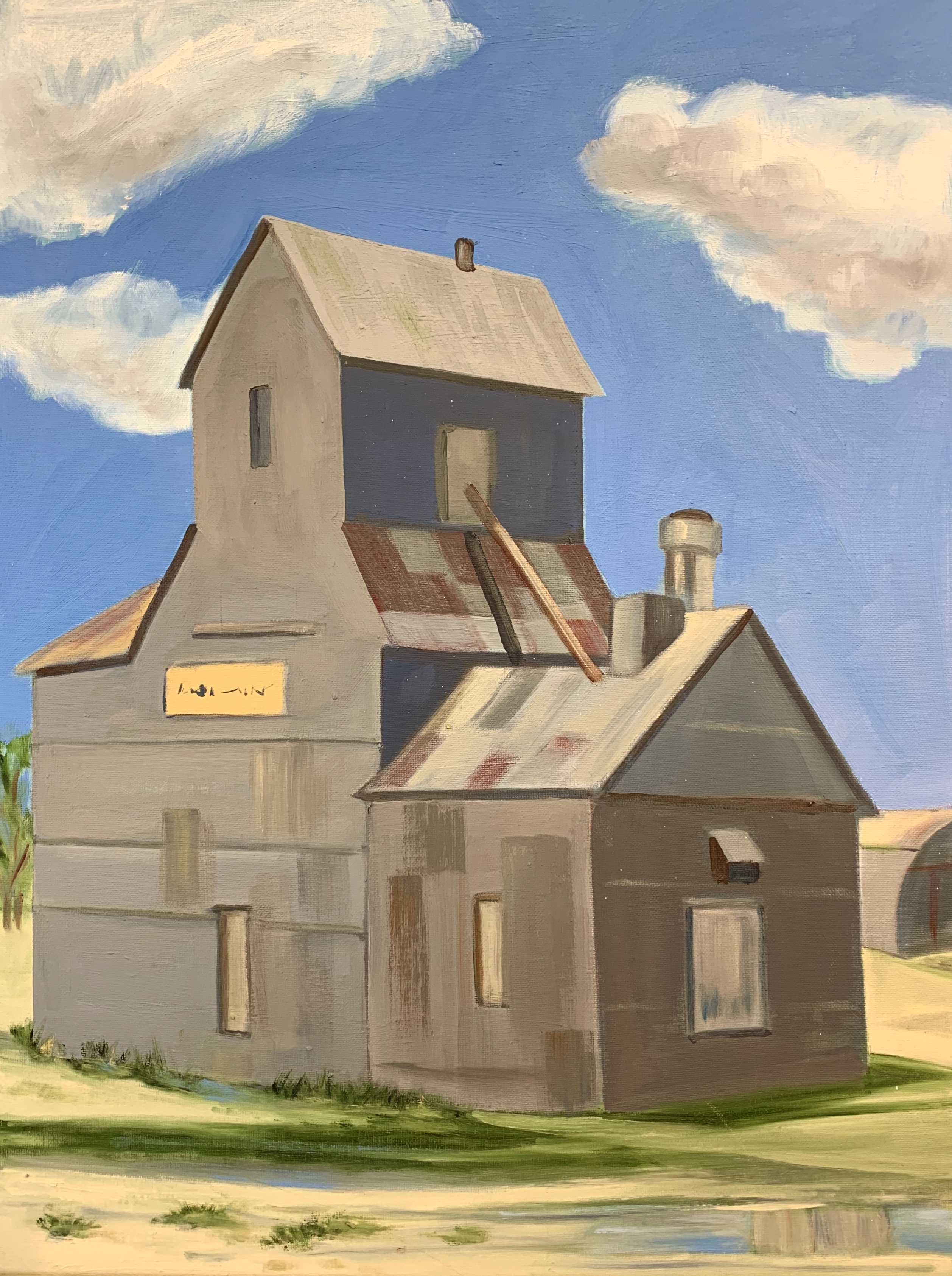
Today is the second of three straight days featuring oil paintings by Kim David Cooper. Here he shares with us a 16 x 20-inch oil depicting an elevator from … he can’t say for sure.
“I don’t even remember where it was from–possibly around Mead, Nebraska,” Cooper commented. “Didn’t write it down, and I’m getting forgetful!”
In an email he called the work “October, Nebraska.” It was sold to collectors in Wahoo, Neb. (home of a Tillotson elevator).
Often when we see photography or landscape paintings by Nebraska artists we’re stunned by their ability to discern the subtleties (although nothing about a grain elevator is subtle).
This fine landscape hows just how beautiful Nebraskaland can be.
Our friend Kim David Cooper has shared more of his work with Our Grandfathers’ Grain Elevators.
Cooper favors the plein air technique, which refers to scenes painted outdoors with the emphasis on spontaneity and seeking to capture the fleeting effects of light and atmosphere.
Here you see his vigorous brushwork and deft use of perspective, which makes the office portion of the building jump at the viewer.
“No cement here,” Cooper wrote in an email. “Painted on site, plein air. Buildings still there in Elkhorn, Neb.”
He also provides a photograph from the same point of view. We see how he captured the scene’s essence, adding life and spirit that simply isn’t found in the photo.
This 9 x 12-inch painting has already been sold. To inquire about commissions, call Cooper Studio & Gallery, located at 1526 Silver St. in Ashland, Neb. Phone: 402. 944.2022.
Flying into the Bozeman Yellowstone International Airport the other day delivered a pleasant surprise in the form of three handsome elevators soon after we drove away from the passenger terminal.
One elevator was right there in Belgrade, Montana, where the airport is. It was an old house adapted to operate with metal silos.
Another had concrete silos, and a third looked like a simple wooden house.
These photos are all we can offer. The elevators weren’t Tillotson or Mayer-Osborn jobs, but we were excited to see them and now share with eagerness. Perhaps at a future time we can learn more details.
Vertical Innovations’ first vertical farm is planned for this elevator. Photos courtesy of Vertical Innovations.
By Ronald Ahrens
Jim Kerns and David Geisler called up the other day from Springfield, Missouri, to ask a question of our readers: Are you aware of any municipally owned, abandoned grain elevators?
Kerns and Geisler run Vertical Innovations, an enterprise formed in December of 2014 to repurpose old elevators, making them into incredibly productive vertical farms for growing leafy green vegetables. They have developed a patent-pending method of hydroponic production, a “structure-driven design” that adapts to the circular shapes.
“The silos tell us what to do,” said Kerns, who has a background in organic farming and leads the company’s innovation, design and construction efforts. “I see them as giant environmental control structures, giant concrete radiators.”
Significant energy savings can result from implementation of circular shapes, which among other things require far less lighting and the corresponding energy use, he said.
Jim Kerns explores elevator guts.
David Geisler, CEO and general counsel, has worked out a lease for a disused elevator in downtown Springfield.
For its next steps, the company has targeted an available elevator in South Hutchinson, Kan., and approached the owner of Tillotson Construction Co.’s Vinton Street elevator in Omaha.
“What an awesome facility,” Geisler wrote in a follow-up email, thinking of Vinton Street.
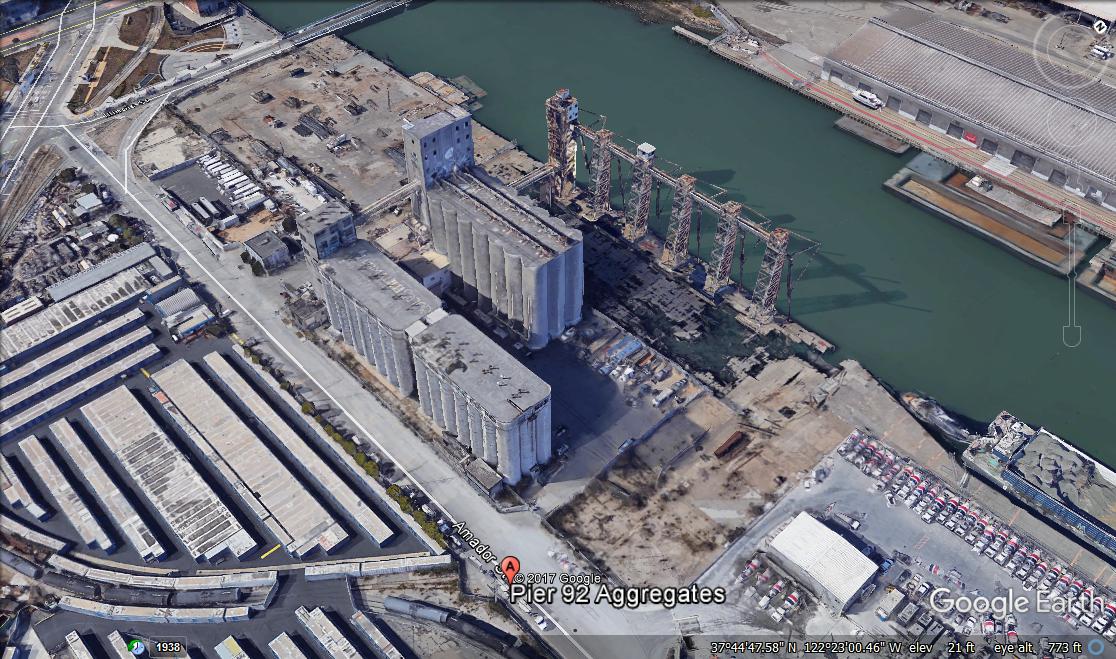
Geisler and Kerns have cast their eyes far beyond the Midwest, though, from big terminals in Buffalo, N.Y., to San Francisco’s threatened Pier 92.
“We really need to save that facility if it’s structurally sound,” Kerns said. “It could put out about 50 million pounds of green leafy vegetables per year.”
Their most unique discovery source is YouTube videos posted by those who have flown drones around elevators.
But word-of-mouth works, too, and Kerns issues this appeal to readers: “Submit to us pictures and locations of concrete grain terminals in good condition all across the United States, sea to shining sea, north to south.”
Vertical Innovations can be contacted through its website.










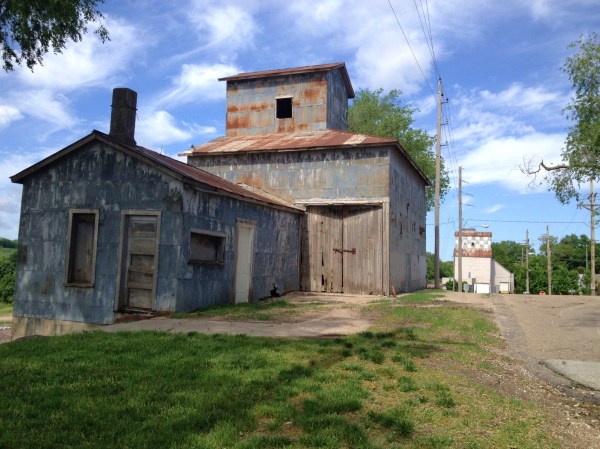 “No cement here,” Cooper wrote in an email. “Painted on site, plein air. Buildings still there in Elkhorn, Neb.”


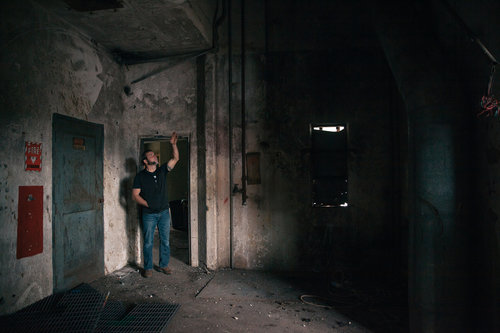
 Their most unique discovery source is YouTube videos posted by those who have flown drones around elevators.
 Our Grandfathers' Grain Elevators