By Ronald Ahrens
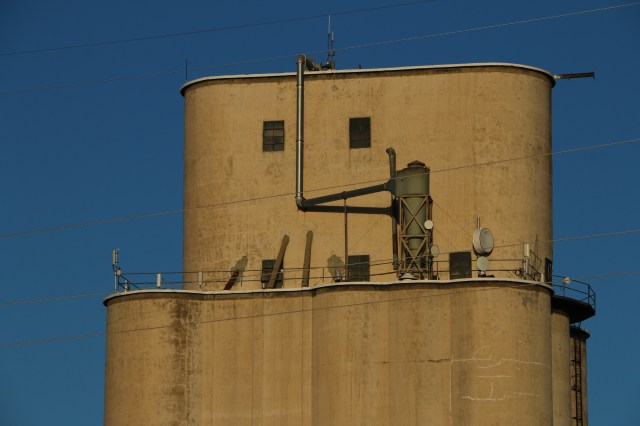
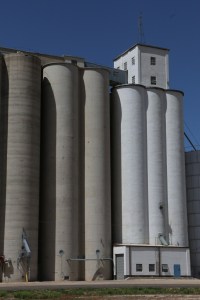 Tillotson Construction Co. had yet to perfect its signature style of the curved headhouse when it first built in Dalhart in 1947.
Before the late 1940s the headhouses were rectangular with a sort of molding, of concrete, extending up the full height at each corner.
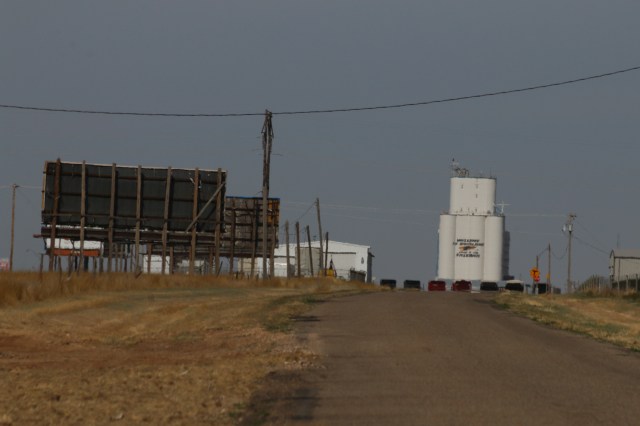
In ’47, Tillotson built a 150,000-bushel, single-leg elevator along the busy railroad tracks of this market center, the seat of Dallam County.
In specifications it adhered to a unique plan with four tanks, or silos, each measuring 20 feet in diameter and reaching 120 feet in height. There were eight bins. The attached driveway was 13 x 16 feet.
The surprise is that Tillotson built a 98,000-storage annex in the very same year. Notes in the company records show two tanks of 25 feet in diameter reaching a height of 120 feet.
A further note says “Direct spouts from elev.–Gravity flow to Elev. Pit. Ring footing 3 bins.”
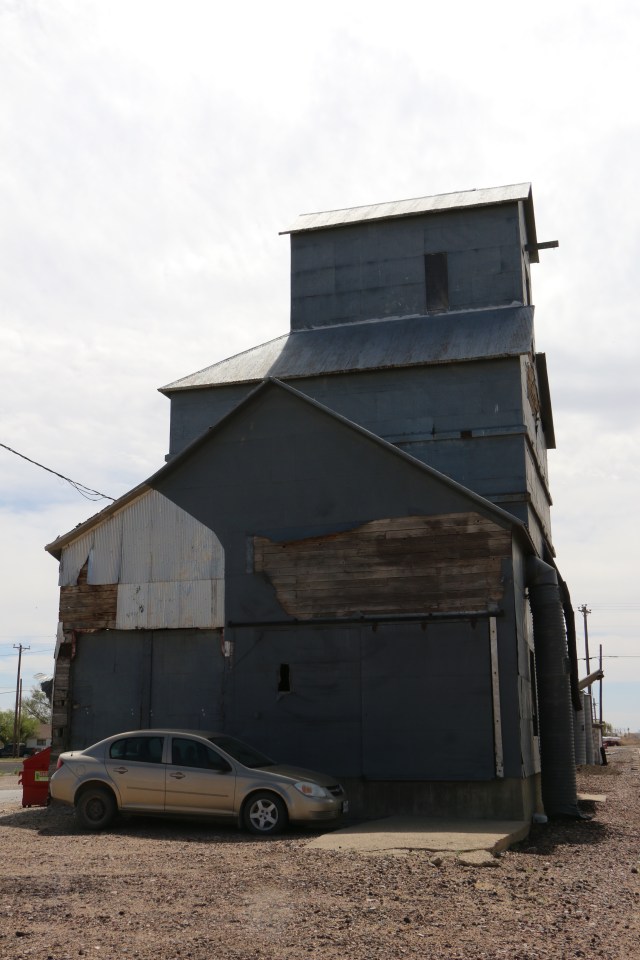
When I visited last month, I hadn’t realized there were two elevators. Maybe I missed something. I think I paid a call to the 1949 job.


Here’s what Uncle Chuck contributes: “I remember Dad having to make a number of trips to Dalhart, but if the annex was finished in ’47, like you say, then he must have been there to close out and inspect the finished project.
“My recollection was that the job was either finished or in the final punch-list stage. But like you on your trip, we had visited a bunch of jobs or prospective jobs before we got to Dalhart.
“Also, my young mind in those days wasn’t necessarily concentrated on the job status in each stop but probably more interested in the secretarial staff!”
At last he reveals the truth!
Except for a railroad employee familiar from down the road in Hartley, no staff–and especially no secretaries–could be located.
Looking through the scale-house window, I saw a plate of uneaten food and an open bag of chips on the counter. Yes, another mystery.
I would leave Dalhart with more questions than before my arrival.
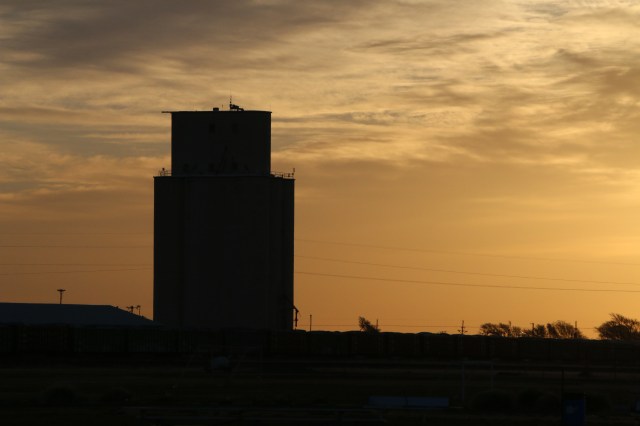
 After departing Hartley, my next stop, just 15 miles northwest on U.S. 87/385, was Dalhart, a market town with brick streets in the business district and, along the railroad tracks, a whole lot of buildings by Tillotson Construction Co. Dalhart is so remote in the Texas Panhandle that six other state capitals are closer than the Texas capital of Austin. For example, it’s 28 miles shorter distance to Lincoln, Neb., than to Austin.
 Mention of Dalhart got my uncle, Charles J. Tillotson, reminiscing about his experience with my grandfather, Reginald O. Tillotson. Perhaps from the following anecdotes we understand why Reginald started using light aircraft for his business travels.
 Anyway, on that trip, it was getting close to sunset as we approached Dalhart, so Dad had me stop in Amarillo where he secured a hotel room.




 By Ronald Ahrens
 Weight of the reinforced concrete came to 5,004 tons. Plain concrete for the hoppers totaled 40.3 tons. Grain filling the tanks, or silos, weighed as much as 9,000 tons.


 By Ronald Ahrens
 The job 68 years ago required the careful mixing of 2,066 cubic yards of concrete from the sand pile on the site. It would be reinforced with 109.37 tons of steel. At least I think that’s the number in the company records. That line got pinched in the copying process. But 109 tons is consistent with the amount used in other elevators of similar size. The 252,000-bushel elevator built the same year in Pond Creek, Okla.–another on the Dike plan and one of two dozen Tillotson jobs in that bounteous year–used 112.91 tons of steel.


 It turned at 42 rpm, cranking the 14-inch, six-ply belt and it’s cups that measured 12 x 6 inches at 8.5 inches o.c. The head drive had a 40-horsepower Howell motor.
 But the drama of the elevator’s construction might have eluded the Class of 2010.
 Indeed, we can hardly count the human cost to building an elevator, or any tall structure, in the early and middle decades of the 20th century.




 The year 1950 was a busy one for Tillotson Construction Co. The Omaha outfit (my grandfather Reginald Tillotson’s company) built 25 grain elevators–an amazing number. They were in Oklahoma, Texas, Colorado, Kansas, Nebraska, and Iowa. The next year they would build one in Missouri.
 While the Bellwood plan was used for five elevators, it’s interesting to note the slight differences in materials used. For example, Canyon took 2,463 cubic yards of reinforced concrete while Burlington, Colorado, also on the Bellwood plan, took 2,436 cubic yards (the exact same amount as the mother elevator in Bellwood and the one in Hartley, Texas, which is coming soon in this series). Rock Valley, Iowa, though, took 2,394 cubic yards.


 Altogether, 34 hp was required to operate the leg; the record says two 40-hp Howell motors were installed. Theoretical capacity of the leg, based on the cup manufacturer’s rating, was 7,920 bushels per hour. But the leg operated at an actual capacity of 80 percent the theoretical capacity, or 6,350 bushels per hour.
 By Ronald Ahrens
 Our Grandfathers' Grain Elevators