
By Ronald Ahrens
From reading Wayne G. Broehl, Jr.’s huge history of Cargill, I’ve become alert to other news about the grain-trading behemoth. So a Wall Street Journal article, titled “Growers’ New Clout Tilts Farm Economy,” caught my eye on Aug. 16
“Powerful farmers push Cargill, ADM for better prices, and may soon compete,” the sub-headline reads.
According to Jacob Bunge’s story, several factors have risen in importance to give large farmers more leverage.
One is that farmers have more storage capacity for their grain. They don’t have to sell soon after harvest, going to the local elevator and accepting the current price.
A second factor is more options for direct sale of crops to stock feeders or ethanol plants.
And like everything else, there’s a digital aspect. “Venture capital-backed startups are developing services that scan a wider range of grain buyers or connect farmers directly with food makers,” Bunge reports.

Bunge’s story in the Journal tells of a Cargill grain buyer who “said his job got harder still after Cargill in 2016 sold the Burlington, Colo., grain elevator–and later, nearby cattle feedlots that were reliable destinations for the grain grown by many of [the buyer’s] contacts.”
Here we skidded to a stop. Burlington, Colo., is in the records of Tillotson Construction Co. My uncle, Charles J. Tillotson, worked on Burlington and recalls a 1950 incident there involving a train and cement mixer. The locomotive derailed, but no one was injured.
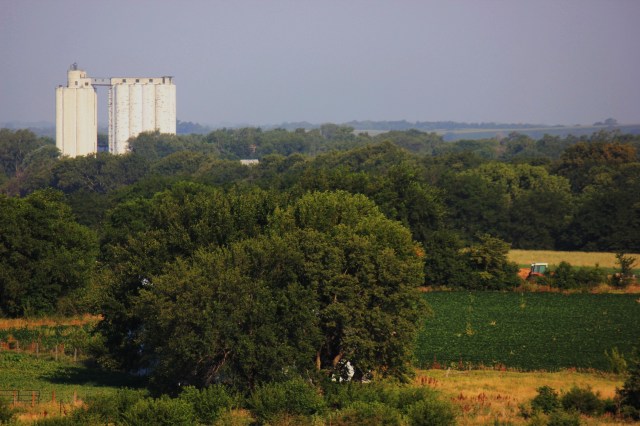
The 300,000-bushel Burlington elevator had eight tanks of 20 feet in diameter and 115 feet in height. It was a twin-leg elevator with a pit 19 feet deep. The cupola measured 23 feet wide, 63.75 feet long, and 44 feet high. Pulley centers were 168 feet apart.
Could this be the same elevator Cargill sold two years ago? The big company has “divested itself of some far-flung grain elevators that aren’t near a railroad or river.”
And Bunge recounts another marvel: the anecdote concerns an Illinois farmer–one who tills 9,000 acres and rents out 5,000 more–who partnered with another farmer to buy a 750,000-bushel Cargill elevator.
If they don’t find it too expensive to operate and insure, dispatching large quantities of grain when and where they want will be a challenge for Cargill and ADM to face.

 We tend to think of wooden elevators as modest structures, but in the 1870s the New York Central & Hudson River Railroad had two massive terminals in New York City holding 3.5 million bushels of grain for export. Cargill shipped over the Great Lakes to Buffalo and then by rail to the terminals.
 Three years later Cargill had settled in La Crosse, Wisc. When he and his wife, Ella, went on a pleasure trip to Chicago, a La Crosse newspaper said, “They have been making so much money on wheat they they’ll buy Chicago if they feel like it.”

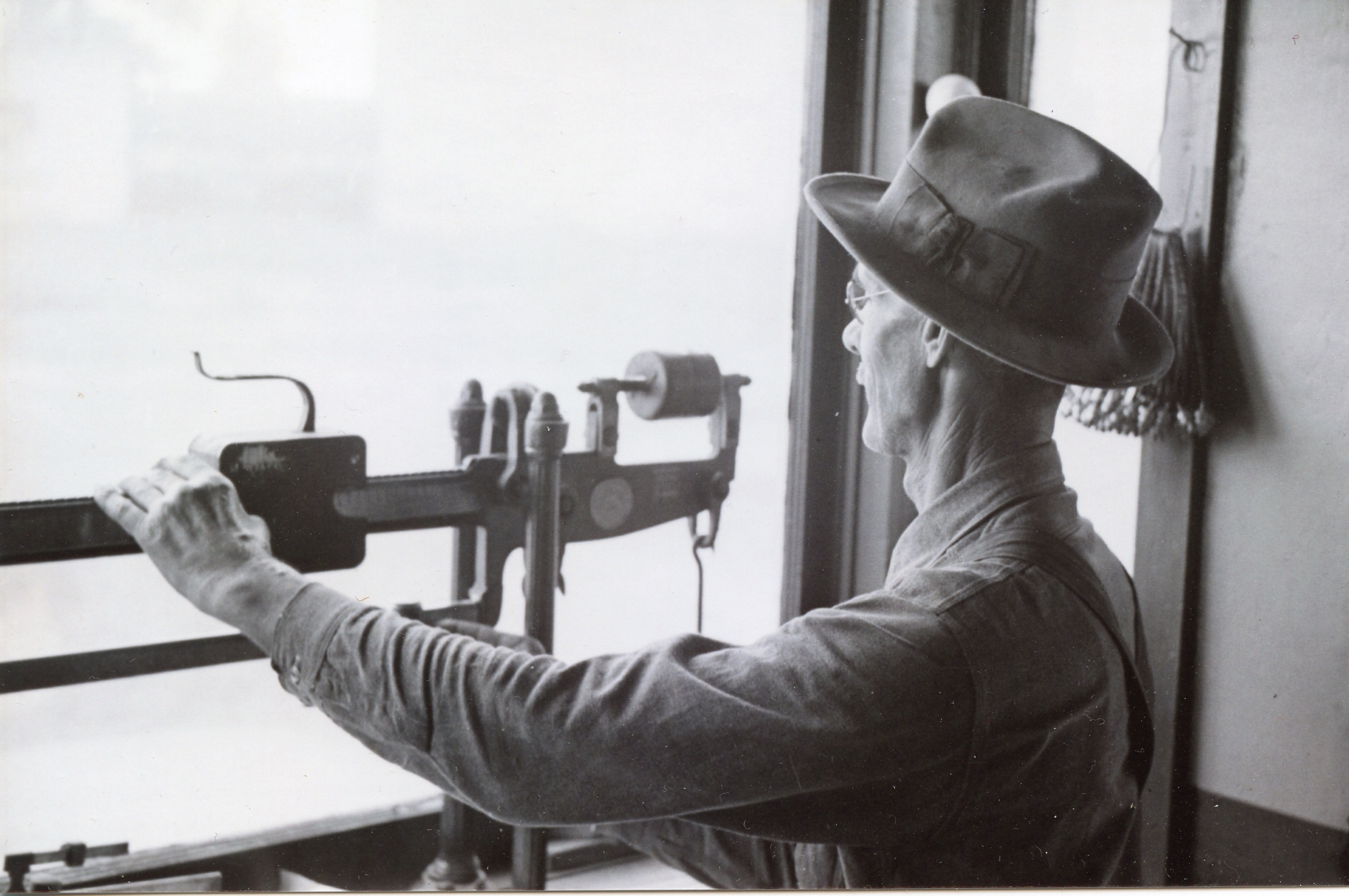
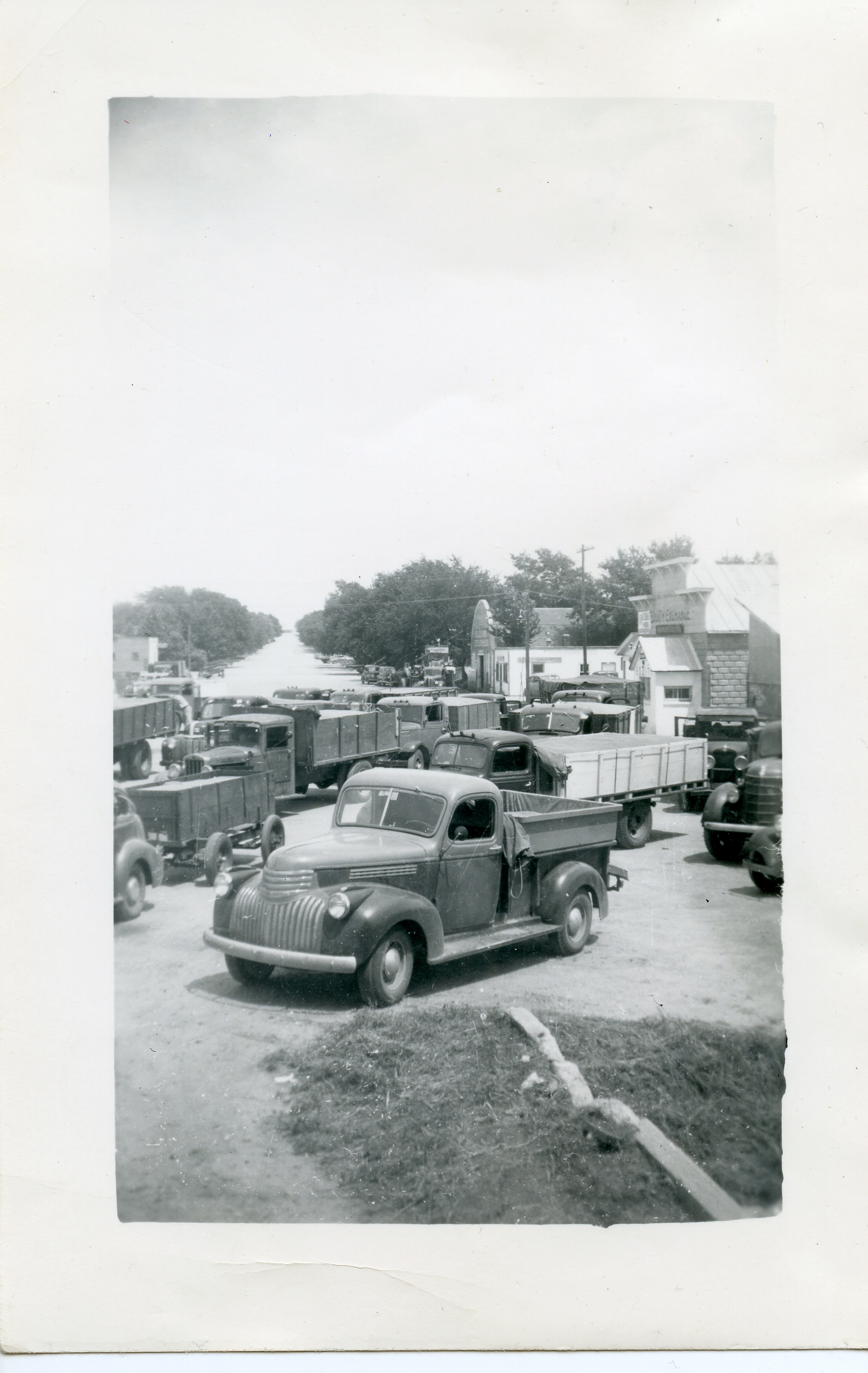
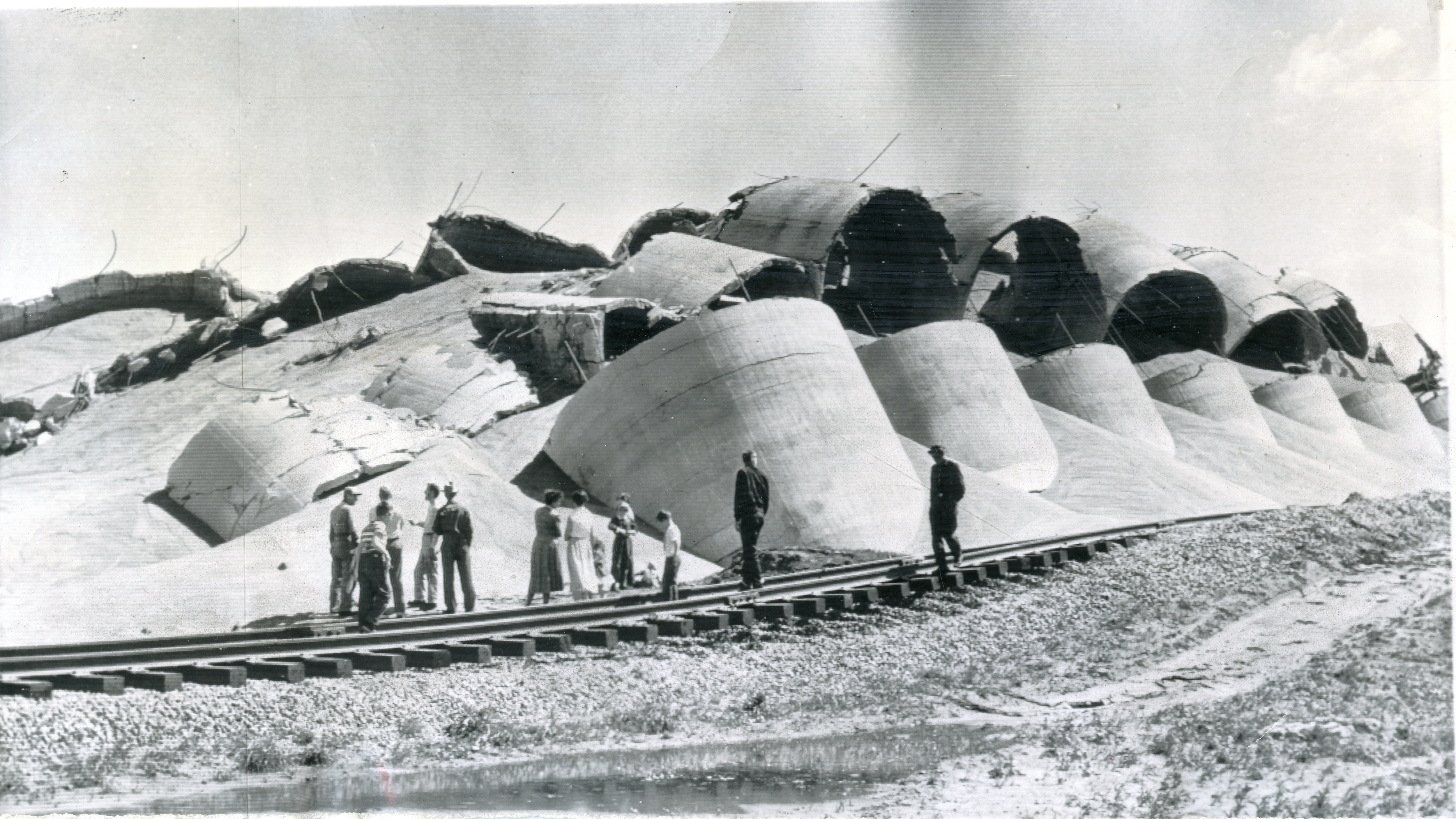


 The first electric elevator–a retrofitting, we assume–was soon after a large-capacity generating station started up in 1895. Two years later, the Electric and Great Northern elevators were built solely around compact electric motors.

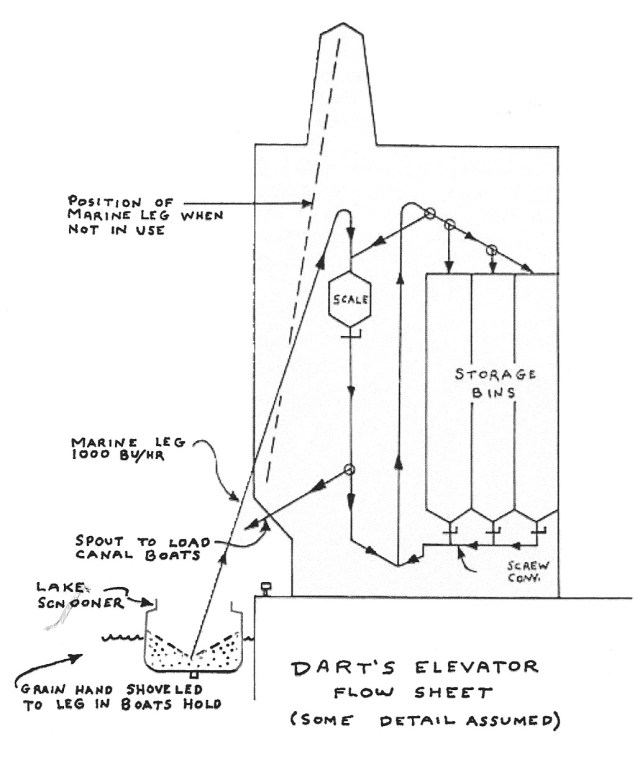
 In this volume Prof. Broehl starts with Will Cargill’s reaching his majority after the Civil War. As a young man, Cargill showed a disposition for trading grain. It led to a few elevators but also many “flathouses.” These single-story warehouses proliferated along the railroad tracks in northeastern Iowa and southern Minnesota, where Cargill got his start; they could hold a lot of grain but of course they were subject to fire.

 Our Grandfathers' Grain Elevators