Mayer-Osborn elevator contract proposals are preserved at Wauneta, Nebraska

Much of the time on the road was spent marketing. William Osborn at the wheel

William Osborn at the wheel. Much of his time was spent selling elevators to prospective buyers.

Story by Kristen Cart

The Mayer-Osborn Construction Company built their elevators from 1949 until about 1955. To do this, they had to beat out a number of formidable competitors, both large and small, vying for the same jobs. But they did not win the contract every time they tried. One example of their perseverance survives at the Frenchman Valley Co-op at Wauneta, a town in southwestern Nebraska. Mayer-Osborn did not win their bid, but their contract proposals, made over a period of several years, are still kept in the co-op vault among blueprints and records spanning almost 70 years.

The cover letter for the Mayer-Osborn contract proposal at Wauneta, Neb.

The cover letter for the Mayer-Osborn contract proposal at Wauneta, Neb.

When I was first trying to get a handle on the scope of Mayer-Osborn’s business, I asked my dad, Jerry Osborn, which partner did most of the marketing. I was under the mistaken impression that Eugene Mayer was in charge of all that, and I thought that all my grandfather William Osborn had to do was show up and start pouring concrete.

“No,” Dad said, “Gene Mayer took care of the office and accounting, but your grandpa did a lot of the sales.”

This ad for Mayer-Osborn Company ran in Farmers' Elevator Guide over a period of several years in the early 1950s.

This ad for Mayer-Osborn Company ran in Farmers’ Elevator Guide over a period of several years in the early 1950s.

Grandpa put many miles on his cars, visiting prospective clients, when he was not supervising an active construction site. He spent almost all of his time on the road. Dad recalls that he and his mother were home alone during those years, while his brother Dick was in Korea and his sister Audrey was married. We have a few pictures of Dad with both of his parents, but they were taken at a job site. The sales part of Grandpa’s job took much more effort than I had ever imagined.

For a closer look at the Mayer-Osborn plans for Wauneta, Neb., and the final outcome of their efforts, stay tuned.

Concrete problems plagued consecutive elevator projects at Blencoe, Iowa

DSC_0578Story and photos by Kristen Cart

In the summer of 1954, Mayer-Osborn Construction built an elevator with a stepped headhouse in the northwestern Iowa town of Blencoe. As my dad, Jerry Osborn, explained, after the crew poured the first ten feet of concrete in the slip-form process, the concrete sides below the forms showed signs of crumbling. An investigation revealed that the concrete mixture had not been set correctly. It took as many hours to remove the concrete and start over as it did to pour it. Dad worked on the project and saw the fallout first hand.

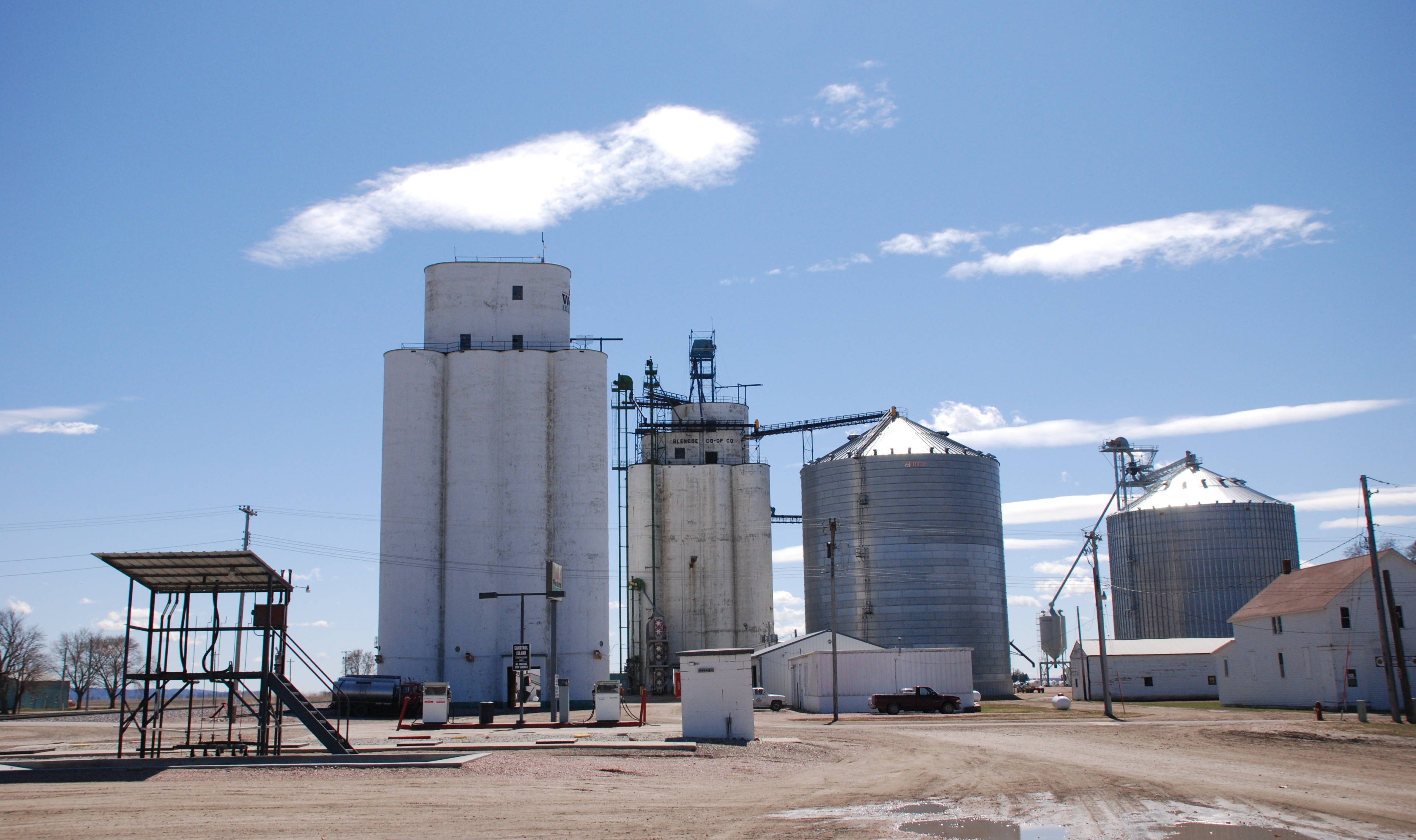
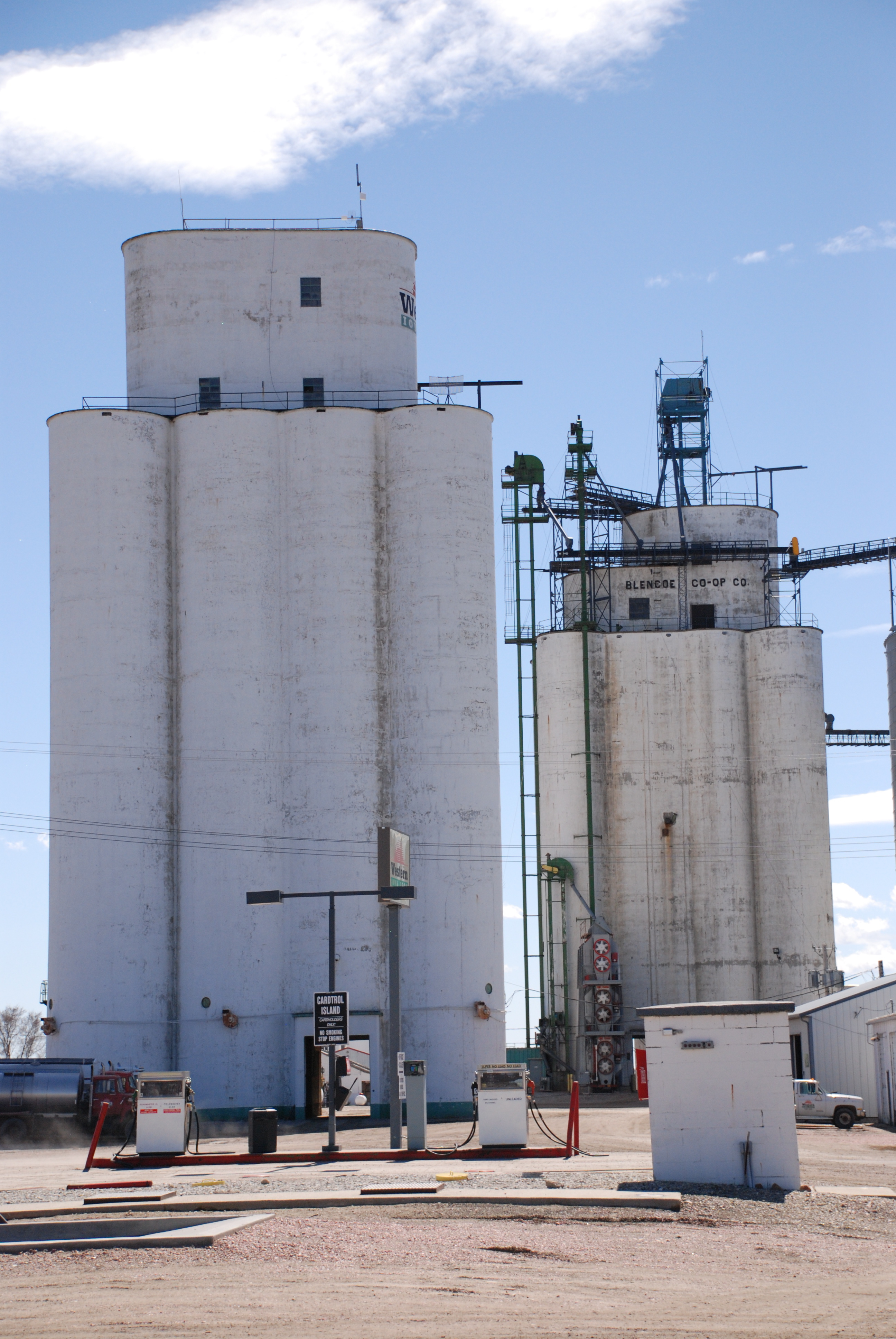
The larger Tillotson elevator stands to the left. The Mayer-Osborn elevator obstructs the view of its large annex which extends behind it.

The larger Tillotson elevator stands to the left. The Mayer-Osborn elevator on the right serves a large annex which extends behind it. Photo by Kristen Cart

Builders were required to do a destructive test on the concrete mix at various stages of curing, to ensure the proper strength for each part of the elevator structure. Engineers tested various mix ratios to decide upon the best one. Naturally, this process was used at Blencoe, but when the mix was finally set and the pour began, it was done incorrectly. I can imagine the blue language wafting from the site as the concrete was taken down. Someone on the site had his ears pinned back pretty fiercely. But the construction continued, and a handsome elevator still stands there today, nearly 60 years later.

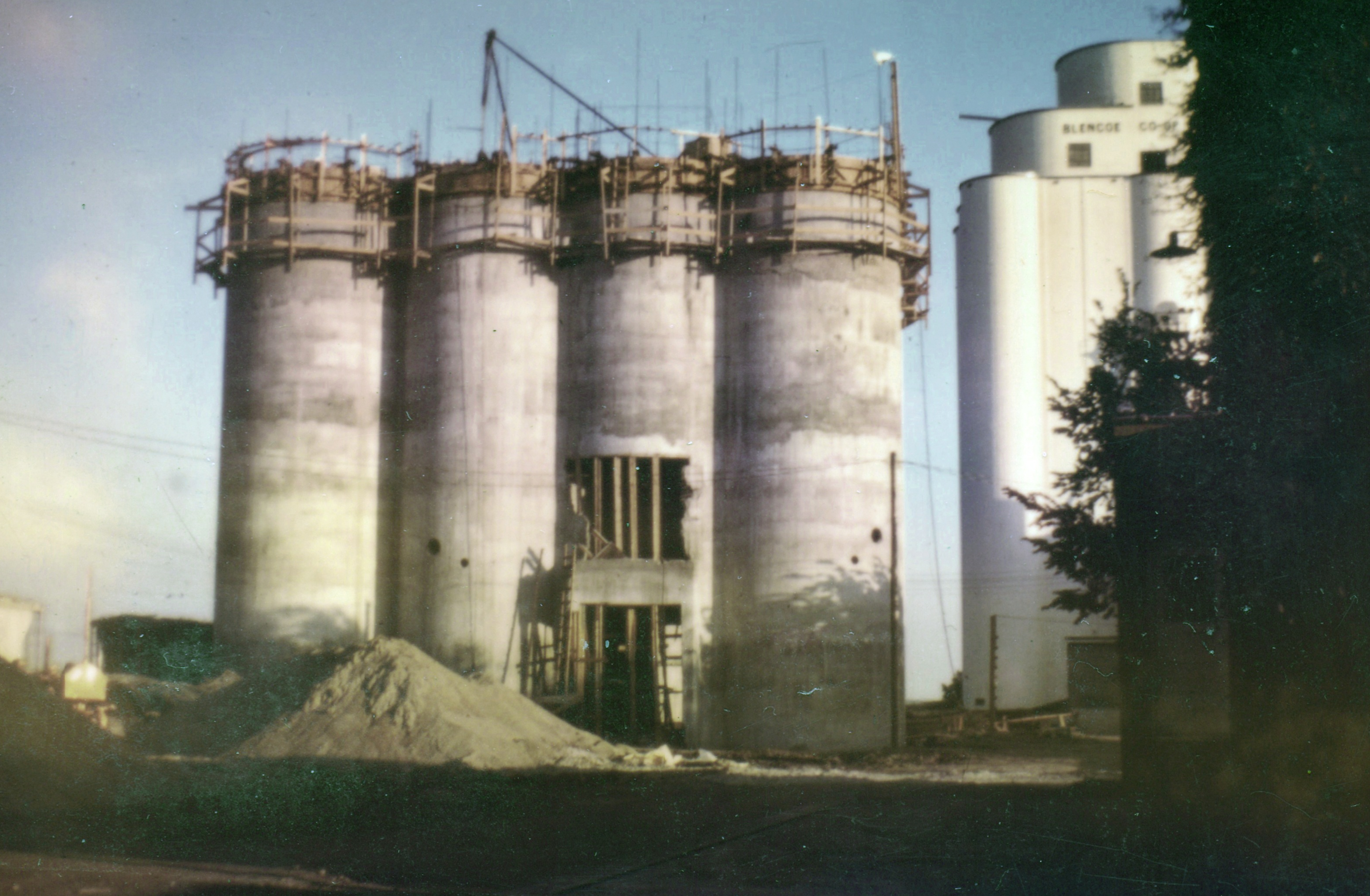
Not until this year, when Tim Tillotson located the Tillotson company records and photographs, did we discover that Tillotson Construction of Omaha faced a similar problem as they built their elevator nearby about a year later. This time, the error was not caught as early, and the consequences became immediately apparent.

Tim Tillotson said he thought the blowout happened in about 1955. Whether Tillotson Construction did the repairs and completed the project, or whether another contractor was brought in, is not known to me, but I hope to revisit the site later this year and learn more. The image below is a rare one. It is amazing that photographic evidence survived, serving as a cautionary note, lest any builder were to become overconfident.

Blencoe_blowout-1 copy

This company photo shows the blowout. On the right the completed Mayer-Osborn elevator may be seen.

Errors were a constant threat in this business. In the best cases, they manifested themselves in embarrassing delays, in the worst, they incurred expensive lawsuits or physical harm.

Tillotson Construction and Mayer-Osborn both recovered from their respective forays into bad concrete and lived to build again, leaving handsome and serviceable elevators at Blencoe and elsewhere. The lessons they learned were priceless.

Elevator builders turned to wartime projects during World War II

Unknown, Gerald Osborn, William Osborn, Iver Salroth

Jerry Osborn (standing) with his father Bill Osborn (center) and Iver Salroth (right) in Galveston, Texas in 1945 during construction of Tillotson’s Fairmont building in Giddings.

By Kristen Cart

We have very limited information about the activities of Tillotson Construction of Omaha during World War Two. The other two elevator builders we profile, J. H. Tillotson, Contractor, and Mayer-Osborn, of Denver, Colo., began their operations after the war, but individuals working for both companies gained their experience during wartime, either at Tillotson Construction, or elsewhere.

Eugene Mayer, a partner in Mayer-Osborn Construction, previously worked in a partnership, Holmen and Mayer, based in Denver. Orrie Holmen was a University of Chicago-trained architect. Eugene’s sister Sheila was the wife of Joe Tlllotson. At some point after 1938, Joe left his brother Reginald in charge of the parent company, Tillotson Construction, of Omaha, and moved to Denver to start his own elevator business, accompanied by old Tillotson hands William Osborn and Bill Morris.

It would be fascinating to trace the wartime activities of each of these principal builders, if they can be learned.

Elevator photos026In the Tillotson company records, we found concrete elevator specifications beginning a few years before the War and resuming immediately afterward, but conspicuously absent were records of elevator construction during the War.

However, we know Tillotson Construction was active between 1942 and 1945. We found one snippet in an old newspaper, which we transcribed on the blog: https://ourgrandfathersgrainelevators.com/2012/05/08/nebraska-firms-get-government-contracts/.

When we learn more about the activities of the company during that time, we will certainly write about it here. It is an open line of inquiry, and we are eagerly seeking more information.

Part 2 of a photography outing unfolds the visual possibilities at Roggen, Colorado

Mayer-Osborn's Roggen, Colo. elevator has the typical stepped up headhouse.

The Roggen, Colo., elevator has the typical Mayer-Osborn stepped-up headhouse.

Story and photos by Kristen Cart

The stepped-style headhouse on the 1950-vintage elevator at Roggen, Colo., raised our suspicion that Mayer-Osborn Construction built the elevator, and that my grandfather William Osborn had a hand in it. Our hunch proved to be right. A 1950 newspaper account detailed its construction, as well as that of the concurrent project at Byers, Colo. Roggen’s elevator was built on the heels of its twin, the Mayer-Osborn elevator at McCook, Neb., which was completed the year before.

Gary Rich explores creative possibilities at the Roggen elevator.

Gary Rich explores creative possibilities at the Roggen elevator.

Last year Gary Rich, contributor to this blog, paid a visit to Roggen. He documented the manhole covers inside the driveway, which bore the company name in raised letters across the top of the steel plates manufactured by Hutchinson Foundry. After seeing his photographs, I was very eager to see the elevator for myself.

Last fall on a visit to Colorado I met with Gary, and we took in Roggen and Byers among other elevators on a photography tour. Roggen is fairly accessible and located just east of Denver. The purpose of our tour was to document the elevators, but also to inject some creativity into the process. The results were very pleasing, especially at Roggen. This is part two of our photo tour.

When I started looking for my grandfather’s elevators, I never suspected it would open the door to the elevator photography and historical research you find in this blog. Best of all, our contributors Ronald Ahrens and Gary Rich have made this project great fun for all of us. I hope you, our readers, get a kick out of it as well, and are inspired to follow your own quests wherever they may lead.

Empty containers frame Roggen's 1950 elevator

Empty containers frame Roggen’s 1950 elevator. 

A photography outing reveals beauty at the Mayer-Osborn elevator in Byers, Colorado

DSC_0221

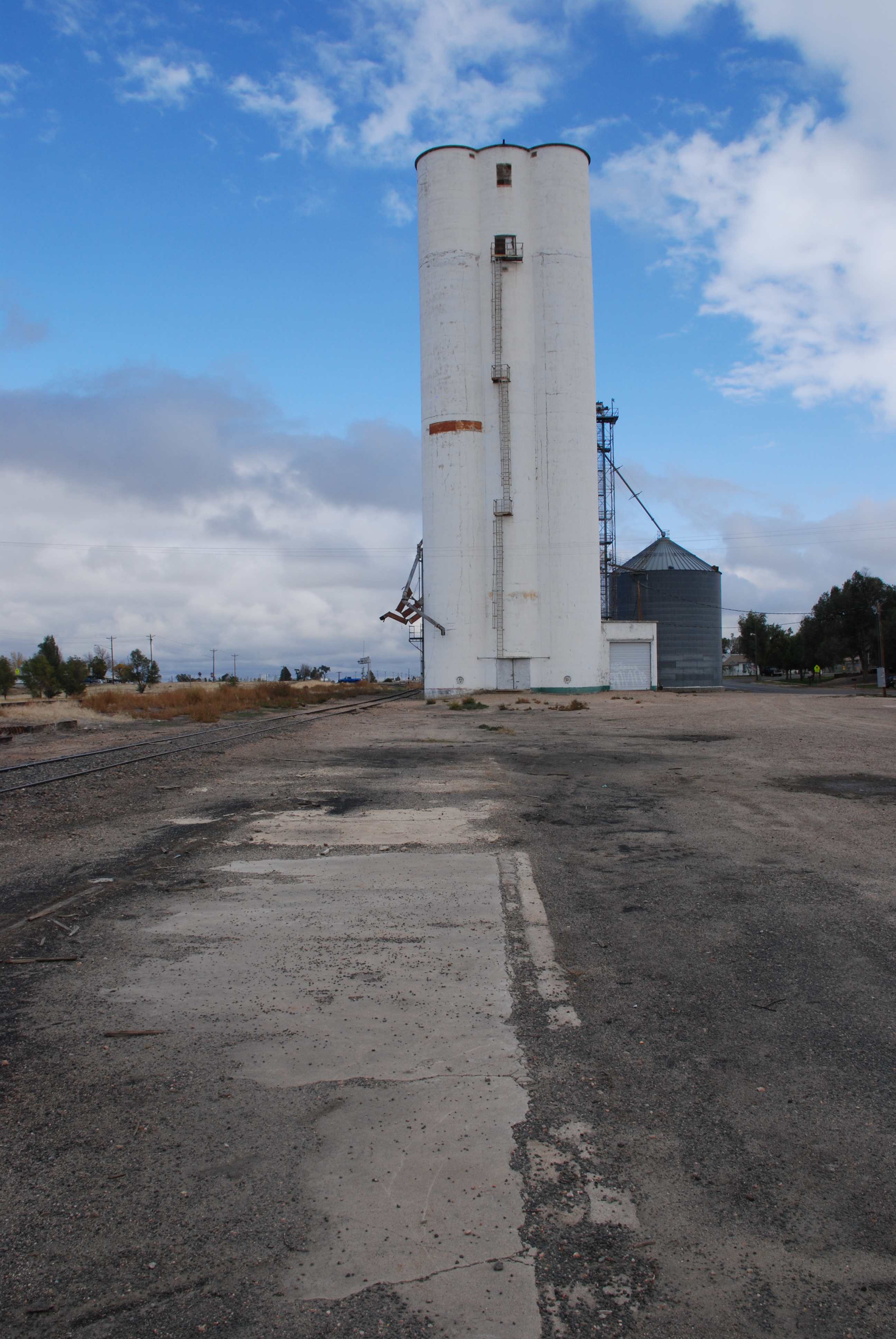
A documentary photograph of the Byers, Colo. elevator.

In the fall of 2012, Gary Rich, contributor to this blog, treated me to a photo tour of western Colorado elevators. I made a special stop to meet Gary and his wife Sandy. The last few years Gary has specialized in elevator photography, capturing the beauty and spare elegance of grain elevators, identifying their builders as he went. The Byers, Colo., elevator is one of the loveliest.

DSC_0212

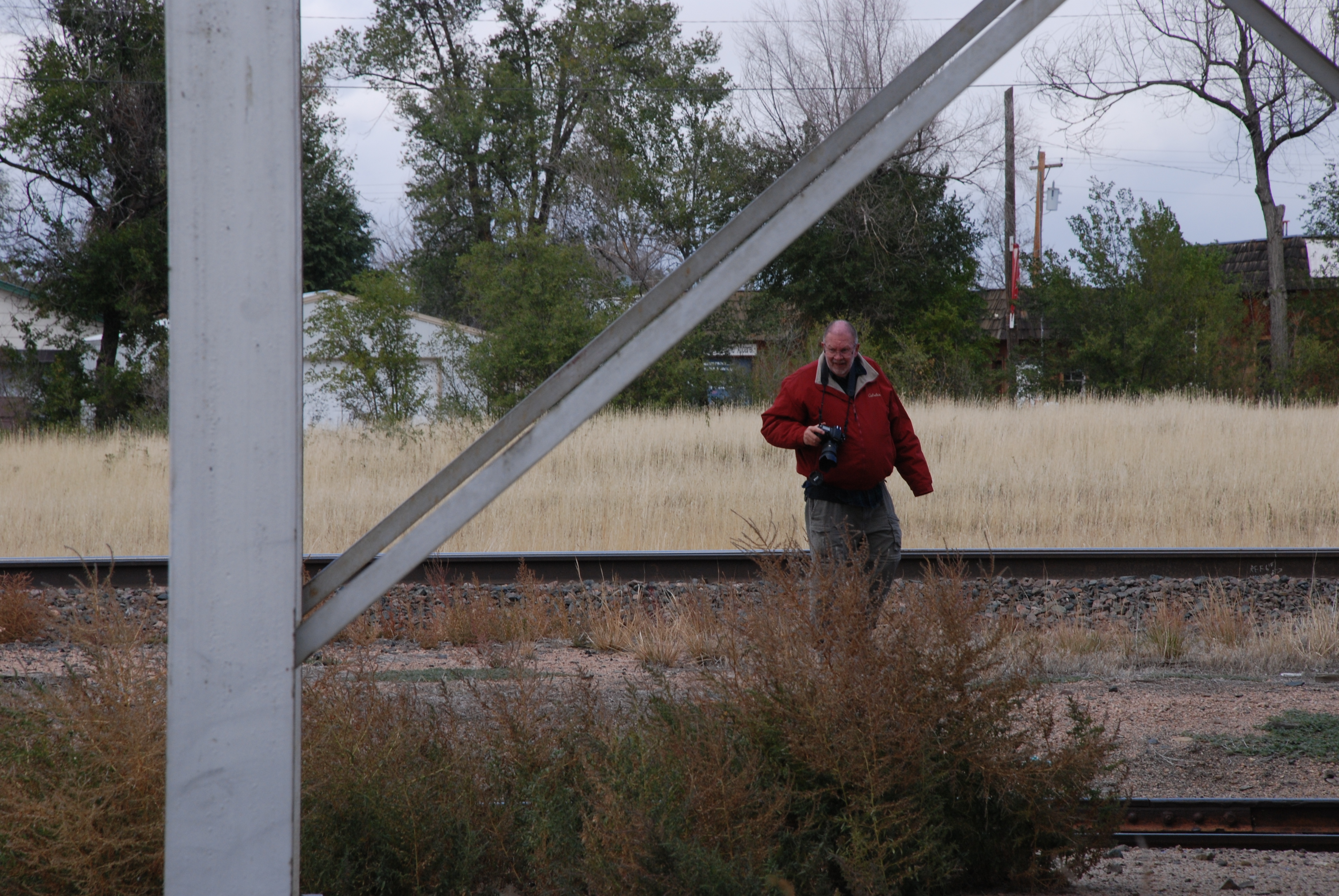
Gary Rich, camera in hand, looks for a better shot.

Sandy Rich is a very good photographer in her own right, and she has challenged Gary to greater creativity in his compositions.  He explained how her inspiration led him away from “documentary” shots and toward more artistic photography. When we stopped at Byers, Colo., we took some of her ideas to heart, and we were very pleased with the results.

Mayer-Osborn construction built the Byers elevator in 1950, as noted in a contemporary newspaper account. My father Jerry Osborn remembers his dad William Osborn working on it.

DSC_0205

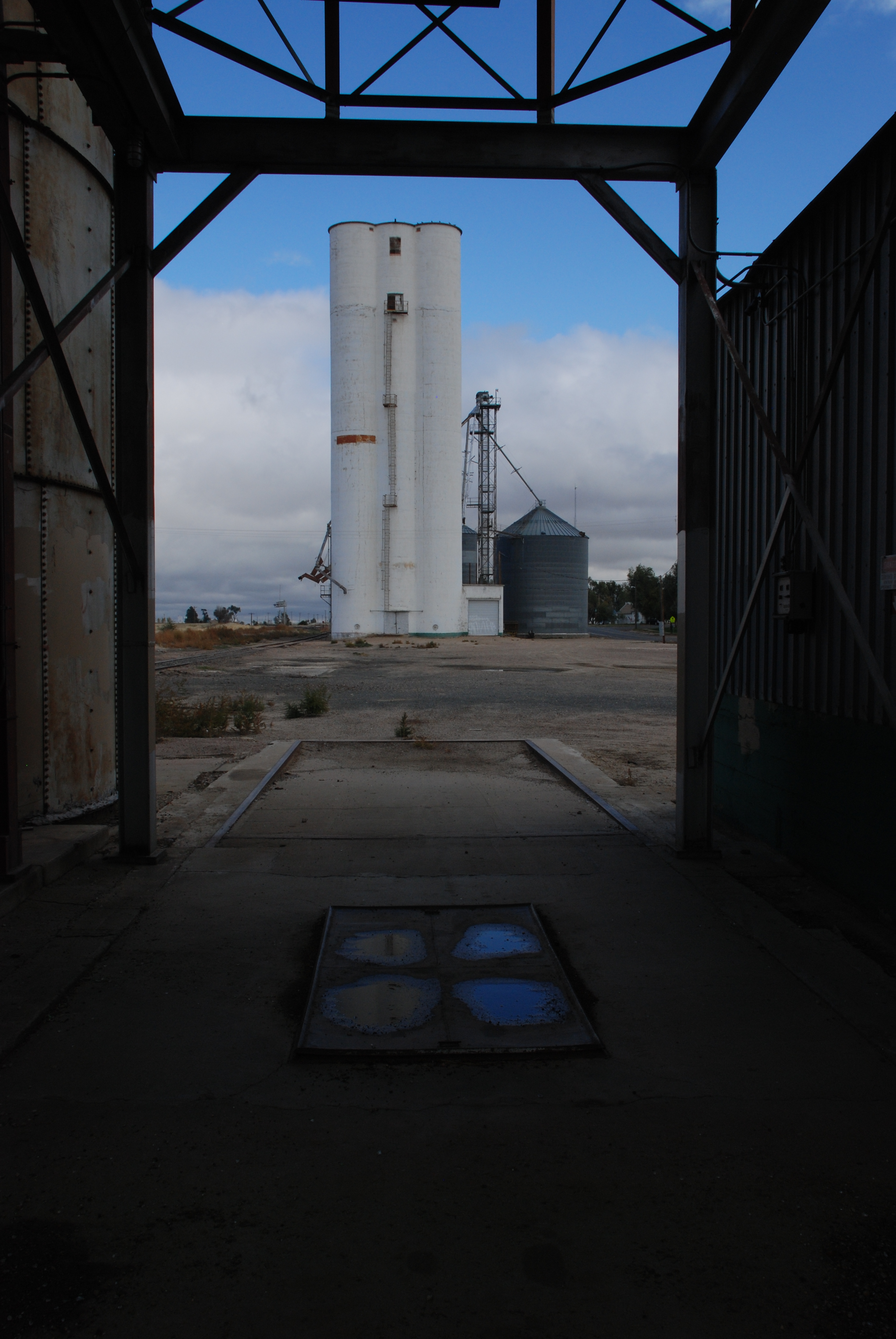
Using the foreground to frame the subject adds interest to the photograph. Gary shot this composition first as can be seen on his photo site.

Retaining some of the characteristics of the earlier J. H. Tillotson elevators, the Byers elevator recalls those at Traer and Hanover, Kan. The Byers elevator is bigger than the Hanover elevator, and you can see where design adjustments accommodate the greater volume. The windows are very similar to those at Traer. The manhole covers on the exterior at Byers represent an innovation to fulfill local needs.

Since elevator designs continued to improve over time, an elevator design genealogy becomes apparent. The innovations cross company boundaries and are seen by looking at elevators chronologically, especially where the same builders and architects continued working in the business, bringing their ideas to one company after another. This is a chronology we are still trying to understand.

As we strive to understand elevator history, we take pictures. Elevators are worthy of our understanding and preservation for their beauty, not just their utility. Beautiful photos convey that message in a way that words can never express.

DSC_0241

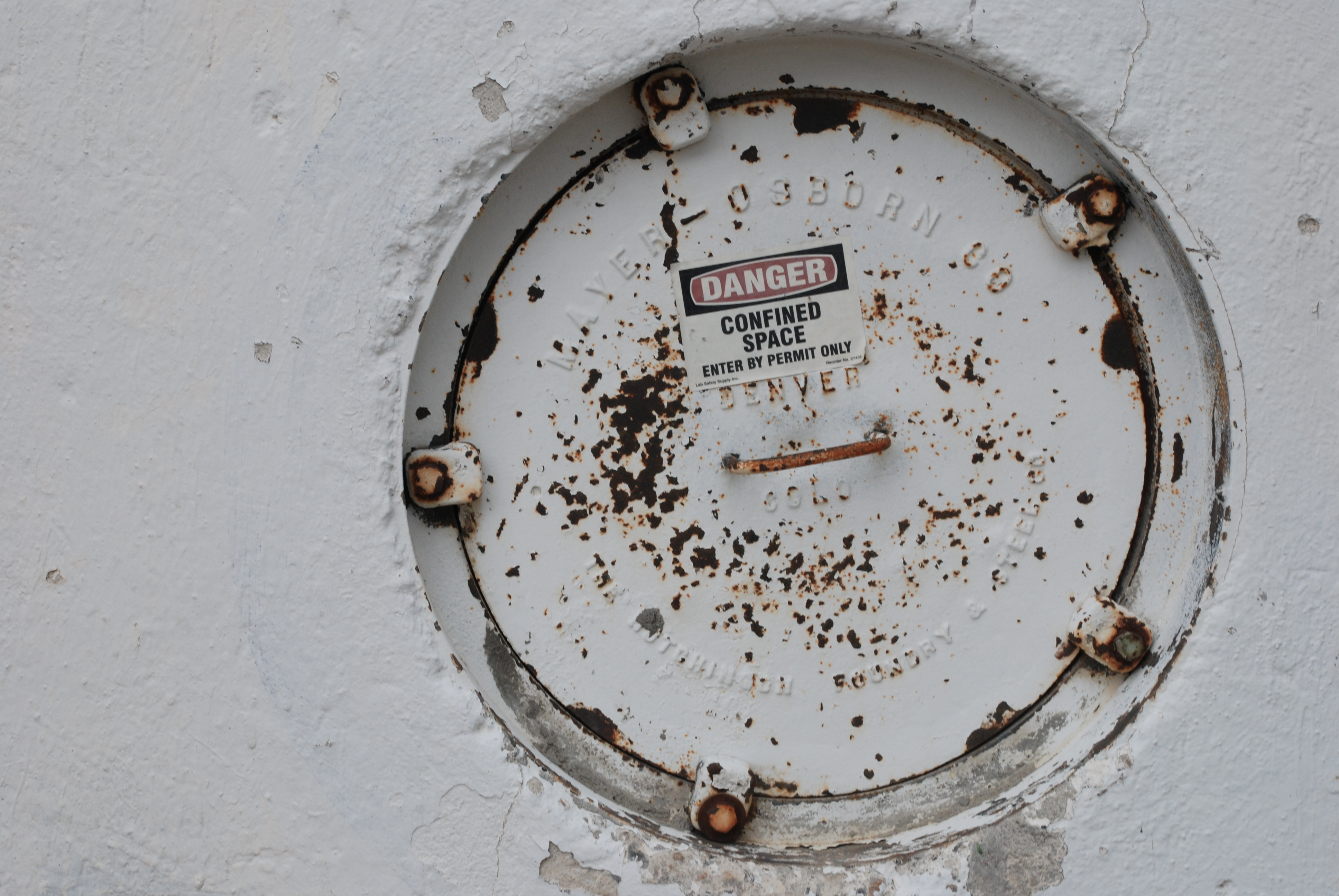
The manhole covers on the exterior of the Byers elevator identify Mayer-Osborn as the builder.

DSC_0227

The Big Springs, Nebraska, elevator proved to be a Mayer-Osborn Construction job

The Cheppell, Nebraska elevator built by Chalmers & Borton

The Chappell, Nebraska elevator built by Chalmers & Borton. 

Story and photos by Kristen Cart

My grandfather William Osborn built an elevator in the western Nebraska town of Chappell, according to my dad Jerry Osborn. Dad’s recollections have guided our search thus far, for Mayer-Osborn elevators. Surely over the kitchen table he heard the names of towns where his absent father had construction jobs. Or perhaps he saw the postmarks of letters sent home.

Chappell was probably stamped on one of those postmarked letters, or it was the nearest town with a motel, because when I went to visit in 2011, there was nary a Mayer-Osborn elevator in evidence. Impressive elevators there were, but I found out later that they all had the ubiquitous Chalmers & Borton nameplate, the trademark of Grandpa’s biggest competitor.

The Mayer-Osborn elevator lacked the annex when it was first built. It is the same plan as used in McCook, Neb. and Blencoe, Iowa.

The Mayer-Osborn elevator at Big Springs, Neb. lacked the annex when it was first built. It is the same style as used in McCook, Neb., and Blencoe, Iowa.

One stop east on the rail line, however, was a large, handsome elevator that looked like one of Mayer-Osborn’s jobs. It was the spitting image of the first elevator Grandpa built on his own at McCook, Neb. The first time I saw it, I was curious enough to snap a photo, but identification was going to wait for another year. My dad knew nothing about Big Springs.

When Gary Rich, a contributor to this blog, looked into the builders of the elevators he photographed, he solved the mystery. He identified the Big Springs elevator by its manhole covers inside the driveway, each embossed with “Mayer-Osborn Construction, Denver, Colo.” above the Hutchinson Foundry stamp.

The Big Springs, Neb. elevator in October, 2012

The Big Springs, Neb., elevator in October, 2012. 

I paid another visit to Big Springs last fall after our Wyoming elk hunt. We didn’t get any elk, but I did get some nice photographs of the elevator. It was a sleepy Sunday with no one around. Next time, perhaps I can see inside.

It is an honor to pay respects to my grandfather’s enduring work. It is living history of a kind that is rarely noticed or mentioned. Once gone, it is scarcely remembered except in dusty repositories of pictures, and in mostly forgotten stories.

At Big Springs, Neb., that day of fading away is still far off in the future.

A Mayer-Osborn superintendent’s budget, from the back of a notepad

Ed Christoffersen papers008Story by Kristen Cart

On a slip-formed concrete elevator job, the superintendent was not expected to be deskbound. So it wasn’t a complete surprise to find a pay account jotted down on the back of Edwin Christoffersen’s handy notepad. His letters home probably came out of this paper supply, assuming he had time to write them.

The Cordell, Okla., elevator was built in 1950, when Edwin  Christoffersen took charge of the job for Mayer-Osborn Construction.

Dick Osborn0001

Richard “Dick” Osborn

It is easy to forget that times were so dramatically different then.

We were entering a frightening time, with the Korean War looming. Edwin’s nephew, my dad’s brother Dick Osborn, was putting on a uniform to go fight, taking a break from building elevators for the company.

Our country was pulling out of a period of deep recession and unemployment. Air travel was a luxury, but in no sense was it the comfortable experience we have now. Airplanes were loud and flew through the ugly weather, instead of over it. In the book “Fate is the Hunter,” Ernest K. Gann recounted the very real perils of flight in those days. He made it seem all too real in his excellent book.

Ed’s notepad recalls a bit of aviation history. Deco style was modern then. In small print, it even says “Made in U.S.A.”

Ed Christoffersen papers009a

Ed’s accounting.

On the reverse of this nearly empty pad of stationery, which miraculously survived for over sixty years among Edwin’s papers, is what appears to be an account of a monthly budget. It seems pretty clear that Ed would have been paid decently. The “coolies,” as they were called, did the physical labor and made $1 an hour. My dad, Jerry Osborn, got that job for one summer, and he didn’t get any special favors, either. The term was not a racial one in those days–it described the work, mostly done by local farm boys.

Edwin added up a sum exceeding $40 per month–perhaps it was what he had left over, after paying the bills. He came up with $170. Was this tally a payroll for his workers? Or was it a budget for his personal use? Did it record expenses for the Cordell project? It is hard to say.

In 1950, you could drive a good used car off the lot for a few hundred dollars, though a new Cadillac would have been out of reach for most people at over $3000. Maybe Ed had money left over to go get rowdy after work. Or maybe he could buy a good shotgun for his favorite pastime, which was hunting.

dick with man0001

Dick Osborn and Edwin Christoffersen nab a coyote.

I wish to thank Diane Osborn Bell for the pictures of her father, Richard “Dick” Osborn. Ed Christoffersen also kindly shared some of his dad’s personal papers, for which I am grateful.

It’s a truly illuminating way to look at man’s life and his work.

A look at grain operations at the J. H. Tillotson elevator in Lodgepole, Nebraska

dsc_0448

A Union Pacific train rolls by the elevators in Lodgepole, Neb.

Story and photos by Kristen Cart

A beautiful elevator can be truly inspiring. My first visit to Lodgepole, Neb., was on a hazy October day, on the way to Wyoming, where we hunt elk. The misty skies did not show the elevator to its greatest advantage, so the best photography had to wait for a later visit. But this time I had the chance to visit the office and learn more about the elevator and the town.

dsc_0372

Melvin Paulsen inside the elevator driveway during corn transfer.

Melvin Paulsen, a two-year employee of the Frenchman Valley Coop, hailing from Julesburg, Colo., kindly showed me inside the main elevator. The interior lacked the embossed manhole covers that would reveal the builder, J. H. Tillotson, Contractor, but we knew the origins of this elevator from the recollections of my father Jerry Osborn.

The Denver-based builder had lost its owner, Joe Tillotson, and superintendent, Bill Morris, in separate traffic accidents during construction at Lodgepole. The mishaps ended a successful run of elevator projects. My grandfather, William Osborn, soon picked up the pieces and started his own company, Mayer-Osborn Construction Company, also based in Denver.

Melvin explained that the elevator was in the process of shifting grain from a main bin to the annex. The grain dryer attached to the elevator was no longer operational, so only grain that was sufficiently dry (with 18 percent or less original moisture content) could be accepted for storage. Grain that was on the moist end of the acceptable range had to go to the annex, which had ventilation fans, to prevent damage from overheating.

A fair pile of dust could accumulate during the grain transfer, so the elevator driveway was kept open to help blow it out. A shovel leaned nearby to take care of the remainder. Dust had to be cleared out completely to prevent an explosive hazard.

One of the newer bins was home to an emergency response relay for radio communications between dispatch and fire and emergency responders.

Elevator photos006Inside the Frenchman Valley Coop office was an old aerial photo of the elevator and one that was taken during its construction. Melvin kindly furnished me with an extra copy of the aerial shot. The elevator looked very much like its J. H. Tillotson brethren.

Lodgepole celebrates Old Settlers’ Days each year. The park alongside the railroad tracks fills with horses and buggies, tractors, vendors, and all manner of activities. A parade winds along the streets. The scene recalls a time when a farmer would drive his wagon up to the old wooden elevator on the rail line, and dump his grain in the pit, hoping for higher prices.

The town also attracts visitors when the old Union Pacific steam engine, UP844, stops on a regular scheduled visit.

Lodgepole’s elevator was a milestone in my grandfather’s building career. It remains one of the most attractive elevators in Nebraska.

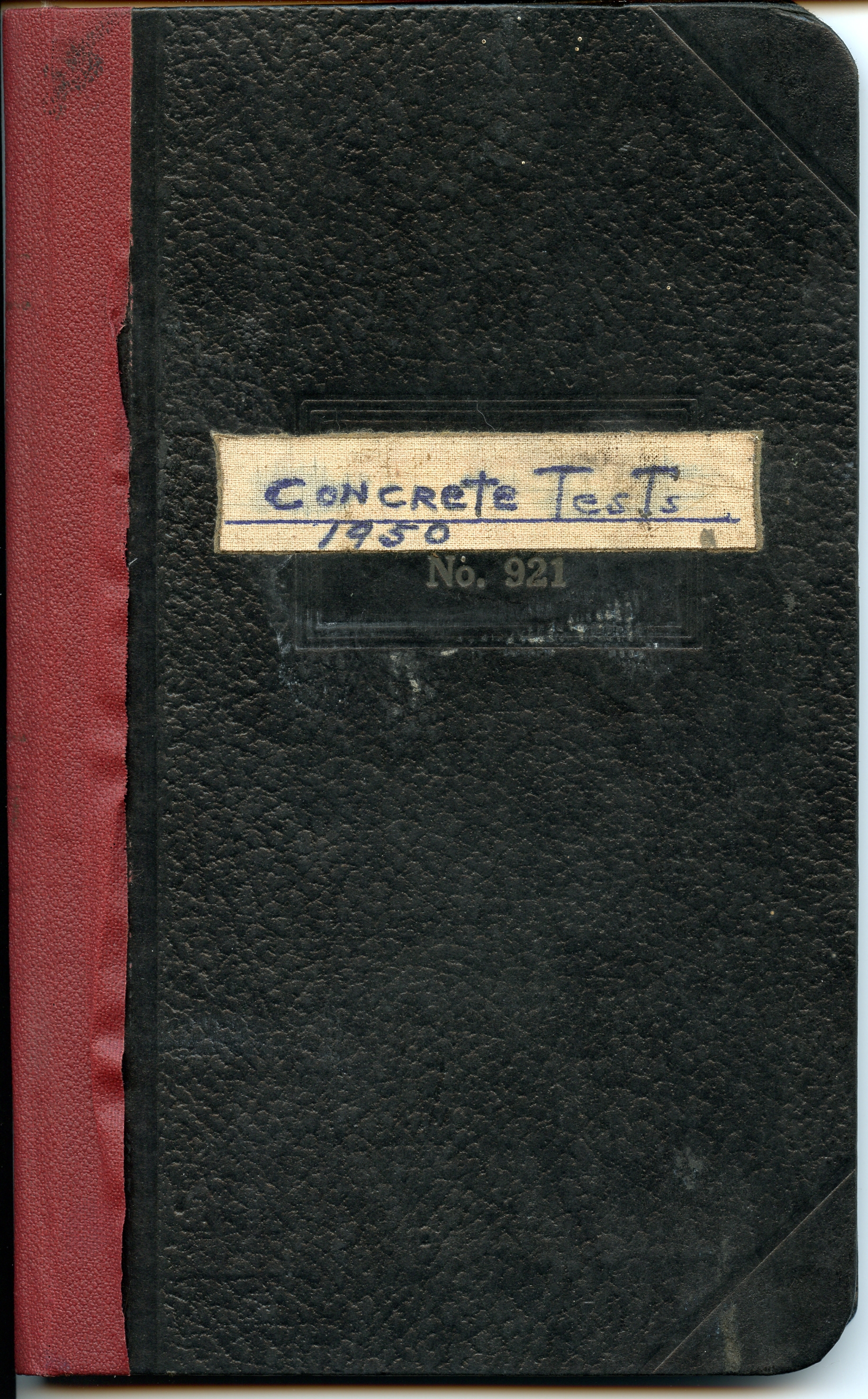
Successful concrete tests yielded an enduring elevator at Cordell, Oklahoma

Cordell concrete tests002

Story by Kristen Cart

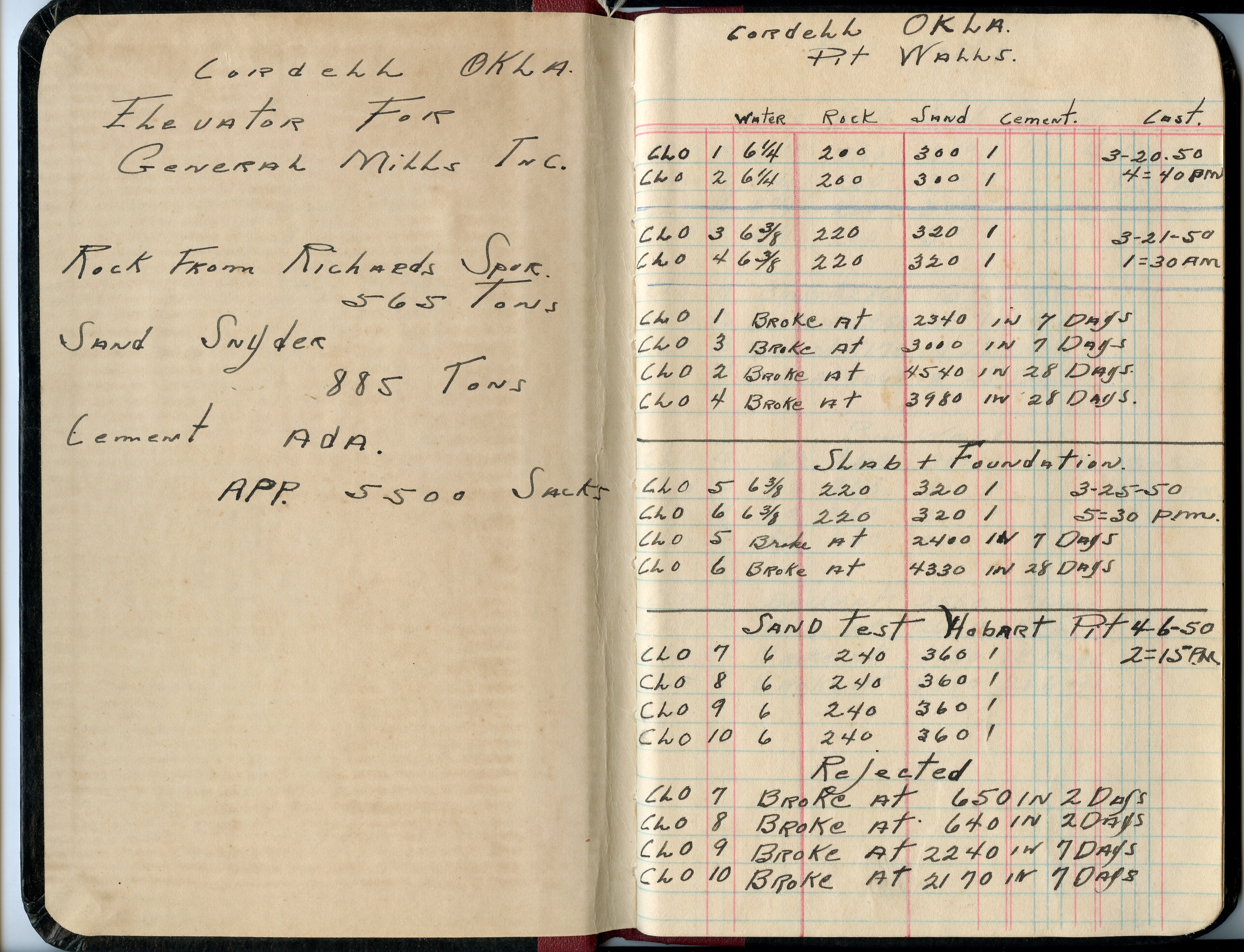
During a recent visit to Nebraska, Dad and I met with the son of Edwin Louis Christoffersen to go through family pictures. Young Ed produced a treasure from among his father’s personal effects. Edwin Christoffersen was superintendent for the Mayer-Osborn Construction job at Cordell Okla., and among his duties was the engineering of a safe and durable elevator. Testing the concrete from a given supplier was of paramount importance.

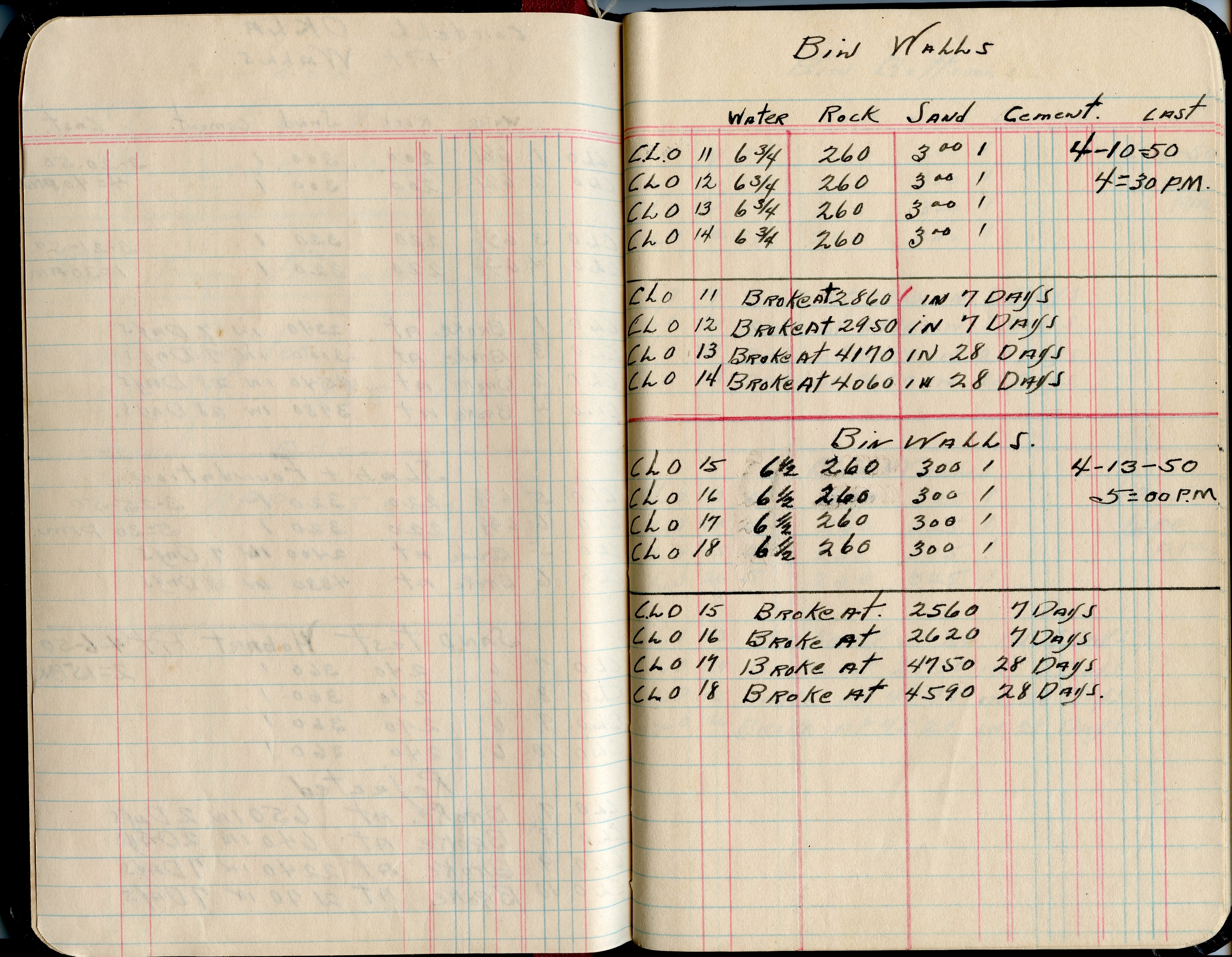
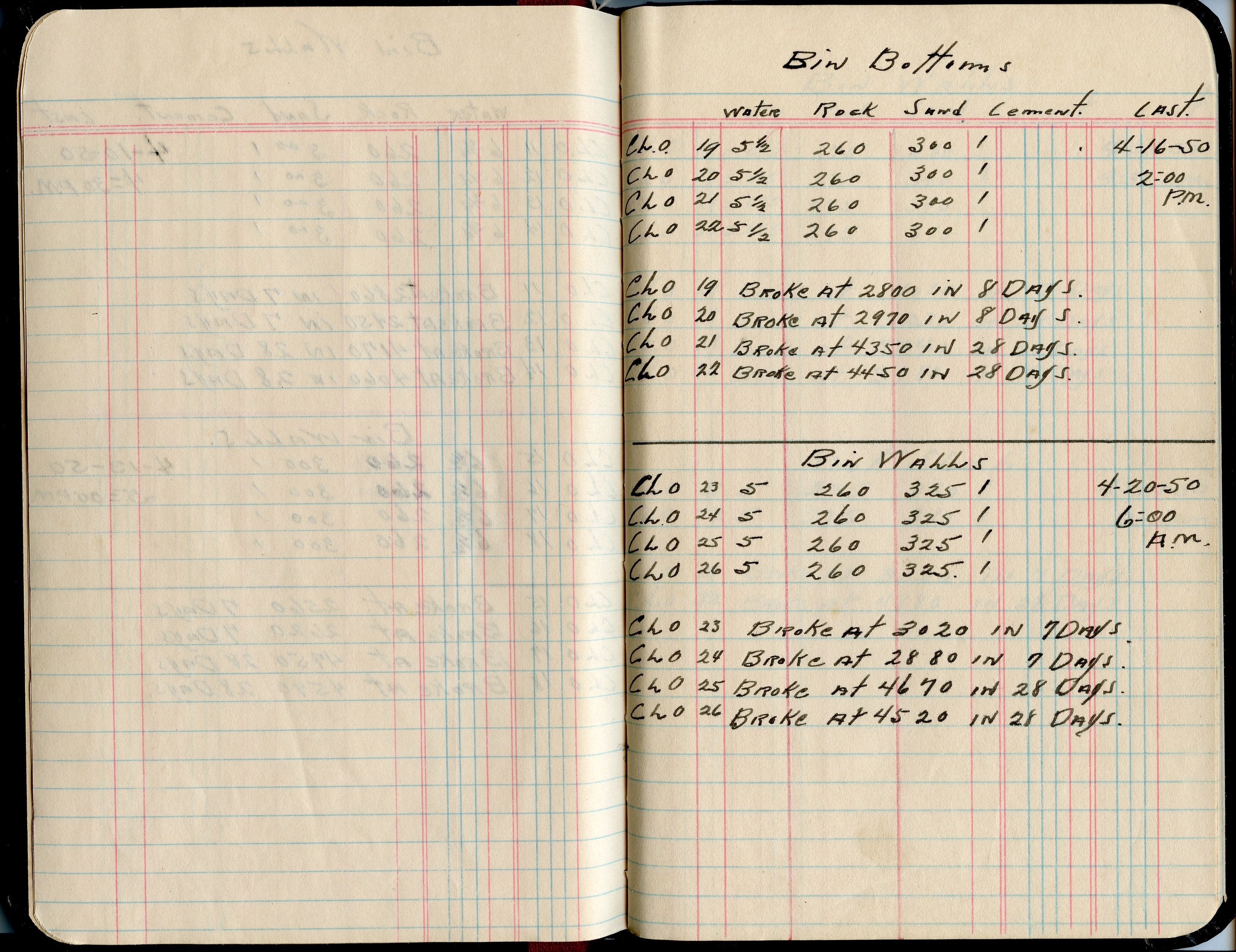
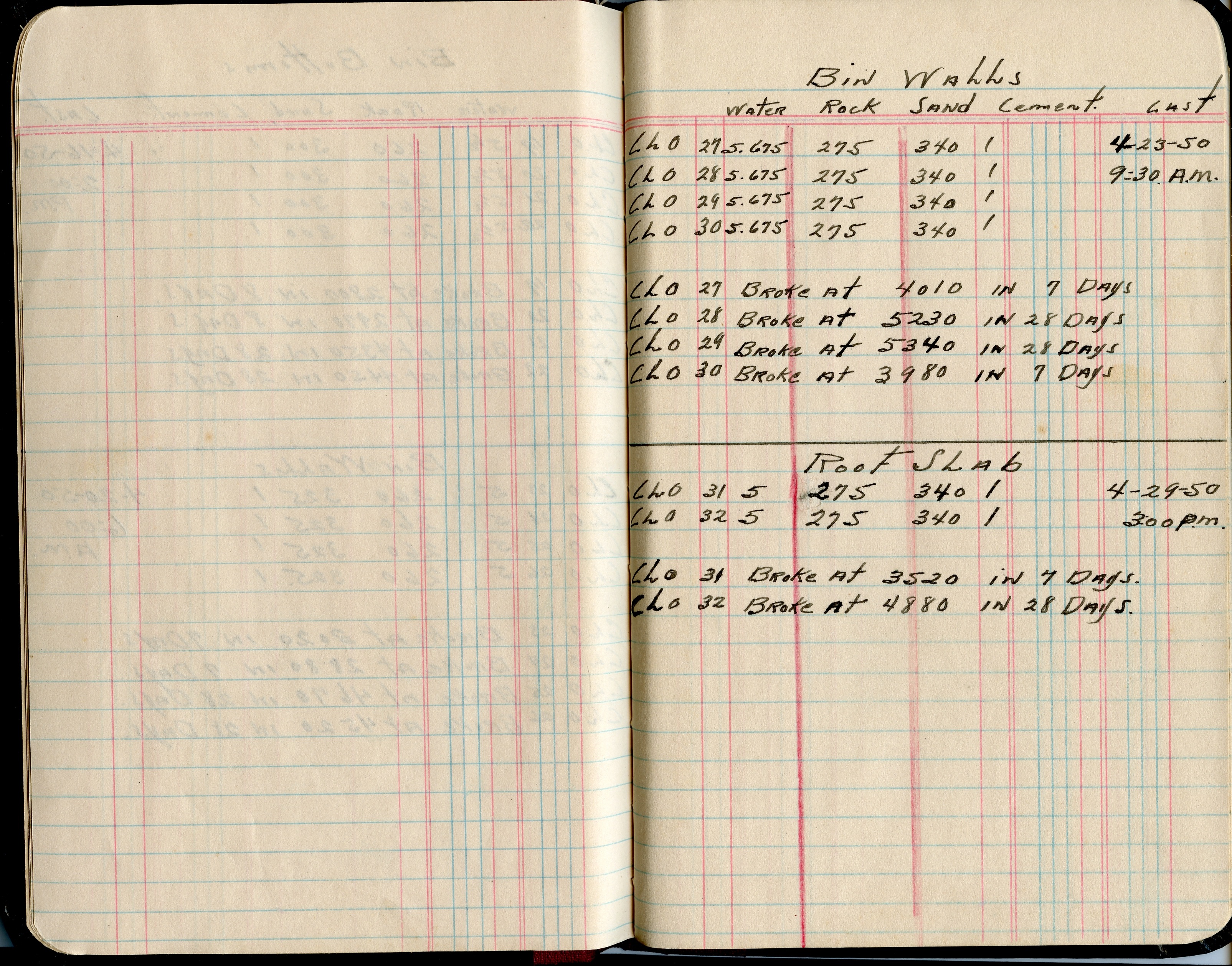
This logbook shows the results of the testing for each part of the elevator’s structure. It is a fascinating bit of engineering history, and it speaks for itself.

Cordell concrete tests003

Cordell concrete tests004

Cordell concrete tests005

Cordell concrete tests006You will notice that the date and time of day was included in the calculations for each test. This is how we were able to determine when the Cordell elevator was built.

While a number of factors were recorded for each test, it is not clear to us what each term meant. Perhaps some of our readers can explain the process to us.

It is a true privilege to see some of the engineering practices in use during the 1950s, at a time when slide rules did the work of computers, yielding sufficient precision to send our astronauts to the moon in the following decade.

These builders, engineers, and innovators were pioneers, working at the pinnacle of their profession. We wish to thank Ed Christoffersen for sharing this priceless piece of history.

The Cordell, Oklahoma elevator project fused engineering prowess with family ties

Story by Kristen Cart

christofferson041

Edwin Christoffersen was the superintendent on the Mayer-Osborn Construction project in Cordell, Okla. in 1950. His son and namesake kindly provided a notebook that gave a glimpse of the concrete engineering that went into the elevator. By trial and error, the company learned best practices, creating an enduring structure which would still operate more than sixty years later.

Edwin Louis Christofferson was the son of Jens “James” Lauritz Christoffersen, a first generation American who farmed and operated a farm stand in Fremont, Neb. Edwin was one of nine children. Ed’s sister Alice married William Osborn in 1923.

When the Mayer-Osborn enterprise was in full swing, Bill Osborn tapped relatives to manage projects or to provide manual labor. He followed a common practice.

Sons Dick and Jerry Osborn worked at various times building elevators. Bill Osborn entered partnership with Eugene Mayer, the brother of Joseph H. Tillotson’s wife Sylvia. At the Tillotson Construction Company of Omaha, Bill Osborn worked with Iver Salroth, husband of Emma, a Christoffersen cousin.

Naturally, when the opportunity arose, Ed Christoffersen found employment with his brother-in-law’s company an attractive proposition.

christofferson019(1)

Edwin Louis Christoffersen with his only child.

Ed’s son has kept a number of Mayer-Osborn keepsakes, in memory of his dad, who died when he was still quite young. One intriguing item was the logbook that Ed kept for the Cordell, Okla. elevator, recording concrete tests.

Various sand, gravel, and concrete mixtures were tested to a failure point to determine the ideal formula for a given project. The date and time of day was recorded for each test. In this journal, we discovered the year of construction for the Cordell elevator.

The elevator business brought families together to accomplish a common goal, and now, many years later, writing about the elevators brings the builders and their sons and daughters together again. The memories are kept in small personal repositories of clippings, photos and documents, and in tales of the job, and are captured fleetingly before the witnesses leave us.

Looking up at these great landmarks, we also look up to the patriarchs who built them, with respect, and awe.