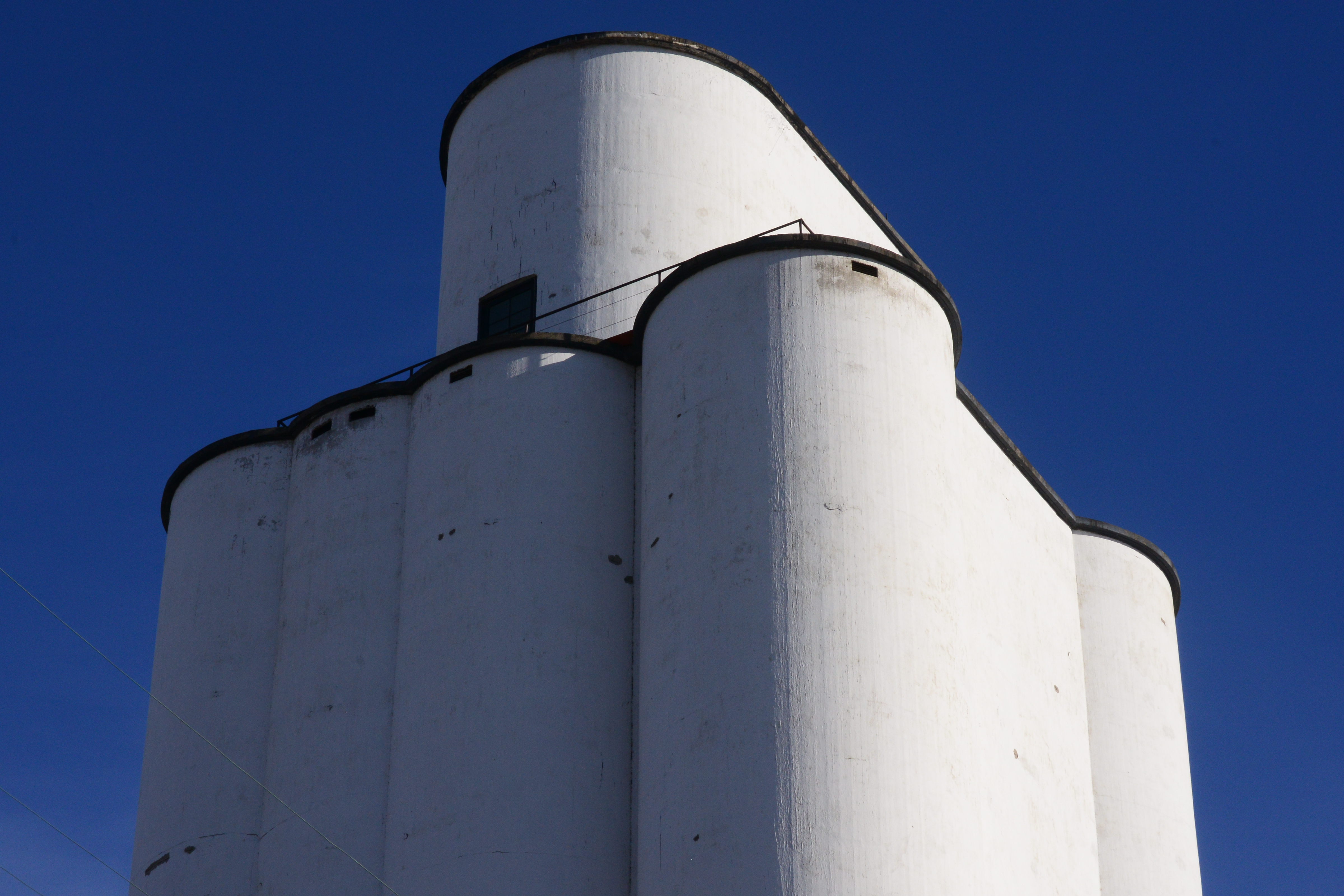
The Kansas City firm of Horner & Wyatt, Engineers, designed grain terminal giants

DSC02466Story and photo by Kristen Cart

Often a reader will turn our blog in a whole new direction by revealing a facet of the grain business we had not explored. In the case of Horner & Wyatt, an engineering and design firm out of Kansas City, reader David Chatt piqued our interest by asking us to locate some of their work. His grandfather, Oliver Howard Horner, a partner in the company, died  in the late 1930s.  David wanted to know more about the sites he had helped design. The quest seemed to be right up our alley.

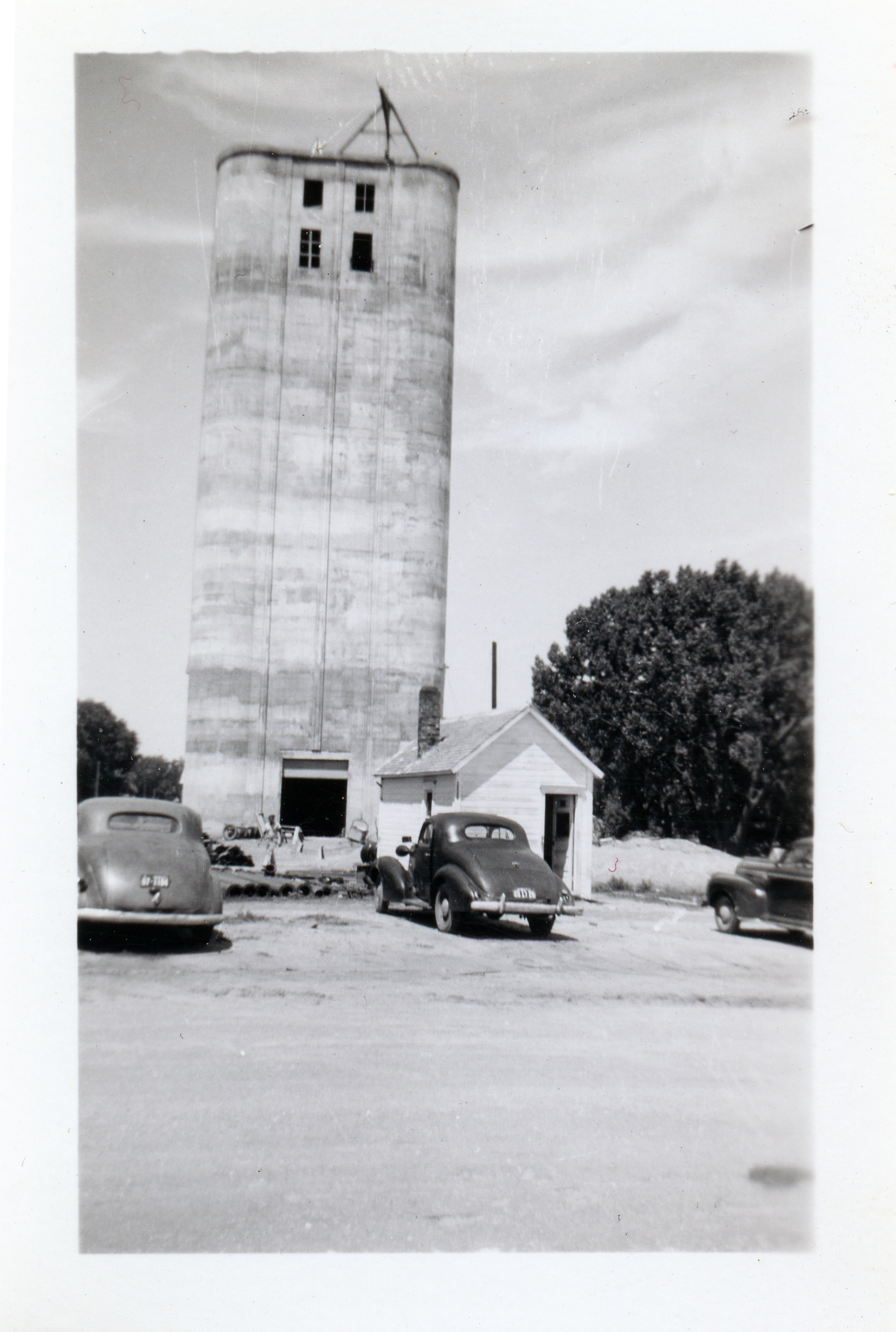
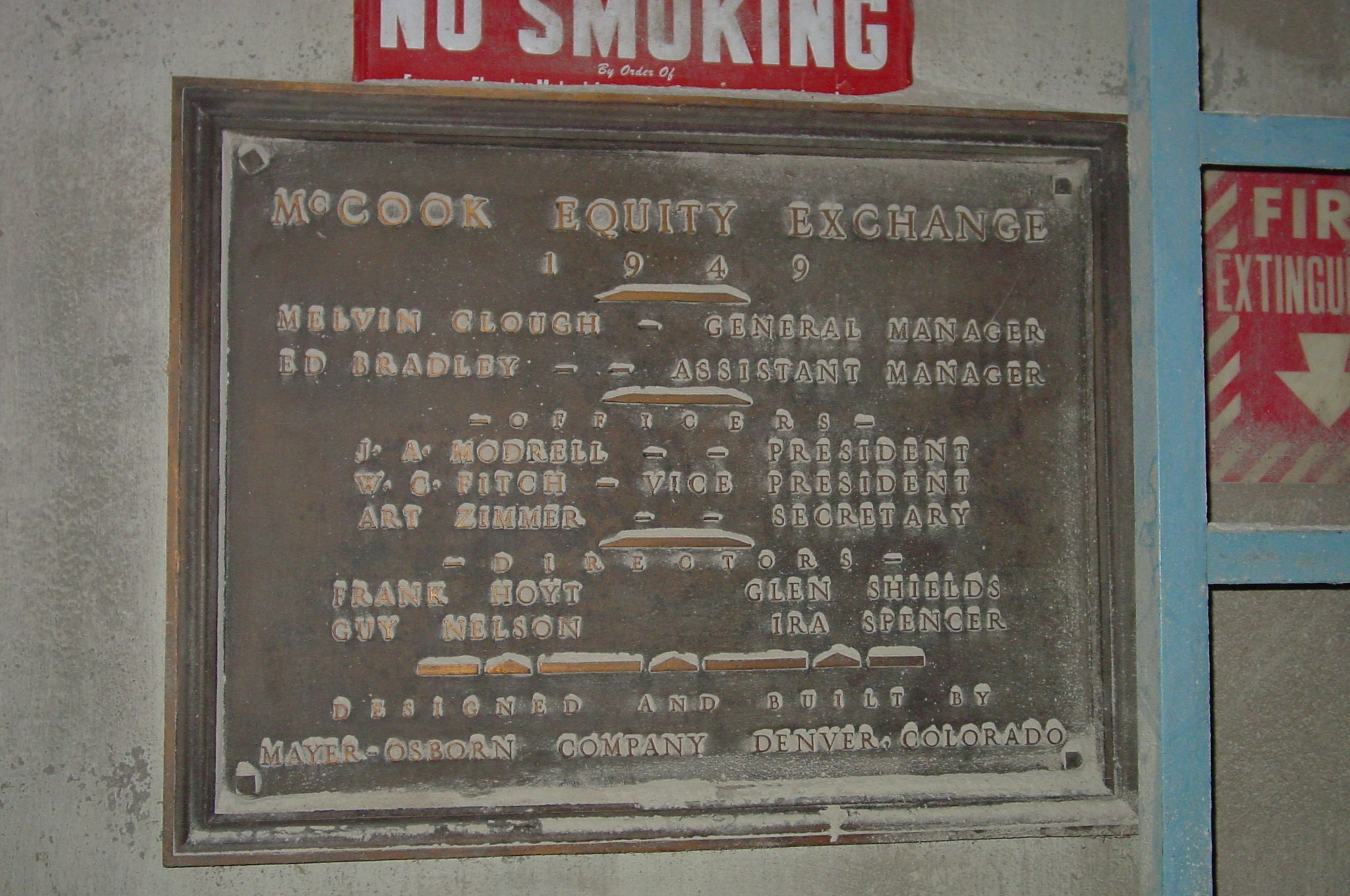
It might be possible to discover the identity of the architects at elevator offices, but the common method of checking for the builder’s name on elevator manhole covers would only reveal the guys who poured the concrete. At McCook, Neb., a plaque inside the elevator names the designers. But newspaper accounts, journals, or local histories are the best way to learn about the architects of most elevators, especially for the large projects that changed the face of their communities.

David told us  the Galveston elevator, which was destroyed some years ago, was the only Horner & Wyatt site he could find. Further investigation revealed the company as a major player in elevator architecture, active as early as the 1920s. Our search for their projects revealed a completely different side of grain storage requirements: the end of the logistics trail, or the terminal elevator. We located a few of them, and most appeared to be massive.

Oliver H. Horner was an electrical engineer working for Black & Veach at the time he registered for the draft in 1917. By 1921, he was a partner in his own firm, based in Kansas City. In the 1930s he was engineering some of the biggest elevator projects in the country. He was still listed in that capacity in the city directory as late as 1939. Newspaper accounts described Horner & Wyatt as “consulting engineers” on various projects, which became increasingly complex as time went on.

Some of the sites we found, which were completed during Oliver’s lifetime, were elevators at El Reno, Okla., the Gooch Feed Mill at Lincoln, Neb., and the levee terminal at Kaw Point in Kansas City, Kan. The company continued to design massive elevators into the 1950s at sites such as Happy and Lubbock, Tex., and the port terminal at Corpus Christi, Tex. Doubtless the designs for the later projects built upon the experience and ideas that went before and bore the unmistakable imprint of the company’s earlier engineers.

Oliver H. Horner left a legacy to be proud of, with elevators and mills still standing and operating in premier locations around the country. Horner and Wyatt was one of the top engineering companies working during the twentieth-century elevator boom. It’s very nice that one of our readers took the time to point them out.

With their works in Estill, South Carolina, Tillotson built big in cotton country

Freshly harvested cotton field in central South Carolina

Freshly harvested cotton field in central South Carolina.

Story and photos by Kristen Cart

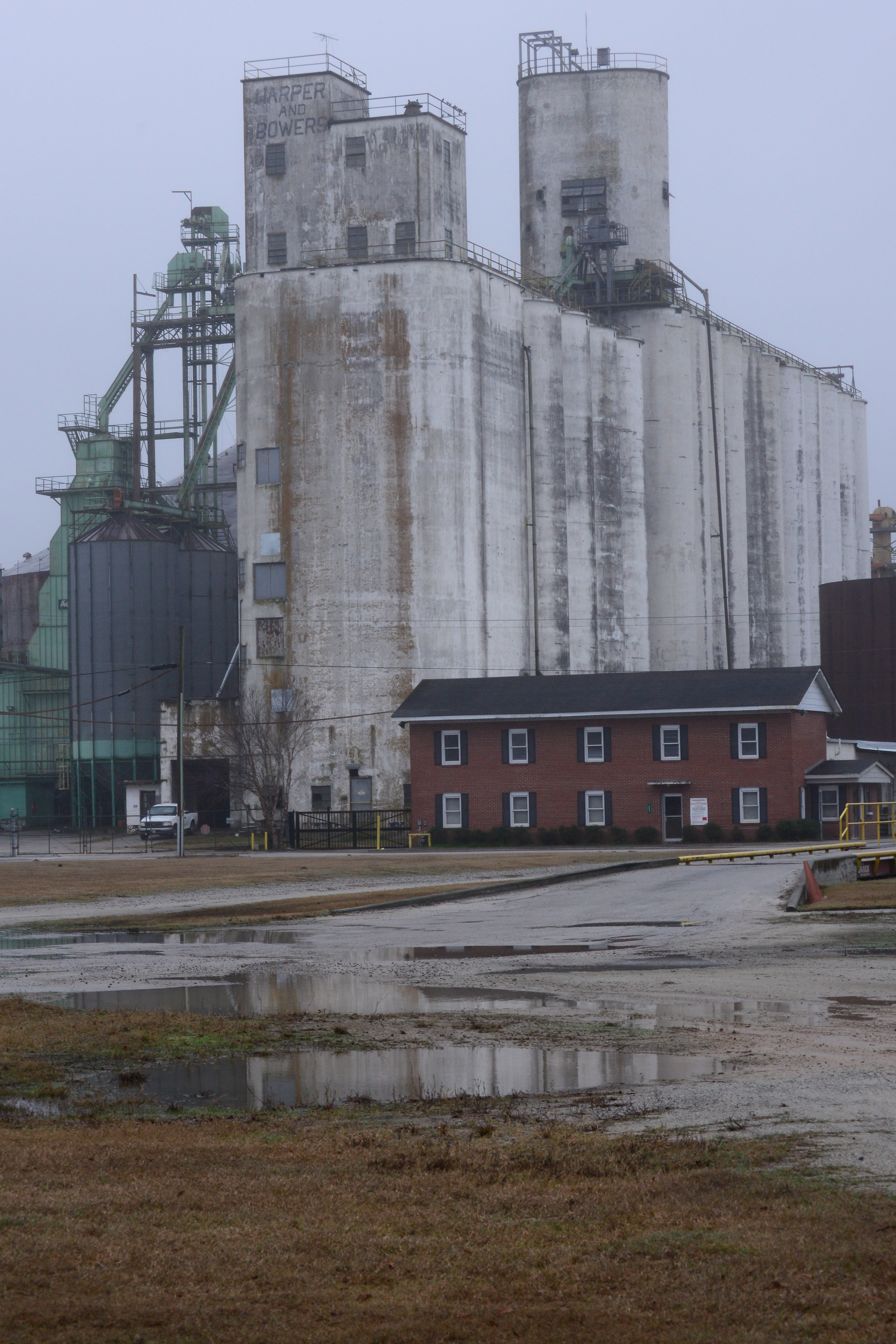
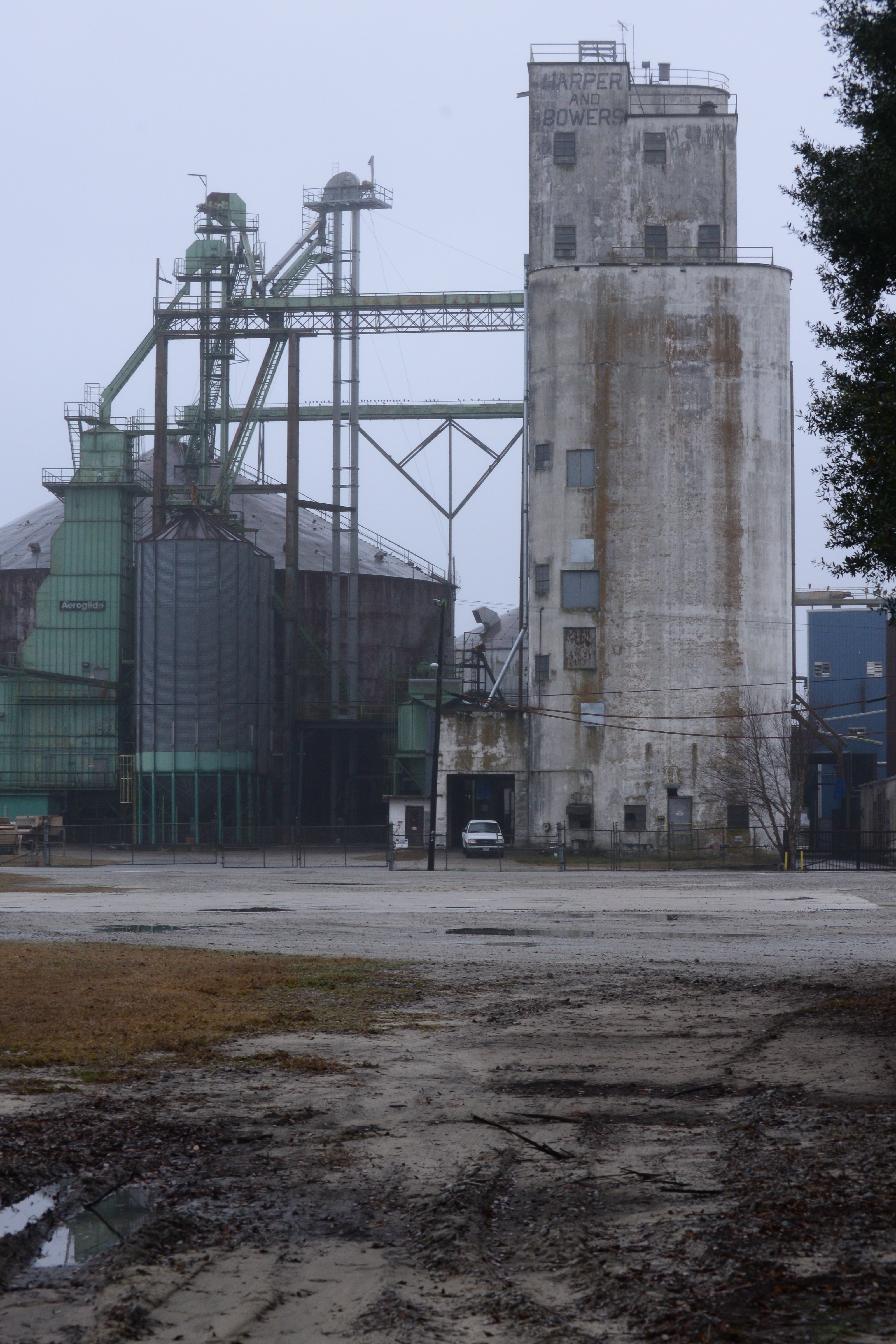
The brightly wrapped cotton bales highlighted an otherwise drab landscape as I traveled the 91 miles south from Columbia to visit the Estill elevator, originally built in 1947. Rain and haze flattened the view. Since it was Sunday when I visited the elevator, few people appeared to be about. It was going to be a photography outing, for better or for worse.

DSC_3487

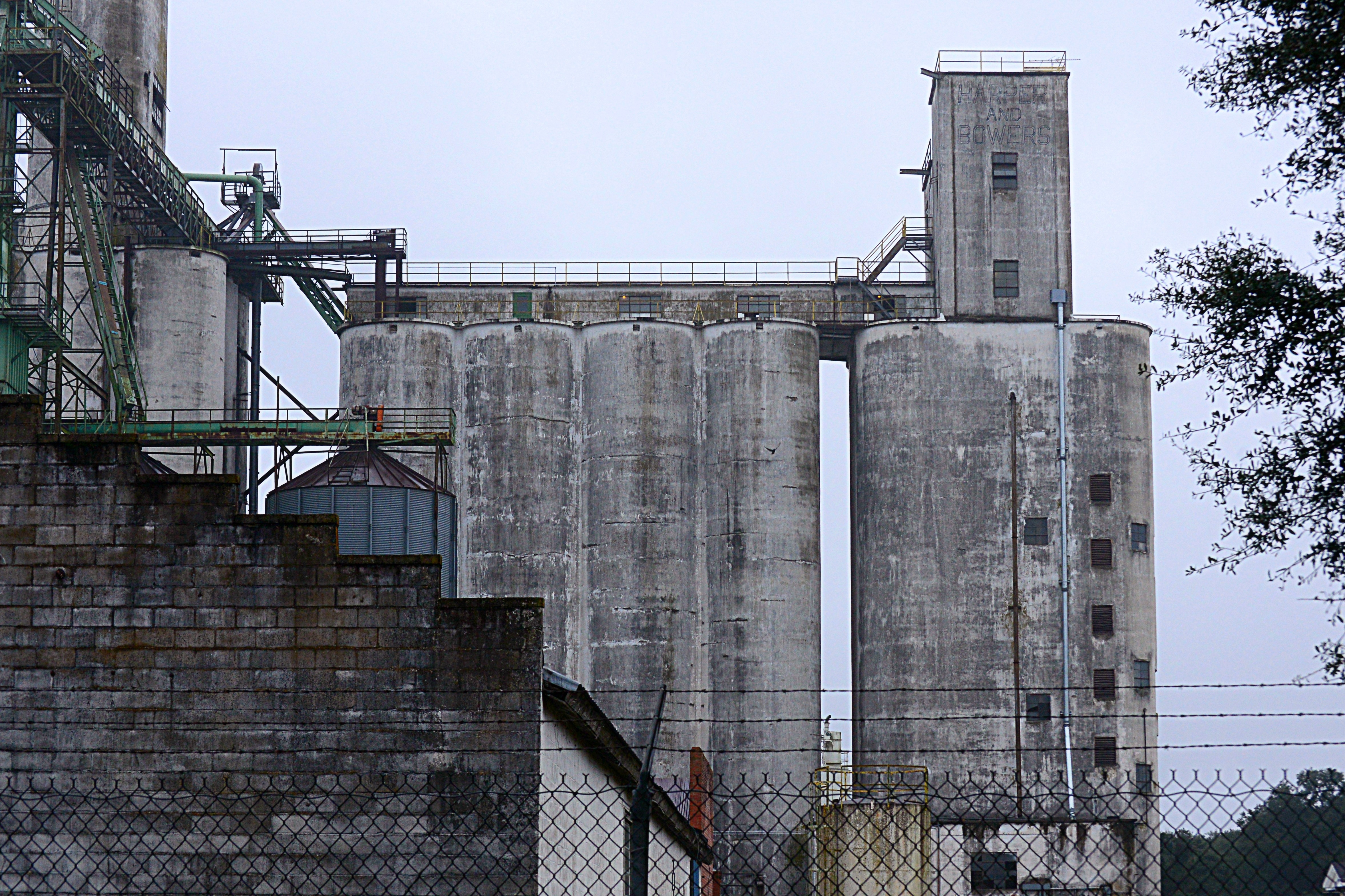
The Estill elevator, greatly expanded since it was built in 1947, was secured behind barbed wire.

I graduated high school in South Carolina. My impression of the place, after growing up in the western desert, was one of endless dark pine woods, with a brief gaudy display of azaleas and dogwood blooms in springtime.  I didn’t appreciate the raw beauty at the time. Now, on a soggy day, it had a mysterious appeal.

DSC_3431When I learned that the Tillotson Construction Company built an elevator in the state, it came as a surprise. We do not know who built the original house in 1947. Tillotson, according to company records, built the 225,000-bushel annex and a second, larger elevator, in 1952 and 1953, respectively. The trademark rounded headhouse rises above the 350,000 bushel elevator, built to finish the concrete elevator complex.

Michael M. DeWitt, Jr. outlined the history of the Estill elevator in his article for the Hampton County Guardian published on December 14, 2010. The article was written to herald the purchase of Carolina Soya by ADM. During its heyday, the elevator stored soybeans for soybean processing, which was part of the operation. Now it is strictly a storage facility for ADM, focusing on soybeans but also accepting corn.

The company laid off staff upon acquiring the facility in 2010, shrinking from 45 to 14 workers, heralding a loss to the community in a time of slow economic growth. ADM promised to hire from the laid off worker pool as needed.

DSC_3406I noticed that the good times had passed during my drive down. The decline of the area was evidenced by empty store fronts and decrepit gas stations, ancient closed restaurants, and tired houses–all along the highway south from Columbia, it was apparent that development chose another corridor and not this one. I wondered if there was one open gas station anywhere along the route.

The histories neglect one of the Estill elevator’s darker episodes. In the ’40s and ’50s, construction safety was not mandated as it is now. In one of the accidents that was all too common for elevator construction, Wayne Eugene Baker lost his life in a fall while working on the storage addition, or annex, built in 1952. For all of the heartache, Wayne helped build a thing of beauty that sustained its neighborhood for many years and still brings economic benefit to its region.

A mystery is solved with the discovery of elevator builder Van Ness Construction

The wooden elevator at Wymore, Nebraska, is representative of the style of Van Ness Construction

The wooden elevator at Wymore, Neb., is representative of the style of Van Ness Construction.

Story and photo by Kristen Cart

When we began investigating the elevators our grandfathers built, we had no idea how far the project would take us or what surprises would unfold. With the discovery of Van Ness Construction Company of Omaha, we have learned about the beginnings of the Tillotson family enterprise, and have entered a new phase of our search.

Charles_Tillotson_Obit__The_Nebraska_State_Journal__Lincoln__Nebr___19_June_1938

The Nebraska State Journal, June 19, 1938

We knew that Charles H. Tillotson, patriarch of the family and great-grandfather of Ronald Ahrens, built elevators before the days of slip-formed concrete. We found only one Tillotson elevator, made of wood, that predated the elegant concrete structures that sprang up all over the Midwest in the ’40s and ’50s–at least we found its obituary in a news video of its fiery demise. That 1940 vintage elevator, in Hawarden, Iowa, was built two years after Charles died. It burned down in 2006. We didn’t find, at the time, a project that we could attribute to Charles.

Then we had a breakthrough, thanks to Ancestry.com.

Ancestry has a wonderful collection of city directories. I had seen listings for the Tillotson family in Omaha before, but I missed a significant data point. While searching for Sylvia (Mayer) Tillotson, the wife of Joe and sister of Eugene Mayer, I discovered an Omaha directory for 1936 in which Charles H. Tillotson was listed as president of Van Ness Construction Company. Further Internet searches revealed some of the sites where Van Ness built its small steel-cased wooden elevators, but as yet we have found none that have survived.

Now we hope to find an existing elevator from the days before Joe and Reginald Tillotson dreamed up their slip-formed concrete designs. So far the closest we have come is an elevator that perished in a fire in Scribner, Neb., in 1971 , a nightmare that repeated itself in June, 2013.

Also, in a Google satellite image of the town of Diller, Neb., another identified site, a square concrete pad with a grain spout lying alongside it is located near new steel bins, right where an old elevator should have been. In Rydal, Kan., you can see a concrete pad with concrete pits near a horizontal storage building, with the remains of a rail siding alongside. I was a little surprised to find evidence of earlier elevators at these sites, but of course digging up tons of concrete for no special reason would be unnecessarily expensive, so there are remains.

Everywhere we looked for these ancient elevators, we found evidence of obsolescence and ultimate destruction, with little left to identify the sites. Newspapers were the only way to find the locations. Fire certainly destroyed some of them. For those that remained, the adoption of concrete and much larger storage facilities turned these old Van Ness elevators into relics and ultimately spelled their doom.

The Tillotson elevator in Lincoln, Nebraska is majestic in winter light

DSC_3138Story and photos by Kristen Cart

One of the most beautiful projects completed by Tillotson Construction of Omaha was their elevator with its annex in Lincoln, Neb. I was fortunate to be able to persuade my dad to stop with me to take some photos in perfect light.

DSC_3174One of the challenges of elevator photography is picking the structure out from its sometimes tight surroundings.

Usually you can take close pictures with a wide angle lens, which distorts straight lines, but can give you a full view of the elevator. In this case, I was without that tool since it broke when it fell off a chair, so I had to make do with a mid-range zoom lens.

You be the judge of whether the pictures were successful, given the limitations of distance, obstructions, and points of view.

DSC_3184

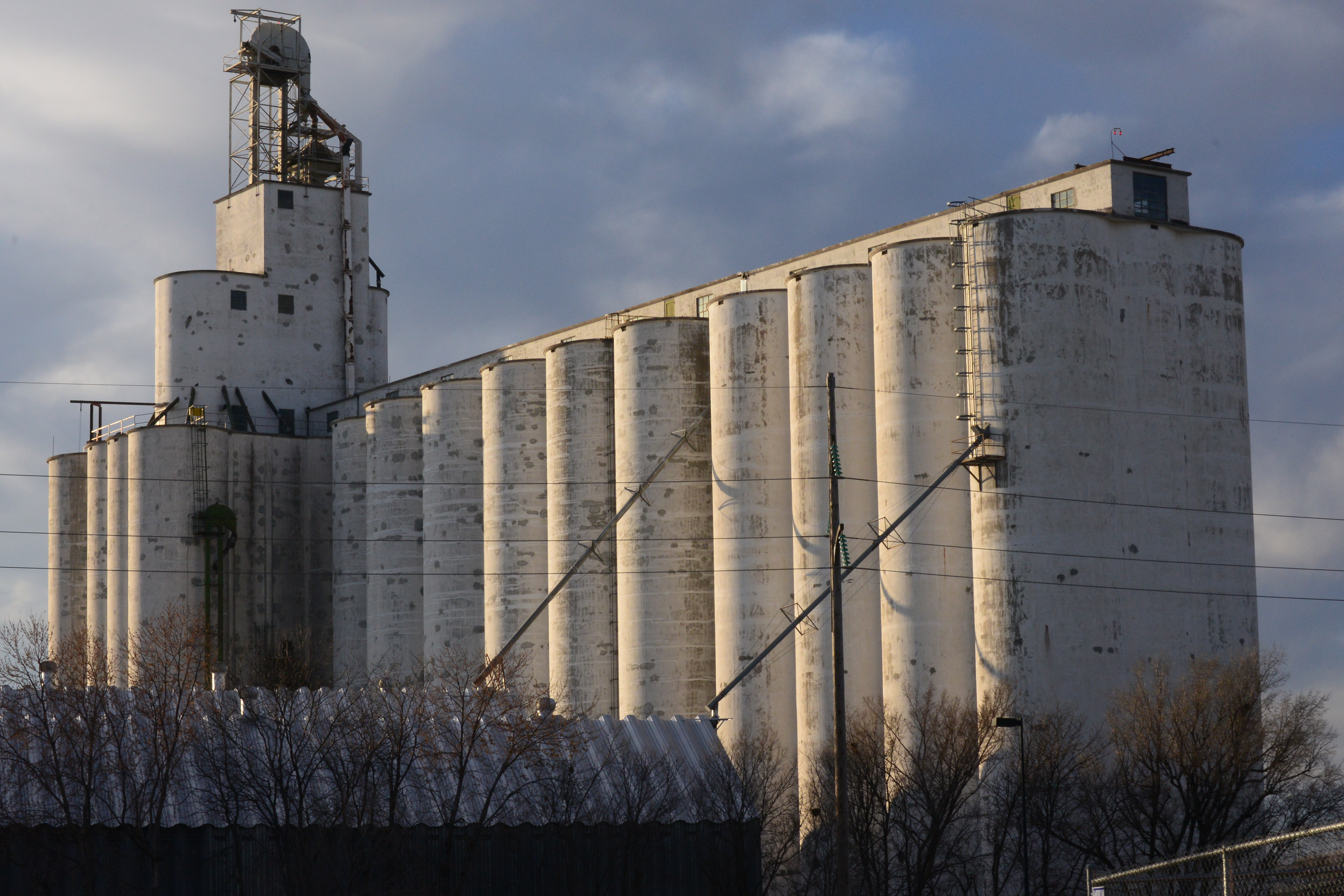
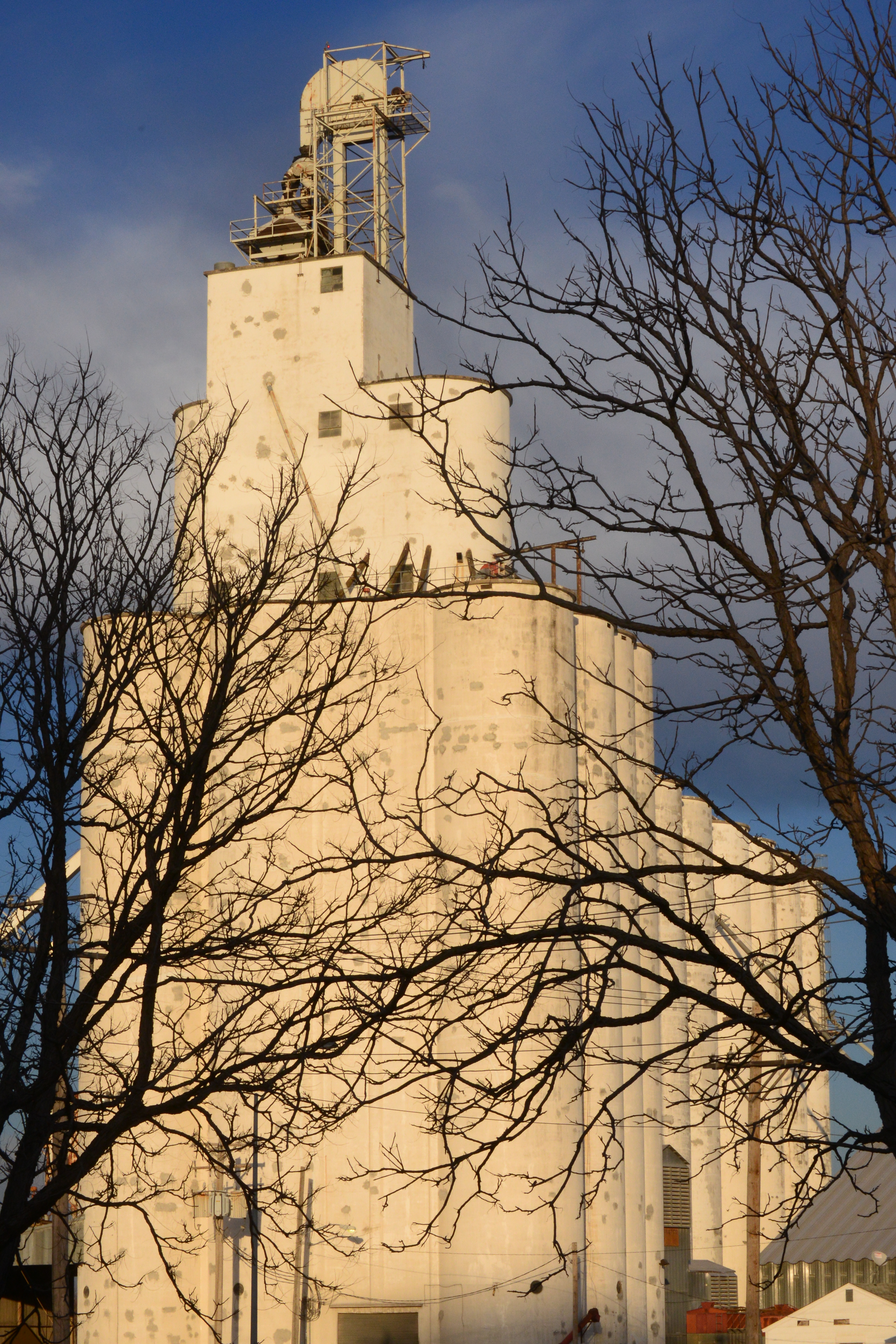
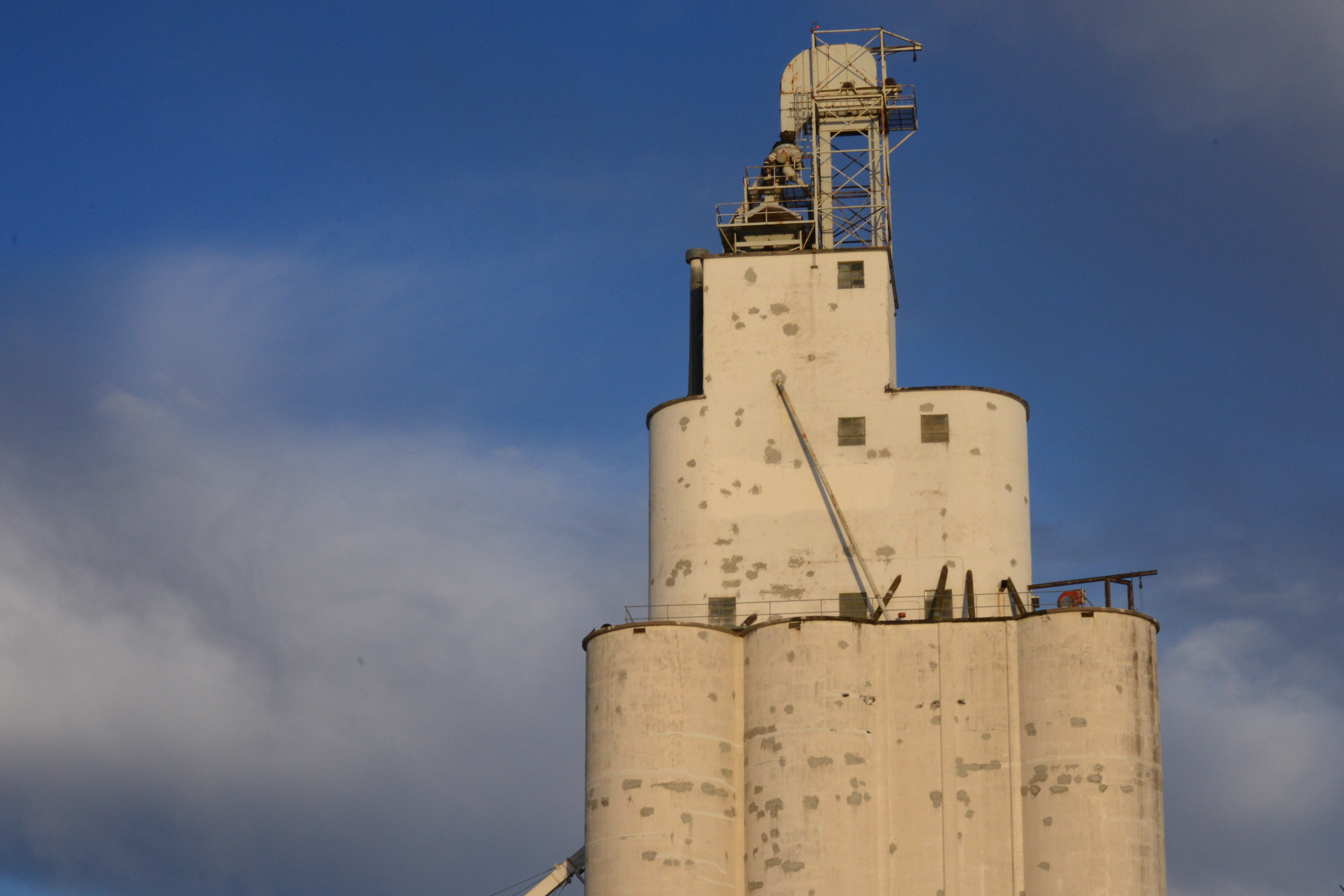
The trademark rounded headhouse rises above one of the largest elevators Tillotson Construction built

This elevator is a couple of blocks from the Cornhusker Highway in Lincoln, and one of the obstructions to a clear shot is an overpass feeding traffic to that main artery through town. The limited view required some cropping of the elevator. But the light and sky made up for the field of view.

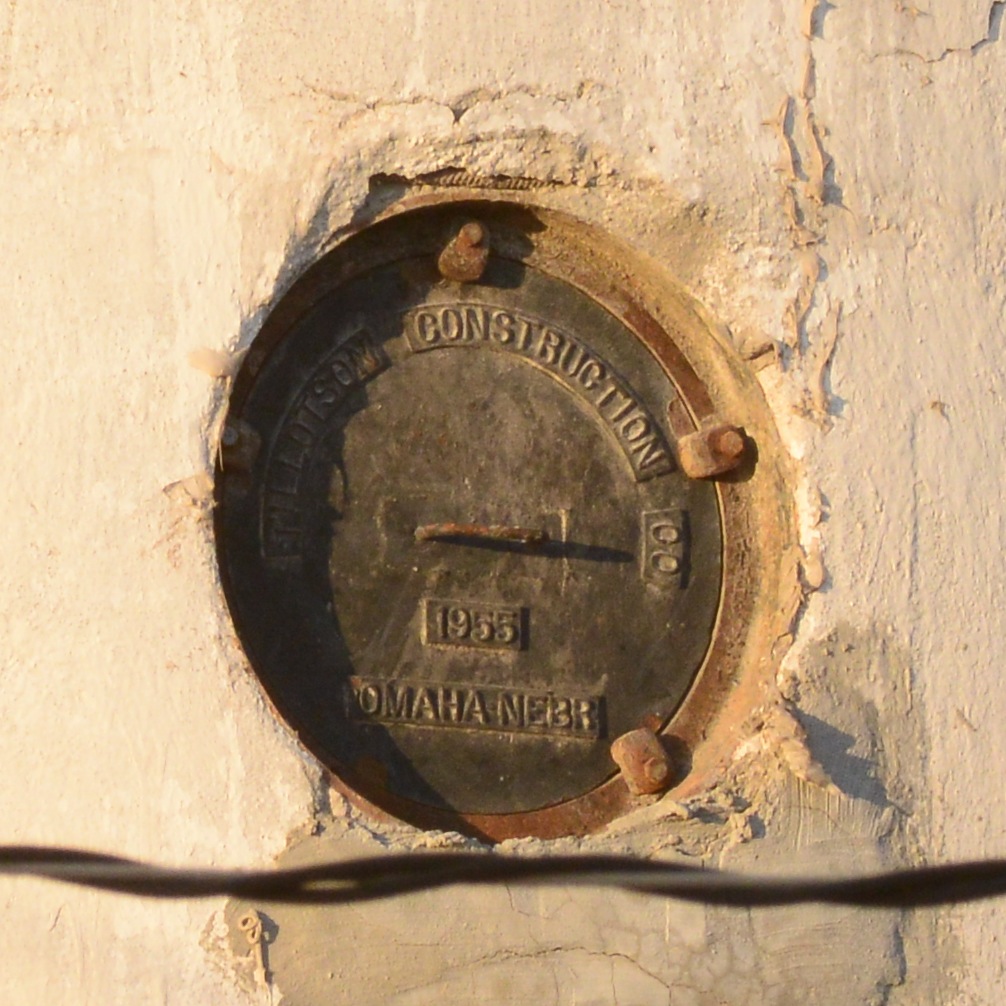
The manhole covers display the company name on both the elevator and the annex

The manhole covers display the company name on both the elevator and the annex

We do not know why the Lincoln elevator is not among the projects recorded in the company ledgers. It appears that at least one page was missing from the records, and there is no way to know where it is, or why it is missing. So the only information we have about its construction is from the manhole cover on the main elevator, which says 1955. Presumably, the annex was built shortly thereafter.

Because the facility, AGP Grain Cooperative, was closed, we obtained no further details on this visit. This elevator will be the first on our list when the harvest time comes around again, and we can see the elevator in operation for ourselves.

Christmas ideas for an elevator enthusiast

DSC_0075Story and photo by Kristen Cart

Our good friend Linda Laird shares our interest in American grain elevators and has devoted much of her time to documenting these historic landmarks of the plains. I purchased her book some time ago and found it very enlightening. She did a terrific job. This book is on my short list of recommendations for Christmas, if you have an elevator lover on your list.

The American Grain Elevator

Another good friend and fine photographer Bruce Selyem, and his wife and excellent writer Barbara Selyem, have published several books on the subject of grain elevators, and they also publish an annual grain elevator calendar. Last time I checked they still had a few for sale. They also have fine prints for sale if you find an image of an elevator you can’t live without. I spend time on their site while planning elevator trips because of their extensive coverage of elevators all over the country and in Canada.

Grain Elevator Photos

Lastly, it is always a good idea to visit Gary Rich’s elevator photo pages to see his latest elevator photography. He recently finished a trip to Oklahoma, so I expect to see new images from there soon. He says he loves taking pictures in the winter sunshine, which is the perfect illumination for his subjects.

Gary Rich Grain Elevators

Enjoy the season!

The Tillotson elevator at Vail, Iowa, is fully explained in builder specifications

The ubiquitous curved headhouse exemplifies the Tillotson style at Vail, Iowa

The curved headhouse exemplifies the Tillotson style at Vail, Iowa.

Story and photos by Kristen Cart

DSC_2984

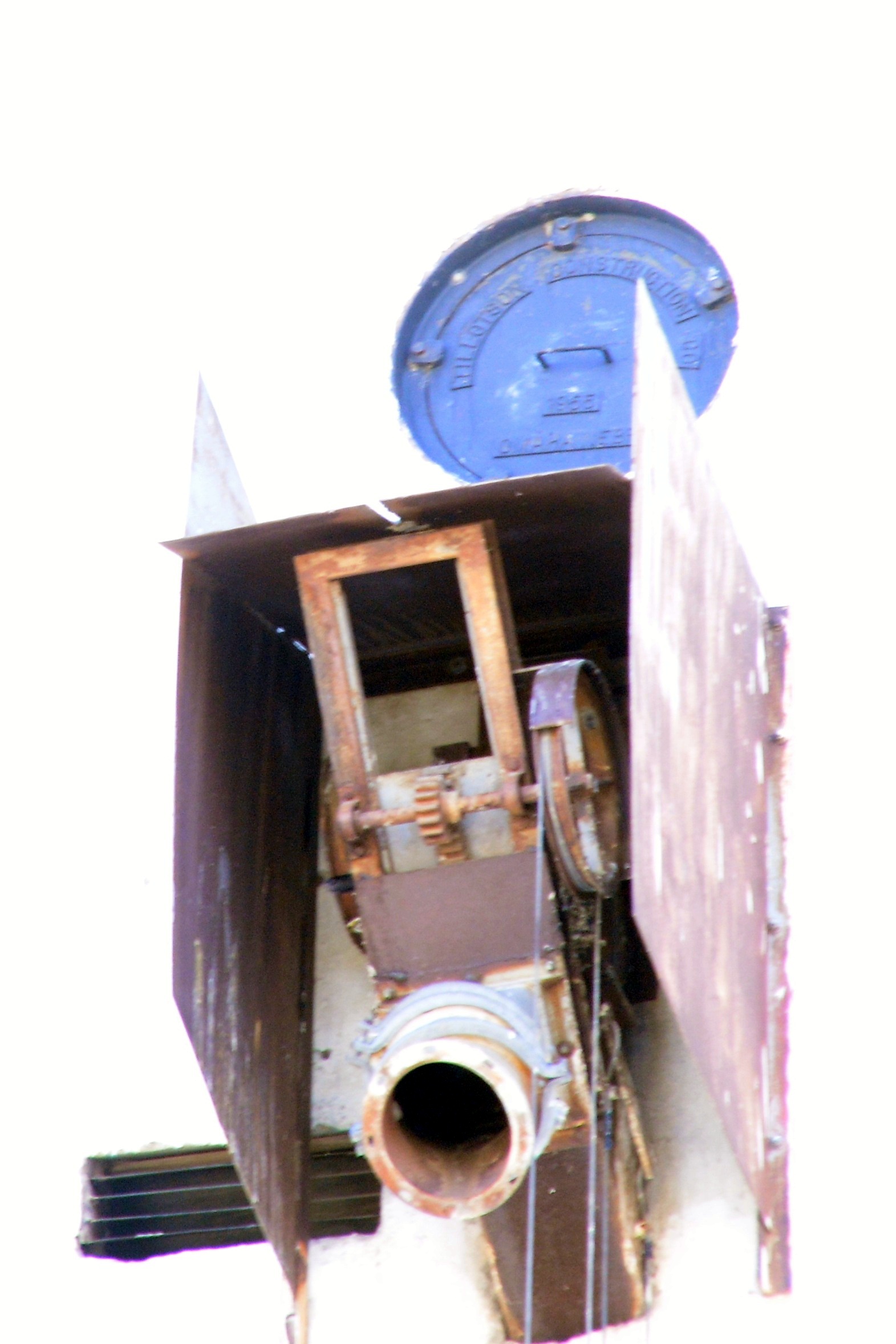
An overexposed image brought out the Tillotson name on the blue port cover.

During our travels, we are always on the lookout for a Tillotson elevator, so coming across the Vail elevator in the eastern part of Iowa during a Thanksgiving visit was a pleasant surprise.

The trademark curved headhouse came into sight at a distance, and with some excitement we pulled over near the elevator, hoping to find an embossed manhole cover to confirm the builder. Painted blue, about halfway up the side above a loading spout, was a steel cover with its stamped name, “Tillotson Construction Co., 1955, Omaha Nebr.,” faintly visible in the late afternoon shadow.

We needn’t have looked. The Vail elevator is among the structures detailed in the Tillotson concrete elevator specifications, which span over fifteen years.

In a brisk, chill wind, I took some quick photographs (interrupted briefly when a railroad employee warned me to keep a respectful distance from the tracks), and then I dashed back into the warmth of the truck. “Vail, Iowa,” was a familiar name. When I checked, I found it was listed in the rich store of information that Tim Tillotson provided.

Eureka!

DSC_3006Below are the specifications for the elevator at Vail, Iowa, built in 1955.

The elevator was built using the “Manson plan,” which specified 5 bins with a 16 ft diameter and 120 ft height, a 13 x 17 ft driveway, a dust bin and fan, a dryer bin, and 16 bins and overflow.

Capacity per Plans (with Pack) 152,000 bushels

Capacity per foot of height 1,551 bushels

Reinforced concrete/plans (Total) 1,552 cubic yards

Plain concrete (hoppers) 27 cubic yards

Reinforced steel/Plans (includes jack rods) 69.5 tons

Average steel per cubic yard of reinforced concrete 89.8 pounds


Steel & reinforced concrete itemized per plans

Below main slab 5,457 lb/64 cu yd

Main slab 19,460 lb/186 cu yd

Drawform walls 88,017 lb/1087 cu yd

Work & driveway floor (including columns) 1,988 lb/18.5 cu yd

Deep bin bottoms 5,261 lb/28.5 cu yd

Overhead bin bottoms 2,949 lb/22.1 cu yd

Bin roof & Extens. roofs 5,287 lb/35.8 cu yd

Scale floor (complete) 292 lb/4.8 cu yd

Cupola walls (including leg and head) 5,590 lb/63.0 cu yd

Distributor floor 1,530 lb/11.0 cu yd

Cupola roof 1,760 lb/14.0 cu yd

Miscellaneous (track sink, steps) 1,107 lb/15.0 cu yd

Construction details

Main slab dimensions (Drive length first dimen.) 54 x 51 ft

Main slab area (actual outside on ground, less pit) 2,482 sq ft

Weight of reinforced (total) concrete (4,000 lb/cu yd + steel) 3,173 tons

Weight of plan concrete (hoppers 4,000 lb/cu yd) 96 tons

Weight hopper fill sand (3,000 lb/cu yd) 615 tons

Weight of grain (at 60 lb per bushel) 4,560 tons

Weight of structural steel & machinery 18 tons

Gross weight loaded 8,462 tons

Bearing pressure 3.4 tons per sq ft

Main slab thickness 24 in

Main slab steel (bent) number 9 at 7 inches

Tank steel at bottom (round tanks) number 4 at 12 inches

Lineal feet of drawform walls and extensions 526 ft

Height of drawform walls 120 ft

Pit depth below main slab 16 ft 3 in

Cupola dimensions (W x L x Ht.) 22.25 x 42.5 x 26.5 ft

Pulley centers 152.75 ft

Number of legs 1

Distributor floor Yes

Track sink Yes

Full basement Yes

Electrical room Yes

Driveway width–clear 13 ft

Dump grate size 5 x 9 and 15 x 9 ft

Columns under tanks size 16 inches square

Boot — leg & head Concrete


Machinery Details

Head pulley size 72 x 14 x 4 9/16 in

Boot pulley size 72 x 14 in

Head pulley rpm 42

Belt 330 ft, 14 in 6 ply calumet

Cups 12 x 6 in at 10 1/2 in

Head drive Howell 30 horsepower, 4

Theoretical leg capacity (cup manufacturer rating) 6,440 bushels per hour

Actual leg capacity (80 percent of theoretical) 5,150 bushels per hour

Horsepower required for leg (based on above actual capacity plus 15 percent for motor) 23.8 hp

Man lift 1.5 horsepower Ehr

Load out scale 10 bu

Load out spout 8.25 inch W.C.

Truck lift 7.5 horsepower Ehr

Dust collector system Fan → Bin

Cupola spouting 10 inch diam.

Driveway doors Two overhead rolling

Conveyor Provision


Also Built

Main slab includes 3 in pile cap 23 cu yd

Split one overhead bin

Dust bin and fan

Hang pit 3,126

Special track sink

Piling

Tillotson elevators in Oklahoma

Story by Kristen Cart

The Tillotson Construction Company of Omaha, Neb., built at least two hundred elevators and other building projects during the heyday of elevator construction. To date, we have obtained the specifications for 127 of them, specifically concrete elevator jobs. Of these, 27 projects were completed in Oklahoma according to the documents we have. A few pages of the specifications are missing, so undoubtedly there were more.

It can be seen from the map that many of the projects were clustered in the wheat growing region that served the major terminal facilities in Enid, Okla. The Tillotson company must have made a very good impression, since many of the facilities brought the company back to build their additional storage. The neighborhood around Enid was practically saturated with elevators that were designed and built by Tillotson Construction. It is apparent that the company had a continuous presence in the neighborhood, keeping their equipment and infrastructure on location in and around Enid for a number of years, which probably made them the most practical and economical choice for local cooperatives when they shopped for a builder.

Listed below are the depicted locations:

Goltry, 1939: 60,000 bushels

Newkirk, 1940:  60,000 bushels

Douglas, 1941: 60,000 bushels

Medford, 1941: 212,000 bushels

Thomas, 1941: 212,000 bushels

Burlington, 1945: 213,000 bushels

Cherokee, 1945: 213,000 bushels

Lamont, 1945: 212,500 bushels

Blackwell, 1945: 212,500 bushels

Custer, 1946: 96,000 bushels

Kingfisher, 1946: 240,000 bushels

Thomas, 1947: 240,000 bushels

Pond Creek, 1946: 100,000 bushels

Helena, 1947:  100,000 bushels

Eva, 1947:  99,000 bushels

Manchester, 1948: 145,000 bushels

Helena, 1949: (annex) 100,000 bushels

Pond Creek, 1950:  252,000 bushels

Kildare, 1950:  250,000 bushels

Drummond, 1950:  200,000 bushels

Imo, 1950:  151,600 bushels (not found on map)

Helena, 1953:  (annex)  200,000 bushels

Cherokee, 1953:  309,400 bushels

Meno, 1953:  152,000 bushels

Dacoma, 1954:   251,000 bushels

Orienta, 1954:  (annex) 312,000 bushels

Weatherford, 1954:  (annex) 181,000 bushels

How a 1950 elevator matches advanced farming practices in Cordell, Oklahoma

DSC_2318Story and Photos by Kristen Cart

Once we discovered that the Cordell, Oklahoma elevator was built by Mayer-Osborn, it became a priority to pay a visit.  Luckily an opportunity presented itself when I went shopping for an Australian Shepherd puppy for my son Jesse. Deadra Buffing breeds lovely pups at Horse Creek Aussies right there in Cordell, and we found the right dog, so off I went on a puppy mission, first flying to Oklahoma City then driving two hours west to Cordell. (I’m sure there were breeders closer to home, but this coincidence was too good to pass up.)

DSC_2335But the first stop was the Mayer-Osborn elevator. After a quick tour around the outside with my camera, I stepped inside the Wheeler Brothers Grain Company office. There, Jim Balzer greeted me. He was more than happy to share his insights and long experience with the Cordell elevator. His stint at the elevator spanned a number of owners, beginning in 1979 with General Mills.

General Mills sold their Oklahoma operations in about 1984, including elevators at Cordell, Bessie, Carrier, Reading, and the terminal at Enid. Logan Farms bought the Cordell elevator from General Mills, then Johnson’s Grain bought it. Goodpasture, out of Texas, owned it for awhile. Wheeler Brothers finally bought it in 1996 or 1997.

After 1984, a truck spout was added on the west side of the elevator, and the train spout on the east side was remodeled using salvaged parts. The old wooden doors were also replaced with metal ones. Jim said the elevator is holding corn for the first time, an atypical crop for the area, but a sign of the times due to ethanol subsidies.

DSC_2333

Jim Balzer has worked at the Cordell elevator since 1979. The small elevator has stood as long as he can remember.

The structure is completely unique, having two driveways. It’s special features are its two legs, each rated at 5,000 bushels per hour, to achieve an unload rate of 10,000 bushels per hour. Most elevators of this size and age have long since retired because of limitations in their loading rates, if not for their lack of capacity. Jim said their newer, larger elevator at Cordell, when running “full out” with its single leg, only surpassed the old elevator by a little bit at 11,500 bushels per hour.

In the past, all manner of vehicles would line up to unload their grain at Cordell. The earliest were horse-drawn wagons, used in the old wooden elevator days (before Jim’s time, he noted), where the farmers would scoop the grain manually into the pit. Jim showed me a bit of concrete foundation by the tracks where the wood elevator used to be. A slow leg was no problem then, because the choke point of the process was the farmer’s shovel.

Years later, after the concrete elevator was built, farmers drove their trucks in and unloaded them much more quickly. They would queue up in the hot sun and wait their turn, while Jim’s young daughter brought them cold pop from a wagon.

Now, nothing much smaller than a semi-tractor trailer will bring grain, and the leg speed is much more crucial. Rail cars are also serviced at the small elevator. The Cordell elevator was far ahead of its time, able to keep up with advances in farming practices. It is a testament to the forethought of the original designers that the Mayer-Osborn elevator still meets the need.

The Mayer -Osborn Construction Company is identified on the manhole cover

The Mayer-Osborn Construction Company is identified on the manhole cover.

Mayer-Osborn’s proposals were rejected at Wauneta, Nebraska

DSC_0790

Mayer-Osborn Construction lost their bid to build this annex.

Story and photos by Kristen Cart

Our blog contributor Gary Rich was the first to visit Wauneta, Neb. in the hunt for elevators built by Mayer-Osborn Company and J. H. Tillotson, Contractor. He discovered that the Frenchman Valley Co-op had retained original documentation including blueprints for the original elevator, and the two annexes, which all still operate today. The various documents painted a confusing picture. Gary told me enough that I knew I needed to get down there and see for myself, which I finally did in October of 2012.

The builder of the original elevator was unclear, but presumably J. H. Tillotson had built it, based its appearance.  Mayer-Osborn soon returned with a proposal for the first annex, and a close reading of those documents seemed to indicate that the first elevator was completed by the same people, which at that time worked for the J. H. Tillotson, Contractor operation. But nothing definitive was found to that effect–even the manhole covers of the main house were blank after a renovation.

FVC BP6aThe most interesting discovery was a set of blueprints and drawings completed by Mayer-Osborn for their annex that was never built. Their proposal was submitted twice, once in 1950 and once a few years later, but the town finally decided on a different contractor after some delay. For some reason, the co-op retained all of the paperwork at the site. This blueprint, dated Feb. 17, 1950, was the first of these designs.

The co-op has retained the original written contract proposals, which will be detailed in a later post. It would be very interesting to discover what held up the original building plan. Because the annex finally went up in about 1957, it’s possible that the co-op just waited too long and built the annex after the demise of the Mayer-Osborn Company. The existing annex looks much like the original proposal. Did they show another company the plans, and ask, “How close can you come to this design?”

The Mayer-Osborn elevator in Tempe, Arizona is a jewel in an upscale setting

DSC_0047Story and photos by Kristen Cart

Phoenix is well out of the way for a pilot based in Louisville, Ky., and living in the Chicago area. It takes a bit of intentional finagling to get into Phoenix with enough time to visit an elevator. Fortunately, the Mayer-Osborn grain elevator in Tempe sits at the foot of a hill, just a few miles off the end of an active runway at Phoenix Sky Harbor International Airport. A steady stream of airplanes flies directly over the elevator, either coming from, or going into the airport, depending on the wind conditions. After seeing it many times from the air, I arranged for a four hour layover in Phoenix, which was just enough of an opportunity to grab a rental car and go see it.

DSC_0067

Manhole covers are embossed with the company name. Each annex bin has a manhole cover.

The straight-up styled elevator with its annex was built in 1951 for the Hayden Flour Mill, a Tempe landmark which had already been in operation for decades.  It once proudly displayed the “Hayden Flour Mill” name, painted along the annex side, in lettering that has been painted over at least twice. The white paint has now faded enough for both lettering jobs to show through.

DSC_0057

Hayden Flour Mill


My dad,  Jerry Osborn, remembers when his father worked the Mayer-Osborn job in Arizona. Dad would have been about seven years old. The job was one of many that took Bill Osborn away from his home in Fremont, Neb.

The Mayer-Osborn elevator and annex nestle at the base of a hill, gracing the neighborhood like a white gemstone in a gleaming setting. The Hayden Flour Mill, which has a strong historical significance to the area, is a rather unremarkable looking building, located at the base of the elevator. The neighborhood has grown up around it with shining highrises, shops and hiking trails, erasing the former industrial setting, and replacing it with an upscale ambiance.

It is fortunate that the mill and elevator add character and personality to the place, and that city planners have recognized their value. Now a park and lawn surround the mill. The mill’s windows have been screened so that tourists can look inside, and historical plaques detail its history. The elaborate plans for the mill have been put off after the market crash in 2008, but fortunately the goal of preservation has not been abandoned. It is good to see one of my grandfather’s elevators safely ensconced in a community that values its presence.DSC_0030