This ‘continuous pour’–and the marching band–would delight our grandfathers

By Ronald Ahrens

Photo by AC Martin.

Photo by AC Martin.

A  USA Today insert in my Feb. 6 edition of the Desert Sun newspaper carried this story about the new tower under construction in Los Angeles. The news will be of interest to the concrete enthusiasts among our readers.

The report on the 1100-foot Wilshire Grand project describes how the the foundation slab will be laid on Feb. 15: “The project will attempt to set a Guinness World Record with the largest continuous concrete pour ever… More than 2,100 truckloads will deliver 21,200 cubic yards of concrete weighing 82 million pounds.”

A typical Tillotson elevator–for example, Albert City, Iowa–needed 2091 cubic yards of reinforced concrete. That’s just under one percent of what’s going into the 100-foot-deep hole on Wilshire Boulevard. I’m trying (without success) to picture 100 grain elevators compressed in there.

The USC band will precede the first truck to the site.  It is not recorded that any band ever marched to the opening of an elevator job.

Nor is it believed a swimming pool topped any elevator, as will be the case at Wilshire Grand.

Technical complications will arise during the pour, and a quite amazing means of addressing them has been devised, as you will read in the story.

I mentioned all this to Uncle Chuck Tillotson and shared the clipping with him. He said that my grandfather Reginald had foreseen for Tillotson Construction Company a commercial future beyond elevator construction.

Applying their expertise with concrete in different applications would only have been natural, but it’s doubtful  he foresaw anything quite this big.

And I’m sure he didn’t think about anyone taking a dip while 1100 feet above the city.

With their works in Estill, South Carolina, Tillotson built big in cotton country

Freshly harvested cotton field in central South Carolina

Freshly harvested cotton field in central South Carolina.

Story and photos by Kristen Cart

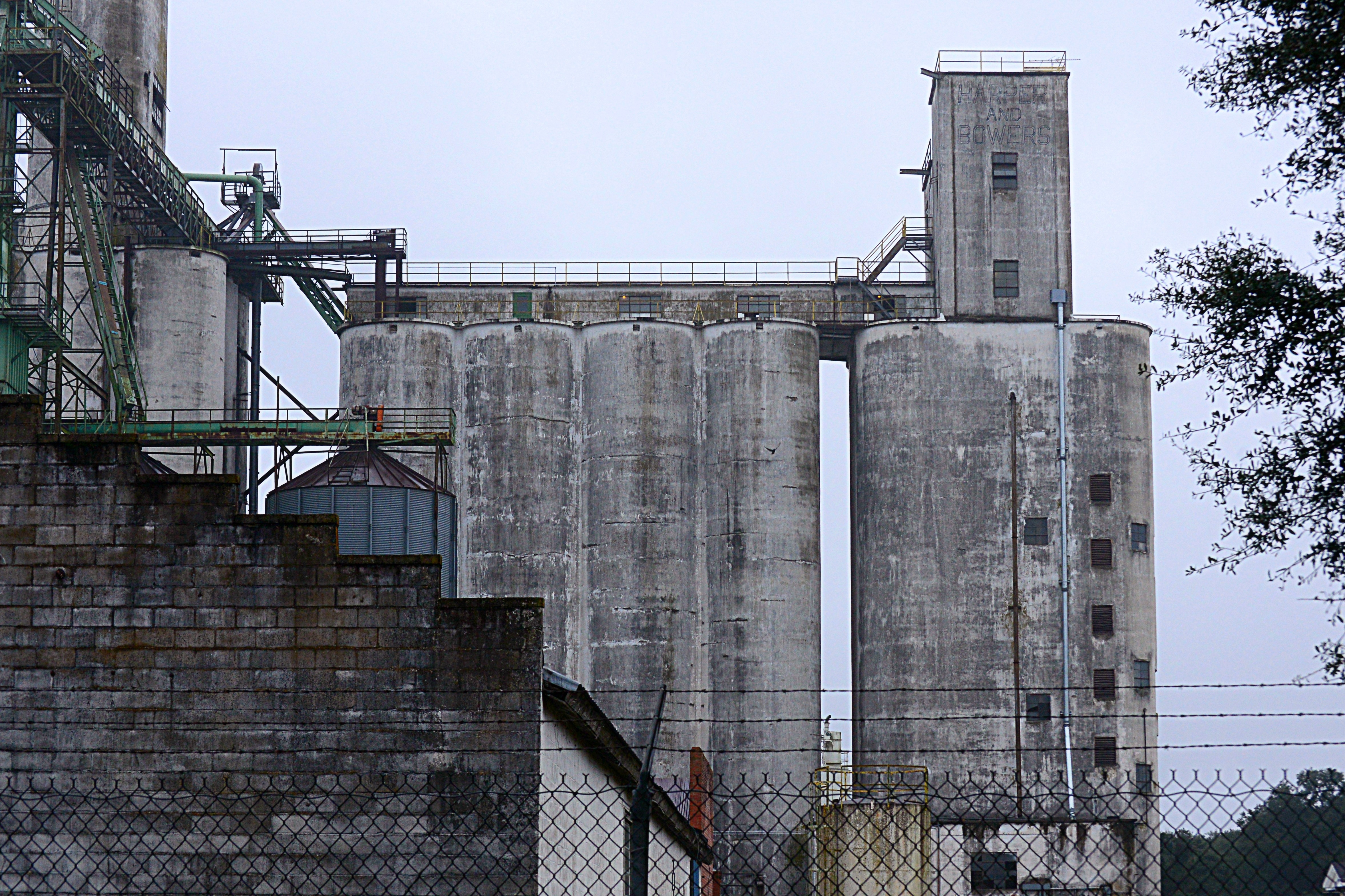
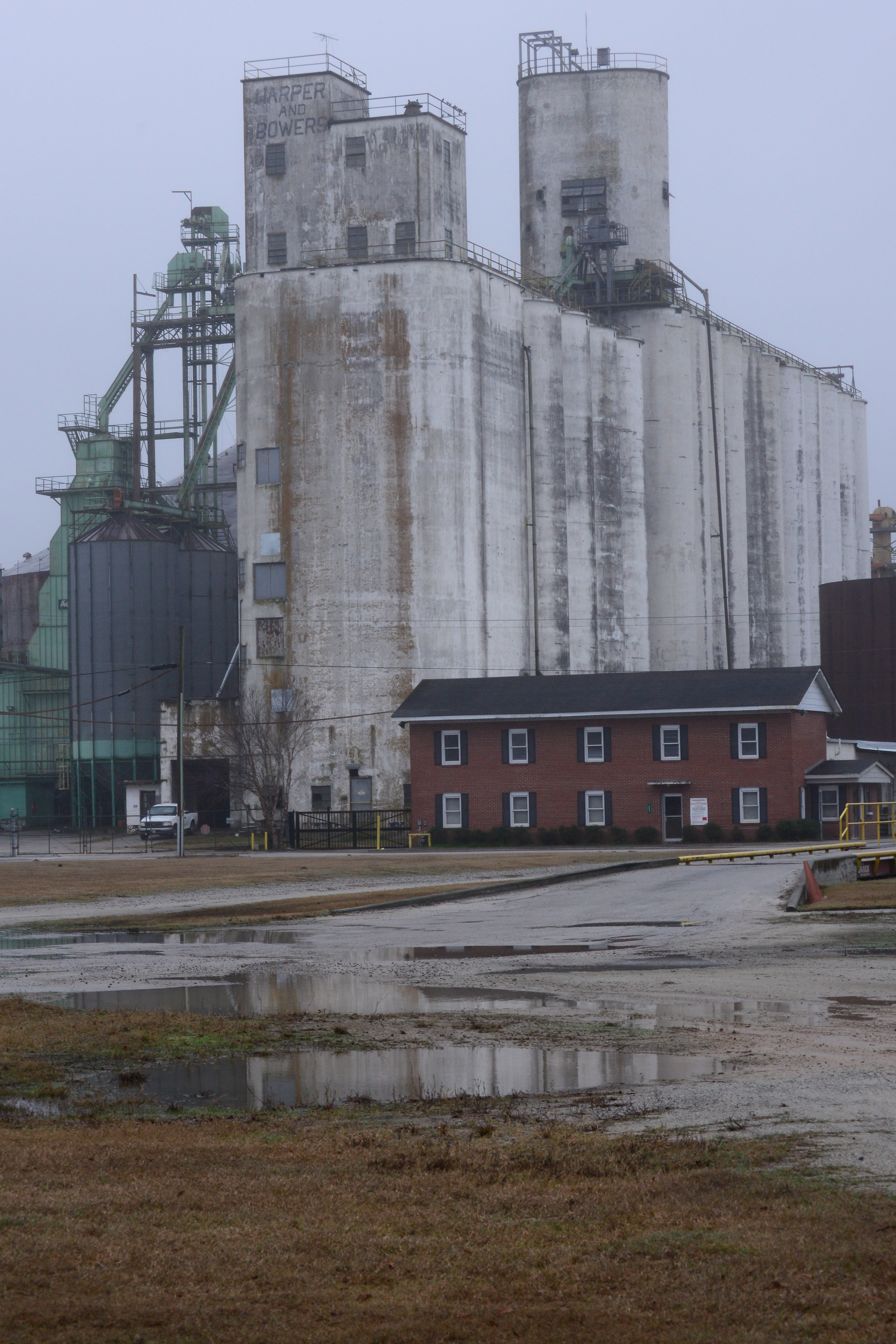
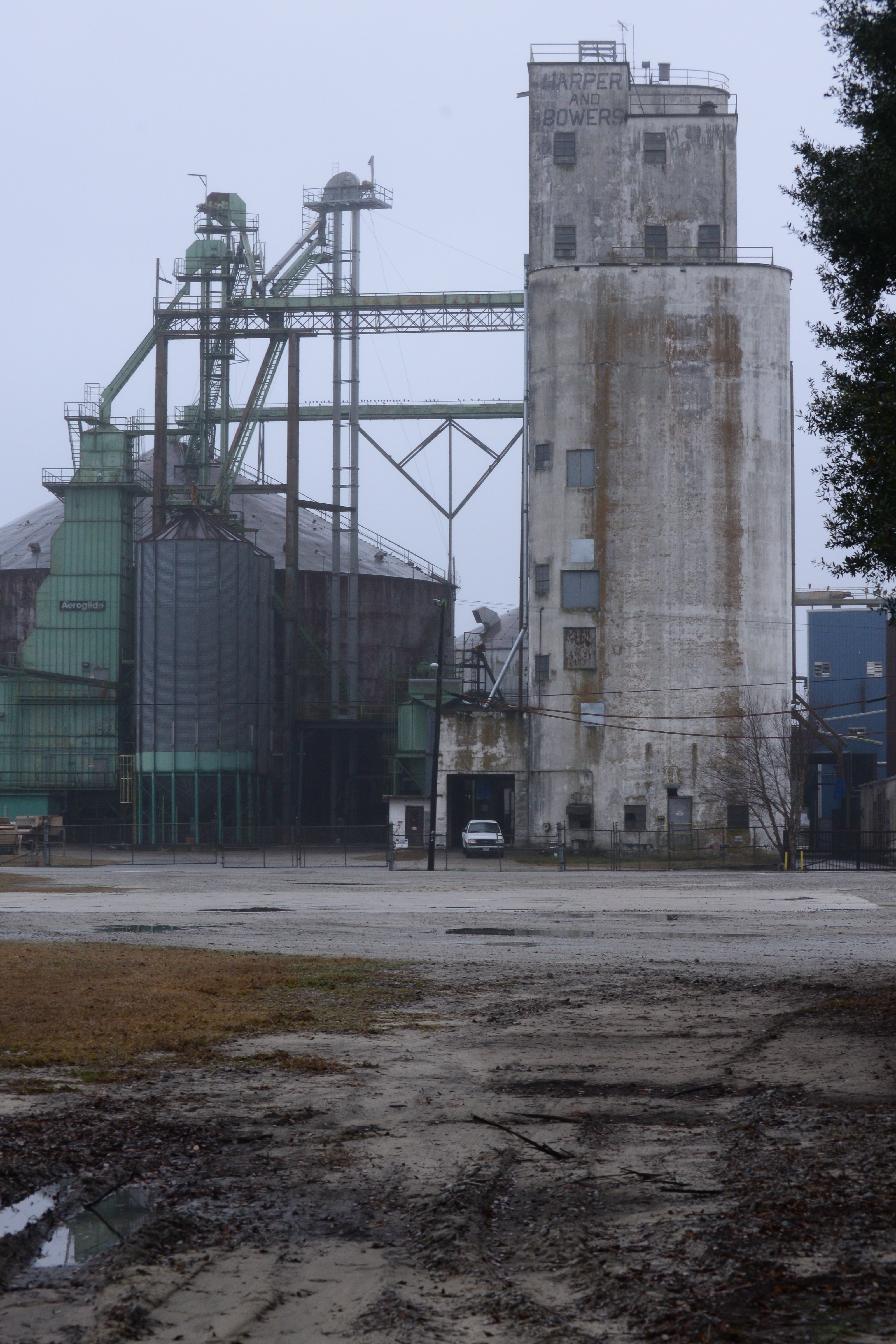
The brightly wrapped cotton bales highlighted an otherwise drab landscape as I traveled the 91 miles south from Columbia to visit the Estill elevator, originally built in 1947. Rain and haze flattened the view. Since it was Sunday when I visited the elevator, few people appeared to be about. It was going to be a photography outing, for better or for worse.

DSC_3487

The Estill elevator, greatly expanded since it was built in 1947, was secured behind barbed wire.

I graduated high school in South Carolina. My impression of the place, after growing up in the western desert, was one of endless dark pine woods, with a brief gaudy display of azaleas and dogwood blooms in springtime.  I didn’t appreciate the raw beauty at the time. Now, on a soggy day, it had a mysterious appeal.

DSC_3431When I learned that the Tillotson Construction Company built an elevator in the state, it came as a surprise. We do not know who built the original house in 1947. Tillotson, according to company records, built the 225,000-bushel annex and a second, larger elevator, in 1952 and 1953, respectively. The trademark rounded headhouse rises above the 350,000 bushel elevator, built to finish the concrete elevator complex.

Michael M. DeWitt, Jr. outlined the history of the Estill elevator in his article for the Hampton County Guardian published on December 14, 2010. The article was written to herald the purchase of Carolina Soya by ADM. During its heyday, the elevator stored soybeans for soybean processing, which was part of the operation. Now it is strictly a storage facility for ADM, focusing on soybeans but also accepting corn.

The company laid off staff upon acquiring the facility in 2010, shrinking from 45 to 14 workers, heralding a loss to the community in a time of slow economic growth. ADM promised to hire from the laid off worker pool as needed.

DSC_3406I noticed that the good times had passed during my drive down. The decline of the area was evidenced by empty store fronts and decrepit gas stations, ancient closed restaurants, and tired houses–all along the highway south from Columbia, it was apparent that development chose another corridor and not this one. I wondered if there was one open gas station anywhere along the route.

The histories neglect one of the Estill elevator’s darker episodes. In the ’40s and ’50s, construction safety was not mandated as it is now. In one of the accidents that was all too common for elevator construction, Wayne Eugene Baker lost his life in a fall while working on the storage addition, or annex, built in 1952. For all of the heartache, Wayne helped build a thing of beauty that sustained its neighborhood for many years and still brings economic benefit to its region.

A mystery is solved with the discovery of elevator builder Van Ness Construction

The wooden elevator at Wymore, Nebraska, is representative of the style of Van Ness Construction

The wooden elevator at Wymore, Neb., is representative of the style of Van Ness Construction.

Story and photo by Kristen Cart

When we began investigating the elevators our grandfathers built, we had no idea how far the project would take us or what surprises would unfold. With the discovery of Van Ness Construction Company of Omaha, we have learned about the beginnings of the Tillotson family enterprise, and have entered a new phase of our search.

Charles_Tillotson_Obit__The_Nebraska_State_Journal__Lincoln__Nebr___19_June_1938

The Nebraska State Journal, June 19, 1938

We knew that Charles H. Tillotson, patriarch of the family and great-grandfather of Ronald Ahrens, built elevators before the days of slip-formed concrete. We found only one Tillotson elevator, made of wood, that predated the elegant concrete structures that sprang up all over the Midwest in the ’40s and ’50s–at least we found its obituary in a news video of its fiery demise. That 1940 vintage elevator, in Hawarden, Iowa, was built two years after Charles died. It burned down in 2006. We didn’t find, at the time, a project that we could attribute to Charles.

Then we had a breakthrough, thanks to Ancestry.com.

Ancestry has a wonderful collection of city directories. I had seen listings for the Tillotson family in Omaha before, but I missed a significant data point. While searching for Sylvia (Mayer) Tillotson, the wife of Joe and sister of Eugene Mayer, I discovered an Omaha directory for 1936 in which Charles H. Tillotson was listed as president of Van Ness Construction Company. Further Internet searches revealed some of the sites where Van Ness built its small steel-cased wooden elevators, but as yet we have found none that have survived.

Now we hope to find an existing elevator from the days before Joe and Reginald Tillotson dreamed up their slip-formed concrete designs. So far the closest we have come is an elevator that perished in a fire in Scribner, Neb., in 1971 , a nightmare that repeated itself in June, 2013.

Also, in a Google satellite image of the town of Diller, Neb., another identified site, a square concrete pad with a grain spout lying alongside it is located near new steel bins, right where an old elevator should have been. In Rydal, Kan., you can see a concrete pad with concrete pits near a horizontal storage building, with the remains of a rail siding alongside. I was a little surprised to find evidence of earlier elevators at these sites, but of course digging up tons of concrete for no special reason would be unnecessarily expensive, so there are remains.

Everywhere we looked for these ancient elevators, we found evidence of obsolescence and ultimate destruction, with little left to identify the sites. Newspapers were the only way to find the locations. Fire certainly destroyed some of them. For those that remained, the adoption of concrete and much larger storage facilities turned these old Van Ness elevators into relics and ultimately spelled their doom.

The Tillotson elevator in Lincoln, Nebraska is majestic in winter light

DSC_3138Story and photos by Kristen Cart

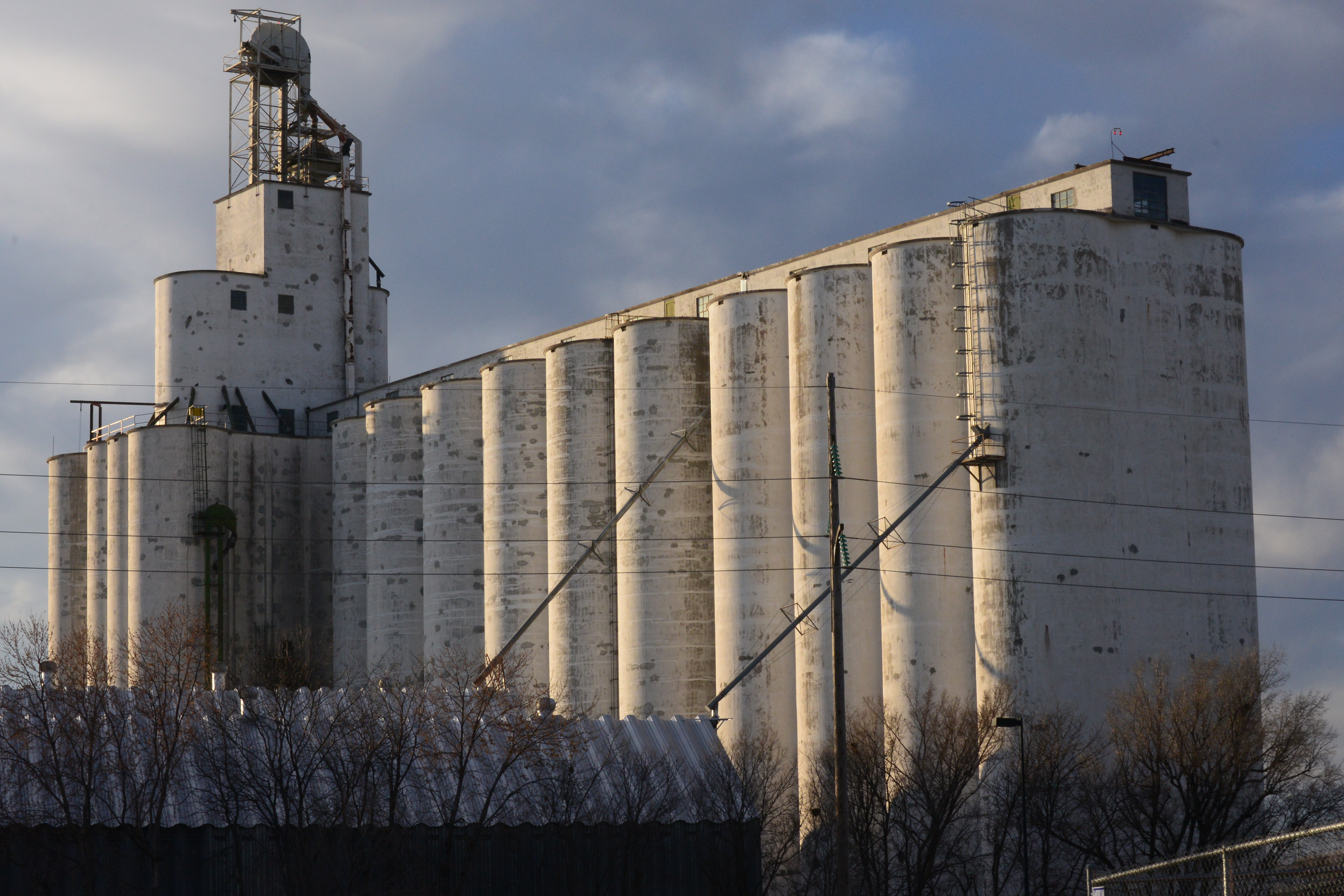
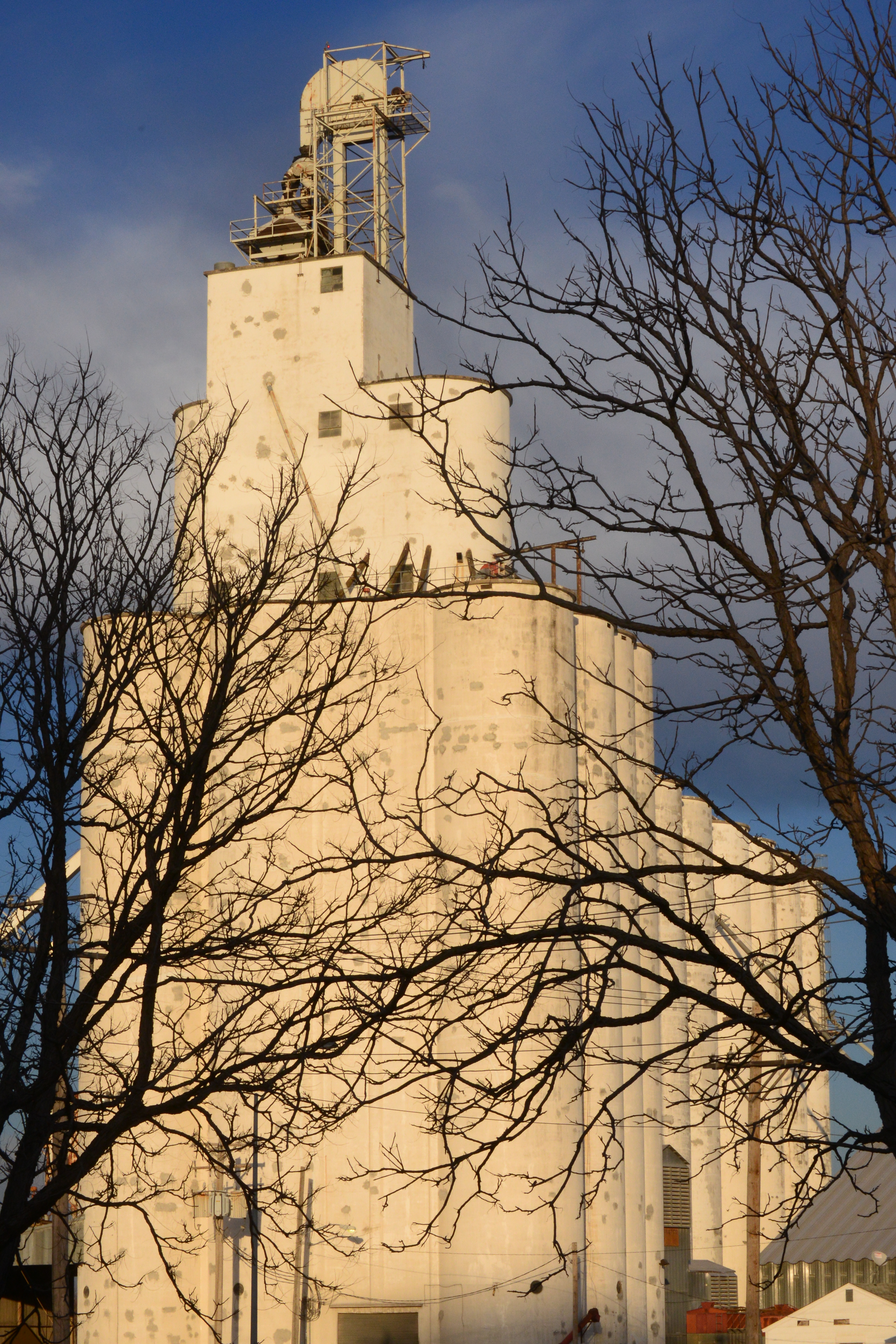
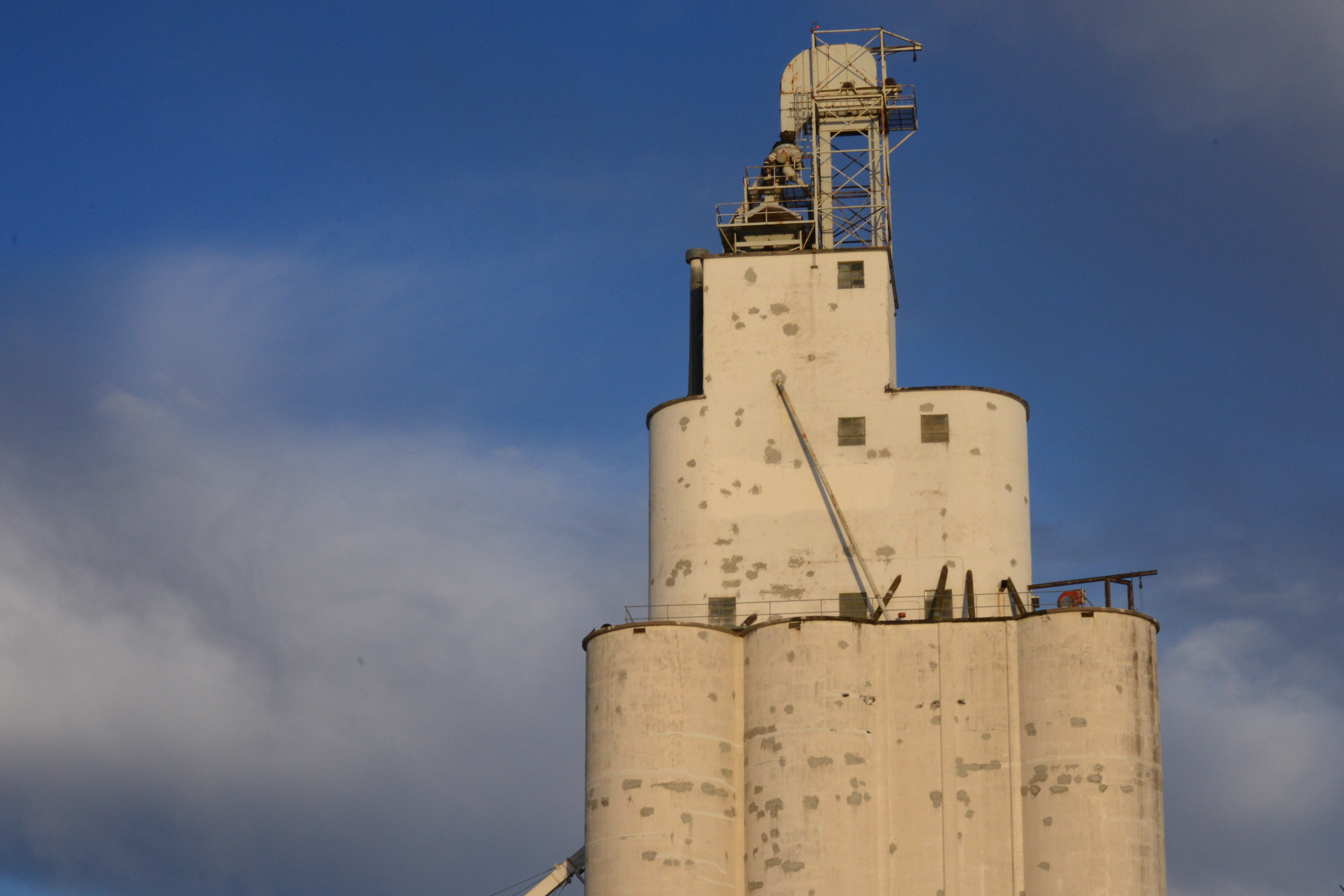
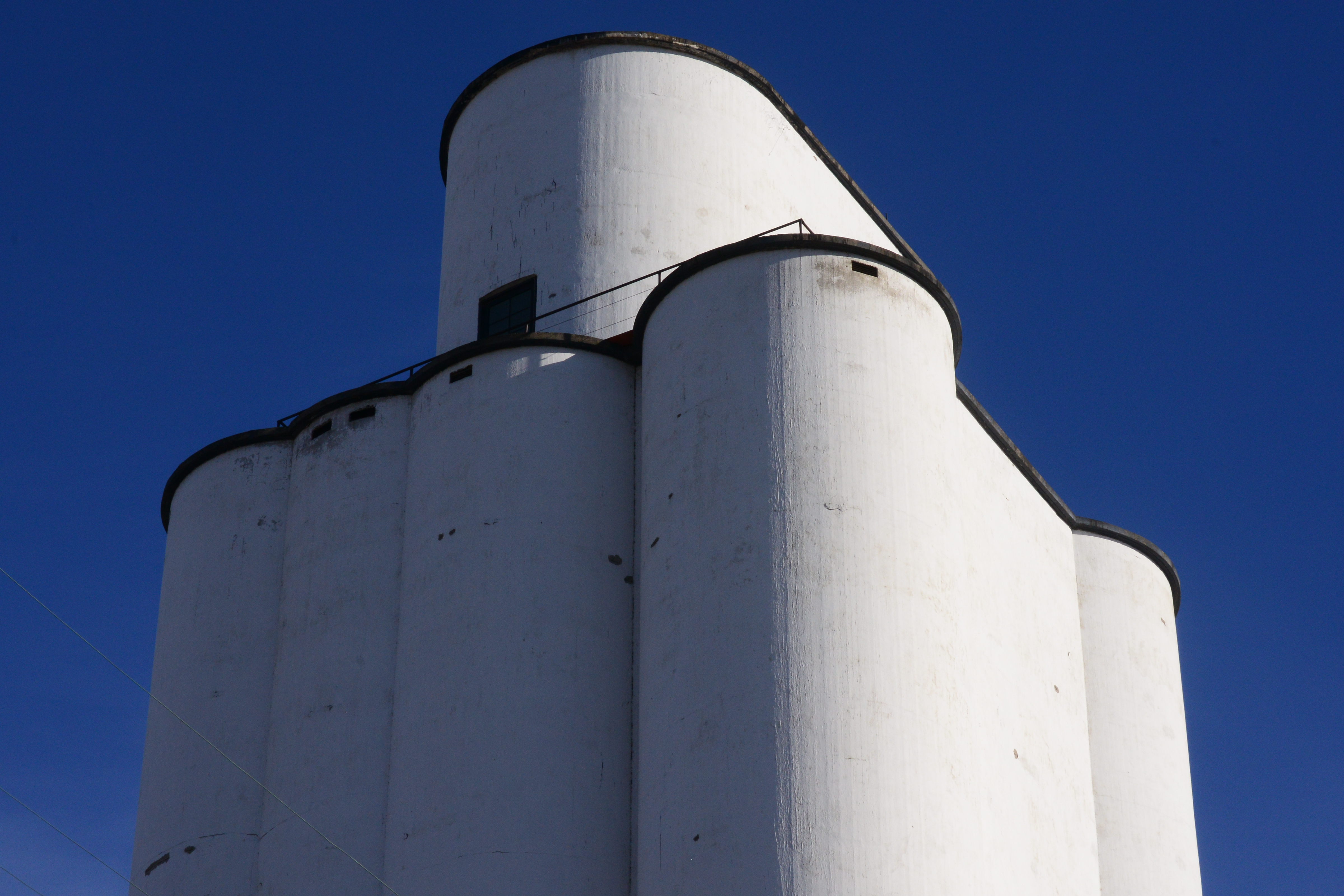
One of the most beautiful projects completed by Tillotson Construction of Omaha was their elevator with its annex in Lincoln, Neb. I was fortunate to be able to persuade my dad to stop with me to take some photos in perfect light.

DSC_3174One of the challenges of elevator photography is picking the structure out from its sometimes tight surroundings.

Usually you can take close pictures with a wide angle lens, which distorts straight lines, but can give you a full view of the elevator. In this case, I was without that tool since it broke when it fell off a chair, so I had to make do with a mid-range zoom lens.

You be the judge of whether the pictures were successful, given the limitations of distance, obstructions, and points of view.

DSC_3184

The trademark rounded headhouse rises above one of the largest elevators Tillotson Construction built

This elevator is a couple of blocks from the Cornhusker Highway in Lincoln, and one of the obstructions to a clear shot is an overpass feeding traffic to that main artery through town. The limited view required some cropping of the elevator. But the light and sky made up for the field of view.

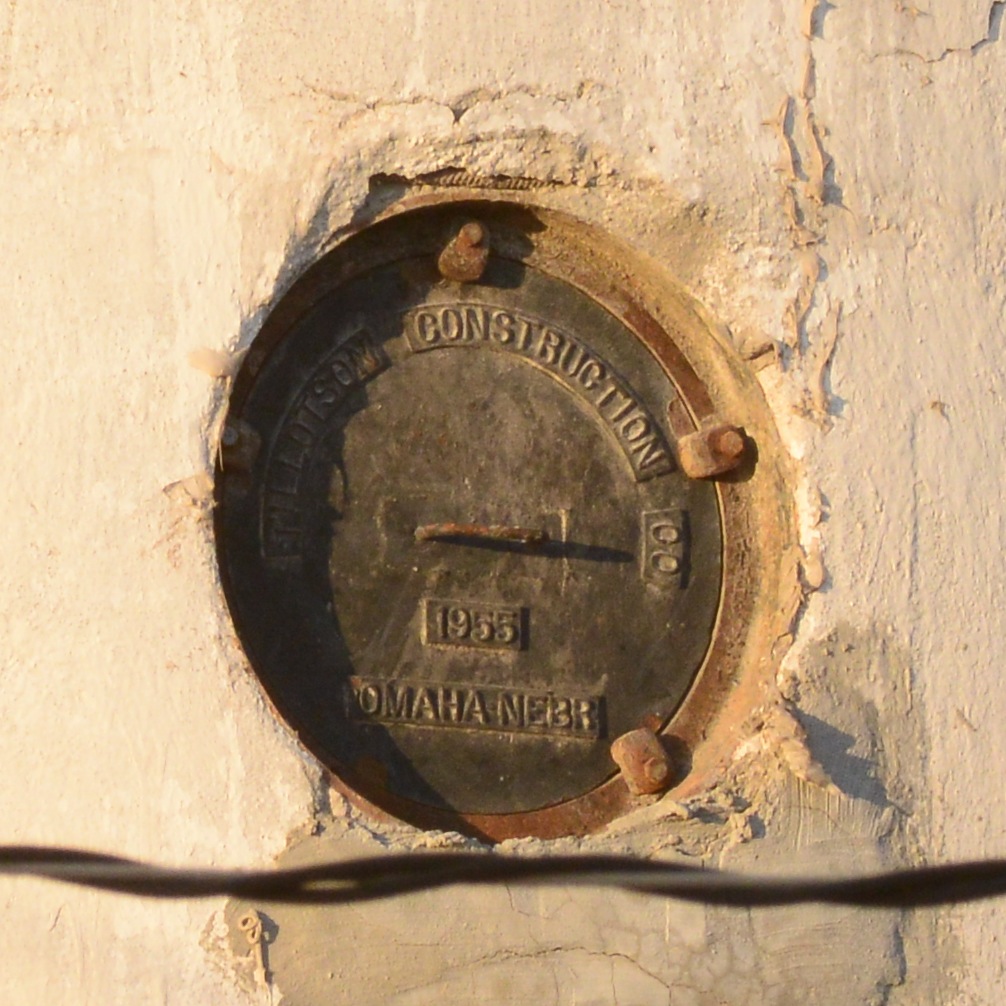
The manhole covers display the company name on both the elevator and the annex

The manhole covers display the company name on both the elevator and the annex

We do not know why the Lincoln elevator is not among the projects recorded in the company ledgers. It appears that at least one page was missing from the records, and there is no way to know where it is, or why it is missing. So the only information we have about its construction is from the manhole cover on the main elevator, which says 1955. Presumably, the annex was built shortly thereafter.

Because the facility, AGP Grain Cooperative, was closed, we obtained no further details on this visit. This elevator will be the first on our list when the harvest time comes around again, and we can see the elevator in operation for ourselves.

The Tillotson elevator at Vail, Iowa, is fully explained in builder specifications

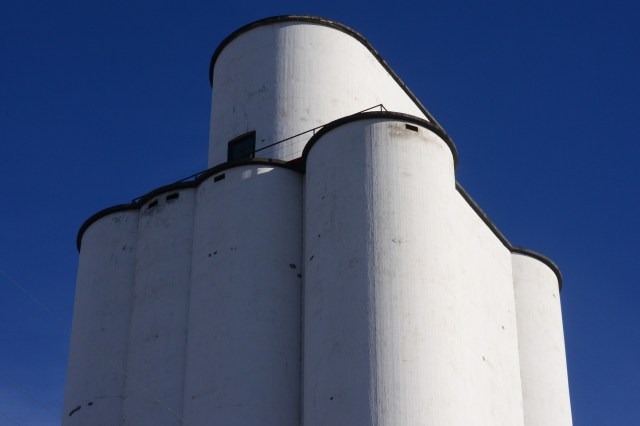
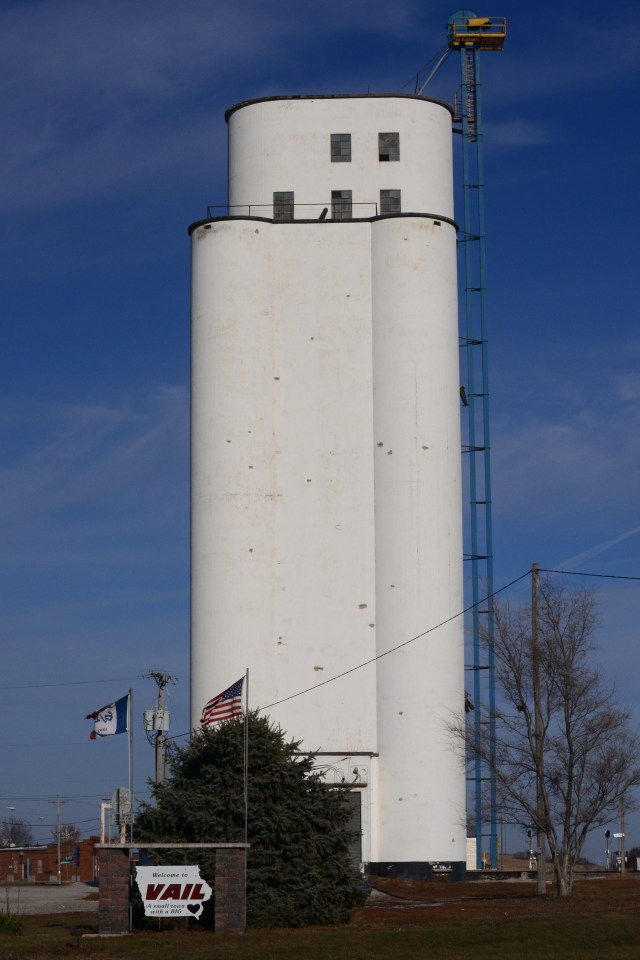
The ubiquitous curved headhouse exemplifies the Tillotson style at Vail, Iowa

The curved headhouse exemplifies the Tillotson style at Vail, Iowa.

Story and photos by Kristen Cart

DSC_2984

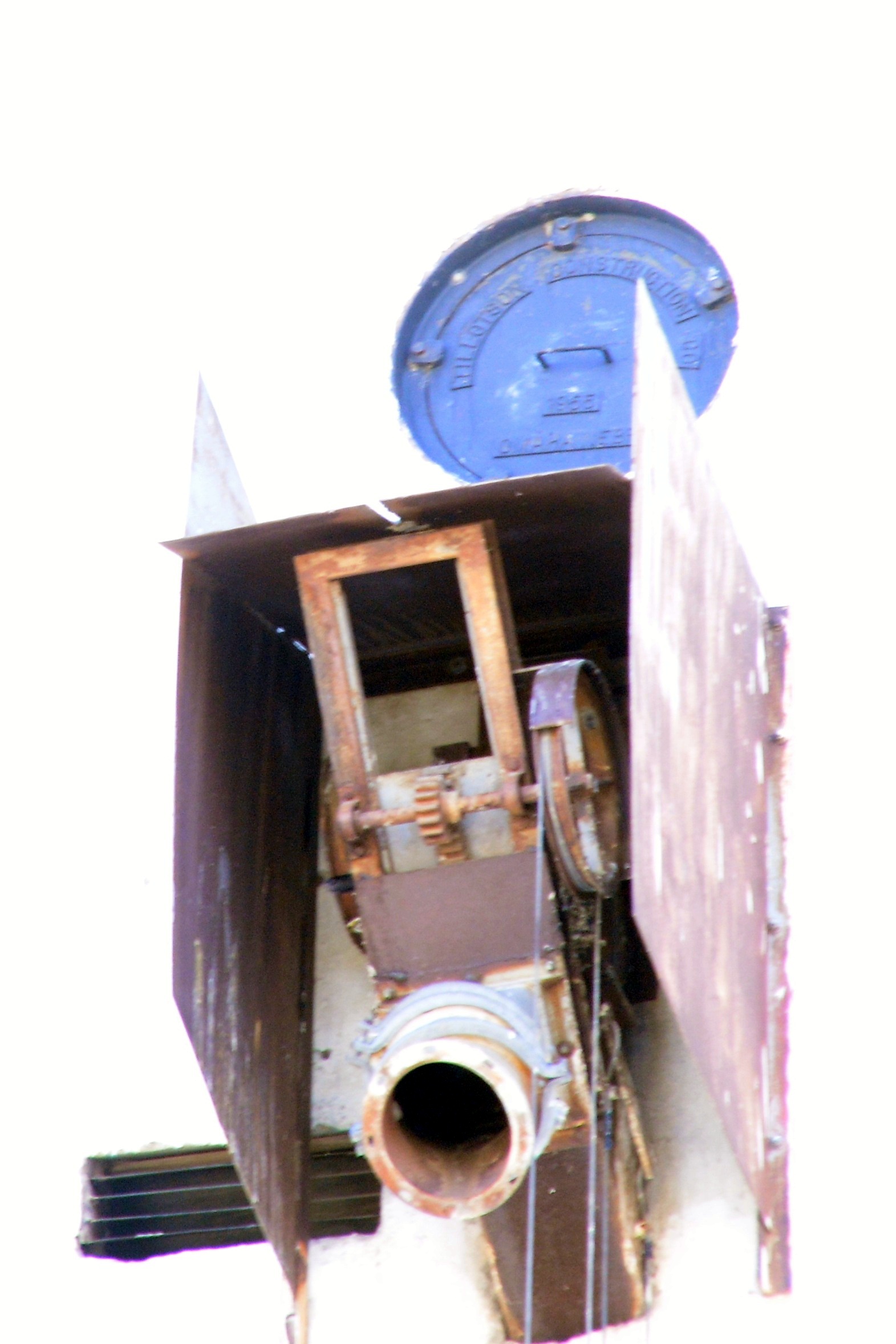
An overexposed image brought out the Tillotson name on the blue port cover.

During our travels, we are always on the lookout for a Tillotson elevator, so coming across the Vail elevator in the eastern part of Iowa during a Thanksgiving visit was a pleasant surprise.

The trademark curved headhouse came into sight at a distance, and with some excitement we pulled over near the elevator, hoping to find an embossed manhole cover to confirm the builder. Painted blue, about halfway up the side above a loading spout, was a steel cover with its stamped name, “Tillotson Construction Co., 1955, Omaha Nebr.,” faintly visible in the late afternoon shadow.

We needn’t have looked. The Vail elevator is among the structures detailed in the Tillotson concrete elevator specifications, which span over fifteen years.

In a brisk, chill wind, I took some quick photographs (interrupted briefly when a railroad employee warned me to keep a respectful distance from the tracks), and then I dashed back into the warmth of the truck. “Vail, Iowa,” was a familiar name. When I checked, I found it was listed in the rich store of information that Tim Tillotson provided.

Eureka!
DSC_3006Below are the specifications for the elevator at Vail, Iowa, built in 1955.

The elevator was built using the “Manson plan,” which specified 5 bins with a 16 ft diameter and 120 ft height, a 13 x 17 ft driveway, a dust bin and fan, a dryer bin, and 16 bins and overflow.

Capacity per Plans (with Pack) 152,000 bushels

Capacity per foot of height 1,551 bushels

Reinforced concrete/plans (Total) 1,552 cubic yards

Plain concrete (hoppers) 27 cubic yards

Reinforced steel/Plans (includes jack rods) 69.5 tons

Average steel per cubic yard of reinforced concrete 89.8 pounds


Steel & reinforced concrete itemized per plans

Below main slab 5,457 lb/64 cu yd

Main slab 19,460 lb/186 cu yd

Drawform walls 88,017 lb/1087 cu yd

Work & driveway floor (including columns) 1,988 lb/18.5 cu yd

Deep bin bottoms 5,261 lb/28.5 cu yd

Overhead bin bottoms 2,949 lb/22.1 cu yd

Bin roof & Extens. roofs 5,287 lb/35.8 cu yd

Scale floor (complete) 292 lb/4.8 cu yd

Cupola walls (including leg and head) 5,590 lb/63.0 cu yd

Distributor floor 1,530 lb/11.0 cu yd

Cupola roof 1,760 lb/14.0 cu yd

Miscellaneous (track sink, steps) 1,107 lb/15.0 cu yd

Construction details

Main slab dimensions (Drive length first dimen.) 54 x 51 ft

Main slab area (actual outside on ground, less pit) 2,482 sq ft

Weight of reinforced (total) concrete (4,000 lb/cu yd + steel) 3,173 tons

Weight of plan concrete (hoppers 4,000 lb/cu yd) 96 tons

Weight hopper fill sand (3,000 lb/cu yd) 615 tons

Weight of grain (at 60 lb per bushel) 4,560 tons

Weight of structural steel & machinery 18 tons

Gross weight loaded 8,462 tons

Bearing pressure 3.4 tons per sq ft

Main slab thickness 24 in

Main slab steel (bent) number 9 at 7 inches

Tank steel at bottom (round tanks) number 4 at 12 inches

Lineal feet of drawform walls and extensions 526 ft

Height of drawform walls 120 ft

Pit depth below main slab 16 ft 3 in

Cupola dimensions (W x L x Ht.) 22.25 x 42.5 x 26.5 ft

Pulley centers 152.75 ft

Number of legs 1

Distributor floor Yes

Track sink Yes

Full basement Yes

Electrical room Yes

Driveway width–clear 13 ft

Dump grate size 5 x 9 and 15 x 9 ft

Columns under tanks size 16 inches square

Boot — leg & head Concrete


Machinery Details

Head pulley size 72 x 14 x 4 9/16 in

Boot pulley size 72 x 14 in

Head pulley rpm 42

Belt 330 ft, 14 in 6 ply calumet

Cups 12 x 6 in at 10 1/2 in

Head drive Howell 30 horsepower, 4

Theoretical leg capacity (cup manufacturer rating) 6,440 bushels per hour

Actual leg capacity (80 percent of theoretical) 5,150 bushels per hour

Horsepower required for leg (based on above actual capacity plus 15 percent for motor) 23.8 hp

Man lift 1.5 horsepower Ehr

Load out scale 10 bu

Load out spout 8.25 inch W.C.

Truck lift 7.5 horsepower Ehr

Dust collector system Fan → Bin

Cupola spouting 10 inch diam.

Driveway doors Two overhead rolling

Conveyor Provision


Also Built

Main slab includes 3 in pile cap 23 cu yd

Split one overhead bin

Dust bin and fan

Hang pit 3,126

Special track sink

Piling

Tillotson elevators in Oklahoma

Story by Kristen Cart

The Tillotson Construction Company of Omaha, Neb., built at least two hundred elevators and other building projects during the heyday of elevator construction. To date, we have obtained the specifications for 127 of them, specifically concrete elevator jobs. Of these, 27 projects were completed in Oklahoma according to the documents we have. A few pages of the specifications are missing, so undoubtedly there were more.

It can be seen from the map that many of the projects were clustered in the wheat growing region that served the major terminal facilities in Enid, Okla. The Tillotson company must have made a very good impression, since many of the facilities brought the company back to build their additional storage. The neighborhood around Enid was practically saturated with elevators that were designed and built by Tillotson Construction. It is apparent that the company had a continuous presence in the neighborhood, keeping their equipment and infrastructure on location in and around Enid for a number of years, which probably made them the most practical and economical choice for local cooperatives when they shopped for a builder.

Listed below are the depicted locations:

Goltry, 1939: 60,000 bushels

Newkirk, 1940:  60,000 bushels

Douglas, 1941: 60,000 bushels

Medford, 1941: 212,000 bushels

Thomas, 1941: 212,000 bushels

Burlington, 1945: 213,000 bushels

Cherokee, 1945: 213,000 bushels

Lamont, 1945: 212,500 bushels

Blackwell, 1945: 212,500 bushels

Custer, 1946: 96,000 bushels

Kingfisher, 1946: 240,000 bushels

Thomas, 1947: 240,000 bushels

Pond Creek, 1946: 100,000 bushels

Helena, 1947:  100,000 bushels

Eva, 1947:  99,000 bushels

Manchester, 1948: 145,000 bushels

Helena, 1949: (annex) 100,000 bushels

Pond Creek, 1950:  252,000 bushels

Kildare, 1950:  250,000 bushels

Drummond, 1950:  200,000 bushels

Imo, 1950:  151,600 bushels (not found on map)

Helena, 1953:  (annex)  200,000 bushels

Cherokee, 1953:  309,400 bushels

Meno, 1953:  152,000 bushels

Dacoma, 1954:   251,000 bushels

Orienta, 1954:  (annex) 312,000 bushels

Weatherford, 1954:  (annex) 181,000 bushels

Dennis Russell reflects on his brother Jim’s tragic death on the Murphy, Neb., elevator

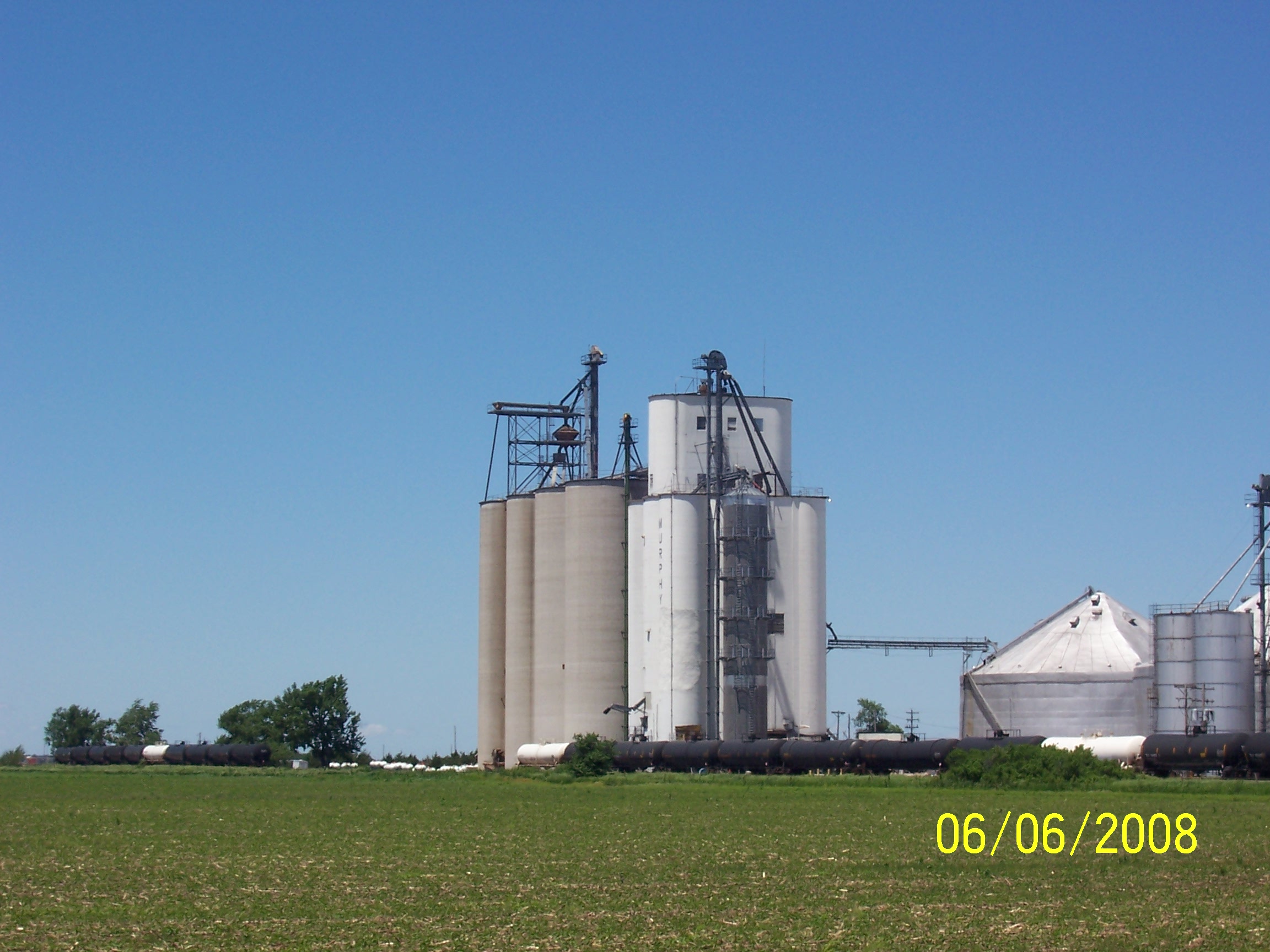
This photo, provided by Kurtis Glinn, shows Tillotson Construction's Murphy elevator in the early 1960s. Note the ground storage of grain sorghum on the right.

This photo, provided by Kurtis Glinn, shows Tillotson Construction’s Murphy, Neb., elevator in the early 1960s. Note the ground storage of grain sorghum on the right, and the old wooden elevator on the left.

By Ronald Ahrens  

A recent telephone conversation with Dennis Russell, who lives in Plano, Tex., revealed more details about the Russell family and his brother Jim, who died in an accident during construction of the Murphy, Neb., elevator. Dennis was the youngest of eight brothers: Bob, Roger, Jim, Jack, Byron, Bill, and Mark.

Their father William, born in 1900, had done construction on ammunition depots during World War Two, Dennis recalled. William, known as Bill, went to work for Tillotson Construction Company at an unknown date after the War.

“He worked for them a long time,” Dennis said. “He left Tillotson’s and started Mid States Construction Company with Gordon Erickson and another individual. I think he was a partner for a brief period and then ran jobs for them as a superintendent until his retirement.”

The name was changed to Mid States Equipment Company. Grain elevators and feed mills were the main specialties. Bill Russell retired in 1972, but he “always had fond memories working for Tillotson, I know that,” Dennis said. “I remember he was awful fond of Mary.”

Jim Russell’s promising future cut short 

Dennis was born in 1949. “My whole life was elevators. We moved every year from ’59 till I graduated high school.”

All the Russell brothers worked on elevators, Dennis recalled. “I worked on those quite a bit myself every summer.”

“Jim, he was third-oldest, he died in, like, ’58 in Murphy, Neb., right outside of Aurora. There was an article about that in the Aurora paper at the time. We lived in Vermillion, South Dakota, but that summer I was in Aurora, we were staying with Dad. I remember Mom taking that phone call.”

At the time of his death in a freak accident (the links below tell the story), Jim was married to Shirley, a nurse, and had one year of law school remaining at the University of South Dakota.

More details on the Nebraska elevator site where Jim Russell died

By Kurt Glinn

I was the manager at the Aurora Cooperative Murphy location in central Nebraska. I was told from the old timers in the area that were around when the elevator was built in the late-’50s [that an] accident happened there, shutting down construction for about a week.

The Aurora Coop's Murphy elevator and annex. Jim Russell died in a fall during the elevator's construction.

The Aurora Coop’s Murphy elevator and annex. Jim Russell died in a fall during construction.

Murphy is no more than an elevator along the railroad now. It is six miles west of Aurora, Neb., or fifteen miles east of Grand Island, Neb.

Thank you for a wonderful site. One of my first bosses was a man by the name of Willis “Bill” Maahs. He was a superintendent for Tillotson into the early ’60s when he stayed in Aurora and  became operations supervisor for Aurora Co-op. He helped build the Murphy elevator and the Aurora elevators. There are two Tillotson houses in town, as well as the feed mill in Aurora.

I have always been intrigued with the workings of the old concrete houses versus the new bigger faster ones, although I know how farming and the grain business view them.

Concrete grain elevators are very highly regarded in the industry as the most permanent. My reference is to the older, smaller, multi-bin elevators of 20,000- to 25,000-bushel bins versus the newer 250,000- to 300,000-bushel bins being built.

The industry has come along way in the last fifty years: the ability to jack the forms with hydraulics, the diameter of the bins, the height and capacity of legs. Putting all the equipment outside of the structures rather than enclosing everything in the house, which has saved many elevators from the disaster of explosions, et cetera.

Farmers are into a newer generation also, thirty-five years and younger. They want fast unload and large unloading pits.
The ag industry as a whole had seen large improvements in the size and capacity of equipment, making some of the smaller, older elevators almost impossible to use.

I find the older ones more interesting because they were what started a new generation from wood houses to concrete. Building work floors and platforms from concrete rather than steel and expanded metal. All is my own opinion as to why I enjoy the first generation of concrete grain elevators in the ag industry.

A freak accident led to the fatal fall of Bill Russell’s son

The Aurora Coop's Murphy elevator and annex. Jim Russell died in a fall during the elevator's construction.

The Aurora Cooperative’s Murphy elevator and annex. Jim Russell died in a fall during the elevator’s construction. Photo by Kurt Glinn.

Story by Ronald Ahrens

My uncle, Tim Tillotson, recalls some details of the death of a son of Bill Russell, a superintendent for Tillotson Construction Company. Russell was the father of eight sons in all. The accident occurred in the 1950s.

Although he can’t remember which job [it was the Aurora Cooperative’s Murphy location in central Nebraska] or when it happened, Uncle Tim, who was not present at the time, recalls from on-the-scene reports that two of Russell’s sons were running the night crew.

The two were working with a storey pole, a measuring device of ancient origin. In this case, the storey pole was a metal tape, and it was used to verify the height of vertical sections. One son was on top, fifty-five feet up, feeding the tape down to the other on the ground.

“It was blowing in the wind, and he was letting it out,” Uncle Tim says. “The wind caught it to some power lines, and it gave him a jolt.”

A fall to the ground ensued.

“One side of him hit the Georgia buggy, which kind of spun him around. He was conscious on the ground, saying he thought he’d broken a leg. But by the time the ambulance got there, he’d died of shock.”

Uncle Tim suggests the likelihood of a brain hemorrhage as well.

Concrete problems plagued consecutive elevator projects at Blencoe, Iowa

DSC_0578Story and photos by Kristen Cart

In the summer of 1954, Mayer-Osborn Construction built an elevator with a stepped headhouse in the northwestern Iowa town of Blencoe. As my dad, Jerry Osborn, explained, after the crew poured the first ten feet of concrete in the slip-form process, the concrete sides below the forms showed signs of crumbling. An investigation revealed that the concrete mixture had not been set correctly. It took as many hours to remove the concrete and start over as it did to pour it. Dad worked on the project and saw the fallout first hand.

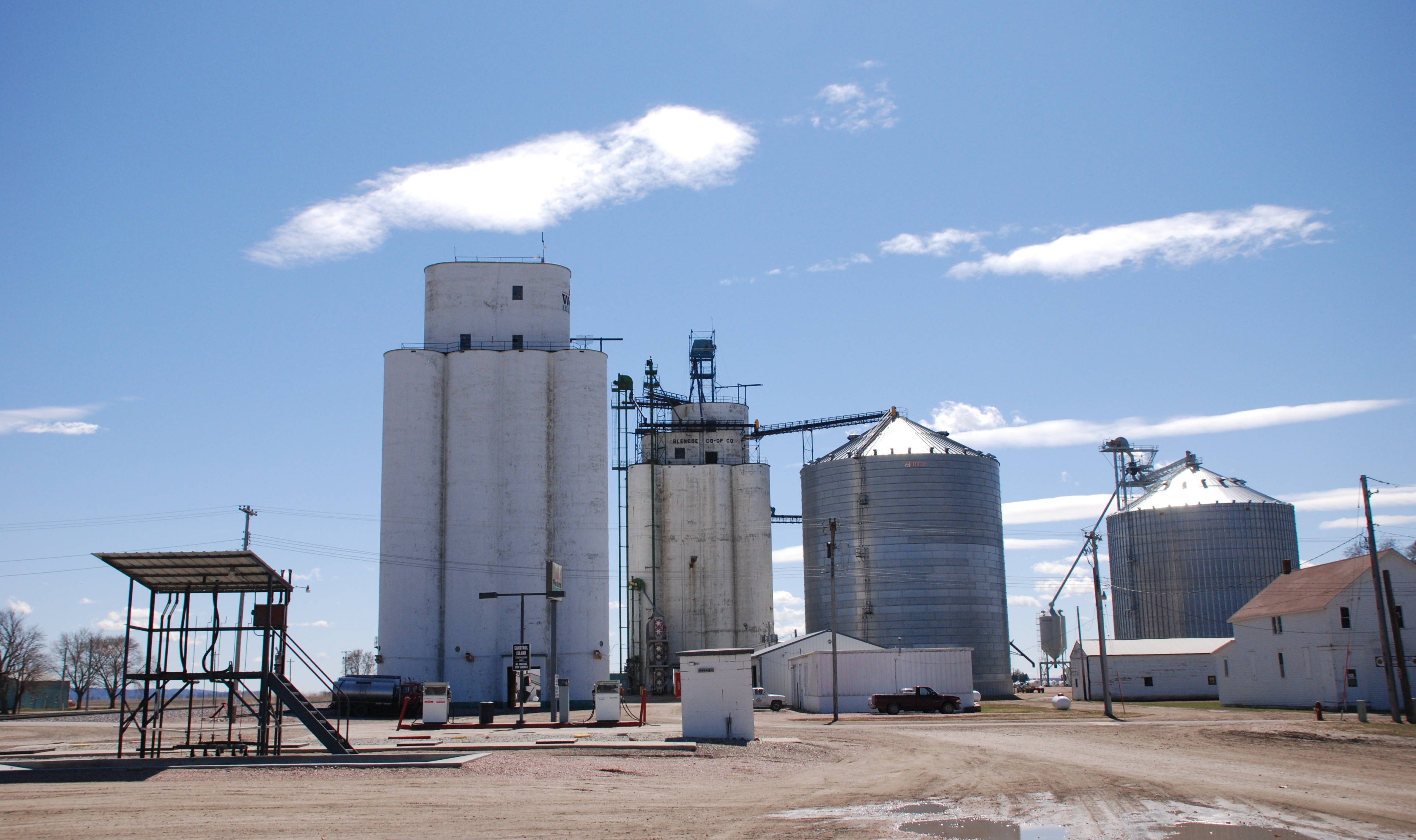
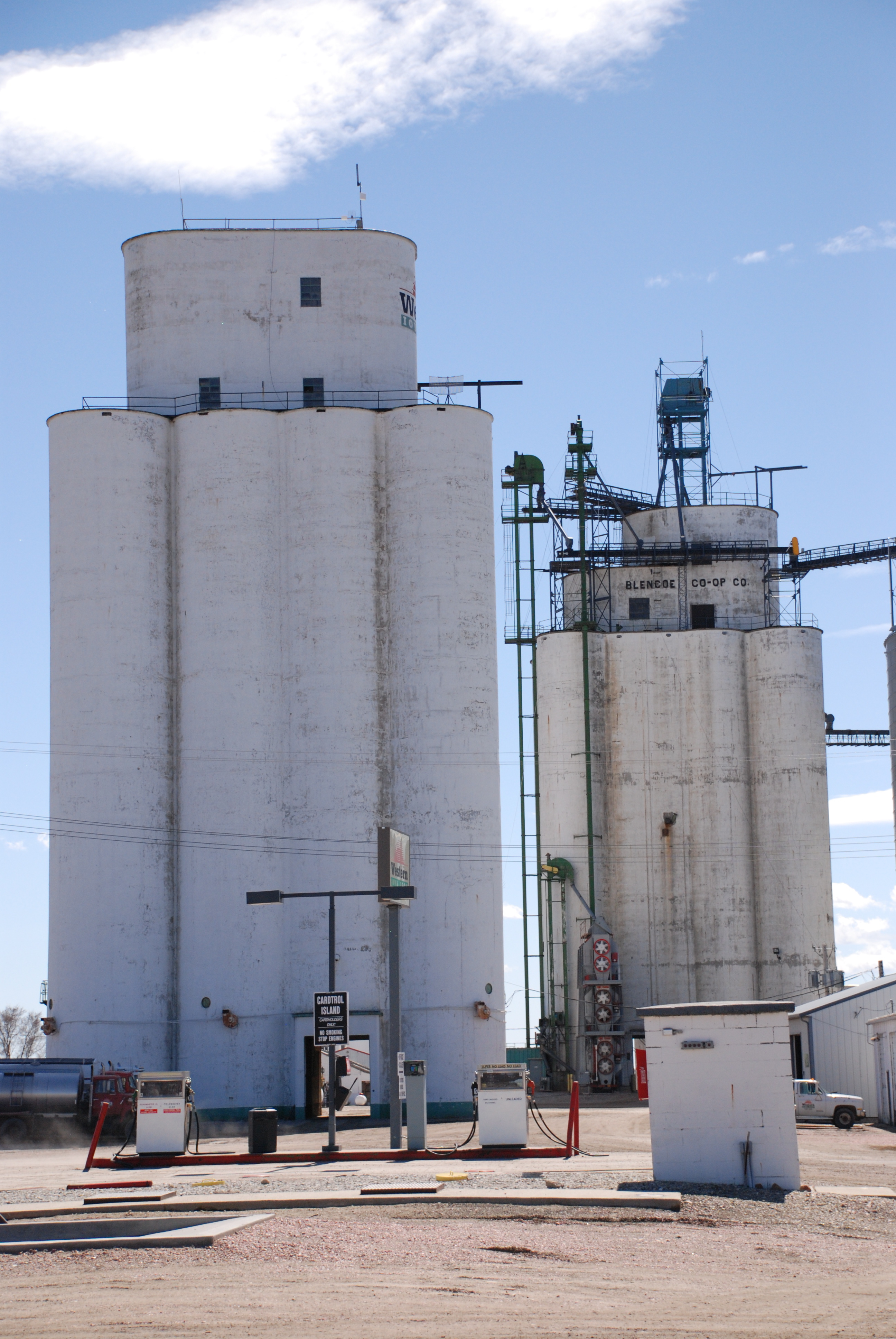
The larger Tillotson elevator stands to the left. The Mayer-Osborn elevator obstructs the view of its large annex which extends behind it.

The larger Tillotson elevator stands to the left. The Mayer-Osborn elevator on the right serves a large annex which extends behind it. Photo by Kristen Cart

Builders were required to do a destructive test on the concrete mix at various stages of curing, to ensure the proper strength for each part of the elevator structure. Engineers tested various mix ratios to decide upon the best one. Naturally, this process was used at Blencoe, but when the mix was finally set and the pour began, it was done incorrectly. I can imagine the blue language wafting from the site as the concrete was taken down. Someone on the site had his ears pinned back pretty fiercely. But the construction continued, and a handsome elevator still stands there today, nearly 60 years later.

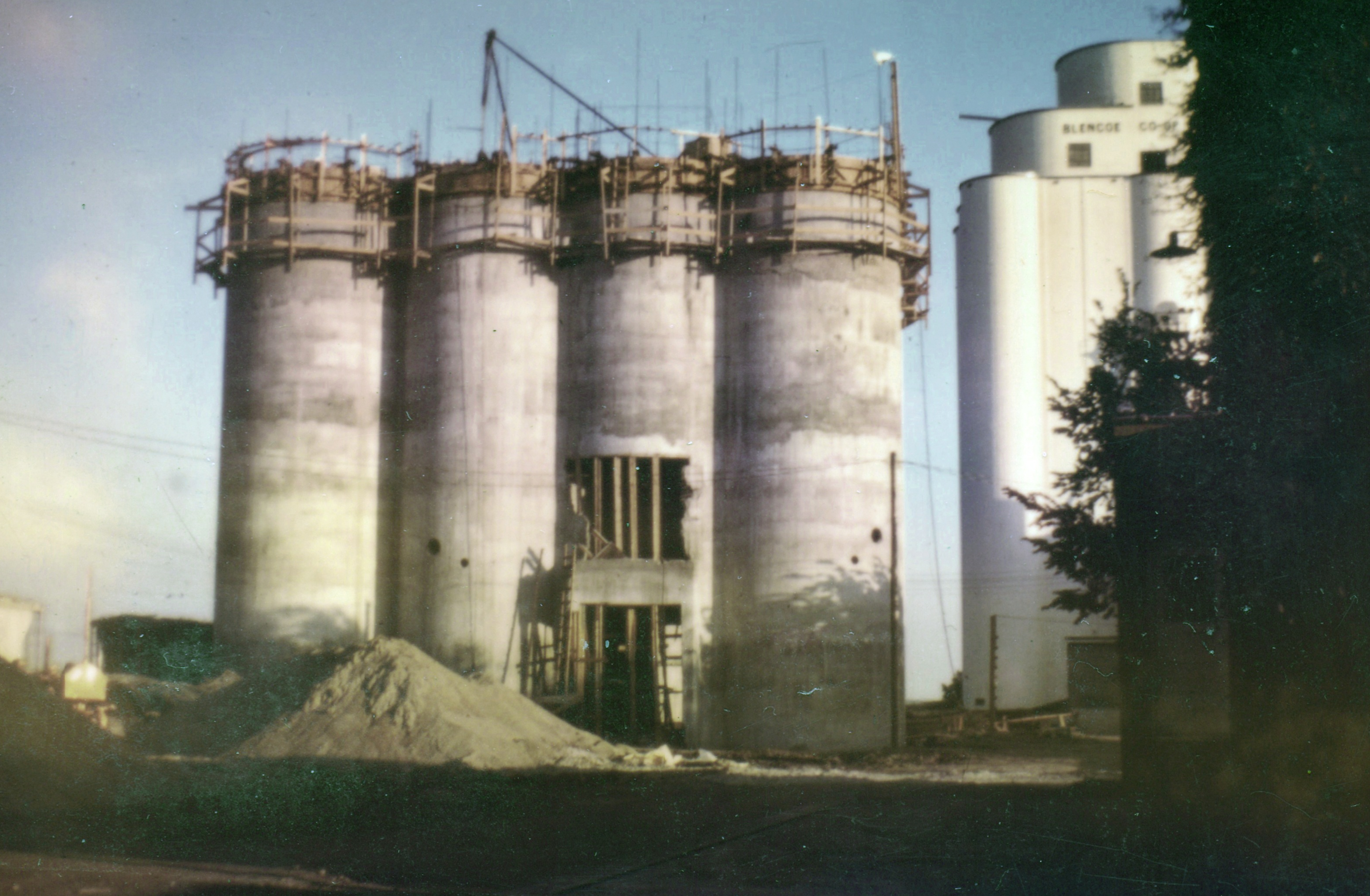
Not until this year, when Tim Tillotson located the Tillotson company records and photographs, did we discover that Tillotson Construction of Omaha faced a similar problem as they built their elevator nearby about a year later. This time, the error was not caught as early, and the consequences became immediately apparent.

Tim Tillotson said he thought the blowout happened in about 1955. Whether Tillotson Construction did the repairs and completed the project, or whether another contractor was brought in, is not known to me, but I hope to revisit the site later this year and learn more. The image below is a rare one. It is amazing that photographic evidence survived, serving as a cautionary note, lest any builder were to become overconfident.

Blencoe_blowout-1 copy

This company photo shows the blowout. On the right the completed Mayer-Osborn elevator may be seen.

Errors were a constant threat in this business. In the best cases, they manifested themselves in embarrassing delays, in the worst, they incurred expensive lawsuits or physical harm.

Tillotson Construction and Mayer-Osborn both recovered from their respective forays into bad concrete and lived to build again, leaving handsome and serviceable elevators at Blencoe and elsewhere. The lessons they learned were priceless.