Sunset at Rockwell City, Iowa

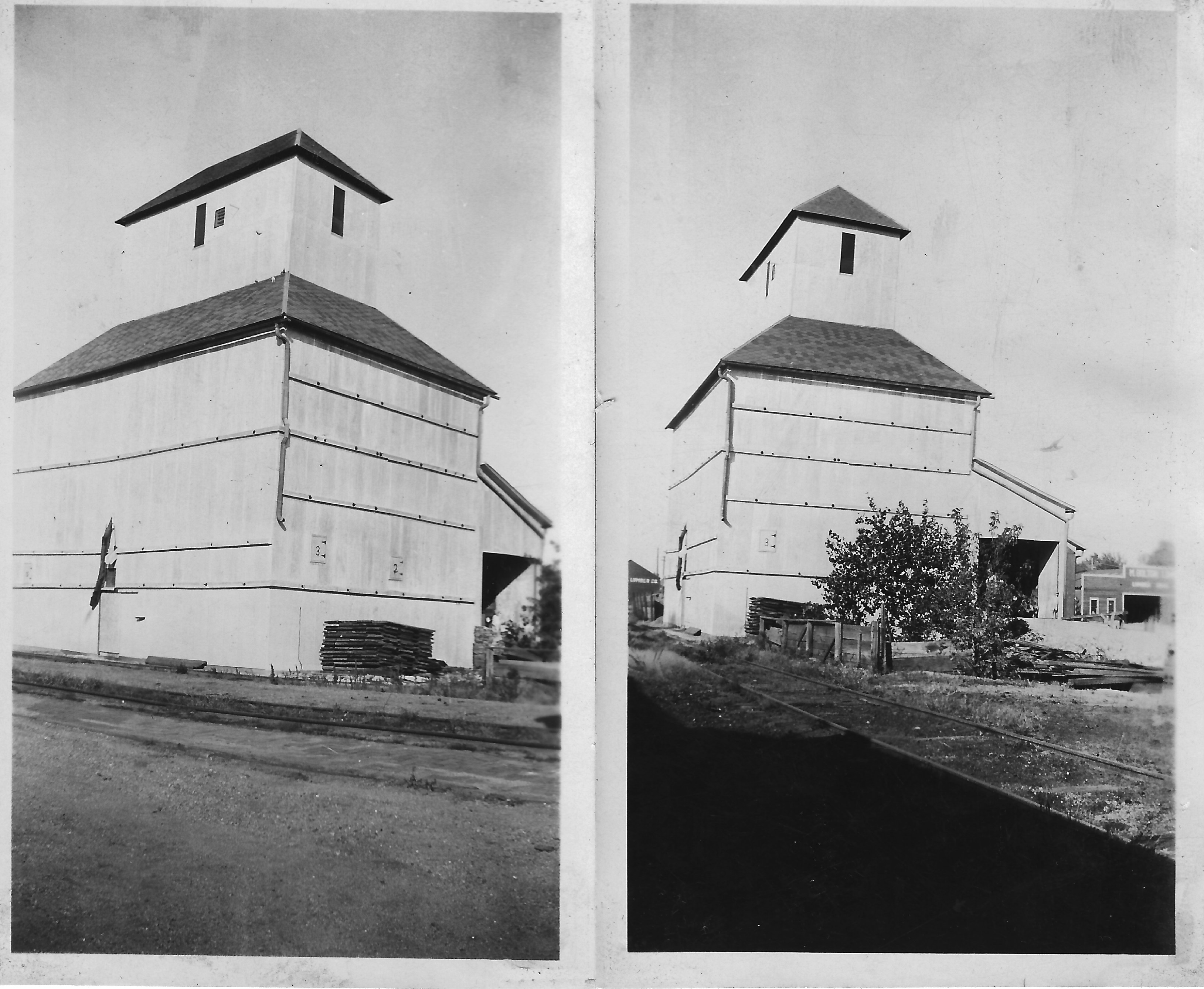
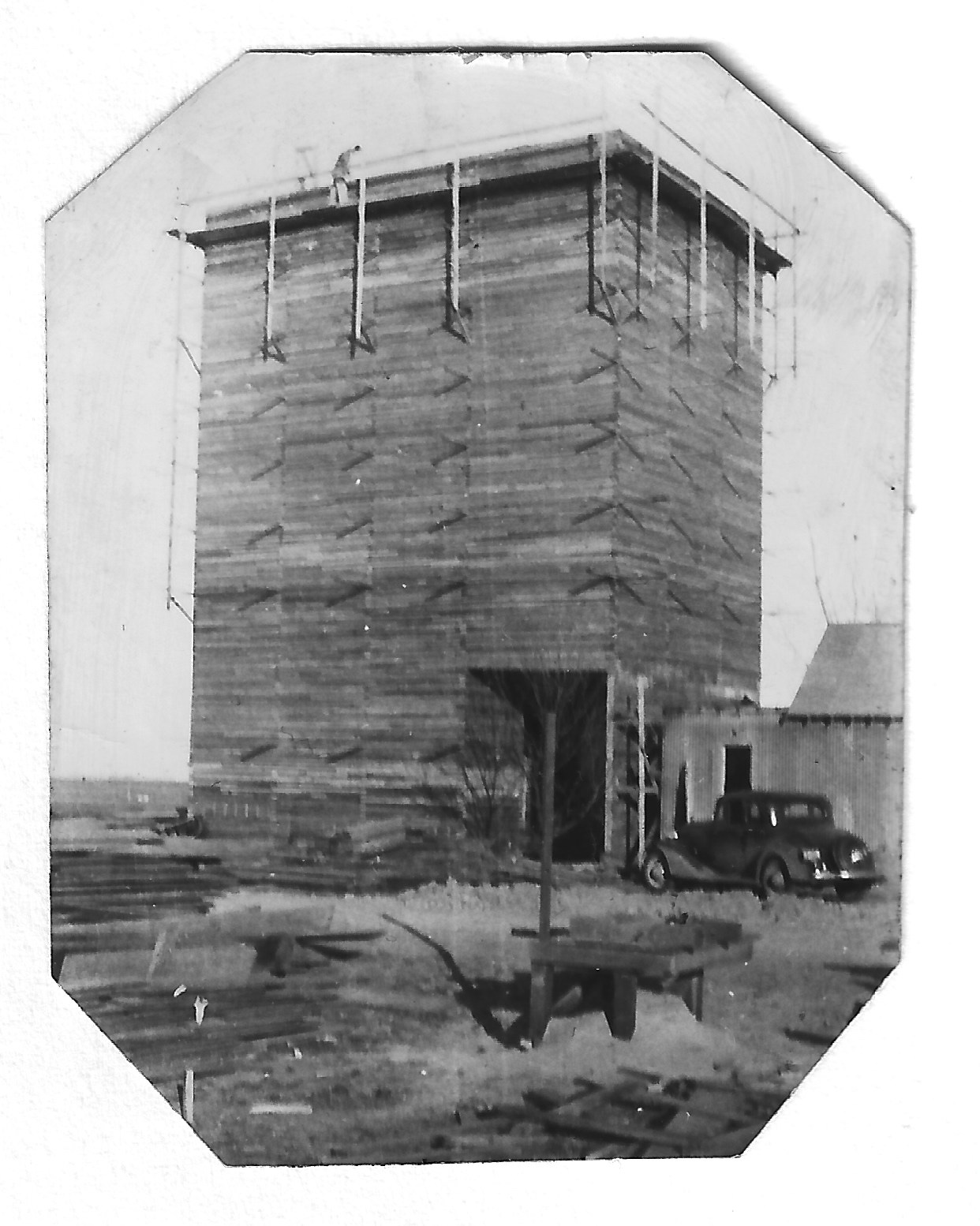
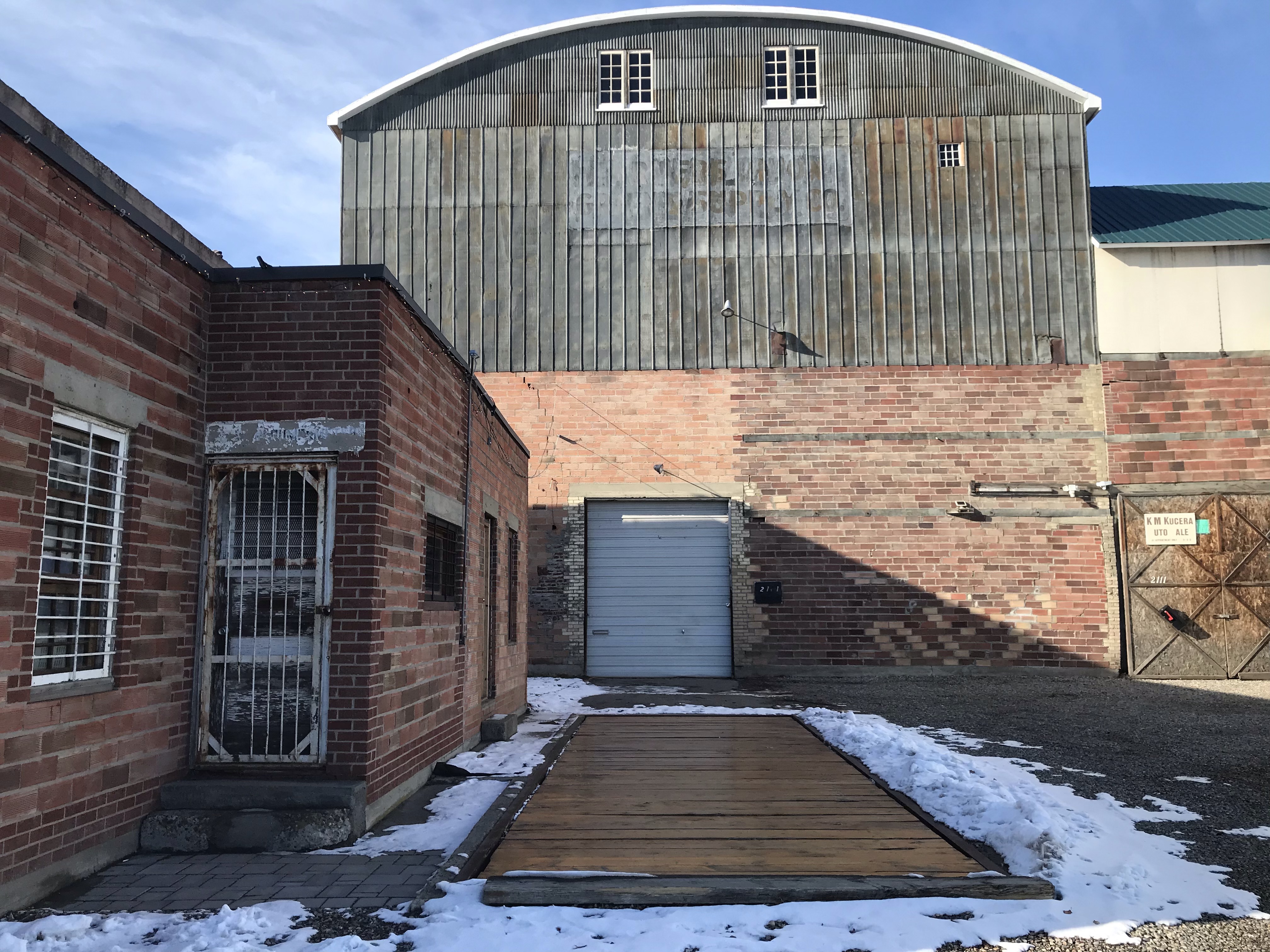
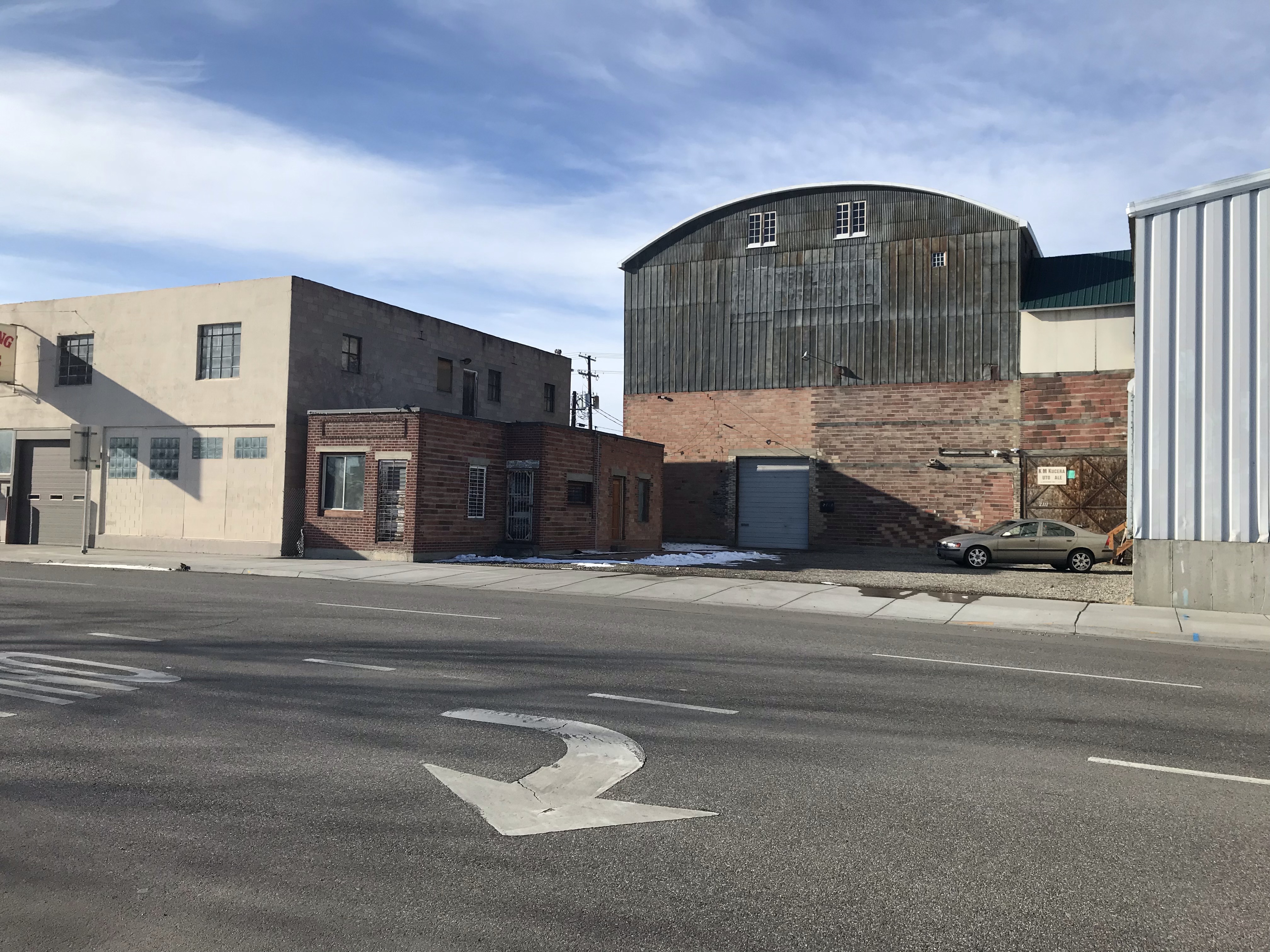
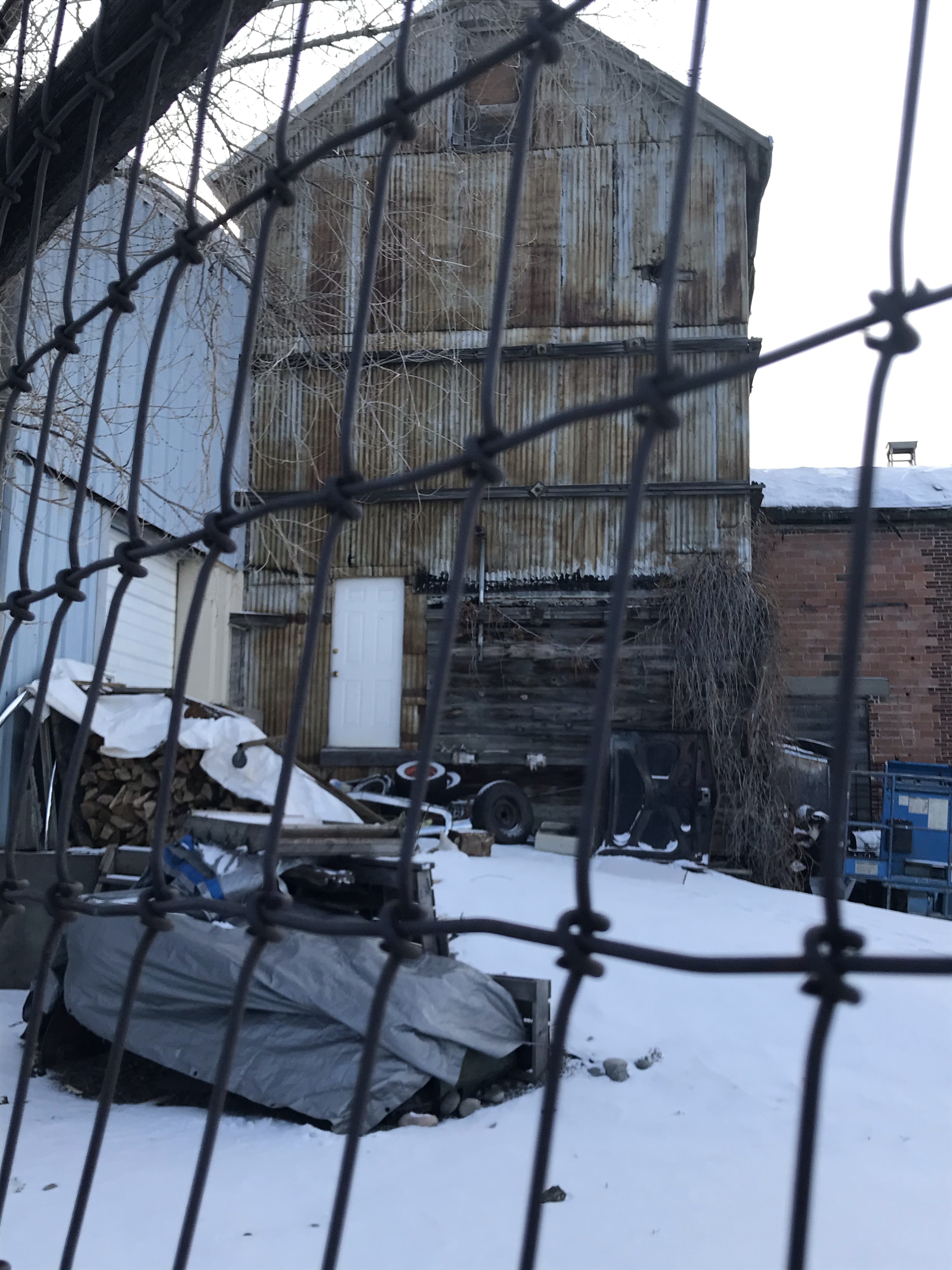
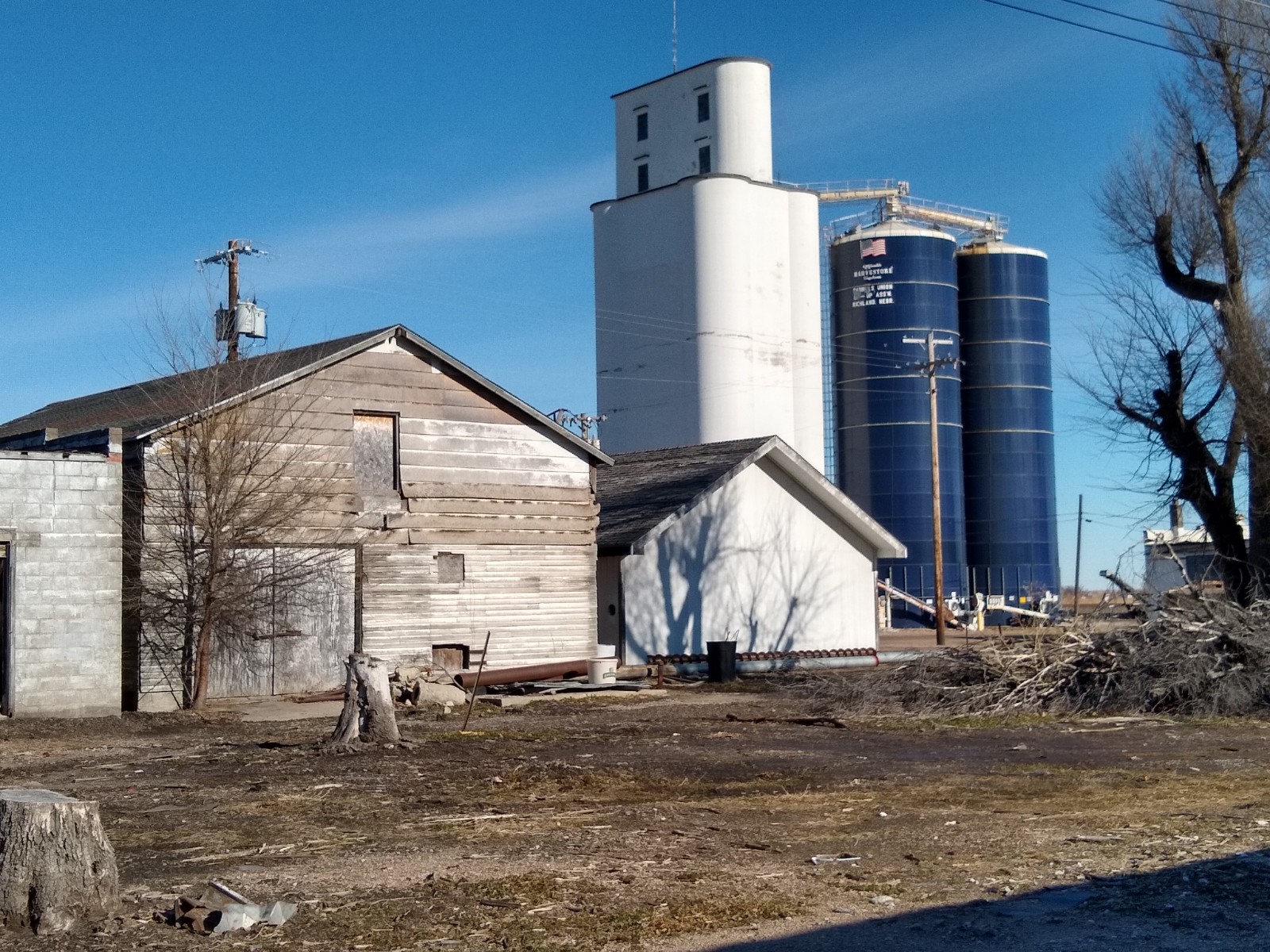
The Tillotson elevator in Rockwell City, Iowa, as it appeared in 2014

Story and photos by Kristen Cart

Recently, one of our readers sent us some disheartening news. The skyline in Rockwell City, Iowa, has permanently changed, as announced by Paul Grage:

“…I would like to let you know that the Tillotson elevator in Rockwell City, Iowa, is currently being torn down. They blasted the head house because it was too tall for the crane that ran the wrecking ball. They are currently wrecking balling the rest. The rail that used to serve it was abandon[ed] long ago and an airport runway was built on the old bed. The elevator is shot and it’s presence makes about 1200 feet of the runway useless after course corrections. Its demolition was funded by the Iowa DOT and Landus Cooperative.”

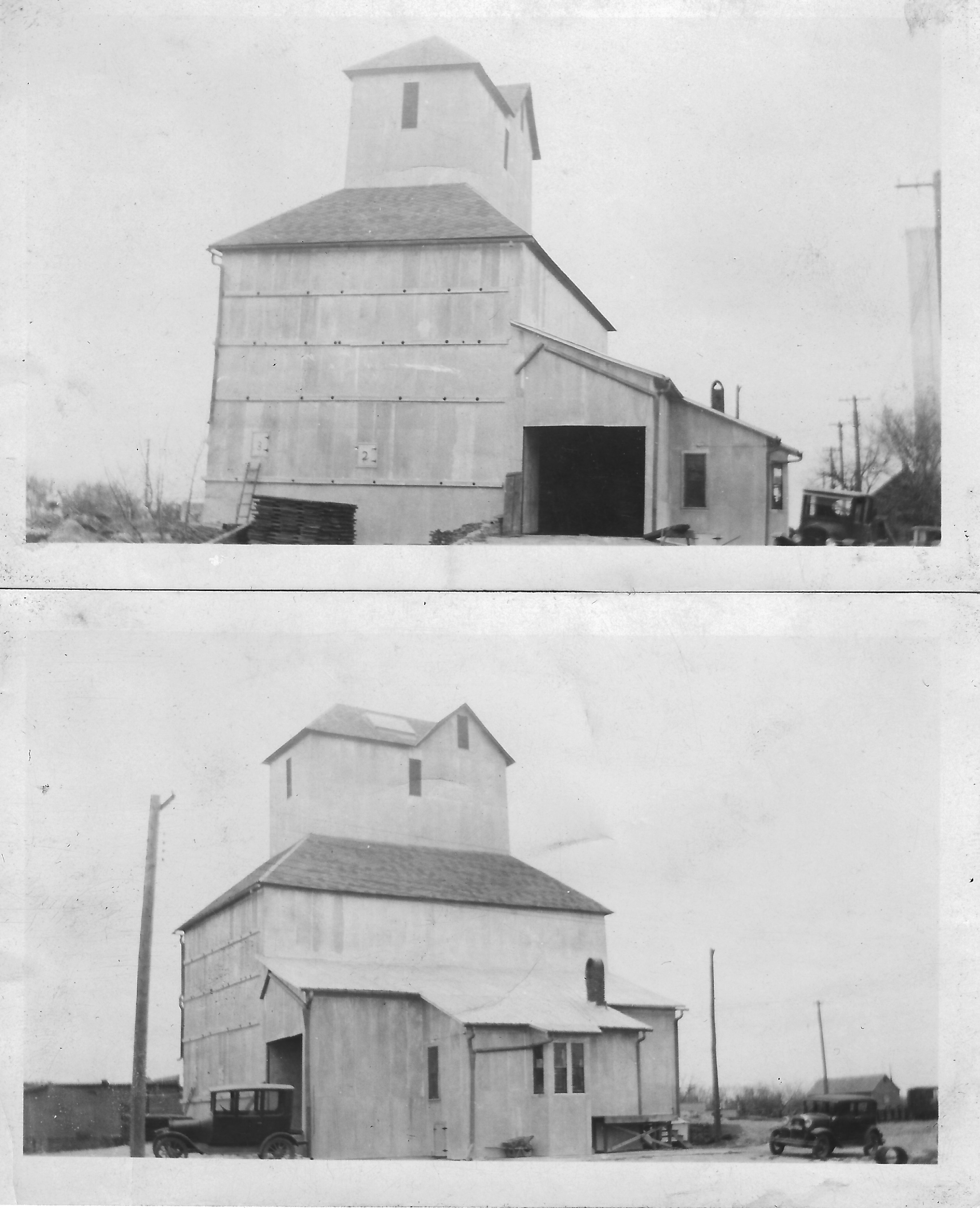
Back in 2014 I paid a visit to Rockwell City, Iowa, located a few miles south of U.S. Route 20 in the western third of the state. I stopped to take pictures of the old Tillotson project, which was one of the larger elevators on my route from Nebraska to my home in Illinois.

The Tillotson landmark was permanently closed for business and deserted.

I spoke to an elderly gentleman standing outside of his small bungalow, which was tucked in close to its neighbors on a street radiating from the elevator property. He had recently moved to town, so he didn’t know any local history, but he shared his observations of the old site.  He said that an owl family had moved into the headhouse. Sometimes he would see the birds flying in or out at dusk, or he would hear their hooting at night.

Other than accommodating the new residents, the elevator stood silently, by far the biggest structure in town. Its doom was sealed when the rail line closed. I didn’t know it would be my last visit–the dull light of the day invited another visit for photos, so I set my images aside for a later post. I never got back there. But here are views of the old elevator, as I found it that day.

The tallest landmark in town is now the water tower.

The first Denver office of Mayer-Osborn is for lease at $8,000 a month

The 1717 E. Colfax Ave., Denver, Colo. location is for lease.

Story and photos by Kristen Cart

While enjoying our leisurely October road trip, my dad, Jerry Osborn, and I sought out the former business office of the Mayer-Osborn Construction Company, the Denver-based business my grandfather, William Osborn, operated in partnership with Eugene Mayer. It still stands at 1717 E. Colfax Ave.

Mayer ran the business office, while Grandpa was in the field selling their services. Their former office has undergone a smart update, now sporting solar panels and new brick siding, which has added great street-front appeal for potential tenants.

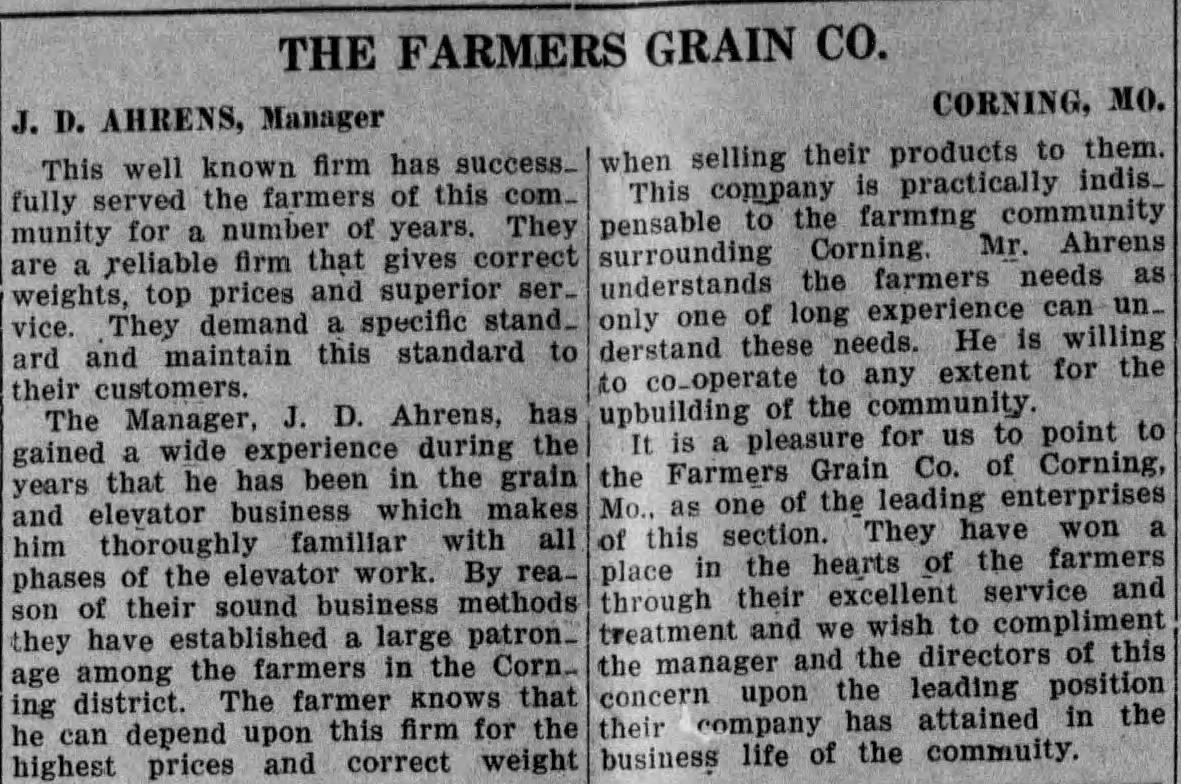
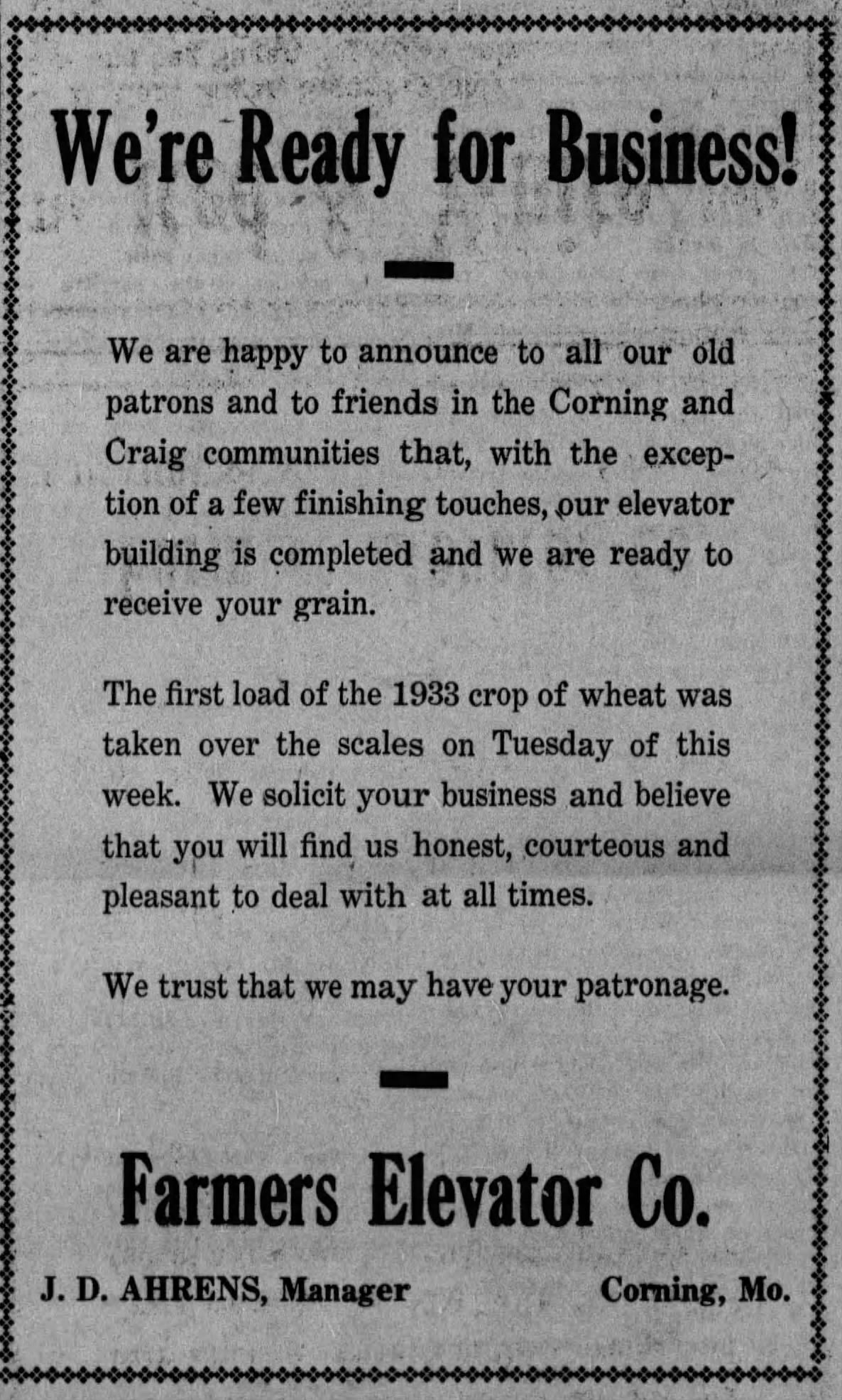
An item from the Farmers’ Elevator Guide

The place was vacant, but it was settled into an optimistic, mixed neighborhood not far from the Denver Botanical Gardens. About four blocks from Denver’s Five Points, the area seemed to be on an economic rebound, though most buildings were older and fairly nondescript.

Dad and I pulled across a busy grocery store parking lot to get a good vantage point. The photo above shows modern updates, including passive solar panels installed to take advantage of Denver’s many days of sunshine.

Dad and I checked off another important historical visit, and went on our way, happy to see Bill Osborn’s Denver digs at last.

Some initials on a bronze plaque in Limon, Colo., help to solve a mystery

Story and photos by Kristen Cart

My father, Jerry Osborn, and I had a rare opportunity this October to take a road trip. Our goals were to see family, check out our hunting camp, and see some of the sights in the west. Dad is in his eighties now, so we don’t put off any chances to do neat stuff. This trip exceeded our expectations. Happily, we also were able to take in some elevators.

Jerry Osborn at Zion National Park, Utah

Our stop at the elevator in Limon, Colo., proved to be a wonderful surprise. There was a truck at the co-op when we arrived, but the office door was locked, so I approached the elevator itself and called out to see if it was deserted. When I turned around, a man was approaching from the office. I went to meet him.

Ed Owens was finishing up paperwork before going home for the night. I asked him about the history of the elevator, and he brought me into the office. Ed said his grandfather, S. L. Sitton, helped build the Limon elevator as well as the earlier, neighboring one in Genoa, Colo. He said his grandfather came into the area in 1939. He went away during the war, then came back and looked for whatever work he could find. Elevator construction provided a part-time laborer job that kept food on the table.

The builder put up the elevator like a layer cake, letting each concrete layer cure for a period before adding another, rather than by the continuous-pour method pioneered by early elevator construction companies. The Limon elevator was built in stages by farmers who built by day and farmed by night. I was impressed by Mr. Sitton’s fortitude, and I would have asked the old gentleman about it, but Ed said he was 97 years old and living in a nursing home in Flagler. He likely wouldn’t remember, and even if he did, he might not appreciate a visit.

The Genoa, Colo., elevator is in a neighboring town.

The best discovery was yet to come. When Ed ushered me into the office, he showed me the bronze plaque which originally adorned the driveway of the Limon elevator. Ed said all of the directors listed on the plaque were dead by now. The elevator was built in 1958, so all the community leaders of the time were long gone. But the key bit of information on the plaque was the name of the builder and designer, M. and A. Enterprises, Inc., of Denver.

I was very excited to see this name. The company was based in Denver, and the designer claimed to be the builder. Based on the design of the elevator, I had a strong suspicion of who that designer might have been. We now had a key piece of information.

Followers of this blog know that we have puzzled over a few mysteries while tracking our grandfathers’ elevators. The most difficult story to reconstruct, thus far, was how the Mayer-Osborn Construction Company met its demise.

The Denver-based enterprise lasted from 1949 until at least 1954, when my grandfather, William Osborn, apparently left the business. In the summer of 1954 he built the Blencoe, Iowa, elevator with the help of my dad, Jerry Osborn; by the summer of 1955, William was home from his Denver office and never worked elevator construction again. Meanwhile, his partner, Eugene Mayer, probably revived the company under various guises, but we know little of what became of him.

With our visit to Limon, Colo., we may have cracked the case.

Usually, the simplest explanation is the true one. The quickest way to explain why a thriving company would go away is to look for a disaster. Family lore says there was one. But I suspect the rumor of a collapsed elevator, lost to a crew that “shorted materials” and made bad concrete, might have been a tall tale that sprung from a much more pedestrian event. No such disasters can be found in 1954 or 1955 newspaper accounts.

The only related problem I could find occurred at the the Mayer-Osborn elevator in Blencoe, Iowa. During construction, when the elevator had reached about twelve feet high, the forms were slipped for the first time. As soon as concrete appeared below the slipped form, it began to slump and crumble. Bad concrete was indeed the culprit, and it necessitated a tear-down. To get back to a twelve foot height, the company had to add a day or two of expensive labor, which directly cut into profit. Could this event explain why William Osborn left the company? It’s the simplest explanation, so perhaps.

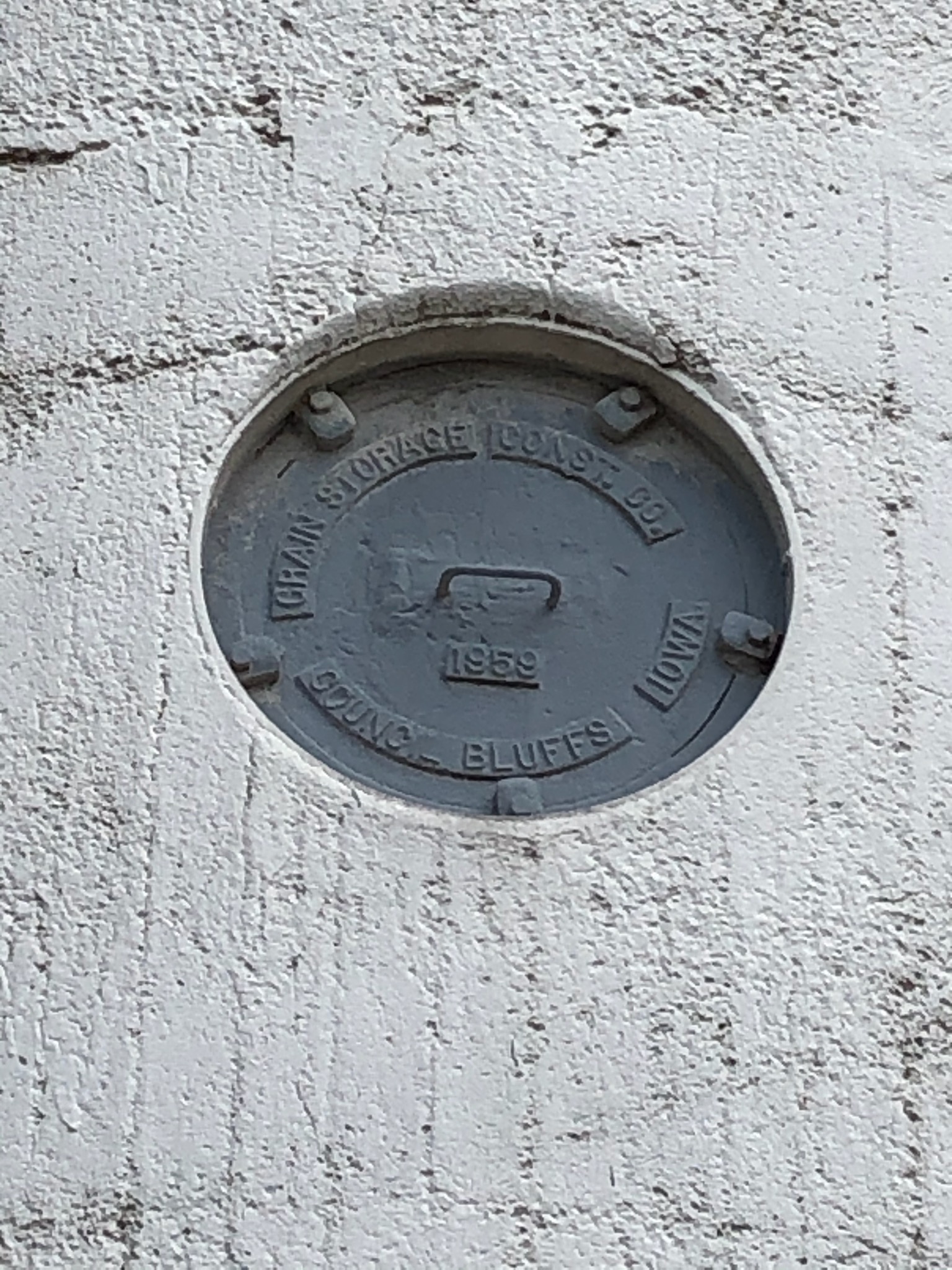
Several subsequent elevators bore the Mayer-Osborn manhole covers, but Dad didn’t know about these elevators, and he was certain that by 1955, his dad, William, was home for good.

The Mayer-Osborn elevator at McCook, Nebr. built in 1949

With its signature stepped headhouse, the elevator in Limon bears an uncanny resemblance to the first elevator Mayer-Osborn built in McCook, Neb. In fact, it is the same design, updated somewhat, and dated 1958. So it certainly went up after Grandpa left the business. But what about Eugene Mayer? Dad said that he was the designer, whereas Bill Osborn started as a carpenter and learned his construction skills on the job. Mayer still retained ownership of his elevator designs, which could explain why McCook clones continued to pop up all over the plains in the mid-1950s.

That brings us back to the builder of the Limon elevator, as inscribed on the plaque, “M. and A. Enterprises, Inc.” It seems inescapable that the “M.” was Mr. Eugene Mayer.

The Limon elevator had newer innovations but was built haltingly. Plainly, all was not the same as it had been when Bill Osborn was on the job. Perhaps fewer workers were available. Fewer contracts were awarded as subsidies waned. So the big, ambitious, day-and-night event of an elevator project was toned down somewhat. I expect we will find that Eugene Mayer’s design was eventually sold and others built it, then it passed into history, along with the great concrete elevator boom.

Happily, Limon’s elevator still thrives, and it gives us a peek at the amazing history of elevators on the American plains.

The layout of the elevator is used to record the content of each bin. Flat storage is adjacent to the concrete elevator.


Uniqeness in an early Cargill elevator in northeastern South Dakota

Early Cargill 02

Brad Perry shares another photo of an early Cargill elevator, this one at Athol, S.D.

Athol and yesterday’s Ashton are twin towns in Spink County, a ways south of Aberdeen. Together they must have about 180 people.

We hope those people appreciate the uniqueness of their elevators.

An early Cargill country elevator complex at Ashton, S.D.

Early Cargill 01

Brad Perry shares another photo of an early Cargill elevator, this one at Ashton, S.D. As the Dakota Territory surrendered its prairie to agriculture in the 1880s, grain traders like Cargill expanded north and west. The initial heavy harvests from the rich earth raised demand for storage.


The trading partnership of Bagley & Cargill in South Dakota

Bagley

Our friend, Brad Perry, saw the recent posts about Cargill history and was prompted to send some of his photos.

“The Bagley name still shows up in South Dakota along U.S. 12,” Perry notes. This elevator turns up in an online source that says the location is Andover, just east of Aberdeen.

“George C[olt]. Bagley was a member of a grain-trading family in eastern Wisconsin,” Wayne G. Broehl, Jr. writes in his massive history of Cargill. 

In the early 1880s, Wisconsin farmers were moving out of wheat and into livestock, so Bagley betook himself to South Dakota and partnered with Sylvester Cargill, one of the five Cargill brothers.

Broehl continues:

Most of the Bagley & Cargill operations were in that part of the Dakota territory that later became the northeastern section of South Dakota. Similar to Jim Cargill’s larger-capacity operations in the Red River Valley, the Bagley & Cargill’s 13 structures at the firms 10 locations were more substantial (although only one was classified as an elevator.) This elevator, at Aberdeen, had a capacity of 25,000 bushels; the Andover warehouse had the same; the Groton operation had an 18,000-bushel capacity and the Bath warehouse, 15,000.

An extensive biography of Bagley says the company concentrated on towns along the Chicago, Milwaukee, St. Paul and Pacific Railroad.

The partnership lasted “only a short time.” Bagley’s wife, Cornelia, would later recall, “Ves Cargill [Sylvester] was a partner but George could not put up with his suspicion of all deals and bought him out.”


One of Cargill’s early concrete elevators found in southern Minnestota

Elmore

Our friend, Brad Perry, saw the recent posts about Cargill history and was prompted to send some of his photos.

Here he shows us one of Cargill’s early concrete elevators. It’s located in Elmore, Minn., a tiny town in Faribault County, in the south-central part of the state right on the Iowa line.

As railroads pushed west in the 1870s, Will Cargill expanded his grain storage along the lines through northern Iowa and southern Minnesota.

And as the era of reinforced-concrete elevators unfolded, Cargill’s successors continued building.

We don’t know a thing about this elevator’s dimensions or who might have built it, but how impressive is the wooden elevator on the right? It stands almost shoulder to shoulder with the more modern concrete one. 

Early grain-storage leader Buffalo experienced the boom in full

Buffalo 07

By Ronald Ahrens

“Silent crowd watches through the long night hours as workers search mill ruins for more missing bodies,” the Buffalo Times blared in 1913.

As an early leader in grain storage and milling, Buffalo, N.Y., was also a test site (of sorts) for elevator mishaps.

This report, culled from a firefighting blog, shows how the explosion even hit a passing train: 

An explosion devastated a grain elevator, killing at least 17 men and injuring 60 more. The elevator, located at the Husted Milling and Elevating Co. at Elk and Peabody streets, was left in flames after the dust explosion. The engineer of a passing train was killed by the blast that shattered windows, injuring many passengers. A dozen boxcars loaded with grain were also destroyed. Every ambulance in the city responded, but there were so many injuries that the flatbed section of the damaged train was used to transport many of the wounded grain elevator workers. Firemen poured tons of water on the volatile remains all day and into the night, hoping to cool things enough to allow a complete search. Losses were estimated at a half-million dollars.

Grain dust is explosive. After the electrification of elevator mechanisms in the late-1890s, it took a while to figure out that electric motors should be shielded to suppress sparks.

Static electricity can build up around conveyor belts.

Machinery can overheat.

And of course, there’s a reason “No Smoking” warnings are now everywhere in an elevator.

Tillotson Construction Company’s first reinforced concrete elevator, which was built in 1939 at Goltry, Okla., had a dust collection system. Notes in the company records say, “3 H.P. fan, 42″ collector dust bin.”

We lack any more details but are striving to increase our knowledge of dust collection inside elevators.


In the 1800s, Buffalo grew as a steam-powered grain-transfer center

Buffalo 02

By Ronald Ahrens

Early in the 19th century, surplus grain could be a problem, whether for the farmer or grain traders. It was better to turn it into hooch rather than let it rot.

The advent of grain elevators changed all that, as we learn from Henry H. Baxter’s essay explaining how Buffalo, N.Y., became one of the world’s leading grain storage and processing centers.

Baxter’s essay, published by the Buffalo and Erie County Historical Society, explains that the Erie Canal changed everything when it opened in 1825. “Thus, grain had to be unloaded from lake boats and transferred to canal boats at Buffalo,” Baxter writes.

Buffalo 01

Buffalo and Erie County Historical Society

By 1842, Joseph Dart had figured out how to build a steam-powered bucket elevator to raise grain from lake boats to storage bins. There the grain stayed until it was needed for milling, malting, or moving to another location.

“Dart, I am sorry for you,” one skeptic said. “It won’t do. Remember what I say–Irishmen’s backs are the cheapest elevators ever built.”

Within just 15 years, Buffalo’s harbor had 10 wooden elevators with capacity of more than 1.5 million bushels.

Years later, Dart credited Oliver Evans with devising the mechanical operation for that first 55,000-bushel elevator.

Elevators solved problems in keeping grain “dry, cool, free from vermin, and safe from pilferage,” Baxter writes. “Moreover, elevators make it possible to weigh and sample grain to determine the quality, quantity, and grade as a basis of payment. Elevator-stored grain can be improved by drying, cleaning, grading, and blending.”

By 1865 Buffalo could boast some 29 elevators, including two “floaters”–elevators that “could travel to a lake boat in the outer harbor or in the Erie Basin.” They would unload the lake boat’s cargo into the string of canal boats that followed behind.

The next big innovation would come around 1900 when electric power replaced steam. And soon, slipformed elevators of reinforced concrete would start to replace the wooden grain houses.

Looking to Greenwood from I-80, we see it, twice as tall as the trees

Co-op from Greenwood from I80 overpass IIII

In this photo, our friend Kim David Cooper shows the same refined sense of composition as in his oil paintings. “A different view of your Greenwood elevator,” he says.

The photo’s slug line notes the shot was taken from an overpass on Interstate 80.

Standing at least twice the height of the tallest tree, doesn’t the elevator make a handsome addition to the landscape?