In SoCal, an elevator’s tall headhouse reminds us of Vinton Street in Omaha

unnamed-1

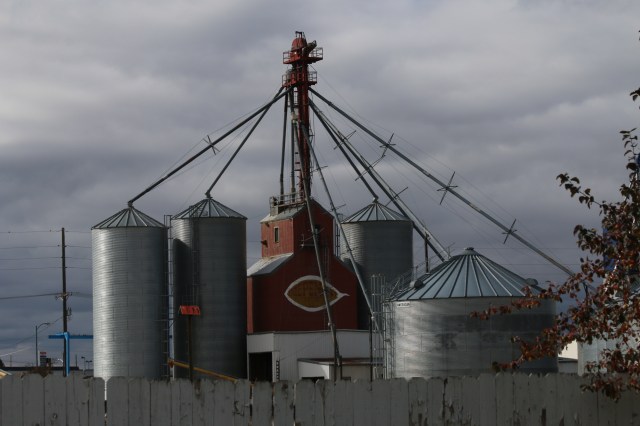
I’ve meant for a long time to stop at the grain elevator along Interstate 10 in Colton, California, and finally I did.

The elevator, which appears to date from the 1960s, has an elongated headhouse and reminds me in a way of our Vinton Street elevator in Omaha.

The Colton operation is one of 40 sites run by Ardent Mills, which is based in Denver. The elevator stands along the Union Pacific tracks between Riverside and Ontario. No one was to be seen late on a Sunday afternoon, but there was probably milling activity going on in another building: machinery hummed away. 

The elevator’s silos are multi-sided, which is different from anything Tillotson Construction Co. built. Could it be that the walls have greater bearing pressure with such a configuration?

IMG_4560

The headhouse is stepped and thrusts toward the sky above the Inland Empire. It would be good to know how long the leg is and why such a rise was necessary.

I tried to look from every angle and even climbed up to the top of a rail car for a picture without hurting myself.

More information about this handsome elevator will be shared as it’s revealed.


A postcard reveals Tillotson elevator activity before the big changes of 1938

Post Card 01

We have found what may be a rare record of the Tillotson construction enterprise as it existed before 1938. Back then, Charles H. Tillotson led the company, which specialized in wooden elevators. After he died in ’38, his sons Reginald and Joe partnered in Tillotson Construction Co., and started to experiment, and then build, with reinforced concrete.

This card from July 2, 1936 is penned by Sister Mary Concepta, the older sister of Margaret Irene McDunn Tillotson (my grandmother) and sister-in-law to Reginald.

Sr. M. Concepta, born on Sep. 27, 1901, in Emerson, Nebraska, and christened Catherine McDunn, was the second of nine children. (Margaret, born Feb. 9, 1903, was third.) Sr. M. Concepta belonged to the Sisters of the Presentation of the Blessed Virgin Mary, with a motherhouse at Mount Loretto in Dubuque, Iowa.

The parents were William McDunn (b. Feb. 4, 1871, Des Moines, Iowa) and Bridget Loretta Dorcey McDunn (b. March 27, 1872, Luken or Lucan, Ontario). Records show William as a laborer in Omaha in 1891. He became a conductor on the Nebraska Division of the Chicago, St. Paul, Minneapolis & Omaha Railway, and the family became established in Emerson, the town named for Ralph Waldo Emerson, which had come into being in 1881 at a junction on the CSPM&O (known as the Omaha Road). 

The family history comes from These U.S. McDunns: Family Tree of Patrick McDunn and Mary O’Donnell, compiled by John McDunn, of Lodi Wisc., in April 1989. The McDunns homesteaded in Pennsylvania in 1835. 

My Uncle, Charles J. Tillotson, whose name appears in many of this blog’s posts, had kept his grandfather William’s railroad watch–a Hamilton, of course–until a burglar struck in the late-1980s.

Post Card 02Uncle Charles notes that in the mid-1930s Reginald and Margaret lived with the elder Tillotsons at 624 N. 41st Street. They towed a travel trailer to job sites. In early July of 1936 they would also have towed along Uncle Charles, then 18 months old, and my mother Mary Catherine, who was nearly five months old.

On this postcard Sr. M. Concepta addresses her sister Margaret (Mrs. Reginald Oscar Tillotson) at Carlyle, Neb.

Carlisle–note the difference in spelling–is an unincorporated town in Fillmore County.

“I know the name because Mom used to talk about it,” Uncle Charles says.

We presume there was a wooden elevator. Carlisle is an unincorporated community in Fillmore County, about 135 miles southwest of Omaha. It doesn’t appear on our Rand McNally page nor does Google Maps seem to know anything about it. 

MapThe USGS gives coordinates for Carlisle on its Davenport Quadrangle map (named for a town in neighboring Thayer County), and we see a speck on Road X, west of Little Sandy Creek, that could be Carlisle. We called the Fillmore County sheriff’s office, in Geneva, and asked. “Nope,” a very nice woman said. “We don’t have a Carlisle.” 

Whatever.

“Dear Margaret + Reginald + babes,” Sr. M. Concepta begins.

Post Card 03“This card tells you where we are. Saw your Mother and Mary, Reginald. Mary is truly a nice girl and your mother surely is not strong. Won’t be leaving here now until Sat. morning. Just thought you might be coming in for the 4th. Don’t try it just for me though. Love, Sr. M. Concepta.”

Mary Tillotson was Reginald’s sister who became important to the family business and also is named in many posts here.

It’s hard enough to find a trace of Carlisle, but we would love to know if any remnant of a wooden elevator exists there.


Three elevators near Bozeman, Montana, provide a little variety

IMG_8354

Flying into the Bozeman Yellowstone International Airport the other day delivered a pleasant surprise in the form of three handsome elevators soon after we drove away from the passenger terminal.

One elevator was right there in Belgrade, Montana, where the airport is. It was an old house adapted to operate with metal silos.

Another had concrete silos, and a third looked like a simple wooden house.

These photos are all we can offer. The elevators weren’t Tillotson or Mayer-Osborn jobs, but we were excited to see them and now share with eagerness. Perhaps at a future time we can learn more details.


Part of the latest craze, grain elevators get mysterious visitors at all hours

A van drives up, hesitates, and pulls into the lot in front of the town’s towering elevator complex. The vehicle has been seen in town before, roving the streets aimlessly, only stopping in odd spots long enough to be noticed. At the elevator, it pauses in the parking lot for thirty seconds, then it drives off.

Pokemon Elevator 01Not long afterward, a pair of local high school students walk up, dawdle for a moment, then walk on. Then a couple of twenty-somethings perch on a park bench across the street. They stay for about half an hour, studying their smart phones intently, while a few more cars come by and park. No one gets out of their cars, but they stay for awhile. A few more pedestrians gather.

Pretty soon you can count fifteen or twenty people on the sidewalk in front of the elevator, under the trees across the street, or parked here and there. Then, as if an invisible timer went off, the people leave in twos and threes. A similar gathering starts up a few blocks away, at the post office. What in the world is going on?

You guessed it, Pokemon-go has arrived in your town. For those of you who have not encountered it before, it’s a virtual-reality pocket-monster hunt, sort of like a treasure hunt, where people go to designated points to get the needed items to catch the little critters that appear on the screens of their smart phones. If a “lure” is set up at one of those points, the little Pokemon appear on the phones in that geographic vicinity, and people start to congregate to catch them for the half-hour that the lure lasts.

That is the short version. It’s easy to play and gets kids out of the house–which makes it a good thing, in my book.

If you sit back and watch the action in any little town you will see players roving the streets or driving in circles. It can be quite fun to watch (or play, if not taken to extremes).

What does this game have to do with a grain elevator? Not very much, except that a grain elevator makes a mighty big landmark, and a tempting spot for the game makers to place a Poke-point. So, players: take this as a warning–watch out for grain trucks, and don’t wander around the property with your face planted in your cellphone.

I confess that catching the little critters is somewhat like driving around the country hunting for interesting elevators. But you don’t have to burn as much gas.

Another look around Wahoo, Neb., yields treasure beyond reinforced concrete

Story by Ronald Ahrens and photos by La Rose Tillotson

The bend on Route 92 as it entered Wahoo, Nebraska, from the east was always welcome. Here, the road dipped down and crossed Sand Creek at the edge of town, then turned into leafy neighborhoods. It was the first shade for us after more than 30 miles under the sun on the flat prairie.

Wahoo was a frequent waypoint when our family visited relatives in David City farther west.

A site of interest in Wahoo was the Saunders County Courthouse, where a torpedo was displayed near the curb. Even when I was eight and nine years old, the torpedo seemed incongruous, being so far from the sea. But we Nebraskans were starved for variety, and leftover munitions from a distant war were deemed tasty morsels.

Tillotson Wahoo 01

Never did it occur to me that the Wahoo grain elevator had been built by my grandfather’s company. We knew he built elevators but assumed they were in far off places like Iowa.

Kristen Cart has already visited Wahoo and written one post.

But there’s new reason to think about the town after Aunt La Rose Tillotson drove there on a recent tour of the countryside. She forwards the pictures you see here.

As a young woman, Aunt La Rose lived in Wahoo for a short time. While going about her daily business, she never gave much thought to the elevator that stands along North Chestnut Street between Fifth and Sixth.

This isn’t a surprise, as a form of amnesia touched many family members after the family business faded out. Grandfather Reginald died in 1960.

Tillotson Wahoo 02

Here are some particulars of the Wahoo elevator:

Tillotson Construction Company used the same plan as from Imo, Okla., which had also been built in 1950. That meant a 150,000-bushel elevator rose from a 54- by 51-foot slab over a pit nearly 16 feet deep. The drawform walls were 120 feet high, and the cupola topped out after another 26.5 feet.

From atop of the Wahoo elevator, you could probably see all the way to Swedeburg, looking south, and Malmo, looking northwest. (Prague–home of Czech Heritage Days–was just a bit northwest of there.) It’s doubtful, though, you could see as far as Valparaiso, in southwestern Saunders County. Ulysses, way to hell and gone in Butler County, was out of the question.

Some other noteworthy aspects of the Wahoo’s single-leg elevator were its use of 3,056 tons of reinforced concrete and its gross weight, when loaded with as much as 4,500 tons of grain, of 8,216 tons.

I don’t see anything else in the specifications that distinguish the Wahoo elevator all that much from Imo, or for that matter, David City, which was built the next year because whatever Wahoo did had to be done in David City, too.

But no other place was like Wahoo. Wikipedia says the name comes from an Indian word for the shrub Euonymus atropurpureus, which yields arrow wood. But who believes it? I think they’re covering up for the day in 1870 when two large casks of beer fell off the delivery wagon.

Remember these four things about Wahoo:

  1. Wahoo Sam Crawford came from Wahoo, played outfield from 1899 to 1917 for the Reds and Tigers, and still holds the Major League record for most triples (309). He was elected to the Hall of Fame in 1957.
  2. A wahoo (Acanthocybium solandri)  is a sport fish in the tropical oceans, but as far as I can tell it isn’t the official fish of Wahoo. Lake Wanahoo is barren of wahoos.
  3. Wahoo was a long-running gag on Letterman.
  4. Pulitzer Prize-winning composer Howard Hanson (b. 1896), three-time Academy Award-winner Darryl F. Zanuck (b. 1902), and Nobel Prize-winning geneticist George Beadle (b. 1903) came from Wahoo.

How many towns of Wahoo’s size–about 4,500 souls today–have produced a Hall of Famer as well as Pulitizer Prize, Academy Award, and Nobel Prize winners?

Beyond all that, Wahoo has a Tillotson elevator.

Vandals strike Tillotson’s Vinton Street elevator, leaving the owners with an expensive cleanup

644369_10152681898735294_1745767005_nSometime overnight on Wednesday, May 4, vandals struck the Vinton Street elevator, painting “Dump Trump” graffiti on the south annex’s upper run. The message caused a sensation Thursday morning.

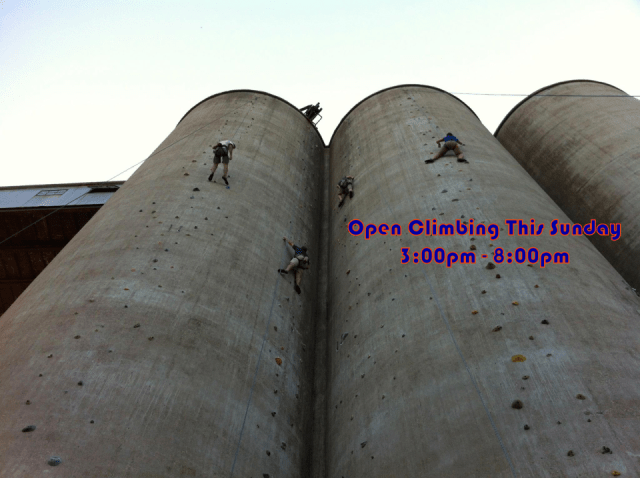
Tillotson Construction Company completed the original 382,880-bushel elevator in 1950. Extensive annexes were later added. We don’t know when operations ceased, but for the last eight years the elevator on five acres of land has been co-owned by Ron Safarik and Richard Brock, who attempted to make a climbing facility comparable to those established at old elevators in Bloomington, Ill., and Oklahoma City.

In 2012, the Vinton Street elevator received national attention after the annexes served as the canvas for a public art project; a nonprofit organization commissioned artists to create themed banners that were draped over the silos.

Reached by phone, Safarik said he and Brock have tried to secure the property, but intruders found a way to pry through and gain access to the top. “I would presume they used the internal ladders that still exist,” he said.

548020_10152123317010294_1936170426_n

Photos courtesy of SILO Extreme Outdoor Adventures. 

Safarik and Brock will now be stuck with the cleanup bill. Since SILO Extreme Outdoor Adventures, the partners’ venture, closed in 2013, the elevator has been a burden, he said.

It has been listed for sale since 2014. A post on SILO’s Facebook page says, “The Silos and the 5 acres of industrial land are for sale through Ben Pearson at World Group Commercial Real Estate. Any climbing related buyer will receive the holds, bolts, and supporting gear for starting up a climbing club or business.”

Safarik said the asking price remains $150,000.

Although he said he hadn’t known much of the elevator’s history, he did pass along a story heard from an elderly man named Otto, who lived on Vinton Street and “had intricate knowledge” of events.

According to Otto, the only death that occurred at the elevator happened on a freezing night in an unspecified year. The victim, an elevator employee, locked himself out of the scale house. As he tried to pry back into it, he jammed his arm and couldn’t pull free. Found dead in the morning, he was surrounded by cigarette butts. With his free hand, he had managed to smoke his remaining cigarettes before he froze.


A reader recalls elevator construction and the recent explosion in Hinton, Iowa

By Michael Pelelo

I was born in 1954, the same year the Tillotson headhouse was slipped in Hinton, Iowa. I can see it from my late parents’ farm south of Merrill, Iowa, where I grew up. I knew several local farmers who worked that slip in ’54.

DSC_0444

The Hinton elevator in July 2015. Photos by Kristen Cart.

Within the last month or so, there was an explosion in that workhouse and it looks like the tank walls were breached, so it will probably have to come down. I spent many days in the 70s and 80s working in that complex and remember the old layout quite well.

In the 70s, as a young man, I became a millwright and worked for an outfit out of Oyens, Iowa, that built jump-form silos. Later I worked for D&B Construction out of Sioux City and helped slip workhouses in Oyens and Maurice, Iowa, and the set of tanks to the south of the Tillotson workhouse in Hinton.

I have probably been in every elevator in northwest Iowa at one point or another, and I worked as a millwright out of the sheet metal local, too. A lot of the guys who worked for Dad Sherrill and D&B Construction got their start at Younglove Construction out of Sioux City, which is still slipping elevators today after over a hundred years.

I am now retired and just this afternoon went to look at a pair of very large tanks that are being jump-formed in Sloan, Iowa, by Hoffman Construction. That outfit goes back a long way slipping and jump-forming elevators.

Way back when I was doing that type of work, old guys would come around every day and gawk at what was going on. Now, I am one of the old guys gawking!

* * *

DSC_0455My days in construction are ones I remember fondly, even though the work was hard and dangerous and the hours were long.

One of the companies I worked for was involved in a three-fatality accident at the Ritter, Iowa, Co-op in 1976. We were building 24-foot and 30-foot jump-form silos all up and down the Floyd Valley. I was working on the 24-foot forms in Sheldon, Iowa, south of Ritter at the time.

The March 17 explosion at Hinton was in the main workhouse, which is the Tillotson structure built in 1954.

Back in the ’70s and ’80s, I was very involved with work on several structures in that complex with two different construction companies. Much has been added since I last worked around there. From pictures in the media, it appears that at least one or more of the tanks in the Tillotson structure have ruptured, as I can see grain spilling out in some photos.

A model Tillotson grain elevator is part of Lauritzen’s Model Railroad Garden

12596192_672606939548995_1690921303_n

Photo courtesy of Lauritzen Gardens

We were happily surprised to hear from Rosemary Lebeda, director of development at Omaha’s Lauritzen Gardens, which is located along the Missouri River at 100 Bancroft St. She found her way to Our Grandfathers’ Grain Elevators when searching for information about Tillotson Construction Company’s Vinton Street elevator. She wrote:

“I thought you might like to know that a model of the grain elevators is a part of our Model Railroad Garden. This particular garden includes miniature sculptures of historical buildings in Omaha built from natural materials. They are on display throughout the summer and then they are brought inside and displayed as part of our Poinsettia show.

“Families really enjoy seeing the buildings, and the grain elevators are easy to spot. I drive by them almost every day! It was neat to discover your historical page on the web and learn more about the company that built them.

“The Garden is fairly new in comparison to other community attractions such as the zoo or museums. The visitors center opened in 2001 and before that it was pretty much open space.

“Lauritzen Gardens is uniquely positioned as the region’s premier botanical center and garden resource. Situated on 100 acres of lush grounds, the garden exemplifies visionary efforts to provide a quiet, tranquil and serene setting for the study, preservation, and pure enjoyment of some of the region’s most precious resources and flora. Beginning with a grassroots effort to build a garden for the Omaha community, the garden has quickly become a regional destination and has substantiated its position as a major Omaha-area attraction.

“Today, more than twenty themed gardens invite guests to immerse themselves in the beauty of the Nebraska landscape. At Lauritzen Gardens, a diverse palette of plant life combines with fine art, architectural components and water features to create an incredible sensory experience. The grounds change with the seasons and are open year-round for exploration and enjoyment.

“In addition to horticultural displays that inspire, events that entertain and educational programs that cultivate minds of all ages, the garden works to conserve the endangered plants of the Great Plains and to advance the understanding and stewardship of the region’s biological diversity.”


Tillotson’s design plans consolidated the trends in elevator form and function

Photo by Gary Rich

Photo by Gary Rich

Story by Kristen Cart

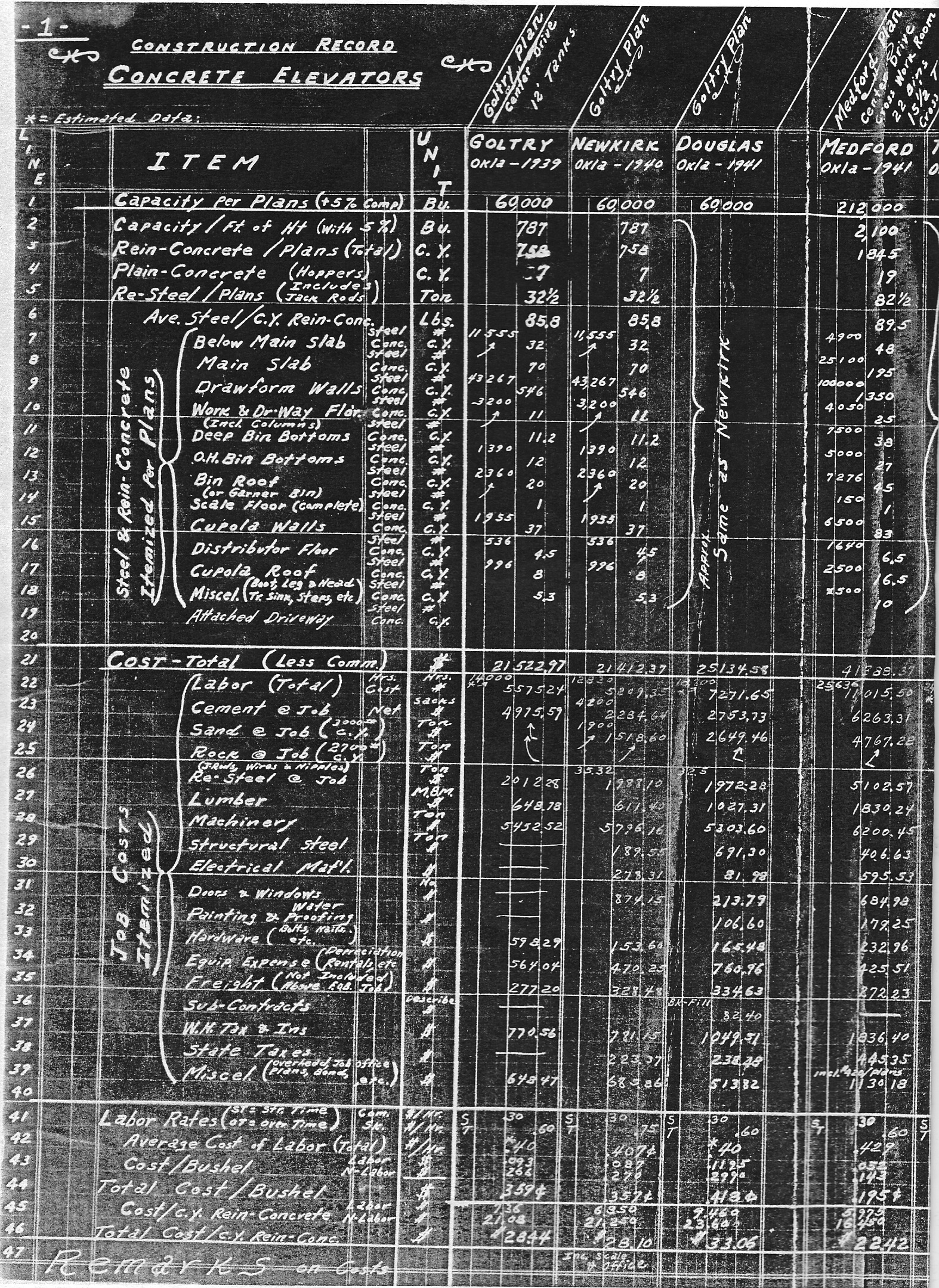
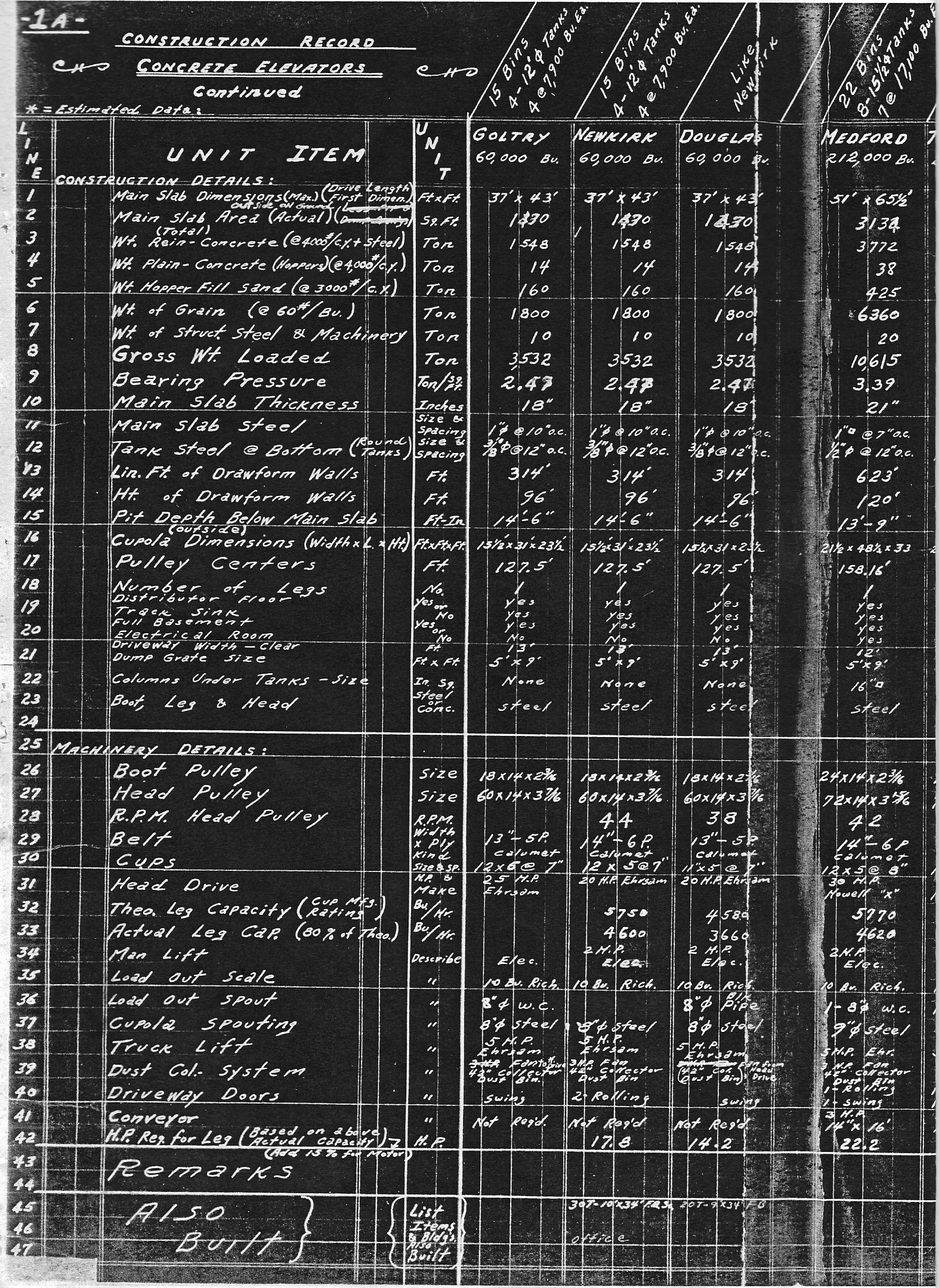
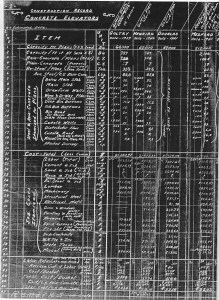
The concrete elevator construction records of the Tillotson Construction Company display data in columns, each column headed with the location of the project, and the date it was built. Specifications follow. Above the header is the name of the plan used to build the elevator. A short description accompanies the plan name.

For instance, in 1955, the Boyden, Iowa, elevator was built using the Palmer, Iowa, plan of 1950, with eight bins, each being 18 feet in diameter and 117 feet high. The driveway measured 13×17 feet.

You might discover, on review, how many of each elevator type were built based upon the plan names. This exercise will show us how the elevator plans evolved, and which were successful over the years of the elevator boom. Over the next few posts, I will attempt to spot trends over the span of our records, starting at the beginning. The elevators will be referenced by their locations.
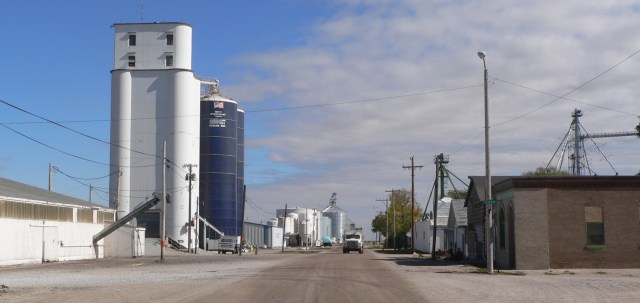
Richland,_Nebraska_Front_from_Tilden_1

Richland, Neb.: Front Street, looking east from about Tilden Street, taken on 21 October 2013, by Ammodramus via Wikipedia Commons

Goltry plan:

Goltry, the first elevator of its type, was built with a center drive and four 12-foot-diameter tanks. The Goltry plan specified an elevator in the 60,000-bushel class, the smallest Tillotson built:

Goltry, Okla. (1939); Newkirk, Okla. (1940); Douglas, Okla. (1941); Wellsburg, Iowa (revised plan, 1946); Polk, Neb. (1948–“Wellsburg plan” was another heading used for this elevator, just to make it confusing); and Richland, Neb. (1948).

From the photographs we were able to find, this elevator type was a small, four-square design with a rectilinear headhouse. Several of the type were still standing in recent photographs.

Medford Plan:
Medford 01Medford, the first elevator of its type, was built with a center drive, a cross work room, and 22 tanks of 15 1/2 feet in diameter. These old elevators had rectilinear headhouses, a feature that was later abandoned in favor of a rounded design. The plan represented a big jump in size from Goltry, having a 212,000-bushel capacity. Later, a revised Medford plan had a capacity of 140,000 bushels, and an expanded plan pushed the capacity to 240,000 bushels:

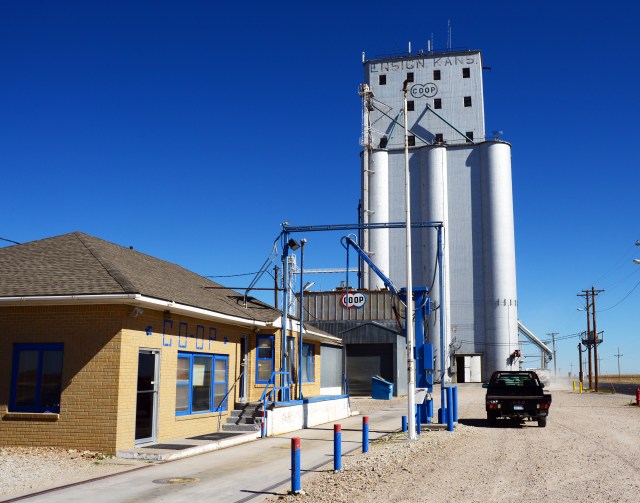
Medford, Okla. (1941); Thomas, Okla. (1941); Burlington, Okla. (revised plan, 1945); Cherokee, Okla. (revised plan, “like Burlington,” 1945); Lamont, Okla. (revised plan, 1945); Blackwell, Okla. (revised plan “like Lamont,” 1945); Booker, Tex. (revised plan, 1945); Follett, Tex (revised plan, 1945); Elkhart, Kan. (revised plan, 1946); Kingfisher, Okla. (expanded plan, later designated the Kingfisher plan, 1946); Thomas, Okla. (expanded plan, “similar to Kingfisher,” 1946); Ensign, Kan. (expanded plan, “similar to Kingfisher,” 1946); Manchester, Okla. (revised plan, later designated the Manchester plan, 1948); Montezuma, Kan. (1948)

The two daughters of the Medford plan, Manchester and Kingfisher, follow:

Manchester Plan:

Medford 02Manchester, Okla. (1948); Rolla, Kan. (“like Manchester,” 1948)

Kingfisher Plan:

Hooker, Okla. (1949)

More analysis is needed to determine exactly when the transition to a rounded headhouse occurred–but we think it did occur sometime after the Manchester plan was first designated as such, unless some of these elevators were modified at a later date.

What is clear from photos of Goltry and Medford plan elevators is that the rounded headhouse design was not used in Tillotson’s earliest elevators, and was likely adopted sometime in 1948–both plans made the transition in that year. Other details are bound to emerge as we study the other elevator plan types as they entered the Tillotson Company’s repertoire.