Elevator builders turned to wartime projects during World War II

Unknown, Gerald Osborn, William Osborn, Iver Salroth

Jerry Osborn (standing) with his father Bill Osborn (center) and Iver Salroth (right) in Galveston, Texas in 1945 during construction of Tillotson’s Fairmont building in Giddings.

By Kristen Cart

We have very limited information about the activities of Tillotson Construction of Omaha during World War Two. The other two elevator builders we profile, J. H. Tillotson, Contractor, and Mayer-Osborn, of Denver, Colo., began their operations after the war, but individuals working for both companies gained their experience during wartime, either at Tillotson Construction, or elsewhere.

Eugene Mayer, a partner in Mayer-Osborn Construction, previously worked in a partnership, Holmen and Mayer, based in Denver. Orrie Holmen was a University of Chicago-trained architect. Eugene’s sister Sheila was the wife of Joe Tlllotson. At some point after 1938, Joe left his brother Reginald in charge of the parent company, Tillotson Construction, of Omaha, and moved to Denver to start his own elevator business, accompanied by old Tillotson hands William Osborn and Bill Morris.

It would be fascinating to trace the wartime activities of each of these principal builders, if they can be learned.

Elevator photos026In the Tillotson company records, we found concrete elevator specifications beginning a few years before the War and resuming immediately afterward, but conspicuously absent were records of elevator construction during the War.

However, we know Tillotson Construction was active between 1942 and 1945. We found one snippet in an old newspaper, which we transcribed on the blog: https://ourgrandfathersgrainelevators.com/2012/05/08/nebraska-firms-get-government-contracts/.

When we learn more about the activities of the company during that time, we will certainly write about it here. It is an open line of inquiry, and we are eagerly seeking more information.

Part 2 of a photography outing unfolds the visual possibilities at Roggen, Colorado

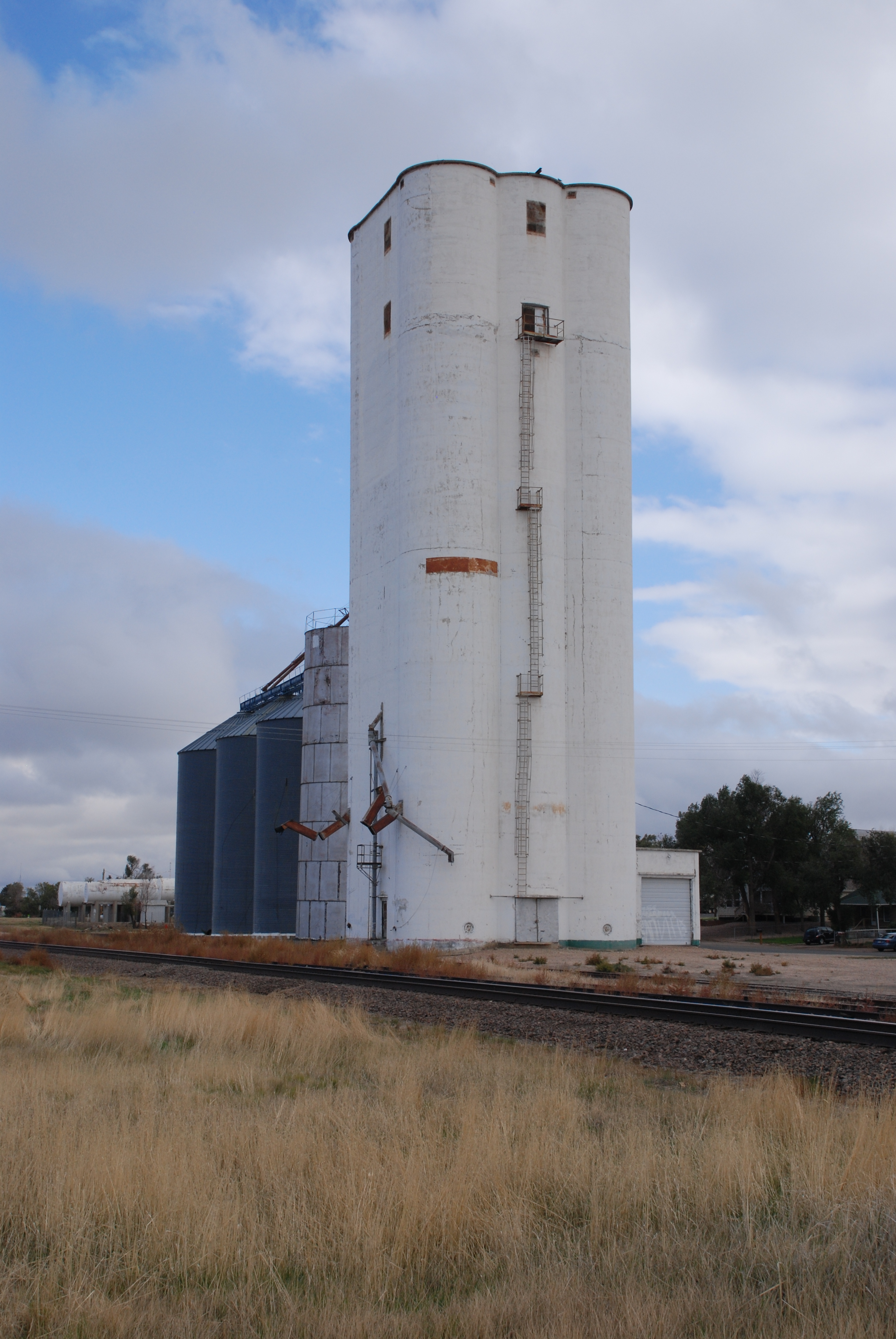
Mayer-Osborn's Roggen, Colo. elevator has the typical stepped up headhouse.

The Roggen, Colo., elevator has the typical Mayer-Osborn stepped-up headhouse.

Story and photos by Kristen Cart

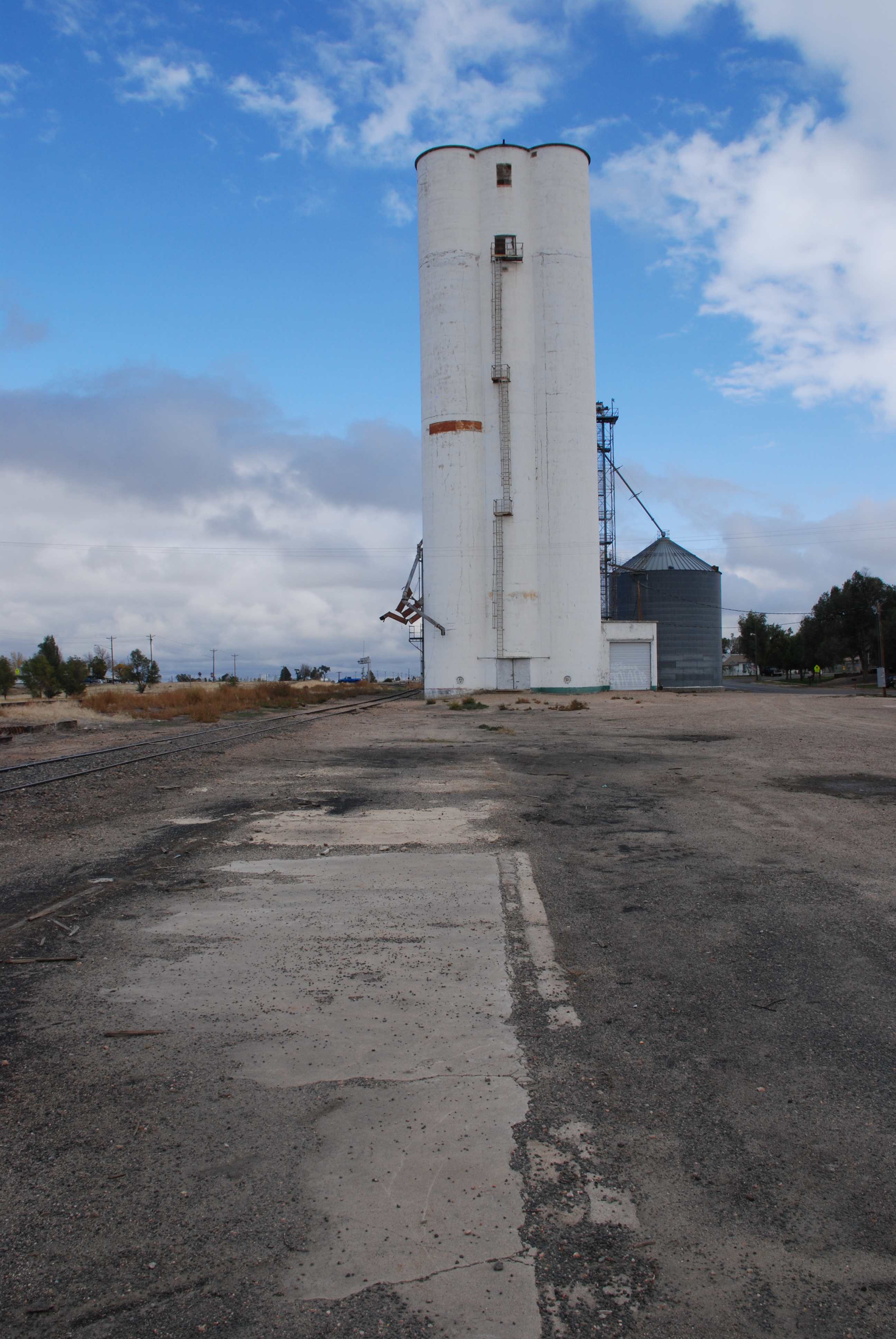
The stepped-style headhouse on the 1950-vintage elevator at Roggen, Colo., raised our suspicion that Mayer-Osborn Construction built the elevator, and that my grandfather William Osborn had a hand in it. Our hunch proved to be right. A 1950 newspaper account detailed its construction, as well as that of the concurrent project at Byers, Colo. Roggen’s elevator was built on the heels of its twin, the Mayer-Osborn elevator at McCook, Neb., which was completed the year before.

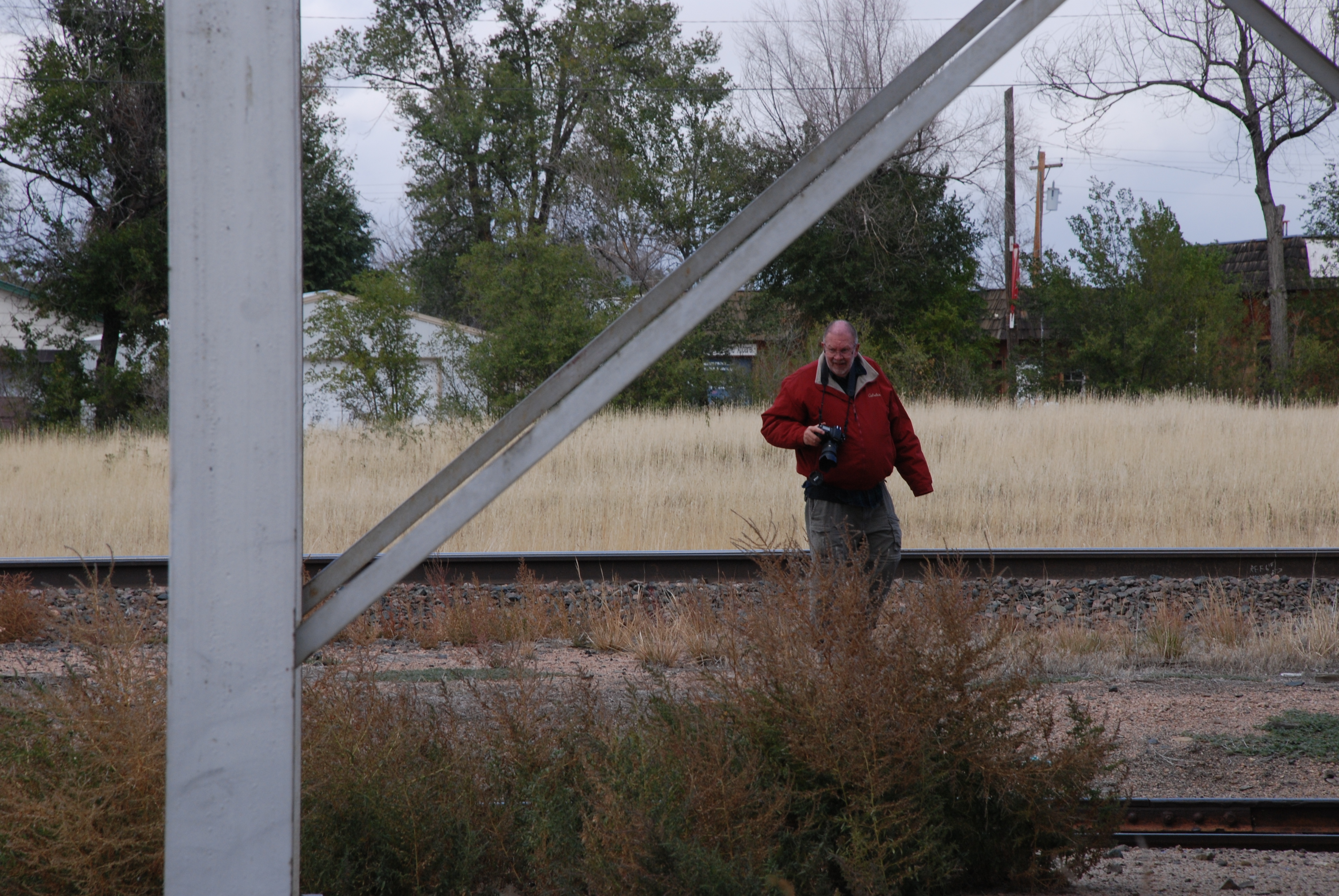
Gary Rich explores creative possibilities at the Roggen elevator.

Gary Rich explores creative possibilities at the Roggen elevator.

Last year Gary Rich, contributor to this blog, paid a visit to Roggen. He documented the manhole covers inside the driveway, which bore the company name in raised letters across the top of the steel plates manufactured by Hutchinson Foundry. After seeing his photographs, I was very eager to see the elevator for myself.

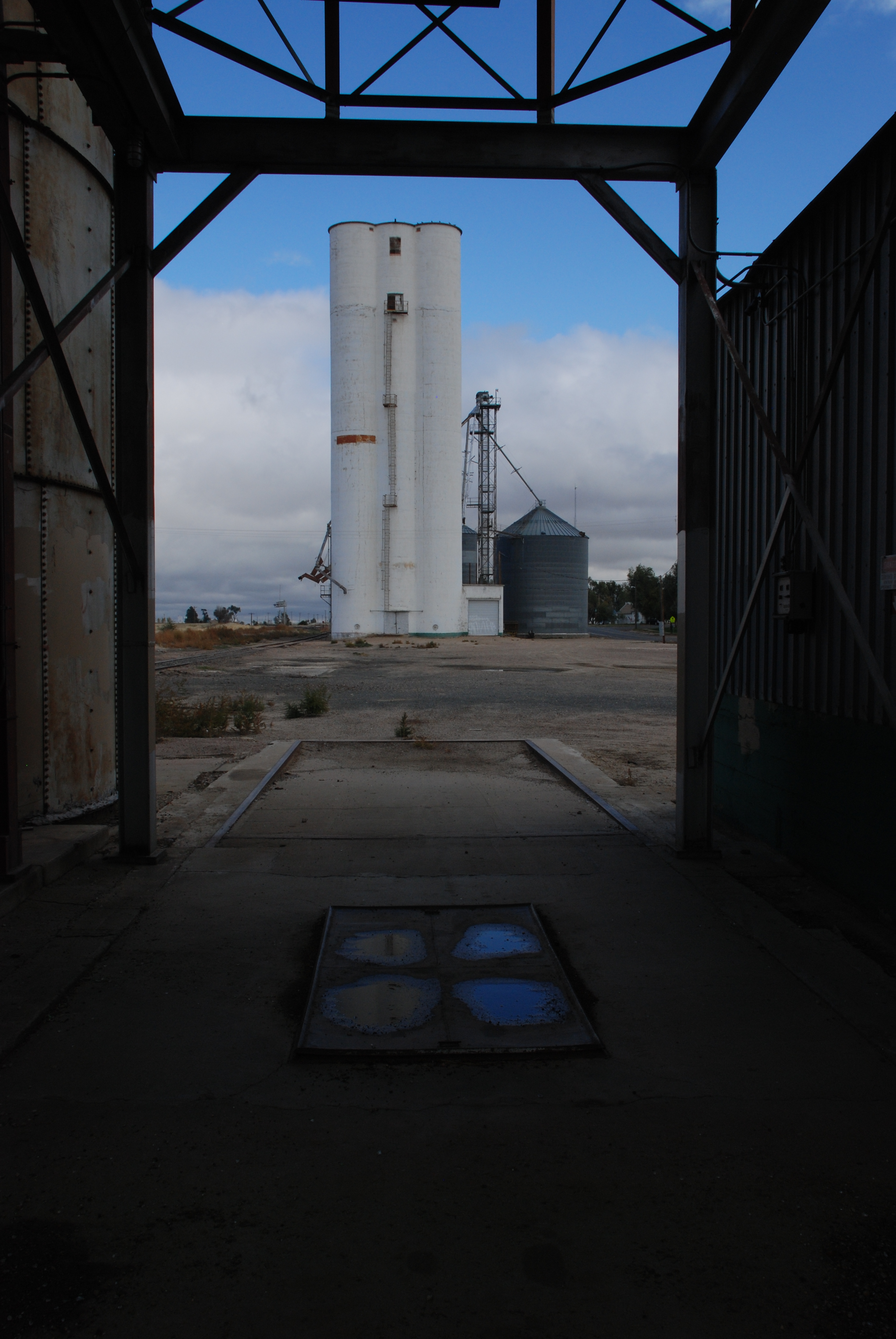
Last fall on a visit to Colorado I met with Gary, and we took in Roggen and Byers among other elevators on a photography tour. Roggen is fairly accessible and located just east of Denver. The purpose of our tour was to document the elevators, but also to inject some creativity into the process. The results were very pleasing, especially at Roggen. This is part two of our photo tour.

When I started looking for my grandfather’s elevators, I never suspected it would open the door to the elevator photography and historical research you find in this blog. Best of all, our contributors Ronald Ahrens and Gary Rich have made this project great fun for all of us. I hope you, our readers, get a kick out of it as well, and are inspired to follow your own quests wherever they may lead.

Empty containers frame Roggen's 1950 elevator

Empty containers frame Roggen’s 1950 elevator. 

A photography outing reveals beauty at the Mayer-Osborn elevator in Byers, Colorado

DSC_0221

A documentary photograph of the Byers, Colo. elevator.

In the fall of 2012, Gary Rich, contributor to this blog, treated me to a photo tour of western Colorado elevators. I made a special stop to meet Gary and his wife Sandy. The last few years Gary has specialized in elevator photography, capturing the beauty and spare elegance of grain elevators, identifying their builders as he went. The Byers, Colo., elevator is one of the loveliest.

DSC_0212

Gary Rich, camera in hand, looks for a better shot.

Sandy Rich is a very good photographer in her own right, and she has challenged Gary to greater creativity in his compositions.  He explained how her inspiration led him away from “documentary” shots and toward more artistic photography. When we stopped at Byers, Colo., we took some of her ideas to heart, and we were very pleased with the results.

Mayer-Osborn construction built the Byers elevator in 1950, as noted in a contemporary newspaper account. My father Jerry Osborn remembers his dad William Osborn working on it.

DSC_0205

Using the foreground to frame the subject adds interest to the photograph. Gary shot this composition first as can be seen on his photo site.

Retaining some of the characteristics of the earlier J. H. Tillotson elevators, the Byers elevator recalls those at Traer and Hanover, Kan. The Byers elevator is bigger than the Hanover elevator, and you can see where design adjustments accommodate the greater volume. The windows are very similar to those at Traer. The manhole covers on the exterior at Byers represent an innovation to fulfill local needs.

Since elevator designs continued to improve over time, an elevator design genealogy becomes apparent. The innovations cross company boundaries and are seen by looking at elevators chronologically, especially where the same builders and architects continued working in the business, bringing their ideas to one company after another. This is a chronology we are still trying to understand.

As we strive to understand elevator history, we take pictures. Elevators are worthy of our understanding and preservation for their beauty, not just their utility. Beautiful photos convey that message in a way that words can never express.

DSC_0241

The manhole covers on the exterior of the Byers elevator identify Mayer-Osborn as the builder.

DSC_0227

The Big Springs, Nebraska, elevator proved to be a Mayer-Osborn Construction job

The Cheppell, Nebraska elevator built by Chalmers & Borton

The Chappell, Nebraska elevator built by Chalmers & Borton. 

Story and photos by Kristen Cart

My grandfather William Osborn built an elevator in the western Nebraska town of Chappell, according to my dad Jerry Osborn. Dad’s recollections have guided our search thus far, for Mayer-Osborn elevators. Surely over the kitchen table he heard the names of towns where his absent father had construction jobs. Or perhaps he saw the postmarks of letters sent home.

Chappell was probably stamped on one of those postmarked letters, or it was the nearest town with a motel, because when I went to visit in 2011, there was nary a Mayer-Osborn elevator in evidence. Impressive elevators there were, but I found out later that they all had the ubiquitous Chalmers & Borton nameplate, the trademark of Grandpa’s biggest competitor.

The Mayer-Osborn elevator lacked the annex when it was first built. It is the same plan as used in McCook, Neb. and Blencoe, Iowa.

The Mayer-Osborn elevator at Big Springs, Neb. lacked the annex when it was first built. It is the same style as used in McCook, Neb., and Blencoe, Iowa.

One stop east on the rail line, however, was a large, handsome elevator that looked like one of Mayer-Osborn’s jobs. It was the spitting image of the first elevator Grandpa built on his own at McCook, Neb. The first time I saw it, I was curious enough to snap a photo, but identification was going to wait for another year. My dad knew nothing about Big Springs.

When Gary Rich, a contributor to this blog, looked into the builders of the elevators he photographed, he solved the mystery. He identified the Big Springs elevator by its manhole covers inside the driveway, each embossed with “Mayer-Osborn Construction, Denver, Colo.” above the Hutchinson Foundry stamp.

The Big Springs, Neb. elevator in October, 2012

The Big Springs, Neb., elevator in October, 2012. 

I paid another visit to Big Springs last fall after our Wyoming elk hunt. We didn’t get any elk, but I did get some nice photographs of the elevator. It was a sleepy Sunday with no one around. Next time, perhaps I can see inside.

It is an honor to pay respects to my grandfather’s enduring work. It is living history of a kind that is rarely noticed or mentioned. Once gone, it is scarcely remembered except in dusty repositories of pictures, and in mostly forgotten stories.

At Big Springs, Neb., that day of fading away is still far off in the future.

The Vinton Street elevator was Tillotson Construction’s 1950 hometown showcase

Scan 4

Story by Ronald Ahrens 

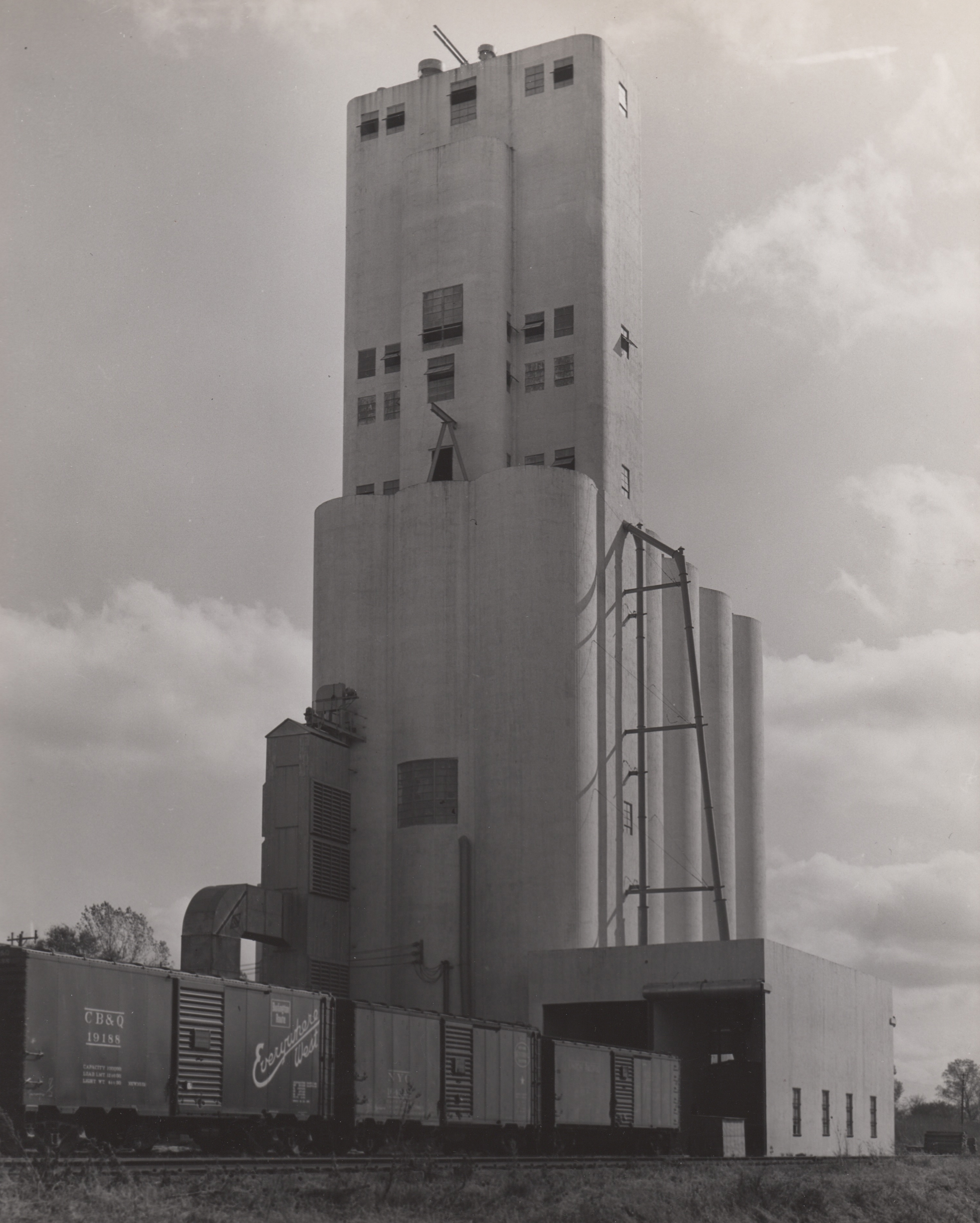
The Vinton Street elevator in Omaha was a significant job for Tillotson Construction Company, being a technical challenge to the nine-year-old outfit and representing a major emphasis in its subsequent marketing effort.

Lucky for us, much attention was paid to taking good photos of the elevator, including some early color images that include views of the construction process. These photos were in the hands of Uncle Tim Tillotson, who passed them to us for scanning. The color ones came from a viewer that was presumably shown to prospective clients.

With its headhouse accommodating three legs to lift the grain, it was tall. Exactly how tall isn’t recorded, but it probably came within sniffing distance of 200 feet. Only a few of the city’s downtown office towers surpassed its height, although they weren’t necessarily better-looking.

This terminal elevator had capacity of 382,880 bushels, and the legs handled distribution of the grain inside the main house.

Scan 5It also was a showcase that family and friends could see for themselves. Until then, Tillotson Construction had been building elevators in Texas and Oklahoma as well as some less far-flung places.

The elevator was completed in 1950 on a South Omaha greenfield site at 34th and Vinton Streets. The company’s office at 12th and Jones was only three miles away.

Another reason for its significance is that Reginald and Margaret Tillotson’s oldest son Charles went to work as an apprentice carpenter and hod carrier on the job. He helped to build several other elevators over the next few years.

With the Tillotson construction record now in hand, we present the following technical specifications without yet having achieved a full understanding of all the abbreviations and lingo.

General specifications

Total capacity: 382,880 bushels

Capacity: 38,878 bushels per foot

Reinforced concrete: 4776 cubic yards

Plain concrete (hoppers): 35.3 cubic yards

Reinforcing steel (includes jack rods): 286.5 tons

Average steel per cubic yard of reinforced concrete: 120 lb
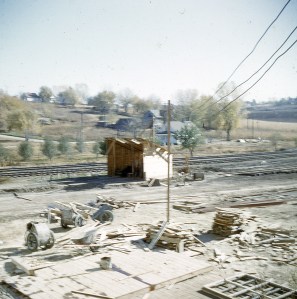
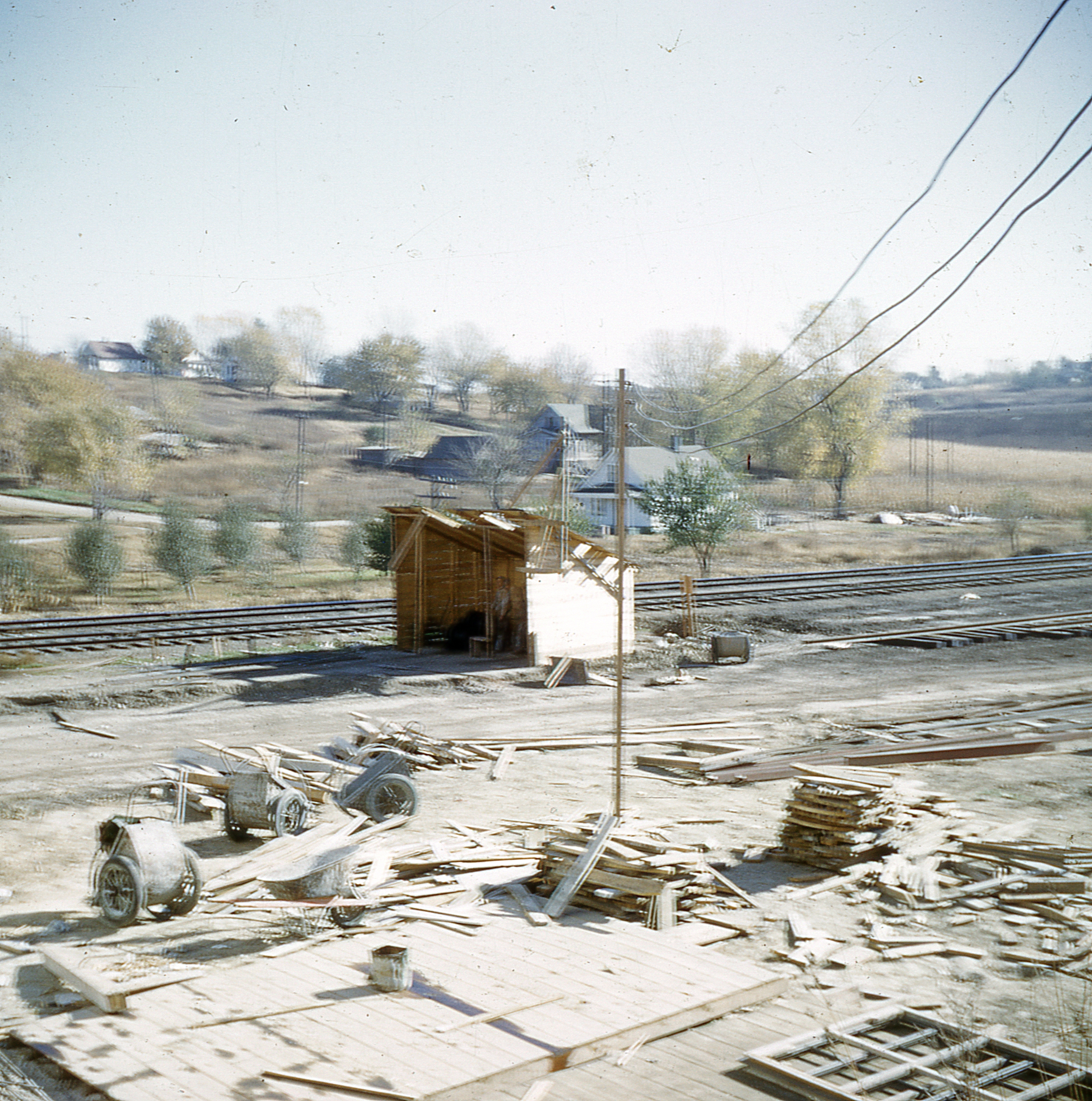
Construction of the hoist very early in the process of building the Vinton Street elevator. Note the Georgia buggies near the formwork.

Construction of the hoist very early in the process of building the Vinton Street elevator. Note the Georgia buggies near the formwork.

Steel and Concrete

Below main slab: 20,932 lb/223 c.y.

Main slab: 66,579 lb/618 c.y.

Drawform walls: 233,927 lb/2100 c.y.

Driveway and work floor: no figure for steel/17 c.y.

Deep bin bottoms (including columns): no figure for steel/155 c.y.

O.H. bin bottoms: no figure for steel/40 c.y.

Bin root: no figure given for steel/90 c.y.

Scale floor (or garner, complete): no figure for steel/17 c.y.

Cupola (headhouse) walls: no figures

Distributor floor (cleaner floor): no figure for steel/8 c.y.

Cupola roof (gallery): no figure for steel/49 c.y.

Miscellaneous (headhouse): no figure for steel/640 c.y.

Attached driveway: driveway 416 c.y., track shed 403 c.y.

Construction Details

Main slab dimensions: 58 x 119.5 feet

Main slab area (outside on ground): 6690 sq ft

Weight reinforced (total) concrete  at 4000 lb per c.y., plus steel: 9838 tons

Weight plain concrete (hoppers, 4000 lb per c.y.): 70.6 tons

Weight hopper fill sand at 3000 lb per c.y.: 439.8 tons

Weight of grain at 60 lb per bushel: 11,490 tons

Weight of structural steel and machinery: 100 tons

Gross weight loaded: 21,938 tons

This extreme view shows the elevator before painting. The individual pours can be seen in the drawform walls of the bins. Note the man leaning out of the window opening on the left.

This extreme view shows the elevator before painting. The individual pours can be seen in the drawform walls of the bins. Click on the photo to enlarge the image, and you’ll note the man leaning out of the window opening on the left.

Bearing pressure: 3.28 tons per sq ft

Main slab thickness: 30 in

Main slab steel: 1 in □ at 7 in o.c.

Tank steel at bottom (round tanks): ⅝ in ⌀ at 8 in o.c.

Lineal feet of drawform walls: 975 ft

Height of drawform walls: 120 ft

Pit depth below main slab: 20 ft, 9 in

Cupola (headhouse) dimensions outside (length x width x height): 24 ft x 52 ft x no figure recorded

Machinery Details

Boot pulley: 72 in x 28 in x 3 7/16 in

Head pulley: 72 in x 28 in x 5 15/16 in

RPM head pulley 39 rpm

Belt: leg 26 in x 8-ply, conx 36 in x 4 ply

Cups: 21 x 7 in cal. at 9 in o.c. stag.

Head drive: Link belt, 100 hp

Theoretical leg capacity (Cub manufacturer rating): 17,400 bushels per hour

Actual leg capacity (80 percent of theoretical): 13,900 bushels per hour

HP required for leg (based on above actual plus 15 percent for motor): 89.8 hp
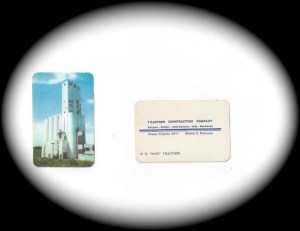
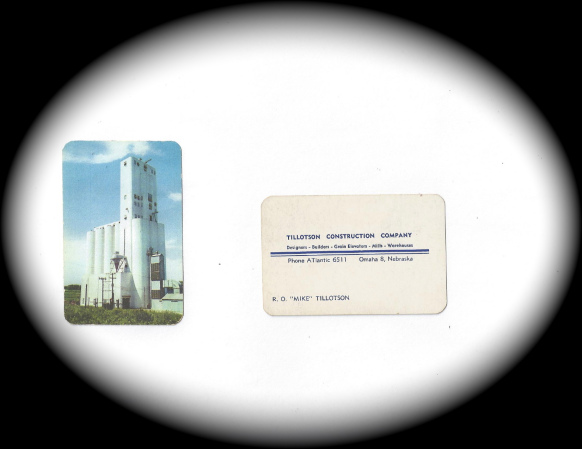
My grandfather used one of the color images from Vinton Street on its business card.

My grandfather used one of the color images from Vinton Street on its business card.

Man lift: 2 – 1.5 hp

Load out scale: Two 2500-bushel hop.

Load out spout: 15-inch diameter

Truck lift: Ehr. semi fans w. col.

Dust collector system: on legs

Cupola spouting: Trolly spouts

Driveway doors: Johnson O.H. rolling

Conveyor: Two 36-in belts and two 30-in belts


Also Built

Track shed

Truck shed

Office

Truck scale

All specs, and the Bouncing Czech’s photos, delineate elevators in David City

The Tillotson Construction of Omaha elevator also serves as a satellite antenna tower.  Photo by Tom McLaughlin

The Farmers Cooperative elevator, built by Tillotson Construction Company, of Omaha, Neb., also serves today as a satellite antenna tower. Photo by Tom McLaughlin

Story by Kristen Cart

My blogging partner Ronald Ahrens said he hoped we would find the motherlode of history about the elevators his grandfather Reginald Tillotson had built. With luck and the help of his family, we finally did it.

Reginald Tillotson’s sons, Charles, Tim, and Mike have all recently shared their memories from the job sites. Tim Tillotson also found and restored a treasure trove of company documents and photos. Best of all was a set of blueprint specifications for over 100 Tillotson Construction Company slip-formed concrete elevators and annexes. Eureka!

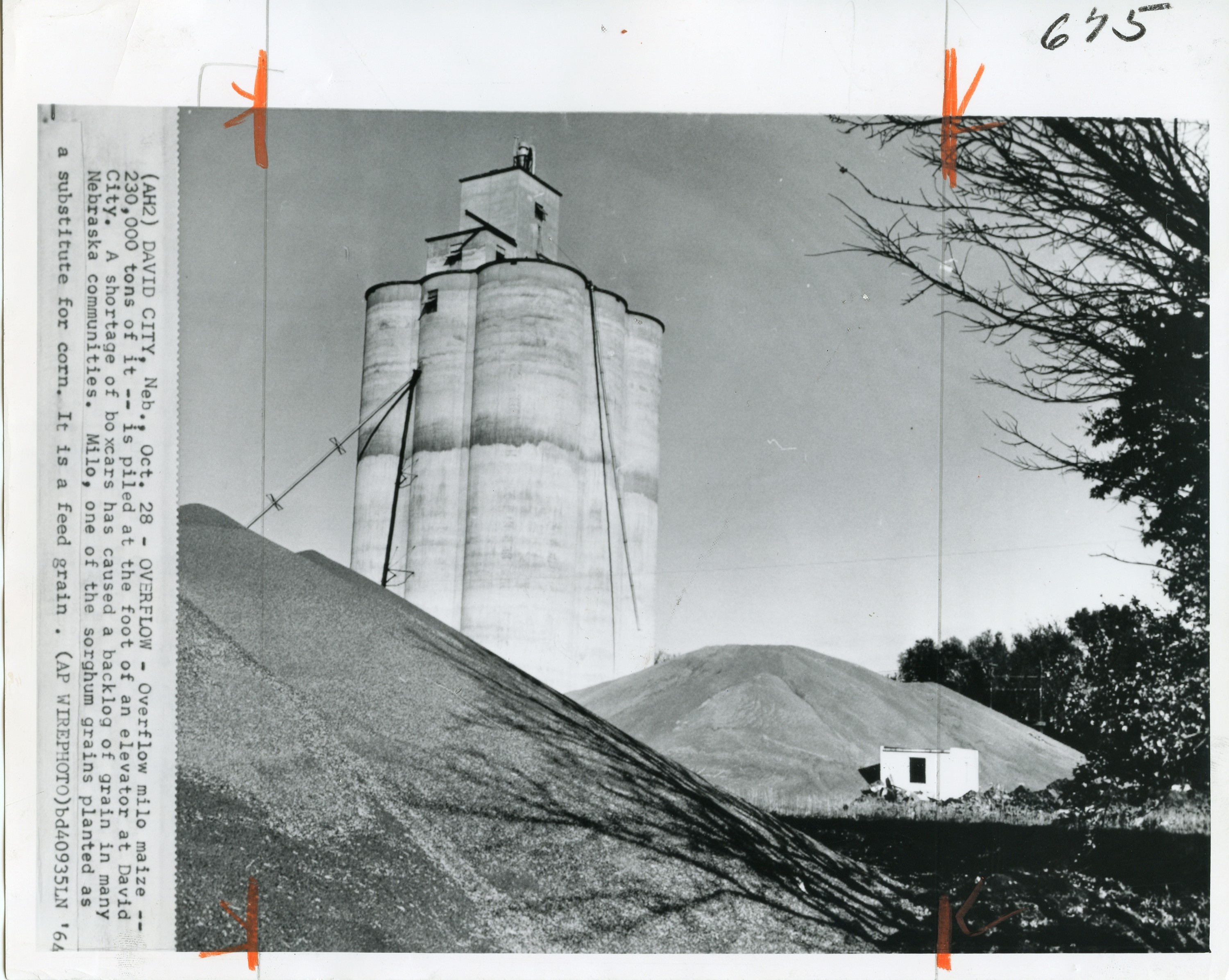
A historical image taken in David City, dated October 28, 1964. This is not the Tillotson Construction elevator, but it's neighbor a short distance down the rail line.

A historical image taken in David City, dated October 28, 1964. This is not the Tillotson Construction elevator, but its neighbor a short distance down the rail line.

David City, Neb., is a town due west of Fremont in the eastern half of the state. One of the two elevators in town was listed in the Tillotson blueprints. Armed with our new information, I looked for pictures of the newly found elevator.

I discovered some history, instead.

The grain piled next to the elevator in the 1964 press photo is milo, a feed grain, and the pile-up was attributed to a shortage of rail cars. Scenes like this were observed all over Nebraska that year.

The elevator in the photo didn’t quite have the Tillotson look, so a quick peek at David City on a Google map showed a washed-out image with just the suggestion of a curved headhouse on a second elevator in town. Further search brought me to “The Bouncing Czech” Flickr page and beautiful photos of the Farmers Cooperative elevator I was looking for. With Tom McLaughlin’s kind permission, they are posted here.

Tom McLaughlin likes to stop and check out elevators.

In an exchange of e-mails, he wrote, “A friend of our family owned the Magowan Elevator, in Gordon, Neb., so I’ve been in that one several times. I still remember my first manlift ride–that was the scariest ride I’ve ever taken.

David City's "other" elevator. Photo by Tom McLaughlin

David City’s “other” elevator. Photo by Tom McLaughlin

“Back in the 1950s, my dad used to ‘walk the pipeline’–he literally walked the natural gas pipeline in Oklahoma, Kansas, and Nebraska, looking for signs of leaks, before they went to aerial photography and control valves.

“So he always liked to wander around the back roads and small towns, and I think that’s where I got the bug. When we would go on a trip, we never knew what route he’d take. I don’t think he did either!”

Tom’s enthusiasm is contagious.

The small towns are peaceful, yet inviting, and the elevators are fascinating. It won’t be too much longer before this blogger takes another grain elevator trip.

Specifications 

Tillotson Construction Company records show the David City elevator was built in 1951 according to the “David City Plan.” This includes five tanks, each one 18 feet in diameter and 120 feet high.

Total capacity: 180,000 bushels

Driveway: 13×17 feet with eight bins over the drive

Bins: 15 in all and overflow, with a dust bin at the exterior

Reinforced concrete: 1716 cubic yards

Plain concrete (hoppers): 20 cubic yards

Reinforcing steel (including jack rods): 81.16 tons

Steel and concrete:

Below main slab: 6632 pounds and 45 cubic yards

In main slab: 22,233 pounds and 180 cubic yards

Drawform walls: 106,320 pounds and 1253 cubic yards

Driveway and work floor: 2543 pounds and 15 cubic yards

Deep bin bottoms: 8081 pounds and 38 cubic yards

O.H. bin bottoms: 2917 pounds and 22 cubic yards

Bin root: 6122 pounds and 44 cubic yards

Scale floor: 285 pounds and 10 cubic yards

Cupola (headhouse) walls: 2830 pounds and 70 cubic yards

Distributor floor: 1494 pounds and 8 cubic yards

Cupola roof: 1586 pounds and 14 cubic yards

Miscellaneous (Boot, leg, headhouse, Tr., sink, steps, etc.): 1273 pounds and 15 cubic yards

The elevator at Bradshaw, Nebraska, still hides the identity of its builder

DSC_0107Story and photos by Kristen Cart

A couple of years ago, before we started this blog, I tried to find pictures of the projects we knew my grandfather William Osborn built. Sometimes I would find photos of look-alike structures at locations that my dad couldn’t remember. Most of these mysteries were eventually resolved with the help of Gary Rich, a retired Union Pacific man with an indefatigable curiosity. He visited the locations, identified a number of the builders, took beautiful photographs, and contributed his findings to this blog.

DSC_0051

The J.H. Tillotson look-alike at Bradshaw, Neb.

The Bradshaw, Neb., elevator remains an unsolved mystery. I visited the elevator early last year and photographed it from all sides. The style was a dead ringer for the elevators at Fairbury and Daykin, Neb., and Linn, Kan., all J. H. Tillotson, Contractor jobs. But since I had no access to the inside of the elevator, my tentative identification remained unverified.

Mr. Gordan, who lived across the street from the elevator, commented about the structure and its history, but his details were sparse. He said the elevator had a twin that no longer stood.

“It had problems with the headhouse,” he said.

And in another town he did not name, a similar elevator had been struck by lightning and burned.

Since the look-alike elevator in McAllaster, Kan. was demolished before we could resolve its provenance, and others also seem to have perished, it is clear that an unknown number of this type of elevator once existed. We hope to find the business records of Mayer-Osborn Construction and its predecessor, J. H. Tillotson, Contractor, to learn more about them.

The Bradshaw elevator bears an old FCA logo, but United Farmers Cooperative is apparently the current owner.

dsc_0081

New elevators

Mr. Gordan’s mother came out to greet me, but the meeting is a little vague in my memory, because I only made notes about it later. Both mother and son said the Bradshaw elevator was retired, but that the nearby gas station still operated, and the newer elevators a little down the rail line handled the grain.

I hope to visit again when the co-op is open, to learn more.

dsc_0090

Bradshaw, Nebraska

The town of Bradshaw is neat and clean, and displays a good amount of civic pride. Most notable is the broad main street–the expansive use of space has the look of a western town, rather than the neatly packed economy you see in the East. It inhabits a flat Nebraska landscape, nearly midway between Grand Island and Lincoln, with distant horizons and plenty of elbow room.

dsc_0015

Gas station

Bradshaw is well worth a return visit, preferably during harvest. Perhaps a local farmer can sit down for a cup of coffee and color in the details of this lovely Nebraska town.

Blue skies at Lodgepole, Nebraska, and a perfect photo opportunity

dsc_0226

The J. H. Tillotson concrete elevator, built in 1948, and operated by Frenchman Valley Coop

Story and photos by Kristen Cart

On the way home from our Wyoming hunt last fall, we drove through Lodgepole, Neb. one more time. Gorgeous weather quelled the protests from the truck’s back seat, and with windows open, everyone settled down with books and gadgets while Mom (that would be me) got out with her camera.

I hope you enjoy some of the results as much as I did. This elevator, built by J. H. Tillotson, Contractor, in 1948, still stands proudly along old Lincoln Hwy. 30, in a town that is still a tourist destination. No one seemed curious about a lady with a camera–seems like it’s not so unusual around here.

dsc_0256

A track-side view of both elevators in Lodgepole, Neb.

The wooden elevator in the town is still in use, less than half a mile down the rail line. It appears to be in spiffy condition and ready for business. The town obviously takes pride in its agriculture and its heritage.

Happily, the history of the town intersects with the history of my grandfather, builder William Osborn, and our family. It has become a destination for us and a beautiful stop alongside the road.

Even the kids grudgingly admit it isn’t too bad, for an elevator.

dsc_0252

The wooden elevator with metal siding, flanked by metal bins

A look at grain operations at the J. H. Tillotson elevator in Lodgepole, Nebraska

dsc_0448

A Union Pacific train rolls by the elevators in Lodgepole, Neb.

Story and photos by Kristen Cart

A beautiful elevator can be truly inspiring. My first visit to Lodgepole, Neb., was on a hazy October day, on the way to Wyoming, where we hunt elk. The misty skies did not show the elevator to its greatest advantage, so the best photography had to wait for a later visit. But this time I had the chance to visit the office and learn more about the elevator and the town.

dsc_0372

Melvin Paulsen inside the elevator driveway during corn transfer.

Melvin Paulsen, a two-year employee of the Frenchman Valley Coop, hailing from Julesburg, Colo., kindly showed me inside the main elevator. The interior lacked the embossed manhole covers that would reveal the builder, J. H. Tillotson, Contractor, but we knew the origins of this elevator from the recollections of my father Jerry Osborn.

The Denver-based builder had lost its owner, Joe Tillotson, and superintendent, Bill Morris, in separate traffic accidents during construction at Lodgepole. The mishaps ended a successful run of elevator projects. My grandfather, William Osborn, soon picked up the pieces and started his own company, Mayer-Osborn Construction Company, also based in Denver.

Melvin explained that the elevator was in the process of shifting grain from a main bin to the annex. The grain dryer attached to the elevator was no longer operational, so only grain that was sufficiently dry (with 18 percent or less original moisture content) could be accepted for storage. Grain that was on the moist end of the acceptable range had to go to the annex, which had ventilation fans, to prevent damage from overheating.

A fair pile of dust could accumulate during the grain transfer, so the elevator driveway was kept open to help blow it out. A shovel leaned nearby to take care of the remainder. Dust had to be cleared out completely to prevent an explosive hazard.

One of the newer bins was home to an emergency response relay for radio communications between dispatch and fire and emergency responders.

Elevator photos006Inside the Frenchman Valley Coop office was an old aerial photo of the elevator and one that was taken during its construction. Melvin kindly furnished me with an extra copy of the aerial shot. The elevator looked very much like its J. H. Tillotson brethren.

Lodgepole celebrates Old Settlers’ Days each year. The park alongside the railroad tracks fills with horses and buggies, tractors, vendors, and all manner of activities. A parade winds along the streets. The scene recalls a time when a farmer would drive his wagon up to the old wooden elevator on the rail line, and dump his grain in the pit, hoping for higher prices.

The town also attracts visitors when the old Union Pacific steam engine, UP844, stops on a regular scheduled visit.

Lodgepole’s elevator was a milestone in my grandfather’s building career. It remains one of the most attractive elevators in Nebraska.

Mike Tillotson remembers Flagler (1953), Albert City (1954), and Lincoln (1955)

By Mike Tillotson

I don’t have access to a computer nor know how to use one. I barely get a radio signal, and my tin-can barb-wire phone is not always clear here in the hills either.

As for the elevators I was thirteen on my first summer with my brothers. I just graduated from Grade School. Our Father helped his Father build Wood Elevators, and often was told to put out that cigarette.

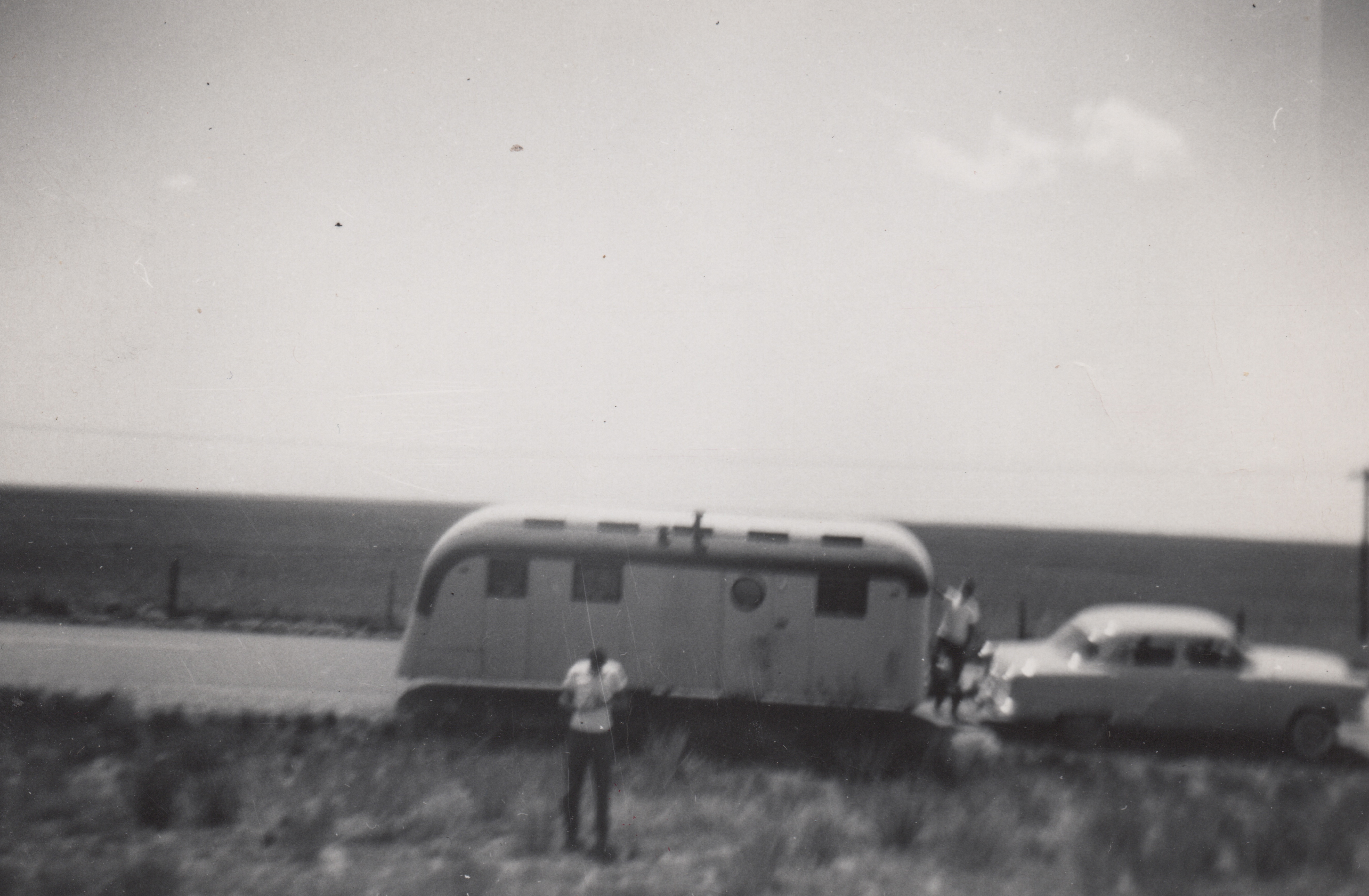
Mike stands at the center of the frame while Tim captures Charles just after he has taken a rest break on the way to Flagler.

Mike stands center-frame while Tim Tillotson captures Charles after a rest break en route to Flagler with the ’53 Ford and mystery trailer.

We headed for Flagler, Colorado; seventy five miles East of Denver. Charles was driving a 53 Ford 4-door our Father bought for him. Two-tone tan that Charles had nosed, and added fender skirts, and a continental kit. We were pulling a sixteen foot trailer that we lived in for the summer.

We were paid $1.00/Hr.–60 Hrs./Week with time and one half over 40 hours. I was the time keeper, and drove a tractor with a front-end loader. I filled up the three-bag concrete mixer with sand. Someone else put the cement and limestone in the hopper. We mixed our own concrete because we were in the middle of no-where.

I remember the Super catching me putting pennies on the rail track, and helping me with the time-sheet so I could go to Denver with my brothers for the week-end.

Tillotson Home

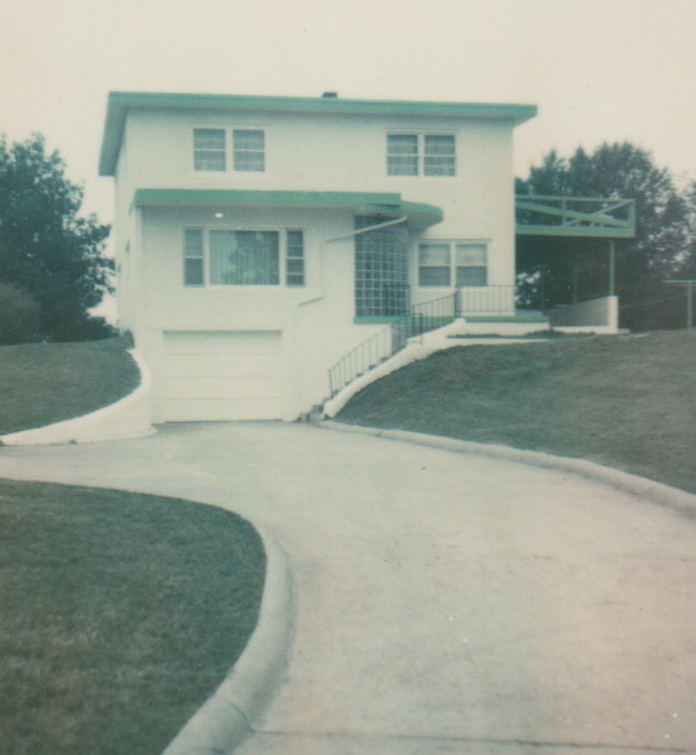
The Tillotson home in the Ponca Hills north of Omaha. Mike still lives there. 

I remember Charles had a girl-friend, and when we came back to Omaha in September; she came in to visit him. When Charles went to meet her at the place she was staying; Sharon went with him. When Charles and Sharon met her she said she forgot something in her room, and went back to get it. After waiting about one half hour Charles sent the door man to the room. He returned and said the room was empty, and the window was open.

You have to remember this was 1953 when we were at the age of innocence, and life was pure and simple.

The following summer (1954) we went to Albert City, Iowa, 75 miles North of Council Bluffs. We rented rooms in a private home. We worked with a 20 something guy that ran the winch pulley bucket to the top of the elevator as it progressed, and brought building materials down. We also rode the bucket up and down to get on deck. The elevator bens were 125 feet to the top with a Head-House of 75 on top of that.

The winch guy went to work on another elevator the Company had going in a town about 30 miles away. This was an addition to an existing elevator–an add-on.

At noon one day he went to the top with new boots on. There were four or five planks at the top from old to new grain bens.

No hand rails or anything. They were not required at the time. I doubt OSHA even existed. He either fell or jumped going from old to new.

Some said he might have tripped with the new boots.

Charles and I bought a nice 40 Ford sedan for $75.00 off a used car lot. He didn’t want to use the 53 any more than necessary. Coming back to Omaha one week end we were zipping down a country road with corn as high-as-a-sky and started through an intersection with no stop signs.

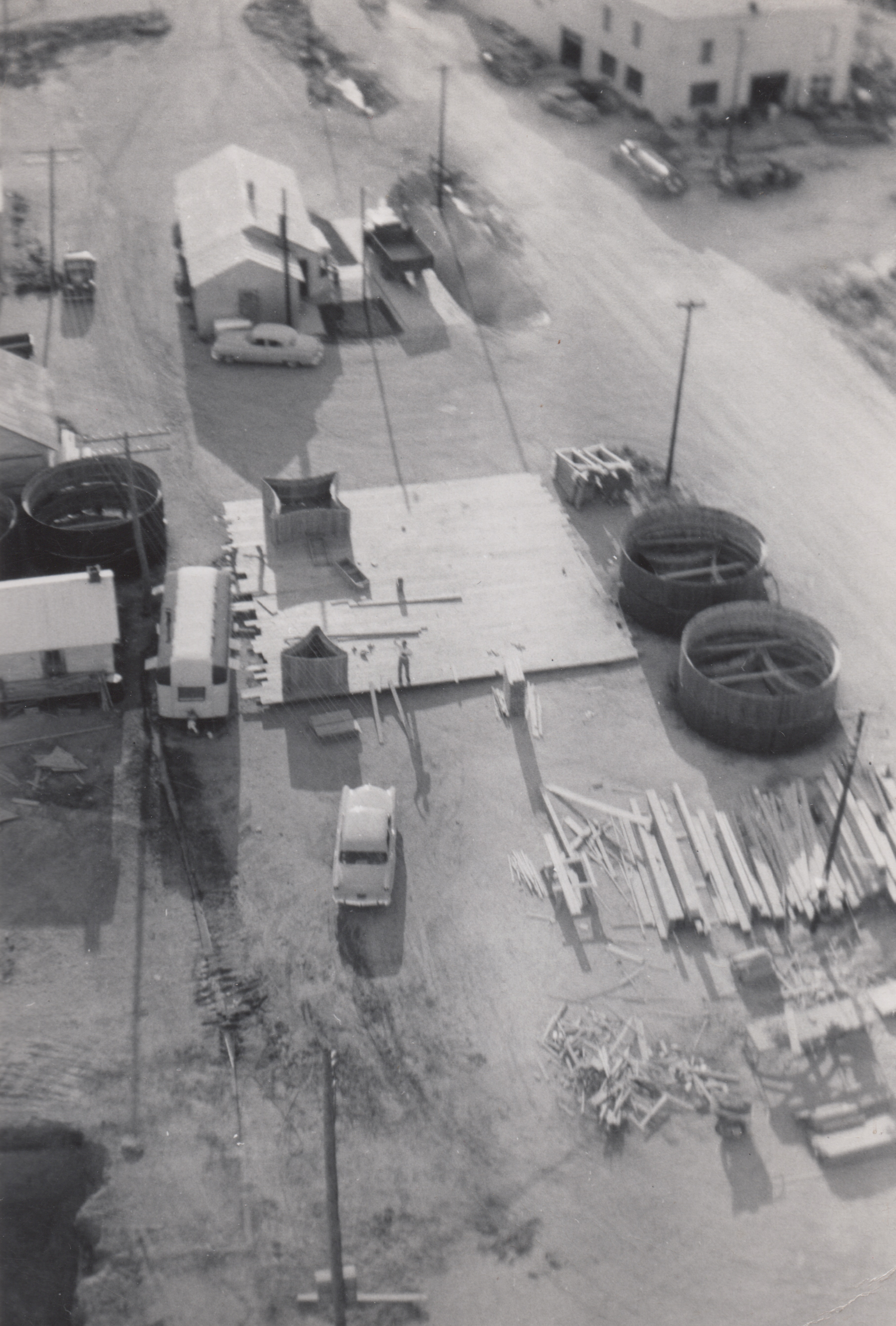
It could be Mike waving at the photographer in this photo from atop the Flagler annex. The Ford and 16-foot trailer are also evident.

It could be Mike waving at the photographer, who is perched atop the Flagler elevator, built in 1950. The foundation for the new annex is seen at lower left.

We got broad-sided by some farmer who put us in a ditch; up side down. Later in the day when we crossed the Mormon Bridge in North Omaha; one of us reached through the front of the car to pay the Toll. The windshield was gone.

The next summer (1955) I worked in Lincoln, Nebr. by myself. My sister Mary’s future brother-in-law Merle worked on the job also.

The Elevators at that time required about 12-15 men per shift. Two shifts per day–twenty four hour continuous pour. Usually about 18-20 days to get to the top of the tanks. The jacks that raised the forms were all manually operated. Today with the advanced electrical operated jacks the number of men required is probably half.

That is the story of my teenage years in MAYBERRY.