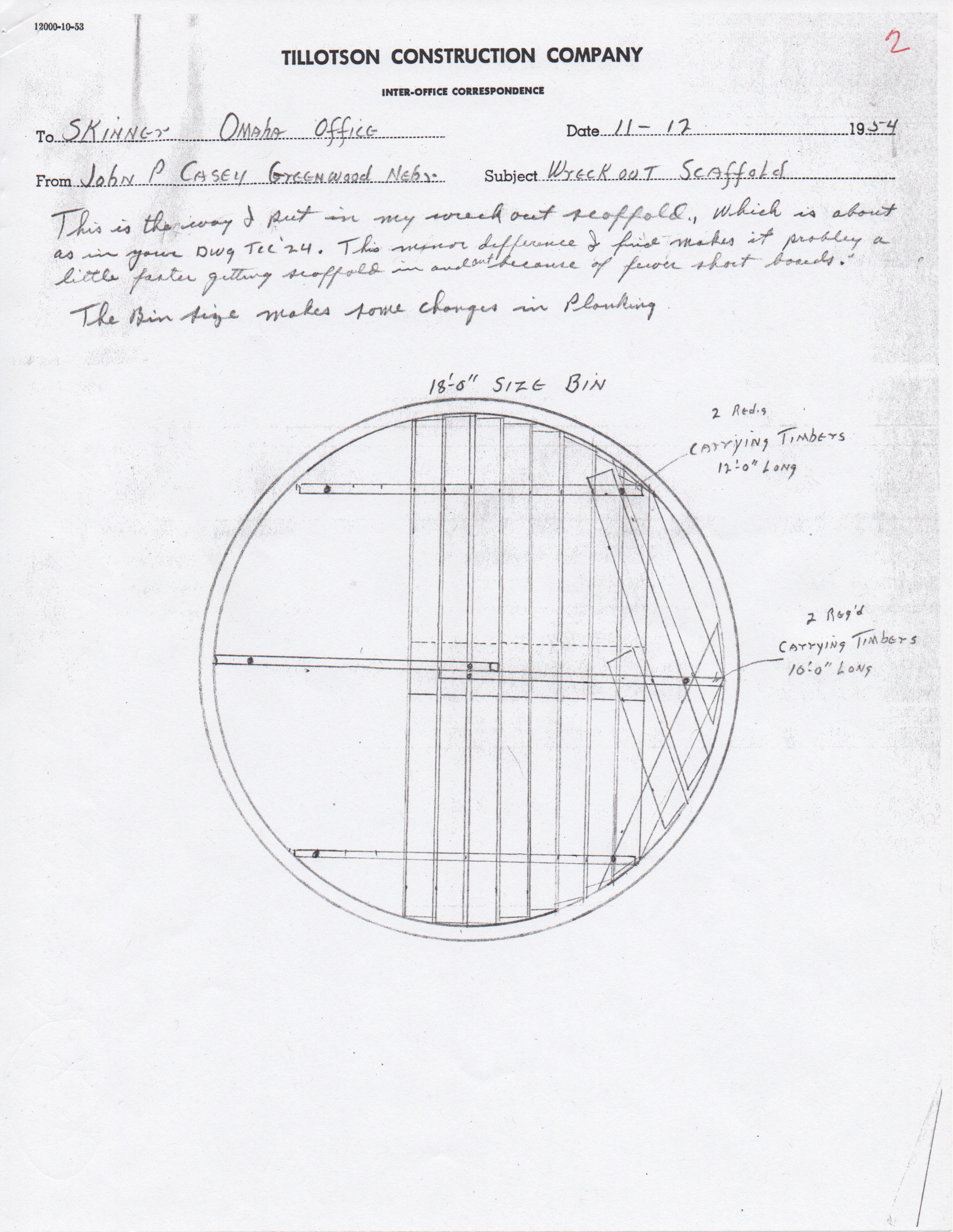
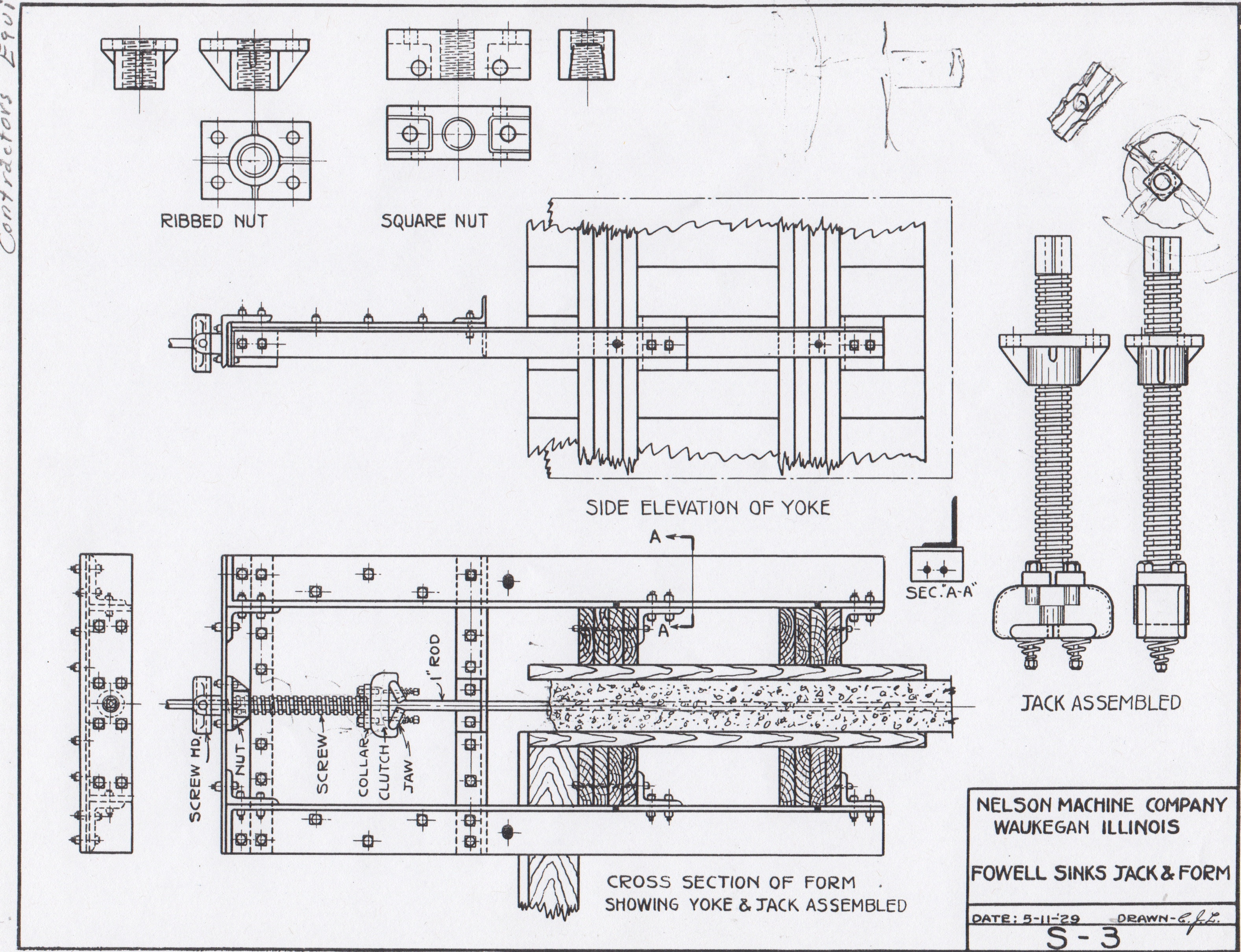
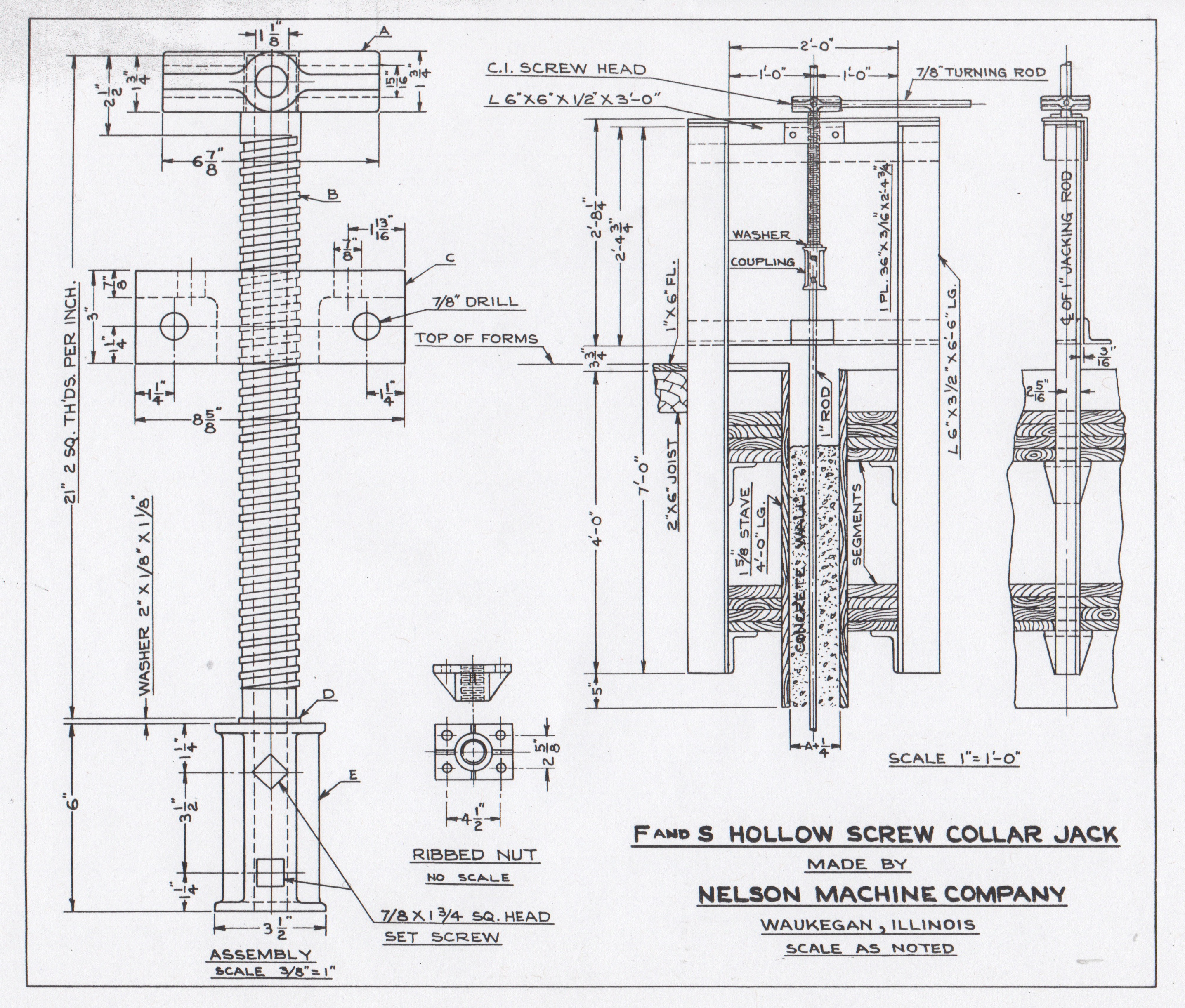
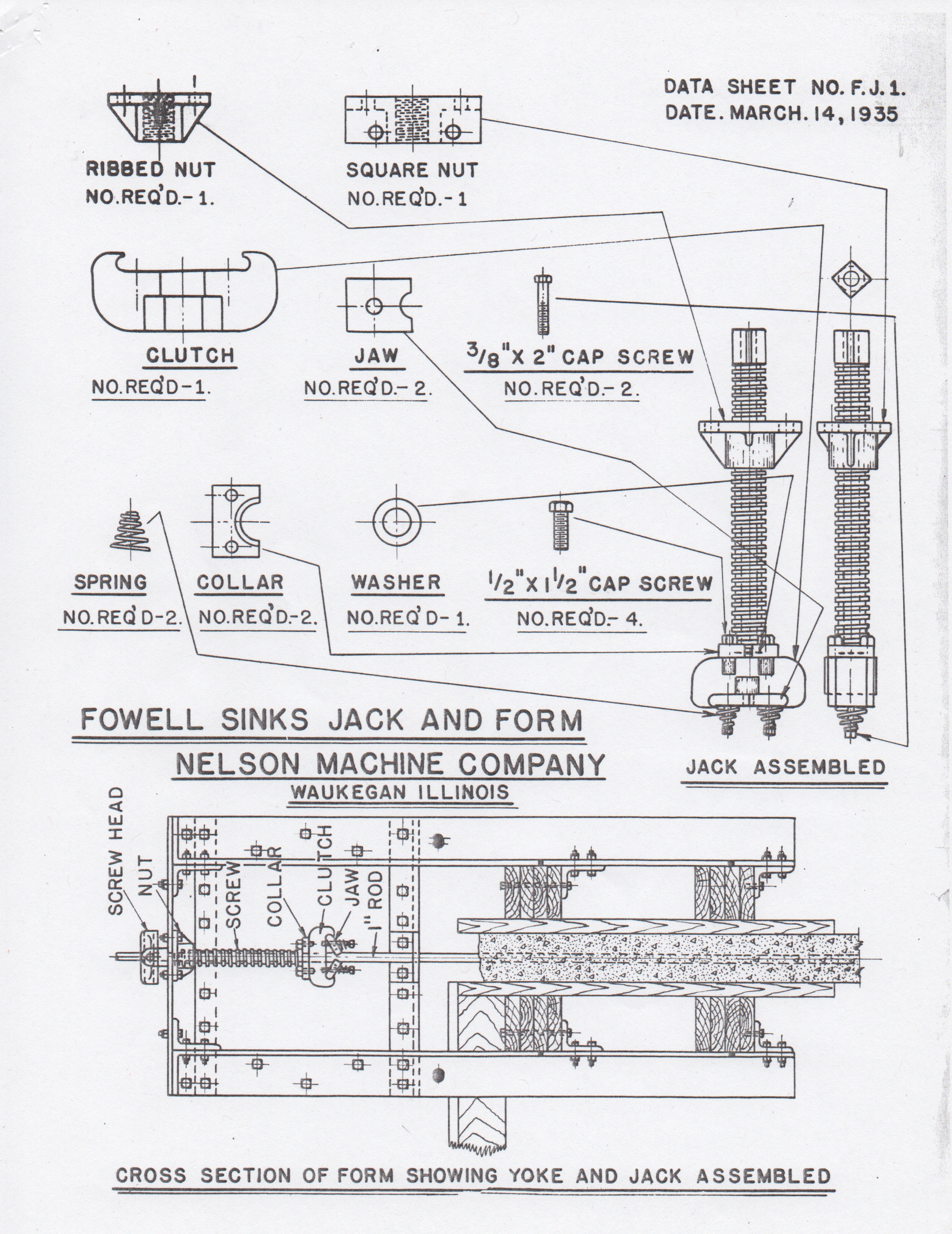
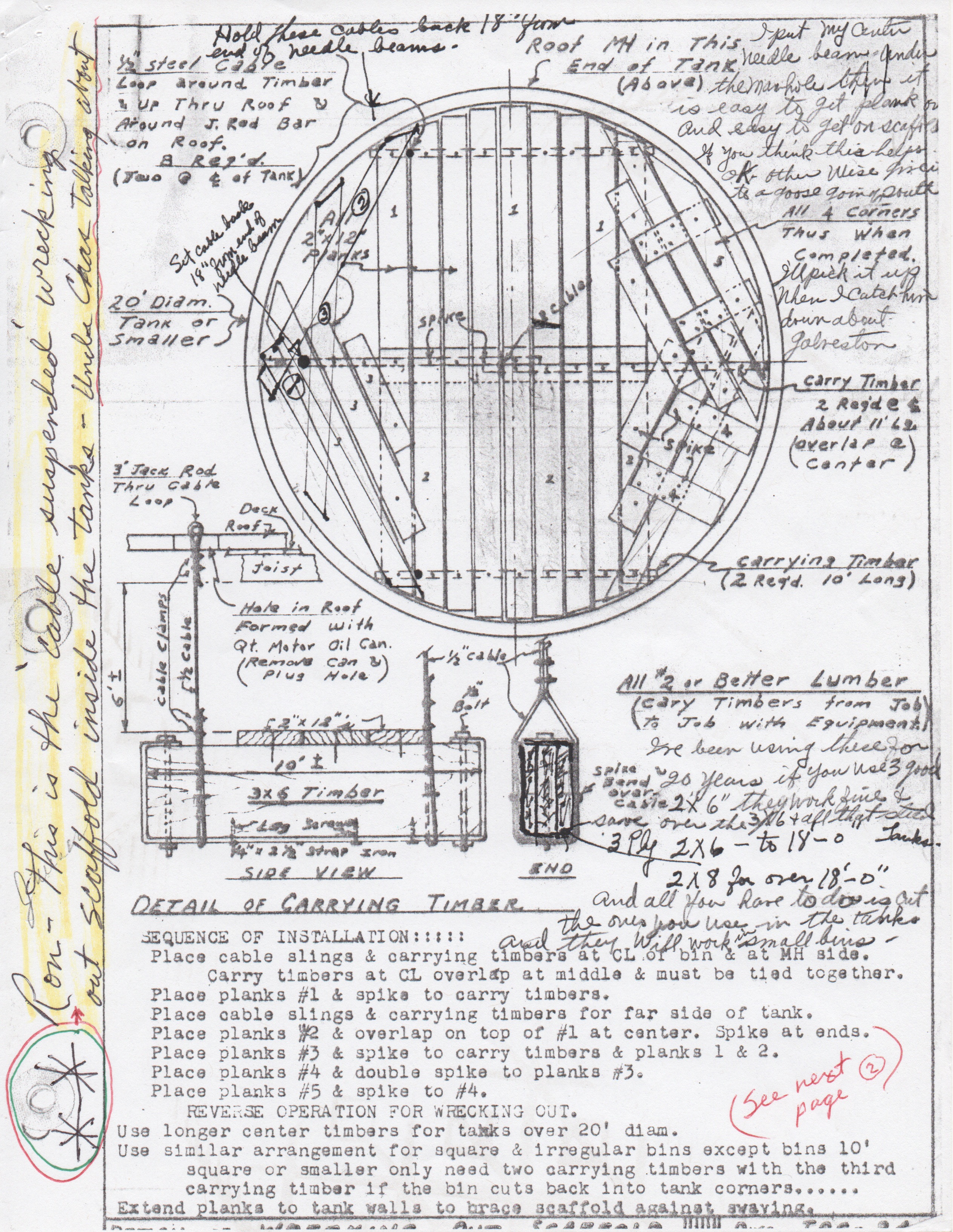
Wrecking out details are provided in drawings from Tillotson records

Charles H. Tillotson

By Ronald Ahrens

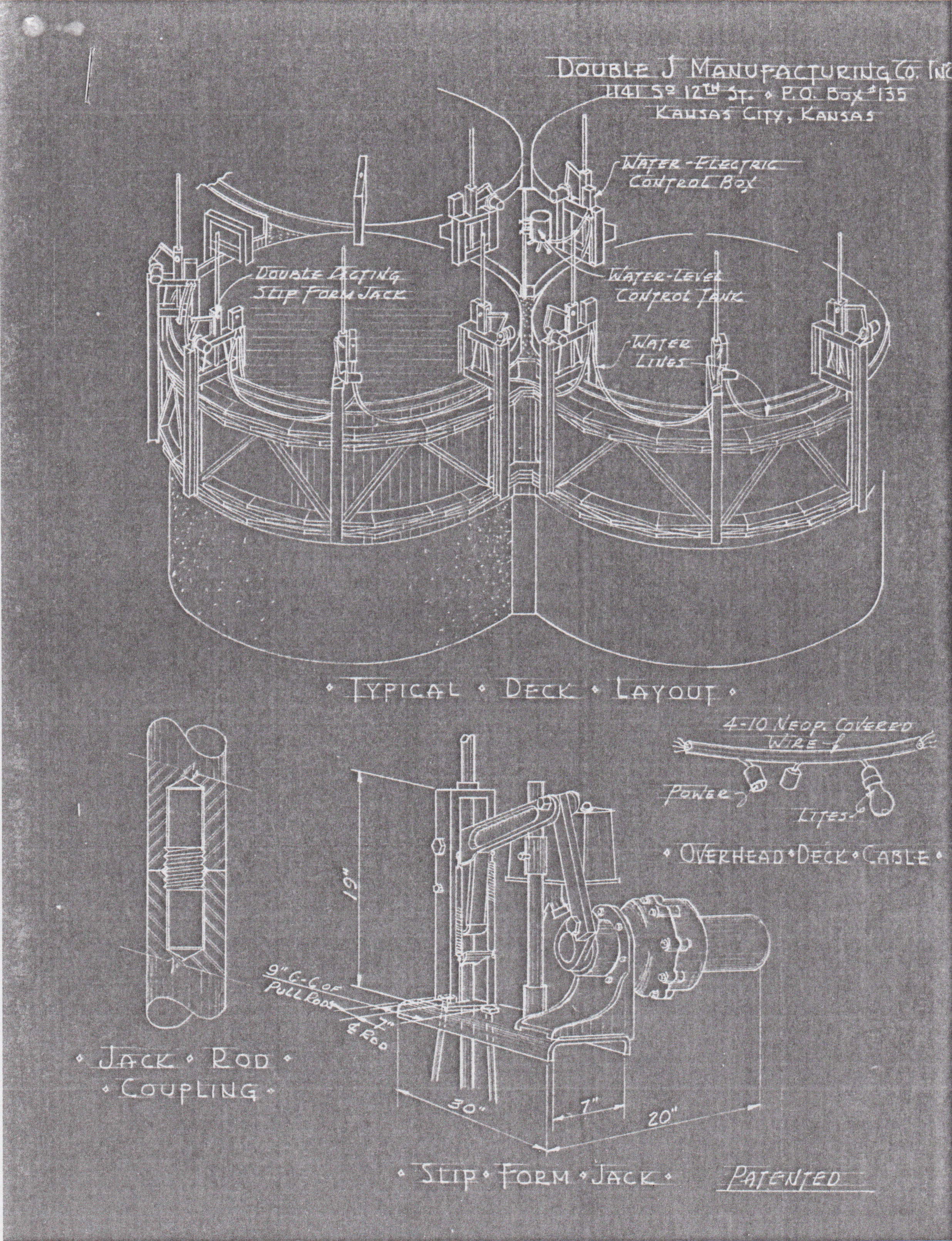
The papers we received from my Uncle Tim Tillotson included not only the record of Tillotson Construction Company’s building activities, but also these pages showing details of building a wrecking-out platform as well as jack rod assemblies and formwork details. Page two is dated November 12, 1954.

A wrecking-out platform was needed as workers disassembled the formwork on the inside of the completed elevator.

Charles H. Tillotson 1

Uncle Charles Tillotson has previously written about his close call when cable clamps failed.

In that post he described a wrecking-out platform this way:

The final scaffold then becomes a square platform suspended in a round tank.

The void on each side of the scaffold is used for lowering or throwing the wood material into the tank’s dark abyss. After all the overhead wrecking has been accomplished, another team gains access to the tank’s bottom via a manhole in the side of the tank at or near ground level.

Charles H. Tillotson 3

The drawings and details presented in the notes included here are invaluable. For example: The hole in the roof is formed with a one-quart motor oil can. (“Remove can & plug hole,” the addendum reminds.)

Charles H. Tillotson 5

The handwritten note in the upper right corner of the first page says, “I put my center needle beam under the manhole then it is easy to get plank on and easy to get on scaffold. If you think this helps O.K. other wise [illegible] to a goose going south.”

“I’ll pick it up when I catch him down about Galveston,” this section concludes.

Charles H. Tillotson 4

Another note is on the quality of timbers: “I’ve been using these for 20 years if you use 3 good 2 x 6 they work fine and save over the 3 x 6 & all that steel and all you have to do is cut the ones you use in the tanks and they will work in small bins.”

We look forward to readers’ comments on the pages.

Charles H. Tillotson 7

List of Tillotson Construction supervisors includes 2 unfortunate incidents

Flagler by Gary Rich

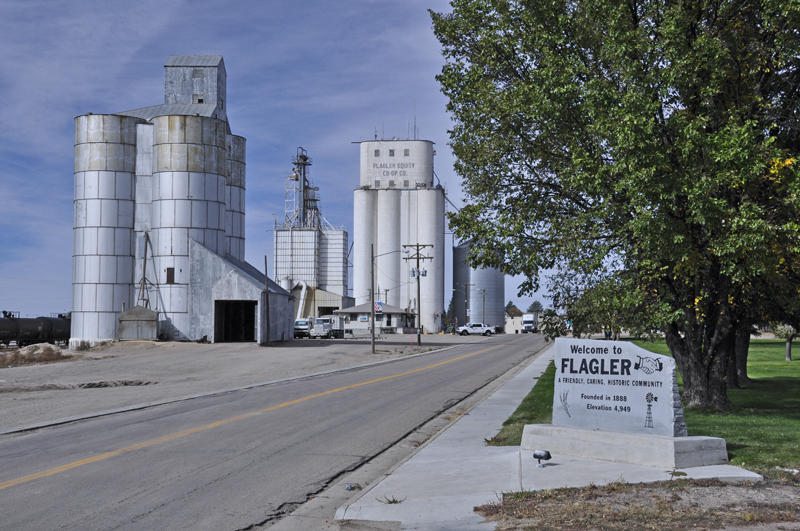
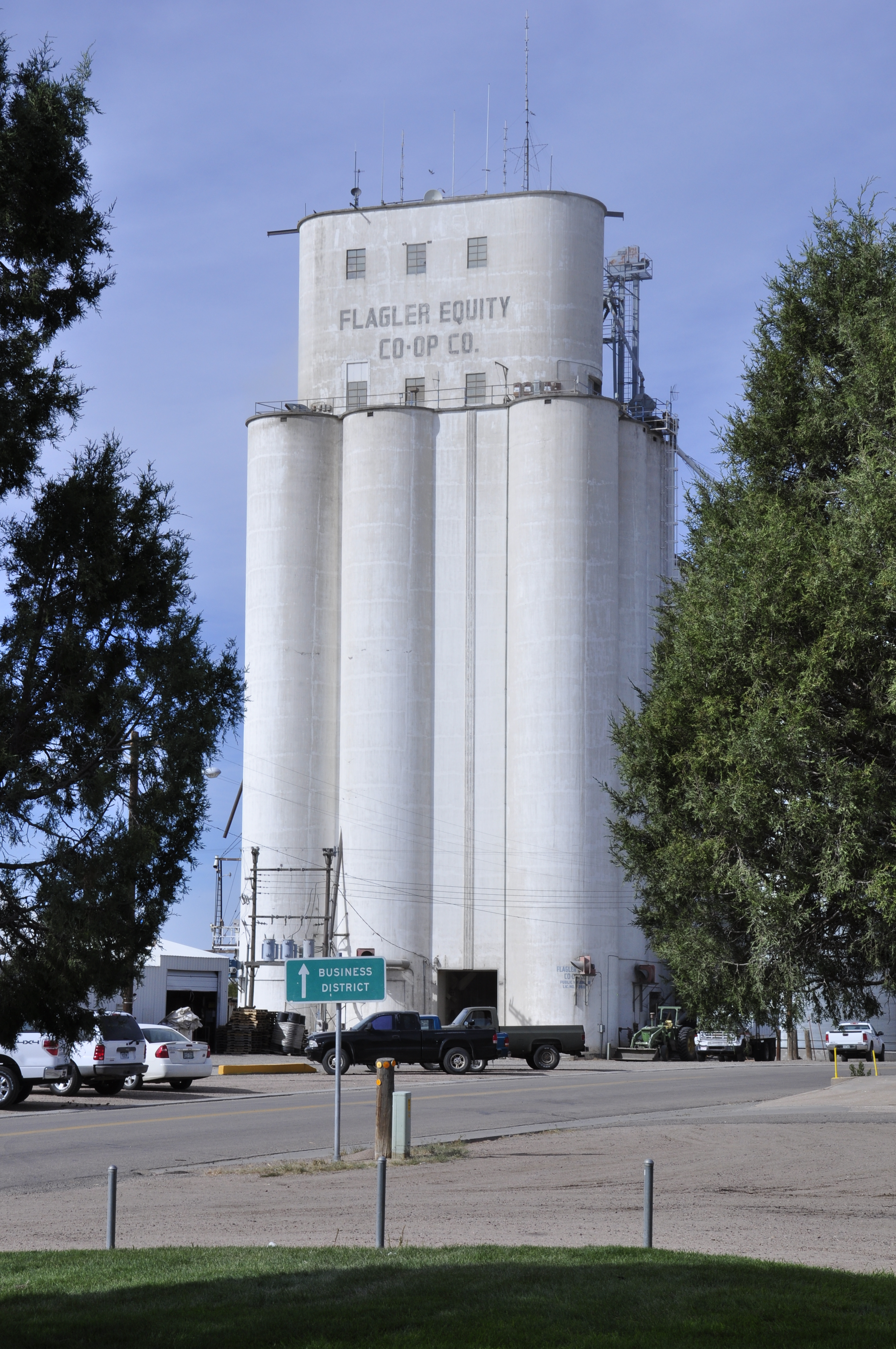
Flagler, Colo. in 2011. Photo by Gary Rich

By Ronald Ahrens

My uncles Tim and Charles Tillotson have put their heads together and come up with a list of supervisors who directed operations on Tillotson Construction Company jobs. What follows are Uncle Tim’s notes, and we’ve done the best that we can in regard to spelling.

Glen Morrison

Francis Dawson (ranch in New Mexico connected to ours)

Doyle Elliott

Glen Casey

Jerry Grimes

Wallly Farmer (also did the house, Kelby Road)

Bill Russell (had seven [surviving] sons; some ran jobs for us; one [the eighth] was electrocuted dropping a steel measuring tape down one morning to verify height on a deck “story pole”; wind blew tape, which touched bare spot on high-tension power lines)

Jim Sheets (’bout half Native American)

Everett Glen (Chas & I concur Everett was the super on Flagler, Colo., in 1953; I had told you before that Mother found him dead in his car in the parking at the house where he was working on finish trim, cabinet work, et cetera; this unfortunate incident had to be fall or winter of ’53 after the job in the summer.)

The Vinton Street elevator was Tillotson Construction’s 1950 hometown showcase

Scan 4

Story by Ronald Ahrens 

The Vinton Street elevator in Omaha was a significant job for Tillotson Construction Company, being a technical challenge to the nine-year-old outfit and representing a major emphasis in its subsequent marketing effort.

Lucky for us, much attention was paid to taking good photos of the elevator, including some early color images that include views of the construction process. These photos were in the hands of Uncle Tim Tillotson, who passed them to us for scanning. The color ones came from a viewer that was presumably shown to prospective clients.

With its headhouse accommodating three legs to lift the grain, it was tall. Exactly how tall isn’t recorded, but it probably came within sniffing distance of 200 feet. Only a few of the city’s downtown office towers surpassed its height, although they weren’t necessarily better-looking.

This terminal elevator had capacity of 382,880 bushels, and the legs handled distribution of the grain inside the main house.

Scan 5It also was a showcase that family and friends could see for themselves. Until then, Tillotson Construction had been building elevators in Texas and Oklahoma as well as some less far-flung places.

The elevator was completed in 1950 on a South Omaha greenfield site at 34th and Vinton Streets. The company’s office at 12th and Jones was only three miles away.

Another reason for its significance is that Reginald and Margaret Tillotson’s oldest son Charles went to work as an apprentice carpenter and hod carrier on the job. He helped to build several other elevators over the next few years.

With the Tillotson construction record now in hand, we present the following technical specifications without yet having achieved a full understanding of all the abbreviations and lingo.

General specifications

Total capacity: 382,880 bushels

Capacity: 38,878 bushels per foot

Reinforced concrete: 4776 cubic yards

Plain concrete (hoppers): 35.3 cubic yards

Reinforcing steel (includes jack rods): 286.5 tons

Average steel per cubic yard of reinforced concrete: 120 lb
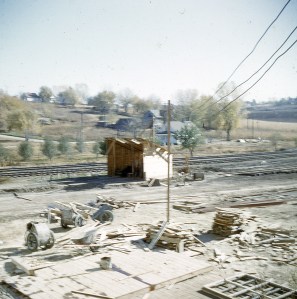
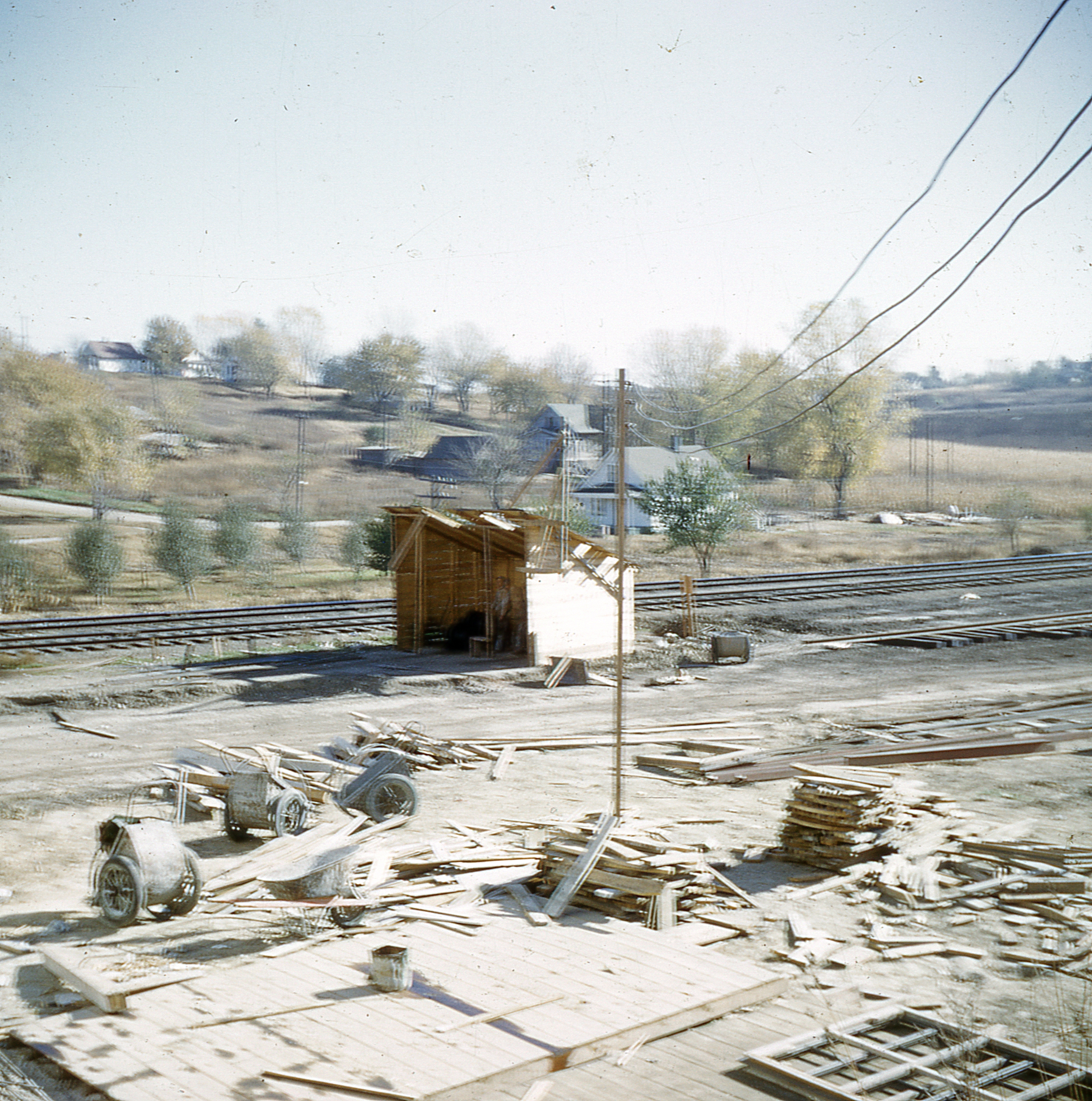
Construction of the hoist very early in the process of building the Vinton Street elevator. Note the Georgia buggies near the formwork.

Construction of the hoist very early in the process of building the Vinton Street elevator. Note the Georgia buggies near the formwork.

Steel and Concrete

Below main slab: 20,932 lb/223 c.y.

Main slab: 66,579 lb/618 c.y.

Drawform walls: 233,927 lb/2100 c.y.

Driveway and work floor: no figure for steel/17 c.y.

Deep bin bottoms (including columns): no figure for steel/155 c.y.

O.H. bin bottoms: no figure for steel/40 c.y.

Bin root: no figure given for steel/90 c.y.

Scale floor (or garner, complete): no figure for steel/17 c.y.

Cupola (headhouse) walls: no figures

Distributor floor (cleaner floor): no figure for steel/8 c.y.

Cupola roof (gallery): no figure for steel/49 c.y.

Miscellaneous (headhouse): no figure for steel/640 c.y.

Attached driveway: driveway 416 c.y., track shed 403 c.y.

Construction Details

Main slab dimensions: 58 x 119.5 feet

Main slab area (outside on ground): 6690 sq ft

Weight reinforced (total) concrete  at 4000 lb per c.y., plus steel: 9838 tons

Weight plain concrete (hoppers, 4000 lb per c.y.): 70.6 tons

Weight hopper fill sand at 3000 lb per c.y.: 439.8 tons

Weight of grain at 60 lb per bushel: 11,490 tons

Weight of structural steel and machinery: 100 tons

Gross weight loaded: 21,938 tons

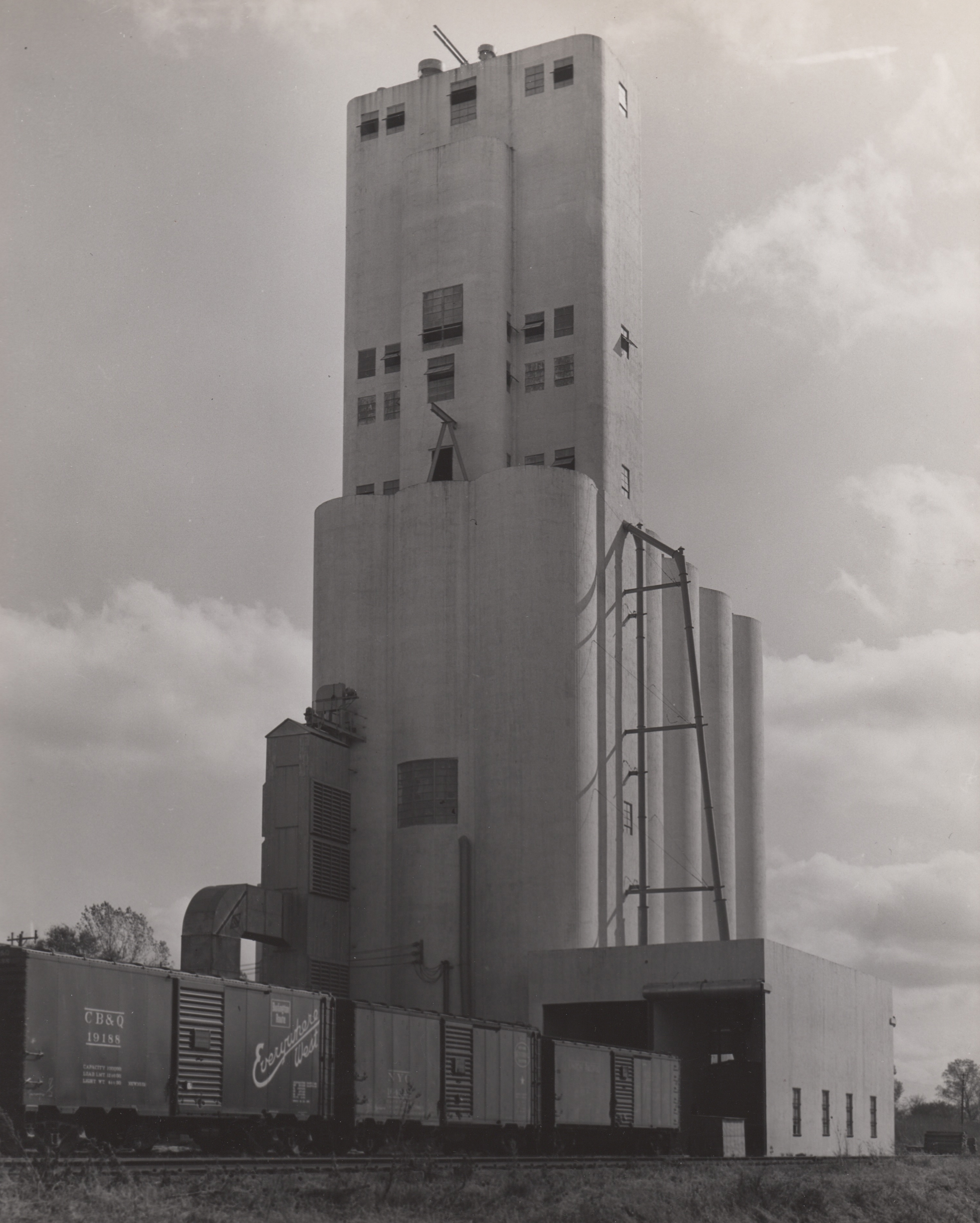
This extreme view shows the elevator before painting. The individual pours can be seen in the drawform walls of the bins. Note the man leaning out of the window opening on the left.

This extreme view shows the elevator before painting. The individual pours can be seen in the drawform walls of the bins. Click on the photo to enlarge the image, and you’ll note the man leaning out of the window opening on the left.

Bearing pressure: 3.28 tons per sq ft

Main slab thickness: 30 in

Main slab steel: 1 in □ at 7 in o.c.

Tank steel at bottom (round tanks): ⅝ in ⌀ at 8 in o.c.

Lineal feet of drawform walls: 975 ft

Height of drawform walls: 120 ft

Pit depth below main slab: 20 ft, 9 in

Cupola (headhouse) dimensions outside (length x width x height): 24 ft x 52 ft x no figure recorded

Machinery Details

Boot pulley: 72 in x 28 in x 3 7/16 in

Head pulley: 72 in x 28 in x 5 15/16 in

RPM head pulley 39 rpm

Belt: leg 26 in x 8-ply, conx 36 in x 4 ply

Cups: 21 x 7 in cal. at 9 in o.c. stag.

Head drive: Link belt, 100 hp

Theoretical leg capacity (Cub manufacturer rating): 17,400 bushels per hour

Actual leg capacity (80 percent of theoretical): 13,900 bushels per hour

HP required for leg (based on above actual plus 15 percent for motor): 89.8 hp
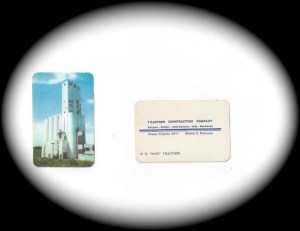
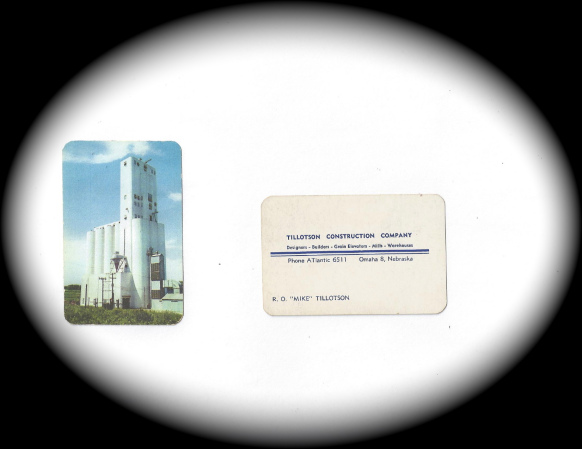
My grandfather used one of the color images from Vinton Street on its business card.

My grandfather used one of the color images from Vinton Street on its business card.

Man lift: 2 – 1.5 hp

Load out scale: Two 2500-bushel hop.

Load out spout: 15-inch diameter

Truck lift: Ehr. semi fans w. col.

Dust collector system: on legs

Cupola spouting: Trolly spouts

Driveway doors: Johnson O.H. rolling

Conveyor: Two 36-in belts and two 30-in belts


Also Built

Track shed

Truck shed

Office

Truck scale
All specs, and the Bouncing Czech’s photos, delineate elevators in David City

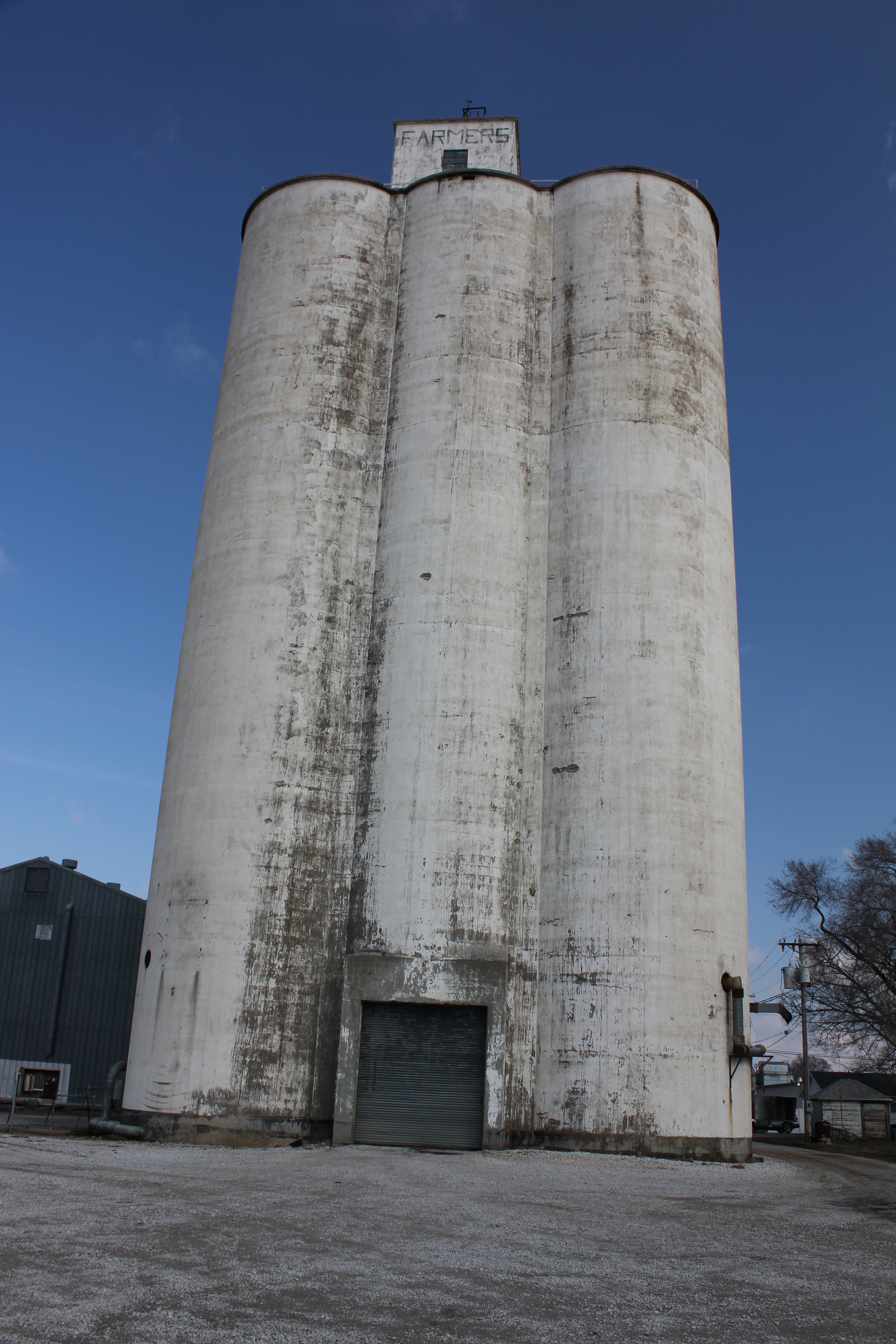
The Tillotson Construction of Omaha elevator also serves as a satellite antenna tower.  Photo by Tom McLaughlin

The Farmers Cooperative elevator, built by Tillotson Construction Company, of Omaha, Neb., also serves today as a satellite antenna tower. Photo by Tom McLaughlin

Story by Kristen Cart

My blogging partner Ronald Ahrens said he hoped we would find the motherlode of history about the elevators his grandfather Reginald Tillotson had built. With luck and the help of his family, we finally did it.

Reginald Tillotson’s sons, Charles, Tim, and Mike have all recently shared their memories from the job sites. Tim Tillotson also found and restored a treasure trove of company documents and photos. Best of all was a set of blueprint specifications for over 100 Tillotson Construction Company slip-formed concrete elevators and annexes. Eureka!

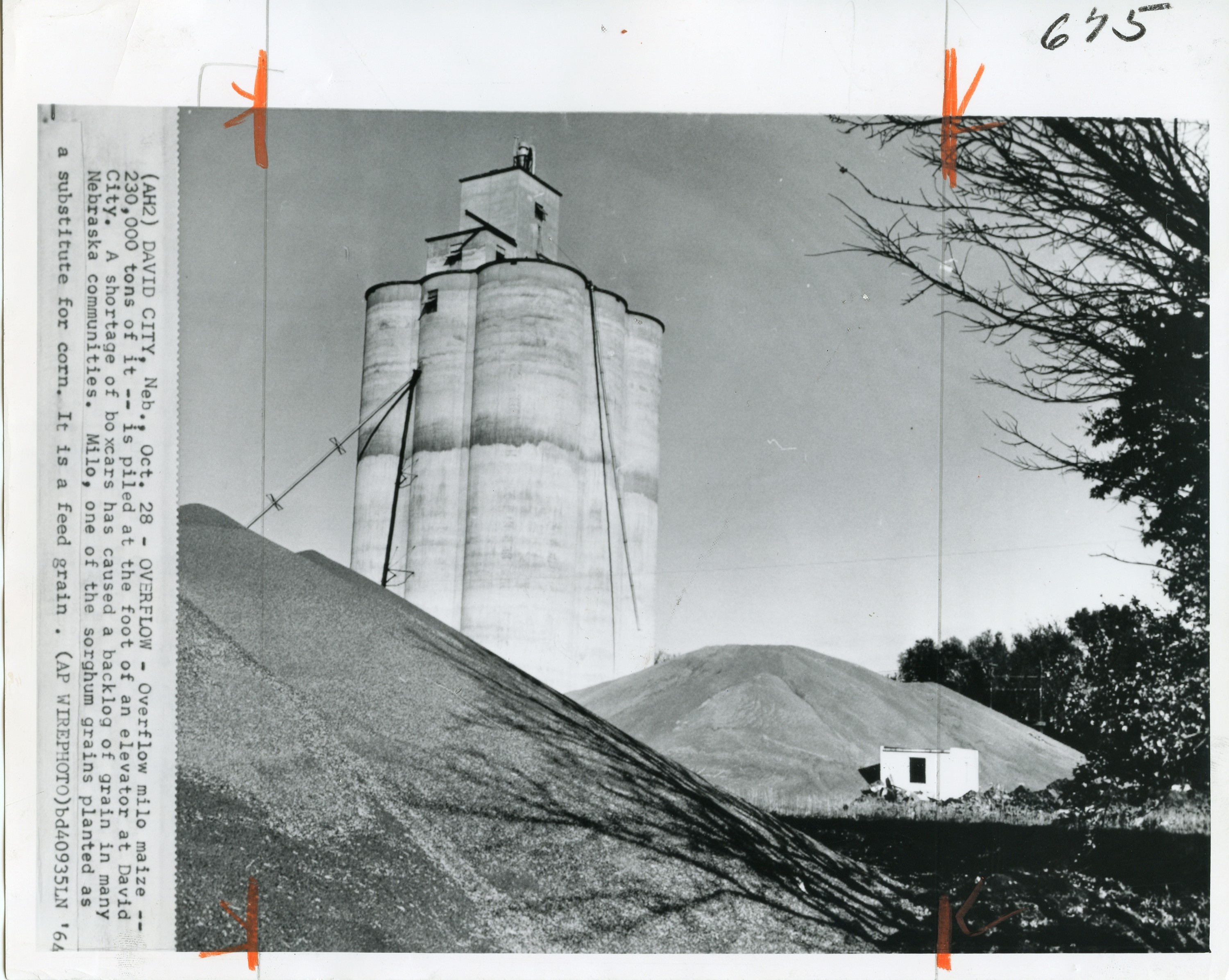
A historical image taken in David City, dated October 28, 1964. This is not the Tillotson Construction elevator, but it's neighbor a short distance down the rail line.

A historical image taken in David City, dated October 28, 1964. This is not the Tillotson Construction elevator, but its neighbor a short distance down the rail line.

David City, Neb., is a town due west of Fremont in the eastern half of the state. One of the two elevators in town was listed in the Tillotson blueprints. Armed with our new information, I looked for pictures of the newly found elevator.

I discovered some history, instead.

The grain piled next to the elevator in the 1964 press photo is milo, a feed grain, and the pile-up was attributed to a shortage of rail cars. Scenes like this were observed all over Nebraska that year.

The elevator in the photo didn’t quite have the Tillotson look, so a quick peek at David City on a Google map showed a washed-out image with just the suggestion of a curved headhouse on a second elevator in town. Further search brought me to “The Bouncing Czech” Flickr page and beautiful photos of the Farmers Cooperative elevator I was looking for. With Tom McLaughlin’s kind permission, they are posted here.

Tom McLaughlin likes to stop and check out elevators.

In an exchange of e-mails, he wrote, “A friend of our family owned the Magowan Elevator, in Gordon, Neb., so I’ve been in that one several times. I still remember my first manlift ride–that was the scariest ride I’ve ever taken.

David City's "other" elevator. Photo by Tom McLaughlin

David City’s “other” elevator. Photo by Tom McLaughlin

“Back in the 1950s, my dad used to ‘walk the pipeline’–he literally walked the natural gas pipeline in Oklahoma, Kansas, and Nebraska, looking for signs of leaks, before they went to aerial photography and control valves.

“So he always liked to wander around the back roads and small towns, and I think that’s where I got the bug. When we would go on a trip, we never knew what route he’d take. I don’t think he did either!”

Tom’s enthusiasm is contagious.

The small towns are peaceful, yet inviting, and the elevators are fascinating. It won’t be too much longer before this blogger takes another grain elevator trip.

Specifications 

Tillotson Construction Company records show the David City elevator was built in 1951 according to the “David City Plan.” This includes five tanks, each one 18 feet in diameter and 120 feet high.

Total capacity: 180,000 bushels

Driveway: 13×17 feet with eight bins over the drive

Bins: 15 in all and overflow, with a dust bin at the exterior

Reinforced concrete: 1716 cubic yards

Plain concrete (hoppers): 20 cubic yards

Reinforcing steel (including jack rods): 81.16 tons

Steel and concrete:

Below main slab: 6632 pounds and 45 cubic yards

In main slab: 22,233 pounds and 180 cubic yards

Drawform walls: 106,320 pounds and 1253 cubic yards

Driveway and work floor: 2543 pounds and 15 cubic yards

Deep bin bottoms: 8081 pounds and 38 cubic yards

O.H. bin bottoms: 2917 pounds and 22 cubic yards

Bin root: 6122 pounds and 44 cubic yards

Scale floor: 285 pounds and 10 cubic yards

Cupola (headhouse) walls: 2830 pounds and 70 cubic yards

Distributor floor: 1494 pounds and 8 cubic yards

Cupola roof: 1586 pounds and 14 cubic yards

Miscellaneous (Boot, leg, headhouse, Tr., sink, steps, etc.): 1273 pounds and 15 cubic yards

Mike Tillotson remembers Flagler (1953), Albert City (1954), and Lincoln (1955)

By Mike Tillotson

I don’t have access to a computer nor know how to use one. I barely get a radio signal, and my tin-can barb-wire phone is not always clear here in the hills either.

As for the elevators I was thirteen on my first summer with my brothers. I just graduated from Grade School. Our Father helped his Father build Wood Elevators, and often was told to put out that cigarette.

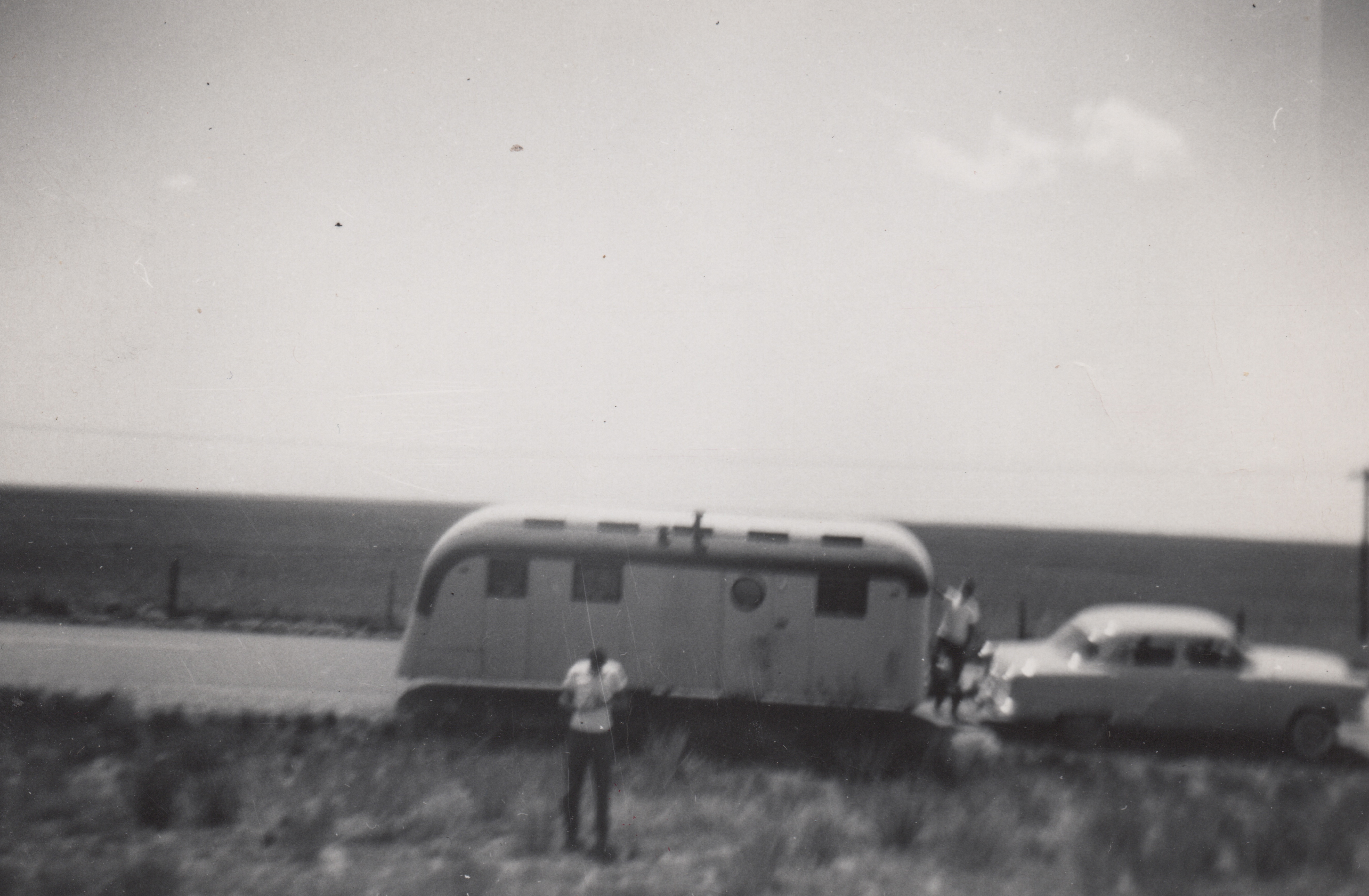
Mike stands at the center of the frame while Tim captures Charles just after he has taken a rest break on the way to Flagler.

Mike stands center-frame while Tim Tillotson captures Charles after a rest break en route to Flagler with the ’53 Ford and mystery trailer.

We headed for Flagler, Colorado; seventy five miles East of Denver. Charles was driving a 53 Ford 4-door our Father bought for him. Two-tone tan that Charles had nosed, and added fender skirts, and a continental kit. We were pulling a sixteen foot trailer that we lived in for the summer.

We were paid $1.00/Hr.–60 Hrs./Week with time and one half over 40 hours. I was the time keeper, and drove a tractor with a front-end loader. I filled up the three-bag concrete mixer with sand. Someone else put the cement and limestone in the hopper. We mixed our own concrete because we were in the middle of no-where.

I remember the Super catching me putting pennies on the rail track, and helping me with the time-sheet so I could go to Denver with my brothers for the week-end.

Tillotson Home

The Tillotson home in the Ponca Hills north of Omaha. Mike still lives there. 

I remember Charles had a girl-friend, and when we came back to Omaha in September; she came in to visit him. When Charles went to meet her at the place she was staying; Sharon went with him. When Charles and Sharon met her she said she forgot something in her room, and went back to get it. After waiting about one half hour Charles sent the door man to the room. He returned and said the room was empty, and the window was open.

You have to remember this was 1953 when we were at the age of innocence, and life was pure and simple.

The following summer (1954) we went to Albert City, Iowa, 75 miles North of Council Bluffs. We rented rooms in a private home. We worked with a 20 something guy that ran the winch pulley bucket to the top of the elevator as it progressed, and brought building materials down. We also rode the bucket up and down to get on deck. The elevator bens were 125 feet to the top with a Head-House of 75 on top of that.

The winch guy went to work on another elevator the Company had going in a town about 30 miles away. This was an addition to an existing elevator–an add-on.

At noon one day he went to the top with new boots on. There were four or five planks at the top from old to new grain bens.

No hand rails or anything. They were not required at the time. I doubt OSHA even existed. He either fell or jumped going from old to new.

Some said he might have tripped with the new boots.

Charles and I bought a nice 40 Ford sedan for $75.00 off a used car lot. He didn’t want to use the 53 any more than necessary. Coming back to Omaha one week end we were zipping down a country road with corn as high-as-a-sky and started through an intersection with no stop signs.

It could be Mike waving at the photographer in this photo from atop the Flagler annex. The Ford and 16-foot trailer are also evident.

It could be Mike waving at the photographer, who is perched atop the Flagler elevator, built in 1950. The foundation for the new annex is seen at lower left.

We got broad-sided by some farmer who put us in a ditch; up side down. Later in the day when we crossed the Mormon Bridge in North Omaha; one of us reached through the front of the car to pay the Toll. The windshield was gone.

The next summer (1955) I worked in Lincoln, Nebr. by myself. My sister Mary’s future brother-in-law Merle worked on the job also.

The Elevators at that time required about 12-15 men per shift. Two shifts per day–twenty four hour continuous pour. Usually about 18-20 days to get to the top of the tanks. The jacks that raised the forms were all manually operated. Today with the advanced electrical operated jacks the number of men required is probably half.

That is the story of my teenage years in MAYBERRY.

Go West, young men, to Flagler, Colorado, and build a grain elevator!

Scan 1

What could help the three teenaged sons of Reginald and Margaret Tillotson sons to grow up? Nothing better than going from Omaha, Neb., where Tillotson Construction Company was located, to Flagler, Colo., to build the annex to a grain elevator in 1953.

Charles, 18, Tim, 16, and Mike, 13, drove across the Great Plains in a new Ford, towing the trailer that would serve as their home and the job office.

Having started for the company as an assistant carpenter when he was 12, Charles was already quite skilled in elevator construction techniques.

But how did they fare for themselves? For instance, what did they eat during their weeks on the job?

“Regarding what we ate, I really don’t remember but it was probably beans and wieners,” Charles recalls. “We also ate at the local cafe in Flagler. That was when Tim and I weren’t screaming over to Elitches Park Outdoor pavilion in Denver (some 120 miles to the west) to squeeze in a night of dancing and return at daybreak to assume our work shift–no sleep of course. I think we left Mike alone in Flagler to fend for himself.

Mike spent many hours in the trailer, serving as timekeeper and reading hot rod magazines when he could.

Building a mighty elevator required specialized carpentry and subtle touches

Scan


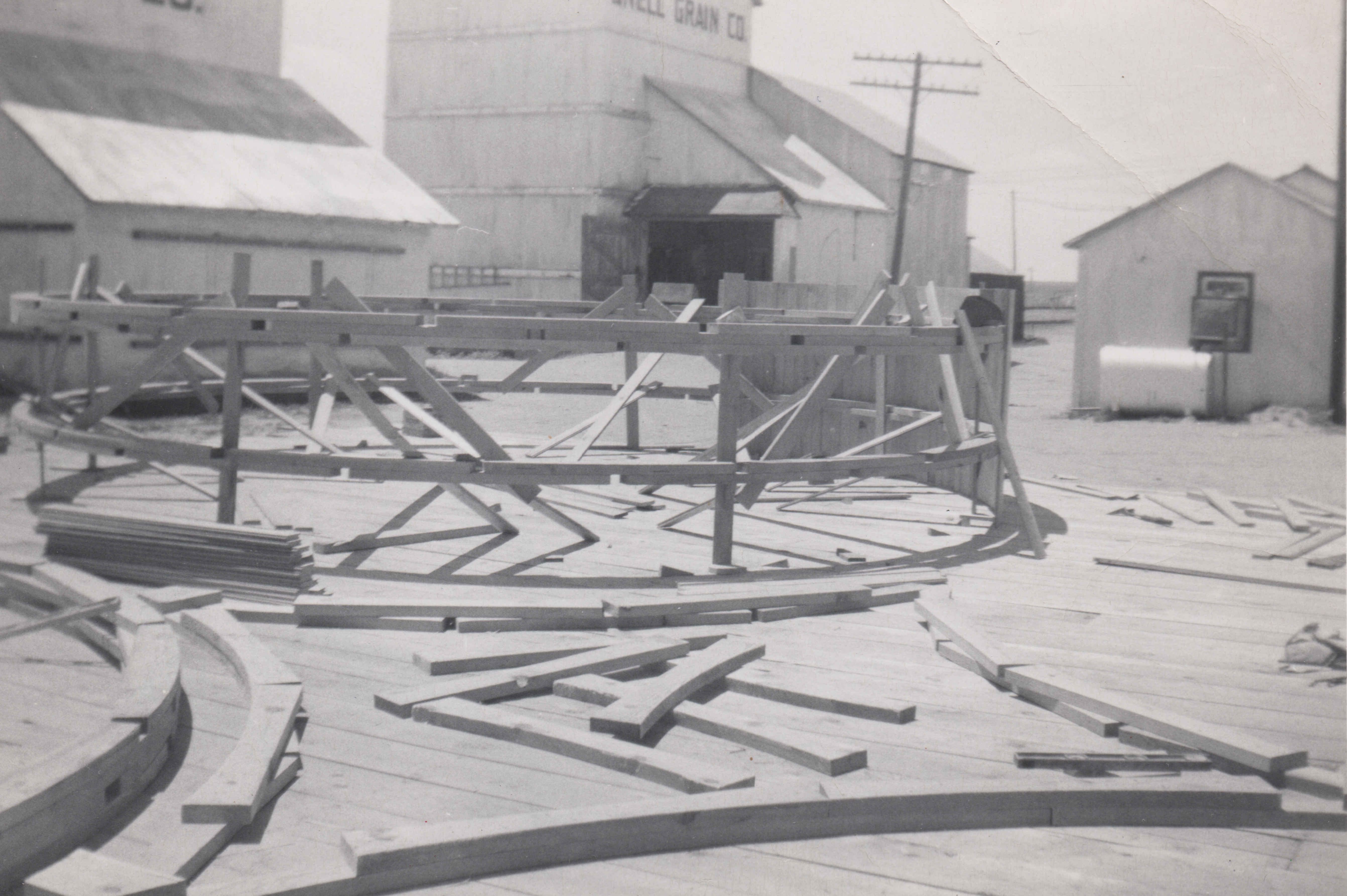
Editor’s note: Here, Charles J. Tillotson offers additional explanation about the formwork at the start of the Flagler, Colo., annex, seen in this 1953 photo from Tillotson Construction Company archives. 

All new lumber was used, the amount of which I couldn’t give any idea but it was a few truckloads at minimum.

The curved lumber was done by hand, either with a table saw or a Skilsaw or both. The notches, of course–for example at the jack yoke locations–were again cut in the field.

Mucho carpentry work, the length of which depended on the number of carpenters that could be scrounged up.

Also, the superintendent of the job was usually out of the carpentry world and could pitch in as needed during form construction.

And there remains one more point to make about the photo from a previous post, “Taking it from the top at Tillotson Construction’s annex in Flagler, Colo.” (use the link that’s included below or click on the photo to see an enlarged version). 

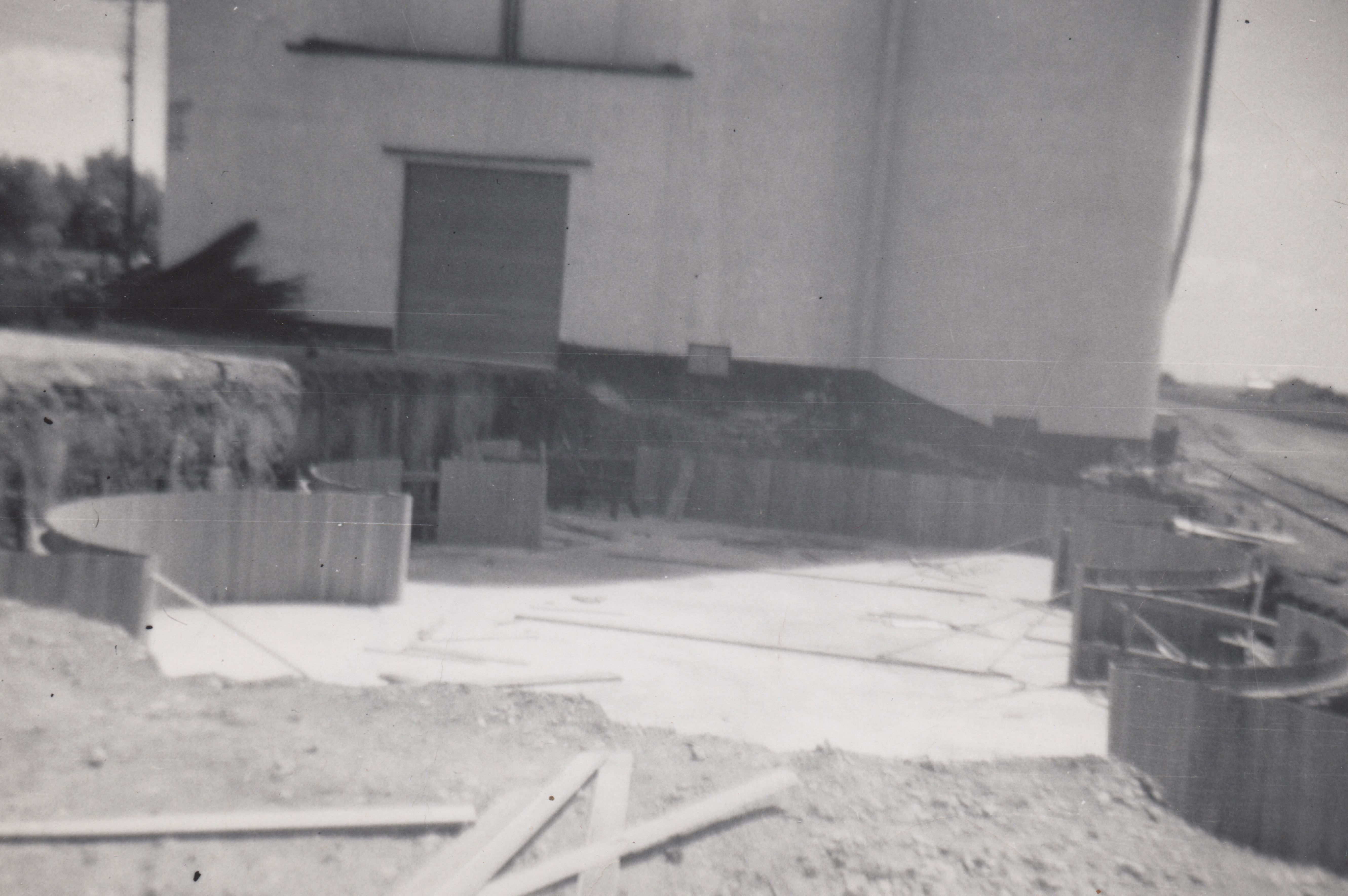
ScanThe dark shadow around the circular bin forms is the residue from “washing down the side.” (This is the side where the cement will be poured.)

The formwork was coated with used motor oil or some other type of lubrication.

Doing so made the formboards moisture resistant and let them more easily slip upward with less friction.


Related articles


Linking together preassembled formwork came after pouring an elevator’s slab

Initial formwork for new grain bins at Flagler in 1953.

Initial formwork for Tillotson Construction’s new annex of grain bins at Flagler, Colo., in 1953.

Editor’s note: The following explanation by Charles J. Tillotson helps to answer the question of how a grain elevator is built.

The excavation you see in the picture was dug for the foundation and floor slab of the annex at Flagler. Once the slab is poured, the forms that have been built are moved onto the slab where further carpentry is used to connect all the formwork together and construct the supplemental formwork such as horizontal ribs, jack yokes, et cetera, to make an integral form, all assembled into a uniform unit and capped entirely with a walking deck, also of wood.

Oftentimes the job site did not lend itself to building the major portion of the formwork simultaneously with the excavating and placement of the foundation (lack of space, topography, et cetera). So all of the formwork had to be built in place after the new floor was poured, which slowed the construction time of the overall build-out of the elevator.

Taking it from the top at Tillotson Construction’s annex in Flagler, Colorado

Scan

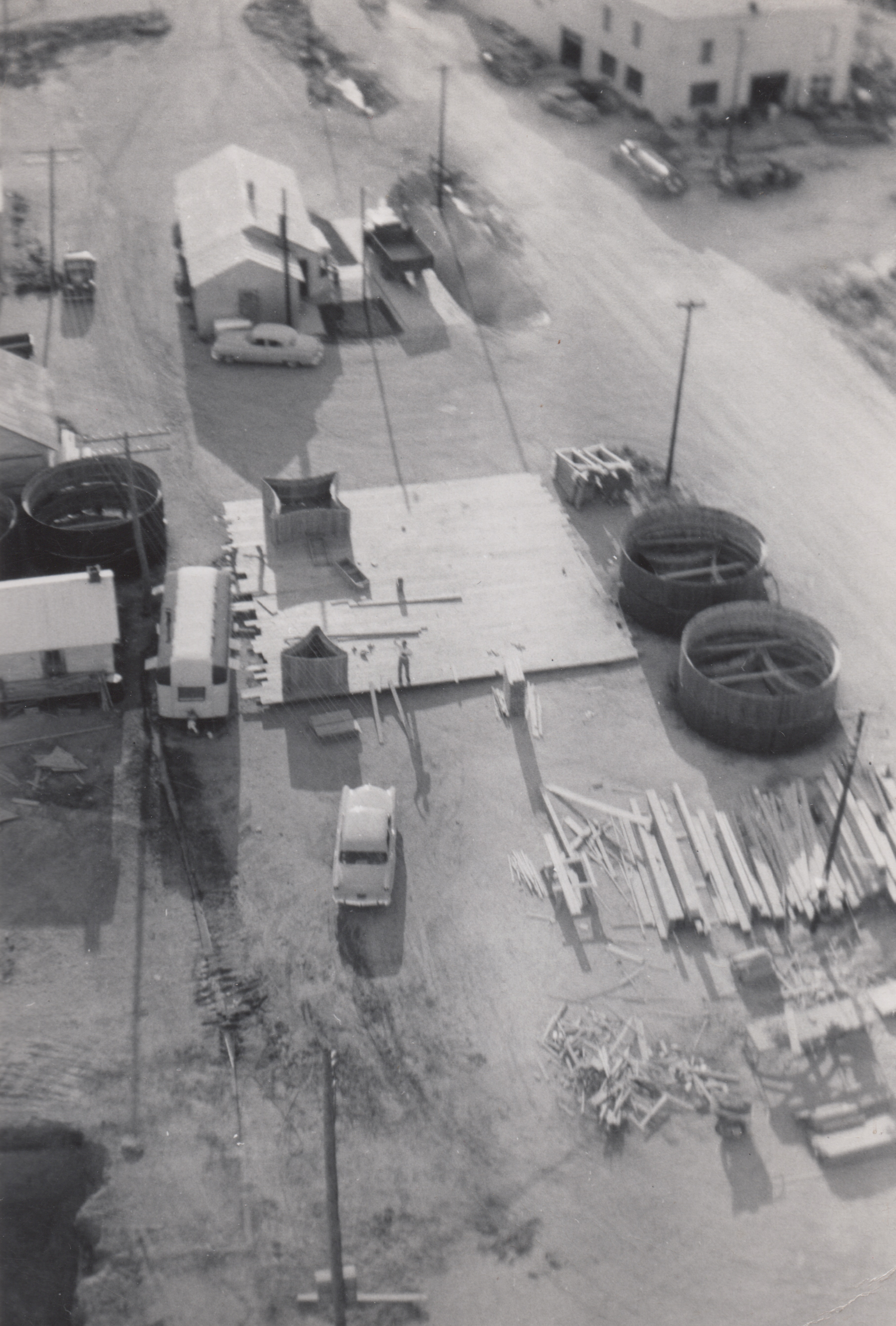
This photo from the Tillotson Construction Company archives shows the staging deck, on which all formwork was built to ensure it was dead level. The square section was probably the form for a conveyor or bucket shaft, or for a man lift. The triangular section, called a groin form, was made for the void where two rows of bin forms were placed together. The excavation hole for the new annex is seen, lower left, at the foot of the 252,000-bushel elevator the company built in 1950, modeling it after their one in Pond Creek, Okla. 

By Ronald Ahrens

In 1953, my grandfather Reginald Tillotson decided to send his three sons, Charles, 18, Tim, 16, and Mike, 13, to work on an annex to the Flagler, Colo., elevator Tillotson Construction Company had built three years earlier.

My grandmother Margaret didn’t like the idea.”You can’t send those kids out there,” she protested.

“It’s about time they grew up,” Reginald said.

Indeed, my uncles were sent, leaving Omaha in a new Ford and pulling the travel trailer that would be their home for the next few weeks.

“I don’t remember that he even came out,” Uncle Tim said recently of Reginald.

From left, Tim and Chuck Tillotson and La Rose Tillotson Hunt in 2012.

From left, Tim and Chuck Tillotson and La Rose Tillotson Hunt in 2012.

While Charles and Tim labored on the formwork that rose toward the sky, Mike stayed in the trailer, which doubled as their bunkhouse and the job office. His task was that of timekeeper.

“I don’t recall him bein’ out there when we was jackin’ and pourin’,  jackin’ and pourin,'” Tim said, although he did recall him reading hot rod magazines.

Once the pouring started, it couldn’t stop. A cold joint between concrete that had already set and a new pour wasn’t at all desirable, for it would leak.

“You had to treat that damn good when you started over,” Tim said.

Work went on in twelve-hour shifts. As the concrete was dumped out of a Georgia buggy–a V-shaped tub riding on large wheels behind a U-shaped handle–someone with a spud hoe would follow the pour and work the concrete, releasing the air from around the rebar. “The only way you shut down was an emergency,” Tim said. Lightning, for example, was an emergency because it was attracted to the rebar being used to bolster the concrete.

_DSC0033_9425The crew was made up of some trusted old hands and an assortment of locals. “You never knew who you were workin’ next to,” Tim said.

He remembers the local sheriff asking himself why he should put up anyone in the jail when they could work and earn their keep. One of the convicts toiling alongside Tim had a funny thought. “You think you can hang onto that hoist handle hard enough if I push you off?” he said.

Any number of mishaps could occur. “You ought to see one of them Georgia buggies go off the top,” Tim said. “Or the cotter pin come off the wheel and the wheel go off.”

At ground level the pour was made in six-inch increments, but the speed increased as the elevator rose.

To keep the screw jacks on the same plane and maintain plumb, the crew used a water-level system on the deck. A clear hose was fed by water from a 55-gallon drum. Tim said the hose had a level “that you marked before you ever pulled off the ground. And believe it or not, you’d get one hundred and some feet up, and you’d be plumb!”

‘Walking the plank’ on the new Pocahontas, Iowa, elevator in 1954

pocahontasgrainelevator

By Charles J. Tillotson

Safety and the preservation of life have become much more important in today’s world of construction. However, during the 1940s and 1950s, the urgent need to build grain storage coupled with the fact that most elevators were built in very rural areas meant that safety was secondary to getting the job done.

A case in point was a personal experience I had while working in Pocahontas, Iowa.

As with most small towns, the labor pool was rather limited to itinerant farmhands and workmen passing through town. Scaffolding and access walkways were pieced together in a very haphazard way–the means to an end.

One day I was working “up top” of the newly built grain tanks and needed to cross over from the new tanks to the deck of the existing elevator. The distance between the two structures was probably eight feet. To span the gap, two 2×12 planks were placed down between the two structures.

As I began my “walk the planks,” I stubbed my toe on the butt end of one of them. Accordingly, I stumbled forward–but was fortunate enough to regain my footing and continued on across to the other structure.

I realized then how easy it would be to make a misstep and end up at the bottom of the chasm.

Map of Iowa highlighting Pocahontas County

Map of Iowa highlighting Pocahontas County (Photo credit: Wikipedia)

While working in Pocahontas I met a young man, a few years older than I, who had been passing through town on his way back to his home in Hinton, Iowa. His name was Marv, and he had signed on as a carpenter. It was refreshing to me when I met Marv, as he seemed to be a person who was not only a good worker but an intelligent one as well.

When the summer came to an end I had to return to school, and so I said my good-byes to Marv and all the crew on the job. Later that year I learned that Marvin Richards had fallen to his death on the Hinton job (Tillotson-built) while attempting to cross over between two structures.

Hearing the news of his death, I assumed he was the same person I had encountered.

That same summer, Larry Ryan, the hoist operator working for Tillotson Construction Company on the Pocahontas job, had a similar mishap. During Larry’s break from the hoist, he decided to go up through the existing elevator terminal and cross over to the new construction to deliver a piece of angle iron needed by someone up top.

Again, somehow he lost his balance on the planking, and he, too, fell to his death.

It was eerie to think about how, more than once, I had come so close to doing the same thing and just how dangerous an act this was. On the other hand, the concept was fairly simple and straightforward: two 2×12 planks, side by side, laid down between two structures and spanning a distance of only six or eight feet. Not much to it – but only if you don’t slip, stumble, or in some way lose your balance!

At minimum, there should have been a safety railing on one or both sides of the planking.

But, back then, there just wasn’t enough attention given to safety and the value of human life.

Of course, I learned a valuable lesson in precaution and safety from these incidents, which I carried with me throughout my construction career.