The DeBruce Grain elevator disaster in Wichita reexamined

This photo appeared with Mr. Gustafson's cautions in 1939.

Grain dust has caused fires since elevators were first built.

Story by Kristen Cart

The dangers of storing grain have been well known for decades; however, history tends to repeat itself in spite of previous accidents and loss of life. When an operation falls into shoddy practices, and when safety measures are deemed too troublesome and expensive, the operation may continue for a time without incident.  Eventually, the inevitable happens, and the investigators come in to discover why. The answers seem obvious in retrospect.

The explosion and fire at the gigantic DeBruce Grain facility near Wichita on June 8, 1998, was a perfect example of complacency and its consequences.

The elevator was built in 1954 by Chalmers and Borton of Hutchinson, Kan., for the Garvey Grain Company. It was a terminal elevator with arrays of tangential 30-foot-diameter bins, three abreast, with star shaped bins in the interstices. The bins were built 120 feet high and arranged symmetrically on either side of a 197-foot-tall, 21-story headhouse.

DSC_0488

A typical Chalmers and Borton plaque, installed at their American Falls, Idaho, elevator, dated 1944

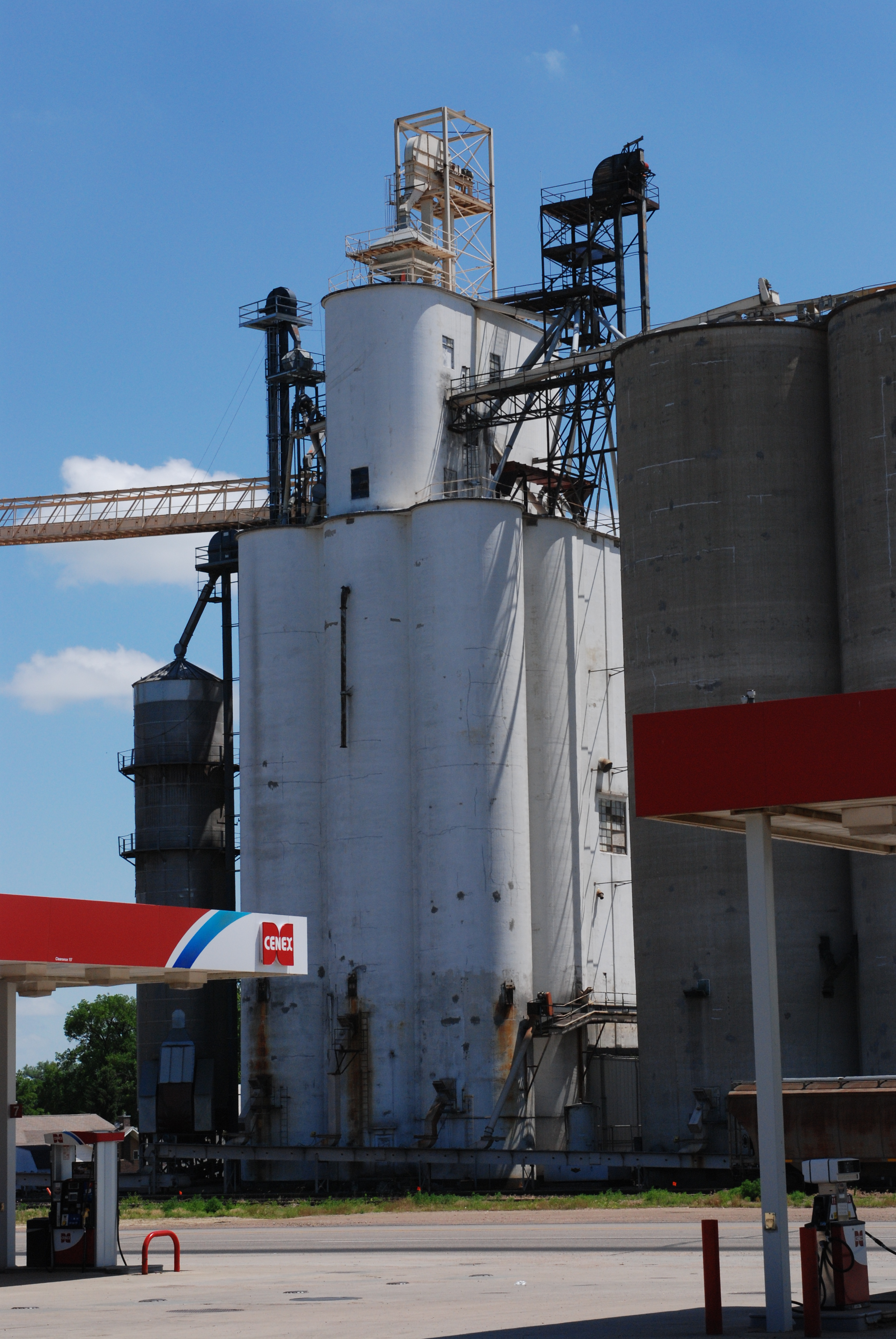
In 1955 the elevator was extended on either end, roughly doubling its capacity to nearly 21 million bushels. In total, 246 circular bins and an additional 164 interstice bins (for a total of 310) were available to store grain, in a structure that extended over half a mile. In its heyday it was the largest elevator in the world.

A key factor in the explosion of the facility was the arrangement of the runs atop the bins and the tunnels beneath. These communicated with all of the bins. A run extended in both directions from the headhouse, each containing a conveyor for distributing grain to the bins from the top using a tripper. Under each bank of bins on either side of the headhouse were two tunnels, each with a conveyor supplying the four headhouse legs. The pairs of tunnels on either side of the headhouse each had a connector tunnel between them.

All of the structure was interconnected in such a way that a fire or explosion could propagate throughout the elevator. And in fact, after the accident, that is what investigators found had happened.

For an explosion to begin, five factors must exist: fuel, oxidizer, containment, dispersion, and ignition. All of these factors are momentarily present in the controlled environment of a piston or turbine engine. In a grain elevator, the fuel is grain dust, the oxidizer is the oxygen in the air, the containment is the elevator structure, the dispersion is the suspension of dust in the air (stirred by operation of elevator components), and the ignition is the accidental trigger (a worn component, an electrical spark, or negligent smoking, for instance).

All these factors must be controlled to keep a grain elevator operation safe.

The DeBruce Grain elevator fire started with a seized bearing on an operating conveyor in one of the tunnels. The roller with the failed bearing stopped turning while the belt continued to run over it, causing excessive wear and heat. Dust grains in contact with the roller ignited. The fire touched off an explosive mix of suspended grain dust and air stirred up by conveyor operation. Very quickly, the entire elevator was involved in the disaster.

The concussion of the first explosion suspended more grain dust, causing a chain reaction. In a series of explosions, the fire propagated through that tunnel and through the crossover to the other tunnel on that side of the headhouse, running from end to end, then to the headhouse from below, and up and back into the run on top of the bins on that side, where it flamed out in an area that had been cleaned of dust. Only that run failed to explode. From the headhouse, the explosions propagated into the run, bins, and tunnels on the opposite side, until all of the explosive fuel was consumed.

The initial and follow-on blasts caused massive destruction. The headhouse sustained multiple explosions as the concussion reflected back in that direction at multiple points of entry. It was pulverized. Workers were trapped in the headhouse on floors above the worst of the destruction. On one side of the elevator, most of the bins blew their tops, utterly destroying the run above. The tunnels filled with grain that spilled from the bottoms of the wrecked bins, greatly complicating rescue and recovery efforts.

Seven employees and contractors died on the site–four in or near the tunnel adjacent to the ignition point, one in and one near the headhouse, and another blown clear of the elevator. Another ten were injured. Three of the hurt were trapped in the headhouse and another made his way out onto a bin roof. Some were outside of the elevator when they were injured by the blast.

A fascinating account of the rescue is included in the accident report. Eventually, a construction crane deposited rescuers and retrieved survivors. A helicopter from Fort Riley also plucked survivors from the top of the structure.

This was a textbook case of negligence, according to investigators. The dust was allowed to build up well beyond safe levels, and installed dust control systems were allowed to fill up and clog and become inoperable. Limited cleaning was done by employees by hand. The faulty bearing had ignited before, just days before the explosion, but it was not repaired.

The accident prompted interested parties to initiate an investigation, which was later sponsored by OSHA. The report is published on the OSHA site. The Grain Elevator Explosion Investigation Team (GEEIT) report is the source for the details presented here.

For those interested in learning more about the accident, an excellent article detailing the aftermath can be found at grainnet.com.
Travel notes from a Wyoming hunting trip

DSC_0346

Cozad, Nebraska

Story and photos by Kristen Cart

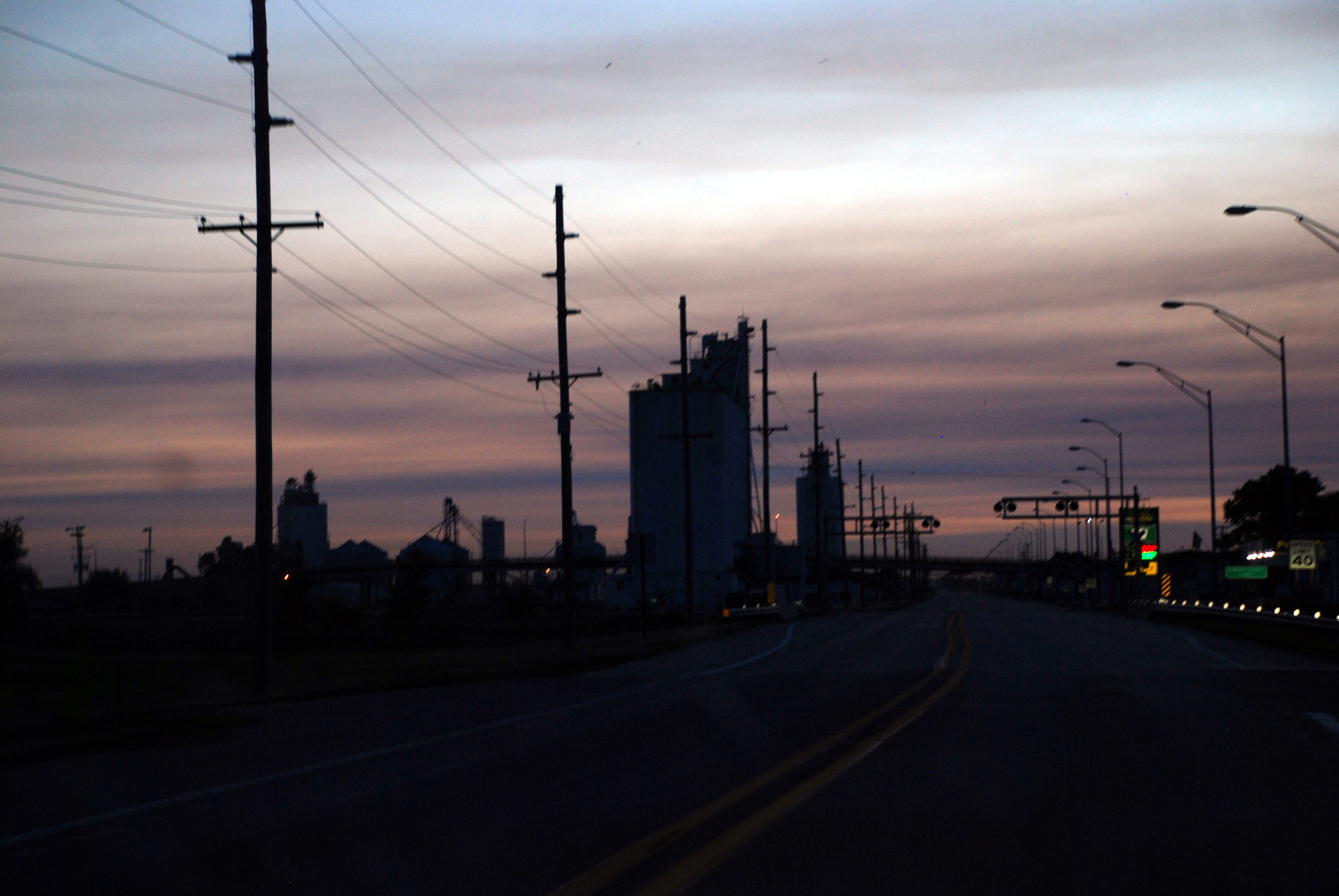
How do you start an essay about the places you miss while traveling? Rolling along a two-lane highway as it becomes dark is a good way.

As you slip beyond the scenes of daylight, your awareness imperceptibly closes in on you until the oval of light from your headlights is your entire world. The highway center-line stripes brighten as they slide by your left knee, keeping a hypnotic rhythm as you fight to stay alert. You see the occasional shadow of a grayish body slipping across, almost out of sight on the edge of your pavement pool save for a momentary flash of eyes, cautiously regarding your progress, shimmering like a pair of reflectors in the ditch.

The rhythm lulls you and you reach for the chewing gum and start looking for a friendly gas station with a tolerable cup of coffee.

Then you know you are missing things.

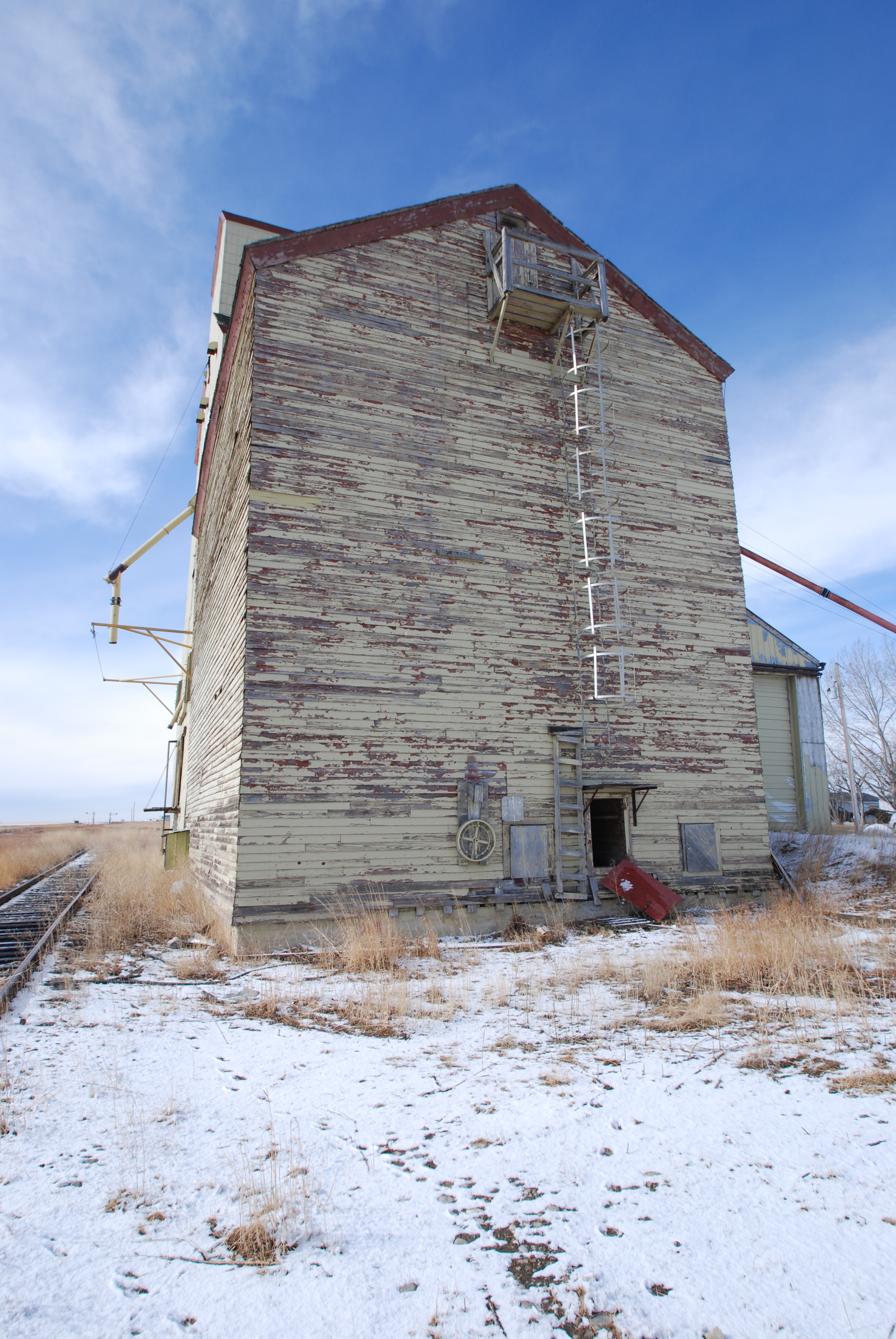
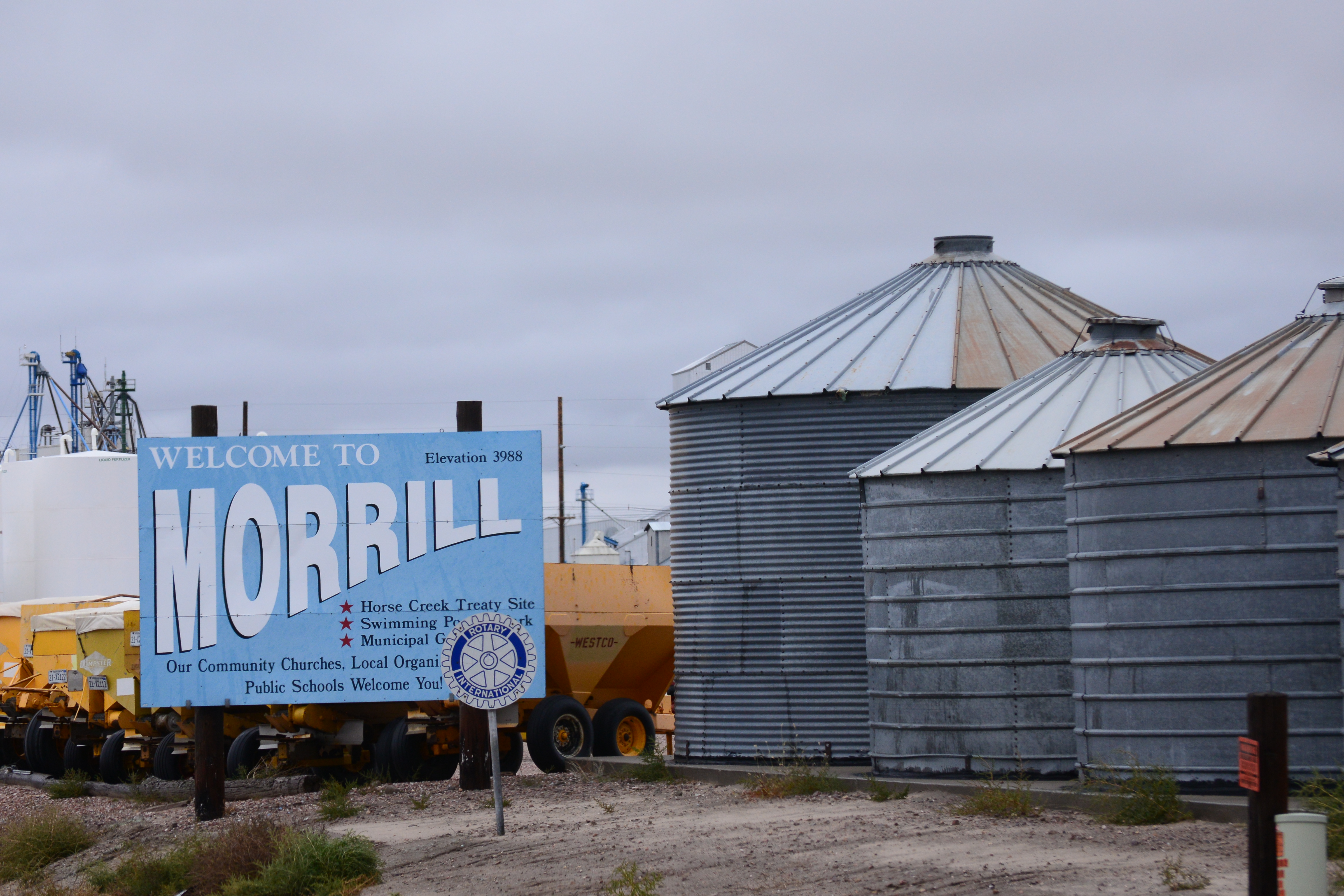
If it were not for a fortuitous change in our schedule on the way out, when of course we had no time to stop, I would not have known that this inconvenient sunset would obscure two elevator sites. Usually on this trip, this highway is where we stretch the mileage after dark until we can go no further. It is true whether we are starting from camp and stretching the return trip past Ogallala, or rolling from Ashland and hoping to make it as far as Torrington, on the way our hunting spot beyond Lysite.

DSC_0981

Morrill, Nebraska

Somehow, the view on this road is only as wide as the pavement, every time.

On other trips the stopping spot has been Sidney, where we stay the night, then in the morning we drop into the Cabelas on the way toward Casper for last minute items like socks and bb’s. On our return trip, we overnight in Sidney again to visit Cabelas to get the stuff we forgot so we have it for next year (of course by that time, the new stuff has been misplaced and we go through the whole routine again).

On those occasions we bypass this road altogether.

DSC_1031

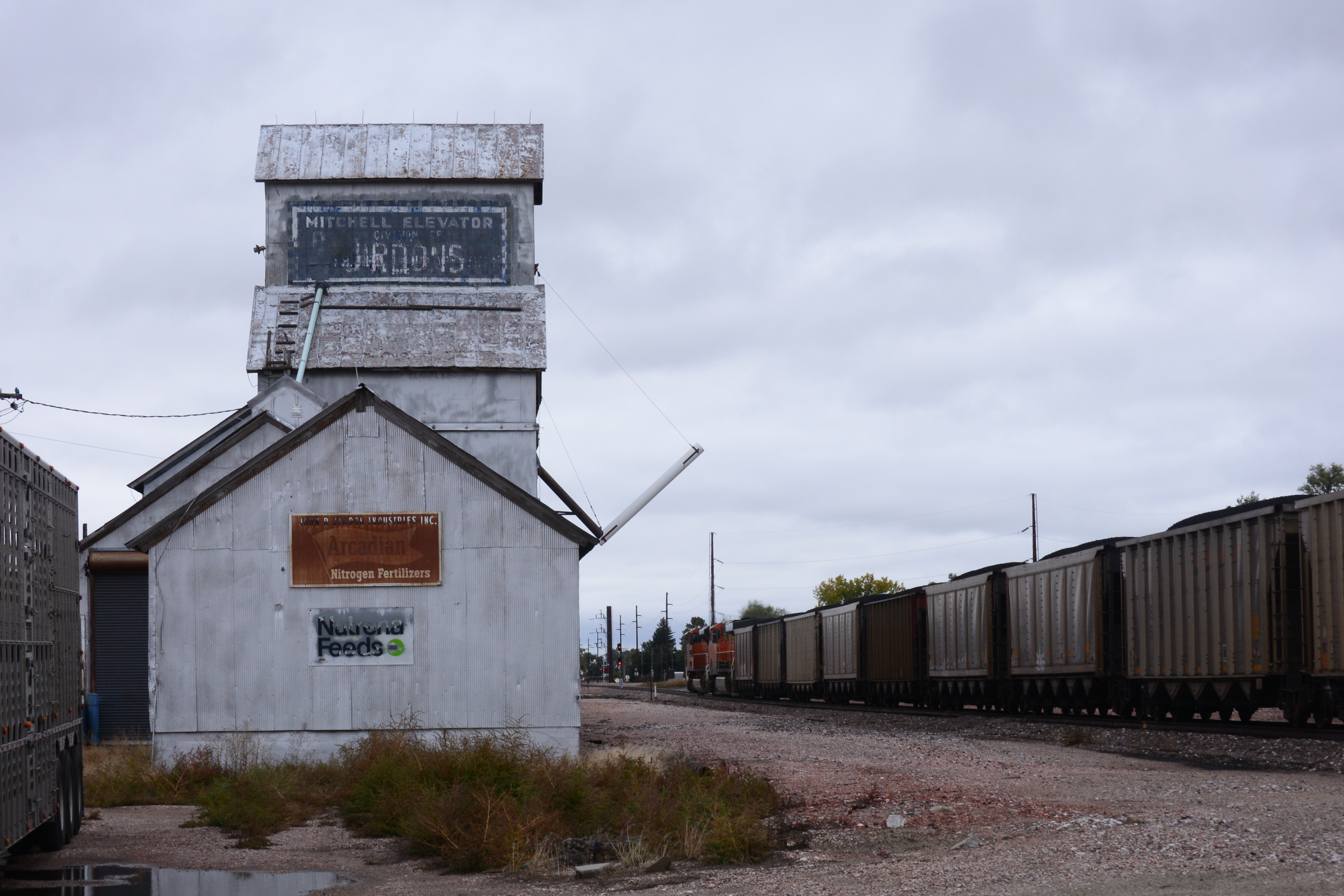
Mitchell, Nebraska

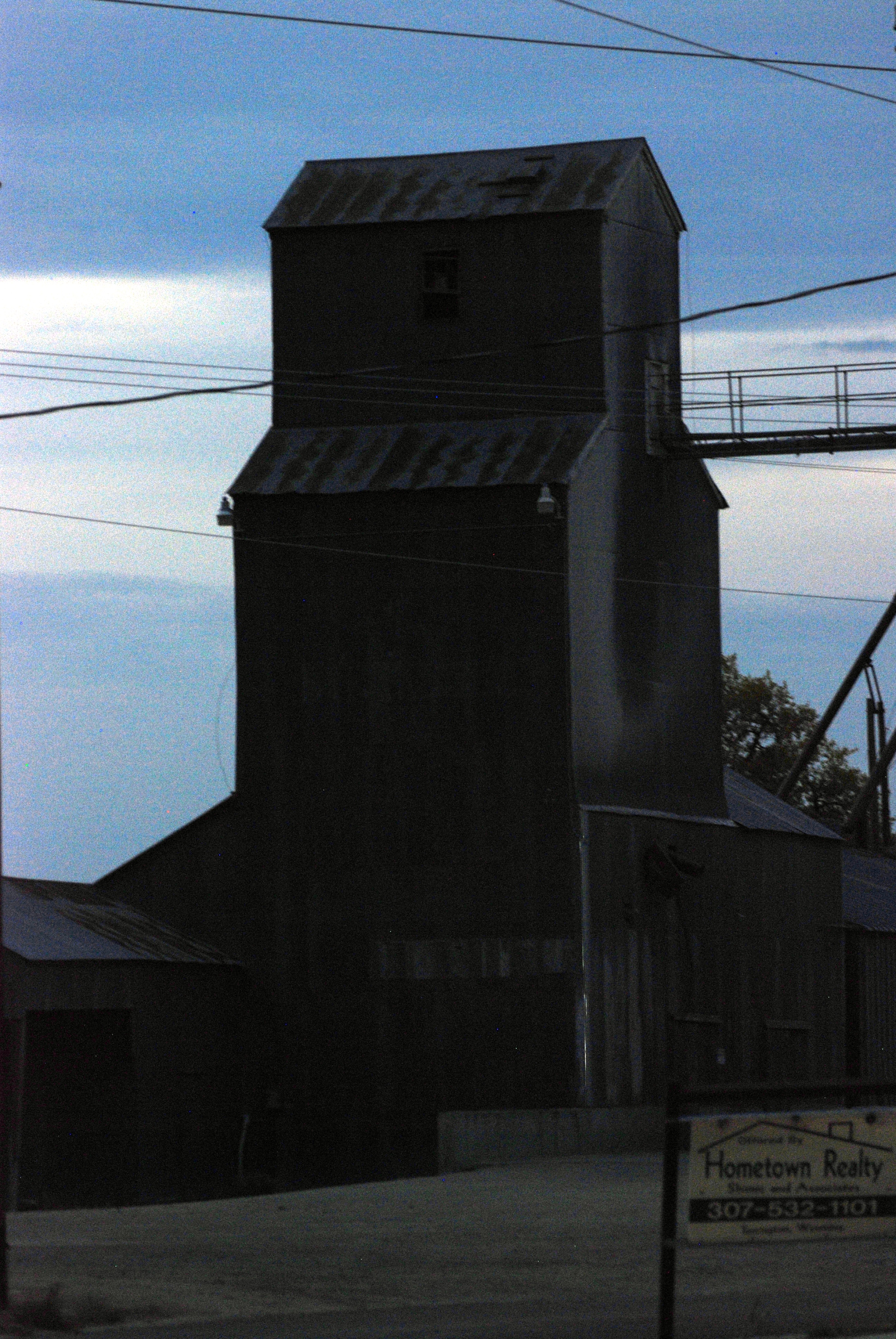
On our way back through–this time, after dark, Llewellyn is the first newly discovered elevator site we see. The old wooden house stands hard by the road with bins lined up on either side. A Purina checkerboard shows faintly in the darkness, but a photograph is out of the question. We are pushing the miles, and the setup for this dark building would be time consuming and the results would be marginal, so we pass it by. I note the town for future reference, for that imaginary trip when we will be rolling through in full sun with all the time in the world.

The second elevator location comes into view when we are just about at the end of our rope in Ogallala. I have gone through a pack of gum, and I have made reservations for a motel somewhere nearby for the night. We are stumbling in past midnight. One old wooden elevator displays a Nutrena sign from it’s spot at the end of a short lane, where it nestles among round bins and bathes in dimly yellowish artificial light. As we roll across the viaduct in town, which takes us over the tracks, we see another silvery old-timer on our left which looks intriguing. I will have to check these elevators later.

Of course.

DSC_0968

Morrill, Nebraska

In the morning, all is forgotten as we get on our way toward Ashland.

This is how you leave a patch of geography perpetually obscured in darkness, and scarcely notice its absence. The absence doesn’t breach your consciousness until you notice what is missing, and that can take a long time.

I spend my professional life flying across the continent in the dark, with things like the Grand Canyon and the Rocky Mountains passing below unremarked. A scattering of lights strewn across the land are all the clues to life below—like droplets of water on black velvet, illuminated by an unseen light, they twinkle and tease.

DSC_0164

Lingle, Wyoming

The familiar cockpit lights are my entire world with little else to distract—the gum to keep me alert, or coffee sometimes, and a cozy hotel to look forward to.


Omaha’s Florence Mill offers antiquities to elevator enthusiasts in Oct. 24 sale

12144948_1082373501859277_6234689862261171471_n[1]
A friend of Our Grandfathers’ Grain Elevators has called the following item to our attention, and we are presenting the notice that appears on the historic Florence Mill’s Facebook page: Unusual vintage items for sale on Saturday, October 24, from 9 a.m. to 4 p.m. Sale Address: 3034 Sprague St., Omaha, Nebr.

Nebraska’s oldest business site and first mill was a ruin in 1998…but destined for preservation. Items worth saving were removed so that cleaning and restoration could begin.
The warehouse where these items have been stored since 1998 has been sold. Included in the sale: Country Grain Elevator Primitives, Vintage Machinery, Scales, Old Wood Boxes, Odd Metal Items, Tools, Wood Flooring, Wood Timbers, Trunks, Bins, Windows, Doors, Tools, some household items, four solid wood (with glass) kitchen-cabinets from the 1919 Tomlinson home…and much more. Everything must go! Warehouse must be empty before November.

Hunting trips afford opportunities for two types of photography

DSC_0889Story and photos by Kristen Cart

We live far from the preponderance of the nation’s grain elevators. Time and money are not unlimited, so it takes a good excuse to go look at elevators when the family has other things on the agenda. Western hunting expeditions are a splendid source for such excuses, so once or twice on each trip, I sneak in an elevator stop.

On a typical trip west, when you have a camera and the inclination to take pictures, vistas of country living make you suddenly pull over, disentangle the camera strap from the seatbelt, and send snack wrappers tumbling to the floor. A few epithets escape your lips when you find the ISO is still set for the moon shot of the night before, but unless a fleeing bird made you stop, the problem is quickly fixed.

DSC_0502In the hotel at night you eagerly page through the day’s images, occasioning a few more blue words, but often great satisfaction. You have elevators and neat old buildings, and you also have scenery. The rest of your family members roll their eyes and talk about elk and pheasants and bird dogs.

The fruits of your labor make it worth the effort–especially if you come home with beautiful pictures and meat for the freezer.

On the eve of another hunting trip, here are a few photos from earlier trips, including the odd elevator picture or two that slipped into the mix.

DSC_0501

DSC_0967 DSC_1009 DSC_1026 DSC_1038 DSC_1168 DSC_1180 DSC_1215

The Pocahontas, Iowa, elevator remains a lovely monument to Tillotson ingenuity

DSC_6547

Story and photos by Kristen Cart

The Tillotson elevator at Pocahontas, Iowa, first came to our attention as the site of a tragic accident where a young construction worker lost his life. Larry Ryan fell to his death because he tripped while crossing from the elevator to the annex on a makeshift wooden walkway, according to fellow workers. He wore brand new work boots and some speculated that they contributed to the accident. The young hoist operator was twenty years old when he fell 130 feet to his death from the top of the nearly completed annex in 1954.

I finally had the opportunity to see the site for myself this past summer. We took a wide detour north of our regular route from Nebraska to Illinois–it added a good four hours driving time, not counting the stops. My young cheering section (the kids) were not cheering about the extra road time.

DSC_0637

Upon our arrival in Pocahontas, a town along Lizard Creek in north central Iowa miles away from any major state thoroughfares, we immediately noticed the Tillotson elevator and its trademark rounded headhouse. The annex stood beside the original elevator, rising higher (by 10 feet) than its 120 foot companion, and gleaming with clean whitewashed concrete. It showed no sign of its sorrowful beginnings.

Later additions, including an elevator with headhouse, a flat storage shed, old steel hoppers, and modern steel bins with external legs, surrounded the two concrete structures.

The Tillotson elevator and annex were flanked on one side by a quiet street with an old church and ancient maple trees. The bustle of grain trucks was absent on the Sunday afternoon of our visit, and the co-op office was closed. Only the elevator exhaust fans pierced the silence.

We circled the complex, taking a number of photographic views, before going on our way.

We have the specifications for both the 1949 elevator and its 1954 annex. The annex construction record is detailed here.

DSC_0616

The Pocahontas annex was built with six 18-foot diameter, 10-foot spread by 130-foot high bins; with a basement; the bins were flat bottomed, built with 30-inch belt conveyors and tripper.

Planned capacity (with pack) was 222,440 bushels; translating to 1,863 bushels of capacity per foot of height. The total reinforced concrete, per plans, was 1,366 cubic yards. Plain concrete for hoppers, per plans, was 9.5 cubic yards, and reinforcing steel used, including jack rods, was 69.59 tons.

The design specified the average quantity of reinforcing steel used for the whole annex, which was 101.89 pounds per cubic yard of concrete.  Actual planned amounts were then itemized for various components of the structure:

Main slab: 27,017 lbs. steel/219 c.y. concrete

Drawform walls: 30,708 lbs. steel/990 c.y. concrete

Overhead bin bottoms: 9,957 lbs. steel/70.5 c.y. concrete

Bin roof and extension roofs: 6,740 lbs. steel/44 c.y. concrete

Cupola walls: 3,747 lbs. steel/33 c.y. concrete

Cupola roof: included in walls

Bridge/Tunnel: 1,020 lbs. steel/9.5 c.y. concrete

DSC_6510

Dimensions and weight of the annex and its components were laid out also. The main slab was 52′ x 60′, for an actual outside area on the ground of 2,946 square feet.

The weight of reinforced concrete, calculated at 4,000 pounds per cubic yard of concrete plus steel, was 2,801 tons. The plain concrete was also calculated at 4,000 pounds per cubic yard and totaled 19 tons. The weight of the hopper fill sand was 177 tons.

When the weight of grain was added to the specifications, at 60 pounds per bushel (for Pocahontas, the grain load would total 6,660 tons), the planned gross weight of the annex could be predicted. Twelve tons of steel and machinery were added to the total, for a planned gross weight, loaded, of 9,669 tons.

From these figures, bearing pressure was calculated to be 3.28 tons per square foot.

To handle all of that pressure, the main slab was made 24 inches thick. It was built with #8 steel, placed at 6″ c.c. spacing. Tank steel and bottoms (for round tanks) used #4 steel at 9″ c.c. spacing.

The drawform walls, with extension, measured 411 linear feet, and 130 feet in height. Cupola dimensions were 16′ x 56′ x 8 1/3′.

Since this was an annex, distribution of grain was accomplished through the main elevator leg and thence by belt conveyors and a tripper. Many of the items expected for elevator specifications were absent for an annex. For machinery, the annex had top and bottom belts, rated at 600’/min or 3,000 bushels per hour. 7 1/2 horsepower drives were used for a total load rate of 9,000 bushels per hour.

Loading rates are key for grain storage operations, since they determine how quickly trucks or rail cars can unload and be on their way. Slow elevators become obsolete. The Pocahontas operation was at the leading edge of technology with its shiny new 1954 annex, and to this day it provides quick, efficient service.


Bruce Selyem, an old hand in elevator photography, is still in the game

DSC_0065

Ione, Oregon

Story and photos by Kristen Cart

An eagerly awaited package arrived in the mail the other day. I opened it to find Bruce and Barbara Selyem’s 2016 elevator calendar–a vivid sampling of the photography work that Bruce has done over the years. Barbara Selyem called me to see if I would like one this year–I am an old customer, and I get one every year. So of course I asked her to send it.

Thirteen carefully selected images grace the calendar, and it does not disappoint.

DSC_0697

Indus, Alberta, Canada

Selyem Enterprises also produces framed elevator images for home and business, and if I bought everything I liked, I would run out of wall space very quickly. Bruce has documented many beautiful old wooden elevators in the United States and Canada that have gradually disappeared. Over the 20-plus years Bruce has been shooting elevators, most of the structures have only his photos to remember them by.

DSC_0557

Mossleigh, Alberta, Canada

If my kids had anyone to blame for the numerous side trips, excursions, and stops we have made to take pictures of wooden elevators in the wild, Bruce Selyem would top their list. I have studied his website carefully to plan for elevator photography trips in Idaho and Oregon. Many times the kids have admonished me for the odd elevator stop on the way to Nebraska. I can’t help it. They are beautiful.

Though not many of my wooden elevator photos have been published here, there is quite a collection of them. It is a passion, and I come by it honestly.

My grandfather, William Osborn, took many photos when I was a little girl. I remember the bellows on his camera, the camera body he carefully set up on a tripod, and his advice to sit still. He would pull the Polaroid photo out of the back of the camera while he started his buzzing timer. The hand on the timer would move interminably, and I would stand on tip-toe, eagerly awaiting the magic moment. Then he would peel the negative away and voila, a damp image would emerge, which I would hold gingerly by the edges while it dried.

As a girl, I wondered at the photo of his first elevator in McCook, Nebraska, that he built for Mayer-Osborn. I never knew I would combine his love for photography with his life’s work one day, and share all of it here.

To check out the photography of Bruce Selyem, visit his website at grain elevator photos. Bruce and Barbara Selyem welcome you.

DSC_0674

A concrete beauty. Nyssa, Oregon

Elevator investigations move farther afield with a side trip to Alta, Iowa

DSC_0579

The trademark rounded headhouse identifies the Tillotson elevator, shown here behind the office and truck scale.

Story and photos by Kristen Cart

It is getting harder to visit our grandfathers’ elevators. All of the elevators within a half hour either side of the I-80 corridor have already been exhausted, so a stop for photography requires real planning and extra gas, time, and effort, even when piggybacked on our normal family visit to Nebraska.

The trip to Alta, Iowa, required just such an extra investment in driving time. The town and its Tillotson elevator is just north-west of Storm Lake in the northwestern corner of the state, and is not, quite frankly, on the way to anywhere.

DSC_6488

The Tillotson elevator in Alta, Iowa, where the old structure is mostly obscured by later bins.

I wonder how our kids put up with it. This trip in particular required over an hour’s northward jaunt before angling generally east-northeast, with a 30-minute divot or two along the Nebraska-to-Illinois route. Each detour took in wayward sites, including Alta.

DSC_0593

A look up the rail line opposite the Tillotson elevator revealed the historical trappings of town, with a backdrop of new grain bins.

It is normally a 10-hour drive to get home from visiting their grandparents, but this elevator excursion would tax my children’s patience for several more hours. To be fair, we got an extra early start. But that meant the serious backseat fidgeting would start sooner.

You would think that I would study Tillotson records first, and inject some discipline and efficiency into planning our route.

But no, that task was left for after the trip, so I could see how closely we approached several sites without seeing them.

I don’t think the kids minded the near misses–but they’ll get to see the countryside again when we go through to mop up the strays.


As we sensed during our visit, the Tillotson elevator in Hinton, Iowa, was part of big doings

Hinton by Brad

After our recent post on Tillotson Construction Company’s elevator at Hinton, Iowa, reader Brad Perry sent in one of his own photos of the location, which you see above. We believe the concrete elevator was built in 1954.

Brad also alerted us to some news.

On July 1, the Farmers Cooperative Company, of Hinton, merged its operation that includes the Tillotson elevator with Central Valley Ag, which he calls “a very large” co-op from York, Neb.

Indeed, chief executive Carl Dickinson welcomed FCC in a statement on CVA’s website.

Photo by Kristen Cart

Photo by Kristen Cart

“As we get to know FCC better, my excitement builds around what we can accomplish together,” Dickinson said. “I would like to thank all of the FCC member-owners for their votes (sic) we are thrilled that you have chosen Central Valley Ag for your future.”

Adding Hinton gives CVA some unique advantages. As Brad Perry explains: “Hinton can load 110-car shuttles on three different railroads—UP, CN, and BNSF. It may be the most strategic grain location in the Midwest.”

See CVA’s website for a superb aerial view of Hinton.

As Kristen wrote in her post, “The entire complex has become a far greater enterprise than our grandfathers, builders of the original structures, ever envisioned.”

A long-time elevator man sends greetings from Hardy, Iowa, and shares some lore

GilmoreCity01

Story and photos by Larry Larsen

In response to a recent post about Odebolt, Iowa, we heard from Larry Larsen, who works for Gold Eagle Cooperative’s facility in Hardy, Iowa. Larry says Tillotson Construction Company’s elevator, built there in 1956, is “still operating and used daily!”

GilmoreCity08Larry graduated from high school in Gilmore City, Iowa. His father managed an elevator from 1958 to 2008, and Larry remembers high school summers spent cleaning out and painting silos.

After getting in touch with us, Larry took an excursion and delivered some photos of the Gilmore City elevator. It was built in 1949, a year when Tillotson also built elevators in Dalhart, Tex., Hooker, Okla., Hordville, Neb., West Bend, Iowa, and Montevideo, Minn., among other places.

Larry, who served 25 years in the United States Army, shared these additional reminiscences:

“I know a lot of the facilities in my old stomping grounds are [built by] Todd & Sargent. The facilities built in the 1980s and 1990s were done by Lambert & Hamlin.

“Interesting thing–I found out through my dad in early 2000s that Lambert & Hamlin built or started to build two concrete tanks in the town of Rutland, Iowa, and about halfway into that project they went bankrupt, causing Pro Cooperative to find a contractor mid-pour to finish the project.

GilmoreCity06“Pro Cooperative then became receiver of Lambert & Hamlin’s property in Sioux City.

“A lot of interesting history in many of the small towns all around the Midwest with the construction of elevators. Some communities had their population double when crews came to town.

“Reading the blogs, there was also a lot of tragedy involved, with people falling off the partially completed structures. I remember, in the early ’80s, Lambert & Hamlin was doing a slip in the tiny town of Pioneer, Iowa.

“They had a laborer who was smoking pot as he was tying rebar on the night shift. Said individual stopped tying rebar to light a joint, lost his balance, and fell 80 or so feet to his death.

“Slipping never paused for that.”

GilmoreCity04

Looking inside and outside of Tillotson’s elevator in Cavalier, N.D.

IMG_6980

Story by Ronald Ahrens with photos by Scott Hansen

While looking at the specifications for Tillotson Construction Company’s concrete elevator built at Cavalier, N.D., in 1948, we gave a call to CHS, Inc. and reached Scott Hansen, who oversees operations at the 460,000-bushel facility there.

South view.

South view. Click on the image to enlarge it.

Hansen said the Tillotson elevator is mainly used for extra capacity during harvest. The operation mainly handles wheat, he said in a subsequent text message, “but also a lot of soybeans and corn.”

He offered to take some pictures, and we present them here, along with repeating the specs from our post of July 27.

This elevator was built according to the plan used for an elevator at Sheldon, Iowa, in 1941. It featured a center driveway and four tanks, each being 14.5 feet in diameter and rising 102 feet. Total capacity was 93,700 bushels.

The job required 1,027 tons of reinforced concrete and 55.13 tons of steel.

At 18 inches thick and covering 1,768 square feet, the main slab supported a gross weight as as high as 5,321 tons. Eight bins were overhead in the 12-by-17-foot driveway.

Crowning the main house was a cupola, or headhouse, of 15.5 x 32 x 22.5 feet, and the pulley center in this single-leg elevator was 127.0 feet above the floor.

North view.

North view. The blue conveyor fills the structure; the gray one on the ground empties it.

Boot and head pulleys were 60 x 14 inches, but the head pulley’s axle diameter of 3-7/16 inches was 1.25 inches greater than the boot’s.

The 14-inch, 6-ply Calumet belt had cups of 12 x 6-inches spaced 10 inches apart. A 20-hp Howell motor supplied the drive in the headhouse. Actual leg capacity was 4500 bushels per hour.

A 2-hp motor operated the man lift. (Lifts in some Tillotson elevators of this era were still hand-operated.)

Cavalier was a fully accessorized elevator, with a 10-bushel load-out scale, an 8-inch load-out spout of 10-gauge steel, and 14-gauge cupola spouting. There was a 7.5-hp truck lift and a dust collection system consisting of a fan, column, and bin.

In the space for remarks at the page’s bottom, we find written, “One end round on cupola.” Yet the photo shows both ends are rounded.

IMG_6981