Building a grain elevator required a whole boxcar of lumber

scan0009

Commentary by Neil A. Lieb, photos from his archive

From a telephone interview on July 22, 2014:

Decks for the formwork are stacked at upper-right corner of the foundation. Piles of sand and gravel are for concrete. It took one complete boxcar-load of lumber to build most elevators. Everything came by rail in those days.

One thing you did, you re-used all that lumber many, many times. The inside walls of forms were all taken down, taken apart, and the lumber was all reused. We always had a crew of two or three guys cleaning lumber, taking the nails out and cleaning the concrete off of it. Slip-form lumber was seldom reused. By the time you stripped the forms out at the top, that lumber fell 120 feet to a concrete slab and by the time it got there, it was moving. So when it hit, it pretty well disintegrated.

scan0010
This is probably the third or fourth day. They went about six inches an hour. The boxes were put in the forms to leave holes where they wanted a hole. On the inside, they’d want a hole to put a spout or something. They’re all pre-made and numbered. The shift foreman’s responsibility is to make sure they’re put in where they’re supposed to be. They have a given height and given location.

You always knew how high you were because in the elevator’s water shaft there was a continuous measuring stick so you knew exactly how high off the ground you were. It was important that these boxes be put in at a certain height.

You also had a continuous ladder. We used to race up and down.

You see the jacks are on the outside. The guys looking over the rails, this is the back side. Way on the other side is where the cement is coming up. You can’t see a hoist.


A photographic review of concrete elevator parts and components

Story and photos by Kristen Cart

Some time ago, one of our readers requested the picture of an elevator pit. It is one of the more unglamorous parts of a grain elevator, but as I was going through old photos, I found one. I also found many interior elevator pictures that have not made it to the blog because of their, well, unattractiveness. But a review of the parts and pieces, terms and descriptions, and interior appearance of an elevator is in order.

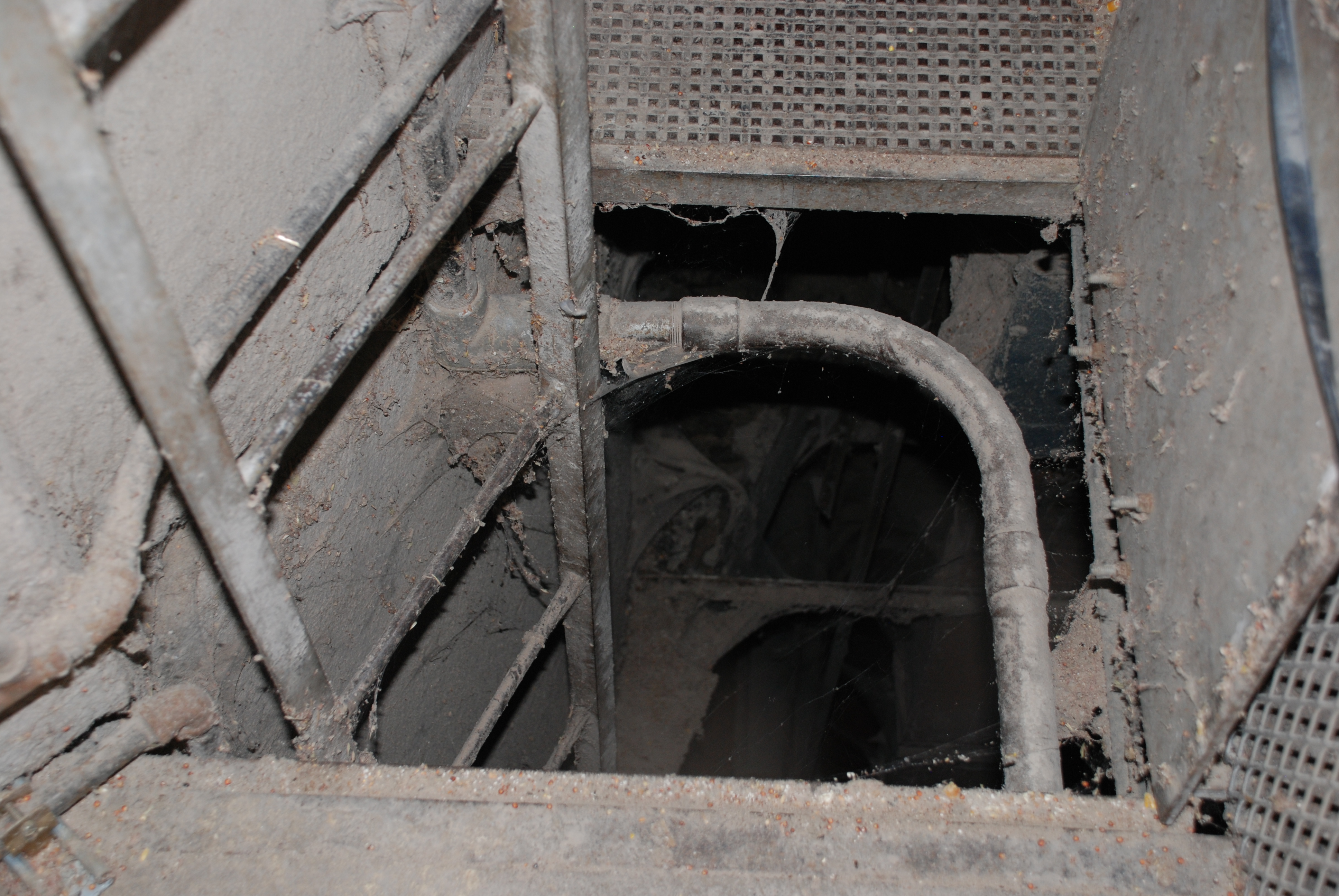
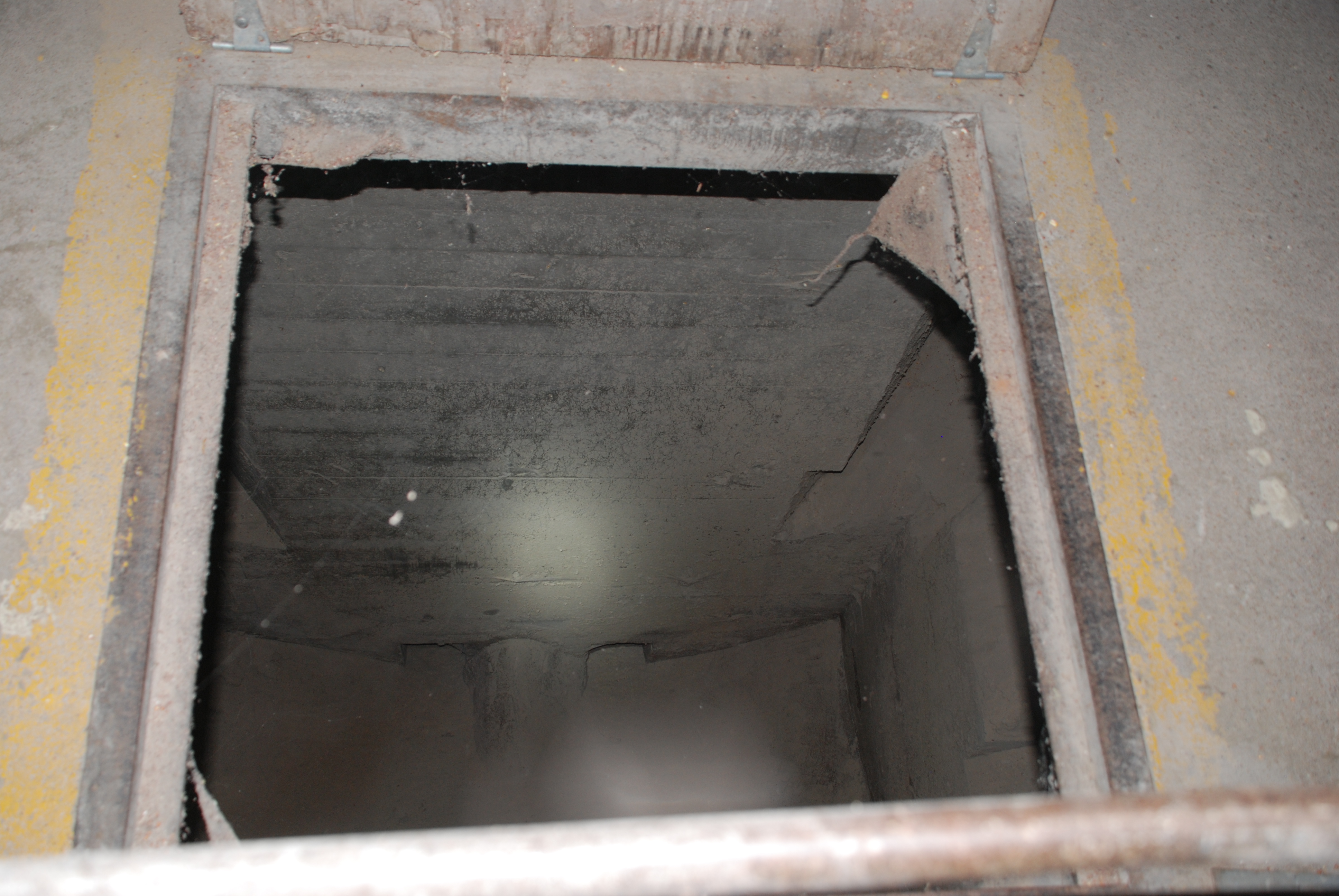
 The Pit

Pit access by ladder. The leg is visible.

Pit access by ladder. The leg is visible. Hanover, Kan.

DSC_0677(2)

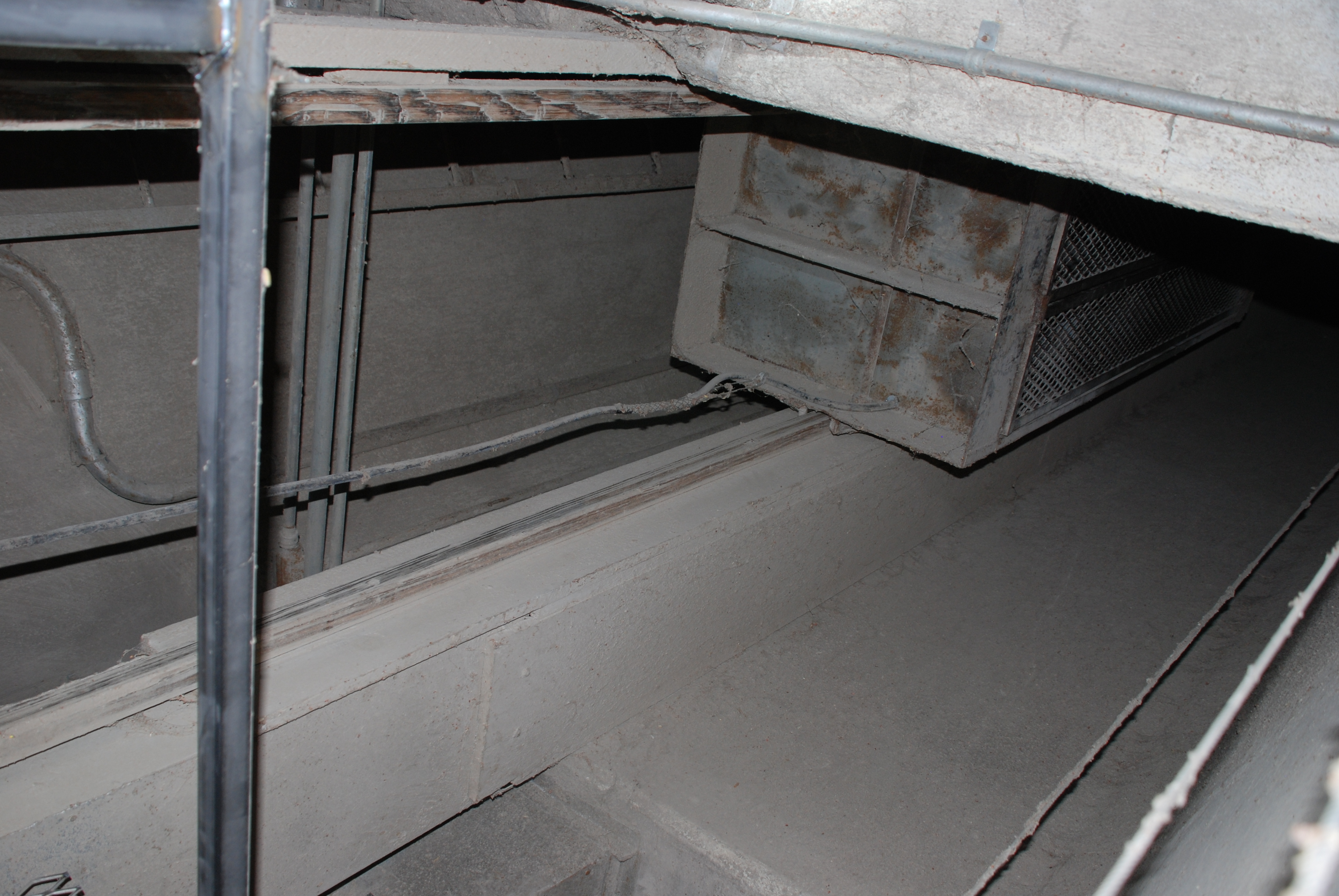
Sloped bottom funnels grain to the base of the leg.

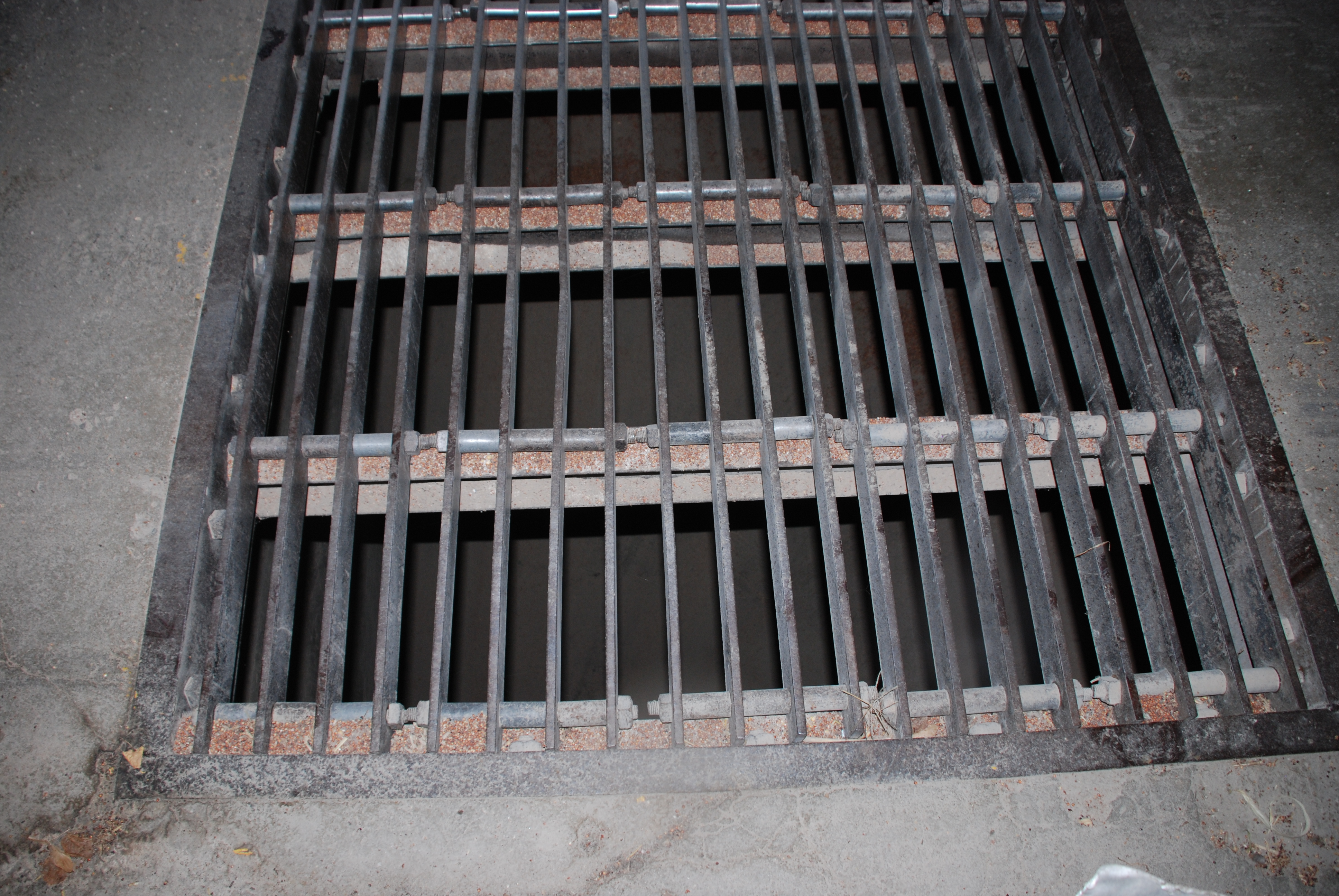
The Dump Grate

DSC_0674(2)

A smaller grate.

DSC_0292(1)

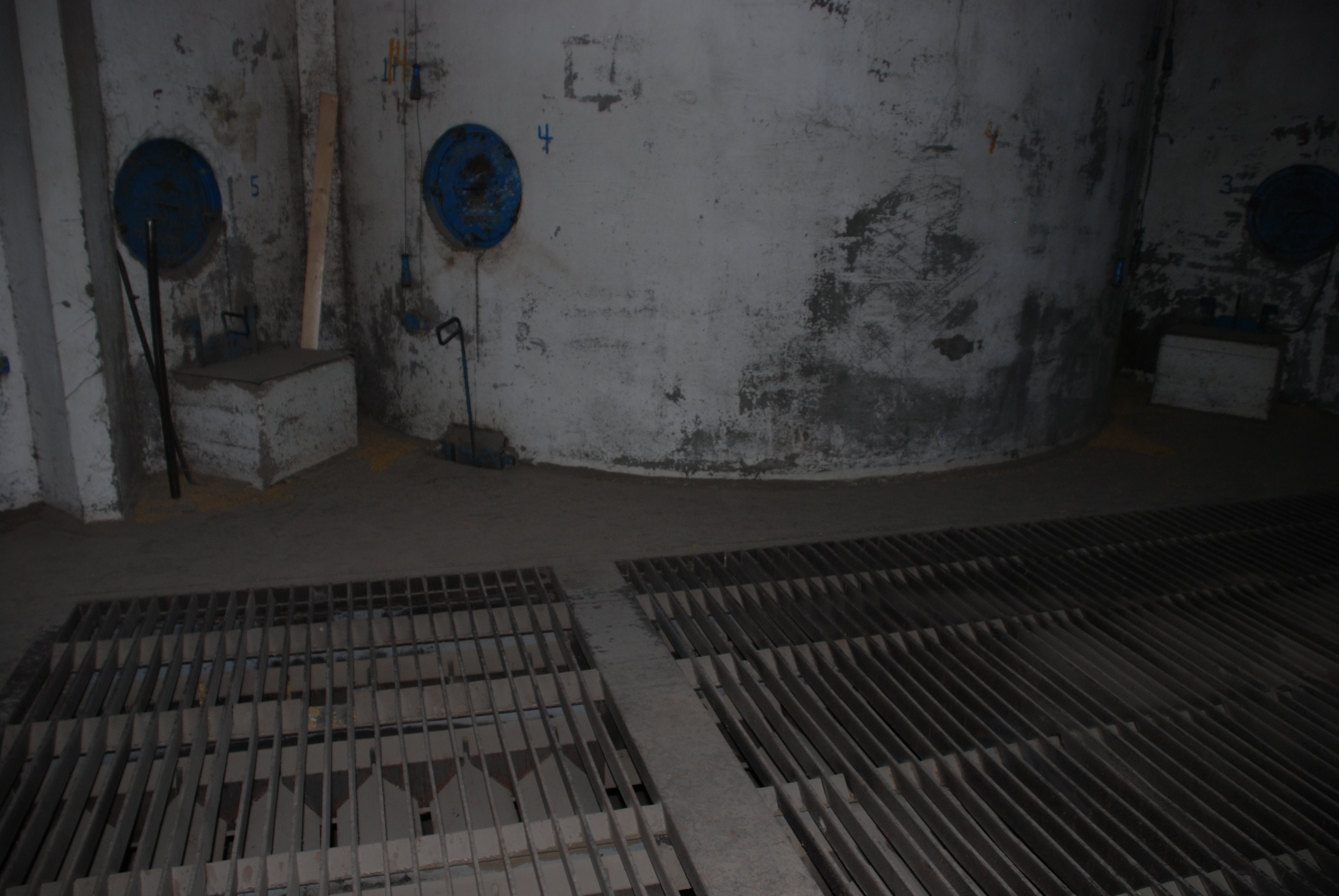
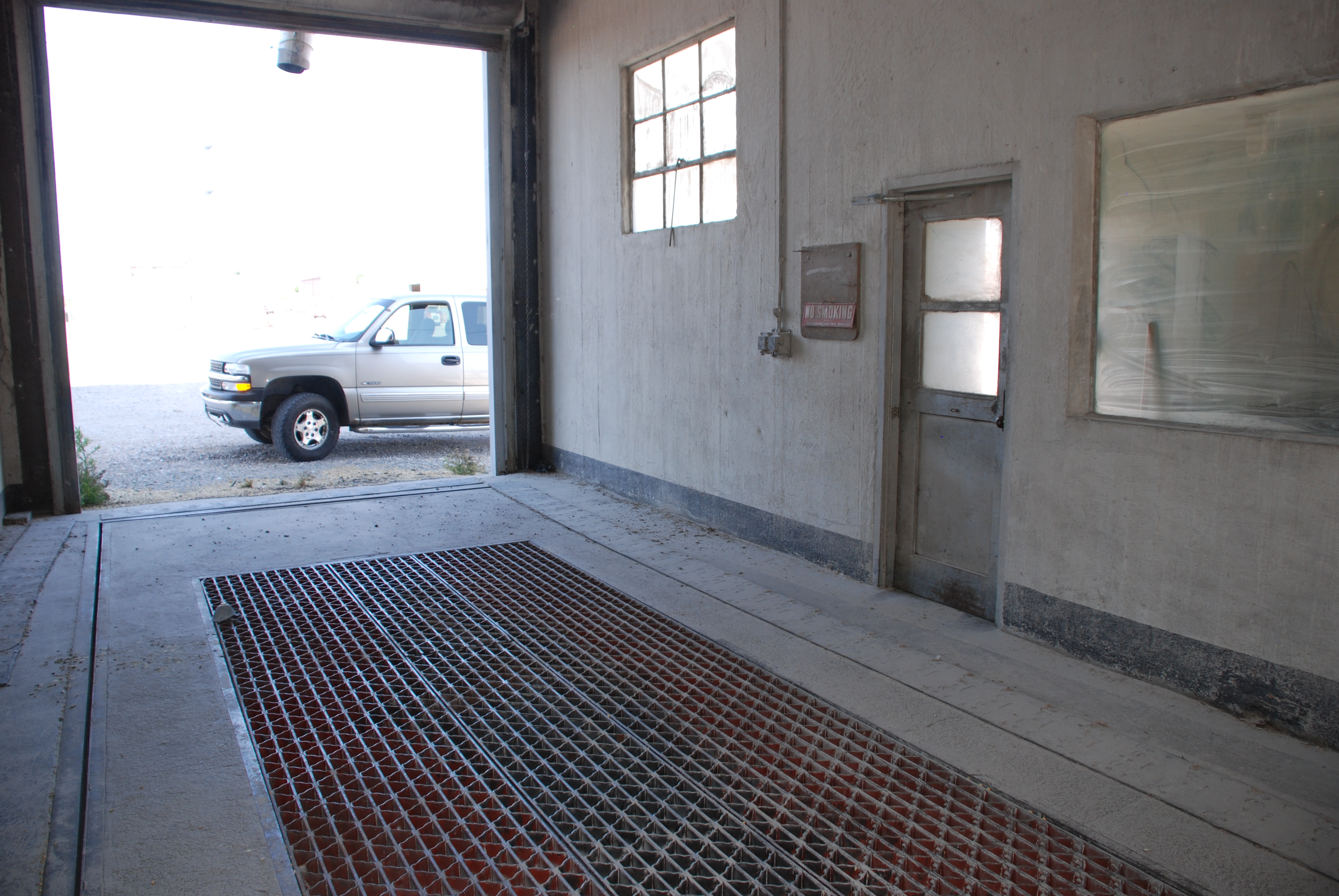
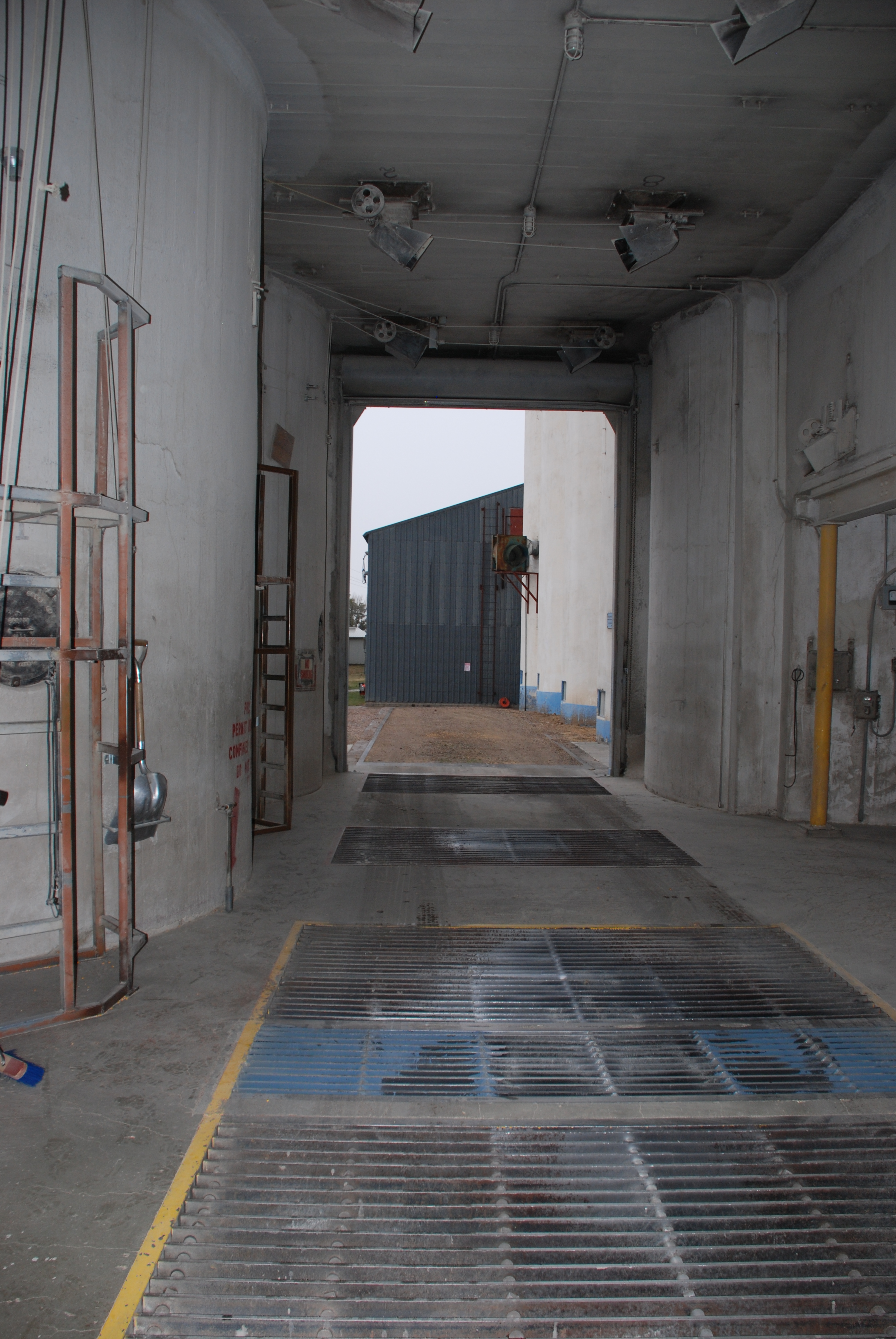
Center driveway truck grates.

The Driveway

DSC_0410

McCook, Neb.

DSC_0208(1)

St. Francis, Kan.

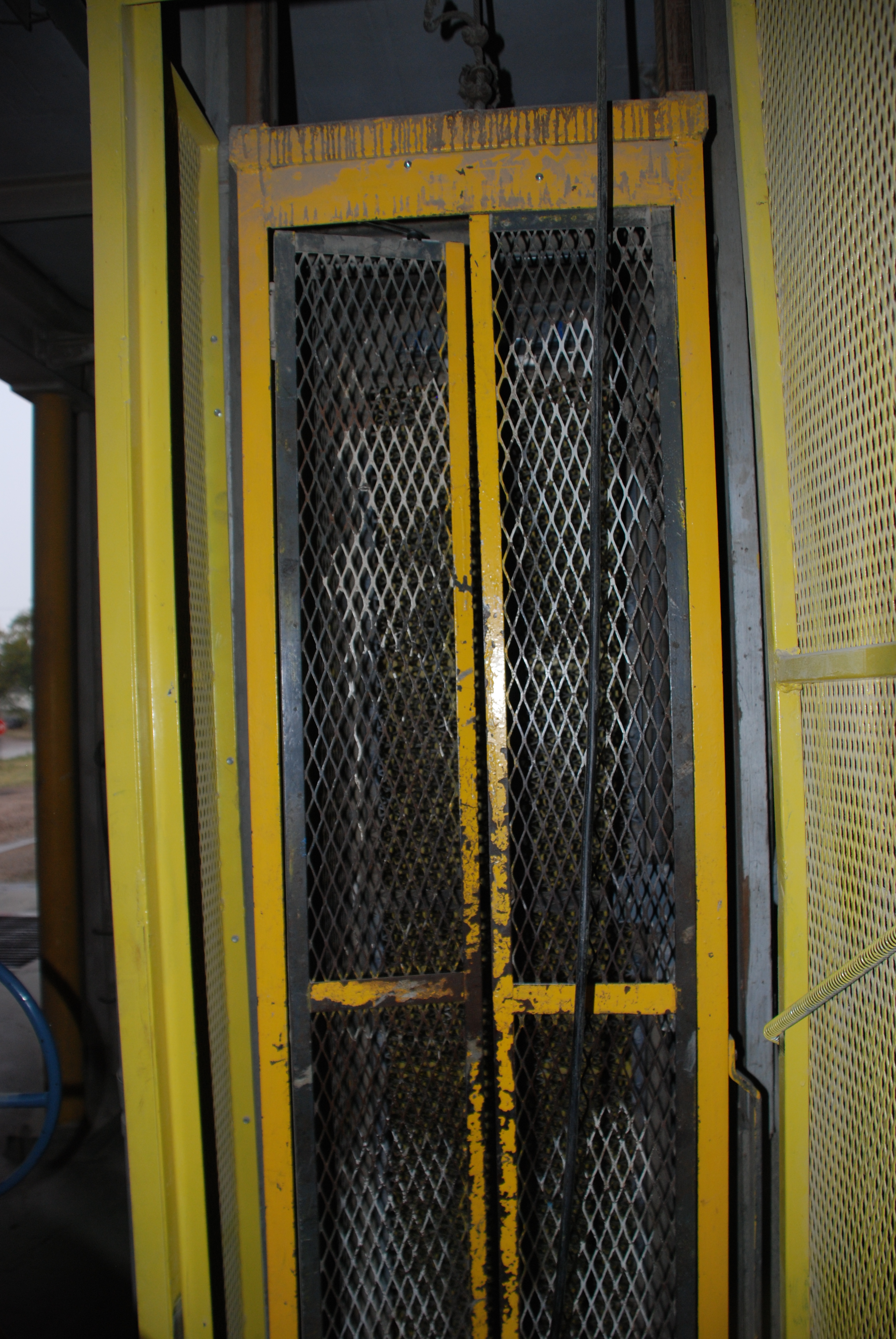
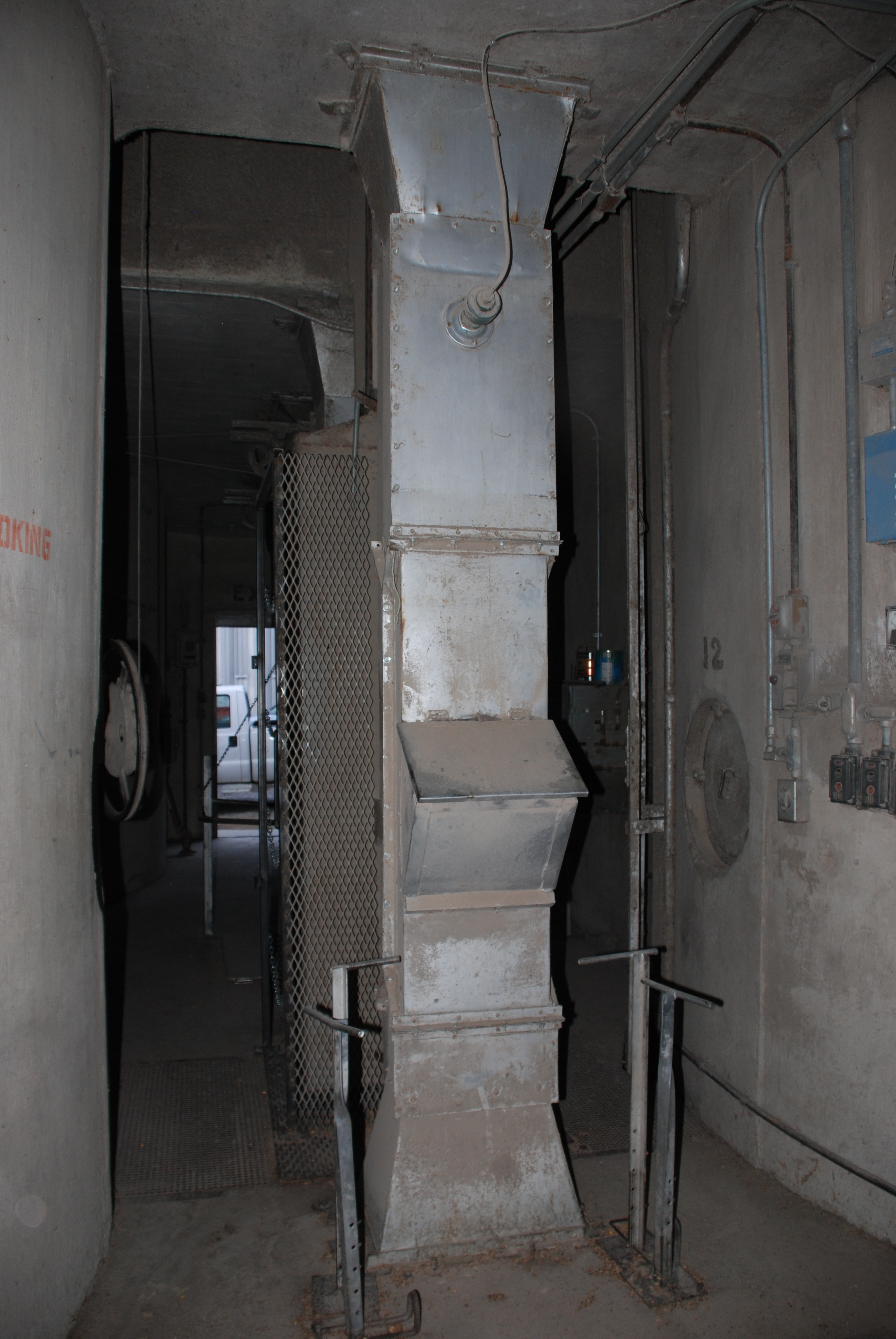
The Man Lift

DSC_0679(1)

The bottom of the lift showing the shaft.

DSC_0210(1)

Current safety regulations require a retrofitted cage.

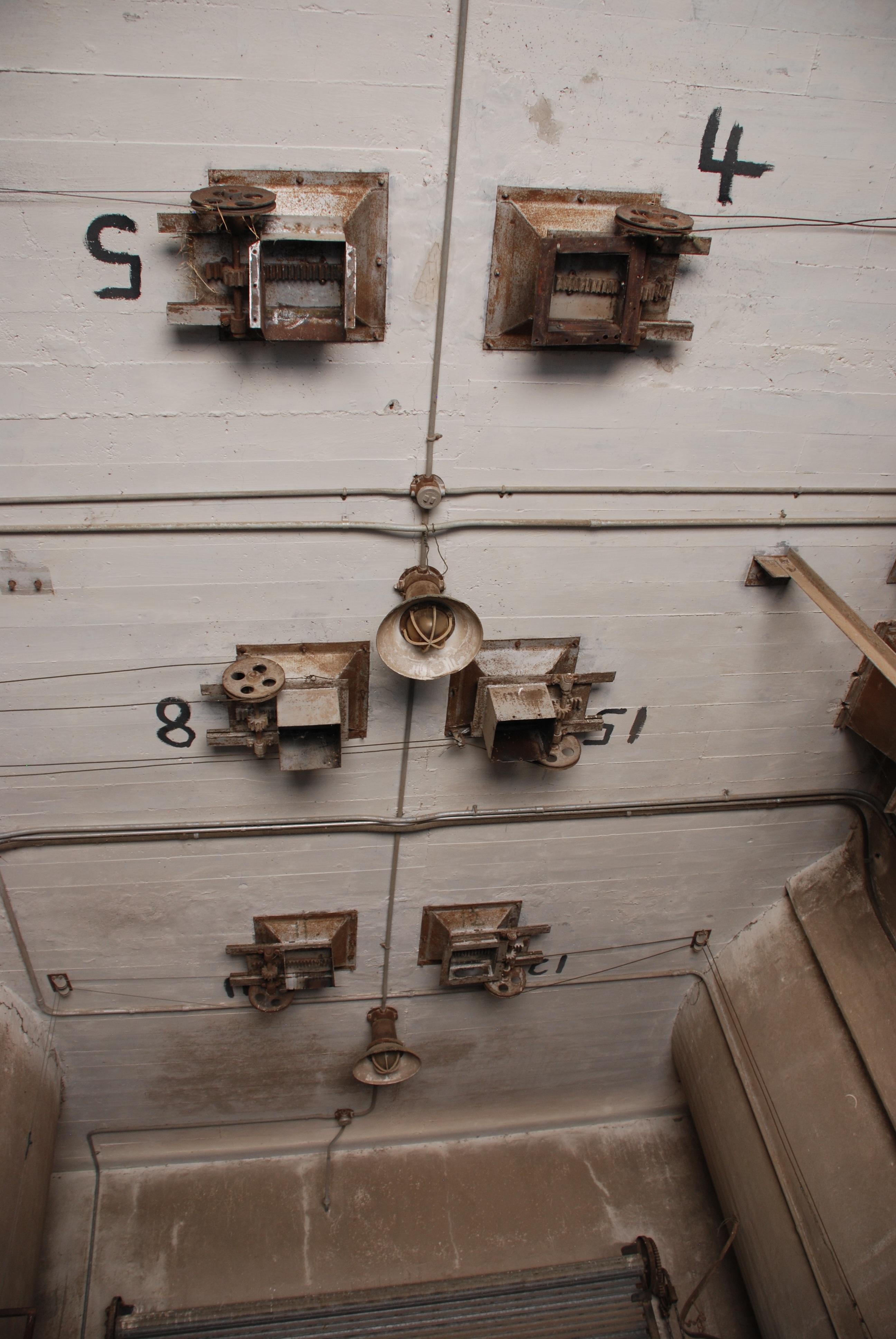
Overhead bin spouts

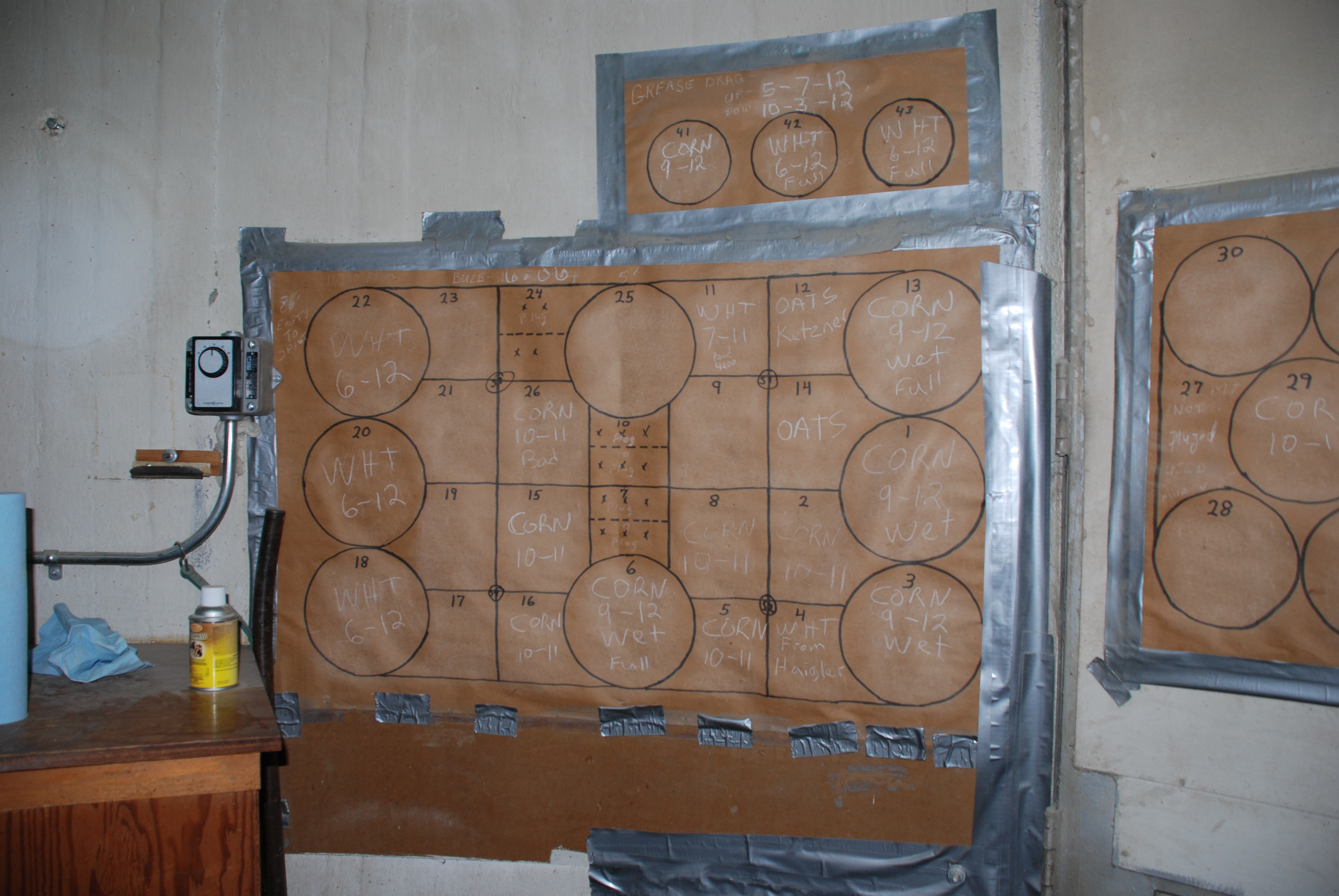
Bins are numbered to correspond with the bin diagram

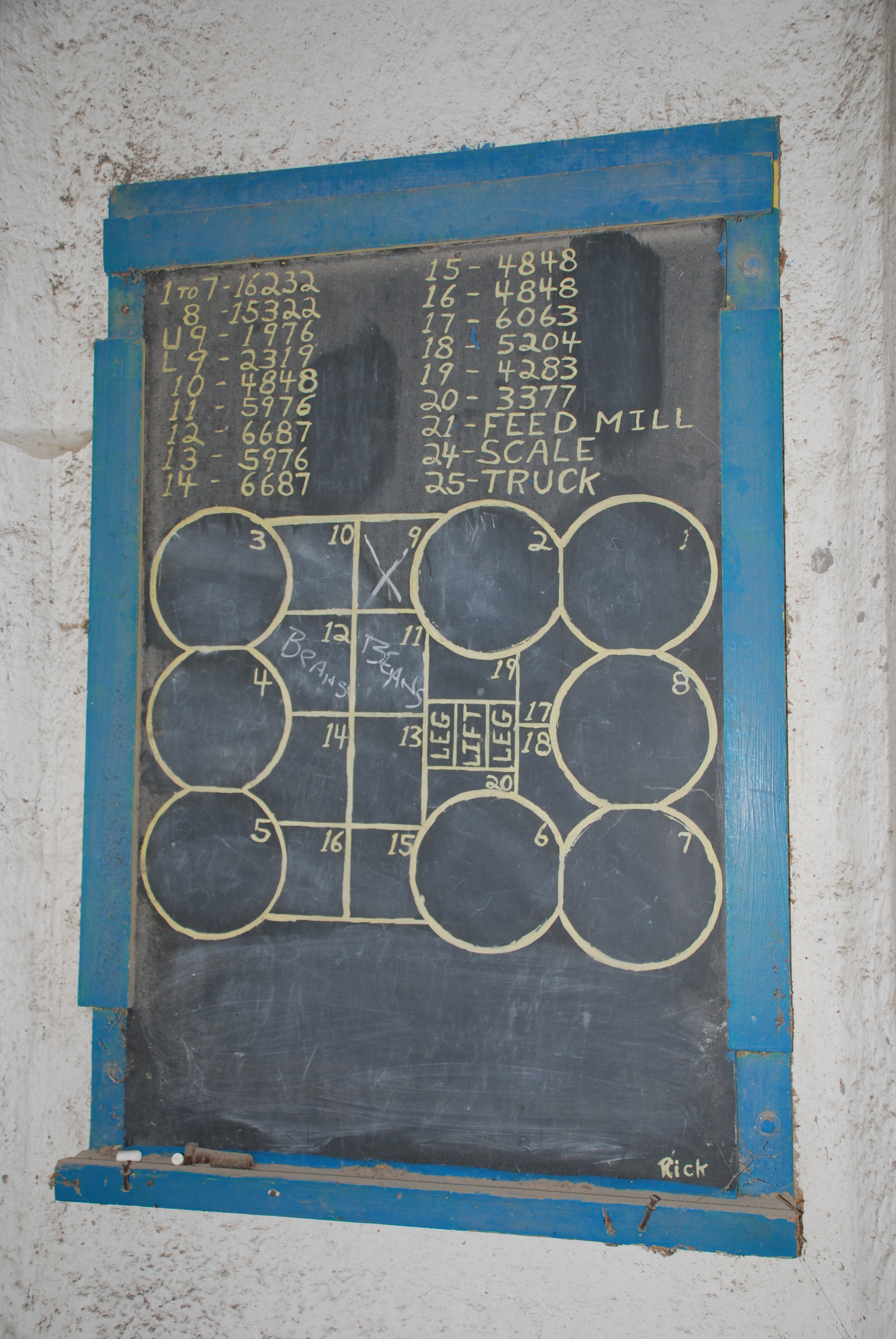
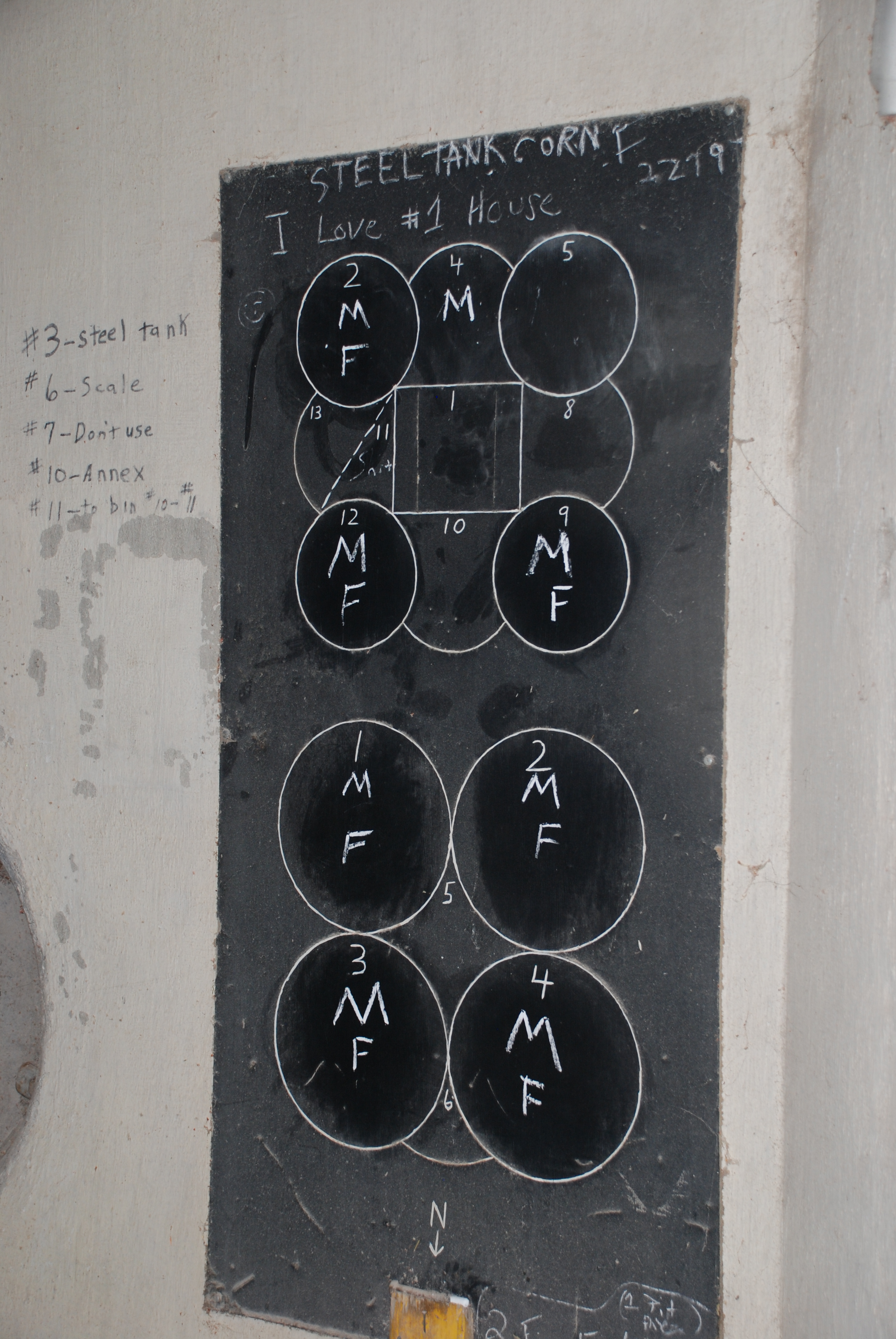
Bin Diagram

St. Francis, Kan.

St. Francis, Kan.

DSC_0295

This elevator holds beans in two overhead bins.

DSC_0670(1)

The bins hold milo, and “F” means the bin is full.

The Leg

DSC_0418

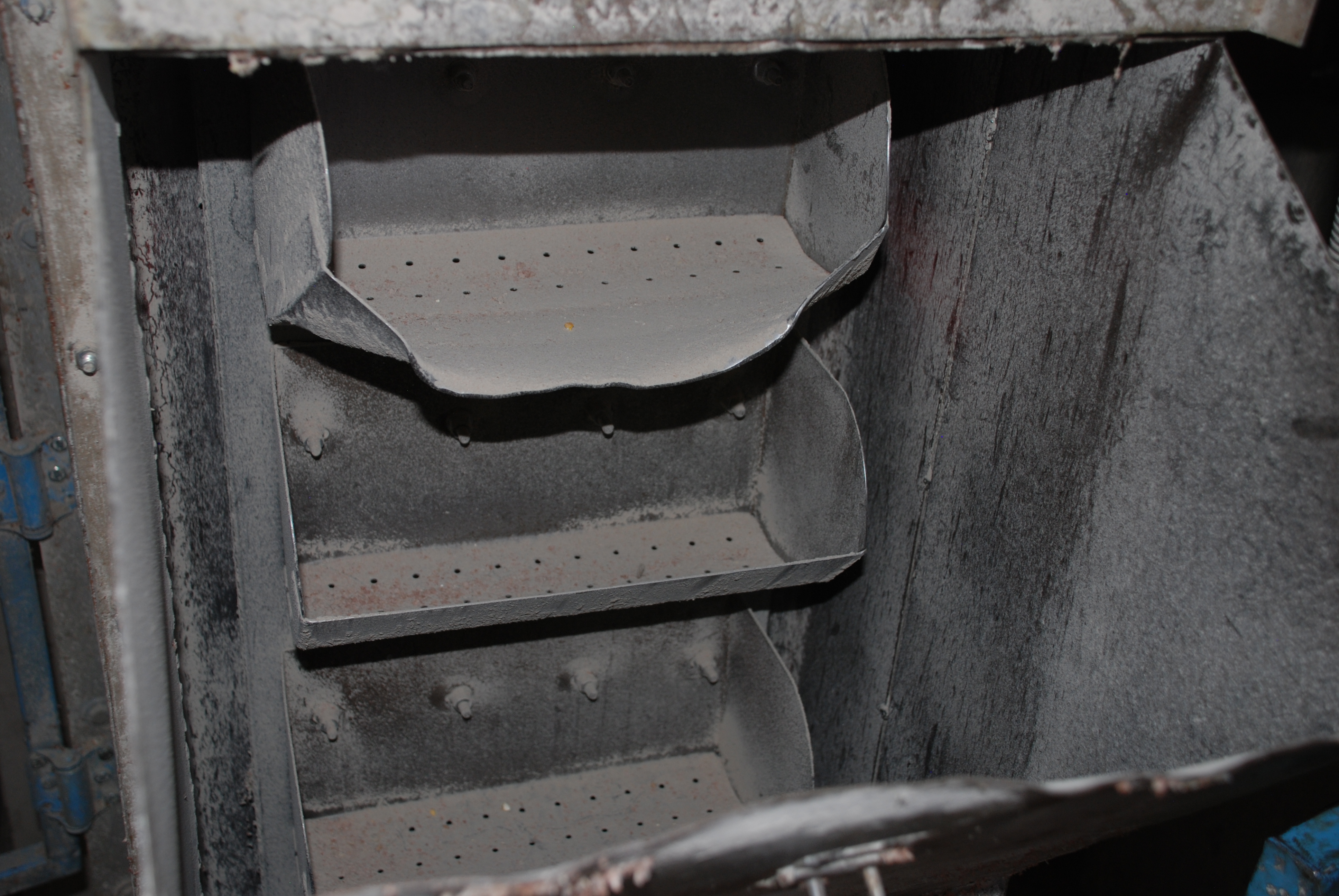
Cup dimensions and spacing are given in elevator specifications.

DSC_0673(1)

The leg conveys grain from the pit to the top of the bins.

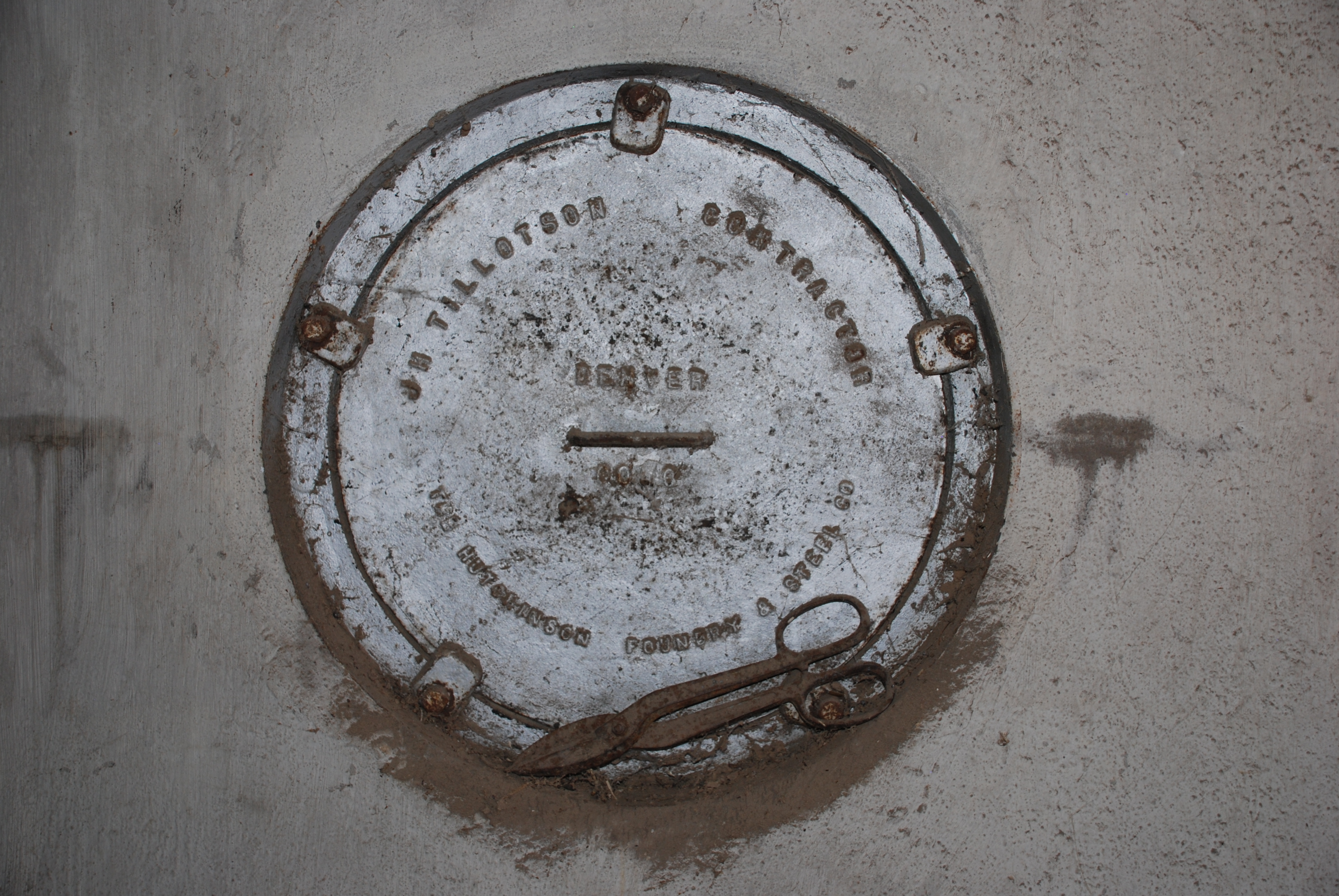
Manhole Cover

Traer, Kan.

Traer, Kan.


The vanished Glidden elevator, a concrete giant, has gone the way of the wood

Story by Kristen Cart

It is tremendously disappointing when you realize an elevator should be there, and isn’t. I recently passed through the north-central Iowa town of Glidden, a small place mostly on the south side of Highway 30. I knew from Tillotson construction records that an elevator and an annex were built in Glidden back during the elevator boom. But though I leaned over to that side of the car to peer at the skyline, hoping to see the familiar white Tillotson elevator outline, all I saw were two hulking bins of another more modern sort.

You learn to expect old wooden elevators to disappear. But the 1940s and ’50s vintage concrete elevators usually are not so quick to go.

Glidden, IA 51443 - Google MapsThis situation would require some investigation, but not on a day when I had to get home, with another 400 miles or so to go. I had at least one more stop planned to see an elevator, at Ralston, a town just a few miles further east, and my three kids tolerated the stops, hanging in there at the frazzled edges of their patience.

When I got home, I resorted to the Internet. Satellite images have become so good that you can virtually identify a builder from above. But in the case of Glidden, there was no sign of an old elevator, only a bulldozed area where the forms for two circular bins had been laid out. Apparently I had not overlooked the desired elevator–it was gone.

NEW Cooperative Inc - Google MapsI didn’t count on being able to date the demolition, but the map’s “street view” came to the rescue. An uploaded photo, watermarked 2013, showed a view of the site from an intersection down the street. From that perspective, the old elevator stood as it always had, since it was built. So the old elevator was probably retired after the last of its grain was out, in time for new bins to be built for the next harvest, sometime in 2013 before winter set in.

I missed my grandfather’s (alleged) McAllaster, Kan., elevator by a couple of months when it was torn down over a year ago. But in the satellite image that was available at the time, you could see where the destruction had begun. Several round bins were newly absent, and holes appeared in the top of the headhouse.

I don’t imagine that satellite engineers envisioned this use for their images.


A search for Van Ness elevator images yields surprising results

Story by Kristen Cart

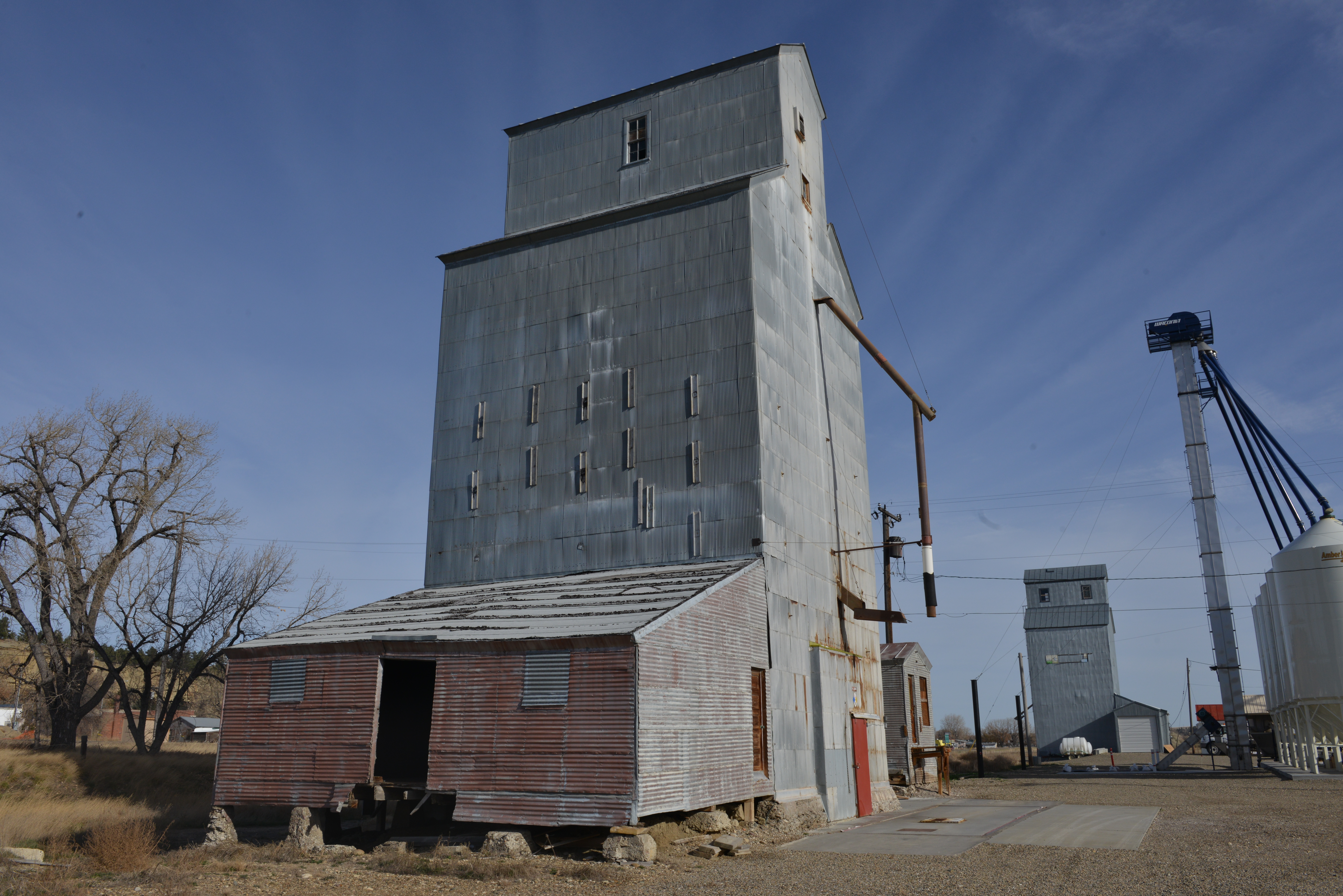
When hunting for ancient elevators–and by ancient, I mean hundred-year-old, steel-sheathed, wooden construction–you run into a serious problem: most of them no longer exist.

13633472

A 1936 Omaha directory

The elevator you are looking for may have burned down years ago, followed by a replacement that also burned down. The things liked to catch fire, as a search of old newspapers will show.

Concrete construction was meant to reduce the problem, but the new elevators would burn in spectacular fashion when grain dust ignited, throwing debris and victims sky high.

The fertile ground for old elevator hunting remains the Internet, thanks to bloggers, satellite imagery, photographers, and the odd stuff that accumulates online.

Recently, we turned up some truly fascinating finds. We had discovered Charles H. Tillotson was president of Van Ness Construction Company, of Omaha, in the 1930s. He was the original founder of the construction business (and its progeny) that his children and their associates operated into the 1950s, as documented in this blog.

Charles H. Tillotson

Charles H. Tillotson

Now that we had a company name for his earlier efforts, the hunt for Van Ness elevators was on.

Rydal, Kan., was home to an early Van Ness elevator. The town was profiled in the blog Dead Towns of Kansas, a project by the Hutchinson, Kan., journalist Amy Bickel. On her page is a marvelous 1950s vintage aerial photograph of bridge construction showing two 1888- to 1907-vintage elevators, one of which was built by Van Ness. One of the two pictured elevators burned in 1952. We do not know if the fire consumed them both.

Luckily, a Van Ness mill and elevator in Grenola, Kan., was deemed historical, and the Kansas State Historical Society successfully nominated it for the National Register of Historic Places. Since grain was no longer stored there, the greatest threat to its survival was gone.

It is the only example we have found that still stands.

The architect of this elevator, designed and built in 1909, was P. H. Pelkey Company, with the construction completed by the R. M. Van Ness Construction, of Fairbury, Neb.

This company could have been the predecessor to the Van Ness Construction Company that Charles H. Tillotson led, and it may have been his earlier employer. A little more research could tease out the history of the Van Ness building enterprises in Nebraska.

But the elevator is representative of the typical construction of the time, when Charles would have been working in the business.

This old elevator is located in Grenola, Elk County, Kan., on a railroad siding which was formerly on a mainline of the Atchison, Topeka, and Santa Fe Railroad, Southern Kansas Division.

An airplane crash ends Gandy Construction, an early elevator player

WAO3

The Mayer Osborn company brochure mentions Gaddy (sic) Construction of Omaha

Story by Kristen Cart

My father remembers the grain elevator construction business from earliest childhood. But his childish memories did not distinguish one job from another, so until recently we did not know about the company where my grandfather William Osborn began his career as a carpenter.

Dad said they still lived on the farm when his father went to Kansas City in pursuit of a better opportunity, which dated the event to before 1944. That job was likely with the Tillotson Construction Company of Omaha. Before then, Grandpa’s Mayer Osborn Construction brochure said he worked for Gaddy (sic) Construction of Omaha. It was difficult to come up with any information about them, until we located a clipping that marked a tragedy.

The newspaper account related:

Plane Crashes at Lexington, Omahan Killed

Lexington, Neb., (AP). Ralph Arden Gandy, 41, head of an Omaha construction firm, died Saturday night after the light plane he was piloting crashed near here.

Tommy Johnson, a Gandy construction company foreman, was injured in the crash.

W. H. Pfiefer, Lexington funeral director, said Gandy’s plane took off from a field on the farm of Dennis O’Connor, a cattle feeder who lives six miles northeast of here.

After the takeoff, the funeral director said, the plane stalled and crashed on a road. Both men were thrown free of the wreckage.

Gandy died a short time after the crash in the Community hospital of Lexington.

Johnson received a broken jaw and chest injuries. He was removed to the Methodist Hospital in Omaha by ambulance Sunday night.

The Gandy firm had built a grain elevator on the O’Connor farm, Pfiefer said, and Gandy and Johnson had been at the farm inspecting it. The plane was taking off to return to Omaha when it crashed.

Gandy is survived by his widow, Clara, and four children.

The Nebraska State Journal, Lincoln, Neb.,  Aug. 1, 1949.

William Osborn worked with Loren Saunders, his brother-in-law, at a job in Omaha before he took the opportunity in Kansas City, according to my dad. It seems likely that the Gandy company was that job.

In Argentina, we encounter a colorful solution for abandoned elevators

IMG_8907

Story and photos by Ronald Ahrens

I went to Rosario, Argentina, the first week of January for a magazine assignment, and the group I was with ended up having lunch on the bank of the Rio Paraná, a big muddy river capable of handling large cargo ships for carrying grain and coal. Like so much else about this land of the Pampas, the Paraná reminded me of something you’d find in the Midwestern United States–specifically, it was perhaps wider than the Missouri River but not quite up standard set by the Mighty Mississippi.

IMG_8906As we had earlier driven into this large city–Argentina’s third-largest, with nearly 1.3 million people–I noted a couple of grain elevators, including what looked like a huge wooden one. But I was being herded with a group of reporters following the Dakar, a marathon rally for motorcycles, cars, and trucks. Rosario sprawls over 70 square miles, so there was no way I’d be able to make my way back there from the hotel where we were staying near the river.

How surprised was I when we went from the Juan Manuel Fangio Autodrómo, where the Dakar teams were set up before the rally’s start, to have lunch? The destination was a restaurant affiliated with the Museo de Arte Contemporáneo de Rosario–the museum of contemporary art. We parked on the riverside boulevard, Avenida Estanislao López, and as soon as we started walking I saw the colorful bins of a made-over elevator.

The art museum is integrated into the elevator!

IMG_8908I didn’t come away with any specifics, although it did occur to me to look for manhole covers that might have been cast with the builder’s name. I saw none, though.

As for the rest I hope these pictures tell the story.

By the way, Argentinians are very proud of their beef, and I was told repeatedly in advance of the trip that I should be sure to eat the beef because it’s out of this world. I did have a couple of nice steaks, but there’s no difference from U.S. beef.

IMG_8910

This tower, attached to the elevator, faces out to the river.

And this footnote: the passenger next to me on the flight home said the countryside has changed since the Chinese market for soy opened up–fewer grassy pastures, more fields with the crop. Presumably, there would also be changes in the way cattle are finished for market. Anyway, that explains why so much of Argentina looked like western Kansas, minus the farmhouses and barns.

The countryside is curiously devoid of buildings; everybody lives in town.

The Tillotson elevator in Lincoln, Nebraska is majestic in winter light

DSC_3138Story and photos by Kristen Cart

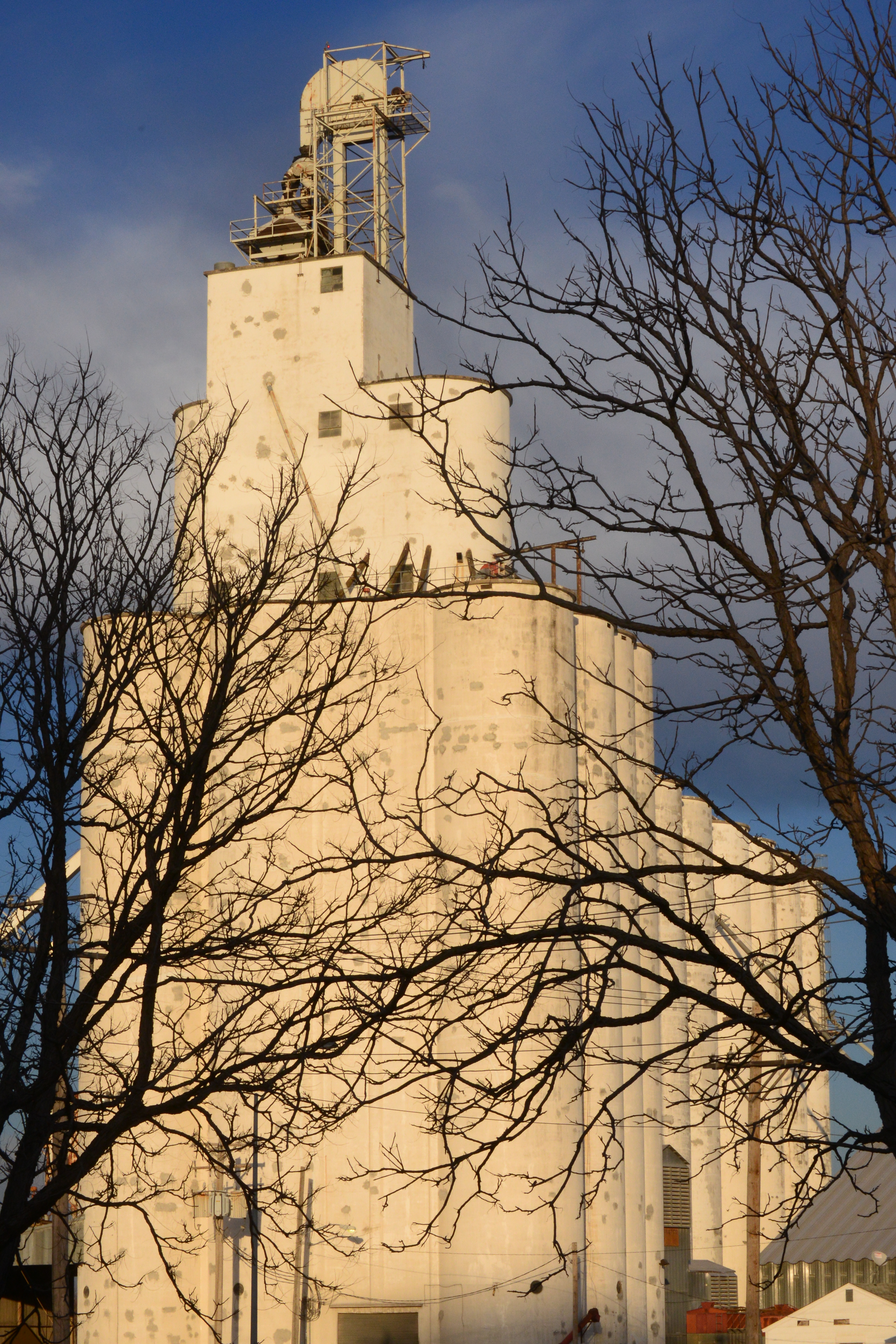
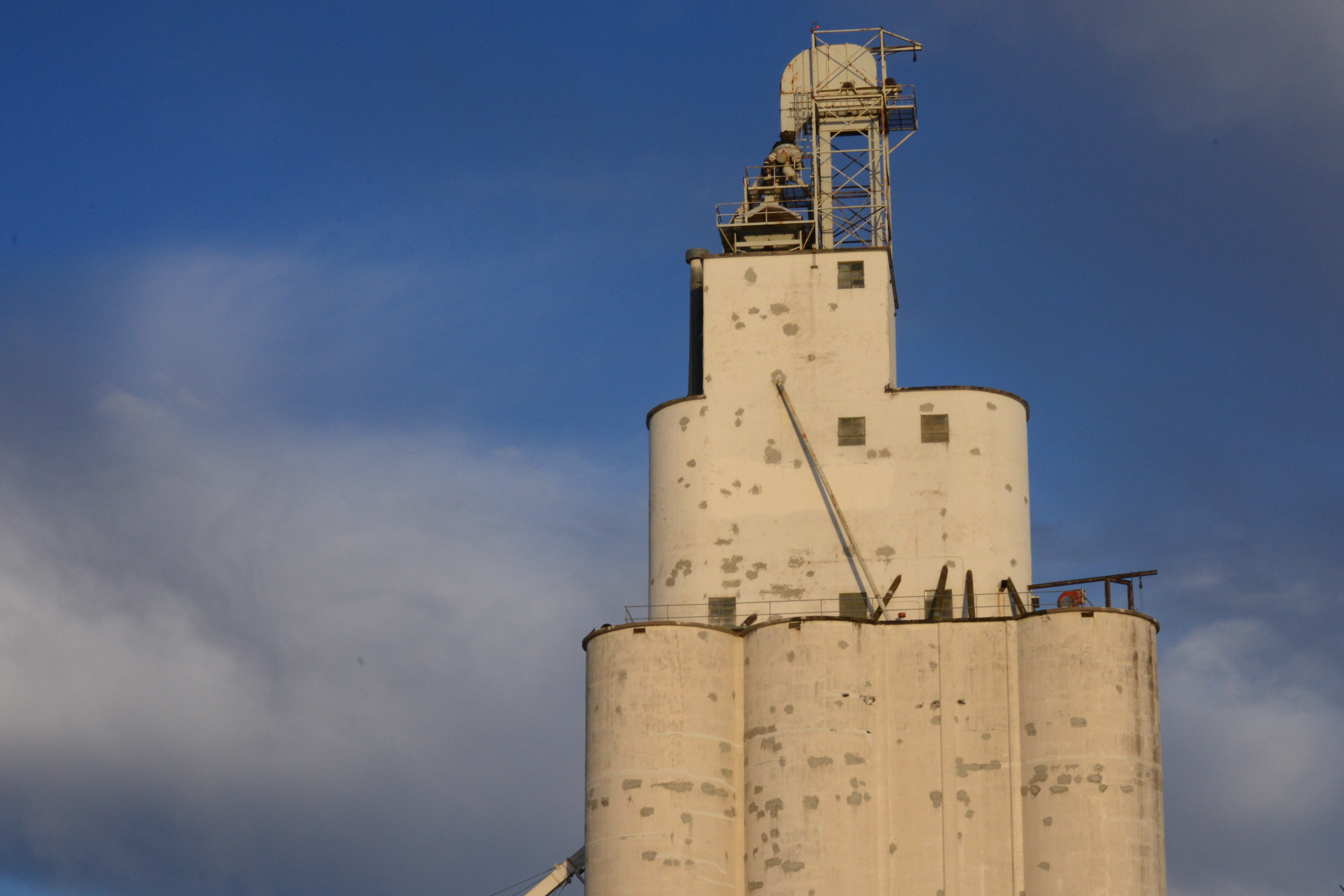
One of the most beautiful projects completed by Tillotson Construction of Omaha was their elevator with its annex in Lincoln, Neb. I was fortunate to be able to persuade my dad to stop with me to take some photos in perfect light.

DSC_3174One of the challenges of elevator photography is picking the structure out from its sometimes tight surroundings.

Usually you can take close pictures with a wide angle lens, which distorts straight lines, but can give you a full view of the elevator. In this case, I was without that tool since it broke when it fell off a chair, so I had to make do with a mid-range zoom lens.

You be the judge of whether the pictures were successful, given the limitations of distance, obstructions, and points of view.

DSC_3184

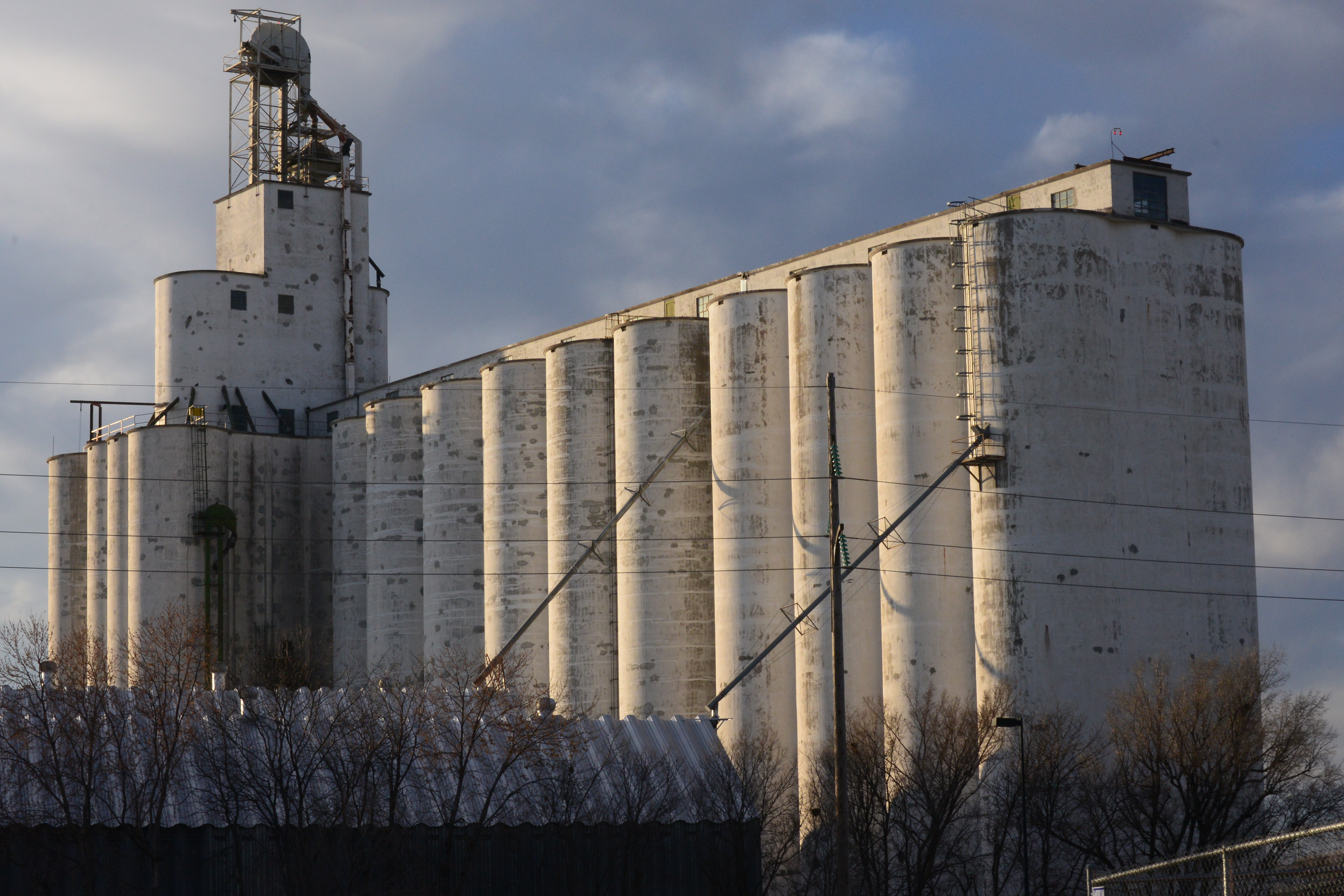
The trademark rounded headhouse rises above one of the largest elevators Tillotson Construction built

This elevator is a couple of blocks from the Cornhusker Highway in Lincoln, and one of the obstructions to a clear shot is an overpass feeding traffic to that main artery through town. The limited view required some cropping of the elevator. But the light and sky made up for the field of view.

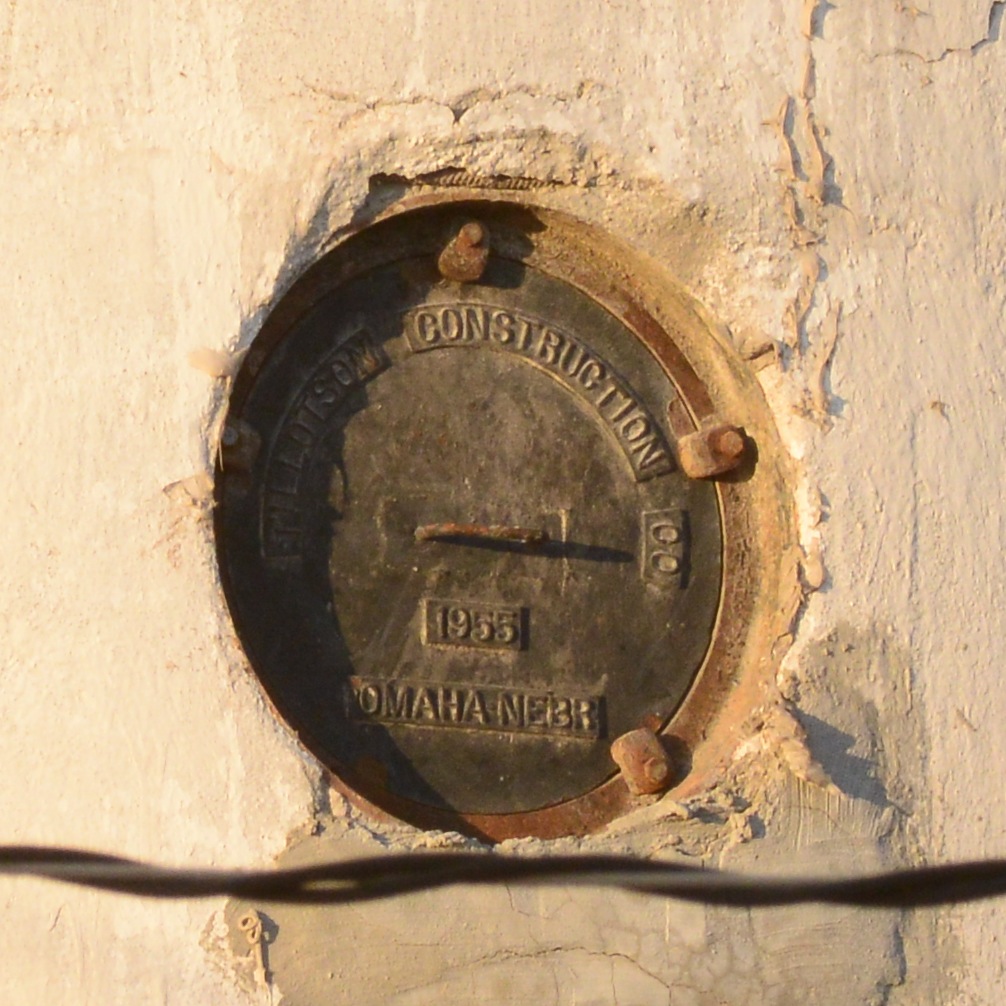
The manhole covers display the company name on both the elevator and the annex

The manhole covers display the company name on both the elevator and the annex

We do not know why the Lincoln elevator is not among the projects recorded in the company ledgers. It appears that at least one page was missing from the records, and there is no way to know where it is, or why it is missing. So the only information we have about its construction is from the manhole cover on the main elevator, which says 1955. Presumably, the annex was built shortly thereafter.

Because the facility, AGP Grain Cooperative, was closed, we obtained no further details on this visit. This elevator will be the first on our list when the harvest time comes around again, and we can see the elevator in operation for ourselves.

Christmas ideas for an elevator enthusiast

DSC_0075Story and photo by Kristen Cart

Our good friend Linda Laird shares our interest in American grain elevators and has devoted much of her time to documenting these historic landmarks of the plains. I purchased her book some time ago and found it very enlightening. She did a terrific job. This book is on my short list of recommendations for Christmas, if you have an elevator lover on your list.

The American Grain Elevator

Another good friend and fine photographer Bruce Selyem, and his wife and excellent writer Barbara Selyem, have published several books on the subject of grain elevators, and they also publish an annual grain elevator calendar. Last time I checked they still had a few for sale. They also have fine prints for sale if you find an image of an elevator you can’t live without. I spend time on their site while planning elevator trips because of their extensive coverage of elevators all over the country and in Canada.

Grain Elevator Photos

Lastly, it is always a good idea to visit Gary Rich’s elevator photo pages to see his latest elevator photography. He recently finished a trip to Oklahoma, so I expect to see new images from there soon. He says he loves taking pictures in the winter sunshine, which is the perfect illumination for his subjects.

Gary Rich Grain Elevators

Enjoy the season!

Tillotson elevators in Oklahoma

Story by Kristen Cart

The Tillotson Construction Company of Omaha, Neb., built at least two hundred elevators and other building projects during the heyday of elevator construction. To date, we have obtained the specifications for 127 of them, specifically concrete elevator jobs. Of these, 27 projects were completed in Oklahoma according to the documents we have. A few pages of the specifications are missing, so undoubtedly there were more.

It can be seen from the map that many of the projects were clustered in the wheat growing region that served the major terminal facilities in Enid, Okla. The Tillotson company must have made a very good impression, since many of the facilities brought the company back to build their additional storage. The neighborhood around Enid was practically saturated with elevators that were designed and built by Tillotson Construction. It is apparent that the company had a continuous presence in the neighborhood, keeping their equipment and infrastructure on location in and around Enid for a number of years, which probably made them the most practical and economical choice for local cooperatives when they shopped for a builder.

Listed below are the depicted locations:

Goltry, 1939: 60,000 bushels

Newkirk, 1940:  60,000 bushels

Douglas, 1941: 60,000 bushels

Medford, 1941: 212,000 bushels

Thomas, 1941: 212,000 bushels

Burlington, 1945: 213,000 bushels

Cherokee, 1945: 213,000 bushels

Lamont, 1945: 212,500 bushels

Blackwell, 1945: 212,500 bushels

Custer, 1946: 96,000 bushels

Kingfisher, 1946: 240,000 bushels

Thomas, 1947: 240,000 bushels

Pond Creek, 1946: 100,000 bushels

Helena, 1947:  100,000 bushels

Eva, 1947:  99,000 bushels

Manchester, 1948: 145,000 bushels

Helena, 1949: (annex) 100,000 bushels

Pond Creek, 1950:  252,000 bushels

Kildare, 1950:  250,000 bushels

Drummond, 1950:  200,000 bushels

Imo, 1950:  151,600 bushels (not found on map)

Helena, 1953:  (annex)  200,000 bushels

Cherokee, 1953:  309,400 bushels

Meno, 1953:  152,000 bushels

Dacoma, 1954:   251,000 bushels

Orienta, 1954:  (annex) 312,000 bushels

Weatherford, 1954:  (annex) 181,000 bushels

Elevator builders turned to wartime projects during World War II

Unknown, Gerald Osborn, William Osborn, Iver Salroth

Jerry Osborn (standing) with his father Bill Osborn (center) and Iver Salroth (right) in Galveston, Texas in 1945 during construction of Tillotson’s Fairmont building in Giddings.

By Kristen Cart

We have very limited information about the activities of Tillotson Construction of Omaha during World War Two. The other two elevator builders we profile, J. H. Tillotson, Contractor, and Mayer-Osborn, of Denver, Colo., began their operations after the war, but individuals working for both companies gained their experience during wartime, either at Tillotson Construction, or elsewhere.

Eugene Mayer, a partner in Mayer-Osborn Construction, previously worked in a partnership, Holmen and Mayer, based in Denver. Orrie Holmen was a University of Chicago-trained architect. Eugene’s sister Sheila was the wife of Joe Tlllotson. At some point after 1938, Joe left his brother Reginald in charge of the parent company, Tillotson Construction, of Omaha, and moved to Denver to start his own elevator business, accompanied by old Tillotson hands William Osborn and Bill Morris.

It would be fascinating to trace the wartime activities of each of these principal builders, if they can be learned.

Elevator photos026In the Tillotson company records, we found concrete elevator specifications beginning a few years before the War and resuming immediately afterward, but conspicuously absent were records of elevator construction during the War.

However, we know Tillotson Construction was active between 1942 and 1945. We found one snippet in an old newspaper, which we transcribed on the blog: https://ourgrandfathersgrainelevators.com/2012/05/08/nebraska-firms-get-government-contracts/.

When we learn more about the activities of the company during that time, we will certainly write about it here. It is an open line of inquiry, and we are eagerly seeking more information.