The demise of Mayer-Osborn Construction remains an enduring puzzle

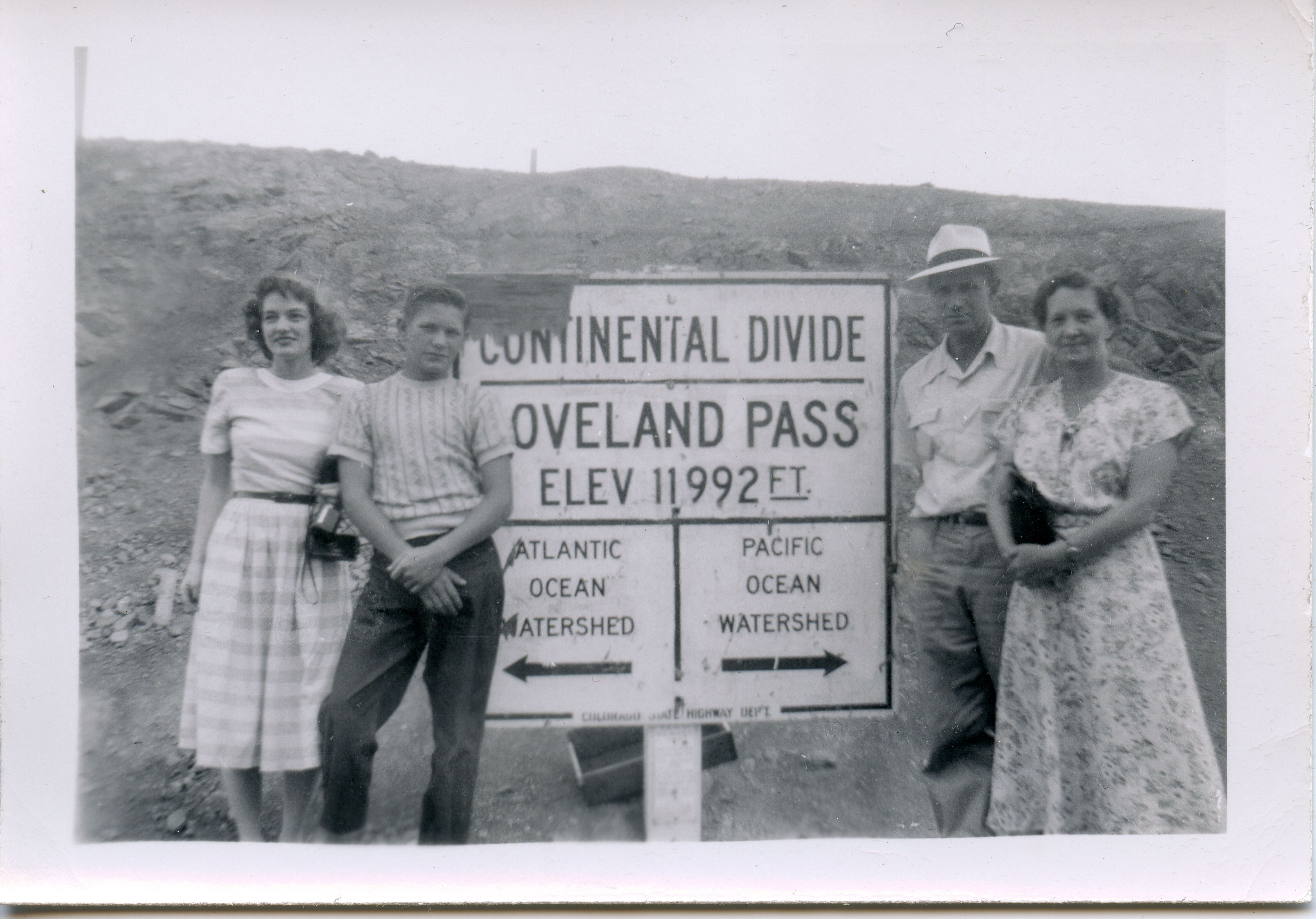
Audrey, Gerald, William and Alice Osborn, ca. 1950

Audrey, Gerald, William and Alice Osborn, circa 1950.

Story by Kristen Cart

Some mysteries are not meant to be solved. Perhaps it is a natural outgrowth of my grandmother’s tight-lipped discretion where evil tidings were concerned. I can remember the disapproving purse of her lips if I broached the wrong topic–it was wise to move on.

Albert Skoog as a boy

Albert Skoog as a boy

Alice Christoffersen married William Osborn in the 1920s. All anyone in our family could know about those times was conveyed in the pleasant images of a young couple goofing around by the lake and fishing. In later pictures you could see the pained expression of a long-suffering middle-aged woman, but her concerns were private, at least when they brought bad memories to mind.

My dad, Jerry Osborn, was quite amazed to find he had a deceased great-uncle, whose name had never been spoken in front of him. Alice Christoffersen’s maternal uncle, Albert Skoog, died young from injuries sustained in a horrific automobile crash when she was a young woman. The story was relegated to the darkest recesses, never to be mentioned again.

“Albert Skoog Dies from Effects of an Auto Accident

Had Lived Nearly Ten Months with a Broken Back

After living nearly ten months with a broken back, during which time he suffered untold agony, Albert Skoog, 42, formerly and employee of the Fremont Stock Yards, died at the home of his sister, Mrs. James L. Christoffersen, south of Fremont. Death was due to injuries sustained in a automobile accident on the Lincoln Highway about a mile east of Fremont last October….”

The article went on to describe the accident and his medical treatment. He died in the family home of Alice’s parents.
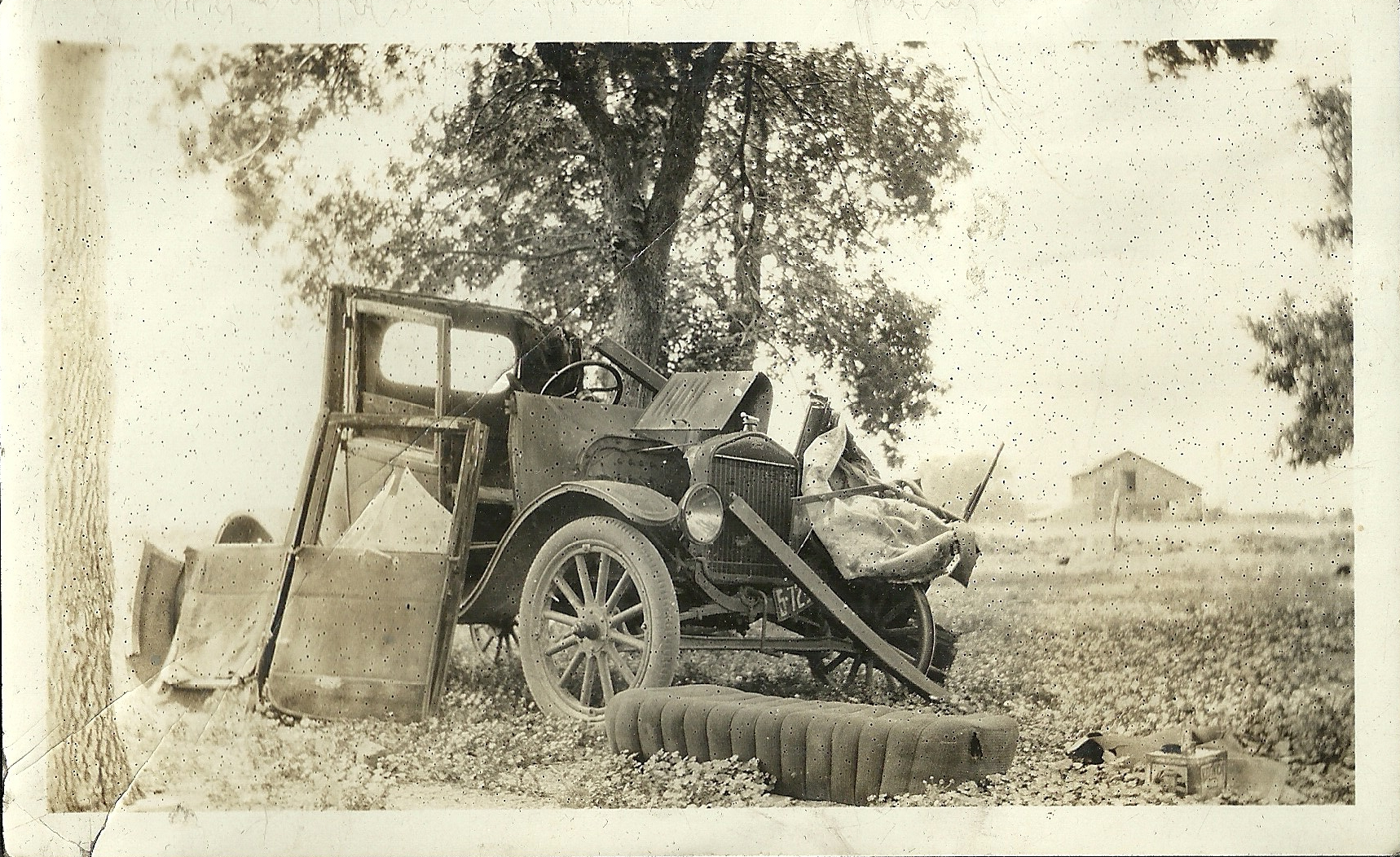
This image was found among Grandma's pictures. It was the car her uncle wrecked in an ultimately fatal accident.

The wreck fatally injured Albert Skoog, who died months later from a broken back. Grandma had this photo of the car in an album that once belonged to her mother.

No stone marks his grave. It took many years to locate pictures of him, preserved by a different branch of the Christoffersen clan. Images of the wrecked car also survived, tucked away in Grandma’s photo album. But such things were not discussed in my grandmother’s world.

Another side of Grandma’s personality was not so discrete–she would tell stories that put others in a bad light when she thought she could gain favor for herself. This habit got worse as she aged, and by the time she passed on at age 98, family members believed awful stories about each other because of things she said.

We have tried, without success, to verify Grandma’s story of why my grandpa, William Osborn, got out of the elevator business. Perhaps she invented it. We have no way to tell.

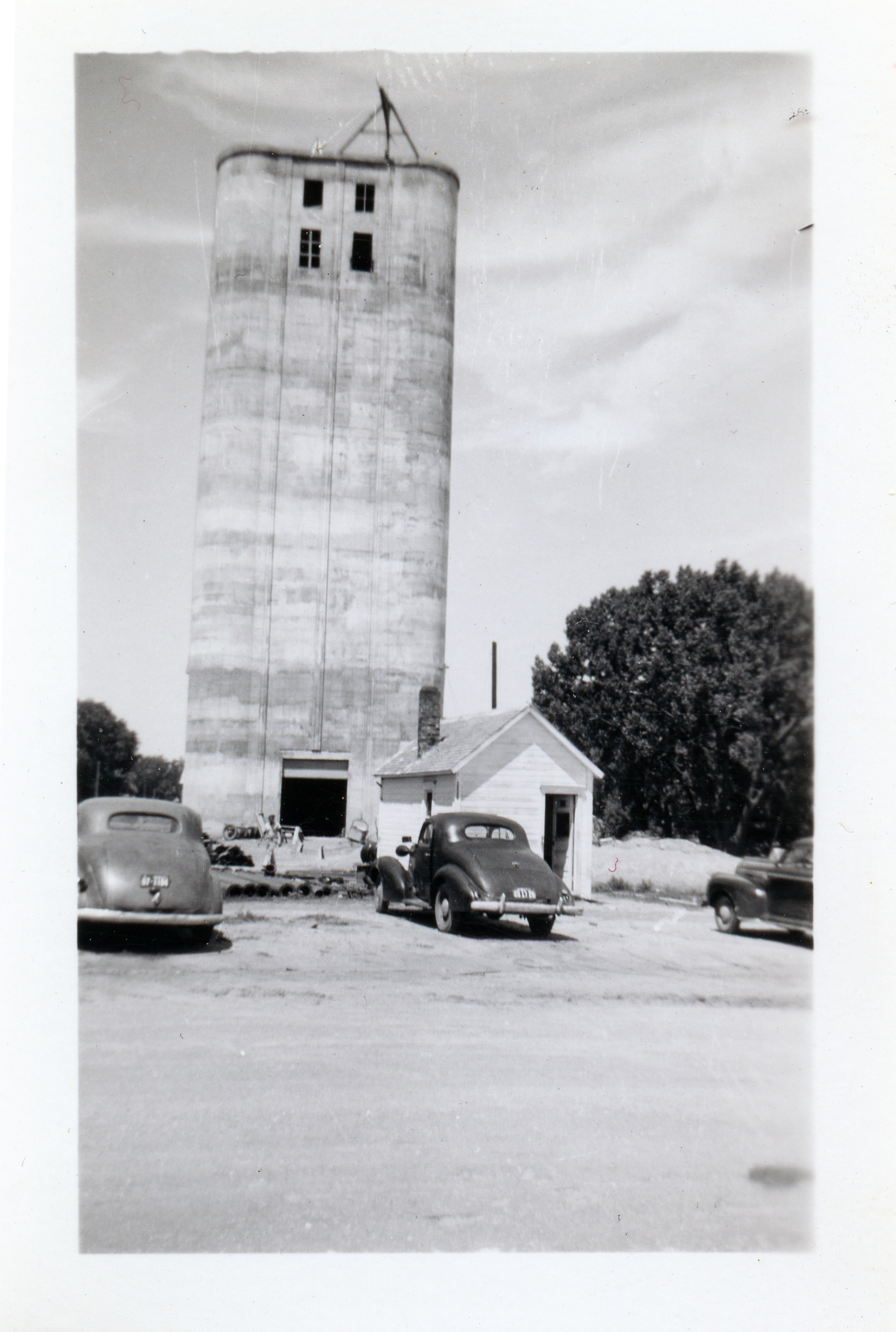
Mayer-Osborn elevator at McCook, Neb. during a family visit, ca 1950. This elevator was the first of its type, a model for the later Blencoe elevator.

Mayer-Osborn elevator at McCook, Neb. during a family visit, circa 1950. This elevator was a prototype for the Blencoe elevator.

Dad never had an inkling about why his dad quit (except that he heard in whispers not intended for him) until Mom started poking around. Grandma told her the story, apparently in a fit of pique. Details were fuzzy, and by now, not well remembered. There’s hardly more to it than speculation. But that one glimpse was the only information we ever got. Otherwise, it “wasn’t discussed,” as Dad put it.

Mom says an elevator was built, and very shortly thereafter, failed. She variously used the terms “collapse,” “explosion,” and “fire.” But the two things she was pretty consistent about were the facts that the concrete mix was wrong because the crew had shorted the materials (possibly for financial gain), and that the collapse occurred as soon as the elevator was filled with grain for the first time. That is all she remembers from what Grandma told her.

Dad says his father was out of the business by 1955. Dad remembers that his dad had come home to Fremont, Neb., from Denver, Colo., the home base of his business, that summer when he should have been on the job. He thinks that his dad was blamed for the failure–Bill’s partner, Gene Mayer, apparently went on without him. But that is all we have.

We don’t know where it happened and haven’t found a newspaper story. We know a large terminal elevator collapsed that year in Fargo, N.D., but we discovered the identity of that builder and it wasn’t Mayer-Osborn. There were whispers about an elevator that had a bad headhouse around Linn, Kan., or Bradshaw, Neb., which might have been his, but that story hasn’t been verified or dated.

The Blencoe, Iowa elevator built by Mayer-Osborn

The Blencoe, Iowa elevator built by Mayer-Osborn

The only story I can verify is the tear-down and restart of the Mayer-Osborn elevator in Blencoe, Iowa. The concrete mix was wrong there, and it cost a few days and quite a lot of money to correct. Could that relatively mundane event in 1954 have created a rift between the partners, Bill Osborn and Gene Mayer? Was the tale of a more dramatic accident simply angry gossip from my grandmother?

Until we know more, it is a skeleton yet to be found, buried in a very deep closet.


A mystery unfolds at the Tillotson elevator of Blencoe, Iowa

This elevator is attributed to the Tillotson Construction Company of Omaha, but evidence points elsewhere

This elevator is attributed to the Tillotson Construction Company, but evidence points elsewhere.

Story and photos by Kristen Cart

In an earlier post, we showed that the elevator built by the Tillostson Construction Company in the northwest Iowa town of Blencoe had a structural failure prior to completion. A photo provided by Tim Tillotson showed that the concrete slumped over the driveway after the slip-form pour had progressed considerably past the point of failure. Construction would have halted there. The question of how the elevator was completed was never answered.

In the company records we have, the specifications log ended by 1956, while the company continued to build elevators beyond that date. So later records are lost to us. Tim Tillotson estimated that this mishap occurred in about 1955. I discovered, on review, that Blencoe was not in the specifications at all. Why?

A photo of the manhole cover on the rail side of the elevator could provide the answer. It is not typical for Tillotson elevators to have exterior manhole covers on elevators of this type, so the existence of these was a little surprising. More shocking was the identity of the company that placed them.

"Grain Storage Const. Co, 1959, Council Bluffs, Iowa" is embossed on the manhole cover

“Grain Storage Const. Co, 1959, Council Bluffs, Iowa” is embossed on the manhole cover.

The Grain Storage Construction Company of Council Bluffs, Iowa, is not familiar to us. It may be the company called in to repair the damage when the failure occurred.

We don’t know if Tillotson Construction was fired on the spot. But it is also possible that Tillotson was given a second chance–the design of the elevator clearly follows the trademark Tillotson design, whether copied by some one or built by the original contractor.

I wonder if the original repair destroyed the structural integrity of the elevator, and Grain Storage Construction was brought in to replace two of the bins. We know it was a later job because of the 1959 date on the manhole covers. Unfortunately, I made my visit on a Saturday, and the co-op was closed, so there was no one there to ask.

It is a beautiful, functional elevator today. It stands beside the older Mayer-Osborn elevator, which is also clearly in use sixty years after it was built. Both elevators had problems during construction, but the capacity was urgently needed, so both projects were finished. How the Tillotson elevator ultimately became a Grain Construction Company branded elevator is a mystery we will try to solve in a future post.

DSC_0427

Old clipping leads to discovery of Mayer-Osborn’s elevator in Hoover, Texas

Hoover Populated Place Profile / Gray County, Texas DataStory by Kristen Cart

The Mayer-Osborn Construction Company’s history has been a little difficult to put together because many of the people involved are long gone. My father Jerry Osborn remembers many of the elevators his dad William Osborn built, so I have relied upon these memories quite heavily, filling in the details with newspaper accounts, old photographs, and site visits.

But as Dad’s interests turned to high school girlfriends and football, he paid little attention to his father’s business, and some Mayer-Osborn projects slipped through without his notice. Dad knew nothing about a Mayer-Osborn elevator in the central Texas location of Hoover, eight miles east of Pampa.

Pampa_Daily_News_Sun__Jan_10__1954_Fortunately, the Jan. 10, 1954, Pampa Daily News article announcing its construction survives.

A satellite view shows the stepped headhouse, a Mayer-Osborn trademark, atop the Hoover elevator. The structure appears to be built much like the Mayer-Osborn elevator in McCook, Neb.

The Hoover edifice still stands, and is used for grain storage along a rail line that passes through Pampa to the west.

A history of the town of Hoover may be found here.


A look at the Johnson-Sampson elevator in Grand Island, Nebraska

dsc_1517

Kristen Cart

Sometimes it is instructive to visit an elevator built by one of the competitors of the Tillotson Construction Company of Omaha, Neb., and its offshoots, J. H. Tillotson, Contractor, of Denver, Colo., and Mayer-Osborn Construction, also based in Denver. The elevator built by Johnson-Sampson in Grand Island, Neb. is a good example, for comparison, of a project built by the competition while our grandfathers were active in the business.

One of our readers, Teresa Toland, mentioned the elevator and hoped that we knew something about it, since her father, Darrell Greenlee, had supervised its construction. A couple of years passed before I could follow up on her query. While traveling this fall, I took a detour to see the elevator and take photos. The old grain elevator stands now as a prominent Grand Island landmark, still serving its original purpose. It’s location, just off I-80 in central Neb., made it easy to visit.

The elevator hummed with activity at the height of harvest. On this trip, my dad, Jerry Osborn, was along, so I did not take time to interview the employees–we were all tired after our hunting trip, and were ready to get home. But the elevator was a lovely sight and I was glad for the chance to see it.

dsc_1526The original elevator, flanked by two annexes, was obscured behind a large modern concrete bin, so I got closer for a better look. The headhouse was unlike any I had ever seen. The elevator’s design formed a harmonious whole, much like the attractive Tillotson elevators its builder emulated, but it had taken a different direction and had its own look. It must have been a handsome sight when it stood alone, brand new, and gleaming white–the tallest thing around.

The bin arrangement for the old elevator seemed conventional for storage in the 250,000-bushel class. Adjacent to the main house stood a large capacity metal grain dryer. Including the annexes, the elevator complex was the size of a moderate terminal–the type of storage that would serve as a transit point for a rail or trucking hub.

When Virgil Johnson, an early employee of Tillotson Construction, went out on his own, he built elevators in partnership with his Sampson in-laws for a few years. Darrell Greenlee, who supervised the construction at Grand Island, was one of his superintendents.


A tale from the Johnson Construction elevator at Galatia, Kansas

DSC_0582 copy Blencoe

Blencoe, Iowa

Story by Kristen Cart

Once again, one of our readers has supplied a fascinating glimpse into the construction of an elevator.

Emily Frank is the granddaughter of Darrell Greenlee, a foreman for Johnson and Johnson-Sampson. She related a story about the beginnings of the Galatia, Kan., grain elevator:

The Post Crescent 26 Mar 1959My grandfather built slipform concrete grain elevators while my mom was little. My grandparents moved around every three to six months from the time they were married until my mom (the third of six children) was in third grade. I find a lot of your stories remind me of the ones my mom told or my grandmother tells. You did one where a man fell to his death from an elevator during construction. Unfortunately that happened on a job where my grandfather was the foreman, as well…

My grandfather worked for Virgil Johnson. At the time the company was Johnson Elevator Company.

At a job in Galatia, Kan., in 1959, while Darrell was stabilizing the family trailer, it fell and he was hit across his back and shoulders. Rosina took him to the hospital. The hospital wasn’t going to see him until she could pay. She didn’t have insurance. She told them instead, “I’ve got enough money to buy this damn hospital.” When they left two days later, she paid cash.

Rosina called Virgil to tell him that Darrell had been hurt–not bad but he was pretty bruised up. Rosina wasn’t sure what they were going to do. She told Virgil she wanted to know what he was going to do because if Darrell didn’t work, he didn’t get paid. Virgil asked if his butt was bruised and then pointed to a chair and said “See that chair right there, he can park his ass right there and supervise from his chair.”

When the elevator was just about completed a man fell from the top of the elevator. Darrell was a witness to the fall. The guy opened the door at the top and the wind caught him and blew him over the side of the elevator. He fell 120 feet to his death. The man was Arthur Kronberg, 42, originally from Menasha, Wisconsin.

Rosina said when they called the man’s brother to tell him he could come pick up his belongings, he didn’t seem very interested, except he asked if there was anything of value. They had told him his brother had a truck. The man reluctantly agreed to get the truck.

Emily filled in some of the details of her grandfather’s career. The history of Johnson Elevator Company that she shared intrigued us, because the company took up where Mayer-Osborn Company left off and built strikingly similar elevators. The Galatia elevator is a close copy of the Mayer-Osborn elevators at McCook, Neb., and Blencoe, Iowa. Because of the similarities between them and a number of other Johnson elevators, we have speculated whether designer Gene Mayer continued his career with Virgil Johnson and brought his designs with him. Emily continued:

DSC_0574(1)

Page City, Kan.

The elevator at Galatia is on one of Johnson’s business cards.

Johnson used to work with some brothers with the last name Sampson. They were Virgil Johnson’s brothers-in-law. They worked together for a while, too, under the name Johnson-Sampson.

My grandfather worked constructing concrete elevators from 1947 to about 1963. He worked for several different people.

DSC_0526

Mitchellville, Iowa.

Johnson was the man he worked for most, on and off over the years. When Virgil and his brothers-in-law split, my grandfather went to work for Dewey Construction and then Young Love. Then Virgil found a partner, and my grandfather worked for Johnson & Bratcher. Then Virgil went off on his own as Johnson Elevator Company.

When Virgil went broke after a missile base job in the 1960s, my grandfather worked for a guy by the name of Guy James. He did two jobs for him until he finally settled in Rushville, Ill. He never built another elevator, but he had his own company and they did a lot of elevator repair work.

My own grandfather William Osborn’s experience followed a similar trajectory–after he was done with elevator construction, he went on to elevator repair and maintenance. We always attributed the cancer that took him at age 75 to the dust he breathed during those years, though some of the damage could have been from smoking, a habit he dropped ten years before he died.

The hazards of the business were sometimes obvious, but often stealthy and unexpected. From dust, to wind, to new boots, to heedless roofers, many things in elevator construction took lives–but the monuments built by these mortal men remain, withstanding tornadoes, floods, hail, and every natural disaster.


The 1945 vintage elevator at Lodgepole, Nebraska, and the death of Bill Morris

DSC_0446Story and photo by Kristen Cart

A newspaper article recently came to light that upended our elevator construction timeline, causing us to reconsider the story of the Lodgepole, Neb., elevator and the careers of Joseph H. Tillotson and my grandfather William Arthur Osborn.

My dad, Jerry Osborn, said that the death of Bill Morris, the superintendent on the Lodgepole job, and that of Joe Tillotson, the owner of J. H. Tillotson, Contractor, came within a month or so of each other. Now it appears likely that the season was the same, but both fatal car accidents occurred in different years–1945 and 1947–a fact easily misunderstood by the young boy my father was at the time, as he listened to the adults talk about business.

elevator021

We believe this photo by William Osborn is from Lodgepole, Neb.

The article appeared in the Nebraska State Journal on Oct. 8, 1945:

Omahan dies after car accident

SIDNEY, Neb. (AP). W. B. Morris, 36, an employee of the Tillotson Construction company, of Omaha, was fatally injured Saturday night when struck by a car driven by Howard B. Kirk, 48, of Lodgepole, Neb., Deputy Sheriff Arnold Braasch said Sunday.

The deputy sheriff reported Morris was changing a tire on his car about ten miles east of here when the accident occurred. He died in a hospital about five hours later.

Braasch said Morris’ home was in Texas, but that he was living in Lodgepole while working on the construction of a new grain elevator.

County Attorney R. P. Kepler said he will decide on Monday whether an inquest is to be held.

We attributed the Lodgepole elevator’s construction to J. H. Tillotson, Contractor, the independent company Joe Tillotson started after his parting of the ways with Tillotson Construction of Omaha. We wrongly believed that both Bill Morris and Joe Tillotson had died in 1947 while working on the Lodgepole job. Now we know that Bill Morris died in 1945 while working for Joe Tillotson. The new fact pins down the date of Joe’s departure from the Omaha company–a move my grandfather made at the same time.

When interviewed in 1949 about his first, independent, Mayer-Osborn Construction venture in McCook, Neb., William Osborn named a number of elevators he had built before. We still believe all of the elevators Bill Osborn listed were J.H. Tillotson elevators.

According to the McCook article, Bill Osborn said the elevators in Maywood, Traer, Wauneta, and Lodgepole were built in 1945. If the reporter was right about Bill Morris’ employment, all of the 1945 elevators would be too early to be J. H. Tillotson elevators. However, none of them were recorded in the Tillotson Construction specifications and none built in the Omaha company’s style.

The reporter writing about Bill Morris’ death in 1945 was unaware of the freshly minted company Joe Tillotson had started, and wrongly identified Bill Morris as a Tillotson Construction of Omaha employee.

DSC_0369

An early photo of the Lodgepole elevator was kept at the location.

The fact that in 1945, Bill Morris went from a superintendent job at a verified Tillotson Construction project in Giddings, Tex to a superintendent position at the Lodgepole elevator job, a project demonstrably not built by the Omaha company, precisely dates the time Joe Tillotson chose to go out on his own.

The 1945 construction date of the Lodgepole elevator gives us a much more accurate understanding of the birth of J. H. Tillotson, Contractor, a venture that lasted about four years, until my grandfather built the McCook elevator for Mayer-Osborn Construction in 1949.

A tragedy took Morris in his prime, but my grandfather stepped into his place, gaining valuable experience as a builder. To this day, the graceful Lodgepole elevator serves as a fitting monument to Morris’ productive career.

An airplane crash ends Gandy Construction, an early elevator player

WAO3

The Mayer Osborn company brochure mentions Gaddy (sic) Construction of Omaha

Story by Kristen Cart

My father remembers the grain elevator construction business from earliest childhood. But his childish memories did not distinguish one job from another, so until recently we did not know about the company where my grandfather William Osborn began his career as a carpenter.

Dad said they still lived on the farm when his father went to Kansas City in pursuit of a better opportunity, which dated the event to before 1944. That job was likely with the Tillotson Construction Company of Omaha. Before then, Grandpa’s Mayer Osborn Construction brochure said he worked for Gaddy (sic) Construction of Omaha. It was difficult to come up with any information about them, until we located a clipping that marked a tragedy.

The newspaper account related:

Plane Crashes at Lexington, Omahan Killed

Lexington, Neb., (AP). Ralph Arden Gandy, 41, head of an Omaha construction firm, died Saturday night after the light plane he was piloting crashed near here.

Tommy Johnson, a Gandy construction company foreman, was injured in the crash.

W. H. Pfiefer, Lexington funeral director, said Gandy’s plane took off from a field on the farm of Dennis O’Connor, a cattle feeder who lives six miles northeast of here.

After the takeoff, the funeral director said, the plane stalled and crashed on a road. Both men were thrown free of the wreckage.

Gandy died a short time after the crash in the Community hospital of Lexington.

Johnson received a broken jaw and chest injuries. He was removed to the Methodist Hospital in Omaha by ambulance Sunday night.

The Gandy firm had built a grain elevator on the O’Connor farm, Pfiefer said, and Gandy and Johnson had been at the farm inspecting it. The plane was taking off to return to Omaha when it crashed.

Gandy is survived by his widow, Clara, and four children.

The Nebraska State Journal, Lincoln, Neb.,  Aug. 1, 1949.

William Osborn worked with Loren Saunders, his brother-in-law, at a job in Omaha before he took the opportunity in Kansas City, according to my dad. It seems likely that the Gandy company was that job.

How a 1950 elevator matches advanced farming practices in Cordell, Oklahoma

DSC_2318Story and Photos by Kristen Cart

Once we discovered that the Cordell, Oklahoma elevator was built by Mayer-Osborn, it became a priority to pay a visit.  Luckily an opportunity presented itself when I went shopping for an Australian Shepherd puppy for my son Jesse. Deadra Buffing breeds lovely pups at Horse Creek Aussies right there in Cordell, and we found the right dog, so off I went on a puppy mission, first flying to Oklahoma City then driving two hours west to Cordell. (I’m sure there were breeders closer to home, but this coincidence was too good to pass up.)

DSC_2335But the first stop was the Mayer-Osborn elevator. After a quick tour around the outside with my camera, I stepped inside the Wheeler Brothers Grain Company office. There, Jim Balzer greeted me. He was more than happy to share his insights and long experience with the Cordell elevator. His stint at the elevator spanned a number of owners, beginning in 1979 with General Mills.

General Mills sold their Oklahoma operations in about 1984, including elevators at Cordell, Bessie, Carrier, Reading, and the terminal at Enid. Logan Farms bought the Cordell elevator from General Mills, then Johnson’s Grain bought it. Goodpasture, out of Texas, owned it for awhile. Wheeler Brothers finally bought it in 1996 or 1997.

After 1984, a truck spout was added on the west side of the elevator, and the train spout on the east side was remodeled using salvaged parts. The old wooden doors were also replaced with metal ones. Jim said the elevator is holding corn for the first time, an atypical crop for the area, but a sign of the times due to ethanol subsidies.

DSC_2333

Jim Balzer has worked at the Cordell elevator since 1979. The small elevator has stood as long as he can remember.

The structure is completely unique, having two driveways. It’s special features are its two legs, each rated at 5,000 bushels per hour, to achieve an unload rate of 10,000 bushels per hour. Most elevators of this size and age have long since retired because of limitations in their loading rates, if not for their lack of capacity. Jim said their newer, larger elevator at Cordell, when running “full out” with its single leg, only surpassed the old elevator by a little bit at 11,500 bushels per hour.

In the past, all manner of vehicles would line up to unload their grain at Cordell. The earliest were horse-drawn wagons, used in the old wooden elevator days (before Jim’s time, he noted), where the farmers would scoop the grain manually into the pit. Jim showed me a bit of concrete foundation by the tracks where the wood elevator used to be. A slow leg was no problem then, because the choke point of the process was the farmer’s shovel.

Years later, after the concrete elevator was built, farmers drove their trucks in and unloaded them much more quickly. They would queue up in the hot sun and wait their turn, while Jim’s young daughter brought them cold pop from a wagon.

Now, nothing much smaller than a semi-tractor trailer will bring grain, and the leg speed is much more crucial. Rail cars are also serviced at the small elevator. The Cordell elevator was far ahead of its time, able to keep up with advances in farming practices. It is a testament to the forethought of the original designers that the Mayer-Osborn elevator still meets the need.

The Mayer -Osborn Construction Company is identified on the manhole cover

The Mayer-Osborn Construction Company is identified on the manhole cover.

Mayer-Osborn’s proposals were rejected at Wauneta, Nebraska

DSC_0790

Mayer-Osborn Construction lost their bid to build this annex.

Story and photos by Kristen Cart

Our blog contributor Gary Rich was the first to visit Wauneta, Neb. in the hunt for elevators built by Mayer-Osborn Company and J. H. Tillotson, Contractor. He discovered that the Frenchman Valley Co-op had retained original documentation including blueprints for the original elevator, and the two annexes, which all still operate today. The various documents painted a confusing picture. Gary told me enough that I knew I needed to get down there and see for myself, which I finally did in October of 2012.

The builder of the original elevator was unclear, but presumably J. H. Tillotson had built it, based its appearance.  Mayer-Osborn soon returned with a proposal for the first annex, and a close reading of those documents seemed to indicate that the first elevator was completed by the same people, which at that time worked for the J. H. Tillotson, Contractor operation. But nothing definitive was found to that effect–even the manhole covers of the main house were blank after a renovation.

FVC BP6aThe most interesting discovery was a set of blueprints and drawings completed by Mayer-Osborn for their annex that was never built. Their proposal was submitted twice, once in 1950 and once a few years later, but the town finally decided on a different contractor after some delay. For some reason, the co-op retained all of the paperwork at the site. This blueprint, dated Feb. 17, 1950, was the first of these designs.

The co-op has retained the original written contract proposals, which will be detailed in a later post. It would be very interesting to discover what held up the original building plan. Because the annex finally went up in about 1957, it’s possible that the co-op just waited too long and built the annex after the demise of the Mayer-Osborn Company. The existing annex looks much like the original proposal. Did they show another company the plans, and ask, “How close can you come to this design?”

The Mayer-Osborn elevator in Tempe, Arizona is a jewel in an upscale setting

DSC_0047Story and photos by Kristen Cart

Phoenix is well out of the way for a pilot based in Louisville, Ky., and living in the Chicago area. It takes a bit of intentional finagling to get into Phoenix with enough time to visit an elevator. Fortunately, the Mayer-Osborn grain elevator in Tempe sits at the foot of a hill, just a few miles off the end of an active runway at Phoenix Sky Harbor International Airport. A steady stream of airplanes flies directly over the elevator, either coming from, or going into the airport, depending on the wind conditions. After seeing it many times from the air, I arranged for a four hour layover in Phoenix, which was just enough of an opportunity to grab a rental car and go see it.

DSC_0067

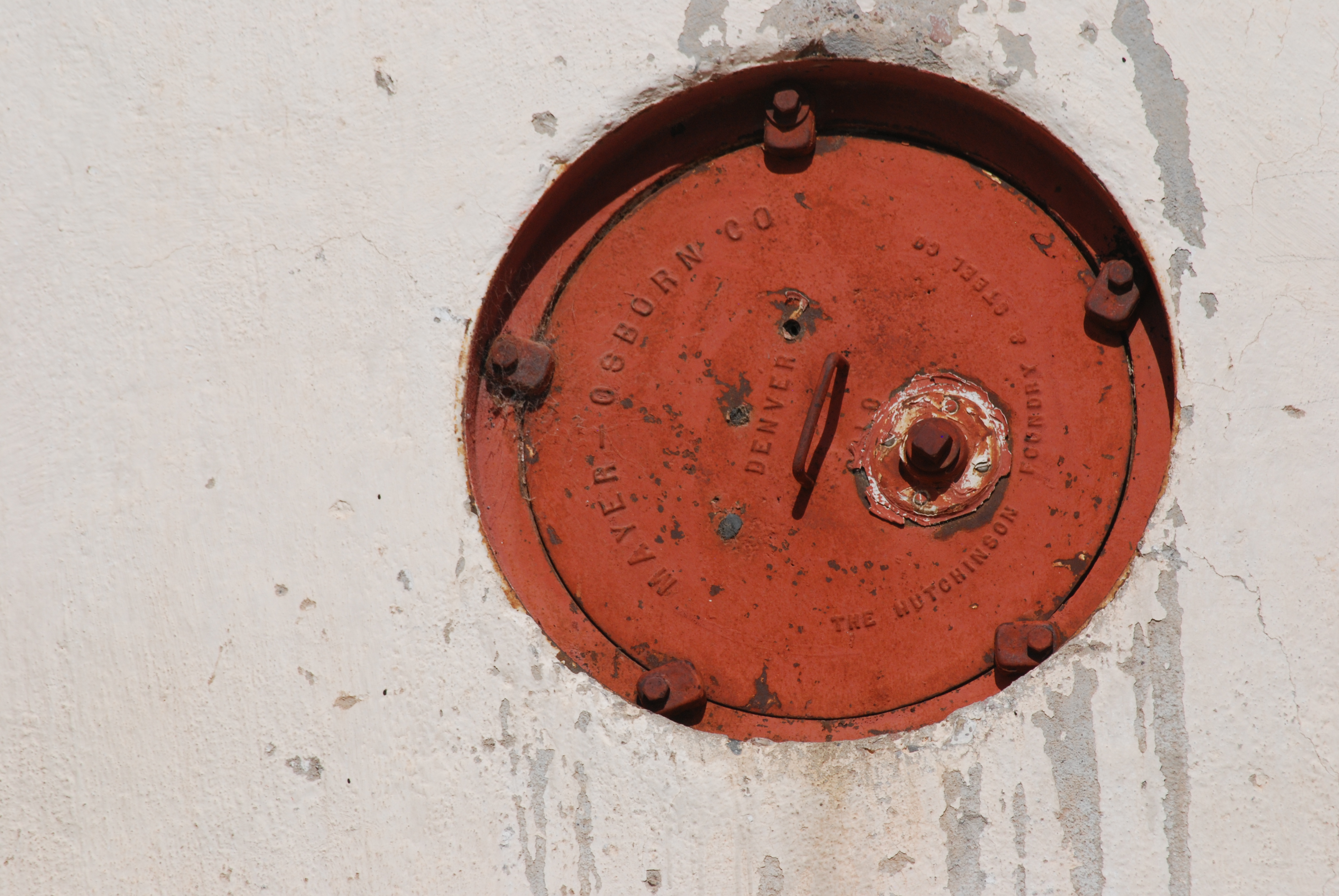
Manhole covers are embossed with the company name. Each annex bin has a manhole cover.

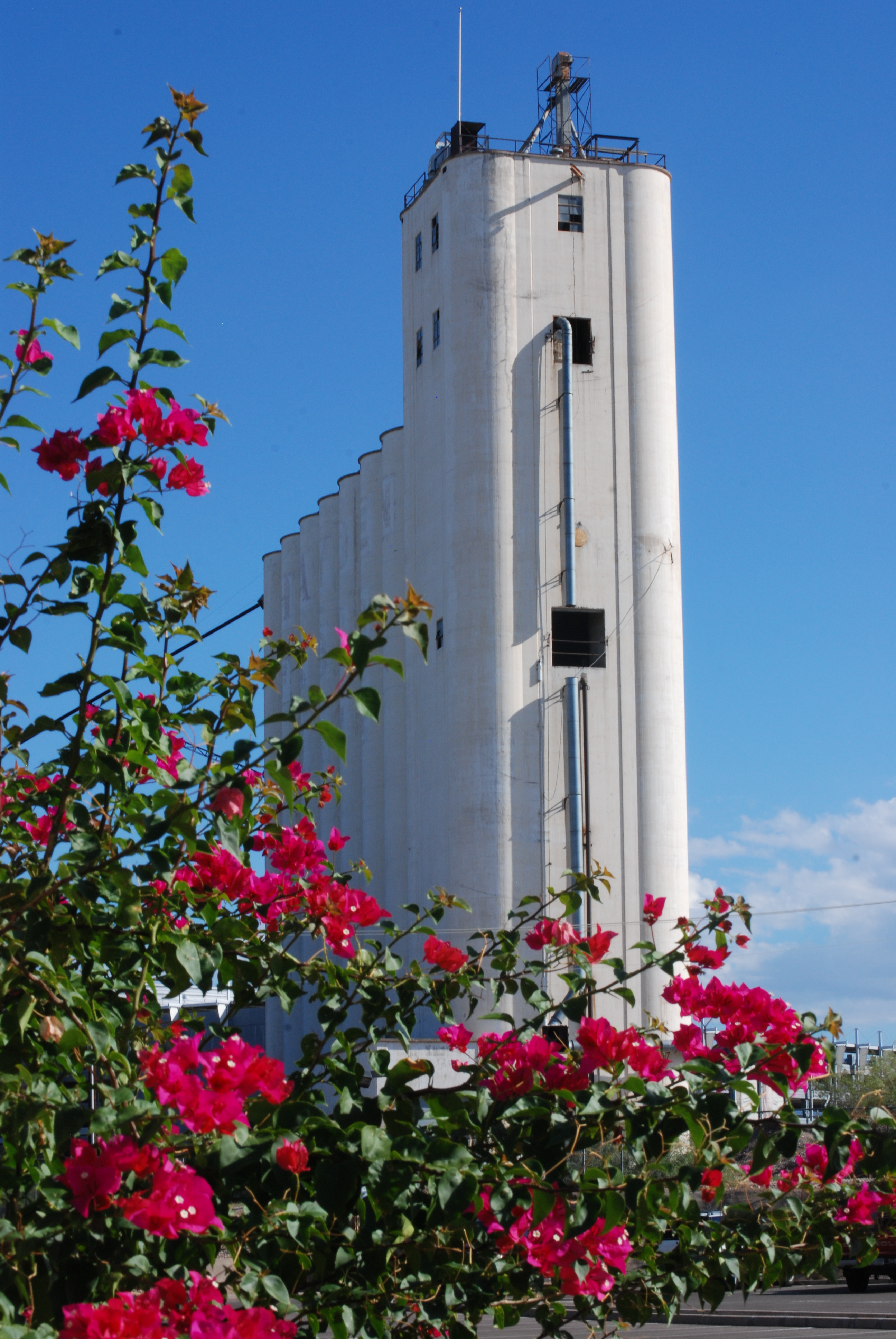
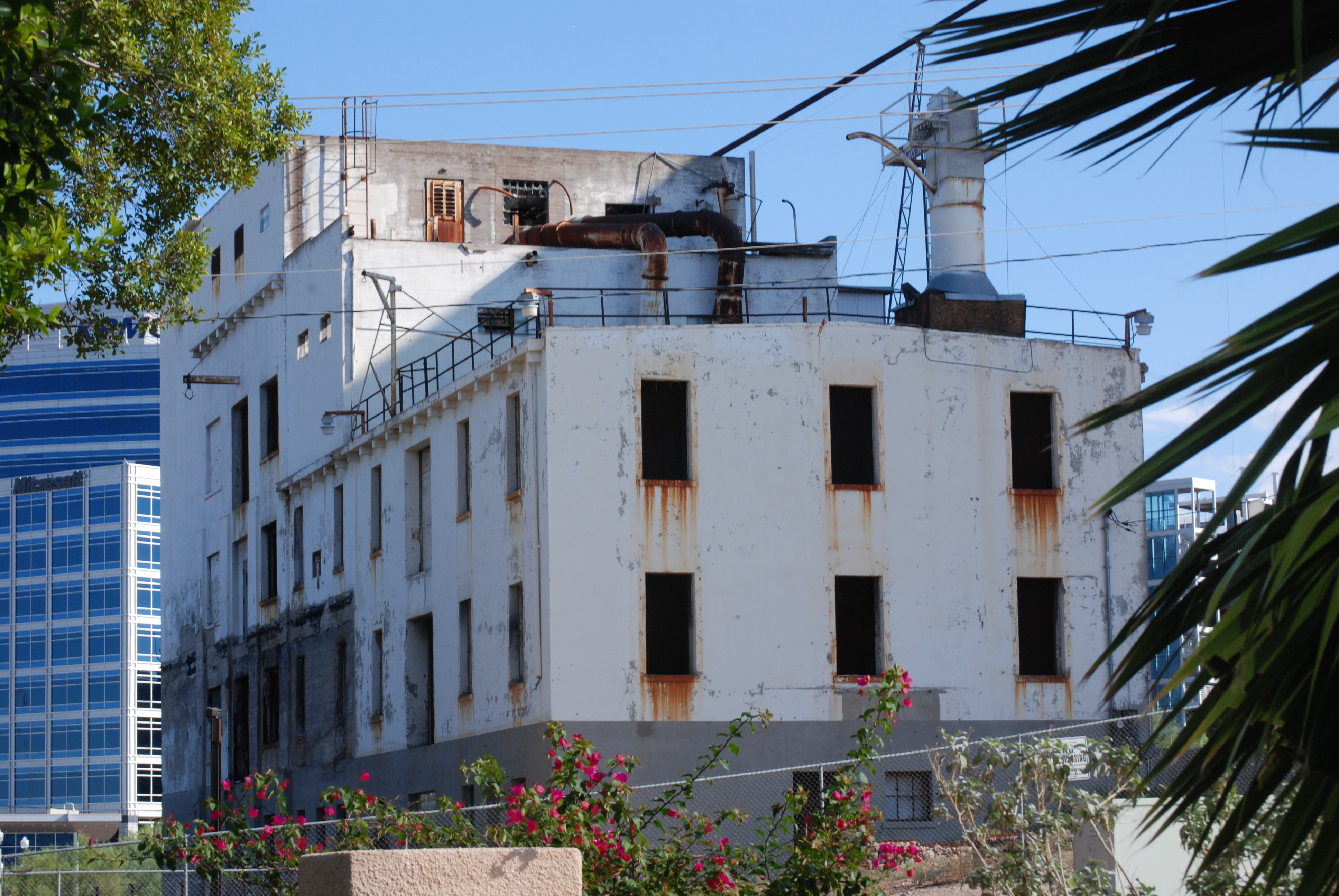
The straight-up styled elevator with its annex was built in 1951 for the Hayden Flour Mill, a Tempe landmark which had already been in operation for decades.  It once proudly displayed the “Hayden Flour Mill” name, painted along the annex side, in lettering that has been painted over at least twice. The white paint has now faded enough for both lettering jobs to show through.

DSC_0057

Hayden Flour Mill


My dad,  Jerry Osborn, remembers when his father worked the Mayer-Osborn job in Arizona. Dad would have been about seven years old. The job was one of many that took Bill Osborn away from his home in Fremont, Neb.

The Mayer-Osborn elevator and annex nestle at the base of a hill, gracing the neighborhood like a white gemstone in a gleaming setting. The Hayden Flour Mill, which has a strong historical significance to the area, is a rather unremarkable looking building, located at the base of the elevator. The neighborhood has grown up around it with shining highrises, shops and hiking trails, erasing the former industrial setting, and replacing it with an upscale ambiance.

It is fortunate that the mill and elevator add character and personality to the place, and that city planners have recognized their value. Now a park and lawn surround the mill. The mill’s windows have been screened so that tourists can look inside, and historical plaques detail its history. The elaborate plans for the mill have been put off after the market crash in 2008, but fortunately the goal of preservation has not been abandoned. It is good to see one of my grandfather’s elevators safely ensconced in a community that values its presence.DSC_0030