
By Ronald Ahrens
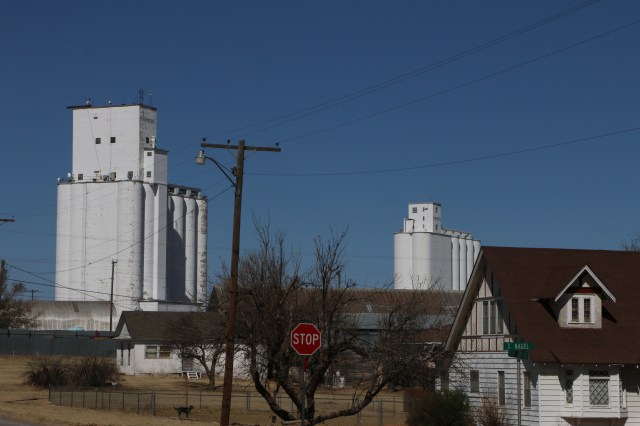
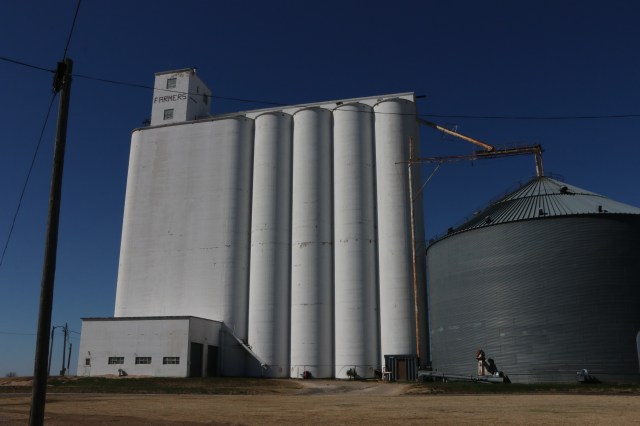
In previous posts I’ve observed that the 152,000-bushel elevator at Meno, Okla., seen at right in the above photo, was adapted from 1950 drawings for Tillotson Construction Co.’s job at Imo, Okla. This plan was also used the same year in Clifton, Kan.
 What prompted Tillotson’s designers to pull out the Imo plan again in August of 1952 for the job completed in 1953 is unknown.
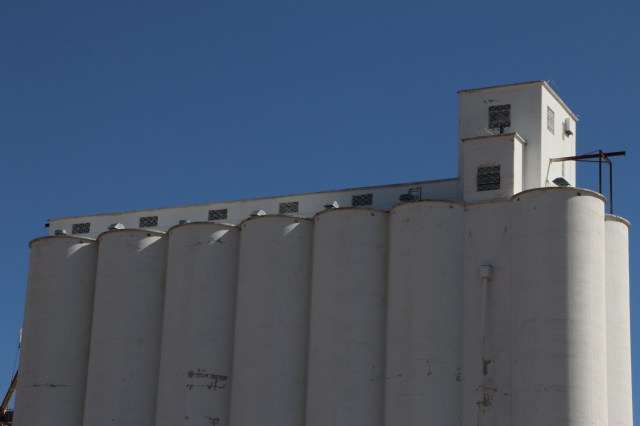
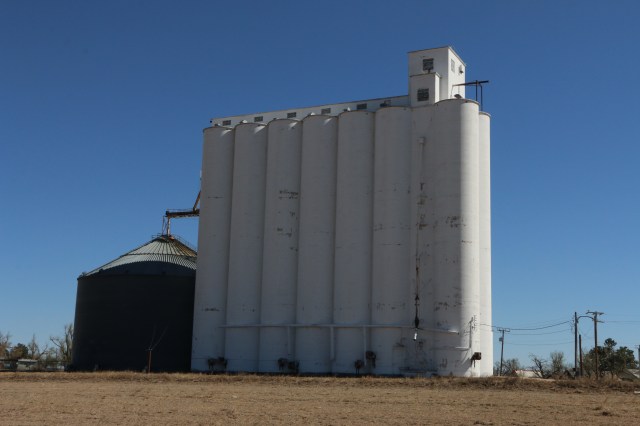
I had also found a second, newer Tillotson elevator at the site. There is no mention of it in the records that extend through 1955. Site manager Matthew Thomsen speculated it came into being in 1956. (Tillotson Construction Co. stayed in existence until Reginald O. Tillotson died in 1960.) With capacity of about 310,000 bushels, it’s more than double the size of the older house.
The smaller elevator was nevertheless a large structure, consuming 1,519 cubic yards of concrete (plus another 17 yards for the hoppers, which were not reinforced). It also gobbled up 68.88 tons of reinforcing steel.

The 21-inch-thick main slab covered an area 54 x 51 feet. It sat over a pit that was 15 feet 9 inches deep. The pit was dug by hand. A soil map of Oklahoma appears to show that Meno sits on deep, loamy soil, so the excavation might not have been a terrible ordeal for the crew. In places with caliche soils, the excavating would have to be done with dynamite.
When the tanks were fully loaded, the whole shebang weight 8,397 tons.
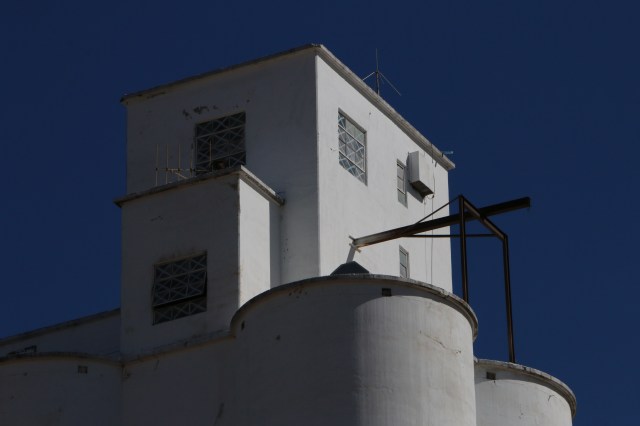
The cupola, or headhouse, measured 22.25 feet wide, 42.5 feet long, and 26.5 feet high. In 1953, Tillotson also created headhouses as high a 46 feet at Cherokee, Okla., and 49 feet at Estill, S.C. Nevertheless, the pulley centers were spaced 152.6 feet apart in the leg.
This single-leg elevator had a six-ply, 14-inch-wide belt with 12-inch-wide, six-inch-deep cups spaced at nine-inch intervals.

Plan for the larger elevator at High Plain’s Co-op’s larger Tillotson elevator.
The head pulley was 72 x 14 x 4 7/16 inches while the boot pulley was 72 x 14 x 2 3/16 inches. It turned at 42 rpm thanks to a 40-horsepower Howell motor.
Theoretical leg capacity was 7,500 bushels per hour; actual capacity, calculated at 80 percent of theoretical, was 6,000 bushels per hours and used 27.75 horsepower.
A 1.5-hp Ehrsam motor operated the man lift while a 7.5-hp motor powered the truck lift.


 Additionally, the 13 x 17-foot driveway had benefited from some reinforcing.


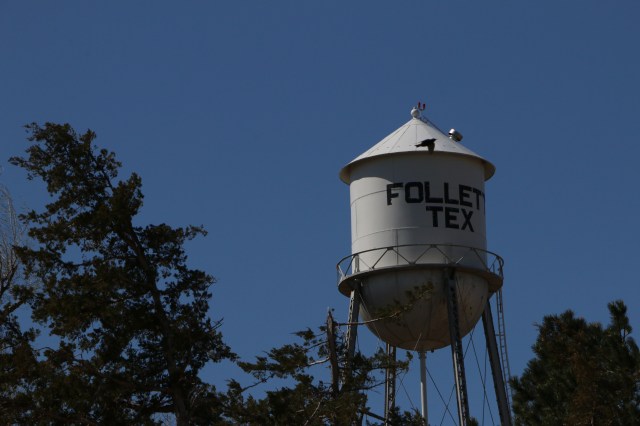
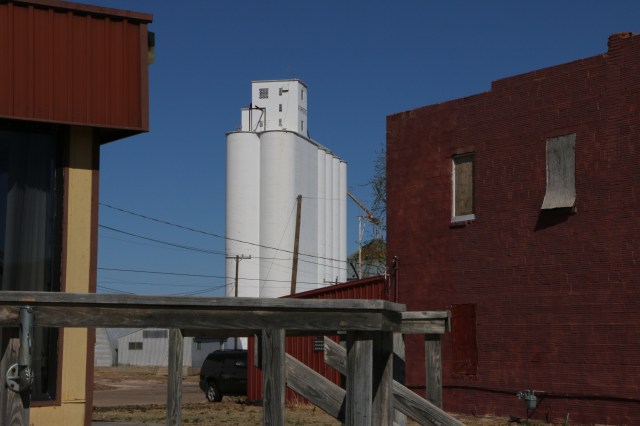
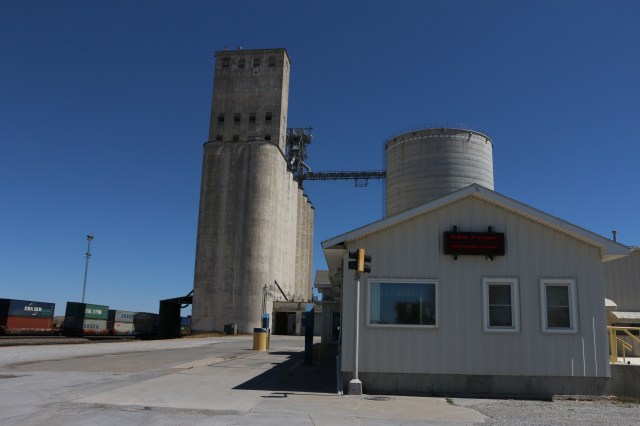 I crossed the railroad tracks and turned left for a cursory look and quick photo. The bigger elevator, which I guessed to be a contemporary of the Tillotson and Mayer-Osborn elevators in Booker and Follett, Tex., had the most monstrous headhouse yet. It also had an outside double-driveway and a shed over the rail siding.
 Yes, one of those “conversations” in which someone needs another person to talk to, but I didn’t want to make eye contact lest I spend another 20 minutes hearing about her life.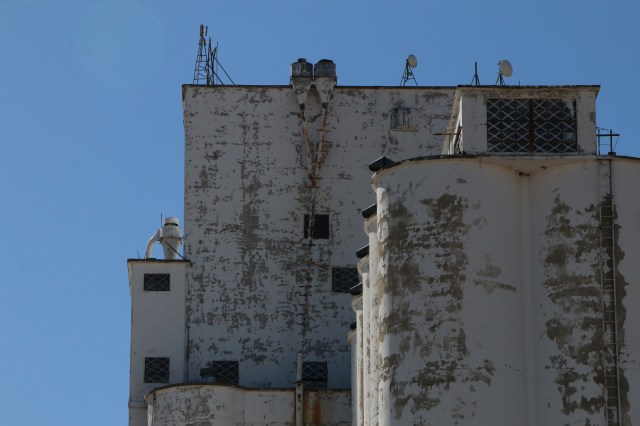









 Our Grandfathers' Grain Elevators