
By Ronald Ahrens
With the country elevators in Orienta, Okla., closed up and one of them crumbling, I decided to get moving. The site was a little spooky.
 Meno was just 20 minutes east, and I felt its promise.
Founded in 1899, Meno took the name of a Mennonite leader, Menno Simons, but one “n” was left off the paperwork. The coming of the Enid and Anadarko Railway within three years was a boost for Meno.
Tillotson Construction Co. records show the company built a 152,000-bushel elevator in this tiny hamlet. Adapted from the 1950 drawings for Imo, Okla., this plan was also used the same year in Clifton, Kan.
Meno is the first elevator listed in the records for 1953, when the company also built in Orchard Hill, Ga.; Cherokee, Okla.; Columbia, Ill.; Jamestown, Kan.; Ralston, Iowa; Estill, S.C.; Flagler, Colo.; and, my next stop, Helena, Okla.
Such geographical diversity in a single year was never exceeded by Tillotson.

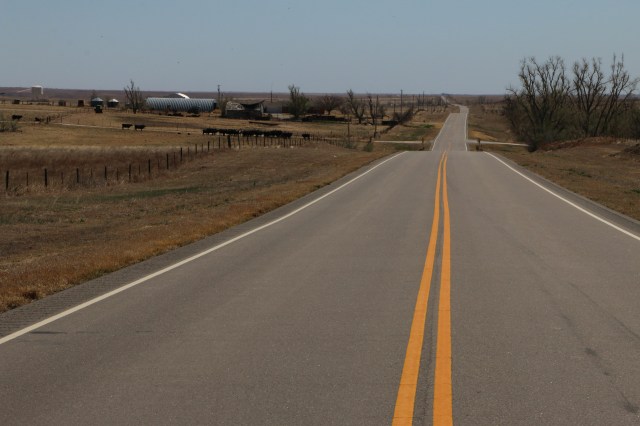
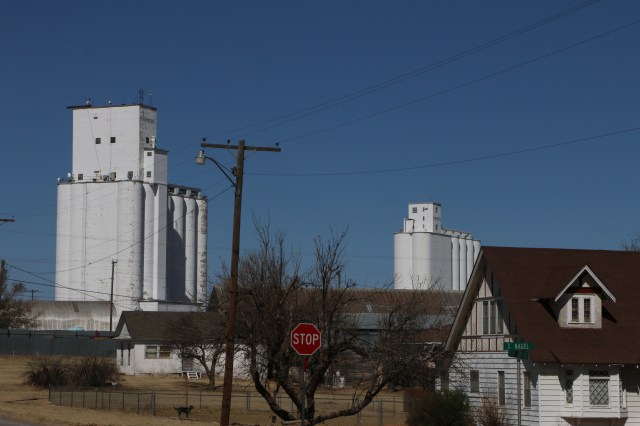
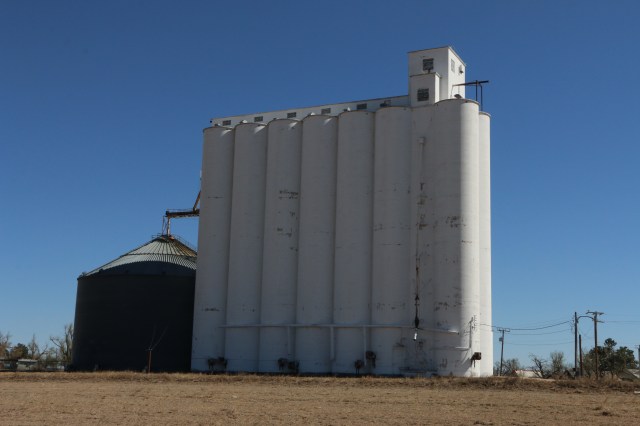
As I approached Meno from the west, a field of canola in the foreground, I saw two elevators arising from this plain, and both flaunted their curved headhouses like faces of hope and freedom.
What was I about to encounter in this town of 250 persons?
I parked in front of the Great Plains Co-op’s office and poked around. In Follett, Tex., and at my last stop in Orienta, I had encountered surprises and puzzles. Follett had a Tillotson elevator and a Mayer-Osborn elevator facing each other. And Orienta puzzled me because of the combination of builders and owners–not to mention the decrepitude there.

Tracie Rhodes and Matthew Thomsen
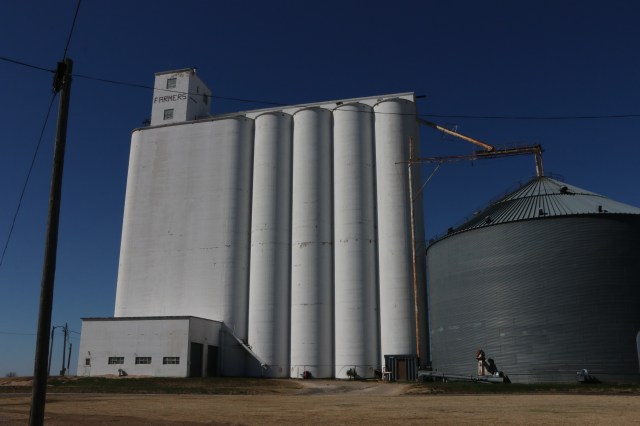
As I looked around the Meno site, it became apparent that both elevators were Tillotson jobs. I found the manhole covers attesting to this fact. The second elevator was newer, larger, and invisible in the records.
As questions swam through my head I went inside the office and met Tracie Rhodes and Matthew Thomsen. Somehow, we came up with 1956 as the date for the second elevator’s construction.
Thomsen, a Nebraska boy from Minden, said the elevators were in good condition, although some important repairs had been needed to the floors and in the gearing.
 Additionally, the 13 x 17-foot driveway had benefited from some reinforcing.
“Agriculture has gotten bigger, the trucks heavier,” he said.
I showed them the construction record, and they had something for me to look at as well: original drawings.
What a welcome to Meno–a little more than I’d expected!
Watch this space tomorrow for a glimpse of the 65-year-old documents that show inner details of the original elevator.


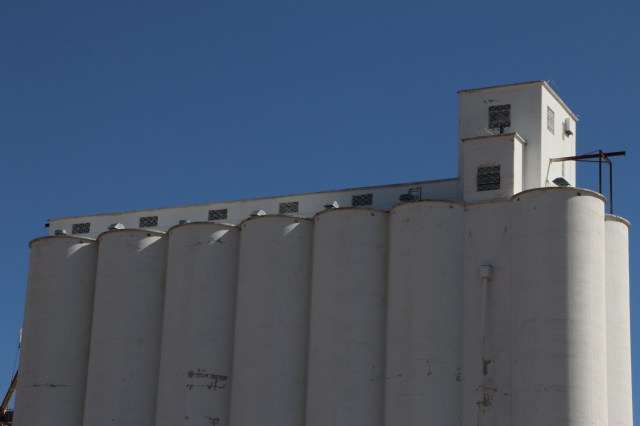
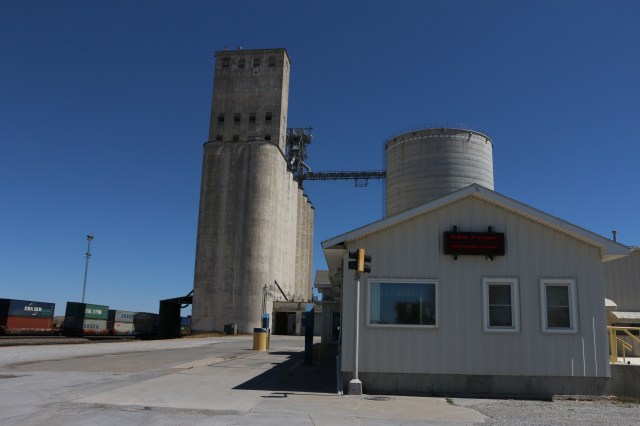 I crossed the railroad tracks and turned left for a cursory look and quick photo. The bigger elevator, which I guessed to be a contemporary of the Tillotson and Mayer-Osborn elevators in Booker and Follett, Tex., had the most monstrous headhouse yet. It also had an outside double-driveway and a shed over the rail siding.
 Yes, one of those “conversations” in which someone needs another person to talk to, but I didn’t want to make eye contact lest I spend another 20 minutes hearing about her life.












 Here, it’s necessary to remind you of some basic information. My grandfather on my mother’s side was Reginald O. Tillotson. He and his brother, Joe, took over Tillotson Construction Co. after my great-grandfather, Charles H. Tillotson, died in 1938. They started building concrete elevators, instead of wooden ones, the next year.
 Much to my surprise, t
 Booker was capable of holding 6,480 tons of grain. Fully loaded, the whole shebang weighed 10,798 tons. For the record, a Boeing 747-8 weighs as much as 970,000 pounds, or 458 tons, at takeoff. So a whole lot of big airplanes are represented in the elevator’s maximum gross weight.
 Our Grandfathers' Grain Elevators