The Tillotson elevator in Hinton, Iowa, is fully upgraded to fulfill today’s mission

DSC_0444

Story and photos by Kristen Cart

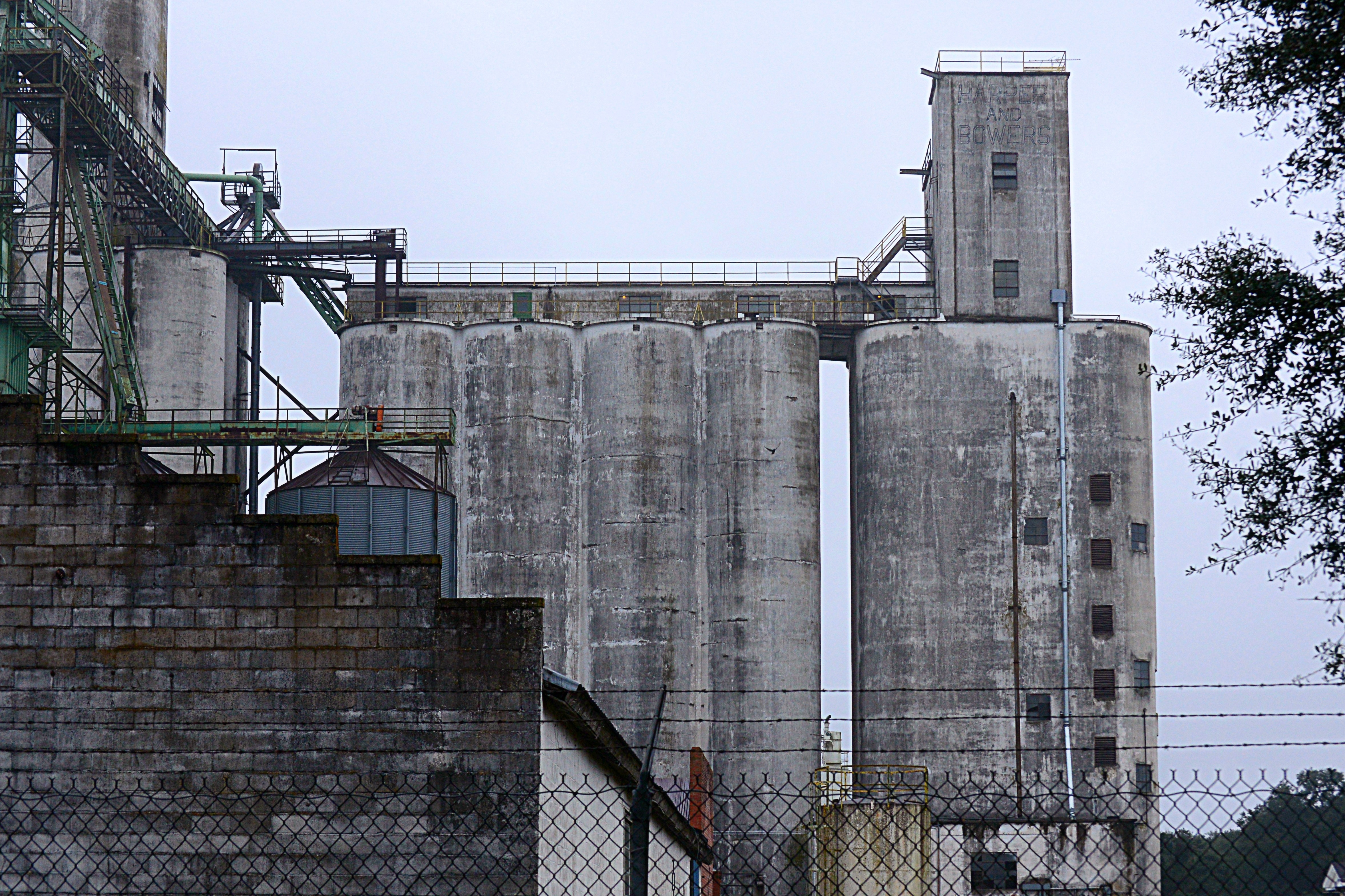
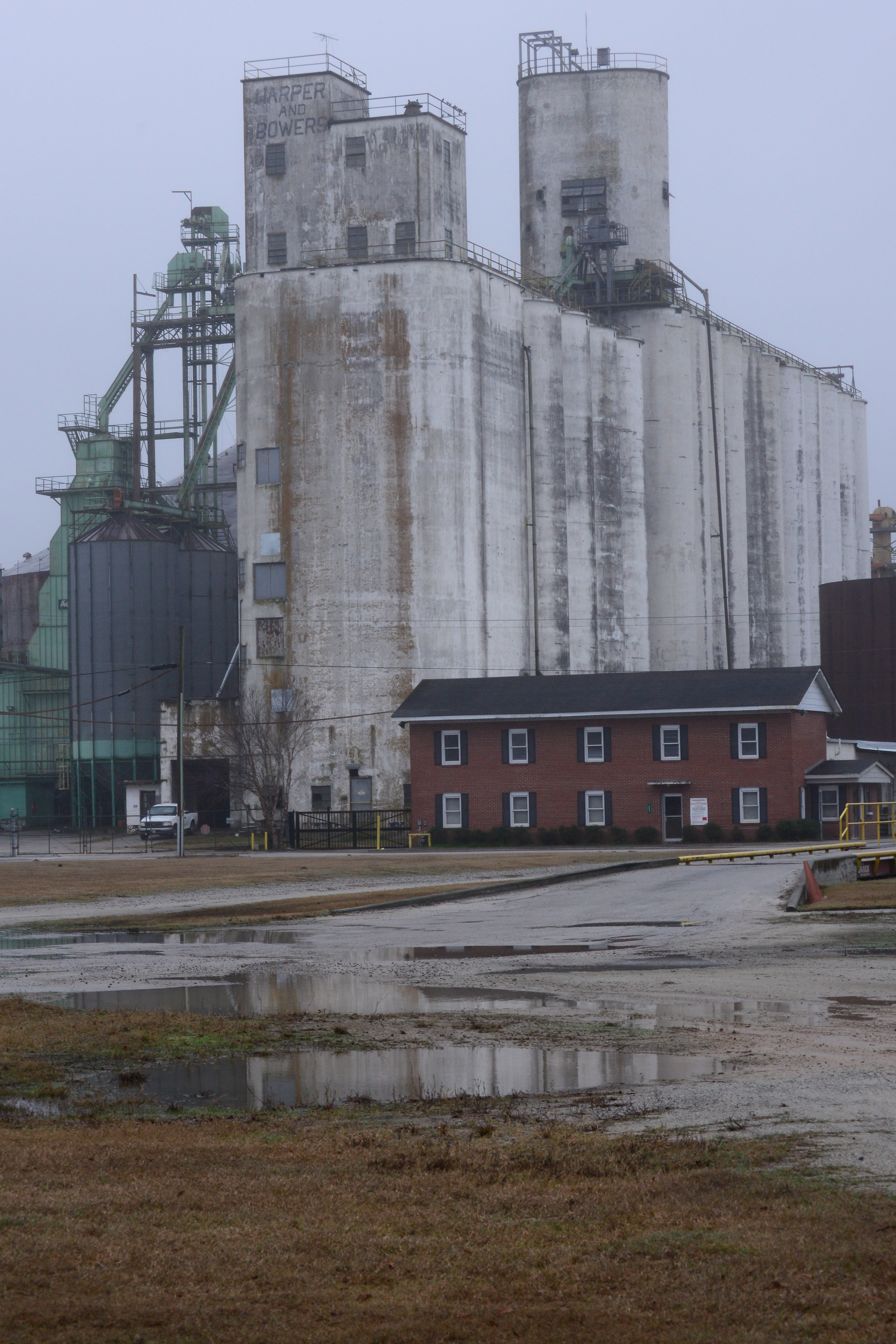
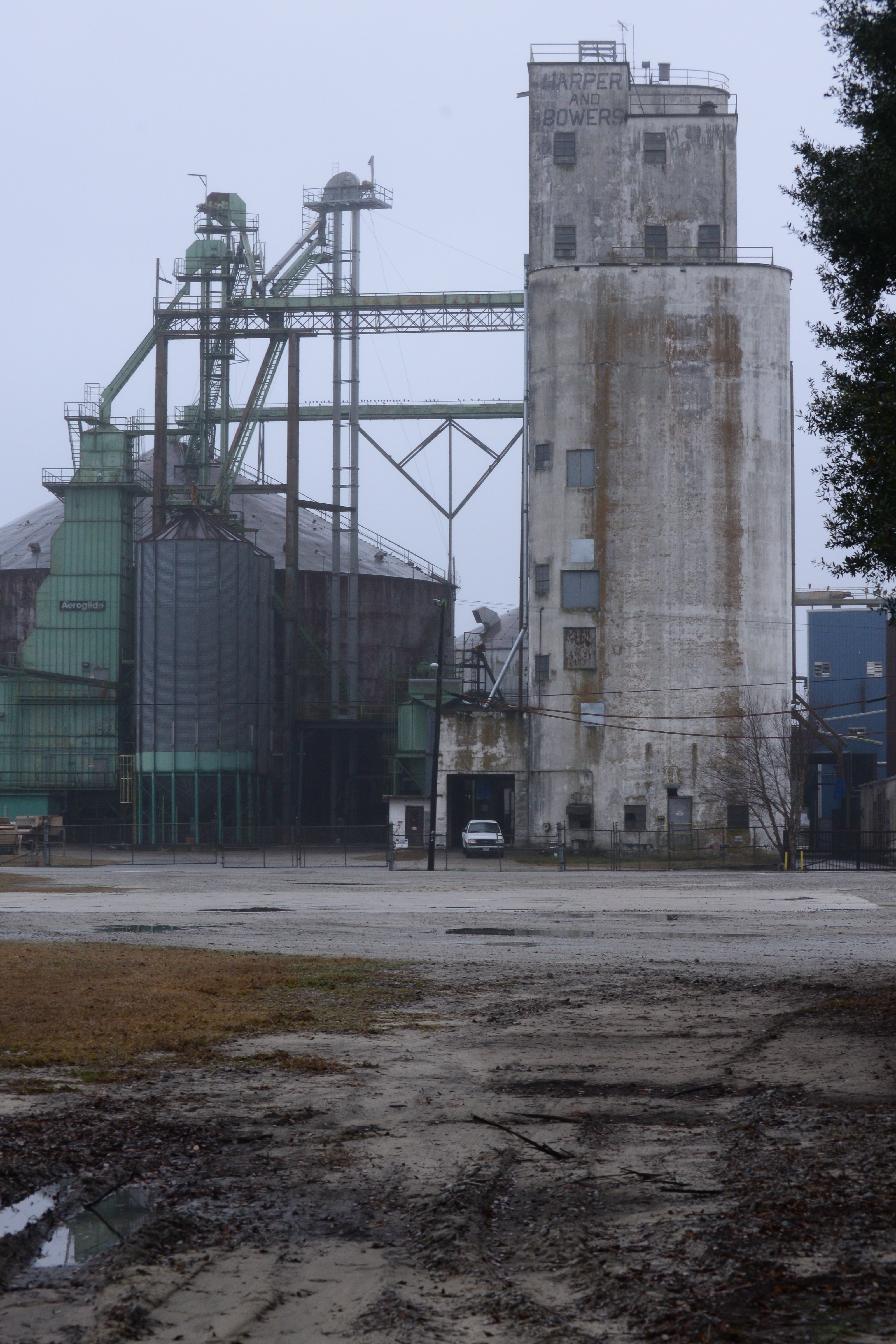
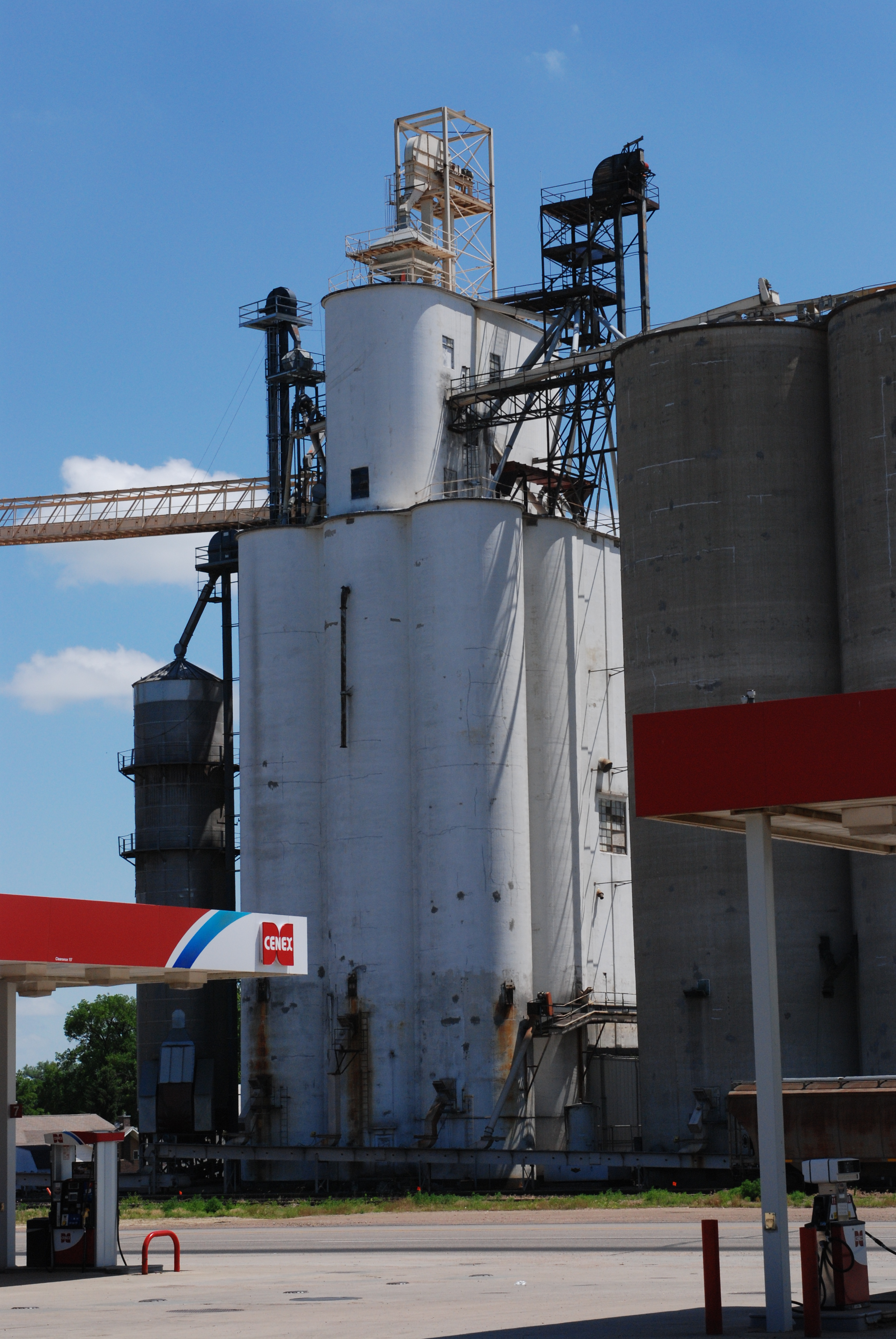
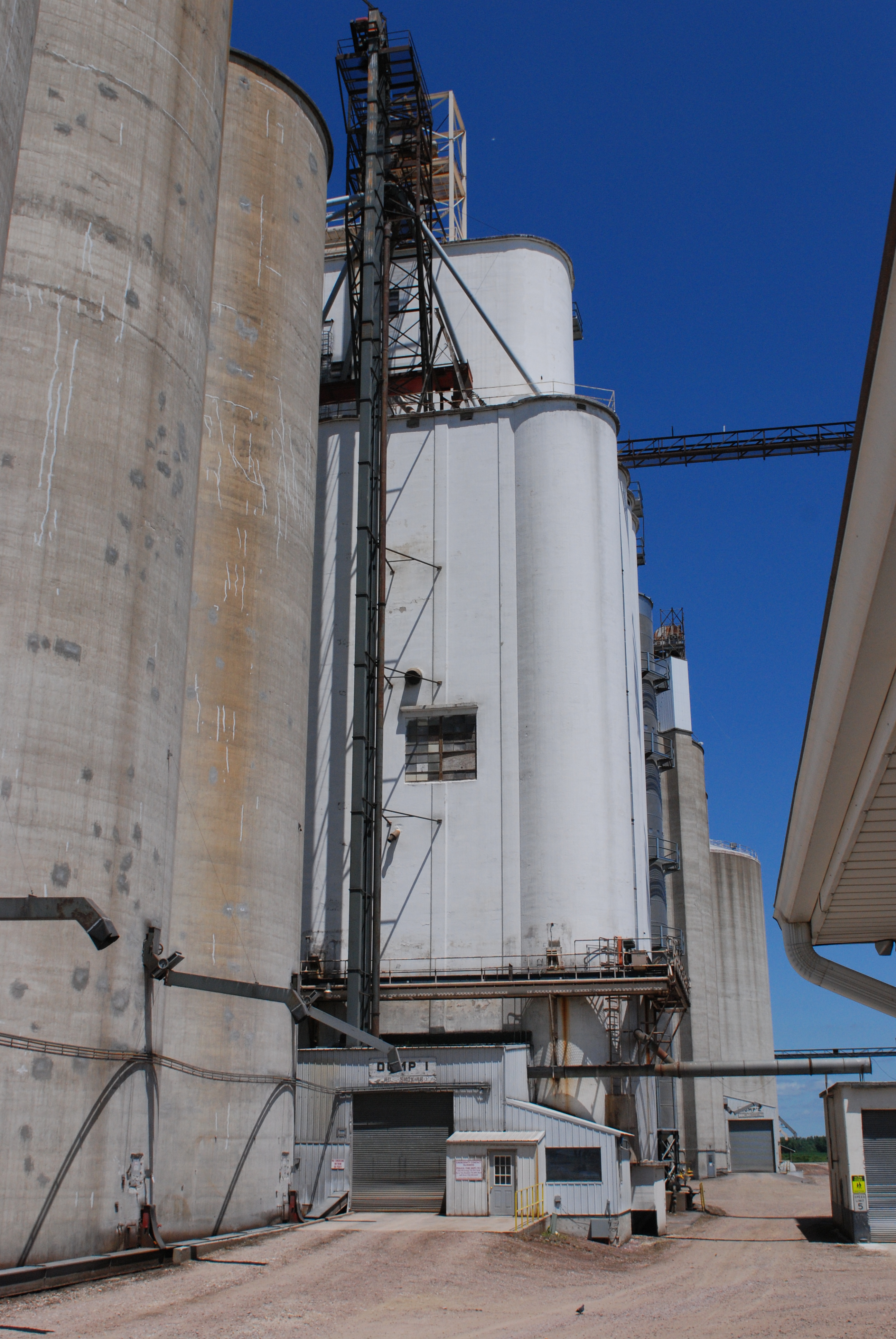
The Hinton, Iowa, grain elevator, anchoring the eastern verge of town along U.S. 75 in western Iowa, looks very little like it did when it first rose in a continuous pour over the flat surrounding farmland. Conveyors and legs and platforms stick out at odd angles from the headhouse–distribution central for the sprawling complex of elevator, drier, and annexes. The long row of grain storage bins and equipment deeply overshadows the eastern side of the highway, which zips past the center of town without a nod to the businesses along the main streets to its west.

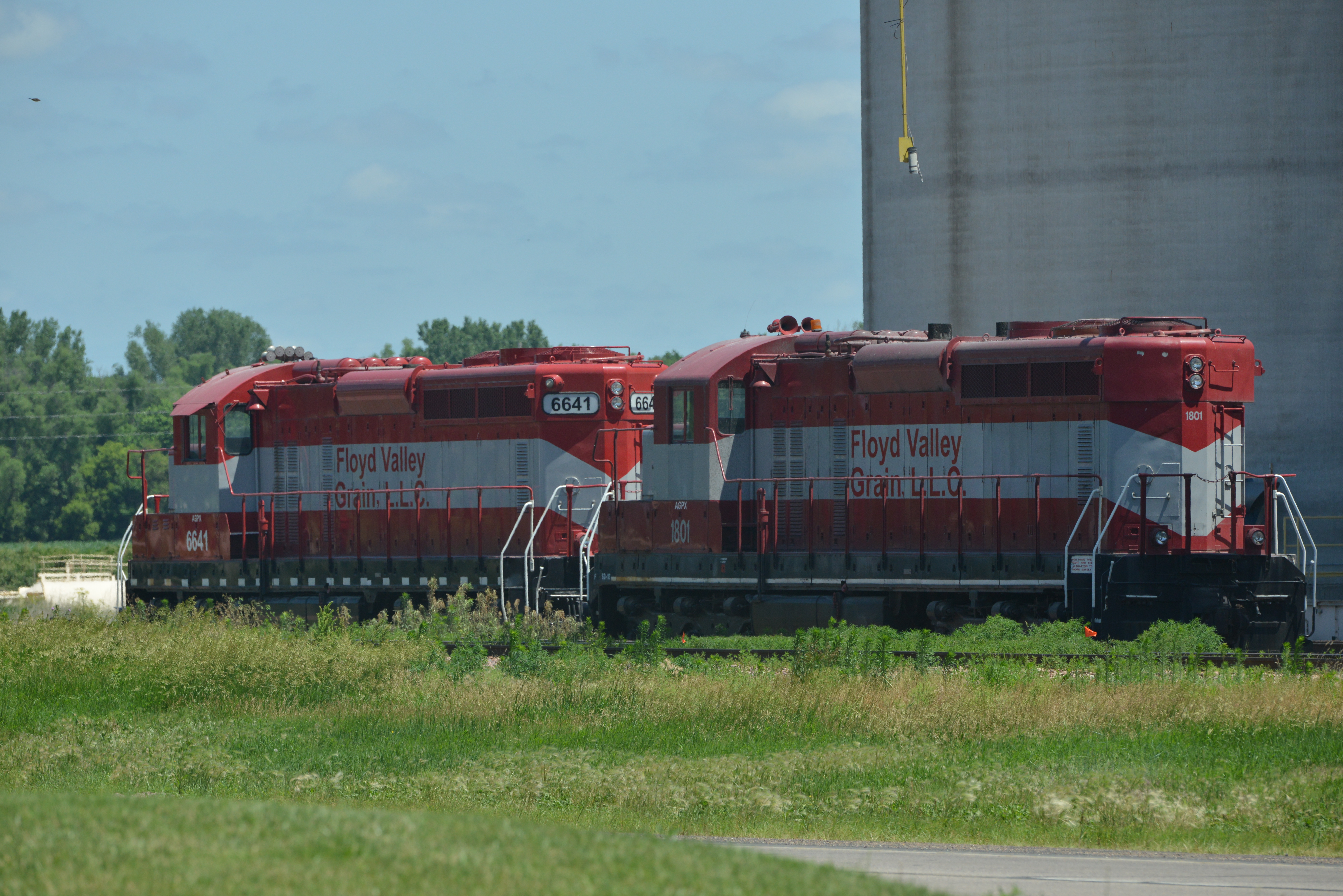
An elevated conveyor crows in red lettering, “Floyd Valley Grain, L.L.C.,” where it may be easily read from the road. To drive the point home, two dedicated locomotives parked upon the nearby rails are painted bright red in the company colors and sport the company name. This cooperative, the advertising seems to say, is the true center of town.
DSC_6412Innovation and modernization bristle from every side of the old Tillotson elevator. The externally installed legs (the parts of an elevator that lift the grain during the loading process) are a later modification taken to prevent grain dust fires: the moving parts that may heat up, such as bearings and motors, are no longer confined in an enclosed space with combustible grain dust. The various conveyors connect to newer annexes that were built when the storage demand outgrew the original elevator. The entire complex has become a far greater enterprise than our grandfathers, builders of the original structures, ever envisioned.

I paged through the Tillotson Construction Company records, preserved in handwritten and carefully photocopied pages, looking for the building specifications for the original Hinton elevator. Unfortunately they were not preserved with the rest. But we know it is a Tillotson elevator from a news item about an accident at the construction site where a man fell to his death in 1954. Perhaps records pertaining to the subject of a potential lawsuit were not with the rest of the file.

The elevator follows a well-tested design, and like the majority of the later Tillotson elevators we have studied, it still serves. It is a fitting testament to the engineering pioneer that was Tillotson Construction Company.
DSC_0455

A low-wing airplane sped up business for Tillotson Construction Company

Navion

Commentary by Tim Tillotson

Note: What follows is from a phone interview on May 14. Here, Uncle Tim recalls flying with Tillotson Construction Company’s pilot Ted Morris.

I remember taking a few trips in that Navion with him. It was one of the last planes Dad bought, the only one with a low wing. That Navion was fast, too, a faster plane. I remember being with him somewhere–where the hell were we?–trying to find a spot to land and picked a spot that looked absolutely wonderful from up there. We didn’t realize till we were almost on the ground that the spot had three-foot-tall grass. We went plowing through that grass and also an electric fence that was in the middle. We had to plow our way out.  

Dad [Reginald “Mike” Tillotson] could never get a license because he had double hernia and all that. Ted was our pilot and we also had Marvin Melia, he flew dad, too. Marvin was giving me flyin’ instructions. We’d go out there to the airport, North Omaha. Marvin’s the one that flew Dad around. They didn’t fly every day, or every week necessarily. He’d been flying Dad two years before. 

Ted came back from KS one time in that Navion, and he said something about, “Let’s go home fast.”

So he’s flying like 200 feet off the ground, really a lot of fun. He radioed in to get clearance for landing, and the communication that came back said, “Where the hell are you? We cant pick you up on the radar!”

Ted said, “I guess we better get up off the deck so they can see it.” 

Neglecting to lag an elevator’s head pulley led to disaster in Bellwood, Neb.

Commentary by Tim Tillotson

Note: What follows is from a phone interview on May 14. He tells of a grain elevator repair job undertaken for Ted Morris, who by 1959 was a former employee of Tillotson Construction Company.

From left, Tim and Chuck Tillotson and La Rose Tillotson Hunt in 2012.

From left, Tim and Chuck Tillotson and La Rose Tillotson Hunt in 2012.

Ted Morris was the pilot. He worked in the office with Wayne doing the drawing and getting the specs together. He flew Dad when Dad would go out to the jobs. Ted used to take me flying out to the job. He was a fun guy, good natured. He tried going into business himself. Matter of fact, when Mart and I got married, we went out to York, Nebraska, to do a repair job that he had a contract on, in the dead of the winter. That was in ’59. It was Bellwood–the one that had the explosion. It blew the damn headhouse apart. Mart and I were married in November ’59 and we went out.

They were dumping grain in the drive pits to feed it up to the tanks. It was cold and also windy, I believe. When they rolled the damn overhead doors down to shut off the wind tunnel through the drive, the dust built up and that was also a job … I don’t know who decided not to lag the head pulley; it’s like putting a tire on a steel wheel. I don’t know what the hell was supposed to be such a big savings. I don’t know we were the only ones that did it, the other grain elevator contractors did, too, they quit lagging the head pulley. That big pulley would slip for a little bit till it got some speed up. Eventually, they found out the hard way, it was taking the facing off the back of the belt and exposing the fiber web in it. The damn web spots would get hot and start on fire.

Conveyor_head_pulley_lagging_for_V_shaped[1]They called it lagging because they’d fasten or wrap a lag of grain elevator belt around real tight like a rubber tire to give it grip.

When I say we would lag the pulley, we didn’t do it. Where we purchased the pulley, they did it before they shipped. There was supposed to be some kind of cost savings. When you’re trying to pull 110, 120 foot of belt, with grain, it takes quite a bit to get thing rolling.

I guess because of the wind, they closed the overhead doors. The dust built up from the trucks just dumpin’ that grain, you can imagine, and it built up, The fire actually started in the boot pit. They were running that grain up, and I think they stopped the belt for a little bit because somebody went down into the pit to grease the bearing, and there was a fire and it exploded. It slammed him into the little steel ladder. The fire went right up the leg well, which was full of dust, and it just blew out in the headhouse.

The distributor floor was quite a height off the roof deck in the headhouse, and of course it was up overhead. You had to have some heights for the spider legs that went out to the tubes. That’s where it did its big explosion. It had enough force to actually bulge the headhouse walls. The distributor floor was concrete but held in place by a key way in the headhouse wall. They call it a key way when you slip the headhouse walls at a certain level. You put tapered two-by-four blocks in the forms that you could peel out later like teeth, so when you poured the floor it went into the keyways and that’s what held the distributor floor walls up. The explosion bulged the headhouse walls out so that they turned loose that distributor floor, which left it standing on the feed pipes that went into the tanks.

I’m trying to remember if Bellwood was the one with the galley out to the annex blowing the windows out of it, and it knocked the tripper–a little feeder that went out across the annex building and would fill whatever tanks you wanted–off its tracks.

The Bellwood Gazette reported the Holland Brothers' elevator fire in 1902.

The Bellwood Gazette reported the Holland Brothers elevator fire in 1902. It was the third elevator that had burned “inside of a year,” and as the town was gaining such notoriety, the Gazette was considering becoming a daily paper.

They were doing the repair on it. I think we pulled off because the temperature was so damn low you couldn’t put your bare hand on a piece of metal; it would stick. I remember we come back into Omaha and wasn’t out there that long. Mart and I came back to Omaha, stayed at my Uncle Ralph (Hassman’s) house, Johnny’s dad, before we got that apartment on the second floor of an old house that was turned into an apartment on Izard Street. That’s when I went to work for Leo A. Daly, the architects, in Omaha, for $300 a month. I went to work for them on the drawing table.

We were actually in York. It might have been a different repair job. Now that I think about it, I’m not even sure it was one of Dad’s elevators. We were married on Armistice Day of ’59. We had to be out there in December. I was working for Daly maybe a week when Dad passed on January 5, 1960.

The York job was a repair, and it was a repair from an explosion but nothing compared to Bellwood. I remember we were up in the headhouse when were there. The one asshole I didn’t know, and either did the other guy. He loaded, like, a shoebox on the floor with acetylene ’cause it’s a heavy gas, and it laid down in that box, and he turned around and threw a match over there and that that box blew up. I damn near ran off the frigging roof to get out of that headhouse. He thought that was so damn funny. I was about ready to bust him. I don’t like his sense of humor.  

Ted wasn’t doing well at the business. I remember a time or two he called Mother. He was distraught, he wasn’t making it. I don’t remember what happened to Ted.

From their ever-rising perch, elevator men saw the workaday world of Alta, Iowa

scan0013

Story by Ronald Ahrens, photo from the Neil A. Lieb archive

Reader Frank Nine recently expressed fond memories of his job with Tillotson Construction Company, writing, “I can’t believe it has been 61 years ago that I started working for Tillotson. It seems like yesterday and was some of the best times of my life.”

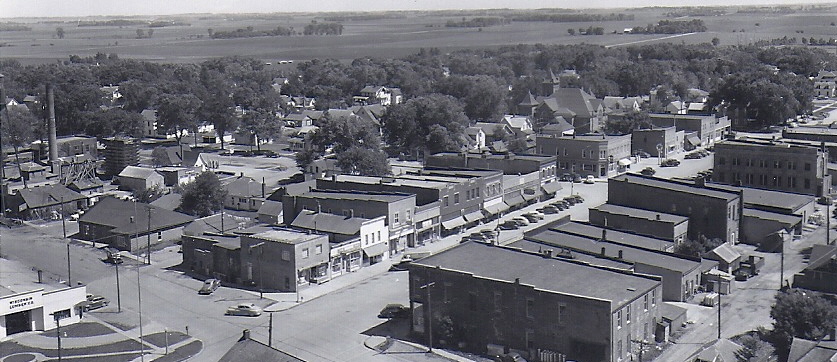
This view of downtown Alta, Iowa, from Tillotson’s new grain elevator for the Alta Cooperative makes his statement easy to understand. Aside from the challenge of the work itself, part of the appeal of building a reinforced-concrete elevator was the high-profile nature of the job, in every aspect.

In a town like Alta, with 1350 inhabitants in 1950, the construction crew had to feel the eyes of everybody in town. Wherever they went, whether the cafe or saloon, they were known and perhaps treated differently.

And from their lofty perspective, the workers could be forgiven for harboring a sense of superiority over the townsmen, some of whom may not have been inside a building taller than three stories. Building an elevator made you part of an elite team, rather like a visiting circus troupe.

In the photo we look to the south-southeast and see a lumber company, the downtown businesses, and an important church. Assistance would be welcome in identifying buildings around the smokestack, as well as other establishments.

Getting off-level and taking a fall at Tillotson’s Bushland, Tex., elevator

Entering Bushland, Texas. Photo by Stefan Joppich, used with permission.

Entering Bushland, Texas. Photo by Stefan Joppich, used with permission.

Commentary by Neil Lieb with photo from his archive

Somewhere between checking the water level when we started and checking it in the middle, the forms became about 3.5 inches off level. That’s because one guy who was running the jacks on one side wasn’t making his rounds as he was supposed to. The guy was fired on the spot.

Now you had to get the decks level again. When you’re going off level, you’re going at an angle. So what happened, you got a little swerve in the tanks. It’s only an inch. You can’t see it. The only time is if you go up and down on a hoist. So the bottom and top are not exactly over each other.

It had no effect. Not enough to be significant. We were about 65 or 70 feet in the air when it happened.

Every job had a peculiarity. The guy in Bushland jumped off the top. He started to fall, so he jumped. He jumped out far enough to land on the sand pile. We were probably 40 to 50 feet. He landed on the side of the sand pile and slid to the bottom.

We said, “How you doing?”

He said, “Oh, I’m fine. I’ll be a little stiff and sore.”

There were seven guys that I worked with. Baker was one and Bill Russell, all of ’em fell or got killed somewhere along the line.

When you’re working in the air, you become careless because it’s like walking on the ground, but you’re not walking on the ground.

Steelworkers, they all say you get too familiar with working off the ground. When they do that, they become careless.


A tale from the Johnson Construction elevator at Galatia, Kansas

DSC_0582 copy Blencoe

Blencoe, Iowa

Story by Kristen Cart

Once again, one of our readers has supplied a fascinating glimpse into the construction of an elevator.

Emily Frank is the granddaughter of Darrell Greenlee, a foreman for Johnson and Johnson-Sampson. She related a story about the beginnings of the Galatia, Kan., grain elevator:

The Post Crescent 26 Mar 1959My grandfather built slipform concrete grain elevators while my mom was little. My grandparents moved around every three to six months from the time they were married until my mom (the third of six children) was in third grade. I find a lot of your stories remind me of the ones my mom told or my grandmother tells. You did one where a man fell to his death from an elevator during construction. Unfortunately that happened on a job where my grandfather was the foreman, as well…

My grandfather worked for Virgil Johnson. At the time the company was Johnson Elevator Company.

At a job in Galatia, Kan., in 1959, while Darrell was stabilizing the family trailer, it fell and he was hit across his back and shoulders. Rosina took him to the hospital. The hospital wasn’t going to see him until she could pay. She didn’t have insurance. She told them instead, “I’ve got enough money to buy this damn hospital.” When they left two days later, she paid cash.

Rosina called Virgil to tell him that Darrell had been hurt–not bad but he was pretty bruised up. Rosina wasn’t sure what they were going to do. She told Virgil she wanted to know what he was going to do because if Darrell didn’t work, he didn’t get paid. Virgil asked if his butt was bruised and then pointed to a chair and said “See that chair right there, he can park his ass right there and supervise from his chair.”

When the elevator was just about completed a man fell from the top of the elevator. Darrell was a witness to the fall. The guy opened the door at the top and the wind caught him and blew him over the side of the elevator. He fell 120 feet to his death. The man was Arthur Kronberg, 42, originally from Menasha, Wisconsin.

Rosina said when they called the man’s brother to tell him he could come pick up his belongings, he didn’t seem very interested, except he asked if there was anything of value. They had told him his brother had a truck. The man reluctantly agreed to get the truck.

Emily filled in some of the details of her grandfather’s career. The history of Johnson Elevator Company that she shared intrigued us, because the company took up where Mayer-Osborn Company left off and built strikingly similar elevators. The Galatia elevator is a close copy of the Mayer-Osborn elevators at McCook, Neb., and Blencoe, Iowa. Because of the similarities between them and a number of other Johnson elevators, we have speculated whether designer Gene Mayer continued his career with Virgil Johnson and brought his designs with him. Emily continued:

DSC_0574(1)

Page City, Kan.

The elevator at Galatia is on one of Johnson’s business cards.

Johnson used to work with some brothers with the last name Sampson. They were Virgil Johnson’s brothers-in-law. They worked together for a while, too, under the name Johnson-Sampson.

My grandfather worked constructing concrete elevators from 1947 to about 1963. He worked for several different people.

DSC_0526

Mitchellville, Iowa.

Johnson was the man he worked for most, on and off over the years. When Virgil and his brothers-in-law split, my grandfather went to work for Dewey Construction and then Young Love. Then Virgil found a partner, and my grandfather worked for Johnson & Bratcher. Then Virgil went off on his own as Johnson Elevator Company.

When Virgil went broke after a missile base job in the 1960s, my grandfather worked for a guy by the name of Guy James. He did two jobs for him until he finally settled in Rushville, Ill. He never built another elevator, but he had his own company and they did a lot of elevator repair work.

My own grandfather William Osborn’s experience followed a similar trajectory–after he was done with elevator construction, he went on to elevator repair and maintenance. We always attributed the cancer that took him at age 75 to the dust he breathed during those years, though some of the damage could have been from smoking, a habit he dropped ten years before he died.

The hazards of the business were sometimes obvious, but often stealthy and unexpected. From dust, to wind, to new boots, to heedless roofers, many things in elevator construction took lives–but the monuments built by these mortal men remain, withstanding tornadoes, floods, hail, and every natural disaster.


With their works in Estill, South Carolina, Tillotson built big in cotton country

Freshly harvested cotton field in central South Carolina

Freshly harvested cotton field in central South Carolina.

Story and photos by Kristen Cart

The brightly wrapped cotton bales highlighted an otherwise drab landscape as I traveled the 91 miles south from Columbia to visit the Estill elevator, originally built in 1947. Rain and haze flattened the view. Since it was Sunday when I visited the elevator, few people appeared to be about. It was going to be a photography outing, for better or for worse.

DSC_3487

The Estill elevator, greatly expanded since it was built in 1947, was secured behind barbed wire.

I graduated high school in South Carolina. My impression of the place, after growing up in the western desert, was one of endless dark pine woods, with a brief gaudy display of azaleas and dogwood blooms in springtime.  I didn’t appreciate the raw beauty at the time. Now, on a soggy day, it had a mysterious appeal.

DSC_3431When I learned that the Tillotson Construction Company built an elevator in the state, it came as a surprise. We do not know who built the original house in 1947. Tillotson, according to company records, built the 225,000-bushel annex and a second, larger elevator, in 1952 and 1953, respectively. The trademark rounded headhouse rises above the 350,000 bushel elevator, built to finish the concrete elevator complex.

Michael M. DeWitt, Jr. outlined the history of the Estill elevator in his article for the Hampton County Guardian published on December 14, 2010. The article was written to herald the purchase of Carolina Soya by ADM. During its heyday, the elevator stored soybeans for soybean processing, which was part of the operation. Now it is strictly a storage facility for ADM, focusing on soybeans but also accepting corn.

The company laid off staff upon acquiring the facility in 2010, shrinking from 45 to 14 workers, heralding a loss to the community in a time of slow economic growth. ADM promised to hire from the laid off worker pool as needed.

DSC_3406I noticed that the good times had passed during my drive down. The decline of the area was evidenced by empty store fronts and decrepit gas stations, ancient closed restaurants, and tired houses–all along the highway south from Columbia, it was apparent that development chose another corridor and not this one. I wondered if there was one open gas station anywhere along the route.

The histories neglect one of the Estill elevator’s darker episodes. In the ’40s and ’50s, construction safety was not mandated as it is now. In one of the accidents that was all too common for elevator construction, Wayne Eugene Baker lost his life in a fall while working on the storage addition, or annex, built in 1952. For all of the heartache, Wayne helped build a thing of beauty that sustained its neighborhood for many years and still brings economic benefit to its region.

Dennis Russell reflects on his brother Jim’s tragic death on the Murphy, Neb., elevator

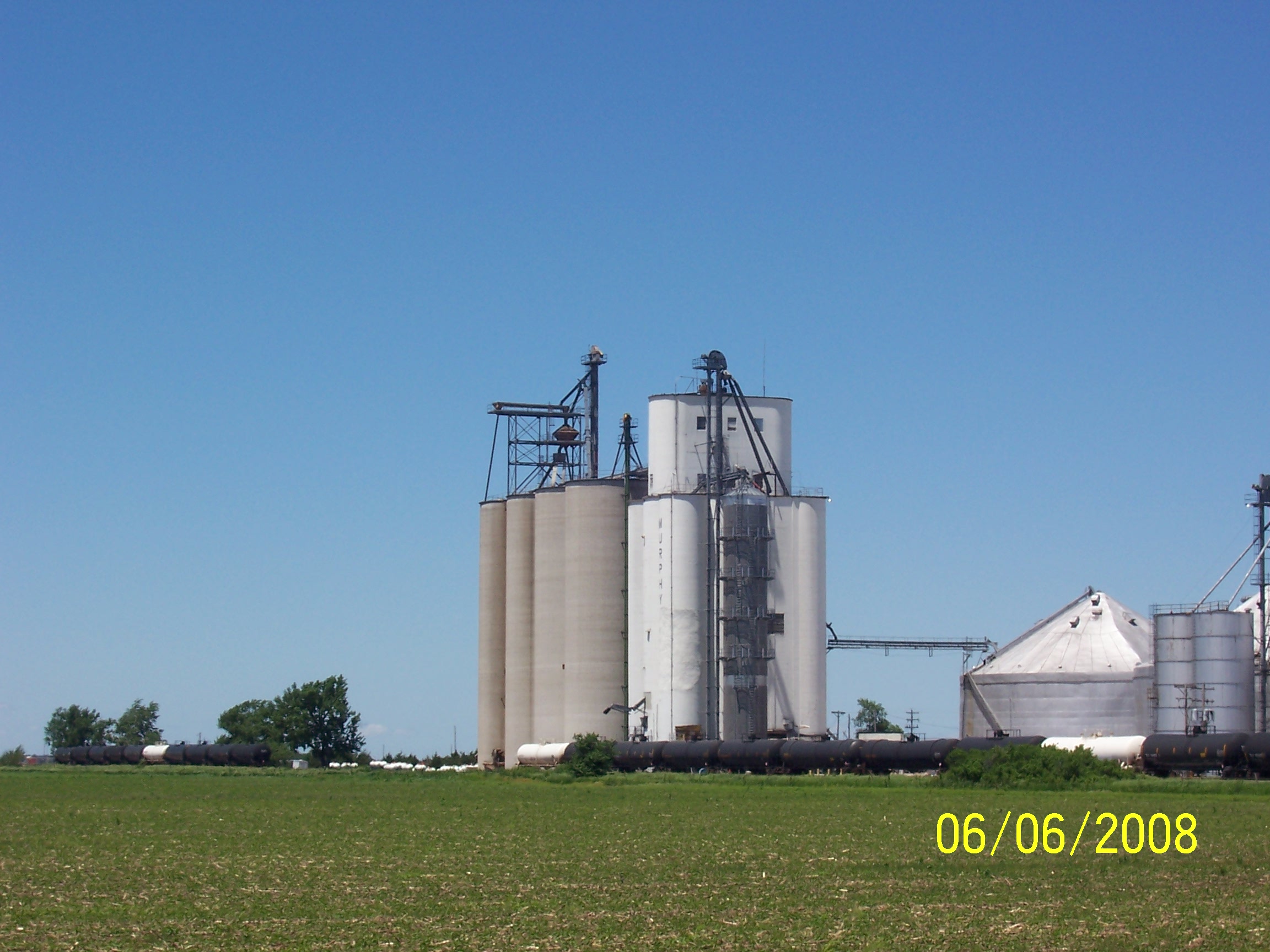
This photo, provided by Kurtis Glinn, shows Tillotson Construction's Murphy elevator in the early 1960s. Note the ground storage of grain sorghum on the right.

This photo, provided by Kurtis Glinn, shows Tillotson Construction’s Murphy, Neb., elevator in the early 1960s. Note the ground storage of grain sorghum on the right, and the old wooden elevator on the left.

By Ronald Ahrens  

A recent telephone conversation with Dennis Russell, who lives in Plano, Tex., revealed more details about the Russell family and his brother Jim, who died in an accident during construction of the Murphy, Neb., elevator. Dennis was the youngest of eight brothers: Bob, Roger, Jim, Jack, Byron, Bill, and Mark.

Their father William, born in 1900, had done construction on ammunition depots during World War Two, Dennis recalled. William, known as Bill, went to work for Tillotson Construction Company at an unknown date after the War.

“He worked for them a long time,” Dennis said. “He left Tillotson’s and started Mid States Construction Company with Gordon Erickson and another individual. I think he was a partner for a brief period and then ran jobs for them as a superintendent until his retirement.”

The name was changed to Mid States Equipment Company. Grain elevators and feed mills were the main specialties. Bill Russell retired in 1972, but he “always had fond memories working for Tillotson, I know that,” Dennis said. “I remember he was awful fond of Mary.”

Jim Russell’s promising future cut short 

Dennis was born in 1949. “My whole life was elevators. We moved every year from ’59 till I graduated high school.”

All the Russell brothers worked on elevators, Dennis recalled. “I worked on those quite a bit myself every summer.”

“Jim, he was third-oldest, he died in, like, ’58 in Murphy, Neb., right outside of Aurora. There was an article about that in the Aurora paper at the time. We lived in Vermillion, South Dakota, but that summer I was in Aurora, we were staying with Dad. I remember Mom taking that phone call.”

At the time of his death in a freak accident (the links below tell the story), Jim was married to Shirley, a nurse, and had one year of law school remaining at the University of South Dakota.

More details on the Nebraska elevator site where Jim Russell died

By Kurt Glinn

I was the manager at the Aurora Cooperative Murphy location in central Nebraska. I was told from the old timers in the area that were around when the elevator was built in the late-’50s [that an] accident happened there, shutting down construction for about a week.

The Aurora Coop's Murphy elevator and annex. Jim Russell died in a fall during the elevator's construction.

The Aurora Coop’s Murphy elevator and annex. Jim Russell died in a fall during construction.

Murphy is no more than an elevator along the railroad now. It is six miles west of Aurora, Neb., or fifteen miles east of Grand Island, Neb.

Thank you for a wonderful site. One of my first bosses was a man by the name of Willis “Bill” Maahs. He was a superintendent for Tillotson into the early ’60s when he stayed in Aurora and  became operations supervisor for Aurora Co-op. He helped build the Murphy elevator and the Aurora elevators. There are two Tillotson houses in town, as well as the feed mill in Aurora.

I have always been intrigued with the workings of the old concrete houses versus the new bigger faster ones, although I know how farming and the grain business view them.

Concrete grain elevators are very highly regarded in the industry as the most permanent. My reference is to the older, smaller, multi-bin elevators of 20,000- to 25,000-bushel bins versus the newer 250,000- to 300,000-bushel bins being built.

The industry has come along way in the last fifty years: the ability to jack the forms with hydraulics, the diameter of the bins, the height and capacity of legs. Putting all the equipment outside of the structures rather than enclosing everything in the house, which has saved many elevators from the disaster of explosions, et cetera.

Farmers are into a newer generation also, thirty-five years and younger. They want fast unload and large unloading pits.
The ag industry as a whole had seen large improvements in the size and capacity of equipment, making some of the smaller, older elevators almost impossible to use.

I find the older ones more interesting because they were what started a new generation from wood houses to concrete. Building work floors and platforms from concrete rather than steel and expanded metal. All is my own opinion as to why I enjoy the first generation of concrete grain elevators in the ag industry.

A freak accident led to the fatal fall of Bill Russell’s son

The Aurora Coop's Murphy elevator and annex. Jim Russell died in a fall during the elevator's construction.

The Aurora Cooperative’s Murphy elevator and annex. Jim Russell died in a fall during the elevator’s construction. Photo by Kurt Glinn.

Story by Ronald Ahrens

My uncle, Tim Tillotson, recalls some details of the death of a son of Bill Russell, a superintendent for Tillotson Construction Company. Russell was the father of eight sons in all. The accident occurred in the 1950s.

Although he can’t remember which job [it was the Aurora Cooperative’s Murphy location in central Nebraska] or when it happened, Uncle Tim, who was not present at the time, recalls from on-the-scene reports that two of Russell’s sons were running the night crew.

The two were working with a storey pole, a measuring device of ancient origin. In this case, the storey pole was a metal tape, and it was used to verify the height of vertical sections. One son was on top, fifty-five feet up, feeding the tape down to the other on the ground.

“It was blowing in the wind, and he was letting it out,” Uncle Tim says. “The wind caught it to some power lines, and it gave him a jolt.”

A fall to the ground ensued.

“One side of him hit the Georgia buggy, which kind of spun him around. He was conscious on the ground, saying he thought he’d broken a leg. But by the time the ambulance got there, he’d died of shock.”

Uncle Tim suggests the likelihood of a brain hemorrhage as well.