An inside look at the J. H. Tillotson elevator at Hanover, Kansas

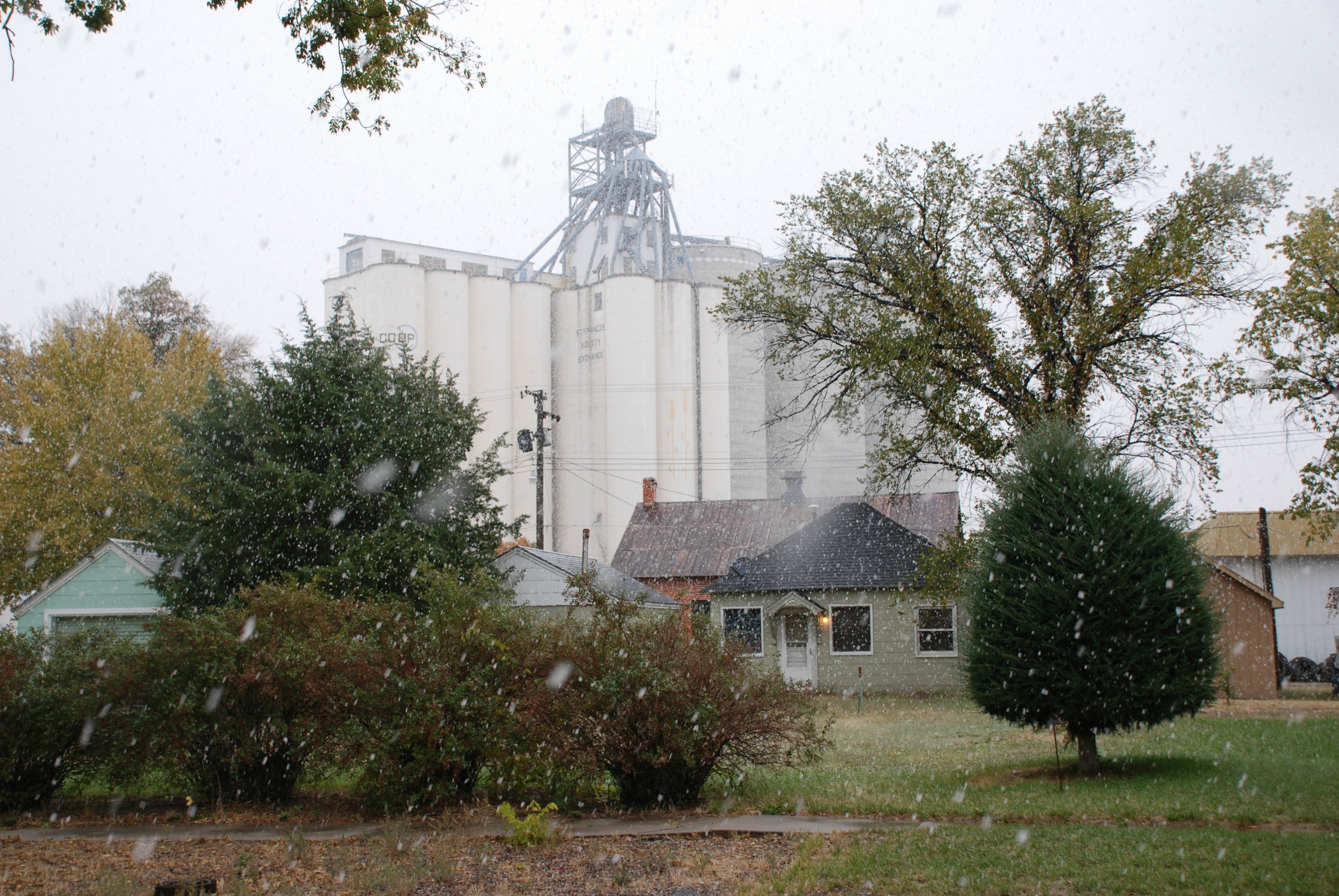
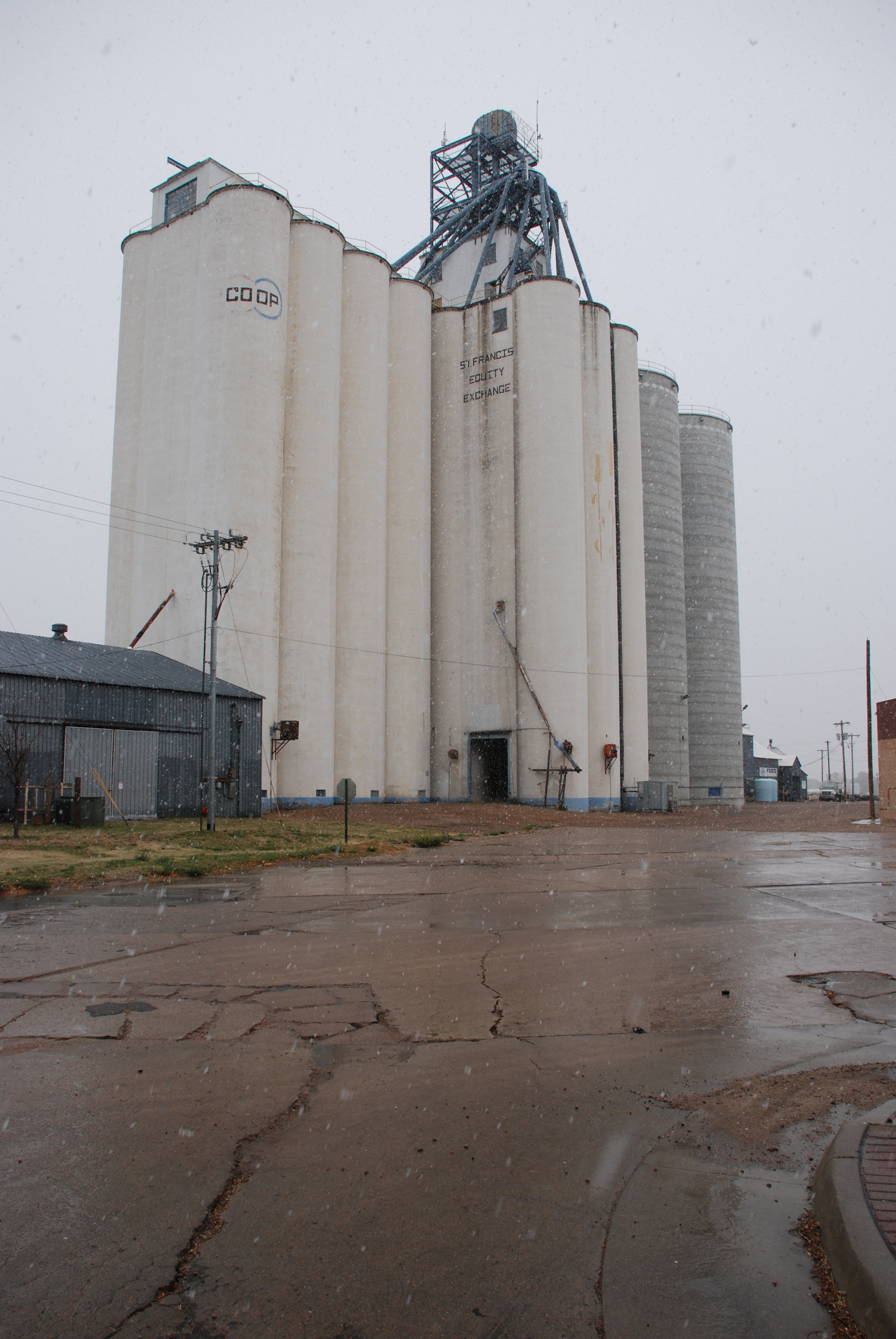
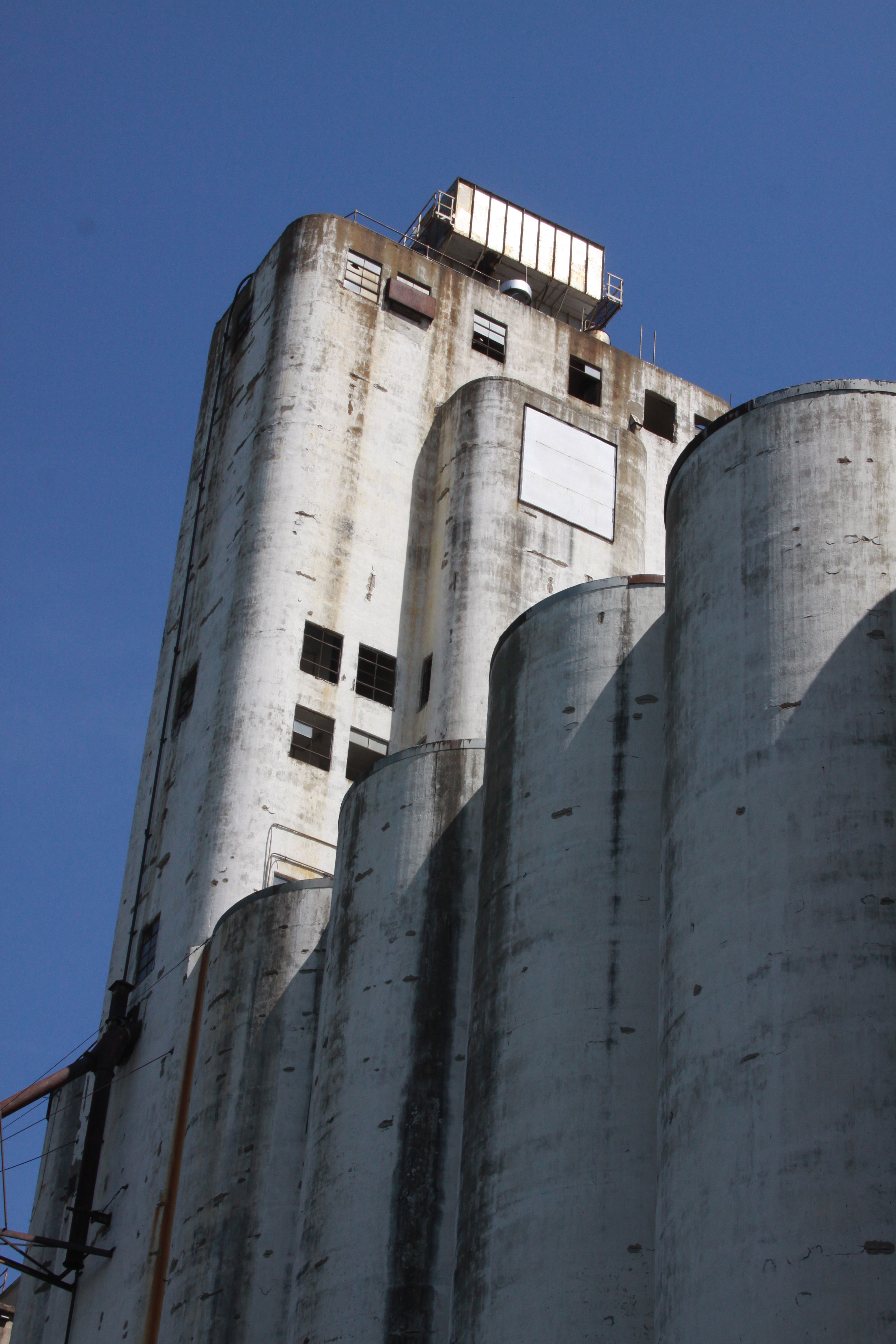
The J. H. Tillotson straight-up elevator in Hanover, Kan. just after a rain

The J. H. Tillotson straight-up elevator in Hanover, Kan. just after a rain. 

Story and photos by Kristen Cart

One of the loveliest elevators J. H. Tillotson, Contractor ever built is still in use at Hanover, Kansas. Last October, during a visit to this small Washington County town just seven miles south of the Nebraska border, I photographed the elevator under moody skies and marveled at its clean, graceful lines. Then it was time to get to the business of finding out about it.

DSC_0681

Ryan Riekenberg takes a moment to show me around the elevator.

Fortunately, Ryan Rieckenberg, a twenty-year employee of the Farmers Cooperative Association, was on hand to show me inside. He had previously worked for the grain department and currently worked as a crop sprayer. He said before the Hanover location joined the Worchester-based Farmers Cooperative, it operated its own association called the Farmers Union of Hanover. He said the elevator was currently used for milo.

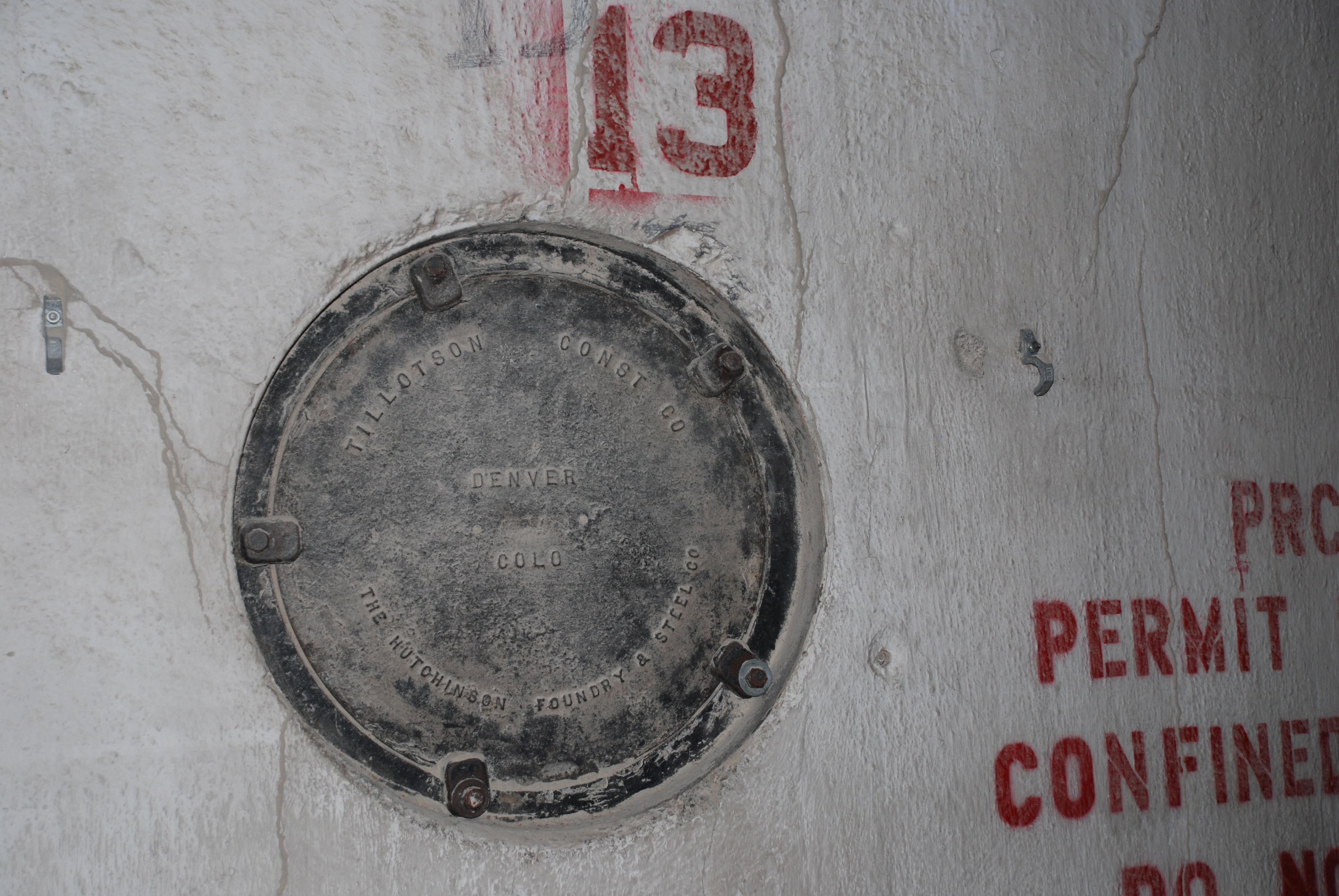
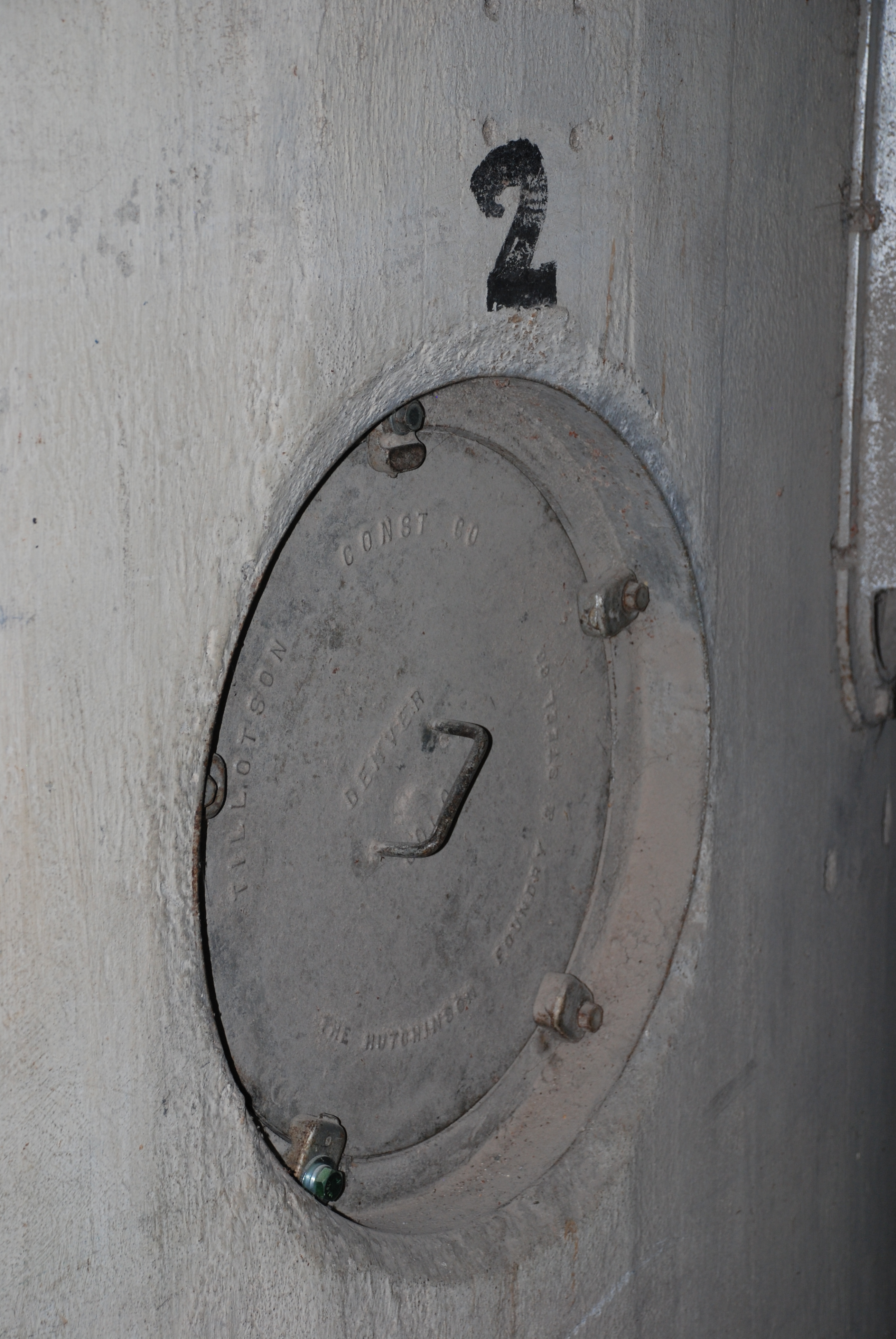
The manhole cover identified the builder

Manhole cover

He pulled up in his truck, fished out his keys, and took me into the elevator to look at its interior, including the manhole covers that positively identified the elevator as a J. H. Tillotson project.

As he unlocked the door, Ryan supplied some historical details. The elevator had been built beside an old wooden elevator, which was used as a feed mill until it was demolished about eight years ago. We entered the doorway a couple of steps up from the gravel drive where the old wooden edifice used to stand.

DSC_0673

The elevator leg

Once inside, we could see the leg in the center of the elevator. A grate covered the pit, and Ryan opened the grate to display the sloped bottom where the grain would funnel toward the base of the leg, to be scooped up and carried to the top of the elevator for distribution to the bins. The leg extended all the way to the bottom of the pit. A ladder went into the pit from another opening, providing access for cleaning and maintenance.

Nearby, a cage-enclosed man-lift gave access to the integral head-house at the top of the elevator. The cage was almost certainly a later modification, since the old man lifts didn’t have them.

DSC_0670

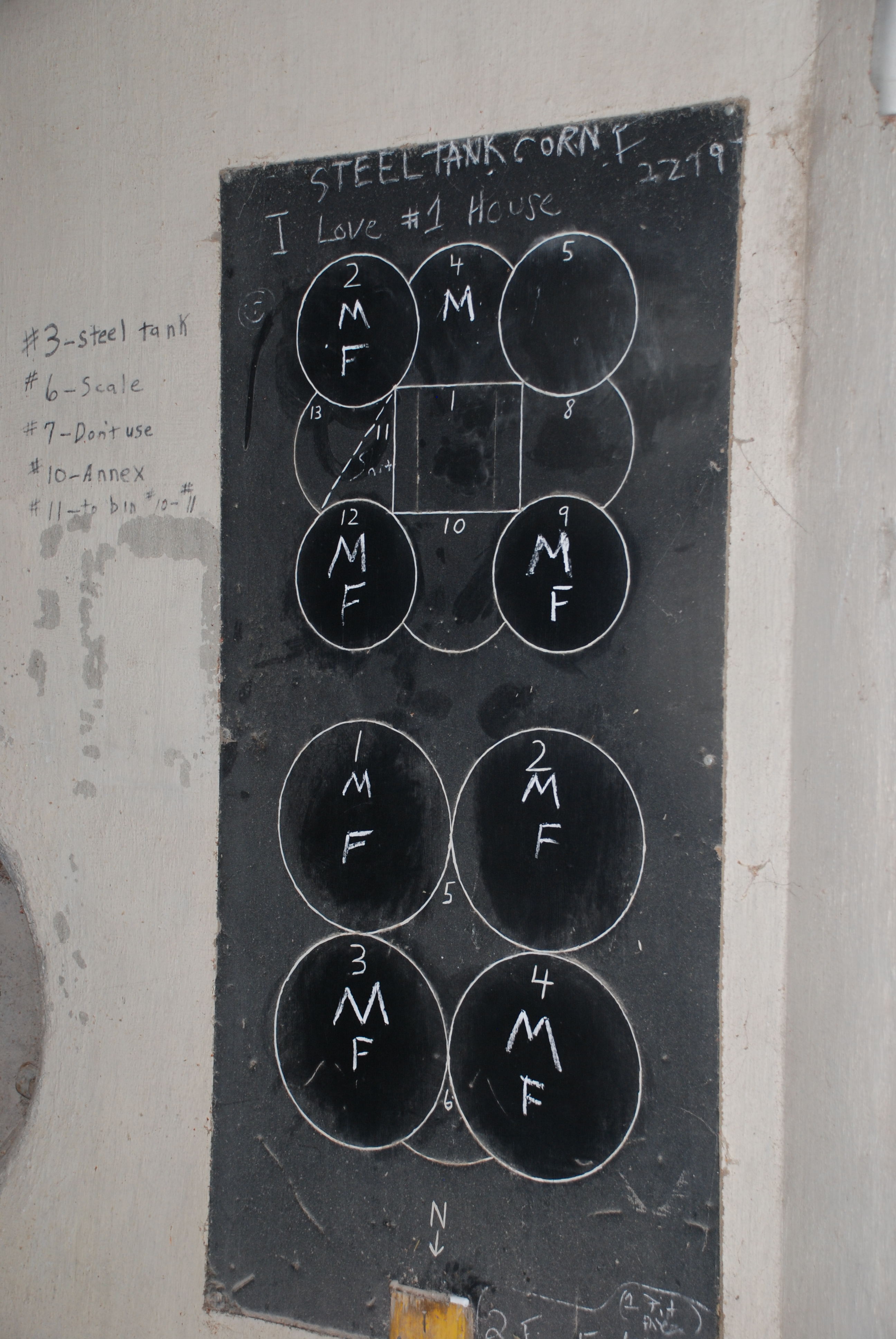
The distribution diagram

Prominently displayed on one of the bins was a diagram of the elevator and its annex. Here the storage assignments for each of the bins were noted, including the neighboring steel bin, which was served by the same integral head-house with a chute from the top of the elevator. Presumably, “M” stood for milo, and a note indicated that the steel bin held corn. Perhaps “F’ indicated feed, but that is just a guess.

I’m not sure why someone wrote “I love #1 house,” but if they meant this lovely elevator that my grandfather, William Osborn, built for Joe Tillotson’s company in 1947, I must share the sentiment. It was a dandy, and it appeared to have a long, useful life ahead of it.

DSC_0689

A view from the west side where the feed mill used to stand. 

At Tillotson’s Albert City, Iowa, job, a deckhand’s pendulous moments

This photo, provided by Kristen Cart from Osborn family archives, shows a deckhand standing nonchalantly on elevator formwork. Kristen believes the picture may have been taken in Giddings, Texas, in 1945.

This photo, provided by Kristen Cart from Osborn family archives, shows a deckhand standing nonchalantly on elevator formwork. Kristen believes the picture may have been taken in Giddings, Texas, when Tillotson Construction Co. built there in 1945.

Story by Charles J. Tillotson

Reinforced-concrete grain elevators used the slip-form method of construction, whereby a wooden form system was built on the ground, having the footprint required to configure the grain-storage tanks.

Once the forms were in place and the vertical lifting and jacking system assembled, laborers began installing rebar and pouring cement into these forms.

When the forms were filled to the top–about four feet–the lifting and slipping commenced by turning screw jacks placed strategically throughout the formwork. After this procedure of vertical form lifting and rebar setting and cement pouring began, it never stopped until the structure reached its intended height, usually between 100 and 120 feet.

thThis process was the intended norm but was oftentimes interrupted by a myriad of problems, which caused the form-slipping to come to a halt. One of these instances occurred one night when I was eighteen or nineteen, working as a deckhand in Albert City, Iowa, for the family’s construction company.

The structure had reached about eighty feet in height when the electrical power supplying the lighting system and other machinery was cut off by a huge summer storm distributing lots of rain and wind throughout the area.

All personnel, including myself, were stranded on the stationary deck with little else to do but wait out the storm and the return of power.

A few hours of waiting produced a carload of my friends that had arrived on the surface. They were yelling for me to come down and join them. The only possible way to get off the tower was the vertical “ship’s ladder” that was installed in sections on the side of the rising structure.

Access to this emergency ladder was gained by going over the side of the formwork to the finishing scaffold below. Here, a rope was suspended down to the uppermost section of the ship’s ladder. The length of the rope was normally long enough so that a person could slide down it and gain hold of the ladder’s top rung.

I say normally the rope was long enough, based on the fact that the ladder sections were routinely placed sufficient to keep pace with the ever-vertical movement of the concrete structure.

However, as I soon discovered on this particular stormy night, the norm didn’t prevail. I hopped over the side of the formwork and reached for the rope hanging from the finishing scaffold’s frames. It was pitch black, and the wind was blowing to go along with heavy rain, but I was able to find the rope and swing off the side.

The first thing I discovered was that the wind was so strong, it blew me sideways and shoved me around the bin tank.

When the gusting stopped, I was able to line up vertically above the supposed location of the ship’s ladder.

So, undeterred, I slid down the rope—but not very far before another gust of wind blew. I had to stop sliding down and let it subside.

This process went on for a number of iterations, and as I slowly went down the rope, I began to wonder where the top of the ladder was exactly.

I was running out of rope.

With about three feet left, I really started sweating–I still couldn’t see the top of the ladder.

Because I had become somewhat exhausted while sliding down, swinging back and forth like a teabag, I knew I couldn’t crawl back up to the scaffold.

Now I reached the very end of the rope, and a big blast of wind blew me away and around the tank. When that gust stopped, I flew back around and by sheer luck found purchase with my foot on the top rung of the ladder. Another blast hit me, but with my foot hooked under the top rung, I stabilized myself.

With my strength ebbing, if I was going to survive, I had to make an attempt to release the rope, drop down along the ladder, and catch a rung. (Any rung would do.) So, with trepid emotions, I let go of the rope and dropped.

The testimony of my luck (and strength and skill of course) is that I am able today to relate this harrowing story.

As I released the rope I yelled up to the top of the tower to alert other personnel that they shouldn’t attempt to do what I had done. I’m sure I saved someone else’s life besides my own that night.

But the message of this story is that constructing grain elevators in the early days was filled with these types of unsafe conditions where protection of life was not as important and took a back seat to getting the job done.

There was grain being harvested in the fields, and it needed a place to be stored. The nation was on the upswing, growing by leaps and bounds, and in need of being fed.

The J. H. Tillotson elevator at Linn, Kansas, stands unused, idled by regulatory changes

The elevator built by J. H. Tillotson is flanked by later additions.

This handsome elevator built by J. H. Tillotson is flanked by later additions.

Story and photos by Kristen Cart

While the concrete elevator at Fairbury, Neb., was being built, rising by nine feet every twenty-hour workday, the elevators no more than thirty miles away at Hanover and Linn, Kan., were also nearing completion, according to a newspaper clipping found in my grandfather’s papers. J.H. Tillotson, Contractor, based in Denver, had all three projects going for the 1947 harvest.

Though we knew my grandfather, William Osborn, worked as superintendent at Fairbury, my dad didn’t remember his father working on the two Kansas elevators, so in October  2012, I took a swing through Kansas to investigate them.

The Chalmers and Borton elevator at Linn is still in use.

The Chalmers & Borton elevator at Linn is still in use.

The first elevator that came into view in Linn was a 1950s-vintage Chalmers & Borton structure of about 250,000-bushel capacity, judging from its appearance. Across the town square, a couple blocks away along an extinct railroad bed, was another elevator that did not fit my notion of any J. H. Tillotson design, since it sported a rectangular head house. I peered at it from all angles, straining to see any lettering on the manhole cover about halfway up, without much success. I thought perhaps the old J. H. Tillotson elevator hadn’t survived and that I was too late, as had happened at Maywood, Neb.

Finally, I drove over to the co-op office to learn more. Jeff Wiese, the location manager for the York-based United Farmers Cooperative, kindly agreed to answer questions about the old elevator. Jeff said he had worked for the local elevator cooperative since 1994, first in petroleum, then as an implement dealer, and finally as manager in 2000. In 2005, UFC took over from the Farmers Cooperative Equity Association, which, in turn, was formed when the Linn Cooperative Exchange joined with Greenleaf.

Jeff said that when the old elevator was first built, farmers thought they would never fill it, but new capacity was needed almost immediately. To my surprise, he said the manhole covers on the interior of the elevator were embossed with “J. H. Tillotson, Denver, Colo.,” though I was not able to go inside and see them. The old elevator was still there, graceful and sturdy, but locked up and no longer used.

The unusual square head house incorporates stylish details.

The unusual square headhouse incorporates stylish details.

The Tillotson elevator fell victim to economic realities after the Occupational Safety and Health Administration (OSHA) ordered safety upgrades under new federal rules. The agency had taken a keen interest in elevator operations since the 1998 DeBruce elevator explosion in Wichita, Kan., and many safety regulations stemmed from the analysis of that accident. Dust management and cleanliness became paramount. The Linn elevator’s older, lower-capacity design meant it could no longer earn its keep after the cost of improvements, so it retired after the 2011 growing season, now finally empty of its last harvest of wheat.

This type of elevator also commonly required a safety upgrade for its man lift. Everywhere the old elevators are still operating, new OSHA-mandated safety cages enclose the man lifts, ostensibly to prevent certain types of injuries or death.

It is fair to say that the old Linn elevator is endangered, and will be torn down as soon as it is convenient.

A nearby house with painted mural.

It seems a shame that another Kansas landmark, nestled and quite at home amid tidy houses and bustling businesses, should soon disappear. Beside it is a home painted with a mural depicting gaily flapping laundry on a clothesline, and across the street stands a grocery. A neatly mowed park occupies the old railroad right-of-way.

The elevator has been there as long as most people can remember. Luckily, I was able to pay my respects, and tip my hat to my grandfather’s stately work of long ago, before it passes into memory.

DSC_0884

An old aerial view of the Linn, Kan., elevator after the annexes were added. Note the old vehicles in the photo.

A house of slip-formed concrete was Reginald Tillotson’s pet project in 1950

Tillotson Home

By Ronald Ahrens

An early post on this blog included John Hassman’s recollection of design and construction of the house Reginald Tillotson built on a hilltop north of Omaha’s Florence neighborhood:

“While in the office I [was] trained by the office engineer to design buildings and was the major designer with R.O. to build his new home in Florence, Neb. Many mornings he would arrive with new ideas of what he wanted changed in the house, and we would start all over. Starting in Nov. 1950 we began construction on the new house. The foremen were kept busy in the winter doing that work. All using a concrete house with the ideas we used in Elevator Const. That was the coldest, windiest place to work in December. I left to go the the Air Force because I was about to be drafted in the middle of the Korean War.” 

The house, of course, still stands, and is the home of Michael Tillotson, youngest son of Reginald and Margaret.

It did not incorporate Tillotson Construction’s signature rounded headhouse!

As a grandchild who spent a lot of time there, I always though it was remarkable because of the use of glass blocks as a design feature. The entire second floor was reserved as a music and game area. And despite the single garage door, there was a second “lane” to the right when you drove in.

But Uncle Mike always had it blocked with his relics.

Tillotson Construction’s postwar business card, in full color, is a story in itself

Scan0005

By Ronald Ahrens

Reginald Tillotson’s business card from the years after World War Two demands some interpretation.

The splashy color side—perhaps a bit of an extravagance, although surely effective when handed to a co-op manager in a remote district—presents the image of what we’re sure is the Vinton Street elevator. Completed in 1947, this South Omaha elevator with its unusual, towering headhouse, would be a showcase for any builder.

On the back, above the rule, the range of Tillotson Construction’s services is spelled out. We don’t yet know much about the mills and warehouses but hope some information will turn up.

Below the rule, we find the six-character telephone number from the alphanumeric dialing days. Local exchanges were assigned prefix names from Bell Telephone’s mostly generic list. Besides Atlantic, Omaha exchanges were named Jackson, Prospect, Regent, and so on.

Seven-digit numbers replaced Omaha’s alphanumeric plan in 1960. The Atlantic exchange received the numerical prefix of 341.

Numerical postal zones, introduced during World War Two, were replaced when the national zip code system was introduced in 1963.

Reginald Oscar Tillotson was widely known as Mike. It could have been that Reginald was too exotic for the time and place, so he picked the nickname for himself.

Tillotson Construction’s classic elevator makes a good neighbor in Clifton, Kansas

Story and photos by Kristen Cart

The north-central Kansas town of Clifton is dominated at each end by a massive elevator. At one end of the main drag is a huge metal-sided wood elevator rising prominently above the street, and at the other is a gleaming white concrete elevator with its annex. The two elevators, defining the town skyline, are the center of the town’s agricultural business. Clifton’s concrete elevator was very busy during a visit there in October.

DSC_0889(2)

The Clifton elevator, built by Tillotson Construction Company, of Omaha, Neb., defines the town skyline.

The characteristic rounded headhouse epitomized the classic Tillotson Construction Company style. After sixty-odd years of continuous use, the durable elevator was still going full steam ahead during the harvest. Several trucks pulled through the driveway while I watched, and it looked like more were waiting.

DSC_0890

Its neighboring landmark, the wooden elevator, was deserted and may have been retired, but anyone entering the town would be immediately impressed by its size. The two elevators together represented a continuum of agricultural cooperation and success, beginning in the first half of the twentieth century and still going strong in the twenty-first.

The concrete elevator had a manhole cover on the exterior that identified the builder as Tillotson Construction Company of Omaha, Neb., but you could see that fact from a mile away by looking at the headhouse. The elevator was very representative of its type.

John B. Tillinghast, the location supervisor for United Farmers Co-op, cheerfully stood for a picture in front of his charge. He said the elevator was built in 1953.

DSC_0931

The familiar rounded headhouse atop a straight-up elevator was Tillotson Construction’s signature design.

DSC_0938

John B. Tillinghast, location supervisor for United Farmers Co-op.

DSC_0924

Clifton elevator with annex.

DSC_0928

Manhole cover names builder.

By making tricky distinctions, it’s possible to discern the builder of an elevator

Story and photos by Kristen Cart

The question whether each elevator construction company had a signature style has become a topic of intense discussion and research here, and we don’t have all of the answers yet.

Johnson-Sampson Construction Company, of Salina, Kan., built elevators that were very similar to those of J. H. Tillotson, Contractor, of Denver and Mayer-Osborn Construction, also of Denver, prompting a great deal of debate about how that came to be.

Our pages for McCook, Neb., and Blencoe, Iowa, show elevators each with a stepped, rounded headhouse and about a quarter-million-bushel capacity. It was a standard elevator style for Mayer-Osborn, even appearing in their ads, until they closed their doors in 1954.

After that date, Johnson-Sampson was building a nearly identical elevator. We don’t know whether the architect moved on to work for Johnson-Sampson or the design was sold. The elevator at Limon, Colo., is in the same style, but there is no indication who built it—no paperwork, and no name on the manhole covers or the interior of the elevator.

Mayer-Osborn’s elevator at Kanorado, Kan., shows the company’s typical grooved vertical style.

So the question becomes: was the style proprietary to one company or to one designer who sold his design to all comers?

The Kanorado, Kan., elevator was built by Mayer-Osborn, in a design adopted from J. H. Tillotson, Contractor, after Joe Tillotson died in 1948. The same company essentially carried on under the new partnership of William Osborn and Eugene Mayer, and some of the earlier designs remained unchanged. The grooved vertical lines are only found on elevators made by those two companies.

Identical detailing can be found on elevators in Lodgepole and Wauneta, Neb., and Monument, Traer, and Goodland, Kan., among others—all of which were built by J. H Tillotson.

Another example, at Page City, Kan., comes from Johnson-Sampson, as proven by the manhole covers. The operator says it was built in the late 1950s. It looks very similar to the elevators in Wauneta, Neb., and Traer, Kan., built by J. H. Tillotson before his death in 1948. A few details and dimensions differ, and in this case the changes appear to be distinctive for Johnson-Sampson elevators. I feel fairly confident that the Page City elevator is an example of an identifiable Johnson-Sampson design.

Johnson-Sampson’s elevators in Brandon, Colo., and Page City, Kan., are clones to each other. They look very much like the Mayer-Osborn design but have slightly different dimensions and lack the vertical grooves.

Arriba, Colo., is another of the same type.

Johnson-Sampson’s Page City elevator lacks the vertical grooves.

My best guess is the larger, successful companies had a few standard designs for their customers. If a customer wanted to request a proposal, they would give specifications, and the company would customize to meet the described needs, presenting the plans in their contract bid. Upon acceptance, the elevator would rise, with enough differences from the basic design to make it unique.

A few telltale details suggest the builder’s identity, but you can’t be absolutely sure until you see a document or a manhole cover to confirm your suspicion.

Photo tour reveals the Goodland, Kan., elevator’s symmetries and history

Story and photos by Kristen Cart

My dad, Jerry Osborn, always knew Grandpa built this elevator, and I remember pictures of it from long ago. It still rises gracefully above the Kansas plain, tucked in among its neighboring elevators, listing slightly in its old age. It has always held a place of pride since its construction in the town of Goodland, Kan.

Contributor Gary Rich discovered, when he visited the site, that this elevator, built by J. H. Tillotson, Contractor, is now used for sunflower seed. When I saw it, it was all buttoned up, presumably awaiting its summer crop. The slight tilt is obvious from some angles, but the elevator appears sound.

William Osborn photo of the Goodland, Kan. elevator, found among his papers.

The words “Goodland Equity” can be faintly discerned under the white paint.

You can still see, faintly outlined in white letters, the name Goodland Equity, long since painted over. At one time  the elevator sported a neon sign proclaiming “Goodland Equity” to the night sky. That sign has disappeared and now vultures adorn the top of the leg in a lofty roost.

This beautiful elevator will continue to attract photographers as long as it stands. Aside from building useful, well-engineered, long-lasting structures, my grandpa, Bill Osborn, built beauty into the flat Kansas landscape.

For that, I am grateful.

A convenient roost for vultures.

Wauneta, Nebraska’s elevator tells a compelling business story

Wauneta’s original elevator–built by J. H. Tillotson, Contractors, of Denver–is the centerpiece of the complex.

Story and photos by Kristen Cart

In a sense, writing about the elevator at Wauneta, Neb., is saving the best for last. I visited Wauneta in June and held off writing about it, hoping for documentary confirmation that my grandfather, William Osborn, built it. But my dad, Gerald Osborn, said that he did, and when I visited, the clean lines and design details of the straight up elevator confirmed it.  It was without question one of J. H. Tillotson, Contractor’s efforts. My grandfather led the company’s construction effort in the late forties.

Cindy Fischer of the Frenchman Valley Cooperative

What I found there surpassed expectations. Cindy Fischer warmly welcomed me into the Frenchman Valley Co-op office, and kindly opened up the co-op records room, giving access to the history of the Wauneta elevator. We carefully unrolled blueprint after blueprint on the counter. The records showed that very soon after the original elevator was built, the cooperative found itself short of storage space as the grain boom (helped by federal subsidies) grew. So the co-op went shopping for an annex.

The Treow-Jensen built annex

The familiar name Mayer-Osborn Construction popped out immediately, on an old, yellowed set of blueprints, but the plans did not match what was eventually built. It left me scratching my head until I saw the plans submitted by Treow-Jensen. Ah, hah!  We were looking at competing proposals for the annex, and Mayer-Osborn had submitted two alternatives but was beat out by a lower-cost bidder. Treow-Jensen built Wauneta’s first annex in 1955. Jarvis Construction came in later to complete another annex in 1977.

Gary Rich, who contributes to Our Grandfathers’ Grain Elevators, had visited Wauneta before, and he and I had a protracted debate about what all the blueprints meant, since we found “Holmen and Mayer” on the plans for a building. What we could never settle was the identity of the builder of original elevator, whose plans were nowhere to be found. Eventually, we agreed to leave our diverging interpretations up in the air, all in good humor.

Cindy gave me access to the inside of the straight up elevator. She said that it had been completely redone, so the familiar Hutchinson Foundry manhole covers were absent. The replacement covers gave no indication of the elevator’s builder. Happily, the elevator appears to be ready to take on another sixty or more years of active service.

I wish to thank Cindy Fischer for her kindness and all of her time. We spent a whole morning going through plans, and I borrowed a number of them to be reprinted for my own records. She showed me, for the first time, the sales and engineering aspects of the Mayer-Osborn business. Many of these kinds of records have disappeared over the years, so she afforded a unique opportunity to peer into the past and see Grandpa’s business in a new light.

For that, I am grateful.

Elevator operations

The elevator at Daykin, Nebraska shows a characteristic J. H. Tillotson design

The Daykin, Neb. elevator seems to match an unknown William Osborn photo

Story and photos by Kristen Cart

William Osborn photo ca. 1947

My husband and I took a day trip to look at some elevators in June, letting the kids off the hook and sparing ourselves their groans and complaints as we toured the countryside. Daykin was one of our stops. This J. H. Tillotson, Contractor elevator was built in 1947, according to my grandfather, William Osborn. He listed it among his previous projects when he was interviewed during construction of the McCook, Neb. elevator. As I went over the photographs for this post, I noticed, with excitement, that the photo matches one of grandpa’s unidentified photographs in every detail: The concrete driveway has the same inset from the corners, and the windows of the scale house match perfectly.  A mystery has been solved.

No one was about when we stopped to see the elevator, just before sunset. There was something beautiful about the scale house with its big, multi-paned windows, its blue trim, and its corner detail, with the elevator rising precipitously behind it.  I have admired all of Grandpa’s projects for their spare good looks.  I wonder how he saw these buildings.  It must have given him great satisfaction as he looked upon a completed project–or was it mainly relief? I know he loved tropical fish. He must have appreciated beauty for its own sake–at least a little bit. Was he too close to the elevators to see what I see? In certain light and at certain times, a beautifully done elevator takes your breath away.