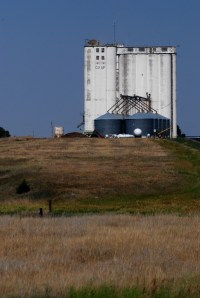
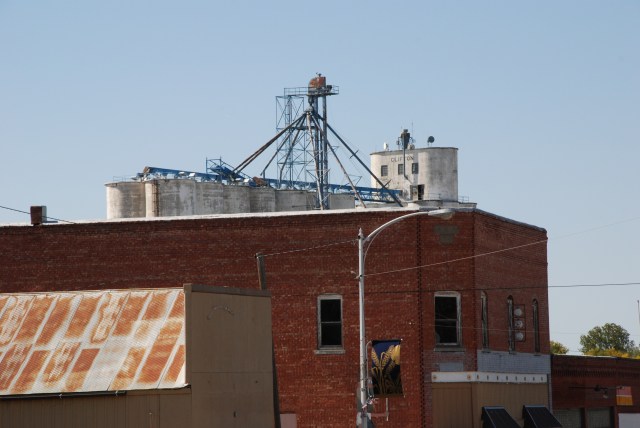
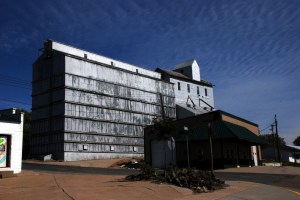
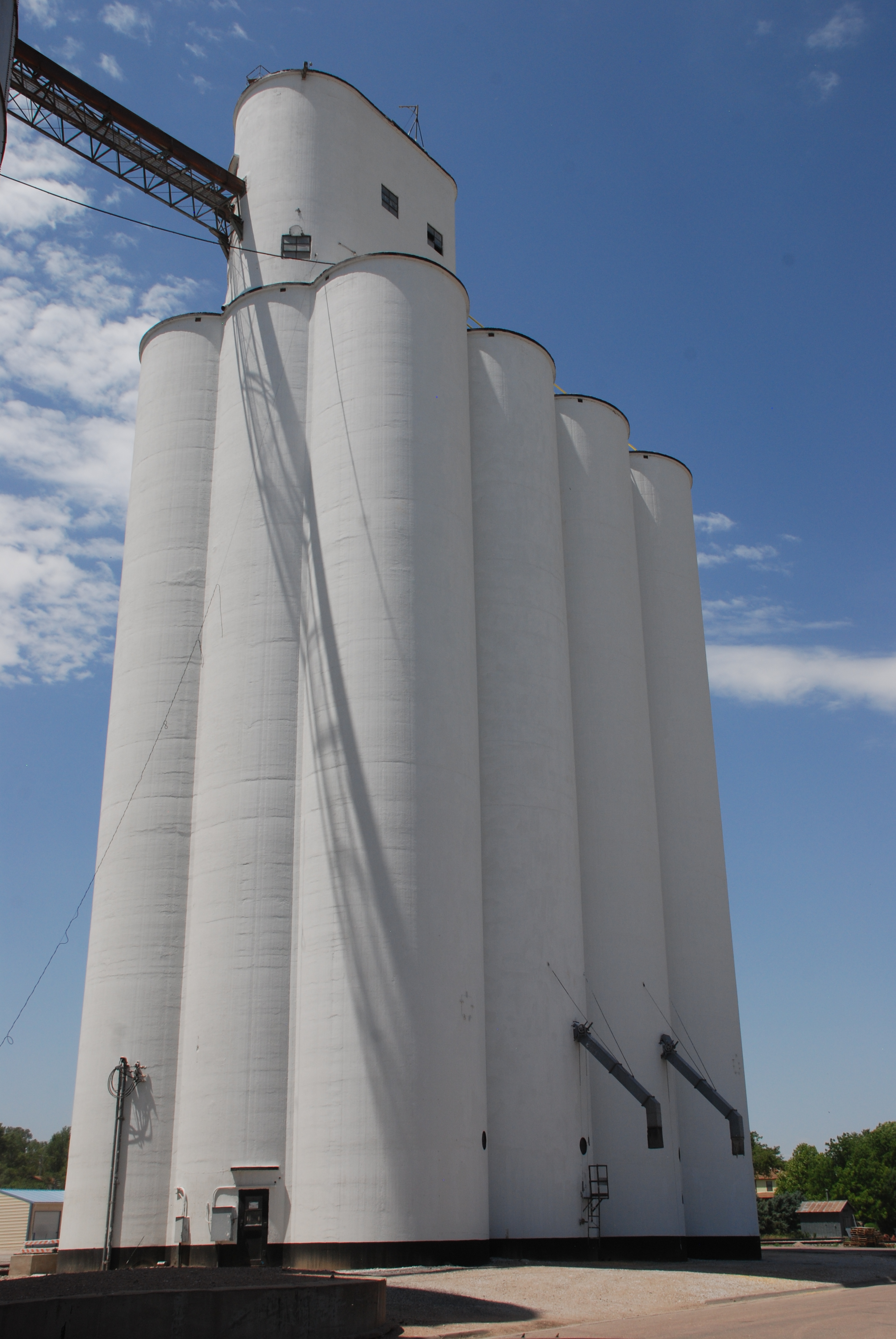
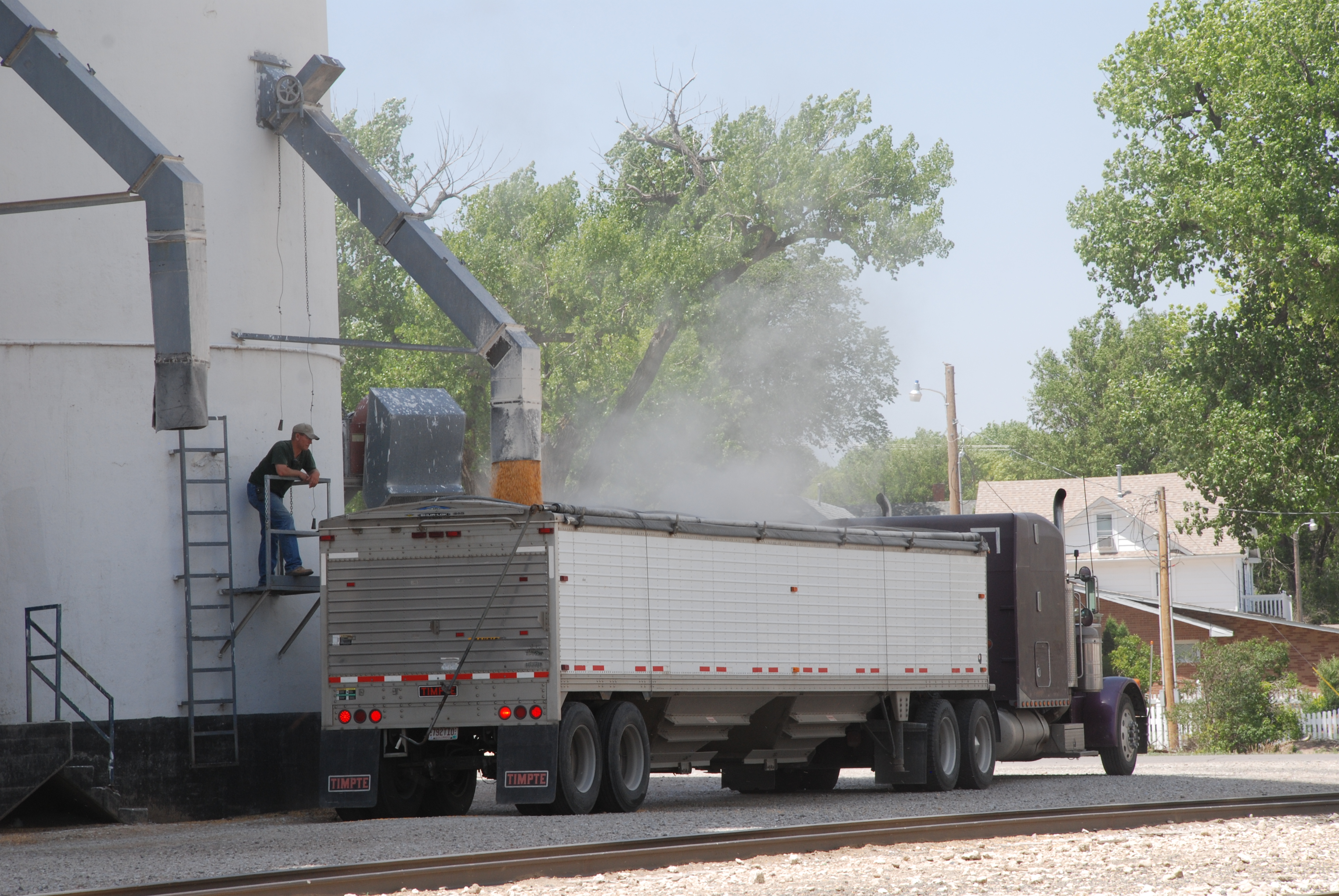
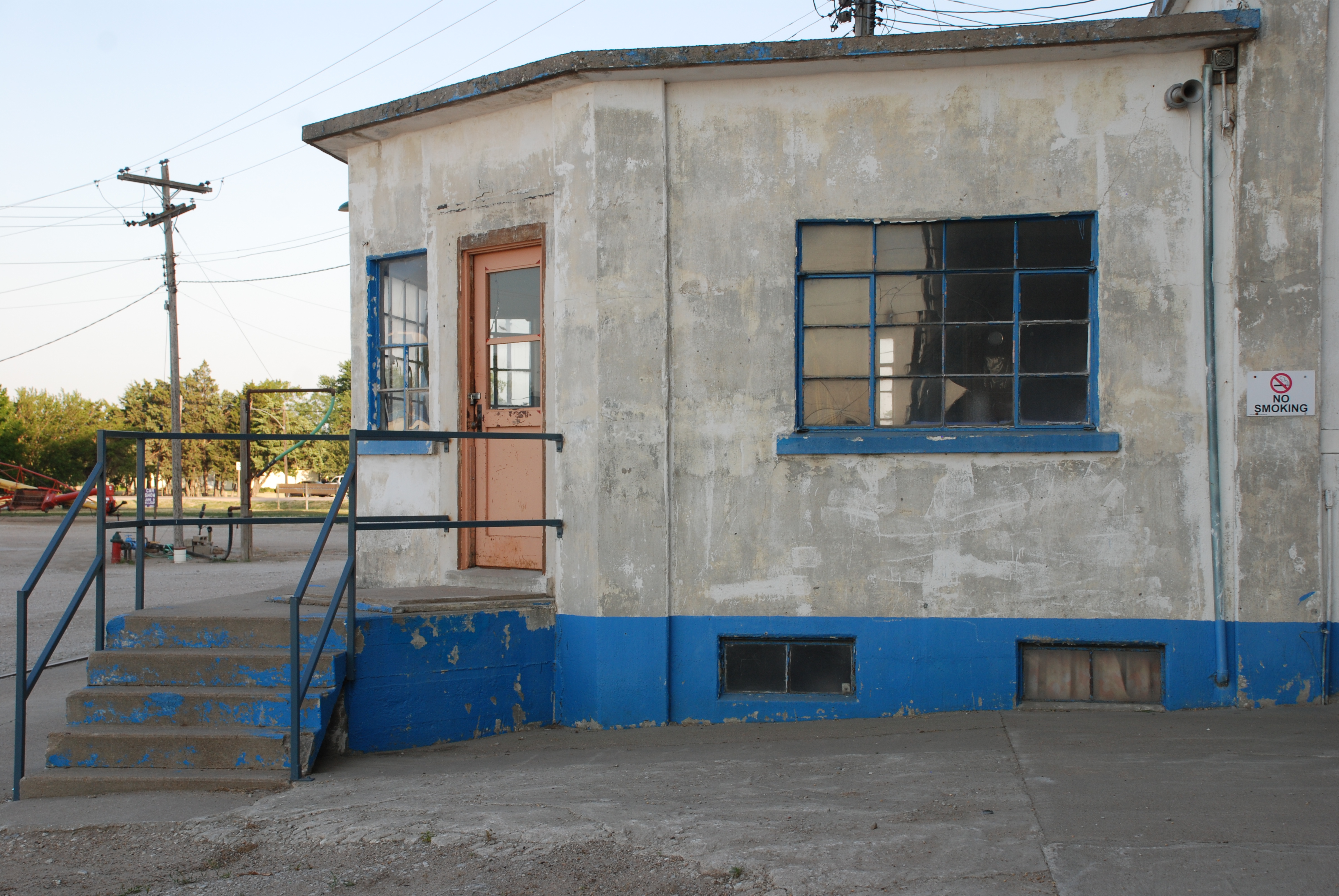
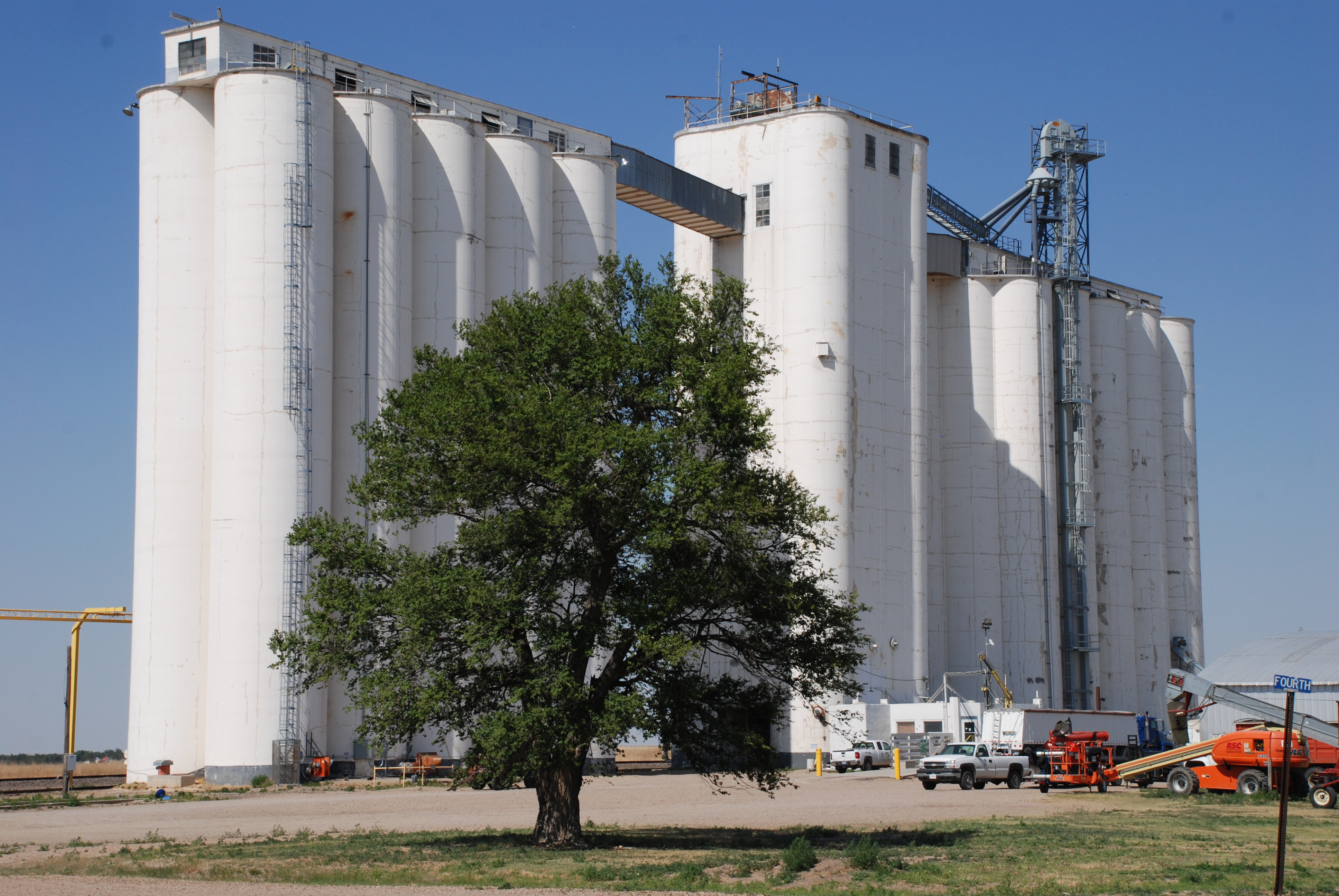
The elevator at McAllaster, Kansas, proved to be a missed opportunity

McAllaster, Kan., photo by Gary Rich

Story by Kristen Cart

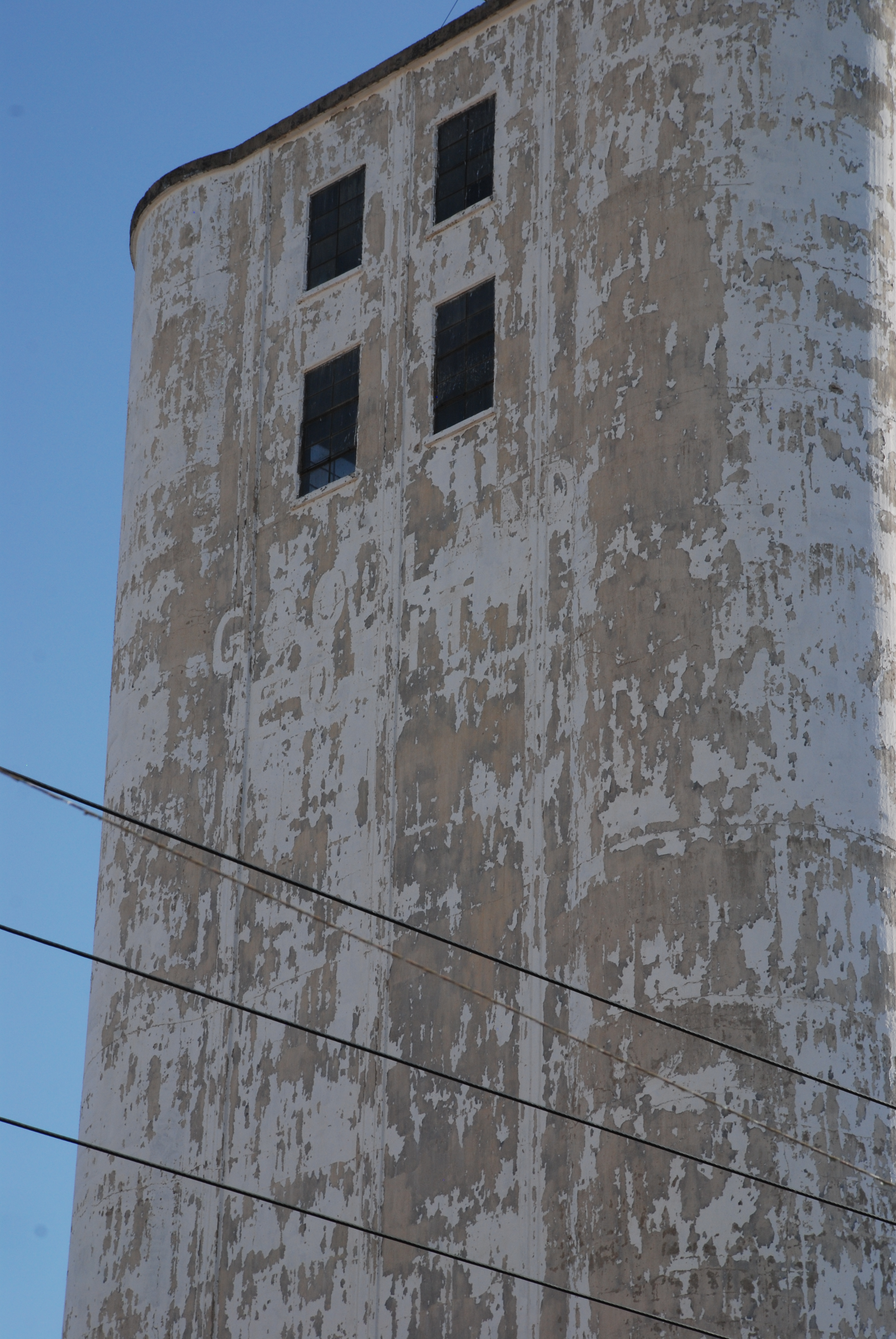
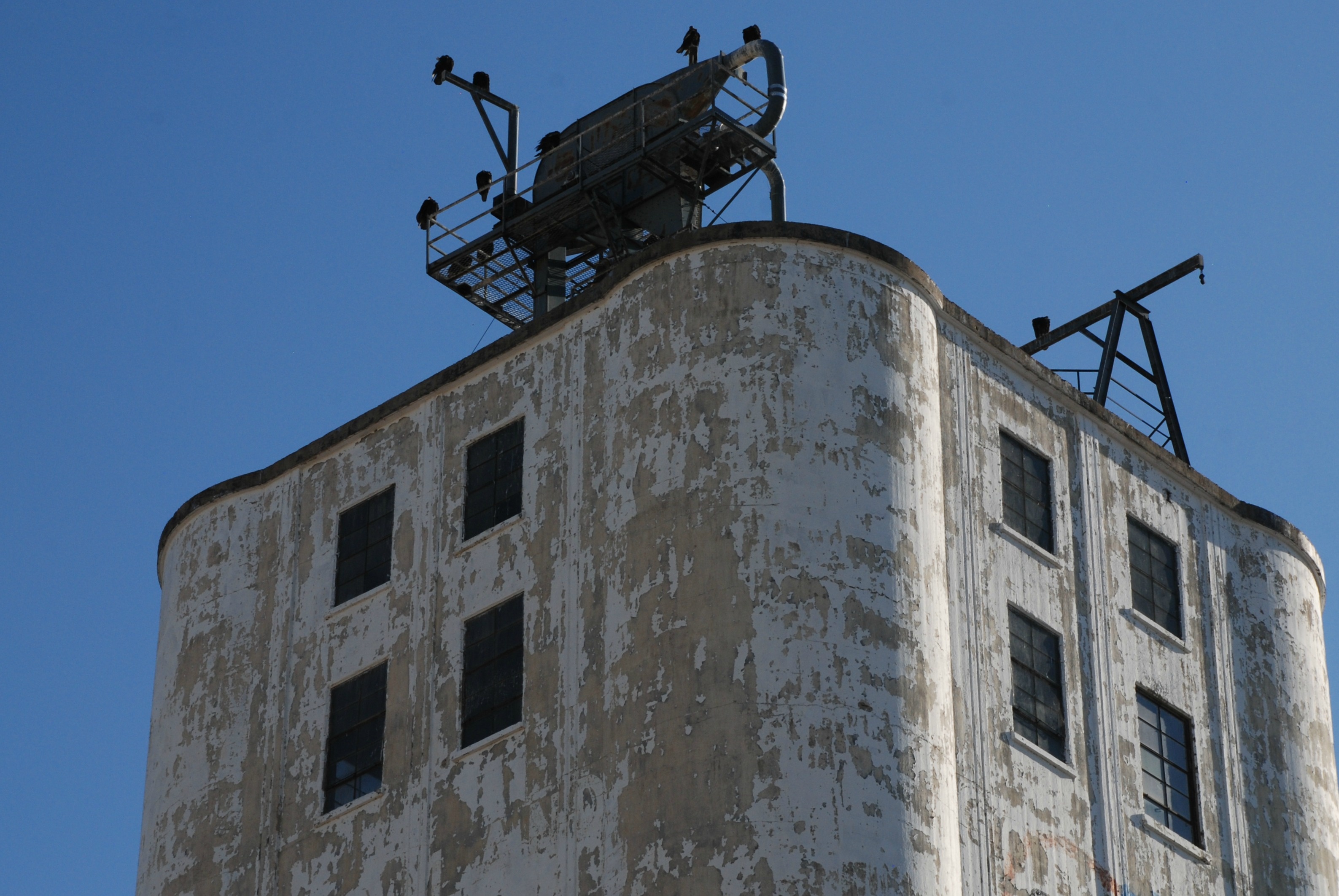
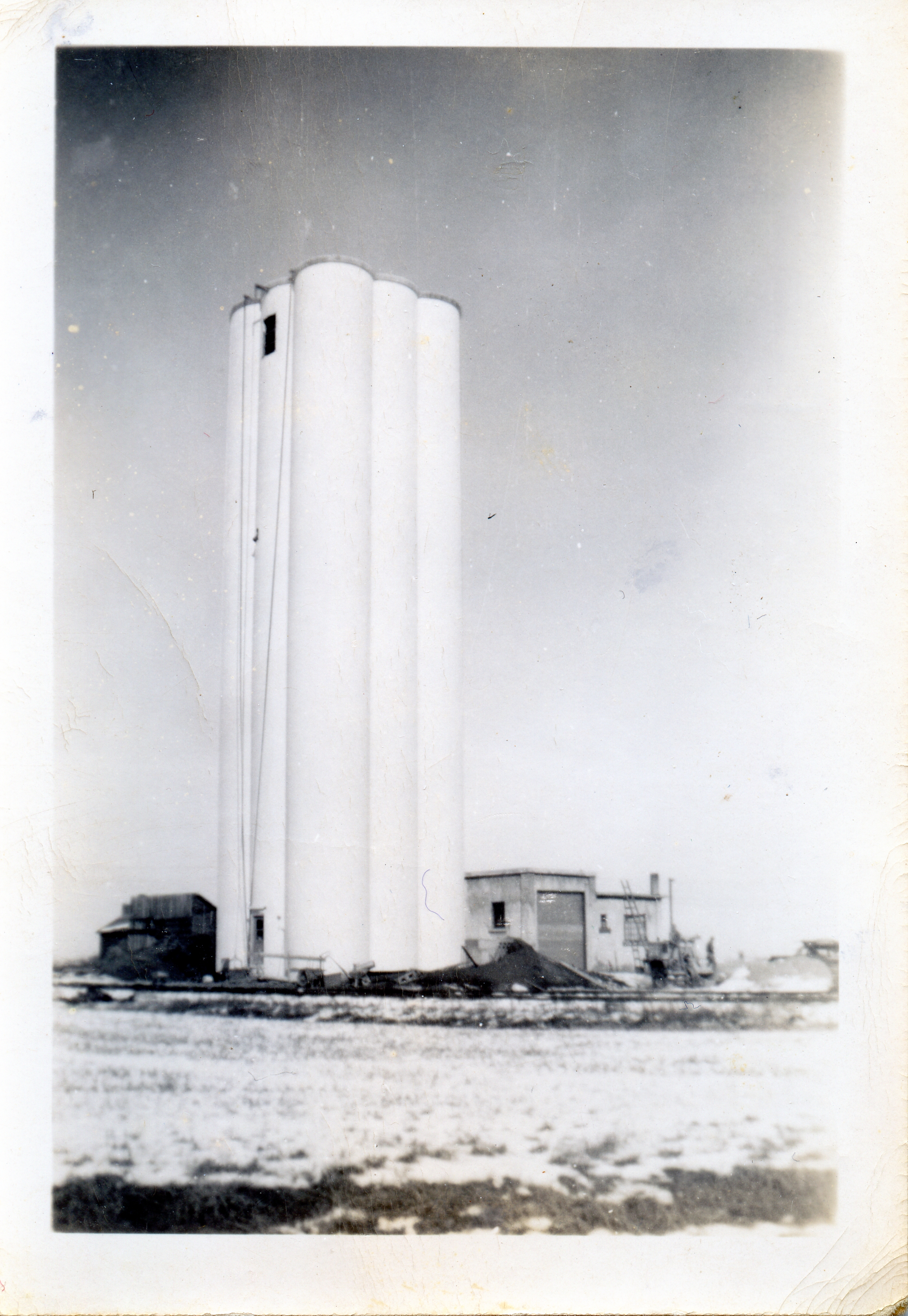
Sometimes our elevator quest ends in a dead end, without definitive answers. In the case of McAllaster, Kan., we had only an old photo belonging to my grandfather, William Osborn, to go on, and Gary Rich and I never got any independent confirmation of the builder. When I went to visit the elevator two months ago, nothing was left and there was no sign it had ever existed.

William Osborn photo

Gary Rich tried hard to get information about the builder, after he had gone to McAllaster to photograph the elevator. Both of us made calls to the cooperative. But all we were able to confirm was that it was slated for destruction sometime this year. It was shut up tight, of course, when Gary went to see it, and, no man-hole covers were visible from the outside. The only clue we could find was an old photo of one of grandpa’s projects, which was probably built for J. H. Tillotson, Contractor, of Denver, Colo., judging by the style. The caveat was that quite a few others similar to this one were also built, and some of them have long since disappeared.

Gary Rich photo

Elevators like those at Daykin, Fairbury, and Bradshaw, all in Nebraska, were built in a similar style, so the only clues to their builder are external to the main house: elements such as windows, driveways, office buildings, and loading chutes can be compared to details in my grandfather’s old photos. Of course, if we have independent verification, such as contemporary newspaper accounts or my dad’s memories, it makes our lives easier, since only one of grandpa’s photos has any caption. Daykin and Fairbury have both been verified in this way.

When the photo above is compared with the photos taken by Gary Rich of the McAllaster elevator, it shows just enough difference to dash our hopes for an identification. The building behind the driveway appears to be attached, and the windows don’t match our photos of McAllaster. So we are at a frustrating impasse. We still don’t know the identity of the elevator in grandpa’s photo, and we still don’t know the builder of the McAllaster elevator, though we suspect it was a J. H. Tillotson project. With no way to verify it, we are at the disappointing end of our quest.

In Monument, Kansas, the elevator is closed to visitors and its story sealed

Story and photos by Kristen Cart

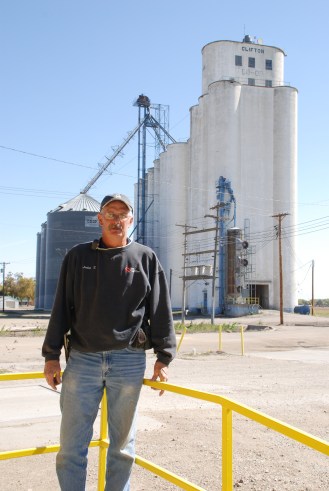
I approach this post with a little bit of trepidation, since the Monument, Kan., elevator does not invite tourists–even those with family connections. It is operated by a large corporation which primarily supplies corn for ethanol. It seems that an overly inviting manager might be risking his job, so I contented myself with photos taken from off of the property. But I was able to cobble together some information about it, from a variety of sources. Suffice it to say, it would not be prudent to reveal all of them.

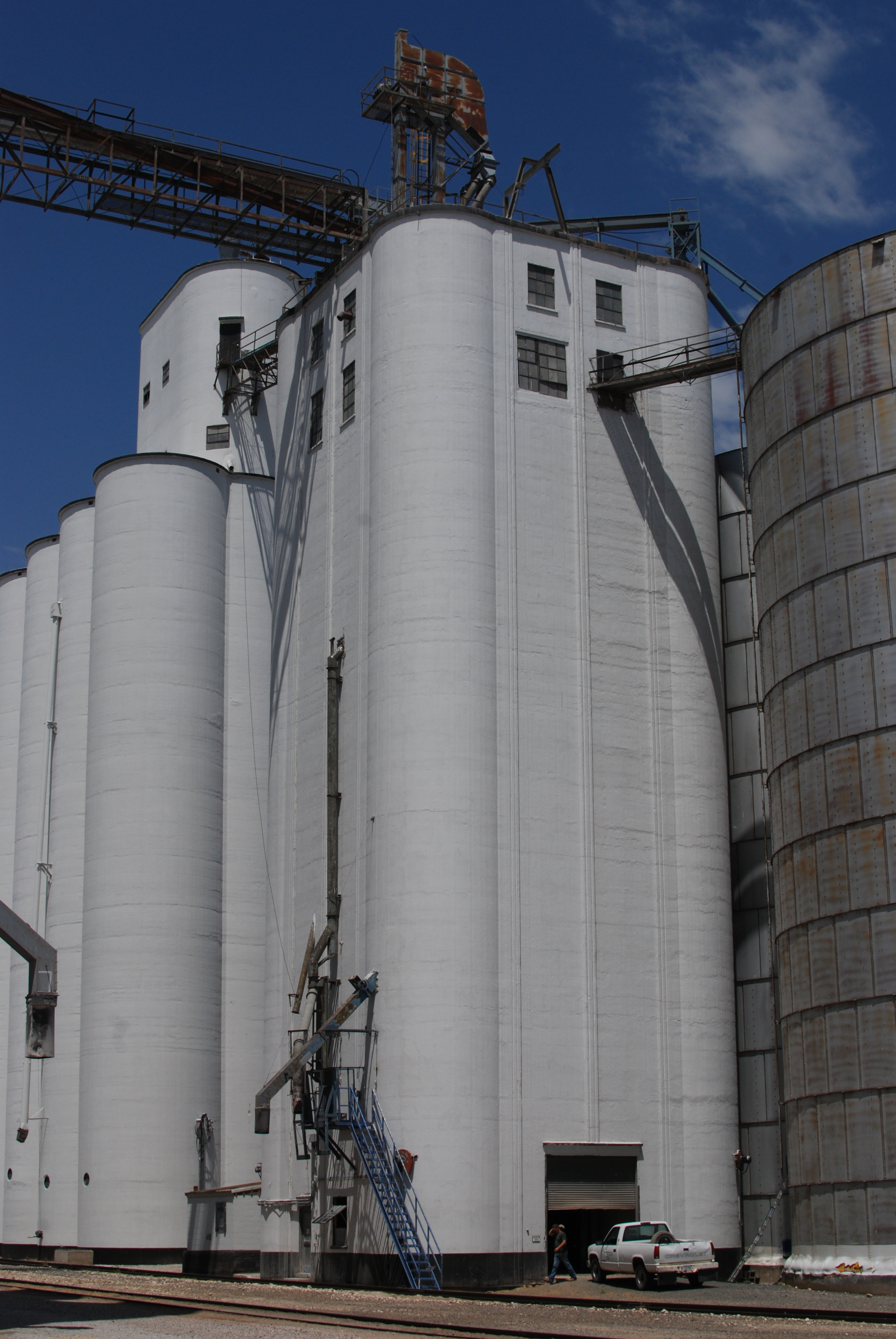
A view of the Monument, Kan., elevator, taken from off-property. Visitors weren’t permitted at the facility.

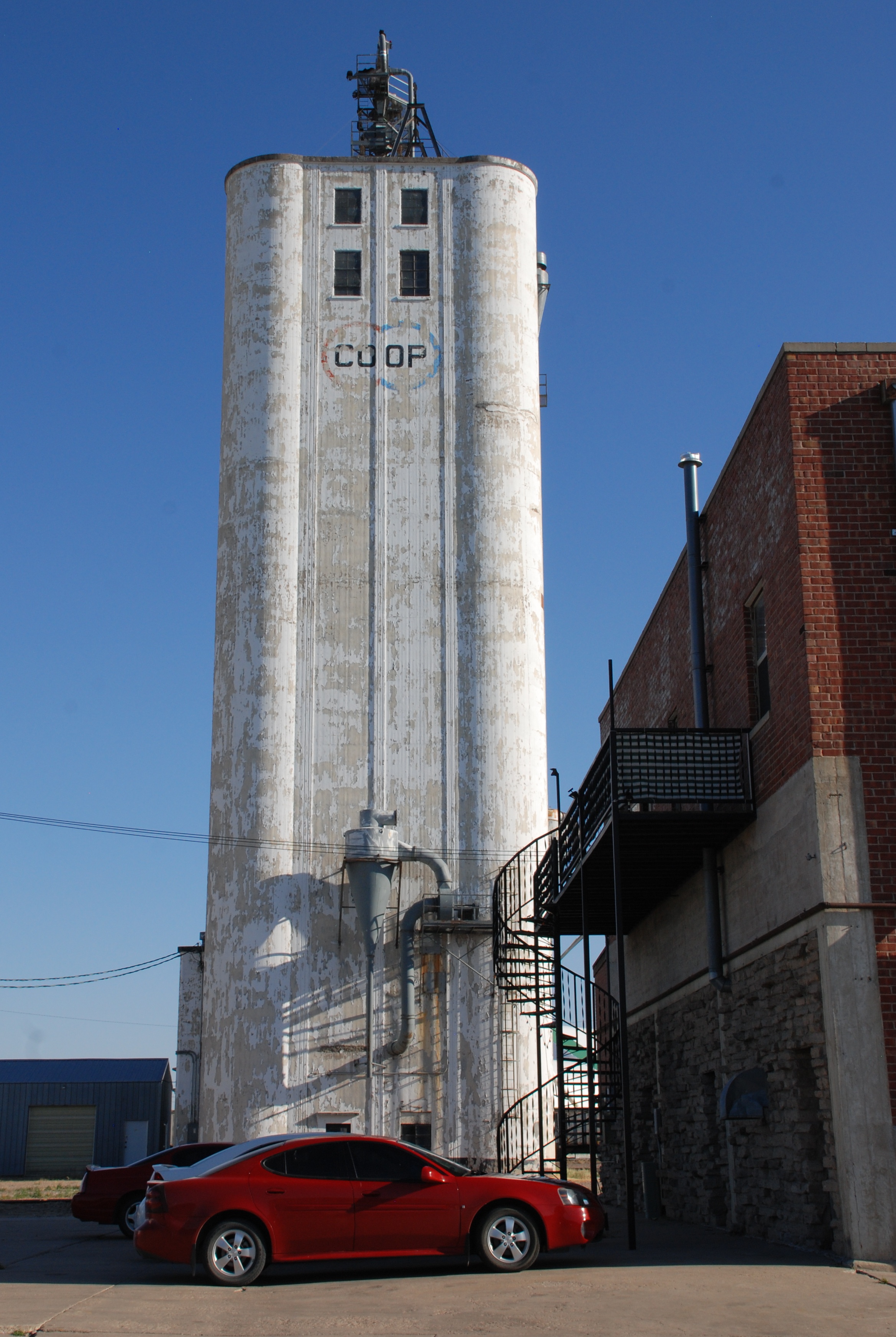
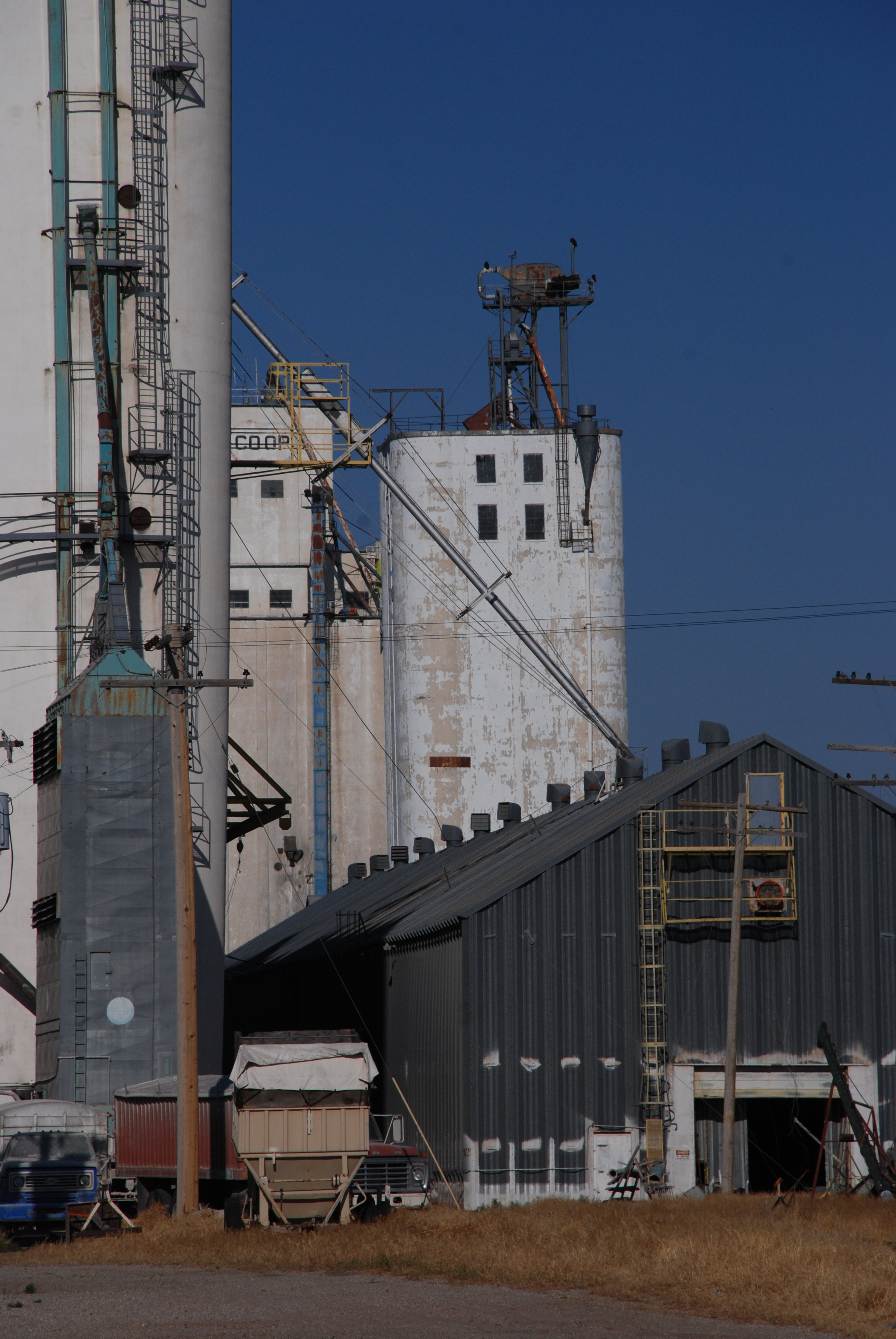
I was able to determine the builder for the stand-up elevator with its integral head house. The manhole covers are stamped with the company name of J. H. Tillotson, Denver, Colo. The annex on the left has unmarked ports, but the annex on the right has man-hole covers stamped with the company name Mayer-Osborn. I did not see any of the ports for myself, so I am relying on secondhand information. But my grandfather apparently made a return trip after building the original house.

The original elevator was built for a Mr. Bertrand, whose son is still living. The elevator once had a brass plaque installed, which has since been removed and may still be with the Bertrand family. There were also early photographs of the elevator, and it is believed that they went with the plaque.

I spoke with a gentleman named Fred Wassemiller, who said, “These elevators were the best thing going–they should have kept building them.” He also said it was too bad that the “old-timers around here are gone.”

Apparently, they could have told me a lot.

Gary Rich’s analysis reveals subtle aspects of Mitchellville, Iowa, elevator operation

Story by Gary Rich
Photos by Kristen Cart

There are several possibilities as to why Heartland Co-op’s Mitchellville, Iowa, elevator would only use rail service for shipping out its grain. The most obvious one is that this might be a shuttle operation. Whether corn or soybeans, the company that receives the grain might have a contract with the elevator specifying shipment of a certain number of carloads per week. It is probably a larger-name company, and they could be paying for the shipping charges. This would keep their operation from having to shut down for lack of grain.

The photos appear to show nine or ten covered hopper cars at the elevator’s far right. In the view at top, we see yellow markings on the rail on the elevator track. This is known as the “clearance point.” You can’t have cars sitting beyond these markings without “fouling” the main line. The following links to lexicons of railroad terminology will explain both terms:

http://www.icrr.net/terms.htm
http://cfr.vlex.com/vid/214-7-definitions-19944901

Here’s an illustration why it’s cheaper to move grain by rail. The amount of grain in one covered hopper car leaving the elevator equals three semi-trailer loads. If you load ten hopper cars, you’re probably looking at an equivalent of around thirty-three or thirty-four semi-trailers. If the plant that receives the grain is over 200 miles from Mitchellville, it would take more than a week to move all that grain over the highway.

Indeed, if the plant is 200 miles away, you also have to consider the amount of time a trucker can work. He wouldn’t be able to cover two round-trips per day. And besides, the trucker’s charge of something over $4.00 per mile might erode all profit for the grain operation.

Tillotson Construction’s Mitchellville elevator is a key part of Heartland’s grain operation

The Heartland Cooperative elevator complex at Mitchellville, Iowa.

Story and photos by Kristen Cart

The Mitchellville elevator is visible from Interstate 80, and the rounded head house drew my attention as we headed through Iowa on our way home from our recent trip out West. “Just one more stop, OK, kids?” I said, and they answered with groans. I think I promised ice cream to quell the protest.

The main elevator built by Tillotson Contruction Company of Omaha, with grain drier.

I parked the van, air conditioner running, in a shady spot and hopped out with my camera. Thunderheads threatened nearby, but the storm seemed to be moving off, and the sun peeked out and illuminated the scene. I took advantage of the beautiful light to photograph the elevator.  As I finished up, I saw a truck rounding the corner from an alley into the gravel lot beside the elevator, so I flagged the driver down to ask if he knew anything about it. We were in luck.

The driver introduced himself as Ed Baldwin, a grain truck driver for Webb Farms. He was more than happy to talk about the elevator, having trucked “at least two million bushels” in and out of Michellville. Bill and Stan Webb own the farm, and Ed purchased his truck from their father who used to truck his own grain. Ed gave me a quick outside tour of the elevator property.

The Younglove annex viewed from the driveway.

Ed explained the Heartland Cooperative operation at Mitchellville. He did not know the builder of the “head house,” as he termed the main elevator, but he knew the adjacent annex was built by Younglove in 1972.  The bins had numbers and he pointed out the function of each one. All the way to the left was a new bin with its own leg that was built in the 1980s and used for damaged corn. Immediately to the right of it, on one end of the Younglove annex, was a bin dedicated to soybeans. The rest of the annex held corn, with the main house taking all the wet corn since it gave access to the grain drier.

The Younglove annex is placarded with the date of construction.

During harvest, the employees kept a grueling schedule filling the bins, especially during a wet year. Jim Dietrich, grain manager for Heartland Co-op at Mitchellville, would pull a twenty-four hour shift to accept the grain into the main elevator and dry it. The drier had a capacity of seven thousand bushels per hour, which would limit the amount of grain that could be taken in. Ed said the main house would take seven semi loads per hour of grain that needed to be dried. Shipments from the elevator were by rail, unless capacity was reached and grain needed to be trucked.  Trucking would be the exception for Mitchellville’s operation.

Then and Now: The J. H. Tillotson elevator at Fairbury, Nebraska

Story and photos by Kristen Cart

Photo by William A. Osborn, about 1948

A current view

Some of the elevators Grandpa built were a little hard to identify, for certain, from his old photos.  Many of his projects were similar in design during the time he worked for J. H. Tillotson, Contractor, of Denver, Colorado.  So seeing an elevator in person,  only tentatively identified with an old black and white photo, and recognizing it, was quite an exhilarating experience.  Fortunately Gary Rich’s sharp eye made the connection between Grandpa’s photo and the elevator at Fairbury, Nebraska.

When I saw it, the Farmers Cooperative elevator did not give a clue to its builder from the outside.  It warned intruders away emphatically with “No Trespassing” signs, and it sported a freshly painted logo, which seemed to indicate that it was still in use. But because it was deserted I had no one to ask.  We knew from a newspaper article, marking the construction progress of the McCook, Neb. elevator in 1949, that my grandfather had previously built the Fairbury elevator.  So when my husband and I went to see for ourselves, I took documentary photos. Later, Gary Rich compared them with Grandpa’s old photos and quickly made the identification, noting the relative position of the railroad tracks, and the loading chute extending beyond the drive way.

The elevator stood beside one of the busiest rail lines I have seen in Nebraska. Freight and coal trains roared by every few minutes.  While spending the better part of an hour photographing every angle, I found a railroad spike, well rusted and tossed aside, and I brought it back to the car for the kids.  I don’t know why I thought it would impress them–when they saw it, they barely glanced up from their video games.  I guess old railroad stuff was more a part of my childhood than theirs.

With a little luck, these kids will remember the long drives through corn and wheat country chasing elevators.  At least they will have a unique perspective on them. Perhaps in their travels, when a towering white structure first peeks over the horizon, they will ask, “I wonder who built it?  And when?”

Searching for Mayer-Osborn’s office in Denver produces a good possibility

Story and illustration by Kristen Osborn Cart

Looking for the original offices my grandfather used while putting up elevators for a living, I checked maps for the buildings that stood at the old Mayer-Osborn Company addresses. Google gives a bird’s-eye view. The newer address at 5100 York, in Denver, has no building and seems to be a parking lot full of junker cars and abandoned trailers. There is a small white cinderblock-looking building next door that might be that old, but it is nothing to speak of. I am sure the old building where William Osborn and his partner Gene Mayer located their business is long gone.

The address at 1717 E. Colfax has a handsome, two-toned, tan-and-brown brick building, three stories high, with a glass-brick corner feature on each floor and a style very like some of the better buildings from the Forties and Fifties. It has white-framed windows. It looks like it could have been newly built, if it was their office back then. A mural painted on the side looks like old Nebraska historical scenes, and a canvas awning shades the entry.

If I were any good at all at remembering architectural terminology from my college art history class, you would have a pretty good idea what it looks like just from my description.

Alas, there’s no way of knowing from a photo exactly when it was built, and whether Mayer-Osborn set up there in the old office of Holmen and Mayer, but I suspect so. The building would have made a very presentable impression on clients who came in looking for a reputable, established elevator construction company.


We visit the former Omaha office of Tillotson Construction Company

By Ronald Ahrens

On May 10, I was in Omaha with my camera. One objective was to visit the former office of Tillotson Construction Company. Uncle Tim Tillotson had recently tipped me off to this, saying he helped move out the company’s papers after Reginald’s death.

“Twelfth and Jones–the Office, the OFFICE!” he said.

I parked at 13th and Jones in the southern part of the Old Market area and walked across the intersection. In just a few more steps to the east I knew exactly what he was talking about.

It turns out, the Office was part of an Anheuser-Busch plant of four buildings erected in 1887. Besides the Office, designed in Romanesque style, there was a bottling facility, a beer storage warehouse, and a stable. The other three buildings were torn down, but the Office survives.

One hundred and one years after the Office went up, a finial above the doorway blew down during a windstorm. It was stolen and has never been recovered.

Musings about an Absent Father

By Kristen Osborn Cart

My dad has been writing a memoir about his life growing up in Nebraska, as the son of Bill Osborn, builder of the Mayer Osborn elevators.  It struck me that after about 1939, Dad scarcely mentions him, other than to note his absence.  Grandpa was gone all of the time. Over the years the Osborn cousins have assembled photos from those times, and it is very striking that the photos of the Osborn home became scarce from about then. The few pictures we have from later on were from visits, and from the various projects he worked on. Bill Osborn was the photographer in the family.

William Osborn, 1952.

By the time I knew him, he had long since retired from that occupation, and he was home, taking care of his tropical fish business. He would find time to take his little granddaughters fishing (my cousin Diane and me), after night crawler hunting by flashlight, of course.  He was an affectionate grandfather, and he loved my mom.  He read the morning paper over breakfast, and ate his eggs sunny-side-up, mopping up the last of them with his toast. And he didn’t talk much. The elevator phase of his life, in my mind, consisted of a framed photo of an elevator (McCook Equity Exchange), and Dad’s assurance that it was grandpa’s first elevator he built on his own.

My cousin, Diane, brought out a cache of photographs of grain elevators one day, not too long ago.  Most were not marked, though the one from Kanorado, Kansas, had it’s location and capacity written on the back.  We have identified almost all of them, but a few are still mysterious, so now that it has been thirty-five years since Grandpa died, we have something to ask him.

This summer we are planning to go find some of the grain elevators he built some sixty to seventy years ago, many of which are still in use.  The buildings can’t tell us about his jovial smile, his mischief, or his aggravation at workers who left after their first paycheck.  But I can imagine him there, just as I suppose my father had to.  At least Dad could visit sometimes.

William Arthur Osborn, 1965

By 1930, the Tillotsons are prospering — with a radio set!

By Ronald Ahrens

On April 4, 1930, the census-taker knocked at the Tillotsons’ door at 624 N. 41 St., in Omaha, and found them prospering.

Charles H. Tillotson, 51, was head of household and gave his occupation as superintendent in construction. Census code 73X1 supports this. It appears he was an employee.

Rose Tillotson, 52, was home. The age given here corroborates my belief that Rose’s age, given as 38 in 1920, was incorrect.

Charles was 23 and Rose 24 when they were wed.

Son Joseph, 23, was employed as a salesman in the wholesale grocery business, as census code 4590 supports. Son Reginald, 21, as well as daughter Mary, 19, also lived in the home.

The Tillotsons owned their home, which was valued at $3500. And they cooperated in supplying an extra bit of data: they had a radio set.

By 1935, Reginald would be the father of Charles J. Tillotson, the first of six children with Margaret Irene McDunn Tillotson. The grandson would barely know his grandfather: Charles H. would die in June 1938 at Concordia, Kansas.

1920 census finds the Tillotsons settled in Omaha

By Ronald Ahrens

After their sojourn on Alda Street in Elba, Nebraska, where they were living at the time of the 1910 census, the family of Charles H. and Rose A. Tillotson found their way to Omaha.

When the census-taker came to the door in 1920, my great-grandfather gave his occupation as a “mechanic” in construction. This tells me several things. One is that just fifteen years earlier, the term “mechanician” was frequently used in the press. So it might be said that the language was in a sense settling.

Another thing is that mechanic was rather loosely defined. During the 1930s, Bill Knudsen, who became president of General Motors in 1937, gave speeches and interviews in which he insisted that every boy should learn the mechanic’s trade. This didn’t necessarily mean auto mechanics. It was more a case of learning the manual arts: sheet-metal work, electrical, maybe even plumbing or pipefitting.

But in the case of “Chas. H,” as he’s here listed (he was Charlie in 1910), I suspect it has something to do with assembling the legs and other internals of grain elevators.

Note that, whereas he was evidently an employer in 1910, he’s now a worker. The family was living at 624 N. 41 St, where they would be found again in 1930.

My grandfather’s name is entered incorrectly as “Oscar R.” instead of Reginald Oscar.

Joseph H. was 13, Reginald was 11, and Mary V. was 9. (Although that numeral may at first glance look like a 7, inspection by magnifying glass of a printed copy shows that it’s in fact a 9 with the loop nearly closed.)

Meanwhile, it’s certainly unusual that my great-grandmother Rose was thirty-five years old in 1910 but here is thirty-eight. Hers had to be the most effective anti-aging strategy ever!