Original drawings reveal internal details of Tillotson’s first Meno, Okla., elevator

IMG_9308

By Ronald Ahrens

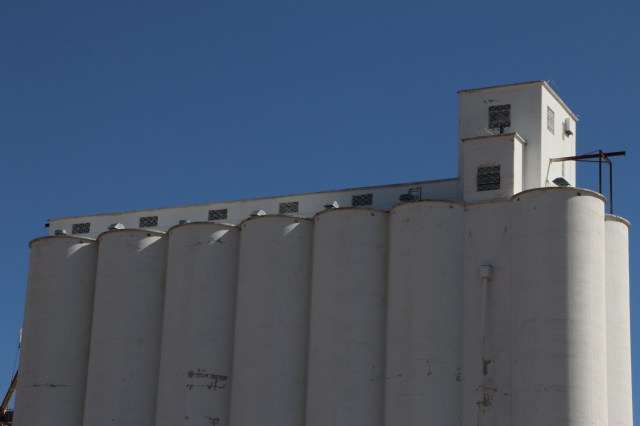
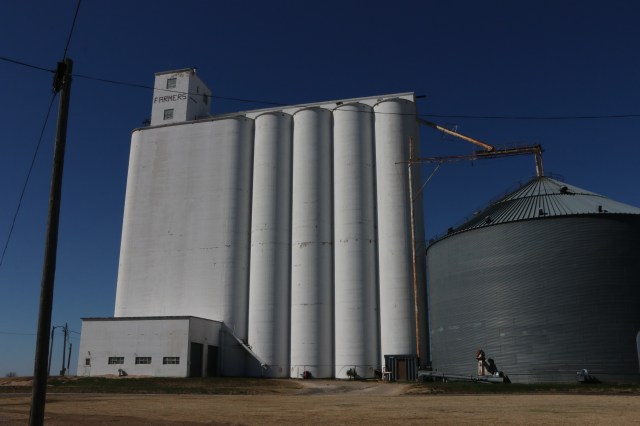
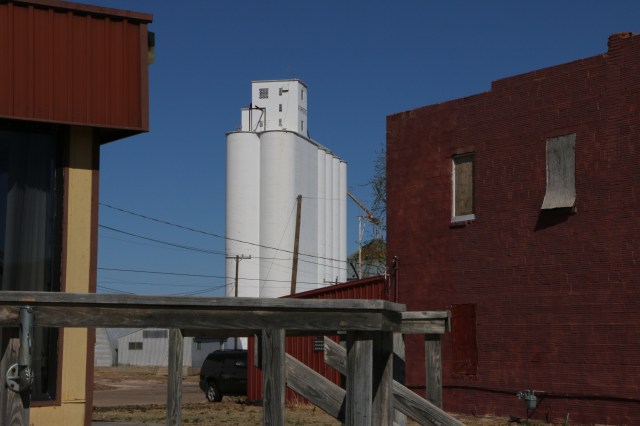
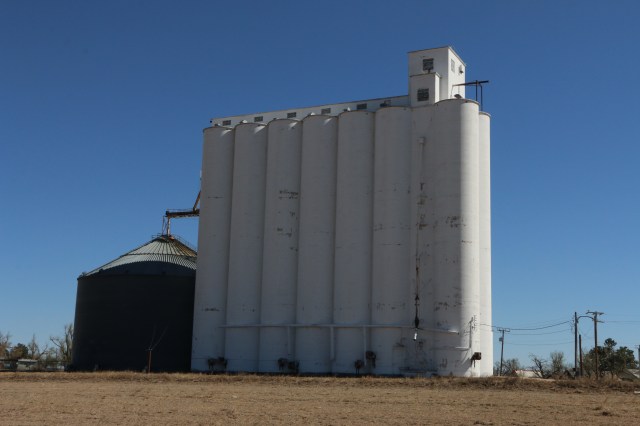
When I visited the office of High Plains Co-op, in Meno, Okla., Matthew Thomsen dug out drawings of the 152,000-bushel elevator that Tillotson Construction Co. built in 1953.

Texas-Okla Logo 04I took quickie photos with my phone.

The first drawing shows the leg, noting the right side is the “up leg” and the left side is “down leg.”

That’s so it isn’t installed backwards.

The tanks, or silos, are 16 feet inside diameter. To get an idea where that rates, consider how Tillotson started in 1939 with tanks 12-feet in diameter. Most of the elevators I’d visited so far on my road trip had 20-foot tanks, but the Ralston, Iowa, storage annex Tillotson put up in ’53 boasted 28-footers.

There is a truck lift and dump grate in the internal driveway.

Inside the headhouse, an automatic scale feeds a load-out spout that drops all the way to a rail car on the siding. Dig that draftsmanship by Ted Morse, whose initials appear in the information box seen in the third photo.

IMG_4826

The next drawing shows details of the work floor including nine-foot-wide dump grates. We see the electrical room and, on the far right, a dock.

The drawing also shows the bin plan with 16 bins of various sizes and shapes. A handwritten notation on Bin 9 says, “Scales.” At the far end is the dust bin.

Both drawings adhere to a scale of 1/4 inch to 1.0 foot.

IMG_4827

The final portion shows bin capacities in a list with some amendments. Penciled above the identification box, the note says, “Imo,” referring to the prototype for this elevator built in 1950 at Imo, Okla.

The plan was revised, according to another note, on Aug. 1, 1952.

We see in the box on the lower right that this is a standard-plan 154,000-bushel reinforced-concrete elevator. But how to account for the 2,790-bushel discrepancy between the plan and the construction record, which lists Meno at 152,000 bushels?

Thanks to Tracie and Matthew, of High Plains Co-op, for hauling out these drawings.

IMG_4829


Welcome to Meno, Okla., where Tillotson elevators go off the charts

IMG_9281

By Ronald Ahrens

With the country elevators in Orienta, Okla., closed up and one of them crumbling, I decided to get moving. The site was a little spooky.

Texas-Okla Logo 04Meno was just 20 minutes east, and I felt its promise.

Founded in 1899, Meno took the name of a Mennonite leader, Menno Simons, but one “n” was left off the paperwork. The coming of the Enid and Anadarko Railway within three years was a boost for Meno.

Tillotson Construction Co. records show the company built a 152,000-bushel elevator in this tiny hamlet. Adapted from the 1950 drawings for Imo, Okla., this plan was also used the same year in Clifton, Kan.

Meno is the first elevator listed in the records for 1953, when the company also built in Orchard Hill, Ga.; Cherokee, Okla.; Columbia, Ill.; Jamestown, Kan.; Ralston, Iowa; Estill, S.C.; Flagler, Colo.; and, my next stop, Helena, Okla.

Such geographical diversity in a single year was never exceeded by Tillotson.

IMG_9300

As I approached Meno from the west, a field of canola in the foreground, I saw two elevators arising from this plain, and both flaunted their curved headhouses like faces of hope and freedom.

What was I about to encounter in this town of 250 persons?

I parked in front of the Great Plains Co-op’s office and poked around. In Follett, Tex., and at my last stop in Orienta, I had encountered surprises and puzzles. Follett had a Tillotson elevator and a Mayer-Osborn elevator facing each other. And Orienta puzzled me because of the combination of builders and owners–not to mention the decrepitude there.

IMG_9289

Tracie Rhodes and Matthew Thomsen

As I looked around the Meno site, it became apparent that both elevators were Tillotson jobs. I found the manhole covers attesting to this fact. The second elevator was newer, larger, and invisible in the records.

As questions swam through my head I went inside the office and met Tracie Rhodes and Matthew Thomsen. Somehow, we came up with 1956 as the date for the second elevator’s construction.

Thomsen, a Nebraska boy from Minden, said the elevators were in good condition, although some important repairs had been needed to the floors and in the gearing.

IMG_9284Additionally, the 13 x 17-foot driveway had benefited from some reinforcing.

“Agriculture has gotten bigger, the trucks heavier,” he said.

I showed them the construction record, and they had something for me to look at as well: original drawings.

What a welcome to Meno–a little more than I’d expected!

Watch this space tomorrow for a glimpse of the 65-year-old documents that show inner details of the original elevator.

In Orienta, Okla., 312,000 bushels of storage meant a vast amount of materials

IMG_9251

The south elevator and Tillotson’s storage annex at Orienta, Okla.

By Ronald Ahrens

When laying the main slab for a storage annex like the one we found in Orienta, Okla., make it thick and be prepared to go the distance. That’s my takeaway after visiting the site and now looking at the specs and dimensions.

Texas-Okla Logo 04Tillotson Construction Co., of Omaha, undertook this job in 1954, building a 312,000-bushel annex. The crew created a slab 24 inches thick, 47.5 feet wide, and 109 feet long.

Even without a headhouse, this job consumed plenty of material. Overall, some 2,963 cubic yards of concrete and 105.72 tons of reinforcing steel were used.

Just in the slab, there was 338 cubic yards of concrete and 53,077 pounds, or 26.53 tons, of reinforcing steel. Fitting all the steel together took a long time before any concrete could be poured. In comparison to the tedious slab, the drawform walls went up rather fast.

IMG_9254

Headhouse of the Johnson’s south elevator at Orienta and start of the 100-foot run over the Tillotson annex.

The Orienta annex could hold 9,360 tons of grain, and the structure’s gross weight when loaded was as much as 14,430 tons.

Here, the 10 tanks, or silos, were 114 feet nine inches tall.

IMG_9265.JPG

The gap between the main house, left, and Tillotson’s storage annex. Note here and in the images below the poor condition of the concrete at the main house.

IMG_9272

The run measured 13 feet wide, 100 feet long, and just over eight feet high.

Inside the run, a 30-inch wide conveyor belt ran with a 10-horsepower motor on top and 7.5-horse on bottom to move up to 600 feet per minute. That translated to transferring 9,000 bushels per hour through the run.


Country elevators in Orienta, Okla., present a Tillotson annex and a puzzle

IMG_9255

By Ronald Ahrens

Tillotson Construction Co. built at a dozen and a half locations in Oklahoma, and I was now trying to see several of then in an afternoon before staying overnight in Enid.

Texas-Okla Logo 04After my impromptu visit to Shattuck, I drove east on U.S. 60 for another hour or so until I reached Orienta. The wind, which must have been blowing 40 mph, was behind me.

Arriving at Orienta, I found an elevator complex at the highway junction with but very little in the way of a town. One of the steel buildings at the complex was labeled W.B. Johnston Grain Co. 

In 2014, Johnston, which must have come after the Orienta Co-op Association, sold its 19 country grain elevators to CGB Enterprises, Inc. I had just come from CGB’s location in Shattuck.

IMG_9251

The south elevator and Tillotson’s storage annex at Orienta, Okla.

Orienta optimistically took its name from the Kansas City, Mexico, and Orient railway, which was called The Orient railroad.

I knew Tillotson had built here in 1954 but was disappointed to find it was only a storage annex. (As usual, I hadn’t studied the construction record too thoroughly beforehand.)

There were two elevators, each with an annex.

The south elevator was put up by Johnson Elevator Construction Co. This house is about as unprepossessing as they come: silos compressed in a small area and a pretty average-looking rectangular headhouse.

IMG_9266

Tillotson’s manhole cover.

Attached to it is Tillotson’s annex of 10 tanks, or silos, of 20 feet in diameter. They are 114 feet 9 inches tall. Capacity was 312,000 bushels.

I had to accustom myself to the notion that Tillotson would build storage silos alone. After all of our grand talk about curved headhouses and a singular style, this job was generic. There’s no glory in annexes, but there was money.

And I find that Tillotson built eight storage annexes in 1954. They were in Iowa, Kansas, Texas, Nebraska, and Oklahoma. Company records for that year list 16 jobs in all, so storage was half of the business.

The annex is holding up much better than the main house. Johnson used a coarse aggregate for its concrete, which is crumbling in some key places. It would be interesting to know when this job was done and the circumstances behind it.

The north elevator has an elegant stepped headhouse with plenty of curves. Some faded lettering can still be read: “Orienta Co-op Ass’n.” (For grammarians among us, that’s nice use of the apostrophe to represent missing letters!) I found Johnson-Sampson on the manhole cover. Kristen and I believe that design philosophy trickled down to this company from Mayer-Osborn.

IMG_9273

On the south face of the crumbling Johnson elevator, visible above the Tillotson annex, the same slogan appears in a burnt sienna color.

I’m seeking more information about this complex and will provide an update when more news is revealed.


A Friday photofest from Follett

IMG_9185

Tillotson headhouse and ladder-climb challenge.

By Ronald Ahrens

Who wants to read an long rambling story about my travels through the Texas Panhandle and western Oklahoma when the weekend is coming and, before leaving work, you’d rather look at waders on the Cabela’s site?

Texas-Okla Logo 04How about we look at a few more pictures from Follett, Tex., instead? We have the unique circumstance of a Tillotson elevator and a Mayer-Osborn elevator at the same site.

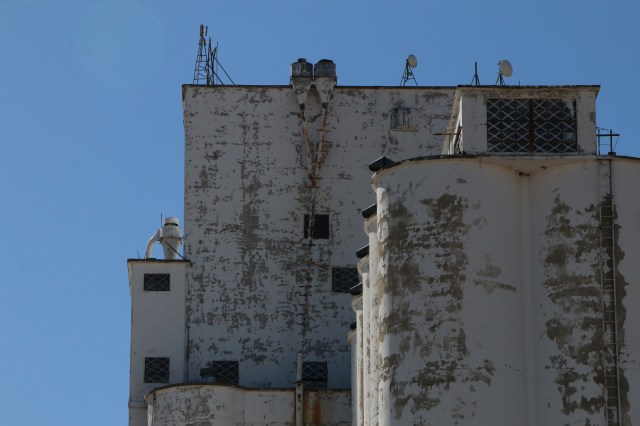
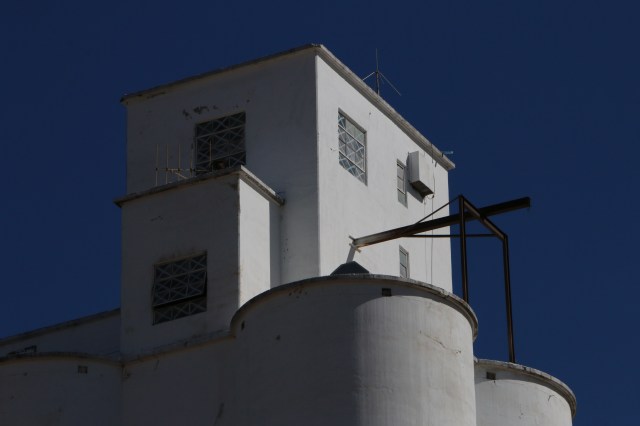
The Tillotson stands on the south end and the Mayer-Osborn on the north. The Tillotson has center and outside driveways and a gigantic 52-foot-tall headhouse. Even though it started with the standard Medford plan, it ended up a singular thing.

The Mayer-Osborn has only an outside driveway, making the main house sleek as an eel, a showpiece with sheen. The east side smooths along like “On the Atchison, Topeka & the Santa Fe”–Johnny Mercer’s huge hit of 1945 (when neighbor Tillotson was built).

OK, let’s roll the pictures.

IMG_9213

Mayer-Osborn has a boom, like many of the elevators I visited. As far as can be told, it’s a boom without a bust.


IMG_9233

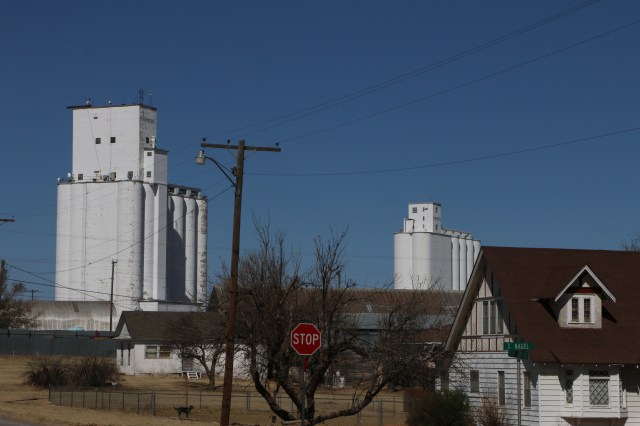
Tillotson, left, with High Headhouse and central driveway, and Mayer-Osborn, right, with dual outside driveway and the sleek, smooth profile. Both main houses have storage-annex extension. Quite a nice cottage, as well, on the corner of Nagel St. and Travis or Frazier Ave. 

IMG_9231

So long from Follett, Tex.!


Follett: Standard ’41 Medford plan but a ‘High Headhouse’ variant

IMG_9175

By Ronald Ahrens

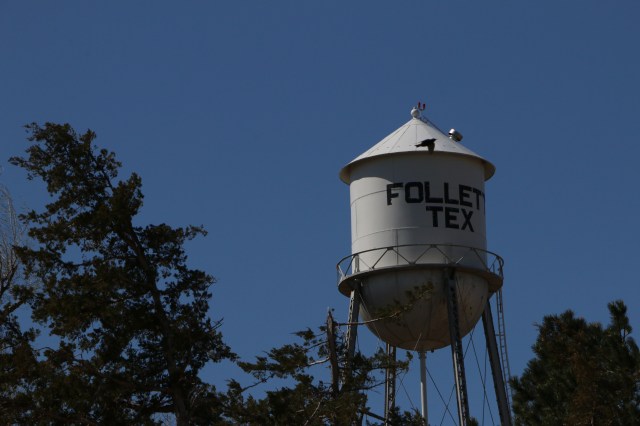
The 212,000-bushel elevator that Tillotson Construction Co., of Omaha, built at Follett, Tex., in 1945, followed the plan that had been established at Medford, Okla., four years earlier.

Follett had the distinction of being a less common twin-leg elevator.

Texas-Okla Logo 04Farnsworth, not far away, also got two legs that year, but it had its own unique plan and was a much larger house with 350,000-bushel capacity.

It’s hard to know what the co-op had in mind when placing the order, but evidently they wanted to be able to move grain in a hurry. Another way Follett was unusual was its having a central driveway and outside driveway.

The Follett job required 1,975 cubic yards of reinforced concrete and, for the hoppers, 19 cubic yards of plain concrete.


IMG_9174

Follett is a strapping 172-footer! Plenty of symmetry, too.

It used 86.5 tons of reinforcing steel, a material that was now more available as the effort to defeat the Japanese in the Pacific concluded. (The dates of construction are unknown and whether this job took place before or after the surrender announced on Aug. 15.) 

We don’t know the total cost less commission, but Burlington, Okla., another 1945 job, another adherent of the Medford plan, had the same dimensions and capacity. Burlington cost $69,819.15. Reginald O. Tillotson didn’t want that dime and nickel to get away. 

We do know labor rates. The company paid $1.00 per hour straight and $1.25 overtime. This was up sharply from Burlington and Lamont, Okla., where they paid 70 cents straight and $1.25 overtime. In Cherokee, they got 75 cents straight! The scarcity of male laborers had expanded. I would think anyone going up to the heavens on the drawform would have been crazy; those daring souls would have thought it crazy to make women do that work.

Like Medford–as well as Thomas, Burlington, Cherokee, and Lamont, Okla., Elkhart, Kan., and in neighboring Booker, Tex.–the Follett elevator sat on a 21-inch-thick slab covering an area 51 x 65.5 feet. All are listed at 3,134 square feet, less than the 3,340 square feet our calculations produce. There are confusing notes about the 51 x 65.5 square feet being “outside on ground” and the 3,340 square feet being “actual.”

IMG_9171

Give you a 50 cents to climb that ladder!

Fully loaded, it weighed 10,798 tons. The silos were 120 feet high, and the headhouse –you see how massive–measured 21.5 feet wide, 50.5 feet wide, and 52 feet high. At 172 feet, this is the tallest Tillotson elevator I’d visited. As my father would have said, “It’s a big ‘un.”

In the leg, the pulley centers stretched to 180.58 feet apart. Again, I hadn’t seen such a big stretch in this period. The boot pulleys were 24 x 14 x 2 3/16 inches. The head was 72 x 14 x 3 15/16 inches. Tillotson would switch to much larger boot pulleys in 1946.

The pulleys turned at 42 rpm. On Follett’s page of records, the speed of pulleys varies from 38 rpm (Douglas, Okla.) to 48 rpm (Minatare, Neb.).

The six-ply Calumet belts were 14 inches wide, and the cups were 12 x 5 inches at nine-inch intervals.

The head drive turned with energy supplied by two 30-horse Howell motors. Theoretical leg capacity, listed at 5,120 bushels per hour, far exceeded actual capacity of 4,100 bushels per hour. So 22.4 horsepower was needed to operate the leg. I’m assuming the bushels-per-hour figure applies to each leg. Yes, it was a co-op in a hurry.

A 3-horse motor–no record of the make–operated the man lift. A 7.5-horse Ehrsam motor operated the truck lift, and a 3-horse motor was for the dust collection system.

No special notes pertain to Follett. Farnsworth’s entry bears the note, “Cupola not built per plans.” One can only imagine!


Looking for details of the Mayer-Osborn elevator in Follett, Tex.

By Ronald Ahrens

As I observed on Monday, we know a few locations where Mayer-Osborn built–for example, Roggen, Colo.; McCook and Maywood, Neb.; Odebolt and Blencoe, Iowa; and Cordell, Okla.

Texas-Okla Logo 04This Mayer-Osborn elevator in Follett, Texas, came as a surprise.

It’s a handsome one, probably dating to the late-1940s, and in good condition. And it has a new owner. We would love to know his plans.

Meanwhile, let me show you more photos of the mighty M-O elevator. One aspect you’ll note are the X-braced windows. My guess is it’s related to the routine, high winds.

IMG_9233

How Follett residents see their elevators. The 1945 Tillotson stands left, the Mayer-Osborn elevator on right. Without a central driveway, like the Tillotson, the M-O presents a sleeker, more streamlined profile.

IMG_9213

The headhouse has a step. This elevator was probably built in the late-1940s. In coming years M-O would enlarge the headhouse of their new elevators and curve the corners.

IMG_9221

The west side of the main house has a different shape from the east, which is smooth. The run from the headhouse and extending over the storage annex is unusually graceful.

IMG_9199

Smooth business on the east side. Note the generous double-driveway. Not only was reinforced concrete used for additional storage, but a metal bin joined the team as well

A few more details to share. Hover over each photo to make the caption appear.

In Follett, Tillotson and Mayer-Osborn twins are sold to new owner

IMG_9227

By Ronald Ahrens

The northeast corner of the Texas Panhandle was the subject of dispute of between Texas and Oklahoma for 79 years, from 1850 to 1929, despite the precise boundary coordinates having been given as 100 degrees longitude and 36 degrees and 30 minutes latitude.

Texas-Okla Logo 04A historical marker outside Follett says nine surveys were made to locate the Panhandle’s corner. None coincided. Nevertheless, land was annexed to Texas in 1903.

One man claimed he went to bed in Oklahoma and woke in Texas.

Finally, in 1929, the United States Supreme Court had a survey done, lines were moved, and that was that.

IMG_9219

The stepped headhouse would become a more exaggerated–and rounded–feature of Mayer-Osborn’s elevators. 

Whereas the officials had a hard time setting the boundary, the people on either side of it sure were good at growing grain, and it needed to be stored.

We find in Follett the unusual, perhaps singular, circumstance of a Tillotson elevator and a Mayer-Osborn one on the same site. See yesterday’s post for an explanation. The M-O house and annex are seen at the top of this post and in pictures throughout.

We know Tillotson’s was a 1945 job; without Mayer-Osborn’s records, I have to guess. Although this M-O has a stepped headhouse, which was their signature, it is composed of rectangles and has unique window arrangements, with three small daylight windows coyly stacked atop one another on the south face. (Again, this is seen in the topmost photo.) Like the Tillotson elevator, it is labeled “Farmers.” Both elevators have annexes by Chalmers & Borton.

My guess is this was an early job for Mayer-Osborn.

The exterior walls of the Mayer-Osborn’s main house have an attractive flat surface over the silos. It looks aerodynamcally efficient, even if that’s not the point of a massive structure of reinforced concrete sticking up 150 feet on the windy Plains.

The paint was excellent, almost glossy.

IMG_9225

Another feature was the outside double-driveway, something we hadn’t encountered before.

No one was around. I went over to the office and saw a sign saying “Farmers Grain & Sply Co” painted on the backrest of a bench. A paper sign hanging in the window said Tri-State Ag & Environmental LLC.”

I called the number given there and learned the elevators had recently been sold and was given a name and another number. But so far there’s been no response to my voice message.

Arriving in Follett, Tex., and stumbling onto a big surprise

IMG_9149

By Ronald Ahrens

As I drove east from Booker, Tex., on that peaceful Wednesday morning, there was no suggestion I was in for a shocking surprise.

Texas-Okla Logo 04Following Route 15, I passed through the tiny town of Darrouzett, heading for Follett. This is the last town in the northeastern corner of the Texas Panhandle.

Like Booker and Spearman, it was named for a railroad man, Horace Follett, a “locating” engineer. Even Darrouzett was named for a railroad attorney.

From a high point among the land’s gentle undulations, I got a glimpse of the elevator complex in Follett. Looming on the horizon, two elevators faced each other. I would have guessed the Tillotson job of 1945 was the one on the right with the rectangular headhouse. Later in the ’40s, they perfected their signature curved headhouse.

The other elevator with the stepped headhouse was rather mysterious.

IMG_9150Here, it’s necessary to remind you of some basic information. My grandfather on my mother’s side was Reginald O. Tillotson. He and his brother, Joe, took over Tillotson Construction Co. after my great-grandfather, Charles H. Tillotson, died in 1938. They started building concrete elevators, instead of wooden ones, the next year.

Reginald and Joe split up in 1948, and Joe went to Denver, where he established his own company. He built a few elevators before dying in a car accident.

My partner in this blog is Kristen Osborn Cart. Her grandfather, William A. Osborn, became a partner in Mayer-Osborn Construction Co., also of Denver, around that same time. Bill Osborn had worked for Tillotson Construction Co. before starting in business for himself.

IMG_9147

Looking west toward Darrouzett’s elevator and antenna tower.

We have Tillotson’s construction record, but so far the equivalent from Mayer-Osborn has eluded us. We do know of a few locations where Mayer-Osborn built–for example, Roggen, Colo.; McCook and Maywood, Neb.; Odebolt and Blencoe, Iowa; and Cordell, Okla. 

I was unable to guess that here, in the very northeastern corner of the Texas Panhandle, I was walking right into what may be a one-of-a-kind pairing.

When I got into town, I poked around the Pryor Avenue site. The two elevators looked to be in nice enough shape, but there was no sign of recent activity. I got my pictures of the Tillotson elevator. Then I marched across the yard to the other elevator, the mysterious and more handsome one with the stepped headhouse.

IMG_9204Much to my surprise, the manhole covers were engraved with Mayer-Osborn’s name. It was like having heard of a grand cathedral in some distant land but arriving there and finding it face-to-face with another great cathedral. 

And it made me wonder about something: Had Bill Osborn worked on the Tillotson elevator here in ’45 and made business connections?

I took a photo with my phone and sent it to Kristen right away.


Reviewing dimensions, details of Tillotson’s ’45 job in Booker, Tex.

IMG_9112

By Ronald Ahrens

By 1945, some six years after its first reinforced-concrete elevator, Tillotson Construction Co., of Omaha, had completed 15 such jobs, with a hiatus in 1942 and 1943 because of wartime materials shortages.

Texas-Okla Logo 04The size of these elevators ranged from tiny, namely, 37,550 bushels at Peterson, Iowa, to quite enormous, 350,000 bushels at Farnsworth, Tex. Where’s that? Looking again at the map, I drove right through Farnsworth on Route 15 about 10 miles before reaching Booker. Somehow, when planning this road trip, I missed Farnsworth in the company’s construction record. So I got nothing from that early giant–a deflating thing weeks after the fact.

Six of the 15 earliest elevators had less than a 100,000-bushel capacity. The Booker elevator was on the larger side at 216,000 bushels. As previously mentioned, it followed a plan (with some revisions) first established in 1941 at Medford, Okla.

IMG_9096Booker was capable of holding 6,480 tons of grain. Fully loaded, the whole shebang weighed 10,798 tons. For the record, a Boeing 747-8 weighs as much as 970,000 pounds, or 458 tons, at takeoff. So a whole lot of big airplanes are represented in the elevator’s maximum gross weight.

The 21-inch-thick main slab was laid over a pit measuring 13 feet 9 inches in depth. (Farnsworth’s pit plunged down 26 feet!) Booker’s capacious rectangular headhouse was 21.5 feet wide, 48.5 feet long, and 33 feet high. The pulley centers were 158.16 feet apart. 

IMG_9106

Wondering if this ladder next to the man lift goes all the way to the headhouse.

The single leg comprised a boot pulley of 24 x 14 x 3 3/16 inches and a head pulley of 72 x 14 x 3 15/16 inches. In just a couple of years it was typical for boot and head to be the same 72-inch diameter.

The pulleys turned at 42 rpm thanks to a 40-horse Howell motor made in Howell, Mich. The 14-inch, six-ply Calumet belt with 12 x 6-inch cups at nine-inch intervals had a theoretical capacity (according to the rating of the cups’ manufacturer) of lifting 7,500 bushels per hour out of the pit. Actual capacity ran 6,000 bushels per hour. For the day, it was a high-performance leg: the companion elevator built the same year in Follett, which had pulley centers stretched 180.58 feet apart, realized actual of 4,100 bushels per hour.

A 2-hp motor moved the man lift up to the headhouse and back. The truck lift used the same 7-hp Ehrsam motor that Tillotson liked for this purpose. And a 3-hp motor operated the dust collection system’s fan.

All of 73 years after its construction, the Booker behemoth was wide awake on the morning of April 18, 2018, still doing its job.