In Wahoo, Nebr., Tillotson’s elevator finds new life as a cell tower for AT&T

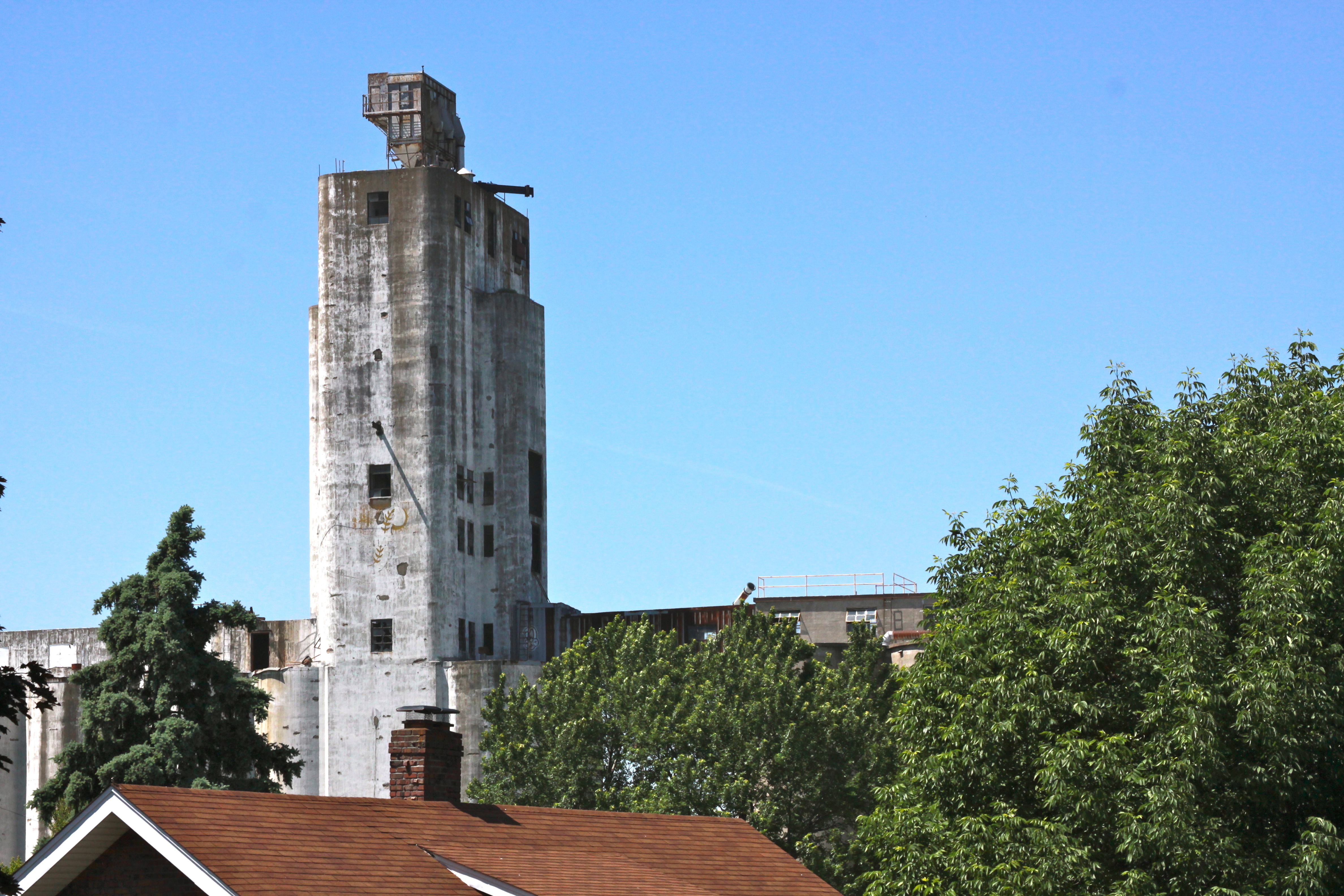
The Wahoo, Nebraska elevator, built by the Tillotson Construction Company of Omaha, Nebraska

Story and photos by Kristen Cart

Another stop on my recent elevator trip was Wahoo, Nebraska. Dad tipped me off that it might be one of Tillotson’s projects. Wahoo is the seat of Saunders County, where Dad lives, and he frequently has occasion to stop there.

Wahoo’s elevator, at first glance, appeared unused. It was closed up tight, and the only indication of any activity was a sign warning workers to stay at least three feet away from any antenna, and to contact AT&T before performing any maintenance or repairs near their equipment.  Ah, hah!  Then I noticed the wires running to the top of the structure. I walked around the elevator, taking pictures.

Next door to the building was a Pet Rescue center, and as a woman was leaving there with a little dog in her arms, I asked her about the elevator.  While she did not know the builder, she said the elevator was privately owned by David Rood, and that at present, the elevator was full of corn.  But she commented that he probably made more money from the AT&T installation. I had heard of cell antennas being installed in every kind of tall building–even church steeples–but it had never occurred to me to look for them atop an elevator.

The next circuit around the elevator produced the answer I was looking for. Right there, adjacent to the sidewalk, in bright blue paint, was a manhole cover.

Some neighborhood teens were hanging around the street, in their cars, and when they saw me kneeling, taking the manhole cover shot, one of the boys shouted out, “What are you doing?”

“Taking pictures of the elevator!” I said.

The young man wanted to know why. When I said it was for a blog, I guess that was enough for him. Anyway, his attention went back to something on his cell phone.

The Wahoo elevator is an attractive feature of the town, fitting naturally with the older buildings along the main street. A man at a local pub, seeing my camera, popped out and said curiosity got the better of him. I told him what I was doing there. I guess a tourist with a camera along the street is a little unusual. And Nebraskans, by nature, like to know who is about.
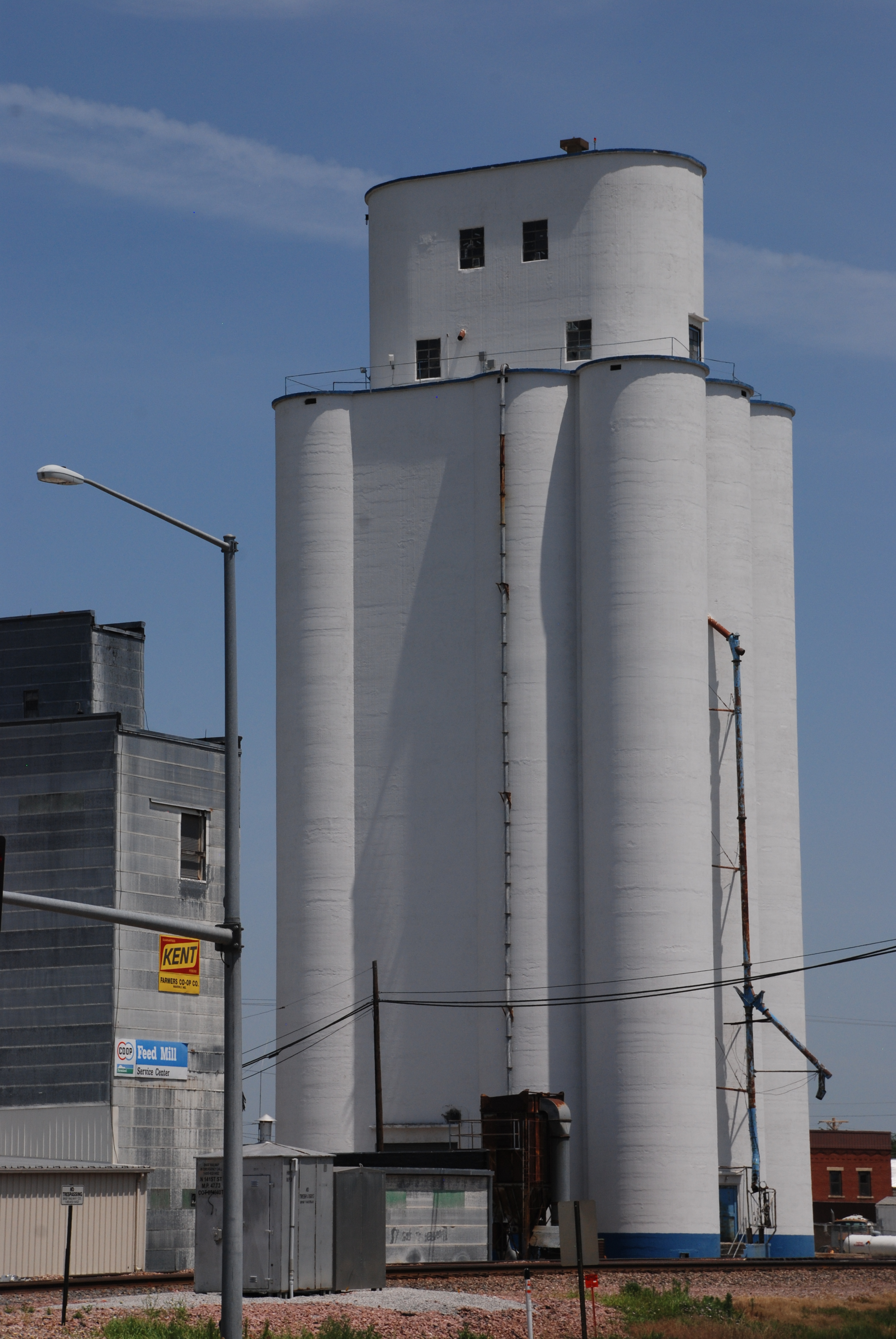
The Waverly, Nebraska elevator is an example of clean lines, efficient design.

Story and photos by Kristen Cart

During my last visit to Nebraska, I stopped by the Waverly, Nebraska elevator complex.  The elevator, built by Tillotson Construction of Omaha, Nebraska, was brighter than the rest, gleaming whitely in the sunshine and standing separately from the others.  Tillotson Construction built this design in several cities, so it was instantly recognizable, even from a distance.  It is a beauty.

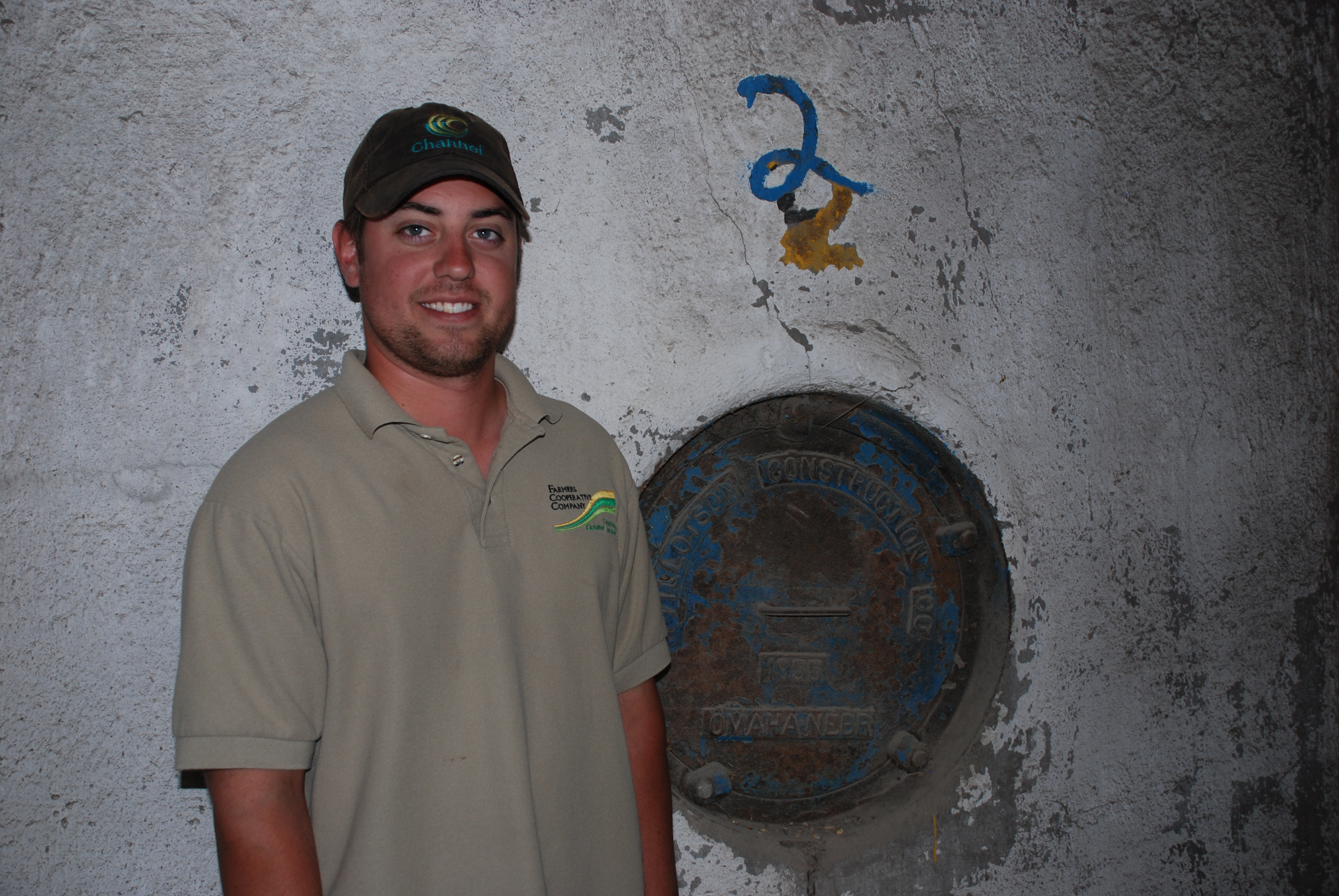
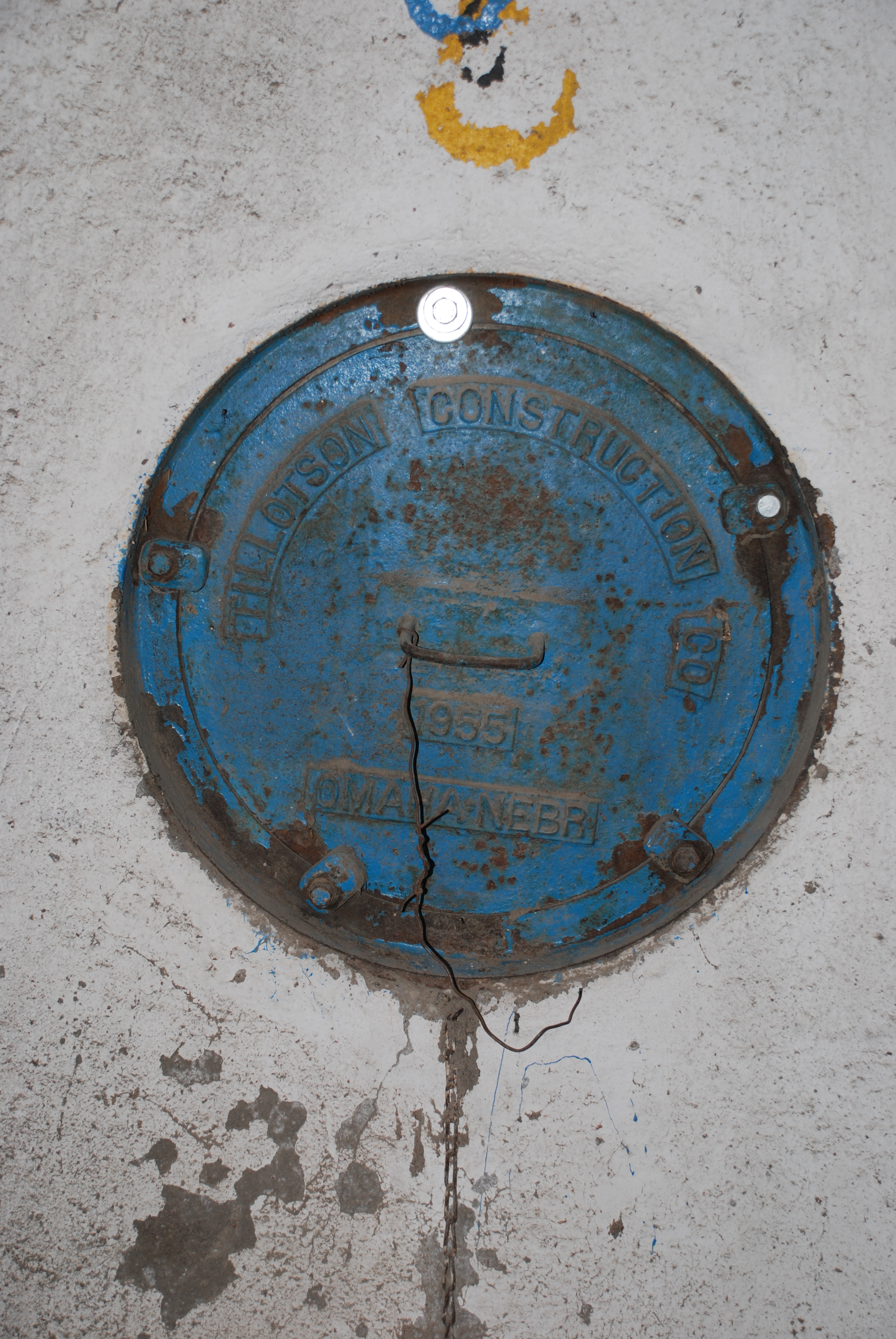
The Farmers Cooperative Company operates the elevator.  Colby Woods,  who has worked for the cooperative for four years, currently specializing in agronomy and marketing, showed me the manhole covers. They are stamped “Tillotson Construction Co., 1955, Omaha, Nebr.”   He was happy to share what he knew about the old building.

Colby Woods of Farmers Cooperative Company

As with most of the old concrete elevators I have visited, few employees were still around who could remember when the elevator was new.  But the people who helped me were very interested in the elevator’s history.  It made for a very pleasant visit.

Dacoma account documents co-op’s contract with Tillotson Construction

The following account comes from the history of the Dacoma, Oklahoma, farmers’ cooperative, which appears on the organization’s website:

The first concrete elevator was constructed in the year 1941 at a cost of $27,700 by Roberts Construction Company with a 100,000-bushel storage capacity. This was the north section of the west elevator. On March 12, 1945, it was voted by the Board to build a new office building. This was just west of the present building.

Adapted from Wikipedia's OK county maps by Set...

Business was now increasing and also the need for additional storage. A second concrete elevator was built in 1948 as an annex to the south of the first, west elevator. This was built at a cost of $52,000 by Roberts Construction Company, increasing storage another 100,000 bushels. In 1949, the authorized capital stock was raised to $100,000. The steel building housing the wheat cleaner and feed storage was built in 1950 for $8,000.

Continuing united efforts of management and membership saw another expansion necessary. In 1954, following a vote of the stockholders, the contract was signed with Tillotson Construction Company for a new 250,000-bushel concrete elevator. This new one to be located to the east of the office at a cost of $138,971. In 1956 the Authorized Capital stock was raised from $100,000 to $600,000.

Tillotson’s Vinton Street shows just how neighborly an elevator can be

Story and Photo by Ronald Ahrens

So many elevators are in small towns that visiting one in a big city is a bracing experience.

Tillotson’s Vinton Street elevator is at the bottom of a hill right in the midst of an Omaha residential neighborhood. The concrete silos stretch two whole blocks from Vinton on the north to Valley Street on the south.

The southernmost of the annexes leans hard against Interstate 80’s westbound lane.

To the east are bungalows and yards and gardens on the downslope from 32nd Street to 34th Street.

And the resident of any of the houses to the west, going uphill from 35th Street, get a whole faceful of imposing grain elevator.

Viewing Tillotson’s Vinton Street elevator from the ground up in Omaha

Story and photos by Ronald Ahrens

One word stays in mind after my May 10 visit to Tillotson Construction Company’s Vinton Street elevator in Omaha: mighty. This elevator exudes mightiness.

The headhouse soars to an exaggerated height, towering above the residential neighborhood and looking down upon Interstate 80, which is just 100 yards to the south. 

The delicately rounded corners present a contrast to the otherwise stalwartly rectilinear character of the tower. From the look of it, I wouldn’t have been surprised to learn there were offices up there: people tapping away at keyboards, making trades, issuing policies.

It looks modern and well-designed and I can imagine how proud the Tillotsons were when they completed it.

I don’t know what year this was built. During my first twenty-one years, which were spent in Omaha, I passed this elevator umpteen times without having any idea that my grandfather’s company had built it.

Now knowing what I do, finding the manhole covers with the company’s name was a thrill.

Not knowing many other things, it would be interesting to learn the answer to questions about the elevator’s various fixtures and appurtenances. What is that big jobbie-do at the very top and when was it set there? Why are the windows located where they are?

Of course the Vinton Street elevator has received national attention because the annexes have become the canvas for a public art project; the nonprofit organization Emerging Terrain has commissioned artists to create themed banners that have been draped over the silos, and in fact a crew was just finishing up the last hanging when I arrived.

It’s a pity to see the elevator in disrepair, and I found myself wishing it would receive some attention, too.

Oh, what a fresh coat of paint and new panes of glass would do for the appearance!

We visit the former Omaha office of Tillotson Construction Company

By Ronald Ahrens

On May 10, I was in Omaha with my camera. One objective was to visit the former office of Tillotson Construction Company. Uncle Tim Tillotson had recently tipped me off to this, saying he helped move out the company’s papers after Reginald’s death.

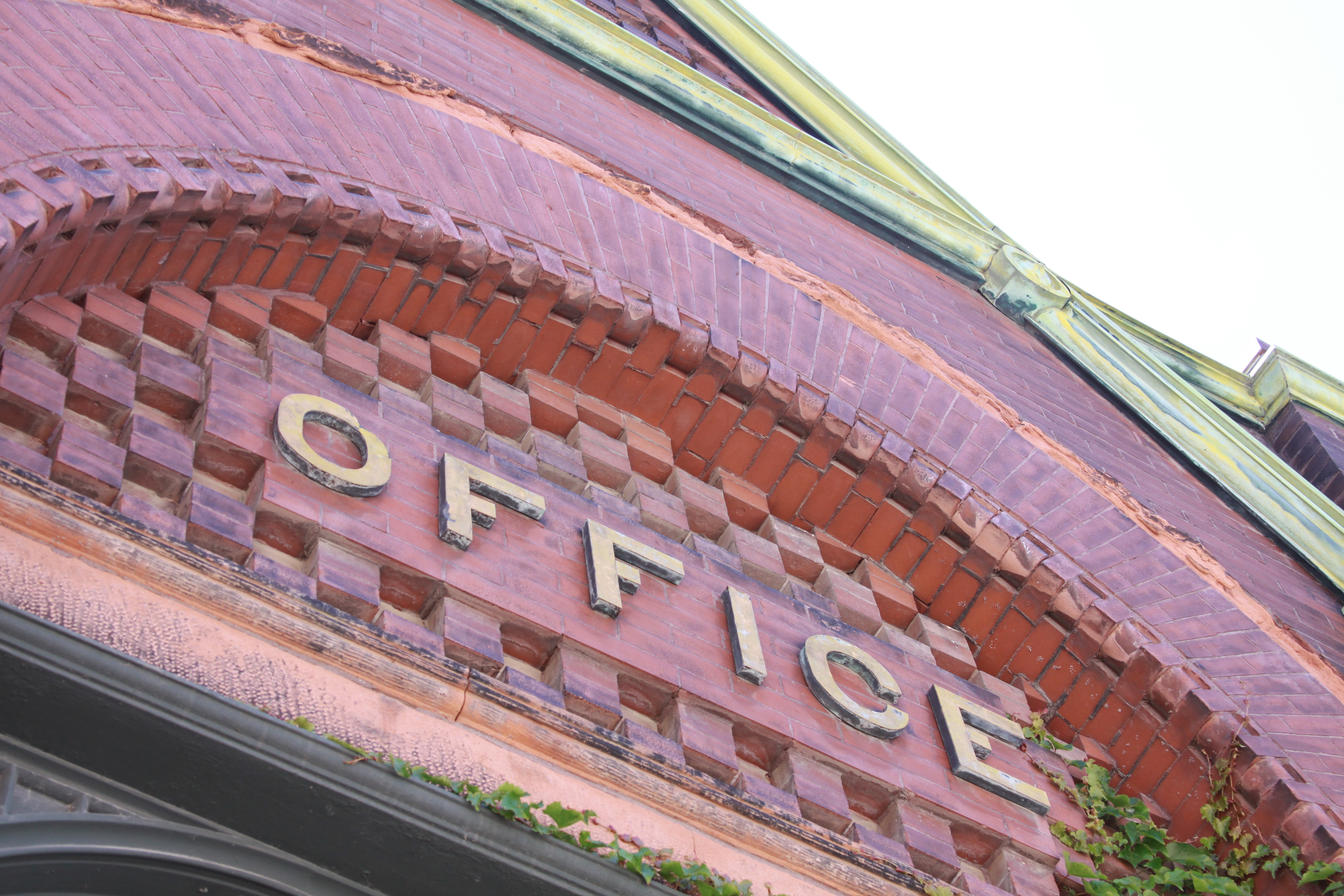
“Twelfth and Jones–the Office, the OFFICE!” he said.

I parked at 13th and Jones in the southern part of the Old Market area and walked across the intersection. In just a few more steps to the east I knew exactly what he was talking about.

It turns out, the Office was part of an Anheuser-Busch plant of four buildings erected in 1887. Besides the Office, designed in Romanesque style, there was a bottling facility, a beer storage warehouse, and a stable. The other three buildings were torn down, but the Office survives.

One hundred and one years after the Office went up, a finial above the doorway blew down during a windstorm. It was stolen and has never been recovered.

Nebraska Firms get Government Contracts

Give projects to Nebraska firms

Washington (AP).  The War Department has awarded the following government contracts (Army engineers office in charge in parentheses):

Less than $50,000.

C.C. Larsen and Sons, Council Bluffs, IA., temporary buildings, Thayer County, Neb. (Omaha).

Olsen, Assenmacher, and Rokahr, Lincoln, Neb., temporary frame building, Lancaster County, Neb. (Omaha).

Tillotson Construction, Co., Omaha, temporary building, Fillmore County, Neb. (Omaha).

Owen Mann, Rapid City, S.D., storage facilities, Box Butte County, Neb. (Omaha).

A. Borchman Sons, Omaha, temporary building, Dodge County, Neb. (Omaha).

Lincoln Nebraska State Journal, Lincoln, Nebraska, Friday, June 11, 1943.

Tillotson Construction adds six feet a day on Elkhart elevator

Elkhart–Construction is starting on the new 225,000 bushel elevator for the Equity Grain Co. here.
The Tillotson Construction Co. of Omaha has the contract.Hutchinson (Kan.) News-Herald, December 24, 1945

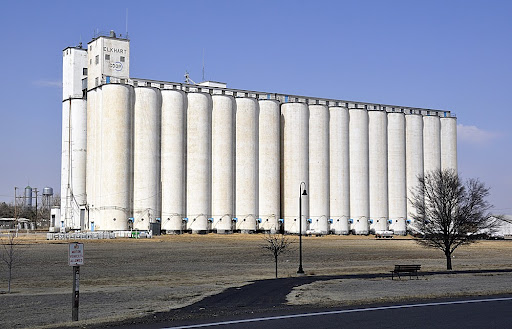
From the city of Elkhart’s website. Note elevator silos in upper left.

Work Day and Night on Elkhart Elevator 

Elkhart–Work is proceeding day and night on the construction of the new Equity elevator here.
Floodlights are rigged up to illuminate the scene for the night workers.The concrete storage tanks are going up at the rate of six feet a day. They will stand 140 feet high when completed. The elevator will have a storage of 250,000 bushels of grain.The Tillotson Construction Co. of Omaha, have the contract. It is expected the bins will be finished in three weeks.

Hutchinson (Kan.) News-Herald, March 21, 1946

Elkhart farmers ‘raise sights,’ hire Tillotson Construction on new elevator

Photo taken March 19, 2011, by Kate Flint.

Stockholders of the Cooperative Equity Exchange here have raised their sights. Instead of the 100,000 bushel elevator first planned, the stockholders have voted in favor of erecting a modern elevator of 225,000 bushels capacity.

The contract has been let to the Tillotson Construction Co. of Omaha. It will be built on a “cost plus” basis, but Gale Cochran, manager of the Equity said it was estimated it would cost around $85,000.

There will be eight overhead bins, six interstice bins and eight grain tanks. The elevator head will stand 120 feet high. The plant will be built at the site of the old Elkhart mill, purchased from J.E. Heintz. The present elevator buildings will be sold.

Construction will be started in about two weeks, and the new plant is to be completed before harvest next summer.

Hutchinson (Kan.) News-Herald, November 20, 1945

♦ ♦ ♦

Note: Here’s the link to the BNSF railroad’s grain elevator index page on Elkhart.

Additional note: University of Southern California professor Kate Flint chased grain elevators in March 2011 and even stayed in one overnight.

Marvin Richards falls 105 feet from Hinton elevator

Iowan Killed in Fall from Grain Elevator

Sioux City (AP) — Marvin Richards, 28, of Hinton died in a hospital here Friday shortly after he had fallen 105 feet from the top of a grain elevator at Hinton.

Richards was employed by the Tillotson Construction Company of Omaha. He was working on a scaffold atop the nearly completed elevator of the Farmers Elevator Company.

He apparently lost his balance and fell 105 feet to the concrete top of a hopper.

Cedar Rapids Gazette, October 1, 1954

♦ ♦ ♦

Special note: The obituary of Mr. Richards’s sister Deloris E. Holtz.

News of recent developments in Hinton are found on Younglove’s site, including a picture of the original elevator.