All specs, and the Bouncing Czech’s photos, delineate elevators in David City

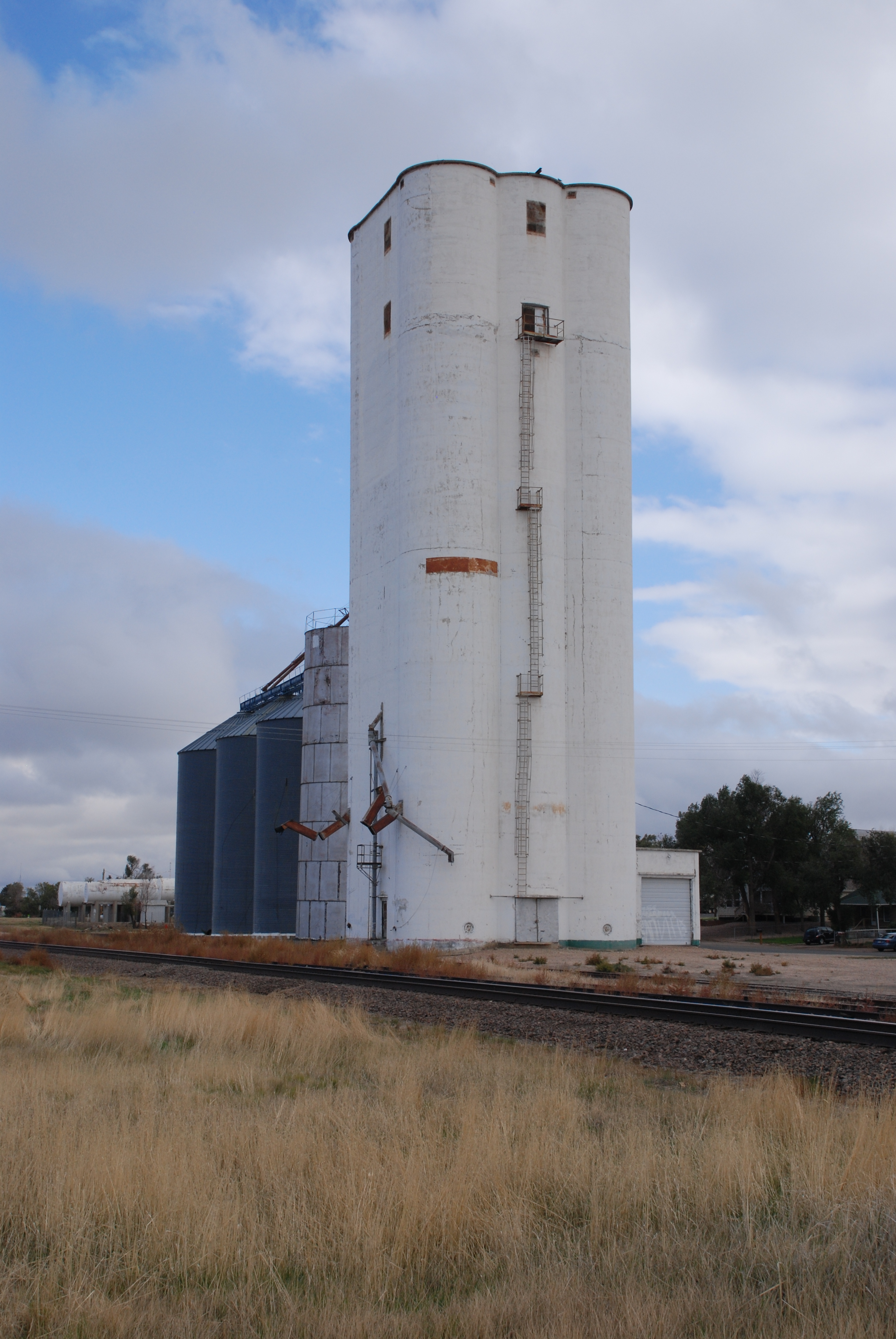
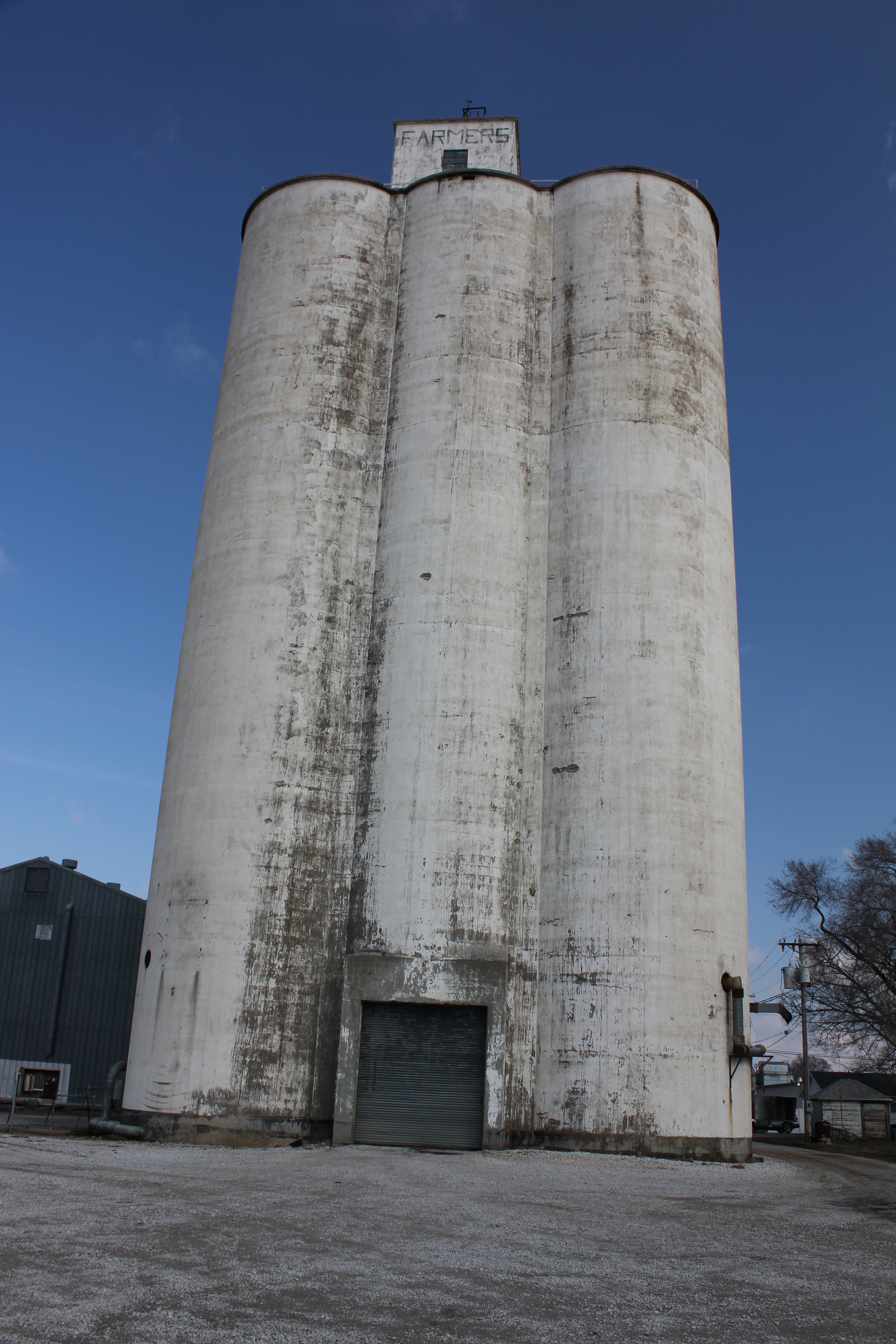
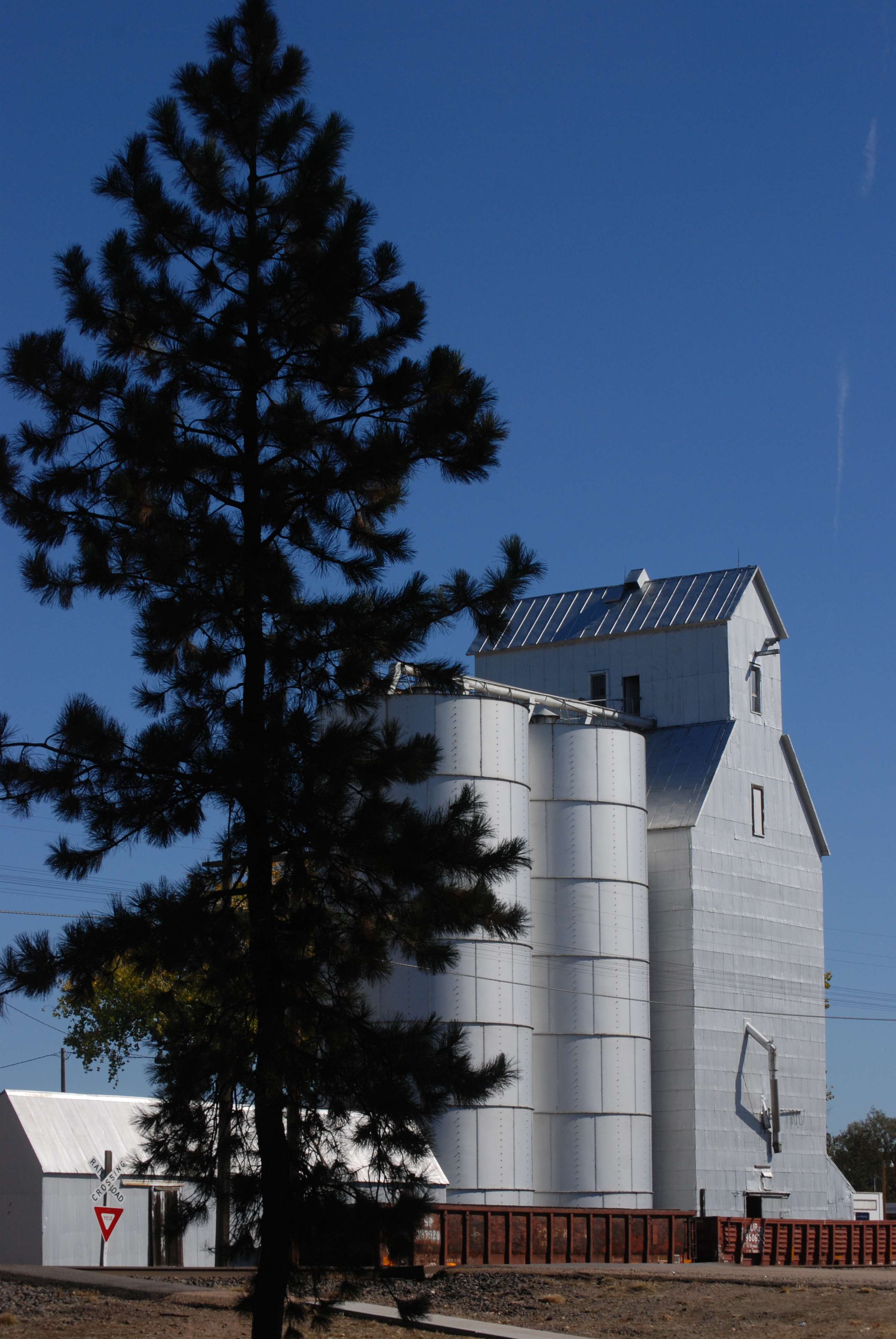
The Tillotson Construction of Omaha elevator also serves as a satellite antenna tower.  Photo by Tom McLaughlin

The Farmers Cooperative elevator, built by Tillotson Construction Company, of Omaha, Neb., also serves today as a satellite antenna tower. Photo by Tom McLaughlin

Story by Kristen Cart

My blogging partner Ronald Ahrens said he hoped we would find the motherlode of history about the elevators his grandfather Reginald Tillotson had built. With luck and the help of his family, we finally did it.

Reginald Tillotson’s sons, Charles, Tim, and Mike have all recently shared their memories from the job sites. Tim Tillotson also found and restored a treasure trove of company documents and photos. Best of all was a set of blueprint specifications for over 100 Tillotson Construction Company slip-formed concrete elevators and annexes. Eureka!
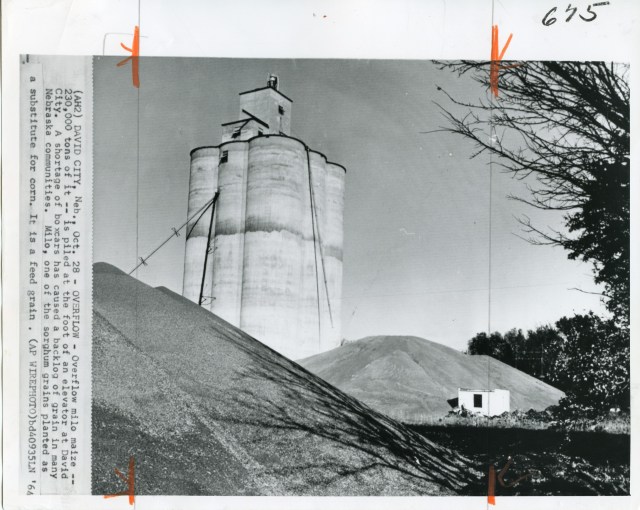
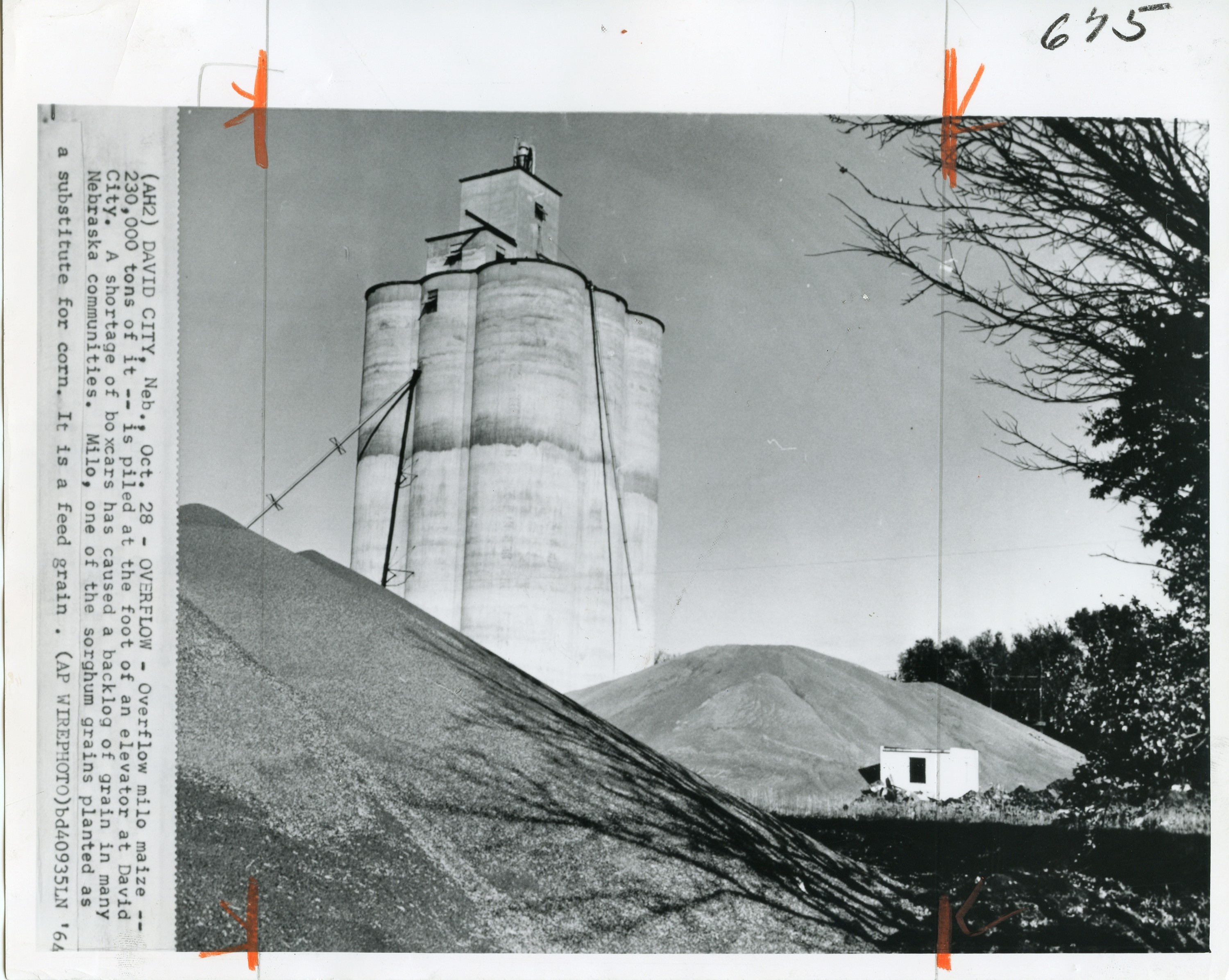
A historical image taken in David City, dated October 28, 1964. This is not the Tillotson Construction elevator, but it's neighbor a short distance down the rail line.

A historical image taken in David City, dated October 28, 1964. This is not the Tillotson Construction elevator, but its neighbor a short distance down the rail line.

David City, Neb., is a town due west of Fremont in the eastern half of the state. One of the two elevators in town was listed in the Tillotson blueprints. Armed with our new information, I looked for pictures of the newly found elevator.

I discovered some history, instead.

The grain piled next to the elevator in the 1964 press photo is milo, a feed grain, and the pile-up was attributed to a shortage of rail cars. Scenes like this were observed all over Nebraska that year.

The elevator in the photo didn’t quite have the Tillotson look, so a quick peek at David City on a Google map showed a washed-out image with just the suggestion of a curved headhouse on a second elevator in town. Further search brought me to “The Bouncing Czech” Flickr page and beautiful photos of the Farmers Cooperative elevator I was looking for. With Tom McLaughlin’s kind permission, they are posted here.

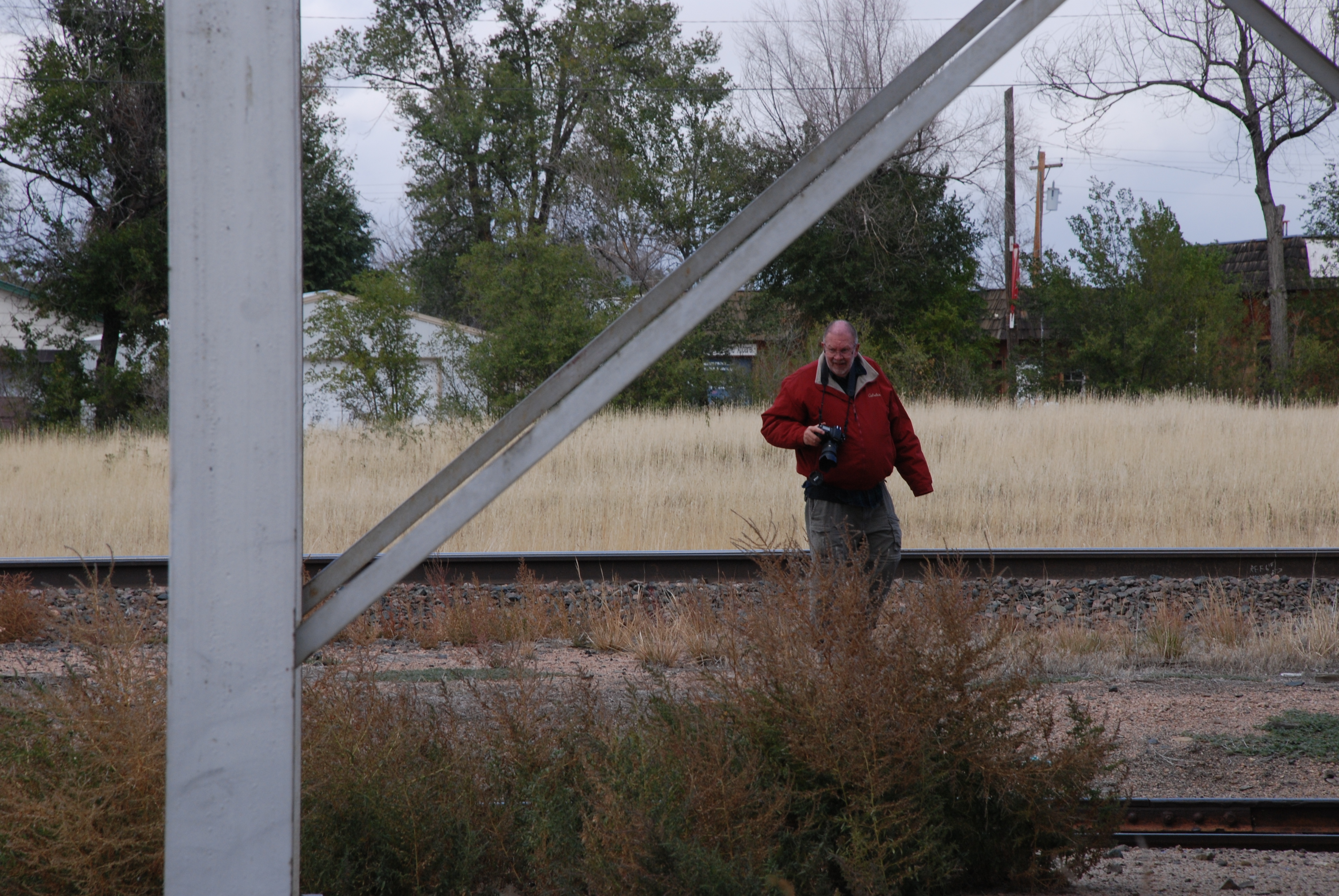
Tom McLaughlin likes to stop and check out elevators.

In an exchange of e-mails, he wrote, “A friend of our family owned the Magowan Elevator, in Gordon, Neb., so I’ve been in that one several times. I still remember my first manlift ride–that was the scariest ride I’ve ever taken.

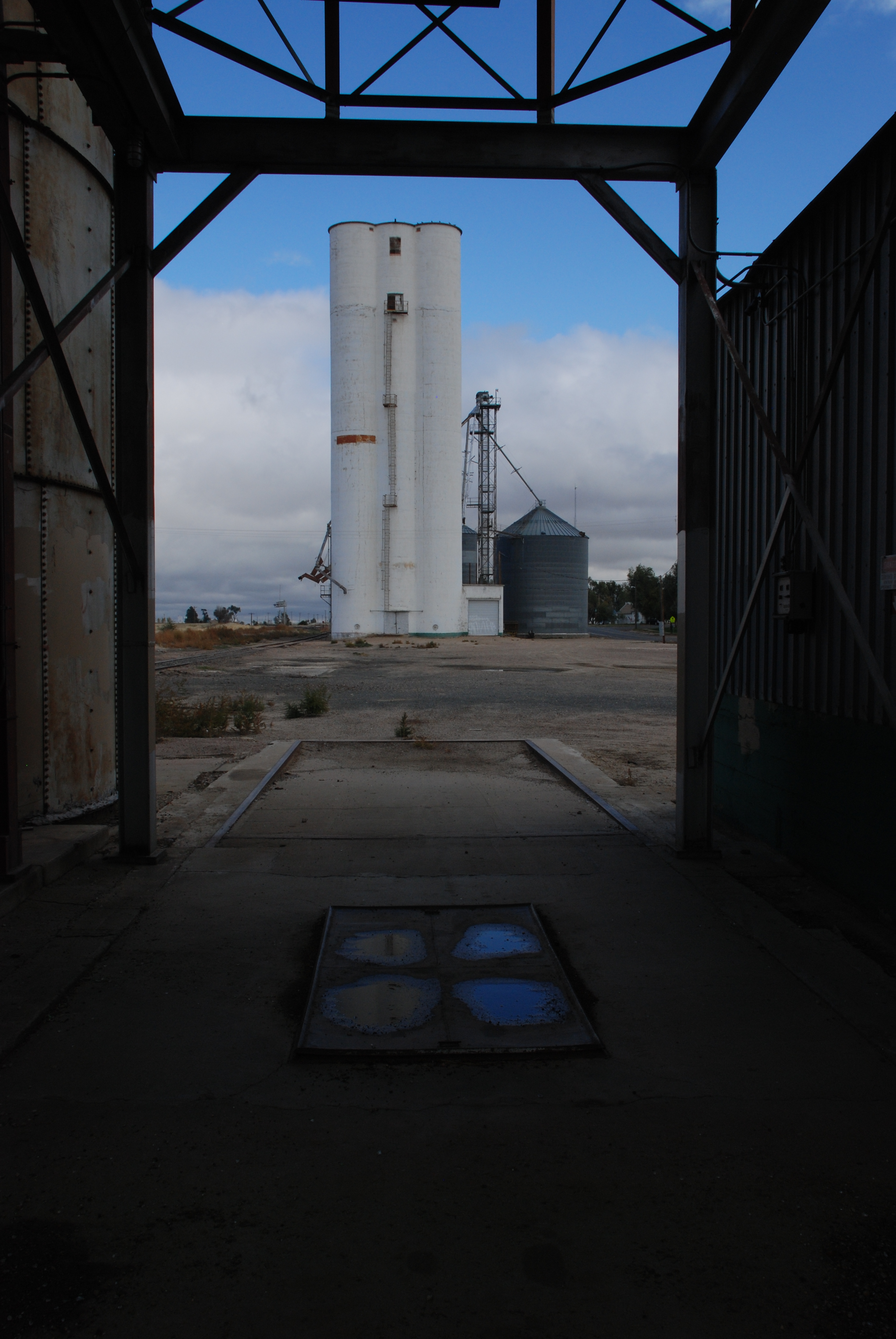
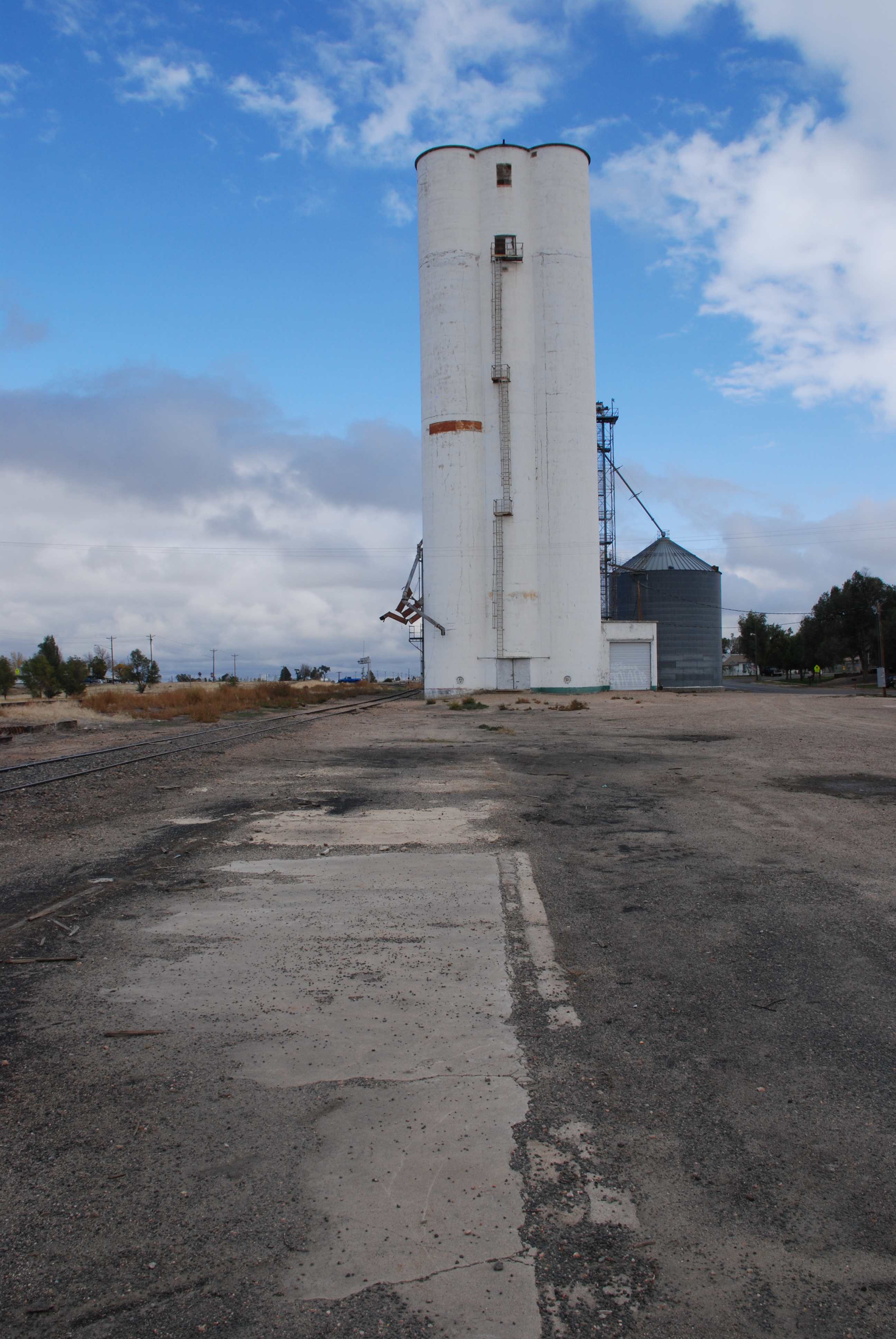
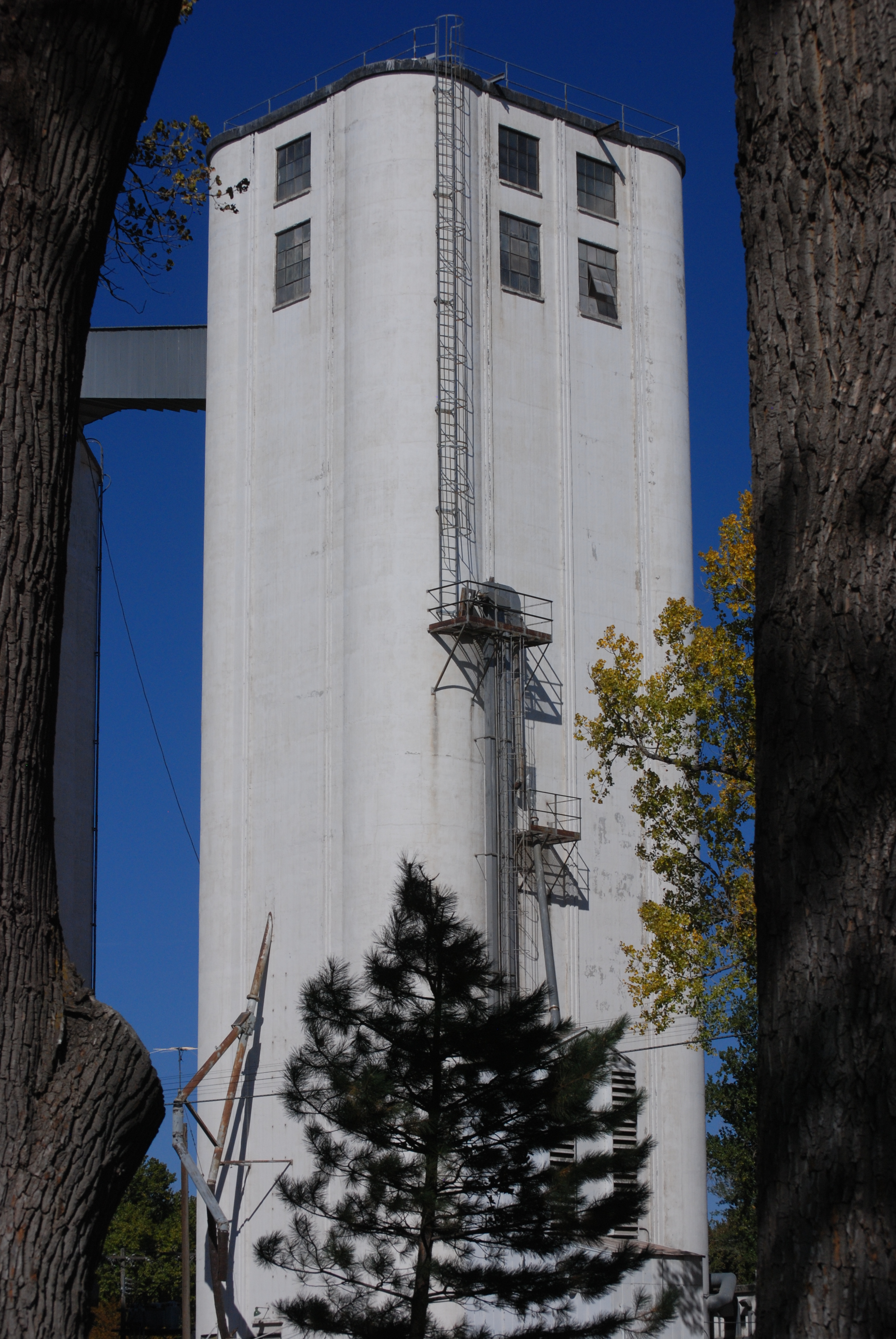
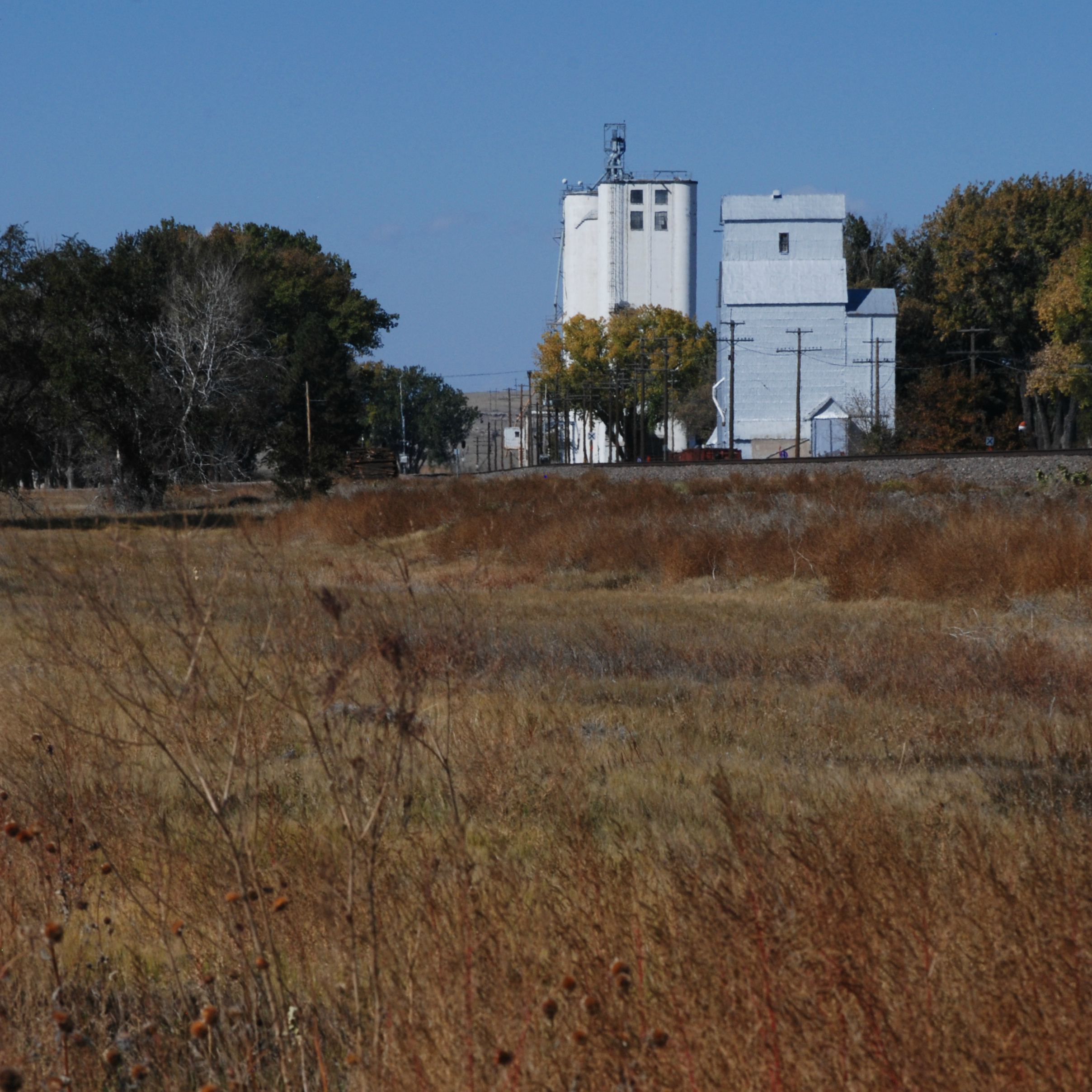
David City's "other" elevator. Photo by Tom McLaughlin

David City’s “other” elevator. Photo by Tom McLaughlin

“Back in the 1950s, my dad used to ‘walk the pipeline’–he literally walked the natural gas pipeline in Oklahoma, Kansas, and Nebraska, looking for signs of leaks, before they went to aerial photography and control valves.

“So he always liked to wander around the back roads and small towns, and I think that’s where I got the bug. When we would go on a trip, we never knew what route he’d take. I don’t think he did either!”

Tom’s enthusiasm is contagious.

The small towns are peaceful, yet inviting, and the elevators are fascinating. It won’t be too much longer before this blogger takes another grain elevator trip.

Specifications 

Tillotson Construction Company records show the David City elevator was built in 1951 according to the “David City Plan.” This includes five tanks, each one 18 feet in diameter and 120 feet high.

Total capacity: 180,000 bushels

Driveway: 13×17 feet with eight bins over the drive

Bins: 15 in all and overflow, with a dust bin at the exterior

Reinforced concrete: 1716 cubic yards

Plain concrete (hoppers): 20 cubic yards

Reinforcing steel (including jack rods): 81.16 tons

Steel and concrete:

Below main slab: 6632 pounds and 45 cubic yards

In main slab: 22,233 pounds and 180 cubic yards

Drawform walls: 106,320 pounds and 1253 cubic yards

Driveway and work floor: 2543 pounds and 15 cubic yards

Deep bin bottoms: 8081 pounds and 38 cubic yards

O.H. bin bottoms: 2917 pounds and 22 cubic yards

Bin root: 6122 pounds and 44 cubic yards

Scale floor: 285 pounds and 10 cubic yards

Cupola (headhouse) walls: 2830 pounds and 70 cubic yards

Distributor floor: 1494 pounds and 8 cubic yards

Cupola roof: 1586 pounds and 14 cubic yards

Miscellaneous (Boot, leg, headhouse, Tr., sink, steps, etc.): 1273 pounds and 15 cubic yards

The elevator at Bradshaw, Nebraska, still hides the identity of its builder

DSC_0107Story and photos by Kristen Cart

A couple of years ago, before we started this blog, I tried to find pictures of the projects we knew my grandfather William Osborn built. Sometimes I would find photos of look-alike structures at locations that my dad couldn’t remember. Most of these mysteries were eventually resolved with the help of Gary Rich, a retired Union Pacific man with an indefatigable curiosity. He visited the locations, identified a number of the builders, took beautiful photographs, and contributed his findings to this blog.

DSC_0051

The J.H. Tillotson look-alike at Bradshaw, Neb.

The Bradshaw, Neb., elevator remains an unsolved mystery. I visited the elevator early last year and photographed it from all sides. The style was a dead ringer for the elevators at Fairbury and Daykin, Neb., and Linn, Kan., all J. H. Tillotson, Contractor jobs. But since I had no access to the inside of the elevator, my tentative identification remained unverified.

Mr. Gordan, who lived across the street from the elevator, commented about the structure and its history, but his details were sparse. He said the elevator had a twin that no longer stood.

“It had problems with the headhouse,” he said.

And in another town he did not name, a similar elevator had been struck by lightning and burned.

Since the look-alike elevator in McAllaster, Kan. was demolished before we could resolve its provenance, and others also seem to have perished, it is clear that an unknown number of this type of elevator once existed. We hope to find the business records of Mayer-Osborn Construction and its predecessor, J. H. Tillotson, Contractor, to learn more about them.

The Bradshaw elevator bears an old FCA logo, but United Farmers Cooperative is apparently the current owner.

dsc_0081

New elevators

Mr. Gordan’s mother came out to greet me, but the meeting is a little vague in my memory, because I only made notes about it later. Both mother and son said the Bradshaw elevator was retired, but that the nearby gas station still operated, and the newer elevators a little down the rail line handled the grain.

I hope to visit again when the co-op is open, to learn more.

dsc_0090

Bradshaw, Nebraska

The town of Bradshaw is neat and clean, and displays a good amount of civic pride. Most notable is the broad main street–the expansive use of space has the look of a western town, rather than the neatly packed economy you see in the East. It inhabits a flat Nebraska landscape, nearly midway between Grand Island and Lincoln, with distant horizons and plenty of elbow room.

dsc_0015

Gas station

Bradshaw is well worth a return visit, preferably during harvest. Perhaps a local farmer can sit down for a cup of coffee and color in the details of this lovely Nebraska town.

A Mayer-Osborn superintendent’s budget, from the back of a notepad

Ed Christoffersen papers008Story by Kristen Cart

On a slip-formed concrete elevator job, the superintendent was not expected to be deskbound. So it wasn’t a complete surprise to find a pay account jotted down on the back of Edwin Christoffersen’s handy notepad. His letters home probably came out of this paper supply, assuming he had time to write them.

The Cordell, Okla., elevator was built in 1950, when Edwin  Christoffersen took charge of the job for Mayer-Osborn Construction.

Dick Osborn0001

Richard “Dick” Osborn

It is easy to forget that times were so dramatically different then.

We were entering a frightening time, with the Korean War looming. Edwin’s nephew, my dad’s brother Dick Osborn, was putting on a uniform to go fight, taking a break from building elevators for the company.

Our country was pulling out of a period of deep recession and unemployment. Air travel was a luxury, but in no sense was it the comfortable experience we have now. Airplanes were loud and flew through the ugly weather, instead of over it. In the book “Fate is the Hunter,” Ernest K. Gann recounted the very real perils of flight in those days. He made it seem all too real in his excellent book.

Ed’s notepad recalls a bit of aviation history. Deco style was modern then. In small print, it even says “Made in U.S.A.”

Ed Christoffersen papers009a

Ed’s accounting.

On the reverse of this nearly empty pad of stationery, which miraculously survived for over sixty years among Edwin’s papers, is what appears to be an account of a monthly budget. It seems pretty clear that Ed would have been paid decently. The “coolies,” as they were called, did the physical labor and made $1 an hour. My dad, Jerry Osborn, got that job for one summer, and he didn’t get any special favors, either. The term was not a racial one in those days–it described the work, mostly done by local farm boys.

Edwin added up a sum exceeding $40 per month–perhaps it was what he had left over, after paying the bills. He came up with $170. Was this tally a payroll for his workers? Or was it a budget for his personal use? Did it record expenses for the Cordell project? It is hard to say.

In 1950, you could drive a good used car off the lot for a few hundred dollars, though a new Cadillac would have been out of reach for most people at over $3000. Maybe Ed had money left over to go get rowdy after work. Or maybe he could buy a good shotgun for his favorite pastime, which was hunting.

dick with man0001

Dick Osborn and Edwin Christoffersen nab a coyote.

I wish to thank Diane Osborn Bell for the pictures of her father, Richard “Dick” Osborn. Ed Christoffersen also kindly shared some of his dad’s personal papers, for which I am grateful.

It’s a truly illuminating way to look at man’s life and his work.

Blue skies at Lodgepole, Nebraska, and a perfect photo opportunity

dsc_0226

The J. H. Tillotson concrete elevator, built in 1948, and operated by Frenchman Valley Coop

Story and photos by Kristen Cart

On the way home from our Wyoming hunt last fall, we drove through Lodgepole, Neb. one more time. Gorgeous weather quelled the protests from the truck’s back seat, and with windows open, everyone settled down with books and gadgets while Mom (that would be me) got out with her camera.

I hope you enjoy some of the results as much as I did. This elevator, built by J. H. Tillotson, Contractor, in 1948, still stands proudly along old Lincoln Hwy. 30, in a town that is still a tourist destination. No one seemed curious about a lady with a camera–seems like it’s not so unusual around here.

dsc_0256

A track-side view of both elevators in Lodgepole, Neb.

The wooden elevator in the town is still in use, less than half a mile down the rail line. It appears to be in spiffy condition and ready for business. The town obviously takes pride in its agriculture and its heritage.

Happily, the history of the town intersects with the history of my grandfather, builder William Osborn, and our family. It has become a destination for us and a beautiful stop alongside the road.

Even the kids grudgingly admit it isn’t too bad, for an elevator.

dsc_0252

The wooden elevator with metal siding, flanked by metal bins

A look at grain operations at the J. H. Tillotson elevator in Lodgepole, Nebraska

dsc_0448

A Union Pacific train rolls by the elevators in Lodgepole, Neb.

Story and photos by Kristen Cart

A beautiful elevator can be truly inspiring. My first visit to Lodgepole, Neb., was on a hazy October day, on the way to Wyoming, where we hunt elk. The misty skies did not show the elevator to its greatest advantage, so the best photography had to wait for a later visit. But this time I had the chance to visit the office and learn more about the elevator and the town.

dsc_0372

Melvin Paulsen inside the elevator driveway during corn transfer.

Melvin Paulsen, a two-year employee of the Frenchman Valley Coop, hailing from Julesburg, Colo., kindly showed me inside the main elevator. The interior lacked the embossed manhole covers that would reveal the builder, J. H. Tillotson, Contractor, but we knew the origins of this elevator from the recollections of my father Jerry Osborn.

The Denver-based builder had lost its owner, Joe Tillotson, and superintendent, Bill Morris, in separate traffic accidents during construction at Lodgepole. The mishaps ended a successful run of elevator projects. My grandfather, William Osborn, soon picked up the pieces and started his own company, Mayer-Osborn Construction Company, also based in Denver.

Melvin explained that the elevator was in the process of shifting grain from a main bin to the annex. The grain dryer attached to the elevator was no longer operational, so only grain that was sufficiently dry (with 18 percent or less original moisture content) could be accepted for storage. Grain that was on the moist end of the acceptable range had to go to the annex, which had ventilation fans, to prevent damage from overheating.

A fair pile of dust could accumulate during the grain transfer, so the elevator driveway was kept open to help blow it out. A shovel leaned nearby to take care of the remainder. Dust had to be cleared out completely to prevent an explosive hazard.

One of the newer bins was home to an emergency response relay for radio communications between dispatch and fire and emergency responders.

Elevator photos006Inside the Frenchman Valley Coop office was an old aerial photo of the elevator and one that was taken during its construction. Melvin kindly furnished me with an extra copy of the aerial shot. The elevator looked very much like its J. H. Tillotson brethren.

Lodgepole celebrates Old Settlers’ Days each year. The park alongside the railroad tracks fills with horses and buggies, tractors, vendors, and all manner of activities. A parade winds along the streets. The scene recalls a time when a farmer would drive his wagon up to the old wooden elevator on the rail line, and dump his grain in the pit, hoping for higher prices.

The town also attracts visitors when the old Union Pacific steam engine, UP844, stops on a regular scheduled visit.

Lodgepole’s elevator was a milestone in my grandfather’s building career. It remains one of the most attractive elevators in Nebraska.

Successful concrete tests yielded an enduring elevator at Cordell, Oklahoma

Cordell concrete tests002

Story by Kristen Cart

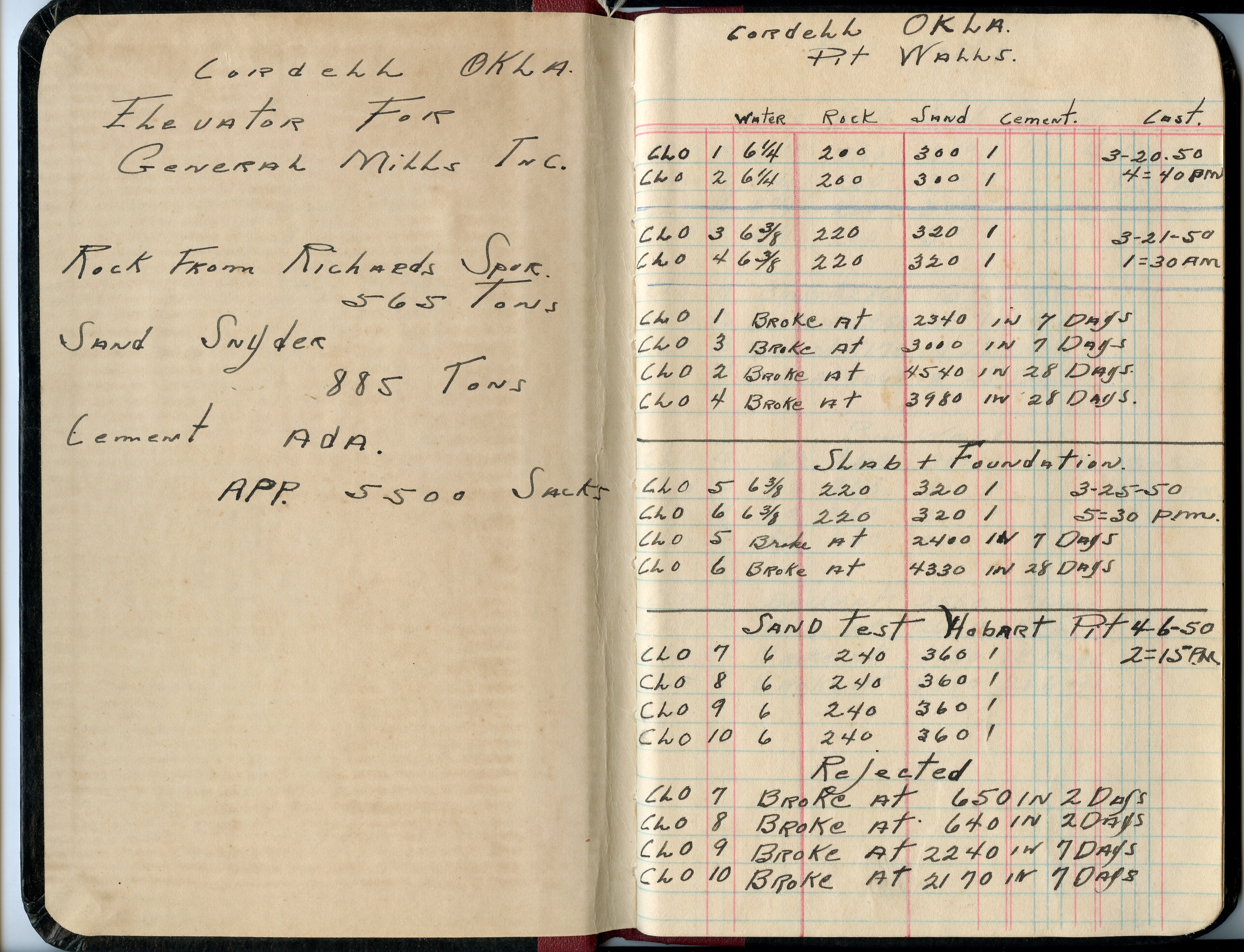
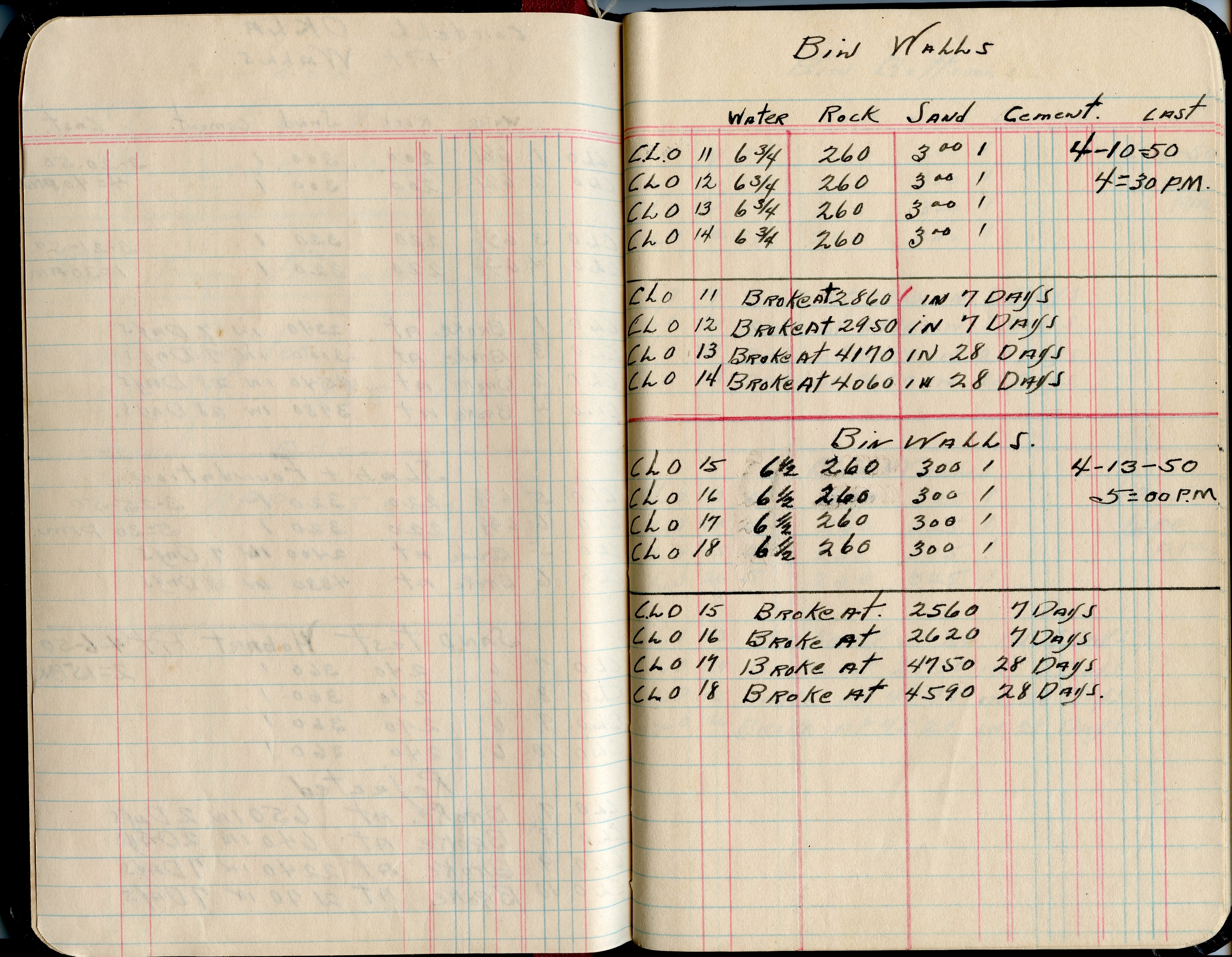
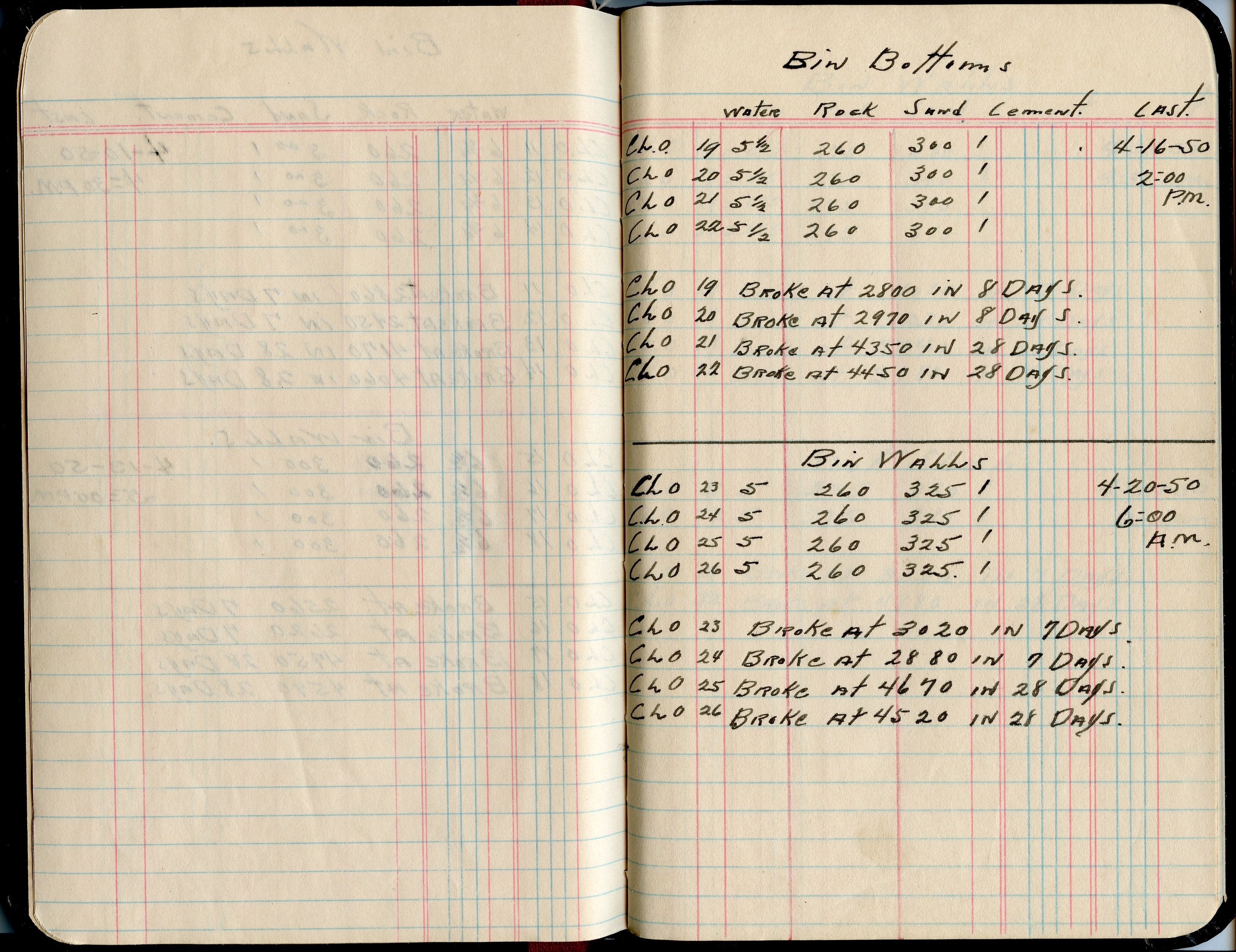
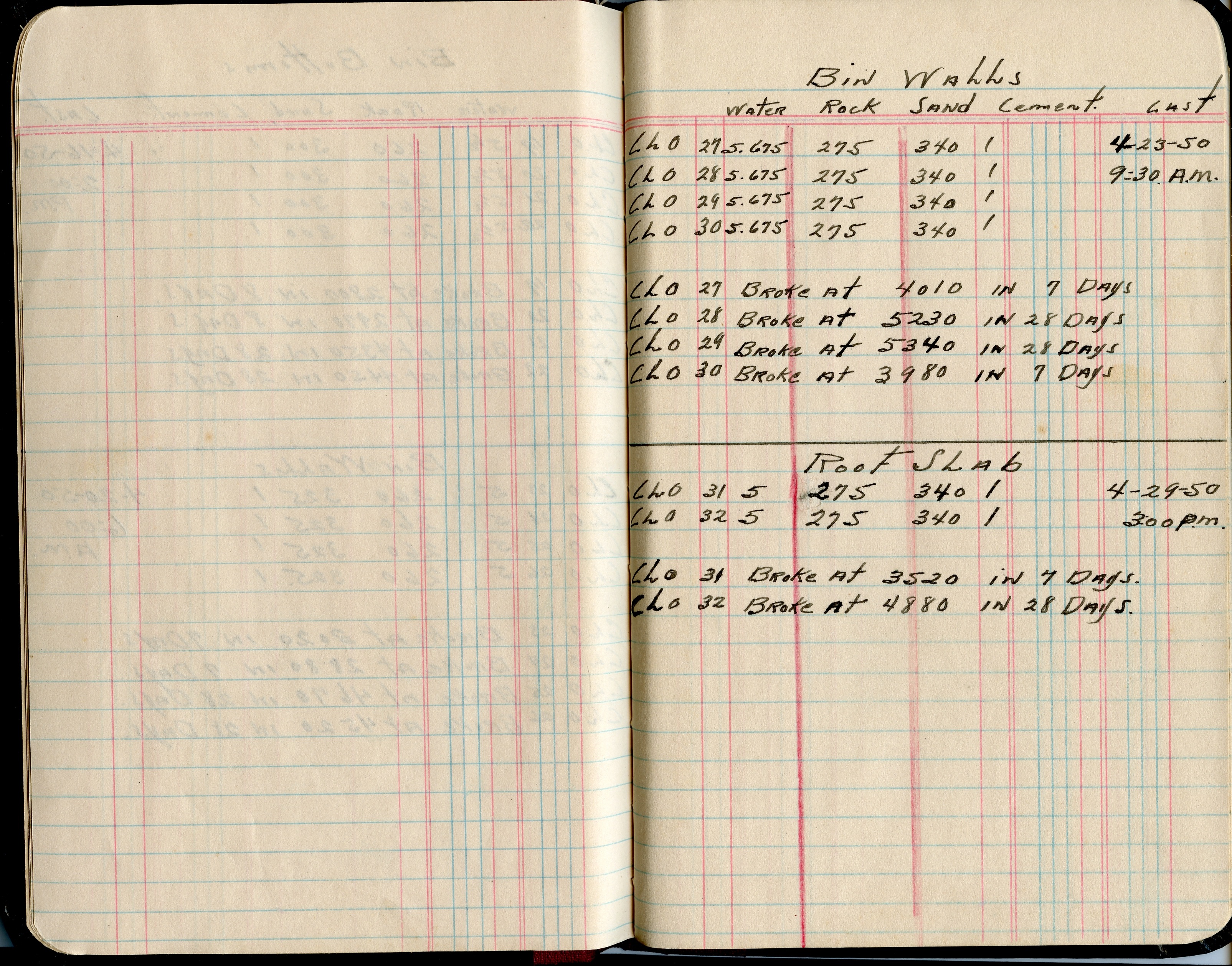
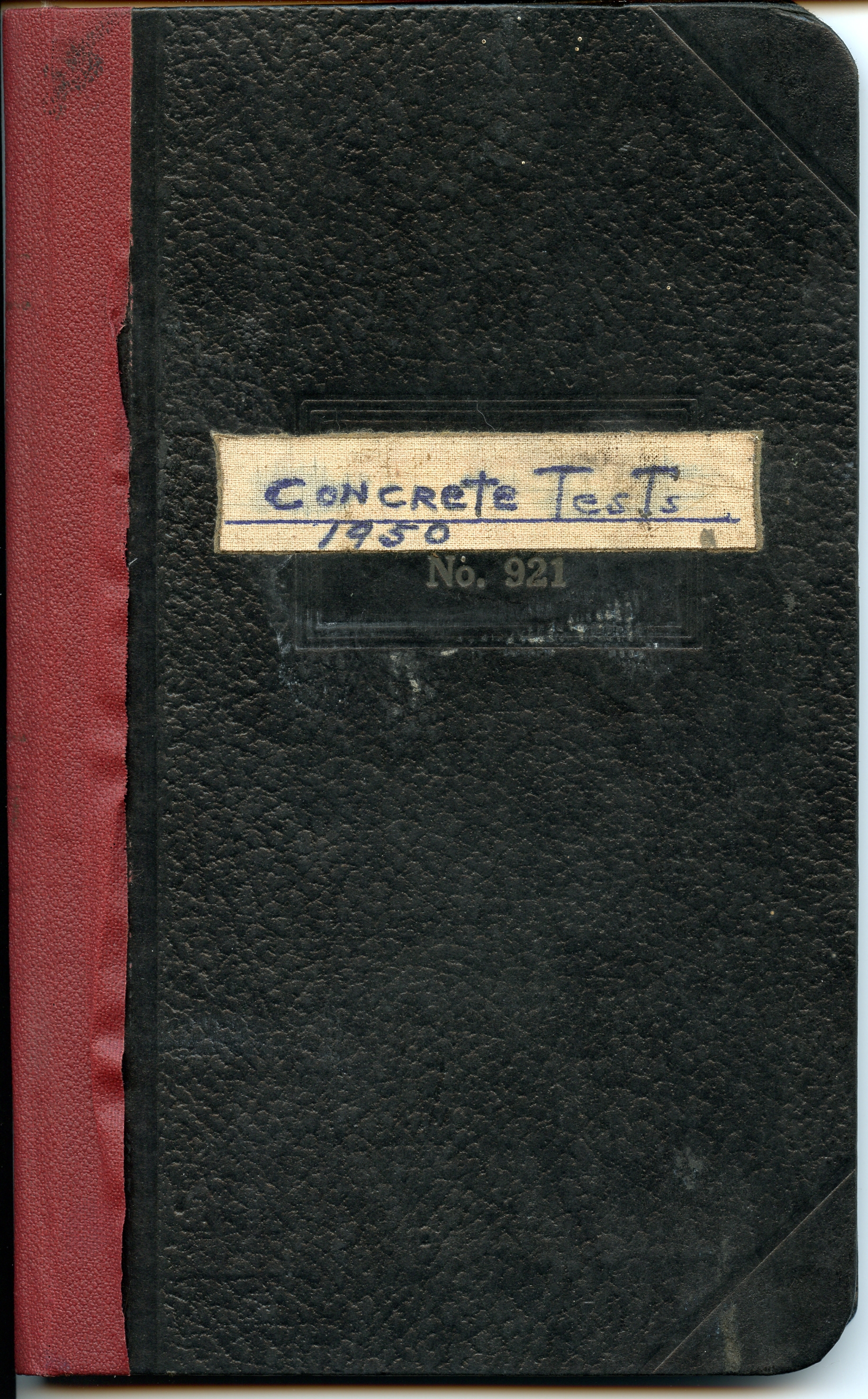
During a recent visit to Nebraska, Dad and I met with the son of Edwin Louis Christoffersen to go through family pictures. Young Ed produced a treasure from among his father’s personal effects. Edwin Christoffersen was superintendent for the Mayer-Osborn Construction job at Cordell Okla., and among his duties was the engineering of a safe and durable elevator. Testing the concrete from a given supplier was of paramount importance.

This logbook shows the results of the testing for each part of the elevator’s structure. It is a fascinating bit of engineering history, and it speaks for itself.

Cordell concrete tests003

Cordell concrete tests004

Cordell concrete tests005

Cordell concrete tests006You will notice that the date and time of day was included in the calculations for each test. This is how we were able to determine when the Cordell elevator was built.

While a number of factors were recorded for each test, it is not clear to us what each term meant. Perhaps some of our readers can explain the process to us.

It is a true privilege to see some of the engineering practices in use during the 1950s, at a time when slide rules did the work of computers, yielding sufficient precision to send our astronauts to the moon in the following decade.

These builders, engineers, and innovators were pioneers, working at the pinnacle of their profession. We wish to thank Ed Christoffersen for sharing this priceless piece of history.

Newspaper clippings of the Lincoln, Nebraska, elevator show standard construction methods

Story by Kristen Cart

christofferson042

Omaha World-Herald

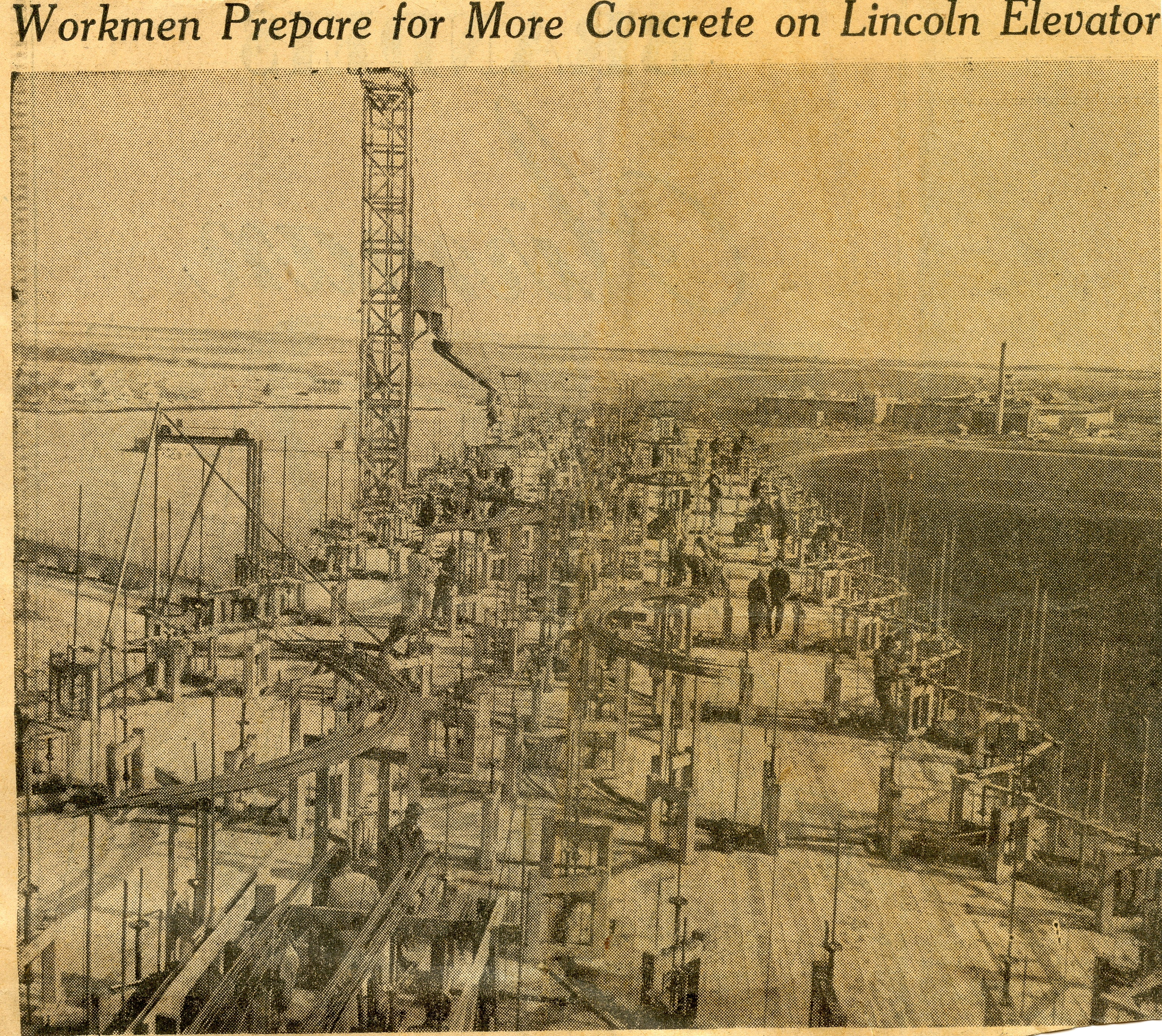
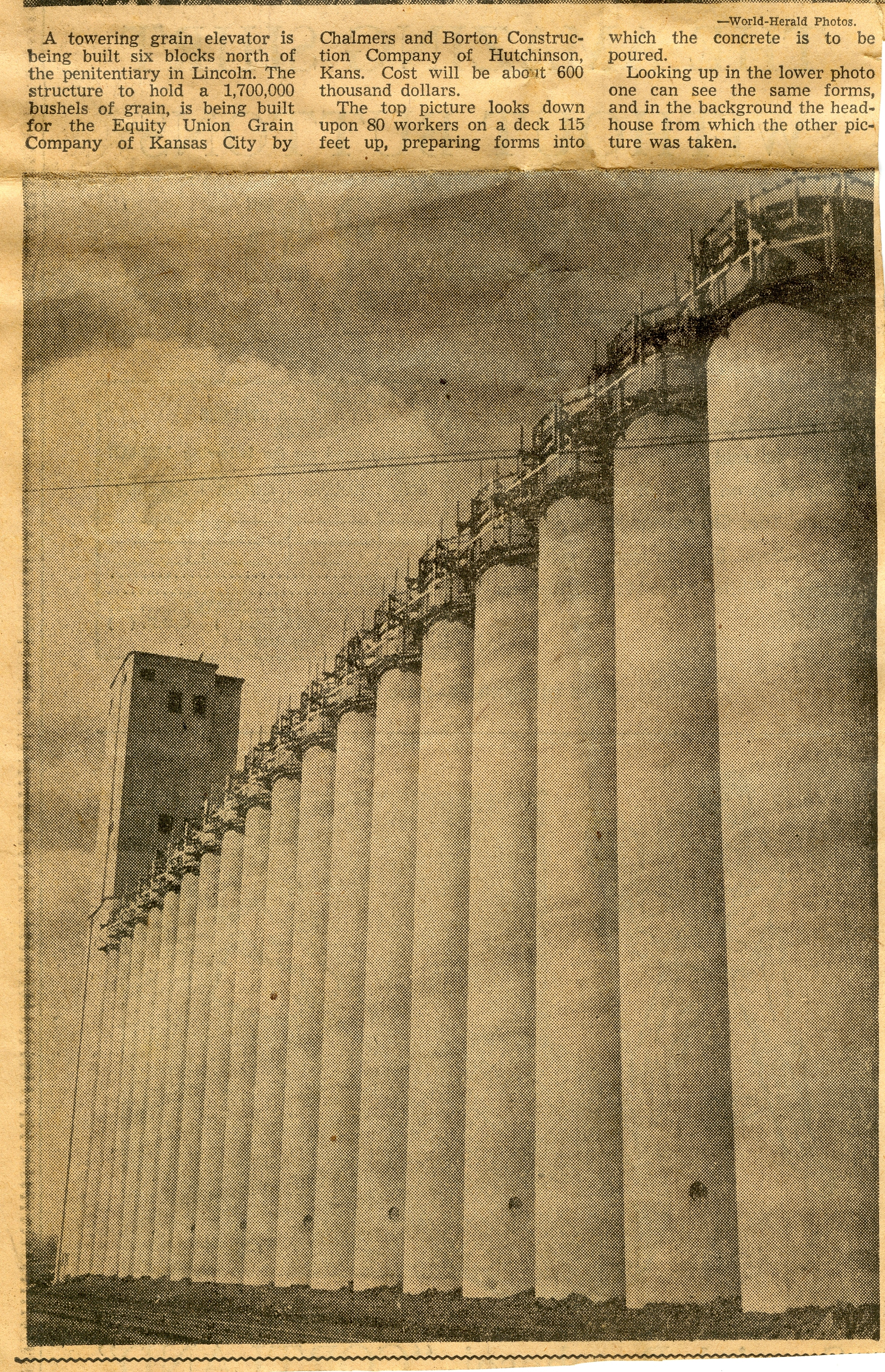
Among Edwin Christoffersen’s papers were clippings from the Lincoln, Neb., elevator construction site. While this was a Chalmers & Borton project, the clippings showed an impressively large elevator in the last stages of construction.

The story of a competitor’s biggest local project would have been of great interest to Ed, a superintendent for the Mayer-Osborn Construction Company. There is little doubt that Mayer-Osborn would have tried to get this contract. However, Chalmers & Borton frequently built the largest elevators.

It appears that the continuous pour was nearly complete for the huge structure, and that the planks were installed either for decking for the crews, or for the final pour which would cover each bin with a concrete cap. Once the concrete cured, final “wrecking out” would remove the forms.

christofferson043

Omaha World-Herald

The headhouse was already in place, so the elevator was very close to completion. What cannot be seen is whether equipment that would come from subcontractors for installation in the headhouse and pit had yet arrived, and of course the run that would top the elevator and provide for grain distribution was yet to be finished.

The images provide a rare glimpse of the process, one that Edwin Christoffersen saw fit to preserve, much to our delight. This is a breathtaking view of a moment in time when America built with intrepidity and confidence, and left us with a towering legacy in the Plains.

The Cordell, Oklahoma elevator project fused engineering prowess with family ties

Story by Kristen Cart

christofferson041

Edwin Christoffersen was the superintendent on the Mayer-Osborn Construction project in Cordell, Okla. in 1950. His son and namesake kindly provided a notebook that gave a glimpse of the concrete engineering that went into the elevator. By trial and error, the company learned best practices, creating an enduring structure which would still operate more than sixty years later.

Edwin Louis Christofferson was the son of Jens “James” Lauritz Christoffersen, a first generation American who farmed and operated a farm stand in Fremont, Neb. Edwin was one of nine children. Ed’s sister Alice married William Osborn in 1923.

When the Mayer-Osborn enterprise was in full swing, Bill Osborn tapped relatives to manage projects or to provide manual labor. He followed a common practice.

Sons Dick and Jerry Osborn worked at various times building elevators. Bill Osborn entered partnership with Eugene Mayer, the brother of Joseph H. Tillotson’s wife Sylvia. At the Tillotson Construction Company of Omaha, Bill Osborn worked with Iver Salroth, husband of Emma, a Christoffersen cousin.

Naturally, when the opportunity arose, Ed Christoffersen found employment with his brother-in-law’s company an attractive proposition.

christofferson019(1)

Edwin Louis Christoffersen with his only child.

Ed’s son has kept a number of Mayer-Osborn keepsakes, in memory of his dad, who died when he was still quite young. One intriguing item was the logbook that Ed kept for the Cordell, Okla. elevator, recording concrete tests.

Various sand, gravel, and concrete mixtures were tested to a failure point to determine the ideal formula for a given project. The date and time of day was recorded for each test. In this journal, we discovered the year of construction for the Cordell elevator.

The elevator business brought families together to accomplish a common goal, and now, many years later, writing about the elevators brings the builders and their sons and daughters together again. The memories are kept in small personal repositories of clippings, photos and documents, and in tales of the job, and are captured fleetingly before the witnesses leave us.

Looking up at these great landmarks, we also look up to the patriarchs who built them, with respect, and awe.

Mystery elevator identified as Mayer-Osborn’s Cordell, Oklahoma project

William Osborn photo provided by his granddaughter Diane Osborn Bell

William Osborn photo provided by his granddaughter Diane Osborn Bell.

By Kristen Cart

christofferson040This photograph has left us scratching our heads for over a year. Gary Rich knew of no such elevator from all of his travels, so he rummaged through his photographs for any hint of it. He looked for an elevator with a single bin-width and two driveways, with a curve of track and a second elevator around the bend, all to no avail. The photo sat in my files waiting for serendipity to step in. Sometimes, it is best to bide your time, and if you are lucky you get more than a location and a name. We hit the jackpot in this case.

When Dad and I visited his first cousin, we sorted through boxes of hundred-year-old family pictures. Midway through the second box, we found a newspaper clipping about an elevator, with a photo I instantly recognized. There it was, plain as day.

This unique elevator was built in Cordell, Okla., a town almost directly south of Wichita, Kan., well within the territory served by Mayer-Osborn Construction. The superintendent on the job was Ed Christoffersen, brother-in-law to my grandfather William Osborn.

Cordell Oklahoma Elevator

In this photo by Joy Franklin, you can see two driveways, built for faster grain loading during harvest. The curve of train track is evident here.

After making the identification, I looked online and found Expedition Oklahoma, where Joy Franklin posted a beautiful current photo of the elevator. With her kind permission, it is posted below. She said the elevator is owned by the Wheeler Brothers Grain Company, founded in 1917, which presently owns eighteen grain elevators. It is a happy surprise to see that one of Mayer-Osborn’s most innovative elevators not only survives, but is still in use today.


Gordon, Nebraska’s elevator was built in a classic Mayer-Osborn style

The Mayer-Osborn elevator, identified by manhole covers inside the driveway, stands in front of Chalmers and Borton additions

The Mayer-Osborn elevator, identified by manhole covers inside the driveway, stands in front of Chalmers and Borton additions.

Story and photos by Gary Rich

Farmers Co-op operates these elevators. The co-op is based in Gordon, Hay Springs, and Hemingford, Neb.

The elevator in the foreground was built by Mayer-Osborn Construction Company, based in Denver. The completion date is not known.

The elevator in the background was built by Chalmers and Borton Construction, based in Hutchinson, Kan., in 1958. The company built a second elevator, west of these elevators, as well as a couple of annexes.

A side view of the Mayer Osborn elevator

A side view of the Mayer Osborn elevator.

By Kristen Cart

This stepped up headhouse design was first rolled out with the elevator in McCook, Neb., built in 1949 by Mayer-Osborn Construction Company. The style was featured in the Mayer-Osborn ad that ran in the early 1950s in the Farmers Elevator Guide.

The Gordon elevator showcased the rounded headhouse construction method adopted by Tillotson Construction for their later projects, but it is not known which company pioneered the cost saving technique.

From his home in Colorado, Gary Rich investigated this elevator on a trip east to photograph a number of Midwestern elevators. Gary has been instrumental in identifying a large number of Mayer-Osborn, Tillotson Construction, and J. H. Tillotson projects, pursuing the history of the elevators with as much passion as he puts into his excellent photography.

We are indebted to him for his relentless pursuit of good information, now contained in this blog.