A last farewell to the Tillotson terminal elevator art works on Vinton Street

DSC_0372Story and photos by Kristen Cart

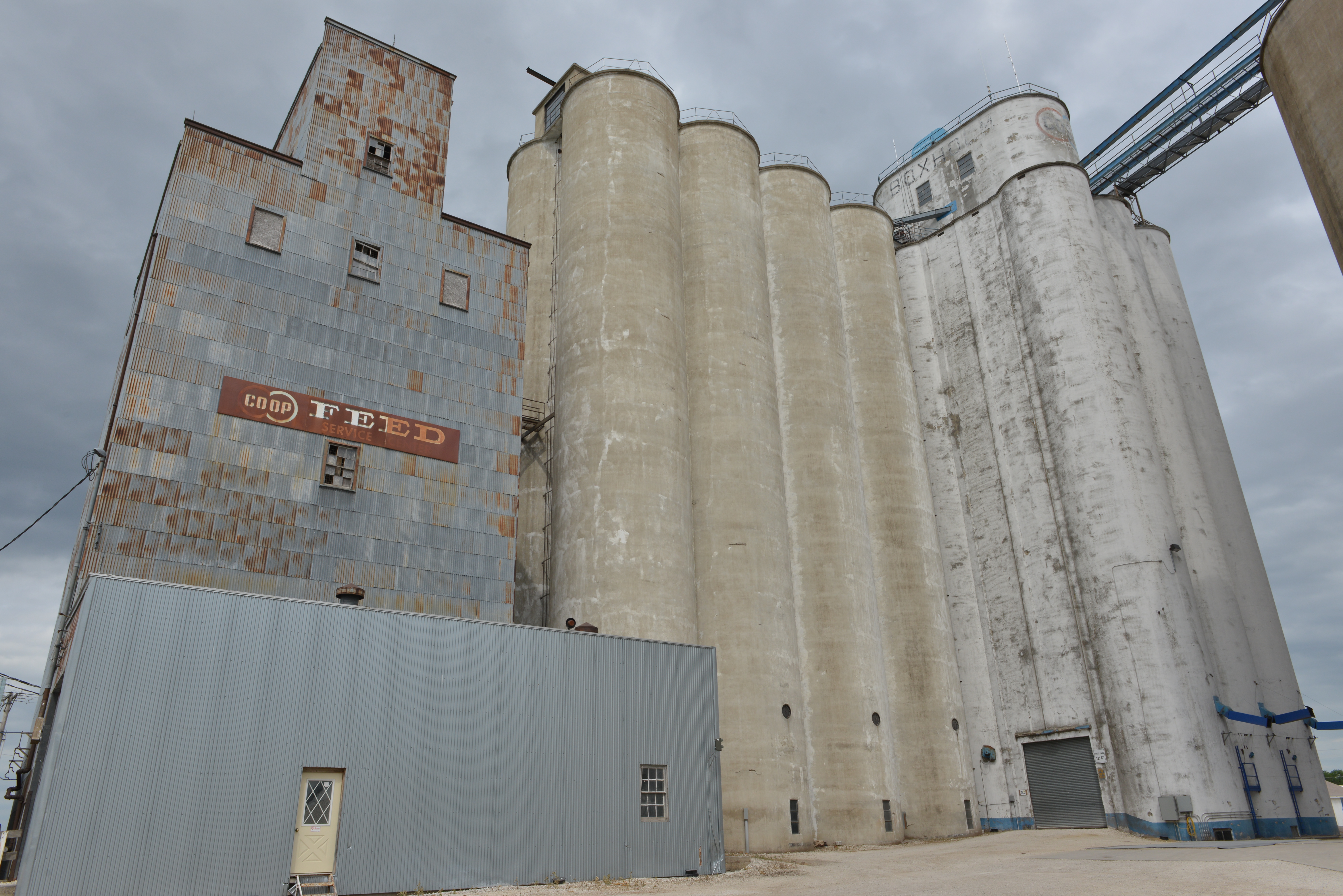
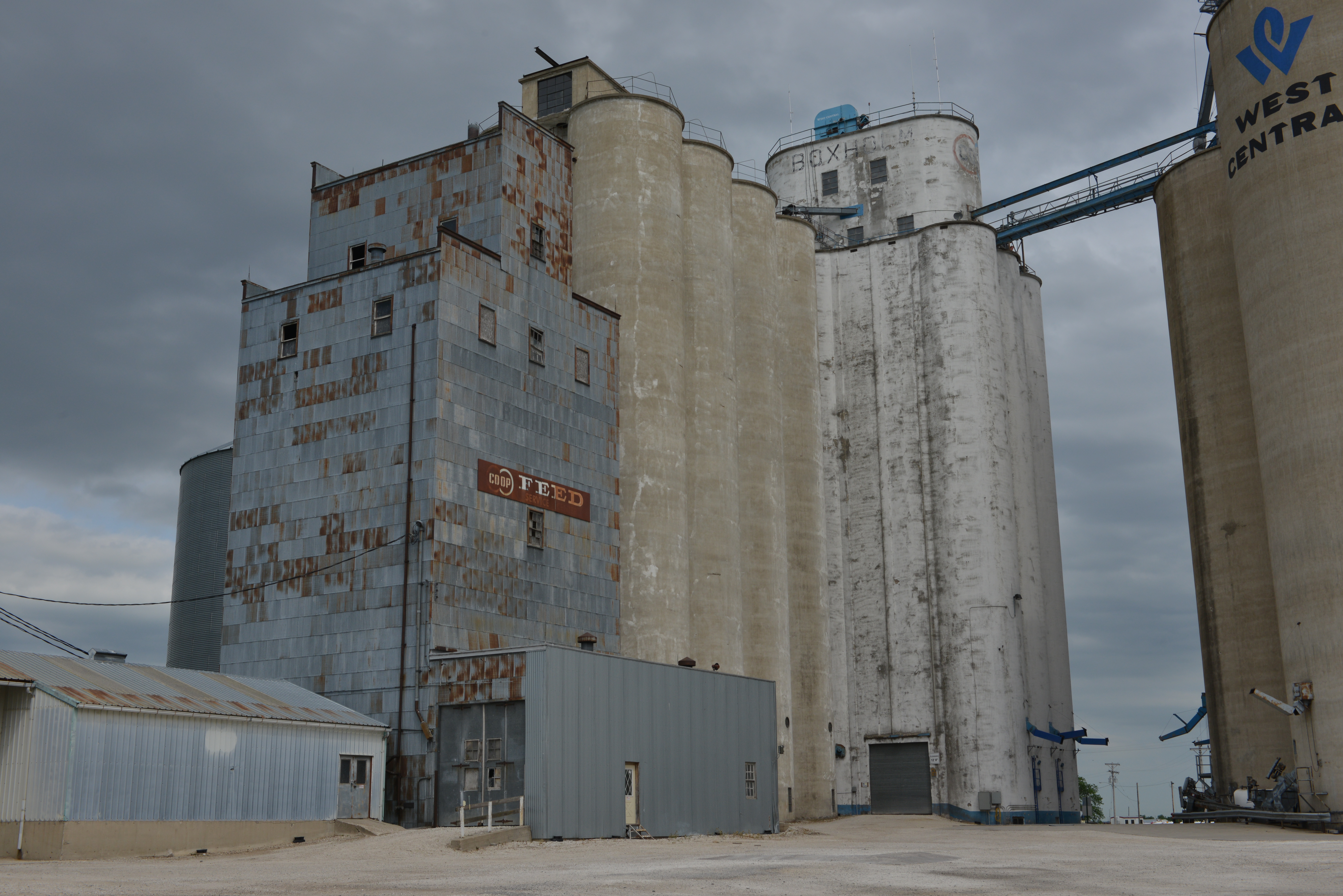
In the last weeks, the unique art project along I-80 in Omaha, Neb., came down as the Vinton Street display was concluded. The Tillotson Construction elevator stands now as it always did, plain and utilitarian, while still graceful in its own way.

As the Vinton Street banners first went up in the two phases of Emerging Terrain’s Stored Potential, first in 2010 and then in 2012, I had the opportunity to visit and photograph them. They had not weathered harsh winters and hard sunlight yet, and were as bright as the artists’ fresh paint.

Here are a few images, as a last tribute to this unique community art project.

The beauty of this project speaks for itself. The elevator now stands denuded of its decoration, yet poised for the next phase of its long and useful life.

DSC_0394

DSC_0397DSC_0443

DSC_0382

A Tillotson elevator overlooks the 76th Dayton Championship Rodeo grounds

DSC_0591

The Dayton, Iowa, rodeo grounds bustle with activity for the championship event.

Story and photos by Kristen Cart

The Dayton, Iowa, elevator is an especially handsome one, built in a typical Tillotson style. It is one of an overwhelming majority of Tillotson elevators that are still in use. It is quite an achievement to build something so enduring.

DSC_0566

Modern updates are evident in this view.

One of the secrets of the longevity of concrete elevators of this type is the ability to upgrade the machinery and to expand capacity. The elevators were built with the understanding that they would soon be filled and would need additional bins. The Tillotson Construction Company revisited certain sites over and over as they added concrete annexes and other improvements, while occasionally other companies won the contracts.

DSC_0579

The feed mill stands to the right.

You can see that the concrete elevator was retrofitted with an external leg. This modification is a safer design than the old internal one, because accumulated grain dust cannot come into contact with overheated machinery if a bearing or belt fails. Metal bins were added for additional capacity. A feed mill complements the storage facility, completing a one-stop shop for farmers.

The Dayton elevator’s original construction was not without trouble, however. Tillotson Construction Company was compelled to pay for repairs after the elevator cracked under its original grain load. The Farmers Elevator Company sued, according to the Farmers Elevator Guide, in 1954. The repairs were expertly done and the elevator still stands today.

The elevator and its Tillotson annex preside in sleepy Dike, Iowa

The old elevator sits beside its wooden predecessor, as it did in 1946

The old elevator sits beside a wooden elevator, as it did in 1946

Story and photos by Kristen Cart

We took a number of elevator detours on our return home from a Nebraska trip, where we delivered our daughter to her summer veterinary camp. During the four-day program presented by Oxbow Animal Health, she learned the inner workings of a cow, and lovingly operated on and sutured a stuffed bunny. Apparently there is no such experience offered to children in Illinois.

The trip home was a meandering route with a number of switchbacks, with elevators built by Tillotson Construction, of Omaha, spaced every few miles. One elevator stop on our sojourn was Dike, Iowa, in the central part of the state. This fascinating site was the last one we saw before the light failed. We were racing a line of weather, and as the sun sank the clouds built and made for very flat light.

DSC_0721It is enlightening to see an elevator complex in person and compare it with an early photograph. The changes wrought in almost seventy years can be surprising, but even more unexpected can be the features that remain the same.
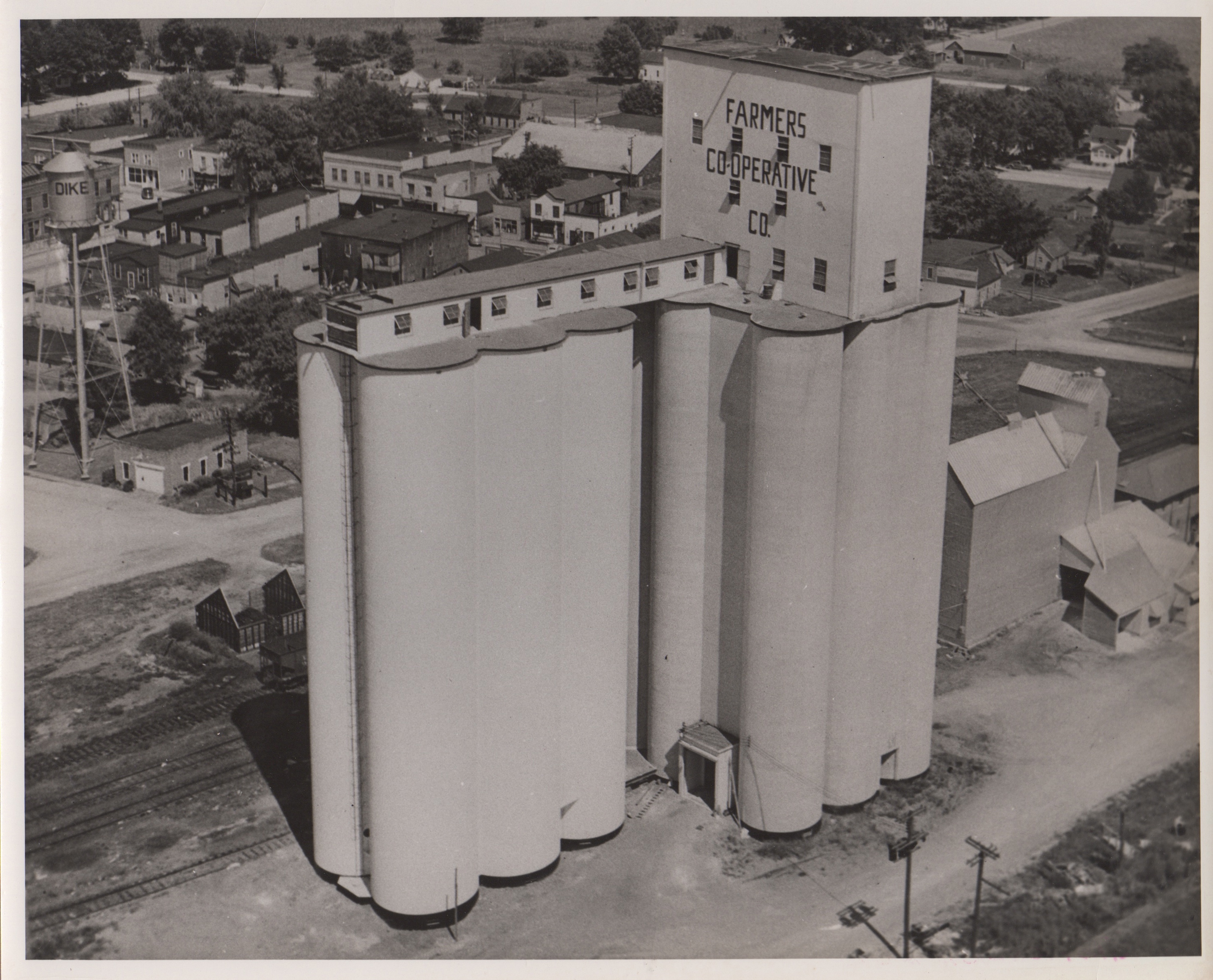
At Dike, you immediately notice a wooden structure behind the main structure. Strangely, it does not appear to be the same elevator that appears in the old photograph. Why would the co-op replace a wooden elevator with another one? The obvious answer would be a fire, but if wood was obsolete, why continue to build with that material?

In my travels, I have rarely come across a wooden elevator that was built before the 1940s and still in use today. Technology rendered the old ones obsolete, and wear and tear made them difficult to operate. Fire also took many of them. Now, wooden elevators built as late as the 1970s are coming down as more valuable uses are found for their wood, and as regulations make them harder to license.

The main house of Tillotson Construction's elevator at Dike, Iowa, built in 1946 (annex, left, 1949), is crowned by a rectilinear headhouse.

The main house of the elevator at Dike, Iowa, built in 1946 (Tillotson Construction’s annex, left, 1949), is crowned by a rectilinear headhouse.

Dike’s concrete elevator was built in 1946, and it came with an unusual (for Tillotson) headhouse. In the one place where we found a similar example, at St. Francis, Kan., the elevator built by J. H. Tillotson, Contractor, sported a rectilinear headhouse. Though it was replaced much later, early pictures show that the St. Francis headhouse was built in that style.

Both the old Omaha company and its later offshoots preferred curved architecture because it was more economical to build.

So the Dike elevator was a non-typical construction, and we know from its early photo that it started out that way. Since we have no record of it in our Tillotson company records, we have to assume it was built by another company. But the Omaha company led by Reginald Tillotson built the annex.

DSC_0702Tillotson Construction arrived on scene in 1949 to add the annex just three years after the main house was built. In the late 1940s, when elevators were filled just as fast as they could be built, annexes sprung up almost before the concrete cured on the original elevators.
The Dike, Iowa, annex specifications

Capacity per plans (with pack): 200,700 bushels

Capacity per foot of height: 1,859

Reinforced concrete per plans (total): 1,255 cubic yards

Plain concrete (hoppers): 3 cubic yards

Reinforcing steel (including jack rods): 73.56 tons

Average steel per cubic yard of concrete: 117.2 pounds

Steel and reinforced concrete per plans:

Below main slab: None

Main slab: 23,665 pounds steel and 218 cubic yards concrete

Drawform walls: 94,152 pounds steel and 880 cubic yards concrete

Work and drying floor: None

Deep bin bottoms: None

Overhead bin bottoms: 18,156 pounds steel and 56 cubic yards concrete

Bin roof: 4,223 pounds steel and 32 cubic yards concrete

Scale floor: None

Distributor floor: 3,570 pounds steel and 30 cubic yards concrete

Cupola roof: Steel included in above amount, and 21 cubic yards concrete

Misc. (Boot, leg, head, track sink, steps, etc.): 500 pounds steel and 4 cubic yards concrete

Attached driveway (for Dike plans, lower tunnel indicated here): 363 pounds steel and 14 cubic yards concrete

Construction details

Main slab dimensions: 46 1/2′ x 68′

Main slab area (actual outside on ground): 2,955 square feet

Weight reinforced (total) Concrete (4000 pounds per cubic yard) plus steel: 2,583 tons

Weight plain concrete (hoppers 4000 pounds per cubic yard): 6 tons

Weight hopper fill sand (3000 pounds per cubic yard): 25 tons

Weight of grain (60 pounds per bushel): 6,021 tons

Weight of structural steel and machinery: 5 tons

Gross weight loaded: 8,640 tons

Bearing pressure: 2.93 tons per square inch

Main slab thickness: 24″

Main slab steel (size and spacing): 1″ diameter,  5 1/2″ o. c.

Tank steel and bottom–round tanks (size and spacing): 5/8″ diameter, 9″ o. c.

Lineal feet of drawform walls: 400′ (no drive)

Height of drawform walls: 120′

Pit depth below main slab: None

Cupola dimensions (outside width x length x height): 13′ x 93′ x 8′

Pulley centers: None

Number of legs: None

Distributor Floor: None

Track sink: None

Full Basement: Yes

Electrical room: In elevator

Driveway width: None

Dump grate size: None

Columns under tanks: 4 columns 16″ square

Boot Leg and Head: None

Machinery details

Top conveyor: 30″ belt at 500 bushels per minute; 7,800 bushels per hour; 10 horsepower drive; Howell tripper.

Bottom Conveyor: 24″ belt at 600 bushels per minute; 5,800 bushels per hour; 7 1/2 horsepower drive

Remarks

Also built: Extended driveway on elevator


A photographic review of concrete elevator parts and components

Story and photos by Kristen Cart

Some time ago, one of our readers requested the picture of an elevator pit. It is one of the more unglamorous parts of a grain elevator, but as I was going through old photos, I found one. I also found many interior elevator pictures that have not made it to the blog because of their, well, unattractiveness. But a review of the parts and pieces, terms and descriptions, and interior appearance of an elevator is in order.

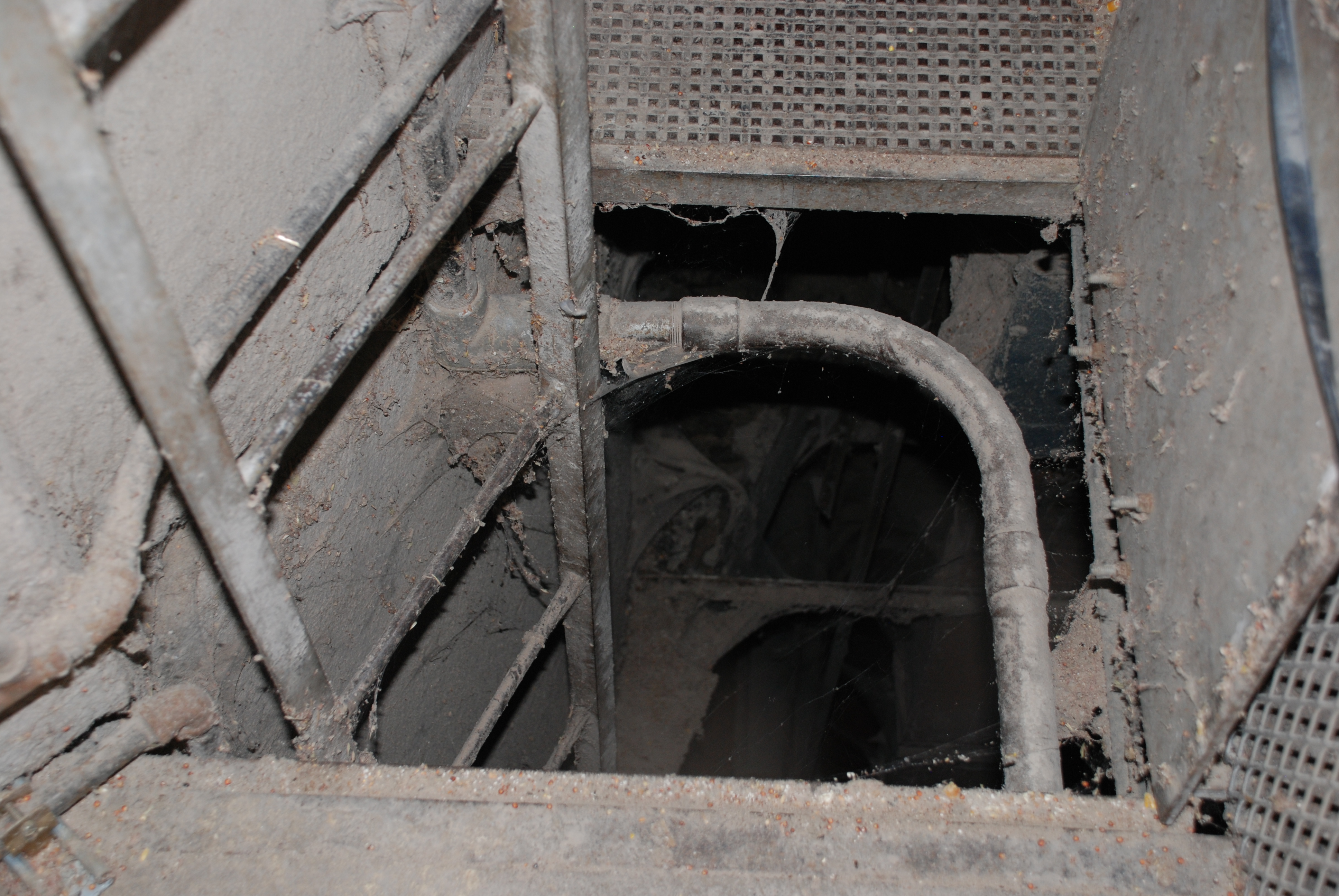
 The Pit

Pit access by ladder. The leg is visible.

Pit access by ladder. The leg is visible. Hanover, Kan.

DSC_0677(2)

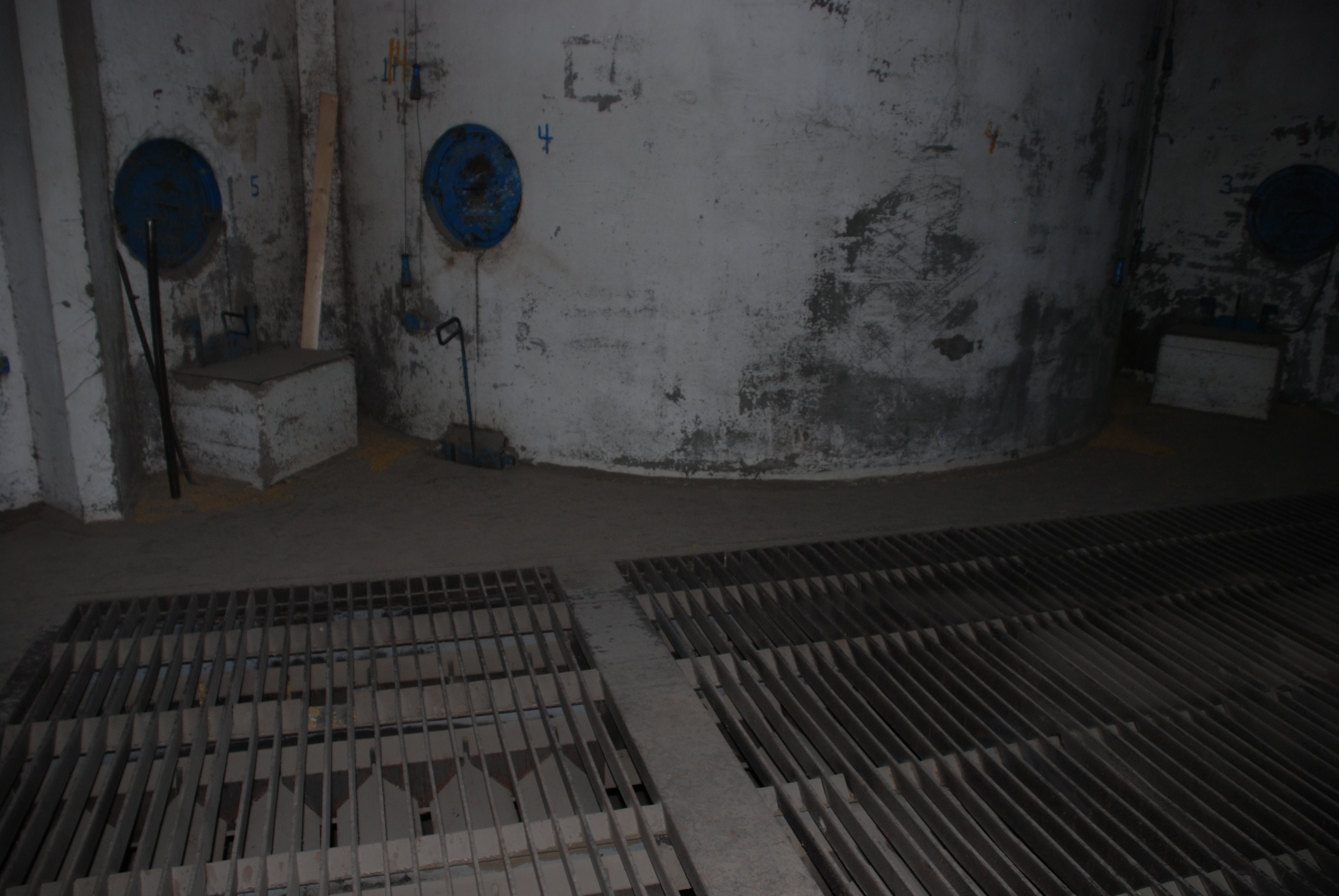
Sloped bottom funnels grain to the base of the leg.

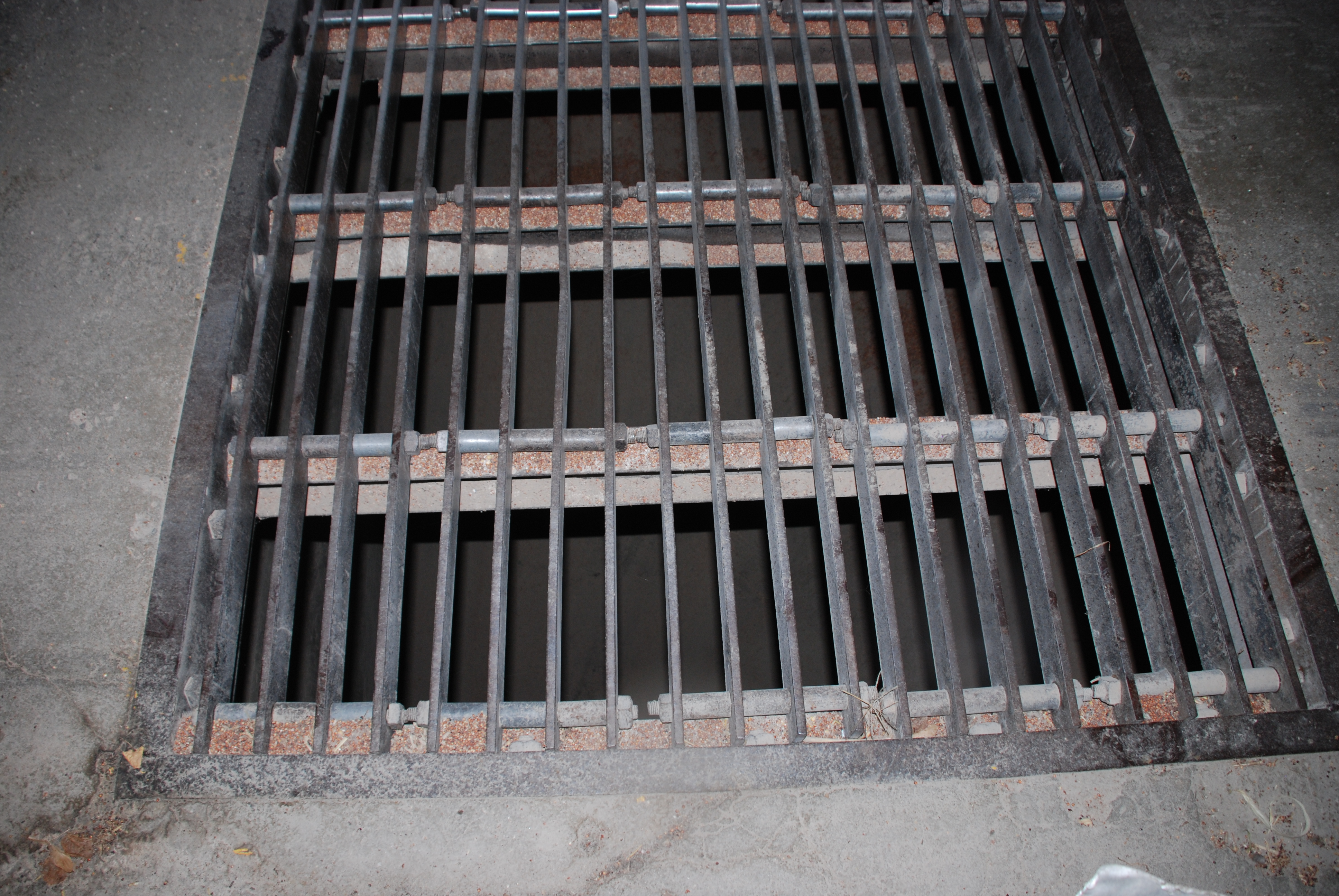
The Dump Grate

DSC_0674(2)

A smaller grate.

DSC_0292(1)

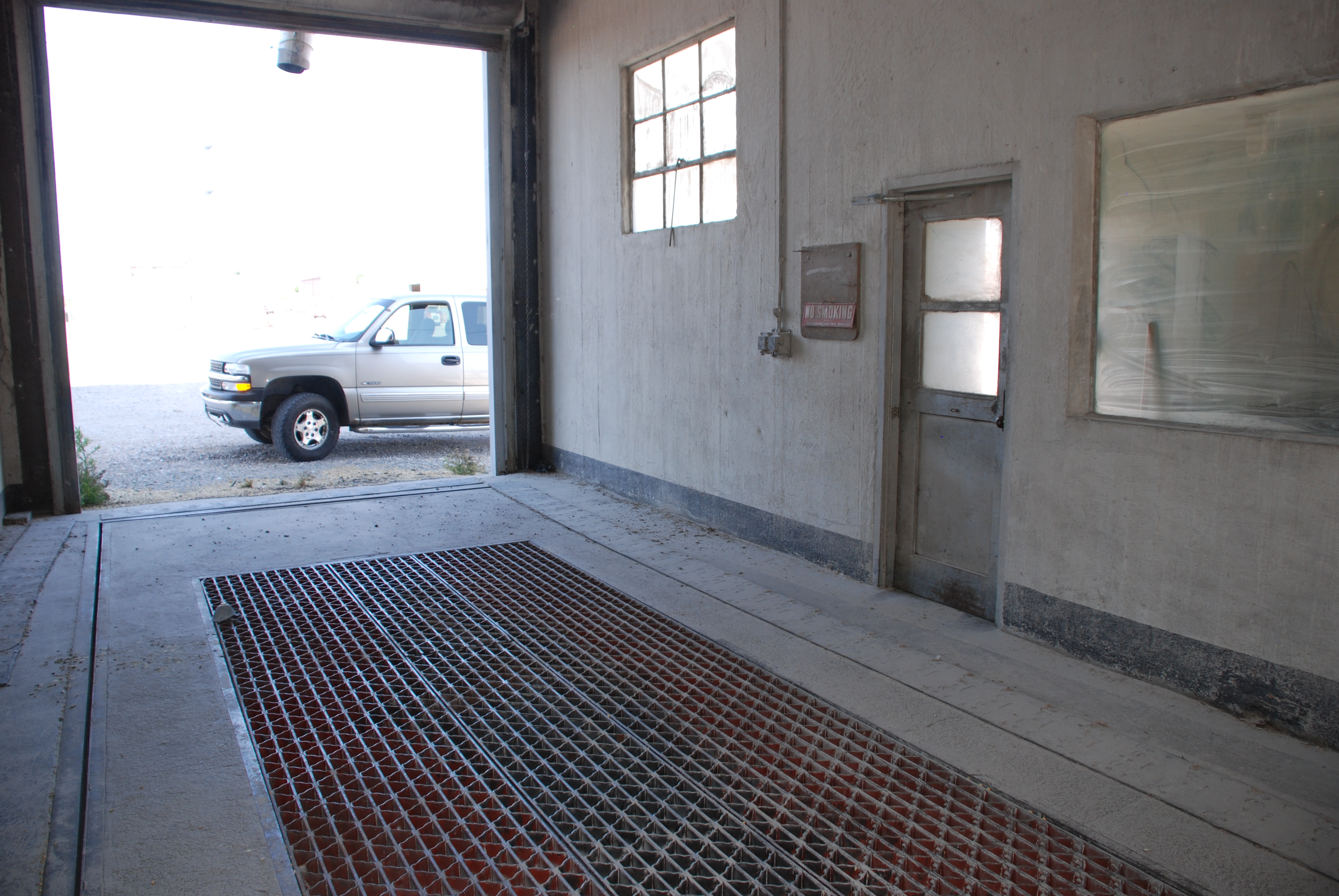
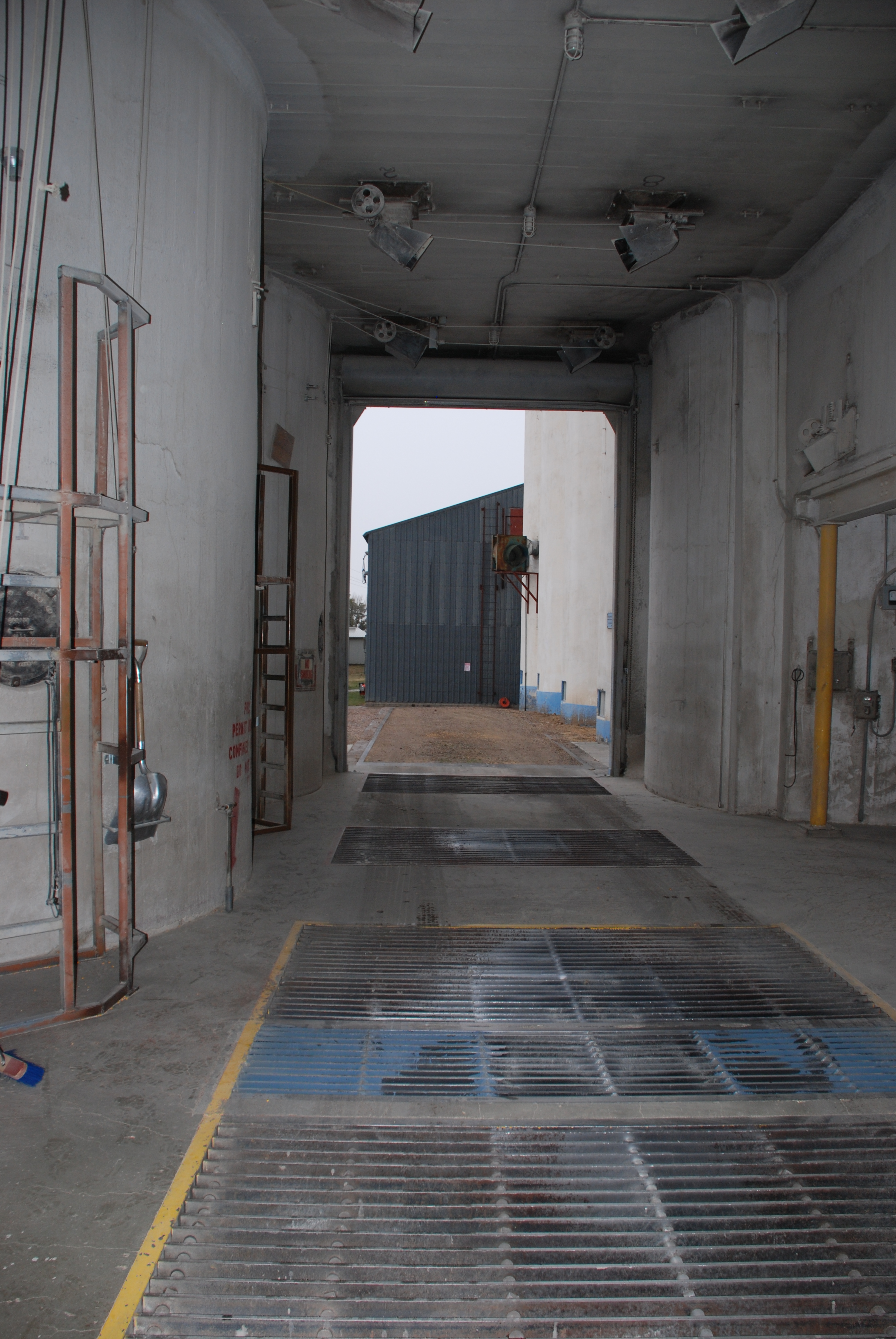
Center driveway truck grates.

The Driveway

DSC_0410

McCook, Neb.

DSC_0208(1)

St. Francis, Kan.

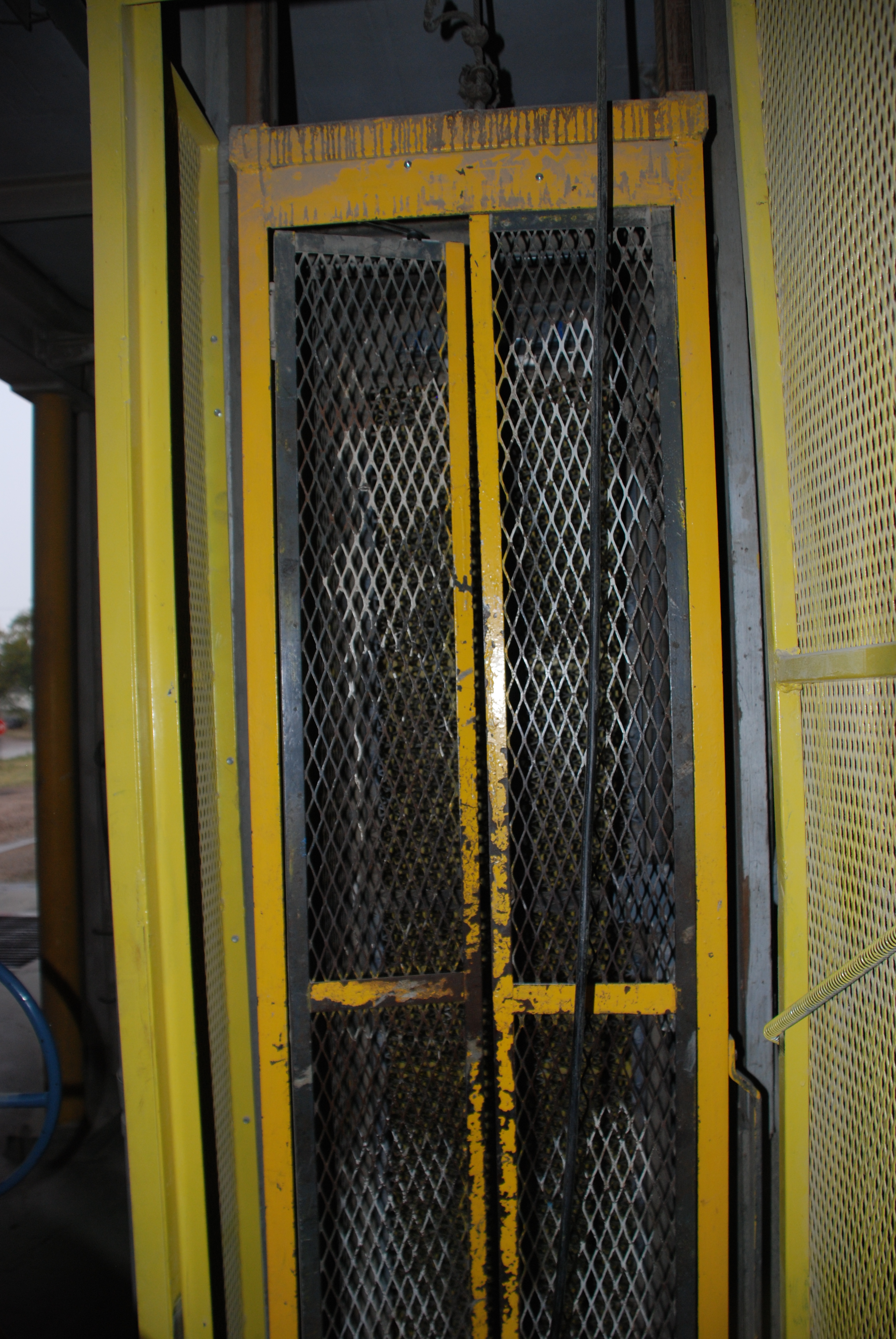
The Man Lift

DSC_0679(1)

The bottom of the lift showing the shaft.

DSC_0210(1)

Current safety regulations require a retrofitted cage.

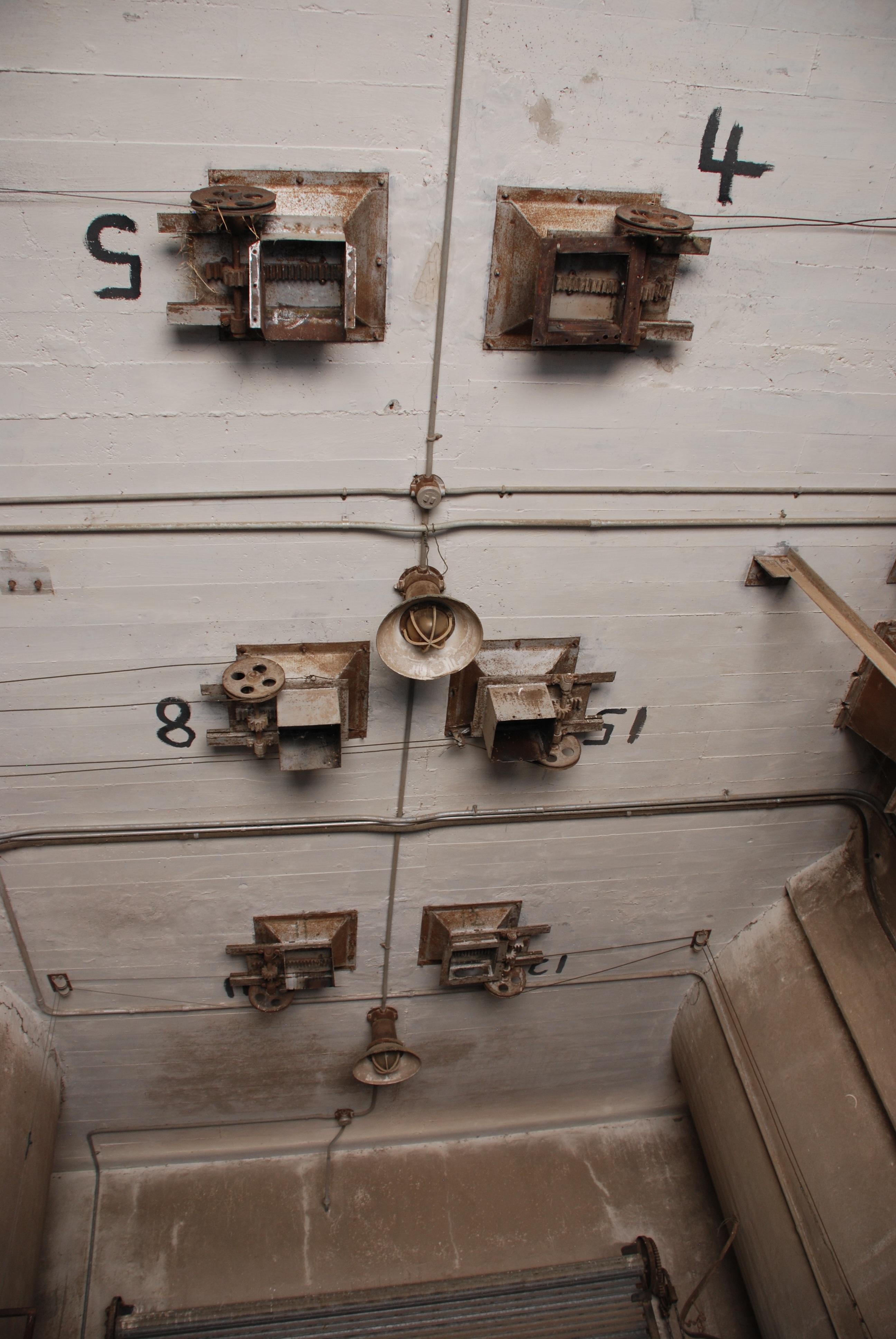
Overhead bin spouts

Bins are numbered to correspond with the bin diagram

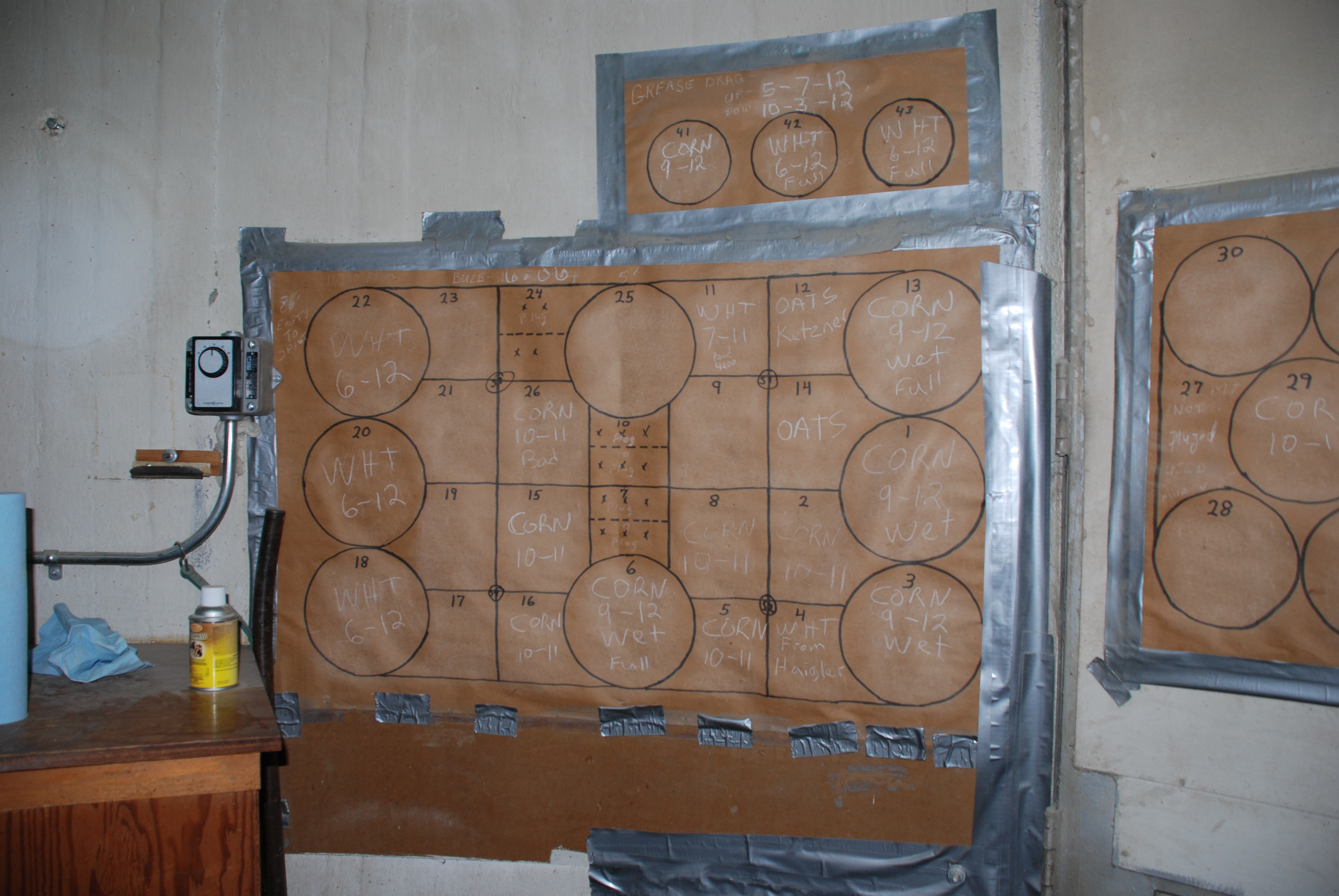
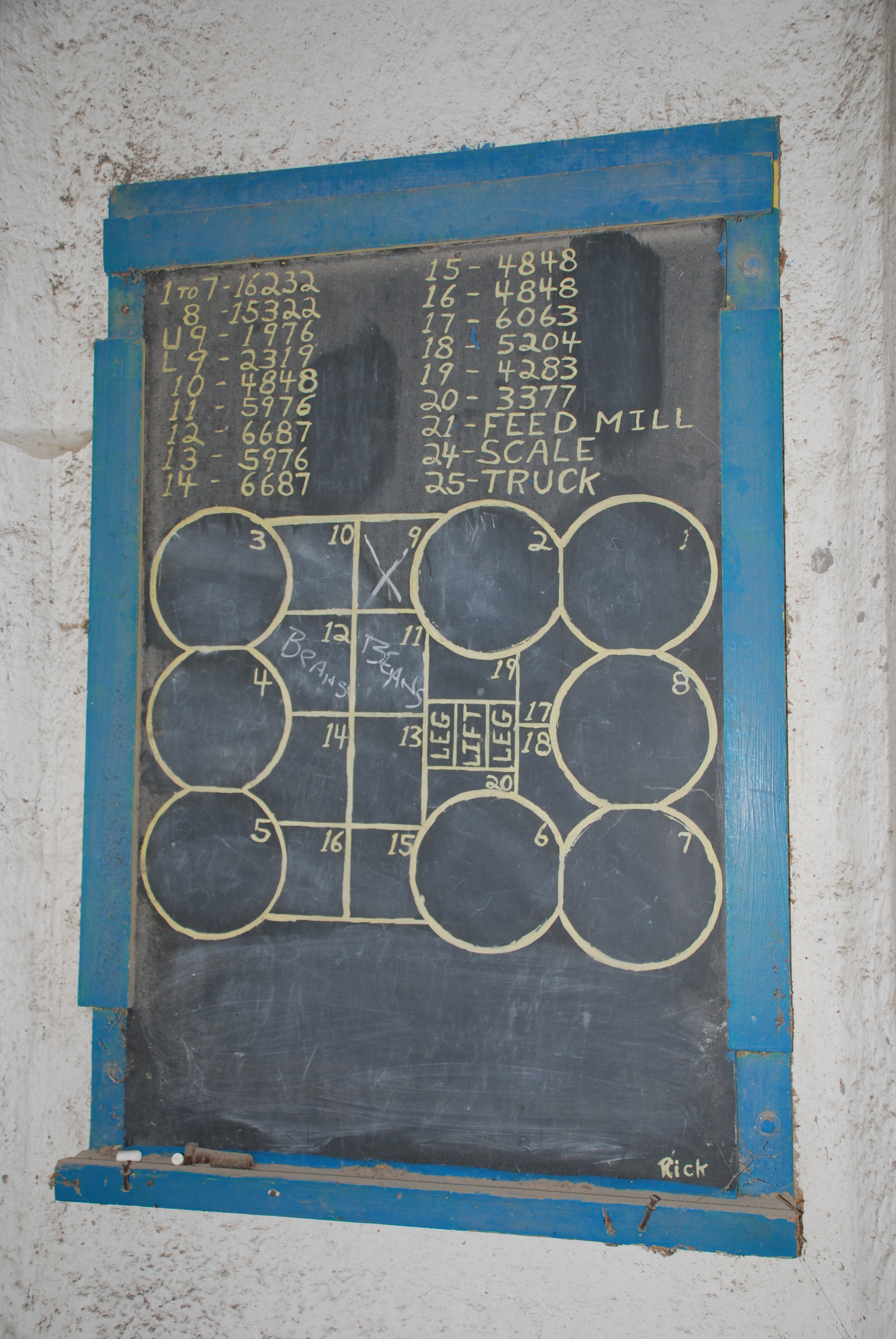
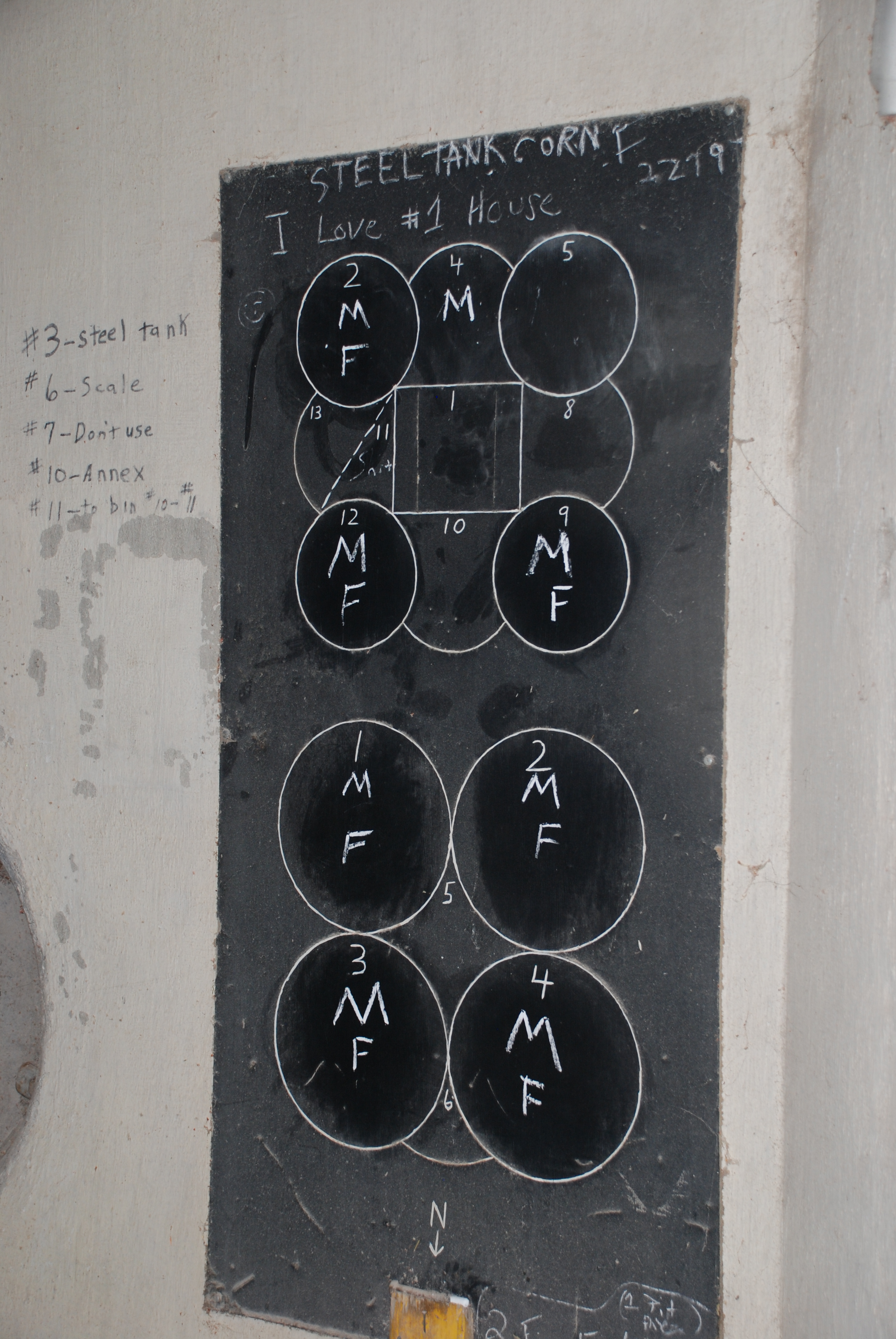
Bin Diagram

St. Francis, Kan.

St. Francis, Kan.

DSC_0295

This elevator holds beans in two overhead bins.

DSC_0670(1)

The bins hold milo, and “F” means the bin is full.

The Leg

DSC_0418

Cup dimensions and spacing are given in elevator specifications.

DSC_0673(1)

The leg conveys grain from the pit to the top of the bins.

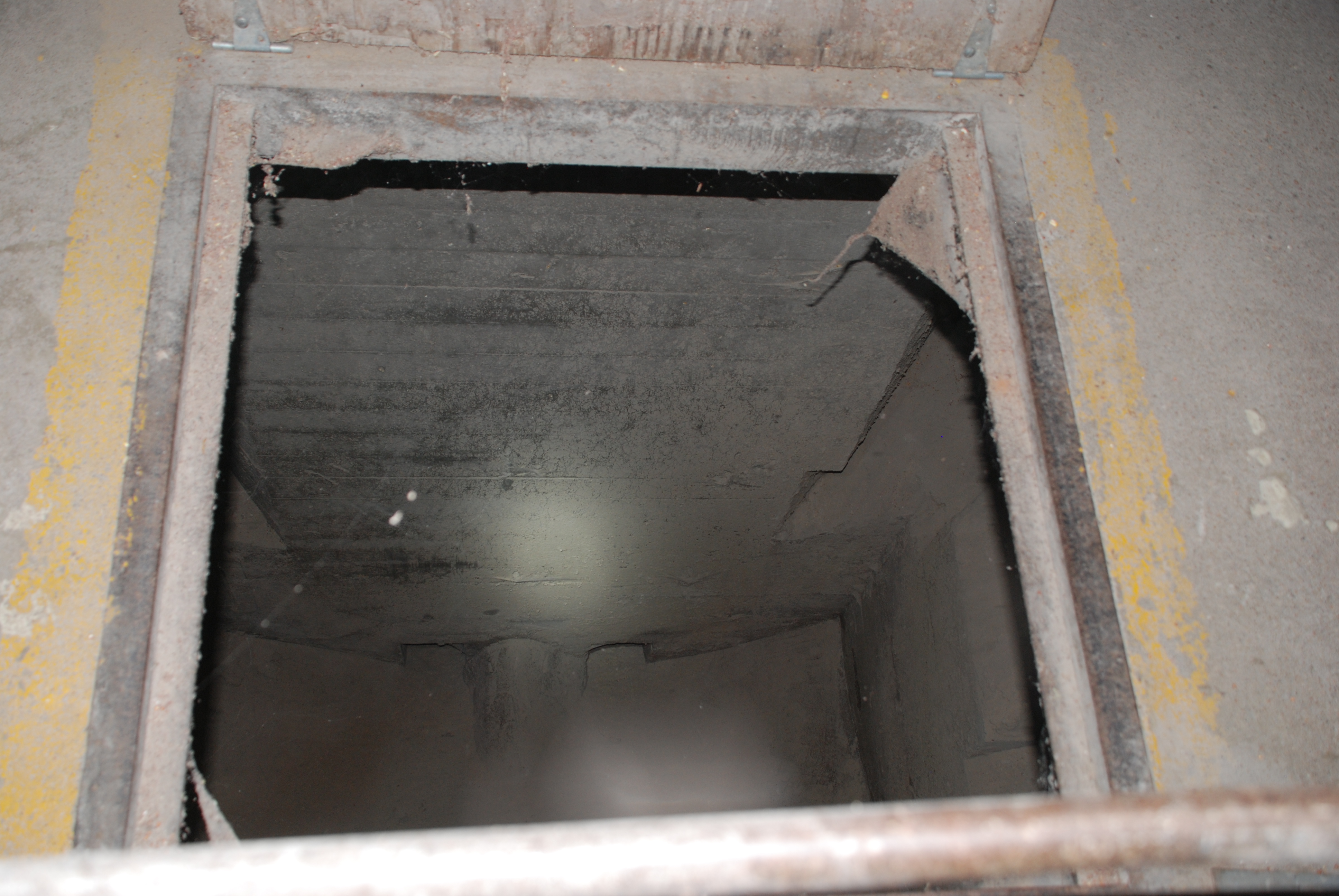
Manhole Cover

Traer, Kan.

Traer, Kan.


Insights from a Ralston, Iowa, elevator maintenance worker

DSC_5966

At the far left edge of the photo, the annex can be seen behind the similarly sized elevator.

Story and photos by Kristen Cart

Each time we travel to Nebraska to see our family, I try to investigate elevators, and the kids groan and roll their eyes, pulling electronic entertainment out of their backpacks.

In March, our trip home warranted a stop at Ralston, Iowa, where we hoped to see an annex built by Tillotson Construction Company of Omaha as we trekked eastbound along U.S. Highway 30. Ralston is about midway across the state and lies south of the highway, and is the site of one of the projects documented in Tillotson company records.

The West Central Cooperative elevator complex, silent and lofty, rimmed the edge of town as we approached on a bright Sunday afternoon. Not a soul was in sight as we entered the parking lot near the cooperative headquarters. But a car in front of the office building was open with a shopvac beside it. Someone had to be around.

DSC_6016

A much larger group of elevators was behind me, away from the town, as I took the photo.

The elevator group in Ralston is dominated by a large squarish elevator, a multi-bin elevator, and a large, multi-bin, rectangular annex snugged in beside the latter. Between the first elevator and the second is an old wood elevator which immediately attracted my attention. It made a fine photographic subject. While shooting the scene, I looked for signs of a Tillotson project. Nowhere was there any manhole cover with the name of a builder. And no one was present who could give me a look inside.

The annex, slightly narrow than the elevator, is on the left

The annex, slightly narrower than the elevator, is on the left.

In fact, the deserted elevator group so dominated the town, along with its companion group of elevators a mile or so down the tracks, that it seemed intimidating to go near it. So I stood off and took photos from across the street.

DSC_6001Heavy rail traffic attended the tracks alongside the elevators in spite of the sleepy Sunday. I counted several trains, blaring their arrival as they passed through town.

At last, a fellow emerged from the cooperative building and commenced vacuuming the company car. I approached him to ask him about the elevators. Ron Hickey, of Farnhamville, Iowa, waved a friendly greeting. He said he was a bit of a newcomer to the Ralston site, but had worked at Boxholm, Iowa, the site of another Tillotson elevator, for two years before coming here. He said that Boxholm’s elevator had 96 florescent light bulbs, and until recently, he was responsible for cleaning every one of them.

Presently, he was cleaning one of several company vehicles parked in front of the nicely appointed offices. The place had every sign of prosperity. Ron said West Central was one of the largest cooperatives in Iowa, and was very successful.

Once we arrived home, I had to resort to the company records to positively identify Tillotson Construction’s contribution to the site. The specifications for Ralston fit the size of the annex I had seen–a massive structure about twice the size of the average elevator project. Since this structure was an annex, many items normally included in a complete elevator build were not required. The Tillotson construction details are reproduced below.

The Ralston storage was built in 1953 using the “Ralston Plan,” which had eight 28′ diameter, 115′ tall bins with a 2′ spread, flat bottoms, and a screw conveyor.

Capacity per plans: 537,000 bushels

Capacity per foot of height: 4,838 bushels

Reinforced concrete per plans (total): 2,779 cubic yards

Plain concrete (4″ hoppers and liner): 9 cubic yards

Reinforcing steel per plans (includes jack rods): 168.18 tons

Average steel per cubic yard of reinforced concrete: 121.00 lbs.

Steel and reinforced concrete itemized per plans

Below main slab: steel 3,128 lbs.; concrete 29 cubic yards

Main slab: steel 102,340 lbs.; concrete 606 cubic yards

Draw form walls: steel 203,034 lbs.; concrete 1,920 cubic yards

Driveway and work floor: not installed

Deep bin bottoms: not installed

Overhead bin bottoms: steel 4,666 lbs.; concrete 24 cubic yards

Bin roofs and extension roofs: steel 14,284 lbs.; concrete 112 cubic yards

Cupola walls: steel 8,907 lbs.; concrete 20 cubic yards

Distributor floor: concrete 2 cubic yards (steel included in above total)

Cupola roof: concrete 3 cubic yards (steel included in above total)

Miscellaneous (boot, leg, head, track sink, steps, etc.): not installed

Attached driveway (in this plan, a gallery, with cross tunnel not included): concrete 63 cubic yards (steel included in above total)

DSC_6010Construction details

Main slab dimensions: 66 2/3′ x 121 2/3′

Main slab area (actual outside on ground): 7,738 square feet

Weight reinforced concrete (4,000 lbs. per cubic yard plus steel): 5,726 tons

Weight plain concrete (4,000 lbs. per cubic yard): 18 tons

Weight hopper fill sand (3,000 lbs. per cubic yard): 154 tons

Weight of grain (60 lbs. per bushel): 16,125 tons

Weight structural steel and machinery: 20 tons

Gross weight loaded: 22,043 tons

Bearing pressure: 2.86 tons per square foot

Main slab thickness: 24 inches

Main slab steel (size and spacing): straight; 1 1/4 square inches and 8 inches o. c.

Tank steel and bottom (round tanks): 5/8 inch diameter and 6 inches

Lineal feet of draw form walls and extension: 717 feet 7 inches; 39 feet 6 inches

Height of draw form walls: 115 feet

Pit depth below main slab: 9 feet 6 inches

Cupola dimensions (outside width and length and height): 12′ x 14′ x 20′

Pulley centers: 137 1/2 feet

Number of legs: 1 main (see pulley center above) and 1 jack

Distributor flow: yes

Track sink: no

Full basement: no

Electrical room: no.

Driveway width-clear: not installed

Dump grate-size: not installed

Columns under tanks: not installed

Boot–leg and head: steel

Machinery details

Head pulley (main leg): 48″ x 16″ x 4 15/16″

Boot pulley: 48″ x 13″ x 2 3/16″

RPM head pulley: 48 rpm

Belt: 15″-6 ply calumet

Cups: 14″ x 7″ at 10″

Head drive: Howell 40 horsepower: 3

Theoretical leg capacity (cup manufacturer’s rating): 7,950 bushels per hour

Actual leg capacity (80% of theoretical): 6,350 bushels per hour

Horsepower required for leg (based on above actual capacity): 26.4 horsepower

Man lift: not installed

Load out scale: not installed

Load out spout: not installed

Truck lift: not installed

Dust collector system: fan into bin

Cupola spouting: not installed

Driveway doors: not installed

Conveyor: 24 inch screws

Also built

Track scale: 50 foot, 50 ton: concrete 35 cubic yards


The vanished Glidden elevator, a concrete giant, has gone the way of the wood

Story by Kristen Cart

It is tremendously disappointing when you realize an elevator should be there, and isn’t. I recently passed through the north-central Iowa town of Glidden, a small place mostly on the south side of Highway 30. I knew from Tillotson construction records that an elevator and an annex were built in Glidden back during the elevator boom. But though I leaned over to that side of the car to peer at the skyline, hoping to see the familiar white Tillotson elevator outline, all I saw were two hulking bins of another more modern sort.

You learn to expect old wooden elevators to disappear. But the 1940s and ’50s vintage concrete elevators usually are not so quick to go.

Glidden, IA 51443 - Google MapsThis situation would require some investigation, but not on a day when I had to get home, with another 400 miles or so to go. I had at least one more stop planned to see an elevator, at Ralston, a town just a few miles further east, and my three kids tolerated the stops, hanging in there at the frazzled edges of their patience.

When I got home, I resorted to the Internet. Satellite images have become so good that you can virtually identify a builder from above. But in the case of Glidden, there was no sign of an old elevator, only a bulldozed area where the forms for two circular bins had been laid out. Apparently I had not overlooked the desired elevator–it was gone.

NEW Cooperative Inc - Google MapsI didn’t count on being able to date the demolition, but the map’s “street view” came to the rescue. An uploaded photo, watermarked 2013, showed a view of the site from an intersection down the street. From that perspective, the old elevator stood as it always had, since it was built. So the old elevator was probably retired after the last of its grain was out, in time for new bins to be built for the next harvest, sometime in 2013 before winter set in.

I missed my grandfather’s (alleged) McAllaster, Kan., elevator by a couple of months when it was torn down over a year ago. But in the satellite image that was available at the time, you could see where the destruction had begun. Several round bins were newly absent, and holes appeared in the top of the headhouse.

I don’t imagine that satellite engineers envisioned this use for their images.


A tale from the Johnson Construction elevator at Galatia, Kansas

DSC_0582 copy Blencoe

Blencoe, Iowa

Story by Kristen Cart

Once again, one of our readers has supplied a fascinating glimpse into the construction of an elevator.

Emily Frank is the granddaughter of Darrell Greenlee, a foreman for Johnson and Johnson-Sampson. She related a story about the beginnings of the Galatia, Kan., grain elevator:

The Post Crescent 26 Mar 1959My grandfather built slipform concrete grain elevators while my mom was little. My grandparents moved around every three to six months from the time they were married until my mom (the third of six children) was in third grade. I find a lot of your stories remind me of the ones my mom told or my grandmother tells. You did one where a man fell to his death from an elevator during construction. Unfortunately that happened on a job where my grandfather was the foreman, as well…

My grandfather worked for Virgil Johnson. At the time the company was Johnson Elevator Company.

At a job in Galatia, Kan., in 1959, while Darrell was stabilizing the family trailer, it fell and he was hit across his back and shoulders. Rosina took him to the hospital. The hospital wasn’t going to see him until she could pay. She didn’t have insurance. She told them instead, “I’ve got enough money to buy this damn hospital.” When they left two days later, she paid cash.

Rosina called Virgil to tell him that Darrell had been hurt–not bad but he was pretty bruised up. Rosina wasn’t sure what they were going to do. She told Virgil she wanted to know what he was going to do because if Darrell didn’t work, he didn’t get paid. Virgil asked if his butt was bruised and then pointed to a chair and said “See that chair right there, he can park his ass right there and supervise from his chair.”

When the elevator was just about completed a man fell from the top of the elevator. Darrell was a witness to the fall. The guy opened the door at the top and the wind caught him and blew him over the side of the elevator. He fell 120 feet to his death. The man was Arthur Kronberg, 42, originally from Menasha, Wisconsin.

Rosina said when they called the man’s brother to tell him he could come pick up his belongings, he didn’t seem very interested, except he asked if there was anything of value. They had told him his brother had a truck. The man reluctantly agreed to get the truck.

Emily filled in some of the details of her grandfather’s career. The history of Johnson Elevator Company that she shared intrigued us, because the company took up where Mayer-Osborn Company left off and built strikingly similar elevators. The Galatia elevator is a close copy of the Mayer-Osborn elevators at McCook, Neb., and Blencoe, Iowa. Because of the similarities between them and a number of other Johnson elevators, we have speculated whether designer Gene Mayer continued his career with Virgil Johnson and brought his designs with him. Emily continued:

DSC_0574(1)

Page City, Kan.

The elevator at Galatia is on one of Johnson’s business cards.

Johnson used to work with some brothers with the last name Sampson. They were Virgil Johnson’s brothers-in-law. They worked together for a while, too, under the name Johnson-Sampson.

My grandfather worked constructing concrete elevators from 1947 to about 1963. He worked for several different people.

DSC_0526

Mitchellville, Iowa.

Johnson was the man he worked for most, on and off over the years. When Virgil and his brothers-in-law split, my grandfather went to work for Dewey Construction and then Young Love. Then Virgil found a partner, and my grandfather worked for Johnson & Bratcher. Then Virgil went off on his own as Johnson Elevator Company.

When Virgil went broke after a missile base job in the 1960s, my grandfather worked for a guy by the name of Guy James. He did two jobs for him until he finally settled in Rushville, Ill. He never built another elevator, but he had his own company and they did a lot of elevator repair work.

My own grandfather William Osborn’s experience followed a similar trajectory–after he was done with elevator construction, he went on to elevator repair and maintenance. We always attributed the cancer that took him at age 75 to the dust he breathed during those years, though some of the damage could have been from smoking, a habit he dropped ten years before he died.

The hazards of the business were sometimes obvious, but often stealthy and unexpected. From dust, to wind, to new boots, to heedless roofers, many things in elevator construction took lives–but the monuments built by these mortal men remain, withstanding tornadoes, floods, hail, and every natural disaster.


The 1945 vintage elevator at Lodgepole, Nebraska, and the death of Bill Morris

DSC_0446Story and photo by Kristen Cart

A newspaper article recently came to light that upended our elevator construction timeline, causing us to reconsider the story of the Lodgepole, Neb., elevator and the careers of Joseph H. Tillotson and my grandfather William Arthur Osborn.

My dad, Jerry Osborn, said that the death of Bill Morris, the superintendent on the Lodgepole job, and that of Joe Tillotson, the owner of J. H. Tillotson, Contractor, came within a month or so of each other. Now it appears likely that the season was the same, but both fatal car accidents occurred in different years–1945 and 1947–a fact easily misunderstood by the young boy my father was at the time, as he listened to the adults talk about business.

elevator021

We believe this photo by William Osborn is from Lodgepole, Neb.

The article appeared in the Nebraska State Journal on Oct. 8, 1945:

Omahan dies after car accident

SIDNEY, Neb. (AP). W. B. Morris, 36, an employee of the Tillotson Construction company, of Omaha, was fatally injured Saturday night when struck by a car driven by Howard B. Kirk, 48, of Lodgepole, Neb., Deputy Sheriff Arnold Braasch said Sunday.

The deputy sheriff reported Morris was changing a tire on his car about ten miles east of here when the accident occurred. He died in a hospital about five hours later.

Braasch said Morris’ home was in Texas, but that he was living in Lodgepole while working on the construction of a new grain elevator.

County Attorney R. P. Kepler said he will decide on Monday whether an inquest is to be held.

We attributed the Lodgepole elevator’s construction to J. H. Tillotson, Contractor, the independent company Joe Tillotson started after his parting of the ways with Tillotson Construction of Omaha. We wrongly believed that both Bill Morris and Joe Tillotson had died in 1947 while working on the Lodgepole job. Now we know that Bill Morris died in 1945 while working for Joe Tillotson. The new fact pins down the date of Joe’s departure from the Omaha company–a move my grandfather made at the same time.

When interviewed in 1949 about his first, independent, Mayer-Osborn Construction venture in McCook, Neb., William Osborn named a number of elevators he had built before. We still believe all of the elevators Bill Osborn listed were J.H. Tillotson elevators.

According to the McCook article, Bill Osborn said the elevators in Maywood, Traer, Wauneta, and Lodgepole were built in 1945. If the reporter was right about Bill Morris’ employment, all of the 1945 elevators would be too early to be J. H. Tillotson elevators. However, none of them were recorded in the Tillotson Construction specifications and none built in the Omaha company’s style.

The reporter writing about Bill Morris’ death in 1945 was unaware of the freshly minted company Joe Tillotson had started, and wrongly identified Bill Morris as a Tillotson Construction of Omaha employee.

DSC_0369

An early photo of the Lodgepole elevator was kept at the location.

The fact that in 1945, Bill Morris went from a superintendent job at a verified Tillotson Construction project in Giddings, Tex to a superintendent position at the Lodgepole elevator job, a project demonstrably not built by the Omaha company, precisely dates the time Joe Tillotson chose to go out on his own.

The 1945 construction date of the Lodgepole elevator gives us a much more accurate understanding of the birth of J. H. Tillotson, Contractor, a venture that lasted about four years, until my grandfather built the McCook elevator for Mayer-Osborn Construction in 1949.

A tragedy took Morris in his prime, but my grandfather stepped into his place, gaining valuable experience as a builder. To this day, the graceful Lodgepole elevator serves as a fitting monument to Morris’ productive career.

A search for Van Ness elevator images yields surprising results

Story by Kristen Cart

When hunting for ancient elevators–and by ancient, I mean hundred-year-old, steel-sheathed, wooden construction–you run into a serious problem: most of them no longer exist.

13633472

A 1936 Omaha directory

The elevator you are looking for may have burned down years ago, followed by a replacement that also burned down. The things liked to catch fire, as a search of old newspapers will show.

Concrete construction was meant to reduce the problem, but the new elevators would burn in spectacular fashion when grain dust ignited, throwing debris and victims sky high.

The fertile ground for old elevator hunting remains the Internet, thanks to bloggers, satellite imagery, photographers, and the odd stuff that accumulates online.

Recently, we turned up some truly fascinating finds. We had discovered Charles H. Tillotson was president of Van Ness Construction Company, of Omaha, in the 1930s. He was the original founder of the construction business (and its progeny) that his children and their associates operated into the 1950s, as documented in this blog.

Charles H. Tillotson

Charles H. Tillotson

Now that we had a company name for his earlier efforts, the hunt for Van Ness elevators was on.

Rydal, Kan., was home to an early Van Ness elevator. The town was profiled in the blog Dead Towns of Kansas, a project by the Hutchinson, Kan., journalist Amy Bickel. On her page is a marvelous 1950s vintage aerial photograph of bridge construction showing two 1888- to 1907-vintage elevators, one of which was built by Van Ness. One of the two pictured elevators burned in 1952. We do not know if the fire consumed them both.

Luckily, a Van Ness mill and elevator in Grenola, Kan., was deemed historical, and the Kansas State Historical Society successfully nominated it for the National Register of Historic Places. Since grain was no longer stored there, the greatest threat to its survival was gone.

It is the only example we have found that still stands.

The architect of this elevator, designed and built in 1909, was P. H. Pelkey Company, with the construction completed by the R. M. Van Ness Construction, of Fairbury, Neb.

This company could have been the predecessor to the Van Ness Construction Company that Charles H. Tillotson led, and it may have been his earlier employer. A little more research could tease out the history of the Van Ness building enterprises in Nebraska.

But the elevator is representative of the typical construction of the time, when Charles would have been working in the business.

This old elevator is located in Grenola, Elk County, Kan., on a railroad siding which was formerly on a mainline of the Atchison, Topeka, and Santa Fe Railroad, Southern Kansas Division.

An airplane crash ends Gandy Construction, an early elevator player

WAO3

The Mayer Osborn company brochure mentions Gaddy (sic) Construction of Omaha

Story by Kristen Cart

My father remembers the grain elevator construction business from earliest childhood. But his childish memories did not distinguish one job from another, so until recently we did not know about the company where my grandfather William Osborn began his career as a carpenter.

Dad said they still lived on the farm when his father went to Kansas City in pursuit of a better opportunity, which dated the event to before 1944. That job was likely with the Tillotson Construction Company of Omaha. Before then, Grandpa’s Mayer Osborn Construction brochure said he worked for Gaddy (sic) Construction of Omaha. It was difficult to come up with any information about them, until we located a clipping that marked a tragedy.

The newspaper account related:

Plane Crashes at Lexington, Omahan Killed

Lexington, Neb., (AP). Ralph Arden Gandy, 41, head of an Omaha construction firm, died Saturday night after the light plane he was piloting crashed near here.

Tommy Johnson, a Gandy construction company foreman, was injured in the crash.

W. H. Pfiefer, Lexington funeral director, said Gandy’s plane took off from a field on the farm of Dennis O’Connor, a cattle feeder who lives six miles northeast of here.

After the takeoff, the funeral director said, the plane stalled and crashed on a road. Both men were thrown free of the wreckage.

Gandy died a short time after the crash in the Community hospital of Lexington.

Johnson received a broken jaw and chest injuries. He was removed to the Methodist Hospital in Omaha by ambulance Sunday night.

The Gandy firm had built a grain elevator on the O’Connor farm, Pfiefer said, and Gandy and Johnson had been at the farm inspecting it. The plane was taking off to return to Omaha when it crashed.

Gandy is survived by his widow, Clara, and four children.

The Nebraska State Journal, Lincoln, Neb.,  Aug. 1, 1949.

William Osborn worked with Loren Saunders, his brother-in-law, at a job in Omaha before he took the opportunity in Kansas City, according to my dad. It seems likely that the Gandy company was that job.