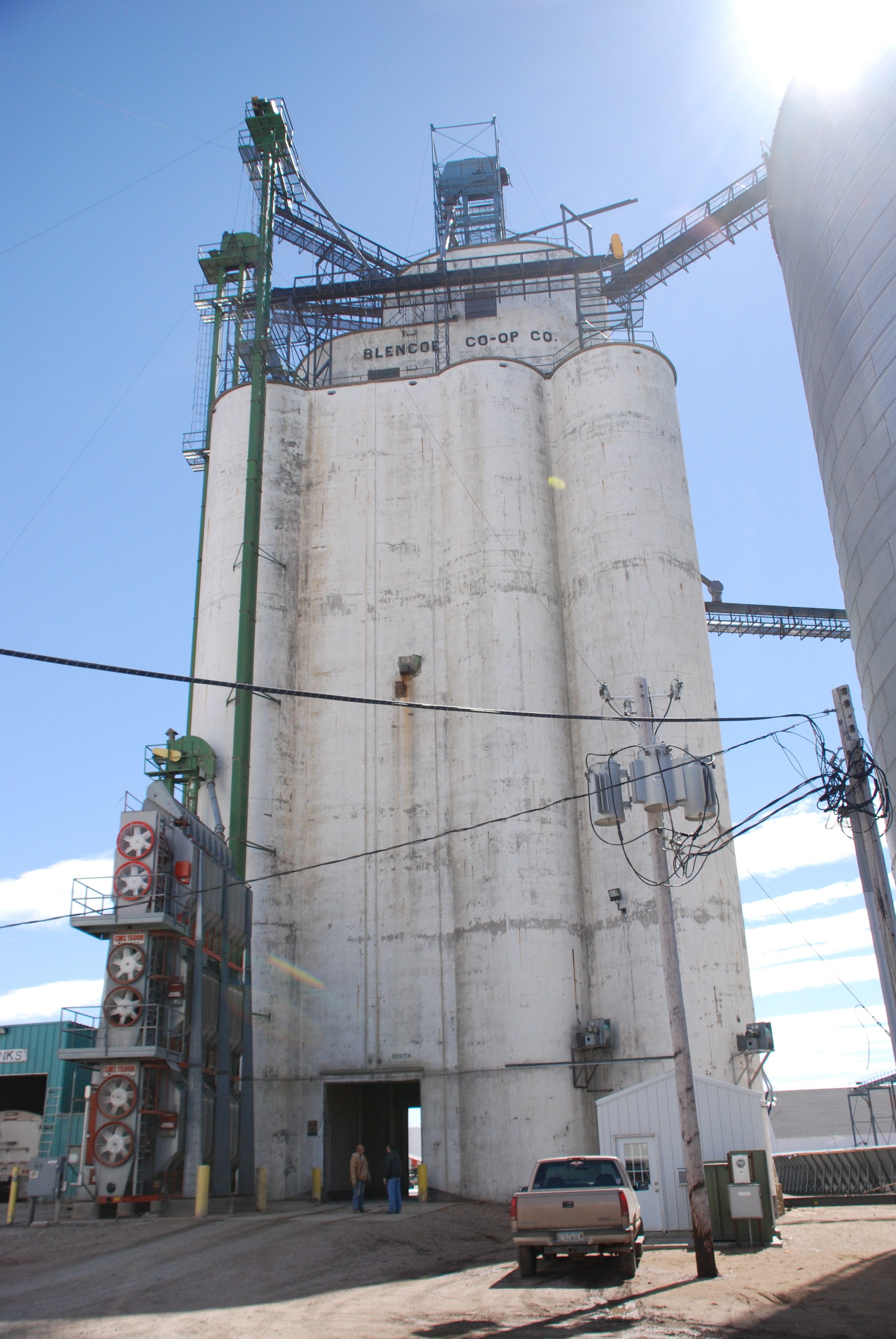
How to build an elevator: Jerry Osborn’s firsthand account from Blencoe, Iowa

Story by Jerry Osborn and photos by Kristen Cart

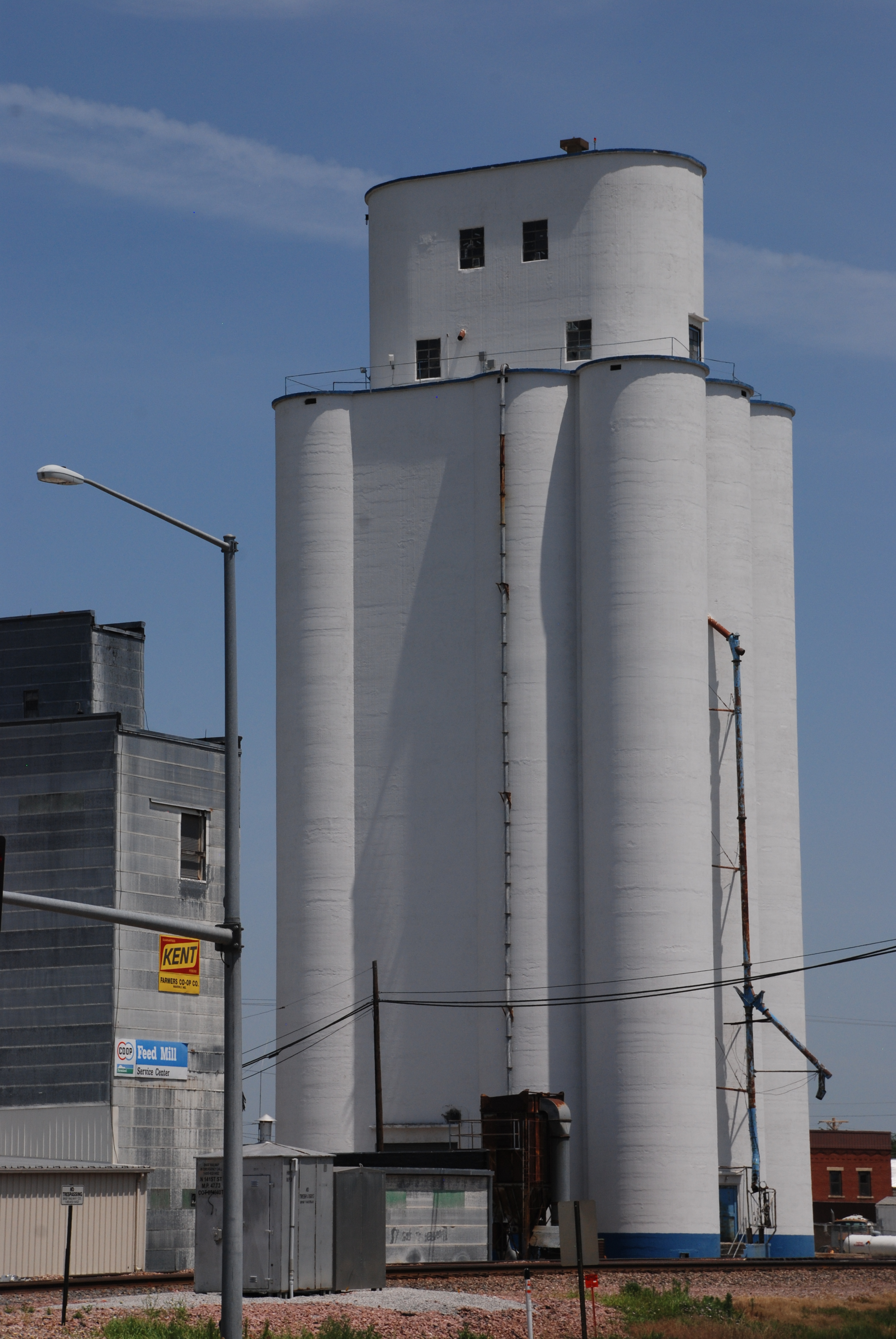
The summer of 1954, before my senior year, I started working at the Hormel plant again, but after a few weeks my dad asked me to work on the elevator his company, Mayer-Osborn Company, was building at Blencoe, Iowa. This would be a different experience. Since I had no transportation of my own he took me to Blencoe and set me up in a motel near the site. He also took me to a shoe store to buy work shoes so I would be set to go to work. The wages weren’t great. They were $1 an hour just like all the other grunts on the job. No nepotism on this job. My job was to select the correct steel and see that it was laid properly as the slip forms were filled and jacked. Fortunately, I had enough engineering drawing work that I could read the blueprints. The slip operation had just begun when I arrived, so it was learn-on-the-run for me.

Things seemed to be progressing nicely until we were about twenty feet in the air. At that point it was noticed that some of the exposed concrete was crumbling and falling to the ground. This can’t be good. The operation was shut down immediately to determine what the problem was. It became obvious that the mix ratio of cement to sand and gravel was too low. The work to that point had to be torn down. The demolition was done over the weekend, and we were setting up to slip again on Monday. The concrete was mixed on the job and the appropriate mix weights were to be locked into the scales. Somehow the proper amount of cement was not designated. My brother, who had been on a lot of these jobs, was a supervisor on this job and should have checked the setting for the proper mix.

When operating properly, the concrete was mixed next to the elevator; each mix was dumped into a bucket hoist, which was lifted to the deck level. The mud was fed into two-wheel mud buggies. The buggies were then wheeled to and dumped at the place needing concrete. As this process took place another mix was in process, so when the hoist bucket was returned, it was once again filled and the whole process was repeated over and over until a height of more than 100 feet was reached. As the forms were filled, steel was laid and other features such as portholes were laid in place as the forms were jacked upward, exposing freshly set concrete at the bottom of the forms and providing more space at the top for more mud. A scaffold was built below but connected to the forms so men with trowels could smooth the fresh concrete as it was exposed below.

I had hoped to work until the slip was finished, but the restart didn’t leave enough time prior to football practice.

Faked out in American Falls, Idaho

Chalmers and Borton elevator at American Falls, Idaho.

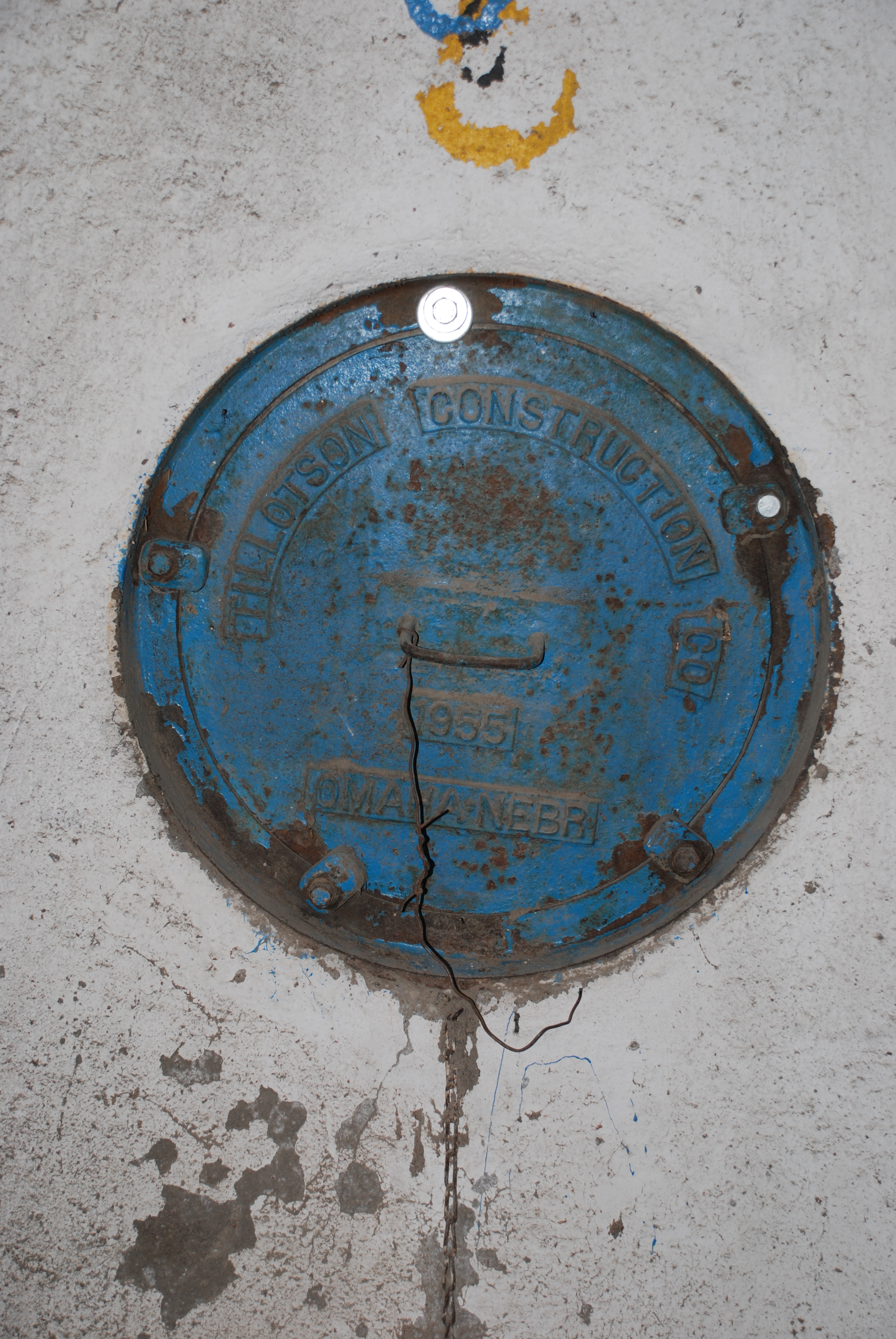
During one of my recent road trips, I came upon a beautiful concrete construction elevator in American Falls, Idaho.  It looked much like the stand-alone elevators built by Tillotson Construction of Omaha, with an added annex.  It is in full operation.  I explored the elevator complex from about 7:30 am, and stayed on site as workers reported for their 8:00 am shift.  It was a very handsome elevator in the early morning light.  In its details it looked like a Tillotson elevator, except for the rectilinear head house, which is not unknown for a Tillotson or Mayer Osborn built elevator, but would be unusual.

As the shift started, I stopped at the elevator office to ask about the builder.  The worker smiled and pointed out the brass plaque by the door.  It was built by our grandfathers’ arch rival company, the ubiquitous Chalmers and Borton based in Hutchinson, Kansas.  Gary Rich pointed out one time that it seemed that wherever he found a J.H. Tillotson or Mayer Osborn elevator out in Kansas or Colorado, hard beside it would stand a Chalmers and Borton annex.  The companies played hard ball and competed for every contract.  Dad said, when I asked if Grandpa’s Mayer Osborn Construction of Denver, Colorado ever worked with Chalmers and Borton,  that “oh, no, they were his biggest competitor.”

Greenwood Nebraska’s straight-up elevator by Tillotson Construction of Omaha.

The elevator at Greenwood, Nebraska, built by Tillotson Construction of Omaha, is very reminiscent in its style to the elevator in American Falls.  I guess form followed function, and each company offered a product similar in its details–often the deciding factor was the bid price.  This Chalmers and Borton elevator certainly faked me out.  But it stands as a beautiful example and deserves notice.

Musings about an Absent Father

By Kristen Osborn Cart

My dad has been writing a memoir about his life growing up in Nebraska, as the son of Bill Osborn, builder of the Mayer Osborn elevators.  It struck me that after about 1939, Dad scarcely mentions him, other than to note his absence.  Grandpa was gone all of the time. Over the years the Osborn cousins have assembled photos from those times, and it is very striking that the photos of the Osborn home became scarce from about then. The few pictures we have from later on were from visits, and from the various projects he worked on. Bill Osborn was the photographer in the family.

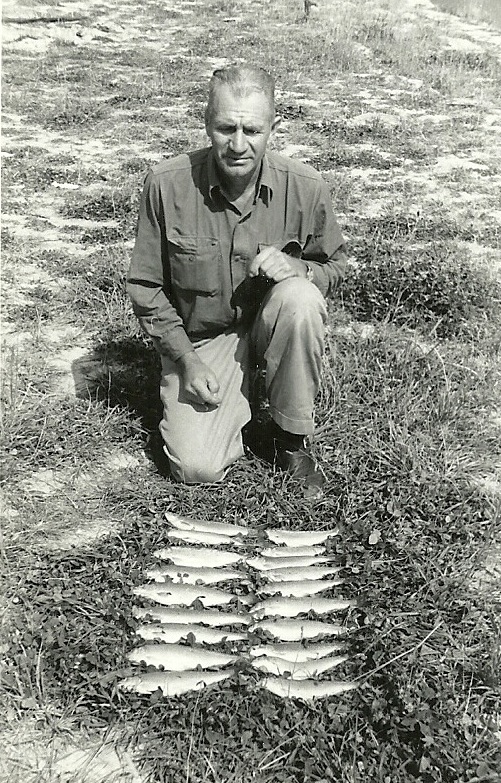
William Osborn, 1952.

By the time I knew him, he had long since retired from that occupation, and he was home, taking care of his tropical fish business. He would find time to take his little granddaughters fishing (my cousin Diane and me), after night crawler hunting by flashlight, of course.  He was an affectionate grandfather, and he loved my mom.  He read the morning paper over breakfast, and ate his eggs sunny-side-up, mopping up the last of them with his toast. And he didn’t talk much. The elevator phase of his life, in my mind, consisted of a framed photo of an elevator (McCook Equity Exchange), and Dad’s assurance that it was grandpa’s first elevator he built on his own.

My cousin, Diane, brought out a cache of photographs of grain elevators one day, not too long ago.  Most were not marked, though the one from Kanorado, Kansas, had it’s location and capacity written on the back.  We have identified almost all of them, but a few are still mysterious, so now that it has been thirty-five years since Grandpa died, we have something to ask him.

This summer we are planning to go find some of the grain elevators he built some sixty to seventy years ago, many of which are still in use.  The buildings can’t tell us about his jovial smile, his mischief, or his aggravation at workers who left after their first paycheck.  But I can imagine him there, just as I suppose my father had to.  At least Dad could visit sometimes.

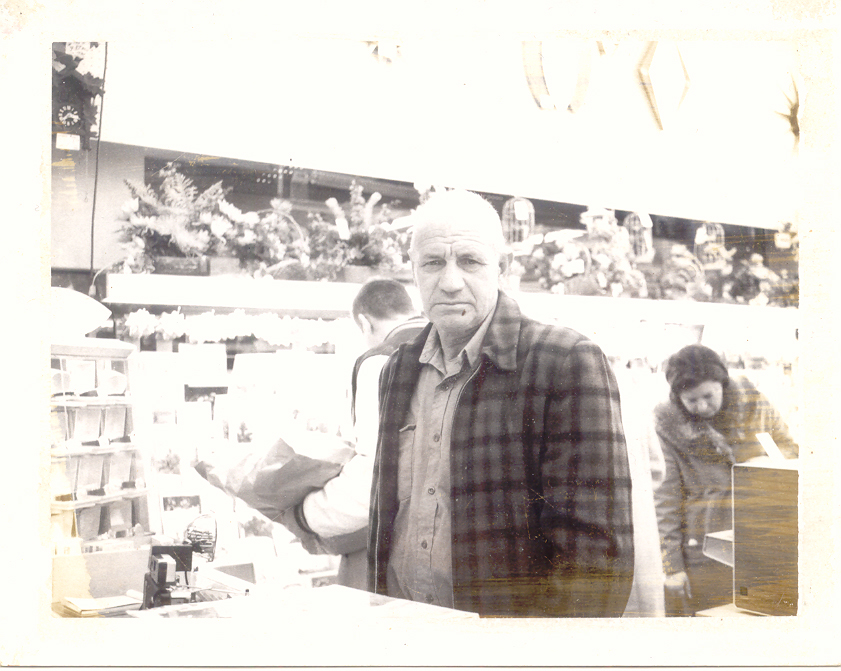
William Arthur Osborn, 1965

Nebraska Firms get Government Contracts

Give projects to Nebraska firms

Washington (AP).  The War Department has awarded the following government contracts (Army engineers office in charge in parentheses):

Less than $50,000.

C.C. Larsen and Sons, Council Bluffs, IA., temporary buildings, Thayer County, Neb. (Omaha).

Olsen, Assenmacher, and Rokahr, Lincoln, Neb., temporary frame building, Lancaster County, Neb. (Omaha).

Tillotson Construction, Co., Omaha, temporary building, Fillmore County, Neb. (Omaha).

Owen Mann, Rapid City, S.D., storage facilities, Box Butte County, Neb. (Omaha).

A. Borchman Sons, Omaha, temporary building, Dodge County, Neb. (Omaha).

Lincoln Nebraska State Journal, Lincoln, Nebraska, Friday, June 11, 1943.