Old wooden elevators must repurpose or perish, as the surviving elevator in Lander, Wyo. shows

Story and photos by Kristen Cart

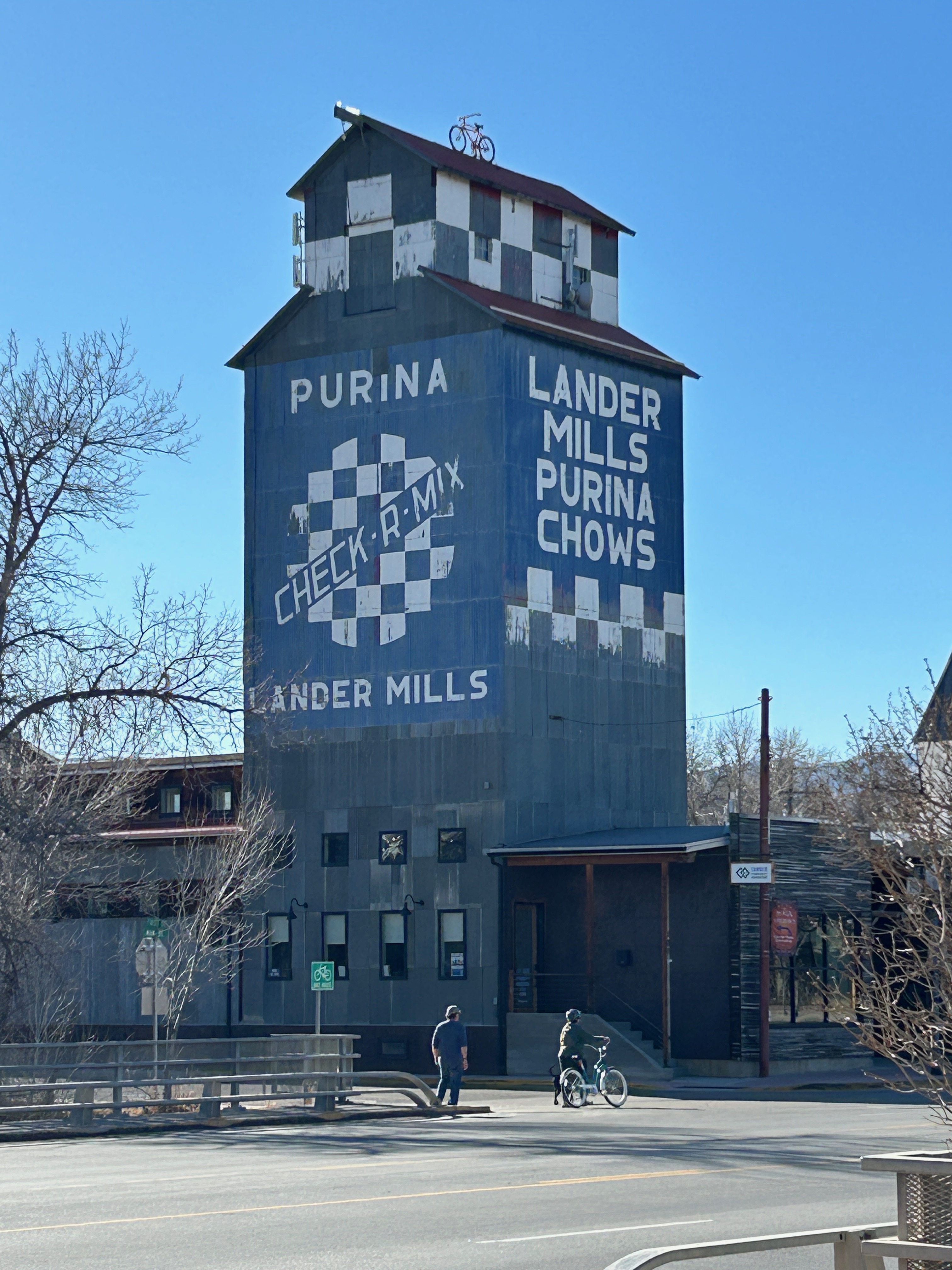
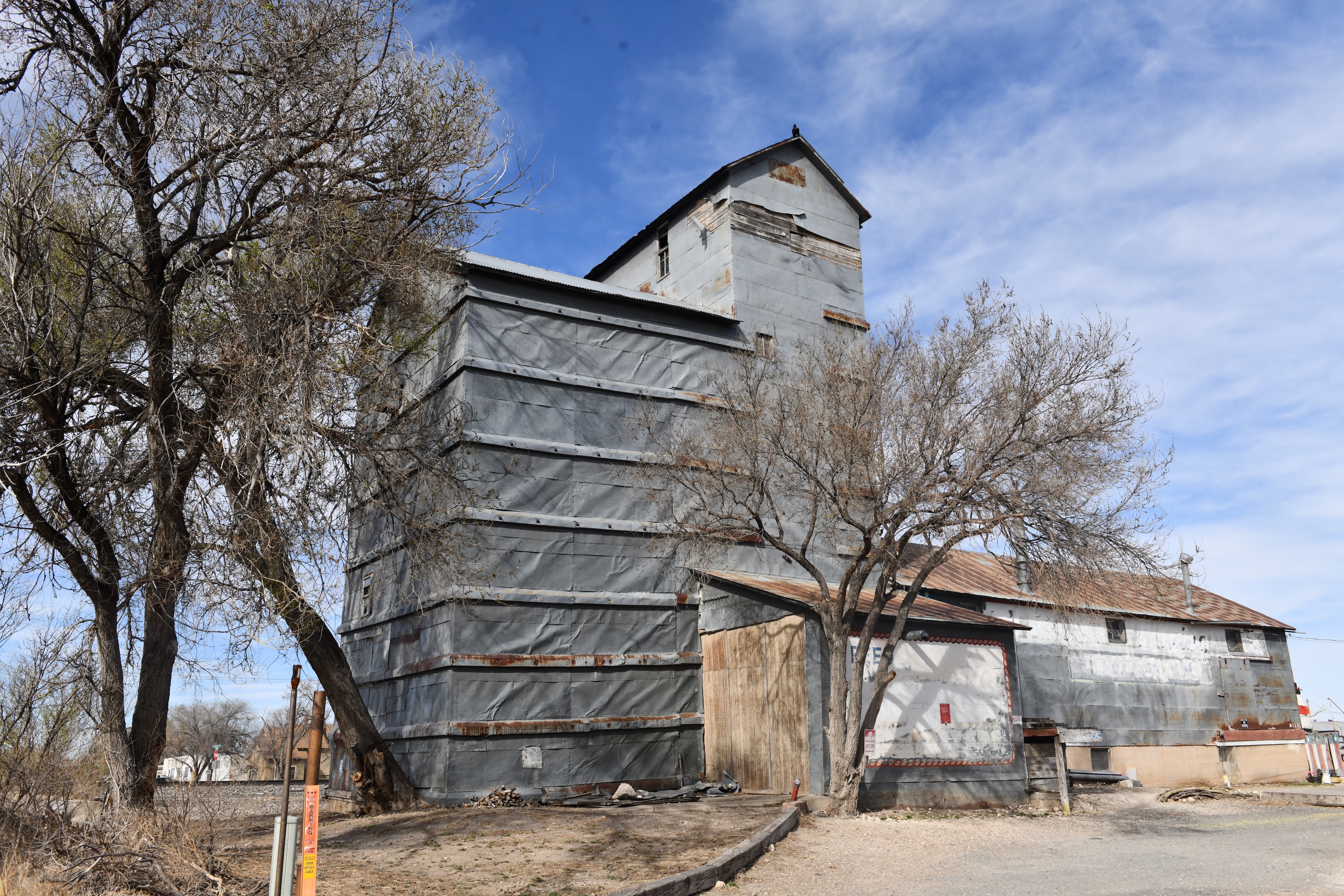
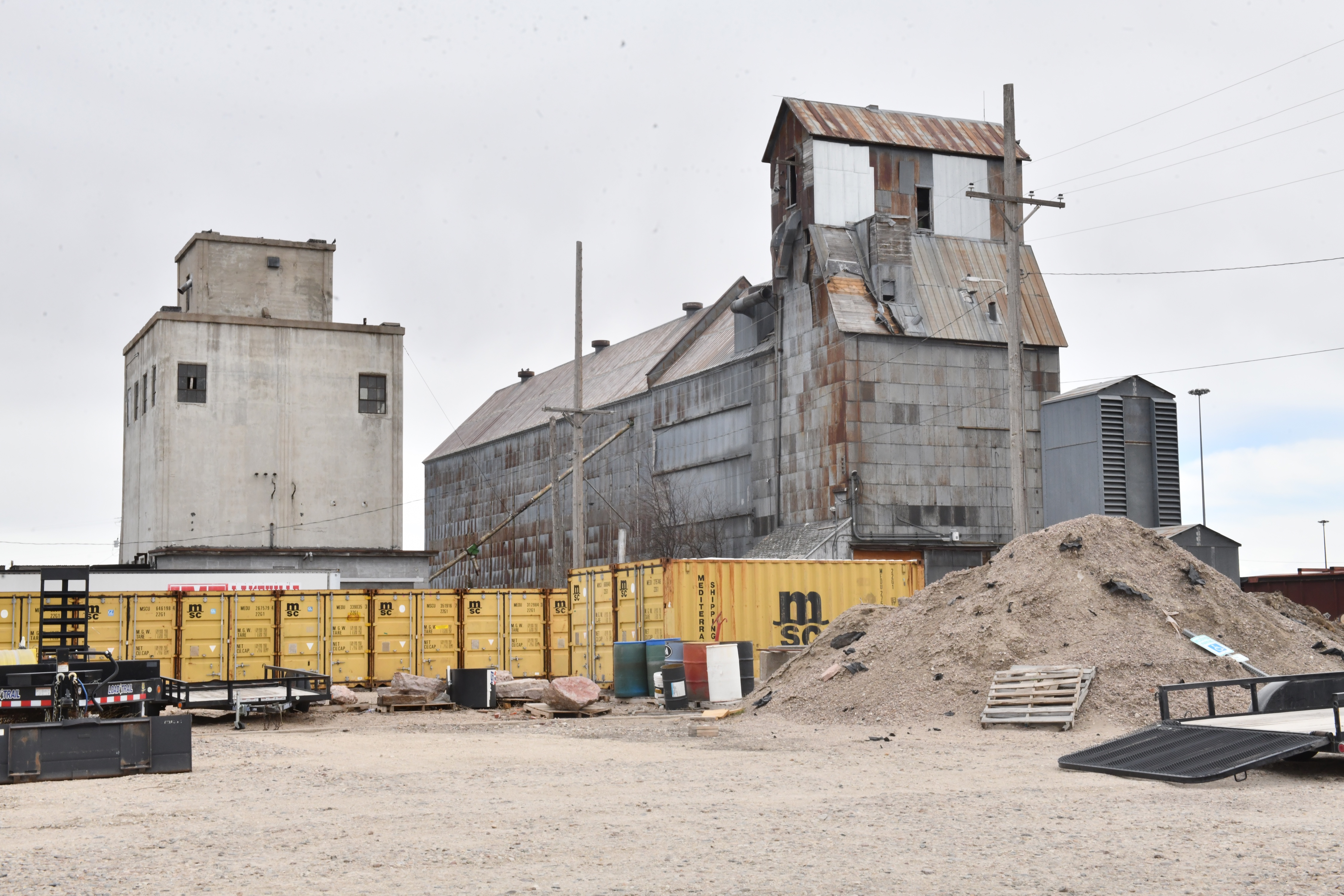
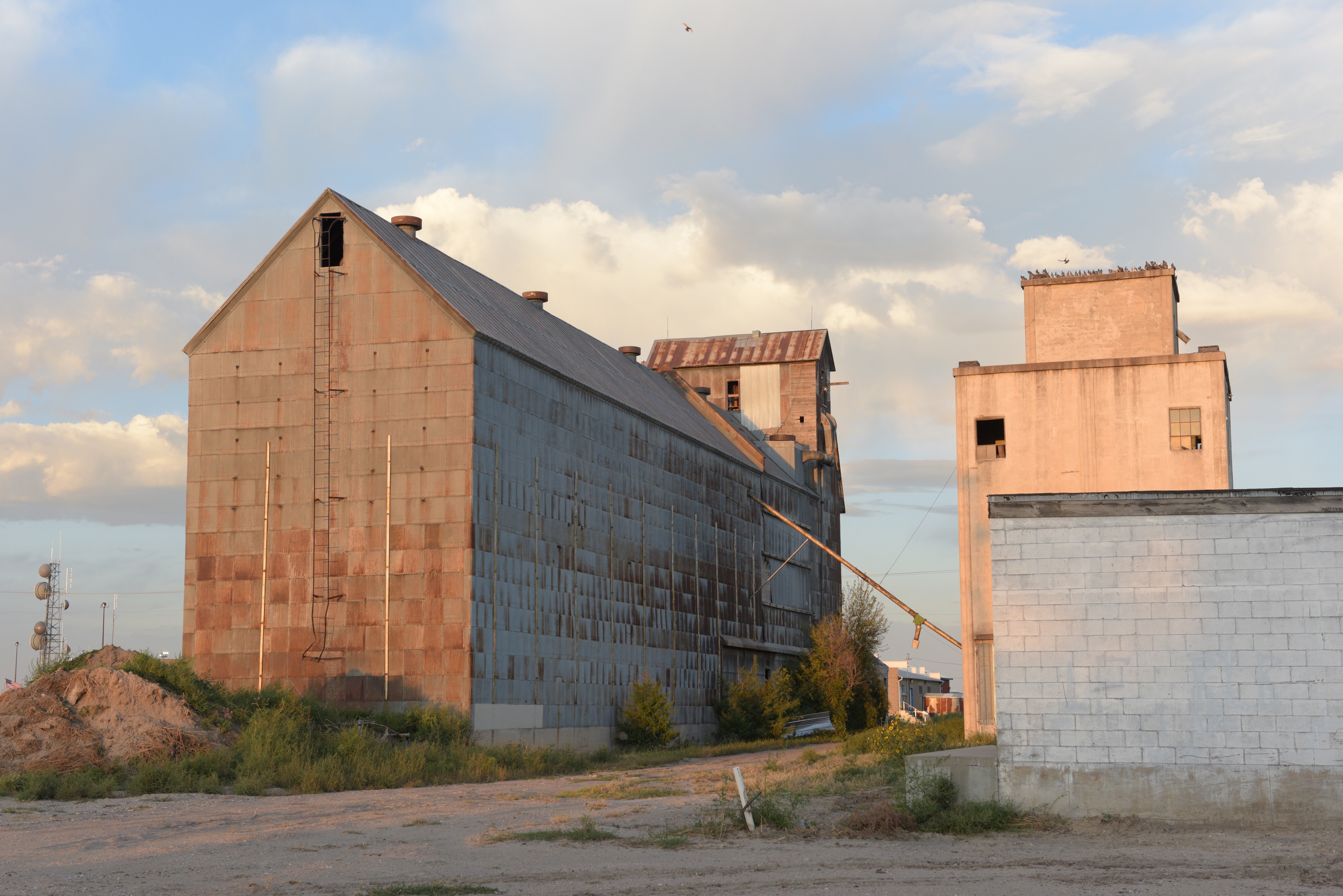
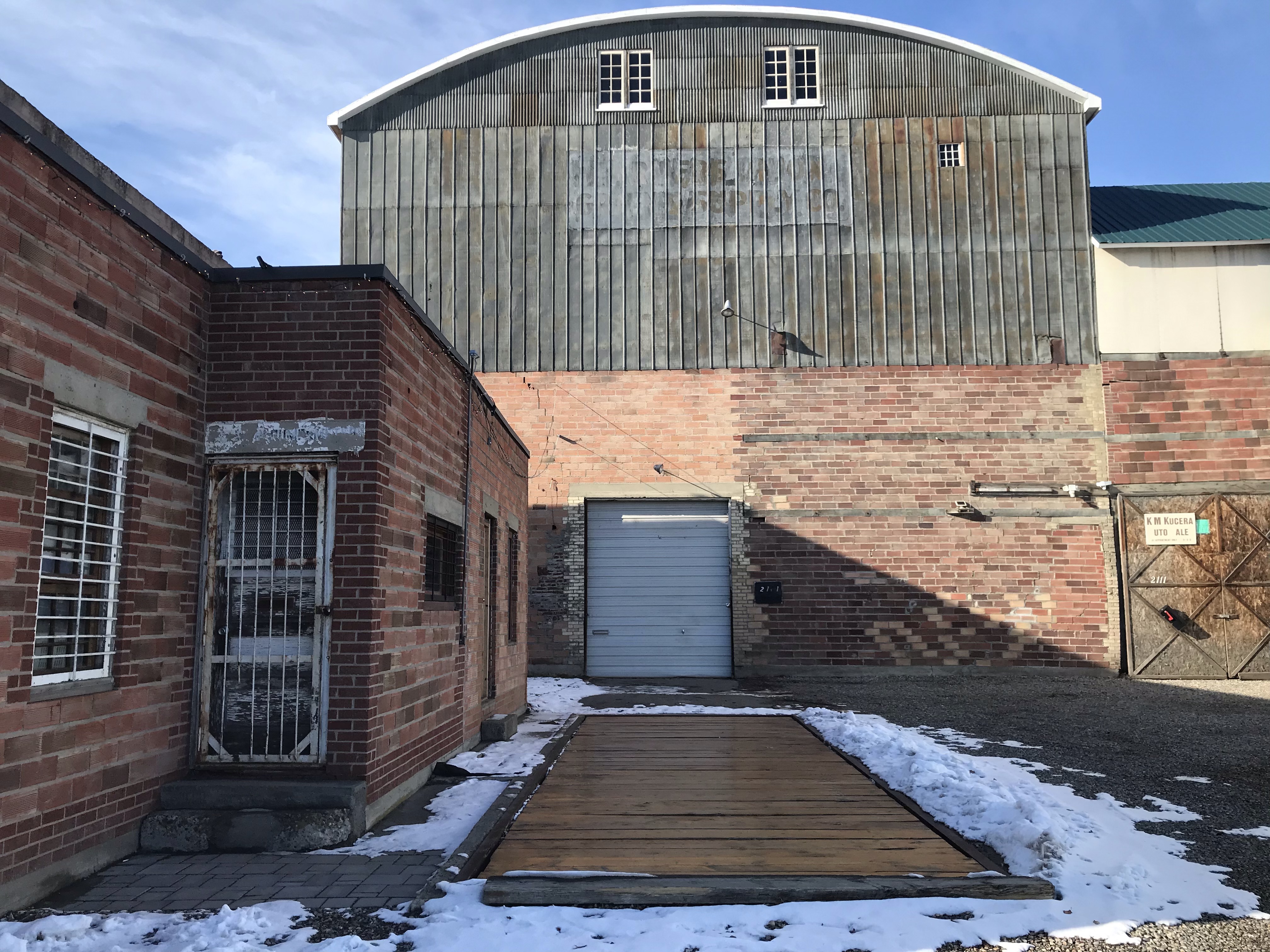
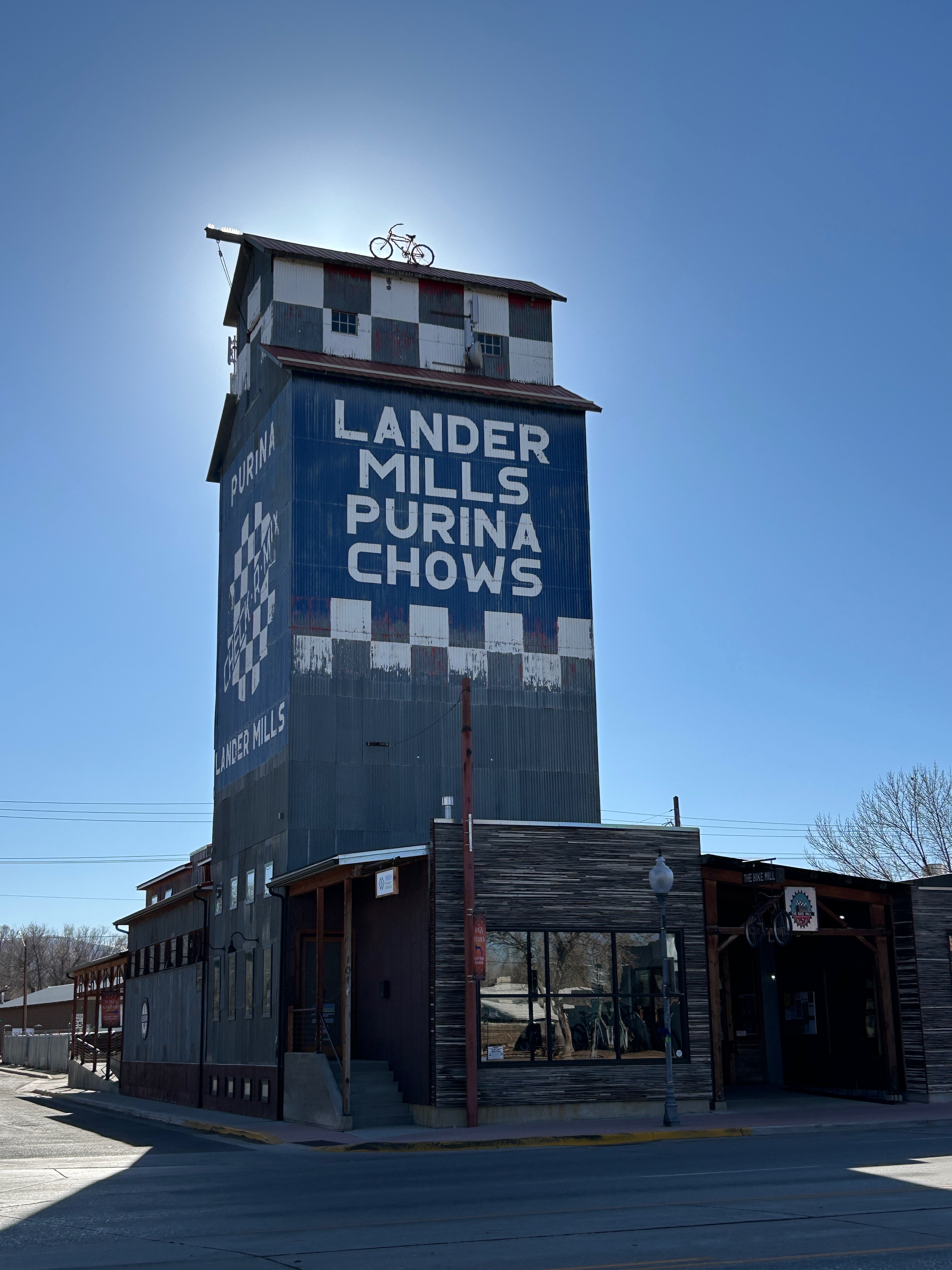
It’s wonderful to find an elevator that has taken on a new life. The Lander, Wyo. grain elevator, which stands sentry at one end of the business district, was in a sorry state when its rescuer arrived on scene, as told by the Cowboy State Daily, Jan 20, 2024. It took a lot of money and a bit of wild romanticism to see beauty in the spoiled hulk, and to do something about it. I too wondered how that bike got up there. Now I know.

Artists who happened through Lander have also been inspired by the elevator, and you will find it with its Bike Mill and Purina checkerboard represented in paintings and drawings all over town. J. C. Dye, a local painter and sculptor, recently worked on a painting commission that featured the Lander elevator prominently, with a cattle drive running down the main street in its shadow. The painting will soon adorn a local concern.

An old elevator normally will not overcome fifty or more years of pigeon poop and rotten grain crusted throughout the interior, with rain and snow coming in through a ruined roof. It will become a haven for vermin, a nuisance, and a safety hazard. Then it will meet the bulldozer or the wrecking crane.

Many elevators didn’t make it that far, as revealed by story after story in local newspapers of elevator fires and the ensuing destruction.

A lot of these old monuments won’t overcome the day they no longer make money for their owners. The Cogdill elevators and mills in Dow City and Dunlap, Iowa would meet their demise by fire. The sons of Pat Codgill of The Cogdill Farm Supply Company intended to demolish them to modernize the operation after taking over for their dad. When I looked for them some years later, the elevators were gone.

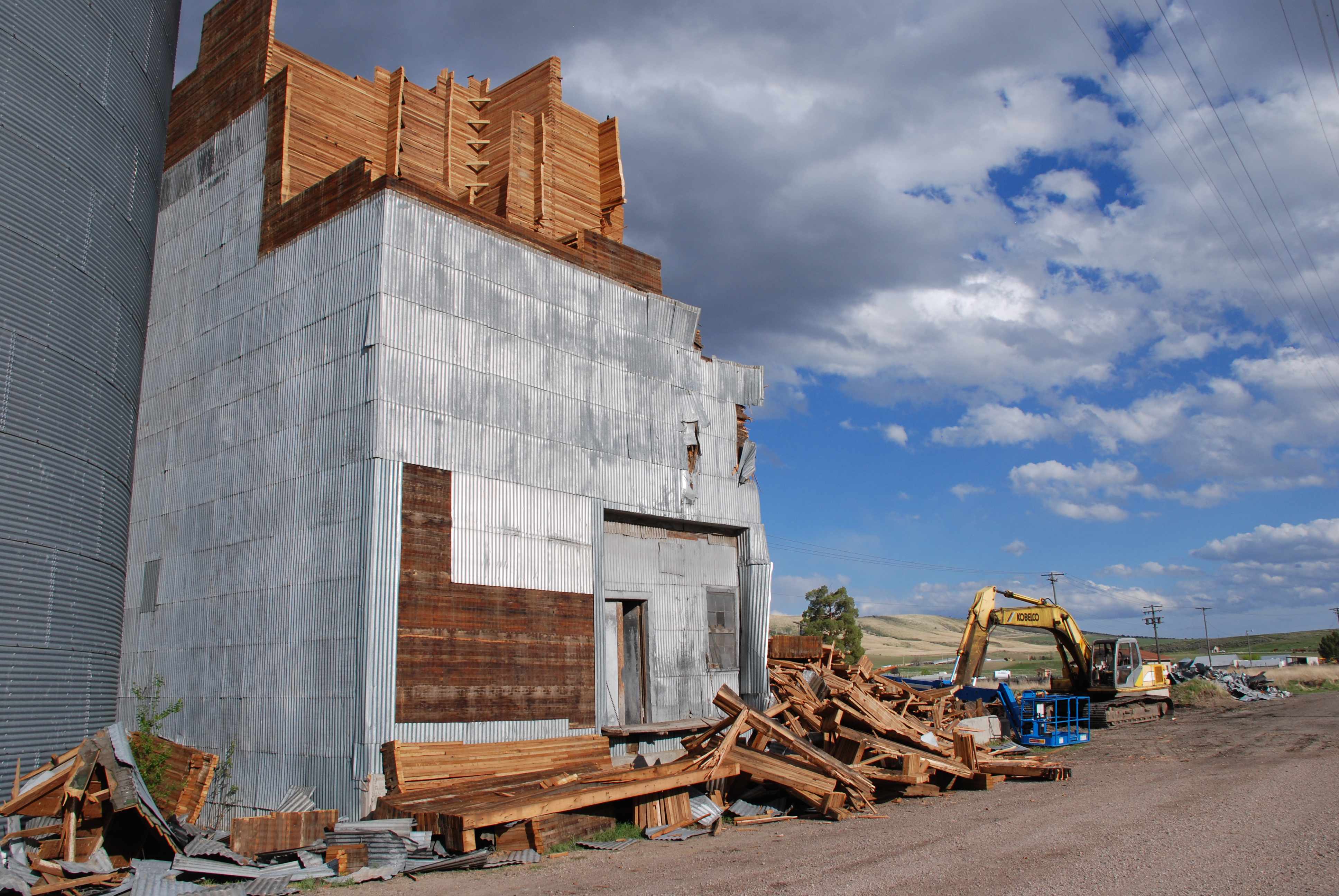
The demolition at Arimo, Idaho on May 1, 2012.

The better preserved elevators may be taken down board by board for their pretty blond lumber, the way the elevator in Arimo, Idaho, met its fate. The wood became more valuable than the storage. The economics are brutal once these structures become obsolete.

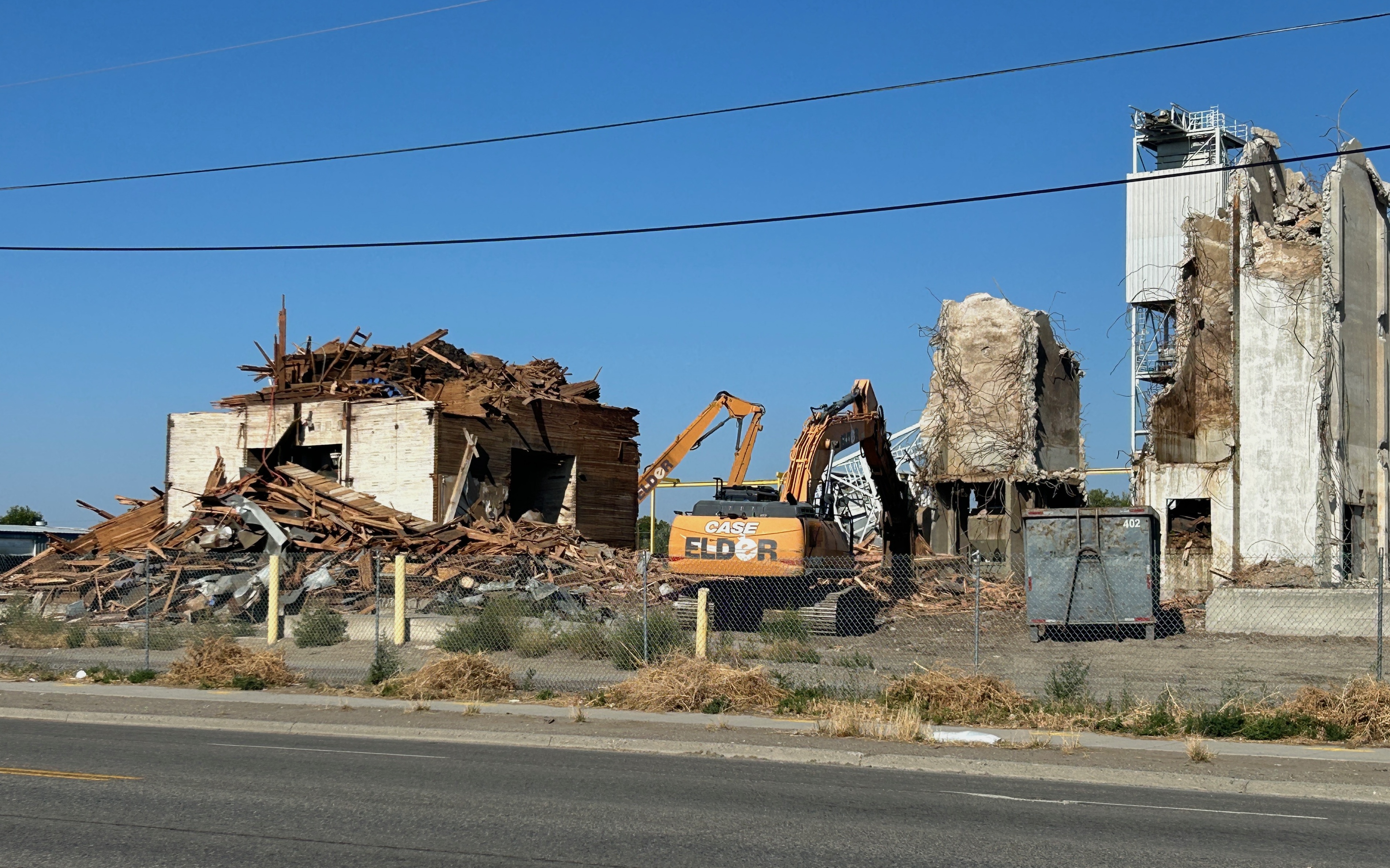
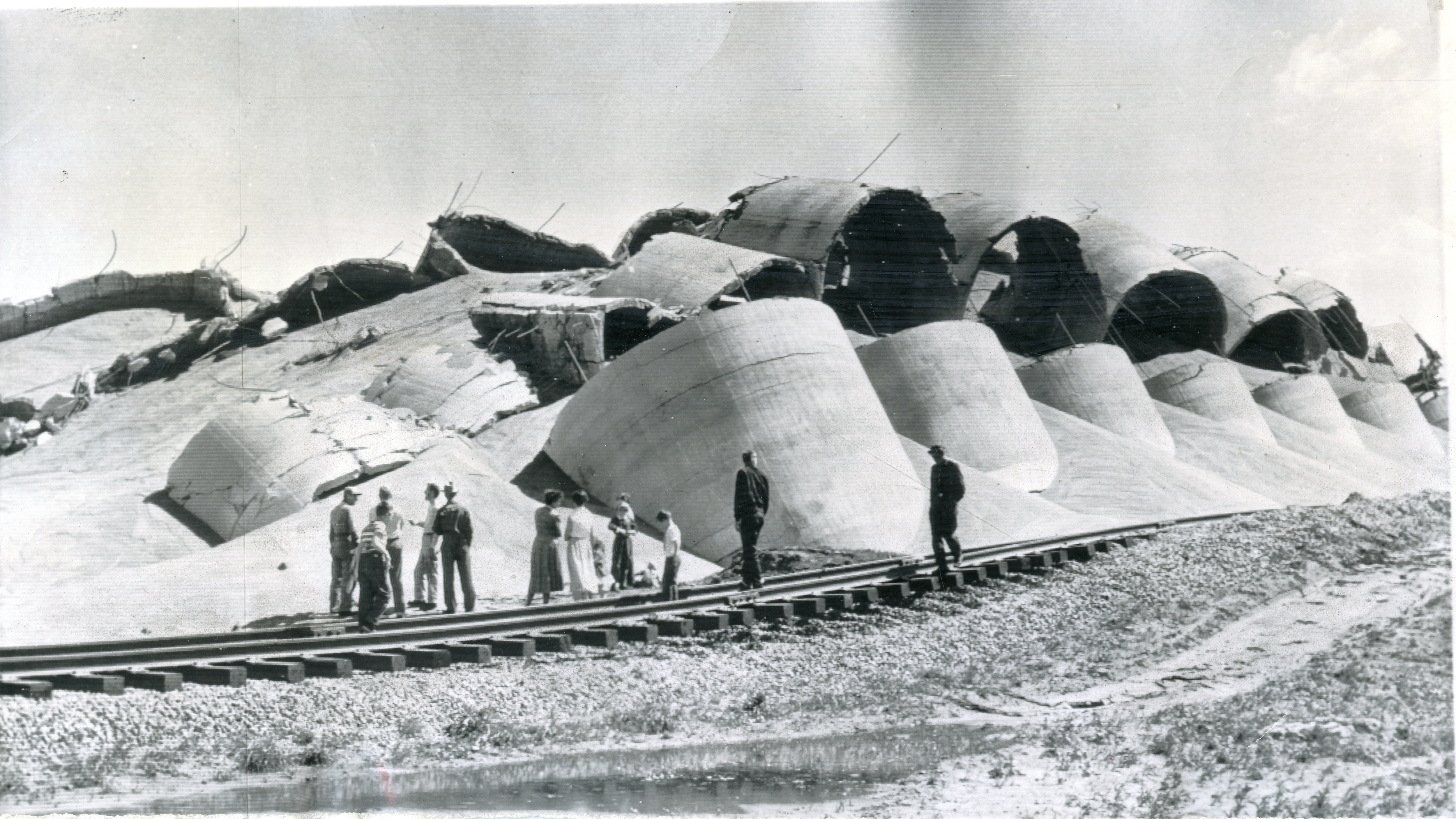
A demolition in Billings, Montana, in 2025

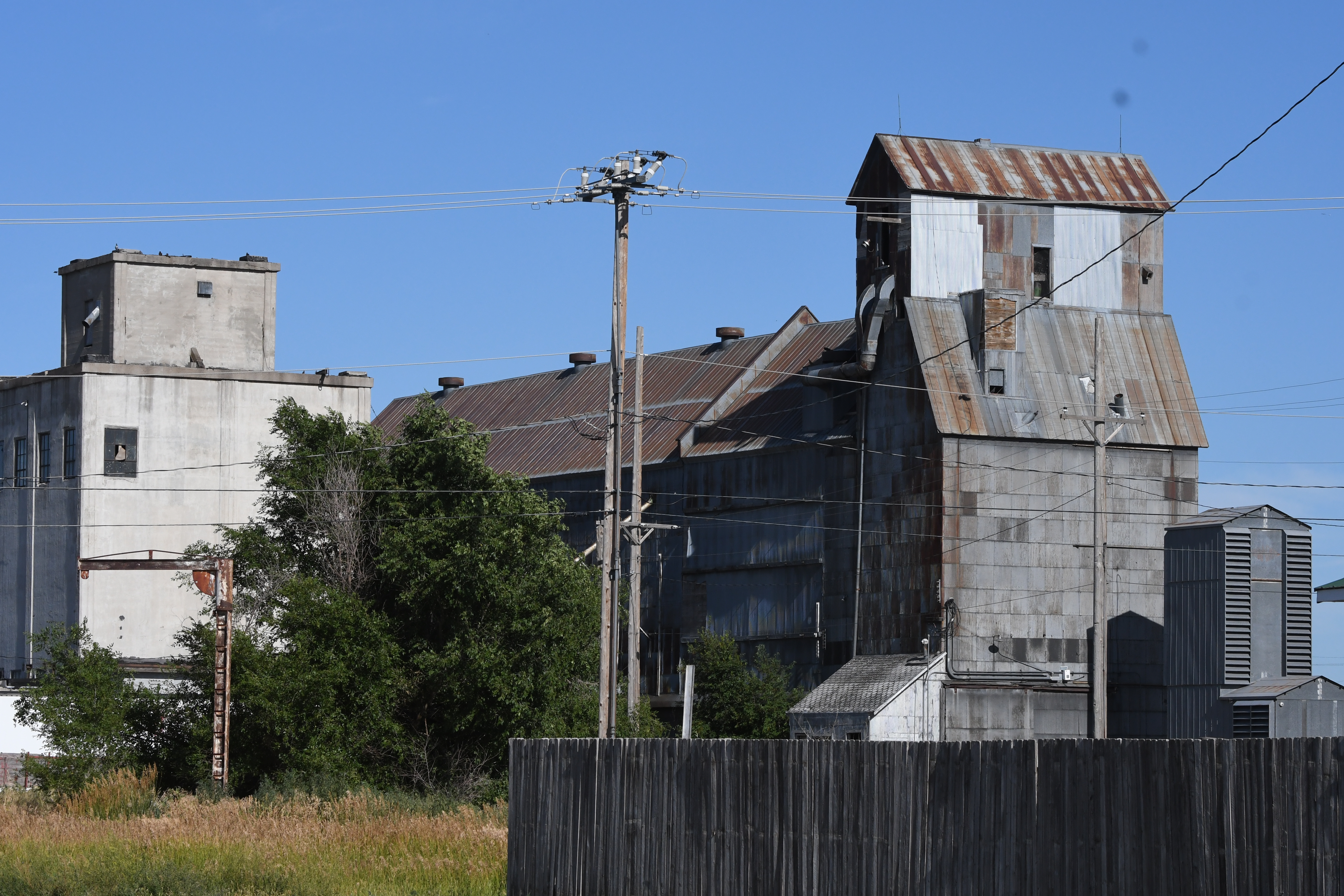
I caught the very end of a demolition in Billings, Montana, recently, and stopped for a couple of snapshots. The old wooden mill was mostly shredded lumber, and the concrete bins were a tangle of rebar and gravel, with a few remaining hulks. In a few days, there would be little left. It’s a depressingly familiar scene.

It’s very nice to come across a survivor. Thank you, people of Lander, for saving a piece of your history.

As wooden elevators disappear, documentation becomes difficult

Story and photos by Kristen Cart

As we research an earlier generation of elevator construction, we can find wooden elevators, but not the ones we hope to find. It is almost impossible to match a builder to a specific elevator this late in the game, especially among the few surviving examples. But we are trying.

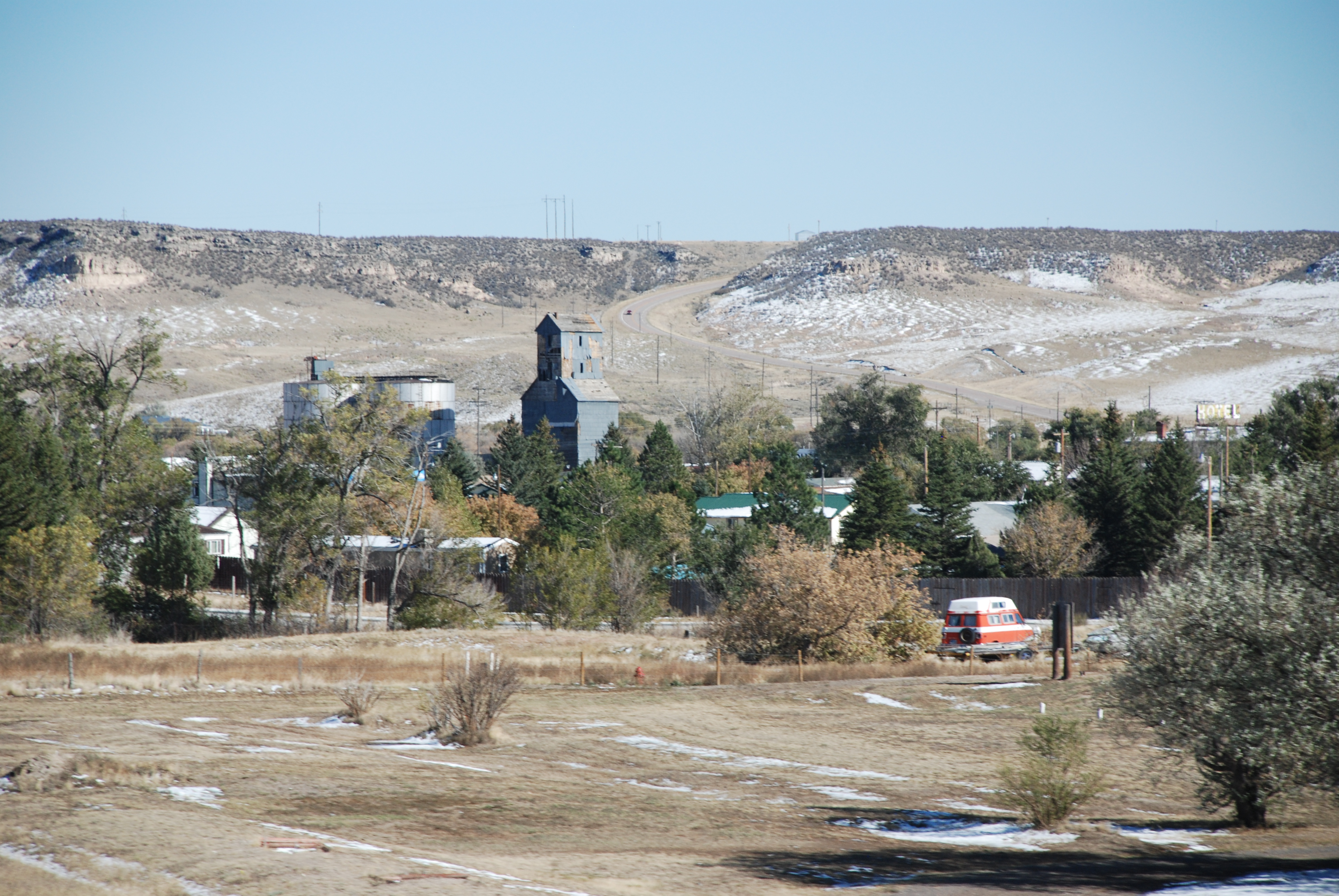
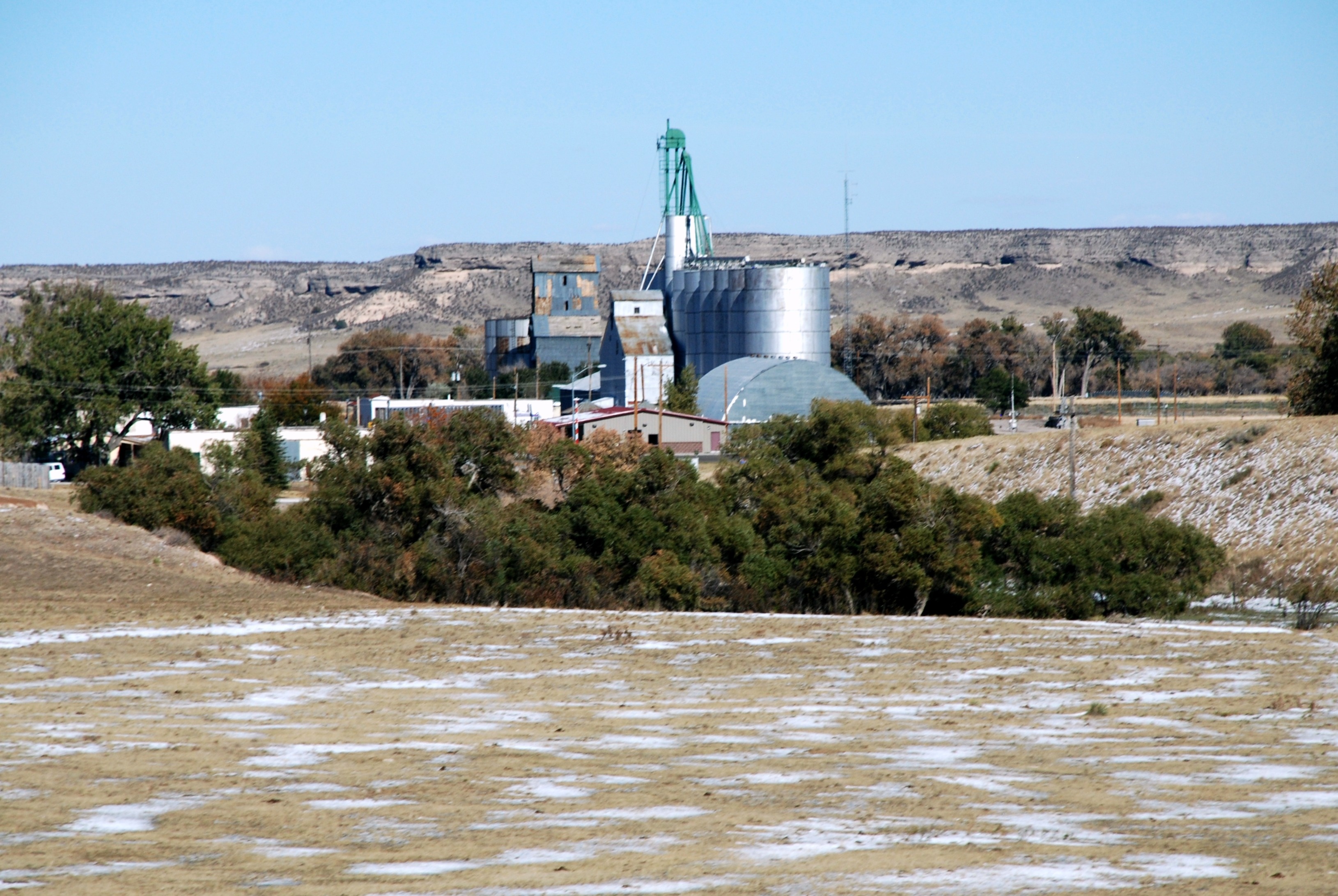
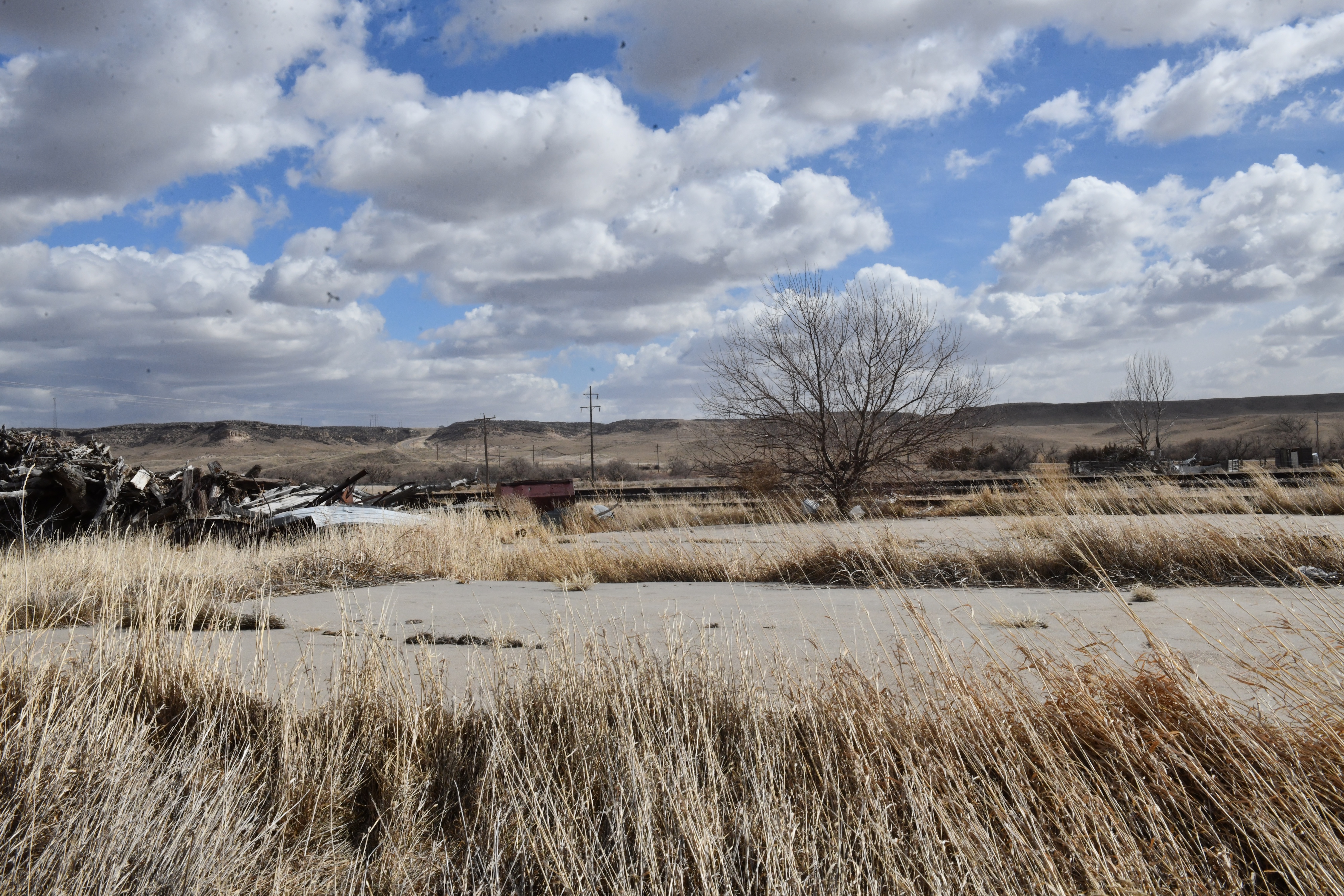
The difficulty is easy to illustrate. A case in point is the old elevator in Chugwater, Wyoming. I noticed it in the early 2000s on one of our many hunting trips while bypassing the town on I-25. I planned for a future photo shoot there, catching a cell phone image on the fly a couple of times to note its location. Once, I pulled over on the side of the road to get a couple of for-the-record shots. But when I finally decided to give it a proper visit, the elevator was nowhere to be found.

Chugwater, Wyo, 2016. The elevator on the left has disappeared.

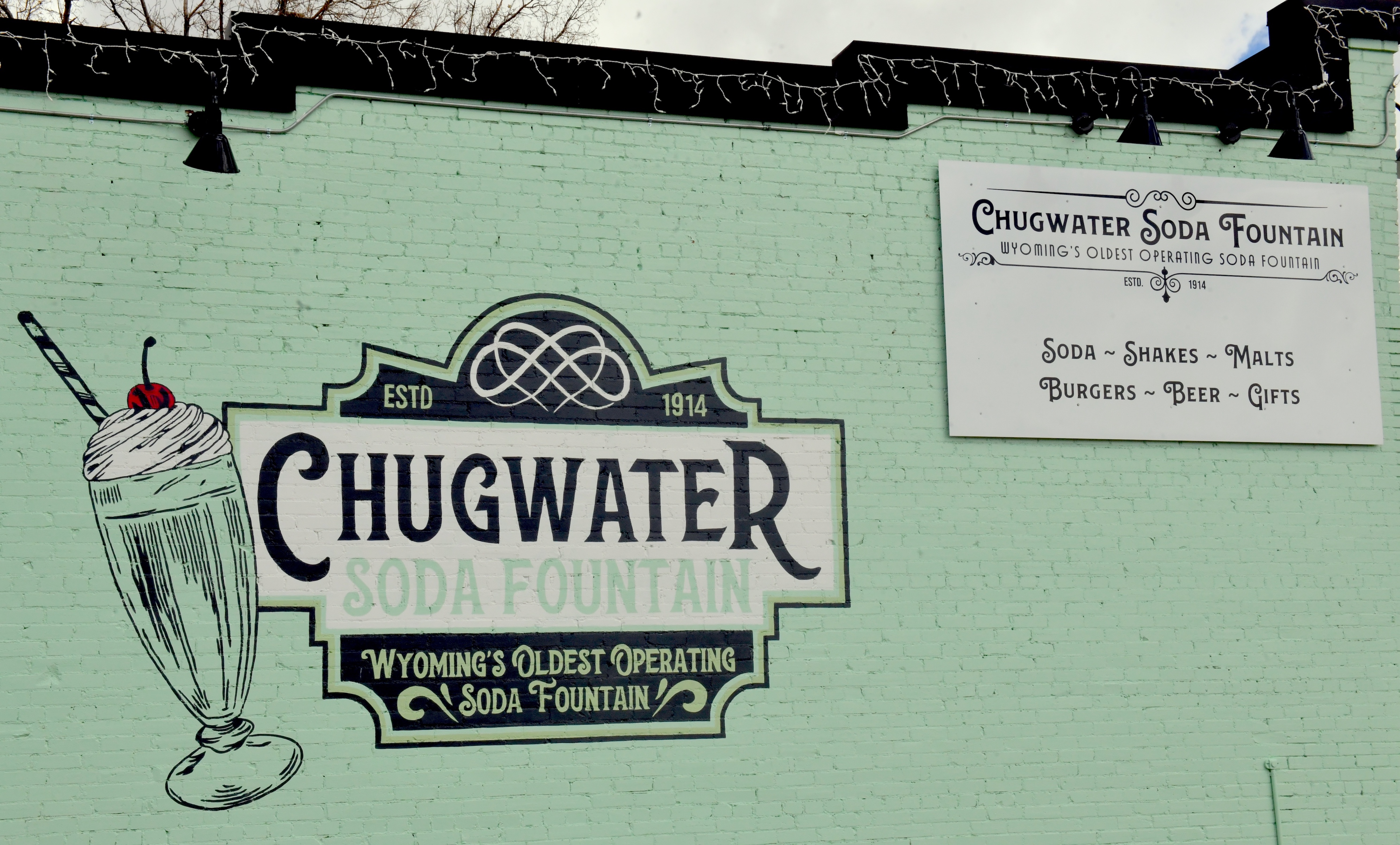
Chugwater is known for some rather fine barbecue sauce, and it also has a historic soda fountain with the best root-beer floats ever made (just don’t stop on a Tuesday or Wednesday, when they are closed). When I asked a local business proprietor how long the elevator had been gone, she didn’t know–although she grew up in the town, she didn’t notice its absence. It was just there, and then it wasn’t.

I drove to the old elevator location, and found hardly any debris. Some concrete pads still existed in the field next to the railroad tracks, but you couldn’t tell what had once stood there. I took a couple of documentary shots. Those telltale concrete pads only remained because digging up the large quantity of concrete that supported the structure would be too expensive. And who really cared?

I guess I care, and I am scrambling to catch the last moments of the few elevators I can photograph while they exist.

Another example is the elevator in Clayton, New Mexico. It presently serves as a coffee bean roasting facility for an adjacent coffee house, but not for much longer. The proprietor explained that the elevator was beginning to lean because the prior owner had removed some structural support beams for personal use. The elevator is showing the strain. The metal siding is beginning to buckle, and even the resident ravens seem worried.

A raven holds court atop the Clayton, NM elevator, March 2026

I took pictures–lots of them.

We will keep trying to find any surviving Van Ness Construction-built elevators, and we will document their history. In the meantime, I will catch snatches of hundred-year-old stories while memorializing wooden elevators for as long as I can.

An ancient Van Ness annex survives to the present in Alliance, Nebr.

By K O Cart

When my blogging partner Ronald Ahrens received a cache of photos from his grandfather’s estate, he discovered pictures of the construction of an elevator annex in Alliance, Nebr., as indicated by handwritten captions. I searched my old elevator photos and found this 2016 image from my stop in Alliance on a trip through Nebraska. Details of the old headhouse were an exact match to the Van Ness Construction photos from Alliance, which Ronald featured in an earlier post on this blog.

I decided to revisit the site in February to see if the elevator and annex were still standing. We were in luck.

With the passage of another decade, the elevator (pictured above in my photo) looks more tattered and plainly unused, but it stands much the same as in this image. A local man who worked nearby said that owls lived in the headhouse, and they might come out in the evening, if I wanted to see them. I didn’t have time to stay until nightfall to find out. Otherwise, all was quiet. The annex had been quite a grand affair when first built, and was solidly constructed. It had not changed very much at all from the outside in nearly one hundred years.

This Feb 2026 photo shows some sheet metal loss and roof damage on the main elevator. The annex behind it remains solid.

I researched newspaper articles about Van Ness Construction and found that they repaired, updated, and also demolished elevators in the 1920s and 30s. Their niche in elevator construction fell somewhere between the first elevator pioneers and the builders of the concrete era. It is highly unlikely that many of the first-generation elevators survive, since new technology rapidly overtook them, and many of the Van Ness-period elevators are also gone. It was quite a shock to find one of their projects still standing.

To discover a Van Ness elevator that still exists, I start with a newspaper search to find a location, then check a Google satellite view to decide whether a visit is warranted. I also check my photo archives. So far, I have found only one, which, having dodged almost a century of tornadoes and the wrecking ball, is rather amazing to find. The Alliance annex holds the title as the only known remnant of decades of work by the Van Ness Construction Company. The title will stand, until we dig up another one.

Taken in Sep 2019, this image shows the size of the annex, which dwarfs the elevator in volume. It has weathered well.

A bucket-list tour of Nebraska courthouses yields some elevator insights

The elevator in Gordon, Nebr. was built by Mayer-Osborn, as attested by its manhole covers. It was built in their iconic style.

Story and photos by Kristen Cart

When someone reaches their middle eighties intact and in good health, they can do whatever they want. It’s a reward that comes along with advanced age. Okay–it has to be within reason–say, within the budget, but there shouldn’t be any major obstacles, unless care-giving is in the picture. With my dad, Gerry Osborn, no such obstacle existed in 2019, before Covid-19 made its debut.

Gerry Osborn at the courthouse in Rushville, Nebr.

Dad and I had taken a western driving tour in 2018 to visit the house where I grew up in Salt Lake City, Utah, which he had architecturally restored from a sadly worn and altered state. It was a foursquare brick farmhouse with historic ties to early Mormon settlers. The current and longtime owner, Gundi Jones, kindly gave us a tour. We admired her finishing touches, which updated the mid-seventies decor as we had left it, to a European country style. It was beautiful.

We also took in Bryce Canyon and Zion National Park, before heading east for a stop at Mesa Verde, a marvelous place that captured Dad’s imagination. He was especially taken with its large collection of pre-Columbian artifacts.

Then, on our way home, we stopped at the Nuckolls County courthouse in Nelson, Nebr. The place brought back old memories. Dad explained that when he was a young student, he and his friends would play a game where they collected sightings of Nebraska license plates, each identified by a number designating its county of origin, 1 to 93. Each county was assigned a number, to be displayed on the license plate, in the order of the number of automobile registrations extant in each county as of 1922. So the most populous county was assigned the number 1, and plates with the number 93 were quite scarce.

Dad and his friends raced to try to find a plate from every county. The hardest ones to collect were from small counties at the other end of the state from Dad’s hometown of Fremont, Nebr.

Now he said that he would like to find them all by visiting every county courthouse in the state. He also wanted to see each courthouse out of curiosity–he loved the old architecture.

At the far left, the Mayer-Osborn elevator at Gordon, Nebr. displays the stepped, rounded head house typical of the company.

I said, “Sure, why not?” It made perfect sense to me, since I was a collector of all sorts of things, with an irresistible impulse to complete the set, whatever it happened to be. License plates sounded like a great excuse to spend time with my dad, while setting the world in order by collecting them all.

Beginning in early 2019, we started our project. We decided to photograph Dad in front of each courthouse, while surreptitiously snapping a shot of a local license plate. He had great fun Google-mapping our routes and itineraries, and over the course of the year, we completed our mission, taking several day trips and a couple of overnighters. We didn’t research any of the courthouses before we visited the county seats. Instead, we saved our first impressions for later, so each courthouse would be a surprise. Sometimes we would gasp in awe as a magnificent courthouse came into view; other times, we would sigh in disappointment.

The grain elevator in Merriman shares the characteristics of its predecessor in McCook, Nebr. and other Mayer-Osborn elevators, including its neighbor in Gordon, but we have not confirmed its builder.

Dad and I covered the entire state during our courthouse expedition, and incidentally, we crossed paths with his father Bill Osborn’s travels when we stumbled upon some of his grain elevators. Bill Osborn was based in Denver for a good part of his career as a builder, but he got back to Nebraska a few times while building elevators for Joe Tillotson and later for himself as partner in Mayer-Osborn.

A few of those elevators we have documented in this blog, including McCook, Lodgepole, and Big Springs.

Dad recognized the name of one of the elevators we encountered shortly after we visited the courthouse in Rushville, the seat of Sheridan County.

The elevator at Gordon, Nebr. (a town along Hwy. 20) had the trademark Mayer-Osborn rounded and stepped headhouse, and it followed the plan of their other larger elevators. It also sported manhole covers embossed with the name of the builder, which confirmed Dad’s thought that his father had built it. What a happy find!

Another view of the beautiful grain storage facility in Merriman, Nebr.

Its twin in neighboring Merriman, a town further east along Hwy. 20, had the same headhouse as the Gordon elevator and the same general plan as seen from the outside, but we couldn’t corroborate its origin, either by manhole cover, local attribution, or Dad’s memory. Yet we put it down as a strong maybe.

The elevator at Limon, Colo. had confounded us for a long time because of its resemblance to other Mayer-Osborn’s elevators, until we found that it was built after Bill Osborn had left the business. So there’s also a question mark over the elevator at Merriman until we can learn more.

Unfortunately our itinerary was pretty tightly planned, or we would have tried to track down someone who knew the history of the two elevators. We set the locations aside for a future visit. Now, years later, we haven’t been back, but we still have some photos to share here.

Peering into ancient grain storage practices from Tell Edfu to Ribchester

By Kristen Cart

As long as agriculture has existed, food storage has been essential to human survival. Grains could be stored without substantial spoilage more easily than other foods, so societies engineered grain storage very early, which enabled people to congregate in cities. In the book of Genesis in the Bible, the story of Joseph relates how he helped Egypt store grain against periods of famine. It was a successful strategy.

Genesis 41:48-49:

48 During those seven years, Joseph collected all the excess food in the land of Egypt and stored it in the cities. In every city he laid up the food from the fields around it. 49 So Joseph stored up grain in such abundance, like the sand of the sea, that he stopped keeping track of it; for it was beyond measure.

The practice of grain storage that was credited to Joseph in the Bible was indeed part of the long-standing economic system in Egypt.

Surviving ancient Egyptian city sites, while fairly rare, have drawn renewed interest as archaeologists explore how urban societies developed. A prominent feature of Tell Edfu, an Egyptian city studied by the University of Chicago, is a courtyard containing seven circular mud-brick silos, built together to store surplus grain. Each silo measures 5.5-6.5 meters across. The 3500 year-old site was built beside an administrative center, a feature that points to a period of prosperity measured in grain, which was the currency of the time.

Archaeologists find silos and administration center from early Egyptian city

Another example of early grain storage was discovered in Lancashire, England, in Ribchester. This location was an early Roman outpost where a garrison was stationed. Stored grain was needed to provide for the soldiers and their livestock. When the Roman soldiers abandoned the fort, evidence shows that the remaining stores were burned and the storage site destroyed.

Ribchester Roman Granaries

Every grain operation has to contend with temperature, humidity, and spoilage when storing grain. The Romans found ingenious solutions to the same problems we encounter. Their granaries had thick walls with column-supported floors, leaving void areas underneath, and drainage gutters to keep rain diverted away. These measures kept the grain cool and dry. Building the granaries above ground level also helped keep rats and mice out.

All that remains at the Ribchester site are the thick wall bases, outlining the footprint of two rectangular bins, and the support columns that held the old flagstone floors above the ground. Signs of burned grain and broken flagstones tell the story of the abandonment of the outpost.

I was curious whether ancient Greece used similar storage. Accounts I read pointed out that they used amphorae, or large pottery jars, to transport commodities including grain. They imported their grain supply across the Mediterranean Sea using these vessels, while prohibiting grain exports, to ensure their food security. Amphorae were convenient because they could be stored, but they were also portable. They were an ideal solution for foodstuffs moving through a major trading center. I wonder if consumption kept up with supply to the point that large-scale permanent storage was not needed. It is a good topic for further exploration.

Grain is such an ordinary part of life for us that it goes mostly ignored, though the history of grain is compelling. I am forever curious. Perhaps more of this remarkable history will be uncovered. I will share whatever I find.

An old-time mill in Billings, Mont. sports a wooden scale

A wooden scale lies beside the old brick scale house.

Story and photos by Kristen Cart

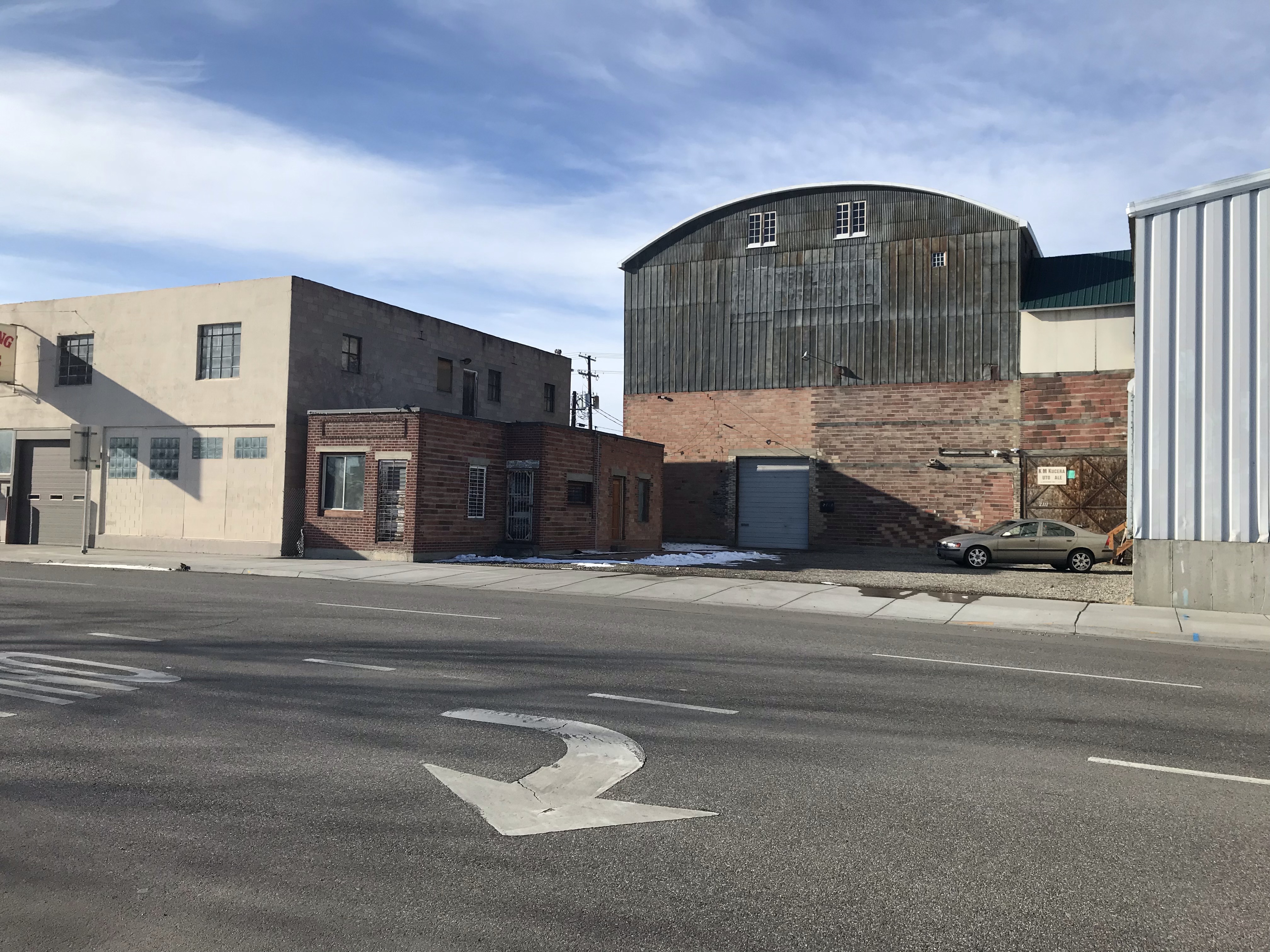
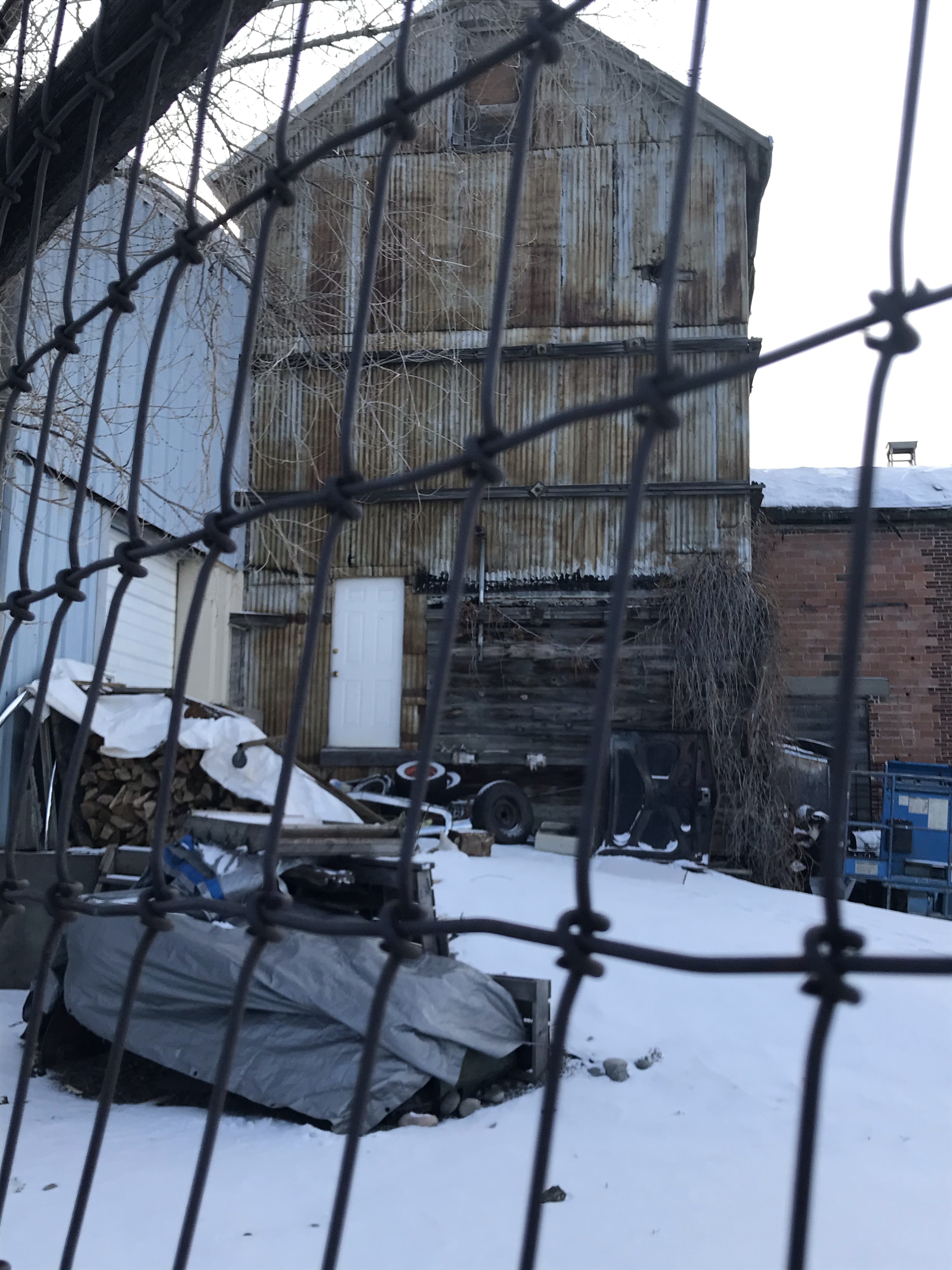
This old mill in Billings, Montana was too good to pass up. A trip around all sides revealed its current occupation as a tire company or body shop–old cars and an old wood elevator inhabit the yard beside it, but a large quantity of tires are piled adjacent to the road on the other side. But the area pictured above shows that it once handled grain.

The door to the scale house admits no one.

I have never seen a wooden scale before. The scale house next to it is shut up tight with iron bars–it could have been a jail, perhaps, in a later life. The mill itself shows signs of repeated brick repair. The story of these buildings invites a more thorough investigation.

The mill is in a historic part of Billings and sits across the street from the railroad lined with coal cars. If you could imagine it opening up to a brick-paved street illuminated with gas lights, this structure would fit right in. But it is a bit odd in its present setting.

The modern look undoubtedly bears no resemblance to the original view.

The mill appears to be well maintained and will, with care and good luck, grace this historic street for another hundred years.

Cars in the adjacent yard await restoration.


An unused elevator completes the scene.

Sunset at Rockwell City, Iowa

The Tillotson elevator in Rockwell City, Iowa, as it appeared in 2014

Story and photos by Kristen Cart

Recently, one of our readers sent us some disheartening news. The skyline in Rockwell City, Iowa, has permanently changed, as announced by Paul Grage:

“…I would like to let you know that the Tillotson elevator in Rockwell City, Iowa, is currently being torn down. They blasted the head house because it was too tall for the crane that ran the wrecking ball. They are currently wrecking balling the rest. The rail that used to serve it was abandon[ed] long ago and an airport runway was built on the old bed. The elevator is shot and it’s presence makes about 1200 feet of the runway useless after course corrections. Its demolition was funded by the Iowa DOT and Landus Cooperative.”

Back in 2014 I paid a visit to Rockwell City, Iowa, located a few miles south of U.S. Route 20 in the western third of the state. I stopped to take pictures of the old Tillotson project, which was one of the larger elevators on my route from Nebraska to my home in Illinois.

The Tillotson landmark was permanently closed for business and deserted.

I spoke to an elderly gentleman standing outside of his small bungalow, which was tucked in close to its neighbors on a street radiating from the elevator property. He had recently moved to town, so he didn’t know any local history, but he shared his observations of the old site.  He said that an owl family had moved into the headhouse. Sometimes he would see the birds flying in or out at dusk, or he would hear their hooting at night.

Other than accommodating the new residents, the elevator stood silently, by far the biggest structure in town. Its doom was sealed when the rail line closed. I didn’t know it would be my last visit–the dull light of the day invited another visit for photos, so I set my images aside for a later post. I never got back there. But here are views of the old elevator, as I found it that day.

The tallest landmark in town is now the water tower.

The first Denver office of Mayer-Osborn is for lease at $8,000 a month

The 1717 E. Colfax Ave., Denver, Colo. location is for lease.

Story and photos by Kristen Cart

While enjoying our leisurely October road trip, my dad, Jerry Osborn, and I sought out the former business office of the Mayer-Osborn Construction Company, the Denver-based business my grandfather, William Osborn, operated in partnership with Eugene Mayer. It still stands at 1717 E. Colfax Ave.

Mayer ran the business office, while Grandpa was in the field selling their services. Their former office has undergone a smart update, now sporting solar panels and new brick siding, which has added great street-front appeal for potential tenants.

An item from the Farmers’ Elevator Guide

The place was vacant, but it was settled into an optimistic, mixed neighborhood not far from the Denver Botanical Gardens. About four blocks from Denver’s Five Points, the area seemed to be on an economic rebound, though most buildings were older and fairly nondescript.

Dad and I pulled across a busy grocery store parking lot to get a good vantage point. The photo above shows modern updates, including passive solar panels installed to take advantage of Denver’s many days of sunshine.

Dad and I checked off another important historical visit, and went on our way, happy to see Bill Osborn’s Denver digs at last.

Some initials on a bronze plaque in Limon, Colo., help to solve a mystery

Story and photos by Kristen Cart

My father, Jerry Osborn, and I had a rare opportunity this October to take a road trip. Our goals were to see family, check out our hunting camp, and see some of the sights in the west. Dad is in his eighties now, so we don’t put off any chances to do neat stuff. This trip exceeded our expectations. Happily, we also were able to take in some elevators.

Jerry Osborn at Zion National Park, Utah

Our stop at the elevator in Limon, Colo., proved to be a wonderful surprise. There was a truck at the co-op when we arrived, but the office door was locked, so I approached the elevator itself and called out to see if it was deserted. When I turned around, a man was approaching from the office. I went to meet him.

Ed Owens was finishing up paperwork before going home for the night. I asked him about the history of the elevator, and he brought me into the office. Ed said his grandfather, S. L. Sitton, helped build the Limon elevator as well as the earlier, neighboring one in Genoa, Colo. He said his grandfather came into the area in 1939. He went away during the war, then came back and looked for whatever work he could find. Elevator construction provided a part-time laborer job that kept food on the table.
The builder put up the elevator like a layer cake, letting each concrete layer cure for a period before adding another, rather than by the continuous-pour method pioneered by early elevator construction companies. The Limon elevator was built in stages by farmers who built by day and farmed by night. I was impressed by Mr. Sitton’s fortitude, and I would have asked the old gentleman about it, but Ed said he was 97 years old and living in a nursing home in Flagler. He likely wouldn’t remember, and even if he did, he might not appreciate a visit.
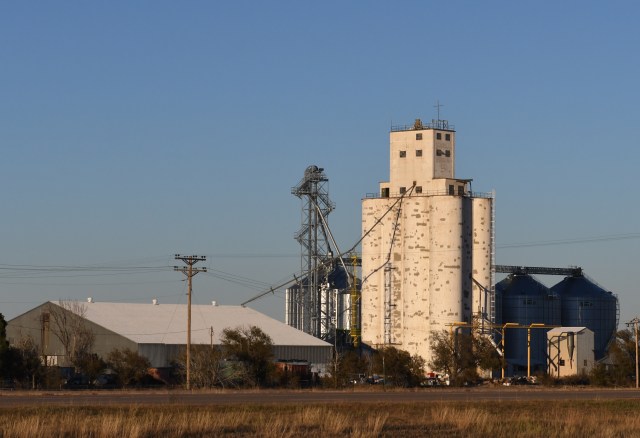
The Genoa, Colo., elevator is in a neighboring town.

The best discovery was yet to come. When Ed ushered me into the office, he showed me the bronze plaque which originally adorned the driveway of the Limon elevator. Ed said all of the directors listed on the plaque were dead by now. The elevator was built in 1958, so all the community leaders of the time were long gone. But the key bit of information on the plaque was the name of the builder and designer, M. and A. Enterprises, Inc., of Denver.

I was very excited to see this name. The company was based in Denver, and the designer claimed to be the builder. Based on the design of the elevator, I had a strong suspicion of who that designer might have been. We now had a key piece of information.

Followers of this blog know that we have puzzled over a few mysteries while tracking our grandfathers’ elevators. The most difficult story to reconstruct, thus far, was how the Mayer-Osborn Construction Company met its demise.

The Denver-based enterprise lasted from 1949 until at least 1954, when my grandfather, William Osborn, apparently left the business. In the summer of 1954 he built the Blencoe, Iowa, elevator with the help of my dad, Jerry Osborn; by the summer of 1955, William was home from his Denver office and never worked elevator construction again. Meanwhile, his partner, Eugene Mayer, probably revived the company under various guises, but we know little of what became of him.

With our visit to Limon, Colo., we may have cracked the case.

Usually, the simplest explanation is the true one. The quickest way to explain why a thriving company would go away is to look for a disaster. Family lore says there was one. But I suspect the rumor of a collapsed elevator, lost to a crew that “shorted materials” and made bad concrete, might have been a tall tale that sprung from a much more pedestrian event. No such disasters can be found in 1954 or 1955 newspaper accounts.

The only related problem I could find occurred at the the Mayer-Osborn elevator in Blencoe, Iowa. During construction, when the elevator had reached about twelve feet high, the forms were slipped for the first time. As soon as concrete appeared below the slipped form, it began to slump and crumble. Bad concrete was indeed the culprit, and it necessitated a tear-down. To get back to a twelve foot height, the company had to add a day or two of expensive labor, which directly cut into profit. Could this event explain why William Osborn left the company? It’s the simplest explanation, so perhaps.

Several subsequent elevators bore the Mayer-Osborn manhole covers, but Dad didn’t know about these elevators, and he was certain that by 1955, his dad, William, was home for good.

The Mayer-Osborn elevator at McCook, Nebr. built in 1949

With its signature stepped headhouse, the elevator in Limon bears an uncanny resemblance to the first elevator Mayer-Osborn built in McCook, Neb. In fact, it is the same design, updated somewhat, and dated 1958. So it certainly went up after Grandpa left the business. But what about Eugene Mayer? Dad said that he was the designer, whereas Bill Osborn started as a carpenter and learned his construction skills on the job. Mayer still retained ownership of his elevator designs, which could explain why McCook clones continued to pop up all over the plains in the mid-1950s.

That brings us back to the builder of the Limon elevator, as inscribed on the plaque, “M. and A. Enterprises, Inc.” It seems inescapable that the “M.” was Mr. Eugene Mayer.

The Limon elevator had newer innovations but was built haltingly. Plainly, all was not the same as it had been when Bill Osborn was on the job. Perhaps fewer workers were available. Fewer contracts were awarded as subsidies waned. So the big, ambitious, day-and-night event of an elevator project was toned down somewhat. I expect we will find that Eugene Mayer’s design was eventually sold and others built it, then it passed into history, along with the great concrete elevator boom.

Happily, Limon’s elevator still thrives, and it gives us a peek at the amazing history of elevators on the American plains.
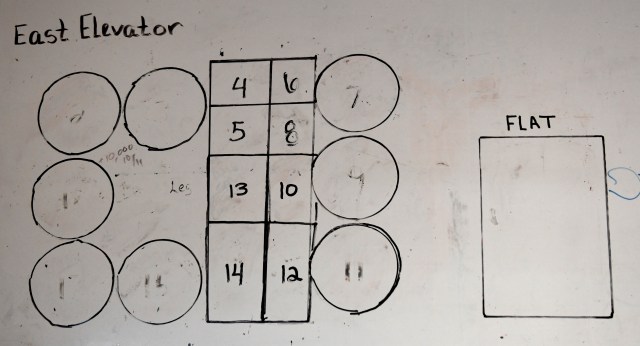
The layout of the elevator is used to record the content of each bin. Flat storage is adjacent to the concrete elevator.


The engineering behind elevator construction began with retaining walls


Before electronic scales weighed the grain, weights and a fulcrum did the trick.

Story by Kristen Cart

Nothing is quite so revealing as a vintage book. Ronald Ahrens alerted me to his discovery of an engineering textbook, written by Milo S. Ketchum, about retaining walls and elevator bins. Prof. Ketchum was the dean of the College of Engineering at the University of Colorado (my alma mater) when he wrote The Design of Walls, Bins, and Grain Elevators. First published in 1907 by the Engineering News Publishing Company, of New York, it boasted a second edition in 1911.

From the first few paragraphs, revelations abound. Most eye-opening is the historical context of its publication.

In 1907, surviving Civil War veterans were well-established in their old age. No one yet considered the possibility of the worldwide conflagrations to come. Comanche wars in Texas were still an ugly living memory, more recent to people than the Vietnam War is to us. Grandmothers shared their memories of living in sod houses on the Great Plains. Movies were not yet a national pastime. Airplanes and automobiles were on the drawing board–the Ford Model T would begin production the following year.
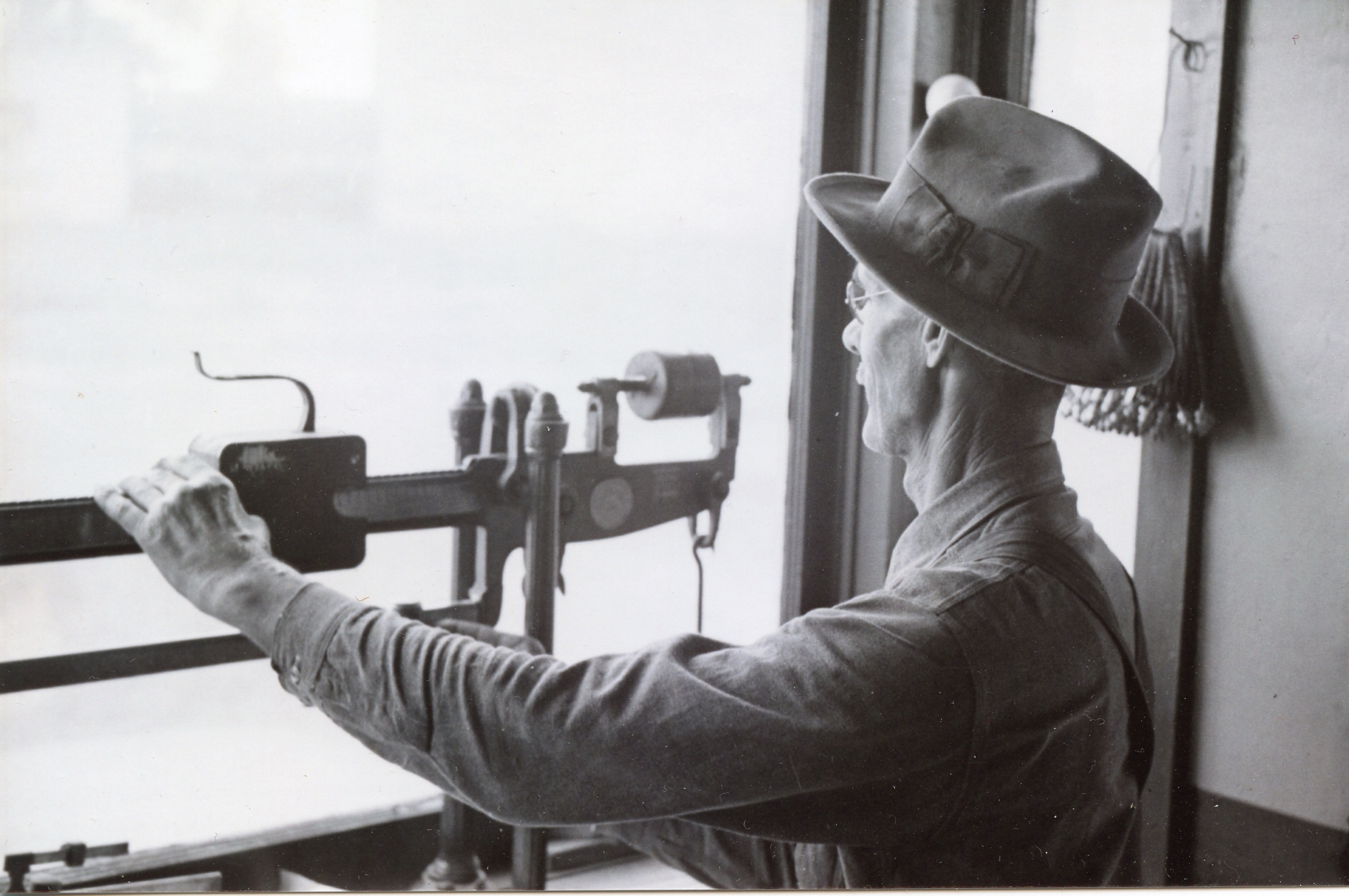
When grain was delivered to elevators, it came by barge, rail, or wagon. The business model that drove the elevator boom was in its infancy. Engineers had just begun working with reinforced concrete for bridges, dams, and skyscrapers, but much remained to be done.
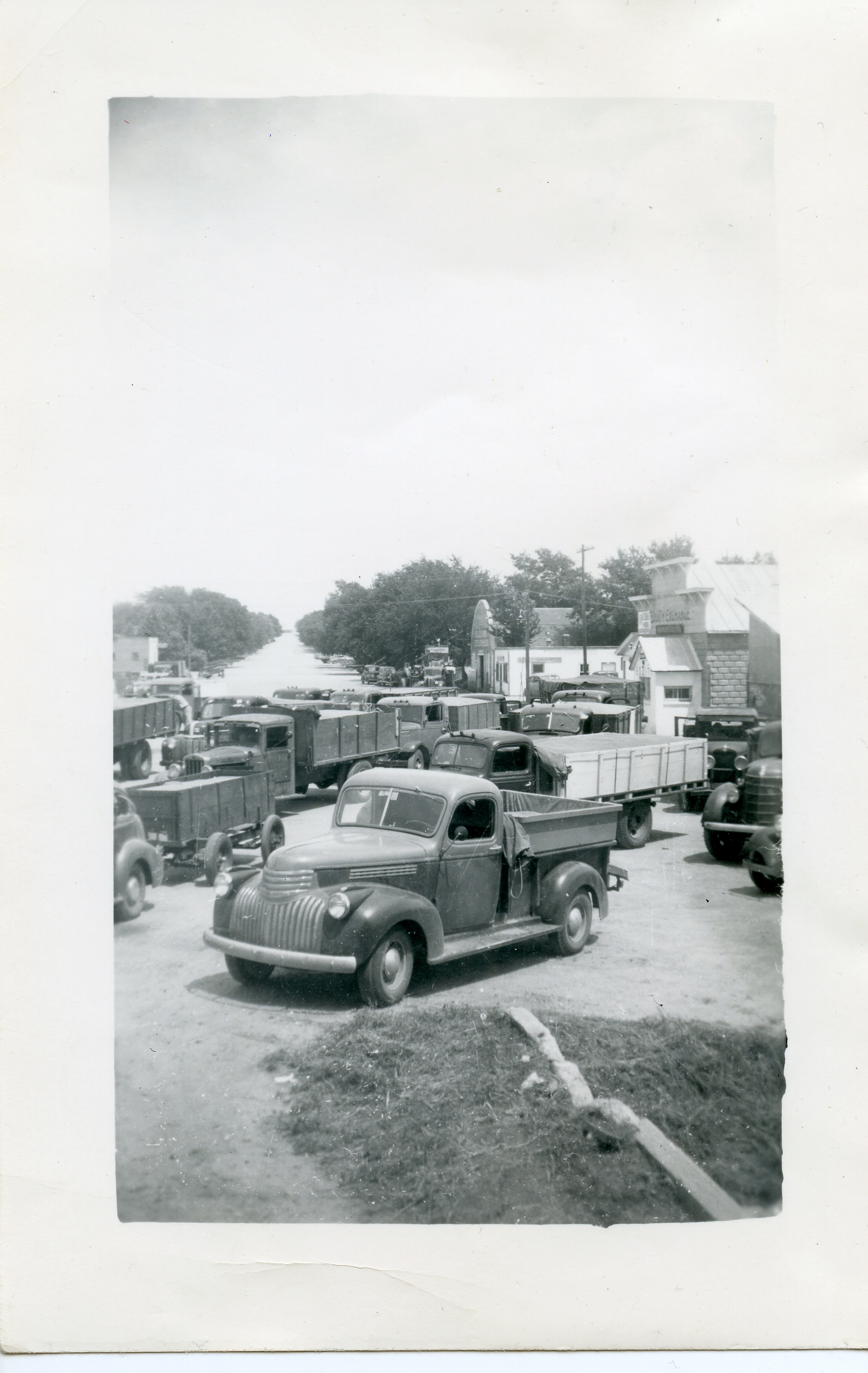
Grain transport by truck was a later innovation.

In the introduction, the book gets right to the nuts and bolts of the problem it purports to solve.

A special subset of engineering concerns granular fluids. Grain acts both as a solid and as a fluid–it can be piled in a conical pile because of internal friction which is absent in liquids, but it can flow very much like water. Containing such a fluid requires an understanding of internal pressures–both vertical and outward–that are exerted on a container. All of these considerations boil down to a mathematical model that accurately describes the materials, structures, and shapes required.

The book first examines retaining walls, the simplest structure for containing granular fluids, and proceeds to bins and elevators from there.

Failure to heed safe engineering principles bore disastrous results in Fargo, North Dakota.

Thus we have a textbook that gets into the weeds of that math and physics, ultimately used to teach future designers how to do grain bins. The young men schooled in the years following 1907 would be the builders, engineers, superintendents, and architects who started the concrete elevator building boom.