By Ronald Ahrens
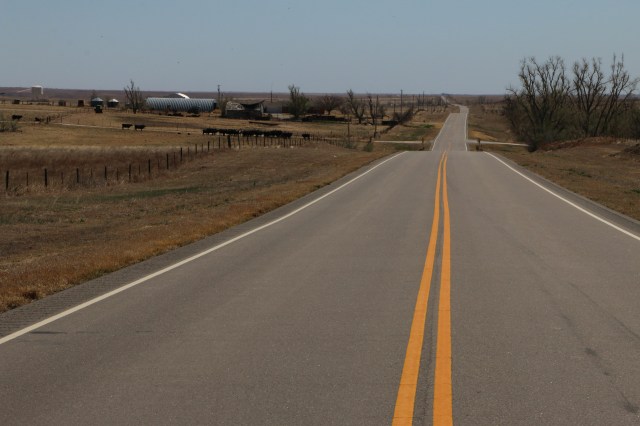
Leaving the twin Tillotson and Mayer-Osborn elevators in Follett, Tex., I reached the Oklahoma border after nine miles. The wind blew hard, I could smell smoke from grassfires, and the desolation clamped down like a federal mandate.
The Welcome-to-Oklahoma sign was in tatters, having taken a few slugs.
 Again, something my father used to say–“Miles and miles of nothing but miles and miles”–was apt for the situation.
Having visited 10 elevators in the Texas Panhandle, I was driving east and then south on Route 15 until it met U.S. 60. It was classic High Plains topography, but before meeting the U.S. route, the road surprised me by plunging into the valley of Wolf Creek.
Out of nowhere, the town of Shattuck and a towering grain elevator appeared.
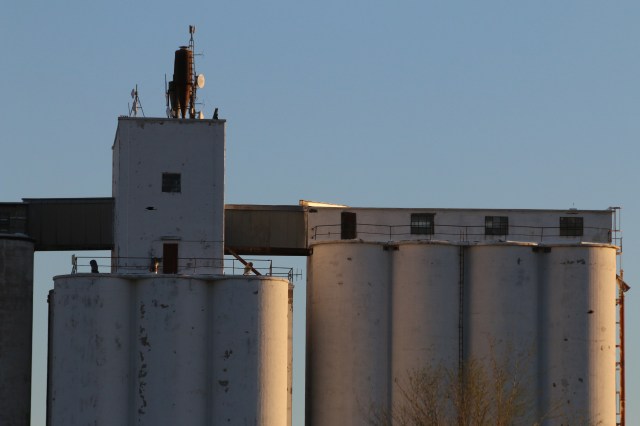
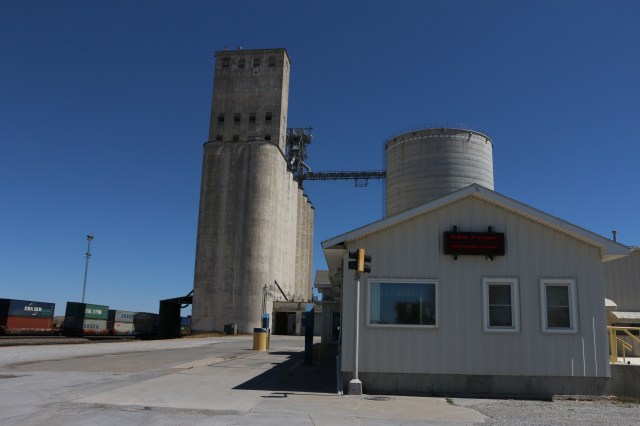 I crossed the railroad tracks and turned left for a cursory look and quick photo. The bigger elevator, which I guessed to be a contemporary of the Tillotson and Mayer-Osborn elevators in Booker and Follett, Tex., had the most monstrous headhouse yet. It also had an outside double-driveway and a shed over the rail siding.
Inside the office of CGB Enterprises, Inc., they couldn’t tell me much but were as friendly as could be despite my interrupting at lunch time.
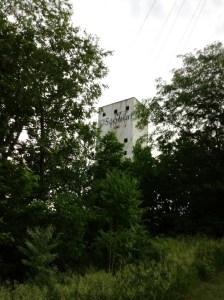
Scoular elevator, Omaha. Rose Ann Fennessy photo.
Here’s an interesting coincidence showing how nowhere can be connected to everywhere: Just three weeks before, CGB’s eponymous subsidiary, Consolidated Grain & Barge Co., had bought four elevators in the Mississippi Delta from The Scoular Company, of Omaha.
Later, one of the workers took a photo of a manhole cover and they texted it to me, but it only bore the name of the foundry. Later I would hear the Shattuck elevator was built by Sampson & Fisher. Whether that’s definitive, I don’t know.
Altogether, on the route I’d chosen, Orienta, my next destination, was still 90 minutes off.
At one town along the way, I stopped in a minimarket for a corndog and was buttonholed by a poor lonely woman–who was buying cigarettes and had already bent the ear of the cashier and another customer–talk about her well-educated aunts and uncles.
 Yes, one of those “conversations” in which someone needs another person to talk to, but I didn’t want to make eye contact lest I spend another 20 minutes hearing about her life.
Maybe I should have hung in there and listened to the whole story, but I got back in the truck and took off. There were four more elevators to visit; my main quest for the afternoon was Goltry, where Tillotson Construction Co. built its first elevator of reinforced concrete in 1939.
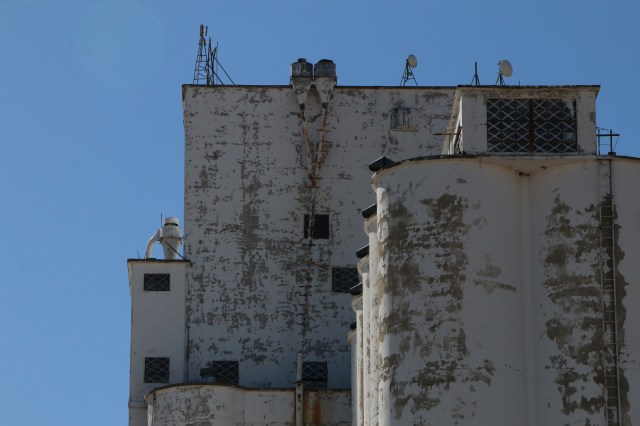
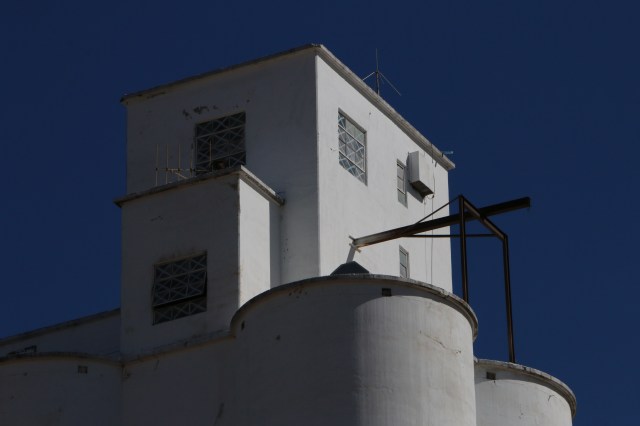


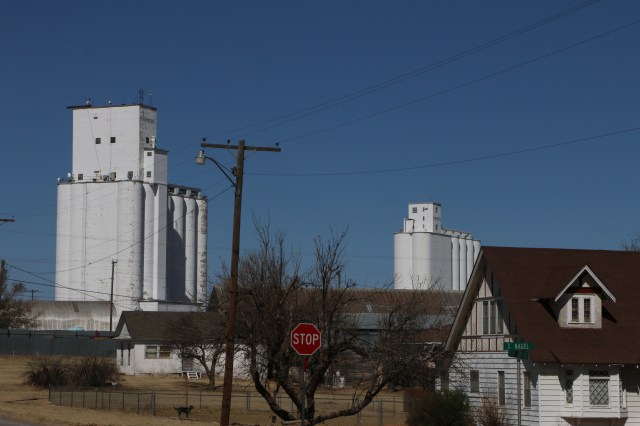
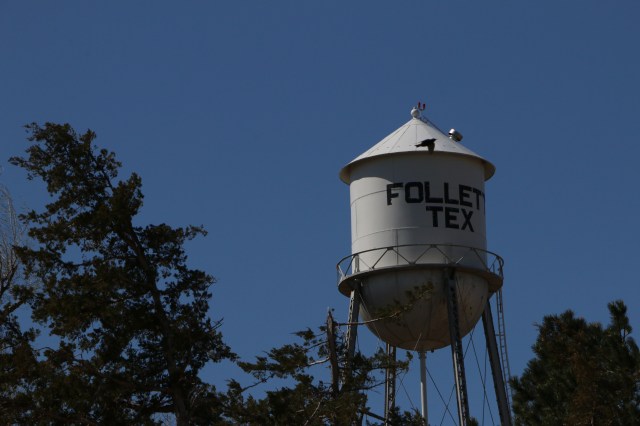


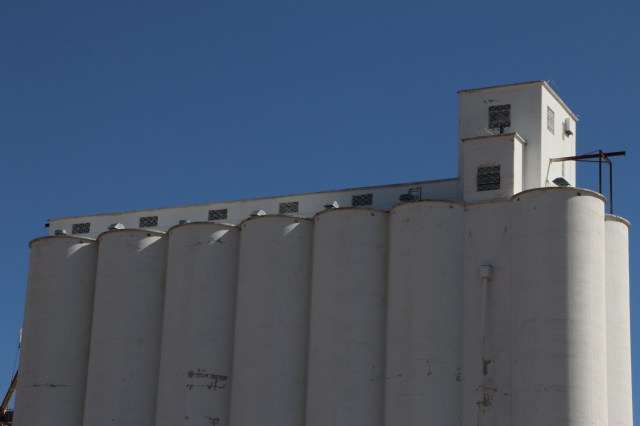
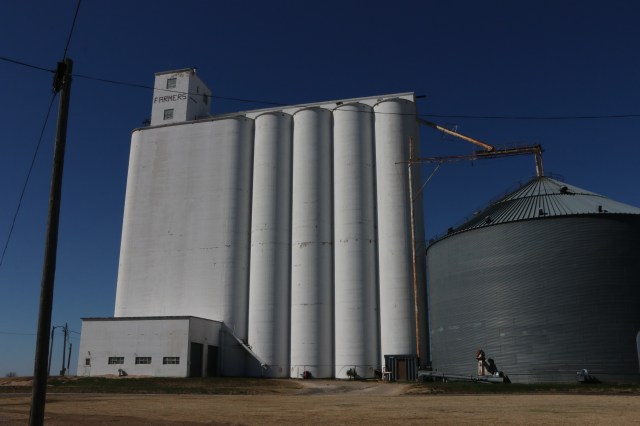


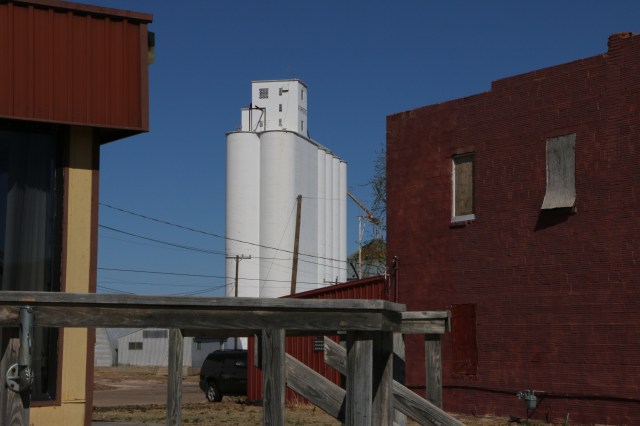
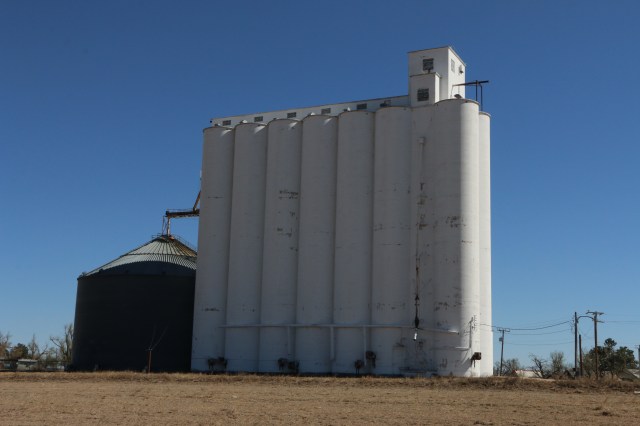




 Here, it’s necessary to remind you of some basic information. My grandfather on my mother’s side was Reginald O. Tillotson. He and his brother, Joe, took over Tillotson Construction Co. after my great-grandfather, Charles H. Tillotson, died in 1938. They started building concrete elevators, instead of wooden ones, the next year.
 Much to my surprise, t
 Booker was capable of holding 6,480 tons of grain. Fully loaded, the whole shebang weighed 10,798 tons. For the record, a Boeing 747-8 weighs as much as 970,000 pounds, or 458 tons, at takeoff. So a whole lot of big airplanes are represented in the elevator’s maximum gross weight.
 When this single-leg, 216,000-bushel elevator went up over a period of about 10 weeks, it enhanced the skyline of the northeast Texas Panhandle, being one of the first of its type. We don’t know the dates into which that 10-week period fell, but all this happened as the United States was wrapping up the war in the Pacific. Labor was scarce; materials–especially steel–were just becoming available.


 Power originally came from a 2-hp motor, and for all I knew the original unit was still doing its job.
 Additionally, the elevator has served, and may still serve, as a storm shelter. Some big, powerful twisters blow across these plains, and if anyone needed protection, this was the place to find it.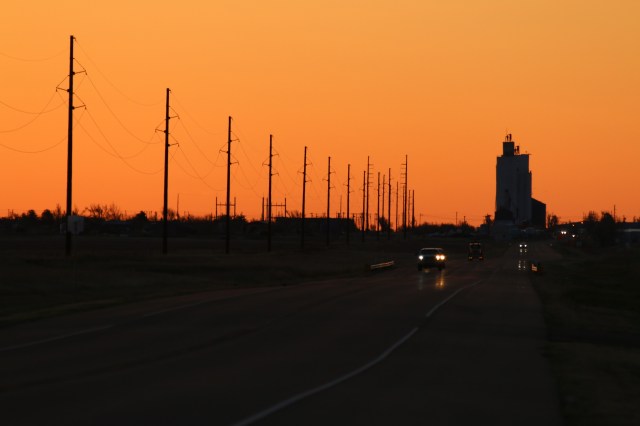
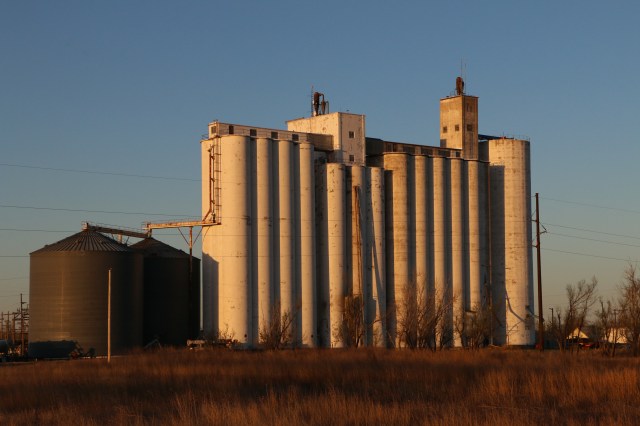
 Medford had tanks, or silos, of 15.5-feet in diameter and a center driveway.
 Our Grandfathers' Grain Elevators