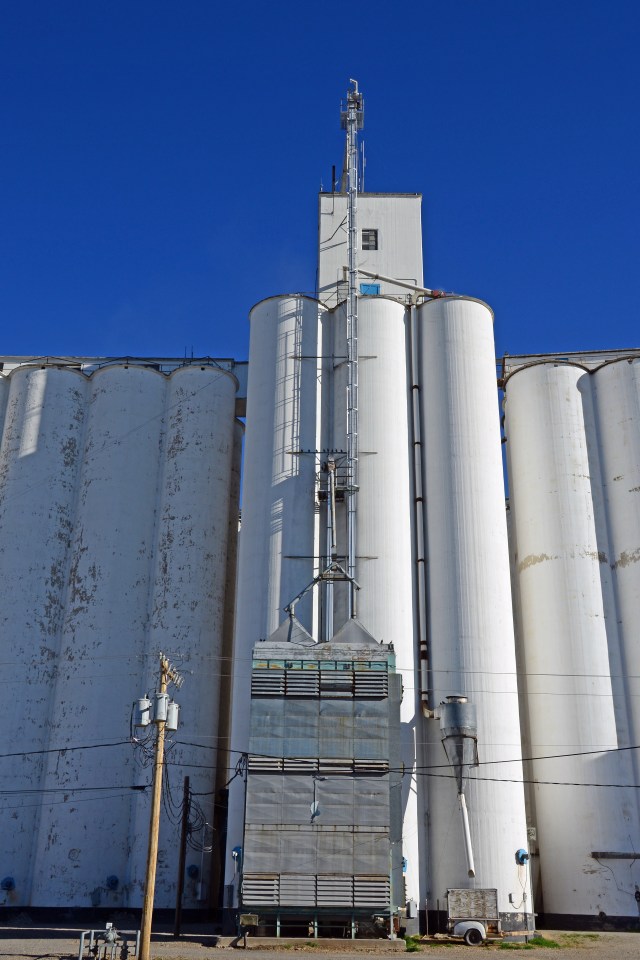
Unsolved mysteries abound at Tillotson Construction’s Elkhart, Kansas, elevator

Story and photos by Gary Rich

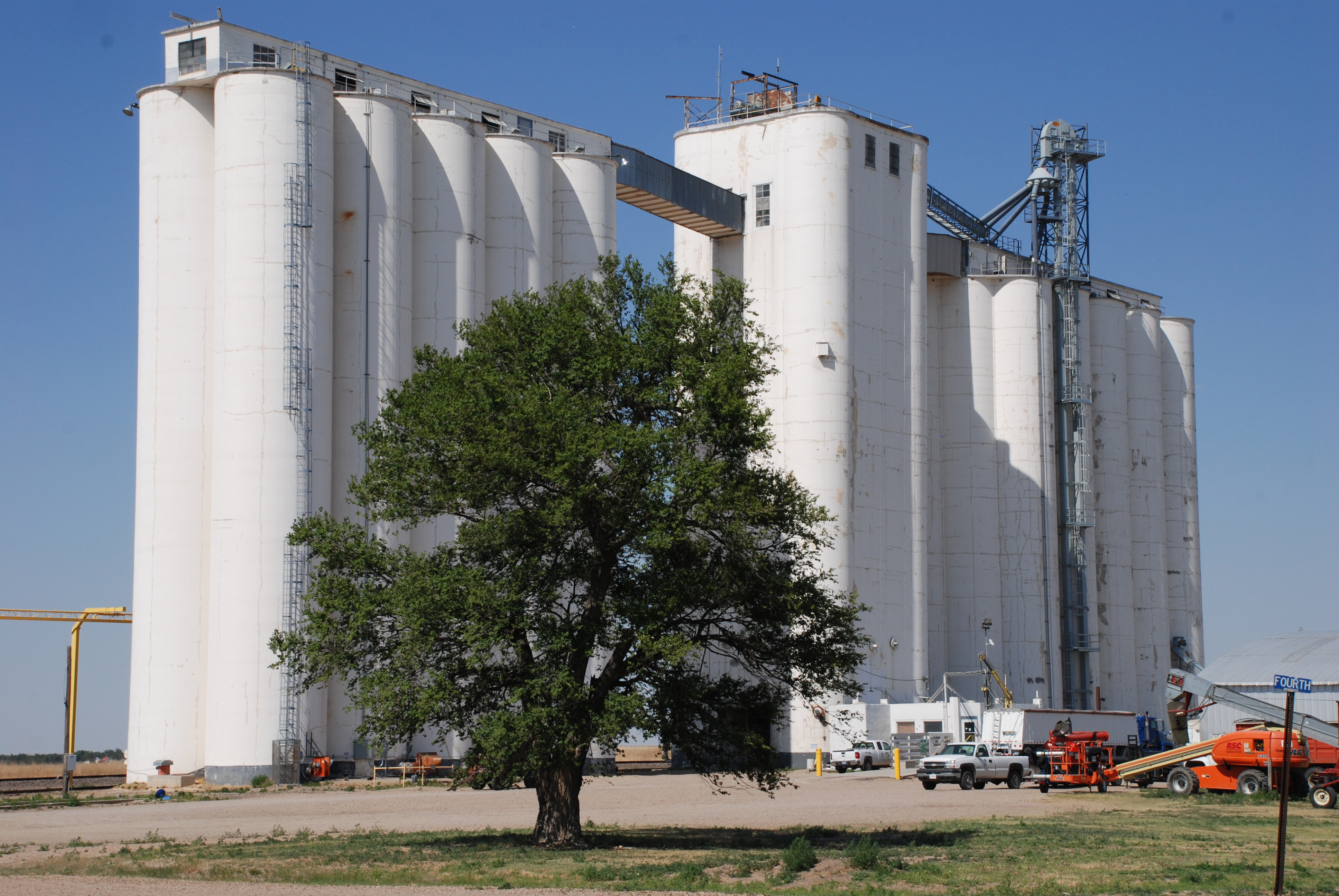
Elkhart is located in extreme southwestern Kansas. This is Morton County. The 2000 census showed Morton County had 3,196 people, of which 2,036 live in Elkhart. The town sits just north of the Oklahoma border and is about 8 miles east of the Colorado border. The area has been known for wheat production. However, this has changed in the past few decades. Corn and milo are now grown as spring crops.

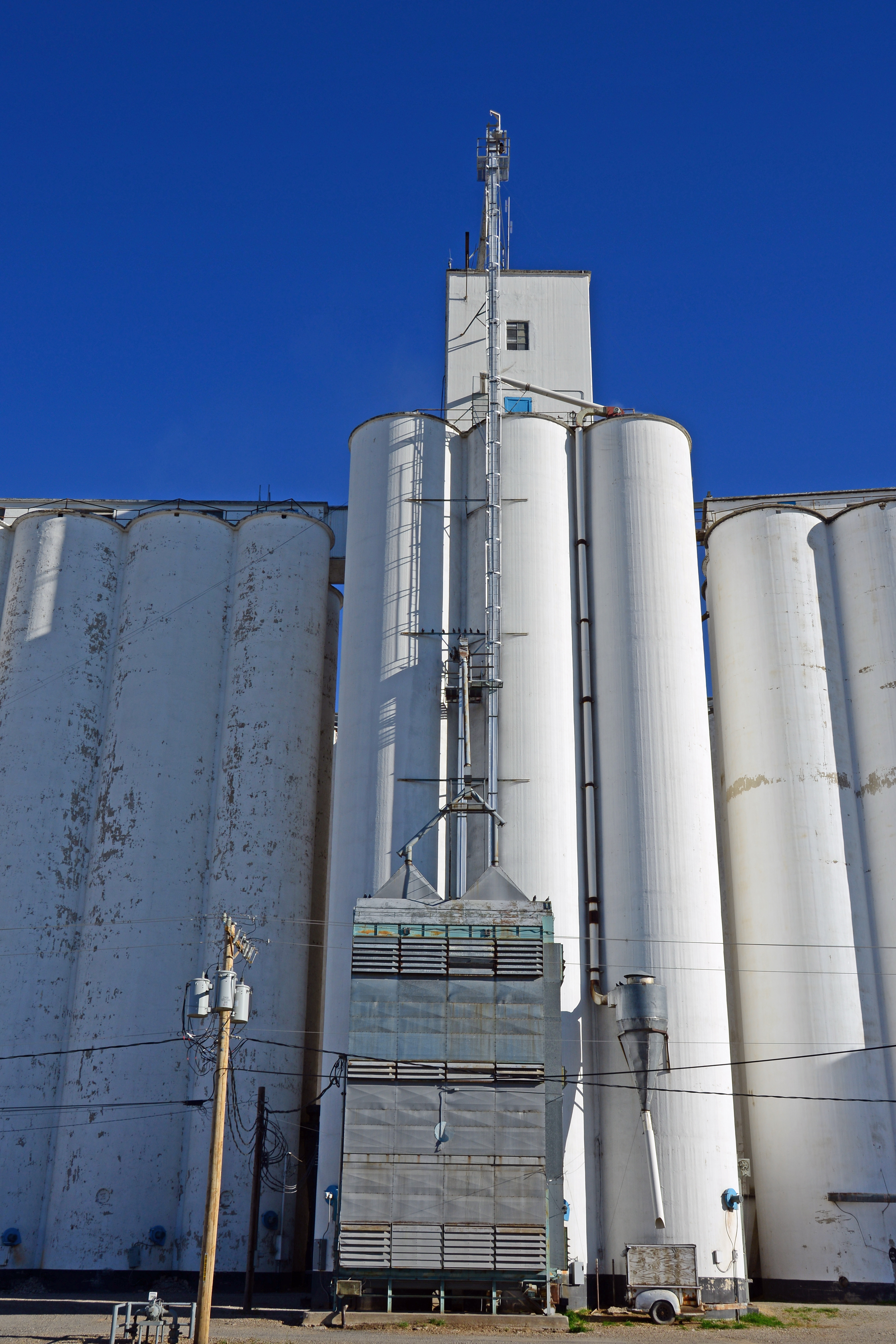
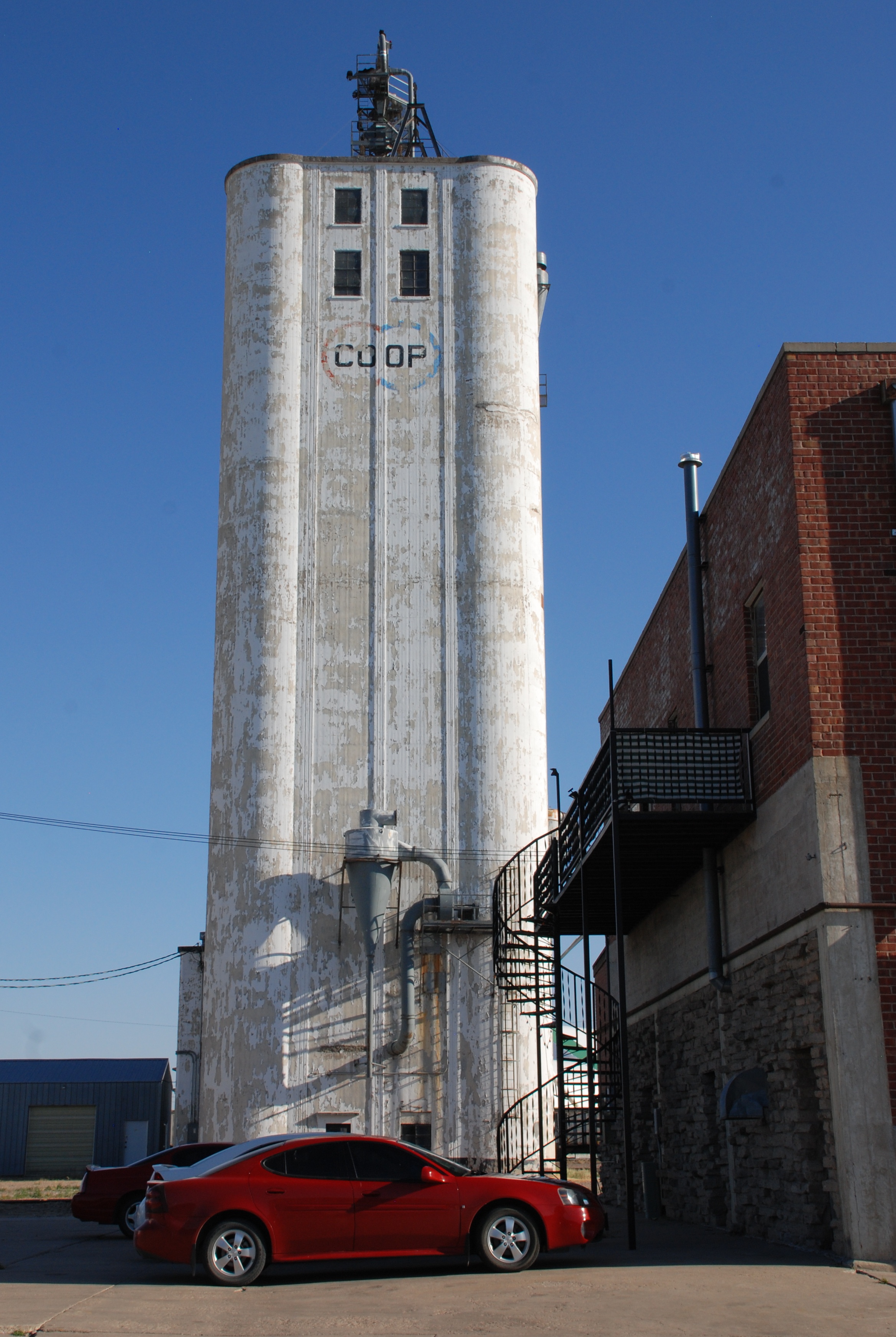
Tillotson Construction Company received the contract from the Elkhart Equity Co-op for the first concrete elevator built in Elkhart. Construction started in late 1945 and finished in late spring 1946. The elevator had a 225,000-bushel capacity.
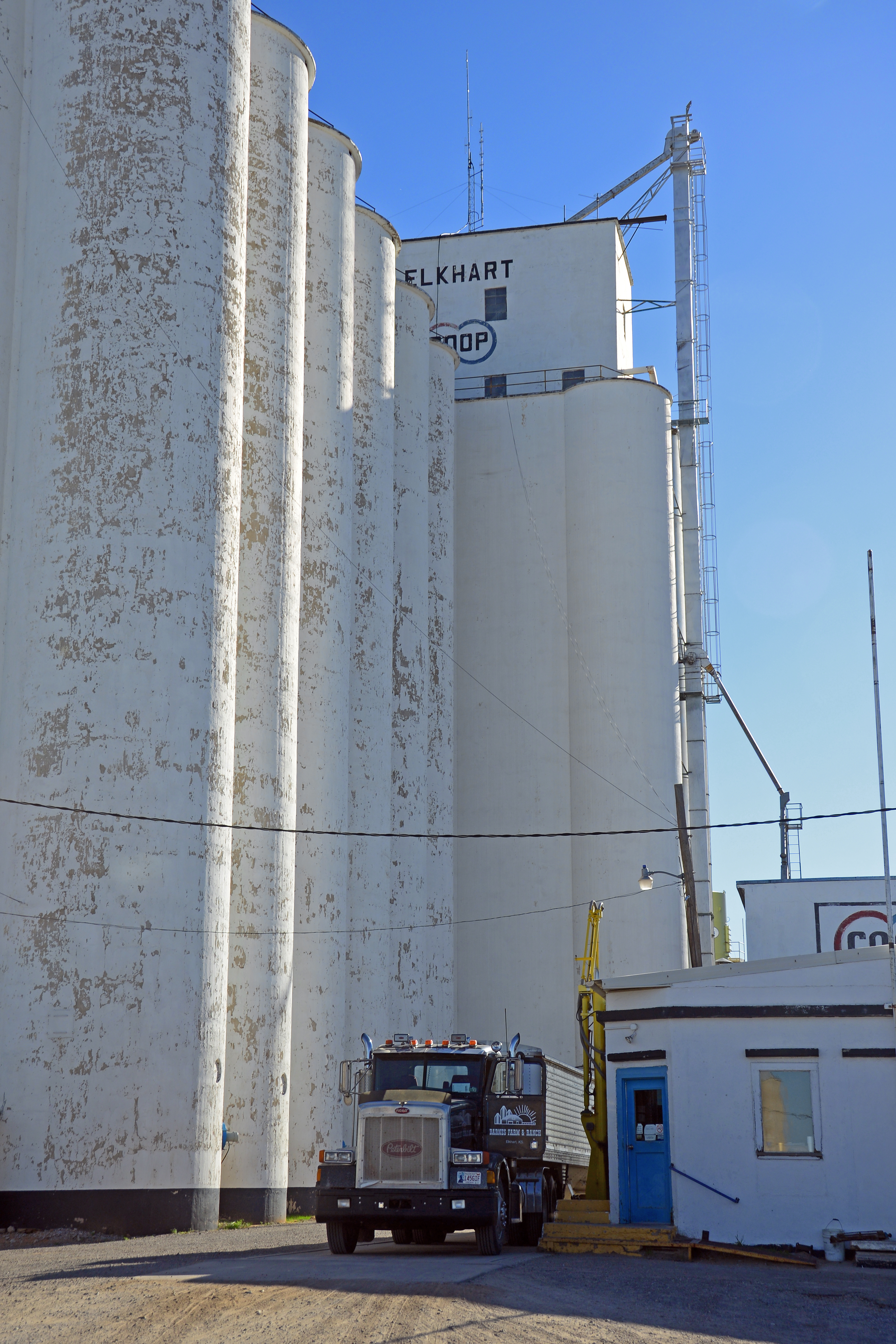
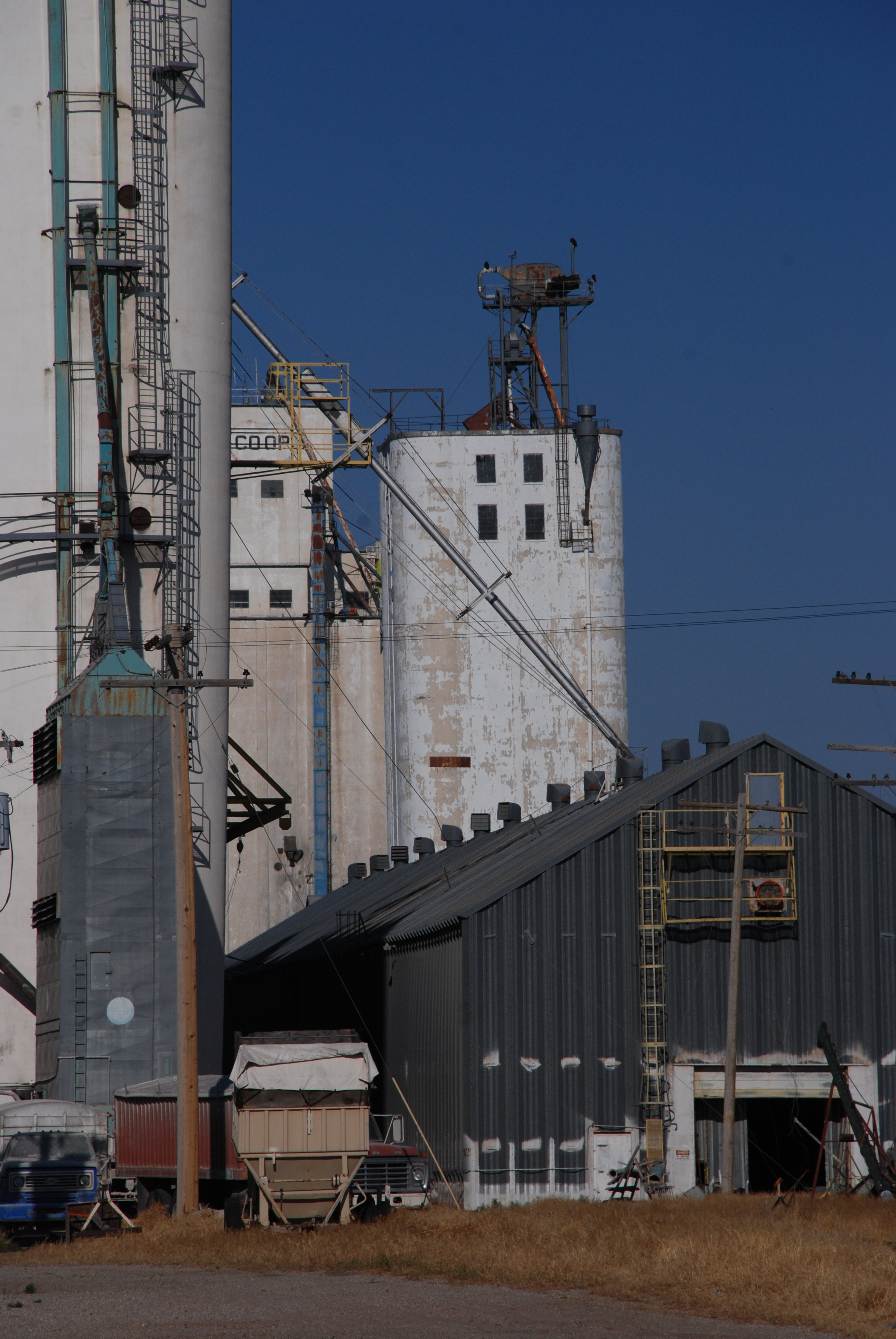
I was totally shocked when I first viewed this elevator. The Elkart Co-op had three different elevators built over the years. Plus they added five different annexes. Tillotson built what is now known as Elevator Number One.

Elevators Number Two and Three were built by Chalmers & Borton, as well as all annexes.

Was the Elkhart elevator Tillotson’s first? Elkhart was started 1945.

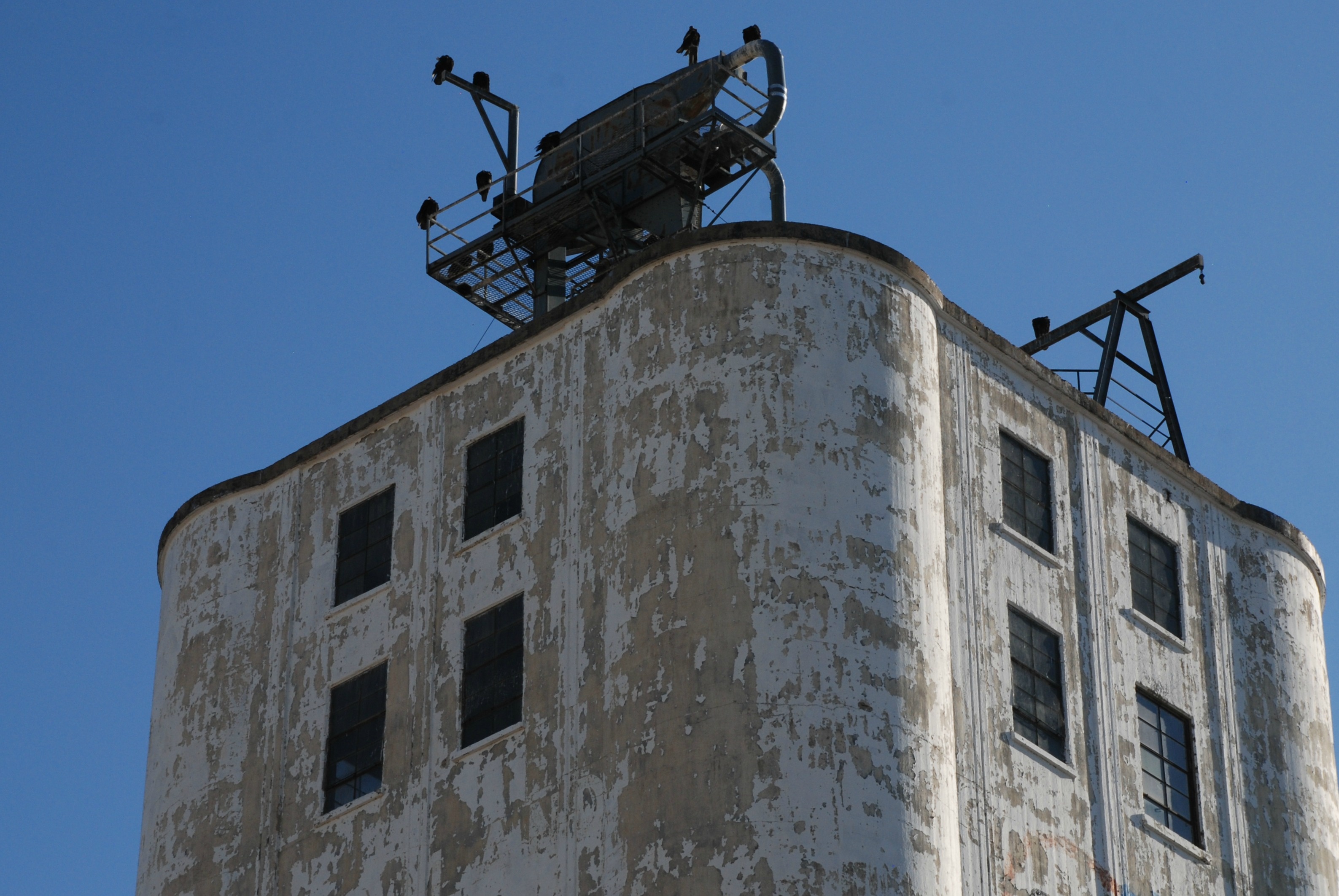
Once I realized which elevator in Elkhart was the Number One, I noticed that it had a rectilinear headhouse. This is quite different from Tillotson’s other elevators. It has been thought that one Tillotson signature was the curved headhouse. Is the Elkhart elevator a one-of-a-kind?

Tillotson did one other thing different on their headhouses from other construction companies.

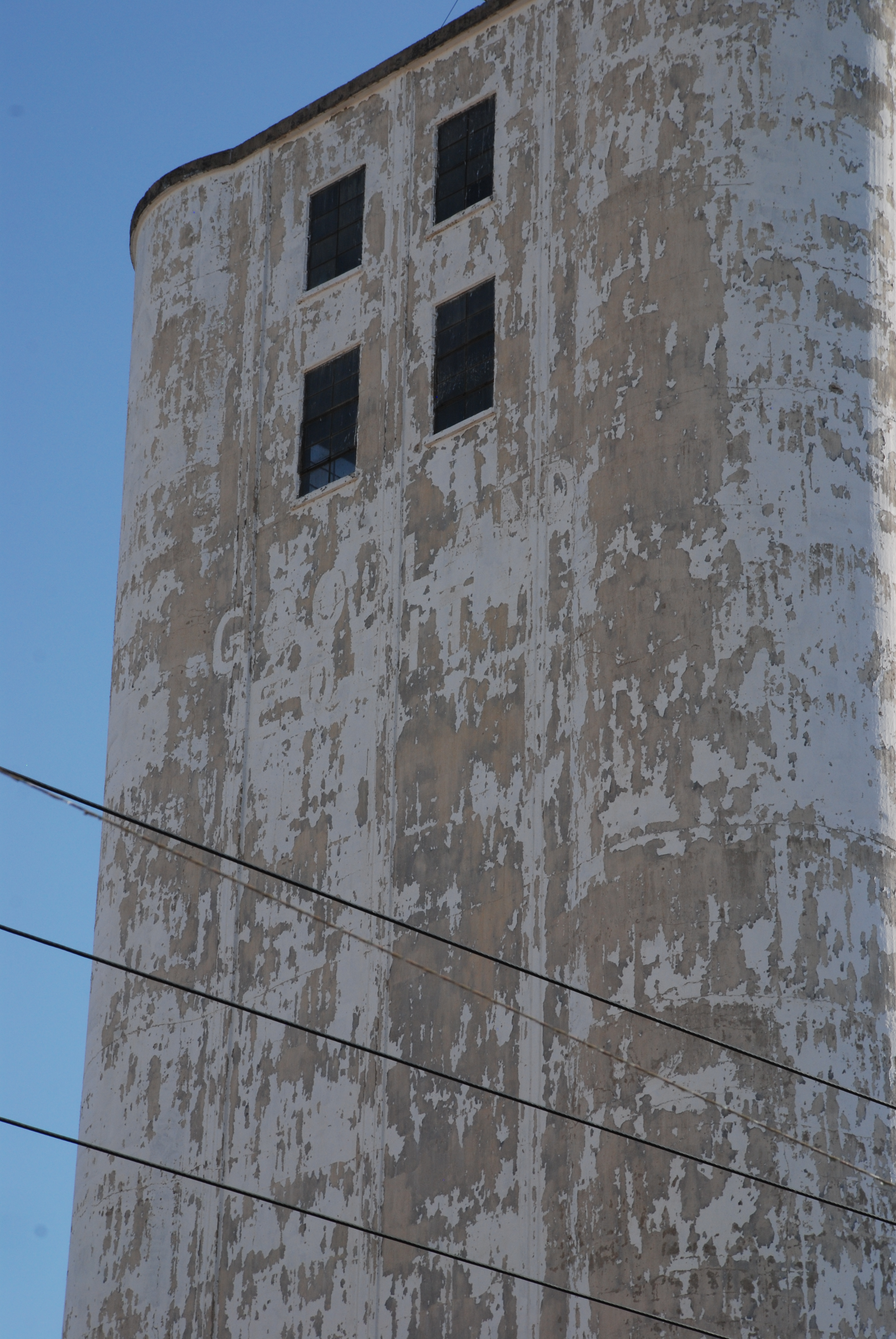
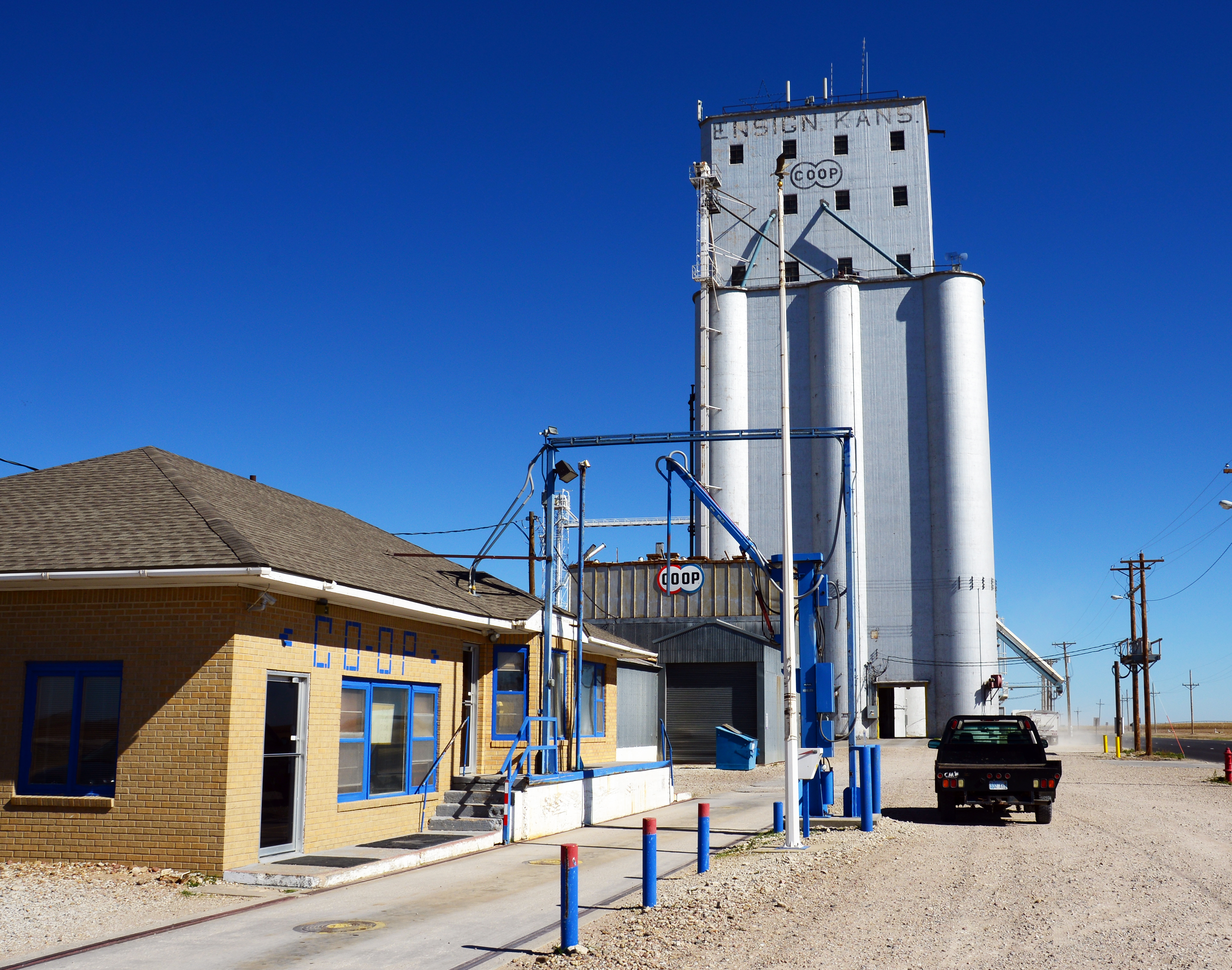
The long side of the headhouse had two different rows of windows. (You can view the window arrangements of other elevators on this blog, such as those in Rolla and Satanta, Kansas, as well as Ensign, Kansas.)
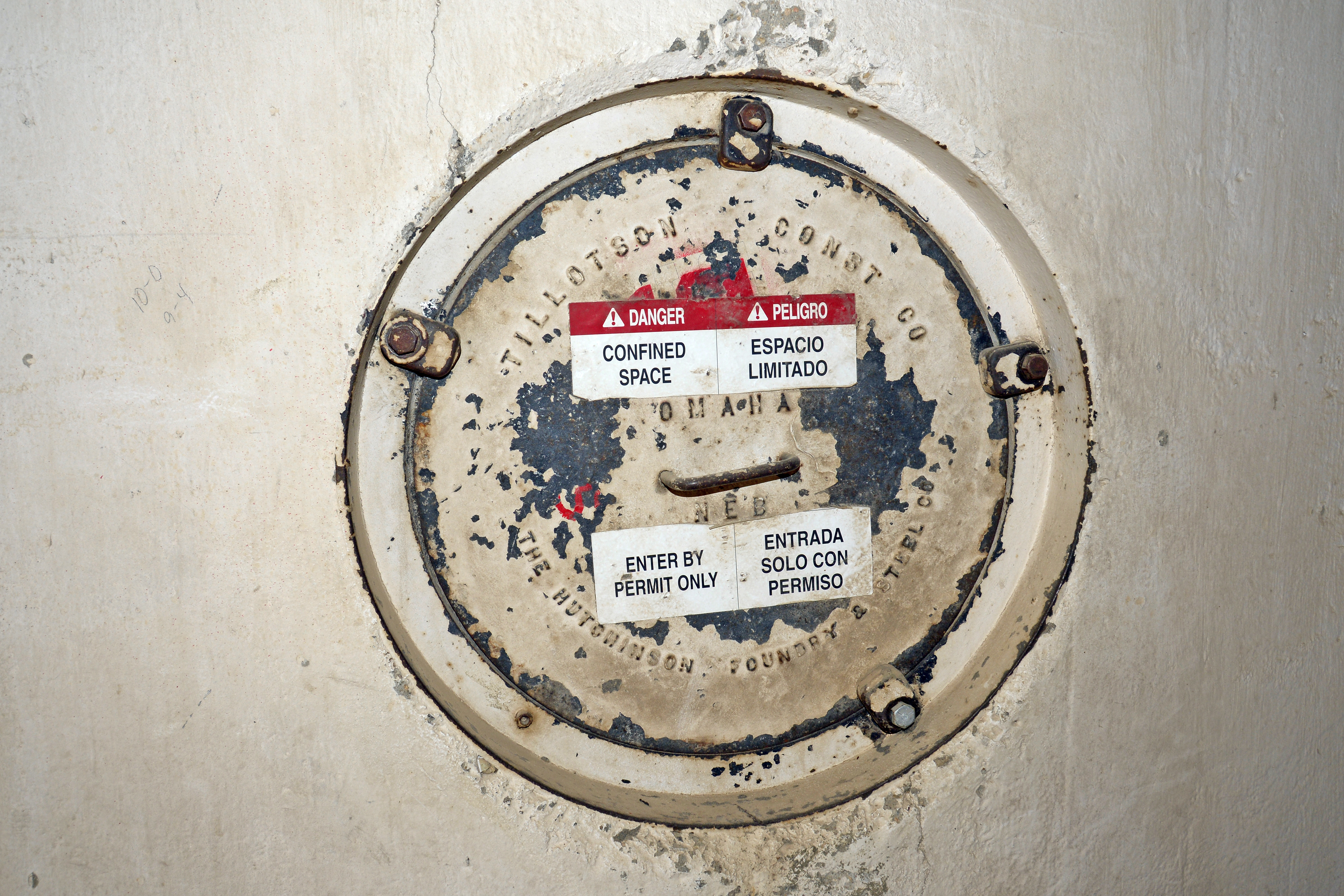
Could the Elkhart elevator actually have been the first line-elevator that they built. Why did they change to the curved headhouse in their future construction? Was it more cost effective, more efficient, or was it designed to distinguish their elevators from those of their competitors?

I wish to thank Morgan Walls, operations manager-Elkart Equity Co-op for much of their history.

Photo tour reveals the Goodland, Kan., elevator’s symmetries and history

Story and photos by Kristen Cart

My dad, Jerry Osborn, always knew Grandpa built this elevator, and I remember pictures of it from long ago. It still rises gracefully above the Kansas plain, tucked in among its neighboring elevators, listing slightly in its old age. It has always held a place of pride since its construction in the town of Goodland, Kan.

Contributor Gary Rich discovered, when he visited the site, that this elevator, built by J. H. Tillotson, Contractor, is now used for sunflower seed. When I saw it, it was all buttoned up, presumably awaiting its summer crop. The slight tilt is obvious from some angles, but the elevator appears sound.

William Osborn photo of the Goodland, Kan. elevator, found among his papers.

The words “Goodland Equity” can be faintly discerned under the white paint.

You can still see, faintly outlined in white letters, the name Goodland Equity, long since painted over. At one time  the elevator sported a neon sign proclaiming “Goodland Equity” to the night sky. That sign has disappeared and now vultures adorn the top of the leg in a lofty roost.

This beautiful elevator will continue to attract photographers as long as it stands. Aside from building useful, well-engineered, long-lasting structures, my grandpa, Bill Osborn, built beauty into the flat Kansas landscape.

For that, I am grateful.

A convenient roost for vultures.

How Tillotson Construction made a good first impression with the Ensign Co-op

Story and photos by Gary Rich

During the late 1940s and early 1950s many Kansas co-ops were planning new elevators. Grain production was increasing; thus, the old wooden elevators were not large enough. Ensign Co-op, located in Gray County thirteen miles southwest of Dodge City on US-56, needed a new one.

Looking for a concrete elevator with a lot of capacity, the Co-op contacted Tillotson Construction Co., of Omaha, Nebr. I am guessing the elevator was built around 1950 or 1951. Ensign Co-op has since changed hands several times. There are no records or blueprints available.

The first annex, seen right, was of single bins and allowed a path for trucks.

The elevator Tillotson Construction built was of a very unique design. First of all, it did not have a curved headhouse like so many other elevators they were building.

Secondly, this elevator had a double driveway. Many elevators built at that time had a single driveway. The use of semis hauling grain to the elevator was many years away. The only vehicles bringing grain to the elevator were farm trucks and pickups.

When the Ensign Co-op needed further expansion, they contacted Tillotson, which built the first annex east of the elevator. This probably occurred in 1952 or 1953.

The double driveway created some engineering problems. The annex had to be built at an angle from the elevator. This would allow trucks using both driveways a path around the new annex. The first annex was set a distance from the elevator.  Tilloston solved the problem, making the annex with eleven bins. The first bin was a single bin, while the others were double bins.

About 1957, Ensign Co-op was looking at additional expansion. Tillotson was contacted again. They built the second annex, connected to the first, in 1958. Nine double bins increased the total capacity to twenty-nine bins.

Typical of the company’s later projects, the second annex’s manhole covers included the year of construction. All manhole covers inside the elevator and first annex have “Tillotson Construction, Omaha, Nebr.”–but no dates.

Tillotson built the elevator as well as the first and second annexes. The company produced a quality product as the Ensign Co-op kept contacting the company for additional capacity. The Ensign Co-op had to be very impressed with their work. 

This is a rare case where Tillotson built an elevator and then returned to the same town and built several annexes. Generally other construction companies built the expansions.

Benton, Kansas, offers some direct lessons in elevator operations

The Benton, Kan., elevator complex.

Story and photos by Kristen Cart

Sometimes while checking out leads about elevators my grandfather was involved with, I’ve made some fascinating side trips. I stopped at a Chalmers and Borton-built elevator in Walton, Kansas, and met the grain manager there, Jeff Snyder. He tipped me off about an operating wooden elevator at Benton, Kansas, also owned and operated by Mid Kansas Co-op, which would make a rare photo opportunity. I made a point to drive up there the next time I had a layover in Wichita.

Loading corn for transfer to a larger elevator.

My earlier visit to Traer, Kansas, left me with questions about why cooperatives have come to rely so heavily on metal bins, and why relatively few new concrete elevators are built. The speed of loading and unloading is one limiting factor for elevators. But on my visit to Benton, I was able to gain some insight into other design considerations.

Benton, Kansas, still uses a wooden elevator with metal siding for part of their storage. Beside it, several metal bins make up the rest of their capacity.  Harvest was going strong when I stopped by. I saw trucks pull up every few minutes to load corn from a large metal hopper near the grain bins, looping through the scales both before and after filling their trailers. A worker conducting the loading operation noticed me by the railroad tracks with my camera, and during a lull he laconically introduced himself, saying, “Just Christopher will do.” He had a temporary job working for Mid Kansas Co-op during harvest both in Benton and in Wichita at their large concrete elevator, where he became well-versed in elevator operations.

Spencer Reams, site manager for Mid Kansas Co-op at Benton, Kan.

Spencer Reams, the site manager, greeted me inside the scale house. According to Mr. Reams, Benton, Kansas, had a unique problem for a region in the grips of a severe drought. Because of very localized rain at just the right times, the area immediately around Benton had experienced a record harvest, up to five percent over any previous harvest.  So the elevator was completely full of corn while the milo and bean harvest was underway. Grain trucks were called in to move the corn to the cooperative’s larger Wichita elevator to make room, as Christopher explained. While I watched, an old farm truck full of milo pulled in to unload into the pit. Meanwhile the grain trucks, once they were loaded with corn and weighed, made the nine-mile trip into Wichita and then returned for more, waiting for the loading hopper to fill before filling up.

A truck dumps milo into the pit where a conveyor would take it to the leg, out of the photo behind a bin on the right. The loading hopper is to the left.

Christopher told me what he thought of the various types of elevators. He said that he preferred the metal bins–they were easier to work around. He showed me a photo of the man-lift that was used in the Wichita concrete elevator, and I agreed that it looked like a harrowing ride. A simple ladder on the side of a metal bin seemed safer. Also, older concrete elevators were crumbling, he said. For one thing, during freezing temperatures, trapped moisture could cause the concrete to crack and flake. It could be patched, but much like a road bed, eventually the elevator would become unserviceable and unsafe.  Though he did not comment on Benton’s wooden elevator, it was apparent that for various reasons these wooden structures were becoming harder to keep within regulatory bounds. It is very remarkable, in fact, to see one still in operation.

Each storage facility apparently has its advantages and drawbacks. One of the chief advantages of an elevator is its existence–if it is standing and in any way serviceable, it will be used. Its life ends when it can no longer keep up with demand, and when it becomes cheaper to build a new one than to repair or upgrade an old one. So each year more of the old landmarks go missing, to be replaced by the plain and common metal bin.

Tillotson Construction’s Giddings, Texas, elevator rose by 10 feet per day but then disappeared entirely

By Ronald Ahrens

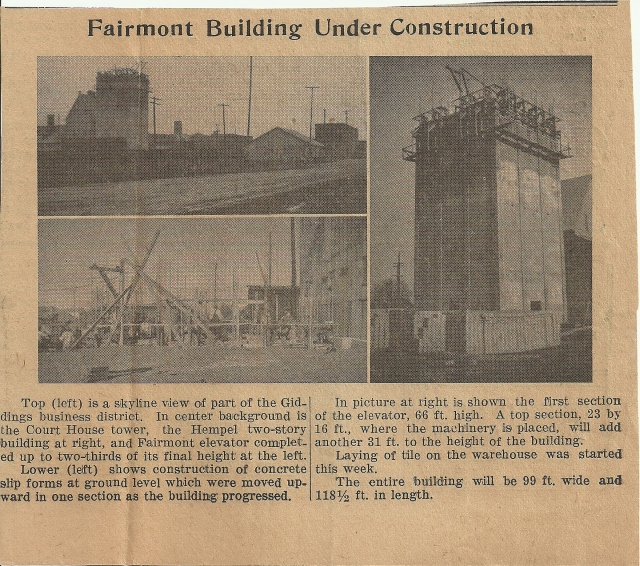
The Fairmont Foods Co. elevator that Tillotson Construction Co. built in Giddings, Tex., around 1945 became the hub of a busy and diverse agricultural service, one that had started a decade earlier.

As part of its Giddings operation, Fairmont, of Omaha, Neb.–just like Tillotson Construction–ran the largest turkey dressing plant in the Southwest. Every year, over 200 carloads shipped from here for the Thanksgiving and Christmas markets. During other parts of the year, the dressing plant stayed busy with chickens destined for such grocery chains as Weingarten’s, which in 1951 had twenty-five stores in Texas, Arkansas, and Louisiana.

Besides the poultry dressing, Fairmont processed eggs here and had a locker plant described as “huge” in the June 13, 1974 centennial edition of the Giddings Times & News. A hatchery and feed-mixing plant completed the operation.

On July 14, 1955, the Times & News carried the following item:

Fairmont Foods Co. has announced the sale of its feed mixing plant in Giddings to the Nutrena Mills, Inc., of Wichita Falls and Minneapolis, Minn.

Change of ownership will take place officially about July 15. Nutrena is one of the nation’s oldest and largest feed manufacturers. Nutrena feeds are distributed in a 24-state area from the Rocky Mountains to the Southeastern coast and from Canada to Mexico.

Fairmont Foods recently observed the 20th anniversary of their opening in Giddings. Fairmont officials emphasize that they will continue to serve their customers with the poultry processing plant.

The former site of the Fairmont Building has been paved over. Photo by Ray Kirchmeyer.

In 1966, Nutrena remodeled the offices. But few traces of the operation remain today. Tillotson’s Fairmont Building was demolished, and a bare parking lot is found at the site.

Special thanks to Ray Kirchmeyer for providing the photo and historical documents. 

Related articles

In 1945, William Osborn worked on Tillotson Construction’s elevator in Giddings, Texas

A Galveston seaside respite for the Osborns and Salroths in 1945

The elevator at Daykin, Nebraska shows a characteristic J. H. Tillotson design

The Daykin, Neb. elevator seems to match an unknown William Osborn photo

Story and photos by Kristen Cart

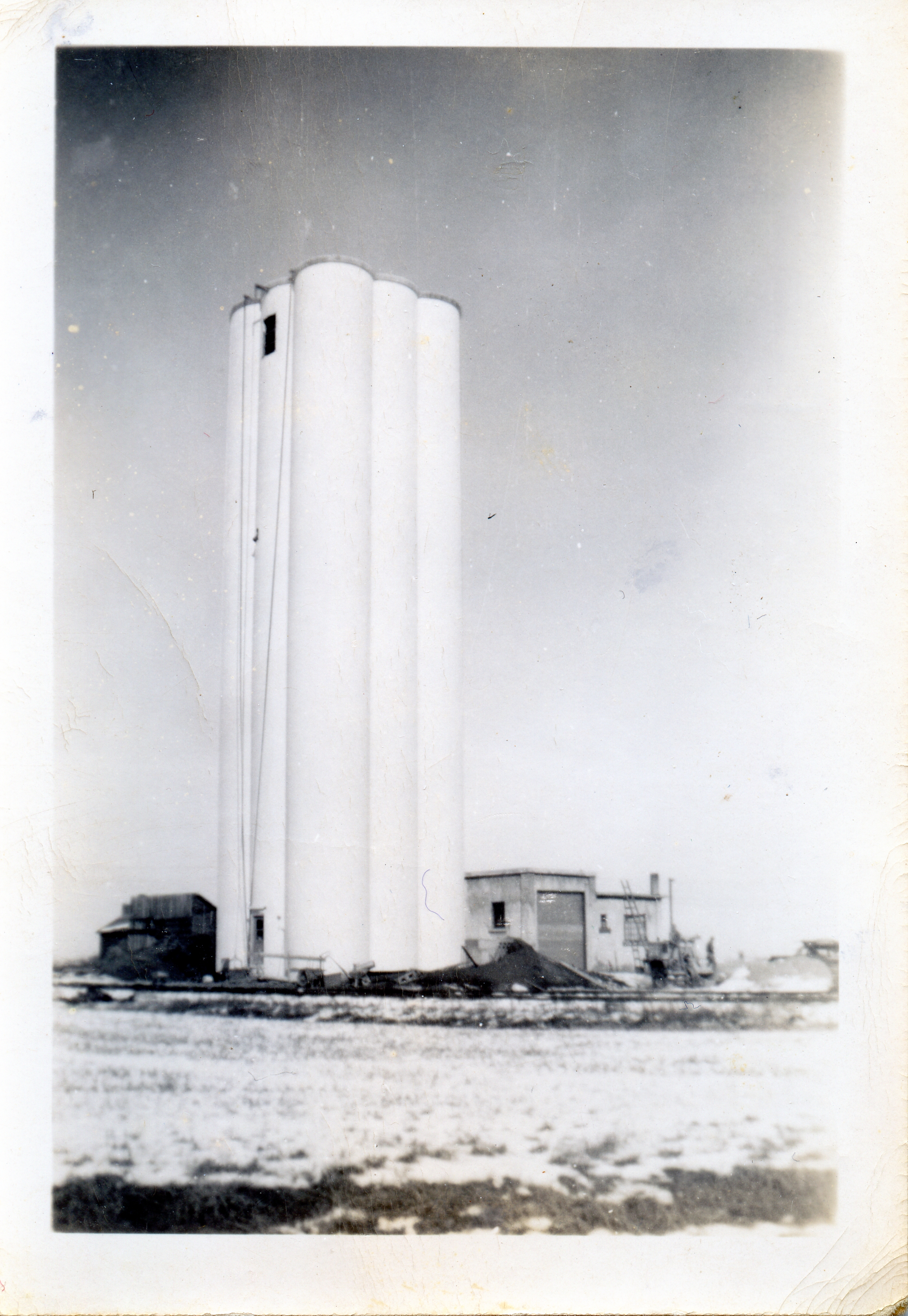
William Osborn photo ca. 1947

My husband and I took a day trip to look at some elevators in June, letting the kids off the hook and sparing ourselves their groans and complaints as we toured the countryside. Daykin was one of our stops. This J. H. Tillotson, Contractor elevator was built in 1947, according to my grandfather, William Osborn. He listed it among his previous projects when he was interviewed during construction of the McCook, Neb. elevator. As I went over the photographs for this post, I noticed, with excitement, that the photo matches one of grandpa’s unidentified photographs in every detail: The concrete driveway has the same inset from the corners, and the windows of the scale house match perfectly.  A mystery has been solved.

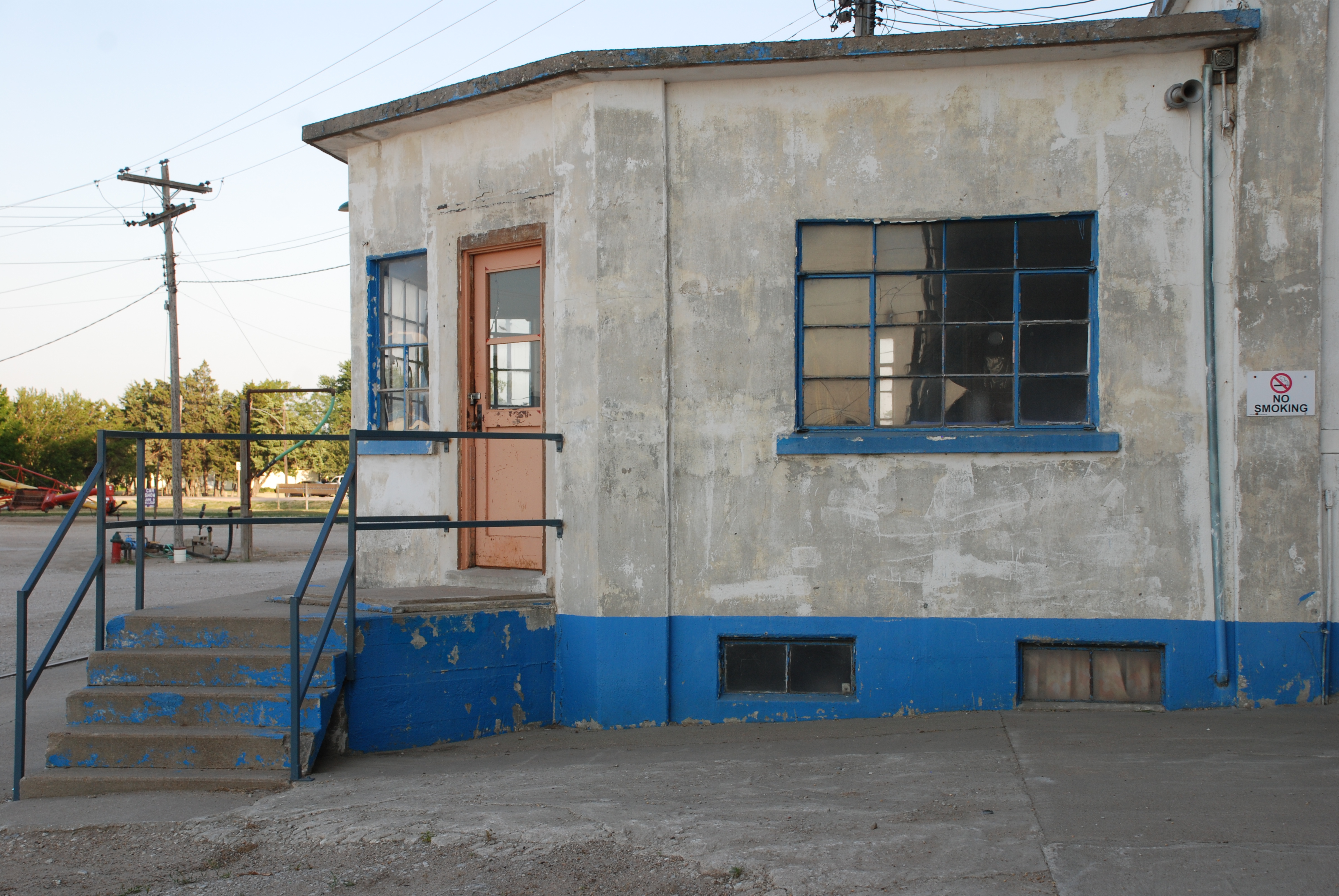
No one was about when we stopped to see the elevator, just before sunset. There was something beautiful about the scale house with its big, multi-paned windows, its blue trim, and its corner detail, with the elevator rising precipitously behind it.  I have admired all of Grandpa’s projects for their spare good looks.  I wonder how he saw these buildings.  It must have given him great satisfaction as he looked upon a completed project–or was it mainly relief? I know he loved tropical fish. He must have appreciated beauty for its own sake–at least a little bit. Was he too close to the elevators to see what I see? In certain light and at certain times, a beautifully done elevator takes your breath away.

The elevator at McAllaster, Kansas, proved to be a missed opportunity

McAllaster, Kan., photo by Gary Rich

Story by Kristen Cart

Sometimes our elevator quest ends in a dead end, without definitive answers. In the case of McAllaster, Kan., we had only an old photo belonging to my grandfather, William Osborn, to go on, and Gary Rich and I never got any independent confirmation of the builder. When I went to visit the elevator two months ago, nothing was left and there was no sign it had ever existed.

William Osborn photo

Gary Rich tried hard to get information about the builder, after he had gone to McAllaster to photograph the elevator. Both of us made calls to the cooperative. But all we were able to confirm was that it was slated for destruction sometime this year. It was shut up tight, of course, when Gary went to see it, and, no man-hole covers were visible from the outside. The only clue we could find was an old photo of one of grandpa’s projects, which was probably built for J. H. Tillotson, Contractor, of Denver, Colo., judging by the style. The caveat was that quite a few others similar to this one were also built, and some of them have long since disappeared.

Gary Rich photo

Elevators like those at Daykin, Fairbury, and Bradshaw, all in Nebraska, were built in a similar style, so the only clues to their builder are external to the main house: elements such as windows, driveways, office buildings, and loading chutes can be compared to details in my grandfather’s old photos. Of course, if we have independent verification, such as contemporary newspaper accounts or my dad’s memories, it makes our lives easier, since only one of grandpa’s photos has any caption. Daykin and Fairbury have both been verified in this way.

When the photo above is compared with the photos taken by Gary Rich of the McAllaster elevator, it shows just enough difference to dash our hopes for an identification. The building behind the driveway appears to be attached, and the windows don’t match our photos of McAllaster. So we are at a frustrating impasse. We still don’t know the identity of the elevator in grandpa’s photo, and we still don’t know the builder of the McAllaster elevator, though we suspect it was a J. H. Tillotson project. With no way to verify it, we are at the disappointing end of our quest.

In Monument, Kansas, the elevator is closed to visitors and its story sealed

Story and photos by Kristen Cart

I approach this post with a little bit of trepidation, since the Monument, Kan., elevator does not invite tourists–even those with family connections. It is operated by a large corporation which primarily supplies corn for ethanol. It seems that an overly inviting manager might be risking his job, so I contented myself with photos taken from off of the property. But I was able to cobble together some information about it, from a variety of sources. Suffice it to say, it would not be prudent to reveal all of them.

A view of the Monument, Kan., elevator, taken from off-property. Visitors weren’t permitted at the facility.

I was able to determine the builder for the stand-up elevator with its integral head house. The manhole covers are stamped with the company name of J. H. Tillotson, Denver, Colo. The annex on the left has unmarked ports, but the annex on the right has man-hole covers stamped with the company name Mayer-Osborn. I did not see any of the ports for myself, so I am relying on secondhand information. But my grandfather apparently made a return trip after building the original house.

The original elevator was built for a Mr. Bertrand, whose son is still living. The elevator once had a brass plaque installed, which has since been removed and may still be with the Bertrand family. There were also early photographs of the elevator, and it is believed that they went with the plaque.

I spoke with a gentleman named Fred Wassemiller, who said, “These elevators were the best thing going–they should have kept building them.” He also said it was too bad that the “old-timers around here are gone.”

Apparently, they could have told me a lot.

Gary Rich’s analysis reveals subtle aspects of Mitchellville, Iowa, elevator operation

Story by Gary Rich
Photos by Kristen Cart

There are several possibilities as to why Heartland Co-op’s Mitchellville, Iowa, elevator would only use rail service for shipping out its grain. The most obvious one is that this might be a shuttle operation. Whether corn or soybeans, the company that receives the grain might have a contract with the elevator specifying shipment of a certain number of carloads per week. It is probably a larger-name company, and they could be paying for the shipping charges. This would keep their operation from having to shut down for lack of grain.

The photos appear to show nine or ten covered hopper cars at the elevator’s far right. In the view at top, we see yellow markings on the rail on the elevator track. This is known as the “clearance point.” You can’t have cars sitting beyond these markings without “fouling” the main line. The following links to lexicons of railroad terminology will explain both terms:

http://www.icrr.net/terms.htm
http://cfr.vlex.com/vid/214-7-definitions-19944901

Here’s an illustration why it’s cheaper to move grain by rail. The amount of grain in one covered hopper car leaving the elevator equals three semi-trailer loads. If you load ten hopper cars, you’re probably looking at an equivalent of around thirty-three or thirty-four semi-trailers. If the plant that receives the grain is over 200 miles from Mitchellville, it would take more than a week to move all that grain over the highway.

Indeed, if the plant is 200 miles away, you also have to consider the amount of time a trucker can work. He wouldn’t be able to cover two round-trips per day. And besides, the trucker’s charge of something over $4.00 per mile might erode all profit for the grain operation.

Tillotson Construction’s Mitchellville elevator is a key part of Heartland’s grain operation

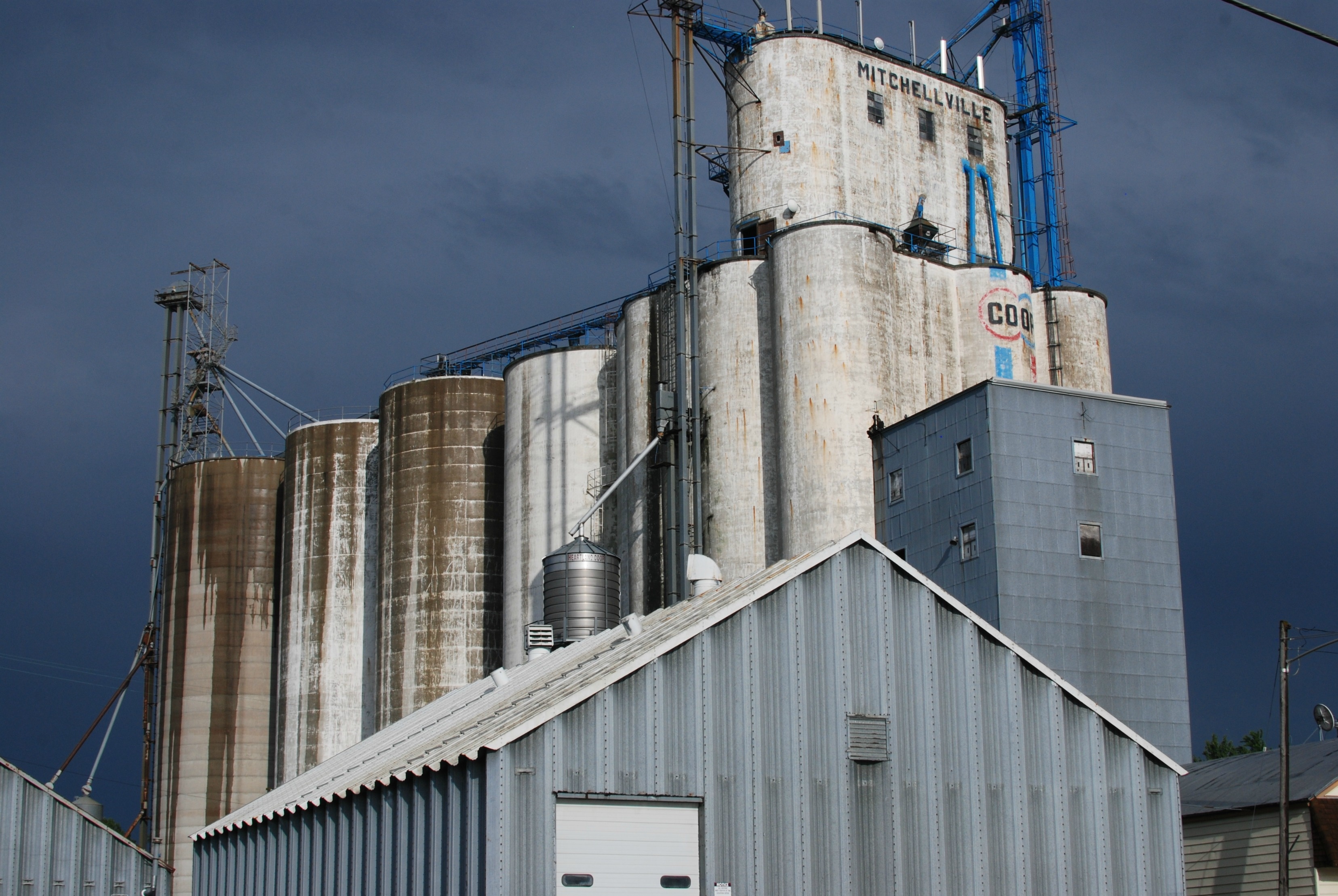
The Heartland Cooperative elevator complex at Mitchellville, Iowa.

Story and photos by Kristen Cart

The Mitchellville elevator is visible from Interstate 80, and the rounded head house drew my attention as we headed through Iowa on our way home from our recent trip out West. “Just one more stop, OK, kids?” I said, and they answered with groans. I think I promised ice cream to quell the protest.

The main elevator built by Tillotson Contruction Company of Omaha, with grain drier.

I parked the van, air conditioner running, in a shady spot and hopped out with my camera. Thunderheads threatened nearby, but the storm seemed to be moving off, and the sun peeked out and illuminated the scene. I took advantage of the beautiful light to photograph the elevator.  As I finished up, I saw a truck rounding the corner from an alley into the gravel lot beside the elevator, so I flagged the driver down to ask if he knew anything about it. We were in luck.

The driver introduced himself as Ed Baldwin, a grain truck driver for Webb Farms. He was more than happy to talk about the elevator, having trucked “at least two million bushels” in and out of Michellville. Bill and Stan Webb own the farm, and Ed purchased his truck from their father who used to truck his own grain. Ed gave me a quick outside tour of the elevator property.

The Younglove annex viewed from the driveway.

Ed explained the Heartland Cooperative operation at Mitchellville. He did not know the builder of the “head house,” as he termed the main elevator, but he knew the adjacent annex was built by Younglove in 1972.  The bins had numbers and he pointed out the function of each one. All the way to the left was a new bin with its own leg that was built in the 1980s and used for damaged corn. Immediately to the right of it, on one end of the Younglove annex, was a bin dedicated to soybeans. The rest of the annex held corn, with the main house taking all the wet corn since it gave access to the grain drier.

The Younglove annex is placarded with the date of construction.

During harvest, the employees kept a grueling schedule filling the bins, especially during a wet year. Jim Dietrich, grain manager for Heartland Co-op at Mitchellville, would pull a twenty-four hour shift to accept the grain into the main elevator and dry it. The drier had a capacity of seven thousand bushels per hour, which would limit the amount of grain that could be taken in. Ed said the main house would take seven semi loads per hour of grain that needed to be dried. Shipments from the elevator were by rail, unless capacity was reached and grain needed to be trucked.  Trucking would be the exception for Mitchellville’s operation.