Kingfisher Co-op documented the sequence of its elevators in a 1984 history

Scan

By Ronald Ahrens

Thanks to Linda at Plains Partners, in Kingfisher, Okla., we have pages from the special 50-year-history edition of The Co-op Way, published by the Kingfisher Cooperative Elevator Association in 1984.

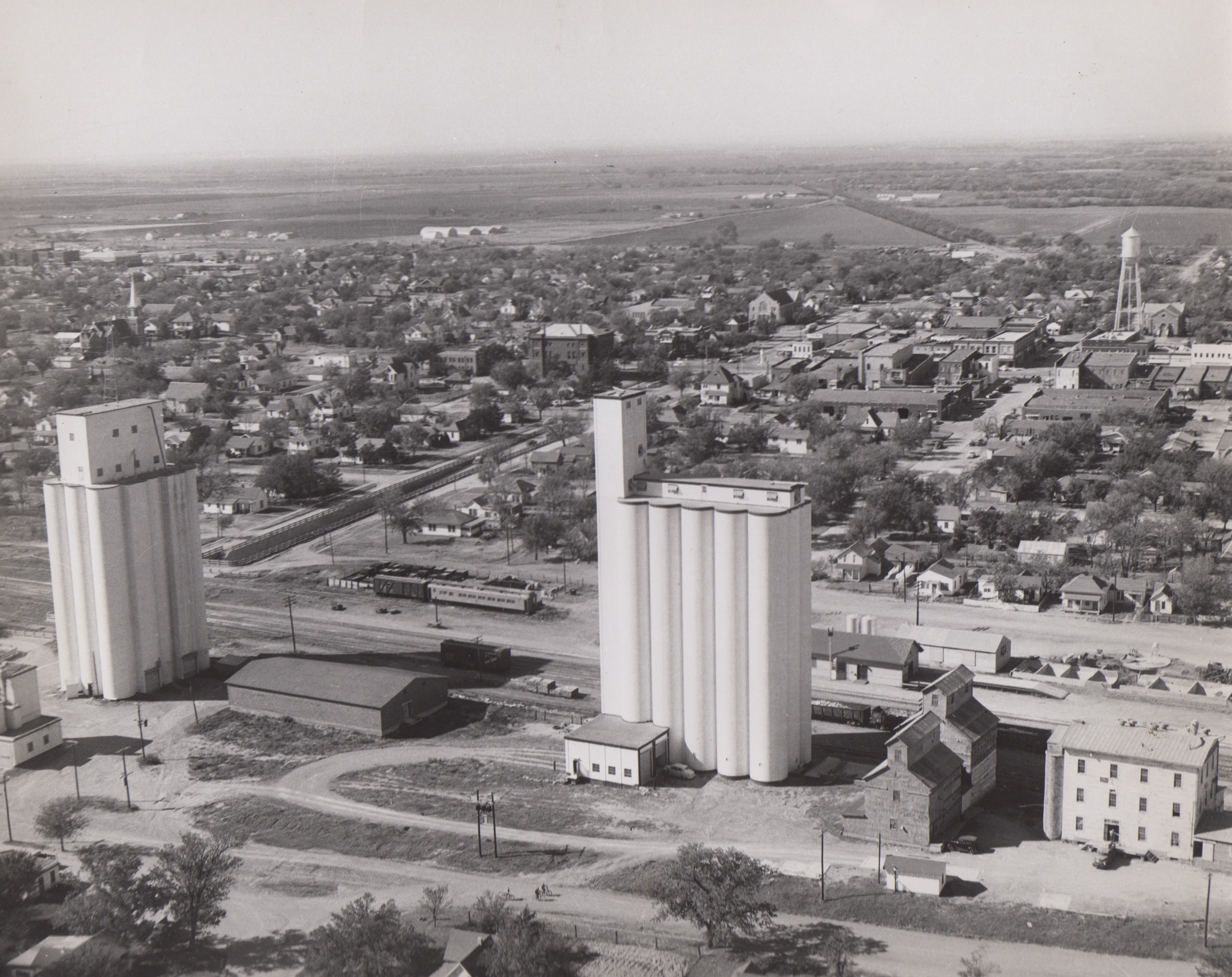
The history reports what happened only twelve years after the co-op was incorporated. Because of postwar expansion “the need to build a new elevator was obvious,” the history says.

Scan 2The co-op chose Tillotson Construction, of Omaha, for the job.

First, however, the co-op reincorporated early in 1946 to increase its capital.

Work soon got under way when “the association wrecked the old 34,000 bu. elevator and built a new concrete elevator with a 250,000 bu. capacity,” the history says.

“They also wrecked all the other old buildings except the office and scale house which they had built in 1942. It was remodeled into a concrete cleaning and grinding mill and warehouse.”

The year of 1955 “saw the skyline of Kingfisher change once more. A new skyscraper had been added to the landscape, and the farmers took pride in the contribution they had made to their community’s appearance and prosperity.”

Tillotson company records don’t address the question of who built the second elevator, seen at right in the photo below. Neither does the co-op’s history mention the builder.

Scan 3


In 1946, Tillotson Construction built a mighty elevator in Kingfisher, Oklahoma

Scan

By Ronald Ahrens

In 1946, Tillotson Construction Company, of Omaha, built a grain elevator in Kingfisher, Oklahoma.

Kingfisher, a town of 4500 people, lies about forty-five miles northwest of Oklahoma City.

Company plans list the reinforced concrete elevator’s capacity at 240,000 bushels.

The elevator, seen on the left in the photo in a view from the northeast, was built on an expanded version of Tillotson’s standard Medford plan, with one leg. Two driveways pass through the center of the house.

Storage was calculated at 2400 bushels of grain for each foot of height.

Adapted from Wikipedia's OK county maps by Set...

A call to the elevator was answered by Linda in the office. She dug out a 50-year history of the co-op, published in 1984.

It says that in 1946 the co-op “wrecked” its old 34,000-bushel elevator, preserving the office and sale house, and erected a new 250,000-bushel elevator. (No telling how to account for the 10,000-bushel difference between the company’s records and the co-op’s history.)

The published history includes a 1955 “skyline view” photo that may be the same picture as above. Note the stained, north-facing, outer walls of the Tillotson elevator, indicating it had been in use for some time, while the elevator to the right is obviously brand new.

The Tillotson elevator is presently known as the south elevator. The wooden buildings no longer exist at the site. In recent times, the Kingfisher Co-op Elevator first merged into a regional organization and is now part of a conglomerate.

An old wooden elevator comes down at Halsey, Oregon, and shares its secrets

dsc_0317

Halsey, Ore., in early 2012.

Story and photos by Kristen Cart

Elevators such as this one in Halsey, Ore., have elicited interest from photographers and curious travellers for as long as they have existed, especially since they are on the verge of extinction. Technology passed them by back in the early 1940s when most of the new construction in the United States went to slip-formed concrete.
dsc_0924

The remnants of the Halsey elevator, Feb. 2013, in a downpour.

Canada held out, building wooden elevators well into the 1970s, with a minority of them still in service today, and many more long since demolished, abandoned, or burned.

The end has come for the Halsey elevator. After hearing of its demise in an online forum, I recently passed near the town on I-5 and stopped to see the hulking remnant. It was a sorrowful sight, topless and dreary.

But beside it was a more interesting find.

In an empty lot next to the elevator, piled randomly, was the elevator’s leg. It brought to mind a story–a cautionary tale, really–which illustrated why concrete was so attractive to engineers looking for a better alternative.

dsc_0933

The leg from the Halsey, Ore. elevator, piled on the ground.

While exploring elevators in Alberta, Canada, I took a trip to a small town called Milo.

It was a snowy day, and as I gazed up at the lone wooden elevator, a gentleman pulled up in his truck and asked if I needed directions. He introduced himself as Ian Thomson. He was a long-time resident and farmer, and once we got on the topic of elevators, he told me that Milo once had nine wooden elevators lined up along the rail line. The sole survivor, silver-sided and huge, was built in the 1970s. It was still active, and its nearest neighbor had come down a year or two before.
DSC_0598

The lone wooden elevator in Milo, Alberta, Canada.

Ian told a tale of the demise of one of the old wooden houses.

One of Milo’s elevators was decommissioned in winter, years ago. When the leg was torn out, a salvage company tried to remove the conveyor belt to reuse the rubber. Water remained in the pit, and the lower portion of the leg could not be retrieved because it was frozen solid. So they cut the belt off at the top of the ice and hauled off what they could. The owners told Ian that as soon as the pit thawed out, he could have the rest.

It was an early spring day, and a thunderstorm rolled by. A farmer could always use rubber–Ian was thinking of mud flaps for his truck, so when he went to check the elevator that day, he was disappointed to find the leg remnants still frozen solid in the pit. So he left without them. But as he exited the elevator, he noticed a thin tendril of smoke rising from the headhouse.

DSC_0610

Ian Thomson displays his railroad collection.

With gut wrenching dread, he called the owners, but he knew it was already too late. A fire company fought the blaze, but by then the elevator was fully involved, and it burned completely down.

A nagging worry stayed with Ian. While he knew he had done nothing to cause the fire, he was seen leaving the elevator, and he thought his neighbors might wonder about it. But the real culprit was lightning. He needn’t have worried.

Ian Thomson was an honorable member of the community and an esteemed historian, with a proud military heritage. He was, and still is, a true gentleman farmer.

DSC_0593

Alberta wheat country.

The fire danger inherent in wooden elevators spurred engineers to try concrete building methods. Concrete elevators came with their own hazards, but also great advantages, and they remain the premier choice for durable, large scale grain storage.

But we still miss the proud old wooden denizens of the plains.

Discovering the J. H. Tillotson elevator at St. Francis, Kansas, as a centennial looms

DSC_0248(2)

The J. H. Tillotson elevator in St. Francis, Kan. is nestled between two annexes.

Story and photos by Kristen Cart

St. Francis, Kan., stayed on my mind for months after I failed to find any sign of the work of my grandfather, William Osborn, on our first visit.

Out on the western end of Kansas, the town was well clear of any route our family would take on the way to somewhere else. It was a very intentional stop on our itinerary. On our first visit, we took a wide loop, arriving just after sundown, and we lost the opportunity to investigate further than one cursory look at the wrong elevator. The visit to St. Francis was shelved for several months, and I almost didn’t go, but when I did, I made sure to be there before nightfall.

The weather caught up, however.

DSC_0224(1)

St. Francis Mercantile Equity Exchange grain merchandiser, Shirley Zweygardt.

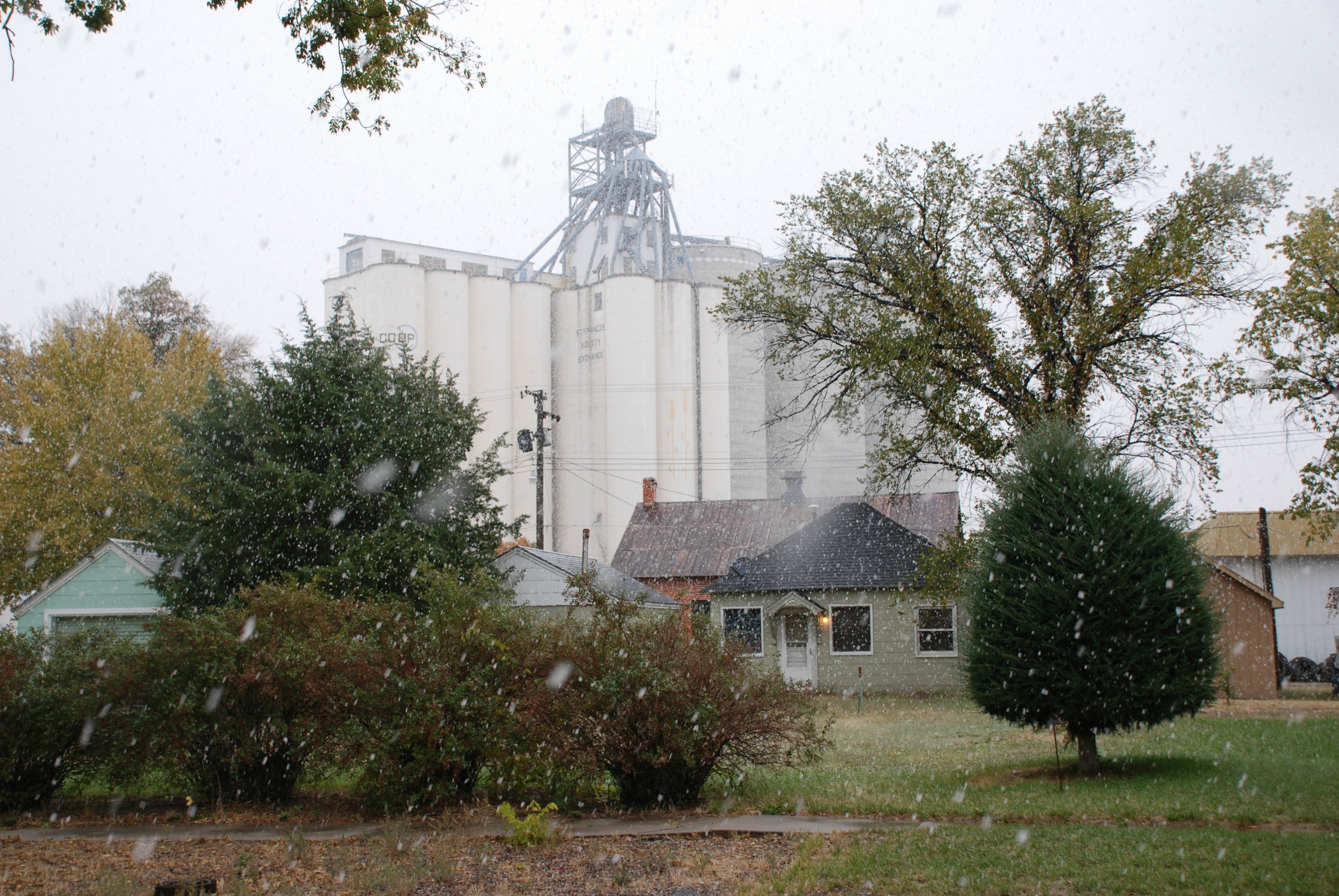
This time, I headed toward the highest structure in town. By the time I pulled up to the elevator office, fat flakes of snow wafted down and splotched the truck’s windshield, melting on contact with the ground. It was October, and the trees, which still held their leaves, were a golden brown backdrop for the early snow. I shook off the cold and entered the co-op.

A surprise awaited. A long-time employee of St. Francis Mercantile Equity Exchange, Shirley Zweygardt, greeted me at the door. Raised on a farm just down the road, she was intimately familiar with the elevator’s history and purpose, so in 1979, when a job opportunity arose, she was glad to fill in where needed.

It has been a happy arrangement. Shirley started as a bookkeeper, then worked in grain accounting and is presently in charge of grain merchandising. She has seen the St. Francis Mercantile Equity Exchange through many changes over the years.

She asked me to sit down and have some coffee, and she shared her experiences of working around the old St. Francis elevator.

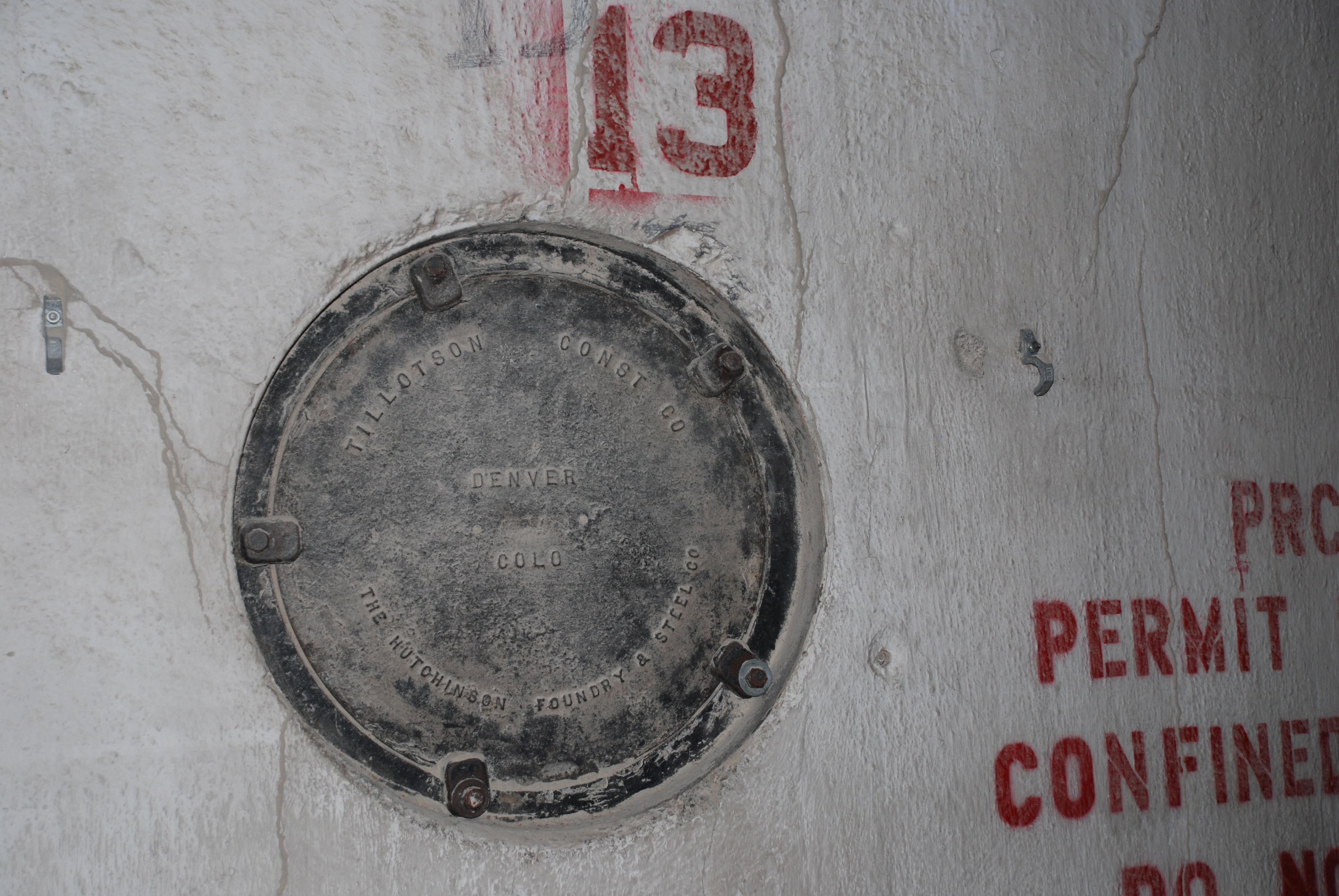
The manhole cover on the interior of the driveway identifies the builder

The manhole covers on the interior of the driveway identify the builder.

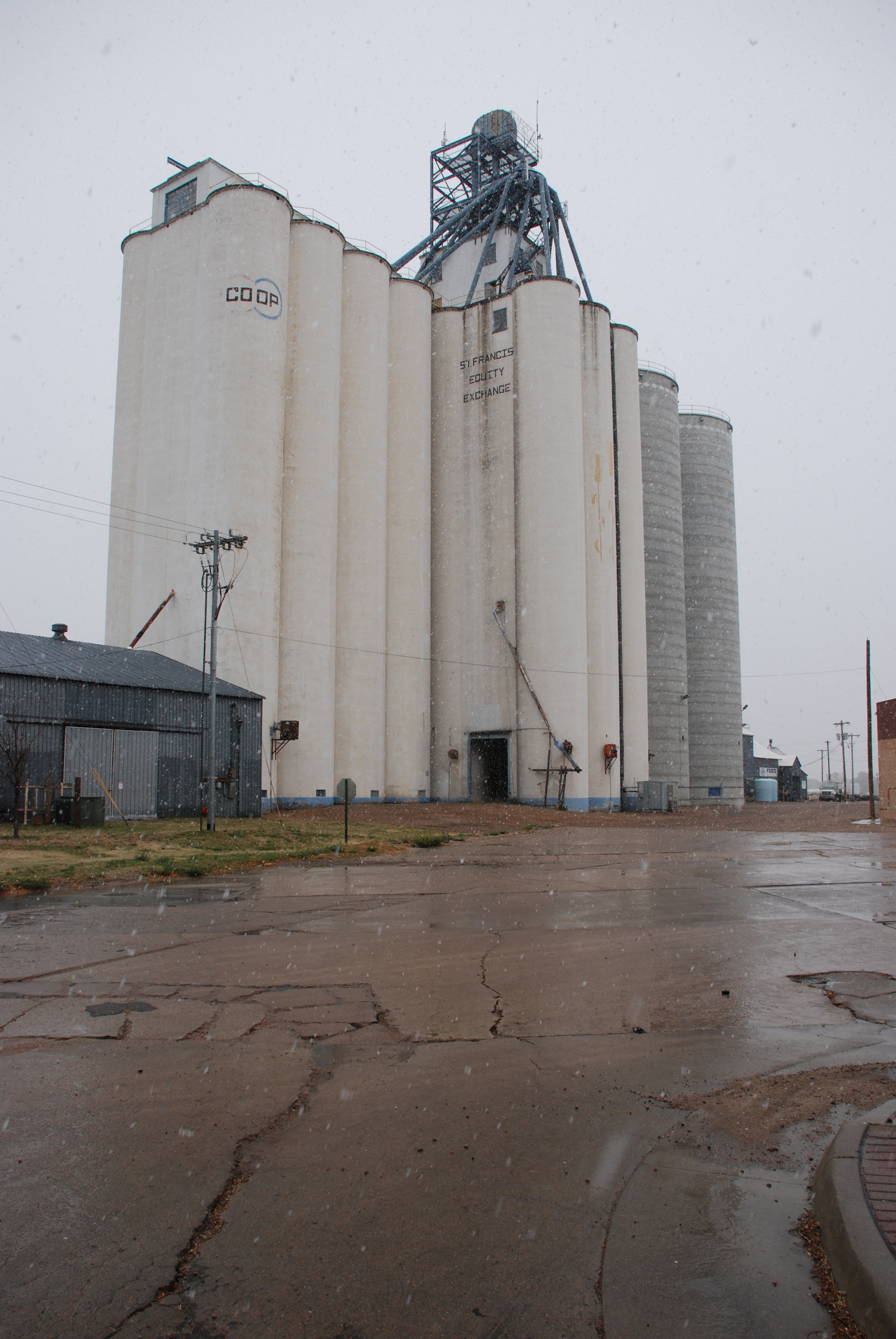
St. Francis Mercantile Equity Exchange was incorporated in 1913. As slip-formed concrete construction methods advanced, the equity exchange looked for a company to build their first concrete elevator. Once it was completed in 1946, their quarter-million-bushel elevator was the biggest and most modern in western Kansas. It more than doubled the storage capacity of its lesser neighbors. And lo and behold, it was built by J. H. Tillotson, Contractor, of Denver, with the construction supervised by my grandfather, William Osborn.

It was not the only grain storage on the site for long. Soon, the capacity proved to be too little for the 1940s and 1950s boom years, so Chalmers and Borton came along and built the first annex.

Later, the site incorporated a flat storage facility which only holds wheat, since its air system does not ventilate adequately for moist corn. A second three-bin annex was built in 2000, using the same old technique of lifting concrete up to a dump cart that ran on a track around the perimeter of the rising elevator. It was completed just before the onset of a seven-year drought, and it took a few good harvest years to recoup the investment, since the annual wheat yield was too low at first to fill the bins.

Wall Street would not be the only beneficiary of perfect prognostication. The present snowfall was gladly welcomed in St. Francis.

The St. Francis Mercantile Equity Exchange will be celebrating its 100th anniversary this year. It has been and is the cornerstone of the town, and the center of business and economic life. Stay tuned for a little more of the history, and wonderful images, of this fine elevator, which Shirley kindly shared.

The Chalmers and Borton annex is in the foreground, and the new annexes are behind the main house.

The Chalmers and Borton annex is in the foreground, and the new annex bins are behind the main house. The flat storage shed is on the left.

‘Walking the plank’ on the new Pocahontas, Iowa, elevator in 1954

pocahontasgrainelevator

By Charles J. Tillotson

Safety and the preservation of life have become much more important in today’s world of construction. However, during the 1940s and 1950s, the urgent need to build grain storage coupled with the fact that most elevators were built in very rural areas meant that safety was secondary to getting the job done.

A case in point was a personal experience I had while working in Pocahontas, Iowa.

As with most small towns, the labor pool was rather limited to itinerant farmhands and workmen passing through town. Scaffolding and access walkways were pieced together in a very haphazard way–the means to an end.

One day I was working “up top” of the newly built grain tanks and needed to cross over from the new tanks to the deck of the existing elevator. The distance between the two structures was probably eight feet. To span the gap, two 2×12 planks were placed down between the two structures.

As I began my “walk the planks,” I stubbed my toe on the butt end of one of them. Accordingly, I stumbled forward–but was fortunate enough to regain my footing and continued on across to the other structure.

I realized then how easy it would be to make a misstep and end up at the bottom of the chasm.

Map of Iowa highlighting Pocahontas County

Map of Iowa highlighting Pocahontas County (Photo credit: Wikipedia)

While working in Pocahontas I met a young man, a few years older than I, who had been passing through town on his way back to his home in Hinton, Iowa. His name was Marv, and he had signed on as a carpenter. It was refreshing to me when I met Marv, as he seemed to be a person who was not only a good worker but an intelligent one as well.

When the summer came to an end I had to return to school, and so I said my good-byes to Marv and all the crew on the job. Later that year I learned that Marvin Richards had fallen to his death on the Hinton job (Tillotson-built) while attempting to cross over between two structures.

Hearing the news of his death, I assumed he was the same person I had encountered.

That same summer, Larry Ryan, the hoist operator working for Tillotson Construction Company on the Pocahontas job, had a similar mishap. During Larry’s break from the hoist, he decided to go up through the existing elevator terminal and cross over to the new construction to deliver a piece of angle iron needed by someone up top.

Again, somehow he lost his balance on the planking, and he, too, fell to his death.

It was eerie to think about how, more than once, I had come so close to doing the same thing and just how dangerous an act this was. On the other hand, the concept was fairly simple and straightforward: two 2×12 planks, side by side, laid down between two structures and spanning a distance of only six or eight feet. Not much to it – but only if you don’t slip, stumble, or in some way lose your balance!

At minimum, there should have been a safety railing on one or both sides of the planking.

But, back then, there just wasn’t enough attention given to safety and the value of human life.

Of course, I learned a valuable lesson in precaution and safety from these incidents, which I carried with me throughout my construction career.

Hunting for a J. H. Tillotson elevator in St. Francis, Kansas

Elevator photos012

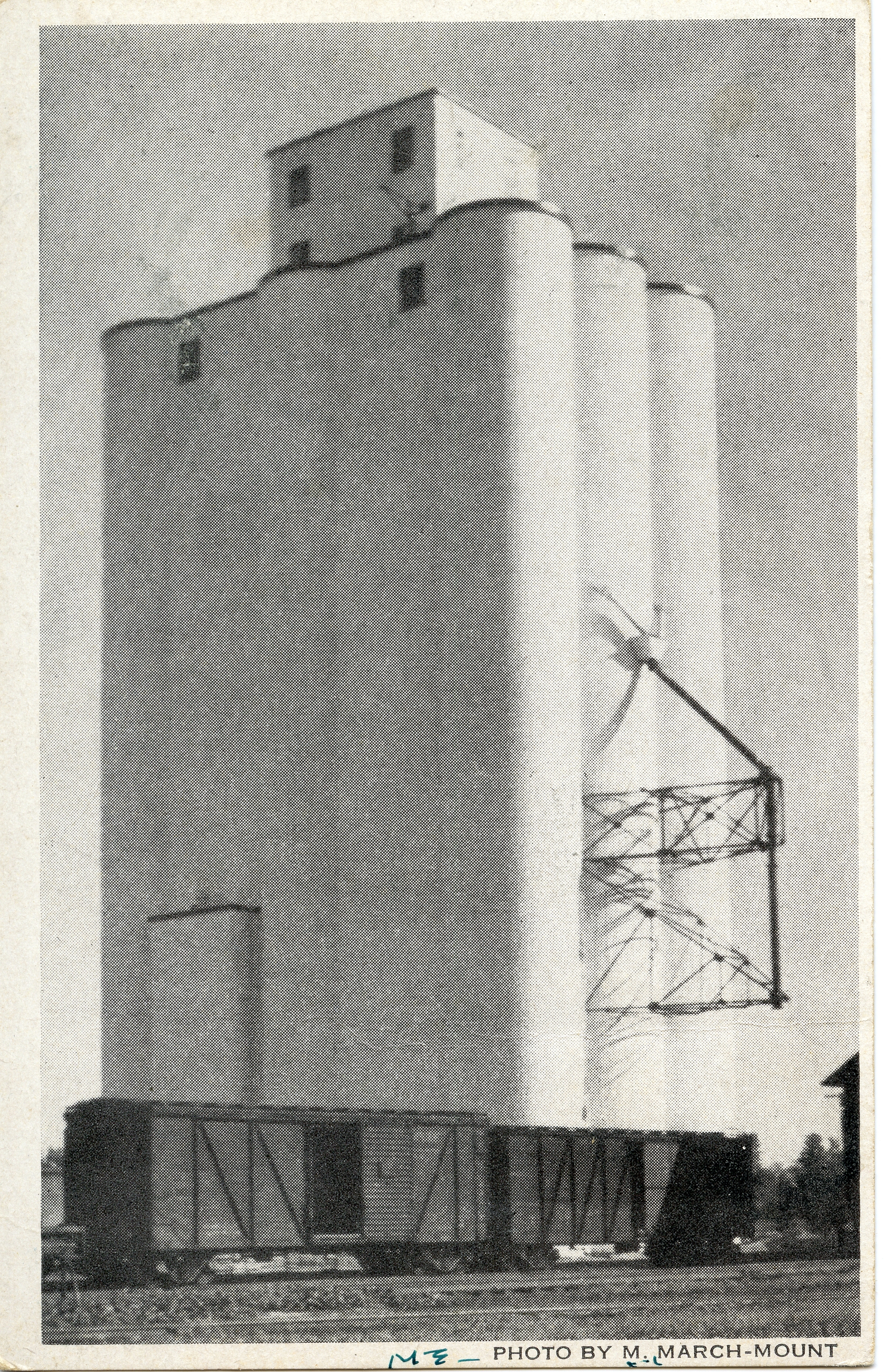
Postcard of early concrete elevator in St. Francis, Kan.

Story by Kristen Cart

Grandpa was pretty good at naming his elevators when he talked to the press. While building the McCook, Neb., elevator, William Osborn spoke about a number of his previous projects that were built while he worked for J.H. Tillotson, Contractor.

He named six elevators he built in Maywood, Wauneta, Daykin, Fairbury, and Lodgepole, Neb., and Traer, Kan.

McCook’s elevator, then under construction, was much larger than the rest, but he named one other elevator in the area that was of similar size, that one in St. Francis, Kan. He said he built that one, too.

The newspaper clipping and my dad’s recollections were all we had to go on when our family made the first trip to western Nebraska and Kansas to see grandpa’s elevators.

All of the elevators–save one–were easy to find (even Maywood, whose present incarnation is a rubble pile not far from the surviving elevators).

When we visited St. Francis, we stopped at one likely elevator complex, where my hopes were dashed when I saw the “Jarvis” name on the manhole covers. The other complex in town seemed far too big and looked very much like every other Chalmers and Borton project I had ever seen. Besides, it was getting dark and we had to put more miles behind us, since this elevator nonsense was just one of “Mom’s diversions” from the primary mission of going kayaking on the Niobrara River. So our first opportunity passed without finding grandpa’s elevator.

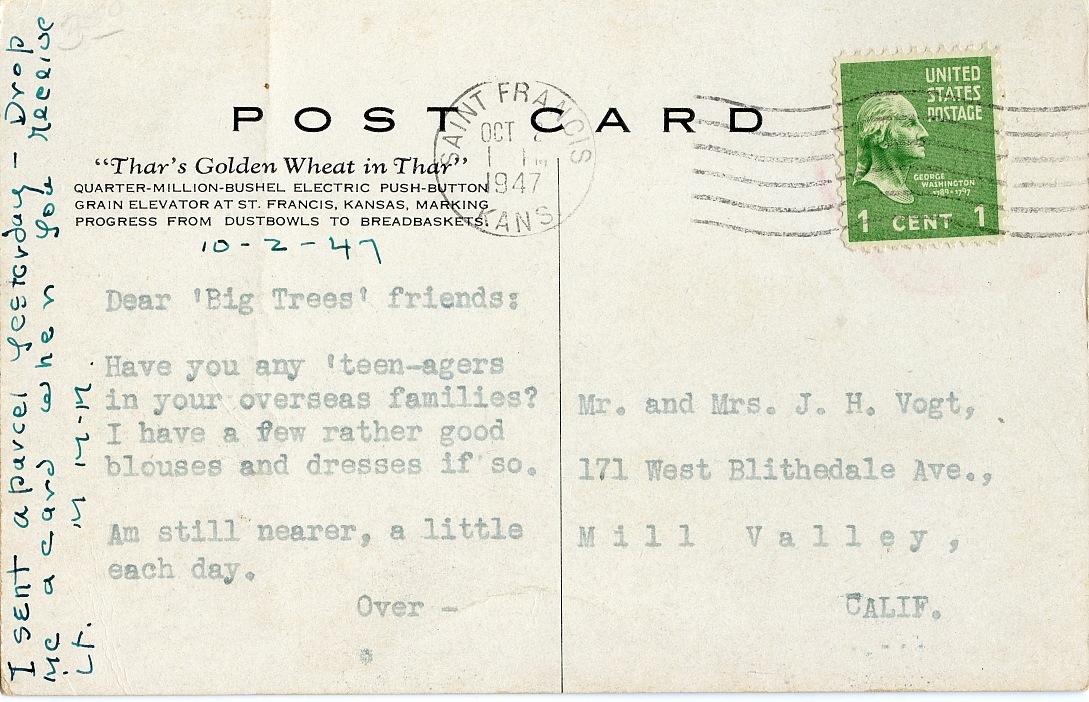
Dated 1947, the postcard highlights a major local landmark

Dated 1947, the postcard highlights a major local landmark

I scoured eBay for a while looking for images of Grandpa’s elevators, and I even bought an early postcard from St. Francis, and regarded it doubtfully when it arrived. What was it doing with a rectangular headhouse, if it was grandpa’s elevator? It was set aside on a growing pile of assorted elevator images.

The answer would have to wait for another visit and a close-up look at the elevator I had tossed off as a probable Chalmers and Borton edifice.

The second visit would reveal some surprises and challenge what I thought I knew about Grandpa’s elevators.

Stay tuned.

J. H. Tillotson’s project at Lodgepole, Neb., was the end of the line for Supt. Bill Morris

DSC_0380

The Lodgepole, Neb. elevator viewed through a rainy windshield on a blustery day.

Story and photo by Kristen Cart

It was the heyday of elevator construction, and J. H. Tillotson, Contractor, of Denver, was riding the crest of the building wave, when a new elevator was begun along Highway 30 (the Lincoln Highway), in the sand hill country of western Nebraska. Lodgepole was a sleepy town along the rail line that connected Sidney to the west, with Chappell and Big Springs to the east.

My grandfather, William Osborn, had been building for several years, and he accompanied Joe Tillotson to Denver when Joe made his break with the family business, Tillotson Construction of Omaha, and set out on his own. The new company had several projects under its belt, and several others ongoing in 1947, when Lodgepole’s elevator was started.

Bill Morris, an employee poached from the parent company, was superintendent for the job.

The dangers of the business were well known. But for the J. H. Tillotson company, fate was especially cruel, though the disasters that befell the builders were of a more mundane sort. In about March of 1947, Bill Morris was changing a tire on the side of Highway 30 near Lodgepole when a car struck him, and he was killed.

Of course the construction project went forth, and my grandfather played a role, since he had the experience to step in where Bill Morris left off.

It was not long afterward that Joe Tillotson met his maker in a car accident–only a matter of a few weeks. In those days safety in vehicles was an afterthought, and the Grim Reaper was guaranteed a regular harvest.

Joe’s death opened doors for my grandfather, since there were elevators to build and contracts to fulfill. By September of 1948, Bill Osborn had joined with Eugene Mayer, Joe’s brother-in-law, and together they formed the partnership of Mayer-Osborn Construction Company. My dad said Grandpa had to put up some money to opt into the business, and then he continued as before, building elevators as fast as they would go up.

The McCook, Neb., elevator marked their first joint effort.

Is it a Tillotson elevator in the Idaho Potato Commission’s TV ad?

IMG_1560

Story by Ronald Ahrens

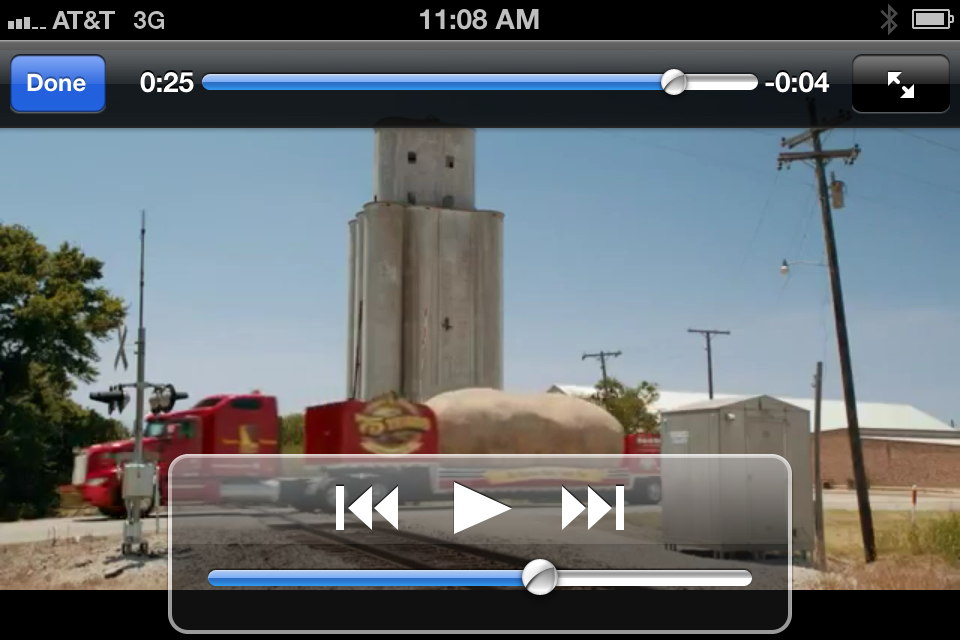
In a television ad for the Idaho Potato Commission, which last year observed its diamond jubilee, a flatbed truck goes missing while on tour with a giant potato. Among the many American landmarks visited in the twenty-five-second spot is a railroad crossing with a concrete grain elevator in the background.

The spot, called “Missing Truck,” was created by Evans, Hardy & Young. Its debut came Aug. 31, 2012, during the Boise State-Michigan State football game on ESPN. The storyline and airing schedule were detailed in a press release on the Idaho Potato Commission’s website.

Although we find nothing in the scene to indicate the exact location, the elevator sure looks to us like a Tillotson Construction job. The rounded headhouse and symmetrically placed windows tell as much. The slot for the driveway also is indicative.

So we phoned the Santa Barbara, Calif., office of EH&Y and left a voice message with Max Martens, vice president for public relations. Replying by email, Mr. Martens wrote, “As close as the art director can pinpoint, the location with the grain elevator was a rural area about a half hour west of Dallas, Texas.”

That’s more than we had to go on.

Meanwhile, we hope the truck and potato made it back to Idaho.

Vintage photos show aspects of how a grain elevator works

Elevator photos003

Story by Kristen Cart

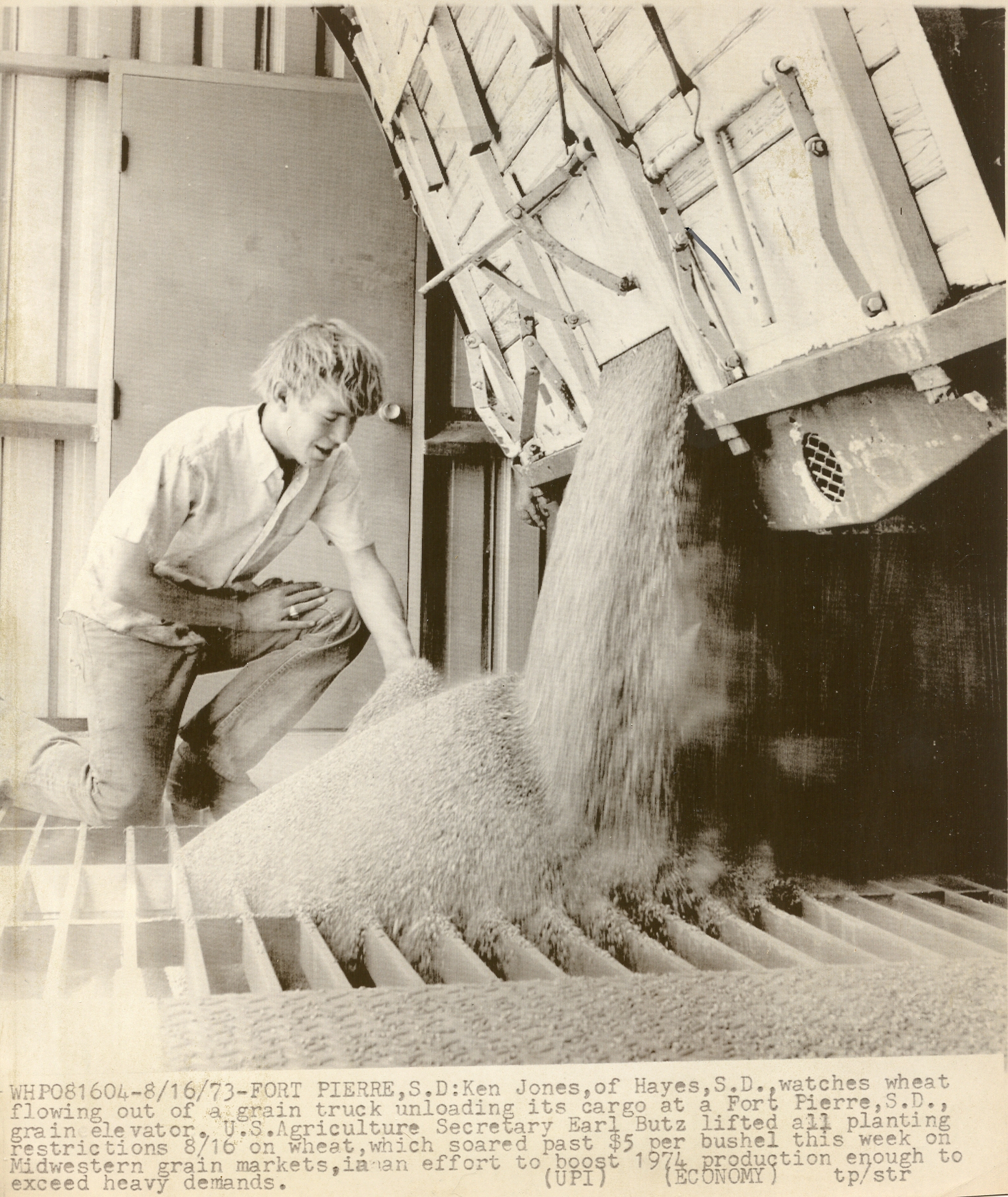
Sometimes a picture is worth a thousand words. Luckily for us, old press photos have come on the market recently that show the inner workings of grain elevators in the past. Not much has changed over the years, since many of the elevators that served in the 1940s and 1950s are still in operation today.

The photo above shows a truck unloading into an elevator pit from the inside of a driveway. A grate covers the pit, and from the pit a leg serves the top of the elevator. A conveyor may also be in operation, delivering grain to the leg, depending on the size of the elevator or annex.

Elevator photos001

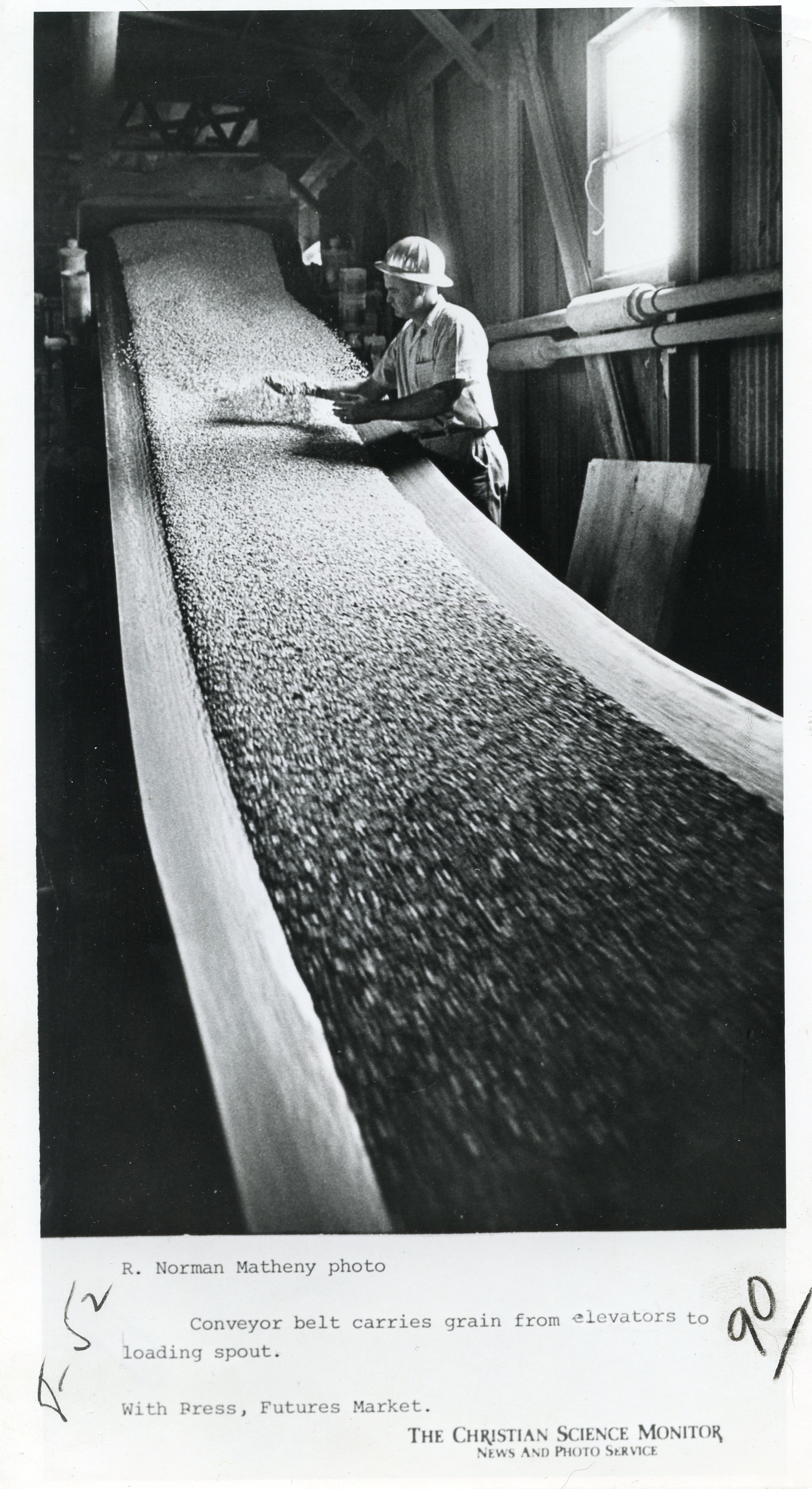
In the next image, you can see a worker beside the conveyor inside what looks like a run. Conveyors can be used in several places in an elevator complex, but they are normally installed in a run that delivers grain from an elevator headhouse for distribution to an annex, or they’re operating on a basement level that takes grain from an annex to the main elevator served by a headhouse and a leg.

Another place for a conveyor is from an elevator to a hopper or chute where a truck or rail car can be loaded. That is the case with this photo.

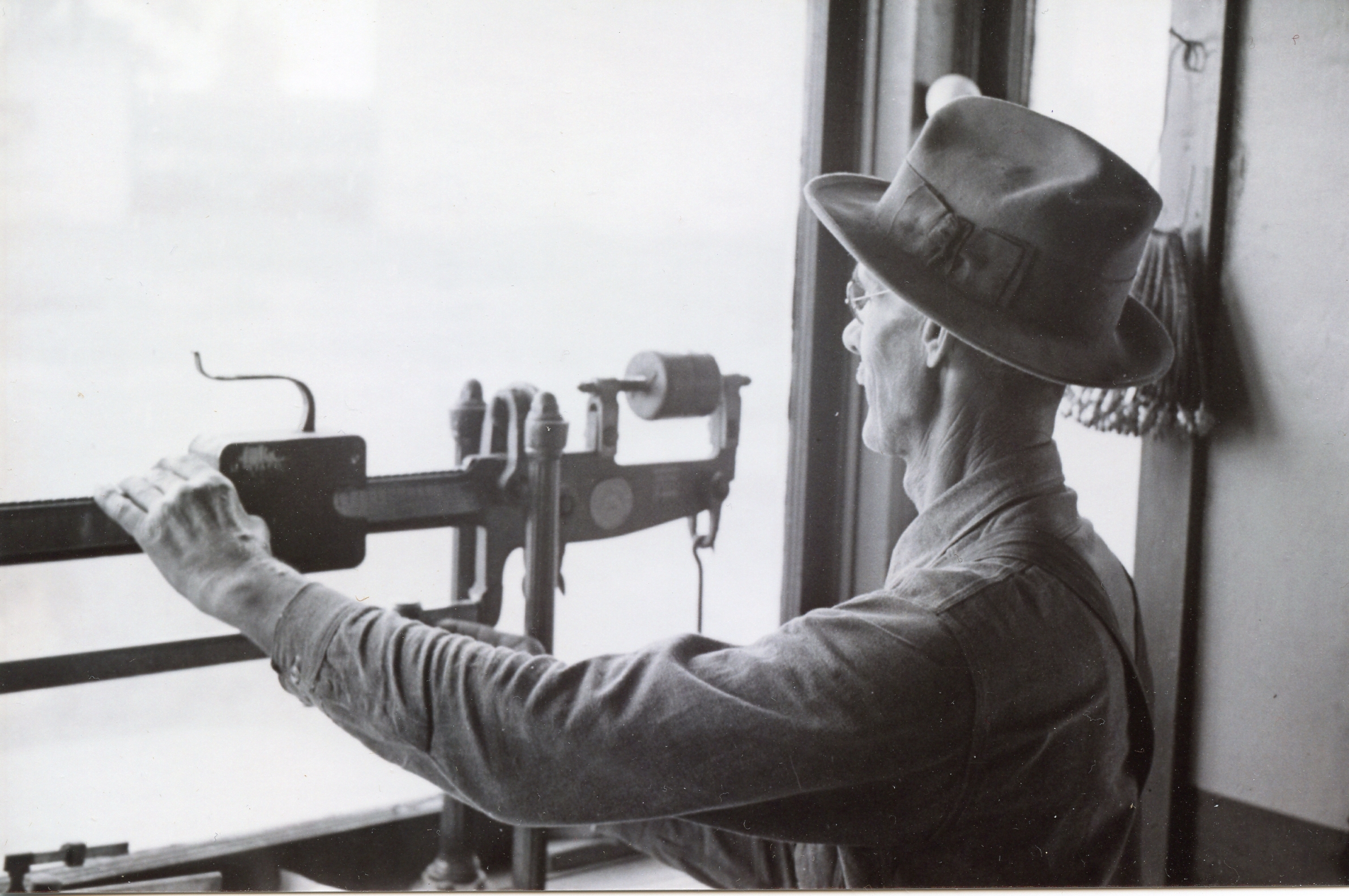
When grain is added to or taken from an elevator, it needs to be weighed and checked for moisture content to keep a strict account for the farmer and the elevator operator. Each truck arriving full will be weighed before delivery and also afterward, with the difference subtracted from the loaded weight to give the net weight of grain. Weight will change with moisture content, so that is an important figure to calculate.

When a truck arrives empty, it is weighed before loading, then weighed afterward to determine the net weight of grain. This process has always been an essential part of elevator operations from the earliest days.

Elevator photos002

Weighing the grain

Timeline for Tillotson Const., J.H. Tillotson, and Mayer-Osborn companies and jobs

Ronald Ahrens and Kristen Cart cofounded this blog. Gary Rich is a primary contributor. We have visited elevators around the United States and Canada.

Ronald’s maternal grandfather was Reginald Oscar “Mike” Tillotson.

Kristen’s paternal grandfather was William Arthur Osborn.

Reginald O. Tillotson

R. O. Tillotson

Reginald’s company was Tillotson Construction Co., of Omaha. The company had been building and repairing wooden elevators since the 1920s, when it was led by Reginald’s father Charles H. Tillotson. Before his death, experiments were made with slip-form concrete construction techniques.

1938: Charles dies, and the company passes to his sons Reginald and Joseph H. Tillotson and daughter Mary V. Tillotson. They begin to perfect slip-forming and refine their design strategy, which includes a rounded headhouse.

1945: Tillotson Construction builds a concrete elevator in Giddings, Tex. William Osborn works on this project. He is probably employed by the company by late in ’44. Tillotson Construction wins the contract to build in Elkhart, Kan., and starts construction.

1946: The 225,000-bushel elevator in Elkhart is completed. “Shortly after the war, my Dad and Joe decided they couldn’t see eye to eye, so they split,” writes Charles J. Tillotson in “The Tillotson Construction Story” on this blog. Joe forms J.H. Tillotson, Contractor in Denver. William Osborn works for Joe Tillotson.

William A. Osborn in 1965

William A. Osborn in 1965

1947: Tillotson Construction builds  the Vinton Street elevator in Omaha. Joe Tillotson dies in a car accident in March. J.H. Tillotson, Contractor builds at Daykin and Fairbury, Neb., and Hanover and Linn, Kan., with William Osborn supervising the projects. Maxine Carter leaves Tillotson Construction on Oct. 7 to wed Russell L. Bentley.

1948: Formed in September from the residue of J.H. Tillotson, Contractor, the Mayer-Osborn Company builds its first elevator at McCook, Neb. Joe Tillotson’s wife Sylvia was a Mayer, and her brother Eugene Mayer is one of the partners. William Osborn is the other. Meanwhile, Reginald begins to use a light airplane for business travel in the postwar years. Reginald’s nephew John Hassman joins Tillotson Construction in September; among many other duties, he pilots the company plane to jobs in Nebraska, Kansas, and Oklahoma. Tillotson’s projects that year are in Paullina, Iowa, and Montevideo, Minn.

1949: John Hassman’s father Ralph, Reginald’s cousin, joins Tillotson Construction in sales and stays through 1952.

1950: Construction begins in November on the Tillotson house, which is built of concrete. It still stands north of Omaha. Tillotson employee Jess Weiser weds Lavonne Wiemers on Dec. 22.

1951: Drafted into the Air Force, John Hassman leaves Tillotson Construction in January.

Related articles