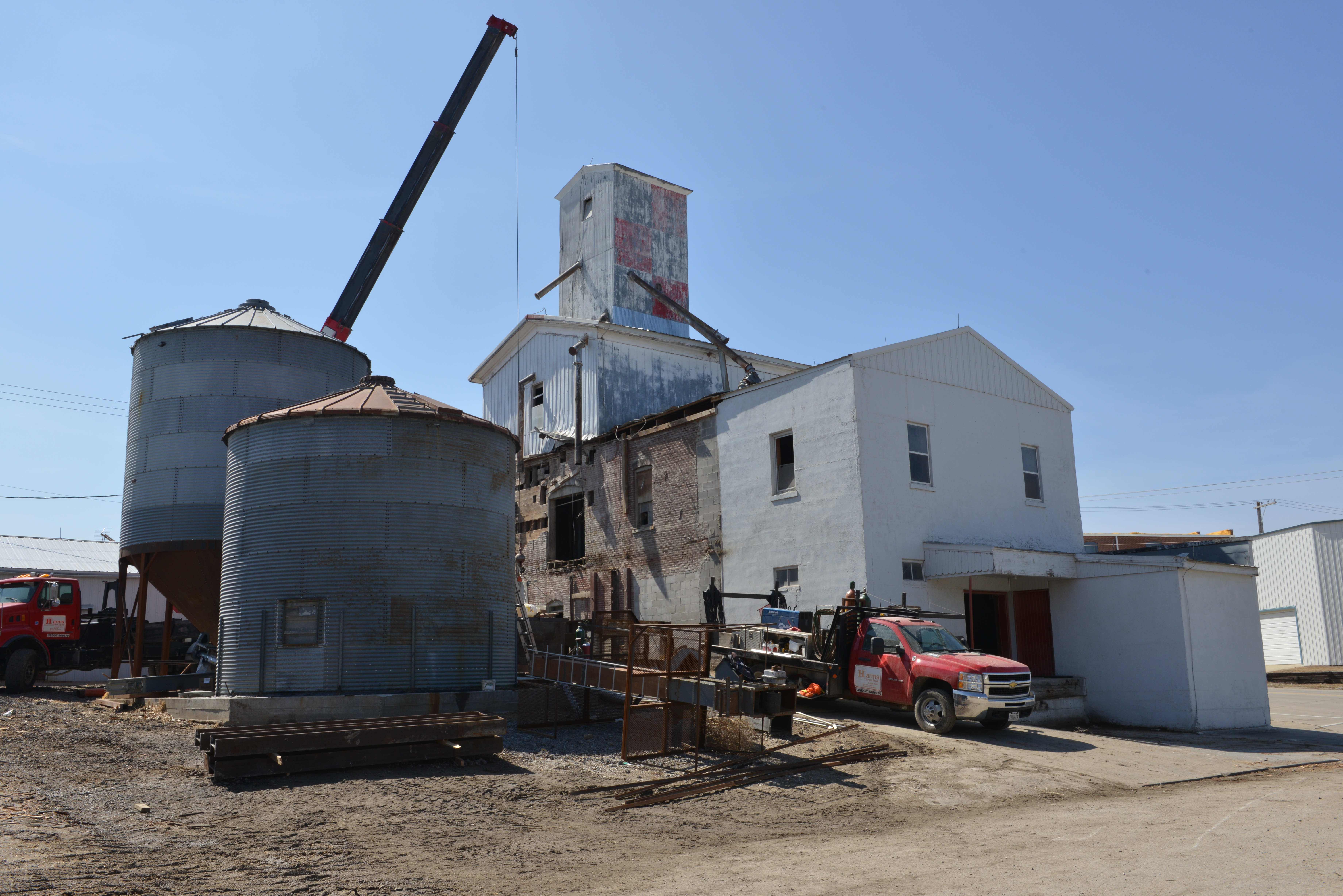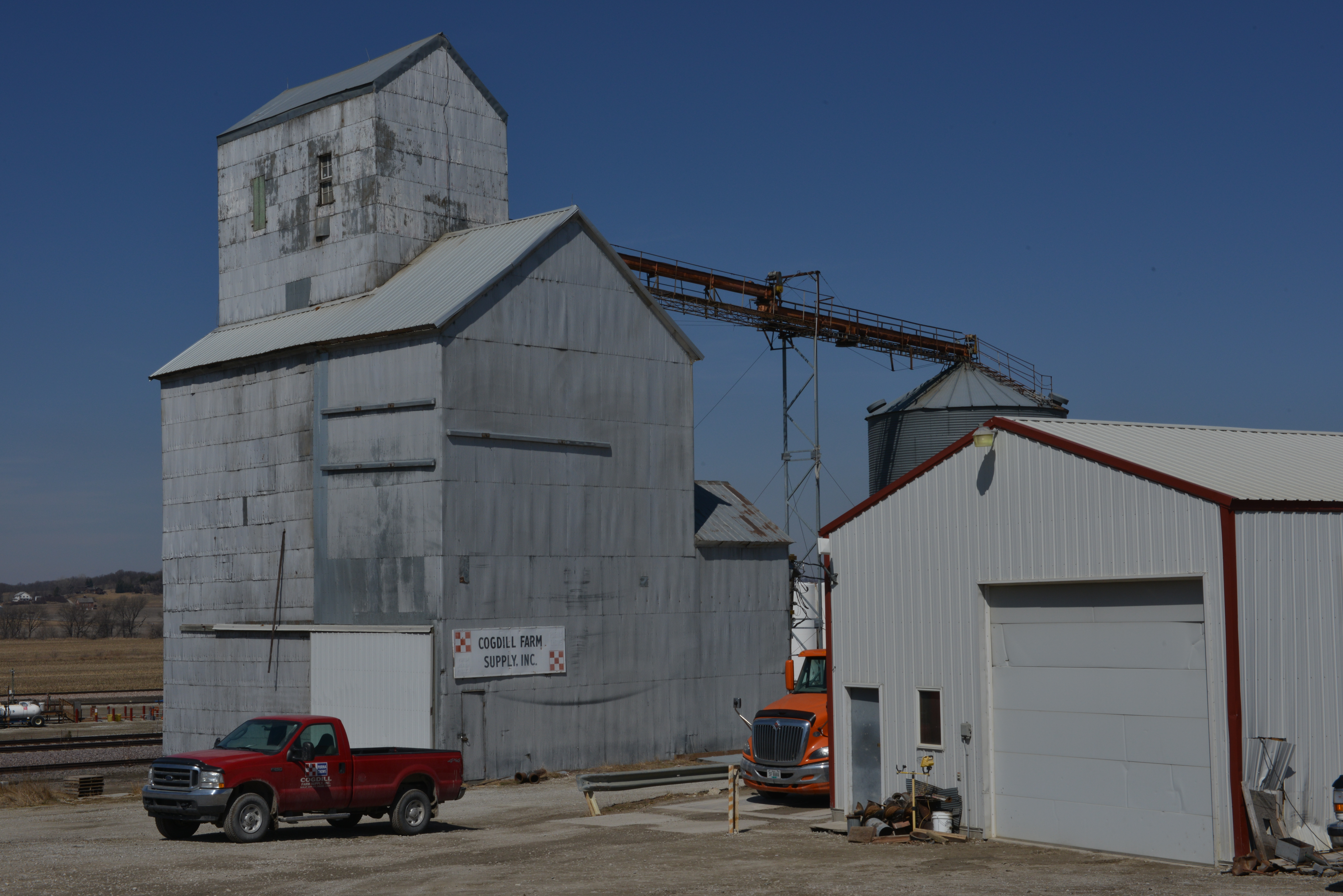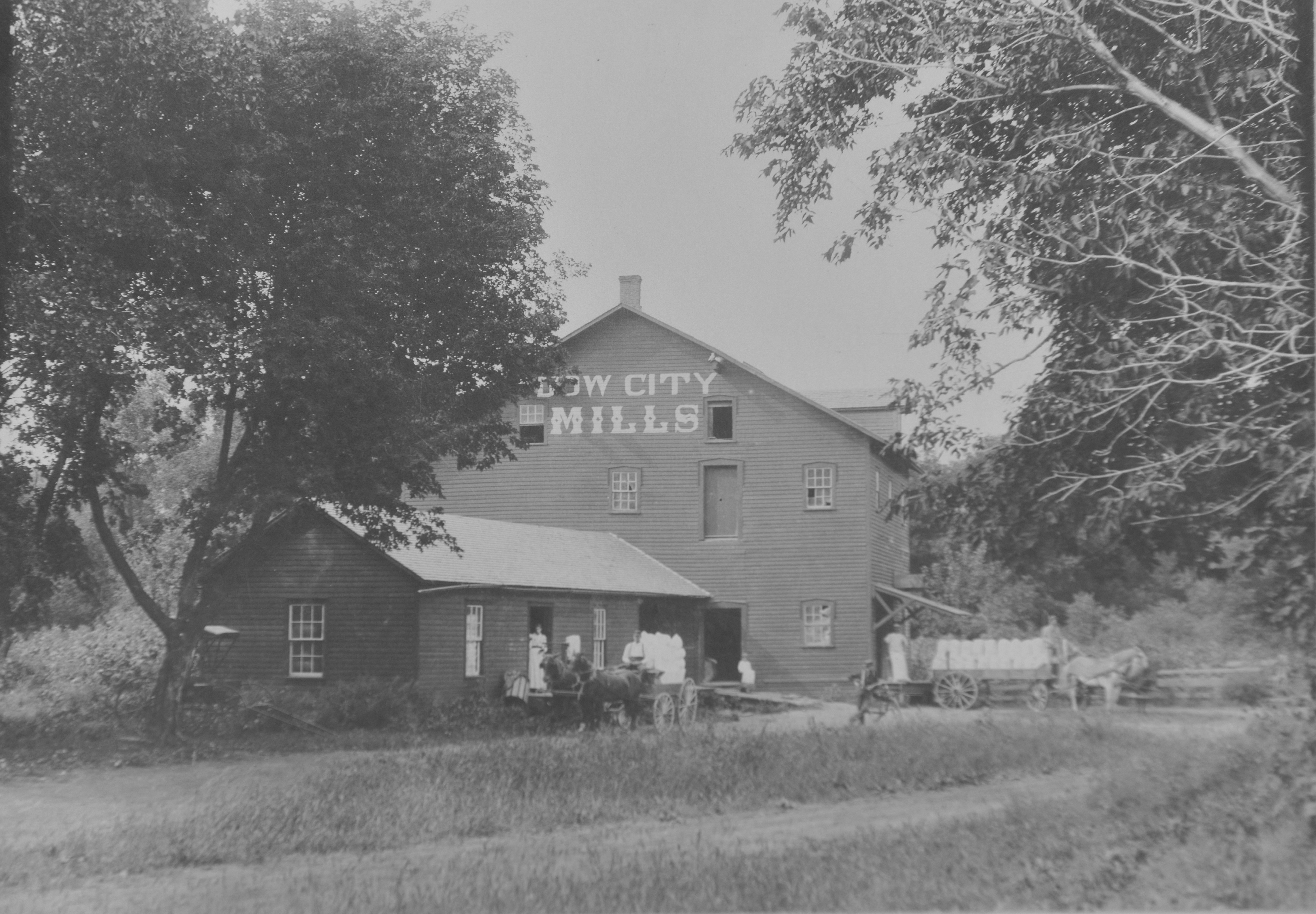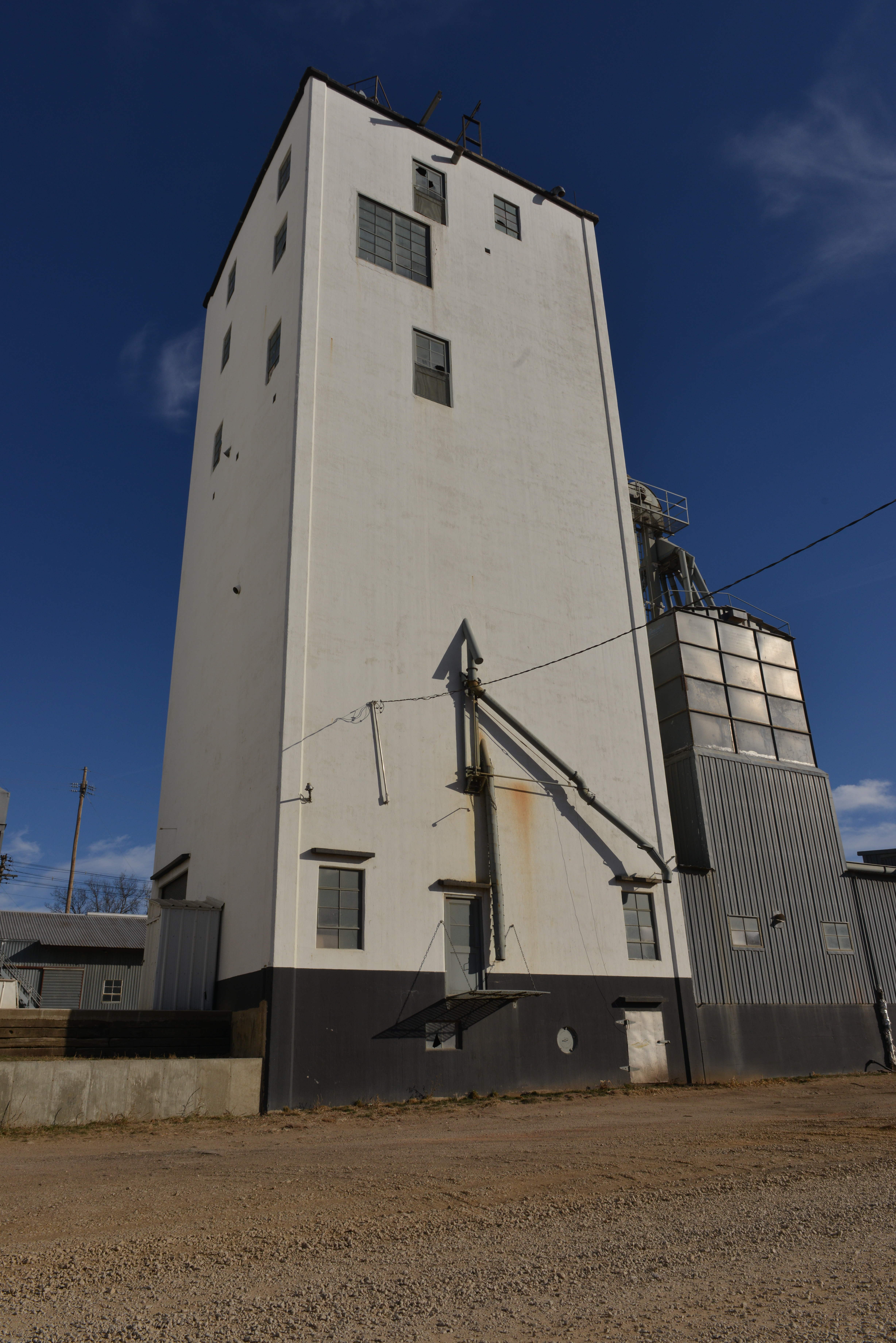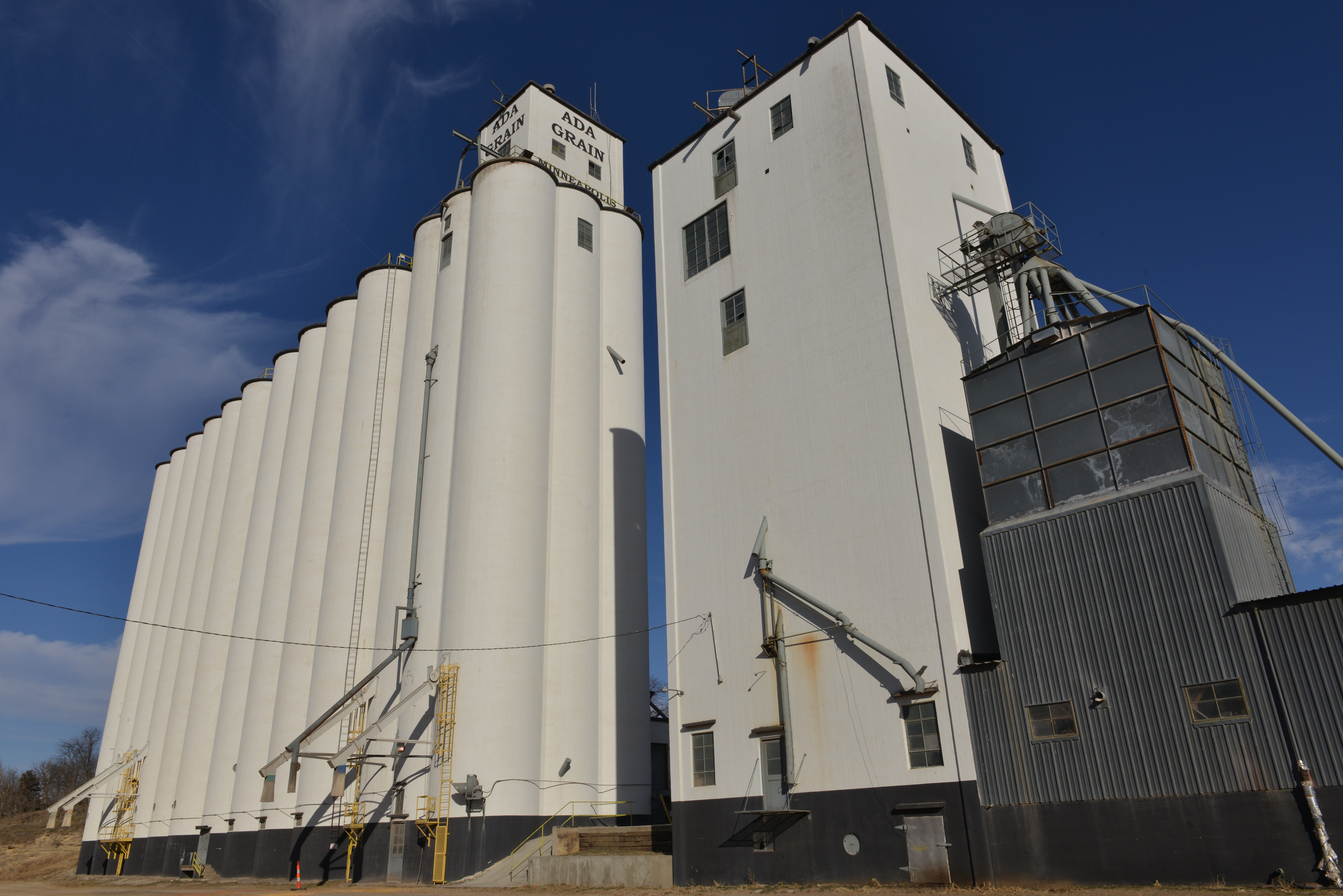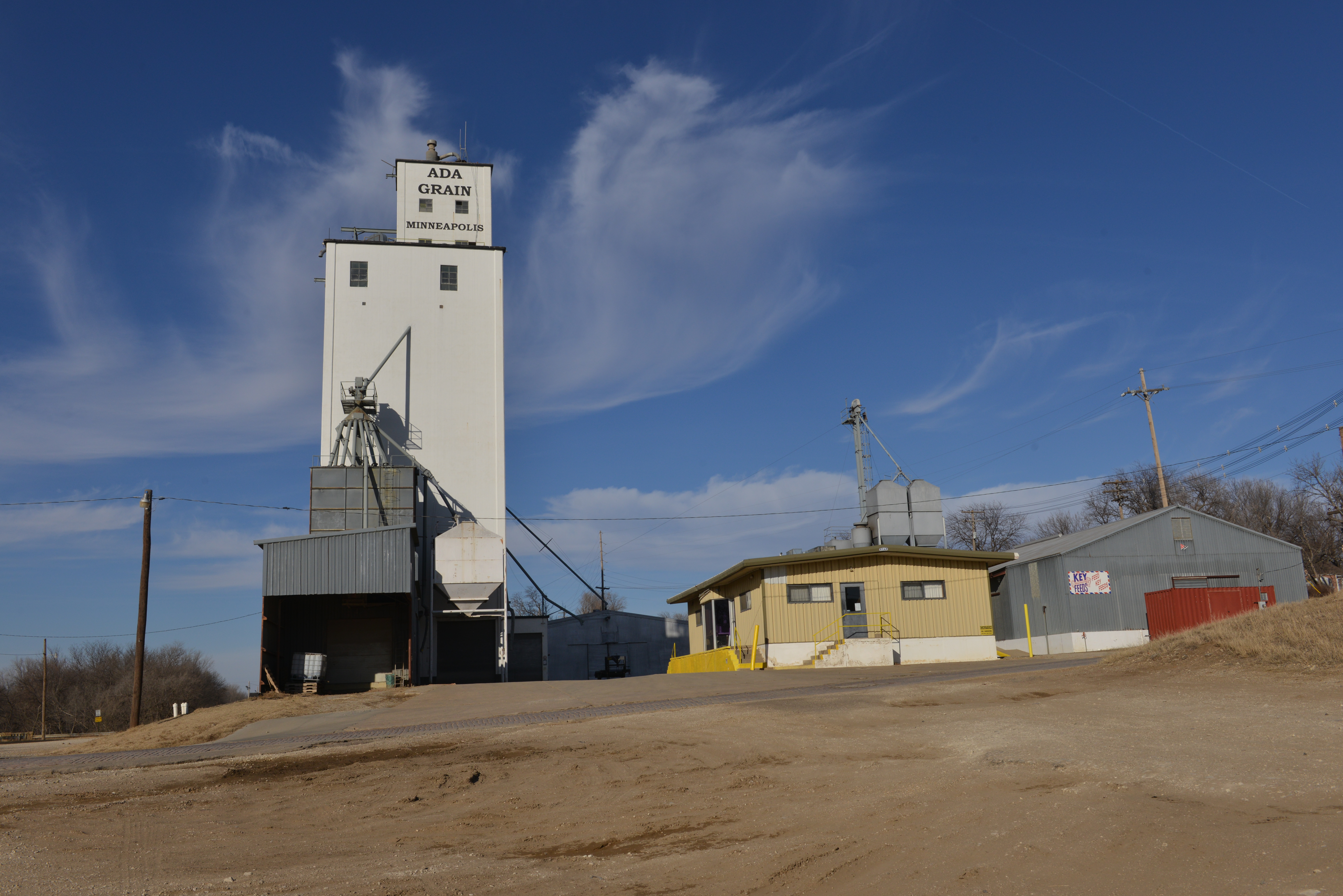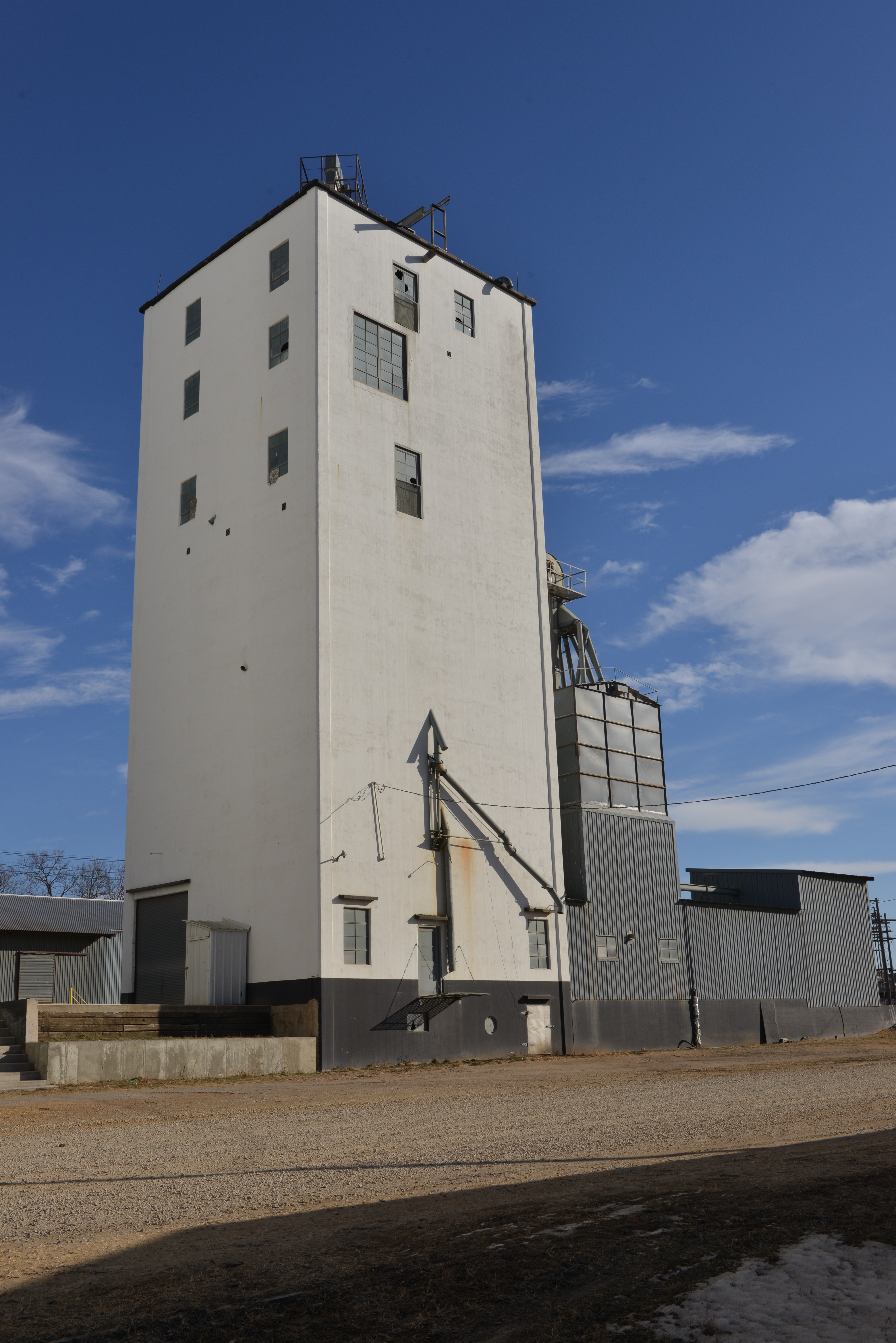
Along Chelsea Dexter Road in Washtenaw County, Mich., the sun bids farewell to an elevator. Watch for our next post, scheduled for Monday, to learn more details about the elevator. Photo by Ronald Ahrens
A little quirk happened in West Bend, Iowa. Construction men were known as love ’em and leave ’em. Blaine Bell, Ed Hart (roommate from Gilmore, Iowa) and myself all married girls from West Bend. Pop Bell was a sawman for Bill Russell—all he did was cut lumber, all the pieces, all the forms. He had a big table saw, probably an 18-inch rotary blade driven by a two- or three-horsepower electric motor.
Blaine Bell and I, in West Bend, they built a feed manufacturing building next to the elevator next to Main Street, downtown. My wife Jolene’s father, Joseph Higgins, had a barber shop. They had an apartment right behind the barber shop and she used to come out and hang up clothes and the normal stuff. My wife was a redheaded Irishman. Blaine kept saying, “I have to see if I can get a date,” and it irritated me.
One day I made a point to be on the ground when I knew she was coming out of the house. I got a date with her. She wasn’t supposed to date construction people. We were married over 59 years. That was in October of 1950.
Editor’s note: This anecdote is from an interview on July 18, 2014.
Somewhere between checking the water level when we started and checking it in the middle, the forms became about 3.5 inches off level. That’s because one guy who was running the jacks on one side wasn’t making his rounds as he was supposed to. The guy was fired on the spot.
Now you had to get the decks level again. When you’re going off level, you’re going at an angle. So what happened, you got a little swerve in the tanks. It’s only an inch. You can’t see it. The only time is if you go up and down on a hoist. So the bottom and top are not exactly over each other.
It had no effect. Not enough to be significant. We were about 65 or 70 feet in the air when it happened.
Every job had a peculiarity. The guy in Bushland jumped off the top. He started to fall, so he jumped. He jumped out far enough to land on the sand pile. We were probably 40 to 50 feet. He landed on the side of the sand pile and slid to the bottom.
We said, “How you doing?”
He said, “Oh, I’m fine. I’ll be a little stiff and sore.”
There were seven guys that I worked with. Baker was one and Bill Russell, all of ’em fell or got killed somewhere along the line.
When you’re working in the air, you become careless because it’s like walking on the ground, but you’re not walking on the ground.
Steelworkers, they all say you get too familiar with working off the ground. When they do that, they become careless.
That’s the west side of the elevator. If you were bringing grain in, you would go in that door and out the other door. See that railroad track? All elevators I’ve ever been near, seems you go in the back side and out the front side. You see the second row of windows? You see where the last “A” is? That’s where the motor sets. The belt would be on the right-hand side of the driveway. The driveways are always offset to one side, and the belt to the other side. The drive motor sits about where that “A” is, maybe about the top. It sits on top of two I-beams. They go into the wall of the headhouse and the wall of the shaft that drives the belt. The lettering was done after we left. Tillotson didn’t have anything to do with it. Some sign company came in and did it. They used lead anchors. It had a steel in the middle and lead sleeve on the outside. You can go to a hardware store and still buy them. They had a drill—they called a star drill—and you hit it with a hammer. You hit it, you turned it. You hit it, you turned it. You use a five or seven pound shop hammer to hit it with. Now they have drill bits that cut through concrete. There’s probably an anchor, on the T, at each corner, the middle at the top, and the bottom. The big letters have three or four. The small letters have two. I have no idea, I didn’t do it. See the dark part at the bottom of the pipe, that’s flex pipe so you could put it in the grain car.

I knew there was a small Tillotson elevator in Minneapolis, Kan., when I stopped there last weekend on a quick trip to Nebraska from Wichita.
I had a weekend layover and a rental car, and was headed up to see my folks. The town is right where I-135 gives out when driving north from Wichita. I had to get off anyway to continue north, so when I spotted the elevator down by the railroad bridge, I went to check it out.
The Minneapolis elevator was recorded in the concrete elevator specifications of the Tillostson Construction Company. It was one of the handful of Tillotson projects built in Kansas.
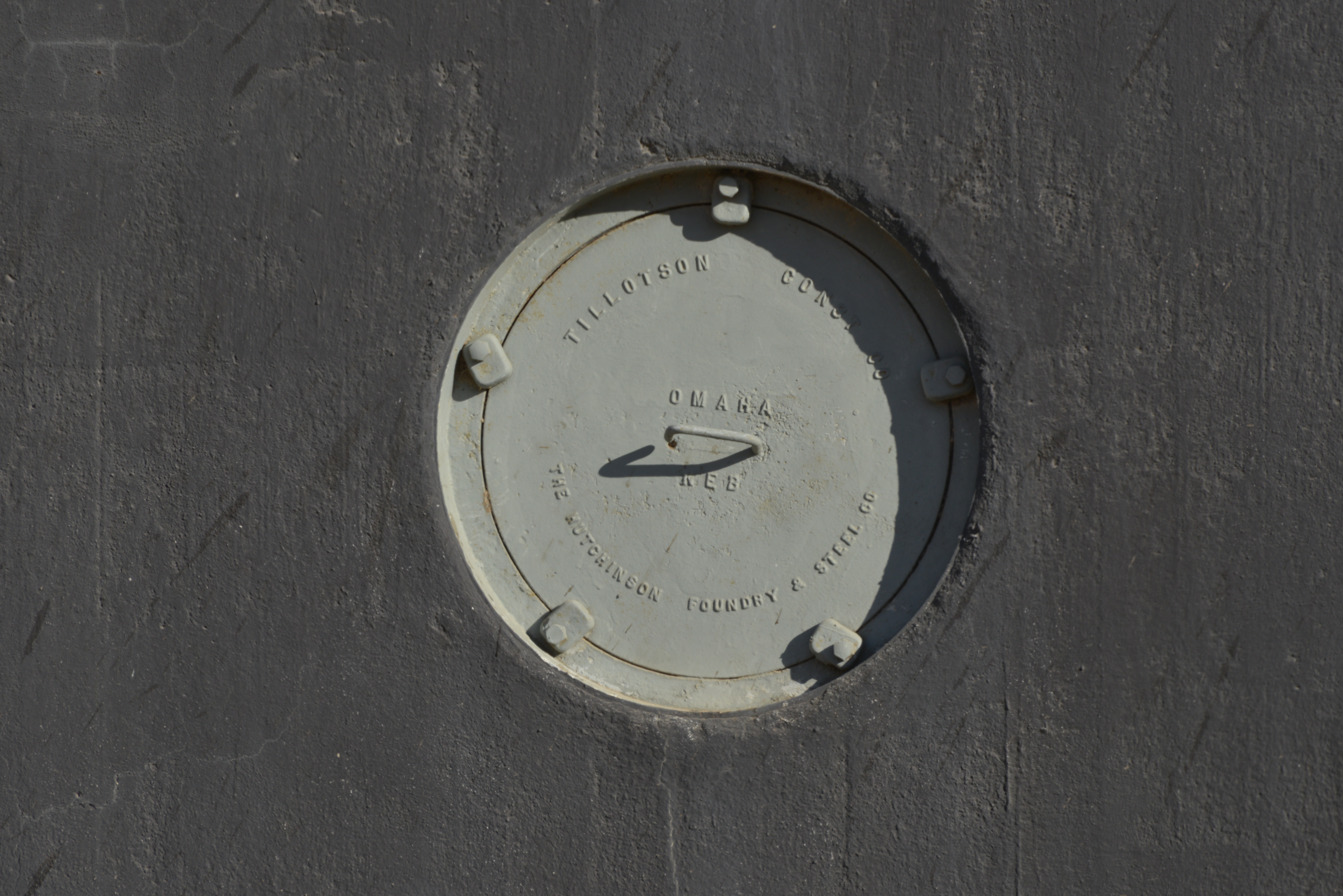
I did not expect what I found. The manhole cover identified the builder, so there was no doubt, but this 1947 creation was unlike any Tillotson elevator I had ever seen.
The elevator was starkly beautiful, balanced, and gracefully situated in its surroundings. Though it was small, its perfect proportions and simplicity made it monumental. A wide-angle, close-quarters view made it look even grander in the photo.
I have a passion for window panes—the more, the better. They look good in photos, and the Tillotson Company must have agreed—the several windows that let light into the headhouse to illuminate the workspace had a multitude of them.
It may be a nostalgic thing for me—I remember as a little kid seeing painted panes left over from the blackout days of the last great war. It took lots of paint and many, many hours to cover the hundreds of panes in an aircraft hangar or gymnasium, but it was the only way to hide every scrap of light from an anticipated airborne menace. Many years later, after the paint was peeled and broken panes were replaced with unpainted ones, an interesting patchwork remained. That image held fast in my childish memory.
Though the cooperative was closed for the weekend, blower noise testified to the elevator’s present utility, along with that of its towering neighbors. After the 1947 elevator was built, more capacity was added—a second elevator and a large annex stood beside the Tillotson structure, and judging by their style, they probably came along not too much later. The whole complex was perfectly neat and tidy.
I took advantage of the quiet and did a thorough job photographing the exterior of the elevator and its companions. Further investigation will have to wait for a time when someone is home at the co-op.
Specifications
The specifications describe a small, early elevator, of only 100,000 bushels capacity. It was intended to serve a mill operation. The elevator was built using the “Pond Creek plan,” which specified 4 tanks with a 15 1/2 ft diameter, 125 ft drawform walls through the cupola, an attached driveway, no distributor floor, 6 spreads and 9 bins.
Capacity per Plans (with Pack): 100,000 bushels
Capacity per foot of height: 1,020 bushels
Reinforced concrete/plans (Total): 906 cubic yards
Plain concrete (hoppers): 10 cubic yards
Reinforced steel/Plans (includes jack rods): 40.67 tons
Average steel per cubic yard of reinforced concrete: 90.3 pounds
Steel & reinforced concrete itemized per plans
Below main slab: 3,720 lb/34.4 cu yd
Main slab: 12,775 lb/84.7 cu yd
Drawform walls: 56,190 lb/694 cu yd
Work & driveway floor (including columns): 112 lb/1.3 cu yd
Deep bin bottoms: None
Overhead bin bottoms: 910 lb/6.5 cu yd
Bin roof (garner): 730 lb/7.7 cu yd
Scale floor (complete): None
Cupola walls: Drawform walls
Distributor floor: None
Cupola roof: 3,053 lb/21.4 cu yd
Miscellaneous (boot, leg, head, track sink, steps): Included
Attached driveway: 4,250 lb/56.0 cu yd
Construction details
Main slab dimensions (Drive length first dimen.): 41 x 41 ft
Main slab area (actual outside on ground): 1,626 sq ft
Weight of reinforced (total) concrete (4,000 lb/cu yd + steel): Excluding driveway, 1,752 tons
Weight of plain concrete (hoppers 4,000 lb/cu yd): 20 tons
Weight hopper fill sand (3,000 lb/cu yd): 218 tons
Weight of grain (at 60 lb per bushel): 3,000 tons
Weight of structural steel & machinery: 10 tons
Gross weight loaded: 5,000 tons
Bearing pressure: 3.08 tons per sq ft
Main slab thickness: 18 in
Main slab steel: (straight): 1 in diameter at 9 in o. c. spacing
Tank steel at bottom (round tanks): 1/2 in diameter at 12 in o. c. spacing
Lineal feet of drawform walls: 310 ft with no extensions
Height of drawform walls: 125 ft
Pit depth below main slab 13 ft 3 in
Cupola dimensions (W x L x Ht.): 17 ft 7 in high within drawform walls
Pulley centers: 128.25 ft
Number of legs: 1
Distributor floor: No
Track sink: No
Full basement: No
Electrical room: No
Driveway width–clear 13 ft
Dump grate size: 1 at 5 ft x 9 ft
Columns under tanks-size: None
Boot — leg & head: Concrete

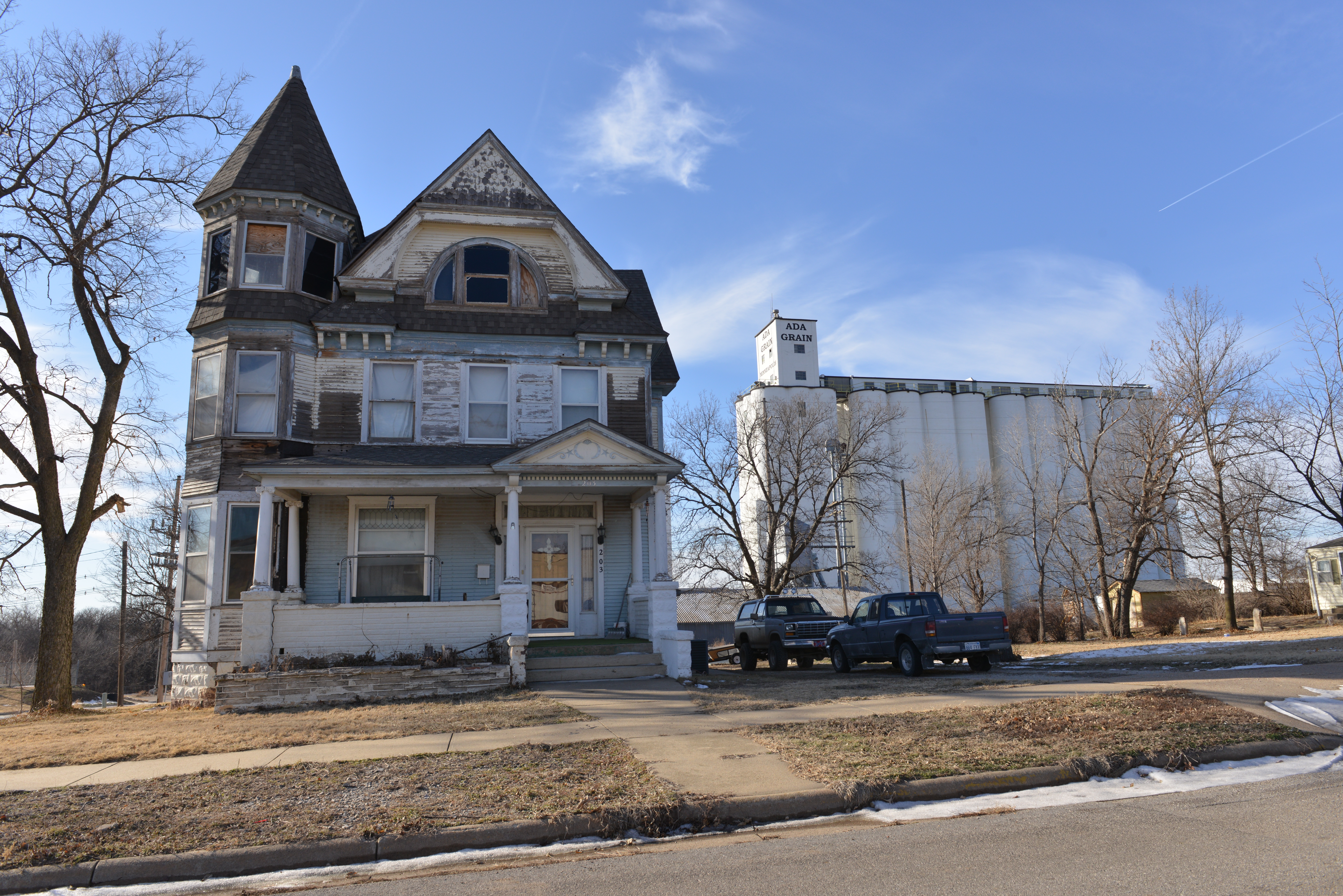
The grain operation is a close neighbor to residents of the town. This old house is under renovation.
Machinery Details
Head pulley size: 72 x 14 x 2 3/16 in
Boot pulley size: 72 x 14 x 3 7/16 in
Head pulley rpm: 36
Belt: 280 ft, 14 in 6 ply calumet
Cups: 12 x 6 in at 10 in o. c. spacing
Head drive: Howell 20 horsepower
Theoretical leg capacity (cup manufacturer rating): 5,780 bushels per hour
Actual leg capacity (80 percent of theoretical): 4,600 bushels per hour
Horsepower required for leg (based on above actual capacity plus 15 percent for motor) 17.9 hp
Man lift: Hand operated
Load out scale: None
Load out spout: None
Cupola Spouting: None
Truck lift: 7.5 horsepower Ehr
Dust collector system: Fan → Air
Driveway doors: One sliding
Conveyor: None
Remarks
Cupola in drawform walls
Also Built
Transfer spout to mill
The WordPress.com stats helper monkeys prepared a 2014 annual report for this blog.
Here’s an excerpt:
The concert hall at the Sydney Opera House holds 2,700 people. This blog was viewed about 16,000 times in 2014. If it were a concert at Sydney Opera House, it would take about 6 sold-out performances for that many people to see it.

Sometimes it is instructive to visit an elevator built by one of the competitors of the Tillotson Construction Company of Omaha, Neb., and its offshoots, J. H. Tillotson, Contractor, of Denver, Colo., and Mayer-Osborn Construction, also based in Denver. The elevator built by Johnson-Sampson in Grand Island, Neb. is a good example, for comparison, of a project built by the competition while our grandfathers were active in the business.
One of our readers, Teresa Toland, mentioned the elevator and hoped that we knew something about it, since her father, Darrell Greenlee, had supervised its construction. A couple of years passed before I could follow up on her query. While traveling this fall, I took a detour to see the elevator and take photos. The old grain elevator stands now as a prominent Grand Island landmark, still serving its original purpose. It’s location, just off I-80 in central Neb., made it easy to visit.
The elevator hummed with activity at the height of harvest. On this trip, my dad, Jerry Osborn, was along, so I did not take time to interview the employees–we were all tired after our hunting trip, and were ready to get home. But the elevator was a lovely sight and I was glad for the chance to see it.
The original elevator, flanked by two annexes, was obscured behind a large modern concrete bin, so I got closer for a better look. The headhouse was unlike any I had ever seen. The elevator’s design formed a harmonious whole, much like the attractive Tillotson elevators its builder emulated, but it had taken a different direction and had its own look. It must have been a handsome sight when it stood alone, brand new, and gleaming white–the tallest thing around.
The bin arrangement for the old elevator seemed conventional for storage in the 250,000-bushel class. Adjacent to the main house stood a large capacity metal grain dryer. Including the annexes, the elevator complex was the size of a moderate terminal–the type of storage that would serve as a transit point for a rail or trucking hub.
When Virgil Johnson, an early employee of Tillotson Construction, went out on his own, he built elevators in partnership with his Sampson in-laws for a few years. Darrell Greenlee, who supervised the construction at Grand Island, was one of his superintendents.

In this 1950 photo from our contributor Neil Lieb’s archive, he explains what we see inside a crate that’s being hoisted to the top of the Alta, Iowa, grain elevator. “That’s the motor for the belt and probably the gearbox,” he says. “We didn’t take it out of the crate till we got it on top because the crate was designed so we could lift it. That little crane could hold a lot of weight.”

That pipe is used to run the grain down to the railroad cars when they’re shipping it. Inside of that tank, there’s a hole that connects to that pipe. The system works [this way], you open a tank at the bottom, and run the grain into the pit. You use a belt to take it to the top and into this pipe. Commentary by Neil Lieb, photo from his archive.