The J. H. Tillotson-built farm elevator at Traer, Kan., is still standing, but idle

Grafel Farm elevator, built by J.H.Tillotson, Contractor, at Traer, Kan.

Story and photos by Kristen Cart

The road to Traer, Kan., was a bit obscure. The town is south of McCook, Neb., across the border, on unpaved secondary roads. It took some navigating to get close to the elevator, and then to find the right road, once the elevator peeked over the farm fields. We were rewarded with a handsome, squared-up, tall elevator on a lonely rail line in a winding creek valley surrounded by farmland. I hopped out of the van in a grassy parking area and started to take pictures. A truck was parked at the weighing house by the elevator. I knew this was a private farm, and it always had a privately owned elevator, from the time my grandfather built it. So I wanted to make my presence known.

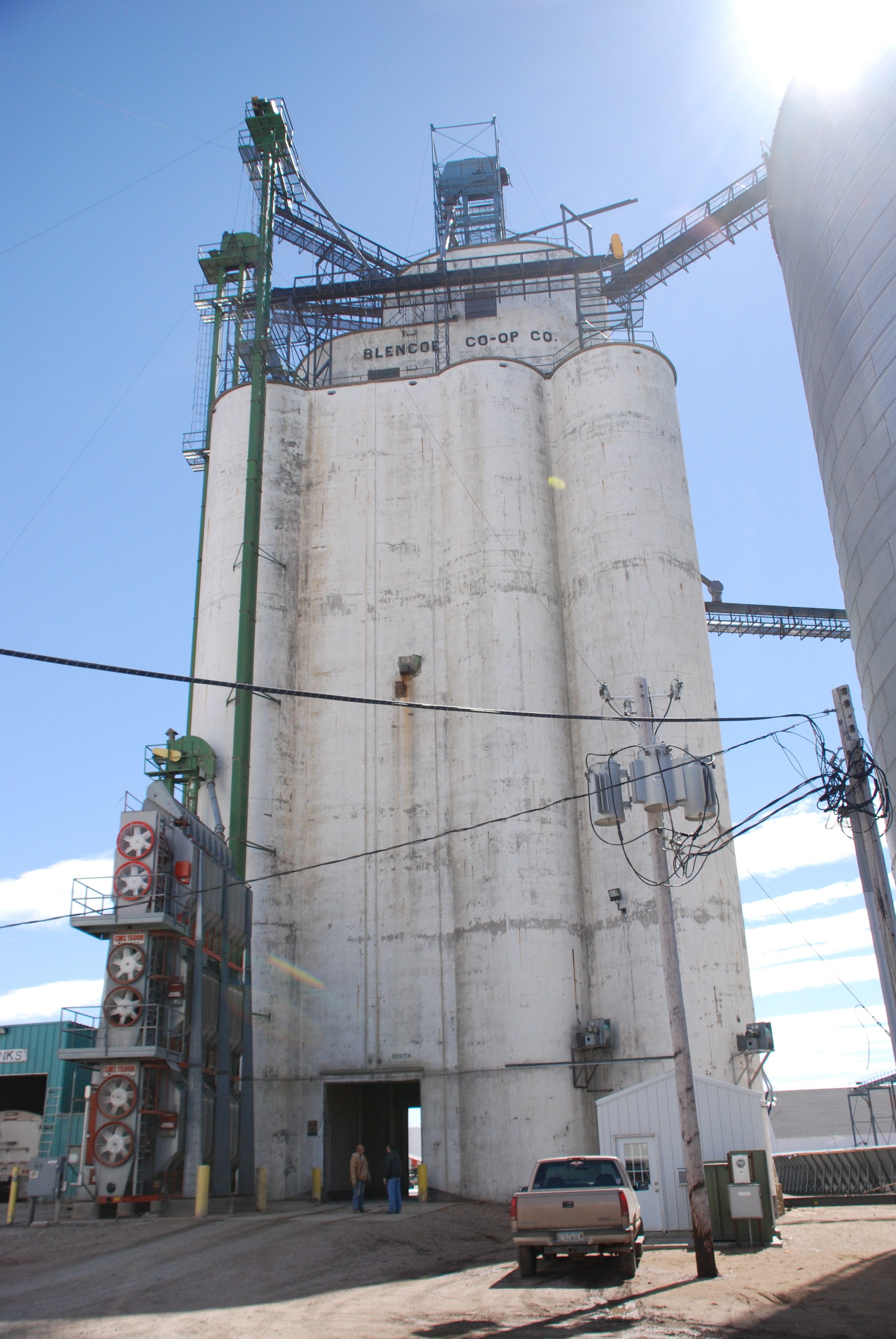
The elevator leg and bins.

When we visited McCook’s elevator earlier in the day, worker Kelly Clapp told me the Traer elevator was still in operation. But his information was about two years out of date. Don Grafel, who greeted me when I entered the elevator office, chuckled when I asked if the elevator was working. “I wish a tornado would take it down,” he said.

Don had started working at the Traer elevator as a kid. His family now leases the farmland from a granddaughter of the Anderson family, who had the elevator built, and as part of the deal, the Grafel family had to buy the elevator. The Grafels operated it for a number of years.

The elevator was retired two seasons ago, Don said. The problem with the elevator was twofold. It had been built in a flood area with a high water table, and the measures taken during construction to account for the water had started to fail. It had leaking problems during wet years. But worse, the elevator was slow. Don said the elevator could take a semi-load at a time in the pit, which was good, but it would take an hour to load the bins. Fifteen years ago, the Grafel farm placed metal bins on high ground above the town. That handled the water risk, but Don said that even those bins were falling behind demand because of slow loading.

“J. H. Tillotson, Contractor, Denver” is stamped on the interior manhole covers.

Shirley Nichols, who also worked at the office, was keenly interested in the history of the elevator. I had a treat to offer her. Russell Anderson, who commissioned the elevator, wrote a letter of recommendation for my grandfather’s new company on May 6, 1949. The Traer elevator was an example of Grandpa’s work before he went out on his own after working for J.H. Tillotson, Contractor. I gave a copy of the letter to her along with a photo my grandfather took during the elevator construction. In return, she gave me another construction photo and some historical pictures of the town.

Finally, my hungry and thirsty children came into the office, and the visit was pretty well over. Don’s brother Greg came in after meeting my husband in the parking lot. He wondered who had dropped by. But it was time to get on the road again, before the complaints got too shrill.

The good people of the Grafel farm made us feel very welcome, and gave us a window into the Traer elevator’s past. I’m glad we were able to see it while it still stands.

Related Articles 

Gary Rich explains wheat farming in Colorado and Kansas


Heat waves rising over a field of winter wheat in Goodland, Kan. Photo by Kristen Cart.

By Gary Rich

Here is Agriculture 101. I will tell you something about wheat.

There are two types of wheat. You have hard and soft wheat. Hard is considered winter wheat, whereas the soft is considered spring wheat. Winter wheat is planted in August or September. It is harvested the next summer. Spring wheat is planted in the spring, and it is harvested in August or September.

There are different types of winter and spring wheat. Some will produce better yields under normal growing conditions.

Our Colorado wheat fields that were just harvested will not be planted again until August 2013. Farmers leave the field idle for a year. This is done to keep the moisture in the ground, and to preserve some of the minerals for growing. Here in Colorado, it is called dry farming. When they get ready to plant, they will plant the wheat into the ground, without breaking it up.

A view, two days before harvest, of the Page City, Kan., elevator, built by Johnson-Sampson Construction, of Salina.
Photo by Kristen Cart

Where I was reared, in Kansas, it was wet farming.  We had enough moisture, between the rain and snow. Farmers would use a plow, and plow under the last crop remains, then go back over the field with a harrow, leveling out the ground. Then they would come in with a planter and put the seeds into the ground.

In Colorado, we cannot do this, as we do not have the moisture.

Basically, the states that produce hard wheat are Texas, Oklahoma, Kansas, New Mexico, Colorado, western Nebraska, and South Dakota. States that produce soft wheat are North Dakota, Montana, Idaho, Washington, and Oregon.

Those are just a few basic things about wheat.

In Wahoo, Nebr., Tillotson’s elevator finds new life as a cell tower for AT&T

The Wahoo, Nebraska elevator, built by the Tillotson Construction Company of Omaha, Nebraska

Story and photos by Kristen Cart

Another stop on my recent elevator trip was Wahoo, Nebraska. Dad tipped me off that it might be one of Tillotson’s projects. Wahoo is the seat of Saunders County, where Dad lives, and he frequently has occasion to stop there.

Wahoo’s elevator, at first glance, appeared unused. It was closed up tight, and the only indication of any activity was a sign warning workers to stay at least three feet away from any antenna, and to contact AT&T before performing any maintenance or repairs near their equipment.  Ah, hah!  Then I noticed the wires running to the top of the structure. I walked around the elevator, taking pictures.

Next door to the building was a Pet Rescue center, and as a woman was leaving there with a little dog in her arms, I asked her about the elevator.  While she did not know the builder, she said the elevator was privately owned by David Rood, and that at present, the elevator was full of corn.  But she commented that he probably made more money from the AT&T installation. I had heard of cell antennas being installed in every kind of tall building–even church steeples–but it had never occurred to me to look for them atop an elevator.

The next circuit around the elevator produced the answer I was looking for. Right there, adjacent to the sidewalk, in bright blue paint, was a manhole cover.

Some neighborhood teens were hanging around the street, in their cars, and when they saw me kneeling, taking the manhole cover shot, one of the boys shouted out, “What are you doing?”

“Taking pictures of the elevator!” I said.

The young man wanted to know why. When I said it was for a blog, I guess that was enough for him. Anyway, his attention went back to something on his cell phone.

The Wahoo elevator is an attractive feature of the town, fitting naturally with the older buildings along the main street. A man at a local pub, seeing my camera, popped out and said curiosity got the better of him. I told him what I was doing there. I guess a tourist with a camera along the street is a little unusual. And Nebraskans, by nature, like to know who is about.

Maywood, Nebraska: another Mayer-Osborn landmark meets its end

Photo by Kristen Cart

By Kristen Cart

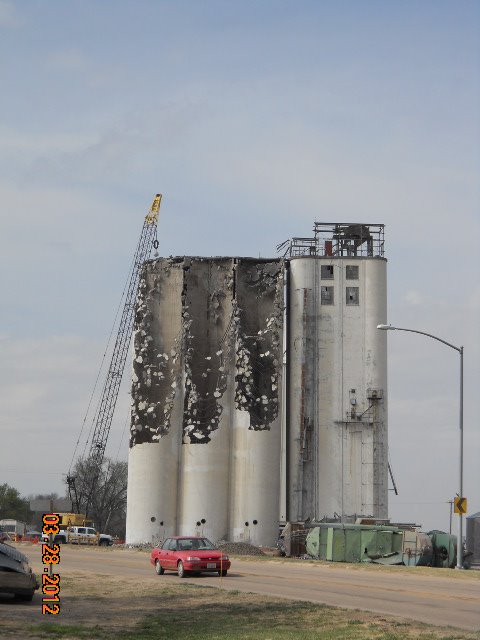
The old Maywood, Nebraska, elevator with its annex built by Mayer-Osborn Contruction Company of Denver, Colorado, was demolished in March of this year. I had planned the trip to see the elevator before its scheduled demolition in 2013. When we arrived in town, I expected to see the familiar straight-up J. H. Tillotson, Contractor-designed elevator with its annex beside it, but it was nowhere to be found. But I saw bulldozers and a football field-sized area framed with rubble piles, with corn impacted into the flat scraped ground. Not good.

Inside the Ag Valley Co-op office, business was in full swing. A truck pulled up, and a corn sample was vacuumed up and tested inside the building as I watched. Newer elevators were handling all of the grain. Turena Ehlers and Charla Werkmeister, employees of the co-op, told me how it went.

Photo by Julie Cox Hazen

The old Mayer-Osborn annex had a pretty good lean and some leaking problems, so it had been slated for destruction first, with the status of the main elevator left in question. But the main elevator was losing chunks of concrete and was deemed a hazard, so it came down soon after the annex. Forest River Colonies, of Fordville, North Dakota, a Hutterite-owned company, tore down the elevator and its annex, with the scrap going to Columbus Metals in Kearney, Nebraska. My hopes were dashed for recovering an intact manhole cover with my grandfather’s Mayer-Osborn company name on it.

Photo by Julie Cox Hazen

The demolition was quite an event for the town. Carol Wood put together a photo montage and hung it at the Maywood town offices. Bill Schnase picked up pieces of the rubble for his daughter to paint, to preserve the image of the elevator on concrete. Everyone had photos of the demolition. Julie Cox Hazen, Bill Schnase’s niece, shared hers with me.

Luckily, Gary Rich visited the elevator last year, taking photos of it in its last year of useful service. It’s type had been surpassed for a long time by newer, faster grain storage facilities of all kinds.

Most of Grandpa’s smaller projects are reaching the end of their service lives. So we are capturing their last moments, mostly, but not always, in the nick of time.

Jerry McBride worked at Wauneta’s elevator in the ’60s before repairing cars

Jerry McBride at Bob’s Repair Service in Wauneta, Nebraska

Story and photos by Kristen Cart

On the way out of town after visiting the Wauneta, Nebr., elevator complex, we noticed a rather striking old building, which was an auto repair garage, currently owned by Robert Jones, and called Bob’s Auto Repair and Service, at 512 S. Tecumseh.

I stopped to take pictures. A man came out, introducing himself as Jerry McBride, and asked if I liked old buildings. I said I did, and that I had a particular interest in old elevators, having visited Wauneta’s that day. He invited me in to see the shop. It had been built in the 1920s, Jerry said, and mostly knocked down by a tornado sometime before the 1950s, when it was rebuilt and an extension added.

All of this happened before Jerry was employed there.

Wauneta’s original elevator

He said that he had been hired by Ivo Valentine Pennington in about 1962. Before that he was employed as a “broom man” at the Wauneta elevator for six months or so, making fifty cents an hour. Cleanliness was of utmost importance at the elevator. Wauneta gained the reputation for having the cleanest elevator in the state, Jerry said. Unclean elevators would catch fire, or worse, blow up. He kept the elevator clean, as dust free as possible, but it was nevertheless hard and dirty work and did not pay well, so he quit and looked into the possibility of going to school. Then I.V. Pennington offered him a job and all the training he would need to become a mechanic.


The shop today is an old-fashioned one that doesn’t take new cars. Parts could be machined there, and many of the tools had been manufactured by hand, to accommodate old cars.

Even the cash register was old–as Jerry pointed out, he did not have to close for a power outage, because the register still worked.

It struck me that Jerry McBride had first worked in this shop when the Wauneta elevator was less than ten or fifteen years old and the first annex was new. The repair shop was already old by then. Except for some modern tooling, the shop does not appear to be very different than in the 1960s.

The Waverly, Nebraska elevator is an example of clean lines, efficient design.

Story and photos by Kristen Cart

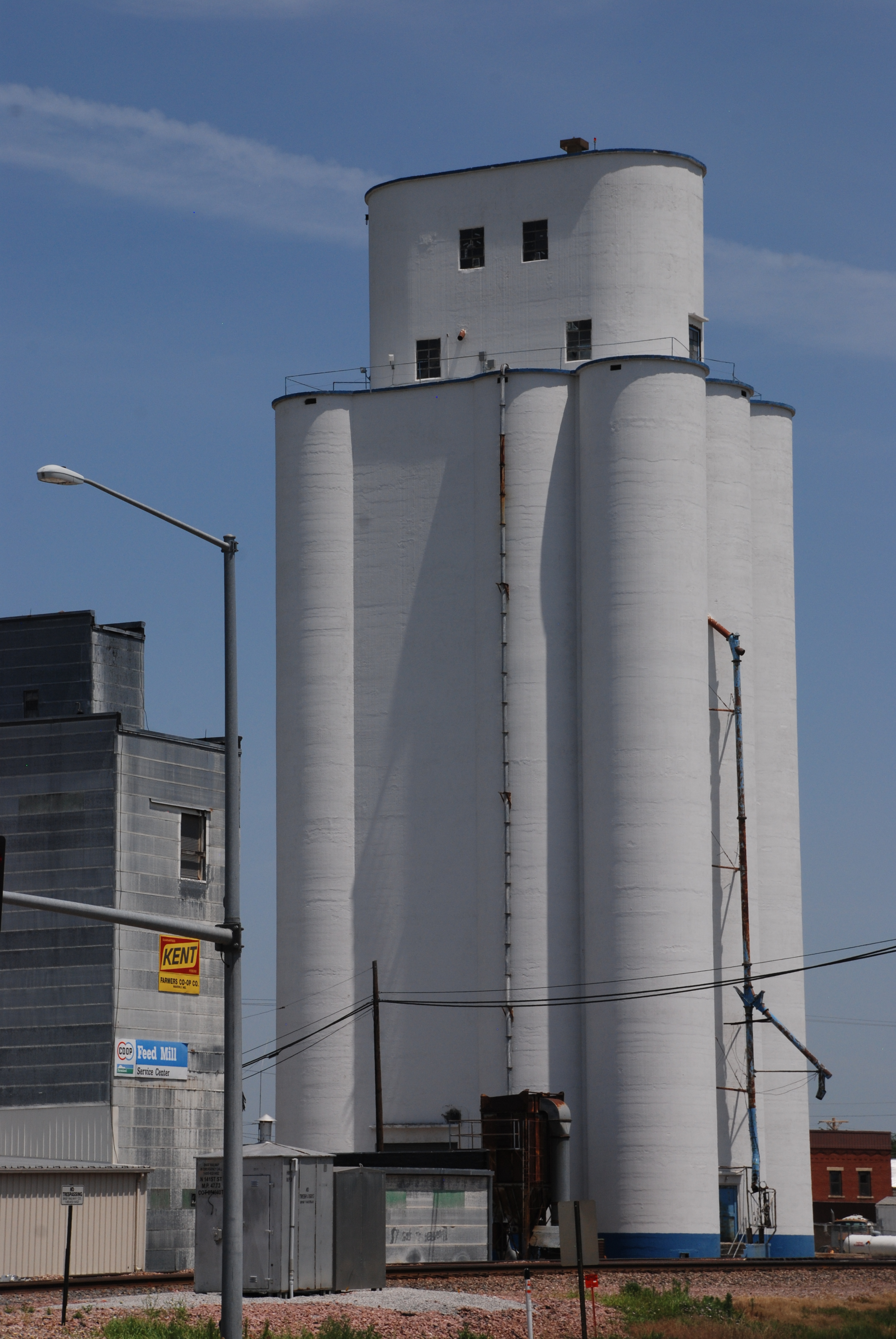
During my last visit to Nebraska, I stopped by the Waverly, Nebraska elevator complex.  The elevator, built by Tillotson Construction of Omaha, Nebraska, was brighter than the rest, gleaming whitely in the sunshine and standing separately from the others.  Tillotson Construction built this design in several cities, so it was instantly recognizable, even from a distance.  It is a beauty.

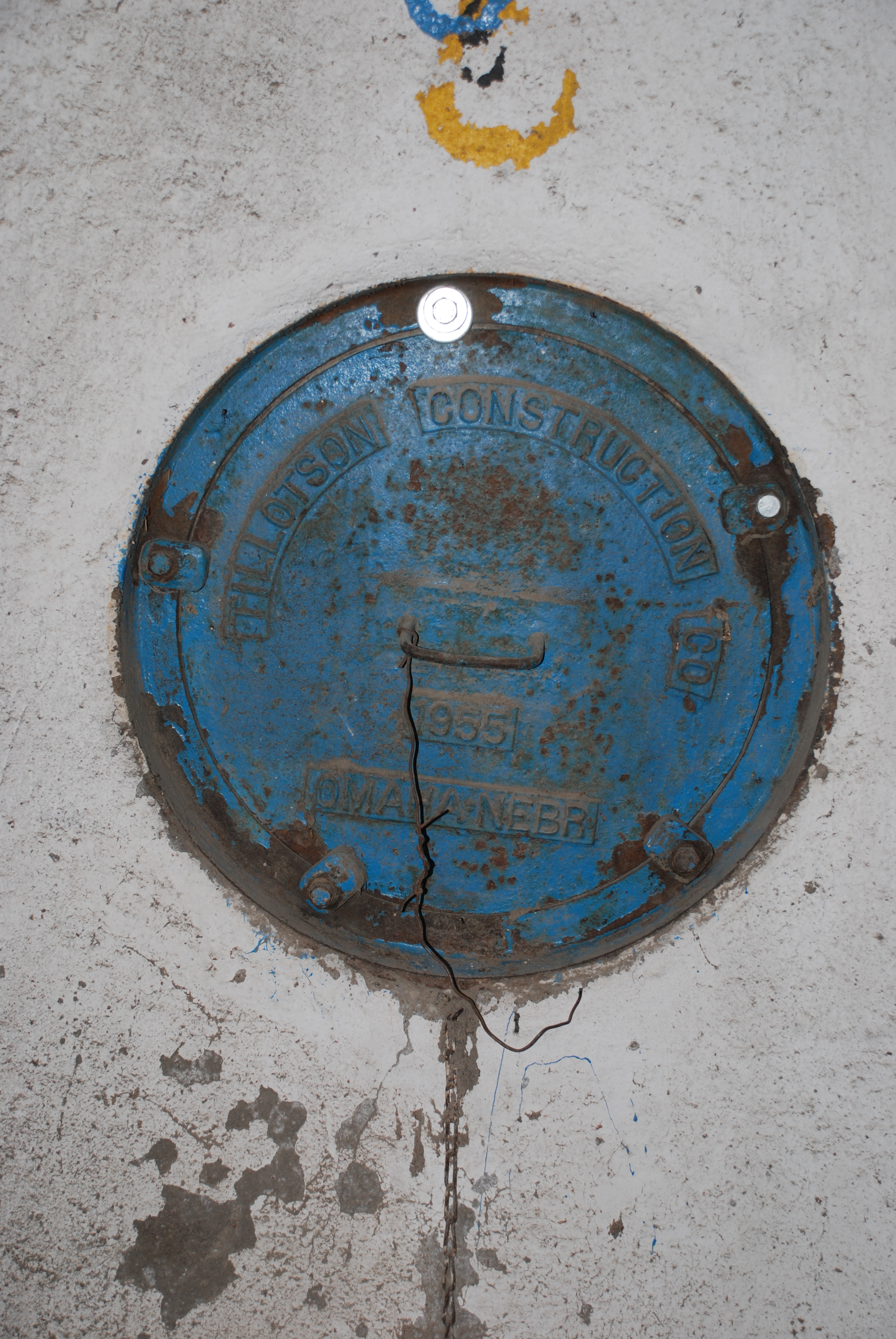
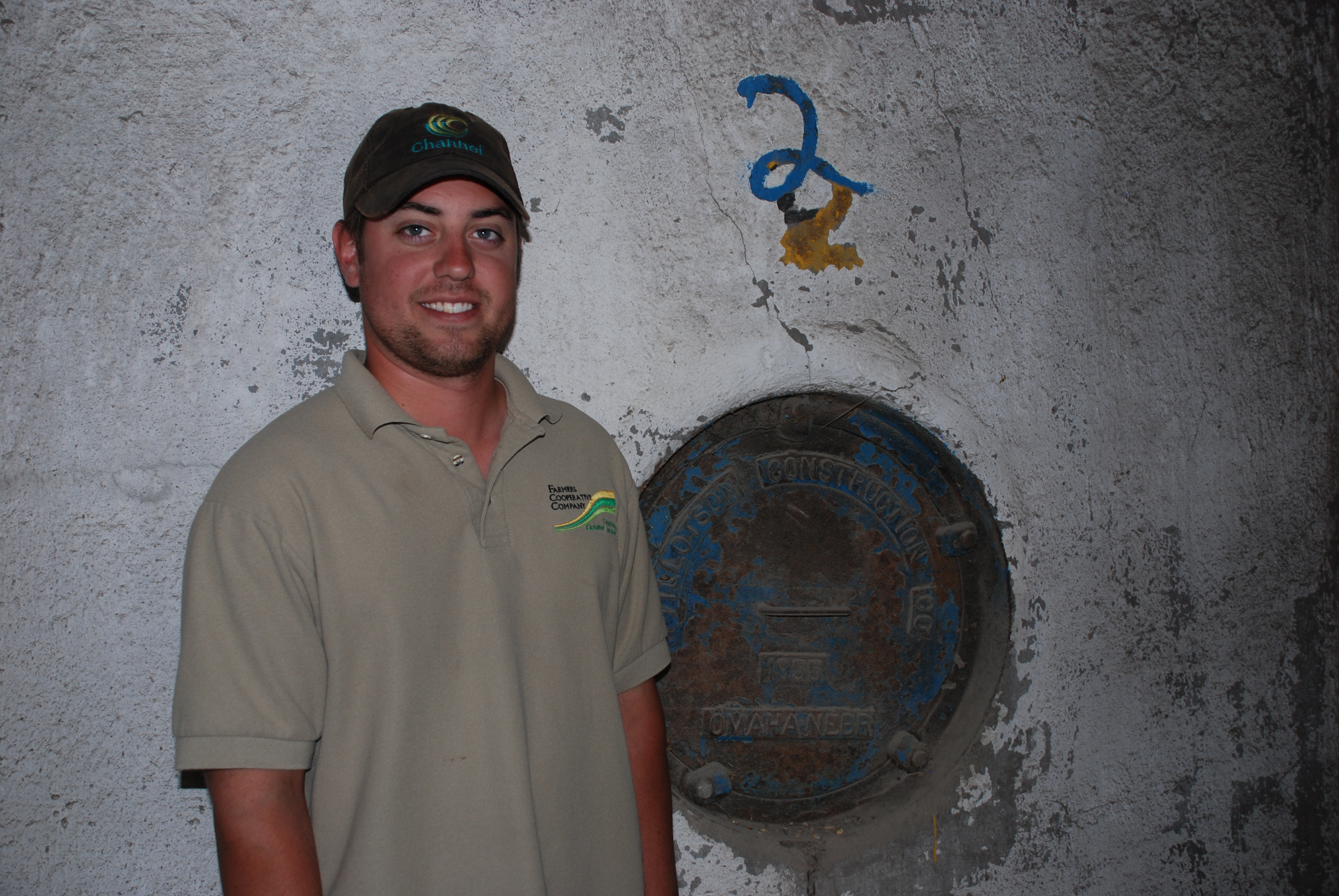
The Farmers Cooperative Company operates the elevator.  Colby Woods,  who has worked for the cooperative for four years, currently specializing in agronomy and marketing, showed me the manhole covers. They are stamped “Tillotson Construction Co., 1955, Omaha, Nebr.”   He was happy to share what he knew about the old building.

Colby Woods of Farmers Cooperative Company

As with most of the old concrete elevators I have visited, few employees were still around who could remember when the elevator was new.  But the people who helped me were very interested in the elevator’s history.  It made for a very pleasant visit.

How to build an elevator: Jerry Osborn’s firsthand account from Blencoe, Iowa

Story by Jerry Osborn and photos by Kristen Cart

The summer of 1954, before my senior year, I started working at the Hormel plant again, but after a few weeks my dad asked me to work on the elevator his company, Mayer-Osborn Company, was building at Blencoe, Iowa. This would be a different experience. Since I had no transportation of my own he took me to Blencoe and set me up in a motel near the site. He also took me to a shoe store to buy work shoes so I would be set to go to work. The wages weren’t great. They were $1 an hour just like all the other grunts on the job. No nepotism on this job. My job was to select the correct steel and see that it was laid properly as the slip forms were filled and jacked. Fortunately, I had enough engineering drawing work that I could read the blueprints. The slip operation had just begun when I arrived, so it was learn-on-the-run for me.

Things seemed to be progressing nicely until we were about twenty feet in the air. At that point it was noticed that some of the exposed concrete was crumbling and falling to the ground. This can’t be good. The operation was shut down immediately to determine what the problem was. It became obvious that the mix ratio of cement to sand and gravel was too low. The work to that point had to be torn down. The demolition was done over the weekend, and we were setting up to slip again on Monday. The concrete was mixed on the job and the appropriate mix weights were to be locked into the scales. Somehow the proper amount of cement was not designated. My brother, who had been on a lot of these jobs, was a supervisor on this job and should have checked the setting for the proper mix.

When operating properly, the concrete was mixed next to the elevator; each mix was dumped into a bucket hoist, which was lifted to the deck level. The mud was fed into two-wheel mud buggies. The buggies were then wheeled to and dumped at the place needing concrete. As this process took place another mix was in process, so when the hoist bucket was returned, it was once again filled and the whole process was repeated over and over until a height of more than 100 feet was reached. As the forms were filled, steel was laid and other features such as portholes were laid in place as the forms were jacked upward, exposing freshly set concrete at the bottom of the forms and providing more space at the top for more mud. A scaffold was built below but connected to the forms so men with trowels could smooth the fresh concrete as it was exposed below.

I had hoped to work until the slip was finished, but the restart didn’t leave enough time prior to football practice.

Faked out in American Falls, Idaho

Chalmers and Borton elevator at American Falls, Idaho.

During one of my recent road trips, I came upon a beautiful concrete construction elevator in American Falls, Idaho.  It looked much like the stand-alone elevators built by Tillotson Construction of Omaha, with an added annex.  It is in full operation.  I explored the elevator complex from about 7:30 am, and stayed on site as workers reported for their 8:00 am shift.  It was a very handsome elevator in the early morning light.  In its details it looked like a Tillotson elevator, except for the rectilinear head house, which is not unknown for a Tillotson or Mayer Osborn built elevator, but would be unusual.

As the shift started, I stopped at the elevator office to ask about the builder.  The worker smiled and pointed out the brass plaque by the door.  It was built by our grandfathers’ arch rival company, the ubiquitous Chalmers and Borton based in Hutchinson, Kansas.  Gary Rich pointed out one time that it seemed that wherever he found a J.H. Tillotson or Mayer Osborn elevator out in Kansas or Colorado, hard beside it would stand a Chalmers and Borton annex.  The companies played hard ball and competed for every contract.  Dad said, when I asked if Grandpa’s Mayer Osborn Construction of Denver, Colorado ever worked with Chalmers and Borton,  that “oh, no, they were his biggest competitor.”

Greenwood Nebraska’s straight-up elevator by Tillotson Construction of Omaha.

The elevator at Greenwood, Nebraska, built by Tillotson Construction of Omaha, is very reminiscent in its style to the elevator in American Falls.  I guess form followed function, and each company offered a product similar in its details–often the deciding factor was the bid price.  This Chalmers and Borton elevator certainly faked me out.  But it stands as a beautiful example and deserves notice.

Searching for Mayer-Osborn’s office in Denver produces a good possibility

Story and illustration by Kristen Osborn Cart

Looking for the original offices my grandfather used while putting up elevators for a living, I checked maps for the buildings that stood at the old Mayer-Osborn Company addresses. Google gives a bird’s-eye view. The newer address at 5100 York, in Denver, has no building and seems to be a parking lot full of junker cars and abandoned trailers. There is a small white cinderblock-looking building next door that might be that old, but it is nothing to speak of. I am sure the old building where William Osborn and his partner Gene Mayer located their business is long gone.

The address at 1717 E. Colfax has a handsome, two-toned, tan-and-brown brick building, three stories high, with a glass-brick corner feature on each floor and a style very like some of the better buildings from the Forties and Fifties. It has white-framed windows. It looks like it could have been newly built, if it was their office back then. A mural painted on the side looks like old Nebraska historical scenes, and a canvas awning shades the entry.

If I were any good at all at remembering architectural terminology from my college art history class, you would have a pretty good idea what it looks like just from my description.

Alas, there’s no way of knowing from a photo exactly when it was built, and whether Mayer-Osborn set up there in the old office of Holmen and Mayer, but I suspect so. The building would have made a very presentable impression on clients who came in looking for a reputable, established elevator construction company.


Budd Gauger recalls delivering grain to the Wauneta elevator

Budd Gauger, who was born in 1930, grew up on a farm fifteen miles from Wauneta, in southwestern Nebraska. He went on to have a career as a newspaperman in Lincoln and Toledo. Here, in his lyrical style, he recalls details from his trips to the old Wauneta elevator. Mayer-Osborn’s plans for a new concrete elevator were approved, in 1949, by Farmers Coop Exchange (FCE), which merged with  Frenchman Valley Cooperative in 1990.

By Budd Gauger

Fourth of July means fireworks, but wheat farmers examine their fields hoping no fireworks such as lightning destroy their crops. They have decided to start the harvest.

When?

Now!

♦ ♦ ♦
 

I was assigned by my father to drive the big truck, usually a Chevrolet, hauling wheat to elevators in town. I realized that I had down time or wasted time when sitting in the fields waiting to load or at the elevator waiting to unload, so I enrolled in correspondence courses (this was in the ’50s) from Midland and Dana Colleges. A cousin, Thelma Gauger, taught me some words of shorthand, which came in handy for a journalist conducting an interview of newsmakers, so I sometimes practiced in the truck.

Frenchman Valley Co-op elevator complex at Wauneta. Photo by Gary Rich.

Wheat harvests come quickly and leave quickly on a march from Texas to Manitoba.

If the wheat was dry we could easily go most of the night in the fields. Sometimes I would stretch out atop my “gold” (wheat) in the back of the truck, and look at the soft-friendly of the moon, looking at me and billions of stars.

I marveled at the height of the elevators, not quite skyscraper high, but big nevertheless. They took a sample of wheat to make sure it wasn’t rotten. The price depended on the condition of the kernels.