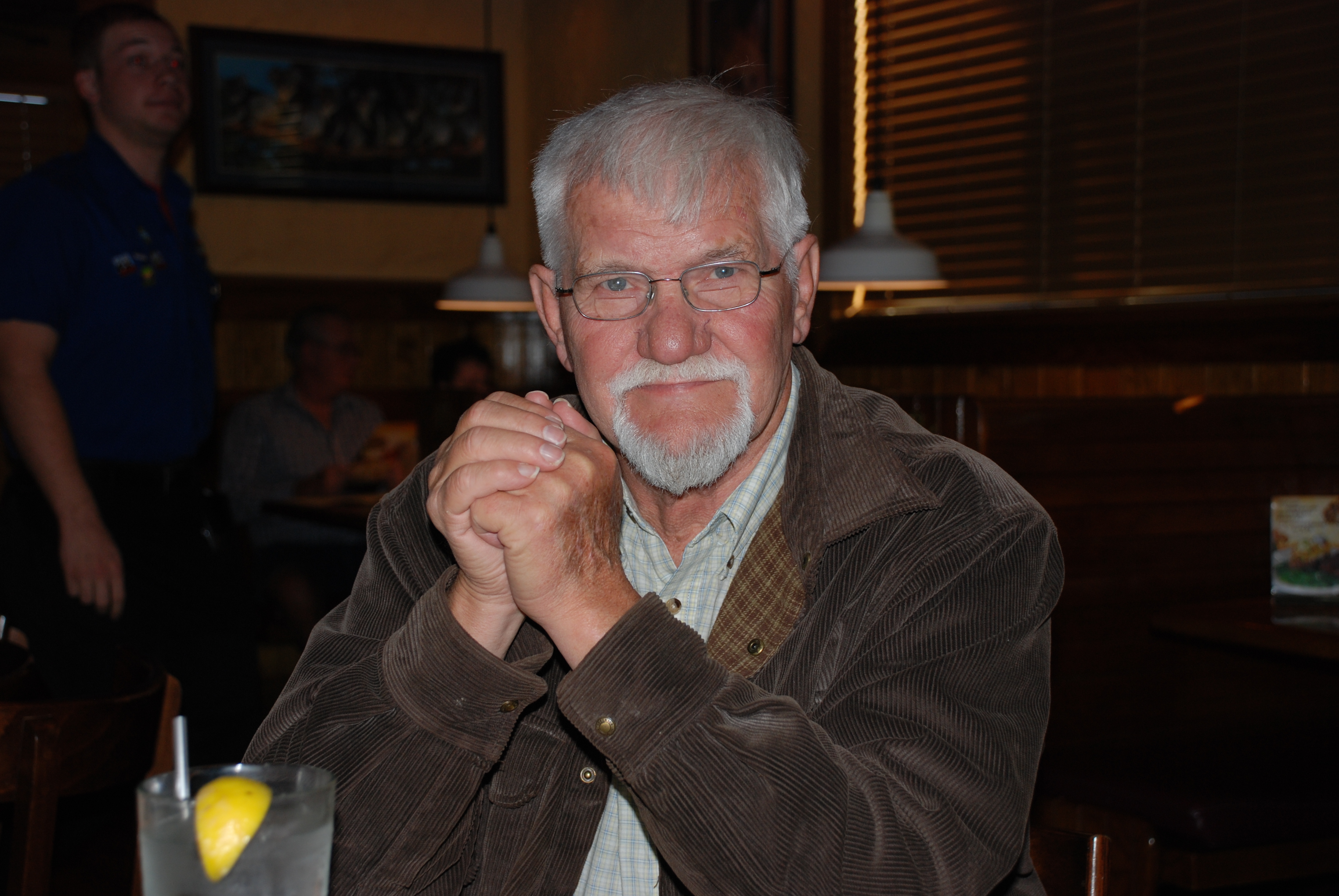
How to build an elevator: Jerry Osborn’s firsthand account from Blencoe, Iowa

Story by Jerry Osborn and photos by Kristen Cart

The summer of 1954, before my senior year, I started working at the Hormel plant again, but after a few weeks my dad asked me to work on the elevator his company, Mayer-Osborn Company, was building at Blencoe, Iowa. This would be a different experience. Since I had no transportation of my own he took me to Blencoe and set me up in a motel near the site. He also took me to a shoe store to buy work shoes so I would be set to go to work. The wages weren’t great. They were $1 an hour just like all the other grunts on the job. No nepotism on this job. My job was to select the correct steel and see that it was laid properly as the slip forms were filled and jacked. Fortunately, I had enough engineering drawing work that I could read the blueprints. The slip operation had just begun when I arrived, so it was learn-on-the-run for me.

Things seemed to be progressing nicely until we were about twenty feet in the air. At that point it was noticed that some of the exposed concrete was crumbling and falling to the ground. This can’t be good. The operation was shut down immediately to determine what the problem was. It became obvious that the mix ratio of cement to sand and gravel was too low. The work to that point had to be torn down. The demolition was done over the weekend, and we were setting up to slip again on Monday. The concrete was mixed on the job and the appropriate mix weights were to be locked into the scales. Somehow the proper amount of cement was not designated. My brother, who had been on a lot of these jobs, was a supervisor on this job and should have checked the setting for the proper mix.
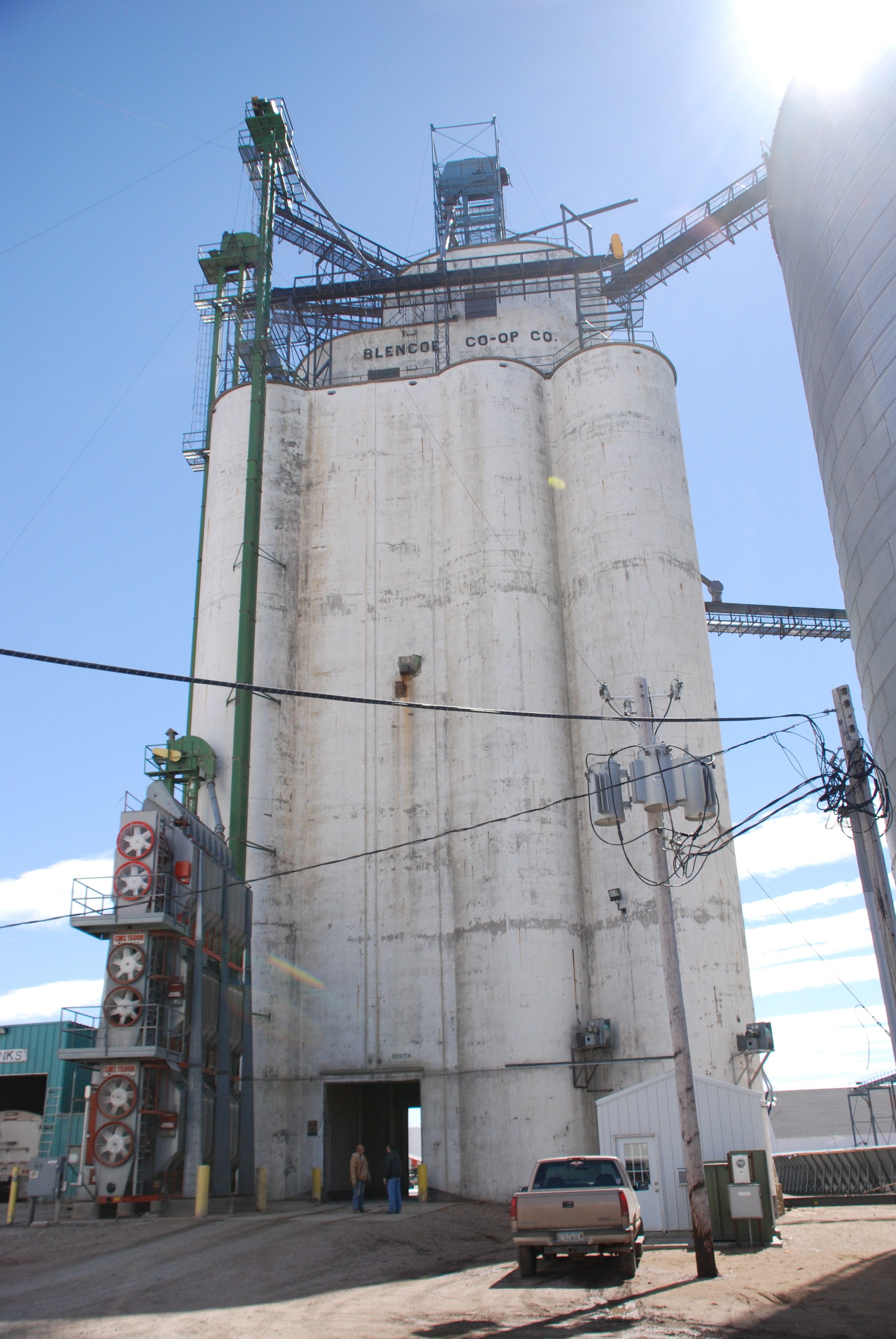
When operating properly, the concrete was mixed next to the elevator; each mix was dumped into a bucket hoist, which was lifted to the deck level. The mud was fed into two-wheel mud buggies. The buggies were then wheeled to and dumped at the place needing concrete. As this process took place another mix was in process, so when the hoist bucket was returned, it was once again filled and the whole process was repeated over and over until a height of more than 100 feet was reached. As the forms were filled, steel was laid and other features such as portholes were laid in place as the forms were jacked upward, exposing freshly set concrete at the bottom of the forms and providing more space at the top for more mud. A scaffold was built below but connected to the forms so men with trowels could smooth the fresh concrete as it was exposed below.

I had hoped to work until the slip was finished, but the restart didn’t leave enough time prior to football practice.

Searching for Mayer-Osborn’s office in Denver produces a good possibility

Story and illustration by Kristen Osborn Cart

Looking for the original offices my grandfather used while putting up elevators for a living, I checked maps for the buildings that stood at the old Mayer-Osborn Company addresses. Google gives a bird’s-eye view. The newer address at 5100 York, in Denver, has no building and seems to be a parking lot full of junker cars and abandoned trailers. There is a small white cinderblock-looking building next door that might be that old, but it is nothing to speak of. I am sure the old building where William Osborn and his partner Gene Mayer located their business is long gone.

The address at 1717 E. Colfax has a handsome, two-toned, tan-and-brown brick building, three stories high, with a glass-brick corner feature on each floor and a style very like some of the better buildings from the Forties and Fifties. It has white-framed windows. It looks like it could have been newly built, if it was their office back then. A mural painted on the side looks like old Nebraska historical scenes, and a canvas awning shades the entry.

If I were any good at all at remembering architectural terminology from my college art history class, you would have a pretty good idea what it looks like just from my description.

Alas, there’s no way of knowing from a photo exactly when it was built, and whether Mayer-Osborn set up there in the old office of Holmen and Mayer, but I suspect so. The building would have made a very presentable impression on clients who came in looking for a reputable, established elevator construction company.


Budd Gauger recalls delivering grain to the Wauneta elevator

Budd Gauger, who was born in 1930, grew up on a farm fifteen miles from Wauneta, in southwestern Nebraska. He went on to have a career as a newspaperman in Lincoln and Toledo. Here, in his lyrical style, he recalls details from his trips to the old Wauneta elevator. Mayer-Osborn’s plans for a new concrete elevator were approved, in 1949, by Farmers Coop Exchange (FCE), which merged with  Frenchman Valley Cooperative in 1990.

By Budd Gauger

Fourth of July means fireworks, but wheat farmers examine their fields hoping no fireworks such as lightning destroy their crops. They have decided to start the harvest.

When?

Now!

♦ ♦ ♦
 

I was assigned by my father to drive the big truck, usually a Chevrolet, hauling wheat to elevators in town. I realized that I had down time or wasted time when sitting in the fields waiting to load or at the elevator waiting to unload, so I enrolled in correspondence courses (this was in the ’50s) from Midland and Dana Colleges. A cousin, Thelma Gauger, taught me some words of shorthand, which came in handy for a journalist conducting an interview of newsmakers, so I sometimes practiced in the truck.

Frenchman Valley Co-op elevator complex at Wauneta. Photo by Gary Rich.

Wheat harvests come quickly and leave quickly on a march from Texas to Manitoba.

If the wheat was dry we could easily go most of the night in the fields. Sometimes I would stretch out atop my “gold” (wheat) in the back of the truck, and look at the soft-friendly of the moon, looking at me and billions of stars.

I marveled at the height of the elevators, not quite skyscraper high, but big nevertheless. They took a sample of wheat to make sure it wasn’t rotten. The price depended on the condition of the kernels.

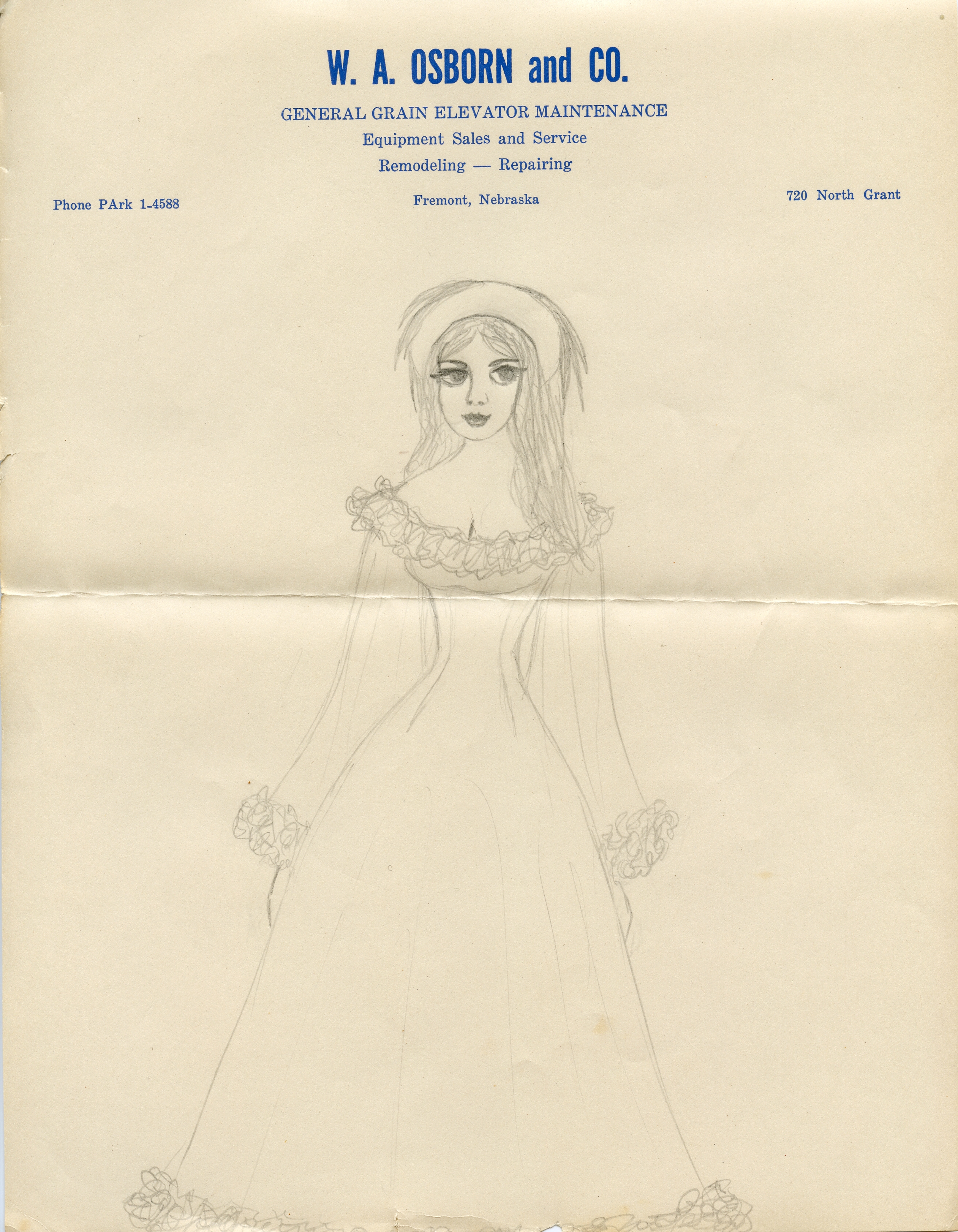
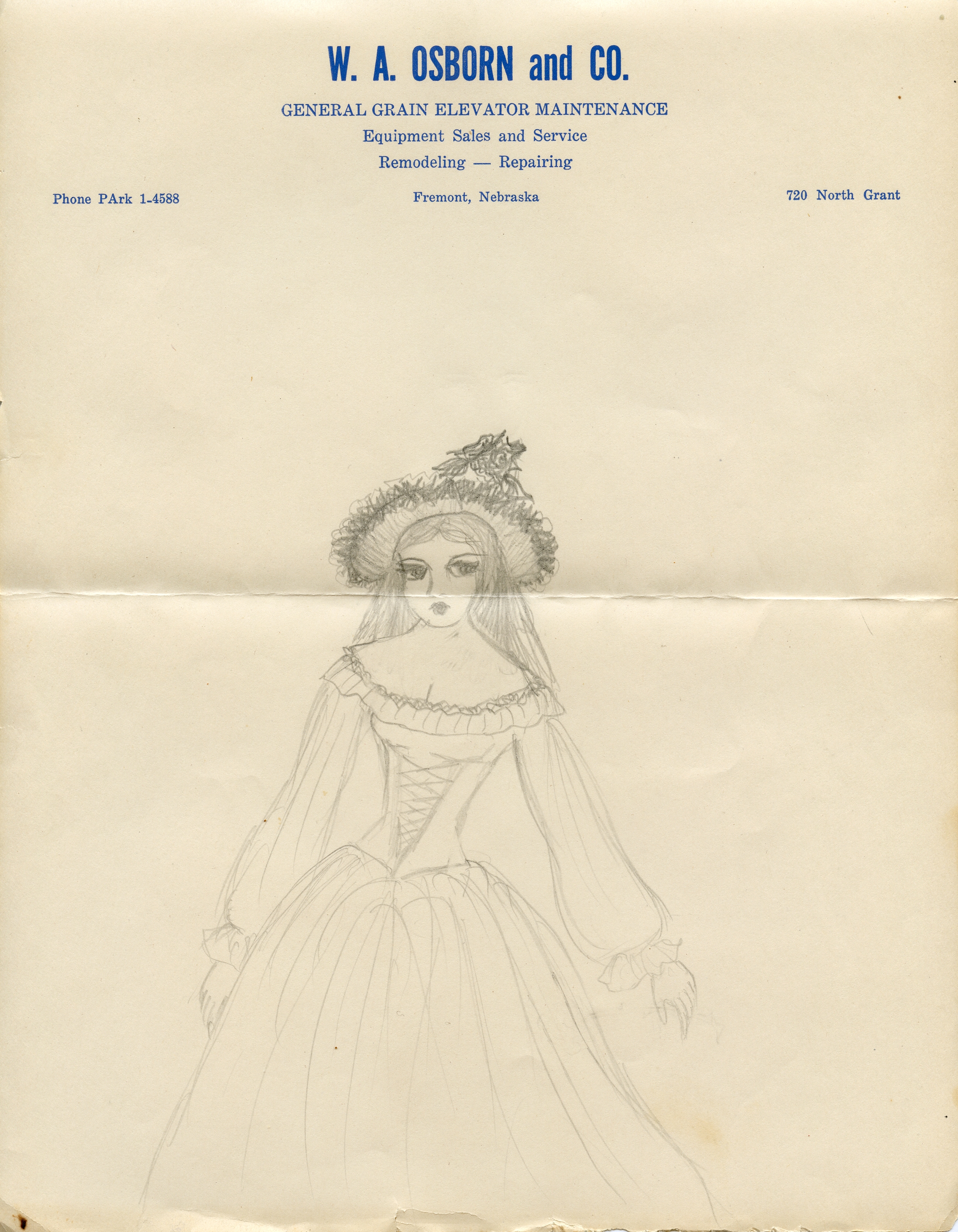
Osborn letterhead reveals new dimensions to the elevator story

Story and drawings by Kristen Osborn Cart

Note: Kristen recently visited Nebraska and located a batch of family papers. 

William Osborn retired from building elevators in 1955, but he continued maintaining them.

It was not until sometime in the Sixties that he switched careers and started a tropical fish business, breeding fancy beta fighting fish and guppies in tanks he welded himself. The fish shop was in his basement. It made a fascinating place for a young granddaughter to explore.

Apparently, he still had some elevator repair company letterhead paper lying around, because I found it and used it for some of my drawings. How they survived all of these years is a mystery to me.

All I ever drew were girls and horses. 

Mayer-Osborn’s new Roggen elevator contrasts with the old wooden one

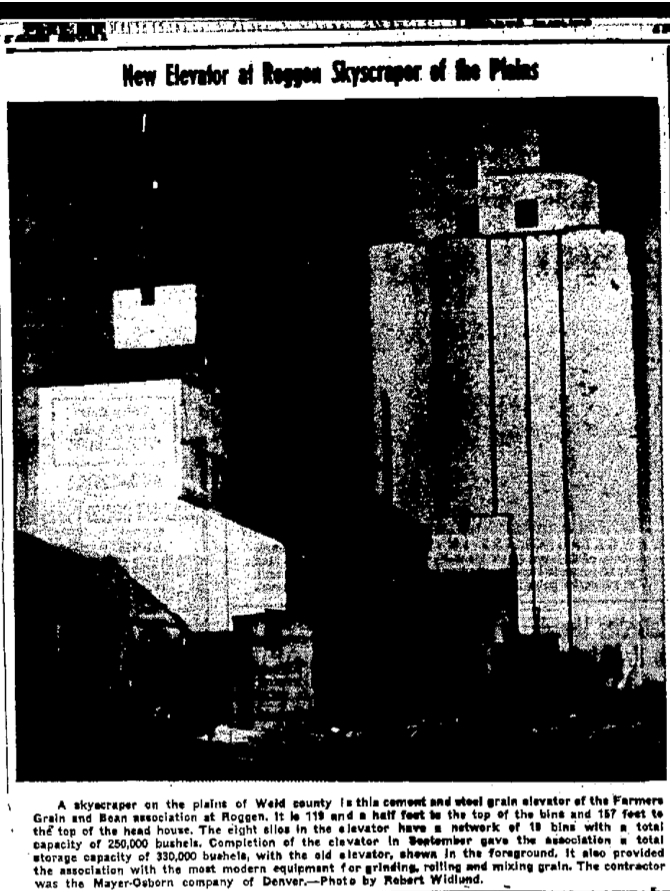
New Elevator at Roggen Skyscraper of the Plains

A skyscraper on the plains of Weld county is the cement and steel grain elevator of the Farmers Grain and Bean association at Roggen. 

It is 119 and a half feet to the top of the bins and 157 feet to the top of the head house. The eight silos in the elevator have a network of 19 bins with a total capacity of 250,000 bushels.

Completion of the elevator in September gave the association a total storage capacity of 330,000 bushels, with the old elevator, shown in the foreground.

It also provided the association with the most modern equipment for grinding, rolling and mixing grain.

The contractor was Mayer-Osborn company of Denver.

Photo by Robert Widlund, Greeley (Colo.) Daily Tribune, undated (1950)


Engaged in sales, William Osborn spent serious time on the road

Gerald Osborn makes this point in an email to Kristen Osborn Cart:

Just for the record, your grandfather [William Osborn, of Mayer-Osborn Company] spent a lot of time on the road selling elevators. I remember waiting in the car during one stop he made; I believe it was at Le Mars, Iowa. I don’t believe it is correct to attribute all the sales to Gene Mayer.

In fact, my understanding was that Gene spent most of his time in the office in Denver and likely was involved with drawing up the contracts, doing the cost analysis, and issuing the bid package. There was also the financial side of things that I don’t think my dad was very involved with:  payroll, purchasing, accounting, et cetera.

Wauneta registers as an important architectural landmark and literary archive

Story by Kristen Osborn Cart

Photo by Gary Rich

The elevator operators at Wauneta, Nebr., have done a remarkable job of retaining the blueprints and correspondence accumulated during the time the elevator complex was designed and built.

In virtually every other case we’ve investigated, blueprints were lost or unavailable, and the histories of the elevators were unknown. At Wauneta, we can track the history of their endeavor very easily.

We know from a newspaper item that the first, straight-up elevator at Wauneta was built by William Osborn, during his years with J. H. Tillotson, Contractor, of Denver, in 1945.

My dad knew that Grandpa built an elevator at Wauneta, so the story has been verified. A few years later, Wauneta obtained designs for an annex to be built by a winning bidder.

Map of Nebraska highlighting Chase County

Among these designs were two blueprints, dated 1948 and 1949, which were done by Holmen and Mayer, and Mayer-Osborn, respectively. Apparently the first set of plans was not built and a second set was ordered, this time from the newly formed Mayer-Osborn Company.

Other builders also submitted plans. Instead of an annex, however, Wauneta eventually built a second elevator, likely as a money-saving move.

A third elevator was also built.

The first two elevators had access to a rail line, and when the third elevator was built by Mel Jarvis Construction of Salina, Kan., it had no rail access, so runs were built connecting it to the other elevators.

After his recent visit, Gary Rich confirms that Mayer-Osborn built the Co-Op office building, formerly a John Deere dealership, and also a boiler room just west of the dealership. The blueprints are still kept at the Co-Op.

According to Gary, who interviewed a member of the Co-Op board, “The Co-Op provided everything for the farmers. They had the elevator, the John Deere dealership, a grocery store, and a lumber yard. Plus, they had a fertilizer plant and gasoline dealership.” 


Note: Follow the embedded link for William Osborn’s explanation of construction techniques used by Mayer-Osborn in nearby McCook, Nebr.

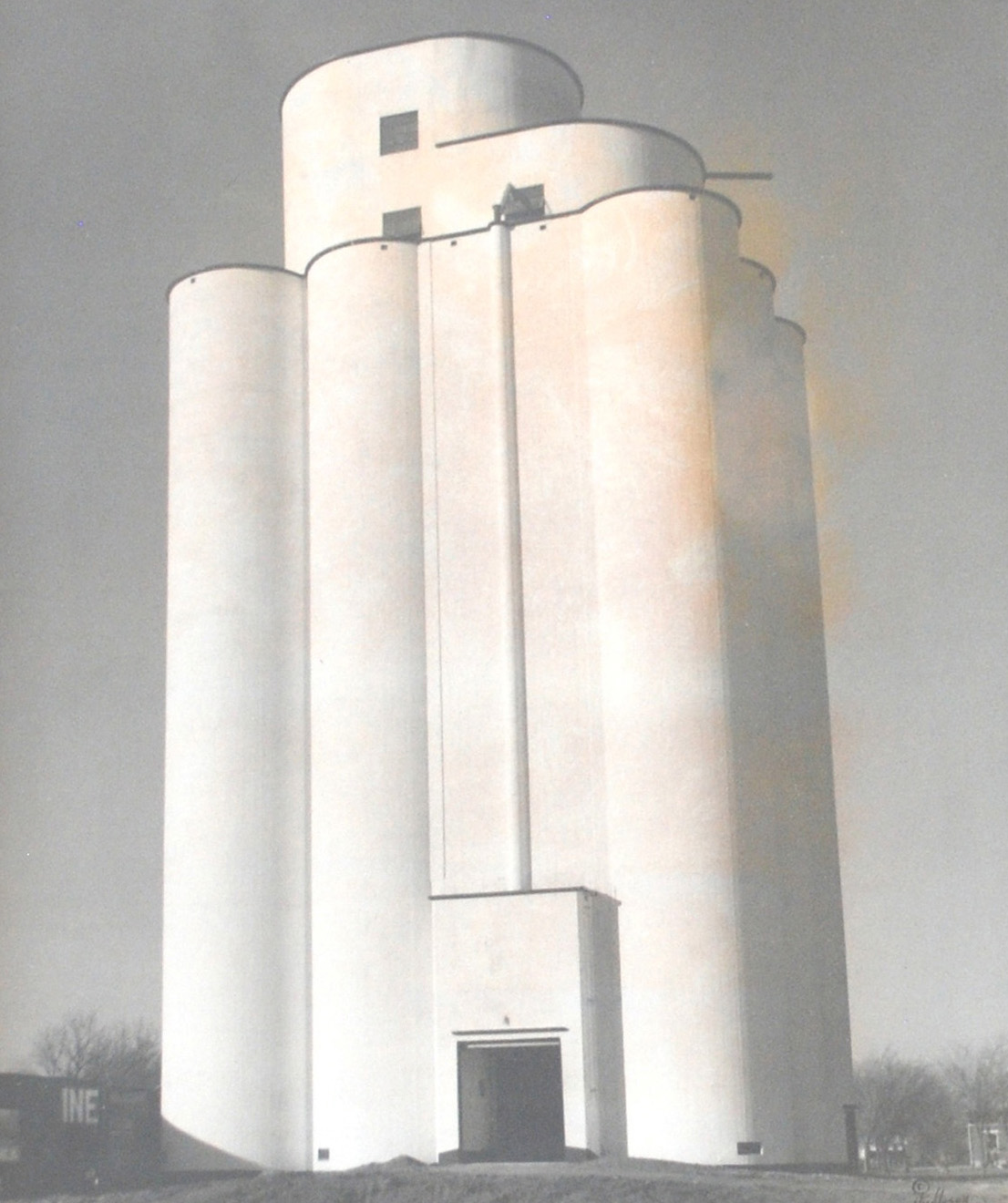
A contemporary view of Mayer-Osborn’s Blencoe elevator

Last holiday season, when she visited the Mayer-Osborn elevator at Blencoe, Iowa, Kristen Osborn Cart snapped this photo of a framed photo hanging in the office. It shows an early view of the elevator, which was finished in 1954. Her own father helped with the construction. The gleaming coat of white paint gave the structure an ultramodern look.

McCook: A different view of Mayer-Osborn’s first elevator

Kristen Osborn Cart provides this view of Mayer-Osborn’s first elevator, in McCook, Nebr., seen from a different angle. McCook is a town of about 7500 people in southwestern Nebraska’s Red Willow County, along the Republican River. The original elevator stands in the middle, between later annexes that added more storage.

Pritchett: Three elevators in southeastern Colorado


Gary Rich captured this striking view of the elevators at Pritchett, a small town in Colorado’s southeasternmost county, Baca. The elevators are along U.S. 160–called Railroad Street in the town–on the northern edge of the Comanche National Grassland. While we don’t know the builders of these elevators, some Mayer-Osborn characteristics are to be seen, notably, the step-up headhouse design and ground-level drive-through access of the first building.