Story by Kristen Cart
We know a little bit about the R. M. Van Ness Construction Co. from newspaper articles prior to its incorporation. When the business began, Van Ness built elevators from its headquarters in Fairbury, Nebr. before moving to Omaha in 1916. They situated their Omaha headquarters on the ground floor of the Grain Exchange building.
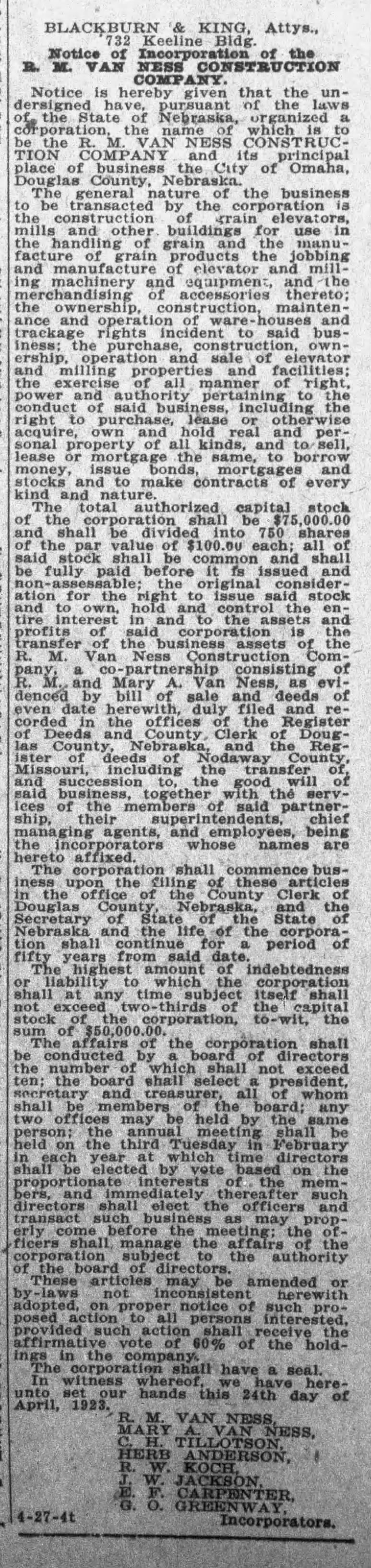
The company structure was formalized in 1923, when the R. M. Van Ness Construction Co. incorporated as a grain elevator construction business. Officers were therein named, shareholding partners designated, and the valuation of shares determined.
We find these partners and board members appearing in subsequent articles about their business dealings, as we will illuminate in upcoming posts.
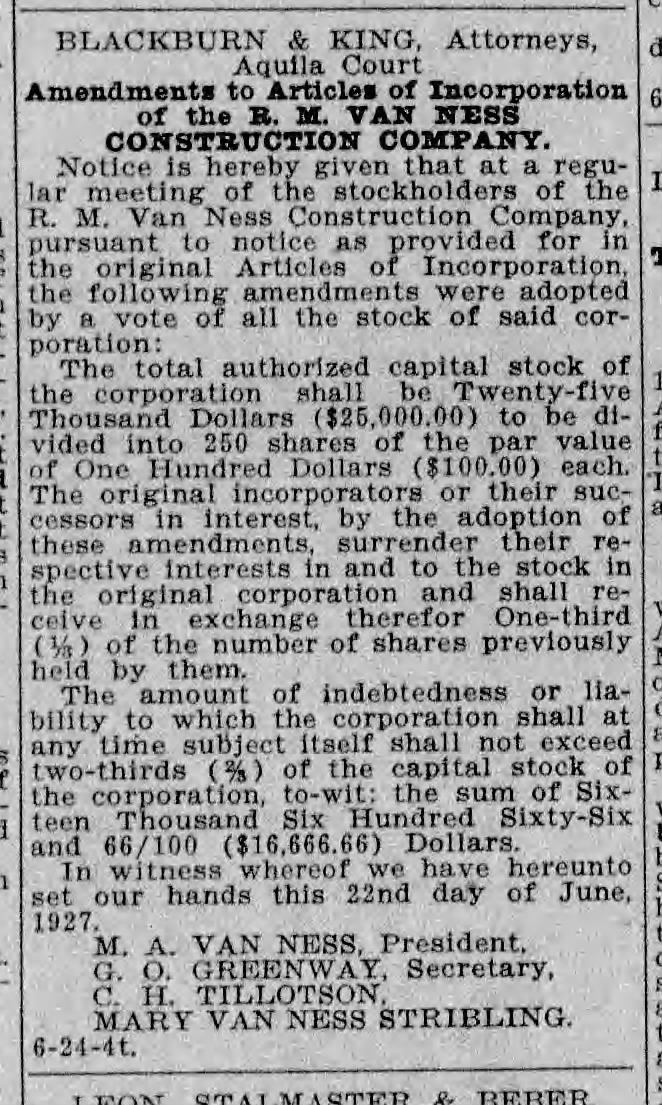
The company published an amendment to the articles of incorporation after the 1927 death of the founder, R. M. Van Ness, who fell victim to a brain hemorrhage at age 50.
Mary A. Van Ness assumed leadership and guided her construction business during some of its most productive years.
She held the reins during the tumultuous personal events of 1928, as well, when daughter Mary Van Ness Stribling and her husband Harold Stribling survived a home invasion and attack by an “ax-maniac” who had terrorized the Omaha-Council Bluffs area. A suspect named Jake Bird was tried and convicted of assault early the following year in Council Bluffs district court.
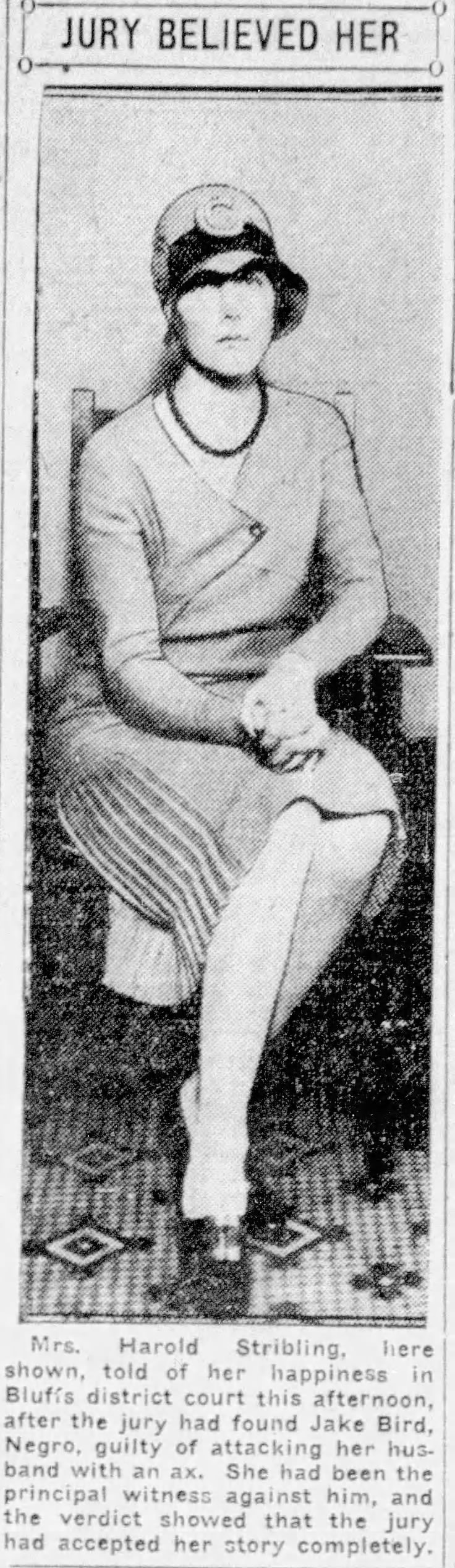
The local papers played up the story, culminating in the Omaha World-Herald’s Feb. 3, 1929 report of the guilty verdict.
“Well, it’s a tough break,” Bird said after the verdict was announced.
“Oh, I’m glad,” Mary Van Ness said before embracing her daughter.
“It’s the only way it could be,” Mary Van Ness Stribling said. “No other verdict would be honest or just. I never was in doubt about Bird being the man. Any other verdict would have affected me terribly, because it would have reflected on my honesty, and would make it appear that I had done an injustice. I have been through a terrible ordeal. It’s bad enough as it is.”
By 1931, according to newspaper accounts, Mary A. Van Ness had had enough, and we find this short newspaper item:
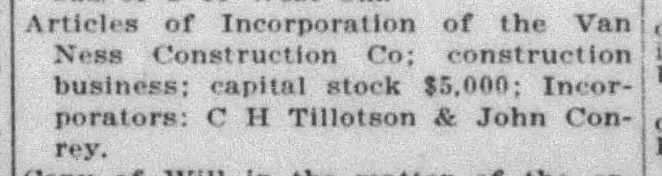
Charles H. Tillotson and John Conrey had taken the helm, and the company continued an extremely active period of grain elevator construction until Charles Tillotson’s death in 1938. It appears that Charles H. Tillotson, and later his son Reginald, were involved with this company throughout its existence.
The value of the stock was down from $25,000 to $5,000 during the height of the Great Depression.
We will explore the several phases of the company’s evolution in future posts.
 Our Grandfathers' Grain Elevators