Discovering the J. H. Tillotson elevator at St. Francis, Kansas, as a centennial looms

DSC_0248(2)

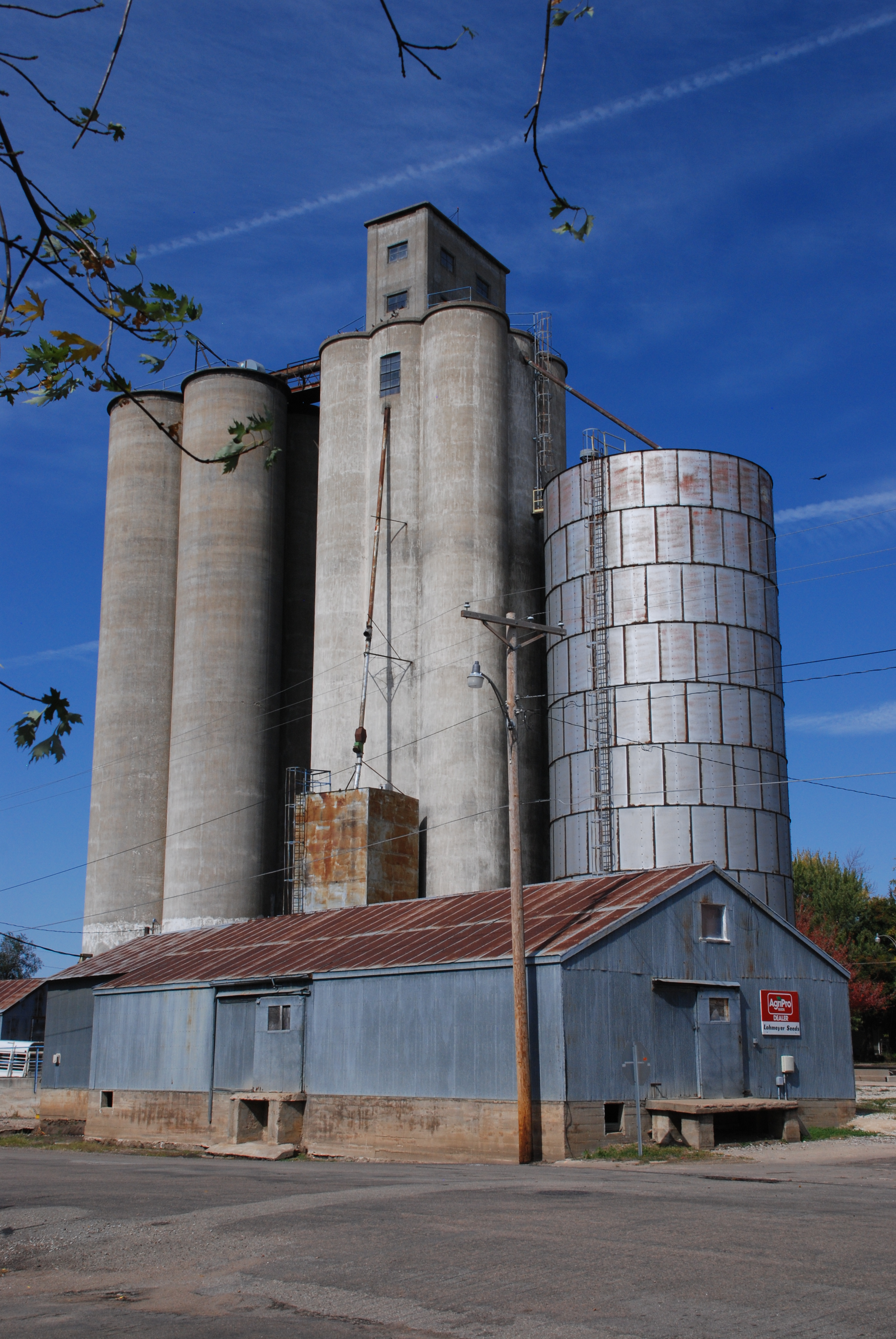
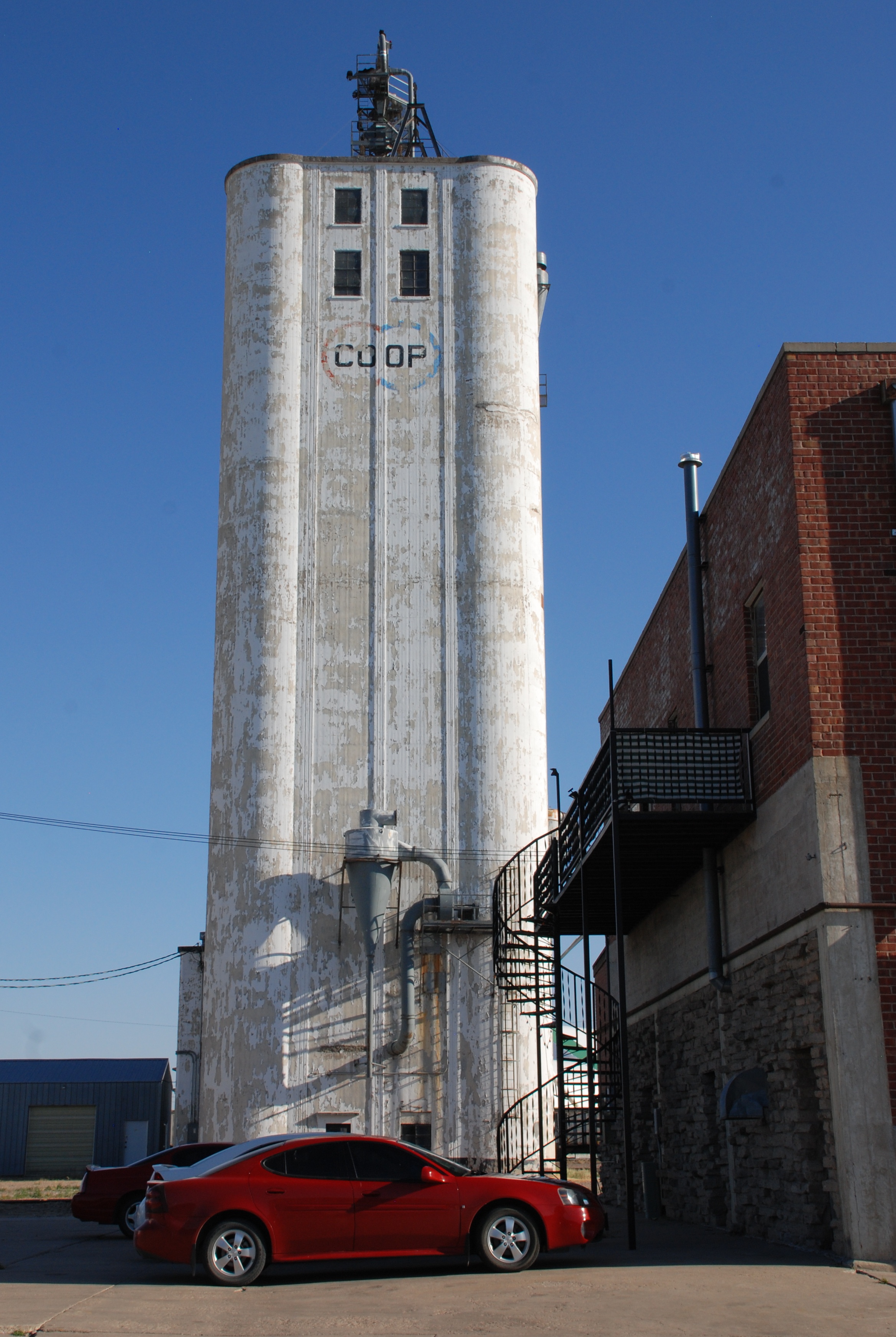
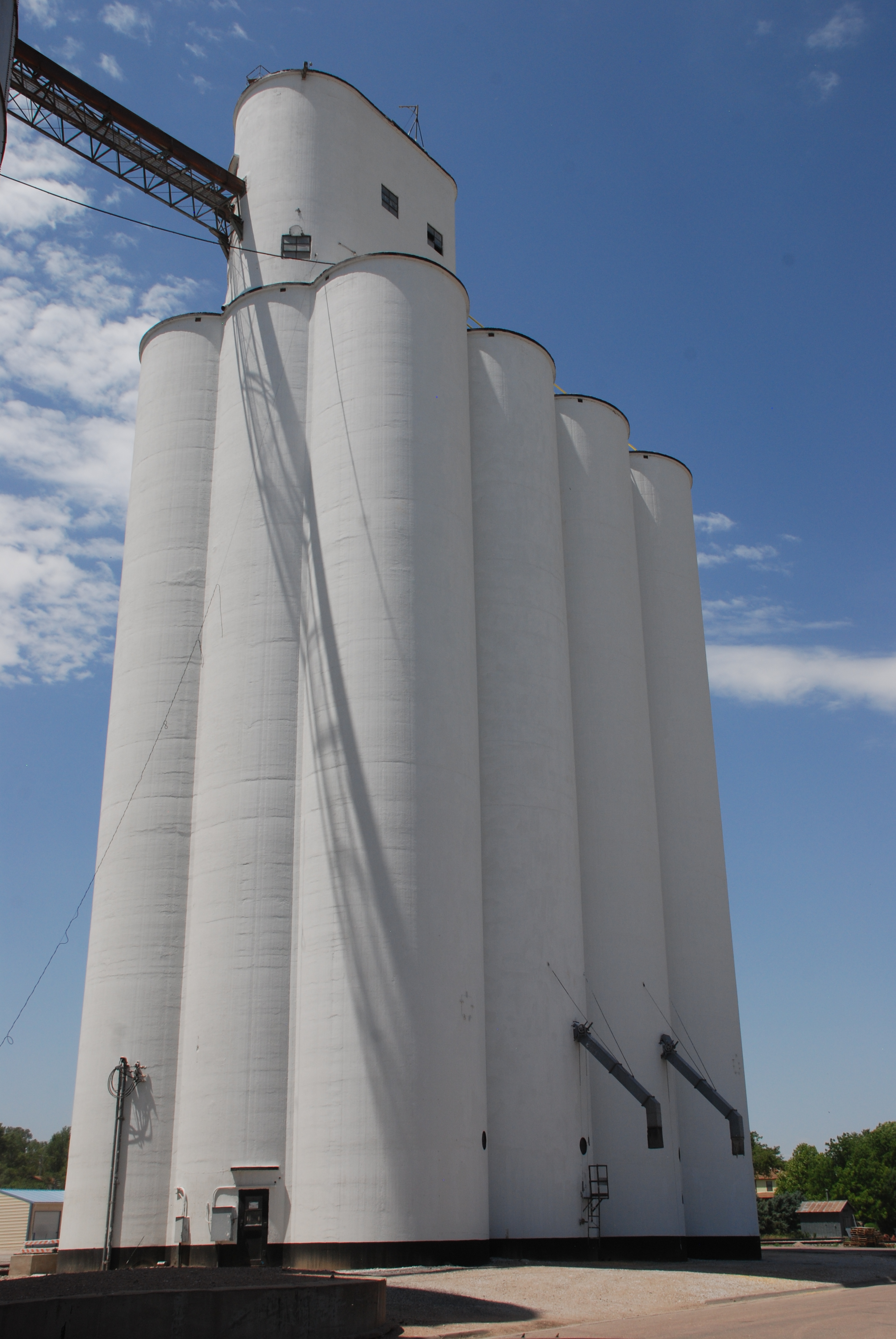
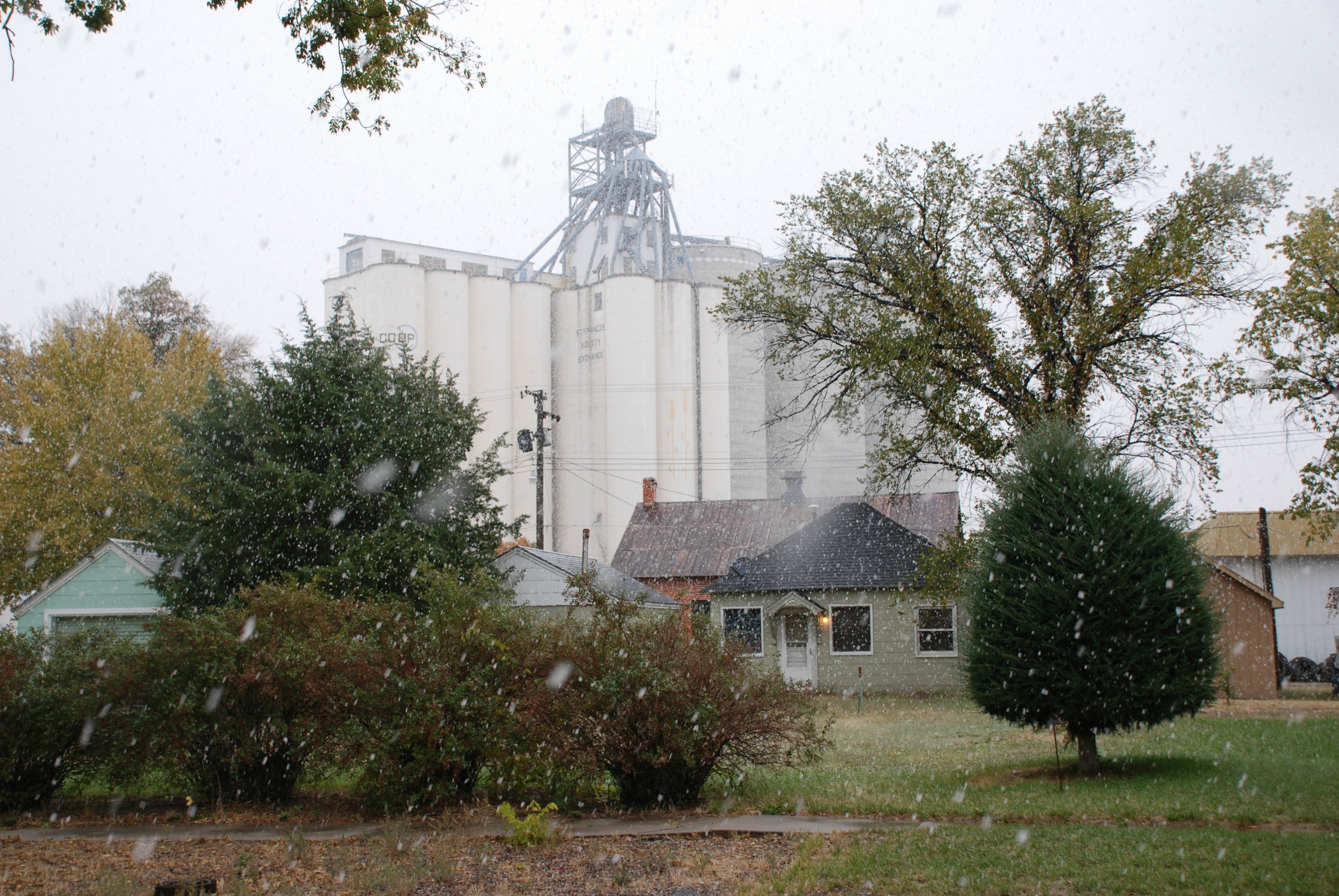
The J. H. Tillotson elevator in St. Francis, Kan. is nestled between two annexes.

Story and photos by Kristen Cart

St. Francis, Kan., stayed on my mind for months after I failed to find any sign of the work of my grandfather, William Osborn, on our first visit.

Out on the western end of Kansas, the town was well clear of any route our family would take on the way to somewhere else. It was a very intentional stop on our itinerary. On our first visit, we took a wide loop, arriving just after sundown, and we lost the opportunity to investigate further than one cursory look at the wrong elevator. The visit to St. Francis was shelved for several months, and I almost didn’t go, but when I did, I made sure to be there before nightfall.

The weather caught up, however.
DSC_0224(1)

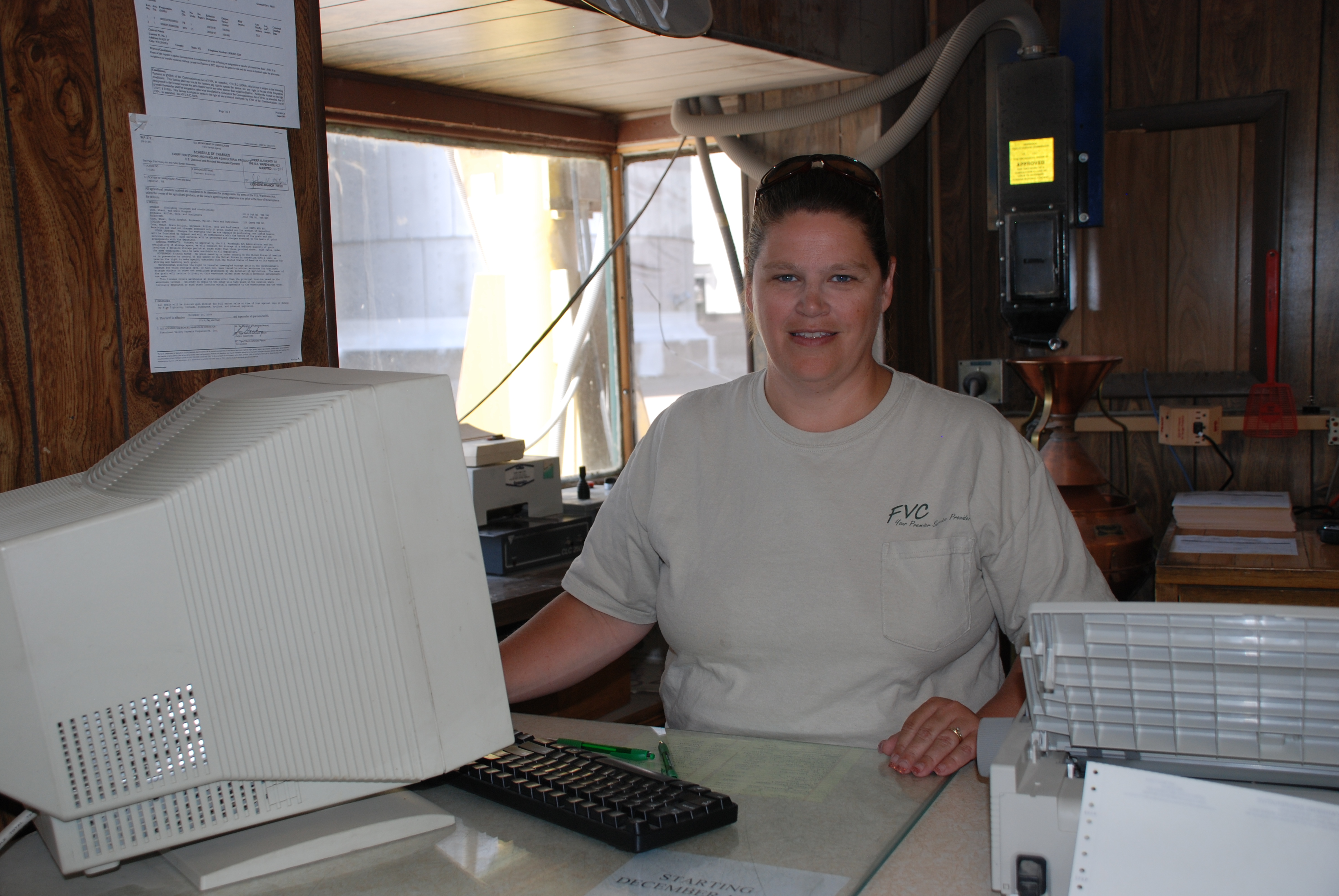
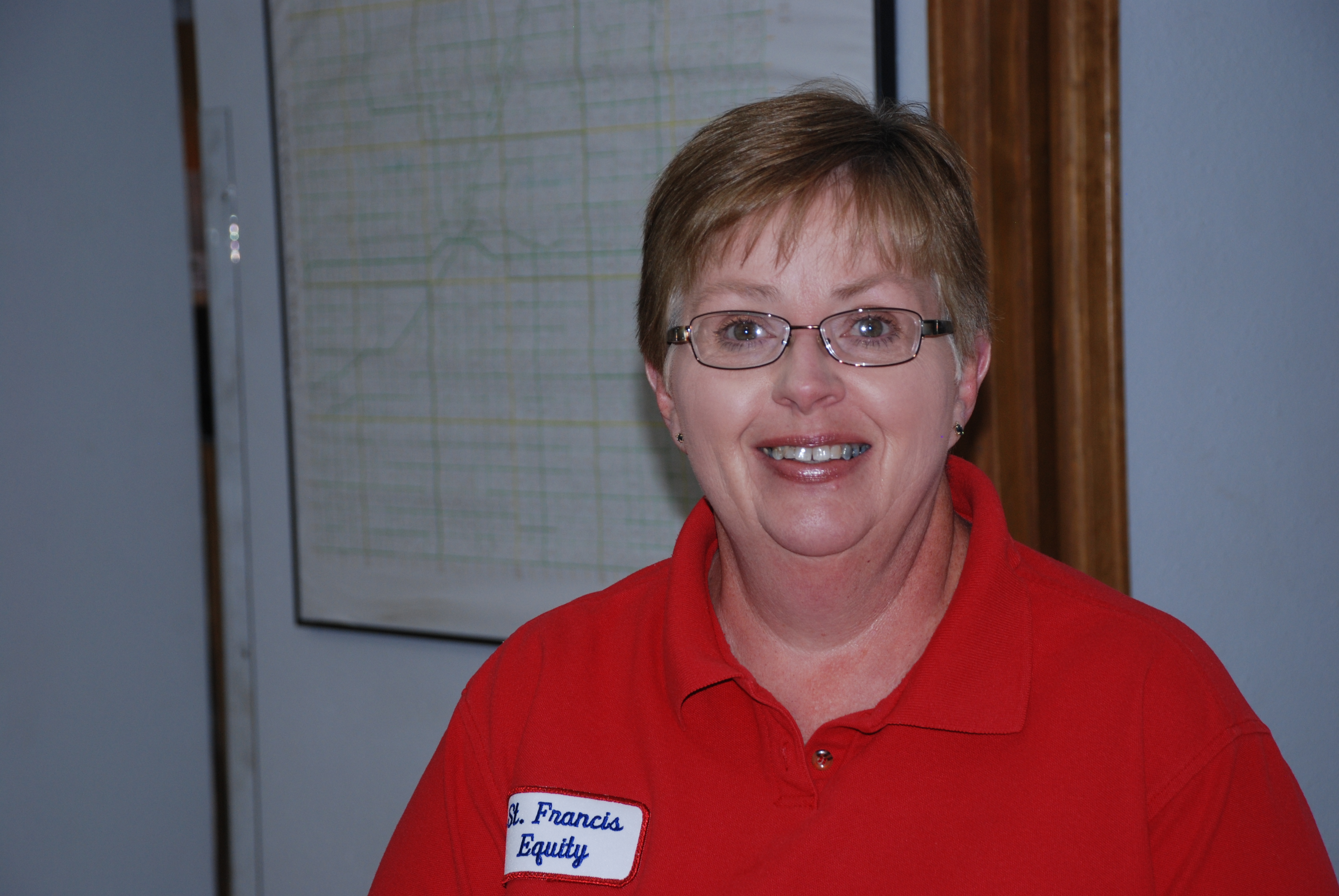
St. Francis Mercantile Equity Exchange grain merchandiser, Shirley Zweygardt.

This time, I headed toward the highest structure in town. By the time I pulled up to the elevator office, fat flakes of snow wafted down and splotched the truck’s windshield, melting on contact with the ground. It was October, and the trees, which still held their leaves, were a golden brown backdrop for the early snow. I shook off the cold and entered the co-op.

A surprise awaited. A long-time employee of St. Francis Mercantile Equity Exchange, Shirley Zweygardt, greeted me at the door. Raised on a farm just down the road, she was intimately familiar with the elevator’s history and purpose, so in 1979, when a job opportunity arose, she was glad to fill in where needed.

It has been a happy arrangement. Shirley started as a bookkeeper, then worked in grain accounting and is presently in charge of grain merchandising. She has seen the St. Francis Mercantile Equity Exchange through many changes over the years.

She asked me to sit down and have some coffee, and she shared her experiences of working around the old St. Francis elevator.
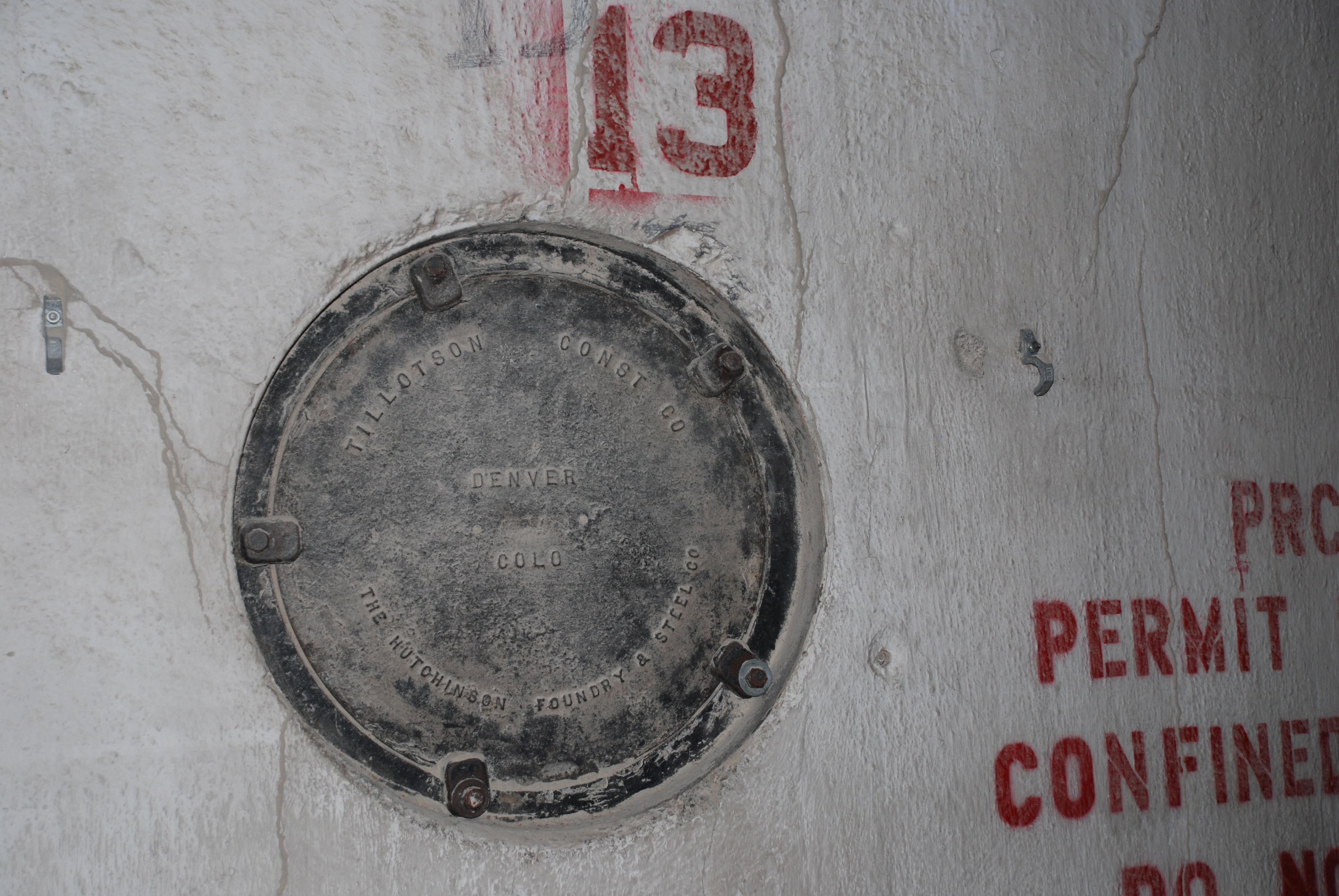
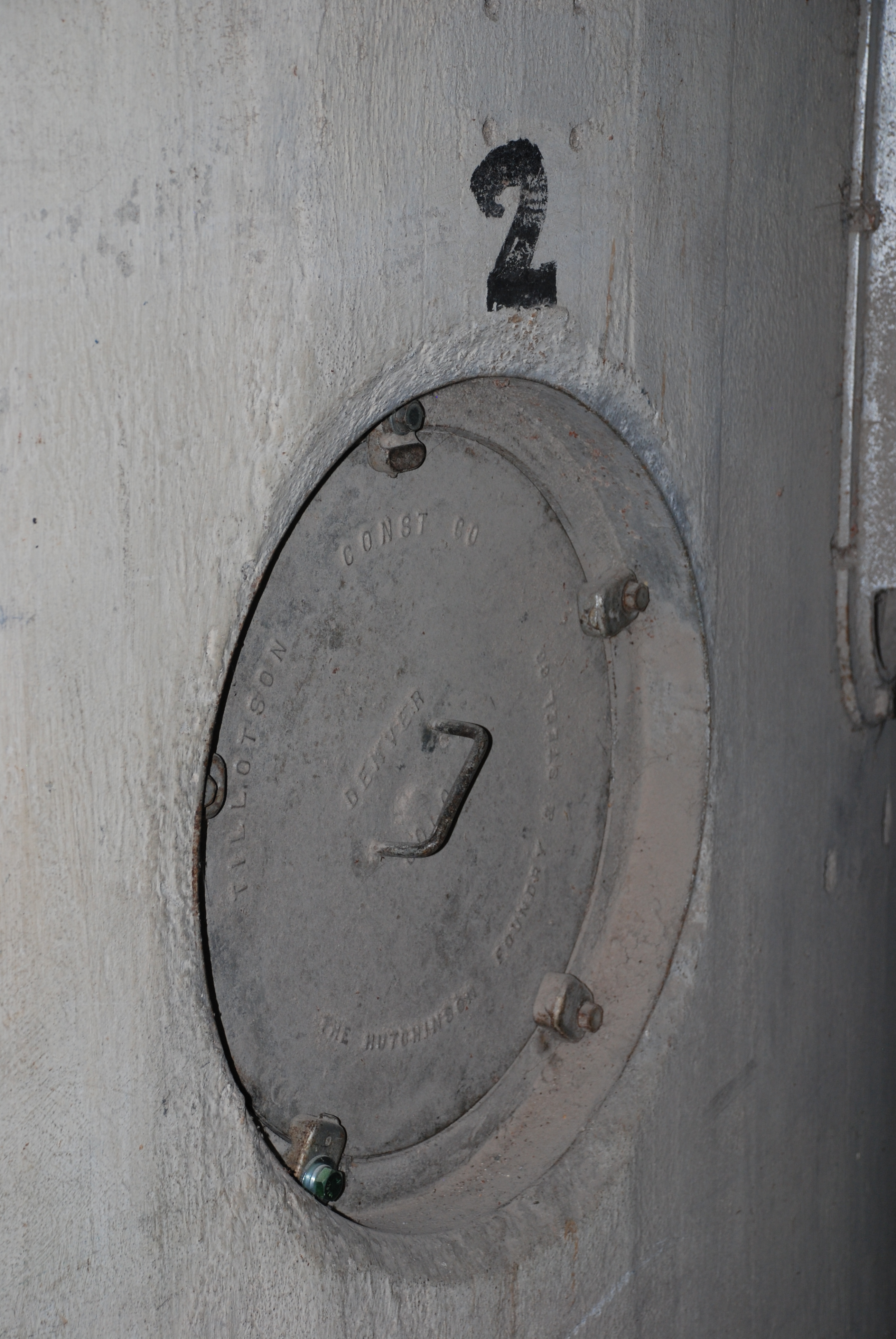
The manhole cover on the interior of the driveway identifies the builder

The manhole covers on the interior of the driveway identify the builder.

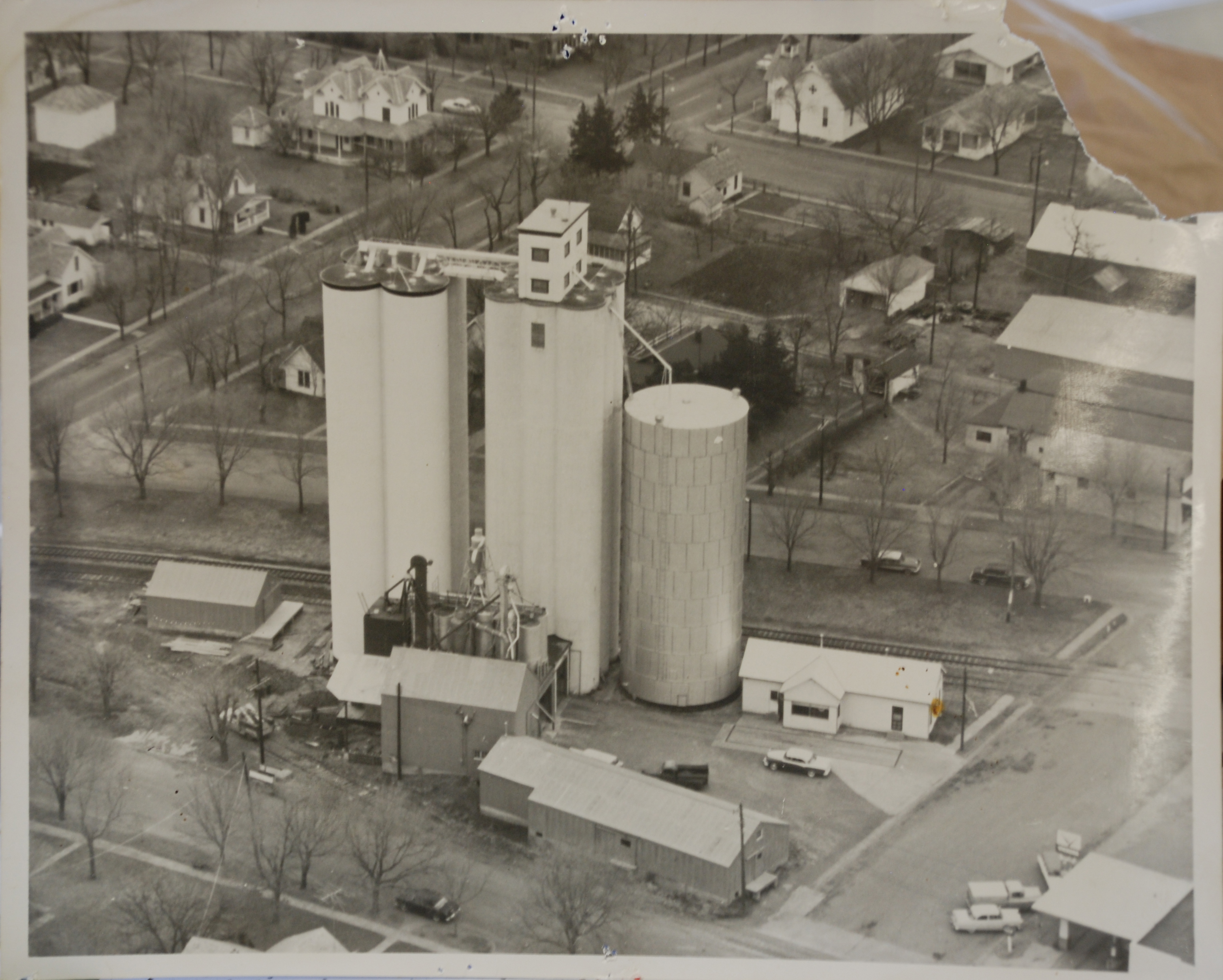
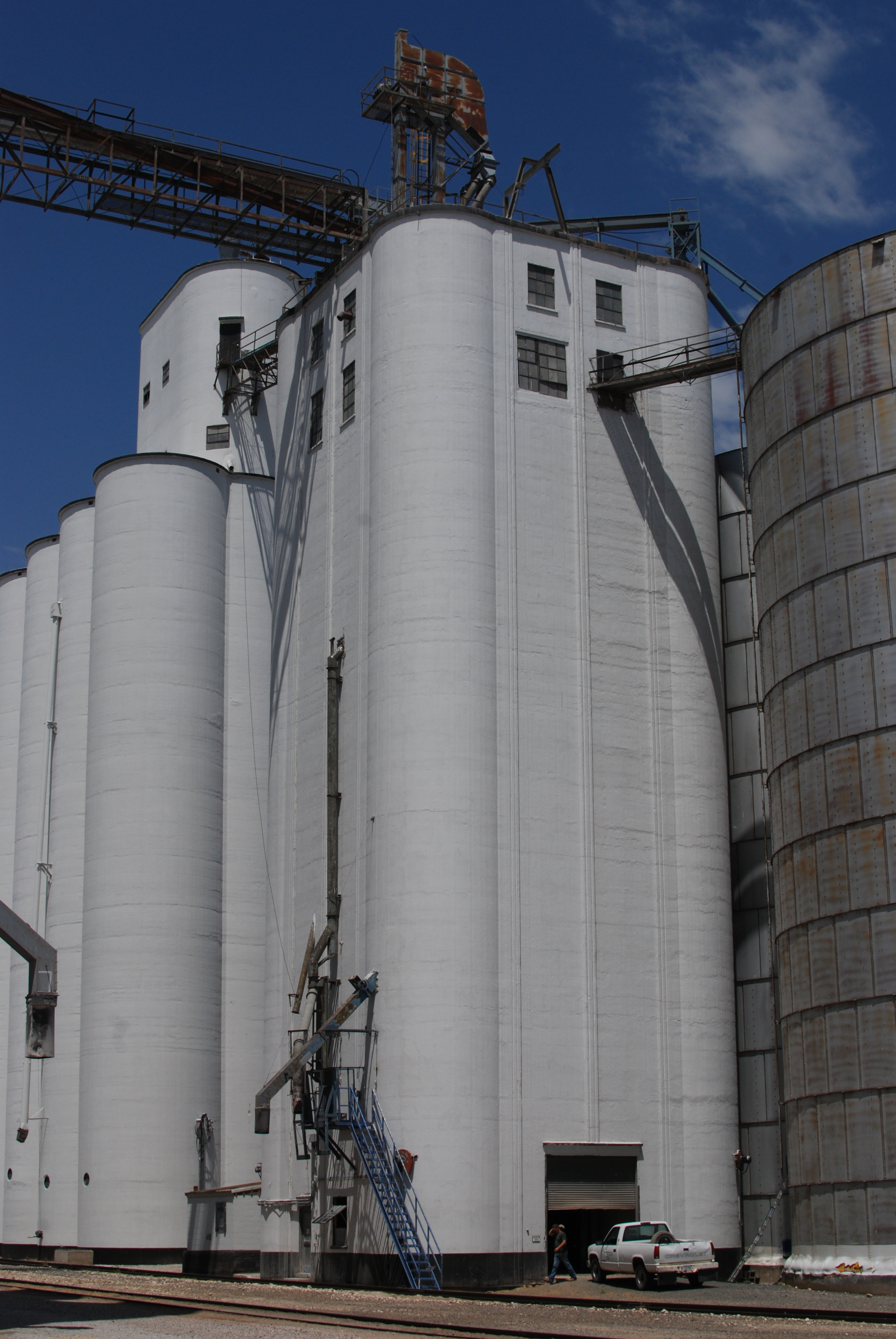
St. Francis Mercantile Equity Exchange was incorporated in 1913. As slip-formed concrete construction methods advanced, the equity exchange looked for a company to build their first concrete elevator. Once it was completed in 1946, their quarter-million-bushel elevator was the biggest and most modern in western Kansas. It more than doubled the storage capacity of its lesser neighbors. And lo and behold, it was built by J. H. Tillotson, Contractor, of Denver, with the construction supervised by my grandfather, William Osborn.

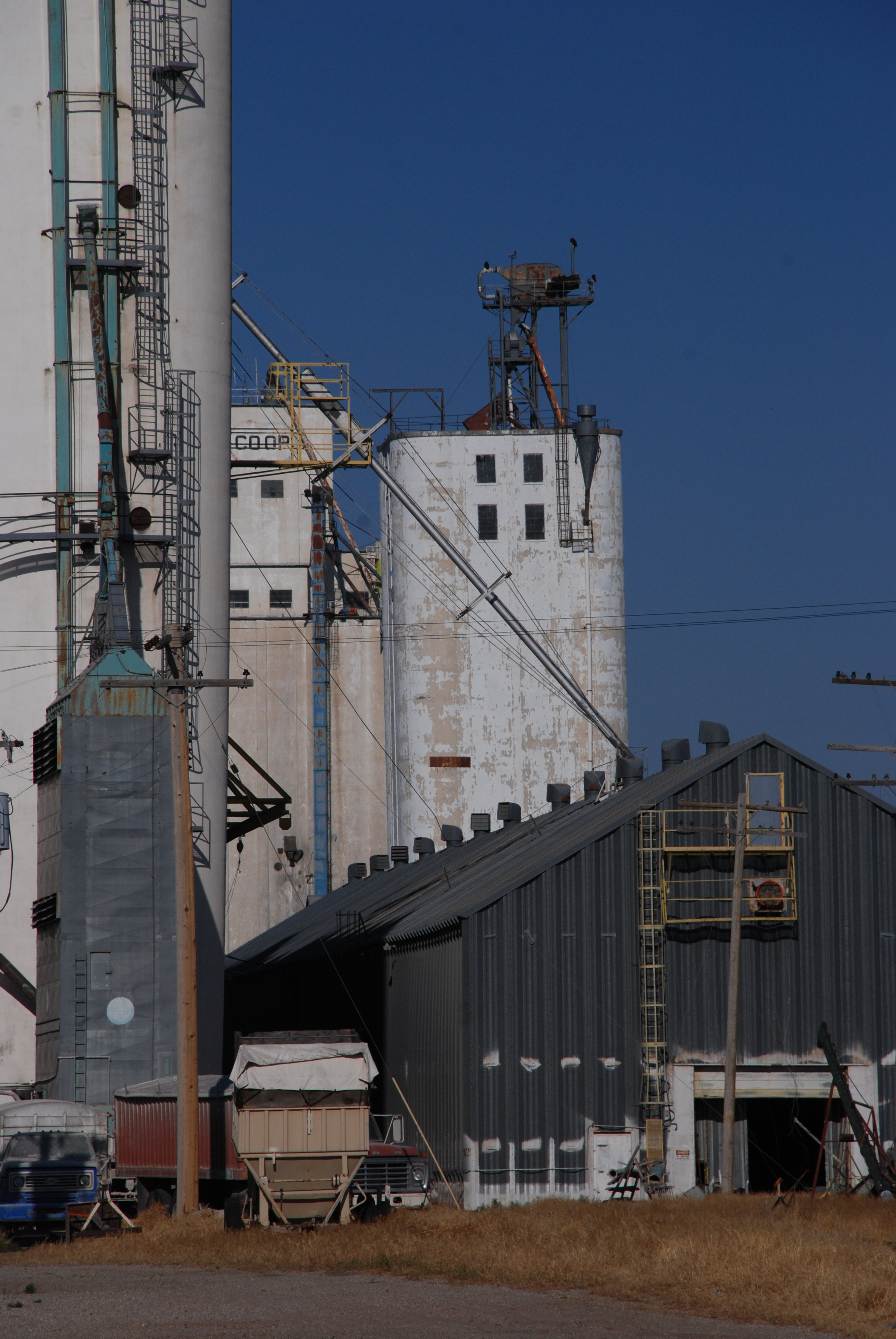
It was not the only grain storage on the site for long. Soon, the capacity proved to be too little for the 1940s and 1950s boom years, so Chalmers and Borton came along and built the first annex.

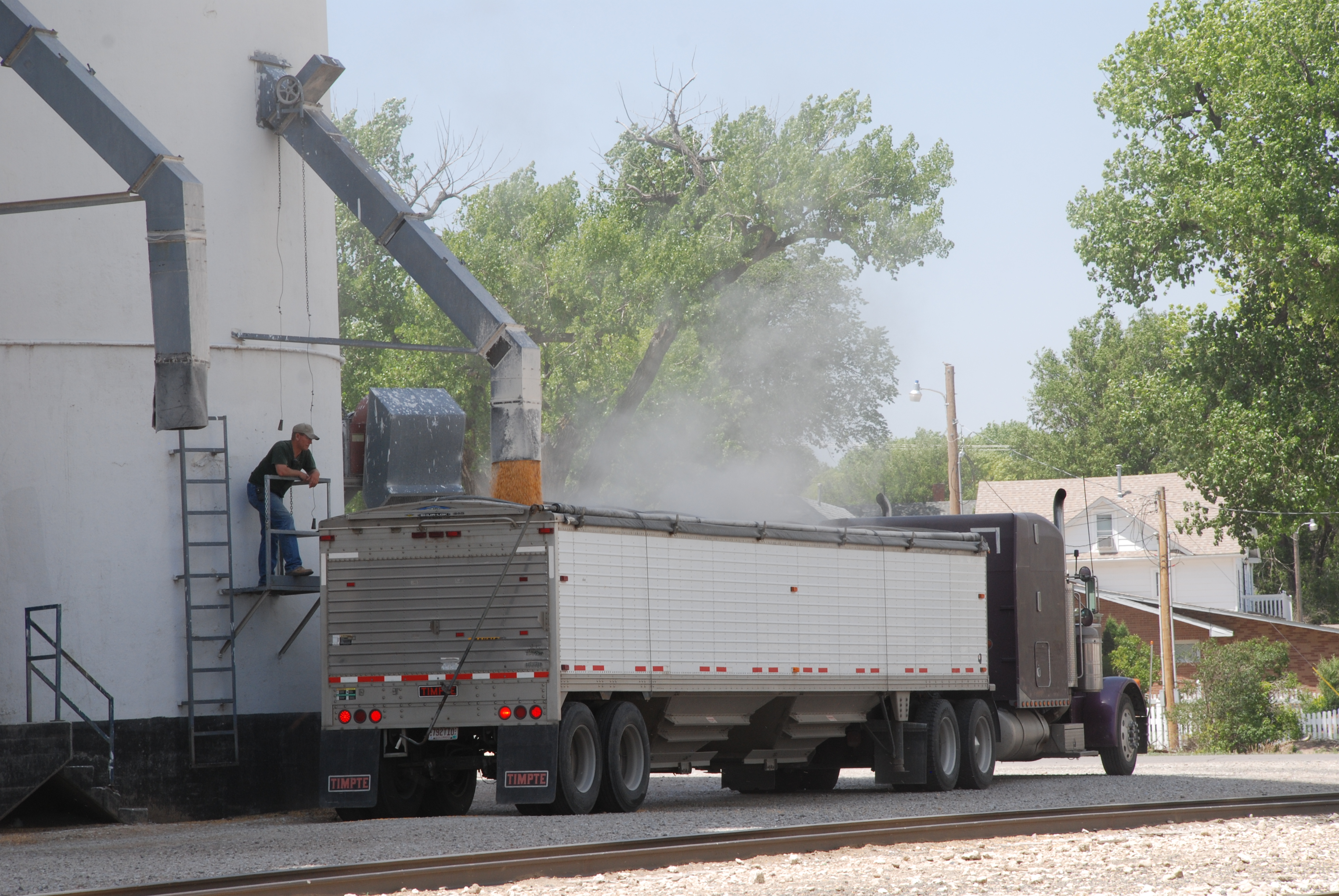
Later, the site incorporated a flat storage facility which only holds wheat, since its air system does not ventilate adequately for moist corn. A second three-bin annex was built in 2000, using the same old technique of lifting concrete up to a dump cart that ran on a track around the perimeter of the rising elevator. It was completed just before the onset of a seven-year drought, and it took a few good harvest years to recoup the investment, since the annual wheat yield was too low at first to fill the bins.

Wall Street would not be the only beneficiary of perfect prognostication. The present snowfall was gladly welcomed in St. Francis.

The St. Francis Mercantile Equity Exchange will be celebrating its 100th anniversary this year. It has been and is the cornerstone of the town, and the center of business and economic life. Stay tuned for a little more of the history, and wonderful images, of this fine elevator, which Shirley kindly shared.
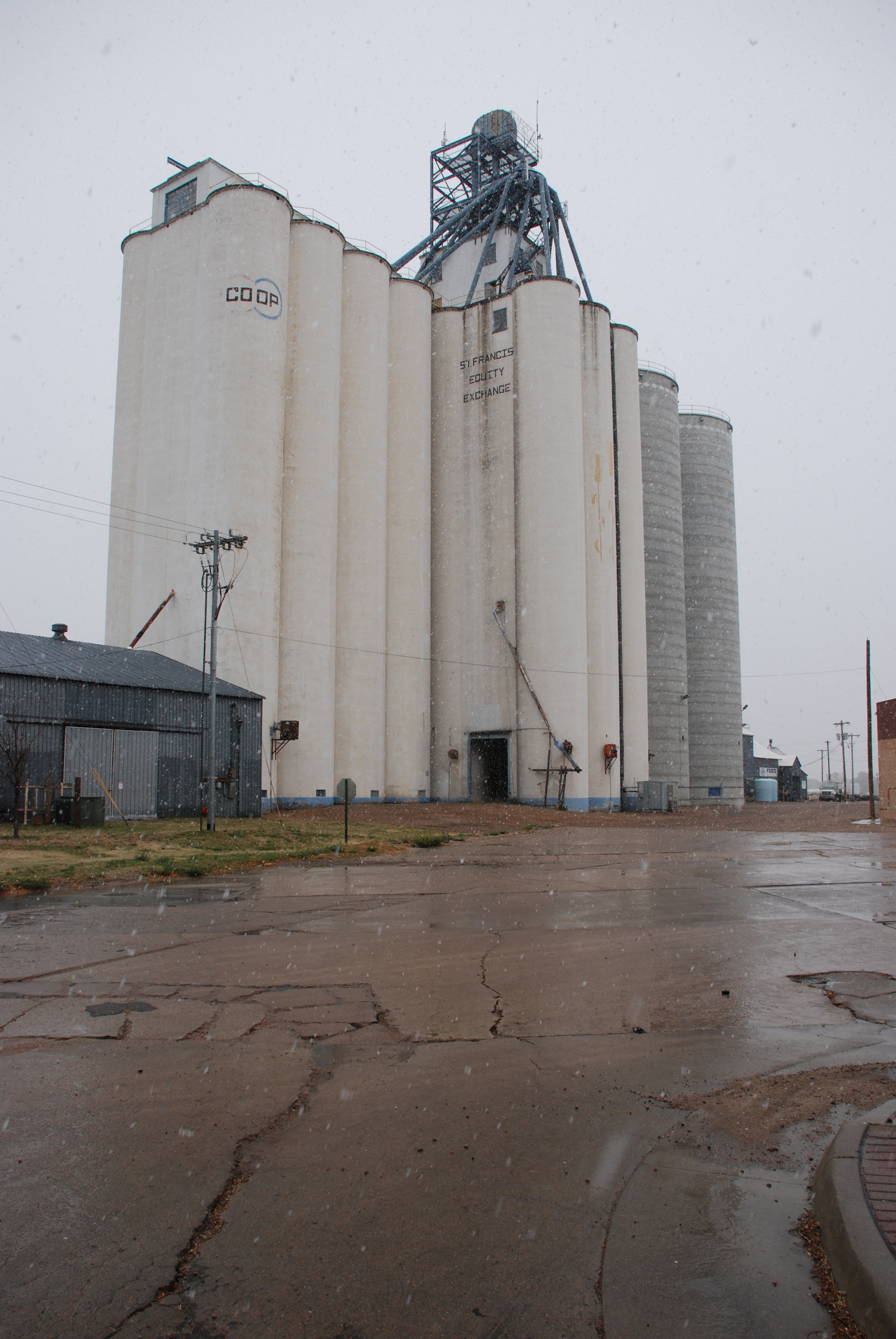
The Chalmers and Borton annex is in the foreground, and the new annexes are behind the main house.

The Chalmers and Borton annex is in the foreground, and the new annex bins are behind the main house. The flat storage shed is on the left.

Hunting for a J. H. Tillotson elevator in St. Francis, Kansas

Elevator photos012

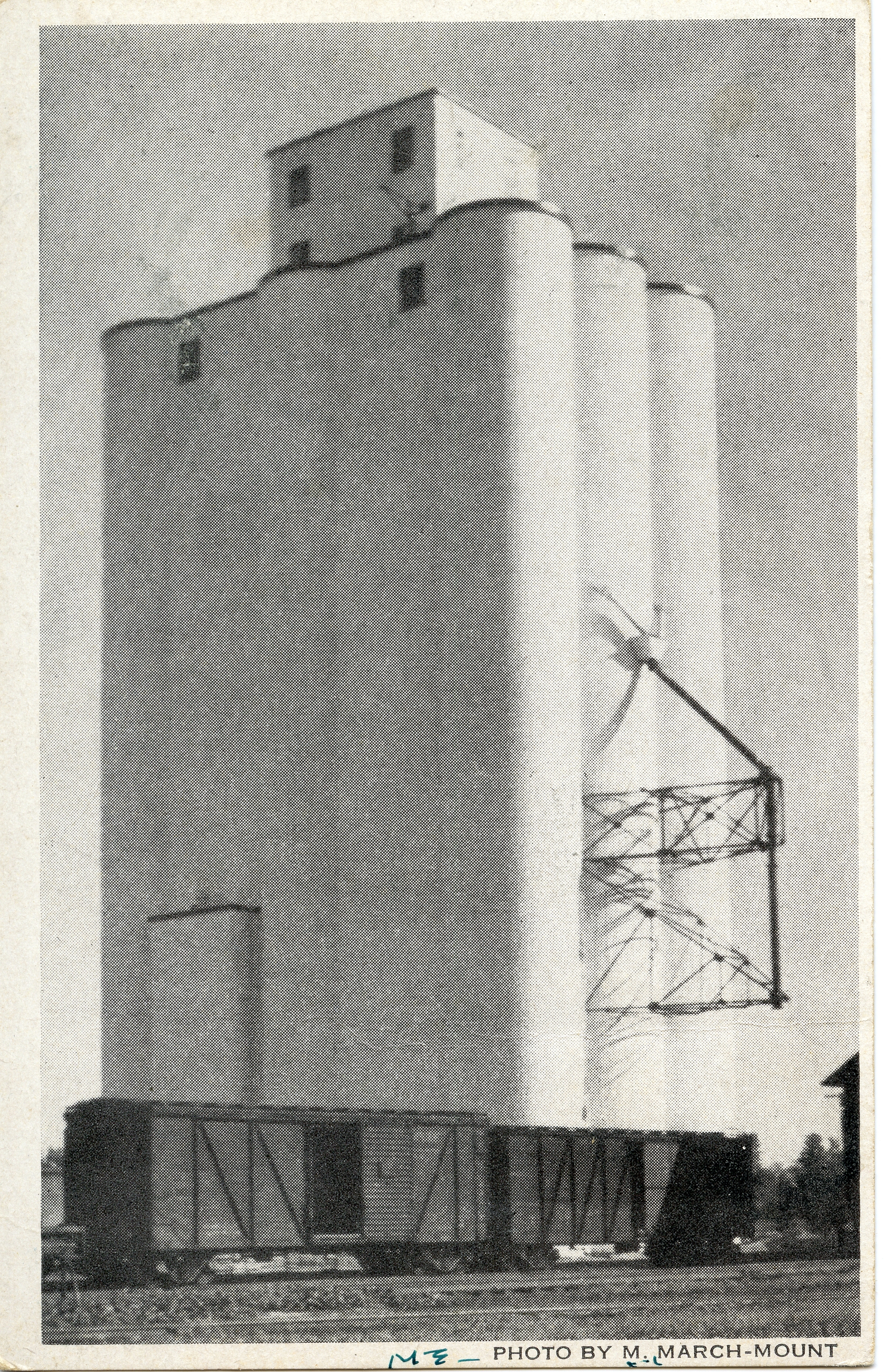
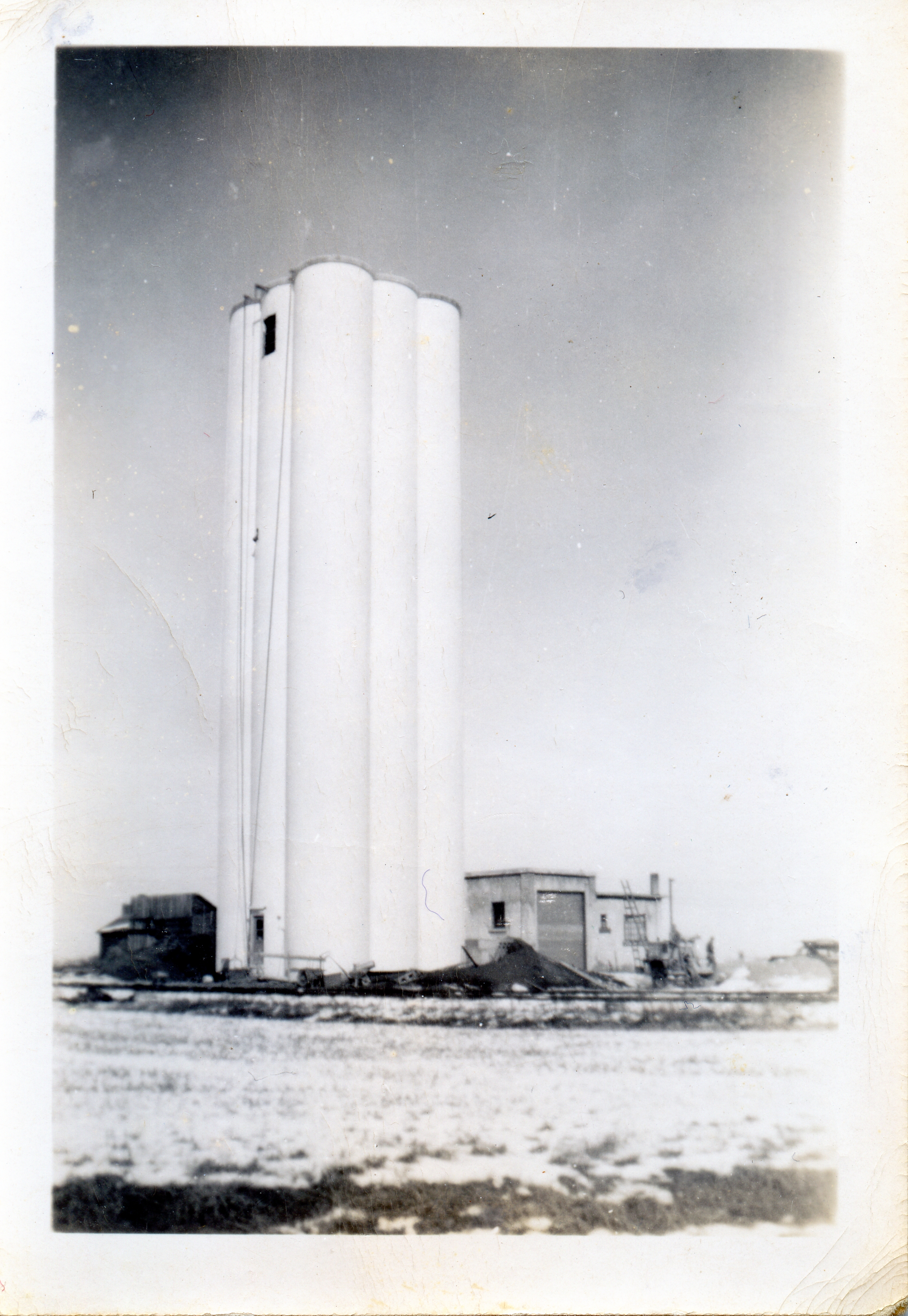
Postcard of early concrete elevator in St. Francis, Kan.

Story by Kristen Cart

Grandpa was pretty good at naming his elevators when he talked to the press. While building the McCook, Neb., elevator, William Osborn spoke about a number of his previous projects that were built while he worked for J.H. Tillotson, Contractor.

He named six elevators he built in Maywood, Wauneta, Daykin, Fairbury, and Lodgepole, Neb., and Traer, Kan.

McCook’s elevator, then under construction, was much larger than the rest, but he named one other elevator in the area that was of similar size, that one in St. Francis, Kan. He said he built that one, too.

The newspaper clipping and my dad’s recollections were all we had to go on when our family made the first trip to western Nebraska and Kansas to see grandpa’s elevators.

All of the elevators–save one–were easy to find (even Maywood, whose present incarnation is a rubble pile not far from the surviving elevators).

When we visited St. Francis, we stopped at one likely elevator complex, where my hopes were dashed when I saw the “Jarvis” name on the manhole covers. The other complex in town seemed far too big and looked very much like every other Chalmers and Borton project I had ever seen. Besides, it was getting dark and we had to put more miles behind us, since this elevator nonsense was just one of “Mom’s diversions” from the primary mission of going kayaking on the Niobrara River. So our first opportunity passed without finding grandpa’s elevator.

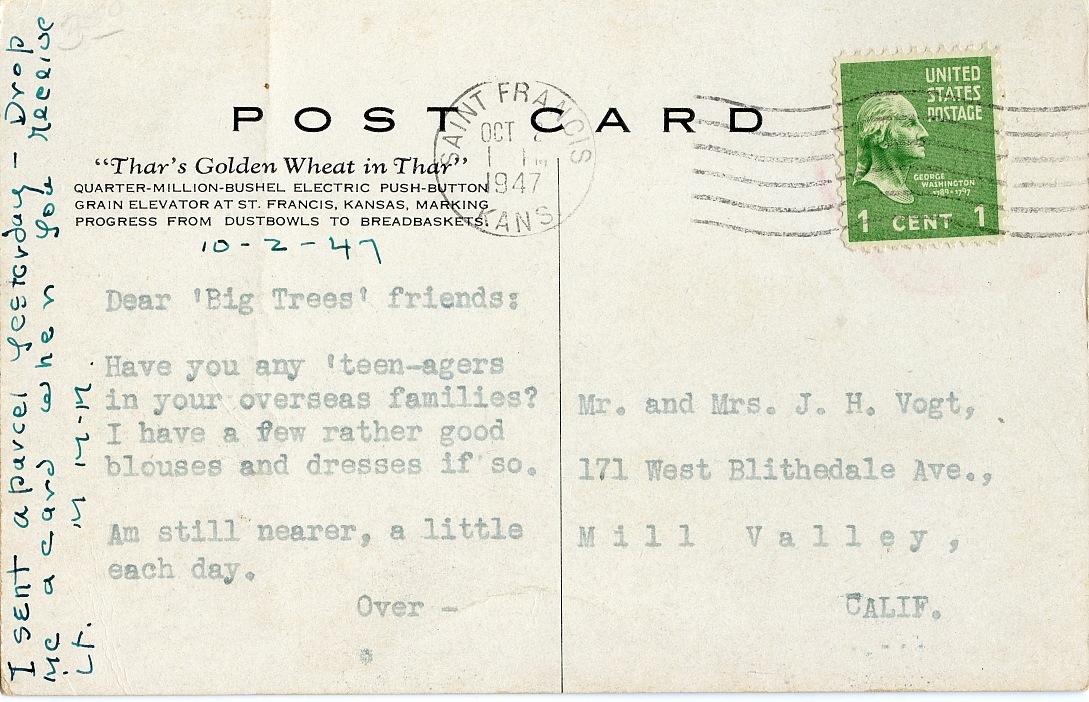
Dated 1947, the postcard highlights a major local landmark

Dated 1947, the postcard highlights a major local landmark

I scoured eBay for a while looking for images of Grandpa’s elevators, and I even bought an early postcard from St. Francis, and regarded it doubtfully when it arrived. What was it doing with a rectangular headhouse, if it was grandpa’s elevator? It was set aside on a growing pile of assorted elevator images.

The answer would have to wait for another visit and a close-up look at the elevator I had tossed off as a probable Chalmers and Borton edifice.

The second visit would reveal some surprises and challenge what I thought I knew about Grandpa’s elevators.

Stay tuned.

J. H. Tillotson’s project at Lodgepole, Neb., was the end of the line for Supt. Bill Morris

DSC_0380

The Lodgepole, Neb. elevator viewed through a rainy windshield on a blustery day.

Story and photo by Kristen Cart

It was the heyday of elevator construction, and J. H. Tillotson, Contractor, of Denver, was riding the crest of the building wave, when a new elevator was begun along Highway 30 (the Lincoln Highway), in the sand hill country of western Nebraska. Lodgepole was a sleepy town along the rail line that connected Sidney to the west, with Chappell and Big Springs to the east.

My grandfather, William Osborn, had been building for several years, and he accompanied Joe Tillotson to Denver when Joe made his break with the family business, Tillotson Construction of Omaha, and set out on his own. The new company had several projects under its belt, and several others ongoing in 1947, when Lodgepole’s elevator was started.

Bill Morris, an employee poached from the parent company, was superintendent for the job.

The dangers of the business were well known. But for the J. H. Tillotson company, fate was especially cruel, though the disasters that befell the builders were of a more mundane sort. In about March of 1947, Bill Morris was changing a tire on the side of Highway 30 near Lodgepole when a car struck him, and he was killed.

Of course the construction project went forth, and my grandfather played a role, since he had the experience to step in where Bill Morris left off.

It was not long afterward that Joe Tillotson met his maker in a car accident–only a matter of a few weeks. In those days safety in vehicles was an afterthought, and the Grim Reaper was guaranteed a regular harvest.

Joe’s death opened doors for my grandfather, since there were elevators to build and contracts to fulfill. By September of 1948, Bill Osborn had joined with Eugene Mayer, Joe’s brother-in-law, and together they formed the partnership of Mayer-Osborn Construction Company. My dad said Grandpa had to put up some money to opt into the business, and then he continued as before, building elevators as fast as they would go up.

The McCook, Neb., elevator marked their first joint effort.

Timeline for Tillotson Const., J.H. Tillotson, and Mayer-Osborn companies and jobs

Ronald Ahrens and Kristen Cart cofounded this blog. Gary Rich is a primary contributor. We have visited elevators around the United States and Canada.

Ronald’s maternal grandfather was Reginald Oscar “Mike” Tillotson.

Kristen’s paternal grandfather was William Arthur Osborn.

Reginald O. Tillotson

R. O. Tillotson

Reginald’s company was Tillotson Construction Co., of Omaha. The company had been building and repairing wooden elevators since the 1920s, when it was led by Reginald’s father Charles H. Tillotson. Before his death, experiments were made with slip-form concrete construction techniques.

1938: Charles dies, and the company passes to his sons Reginald and Joseph H. Tillotson and daughter Mary V. Tillotson. They begin to perfect slip-forming and refine their design strategy, which includes a rounded headhouse.

1945: Tillotson Construction builds a concrete elevator in Giddings, Tex. William Osborn works on this project. He is probably employed by the company by late in ’44. Tillotson Construction wins the contract to build in Elkhart, Kan., and starts construction.

1946: The 225,000-bushel elevator in Elkhart is completed. “Shortly after the war, my Dad and Joe decided they couldn’t see eye to eye, so they split,” writes Charles J. Tillotson in “The Tillotson Construction Story” on this blog. Joe forms J.H. Tillotson, Contractor in Denver. William Osborn works for Joe Tillotson.

William A. Osborn in 1965

William A. Osborn in 1965

1947: Tillotson Construction builds  the Vinton Street elevator in Omaha. Joe Tillotson dies in a car accident in March. J.H. Tillotson, Contractor builds at Daykin and Fairbury, Neb., and Hanover and Linn, Kan., with William Osborn supervising the projects. Maxine Carter leaves Tillotson Construction on Oct. 7 to wed Russell L. Bentley.

1948: Formed in September from the residue of J.H. Tillotson, Contractor, the Mayer-Osborn Company builds its first elevator at McCook, Neb. Joe Tillotson’s wife Sylvia was a Mayer, and her brother Eugene Mayer is one of the partners. William Osborn is the other. Meanwhile, Reginald begins to use a light airplane for business travel in the postwar years. Reginald’s nephew John Hassman joins Tillotson Construction in September; among many other duties, he pilots the company plane to jobs in Nebraska, Kansas, and Oklahoma. Tillotson’s projects that year are in Paullina, Iowa, and Montevideo, Minn.

1949: John Hassman’s father Ralph, Reginald’s cousin, joins Tillotson Construction in sales and stays through 1952.

1950: Construction begins in November on the Tillotson house, which is built of concrete. It still stands north of Omaha. Tillotson employee Jess Weiser weds Lavonne Wiemers on Dec. 22.

1951: Drafted into the Air Force, John Hassman leaves Tillotson Construction in January.

Related articles

An inside look at the J. H. Tillotson elevator at Hanover, Kansas

The J. H. Tillotson straight-up elevator in Hanover, Kan. just after a rain

The J. H. Tillotson straight-up elevator in Hanover, Kan. just after a rain. 

Story and photos by Kristen Cart

One of the loveliest elevators J. H. Tillotson, Contractor ever built is still in use at Hanover, Kansas. Last October, during a visit to this small Washington County town just seven miles south of the Nebraska border, I photographed the elevator under moody skies and marveled at its clean, graceful lines. Then it was time to get to the business of finding out about it.

DSC_0681

Ryan Riekenberg takes a moment to show me around the elevator.

Fortunately, Ryan Rieckenberg, a twenty-year employee of the Farmers Cooperative Association, was on hand to show me inside. He had previously worked for the grain department and currently worked as a crop sprayer. He said before the Hanover location joined the Worchester-based Farmers Cooperative, it operated its own association called the Farmers Union of Hanover. He said the elevator was currently used for milo.

The manhole cover identified the builder

Manhole cover

He pulled up in his truck, fished out his keys, and took me into the elevator to look at its interior, including the manhole covers that positively identified the elevator as a J. H. Tillotson project.

As he unlocked the door, Ryan supplied some historical details. The elevator had been built beside an old wooden elevator, which was used as a feed mill until it was demolished about eight years ago. We entered the doorway a couple of steps up from the gravel drive where the old wooden edifice used to stand.

DSC_0673

The elevator leg

Once inside, we could see the leg in the center of the elevator. A grate covered the pit, and Ryan opened the grate to display the sloped bottom where the grain would funnel toward the base of the leg, to be scooped up and carried to the top of the elevator for distribution to the bins. The leg extended all the way to the bottom of the pit. A ladder went into the pit from another opening, providing access for cleaning and maintenance.

Nearby, a cage-enclosed man-lift gave access to the integral head-house at the top of the elevator. The cage was almost certainly a later modification, since the old man lifts didn’t have them.

DSC_0670

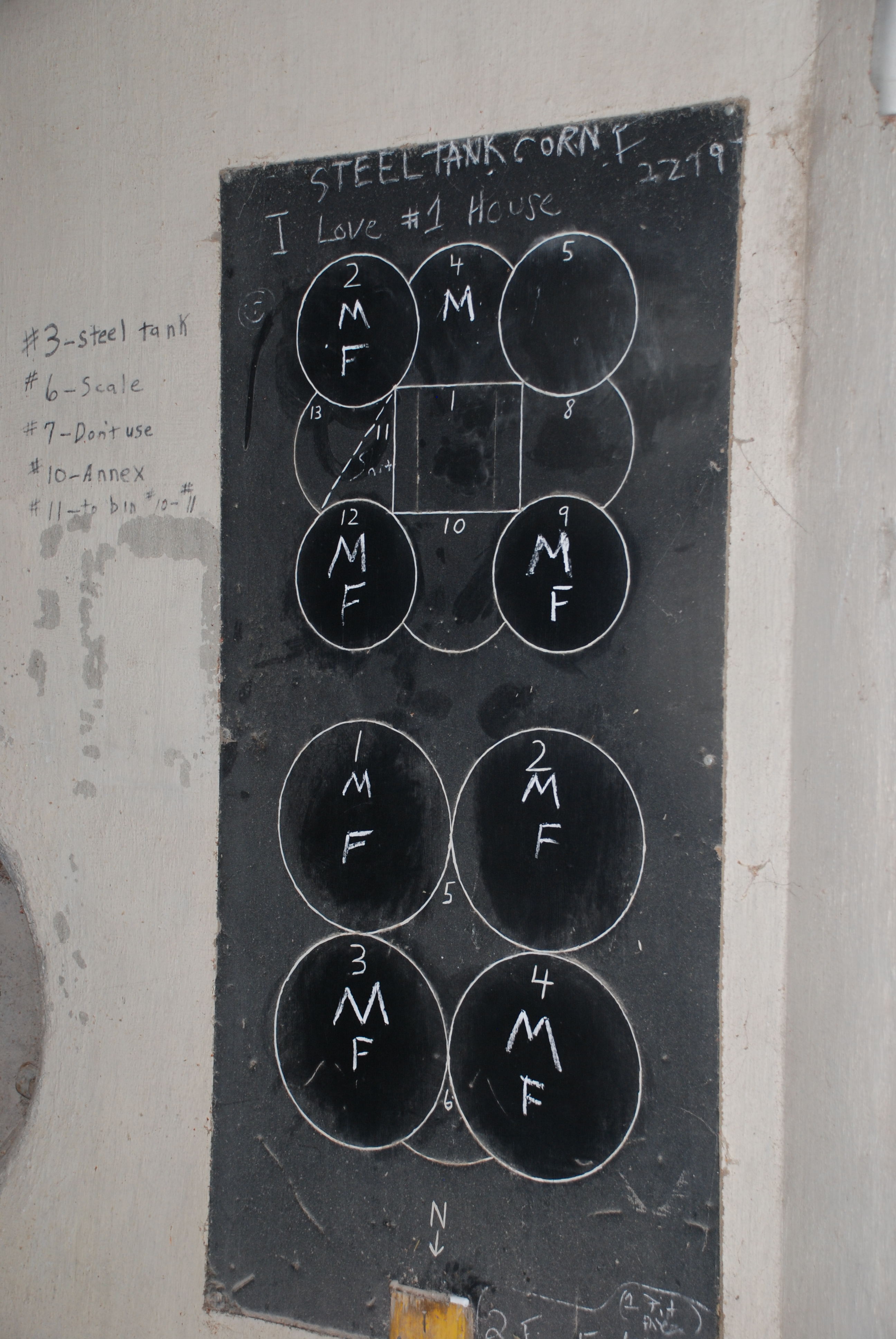
The distribution diagram

Prominently displayed on one of the bins was a diagram of the elevator and its annex. Here the storage assignments for each of the bins were noted, including the neighboring steel bin, which was served by the same integral head-house with a chute from the top of the elevator. Presumably, “M” stood for milo, and a note indicated that the steel bin held corn. Perhaps “F’ indicated feed, but that is just a guess.

I’m not sure why someone wrote “I love #1 house,” but if they meant this lovely elevator that my grandfather, William Osborn, built for Joe Tillotson’s company in 1947, I must share the sentiment. It was a dandy, and it appeared to have a long, useful life ahead of it.

DSC_0689

A view from the west side where the feed mill used to stand. 

The J. H. Tillotson elevator at Linn, Kansas, stands unused, idled by regulatory changes

The elevator built by J. H. Tillotson is flanked by later additions.

This handsome elevator built by J. H. Tillotson is flanked by later additions.

Story and photos by Kristen Cart

While the concrete elevator at Fairbury, Neb., was being built, rising by nine feet every twenty-hour workday, the elevators no more than thirty miles away at Hanover and Linn, Kan., were also nearing completion, according to a newspaper clipping found in my grandfather’s papers. J.H. Tillotson, Contractor, based in Denver, had all three projects going for the 1947 harvest.

Though we knew my grandfather, William Osborn, worked as superintendent at Fairbury, my dad didn’t remember his father working on the two Kansas elevators, so in October  2012, I took a swing through Kansas to investigate them.

The Chalmers and Borton elevator at Linn is still in use.

The Chalmers & Borton elevator at Linn is still in use.

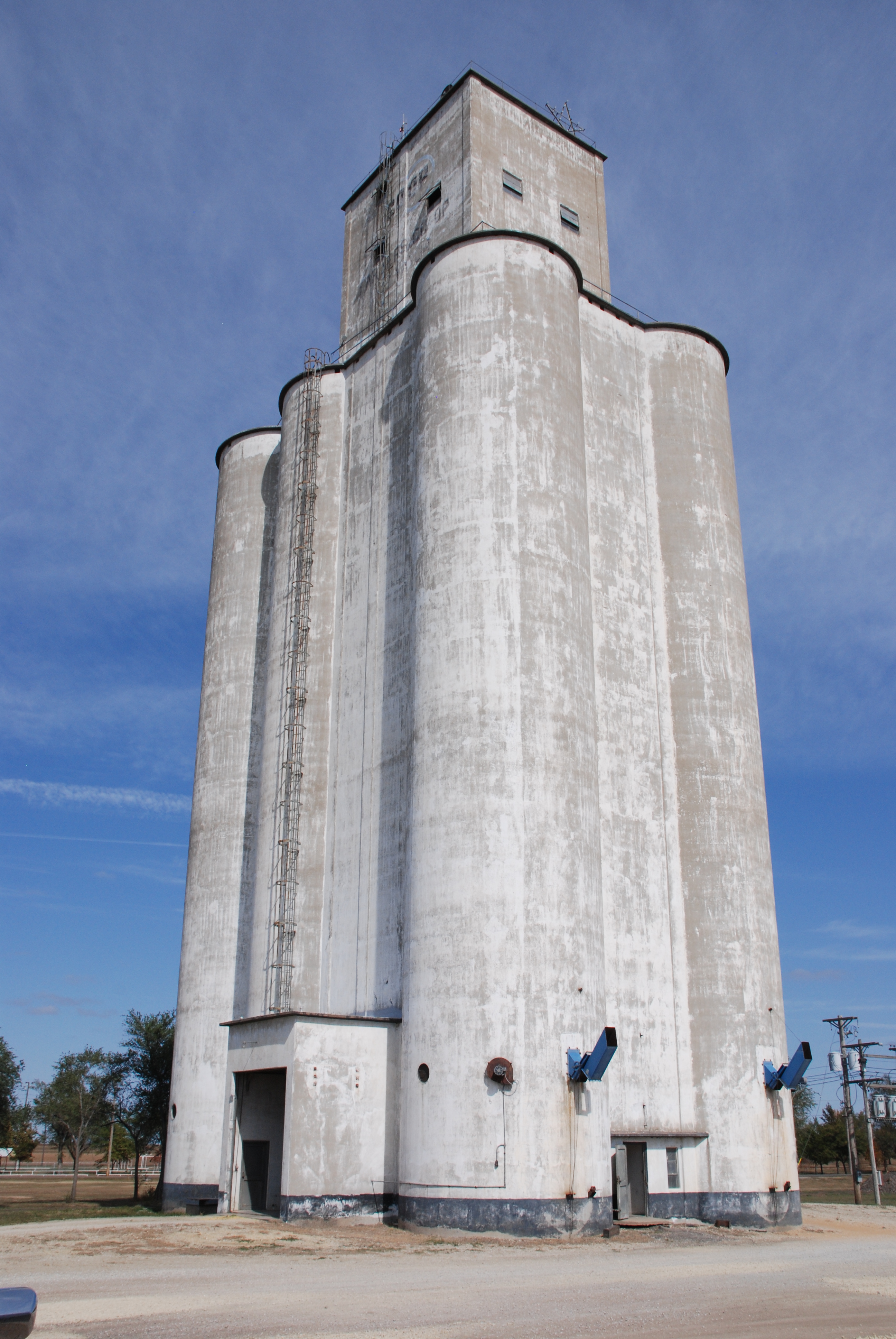
The first elevator that came into view in Linn was a 1950s-vintage Chalmers & Borton structure of about 250,000-bushel capacity, judging from its appearance. Across the town square, a couple blocks away along an extinct railroad bed, was another elevator that did not fit my notion of any J. H. Tillotson design, since it sported a rectangular head house. I peered at it from all angles, straining to see any lettering on the manhole cover about halfway up, without much success. I thought perhaps the old J. H. Tillotson elevator hadn’t survived and that I was too late, as had happened at Maywood, Neb.

Finally, I drove over to the co-op office to learn more. Jeff Wiese, the location manager for the York-based United Farmers Cooperative, kindly agreed to answer questions about the old elevator. Jeff said he had worked for the local elevator cooperative since 1994, first in petroleum, then as an implement dealer, and finally as manager in 2000. In 2005, UFC took over from the Farmers Cooperative Equity Association, which, in turn, was formed when the Linn Cooperative Exchange joined with Greenleaf.

Jeff said that when the old elevator was first built, farmers thought they would never fill it, but new capacity was needed almost immediately. To my surprise, he said the manhole covers on the interior of the elevator were embossed with “J. H. Tillotson, Denver, Colo.,” though I was not able to go inside and see them. The old elevator was still there, graceful and sturdy, but locked up and no longer used.

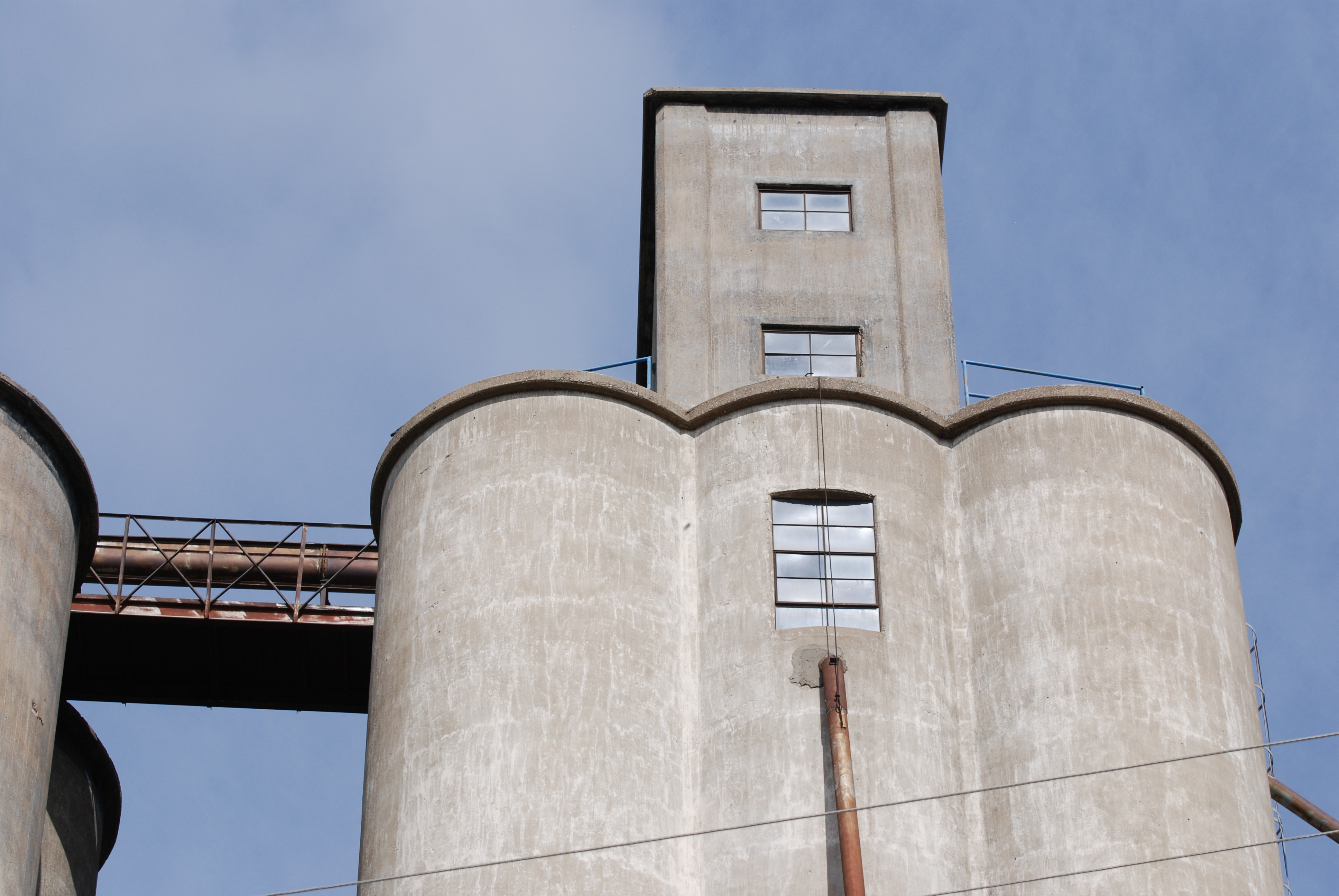
The unusual square head house incorporates stylish details.

The unusual square headhouse incorporates stylish details.

The Tillotson elevator fell victim to economic realities after the Occupational Safety and Health Administration (OSHA) ordered safety upgrades under new federal rules. The agency had taken a keen interest in elevator operations since the 1998 DeBruce elevator explosion in Wichita, Kan., and many safety regulations stemmed from the analysis of that accident. Dust management and cleanliness became paramount. The Linn elevator’s older, lower-capacity design meant it could no longer earn its keep after the cost of improvements, so it retired after the 2011 growing season, now finally empty of its last harvest of wheat.

This type of elevator also commonly required a safety upgrade for its man lift. Everywhere the old elevators are still operating, new OSHA-mandated safety cages enclose the man lifts, ostensibly to prevent certain types of injuries or death.

It is fair to say that the old Linn elevator is endangered, and will be torn down as soon as it is convenient.

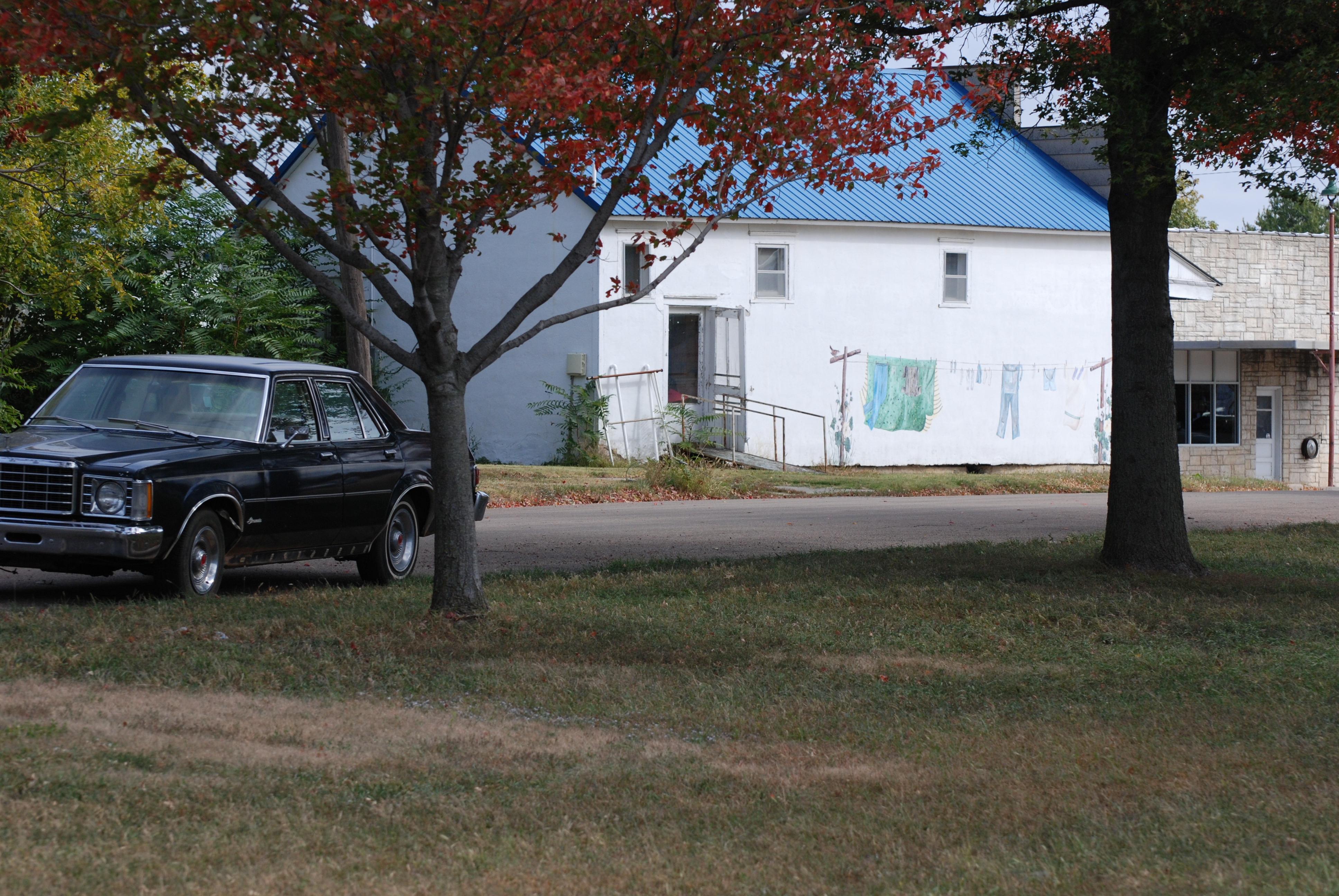
A nearby house with painted mural.

It seems a shame that another Kansas landmark, nestled and quite at home amid tidy houses and bustling businesses, should soon disappear. Beside it is a home painted with a mural depicting gaily flapping laundry on a clothesline, and across the street stands a grocery. A neatly mowed park occupies the old railroad right-of-way.

The elevator has been there as long as most people can remember. Luckily, I was able to pay my respects, and tip my hat to my grandfather’s stately work of long ago, before it passes into memory.

DSC_0884

An old aerial view of the Linn, Kan., elevator after the annexes were added. Note the old vehicles in the photo.

Photo tour reveals the Goodland, Kan., elevator’s symmetries and history

Story and photos by Kristen Cart

My dad, Jerry Osborn, always knew Grandpa built this elevator, and I remember pictures of it from long ago. It still rises gracefully above the Kansas plain, tucked in among its neighboring elevators, listing slightly in its old age. It has always held a place of pride since its construction in the town of Goodland, Kan.

Contributor Gary Rich discovered, when he visited the site, that this elevator, built by J. H. Tillotson, Contractor, is now used for sunflower seed. When I saw it, it was all buttoned up, presumably awaiting its summer crop. The slight tilt is obvious from some angles, but the elevator appears sound.

William Osborn photo of the Goodland, Kan. elevator, found among his papers.

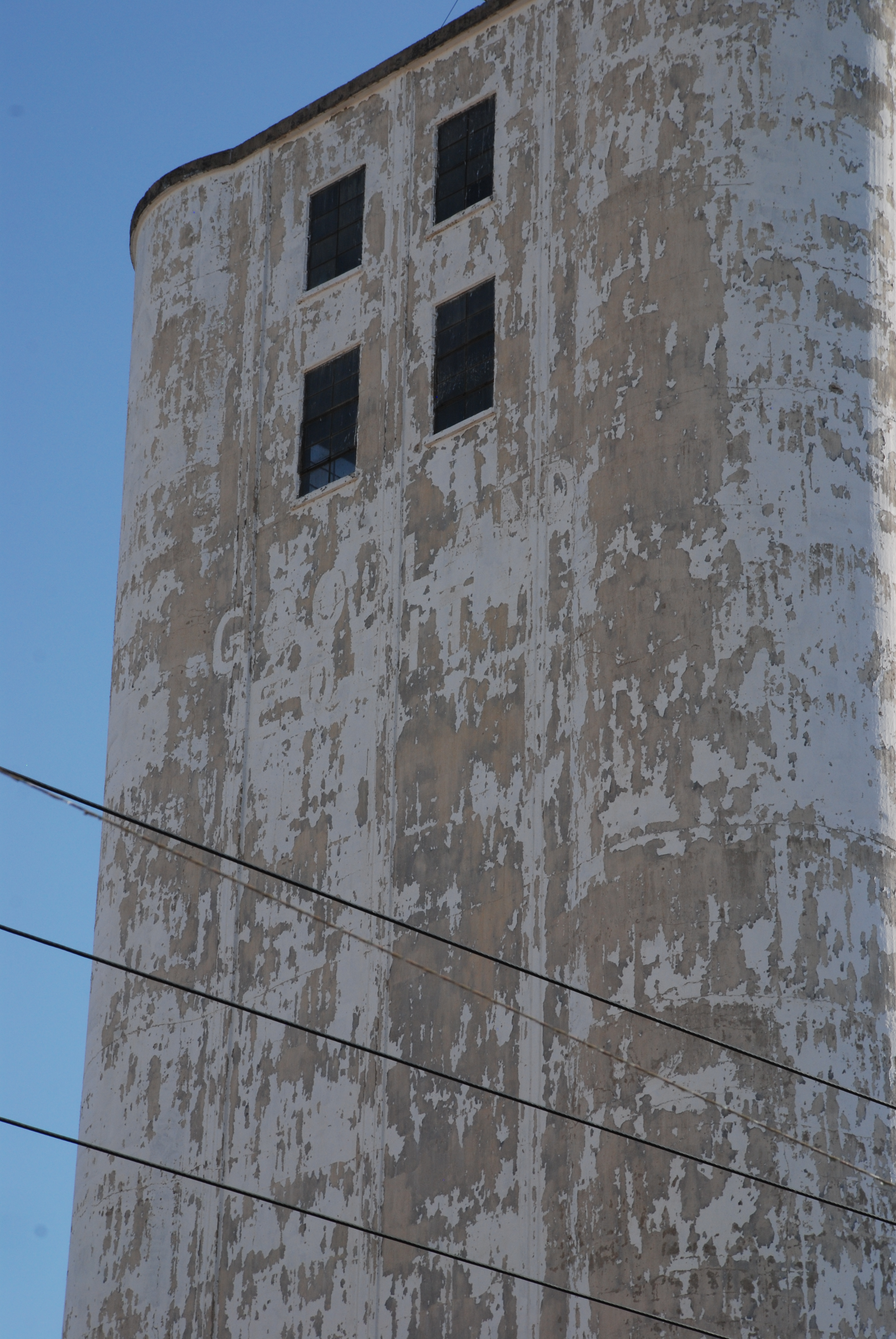
The words “Goodland Equity” can be faintly discerned under the white paint.

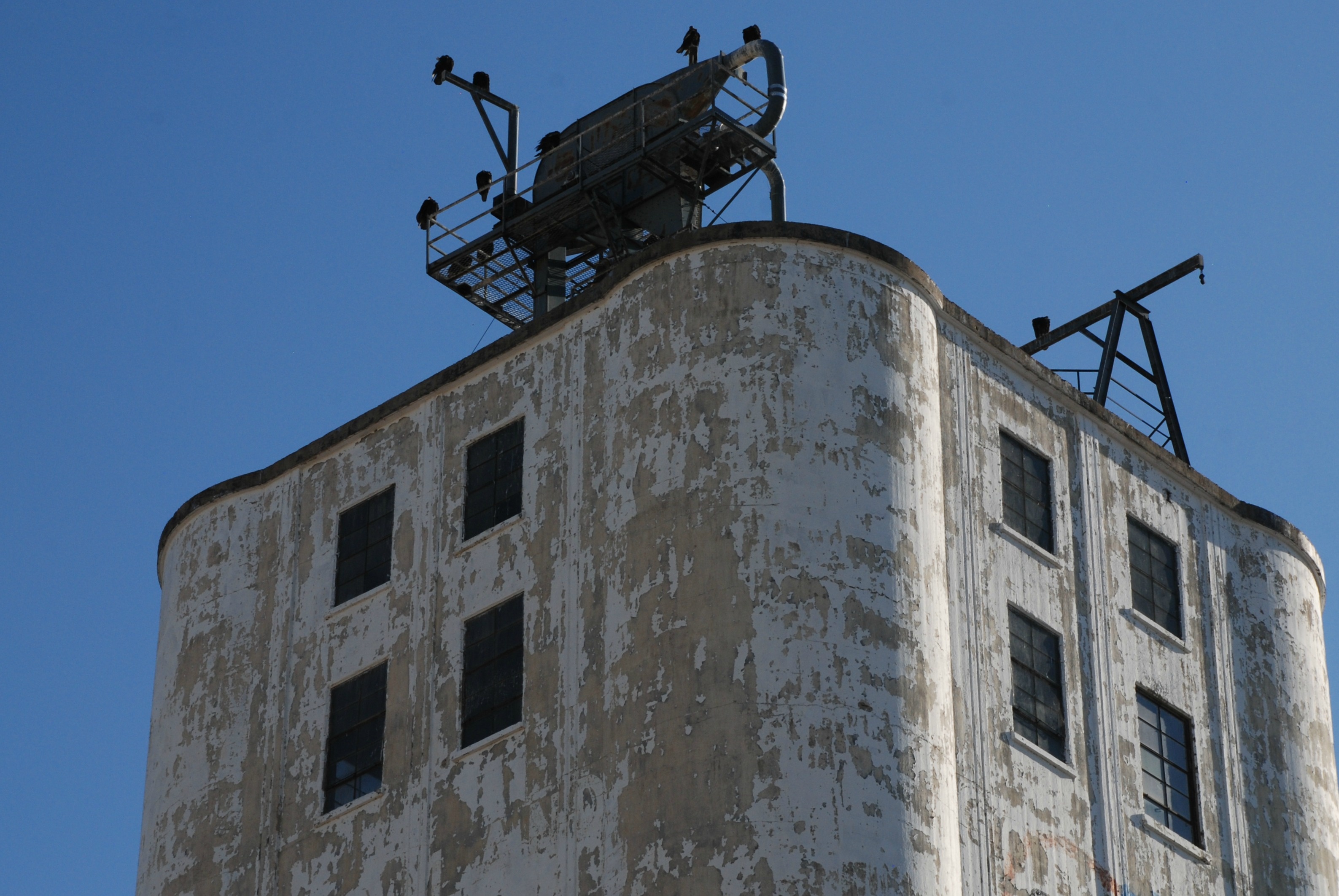
You can still see, faintly outlined in white letters, the name Goodland Equity, long since painted over. At one time  the elevator sported a neon sign proclaiming “Goodland Equity” to the night sky. That sign has disappeared and now vultures adorn the top of the leg in a lofty roost.

This beautiful elevator will continue to attract photographers as long as it stands. Aside from building useful, well-engineered, long-lasting structures, my grandpa, Bill Osborn, built beauty into the flat Kansas landscape.

For that, I am grateful.

A convenient roost for vultures.

Mid Kansas and Farmers Co-op employees enjoy their jobs

The Mid Kansas Cooperative elevator at Walton, Kan., produced a new acquaintance and the offer to return.

Story and photos by Kristen Cart

An elevator trip sometimes begs for a detour. While driving along the secondary roads that follow the rail lines connecting our grandfathers’ elevators, sometimes I see an intriguing elevator that doesn’t quite look like a Tillotson or Mayer-Osborn structure, but needs to be investigated anyway. Curiosity always wins the day.

Quad-States Construction’s elevator at Waverly, Neb.

Both Waverly, Neb., and Walton, Kan., have elevators unlike those our grandfathers built. I met with employees at both elevators and came away impressed. The people working at these co-ops come from the countryside, where generations of my family farmed, so their stories resonate with a deep familiarity.

Waverly, Neb., has two elevator complexes. The first includes an elevator built by Tillotson Construction of Omaha, Neb., in their trademark style with a curved headhouse. A little further north is an elevator with a partially rounded headhouse which caught my eye. It seemed an oddity, so my mother and I stopped to visit.

Mike Aufenkamp of Farmers Cooperative Company

Mike Aufenkamp greeted us at the fence as I peered over the gate with my camera. He said the Farmers Cooperative elevator manager was not there, but he was eager to tell us what he knew about the construction of the elevator.

No manhole covers on the outside of the elevator identified the builder, but a single steel plate covering the entry into the pit was embossed “Quad States Const. 1971, Des Moines, IA.” When Farmers Cooperative Company bought the elevator, Mike said they found a pile of discarded rebar in the field behind the elevator. Uh-oh. That could not be good. He said the cooperative had since reinforced the driveway with steel I-beams to prevent problems.

Mike wondered what sparked our interest in elevators, and I told him about my grandfather, William Osborn, and our interest in genealogy that got the whole elevator project going. He laughed and said he’d researched the Aufenkamp family once and found an old cousin in Alaska. Their kinship hadn’t been firmly established yet when the old man died and was flown back to Nebraska for burial, just down the road from Mike’s folks.

“I guess he was my cousin,” Mike said. “There aren’t many Aufenkamps around here.”

An elevator enthusiast and history buff, he directed us to a working wooden elevator in Cook, Neb. He said the Cook elevator was one of the few wooden elevators that kept up its certification. He also mentioned an intriguing set of elevator ledgers, dating from the 1940s, located at Pleasant Prairie, Neb.

Mike exemplifies the kind of sharp, hard working people who work for the co-op. He also likes his job.

Loading a farm truck with grain at Walton, Kan.

An initial visit and the offer to return 

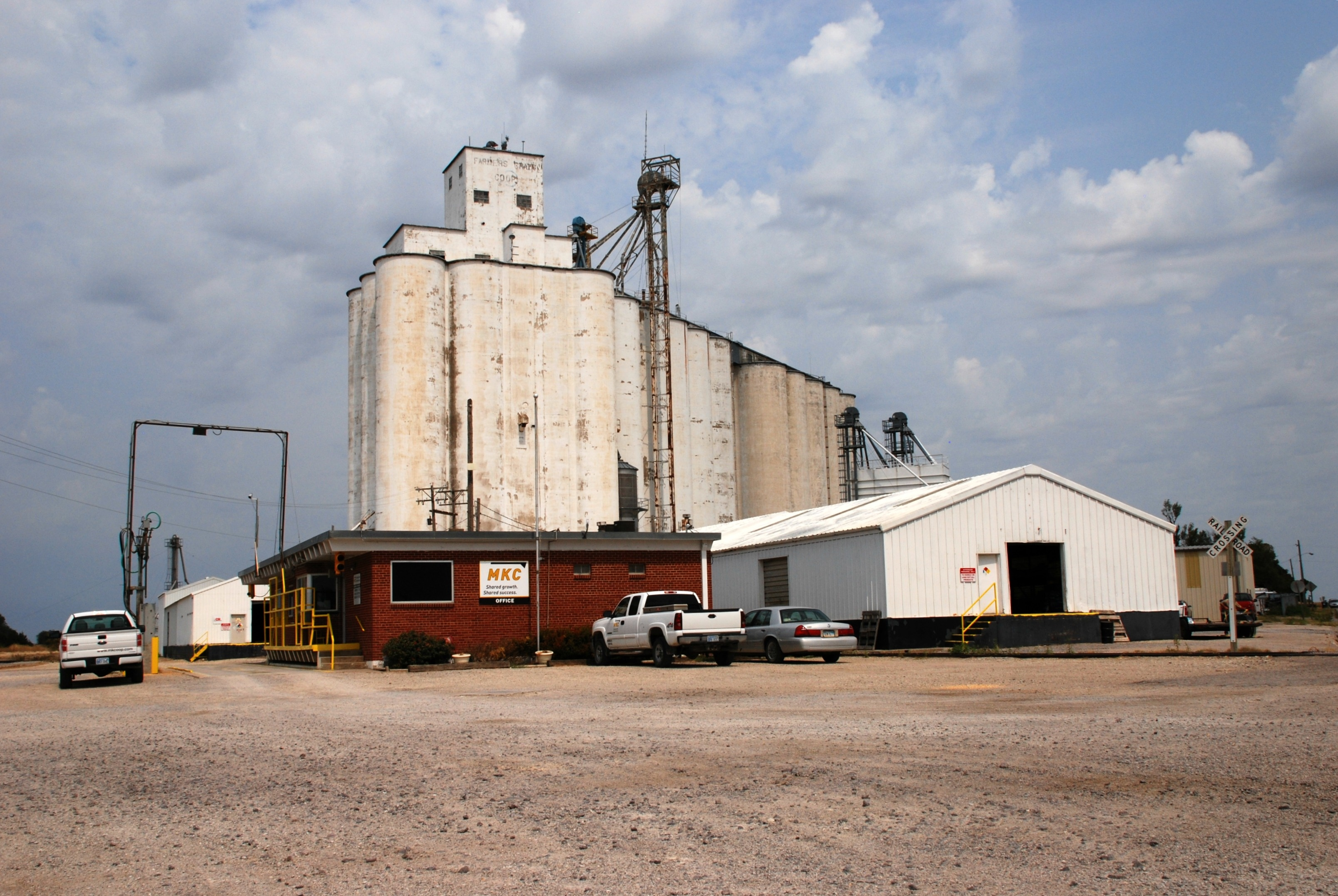
On another trip I had the pleasure of meeting Jeff Snyder, the location manager at Walton, Kan., for Mid Kansas Cooperative (MKC). The elevator was such a beauty I could not drive by it, so when I stopped to investigate which company built it, Jeff came out to meet me. He had a similar infectious enthusiasm for his job.

Jeff came from a military family. His grandfather fought in World War Two, in the 82nd Airborne Division, and was captured by the Germans, spending time in a Nazi prisoner of war camp. Jeff’s father served in the Air Force as a fighter pilot, flying F-105s, F-4s, and F-16s. Naturally, when it came his turn, Jeff also served his country. He joined the Navy and became a Navy swimmer. He mentioned that on September 11, 2001, he was aboard the USS Pearl Harbor, LSD-52, an amphibious warship.

Chalmers and Borton’s elevator at Walton, Kan.

When he left the service, he came home and worked for local law enforcement, a job he did not enjoy. So he changed careers, and has worked for Mid Kansas Cooperative ever since. It is a happy arrangement.

The Walton elevator was built in 1958 by Chalmers and Borton Construction Company, and Mel Jarvis Construction finished the first annex in 1961. Another annex was built later on. Jeff told me about MKC’s wooden elevator in Benton, Kan., and said I should visit. While on a layover in Wichita a few weeks later, I did just that. Jeff also said I should come back on a weekend and tour the Walton elevator.

That is an offer too good to refuse.

Wauneta, Nebraska’s elevator tells a compelling business story

Wauneta’s original elevator–built by J. H. Tillotson, Contractors, of Denver–is the centerpiece of the complex.

Story and photos by Kristen Cart

In a sense, writing about the elevator at Wauneta, Neb., is saving the best for last. I visited Wauneta in June and held off writing about it, hoping for documentary confirmation that my grandfather, William Osborn, built it. But my dad, Gerald Osborn, said that he did, and when I visited, the clean lines and design details of the straight up elevator confirmed it.  It was without question one of J. H. Tillotson, Contractor’s efforts. My grandfather led the company’s construction effort in the late forties.

Cindy Fischer of the Frenchman Valley Cooperative

What I found there surpassed expectations. Cindy Fischer warmly welcomed me into the Frenchman Valley Co-op office, and kindly opened up the co-op records room, giving access to the history of the Wauneta elevator. We carefully unrolled blueprint after blueprint on the counter. The records showed that very soon after the original elevator was built, the cooperative found itself short of storage space as the grain boom (helped by federal subsidies) grew. So the co-op went shopping for an annex.

The Treow-Jensen built annex

The familiar name Mayer-Osborn Construction popped out immediately, on an old, yellowed set of blueprints, but the plans did not match what was eventually built. It left me scratching my head until I saw the plans submitted by Treow-Jensen. Ah, hah!  We were looking at competing proposals for the annex, and Mayer-Osborn had submitted two alternatives but was beat out by a lower-cost bidder. Treow-Jensen built Wauneta’s first annex in 1955. Jarvis Construction came in later to complete another annex in 1977.

Gary Rich, who contributes to Our Grandfathers’ Grain Elevators, had visited Wauneta before, and he and I had a protracted debate about what all the blueprints meant, since we found “Holmen and Mayer” on the plans for a building. What we could never settle was the identity of the builder of original elevator, whose plans were nowhere to be found. Eventually, we agreed to leave our diverging interpretations up in the air, all in good humor.

Cindy gave me access to the inside of the straight up elevator. She said that it had been completely redone, so the familiar Hutchinson Foundry manhole covers were absent. The replacement covers gave no indication of the elevator’s builder. Happily, the elevator appears to be ready to take on another sixty or more years of active service.

I wish to thank Cindy Fischer for her kindness and all of her time. We spent a whole morning going through plans, and I borrowed a number of them to be reprinted for my own records. She showed me, for the first time, the sales and engineering aspects of the Mayer-Osborn business. Many of these kinds of records have disappeared over the years, so she afforded a unique opportunity to peer into the past and see Grandpa’s business in a new light.

For that, I am grateful.

Elevator operations

The elevator at Daykin, Nebraska shows a characteristic J. H. Tillotson design

The Daykin, Neb. elevator seems to match an unknown William Osborn photo

Story and photos by Kristen Cart

William Osborn photo ca. 1947

My husband and I took a day trip to look at some elevators in June, letting the kids off the hook and sparing ourselves their groans and complaints as we toured the countryside. Daykin was one of our stops. This J. H. Tillotson, Contractor elevator was built in 1947, according to my grandfather, William Osborn. He listed it among his previous projects when he was interviewed during construction of the McCook, Neb. elevator. As I went over the photographs for this post, I noticed, with excitement, that the photo matches one of grandpa’s unidentified photographs in every detail: The concrete driveway has the same inset from the corners, and the windows of the scale house match perfectly.  A mystery has been solved.

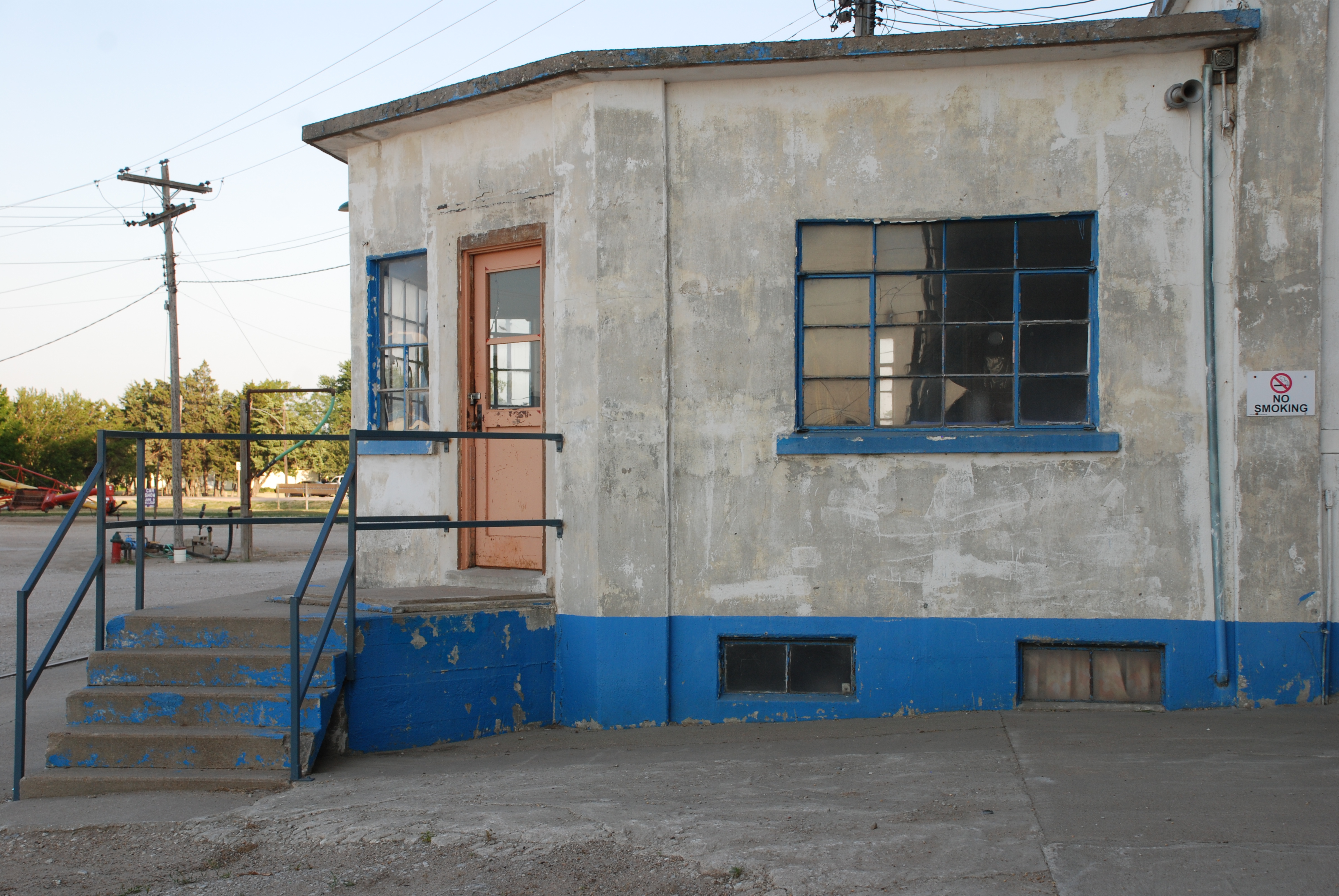
No one was about when we stopped to see the elevator, just before sunset. There was something beautiful about the scale house with its big, multi-paned windows, its blue trim, and its corner detail, with the elevator rising precipitously behind it.  I have admired all of Grandpa’s projects for their spare good looks.  I wonder how he saw these buildings.  It must have given him great satisfaction as he looked upon a completed project–or was it mainly relief? I know he loved tropical fish. He must have appreciated beauty for its own sake–at least a little bit. Was he too close to the elevators to see what I see? In certain light and at certain times, a beautifully done elevator takes your breath away.