Elevator construction men found time for romance on the side

Commentary by Neil Lieb with photo from his archive

A little quirk happened in West Bend, Iowa. Construction men were known as love ’em and leave ’em. Blaine Bell, Ed Hart (roommate from Gilmore, Iowa) and myself all married girls from West Bend. Pop Bell was a sawman for Bill Russell—all he did was cut lumber, all the pieces, all the forms. He had a big table saw, probably an 18-inch rotary blade driven by a two- or three-horsepower electric motor.

Neil A. Lieb, left, and Blaine Bell .

Neil A. Lieb, left, and Blaine Bell .

Blaine Bell and I, in West Bend, they built a feed manufacturing building next to the elevator next to Main Street, downtown. My wife Jolene’s father, Joseph Higgins, had a barber shop. They had an apartment right behind the barber shop and she used to come out and hang up clothes and the normal stuff. My wife was a redheaded Irishman. Blaine kept saying, “I have to see if I can get a date,” and it irritated me.

One day I made a point to be on the ground when I knew she was coming out of the house. I got a date with her. She wasn’t supposed to date construction people. We were married over 59 years. That was in October of 1950.

Editor’s note: This anecdote is from an interview on July 18, 2014.

Getting off-level and taking a fall at Tillotson’s Bushland, Tex., elevator

Entering Bushland, Texas. Photo by Stefan Joppich, used with permission.

Entering Bushland, Texas. Photo by Stefan Joppich, used with permission.

Commentary by Neil Lieb with photo from his archive

Somewhere between checking the water level when we started and checking it in the middle, the forms became about 3.5 inches off level. That’s because one guy who was running the jacks on one side wasn’t making his rounds as he was supposed to. The guy was fired on the spot.

Now you had to get the decks level again. When you’re going off level, you’re going at an angle. So what happened, you got a little swerve in the tanks. It’s only an inch. You can’t see it. The only time is if you go up and down on a hoist. So the bottom and top are not exactly over each other.

It had no effect. Not enough to be significant. We were about 65 or 70 feet in the air when it happened.

Every job had a peculiarity. The guy in Bushland jumped off the top. He started to fall, so he jumped. He jumped out far enough to land on the sand pile. We were probably 40 to 50 feet. He landed on the side of the sand pile and slid to the bottom.

We said, “How you doing?”

He said, “Oh, I’m fine. I’ll be a little stiff and sore.”

There were seven guys that I worked with. Baker was one and Bill Russell, all of ’em fell or got killed somewhere along the line.

When you’re working in the air, you become careless because it’s like walking on the ground, but you’re not walking on the ground.

Steelworkers, they all say you get too familiar with working off the ground. When they do that, they become careless.


Vintage photos show aspects of how a grain elevator works

Elevator photos003

Story by Kristen Cart

Sometimes a picture is worth a thousand words. Luckily for us, old press photos have come on the market recently that show the inner workings of grain elevators in the past. Not much has changed over the years, since many of the elevators that served in the 1940s and 1950s are still in operation today.

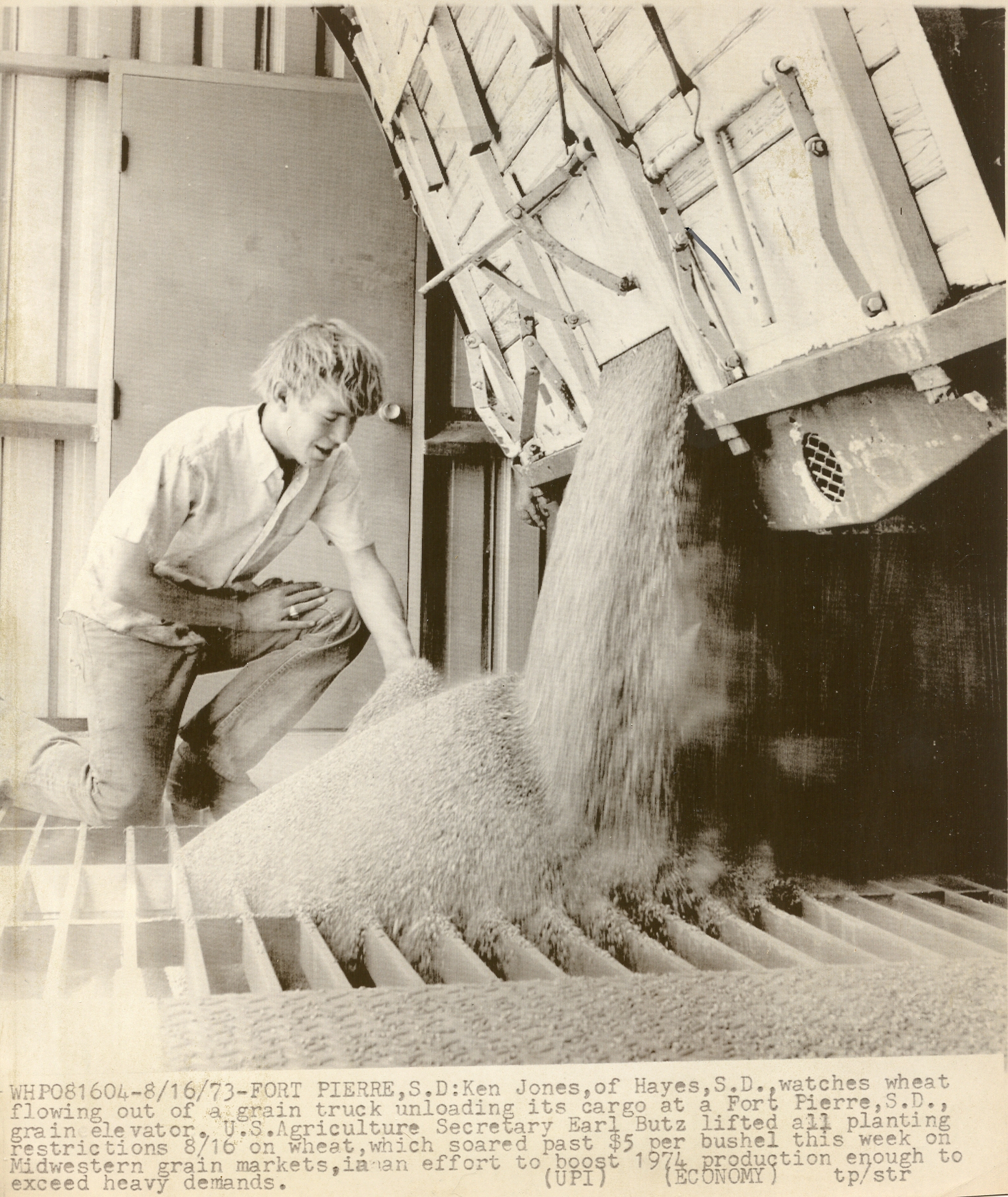
The photo above shows a truck unloading into an elevator pit from the inside of a driveway. A grate covers the pit, and from the pit a leg serves the top of the elevator. A conveyor may also be in operation, delivering grain to the leg, depending on the size of the elevator or annex.

Elevator photos001

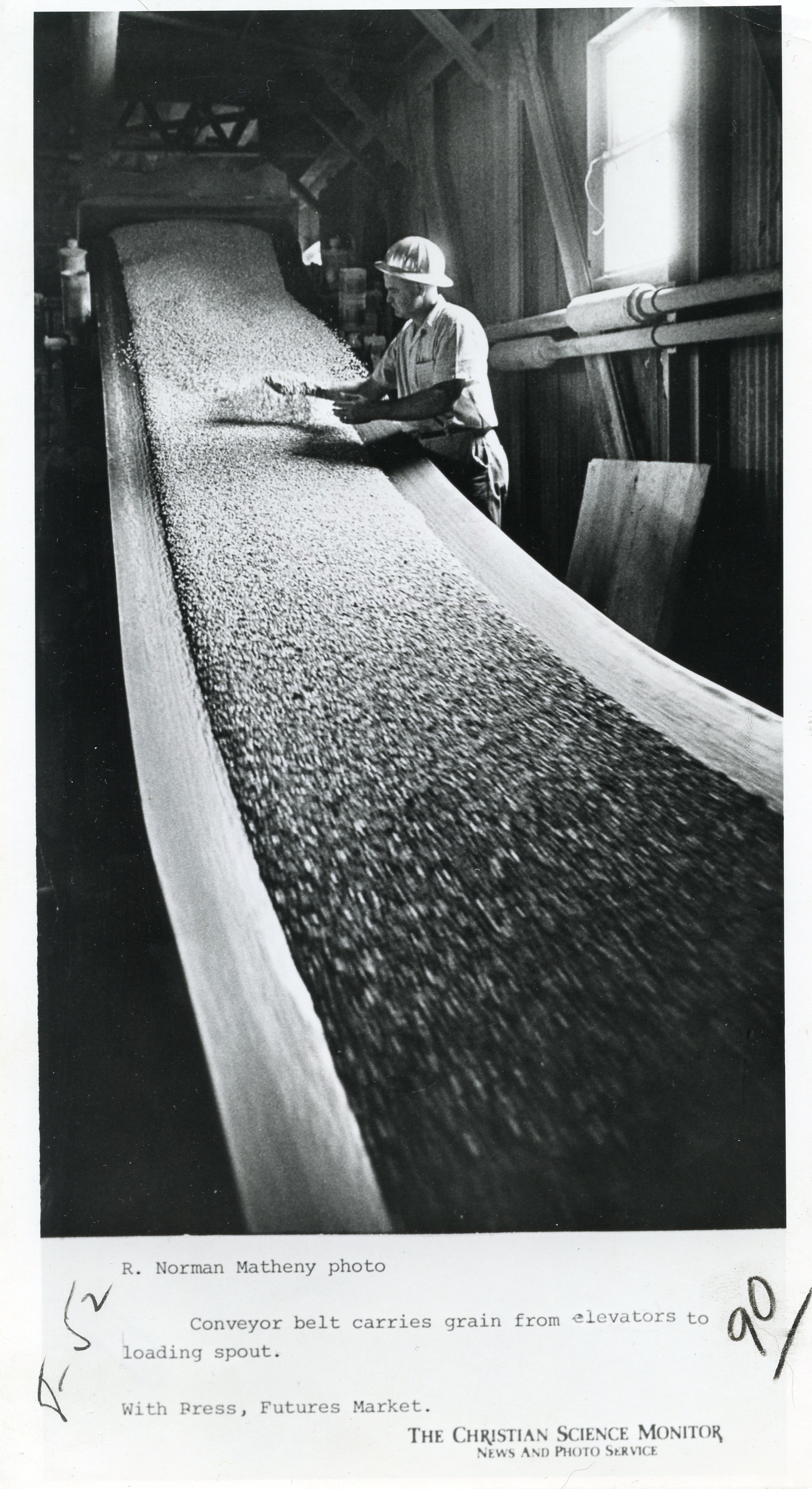
In the next image, you can see a worker beside the conveyor inside what looks like a run. Conveyors can be used in several places in an elevator complex, but they are normally installed in a run that delivers grain from an elevator headhouse for distribution to an annex, or they’re operating on a basement level that takes grain from an annex to the main elevator served by a headhouse and a leg.

Another place for a conveyor is from an elevator to a hopper or chute where a truck or rail car can be loaded. That is the case with this photo.

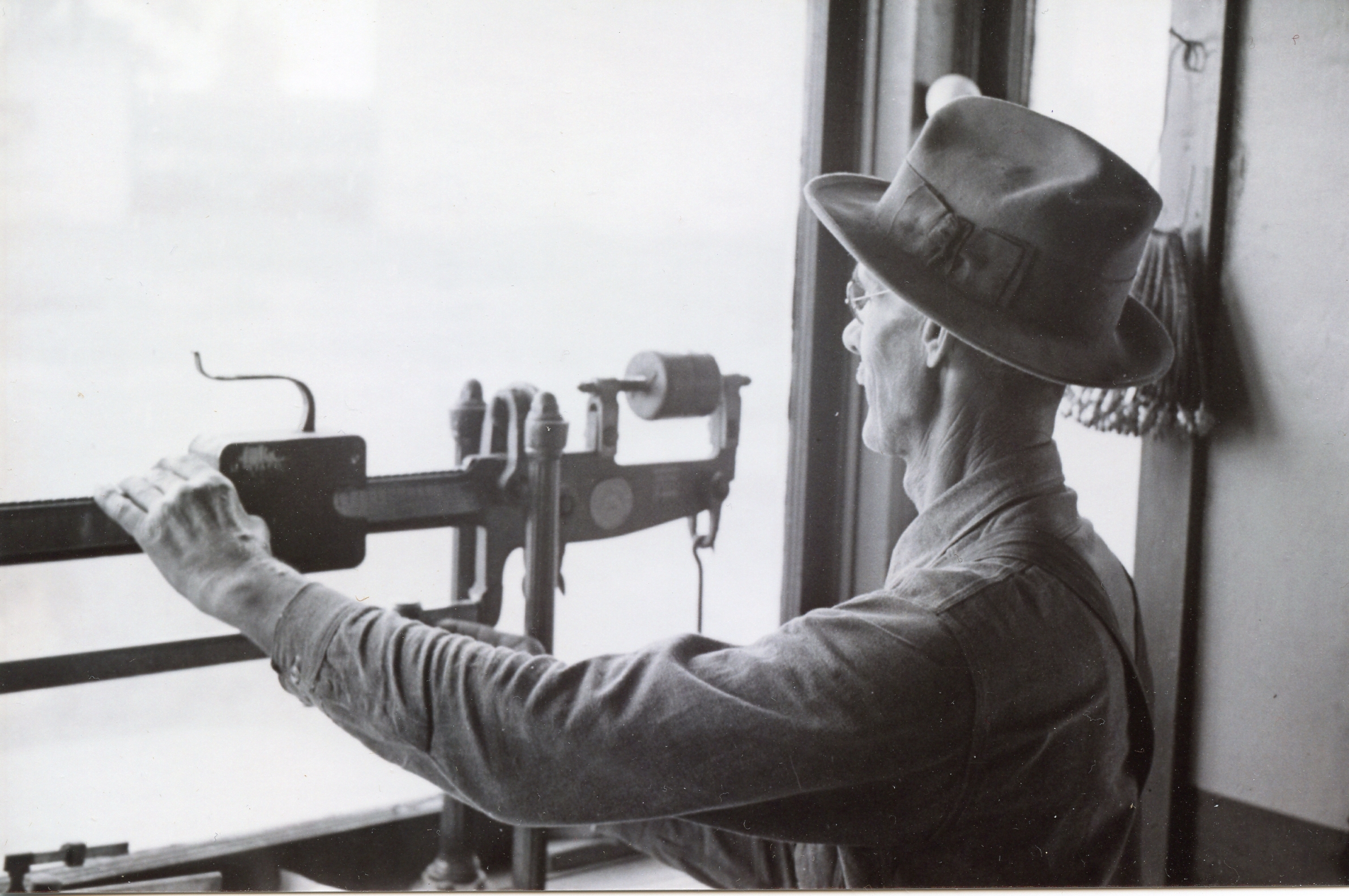
When grain is added to or taken from an elevator, it needs to be weighed and checked for moisture content to keep a strict account for the farmer and the elevator operator. Each truck arriving full will be weighed before delivery and also afterward, with the difference subtracted from the loaded weight to give the net weight of grain. Weight will change with moisture content, so that is an important figure to calculate.

When a truck arrives empty, it is weighed before loading, then weighed afterward to determine the net weight of grain. This process has always been an essential part of elevator operations from the earliest days.

Elevator photos002

Weighing the grain