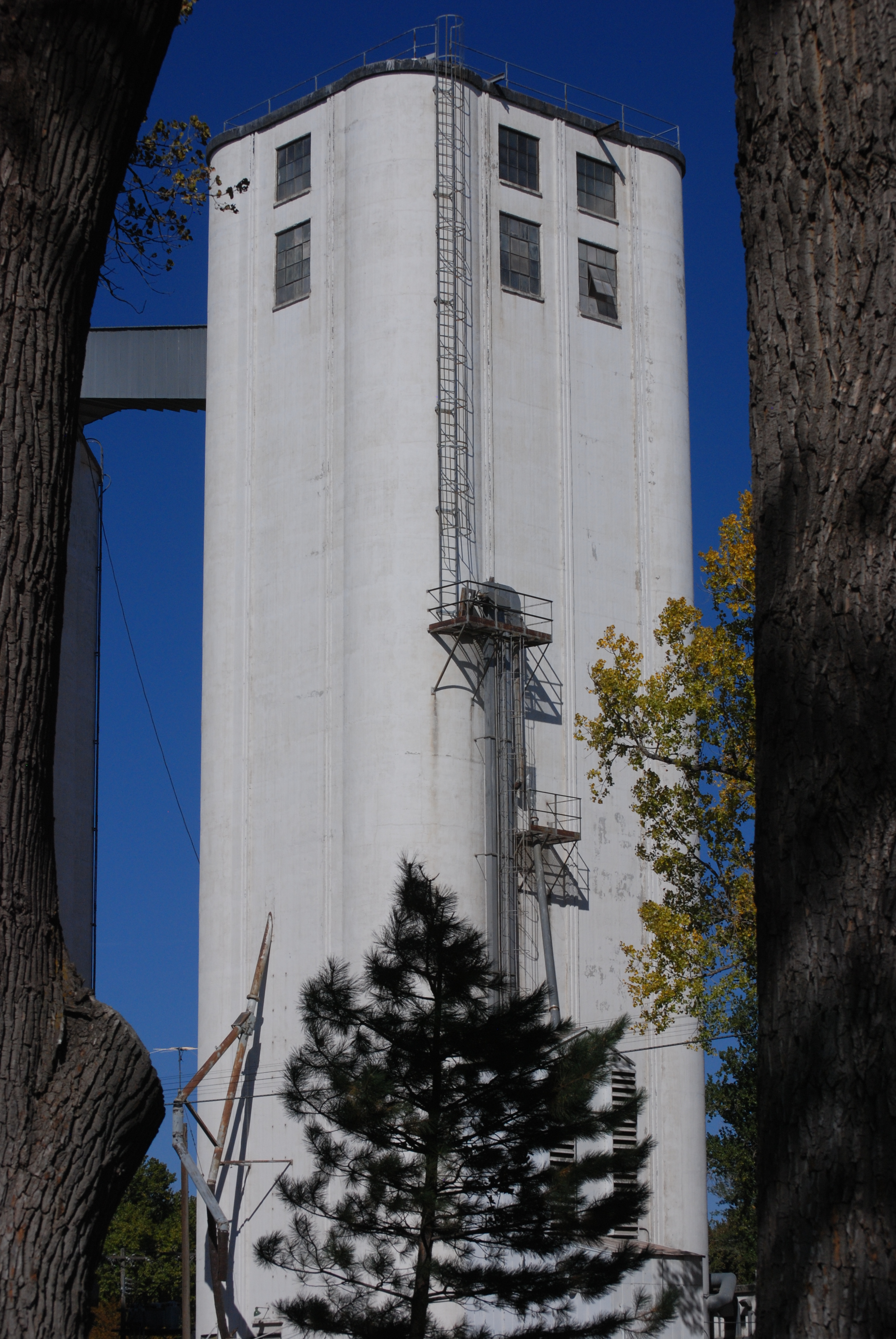
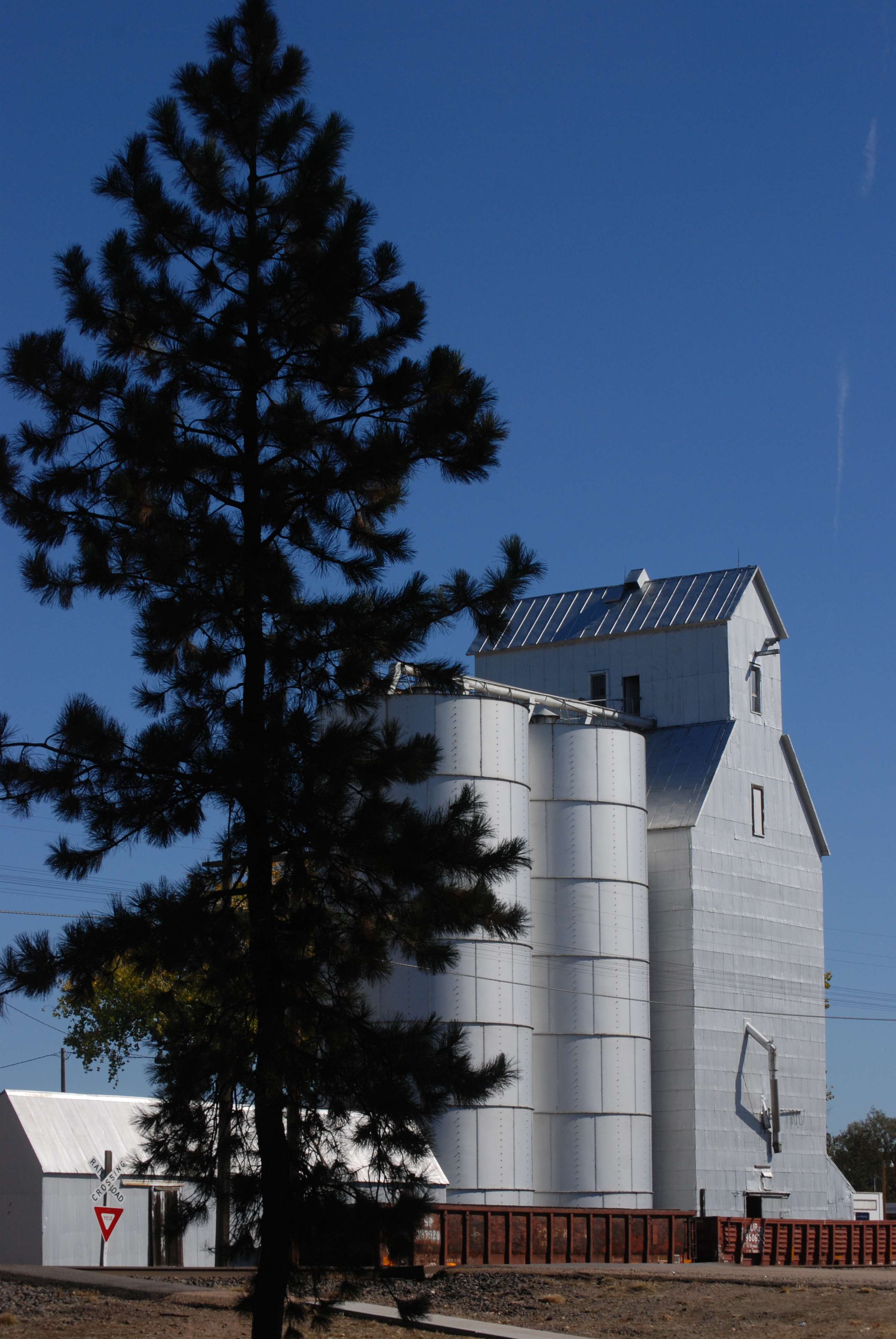
The Big Springs, Nebraska, elevator proved to be a Mayer-Osborn Construction job

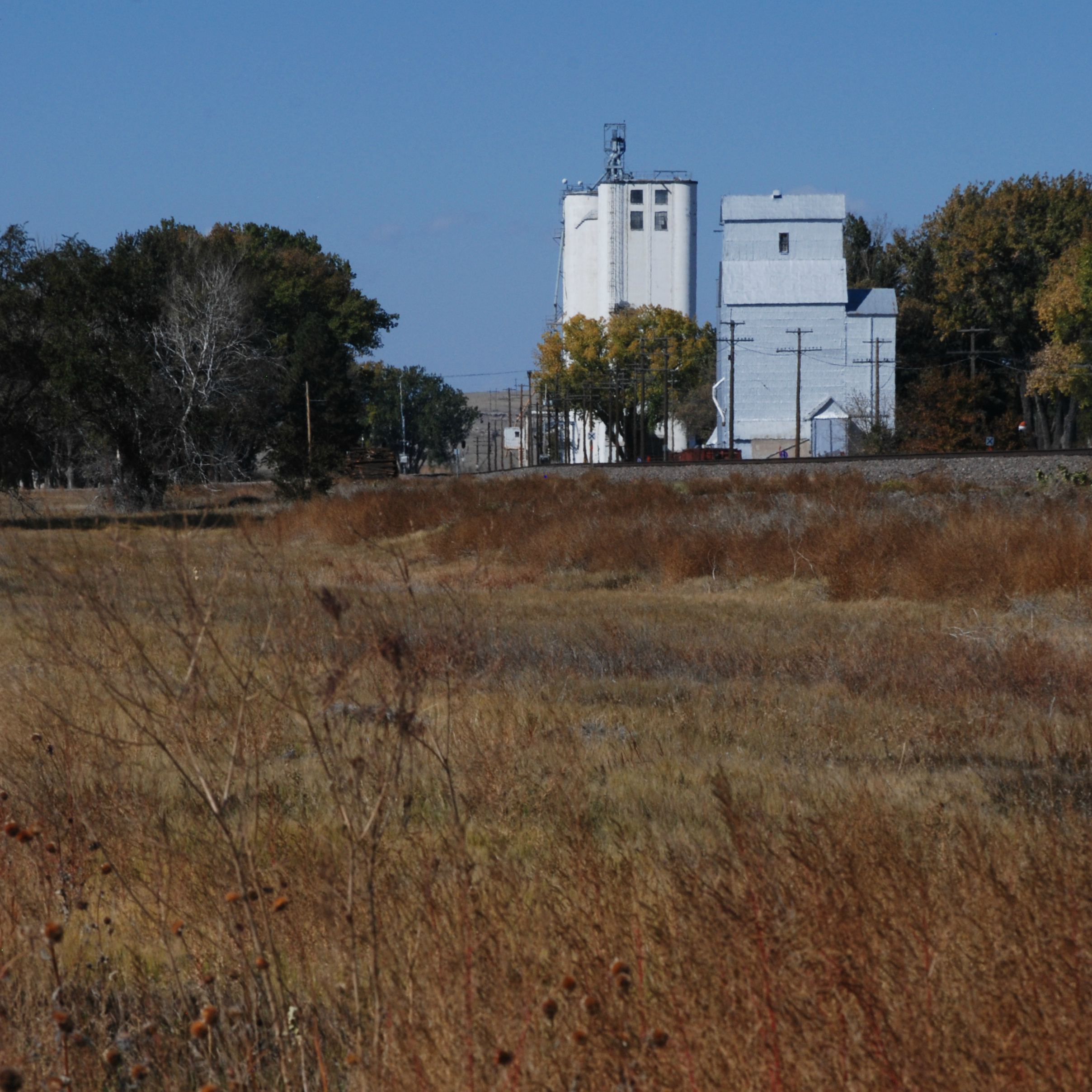
The Cheppell, Nebraska elevator built by Chalmers & Borton

The Chappell, Nebraska elevator built by Chalmers & Borton. 

Story and photos by Kristen Cart

My grandfather William Osborn built an elevator in the western Nebraska town of Chappell, according to my dad Jerry Osborn. Dad’s recollections have guided our search thus far, for Mayer-Osborn elevators. Surely over the kitchen table he heard the names of towns where his absent father had construction jobs. Or perhaps he saw the postmarks of letters sent home.

Chappell was probably stamped on one of those postmarked letters, or it was the nearest town with a motel, because when I went to visit in 2011, there was nary a Mayer-Osborn elevator in evidence. Impressive elevators there were, but I found out later that they all had the ubiquitous Chalmers & Borton nameplate, the trademark of Grandpa’s biggest competitor.

The Mayer-Osborn elevator lacked the annex when it was first built. It is the same plan as used in McCook, Neb. and Blencoe, Iowa.

The Mayer-Osborn elevator at Big Springs, Neb. lacked the annex when it was first built. It is the same style as used in McCook, Neb., and Blencoe, Iowa.

One stop east on the rail line, however, was a large, handsome elevator that looked like one of Mayer-Osborn’s jobs. It was the spitting image of the first elevator Grandpa built on his own at McCook, Neb. The first time I saw it, I was curious enough to snap a photo, but identification was going to wait for another year. My dad knew nothing about Big Springs.

When Gary Rich, a contributor to this blog, looked into the builders of the elevators he photographed, he solved the mystery. He identified the Big Springs elevator by its manhole covers inside the driveway, each embossed with “Mayer-Osborn Construction, Denver, Colo.” above the Hutchinson Foundry stamp.

The Big Springs, Neb. elevator in October, 2012

The Big Springs, Neb., elevator in October, 2012. 

I paid another visit to Big Springs last fall after our Wyoming elk hunt. We didn’t get any elk, but I did get some nice photographs of the elevator. It was a sleepy Sunday with no one around. Next time, perhaps I can see inside.

It is an honor to pay respects to my grandfather’s enduring work. It is living history of a kind that is rarely noticed or mentioned. Once gone, it is scarcely remembered except in dusty repositories of pictures, and in mostly forgotten stories.

At Big Springs, Neb., that day of fading away is still far off in the future.

The elevator at Bradshaw, Nebraska, still hides the identity of its builder

DSC_0107Story and photos by Kristen Cart

A couple of years ago, before we started this blog, I tried to find pictures of the projects we knew my grandfather William Osborn built. Sometimes I would find photos of look-alike structures at locations that my dad couldn’t remember. Most of these mysteries were eventually resolved with the help of Gary Rich, a retired Union Pacific man with an indefatigable curiosity. He visited the locations, identified a number of the builders, took beautiful photographs, and contributed his findings to this blog.

DSC_0051

The J.H. Tillotson look-alike at Bradshaw, Neb.

The Bradshaw, Neb., elevator remains an unsolved mystery. I visited the elevator early last year and photographed it from all sides. The style was a dead ringer for the elevators at Fairbury and Daykin, Neb., and Linn, Kan., all J. H. Tillotson, Contractor jobs. But since I had no access to the inside of the elevator, my tentative identification remained unverified.

Mr. Gordan, who lived across the street from the elevator, commented about the structure and its history, but his details were sparse. He said the elevator had a twin that no longer stood.

“It had problems with the headhouse,” he said.

And in another town he did not name, a similar elevator had been struck by lightning and burned.

Since the look-alike elevator in McAllaster, Kan. was demolished before we could resolve its provenance, and others also seem to have perished, it is clear that an unknown number of this type of elevator once existed. We hope to find the business records of Mayer-Osborn Construction and its predecessor, J. H. Tillotson, Contractor, to learn more about them.

The Bradshaw elevator bears an old FCA logo, but United Farmers Cooperative is apparently the current owner.

dsc_0081

New elevators

Mr. Gordan’s mother came out to greet me, but the meeting is a little vague in my memory, because I only made notes about it later. Both mother and son said the Bradshaw elevator was retired, but that the nearby gas station still operated, and the newer elevators a little down the rail line handled the grain.

I hope to visit again when the co-op is open, to learn more.

dsc_0090

Bradshaw, Nebraska

The town of Bradshaw is neat and clean, and displays a good amount of civic pride. Most notable is the broad main street–the expansive use of space has the look of a western town, rather than the neatly packed economy you see in the East. It inhabits a flat Nebraska landscape, nearly midway between Grand Island and Lincoln, with distant horizons and plenty of elbow room.

dsc_0015

Gas station

Bradshaw is well worth a return visit, preferably during harvest. Perhaps a local farmer can sit down for a cup of coffee and color in the details of this lovely Nebraska town.

Blue skies at Lodgepole, Nebraska, and a perfect photo opportunity

dsc_0226

The J. H. Tillotson concrete elevator, built in 1948, and operated by Frenchman Valley Coop

Story and photos by Kristen Cart

On the way home from our Wyoming hunt last fall, we drove through Lodgepole, Neb. one more time. Gorgeous weather quelled the protests from the truck’s back seat, and with windows open, everyone settled down with books and gadgets while Mom (that would be me) got out with her camera.

I hope you enjoy some of the results as much as I did. This elevator, built by J. H. Tillotson, Contractor, in 1948, still stands proudly along old Lincoln Hwy. 30, in a town that is still a tourist destination. No one seemed curious about a lady with a camera–seems like it’s not so unusual around here.

dsc_0256

A track-side view of both elevators in Lodgepole, Neb.

The wooden elevator in the town is still in use, less than half a mile down the rail line. It appears to be in spiffy condition and ready for business. The town obviously takes pride in its agriculture and its heritage.

Happily, the history of the town intersects with the history of my grandfather, builder William Osborn, and our family. It has become a destination for us and a beautiful stop alongside the road.

Even the kids grudgingly admit it isn’t too bad, for an elevator.

dsc_0252

The wooden elevator with metal siding, flanked by metal bins

The Cordell, Oklahoma elevator project fused engineering prowess with family ties

Story by Kristen Cart

christofferson041

Edwin Christoffersen was the superintendent on the Mayer-Osborn Construction project in Cordell, Okla. in 1950. His son and namesake kindly provided a notebook that gave a glimpse of the concrete engineering that went into the elevator. By trial and error, the company learned best practices, creating an enduring structure which would still operate more than sixty years later.

Edwin Louis Christofferson was the son of Jens “James” Lauritz Christoffersen, a first generation American who farmed and operated a farm stand in Fremont, Neb. Edwin was one of nine children. Ed’s sister Alice married William Osborn in 1923.

When the Mayer-Osborn enterprise was in full swing, Bill Osborn tapped relatives to manage projects or to provide manual labor. He followed a common practice.

Sons Dick and Jerry Osborn worked at various times building elevators. Bill Osborn entered partnership with Eugene Mayer, the brother of Joseph H. Tillotson’s wife Sylvia. At the Tillotson Construction Company of Omaha, Bill Osborn worked with Iver Salroth, husband of Emma, a Christoffersen cousin.

Naturally, when the opportunity arose, Ed Christoffersen found employment with his brother-in-law’s company an attractive proposition.

christofferson019(1)

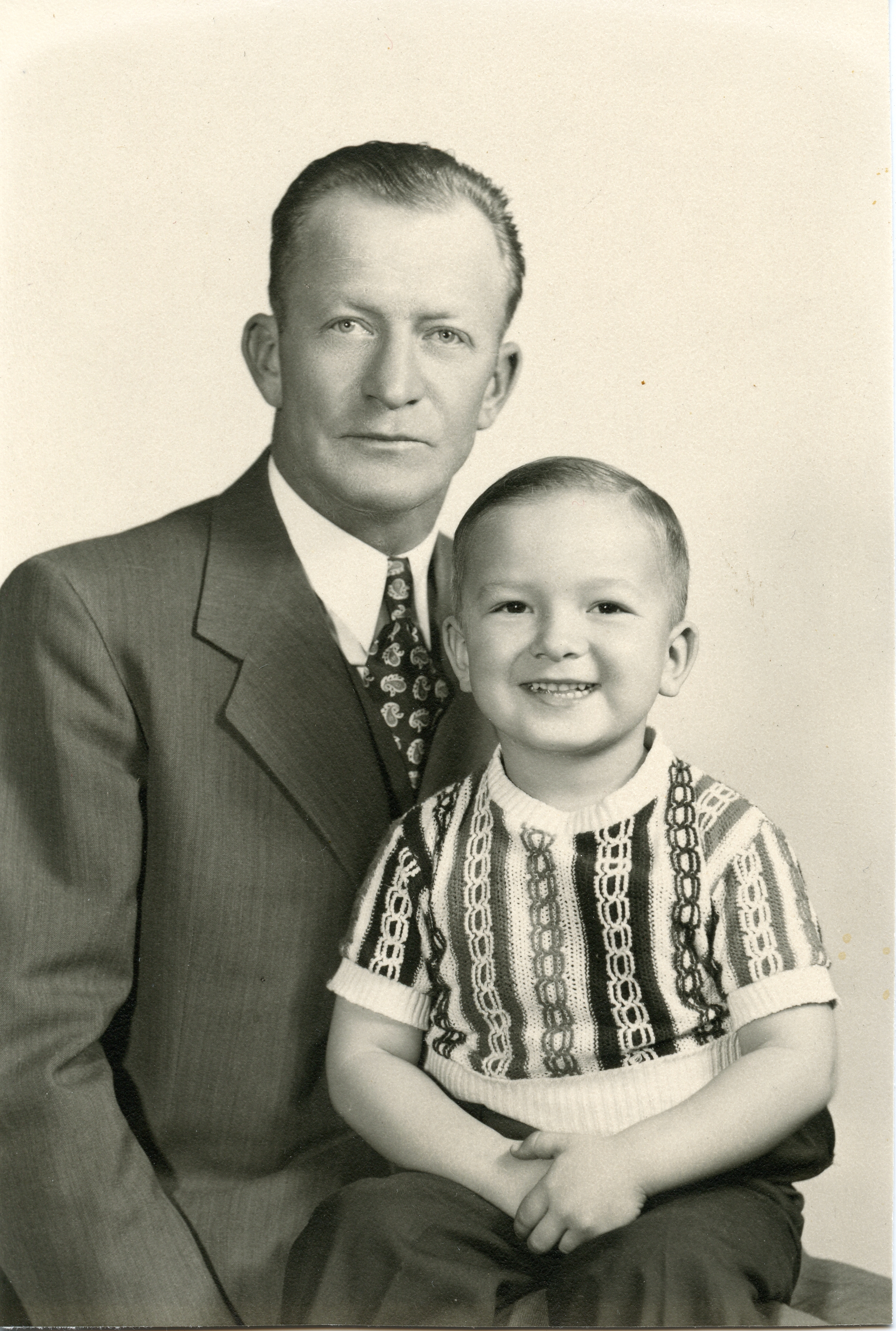
Edwin Louis Christoffersen with his only child.

Ed’s son has kept a number of Mayer-Osborn keepsakes, in memory of his dad, who died when he was still quite young. One intriguing item was the logbook that Ed kept for the Cordell, Okla. elevator, recording concrete tests.

Various sand, gravel, and concrete mixtures were tested to a failure point to determine the ideal formula for a given project. The date and time of day was recorded for each test. In this journal, we discovered the year of construction for the Cordell elevator.

The elevator business brought families together to accomplish a common goal, and now, many years later, writing about the elevators brings the builders and their sons and daughters together again. The memories are kept in small personal repositories of clippings, photos and documents, and in tales of the job, and are captured fleetingly before the witnesses leave us.

Looking up at these great landmarks, we also look up to the patriarchs who built them, with respect, and awe.

Mystery elevator identified as Mayer-Osborn’s Cordell, Oklahoma project

William Osborn photo provided by his granddaughter Diane Osborn Bell

William Osborn photo provided by his granddaughter Diane Osborn Bell.

By Kristen Cart

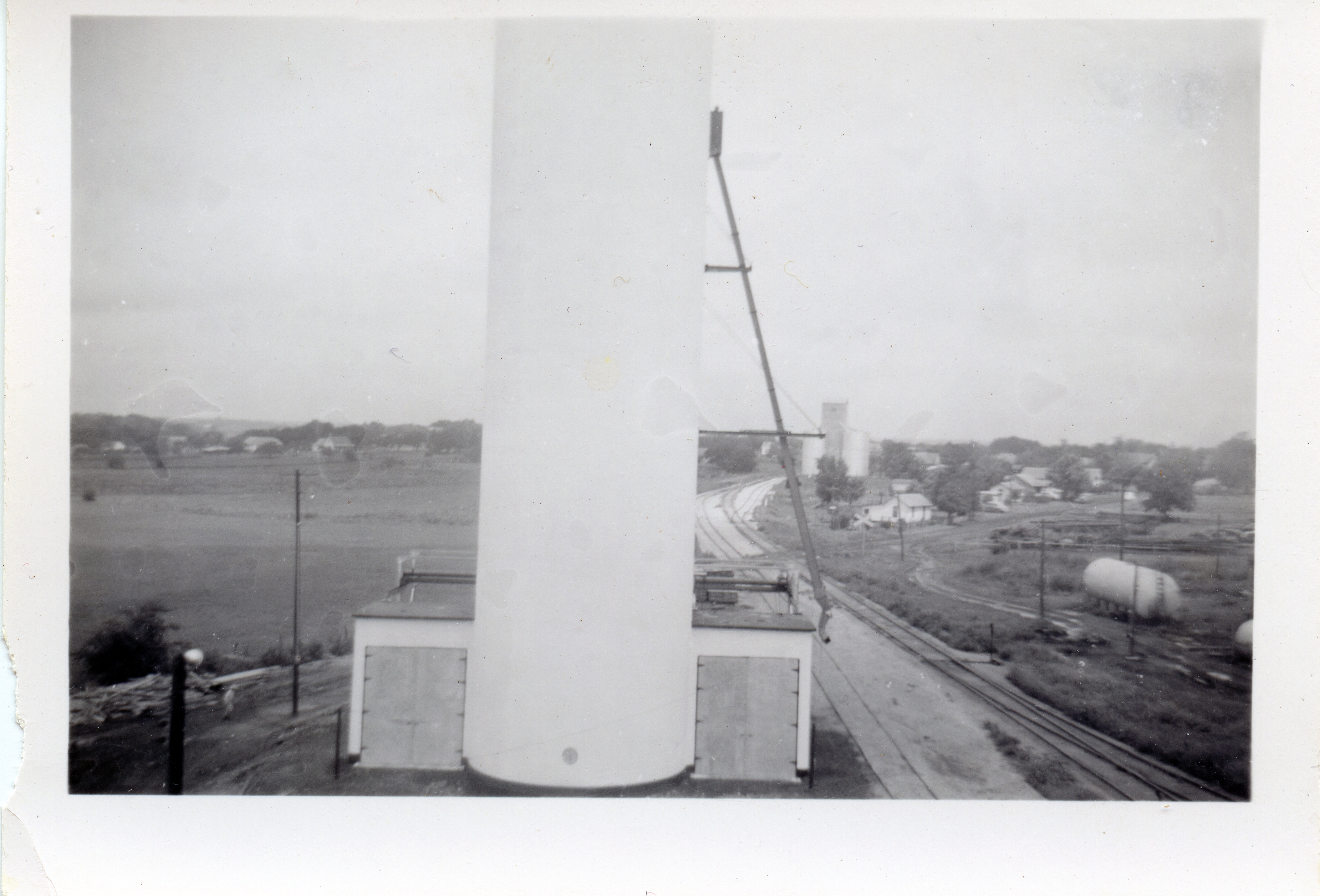
christofferson040This photograph has left us scratching our heads for over a year. Gary Rich knew of no such elevator from all of his travels, so he rummaged through his photographs for any hint of it. He looked for an elevator with a single bin-width and two driveways, with a curve of track and a second elevator around the bend, all to no avail. The photo sat in my files waiting for serendipity to step in. Sometimes, it is best to bide your time, and if you are lucky you get more than a location and a name. We hit the jackpot in this case.

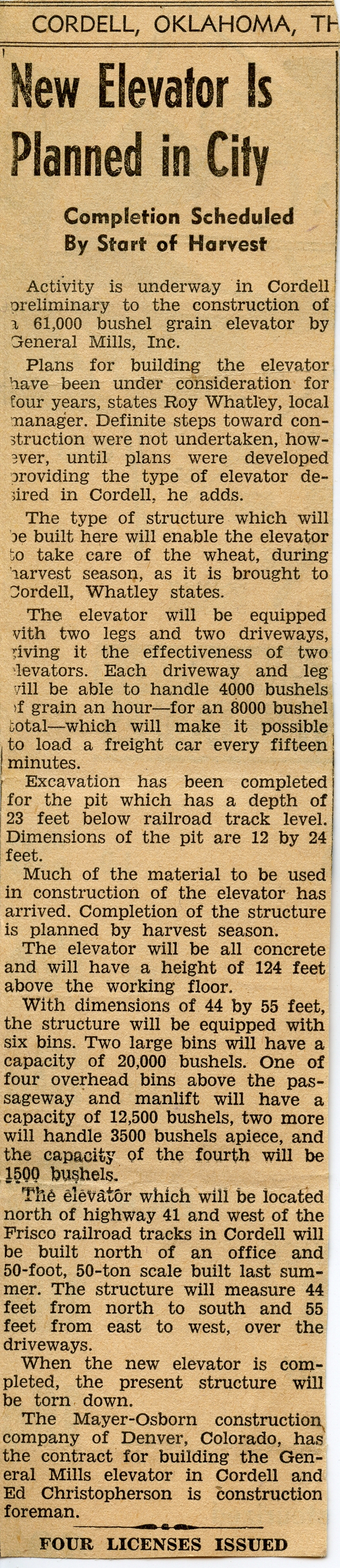
When Dad and I visited his first cousin, we sorted through boxes of hundred-year-old family pictures. Midway through the second box, we found a newspaper clipping about an elevator, with a photo I instantly recognized. There it was, plain as day.

This unique elevator was built in Cordell, Okla., a town almost directly south of Wichita, Kan., well within the territory served by Mayer-Osborn Construction. The superintendent on the job was Ed Christoffersen, brother-in-law to my grandfather William Osborn.

Cordell Oklahoma Elevator

In this photo by Joy Franklin, you can see two driveways, built for faster grain loading during harvest. The curve of train track is evident here.

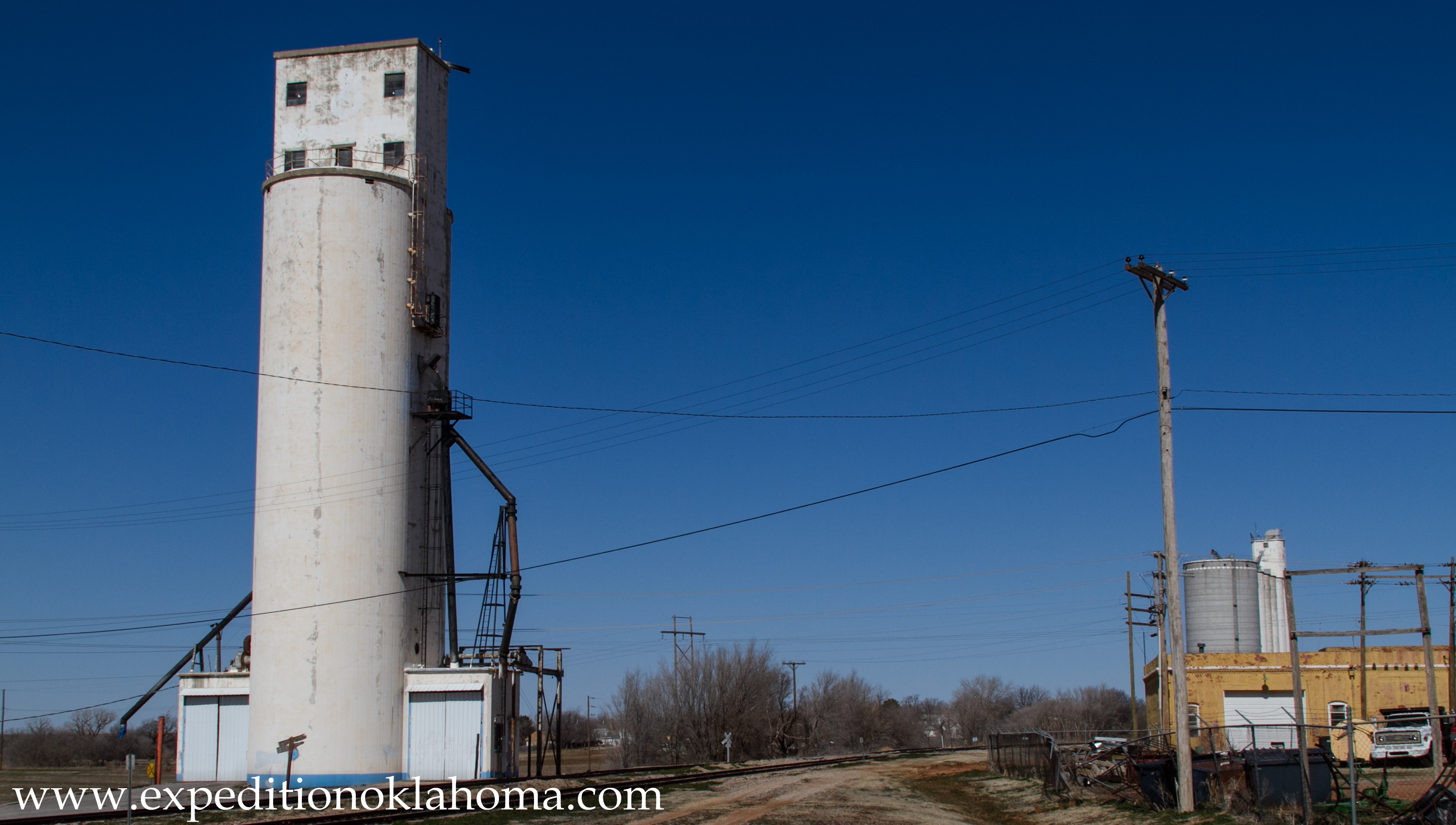
After making the identification, I looked online and found Expedition Oklahoma, where Joy Franklin posted a beautiful current photo of the elevator. With her kind permission, it is posted below. She said the elevator is owned by the Wheeler Brothers Grain Company, founded in 1917, which presently owns eighteen grain elevators. It is a happy surprise to see that one of Mayer-Osborn’s most innovative elevators not only survives, but is still in use today.


Gordon, Nebraska’s elevator was built in a classic Mayer-Osborn style

The Mayer-Osborn elevator, identified by manhole covers inside the driveway, stands in front of Chalmers and Borton additions

The Mayer-Osborn elevator, identified by manhole covers inside the driveway, stands in front of Chalmers and Borton additions.

Story and photos by Gary Rich

Farmers Co-op operates these elevators. The co-op is based in Gordon, Hay Springs, and Hemingford, Neb.

The elevator in the foreground was built by Mayer-Osborn Construction Company, based in Denver. The completion date is not known.

The elevator in the background was built by Chalmers and Borton Construction, based in Hutchinson, Kan., in 1958. The company built a second elevator, west of these elevators, as well as a couple of annexes.

A side view of the Mayer Osborn elevator

A side view of the Mayer Osborn elevator.

By Kristen Cart

This stepped up headhouse design was first rolled out with the elevator in McCook, Neb., built in 1949 by Mayer-Osborn Construction Company. The style was featured in the Mayer-Osborn ad that ran in the early 1950s in the Farmers Elevator Guide.

The Gordon elevator showcased the rounded headhouse construction method adopted by Tillotson Construction for their later projects, but it is not known which company pioneered the cost saving technique.

From his home in Colorado, Gary Rich investigated this elevator on a trip east to photograph a number of Midwestern elevators. Gary has been instrumental in identifying a large number of Mayer-Osborn, Tillotson Construction, and J. H. Tillotson projects, pursuing the history of the elevators with as much passion as he puts into his excellent photography.

We are indebted to him for his relentless pursuit of good information, now contained in this blog.

History is preserved in pictures at St. Francis, Kansas

Story by Kristen Cart

Farmers line up their grain trucks at St. Francis, Kan.

Farmers line up their grain trucks at St. Francis, Kan.

One of the most pleasant surprises at the St. Francis Mercantile Equity Exchange was their historical record preserved in pictures. In its hundred-year history, the exchange has maintained a continuous presence on the site of the present elevator, and has seen many changes in technology. Fortunately, photos exist that document the old way of doing things, and  Shirley Zweygardt, the site grain manager, was kind enough to provide copies.

In this photo dated 1951, an old wooden elevator stands immediately behind the concrete house. It was demolished to make room for the second bank of concrete bins, built in 2000.

In this photo dated 1951, an old wooden elevator stands immediately behind the concrete house. It was demolished to make room for the second bank of concrete bins, built in 2000.

It is always a fantastic find when you locate a pictorial history of an elevator.

A picture album, filled with historical treasures, which Shirley Zweygardt was pleased to share

A picture album, filled with historical treasures, which Shirley Zweygardt was pleased to share

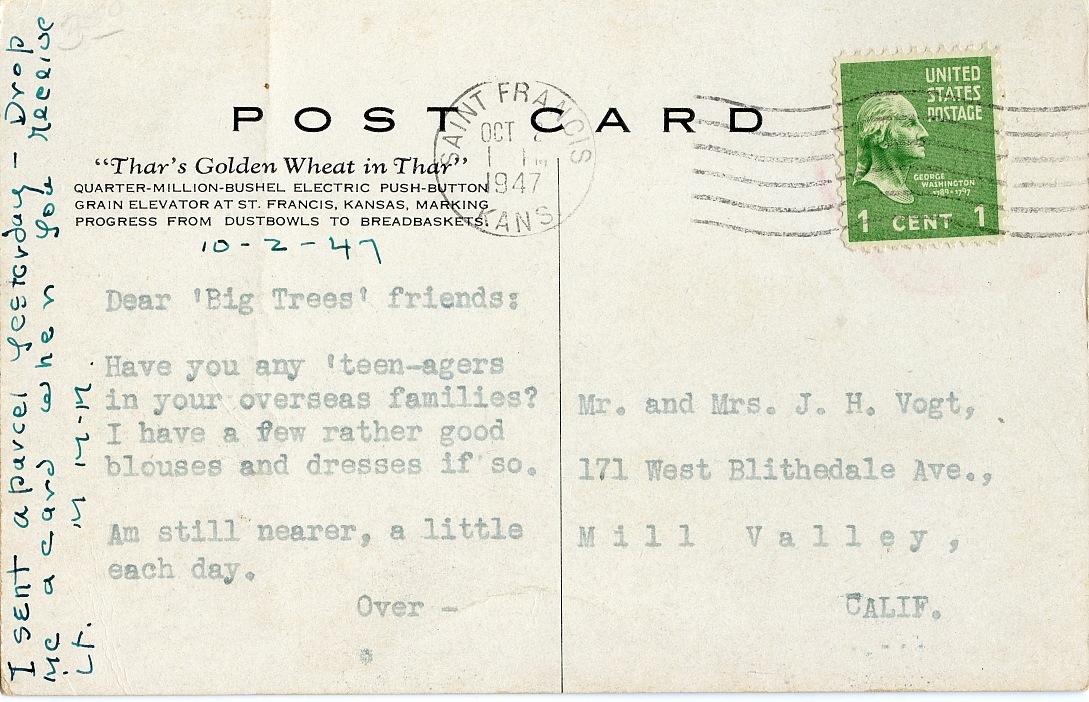
I had already acquired a 1947 dated postcard depicting the elevator, so we knew its age. These additional photos, dated on the reverse “1951,” show its stately beauty. They depict two additional wooden elevators, which have long since disappeared. The vintage automobile in the foreground of the first image substantiates the date of the caption. Without the car, this photo would appear timeless, even though it was taken shortly before the addition of the first annex built by Chalmers and Borton.

Another view, dated 1951

Another view, dated 1951

It was quite a lovely thing; by 1951, the largest known elevator built by J. H. Tillotson, Contractor, was celebrating its fifth year, and was still white and stark against the sky. The elevator at McCook, Neb., was only two years old when this photo was taken, and my grandfather, builder William Osborn, had gone on to other projects with the Mayer-Osborn Construction Company.

Shirley Zweygardt told me an elderly resident of the town had preserved these photos in an album, which she brought to the elevator office, where they became part of the records of the equity exchange. The prints, reproduced here, were duplicate copies, now part of my growing library of historical images.

The visit to St. Francis was a happy one, capping an October 2012 elevator tour. This elevator marked the pinnacle of J. H. Tillotson’s construction career. Impressive still, it is a fitting monument to the skill, ambition, and industry of its builders.

Discovering the J. H. Tillotson elevator at St. Francis, Kansas, as a centennial looms

DSC_0248(2)

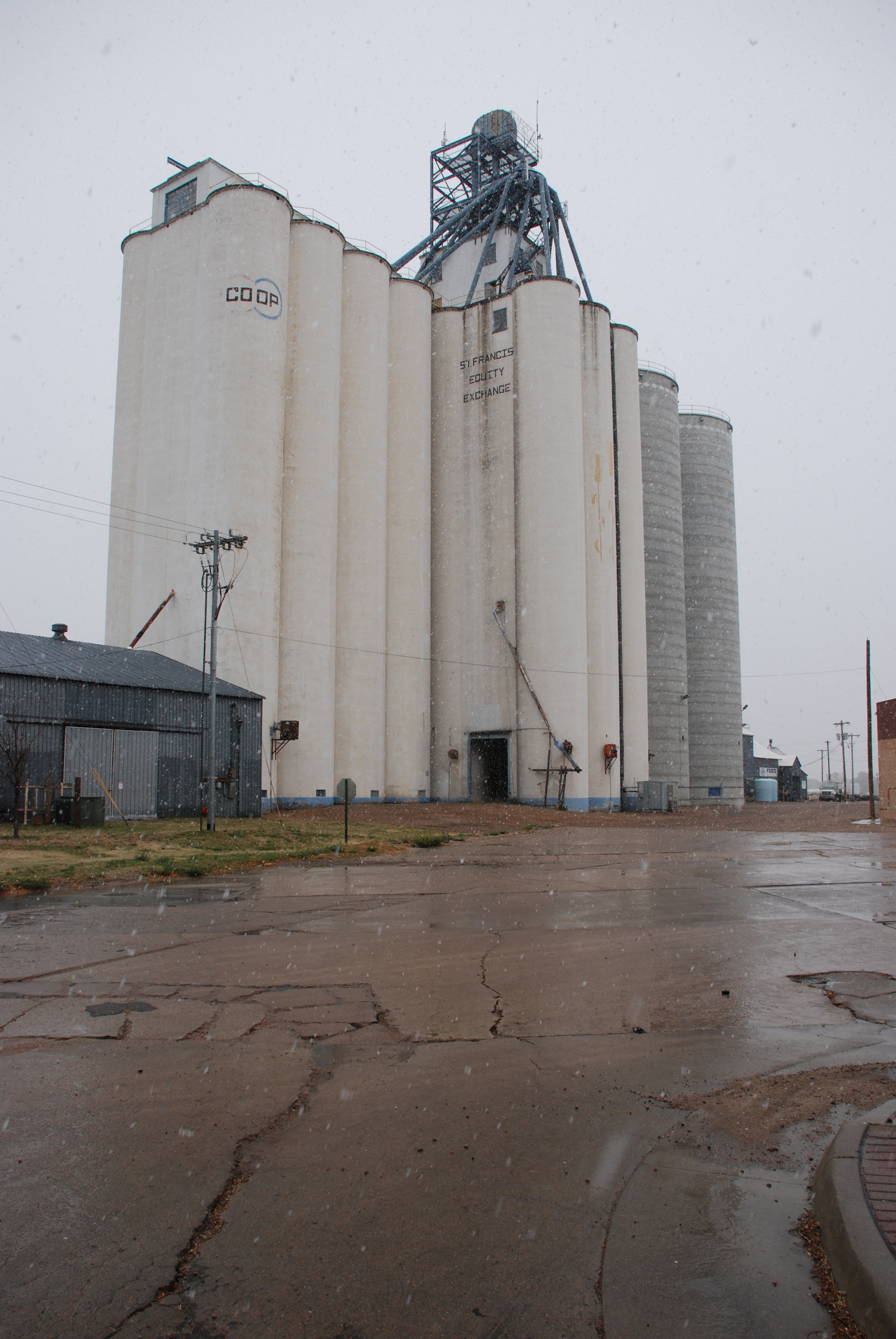
The J. H. Tillotson elevator in St. Francis, Kan. is nestled between two annexes.

Story and photos by Kristen Cart

St. Francis, Kan., stayed on my mind for months after I failed to find any sign of the work of my grandfather, William Osborn, on our first visit.

Out on the western end of Kansas, the town was well clear of any route our family would take on the way to somewhere else. It was a very intentional stop on our itinerary. On our first visit, we took a wide loop, arriving just after sundown, and we lost the opportunity to investigate further than one cursory look at the wrong elevator. The visit to St. Francis was shelved for several months, and I almost didn’t go, but when I did, I made sure to be there before nightfall.

The weather caught up, however.

DSC_0224(1)

St. Francis Mercantile Equity Exchange grain merchandiser, Shirley Zweygardt.

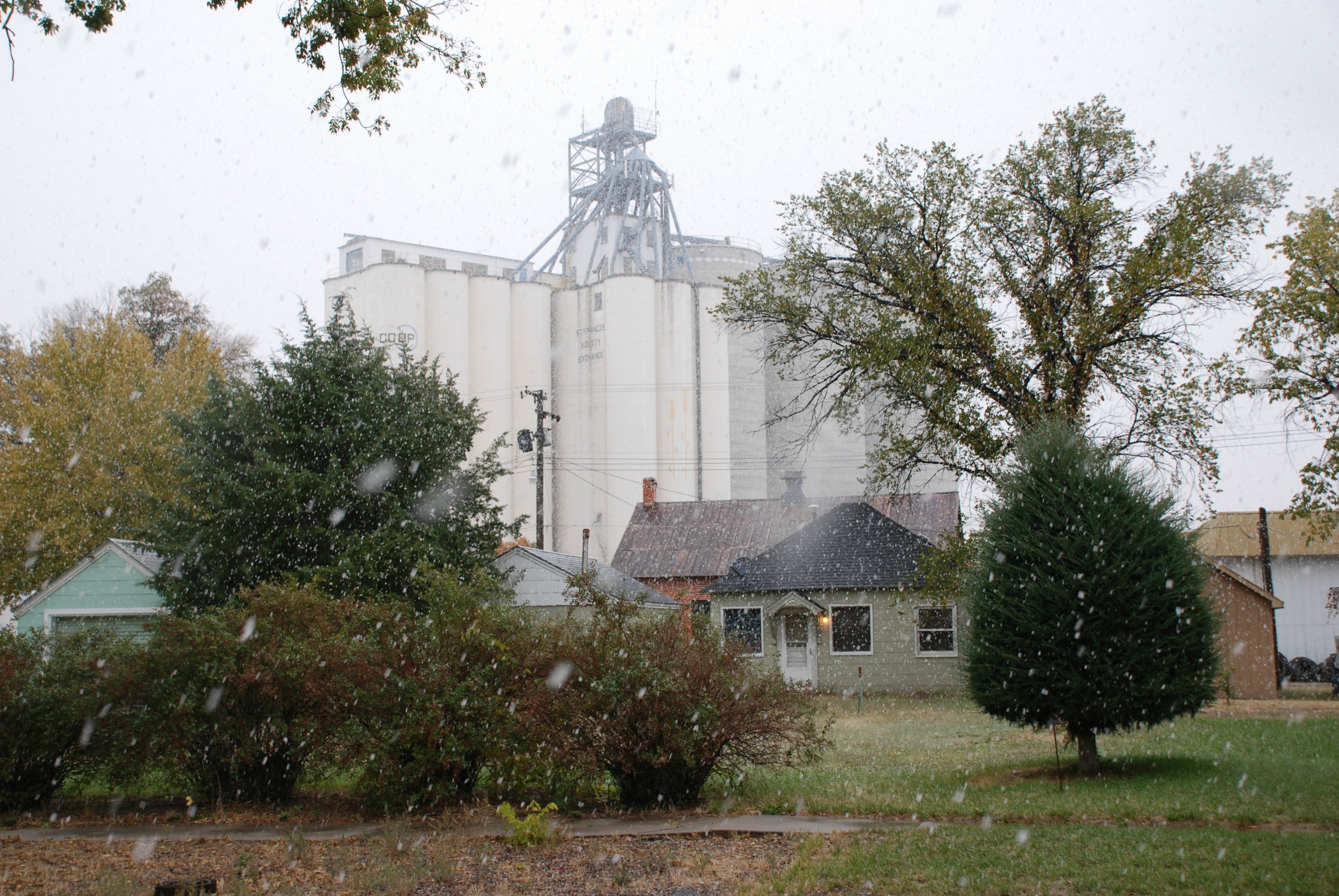
This time, I headed toward the highest structure in town. By the time I pulled up to the elevator office, fat flakes of snow wafted down and splotched the truck’s windshield, melting on contact with the ground. It was October, and the trees, which still held their leaves, were a golden brown backdrop for the early snow. I shook off the cold and entered the co-op.

A surprise awaited. A long-time employee of St. Francis Mercantile Equity Exchange, Shirley Zweygardt, greeted me at the door. Raised on a farm just down the road, she was intimately familiar with the elevator’s history and purpose, so in 1979, when a job opportunity arose, she was glad to fill in where needed.

It has been a happy arrangement. Shirley started as a bookkeeper, then worked in grain accounting and is presently in charge of grain merchandising. She has seen the St. Francis Mercantile Equity Exchange through many changes over the years.

She asked me to sit down and have some coffee, and she shared her experiences of working around the old St. Francis elevator.

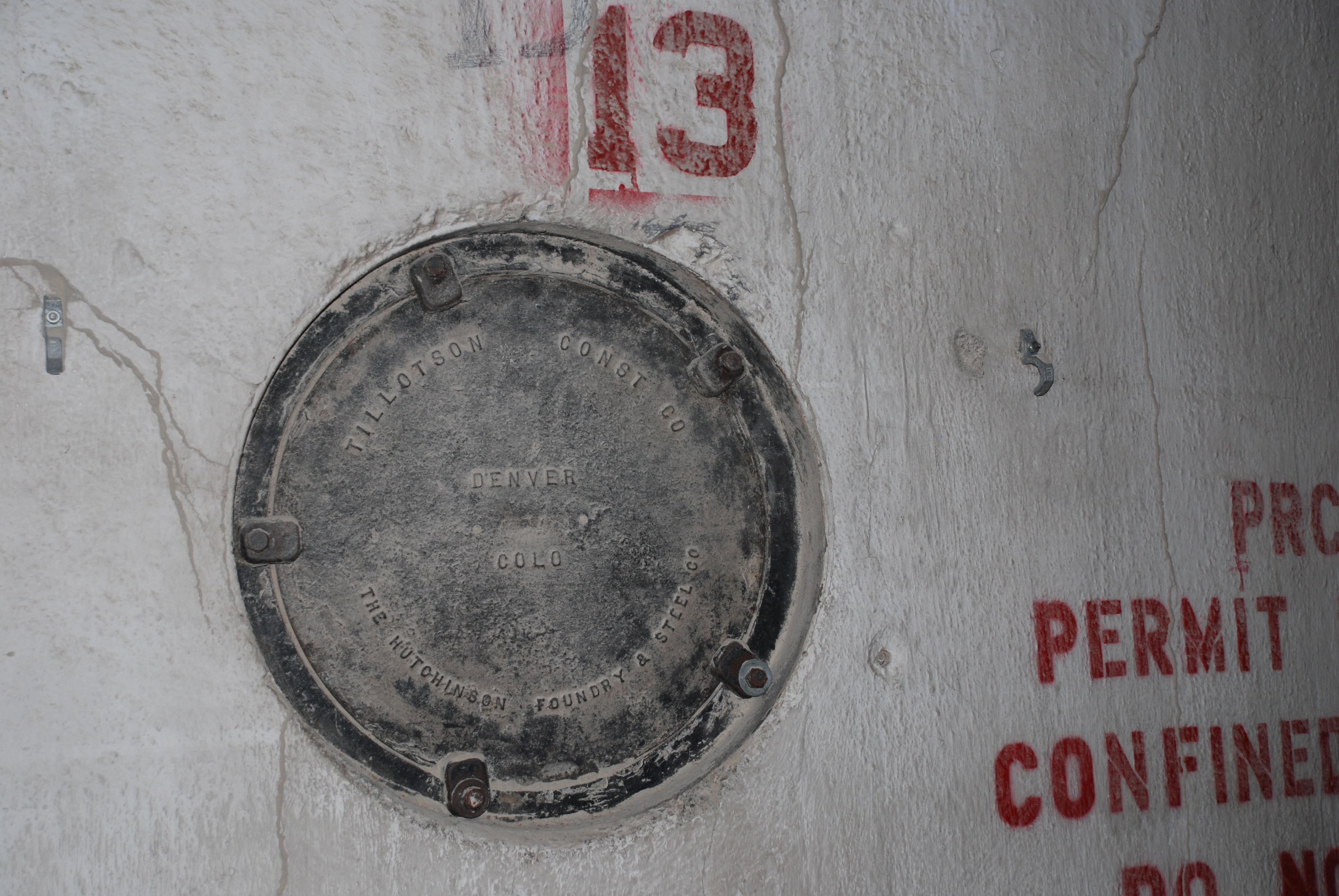
The manhole cover on the interior of the driveway identifies the builder

The manhole covers on the interior of the driveway identify the builder.

St. Francis Mercantile Equity Exchange was incorporated in 1913. As slip-formed concrete construction methods advanced, the equity exchange looked for a company to build their first concrete elevator. Once it was completed in 1946, their quarter-million-bushel elevator was the biggest and most modern in western Kansas. It more than doubled the storage capacity of its lesser neighbors. And lo and behold, it was built by J. H. Tillotson, Contractor, of Denver, with the construction supervised by my grandfather, William Osborn.

It was not the only grain storage on the site for long. Soon, the capacity proved to be too little for the 1940s and 1950s boom years, so Chalmers and Borton came along and built the first annex.

Later, the site incorporated a flat storage facility which only holds wheat, since its air system does not ventilate adequately for moist corn. A second three-bin annex was built in 2000, using the same old technique of lifting concrete up to a dump cart that ran on a track around the perimeter of the rising elevator. It was completed just before the onset of a seven-year drought, and it took a few good harvest years to recoup the investment, since the annual wheat yield was too low at first to fill the bins.

Wall Street would not be the only beneficiary of perfect prognostication. The present snowfall was gladly welcomed in St. Francis.

The St. Francis Mercantile Equity Exchange will be celebrating its 100th anniversary this year. It has been and is the cornerstone of the town, and the center of business and economic life. Stay tuned for a little more of the history, and wonderful images, of this fine elevator, which Shirley kindly shared.

The Chalmers and Borton annex is in the foreground, and the new annexes are behind the main house.

The Chalmers and Borton annex is in the foreground, and the new annex bins are behind the main house. The flat storage shed is on the left.

Hunting for a J. H. Tillotson elevator in St. Francis, Kansas

Elevator photos012

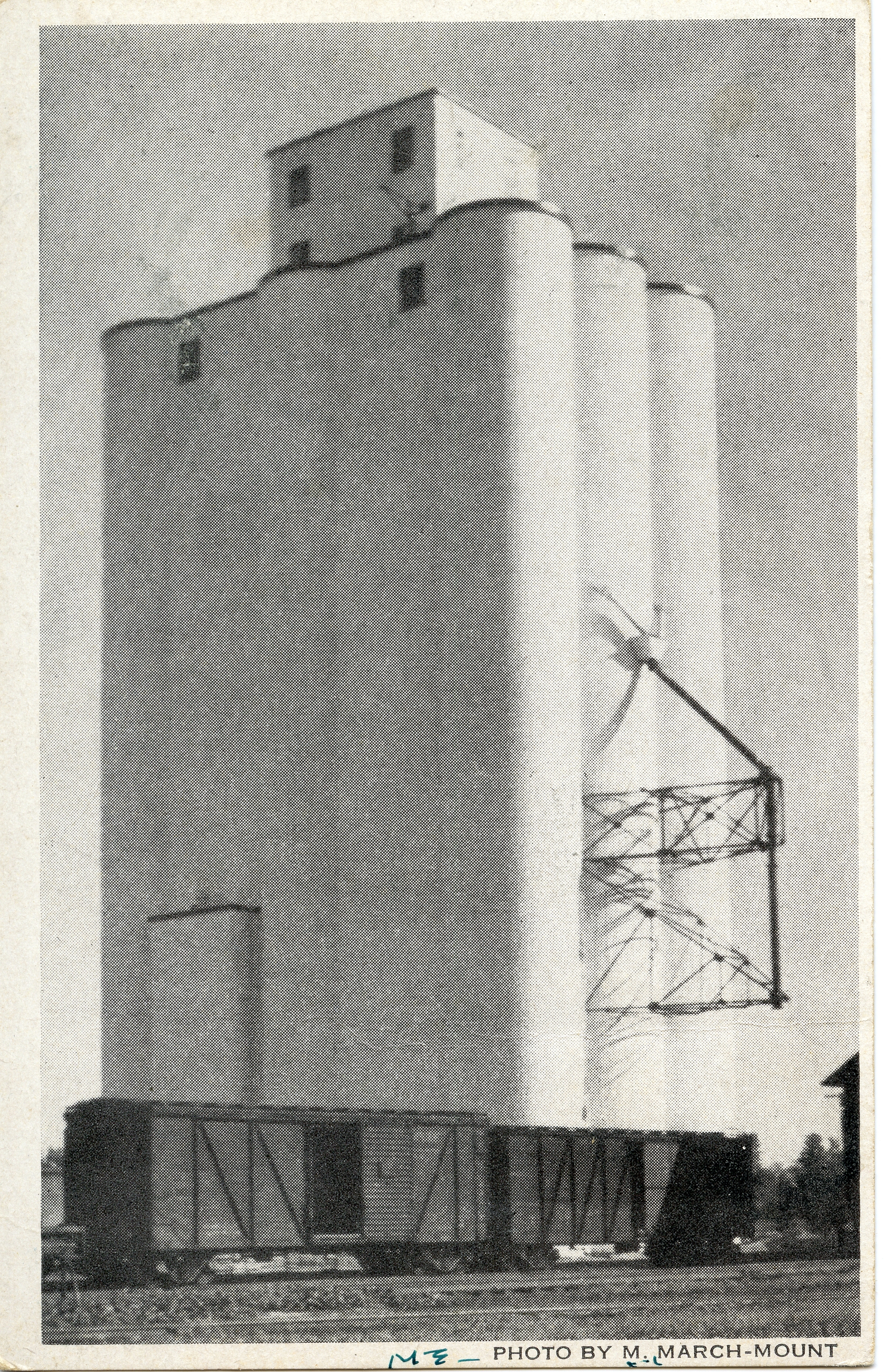
Postcard of early concrete elevator in St. Francis, Kan.

Story by Kristen Cart

Grandpa was pretty good at naming his elevators when he talked to the press. While building the McCook, Neb., elevator, William Osborn spoke about a number of his previous projects that were built while he worked for J.H. Tillotson, Contractor.

He named six elevators he built in Maywood, Wauneta, Daykin, Fairbury, and Lodgepole, Neb., and Traer, Kan.

McCook’s elevator, then under construction, was much larger than the rest, but he named one other elevator in the area that was of similar size, that one in St. Francis, Kan. He said he built that one, too.

The newspaper clipping and my dad’s recollections were all we had to go on when our family made the first trip to western Nebraska and Kansas to see grandpa’s elevators.

All of the elevators–save one–were easy to find (even Maywood, whose present incarnation is a rubble pile not far from the surviving elevators).

When we visited St. Francis, we stopped at one likely elevator complex, where my hopes were dashed when I saw the “Jarvis” name on the manhole covers. The other complex in town seemed far too big and looked very much like every other Chalmers and Borton project I had ever seen. Besides, it was getting dark and we had to put more miles behind us, since this elevator nonsense was just one of “Mom’s diversions” from the primary mission of going kayaking on the Niobrara River. So our first opportunity passed without finding grandpa’s elevator.

Dated 1947, the postcard highlights a major local landmark

Dated 1947, the postcard highlights a major local landmark

I scoured eBay for a while looking for images of Grandpa’s elevators, and I even bought an early postcard from St. Francis, and regarded it doubtfully when it arrived. What was it doing with a rectangular headhouse, if it was grandpa’s elevator? It was set aside on a growing pile of assorted elevator images.

The answer would have to wait for another visit and a close-up look at the elevator I had tossed off as a probable Chalmers and Borton edifice.

The second visit would reveal some surprises and challenge what I thought I knew about Grandpa’s elevators.

Stay tuned.

J. H. Tillotson’s project at Lodgepole, Neb., was the end of the line for Supt. Bill Morris

DSC_0380

The Lodgepole, Neb. elevator viewed through a rainy windshield on a blustery day.

Story and photo by Kristen Cart

It was the heyday of elevator construction, and J. H. Tillotson, Contractor, of Denver, was riding the crest of the building wave, when a new elevator was begun along Highway 30 (the Lincoln Highway), in the sand hill country of western Nebraska. Lodgepole was a sleepy town along the rail line that connected Sidney to the west, with Chappell and Big Springs to the east.

My grandfather, William Osborn, had been building for several years, and he accompanied Joe Tillotson to Denver when Joe made his break with the family business, Tillotson Construction of Omaha, and set out on his own. The new company had several projects under its belt, and several others ongoing in 1947, when Lodgepole’s elevator was started.

Bill Morris, an employee poached from the parent company, was superintendent for the job.

The dangers of the business were well known. But for the J. H. Tillotson company, fate was especially cruel, though the disasters that befell the builders were of a more mundane sort. In about March of 1947, Bill Morris was changing a tire on the side of Highway 30 near Lodgepole when a car struck him, and he was killed.

Of course the construction project went forth, and my grandfather played a role, since he had the experience to step in where Bill Morris left off.

It was not long afterward that Joe Tillotson met his maker in a car accident–only a matter of a few weeks. In those days safety in vehicles was an afterthought, and the Grim Reaper was guaranteed a regular harvest.

Joe’s death opened doors for my grandfather, since there were elevators to build and contracts to fulfill. By September of 1948, Bill Osborn had joined with Eugene Mayer, Joe’s brother-in-law, and together they formed the partnership of Mayer-Osborn Construction Company. My dad said Grandpa had to put up some money to opt into the business, and then he continued as before, building elevators as fast as they would go up.

The McCook, Neb., elevator marked their first joint effort.