J. H. Tillotson’s project at Lodgepole, Neb., was the end of the line for Supt. Bill Morris

DSC_0380

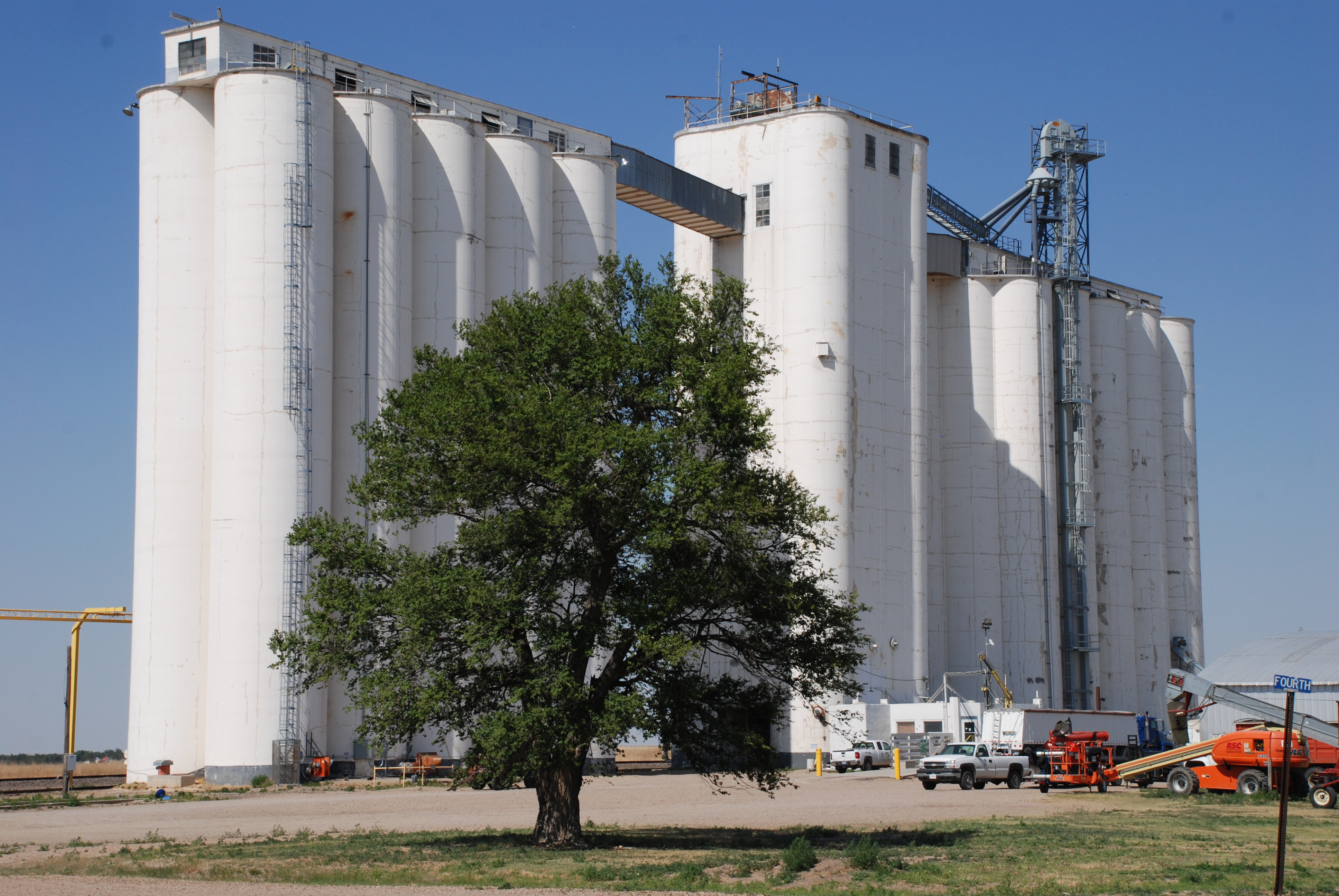
The Lodgepole, Neb. elevator viewed through a rainy windshield on a blustery day.

Story and photo by Kristen Cart

It was the heyday of elevator construction, and J. H. Tillotson, Contractor, of Denver, was riding the crest of the building wave, when a new elevator was begun along Highway 30 (the Lincoln Highway), in the sand hill country of western Nebraska. Lodgepole was a sleepy town along the rail line that connected Sidney to the west, with Chappell and Big Springs to the east.

My grandfather, William Osborn, had been building for several years, and he accompanied Joe Tillotson to Denver when Joe made his break with the family business, Tillotson Construction of Omaha, and set out on his own. The new company had several projects under its belt, and several others ongoing in 1947, when Lodgepole’s elevator was started.

Bill Morris, an employee poached from the parent company, was superintendent for the job.

The dangers of the business were well known. But for the J. H. Tillotson company, fate was especially cruel, though the disasters that befell the builders were of a more mundane sort. In about March of 1947, Bill Morris was changing a tire on the side of Highway 30 near Lodgepole when a car struck him, and he was killed.

Of course the construction project went forth, and my grandfather played a role, since he had the experience to step in where Bill Morris left off.

It was not long afterward that Joe Tillotson met his maker in a car accident–only a matter of a few weeks. In those days safety in vehicles was an afterthought, and the Grim Reaper was guaranteed a regular harvest.

Joe’s death opened doors for my grandfather, since there were elevators to build and contracts to fulfill. By September of 1948, Bill Osborn had joined with Eugene Mayer, Joe’s brother-in-law, and together they formed the partnership of Mayer-Osborn Construction Company. My dad said Grandpa had to put up some money to opt into the business, and then he continued as before, building elevators as fast as they would go up.

The McCook, Neb., elevator marked their first joint effort.

Timeline for Tillotson Const., J.H. Tillotson, and Mayer-Osborn companies and jobs

Ronald Ahrens and Kristen Cart cofounded this blog. Gary Rich is a primary contributor. We have visited elevators around the United States and Canada.

Ronald’s maternal grandfather was Reginald Oscar “Mike” Tillotson.

Kristen’s paternal grandfather was William Arthur Osborn.

Reginald O. Tillotson

R. O. Tillotson

Reginald’s company was Tillotson Construction Co., of Omaha. The company had been building and repairing wooden elevators since the 1920s, when it was led by Reginald’s father Charles H. Tillotson. Before his death, experiments were made with slip-form concrete construction techniques.

1938: Charles dies, and the company passes to his sons Reginald and Joseph H. Tillotson and daughter Mary V. Tillotson. They begin to perfect slip-forming and refine their design strategy, which includes a rounded headhouse.

1945: Tillotson Construction builds a concrete elevator in Giddings, Tex. William Osborn works on this project. He is probably employed by the company by late in ’44. Tillotson Construction wins the contract to build in Elkhart, Kan., and starts construction.

1946: The 225,000-bushel elevator in Elkhart is completed. “Shortly after the war, my Dad and Joe decided they couldn’t see eye to eye, so they split,” writes Charles J. Tillotson in “The Tillotson Construction Story” on this blog. Joe forms J.H. Tillotson, Contractor in Denver. William Osborn works for Joe Tillotson.

William A. Osborn in 1965

William A. Osborn in 1965

1947: Tillotson Construction builds  the Vinton Street elevator in Omaha. Joe Tillotson dies in a car accident in March. J.H. Tillotson, Contractor builds at Daykin and Fairbury, Neb., and Hanover and Linn, Kan., with William Osborn supervising the projects. Maxine Carter leaves Tillotson Construction on Oct. 7 to wed Russell L. Bentley.

1948: Formed in September from the residue of J.H. Tillotson, Contractor, the Mayer-Osborn Company builds its first elevator at McCook, Neb. Joe Tillotson’s wife Sylvia was a Mayer, and her brother Eugene Mayer is one of the partners. William Osborn is the other. Meanwhile, Reginald begins to use a light airplane for business travel in the postwar years. Reginald’s nephew John Hassman joins Tillotson Construction in September; among many other duties, he pilots the company plane to jobs in Nebraska, Kansas, and Oklahoma. Tillotson’s projects that year are in Paullina, Iowa, and Montevideo, Minn.

1949: John Hassman’s father Ralph, Reginald’s cousin, joins Tillotson Construction in sales and stays through 1952.

1950: Construction begins in November on the Tillotson house, which is built of concrete. It still stands north of Omaha. Tillotson employee Jess Weiser weds Lavonne Wiemers on Dec. 22.

1951: Drafted into the Air Force, John Hassman leaves Tillotson Construction in January.

Related articles

An inside look at the J. H. Tillotson elevator at Hanover, Kansas

The J. H. Tillotson straight-up elevator in Hanover, Kan. just after a rain

The J. H. Tillotson straight-up elevator in Hanover, Kan. just after a rain. 

Story and photos by Kristen Cart

One of the loveliest elevators J. H. Tillotson, Contractor ever built is still in use at Hanover, Kansas. Last October, during a visit to this small Washington County town just seven miles south of the Nebraska border, I photographed the elevator under moody skies and marveled at its clean, graceful lines. Then it was time to get to the business of finding out about it.

DSC_0681

Ryan Riekenberg takes a moment to show me around the elevator.

Fortunately, Ryan Rieckenberg, a twenty-year employee of the Farmers Cooperative Association, was on hand to show me inside. He had previously worked for the grain department and currently worked as a crop sprayer. He said before the Hanover location joined the Worchester-based Farmers Cooperative, it operated its own association called the Farmers Union of Hanover. He said the elevator was currently used for milo.

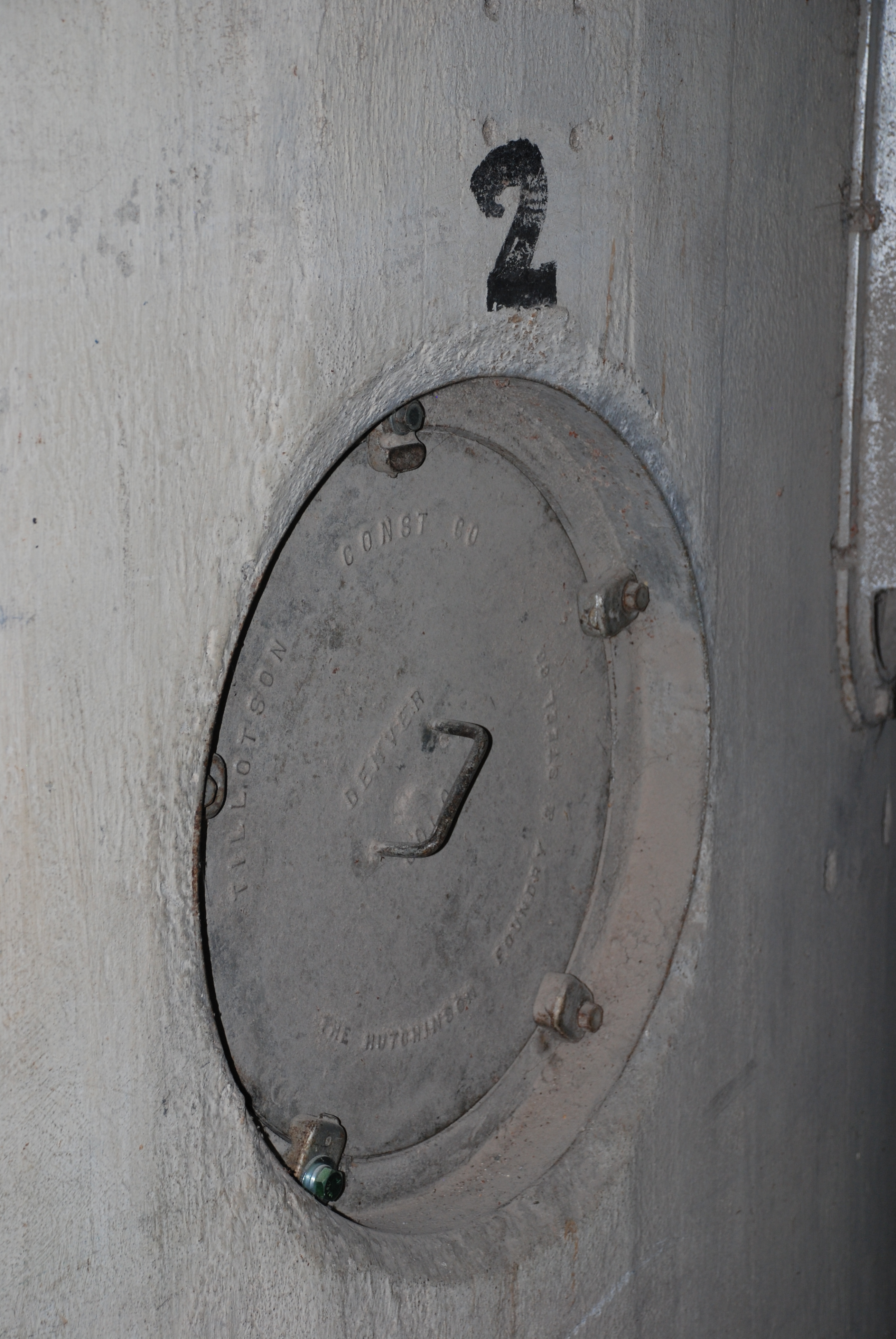
The manhole cover identified the builder

Manhole cover

He pulled up in his truck, fished out his keys, and took me into the elevator to look at its interior, including the manhole covers that positively identified the elevator as a J. H. Tillotson project.

As he unlocked the door, Ryan supplied some historical details. The elevator had been built beside an old wooden elevator, which was used as a feed mill until it was demolished about eight years ago. We entered the doorway a couple of steps up from the gravel drive where the old wooden edifice used to stand.

DSC_0673

The elevator leg

Once inside, we could see the leg in the center of the elevator. A grate covered the pit, and Ryan opened the grate to display the sloped bottom where the grain would funnel toward the base of the leg, to be scooped up and carried to the top of the elevator for distribution to the bins. The leg extended all the way to the bottom of the pit. A ladder went into the pit from another opening, providing access for cleaning and maintenance.

Nearby, a cage-enclosed man-lift gave access to the integral head-house at the top of the elevator. The cage was almost certainly a later modification, since the old man lifts didn’t have them.

DSC_0670

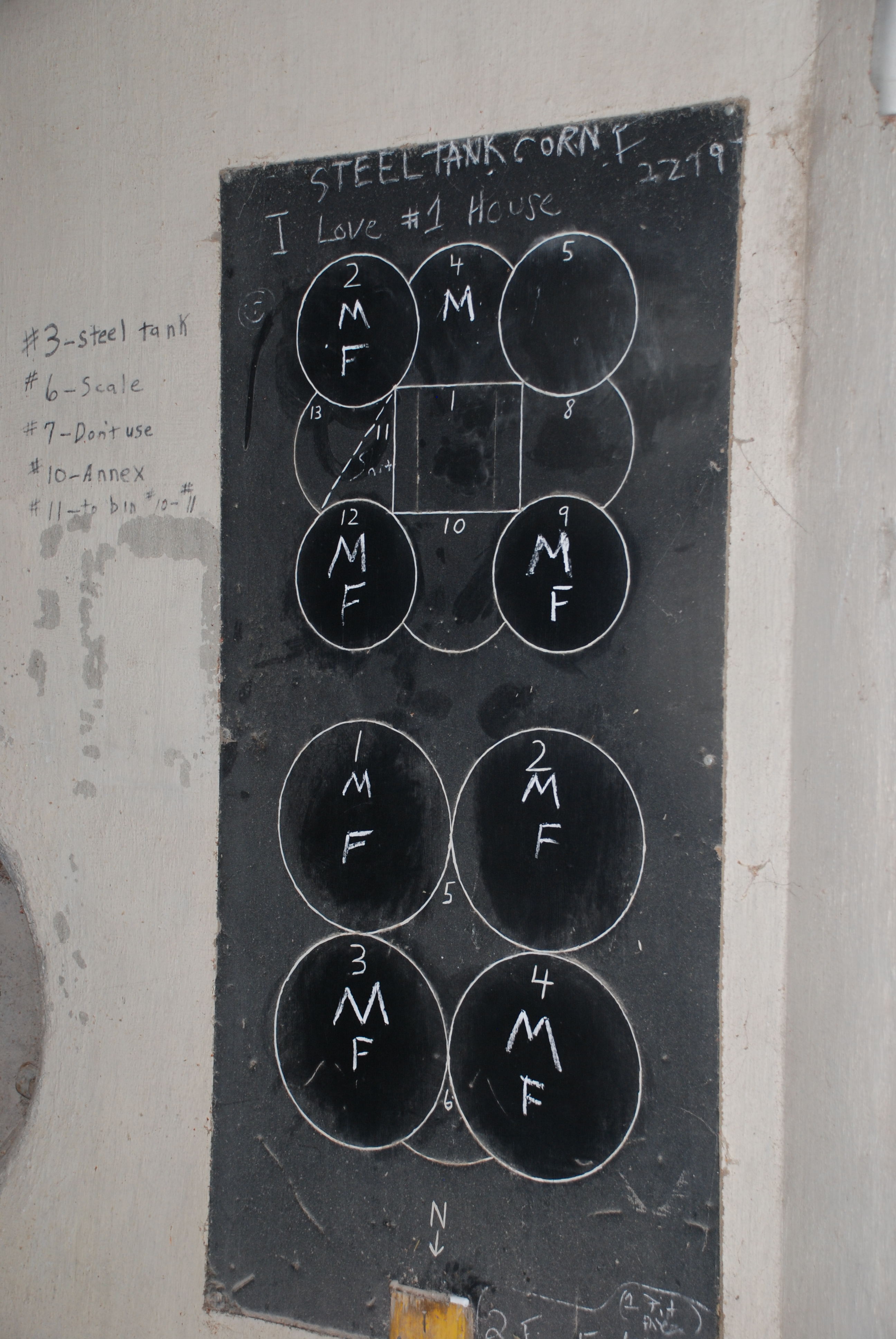
The distribution diagram

Prominently displayed on one of the bins was a diagram of the elevator and its annex. Here the storage assignments for each of the bins were noted, including the neighboring steel bin, which was served by the same integral head-house with a chute from the top of the elevator. Presumably, “M” stood for milo, and a note indicated that the steel bin held corn. Perhaps “F’ indicated feed, but that is just a guess.

I’m not sure why someone wrote “I love #1 house,” but if they meant this lovely elevator that my grandfather, William Osborn, built for Joe Tillotson’s company in 1947, I must share the sentiment. It was a dandy, and it appeared to have a long, useful life ahead of it.

DSC_0689

A view from the west side where the feed mill used to stand. 

By making tricky distinctions, it’s possible to discern the builder of an elevator

Story and photos by Kristen Cart

The question whether each elevator construction company had a signature style has become a topic of intense discussion and research here, and we don’t have all of the answers yet.

Johnson-Sampson Construction Company, of Salina, Kan., built elevators that were very similar to those of J. H. Tillotson, Contractor, of Denver and Mayer-Osborn Construction, also of Denver, prompting a great deal of debate about how that came to be.

Our pages for McCook, Neb., and Blencoe, Iowa, show elevators each with a stepped, rounded headhouse and about a quarter-million-bushel capacity. It was a standard elevator style for Mayer-Osborn, even appearing in their ads, until they closed their doors in 1954.

After that date, Johnson-Sampson was building a nearly identical elevator. We don’t know whether the architect moved on to work for Johnson-Sampson or the design was sold. The elevator at Limon, Colo., is in the same style, but there is no indication who built it—no paperwork, and no name on the manhole covers or the interior of the elevator.

Mayer-Osborn’s elevator at Kanorado, Kan., shows the company’s typical grooved vertical style.

So the question becomes: was the style proprietary to one company or to one designer who sold his design to all comers?

The Kanorado, Kan., elevator was built by Mayer-Osborn, in a design adopted from J. H. Tillotson, Contractor, after Joe Tillotson died in 1948. The same company essentially carried on under the new partnership of William Osborn and Eugene Mayer, and some of the earlier designs remained unchanged. The grooved vertical lines are only found on elevators made by those two companies.

Identical detailing can be found on elevators in Lodgepole and Wauneta, Neb., and Monument, Traer, and Goodland, Kan., among others—all of which were built by J. H Tillotson.

Another example, at Page City, Kan., comes from Johnson-Sampson, as proven by the manhole covers. The operator says it was built in the late 1950s. It looks very similar to the elevators in Wauneta, Neb., and Traer, Kan., built by J. H. Tillotson before his death in 1948. A few details and dimensions differ, and in this case the changes appear to be distinctive for Johnson-Sampson elevators. I feel fairly confident that the Page City elevator is an example of an identifiable Johnson-Sampson design.

Johnson-Sampson’s elevators in Brandon, Colo., and Page City, Kan., are clones to each other. They look very much like the Mayer-Osborn design but have slightly different dimensions and lack the vertical grooves.

Arriba, Colo., is another of the same type.

Johnson-Sampson’s Page City elevator lacks the vertical grooves.

My best guess is the larger, successful companies had a few standard designs for their customers. If a customer wanted to request a proposal, they would give specifications, and the company would customize to meet the described needs, presenting the plans in their contract bid. Upon acceptance, the elevator would rise, with enough differences from the basic design to make it unique.

A few telltale details suggest the builder’s identity, but you can’t be absolutely sure until you see a document or a manhole cover to confirm your suspicion.

The elevator at McAllaster, Kansas, proved to be a missed opportunity

McAllaster, Kan., photo by Gary Rich

Story by Kristen Cart

Sometimes our elevator quest ends in a dead end, without definitive answers. In the case of McAllaster, Kan., we had only an old photo belonging to my grandfather, William Osborn, to go on, and Gary Rich and I never got any independent confirmation of the builder. When I went to visit the elevator two months ago, nothing was left and there was no sign it had ever existed.

William Osborn photo

Gary Rich tried hard to get information about the builder, after he had gone to McAllaster to photograph the elevator. Both of us made calls to the cooperative. But all we were able to confirm was that it was slated for destruction sometime this year. It was shut up tight, of course, when Gary went to see it, and, no man-hole covers were visible from the outside. The only clue we could find was an old photo of one of grandpa’s projects, which was probably built for J. H. Tillotson, Contractor, of Denver, Colo., judging by the style. The caveat was that quite a few others similar to this one were also built, and some of them have long since disappeared.

Gary Rich photo

Elevators like those at Daykin, Fairbury, and Bradshaw, all in Nebraska, were built in a similar style, so the only clues to their builder are external to the main house: elements such as windows, driveways, office buildings, and loading chutes can be compared to details in my grandfather’s old photos. Of course, if we have independent verification, such as contemporary newspaper accounts or my dad’s memories, it makes our lives easier, since only one of grandpa’s photos has any caption. Daykin and Fairbury have both been verified in this way.

When the photo above is compared with the photos taken by Gary Rich of the McAllaster elevator, it shows just enough difference to dash our hopes for an identification. The building behind the driveway appears to be attached, and the windows don’t match our photos of McAllaster. So we are at a frustrating impasse. We still don’t know the identity of the elevator in grandpa’s photo, and we still don’t know the builder of the McAllaster elevator, though we suspect it was a J. H. Tillotson project. With no way to verify it, we are at the disappointing end of our quest.

In Monument, Kansas, the elevator is closed to visitors and its story sealed

Story and photos by Kristen Cart

I approach this post with a little bit of trepidation, since the Monument, Kan., elevator does not invite tourists–even those with family connections. It is operated by a large corporation which primarily supplies corn for ethanol. It seems that an overly inviting manager might be risking his job, so I contented myself with photos taken from off of the property. But I was able to cobble together some information about it, from a variety of sources. Suffice it to say, it would not be prudent to reveal all of them.

A view of the Monument, Kan., elevator, taken from off-property. Visitors weren’t permitted at the facility.

I was able to determine the builder for the stand-up elevator with its integral head house. The manhole covers are stamped with the company name of J. H. Tillotson, Denver, Colo. The annex on the left has unmarked ports, but the annex on the right has man-hole covers stamped with the company name Mayer-Osborn. I did not see any of the ports for myself, so I am relying on secondhand information. But my grandfather apparently made a return trip after building the original house.

The original elevator was built for a Mr. Bertrand, whose son is still living. The elevator once had a brass plaque installed, which has since been removed and may still be with the Bertrand family. There were also early photographs of the elevator, and it is believed that they went with the plaque.

I spoke with a gentleman named Fred Wassemiller, who said, “These elevators were the best thing going–they should have kept building them.” He also said it was too bad that the “old-timers around here are gone.”

Apparently, they could have told me a lot.

By 1930, the Tillotsons are prospering — with a radio set!

By Ronald Ahrens

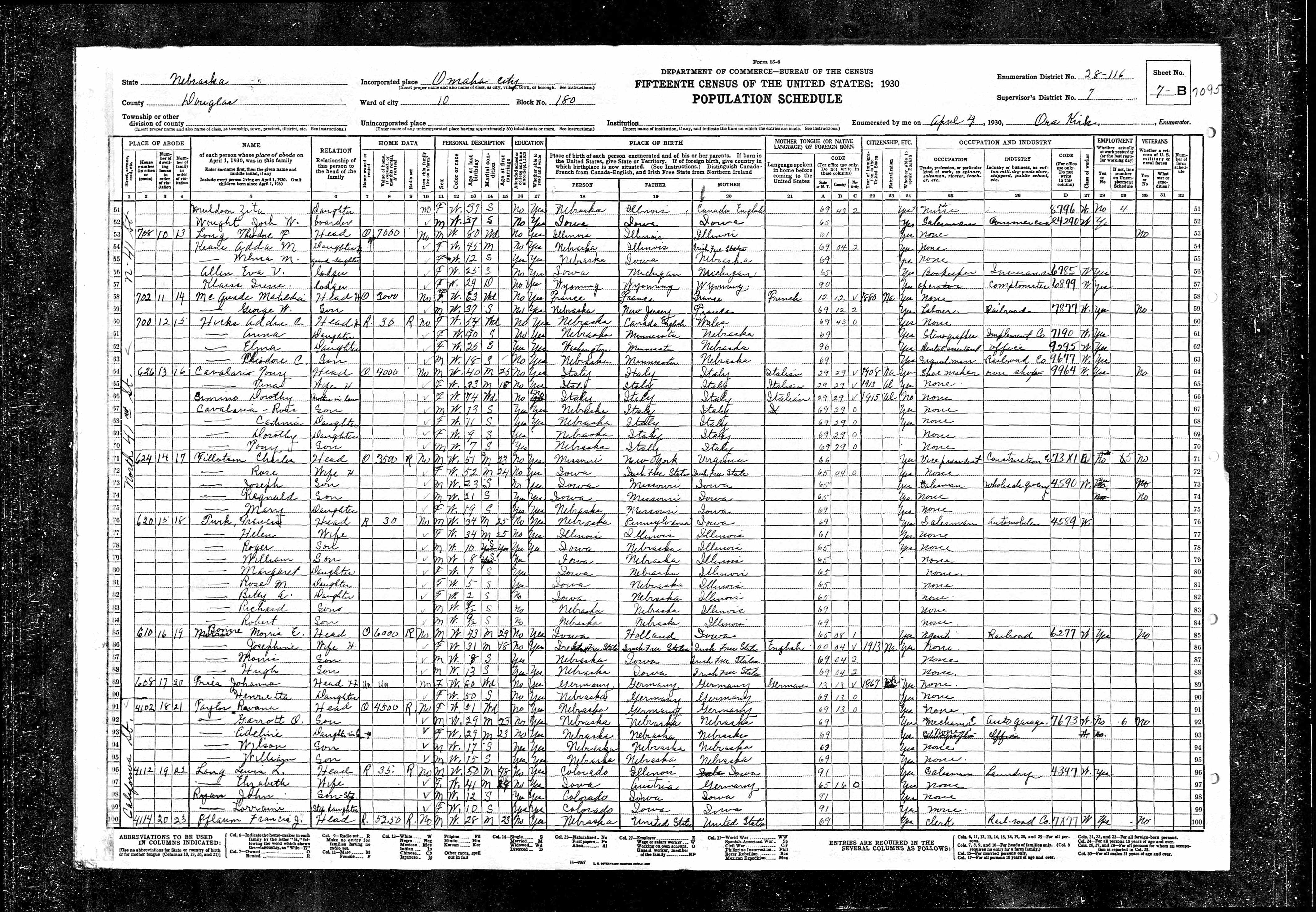
On April 4, 1930, the census-taker knocked at the Tillotsons’ door at 624 N. 41 St., in Omaha, and found them prospering.

Charles H. Tillotson, 51, was head of household and gave his occupation as superintendent in construction. Census code 73X1 supports this. It appears he was an employee.

Rose Tillotson, 52, was home. The age given here corroborates my belief that Rose’s age, given as 38 in 1920, was incorrect.

Charles was 23 and Rose 24 when they were wed.

Son Joseph, 23, was employed as a salesman in the wholesale grocery business, as census code 4590 supports. Son Reginald, 21, as well as daughter Mary, 19, also lived in the home.

The Tillotsons owned their home, which was valued at $3500. And they cooperated in supplying an extra bit of data: they had a radio set.

By 1935, Reginald would be the father of Charles J. Tillotson, the first of six children with Margaret Irene McDunn Tillotson. The grandson would barely know his grandfather: Charles H. would die in June 1938 at Concordia, Kansas.

1920 census finds the Tillotsons settled in Omaha

By Ronald Ahrens

After their sojourn on Alda Street in Elba, Nebraska, where they were living at the time of the 1910 census, the family of Charles H. and Rose A. Tillotson found their way to Omaha.

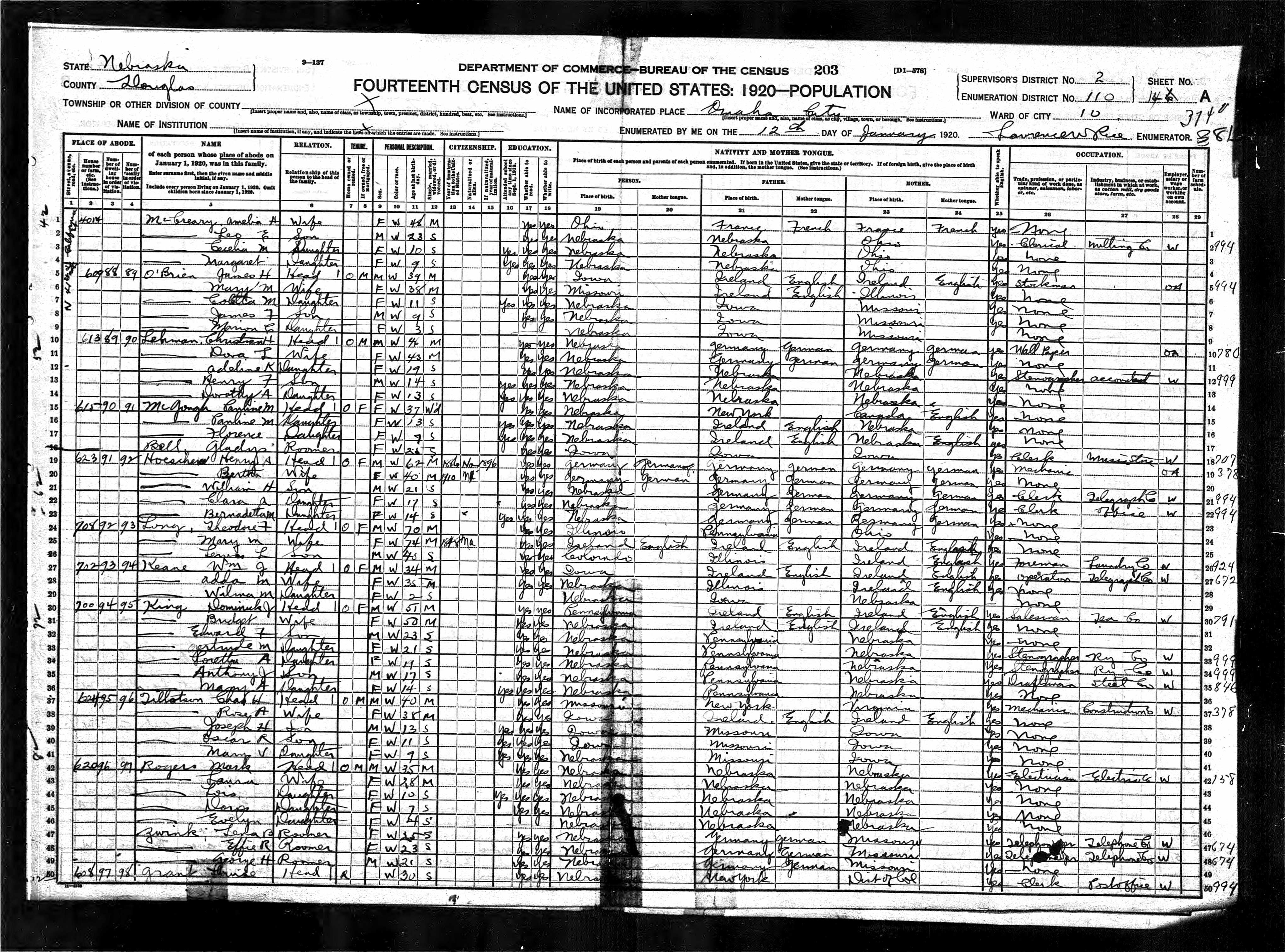
When the census-taker came to the door in 1920, my great-grandfather gave his occupation as a “mechanic” in construction. This tells me several things. One is that just fifteen years earlier, the term “mechanician” was frequently used in the press. So it might be said that the language was in a sense settling.

Another thing is that mechanic was rather loosely defined. During the 1930s, Bill Knudsen, who became president of General Motors in 1937, gave speeches and interviews in which he insisted that every boy should learn the mechanic’s trade. This didn’t necessarily mean auto mechanics. It was more a case of learning the manual arts: sheet-metal work, electrical, maybe even plumbing or pipefitting.

But in the case of “Chas. H,” as he’s here listed (he was Charlie in 1910), I suspect it has something to do with assembling the legs and other internals of grain elevators.

Note that, whereas he was evidently an employer in 1910, he’s now a worker. The family was living at 624 N. 41 St, where they would be found again in 1930.

My grandfather’s name is entered incorrectly as “Oscar R.” instead of Reginald Oscar.

Joseph H. was 13, Reginald was 11, and Mary V. was 9. (Although that numeral may at first glance look like a 7, inspection by magnifying glass of a printed copy shows that it’s in fact a 9 with the loop nearly closed.)

Meanwhile, it’s certainly unusual that my great-grandmother Rose was thirty-five years old in 1910 but here is thirty-eight. Hers had to be the most effective anti-aging strategy ever!

Census data, genealogical work establish Tillotsons from 17th-century onward

In the following passage, Kristen, an experienced genealogist, destroys the myth that my grandmother, Margaret Irene McDunn Tillotson, always perpetuated about the Tillotsons being an Irish family:

I seem to have had a run of very good luck. Your [Tillotson] tree is verified back to 1816 with the census and before that, other researchers have the family back to the 1750s in Connecticut. It was an early family. Lots of families moved west around the time of the Civil War, and some of these very earliest families seem to have gravitated toward Nebraska. It does not surprise me at all to find a New England root for your family.

Charles [father of Reginald] was the son of John W. Tillotson, and his father was John W. Tillotson. They came from Cazenovia, Madison County, New York. The younger John moved to Missouri, then Iowa, then Nebraska. The online researcher has an Ephraim as father of the older John, and an Abraham before that. (I have evidence that Abraham Tillotson served in the Revolutionary War, and got a pension.) The researcher said they came from Hebron, Connecticut. I have not chased down wives. The elder John had a good amount of land—220 acres—in 1860, improved and worth quite a bit of money.

One webpage has data as far back as the 17th century.

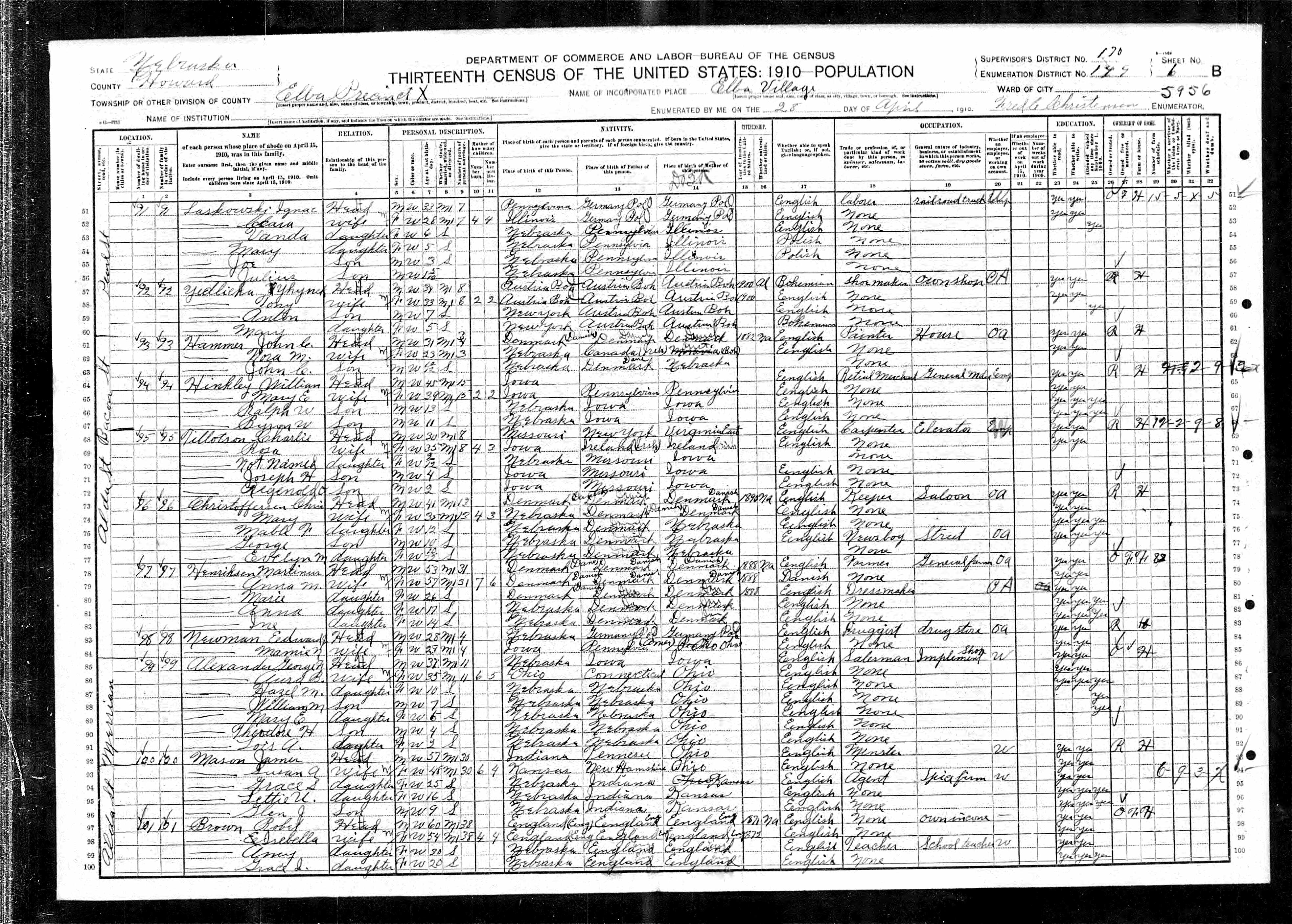
The 1910 census reveals important information. Charlie and Rose Tillotson were 30 and 35 years old, respectively, were able to read and write, and lived on Alda Street in Elba, Howard County, Nebraska. (The seat of this east-central county is St. Paul.) They had already had brought Joseph, age four, and Reginald, age two, and an as yet unnamed baby daughter into the world. Both boys were born in Iowa, but the girl, undoubtedly Mary, had been born in Nebraska, so the Tillotson family had come there within the last two years. Charlie’s occupation is given as carpenter, his place of occupation was an elevator, he evidently had employees, and the family rented a house.

1940 Omaha directory shows new home addresses for Tillotsons

The Omaha city directory for 1940 shows new information for the Tillotsons as compared to the year before.A change within the business organization was that Rose Tillotson had relinquished her duties as treasurer to daughter Mary V. Tillotson. But Rose continued to serve as company secretary.

All the home addresses were different for 1940.

Joe and Sylvia Tillotson were living at 2205 Jones, apartment 213.

Rose and Mary Tillotson, mother and daughter, shared a place at 3100 Chicago St.

And Reginald’s address is given as RD 2, Florence. RD could be the abbreviation for rural delivery. His family lived in the hills north of Florence, which was the village at the far north of Omaha.