By Ronald Ahrens
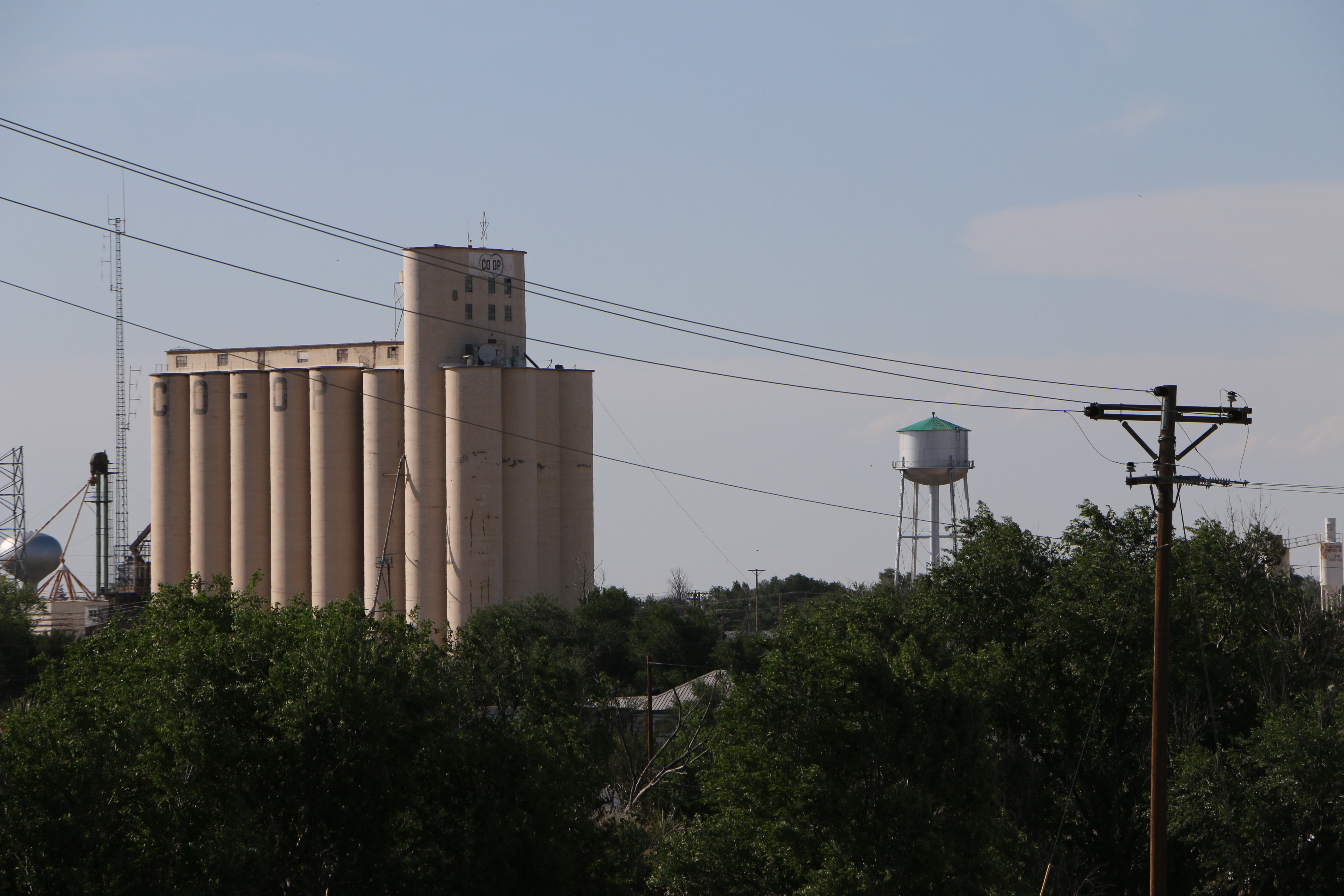
Not a Tillotson elevator, I insisted on June 8 as we drove into Springfield, Colo. Well, maybe a Tillotson elevator. Then we pulled up alongside and looked at the manhole covers. Yes, a Tillotson elevator!
We should have known by the curved cupola, but it was hard to see the exact form of it from the distance. That’s my excuse for not recognizing this majestic building.

As one of about 30 branch locations of Pride Ag Resources, the impressive Tillotson elevator in Springfield is mated to a storage annex and looks mighty fine. That is, except for the dryer unit at the back. It’s complete with scaffolding and a little cabin perched on a platform. Lord have mercy on this aesthetic mess!
Tillotson Construction Company’s records include the specs for a 1948 job in Springfield–a 250,000-bushel twin-leg elevator following the standard plan that was worked out the year before at Satanta, Kansas.

There’s nothing to suggest Tillotson hadn’t perfected its curved cupola, as exhibited at Springfield, until sometime later than 1948. The manhole covers here are embossed with the words Tillotson Construction Co., Omaha, Nebr., 1958.
The company records, which are incomplete, don’t list a Springfield job that year. It wasn’t unusual for Tillotson to build a main house and a storage annex. The annex usually came later.


Unable to explain the discrepancy between what’s recorded and what I found, I’ll await clarification. Meantime, there are lots of photos to examine.
As we were leaving, a farmer was filling his pickup at the co-op’s pump, and I said hello. He farms 7,000 acres at a location a few miles north of town. The dry winter led to failure of the spring crop, so he was plowing and discing and intended to re-plant in hopes of salvaging a summer harvest.
After the uncertainties as we had arrived in Springfield, it was with a note of triumph that I told him, “My grandfather built this elevator.”
 Our Grandfathers' Grain Elevators
Ronald, The scaffolding and “cabin” are for train loading. At the top of the scaffolding is a bulk-weigher. The “cabin” below is for the scale operator/train loading employee. When the BNSF went to trains (27 and 54 cars) it also started to require origin weights and grades. That also allowed the shipper to “draft” or receive 90% of the shipment’s value from the buyer. Pride Ag Resources (Dodge City) acquired this facility several years ago through a merger with the Elkhart Cooperative.
Brad