By Ronald Ahrens
It was an uneventful run through the night until the track led Burlington No. 22 to the flyspeck town of Corning in northwest Missouri. Corning wasn’t even normally a whistlestop but now, at 2.30 a.m., the locomotive’s crew released a blast to alert the sleeping Holt County community that their Farmers Grain Co. elevator was burning.
A hell of a blaze was going by the time the fire crew arrived on scene, and they couldn’t stop the destruction. The coup de grâce occurred when the roof fell in, and by dawn on that Saturday, April 29, 1933, the elevator had collapsed and was a smoldering ruin. Authorities indicated the fire had started under the cob bin. The elevator and its contents were insured for $8,000.
It would become a case of Van Ness Construction, from 95 miles away in Omaha, to the rescue.
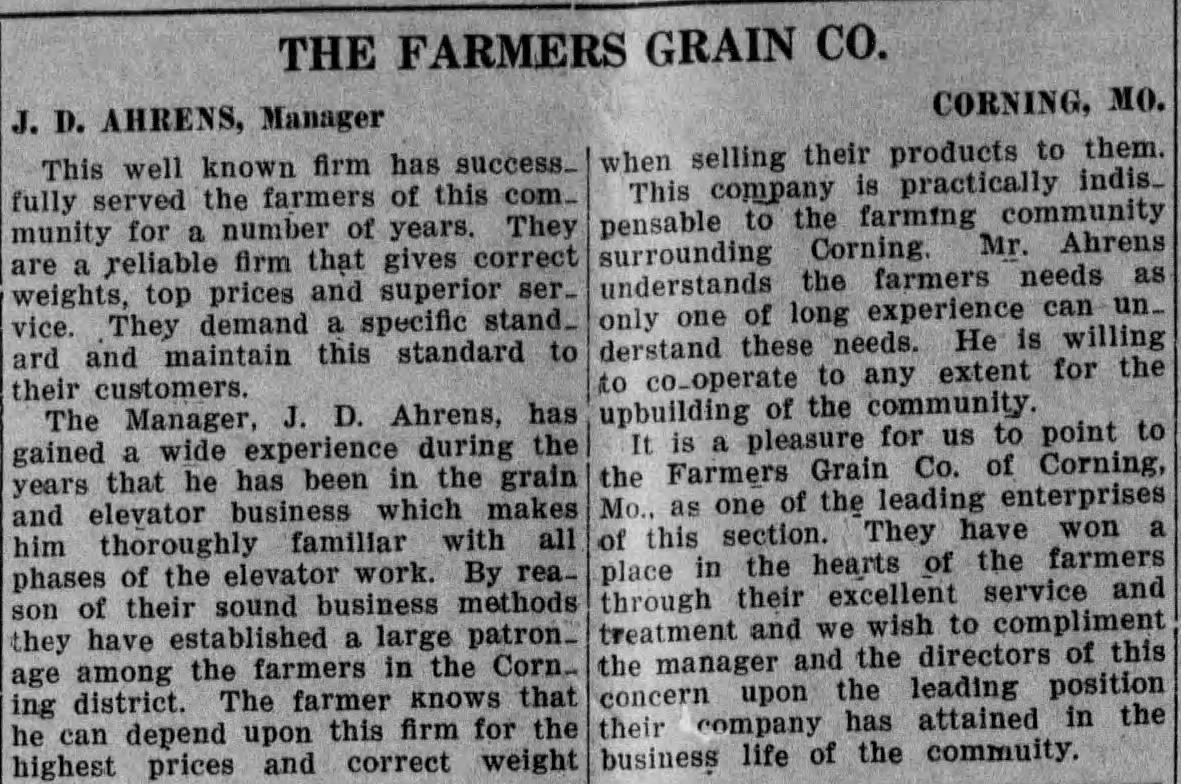
Oddly enough, on the very day before, a newspaper called The Holt County Democrat and The Craig Leader had run a substantial profile of the Farmers Grain Co. as part of a feature titled “Who’s Who in Neighboring Towns.”
Under the management of J.D. Ahrens (no relation to the present blogger), the “well known firm” was successful for years.
“They are a reliable firm that gives correct weights, top prices and superior service,” the profile declared. “They demand a specific standard and maintain this standard to their customers.”
The elevator was “practically indispensable to the farming community surrounding Corning” and had even “won a place in the hearts of the farmers through their excellent service and treatment.”
Obviously, quick replacement of the elevator would be a priority. Van Ness, which employed my great-grandfather Charles H. Tillotson and grandfather Reginald O. Tillotson, who was in his mid-twenties, came onto the scene.
So sure of a good outcome were the principals of Farmers Grain that, on June 23, The Holt County Democrat reported one V.A. Solleder had bought a Chevrolet truck for use at the elevator.
“Heretofore the elevator has been handicapped because of the inability to make delivery of coal, cobs and grain, also in hauling from the Farmers, their grain,” the news item said.
“The truck will be an important asset to the business.”
Meanwhile, the Omaha crew toiled on with help from some local men who joined in.
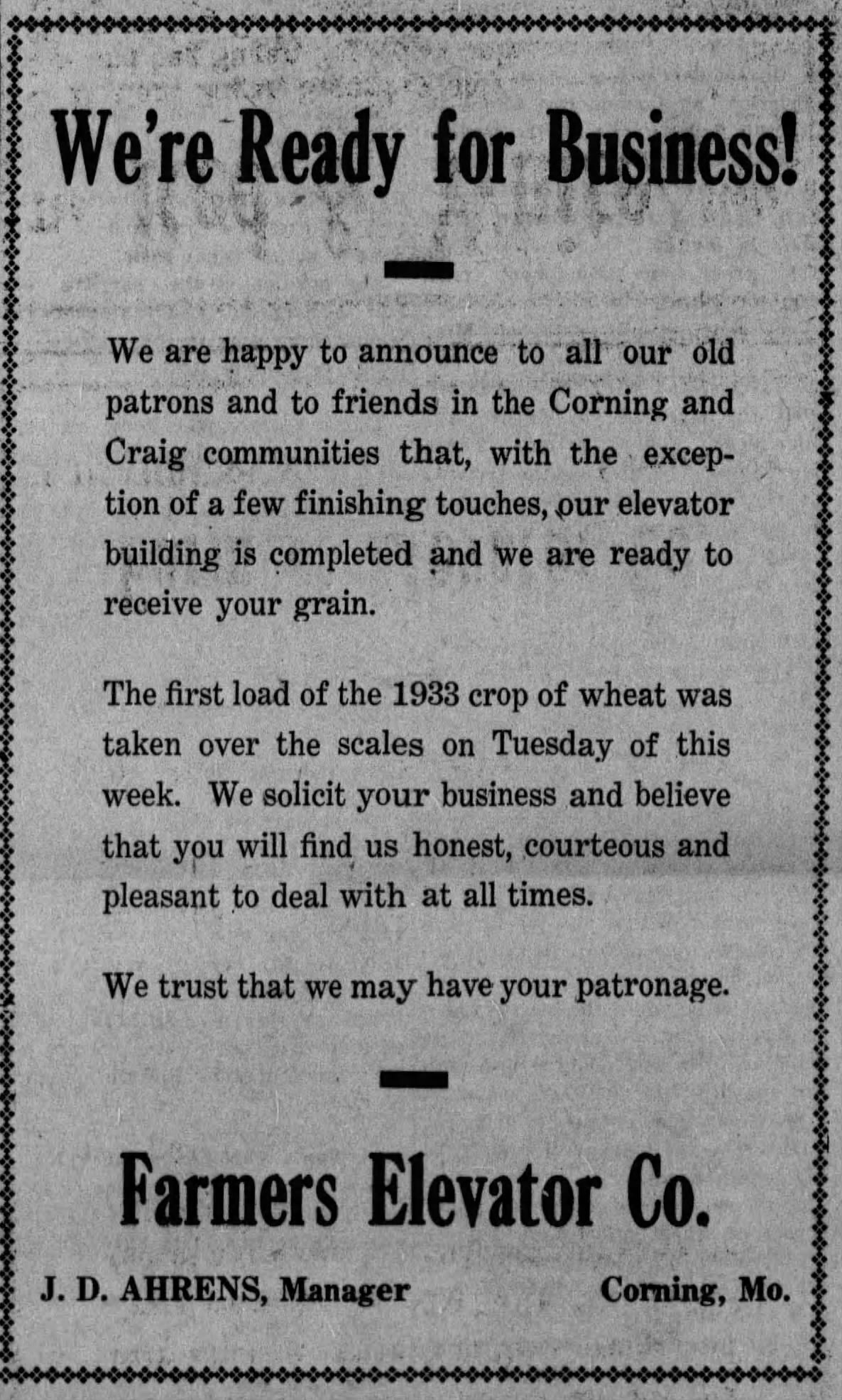
Only a few finishing touches remained to be completed when Farmers Elevator placed a July 14 ad in the Leader informing “all our old patrons and … friends in the Corning and Craig communities … we are ready to receive your grain.”
Van Ness performed its part with unprecedented skill and speed.
“It was exactly forty-eight days from the time the contractor began the work on the new building until it was ready for use,” a July 23 article reported. Farmer James Mavity arrived with the first load of wheat.
The new elevator that was bigger than the old by some 5,000 bushels, giving a total capacity of 18,000 bushels, and work was completed at the tidy price of $7,000, which ensured the cooperative’s solvency.
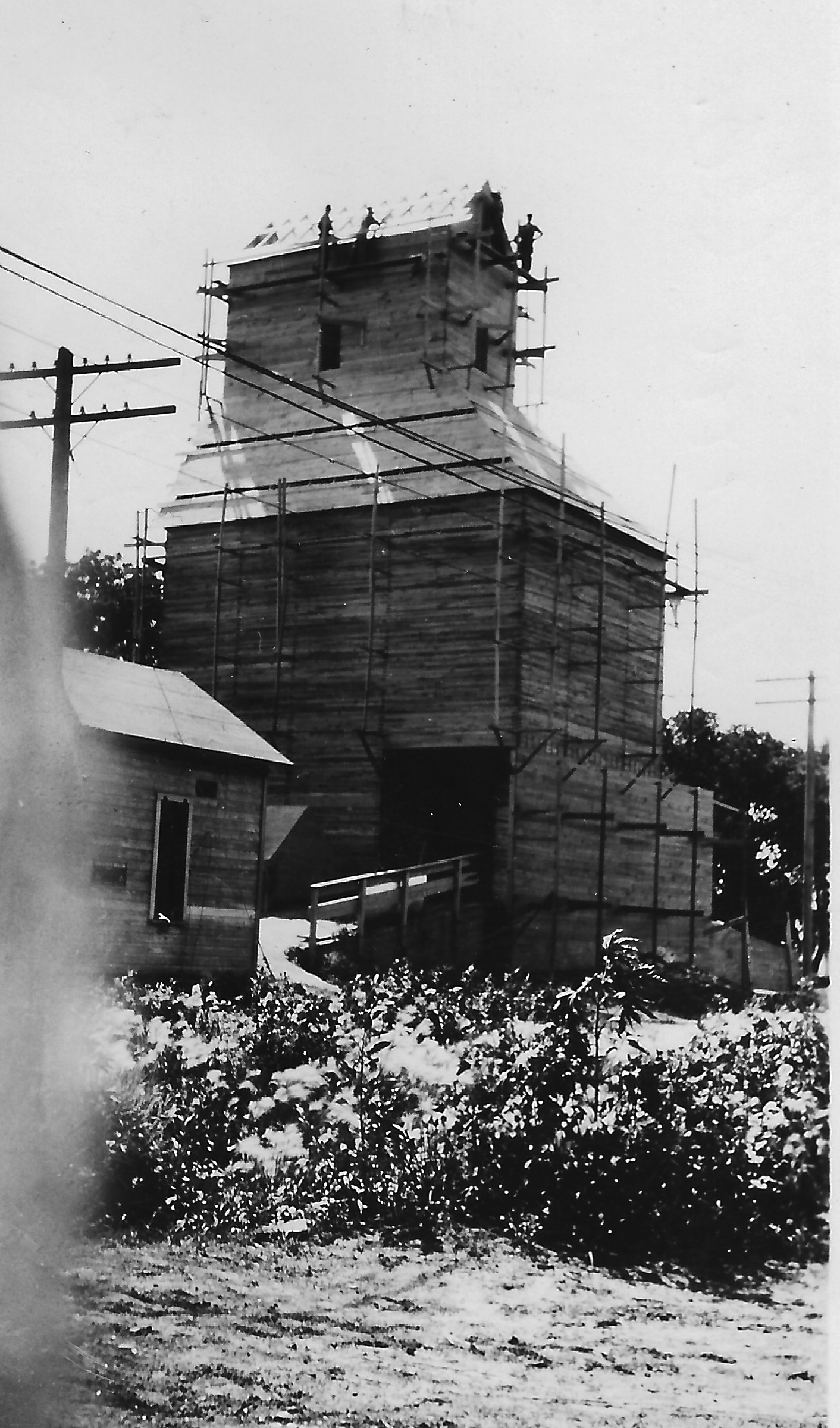
Near the end of that job, Reginald snapped the photo we see with this post, providing enduring evidence of the Tillotsons’ handiwork.
 Our Grandfathers' Grain Elevators
We lived in Van Ness apartments on Van Ness street when we lived in Washington, D.C.!!
Sent from Gmail Mobile