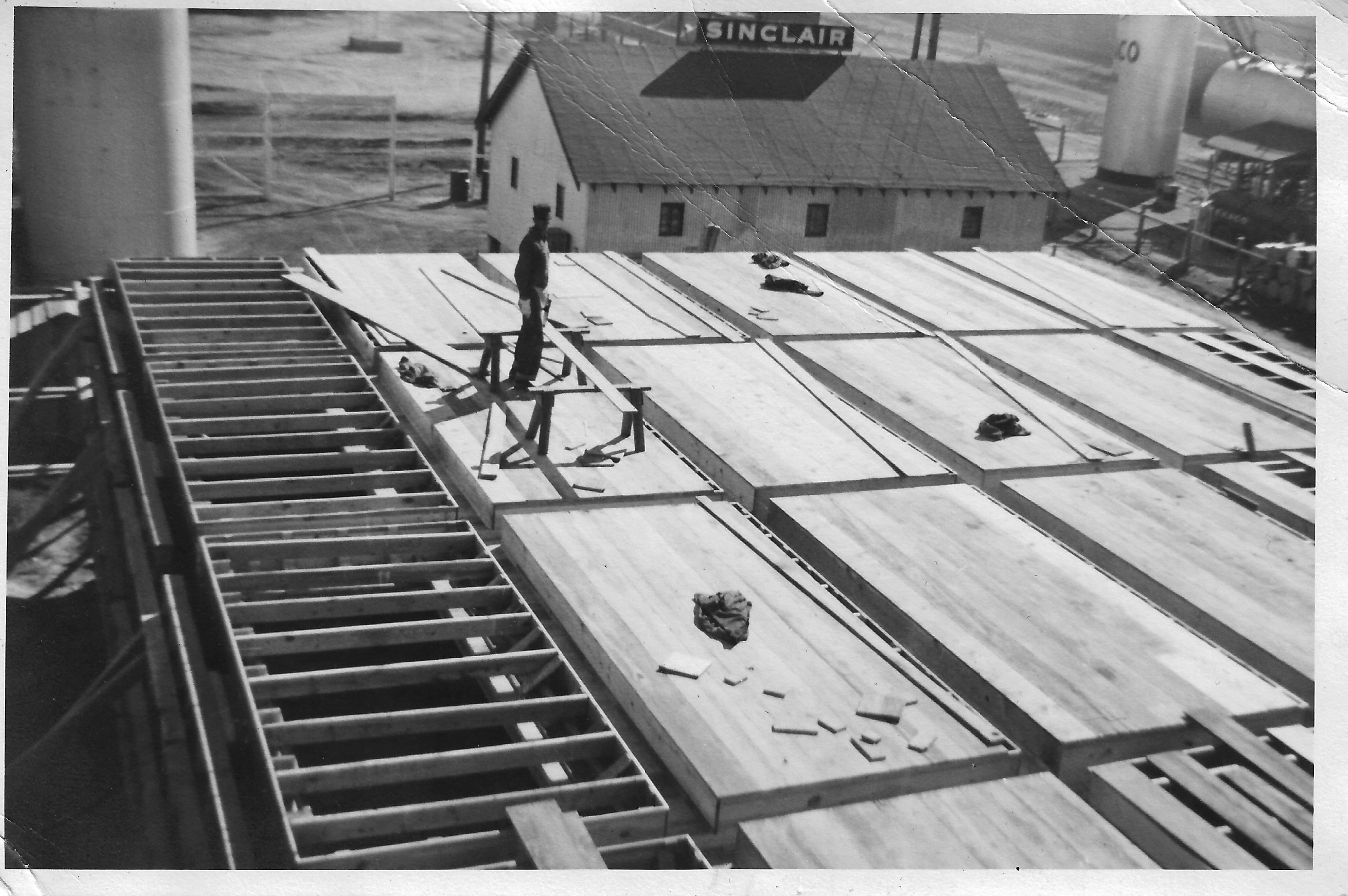
Four years after their 1937 call to remedy fire loss at George Neuswanger’s elevator in Alliance, Nebr., the Tillotsons returned to that Panhandle town with the commission to build more storage and a feed mill.
The Alliance Times-Herald reported as follows:
Construction work has begun on a large warehouse and feed processing plant here by the J.H. Tillotson contracting company of Omaha for George Neuswanger of Alliance.
We are unsure how “J.H. Tillotson contracting company” got the credit. The brothers Reginald and Joseph Tillotson formed Tillotson Construction Co. in 1938. We believe a rupture between then led to the founding of Joseph H. Tillotson, Contractor in 1948. Joe Tillotson died not long afterward in a car accident. There could be more to learn on this question, but until then we rely on existing records and previous verbal accounts.
The newspaper continued:
The building will be located just north of the Neuswanger elevator. The warehouse will be 148 feet long and 50 feet wide, and the feed processing mill will be 32 feet square. Total cost of the project has been listed at $12,000.
According to Neuswanger, some difficulty is being experienced in the obtaining of material, and he has no idea when the building which will be of reinforced concrete construction, will be completed. At this time much of the excavation work has been completed by a dragline which has been in operation this week.
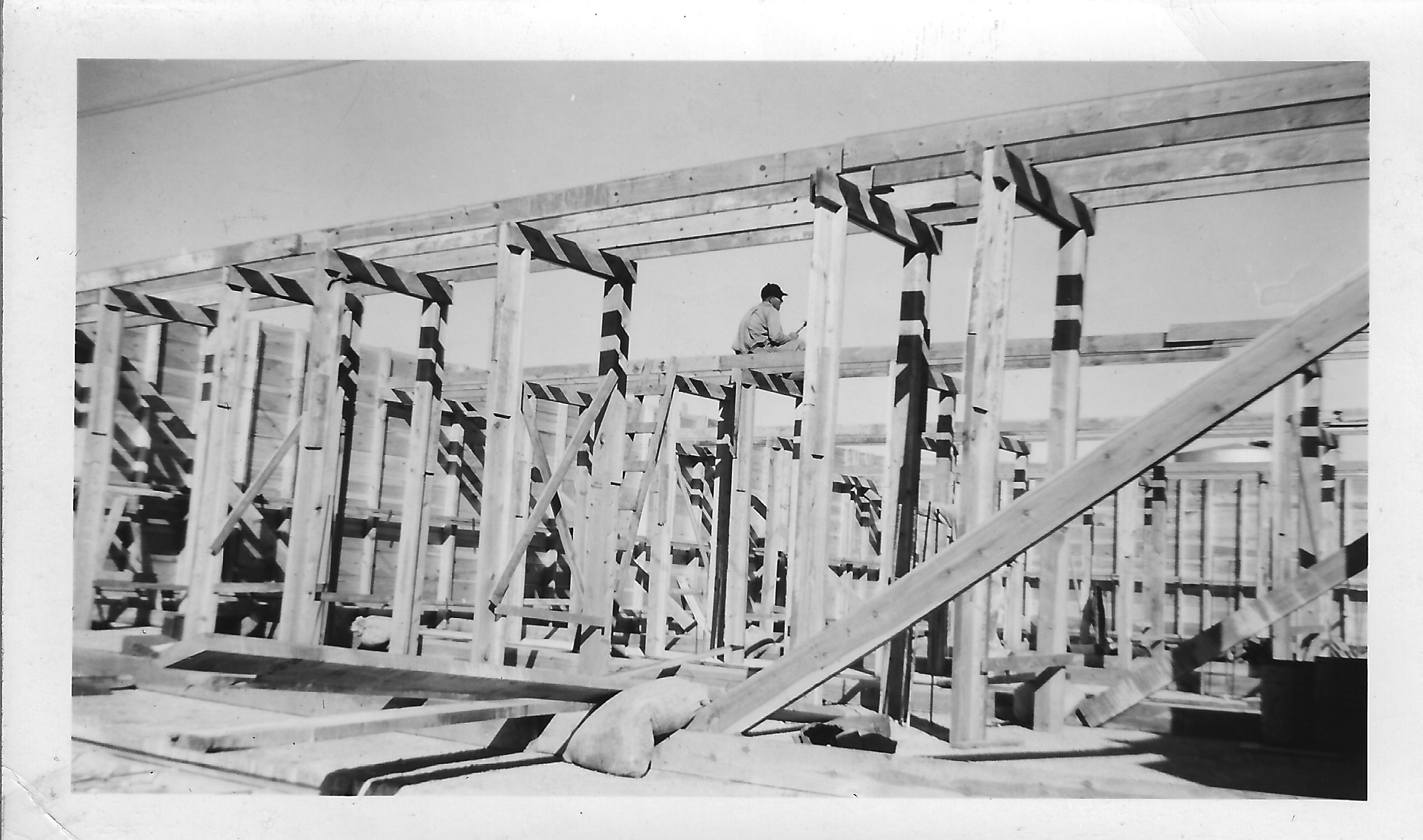
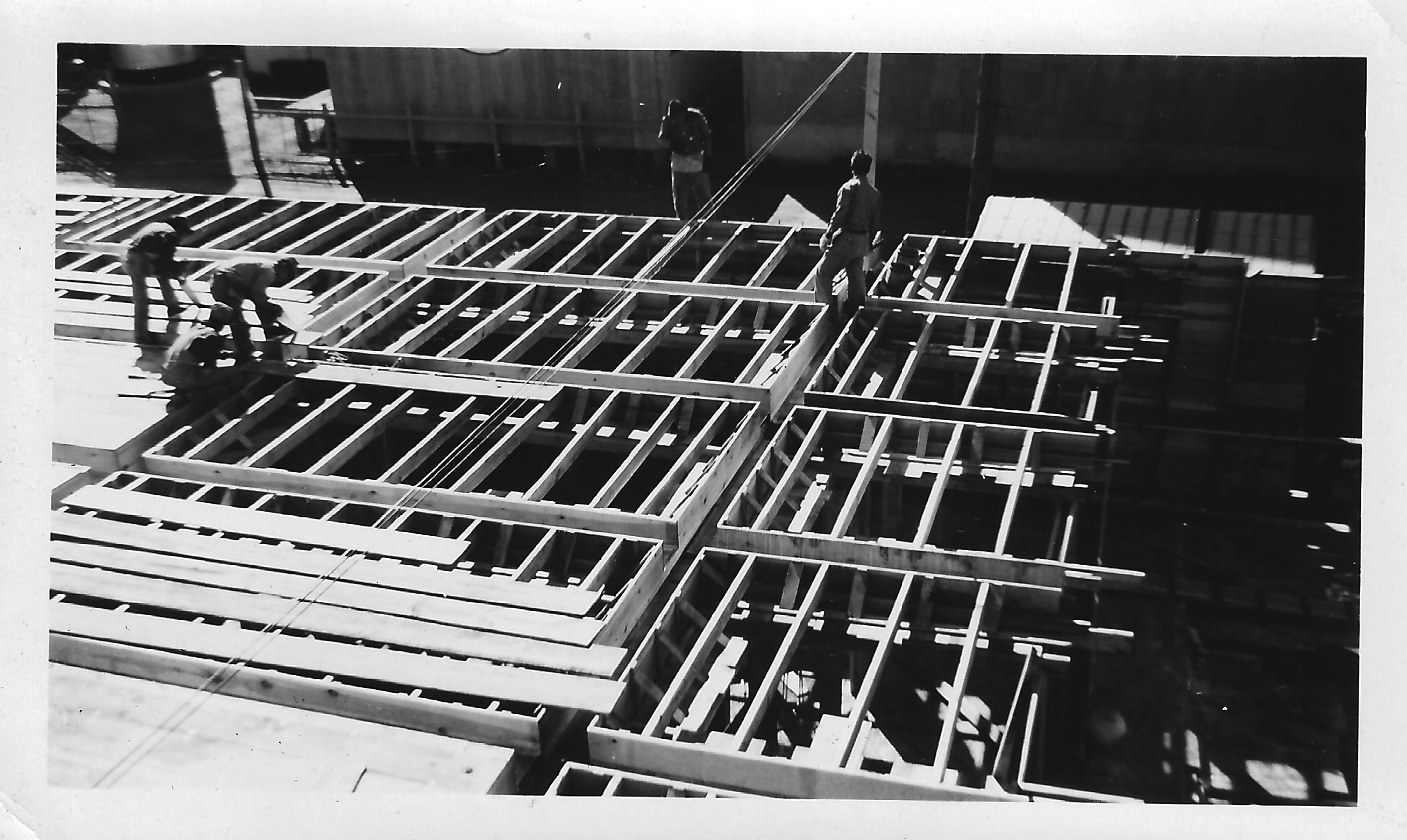
The newspaper added these details:
Concrete mixing machinery is already in place at the site, a tool and supply shed has been erected, and some of the forms are being built. Much of the gravel which will be needed has been hauled to the site also.
When the feed processing plant is put into operation, mixing and grinding of many types of livestock feed will be carried on here, Neuswanger said.
In part because of the large barley crop, grain storage facilities were at a premium in those months just before the United States entered World War Two. Nebraska farmers were expected to harvest 33 million bushels of grain.
While there was sufficient capacity for 55 million bushels in total, space was available for only 13.5 million.
The federal government allowed farmers seven cents per bushel towards putting up new storage silos on their farms.
Otherwise, a state official had this suggestion: “Another way to store the coming harvest is to bind and stack it. Stacking is becoming a lost art, but it is still an excellent method.”
 Our Grandfathers' Grain Elevators