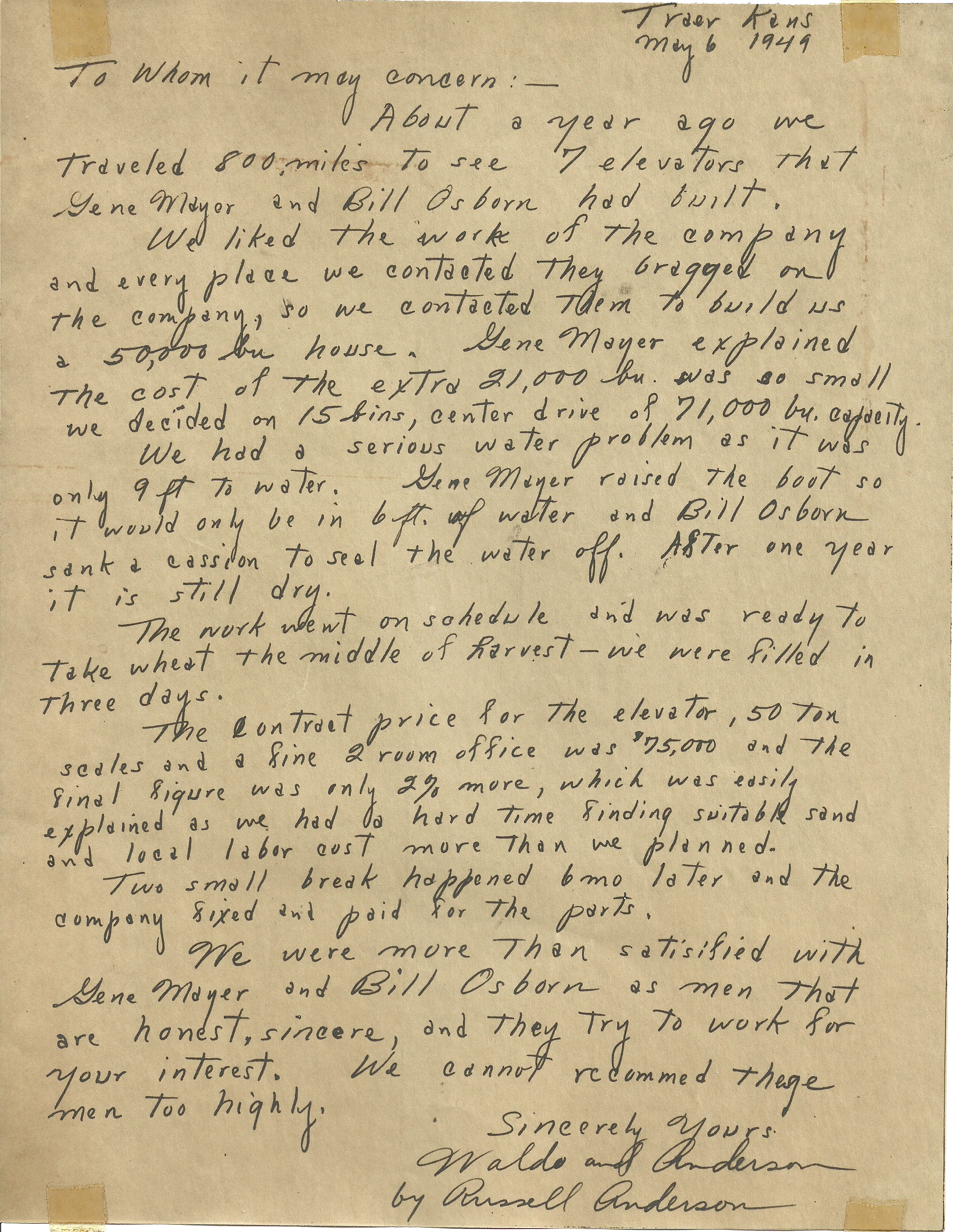
 Ever since Kristen got me interested in the history of elevators, I am always looking for new avenues. One thing that I have noticed that Tillotson Construction Company, J. H. Tillotson, Contractor, and Mayer-Osborn Construction built grain elevators in eastern Colorado and western Kansas. However, I never knew them to build the storage annexes. There are cases in which one of these companies built the grain elevator; then another company called Chalmers & Borton would be in the same town within three to five years building a storage annex.
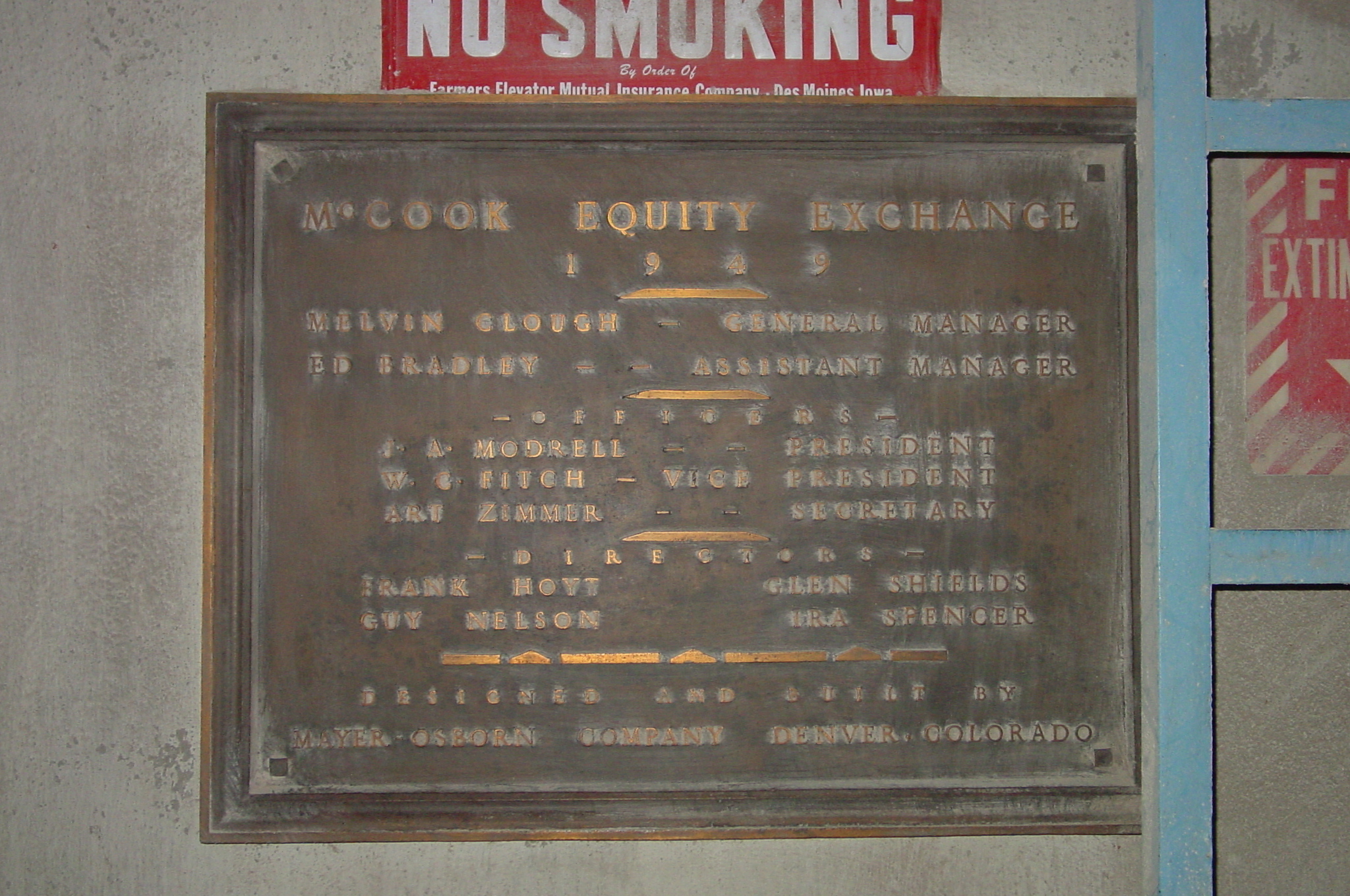
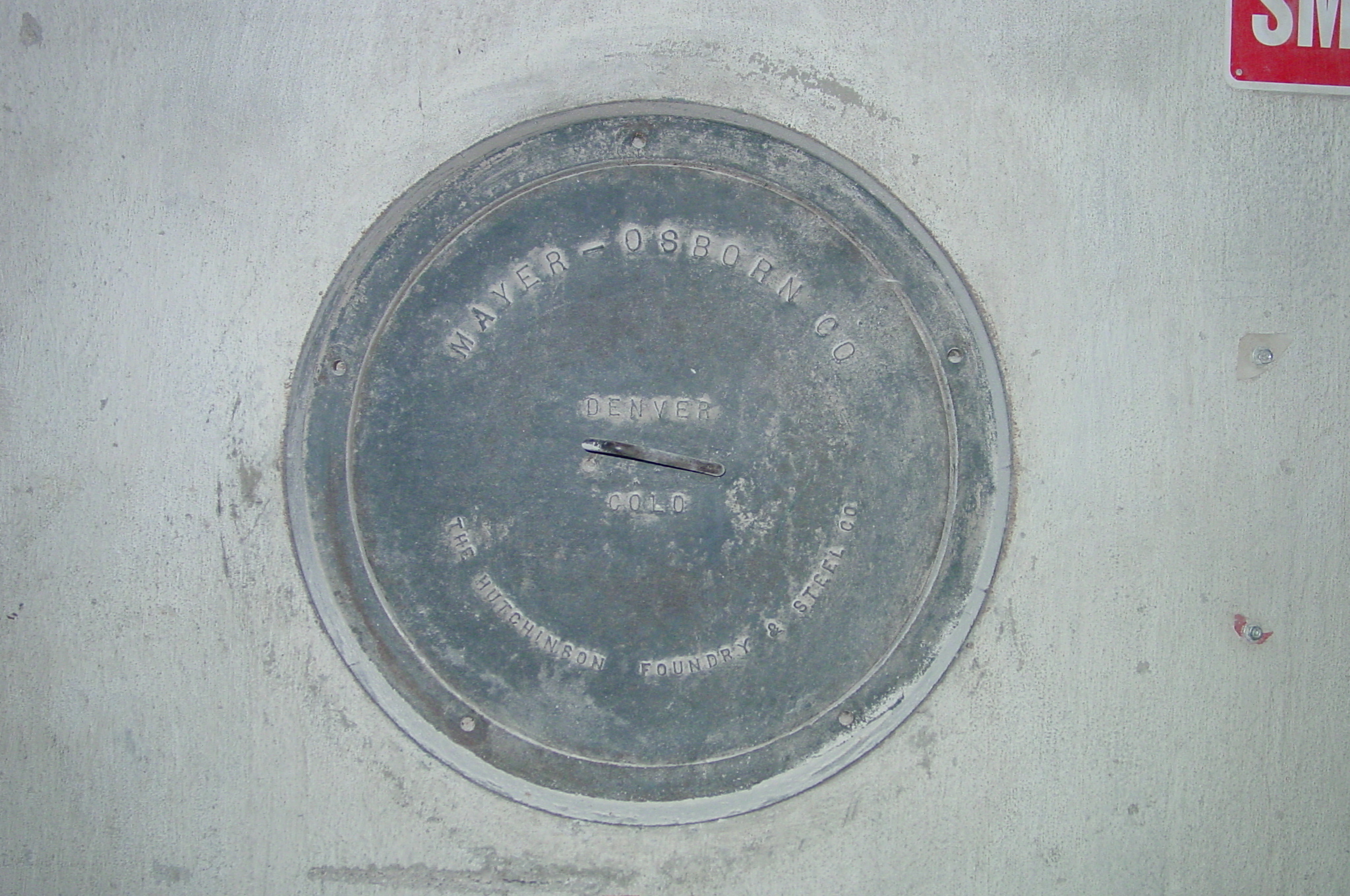
 I was very excited when I walked up to the annex at Maywood, Nebraska. I saw the manhole covers had Mayer-Osborn on them. I knew that I found my first annex that was built by one of the three companies.
There is a major problem with this annex at Maywood. You can see the cracks in the annex and where they have tried patching them. I drove back to Maywood several days later. Part of the annex still has grain in it. I talked with a person at the office. They are planning on tearing down the annex sometime this year or 2013. They have not made up their mind if they will save the elevator or not. When you are standing looking at both the elevator and annex, it is hard to say which is leaning the most. It looks like the elevator is leaning towards the annex. But on the other hand, the annex is leaning towards the elevator. The image that shows the grain dryer, the bin nearest the elevator, has been emptied, as well as the center bin. The north side still has grain in the all the bins, as well as the bin on the southwest corner (the image that has the sunlight on it).
 I finally found a grain annex that these companies built, but it will be history soon.



 Our Grandfathers' Grain Elevators