How does a grain elevator work?

By Gary Rich

First of all, let me explain how an elevator actually works. The grain is dumped from a truck through the grates. The area below the grate is called the pit. The leg runs from the pit to the head house. On the leg is a thick rubber belt with buckets or cups. When the leg is started, the belt will move through the pit. The cups will fill up the grain and take it to the head house. As the leg reaches the top, it will arch, the cups will be up side down. When the cups turn to go back down towards the pit, they empty the grain on a conveyor belt. The cups will be facing downward, until the cups reach the pit and the will right themselves, filling up with more grain.

The run is the conveyor belt between the elevator and a storage annex. The run will have walls on the side of conveyor. They could be completely covered, too. Workers will set up the run, to a certain bin. There are openings at each bin. There is generally a door that they can open, so the grain will fall into the bin. They will put another piece of metal on the run, which acts like a chute. Thus, when the grain gets to the proper bin, and the grain hits the chute, the grain will move toward the opening of the run, and the grain will empty into the bin.

Sometimes, there will be a short conveyor belt that can be put under the main conveyor belt from the elevator. It is the same method. The grain will hit the chute, then through the opening, onto the second conveyor belt, which has a rise to it, and it will dump the grain into the bin.

Kristen mentioned that the bins are sloped. Most bins are built this way. You can think of it as self cleaning, as all the grain will come out the bottom of the bin. Now, if they built the bin flat, most of the grain can be removed. However there will still be about three feet of grain that is away from the bottom opening. Then some one has to climb through the manhole into the bin and they must shove the grain through the opening at the bottom. This is the only way that you can empty a flat bin.

The storage annex always has a basement. There is a conveyor belt that runs from a bin, back to the elevator, then up into a hopper. Most elevators have two separate hoppers. One will load a rail car and the other one can load a truck. If you did not have this conveyor belt, you could not unload a bin.

The area where the run is located is enclosed. If you look at a photo of a grain elevator with a storage annex, you will see an enclosed area above the storage annex. Outside this area, the bins are covered with concrete. Inside the run, either part of each bin will be open, or they could have metal slabs that cover the bins.
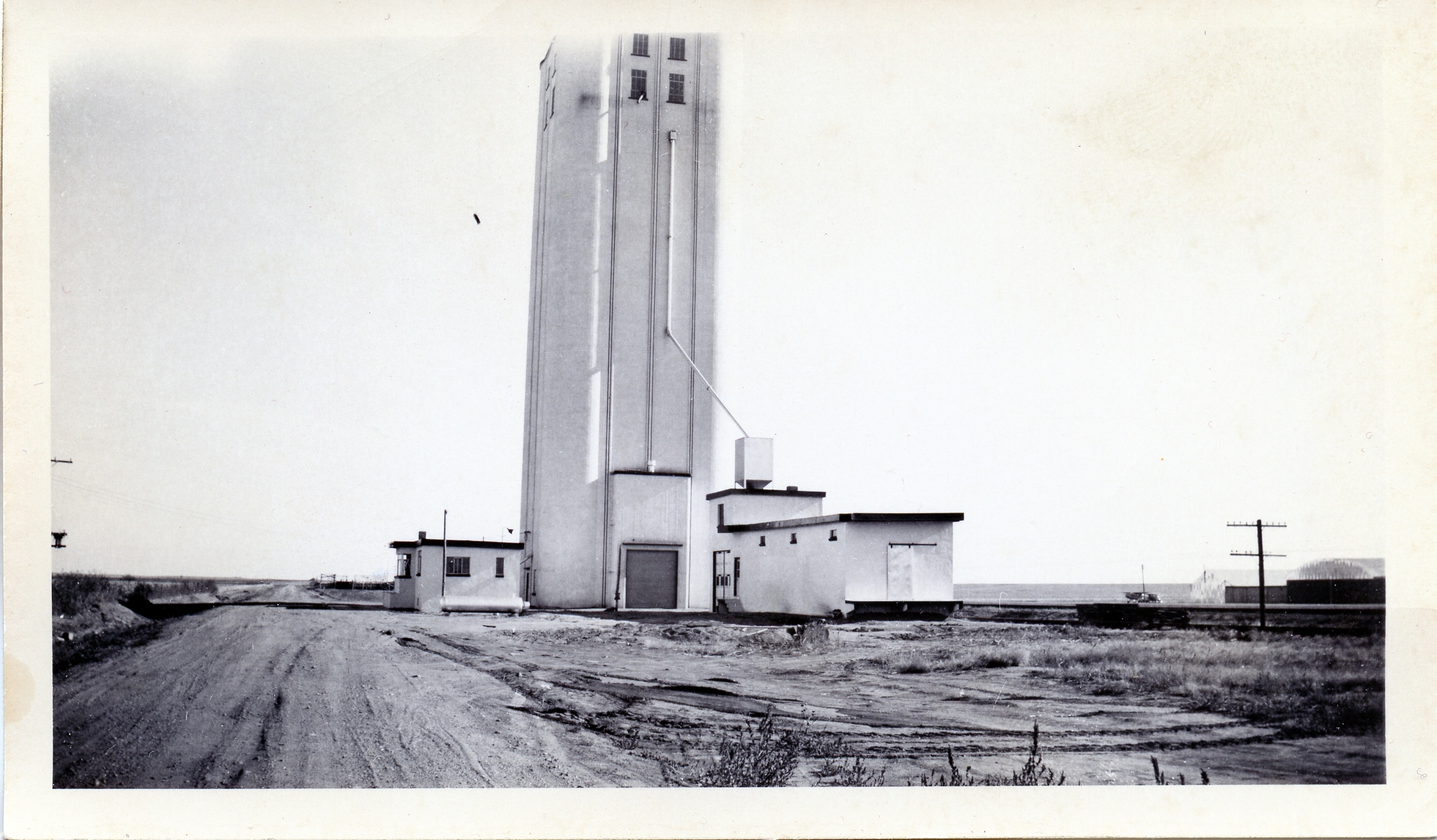
William Osborn’s photo of the Kanorado, Kansas, elevator

By Kristen Osborn Cart

This is an image that was in my grandfather’s papers when he died. It was his photo, since he was the only photographer in the family. This was the only elevator image he identified on the back. The caption was “Kanorado, KA, 125,000 bu.” I know Grandpa worked on it because he photographed it. We know it was built before March of 1947, which was the month Joe Tillotson died.

Grandpa was working for Tillotson Construction of Omaha as late as the fall of 1944 through the spring of 1945, when Giddings, Texas, was built. Dad visited Grandpa on the Giddings job, so he was able to date it–they visited in early 1945, the spring, when Dad turned eleven years old. That means the Kanorado elevator was built circa 1945 to 1947.

It may be hard to find information on Joe Tillotson’s business because he was independent for such a short time–even though there were quite a few elevators to his name.

¶ Ronald’s note: While posting this, I gave Kan-o-RAY-do a call and was told that original records pertaining to the elevator’s construction burned in an office fire.


Details of the Kanorado, Kansas, elevator by J.H. Tillotson, Contractor

Story and Photos by Gary Rich

Kanorado, Kansas–J.H. Tillotson, Contractor, of Denver, built this elevator. Here’s a view of the south side. Note the windows near the top. J.H. Tillotson and Mayer-Osborn built the no-headhouse elevators with different window arrangements.


This view shows the elevator, the office building and feed mill. I do not have a date for when it was built.


The office and feed mill were built at the same time.


This is a manhole cover inside the elevator.


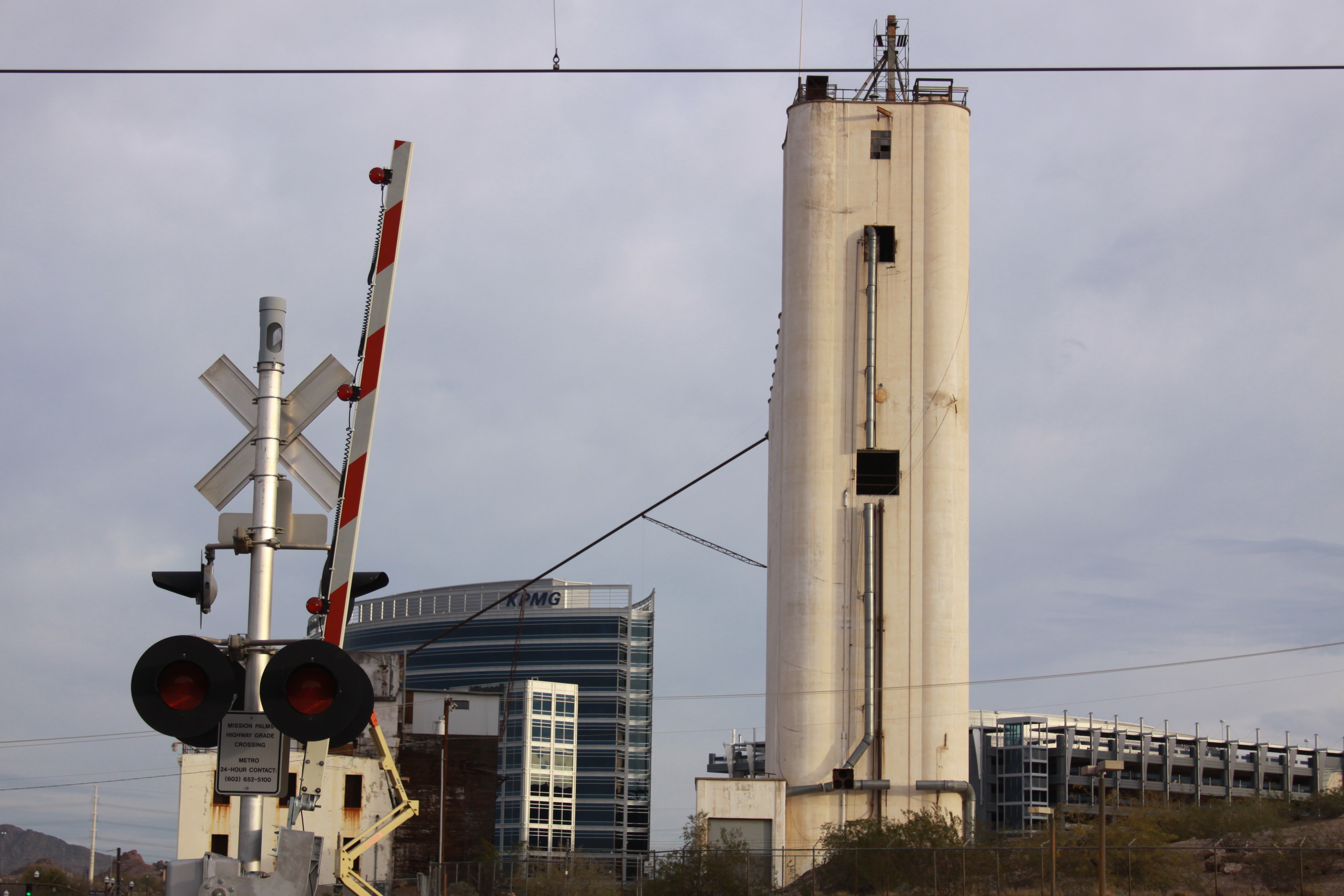
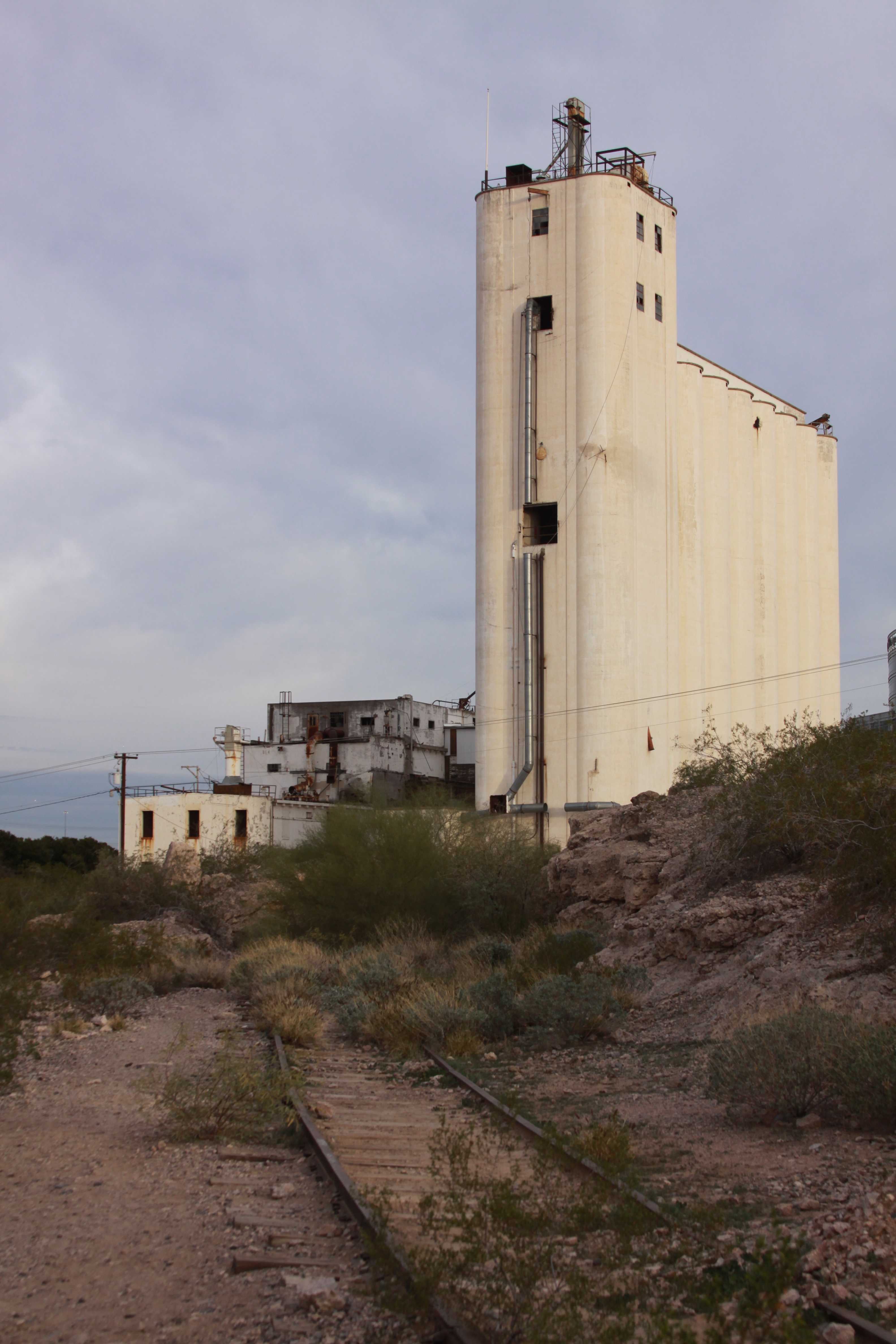
In Tempe, a Mayer-Osborn elevator complements the historic Hayden Mill

Story and Photos by Ronald Ahrens

Tempe, Ariz.–Ensconced amid sleek office buildings on South Mill Avenue here, the Hayden Flour Mill represents the very origin of this city now best known as the home of Arizona State University.

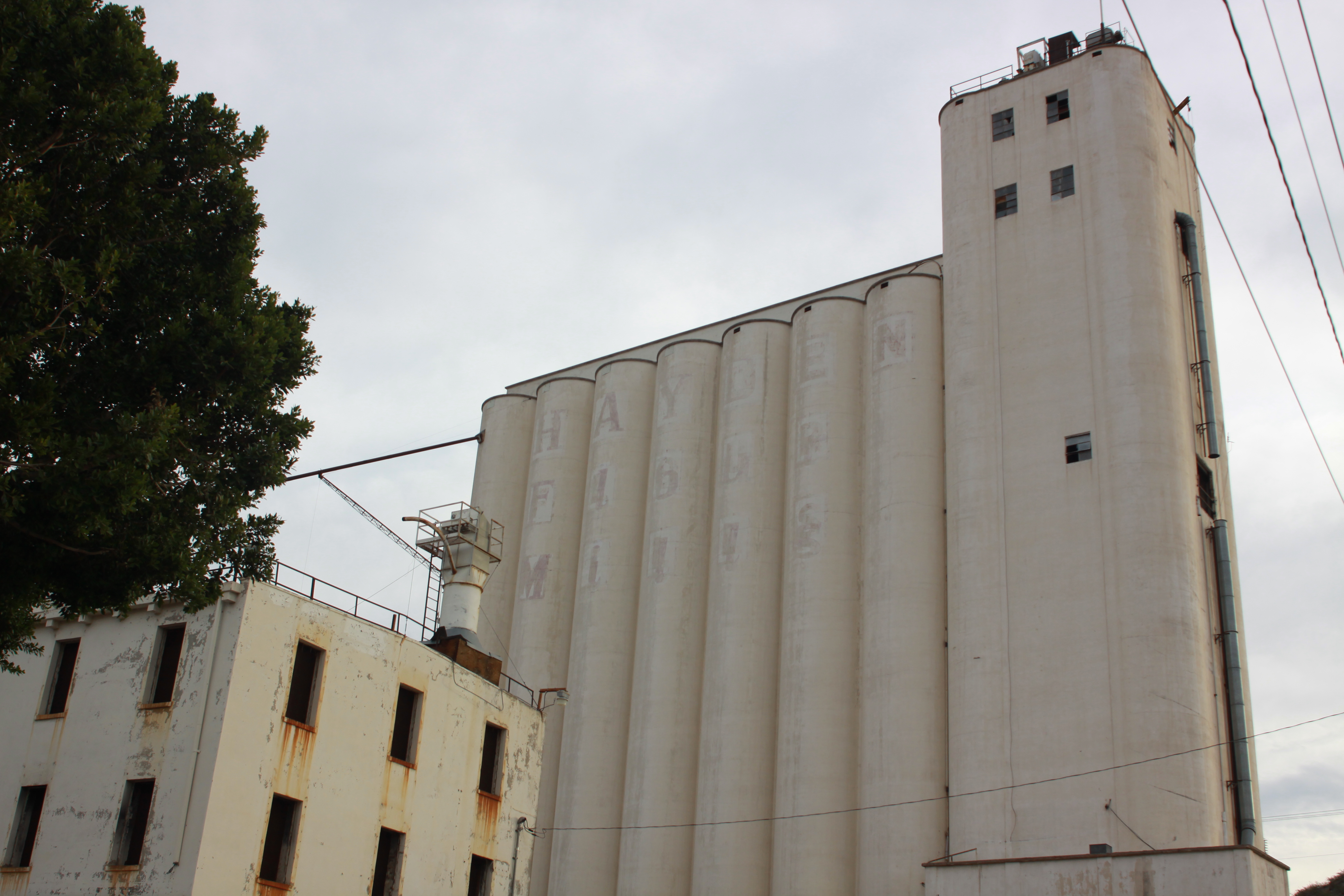
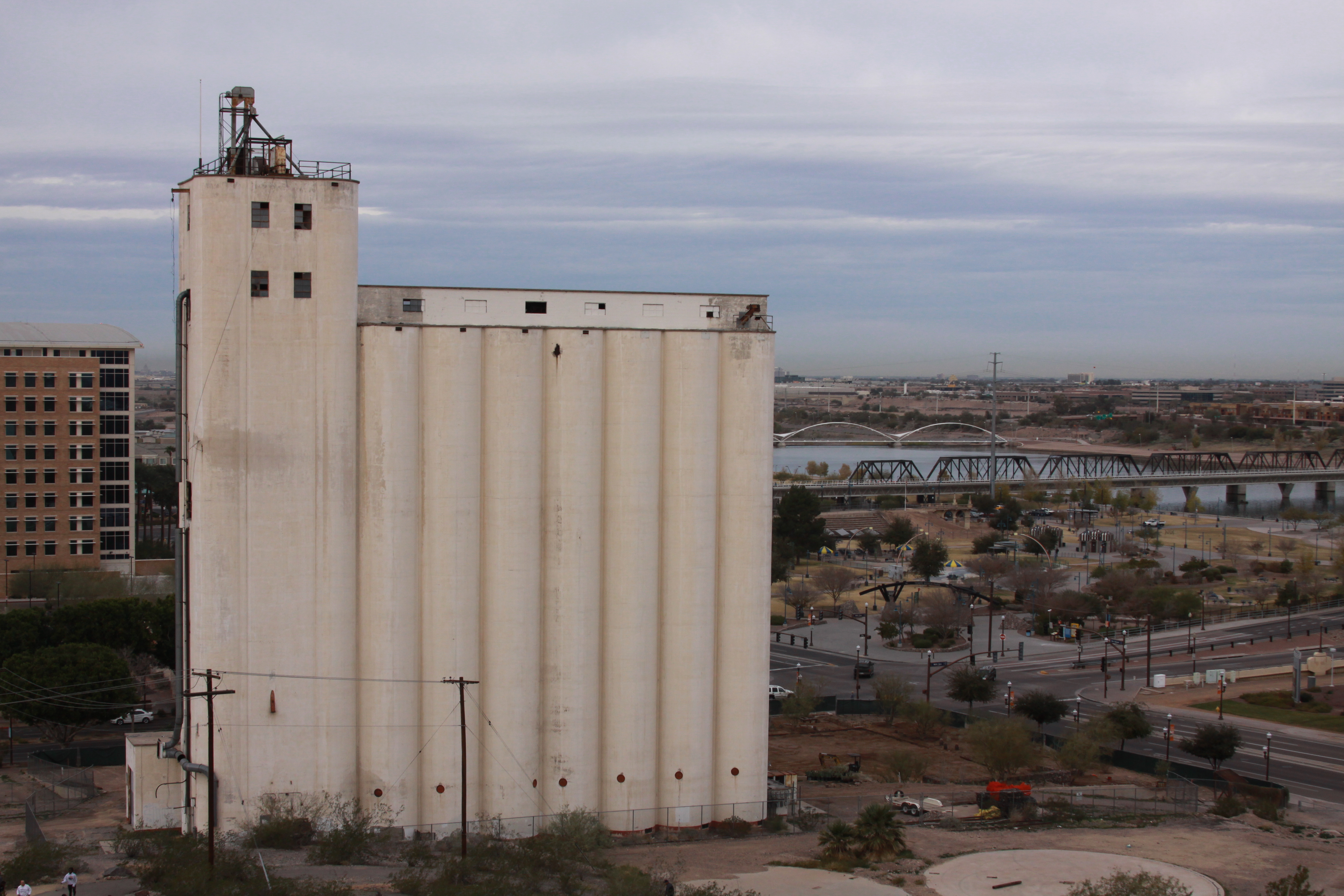
Charles Trumbull Hayden’s mill was built of adobe in 1874, burned in 1917, and rebuilt in concrete in the following year. In 1951, Mayer-Osborn constructed the elevator beside it, looking up to Hayden Butte, which is famous as the freeloader’s vantage point for watching football games in Sun Devil Stadium to the east.

The mill and elevator fell into disuse in the 1980s.

plan announced in 2011 (with implementation already overdue) calls for the mill building to get a coat of paint and a lawn as the first step in a redevelopment effort.

The elevator could use some new glass while they’re at it. And wouldn’t it be interesting if the lettering on the west side of the seven silos were restored?

I was in Scottsdale last weekend for the Barrett-Jackson auction and made a run down to Tempe on Saturday morning. It was impossible to make out the second name in faded paint on that west side. Is it Hayden Elbup Mills?

At any rate, this is a handsome elevator.

With a little thought–designers, awaken!–it could be an interesting complement to the surroundings.

Leland Ulrich explains some facts about Mayer-Osborn’s elevator in Burley, Idaho

Story and photos by Kristen Cart

Burley, Idaho, January 18—I spoke to Leland Ulrich, manager here for the past seventeen years, and learned some particulars about this town’s Mayer-Osborn elevator. Mr. Ulrich replaced the old manager, Ivan, long since passed, who apparently had the building’s plans and pictures and history. That investigation is for another visit, since their whereabouts is unknown.

Mr. Ulrich took me for a short tour. I had to put on a hardhat to go inside. The vertical, rectilinear part of the building houses the headhouse way on top, with a “run” protected by a tin roof that went out from it to all of the round bins. The tin roof was a bit of an oddity, he said, but it was original. Most are concrete. The elevator was designed for seed, both barley and wheat, for farm planting.

Formerly a wood and metal elevator was beside it, but it burned in the late-1950s. Some of the big metal parts in the new building might have been that old, salvaged, but there was no way to be sure.

But the elevator built by Mayer-Osborn was all original. The number one bin, closest to the part that houses the head house and the man lift, was empty and I could look inside, but it was too dark to see anything. The bins have sloped floors at a pretty good angle so the last of the seed could be emptied down below, in the “pit.” Whether it was carried out of there by conveyor or some other means is something I missed. The “leg,” he said, in the bin adjacent to the number one bin, went all the way to within eight inches of the top, to facilitate proper distribution between the bins.

(Maybe Gary Rich can add a comment explaining what on earth that means.)

I did ask Mr. Ulrich what the ports are used for, and it is for access—so someone could get into the bins. So “manhole covers” it is. The port cover that was removed on the number one bin, which I’d peeked into, was only identified as Hutchinson foundry steel.

But there were Mayer-Osborn ports inside and out, painted and unpainted.  It’s a big elevator—much bigger than anything I’ve seen of theirs before, perhaps even as big or bigger than Tempe, Arizona.

Mr. Ulrich remembered another visitor who took pictures about ten years ago and sent him some prints. He thought Gary’s name sounded familiar, especially when I mentioned he worked for the railroad.

There is an old citizen in town named Lou Dilley, whose father, known as Pop, built the older flour-mill elevator. Mr. Dilley is said to be in his eighties and loves to tell about the history of the town. He apparently worked on his dad’s construction jobs. So if I can get back, he would be the one to see.

Comparing Mayer-Osborn elevators in Byers, Colorado, and McAllaster, Kansas

By Gary Rich

It is somewhat strange that you can have a company build an elevator, but there can be differences between two separate models. The Byers, Colorado, elevator was built by Mayer-Osborn. This model has the manhole covers on the outside of the bins, whereas the McAllaster, Kansas, elevator has the manhole covers on the inside. You will notice the manhole covers on the outside of the bins in the Byers view. Plus, there is a walkway door about halfway between the bins. The window arrangements are slightly different between these two elevators. Basically the driveway is the same on the two models.

One thing stands out like a sore thumb: whoever painted the Byers elevator painted the manhole covers. This is the only elevator where I have seen this done. Generally the manhole covers are not painted.

It would be the option of the Co-op what was wanted in the elevator. If the owners chose more options, of course the price of the elevator would increase, too.

There are two sides of an elevator. One is the track side, where the railroad tracks are located. The other side is known as the drive way, where the trucks will dump their loads.

I do not believe that the McAllaster, Kansas, elevator has been used for some years. The steel bins were empty, when I photographed here on November 14, 2011. The weeds were fairly high, and the rail spur has been removed. 

Gary Rich analyzes the leaning Maywood, Nebraska, elevator and storage annex

Ever since Kristen got me interested in the history of elevators, I am always looking for new avenues. One thing that I have noticed that Tillotson Construction Company, J. H. Tillotson, Contractor, and Mayer-Osborn Construction built grain elevators in eastern Colorado and western Kansas. However, I never knew them to build the storage annexes. There are cases in which one of these companies built the grain elevator; then another company called Chalmers & Borton would be in the same town within three to five years building a storage annex.

I was very excited when I walked up to the annex at Maywood, Nebraska. I saw the manhole covers had Mayer-Osborn on them. I knew that I found my first annex that was built by one of the three companies.

There is a major problem with this annex at Maywood. You can see the cracks in the annex and where they have tried patching them. I drove back to Maywood several days later. Part of the annex still has grain in it. I talked with a person at the office. They are planning on tearing down the annex sometime this year or 2013. They have not made up their mind if they will save the elevator or not. When you are standing looking at both the elevator and annex, it is hard to say which is leaning the most. It looks like the elevator is leaning towards the annex. But on the other hand, the annex is leaning towards the elevator. The image that shows the grain dryer, the bin nearest the elevator, has been emptied, as well as the center bin. The north side still has grain in the all the bins, as well as the bin on the southwest corner (the image that has the sunlight on it).

I finally found a grain annex that these companies built, but it will be history soon.

Mayer-Osborn Construction completes 450,000-bushel elevator in Burley, Idaho

Burley, July 22–Charles Barnes, manager of Union Seed company here, announced Friday that work is nearly completed on the new grain elevators and storage tanks west of town. He said the tanks, built to store all types of grain, have a capacity of about 450,000 bushels,

Eash of the 23 tanks is 135 feet tall and is made from six inches of reinforced concrete. The head house is 165 feet high, equivalent to a 16-story building. The tanks will be used to handle individual and Union Seed storage needs.

Barnes said that about 20,000 sacks of cement had been used in the construction under contract by Mayer-Osborn Construction company, Denver. He said the latest grain cleaning machinery has been installed, along with scales large enough to weigh the largest trucks, and that there are conveyer belts in both the head gallery and the basement tunnel.

Times-News, Twin Falls, Idaho, July 22, 1955


Tillotson Construction’s elevator at Dalton, Nebraska, shows unique features

Gary Rich contributed these photos from Dalton, Nebraska, along with the following analysis:

Tillotson Construction’s elevators were unique, with some features that I have not seen from other elevator builders. One major feature was the curved head house. I have only seen one other company that produced an elevator with the curved headhouse. Another feature was that Tillotson put windows for light into the basement. Of course they had electric lights in the basement. I have not seen another builder put windows in the bottom part of the elevator. This must be a Tillotson trademark. This elevator has the year of construction added to the manhole covers. It shows 1958. Tillotson did a great thing by adding this. All the elevators that I have been inside, I have not seen another company put the year on the manhole covers. The date was on each manhole cover inside the elevator.

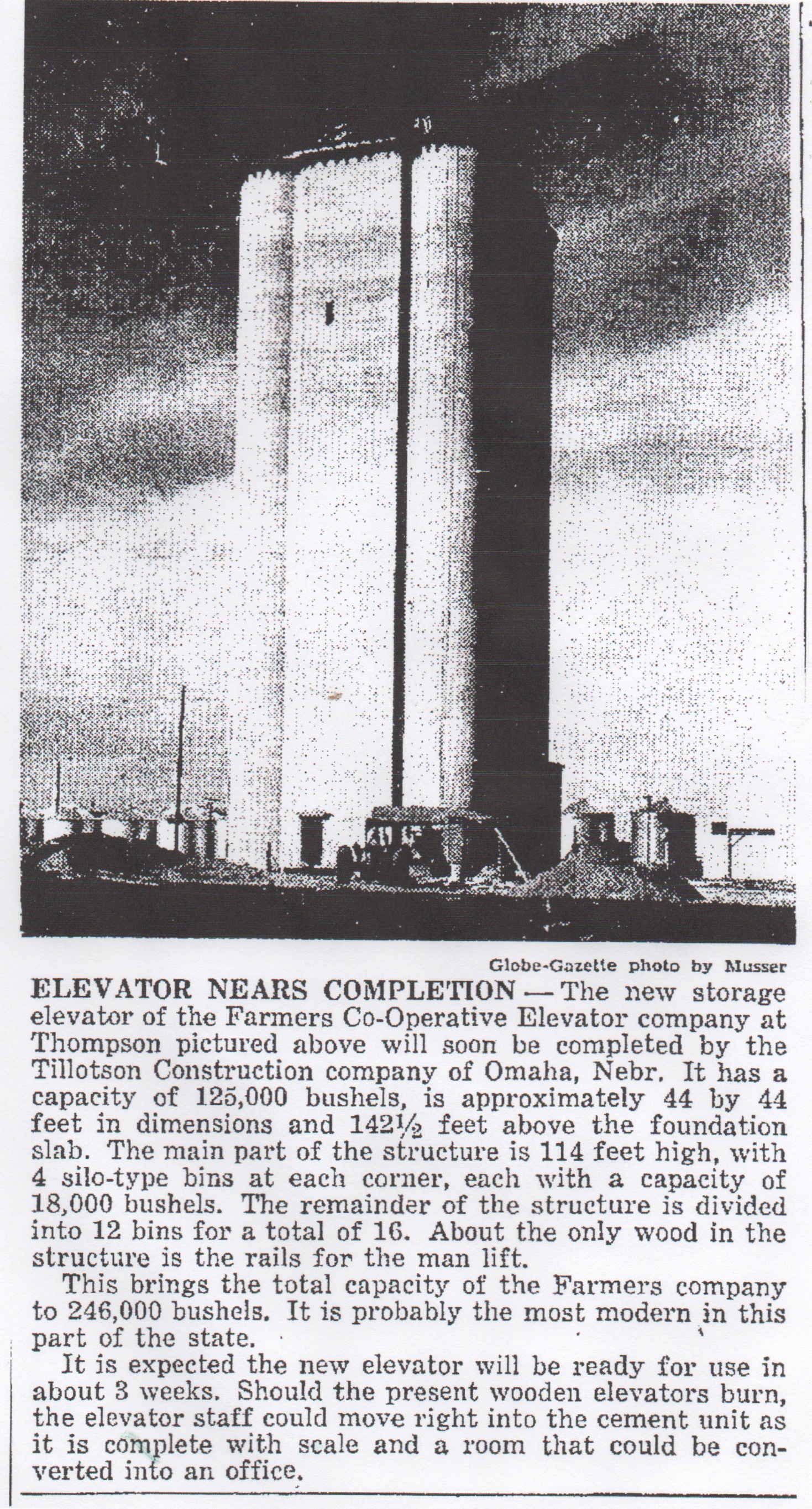
Thompson, Iowa, elevator completed in 1950, torn down in early 1980s

Work Underway on Storage Elevator

Thompson – Work has been started on a 125,000 bushel storage elevator for the local co-operative elevator company by the Tillotson Construction company of Omaha, Nebr.

Mason City (Iowa) Globe-Gazette, June 20, 1950

Mason City Globe-Gazette, September 2, 1950

♦ ♦ ♦

Our call to the Farmers Cooperative elevator in Thompson, Iowa, while preparing this post resulted in a conversation with location manager Lyle Wirtjes, who said he started working at the elevator in 1969. By then, Mr. Wirtjes said, one silo had already “busted out.” After another such incident, a new elevator was constructed across the road and the Tillotson elevator was torn down sometime in the early 1980s.

♦ ♦ ♦

Kristen’s analysis:

This Thompson elevator should not have failed—look at Greenwood, still here after all these years. I would guess there were some corrupt people in the building trades pulling off a scam, and since so many projects were going at once, a few poorly done elevators slipped through. They all looked like carbon copies of one another, so unless soil, water table problems, or fire caused the break, crooked subcontractors could have caused it. Not an uncommon problem when the federal cash spigot is turned on full blast—everyone shows up to the party, whether good or not.  My speculation here.  Nineteen years is not much of a lifetime for an elevator, barring a fire.