How ‘the crookedest elevator in Iowa’ was built

DSC_0416Story and photos by Kristen Cart

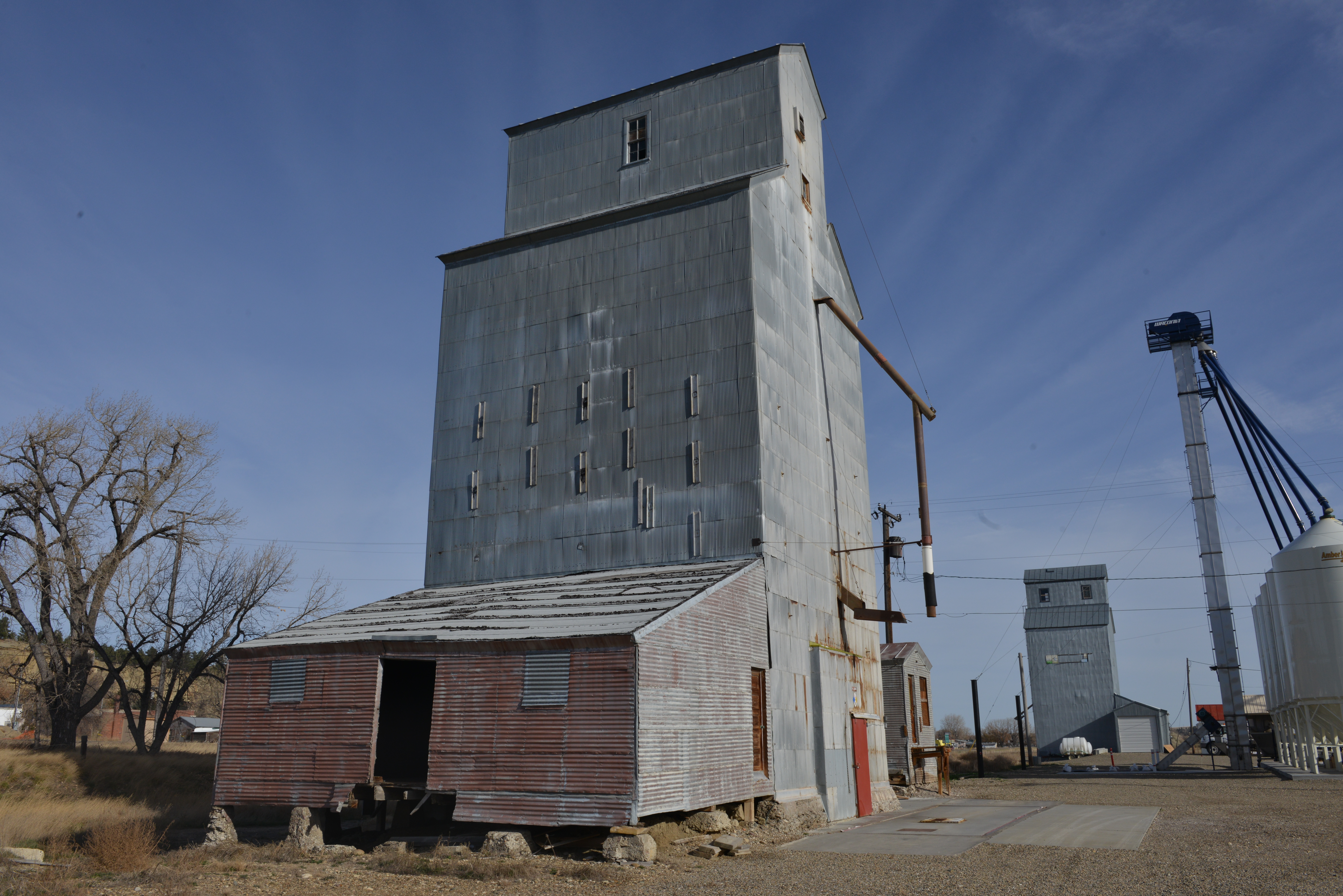
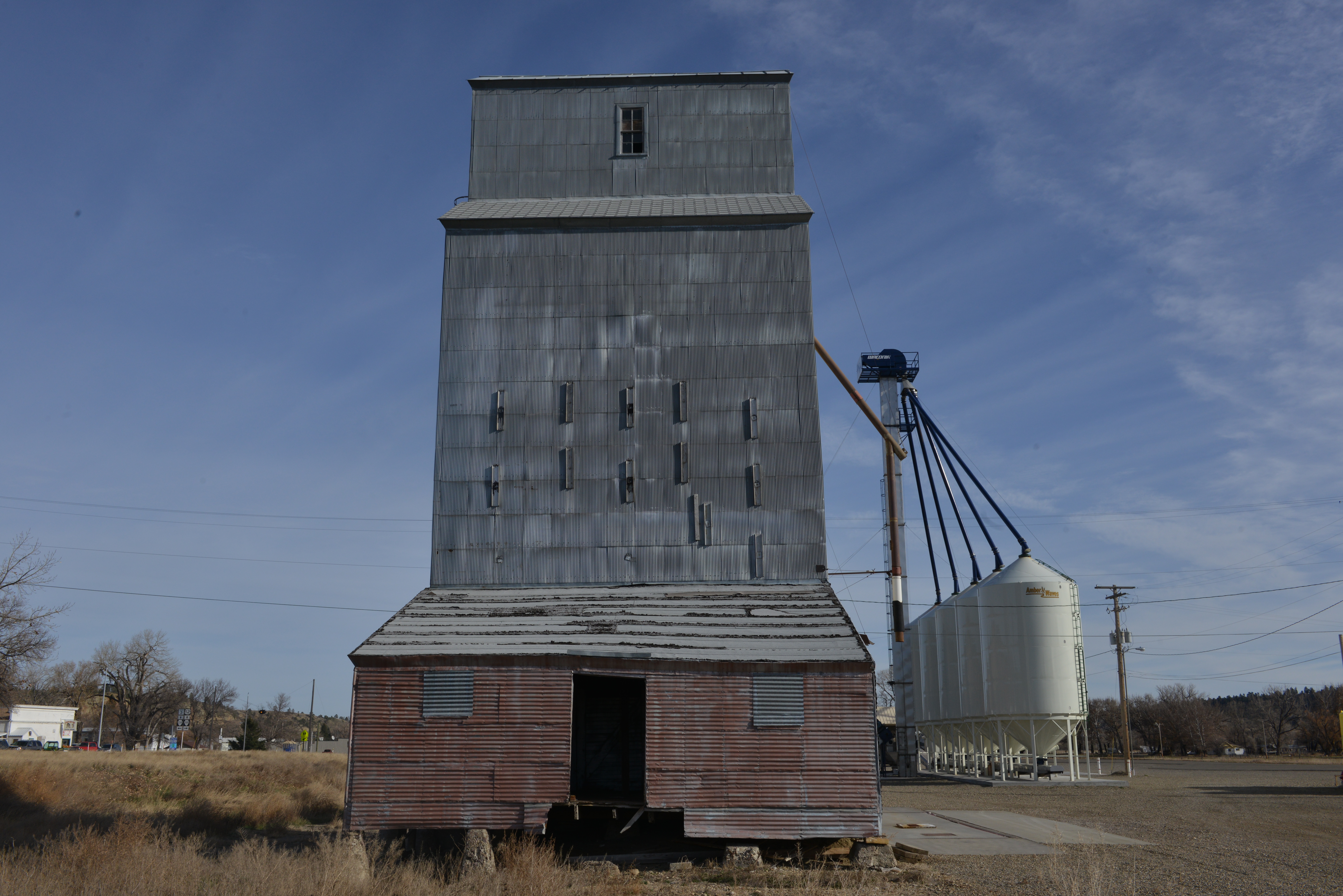
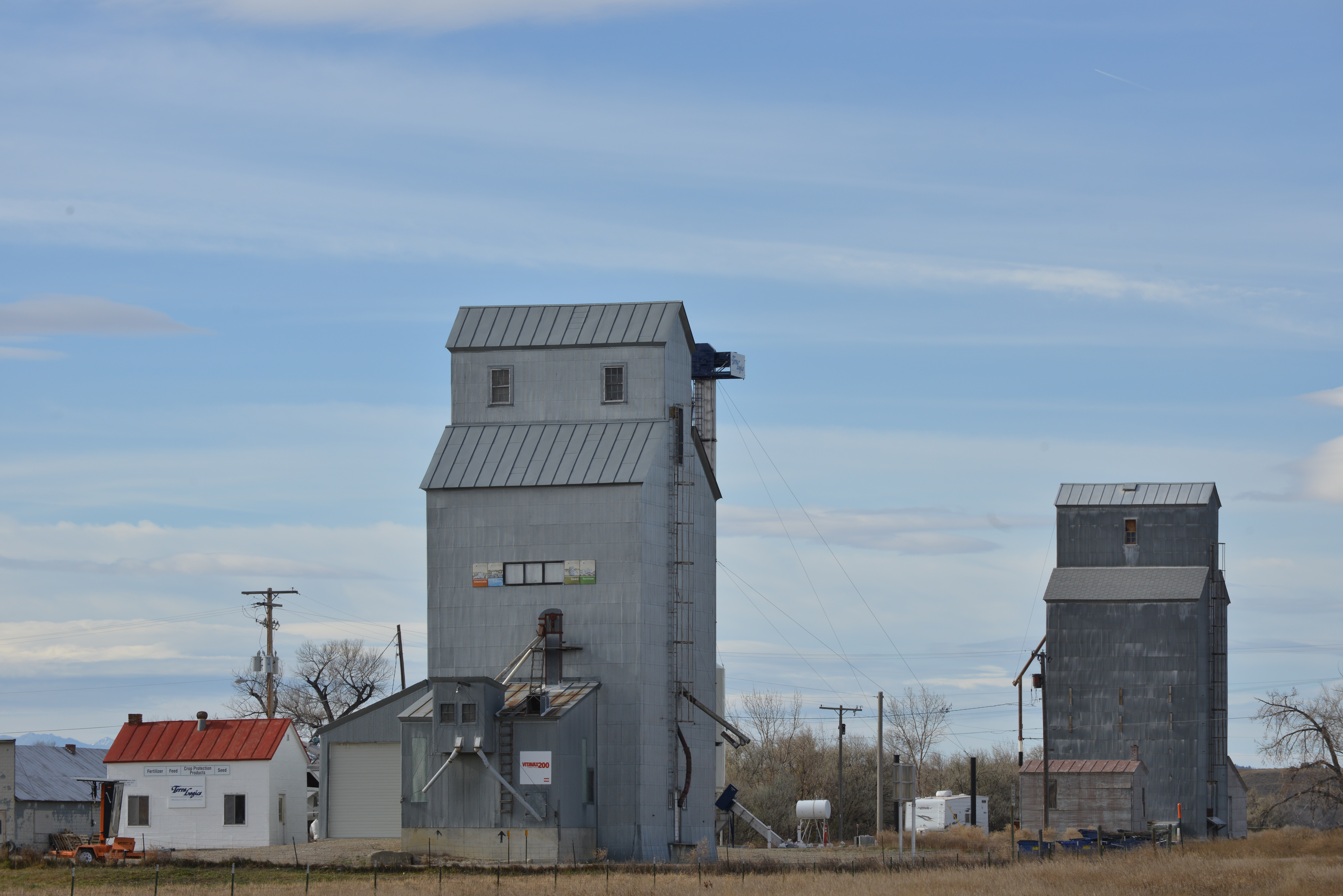
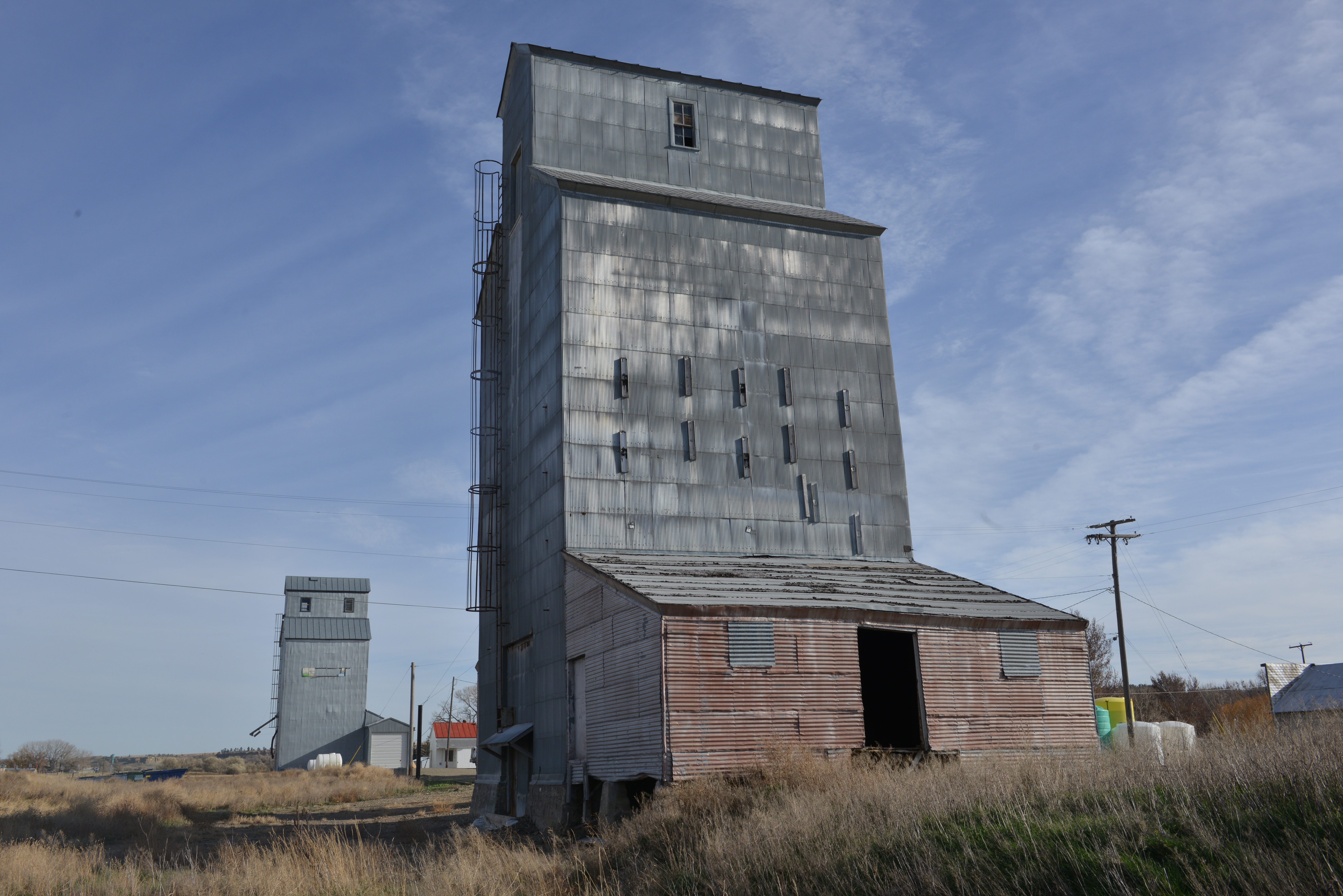
It was a terminal elevator, a family operation, capable of supplying a custom mix of feed fine-tuned to the individual farmer’s requirements. It sat along a rail line that ran through Dow City, Iowa, along U.S. 30 in the western part of the state. And it had been crooked as long as it existed.

There were two different explanations offered for its seemingly casual slouch. The first was intended for credulous tourists, and the last was a more scientific tale. But I liked the first story better.

You see, when the wooden elevator was built, the crew employed for nailing the boards was instructed to rotate around the structure as they built it. That way, the fellows who hammered harder would work their way around the elevator, keeping it even. That precaution had been neglected. The slackers on one side of the elevator, by not pounding as hard, left the rising wall noticeably taller on their side than did the guys who could swing a hammer. Thus, the finished elevator gained a noticeable tilt.

dsc_5941I bought every word of it. I imagined the men smacking the boards tightly on one side, and their chagrin when they discovered what they had done. But alas, the truth was far less romantic.

According to the owner, the builders set the foundation in soggy ground left from years of servicing steam locomotives, and the elevator sagged into the bog as soon as it was built.

Humbug.

dsc_5929In the next post, I will explain how this pay-as-you-go family operation skipped the concrete elevator stage of business. The present effort to modernize must do so without the subsidies that characterized the concrete elevator boom.


Visitors from 113 countries checked in on grain elevators in 2014

The WordPress.com stats helper monkeys prepared a 2014 annual report for this blog.

Here’s an excerpt:

The concert hall at the Sydney Opera House holds 2,700 people. This blog was viewed about 16,000 times in 2014. If it were a concert at Sydney Opera House, it would take about 6 sold-out performances for that many people to see it.

Click here to see the complete report.

Collin Quiring delivers a load of corn to Tillotson’s Aurora South elevator

IMG_5453

Collin Quiring, a 26-year-old reader of this blog who farms with his brother in Henderson, Nebr., made contact and offered to send some photos when he took a load of grain to the Aurora South elevator, which was built by Tillotson Construction Company in 1959.

Collin had first commented on one of Kristen’s posts.

A view of Tillotson Construction Company's Aurora South elevator, as seen Nov. 2, 2014, by Collin Quiring.

A portrait of Tillotson Construction Company’s Aurora South elevator, as seen Nov. 2, 2014, by Collin Quiring.

“It’s funny that you drove through Hampton,” he wrote. 

“I’ve been following this blog for a while now and started looking at all the manhole covers on elevators that I haul to, and sure enough there were a lot of Chalmers-Borton, Tillotson, and Mayer-Osborn elevators around.

Hampton has the manhole covers on the outside of the silos and they’re 10 feet or so off the ground, so I’ve been wondering who made it for a while now!

It looks like you just saw the one downtown elevator in Aurora though?

The other elevator is called Aurora South and is on the southwest edge of town. It used to be a Cargill elevator, but Aurora Coop purchased it.

I’m pretty sure that’s a Tillotson elevator, too.”

So Collin did some more reconnoitering and took pictures on his next run.

IMG_5454

Collin’s view from the scale house.

“We’ve been alternating where we were taking corn, and I was planning to get back there for a few more pics.

But harvest will be over in an hour.

So I won’t be getting back there anytime soon.

Here’s what I did get while trying not to hold up the line.

End of this week or beginning of next I will be hauling to Hampton and will send you some from over there.”

Two days later, he made the run to Hampton but found it was not a Tillotson elevator; instead, it was built in 1959 by Grain Storage Construction Company, of Council Bluffs, Iowa.

A last farewell to a wooden elevator at Ryegate, Montana

DSC_5220

Story and photos by Kristen Cart

The search for our grandfathers’ elevators has led us to many small towns and many grain operations. Among our discoveries have been ancient wooden elevators, now quaint relics among their larger concrete cousins. In some towns, wooden elevators still have jobs to do, but their time is short.

Charles H. Tillotson built wooden elevators long before his children took up the slip-formed concrete building technique, and at one time, every Midwestern town with a rail line had a row of them serving the local farmers. Now it is increasingly rare to find a town with more than one wooden elevator in service, or for that matter, still standing.

DSC_5225

The Ryegate, Mont., elevator is flanked by its replacement fertilizer plant.

In the last year or two, in several towns, locals have told me that their wooden elevators were no longer used and would shortly be destroyed. I made an extra effort to document those elevators. This week, I almost missed one. In Ryegate, Mont., a new fertilizer plant was put into operation last year, and the elevator that had served the purpose was now slated for destruction.

When I stopped to photograph the pair of wooden elevators at Ryegate, a town on U.S. 12 in east-central Montana, I went into the local cafe for a burger. A fellow at the bar introduced himself as Ken. He wondered where my hometown was, and the purpose of my visit. When I told him I was a bit of an elevator tourist, he told me about the Ryegate elevators. DSC_5156

Ken worked at the Ryegate facility. He said that over the years, he had been employed as a grain hauler and in almost every other aspect of elevator work.

The smaller elevator was built in 1917. Ken said grain dropped 70 feet from the top of the grain spout to a truck below while loading. The elevator had been in use as recently as two years ago, then the new fertilizer plant was built nearby to replace it.

The larger elevator, built in 1914, was still used for storage—it had fresh siding and looked neat and clean on an immaculate lot. But the smaller elevator, equally handsome, would be razed next week. He hoped I would get out and take more pictures before it was gone.

Our discussion ranged from elevators to the military. Ken served in the U.S. Army, had great admiration for the old C-130 aircraft, and expounded with enthusiasm about the M-1 Abrams tank and the Tow missile. He got a kick out of talking with another veteran who shared his interest. He also spoke with reverence about serving under President Ronald Reagan.

DSC_5253

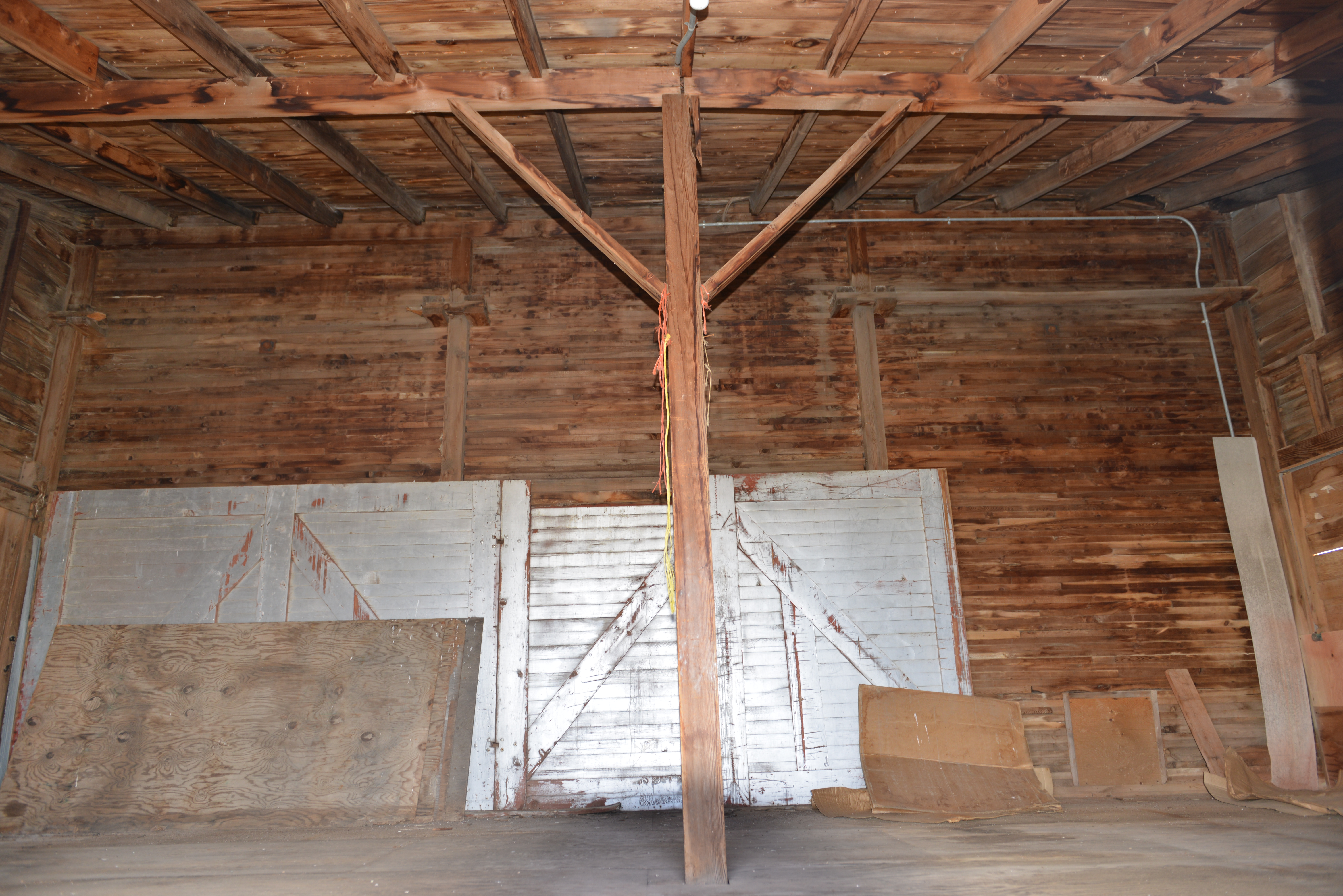
The interior of the shed addition.

Our conversation was interrupted as a young lady burst into the cafe, exclaiming,

“I just got a deer!”

As two men moved to follow her out the door to see her trophy, she said,

“Come see. I got my mulie.”

Her announcement passed without any comment at the bar. Apparently, during deer season, such declarations are expected.

Before I departed to take a closer look at the doomed elevator, Ken introduced himself more formally as Sgt. Ken Davis, and shook my hand. It was an honor to meet this veteran who served back when we had a 600-ship Navy (in the good old days, about three wars ago).

As I took another circuit around the old elevator to shoot a few last pictures, the sun played on the high clouds, projecting light like a halo radiating about the old structure. I thought it a fitting farewell.

In honor of Veterans Day, I salute Sgt. Davis and his life’s work. I hope he enjoys the pictures. DSC_5231

DN Tanks builder explains differences between concrete tanks and elevators

DSC_9897

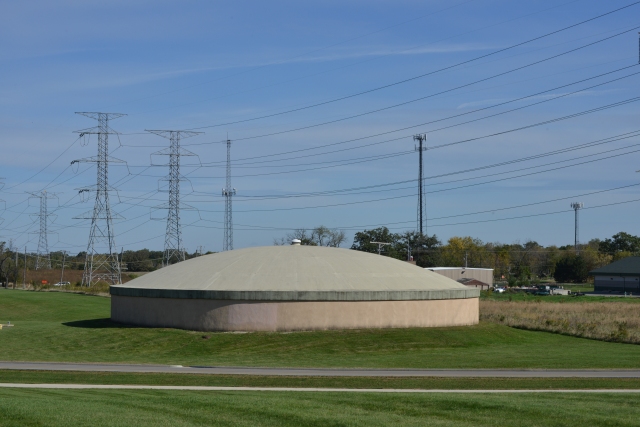
A water tank built by D N Tanks in Cary, Illinois

Story and photos by Kristen Cart

At first glance, a water storage tank and a grain elevator seem to have a few things in common, both in function and appearance, though they present a number of differing engineering challenges. I had the opportunity to interview Joseph Carroll, a project superintendent for D N Tanks, while flying on a commercial airline to start one of my trips. When he realized the lady sitting next to him had some engineering background, and actually was interested in concrete construction methods, he warmed to his subject with enthusiasm.

I wanted to find out how the construction of a tank answered the problems that grain elevator designs had to address–the management of stress (both vertical and lateral), the aging of the tank, interior access, wrecking out, weather considerations, and basic construction methods.

D N Tanks had been in the business since 1949, and some of their tanks (still in service) were built before 1950. During the heyday of elevator building, when our grandfathers operated at the cutting edge of concrete design, water tank builders were innovating right alongside them. The types of problems they had to solve had common elements with those of elevator designers, but their solutions were widely divergent.

After looking at our Tillotson construction specifications, Mr. Carroll commented that the design bearing load (the pressure of the water against the tank walls, expressed in pounds per square inch) of his tanks is about double the bearing load in a grain elevator.  Elevator builders relied on a continuous concrete pour and steel reinforcement to provide the required strength. Obviously, something had to be done differently to build a water tank that would sustain that kind of load.

D N Tanks, instead, builds tank panels which are poured in curved sections separately, then tensioned externally with wire winding as they are assembled on site.

Cold weather also creates a design challenge for concrete construction. I mentioned that in Canada, wood construction for grain elevators was preferred, because rigid concrete could crack under differential heating–an elevator would experience freezing temperatures on one side and solar heating on the other. Water tanks require insulation to prevent freezing, though they can handle surface freezing to the depth of about six inches. The tank walls are built thicker, and an insulating material of styrofoam blankets the tank exterior for installations in Alaska and other northern locations.

After the concrete roof is poured, wrecking-out is required (internal wooden concrete forms are removed). It is a process required for both elevator bins and tanks. Elevators retain the manholes used to remove the wrecking-out debris for later access to bin bottoms for cleaning. For water tanks, an access opening is left at the side to permit this process, but it is sealed afterwards. No access is needed from the side, because under normal use, the tank remains filled with water. Access to electrical systems for the pumps is from the top.

Concrete elevators are subject to much more wear and tear than water tanks. Internal friction is an issue with grain elevators:  filling and emptying of grain bins abrades the inner concrete surfaces, eventually causing cracking and damage after many years.  Tanks suffer from no such problems.

Fire is an ever present danger in grain elevators, and cleanliness is a constant battle. Tanks tend to be cleaner and safer, and if built correctly from the start, will long outlast the most robust grain elevator.

DSC_9898I happened upon one of these water storage facilities, built by D N Tanks, while attending my son’s football game at Cary Junior High School in northern Illinois. It appeared just as Mr. Carroll described as a typical D N Tank project: it was bordered with a two-foot wide lip, and topped with a white vent.

The tanks are built in cities and towns to comply with a requirement for an emergency water supply. The tank or tanks must hold enough water to last for three days after normal municipal service is lost. Unlike the many grain elevators that dot the Midwest, which rise to monumental heights, these tanks are designed to blend seamlessly into the community with as little visual impact as possible. The D N Tank website pictures a number of disguises, including architectural treatments, and fully underground construction.

D N Tanks also produces tanks for glycol used for aircraft deicing, water treatment tanks, and various other tank types.

Building a grain elevator required a whole boxcar of lumber

scan0009

Commentary by Neil A. Lieb, photos from his archive

From a telephone interview on July 22, 2014:

Decks for the formwork are stacked at upper-right corner of the foundation. Piles of sand and gravel are for concrete. It took one complete boxcar-load of lumber to build most elevators. Everything came by rail in those days.

One thing you did, you re-used all that lumber many, many times. The inside walls of forms were all taken down, taken apart, and the lumber was all reused. We always had a crew of two or three guys cleaning lumber, taking the nails out and cleaning the concrete off of it. Slip-form lumber was seldom reused. By the time you stripped the forms out at the top, that lumber fell 120 feet to a concrete slab and by the time it got there, it was moving. So when it hit, it pretty well disintegrated.

scan0010
This is probably the third or fourth day. They went about six inches an hour. The boxes were put in the forms to leave holes where they wanted a hole. On the inside, they’d want a hole to put a spout or something. They’re all pre-made and numbered. The shift foreman’s responsibility is to make sure they’re put in where they’re supposed to be. They have a given height and given location.

You always knew how high you were because in the elevator’s water shaft there was a continuous measuring stick so you knew exactly how high off the ground you were. It was important that these boxes be put in at a certain height.

You also had a continuous ladder. We used to race up and down.

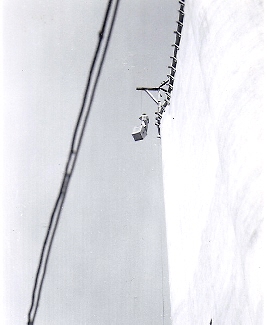
You see the jacks are on the outside. The guys looking over the rails, this is the back side. Way on the other side is where the cement is coming up. You can’t see a hoist.


A photographic review of concrete elevator parts and components

Story and photos by Kristen Cart

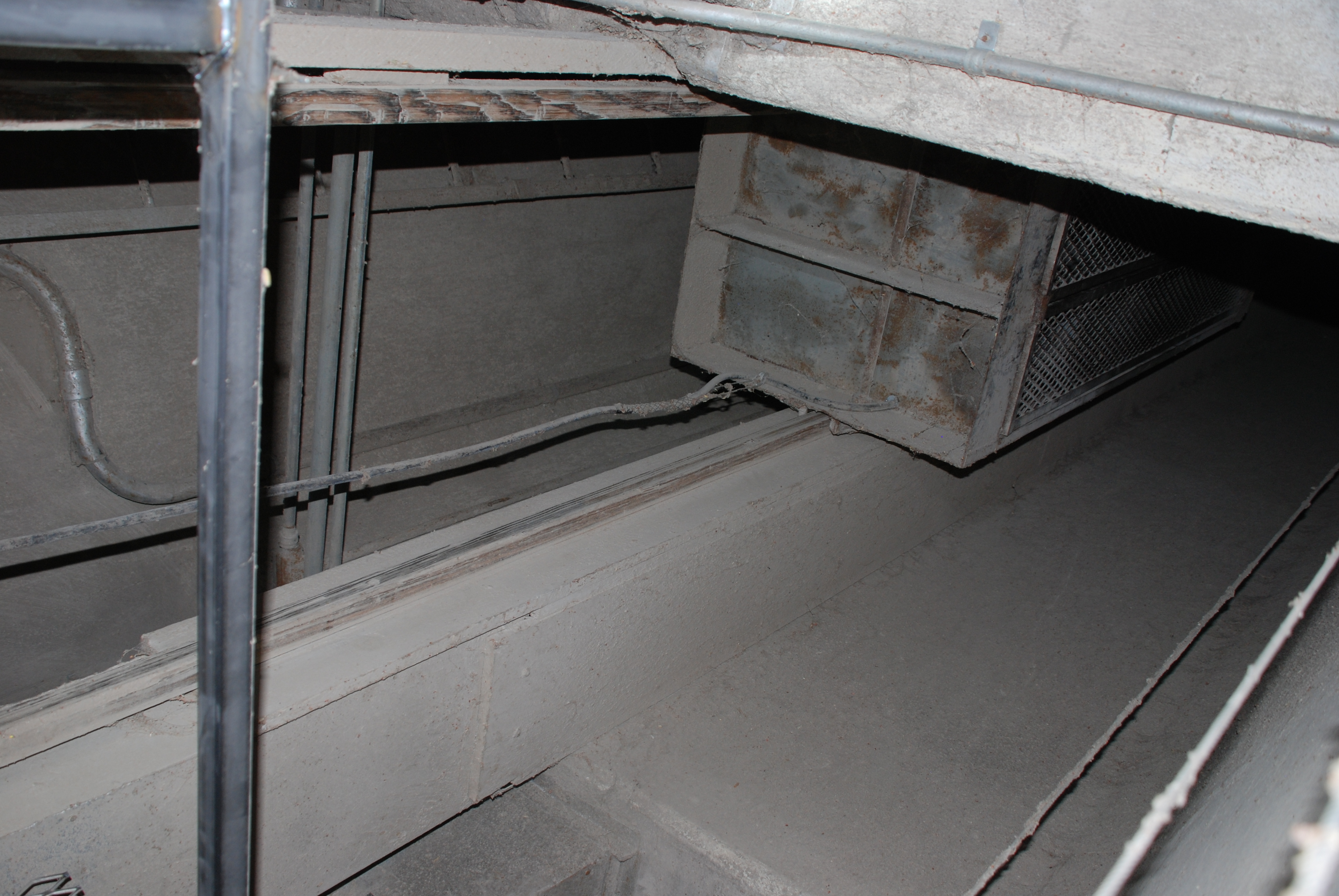
Some time ago, one of our readers requested the picture of an elevator pit. It is one of the more unglamorous parts of a grain elevator, but as I was going through old photos, I found one. I also found many interior elevator pictures that have not made it to the blog because of their, well, unattractiveness. But a review of the parts and pieces, terms and descriptions, and interior appearance of an elevator is in order.

 The Pit

Pit access by ladder. The leg is visible.

Pit access by ladder. The leg is visible. Hanover, Kan.

DSC_0677(2)

Sloped bottom funnels grain to the base of the leg.

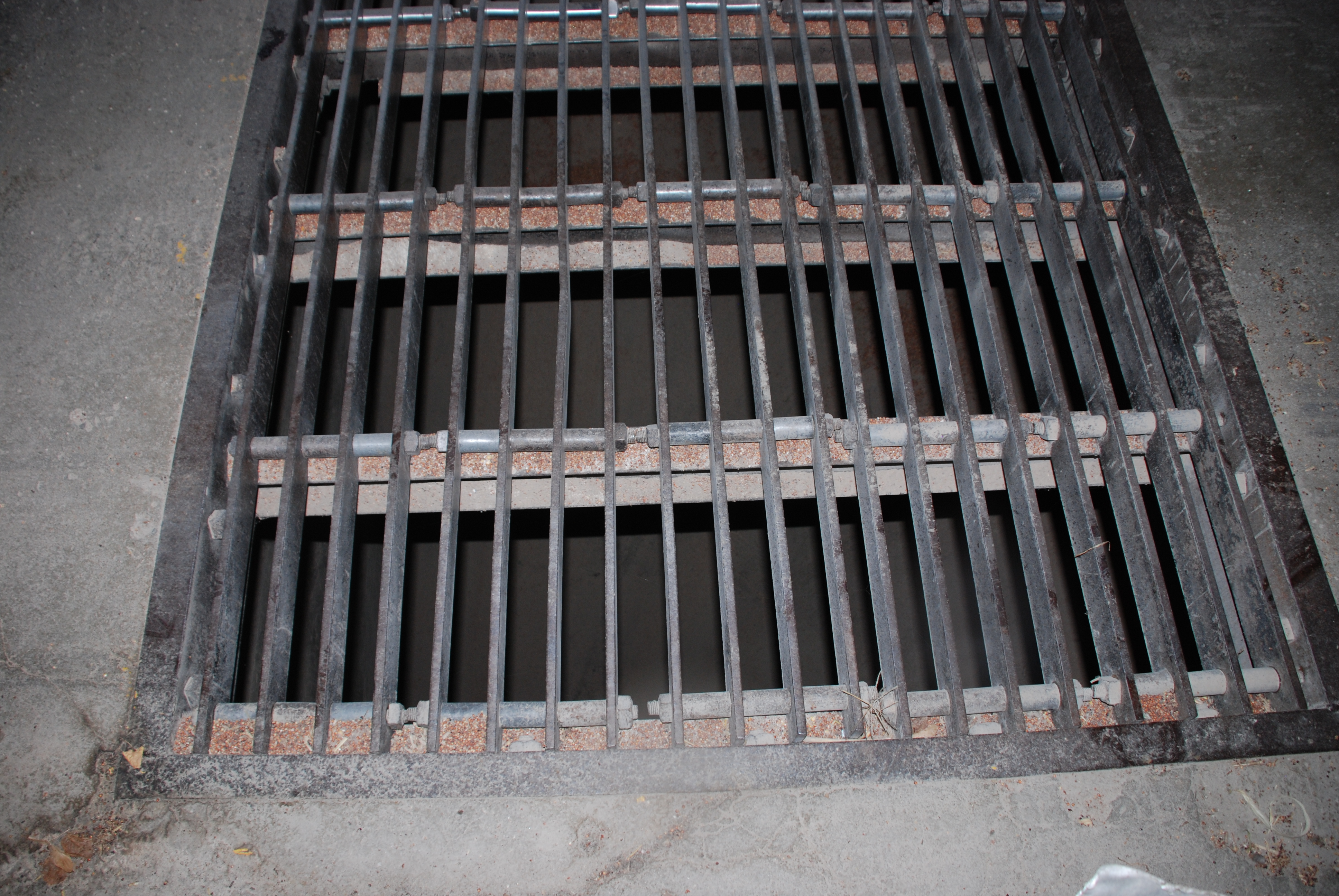
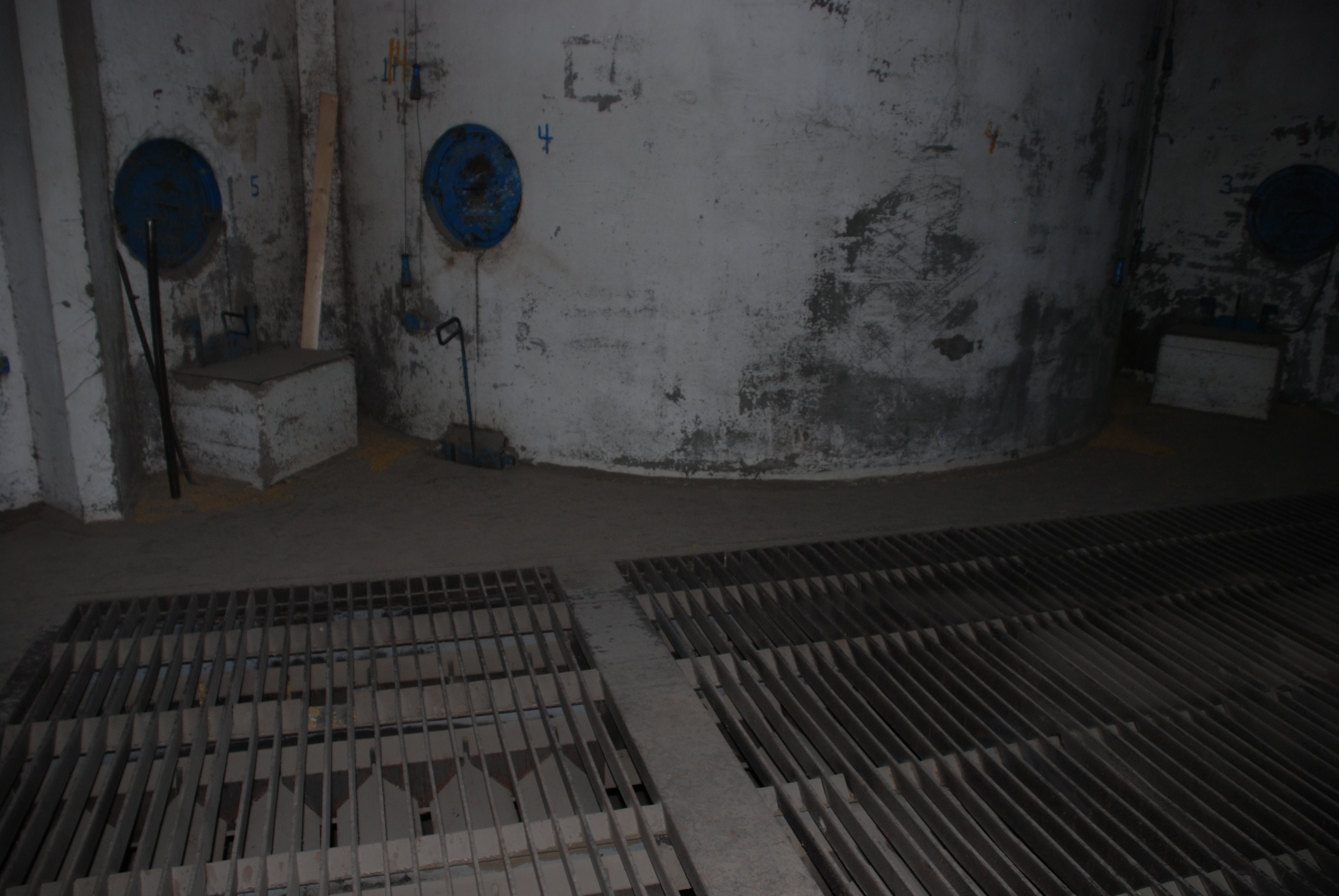
The Dump Grate

DSC_0674(2)

A smaller grate.

DSC_0292(1)

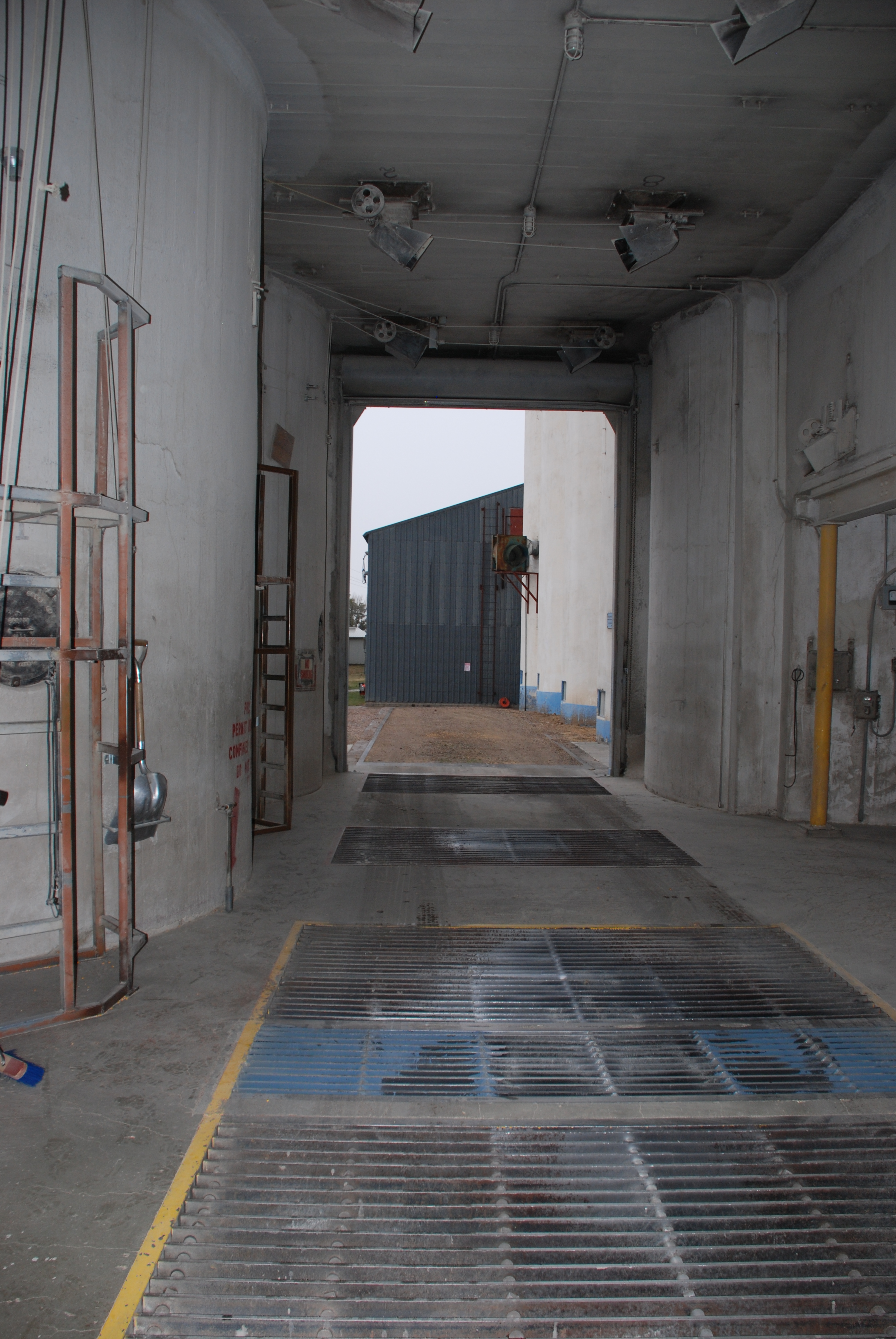
Center driveway truck grates.

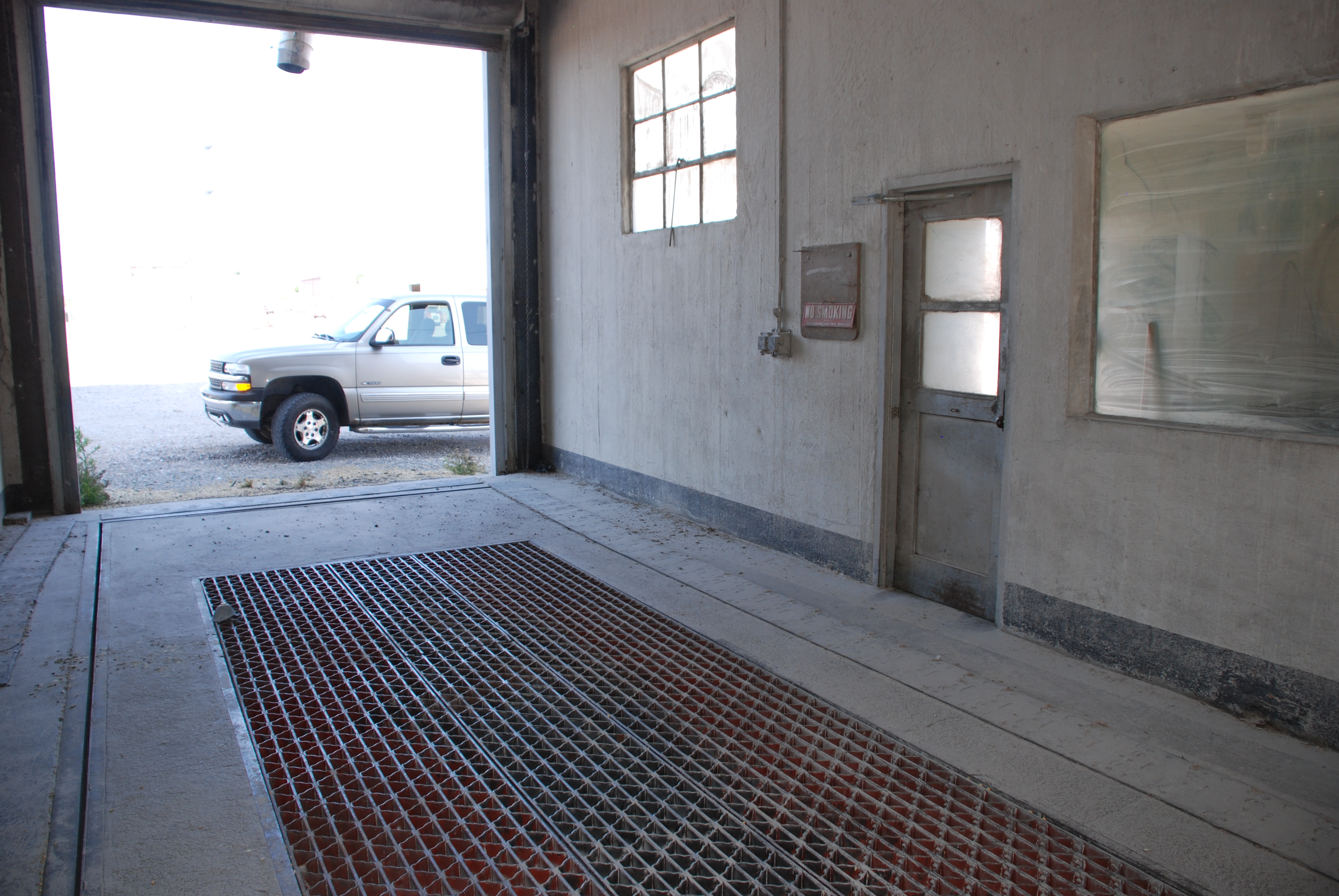
The Driveway

DSC_0410

McCook, Neb.

DSC_0208(1)

St. Francis, Kan.

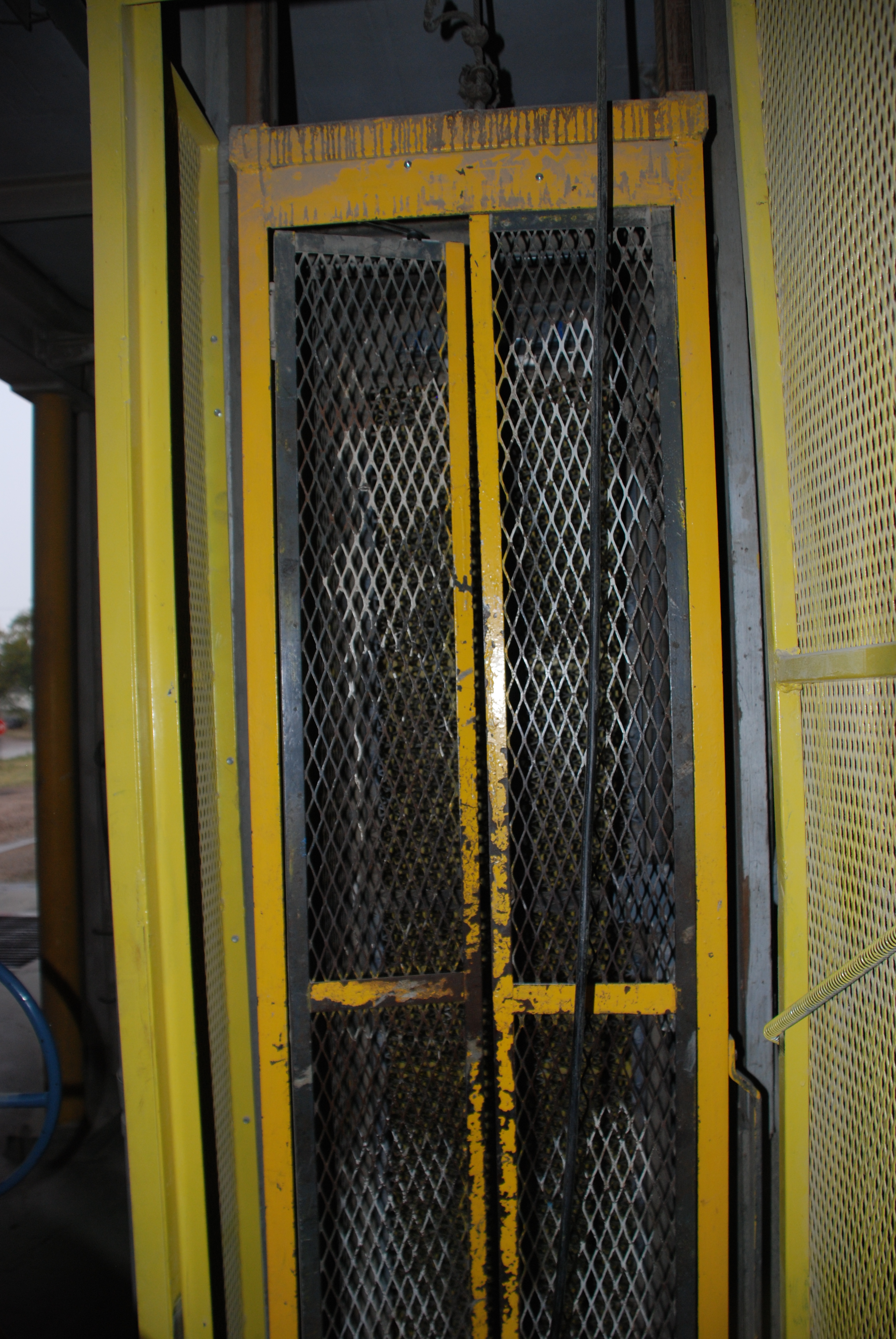
The Man Lift

DSC_0679(1)

The bottom of the lift showing the shaft.

DSC_0210(1)

Current safety regulations require a retrofitted cage.

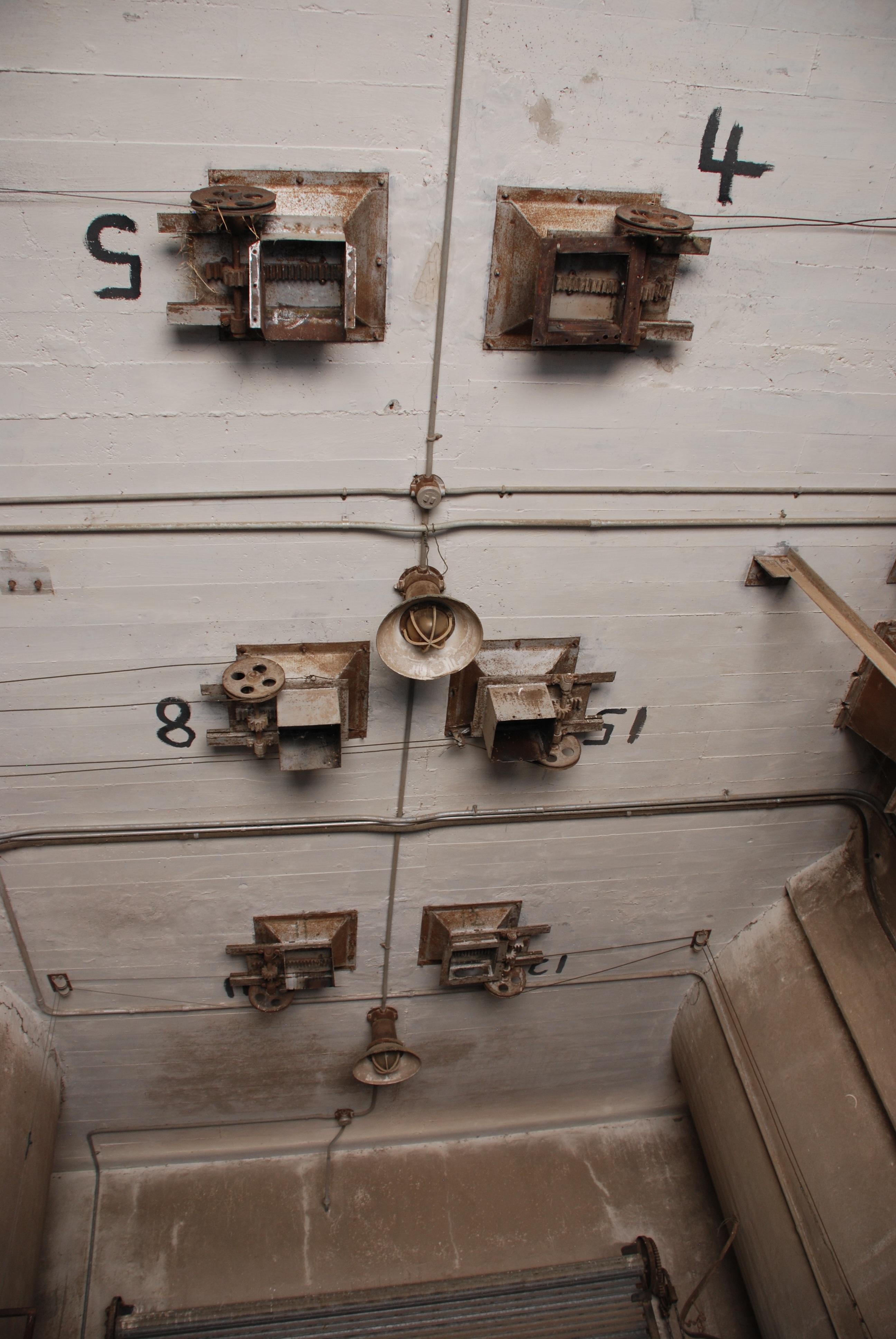
Overhead bin spouts

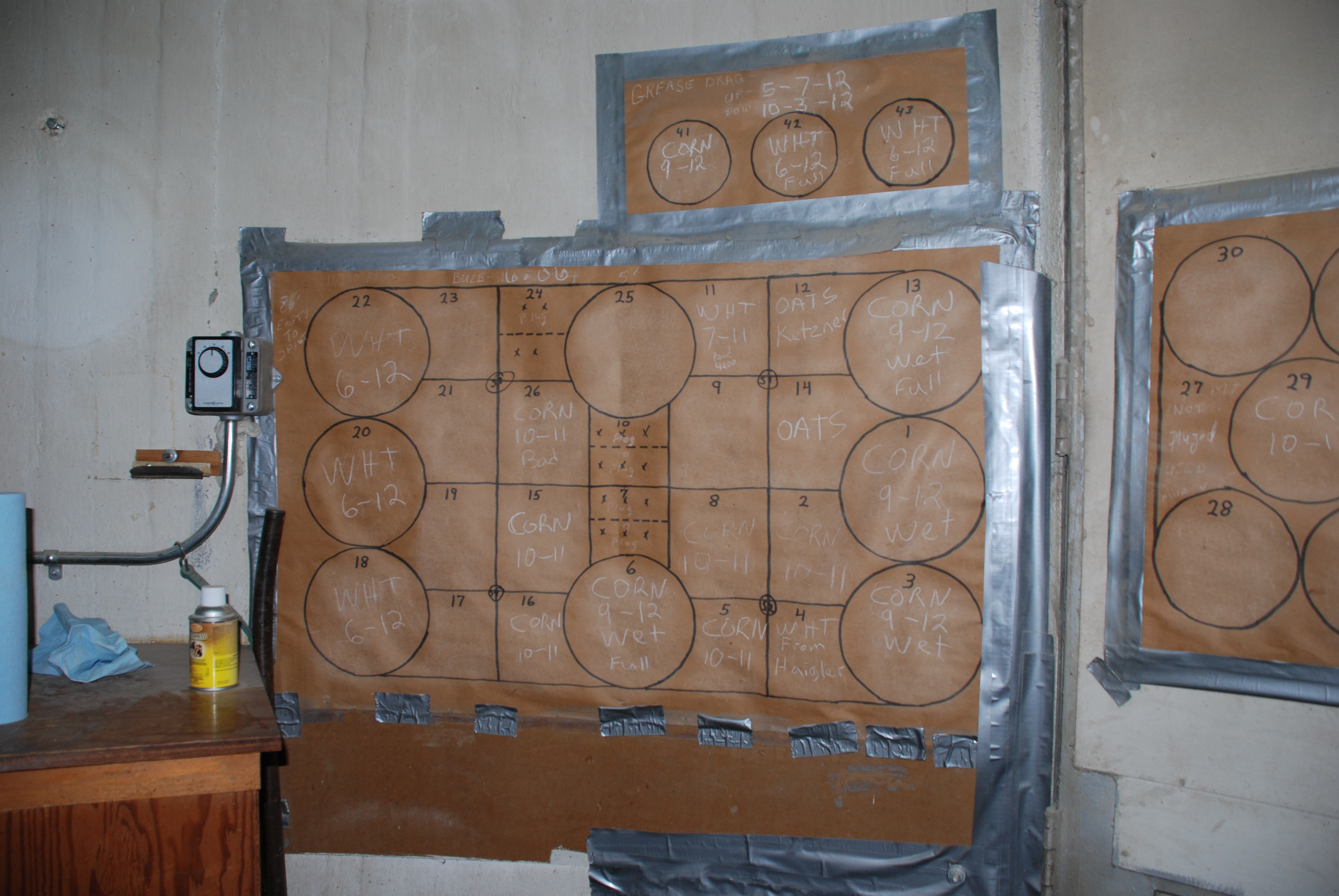
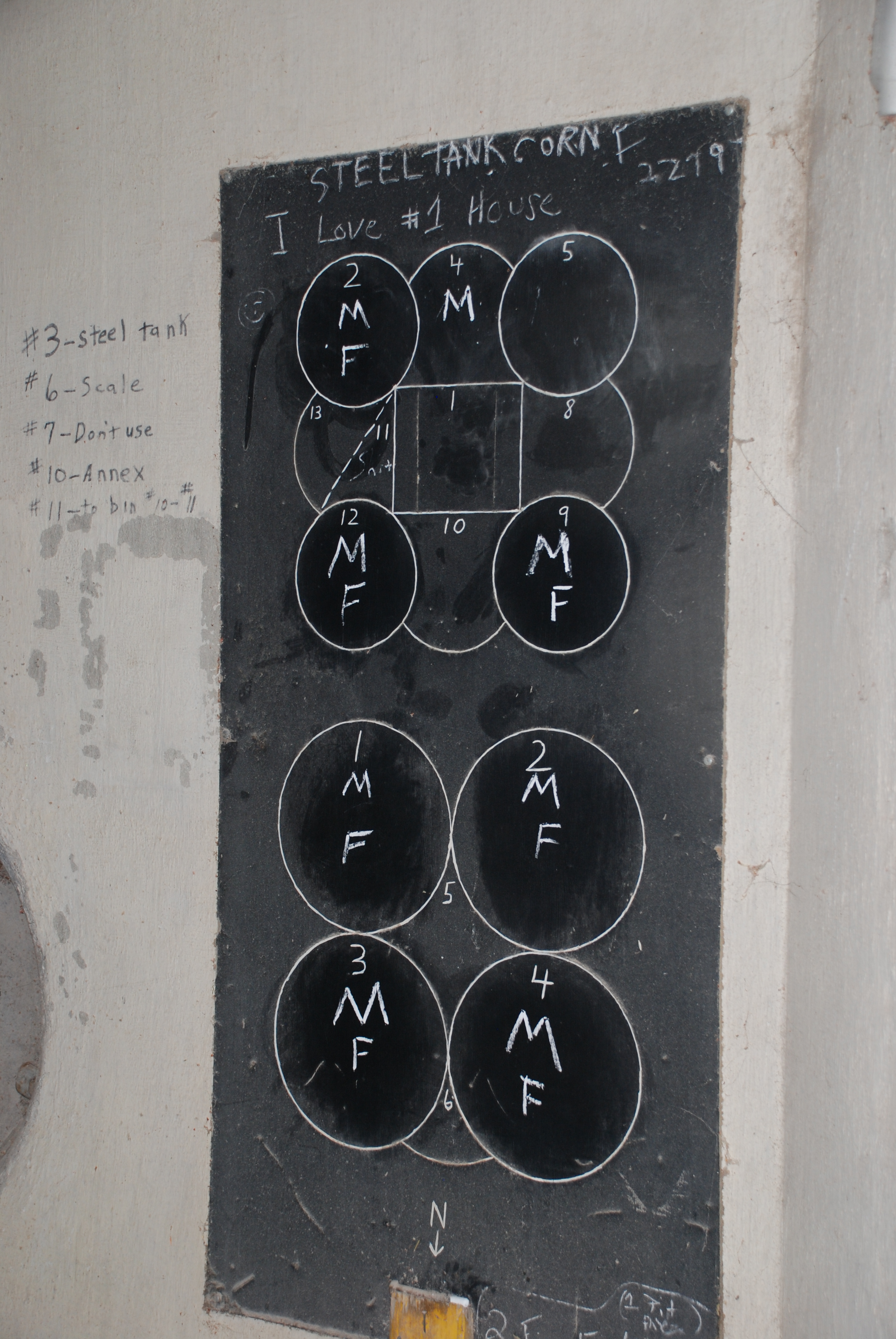
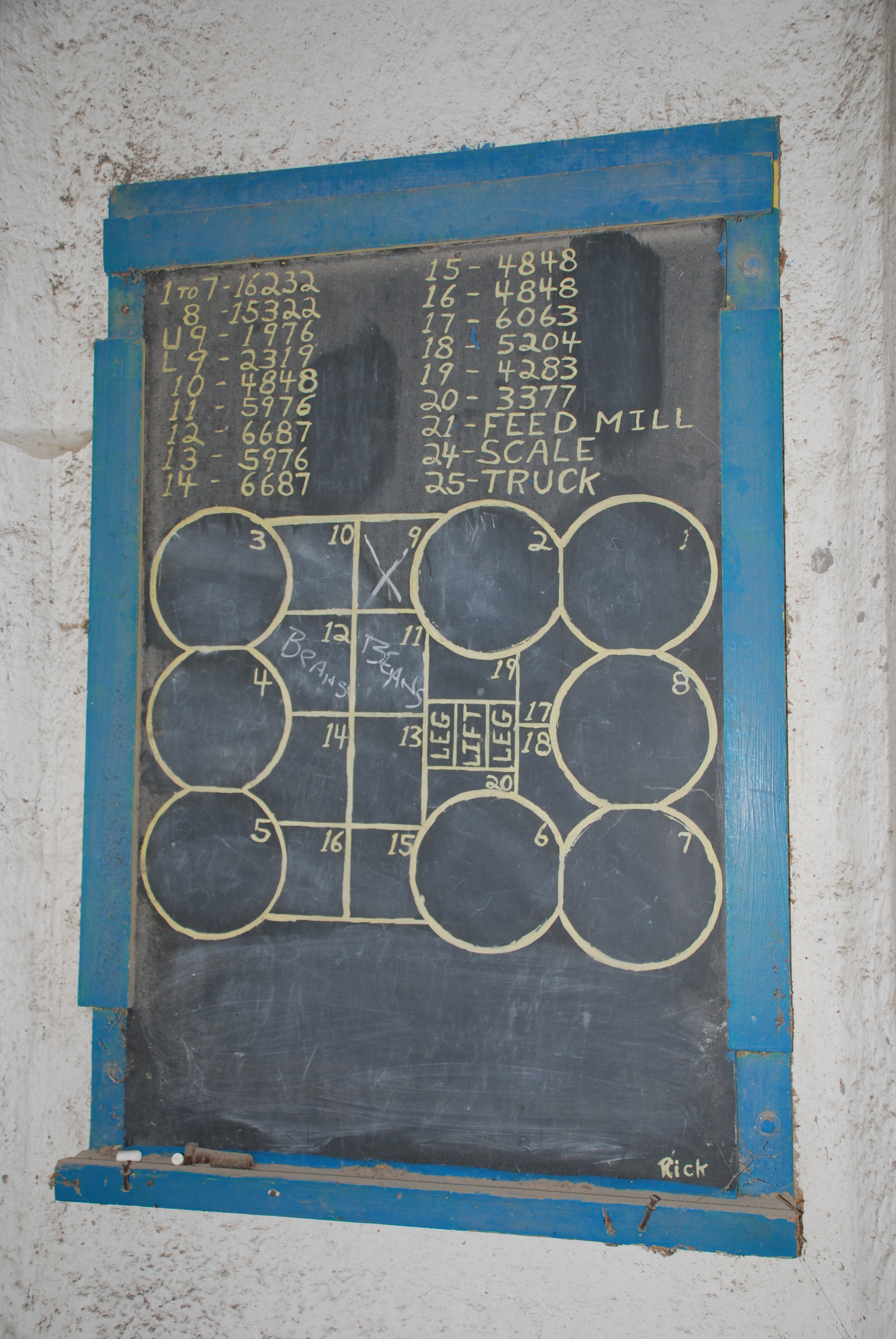
Bins are numbered to correspond with the bin diagram

Bin Diagram

St. Francis, Kan.

St. Francis, Kan.

DSC_0295

This elevator holds beans in two overhead bins.

DSC_0670(1)

The bins hold milo, and “F” means the bin is full.

The Leg

DSC_0418

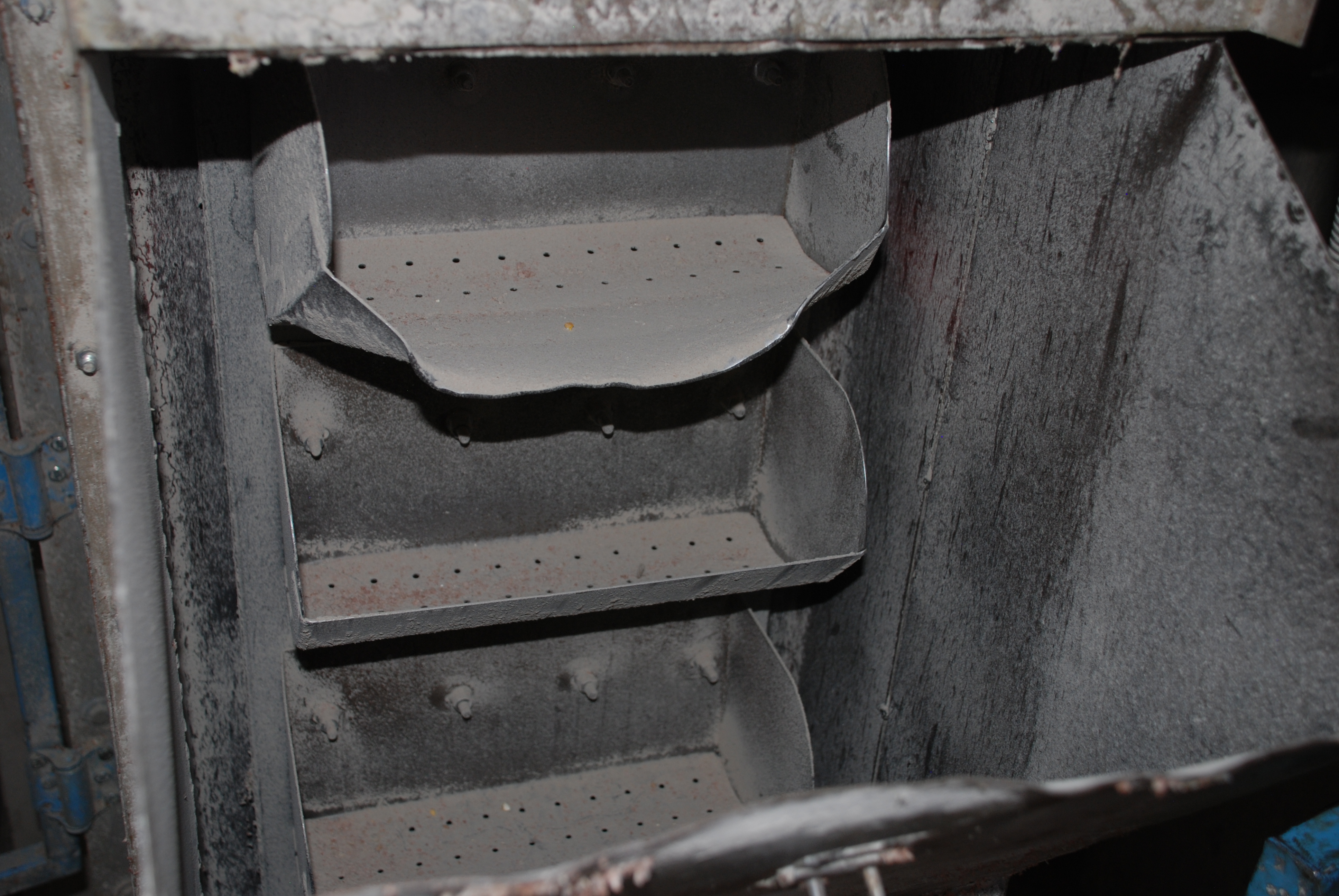
Cup dimensions and spacing are given in elevator specifications.

DSC_0673(1)

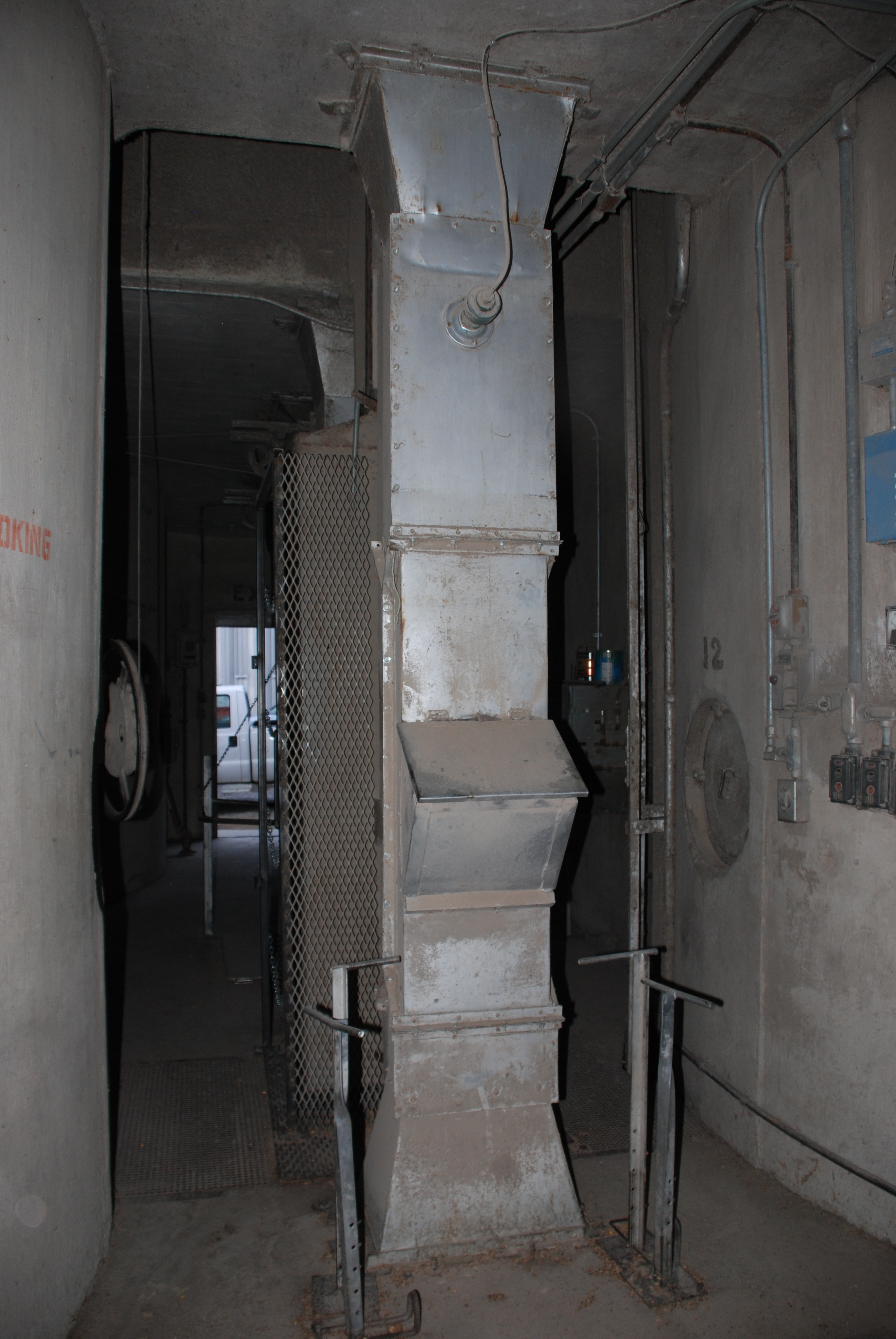
The leg conveys grain from the pit to the top of the bins.

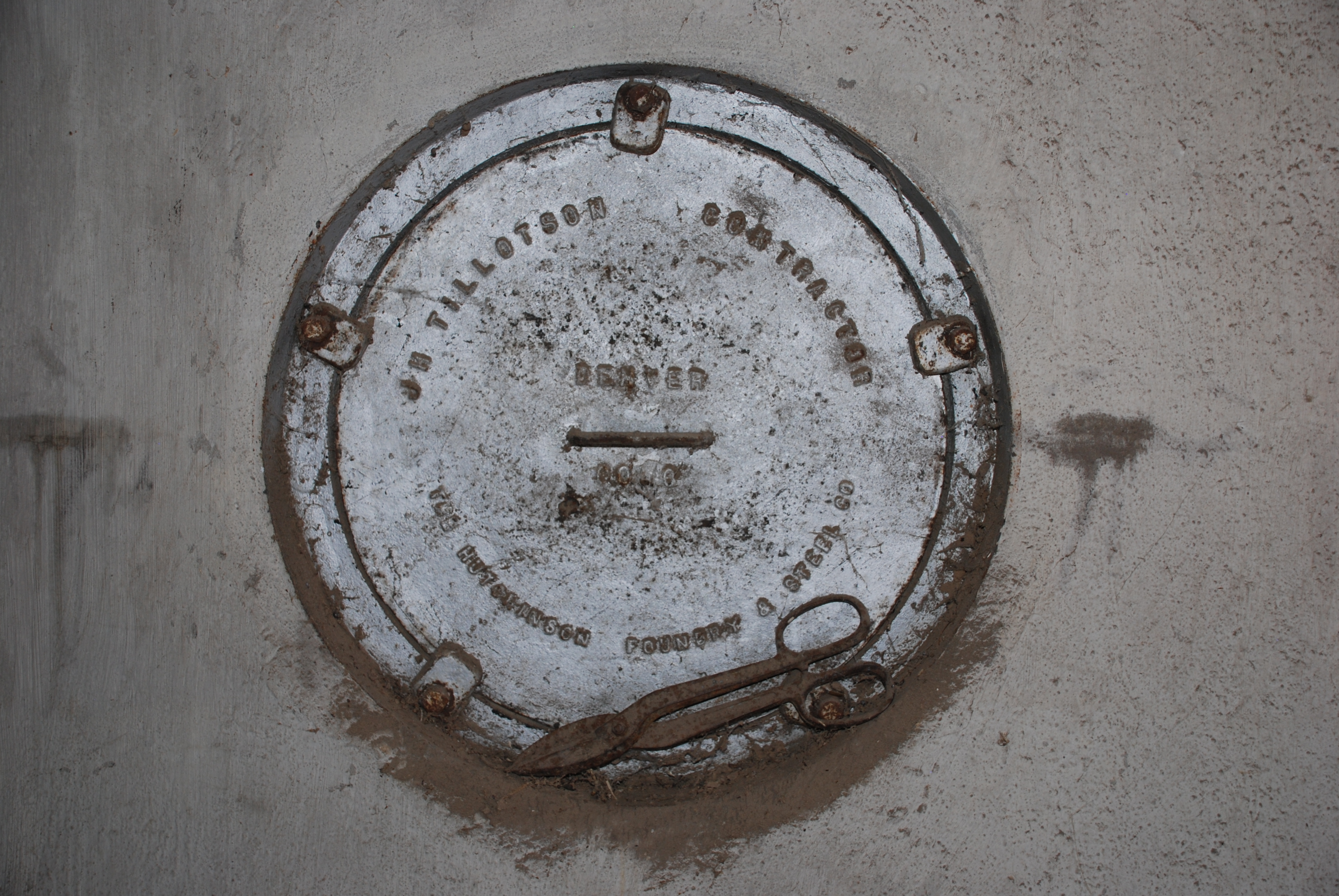
Manhole Cover

Traer, Kan.

Traer, Kan.


The vanished Glidden elevator, a concrete giant, has gone the way of the wood

Story by Kristen Cart

It is tremendously disappointing when you realize an elevator should be there, and isn’t. I recently passed through the north-central Iowa town of Glidden, a small place mostly on the south side of Highway 30. I knew from Tillotson construction records that an elevator and an annex were built in Glidden back during the elevator boom. But though I leaned over to that side of the car to peer at the skyline, hoping to see the familiar white Tillotson elevator outline, all I saw were two hulking bins of another more modern sort.
You learn to expect old wooden elevators to disappear. But the 1940s and ’50s vintage concrete elevators usually are not so quick to go.

Glidden, IA 51443 - Google MapsThis situation would require some investigation, but not on a day when I had to get home, with another 400 miles or so to go. I had at least one more stop planned to see an elevator, at Ralston, a town just a few miles further east, and my three kids tolerated the stops, hanging in there at the frazzled edges of their patience.

When I got home, I resorted to the Internet. Satellite images have become so good that you can virtually identify a builder from above. But in the case of Glidden, there was no sign of an old elevator, only a bulldozed area where the forms for two circular bins had been laid out. Apparently I had not overlooked the desired elevator–it was gone.

NEW Cooperative Inc - Google MapsI didn’t count on being able to date the demolition, but the map’s “street view” came to the rescue. An uploaded photo, watermarked 2013, showed a view of the site from an intersection down the street. From that perspective, the old elevator stood as it always had, since it was built. So the old elevator was probably retired after the last of its grain was out, in time for new bins to be built for the next harvest, sometime in 2013 before winter set in.

I missed my grandfather’s (alleged) McAllaster, Kan., elevator by a couple of months when it was torn down over a year ago. But in the satellite image that was available at the time, you could see where the destruction had begun. Several round bins were newly absent, and holes appeared in the top of the headhouse.

I don’t imagine that satellite engineers envisioned this use for their images.


A search for Van Ness elevator images yields surprising results

Story by Kristen Cart

When hunting for ancient elevators–and by ancient, I mean hundred-year-old, steel-sheathed, wooden construction–you run into a serious problem: most of them no longer exist.

13633472

A 1936 Omaha directory

The elevator you are looking for may have burned down years ago, followed by a replacement that also burned down. The things liked to catch fire, as a search of old newspapers will show.

Concrete construction was meant to reduce the problem, but the new elevators would burn in spectacular fashion when grain dust ignited, throwing debris and victims sky high.

The fertile ground for old elevator hunting remains the Internet, thanks to bloggers, satellite imagery, photographers, and the odd stuff that accumulates online.

Recently, we turned up some truly fascinating finds. We had discovered Charles H. Tillotson was president of Van Ness Construction Company, of Omaha, in the 1930s. He was the original founder of the construction business (and its progeny) that his children and their associates operated into the 1950s, as documented in this blog.

Charles H. Tillotson

Charles H. Tillotson

Now that we had a company name for his earlier efforts, the hunt for Van Ness elevators was on.

Rydal, Kan., was home to an early Van Ness elevator. The town was profiled in the blog Dead Towns of Kansas, a project by the Hutchinson, Kan., journalist Amy Bickel. On her page is a marvelous 1950s vintage aerial photograph of bridge construction showing two 1888- to 1907-vintage elevators, one of which was built by Van Ness. One of the two pictured elevators burned in 1952. We do not know if the fire consumed them both.

Luckily, a Van Ness mill and elevator in Grenola, Kan., was deemed historical, and the Kansas State Historical Society successfully nominated it for the National Register of Historic Places. Since grain was no longer stored there, the greatest threat to its survival was gone.

It is the only example we have found that still stands.

The architect of this elevator, designed and built in 1909, was P. H. Pelkey Company, with the construction completed by the R. M. Van Ness Construction, of Fairbury, Neb.

This company could have been the predecessor to the Van Ness Construction Company that Charles H. Tillotson led, and it may have been his earlier employer. A little more research could tease out the history of the Van Ness building enterprises in Nebraska.

But the elevator is representative of the typical construction of the time, when Charles would have been working in the business.

This old elevator is located in Grenola, Elk County, Kan., on a railroad siding which was formerly on a mainline of the Atchison, Topeka, and Santa Fe Railroad, Southern Kansas Division.